Every 3:30 AM, old Mr. Pryce shuffles past my hospice desk. He smells of lavender, asks for tea. My day nurse says he discharged four months ago. His room has been empty since.
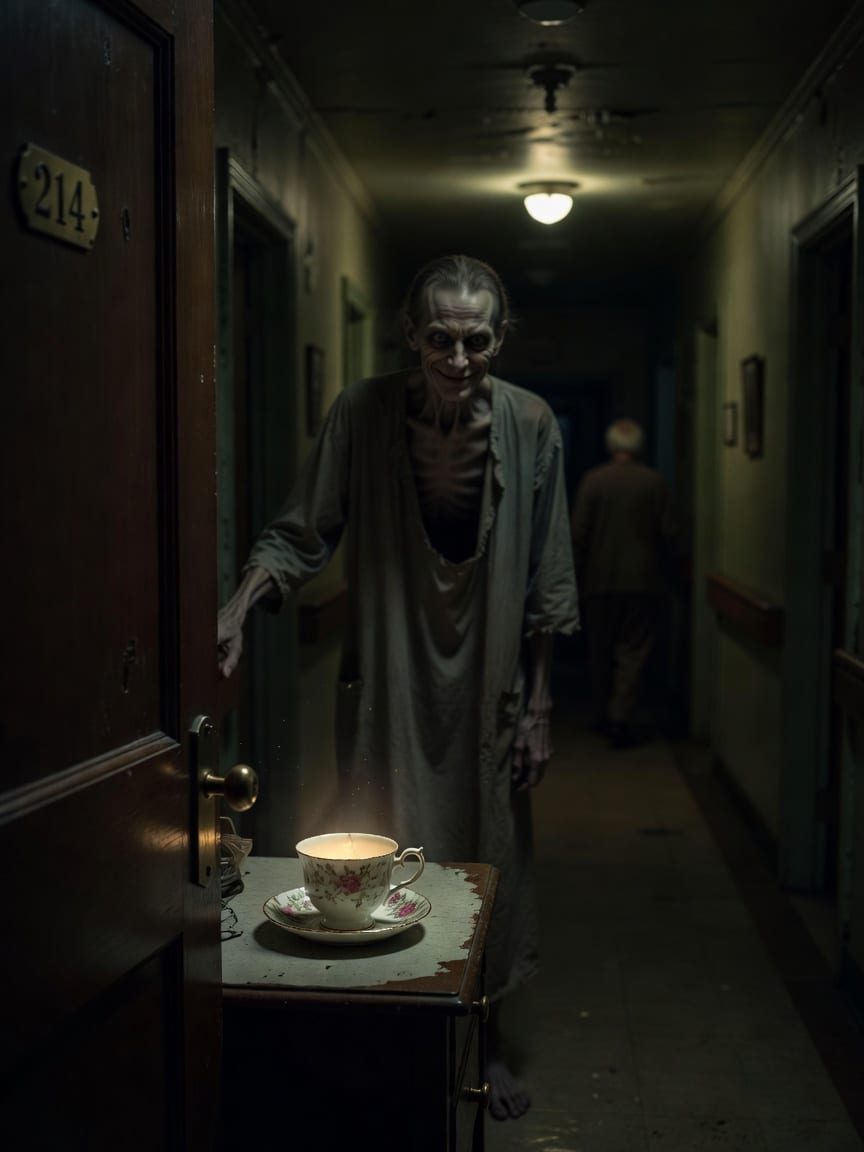
The hospice at 3:30 AM is always quiet. Too quiet. I was Nora Hughes, 32, night desk attendant, and I was used to the silence pressing in.
Most nights, it was just the hum of the fridge in the staff room, the faint beeps from monitors down the hall, and my own lukewarm coffee. But every night, like clockwork, there was a familiar shuffle.
Old Mr. Pryce, 87, emerged from Room 214, a wisp of a man in faded pajamas. He smelled faintly of lavender, always had.
He padded to the staff kitchen, a soft clink of porcelain, then appeared at my desk, his distinctive floral-patterned teacup held out. 'Morning, Nora,' he'd rasp, his voice like dry leaves. 'My tea's gone cold again.'
I'd nod, accustomed to his routine. Make him a fresh one. It was a comfort, a small ritual in the vast, still night. This morning, though, David Lawson, the day nurse, had arrived early.
He saw the exchange, watched Mr. Pryce shuffle back to his room with a steaming mug.
David waited until Mr. Pryce’s door clicked shut, then pulled me aside, his voice low, a strange mix of concern and something else I couldn't place.
'Nora,' he said, not meeting my eyes. 'You know Mr. Pryce was discharged to his daughter's care four months ago, right? And Room 214? It’s been empty ever since.'
The dread settled in my gut like cold coffee. David wasn’t joking. His face was too serious. I remembered the discharge papers, the quiet farewell, the box of personal effects Mr. Pryce’s daughter had picked up.
It had been four months. I’d seen it all.
Back at the desk, my fingers fumbled on the keyboard. I pulled up the digital patient log. Sure enough, 'Pryce, Arthur' was marked 'Discharged: 4 months, 3 days ago.' Room 214 was listed as 'Vacant - Cleaned.'
A blast of icy air from the vent hit me, but it wasn't enough to chase the chill I felt.
I tried to rationalize it. Phantom limb memory. An old habit that died hard, a hallucination brought on by shift fatigue. But the tea had been warm.
And Mr. Pryce felt solid, his hand cool against mine when I passed him the cup. He asked for Earl Grey, specifically. Every night. A phantom wouldn’t specify a blend.
Then I remembered an old, leather-bound logbook David kept under the desk. For 'nightly rounds checks' from before the digital system. He’d told me once it was just for nostalgia, a backup.
I pulled it out, the leather cool and dry under my fingertips. Flipping through the thin, yellowed pages, I found the current date, then previous nights.
Every single night, around 3:30 AM, an entry for 'Room 214 - Wellness Check' was scrawled, initialed with a looping 'M.' Not just for the current week, but for months. Past Mr. Pryce's discharge date.
Past the date Room 214 was officially empty. The entries were consistent, unwavering. Who was 'M'? And who, in God's name, was being 'checked' in an empty room?
I couldn't shake the image of the logbook. The 'M' haunted me. It felt like a riddle someone had deliberately left, just for me to find.
I knew I had to see Room 214 myself, not just look at the screen or stare at that damn logbook. My shift ended, but I didn't leave. The night supervisor was in the break room, oblivious.
The door to Room 214 was unlocked, just as David said. I pushed it open slowly. The room was bare, stripped of personal belongings, smelling faintly of disinfectant. The bed was made, hospital-crisp, the sheets taut.
Sunlight from the small window cut a dusty path across the empty floor. But then I saw it.
On the small, wooden bedside table, usually cleared by housekeeping, sat a teacup. It was Mr. Pryce's distinctive floral-patterned cup, the one he always brought to her for refills. My breath hitched.
I reached out, my fingers trembling slightly, and touched the ceramic rim. It was still faintly warm.
The warm teacup in the empty room was a punch to the gut. It wasn't my imagination. It wasn’t fatigue. He was real, or at least his routines were, and I was the one making him tea.
I spent the next few nights poring over the old 'Nightly Rounds' logbook, the leather cover feeling heavier each time. The 'M' initial, always around 3:30 AM, always for Room 214.
But as I went further back, my flashlight beam crawling across the faded ink, I started noticing something else.
Other rooms, officially empty for months or even years, also had 'Wellness Check' entries. Also initialed 'M.' Also in the small hours. Room 301, vacant for seven months, had entries. Room 108, empty for over a year, same thing.
Each with its own precise timestamp, sometimes 2:45 AM, sometimes 4:00 AM, but always in that dead zone of the night. It wasn't just Mr. Pryce; it was a pattern. A system.
I tried to match the 'M' to any staff member, current or past. I pulled up old rosters from the archive files, cross-referenced names. No one on the roster, living or retired, had that initial.
I even checked the old, faded staff photos tacked up on the breakroom bulletin board, looking for a familiar face, a name tag, anything. Nothing. The 'M' was a ghost.
The more I looked, the more the hospice felt like a stage set, with unseen actors moving through its quiet halls, performing a ritual I couldn't comprehend.
The dread was no longer just for Mr. Pryce, but for every empty room, every silent patient whose 'wellness' was still being checked long after they were gone.
The building itself felt like it was breathing, holding a secret under its quiet façade.
I decided to cautiously probe David Lawson again. Over coffee in the staff room, I casually mentioned the old logbook, trying to sound nonchalant. 'Funny thing,' I started, stirring my sugar.
'I saw some old entries for Room 214, even after Mr. Pryce left. And an initial 'M' I don't recognize. Who was that?'
David’s eyes, usually warm and tired, flickered. His hand went to his chest, picking at a loose thread on his scrub top. He wouldn't look at me directly. 'Oh, that old thing?'
he said, his voice just a little too loud, too casual. 'Probably just an oversight. Or an old maintenance guy, maybe. Don't worry about it, Nora. Hospice records get messy. You know how it is.'
He tried to change the subject, asking about my weekend plans. The conversation shifted awkwardly, the air suddenly thick. I knew he was lying, or at least hiding something.
His gaze kept darting around the room, like he expected someone to walk in and catch him.
Later that night, back at the desk, a cold unease settled over me. I went to retrieve my personal shift logbook from my locked drawer – I kept meticulous notes, every interaction, every odd detail.
I always kept it neatly aligned with the edge of the drawer, a tiny bit of personal order in the chaos. Now, it was slightly askew, a corner pushed in, a faint scratch mark on the wood next to it.
My heart hammered against my ribs. I hadn't left it like that. Someone had been in my drawer. Someone knew I was looking.
The quiet stillness of the hospice suddenly felt heavy, watchful, like I was being observed from the shadows.
The next morning, I confronted Josephine Bishop, the hospice administrator. She was a woman of impeccable composure, her silver hair pulled back in a severe bun, her office smelling of polished wood and something vaguely medicinal.
She listened patiently as I laid out my findings: Mr. Pryce's nightly appearances, the warm teacup, the 'M' initials in the old logbook for empty rooms.
Josephine’s expression remained serene, her hands folded neatly on her desk blotter. 'Nora, I appreciate your diligence,' she began, her voice calm, utterly devoid of surprise or alarm. 'The 'M' refers to our 'Maintenance' team, yes.
Not an individual, but a functional designation for specific nocturnal duties. As for the entries for empty rooms, it's a long-standing tradition here at St. Jude's. A... 'comfort protocol' for certain long-term residents.'
I stared at her. 'Comfort protocol? For who? They're gone, Josephine. Mr. Pryce was discharged four months ago.'
Josephine sighed, a faint, almost imperceptible shift in her demeanor, like a ripple on a perfectly still pond. 'Some residents, Nora, form a very deep connection with this place. Their presence, their memory, it lingers.
We believe it contributes to the overall serenity, the healing energy of the hospice. So, we maintain certain routines. A nightly check, ensuring their 'space' remains welcoming. A cup of tea, if you will, for their continued comfort.'
A chill ran down my spine, cold and sharp. 'So, Mr. Pryce... he’s not really gone, is he? Not to you.'
Josephine offered a small, knowing smile, the kind that didn't reach her eyes. 'Officially, yes. To the state, to their families. But here? Their spirit remains. It’s a very old tradition. Part of St. Jude’s unique approach to care.
Nothing to worry about, dear. Just continuity of care, in its own way.'
The earlier clues clicked into place with horrifying clarity: the constant 3:30 AM checks, the warm teacup, even Mr. Pryce's familiar request for Earl Grey. It wasn't a mistake; it was by design. Every damn thing.
Josephine's 'explanation' left me more unsettled than before. 'Continuity of care' for ghosts? It sounded like a cult, or something far worse. It sounded like they were actively keeping them here. That night, after my shift ended, I lingered.
I couldn't leave, not without answers. I waited until the building was truly quiet, the only sounds the distant hum of the ventilation and the drip of a faucet. Then, I slipped into Josephine's office.
I knew the administrator's password, having seen her type it in countless times – a simple family name, something personal that felt out of place with her professional froideur. I logged into the computer, my fingers slick with sweat.
I navigated through archived files, searching for 'comfort protocol,' 'maintenance,' anything that might shed more light. My cursor hovered over folders like 'Operations,' 'Financials,' 'HR.' Then, I saw it: an obscure folder labeled 'P.C.O.P. - Historical.'
Inside was a scanned, yellowed internal memo, dated decades ago, its paper looking fragile even on the screen. It was titled 'Perpetual Care & Observance Protocol for Residents of Particular Attachment.'
My eyes scanned the document, my breath catching in my throat. It wasn't just about 'comfort.' It detailed procedures for 'maintaining presence metrics' and 'ambient conditions.' I scrolled down to an attached list of names, expecting a few.
Mr. Pryce was there, marked 'Discharged - Active Protocol.' But below his name were dozens more, some dating back to the hospice's very founding, all with the chilling notation: 'Discharged - Active Protocol.'
The 'Perpetual Care & Observance Protocol' memo was a chilling blueprint, detailed and precise. It described a system, refined over generations, for tethering the 'essence' of certain residents to the hospice. It wasn't about memory; it was about active cultivation.
Room temperatures were meticulously maintained, specific scents (like lavender, I realized, remembering Mr. Pryce) diffused, and even 'light interaction points' were to be performed nightly – like offering a fresh cup of tea.
The document theorized that these 'maintained presences' contributed to a unique, almost sacred 'healing resonance' within the hospice walls, a spiritual energy that benefited current patients.
The 'M' in the old logbook wasn't a person, wasn't a team; it was the protocol itself, the 'Maintenance' of this unseen ecosystem.
Every 'Wellness Check' I had seen, every 'empty' room with its subtle activity, was part of this elaborate, institutionalized necromancy.
The horror wasn't a ghost; it was the living institution, meticulously tending to its silent, unseen residents, believing itself to be a benevolent keeper of souls rather than a silent prison built for them.
I stared at the screen, every word of the protocol cementing the terrifying coherence of it all. The hospice wasn't just a building; it was a carefully constructed cage for lingering souls, and I had stumbled into the keeper's handbook.
I knew I couldn't expose this; who would believe me? And what would happen to me if I tried? Josephine’s calm, knowing smile flashed in my mind.
I quickly inserted a flash drive I always carried in my bag, my fingers flying across the keyboard, the silence of the office pressing in around me. I copied the entire 'P.C.O.P.
- Historical' folder, the list of names, the detailed instructions for 'presence maintenance.' I needed proof. I needed to get out.
As the last file transferred, a faint shuffle sounded just outside Josephine's office door. Not a human shuffle, but a soft, dragging sound, like bare feet on linoleum.
Then, the distinct, distant clink of porcelain on a saucer, echoing from the direction of the staff kitchen. Mr. Pryce’s tea. My blood ran cold. I froze, my hand hovering over the 'eject' icon. It wasn't 'M' the maintenance person.
It was them. One of them. And it knew I was there.
I ripped the flash drive from the port and bolted. I fled the hospice that night, leaving a terse resignation email from my personal account, sent from the safety of my car, parked miles away. I never looked back.
The flash drive remained hidden in a safe deposit box, a secret tucked away from the world. David Lawson sent a brief, formal email wishing me well, his words clipped. Josephine Bishop never contacted me.
St. Jude's Hospice continued its quiet operations, its 'serenity' undisturbed. New night desk attendants came and went, oblivious to the hidden routines that unfolded in the small hours.
I never spoke of what I found. Months later, I started working a day job, far from the quiet, watchful hours of the night shift.
Sometimes, late at night, I’d wake to the quiet sound of a kettle boiling in my own kitchen, followed by a faint clink from the empty hallway.
If this one got to you
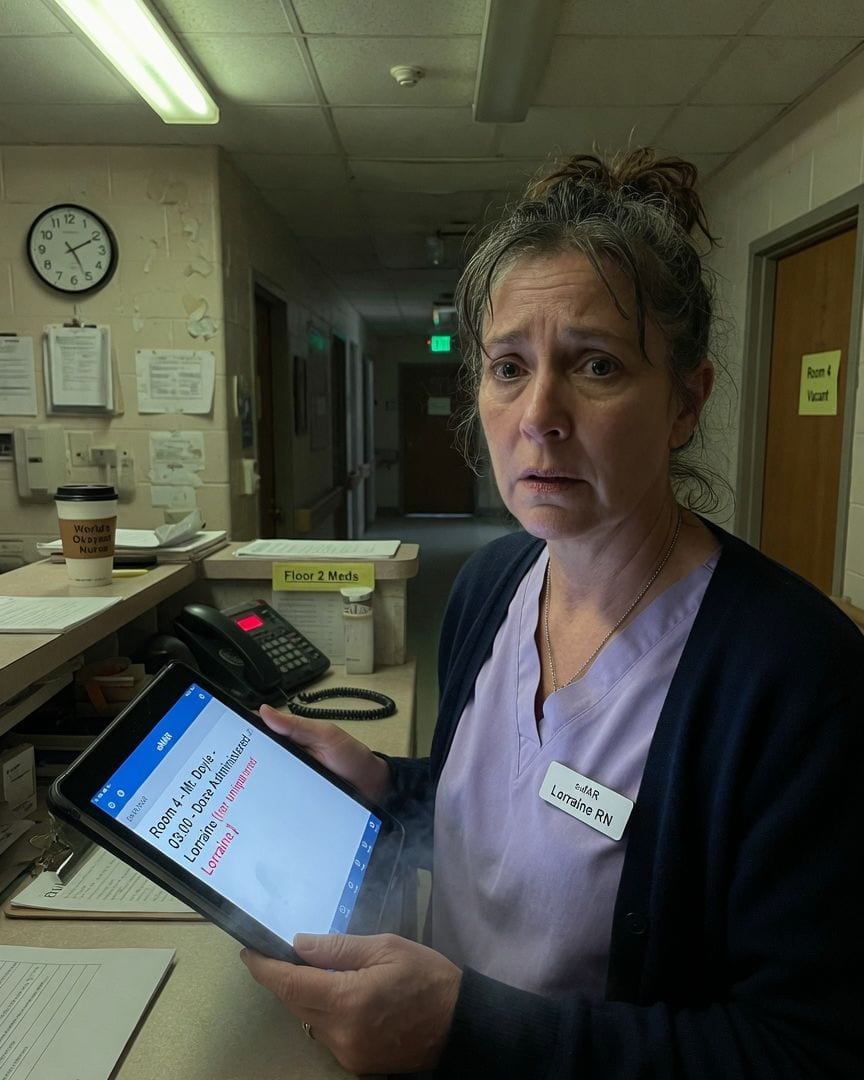
The care home tablet logged a 3am dose in Room 4, signed with my PIN — but Room 4 has been empty since Mr. Doyle died on Sunday, and I have no memory of giving it.
Working a quiet night shift at Elmwood, I double-checked patient records before clocking out. That's when I saw an impossible entry on the eMAR: my signature, administering medication to Mr. Doyle in Room 4 at 3 AM. Mr. Doyle had passed away yesterday, and his room was officially vacant, cleared, and locked.
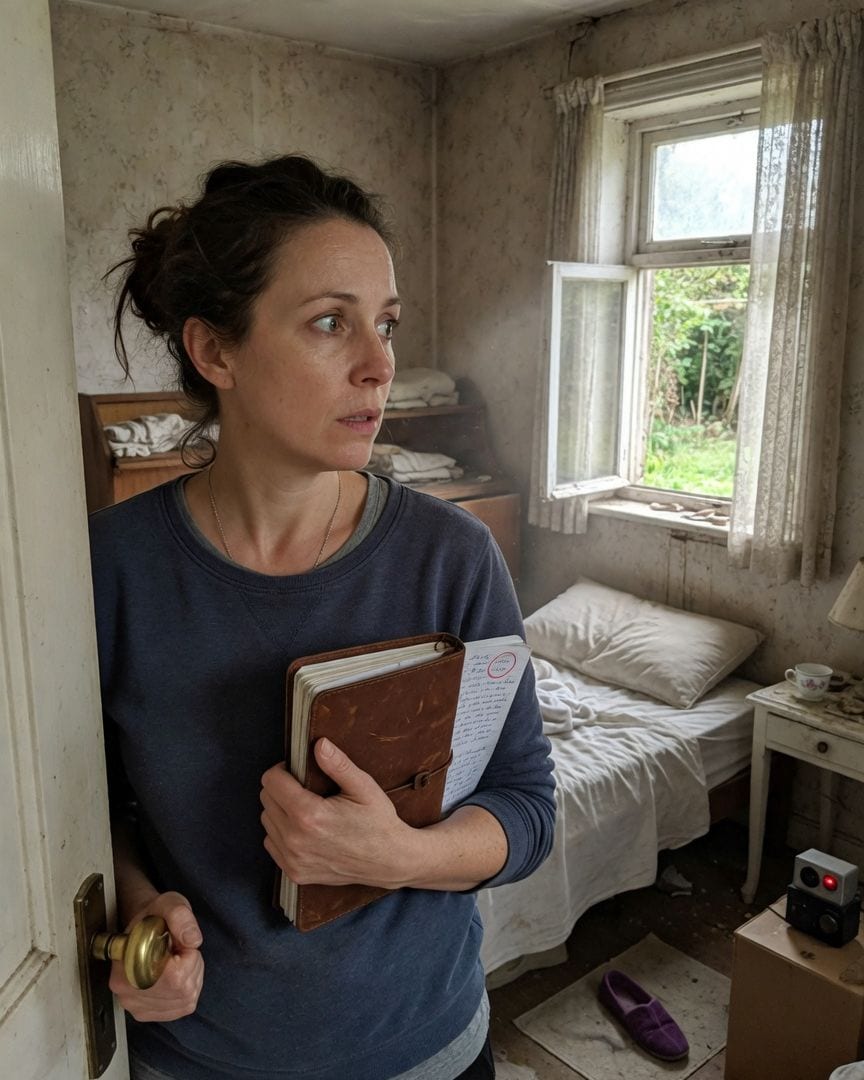
My spare room bed is slept in every few nights, sheets warm and pillow dented. I live alone, painted the window shut, and nobody has a key.
I've lived in Grace's house for six months, adjusting to its quiet rhythms. But the spare room, which I keep shut and empty for storage, has a disturbing routine of its own. Every few mornings, the bed is clearly slept in, the sheet rumpled and warm, and the window I painted shut is open exactly two inches.
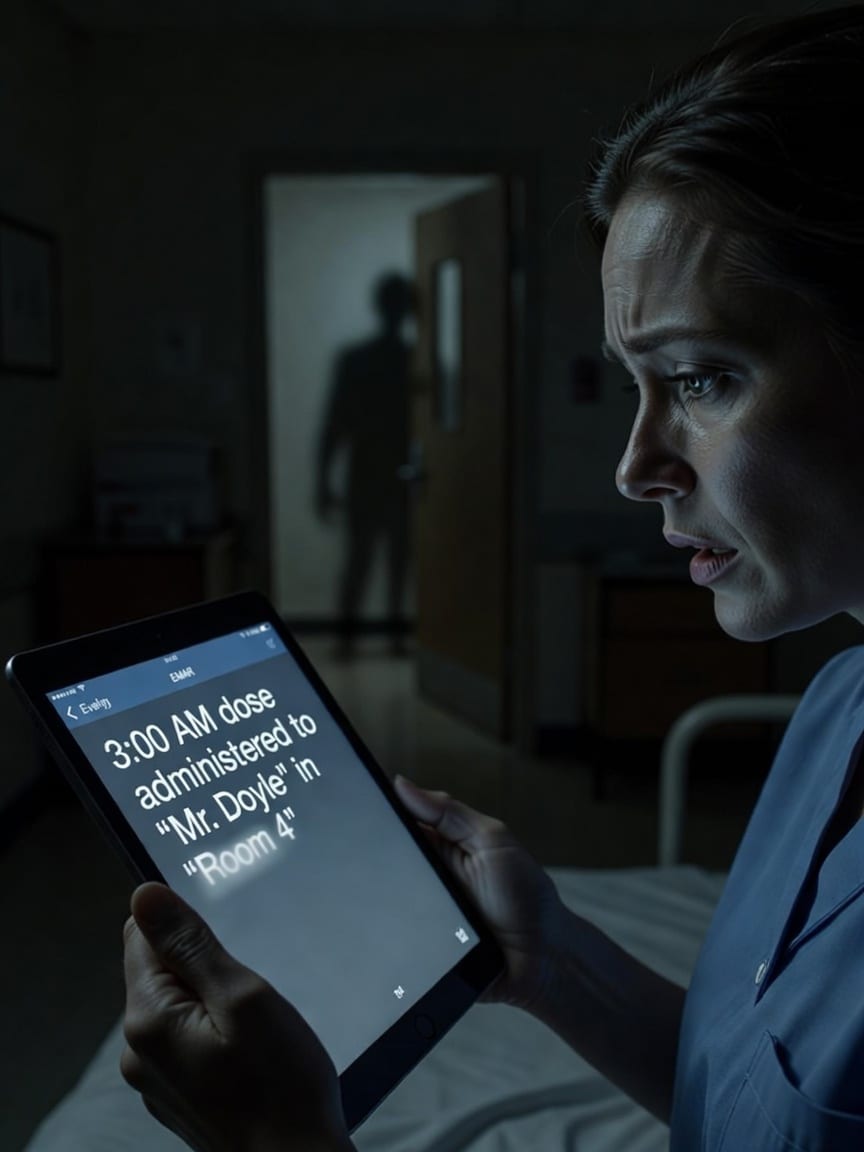
My care home's med tablet showed a 3 AM dose given to a dead man. My own PIN signed it off in his empty room.
My night shift routine at Evergreen Manor was disrupted when my eMAR tablet showed a sedative dose administered for Mr. Doyle. He had passed away peacefully on Sunday, and his room was empty and sealed. Yet, the screen clearly showed my PIN logged the medication, and later, his stripped bed frame held a faint, lingering warmth.
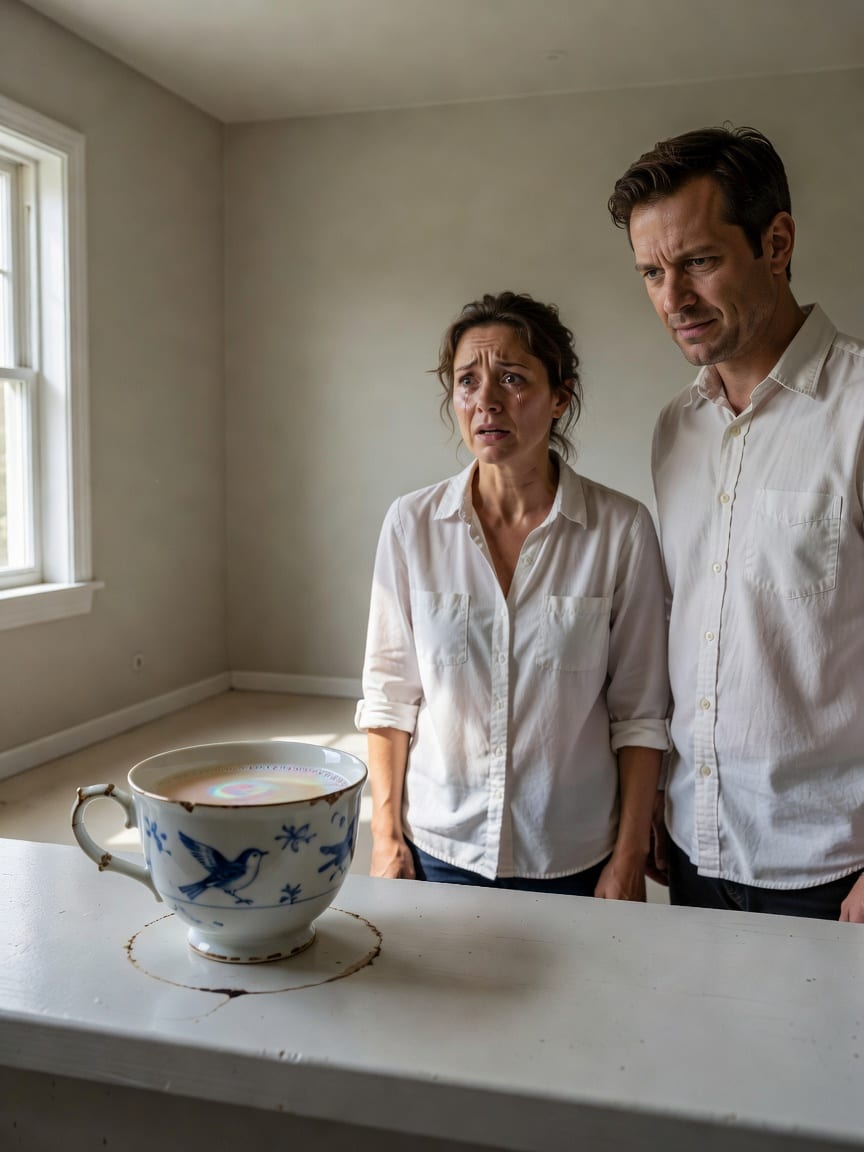
A cold cup of milky tea appears in my empty box room every night. The sugar ring on the sill is always the same. I live alone. I don't drink sugar tea.
My new flat was supposed to be a quiet sanctuary after my library shifts, but a faint, familiar scent always greets me. Every night, a fresh cup of milky tea, with one sugar, appears on the windowsill of my locked, empty room. I don't drink sugar, I don't own the mug, and the door is always secured.
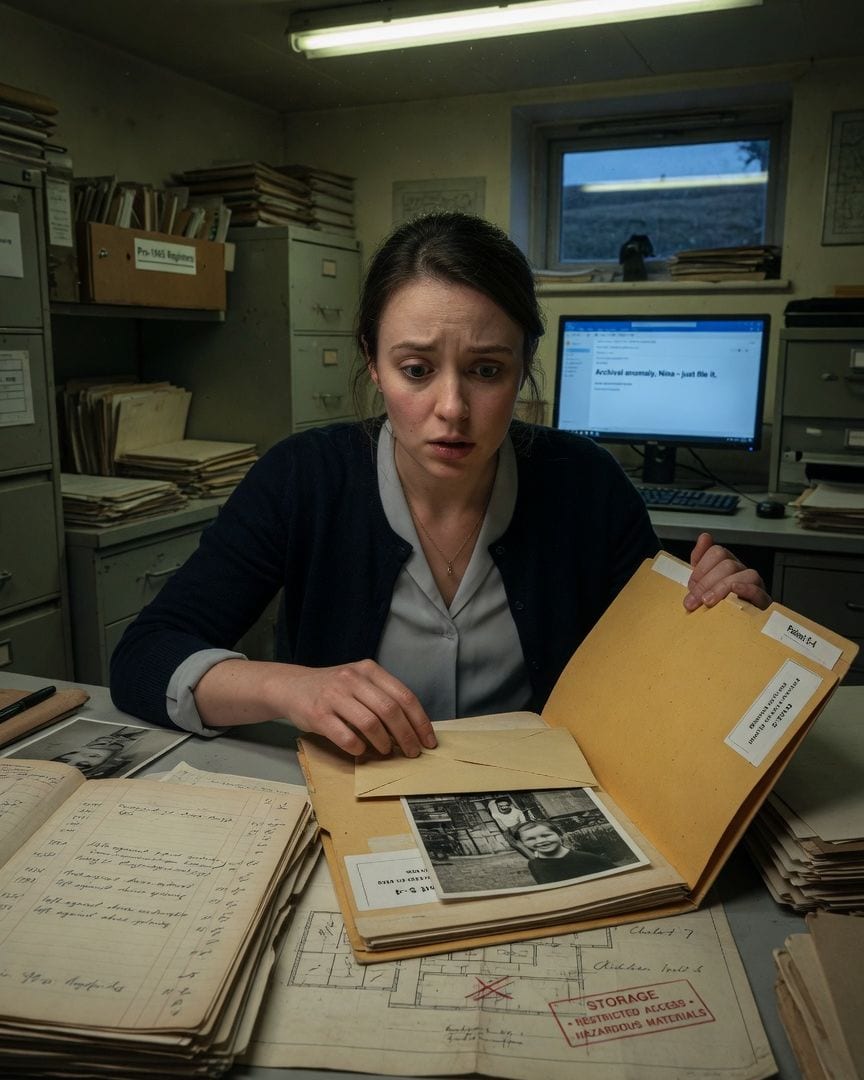
My aunt's sanatorium record shows Patient 5-4. The same file number has been quietly reissued every thirteen years since 1921, signed by the same superintendent's initials.
Processing my aunt Florence's admission file in the archives, I found her patient number, 5-4, held a disturbing secret. This number appeared every thirteen years since 1921, for patients admitted to the same remote chalet, signed by the same impossible initials, and all vanished without a trace. Then, hidden in my aunt's file, I found an old photo of her outside that chalet, with a gaunt, still figure watching from its window.
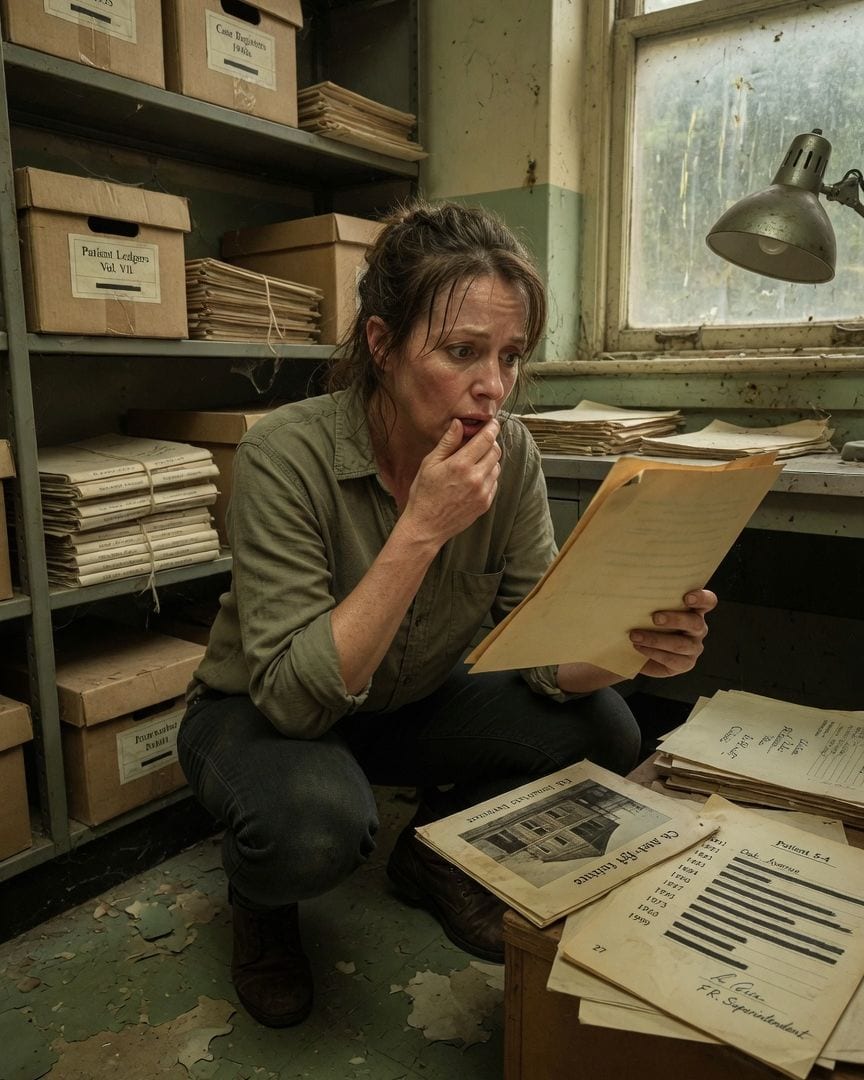
Patient 5-4 keeps checking into my aunt's old sanatorium chalet. The same initials sign them out, 'not traced,' every thirteen years since 1921.
Sifting through my aunt Margaret's estate, I found her old sanatorium file from 1999. Her patient record listed her as 'Patient 5-4,' discharged 'not traced.' But when I accessed the archives, I found 'Patient 5-4' was admitted every thirteen years since 1921, always with identical discharge notes.