The care home tablet logged a 3am dose in Room 4, signed with my PIN — but Room 4 has been empty since Mr. Doyle died on Sunday, and I have no memory of giving it.
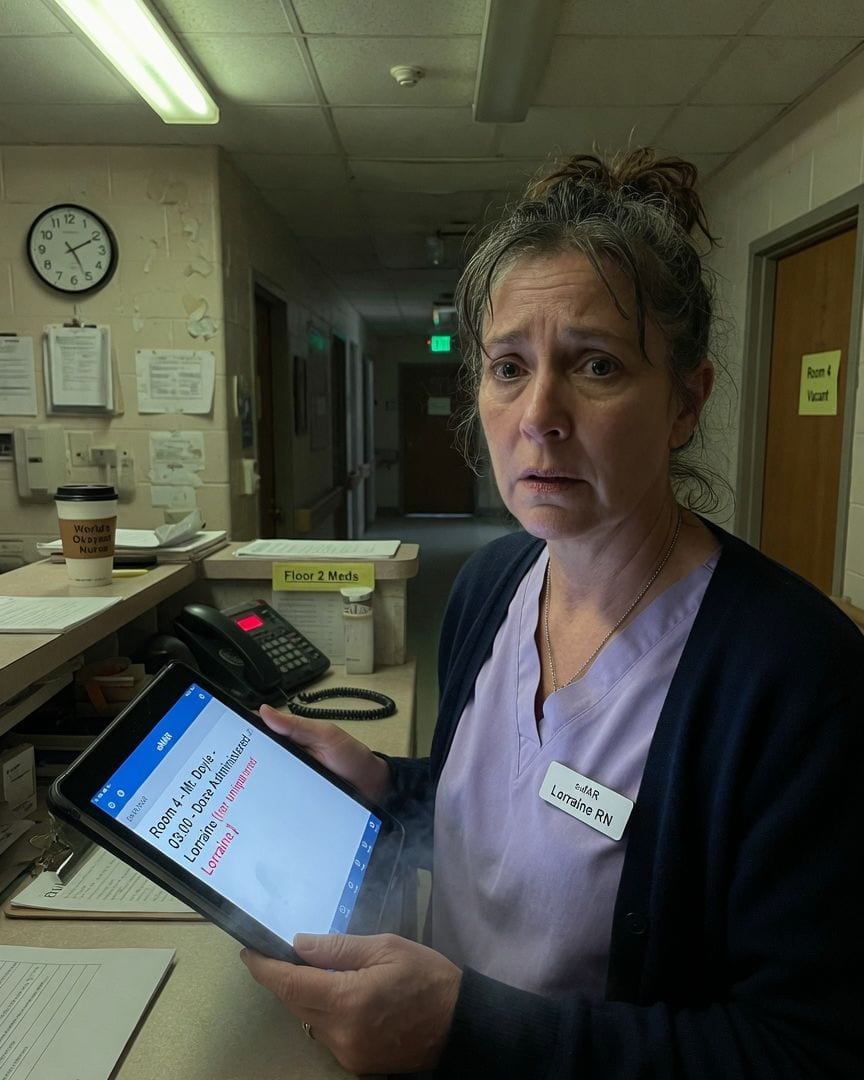
The shift was almost over, and my eyes ached. Six AM. I was at the nurses’ station, scrolling through the eMAR tablet, just double-checking everything before I clocked out.
It was a Monday, the start of a new week, usually quiet. Elmwood was a good place, mostly. And then I saw it.
An entry for Room 4. Three o’clock in the morning. ‘Mr. Doyle.’ ‘Dose Administered.’ And right there, beneath it, my unique PIN. My digital signature. A cold knot formed in my stomach, tight and sudden.
Mr. Doyle had passed away on Sunday morning. He was 87, bless his heart, a long-term resident. Room 4 had been officially cleared out, locked, and marked vacant since yesterday afternoon. There was no Mr. Doyle.
There was no resident in Room 4.
I went back, checked the system logs. Nothing. Room 4 was listed as empty. I pulled up the resident list. Mr. Doyle wasn't on it, not anymore. His chart was archived. I checked the room schedule for the entire floor.
Vacant. Locked. Cleared. Every official record screamed 'empty.'
But the eMAR, this tablet in my hands, insisted I had administered medication to a deceased resident in a non-existent room just three hours ago. Under my own hand. My unique credentials, which were supposed to be foolproof.
Impossible to fake. Impossible to glitch this specifically. My fingers were cold on the screen, scrolling up and down, as if the sheer repetition would make the entry disappear. It didn't.
It just sat there, stark and undeniable: Room 4, Mr. Doyle, 3:00 AM, my signature.
My supervisor, Harold Porter, just shrugged it off when I mentioned it to him later that morning. "System quirks, Lorraine. Happens sometimes. Maybe a phantom entry from the system clearing out old data."
He said it with the kind of casual dismissal only someone who doesn't work nights could manage. I knew better. Our eMAR system wasn't prone to 'phantom entries,' especially not ones that logged a specific resident, time, and my signature.
Still, the unease clung to me, a faint, unpleasant static on my skin. The next night shift, I couldn't stop thinking about Room 4. It felt like a magnet, pulling me down the quiet hall.
The door was closed, locked, just as it should be. The silence around it was heavier than the rest of the corridor.
I stood there for a minute, my heart thudding, then, against my better judgment, I pulled out my master key. The lock clicked, loud in the stillness, an unnerving finality.
I pushed the door open, just a crack, then wider. The room was empty. Stripped. No personal photos, no books, no worn armchair. Just the institutional beige walls, the window, and the bed.
It was freshly made with crisp, white linen, precisely tucked. Standard procedure after a resident passes, before deep cleaning. Everything looked normal. Almost.
I stepped further in. A chill, faint but undeniable, prickled my skin, not from an open window but from the air itself, as if the room had held its breath.
On the bedside table, a clear glass of water sat there. It was half-full. A faint ring of condensation marked its base, unmistakable against the polished laminate. My breath caught.
And on the bed, just above the perfectly smoothed sheet, a single blanket was folded. Neatly. Precisely. As if someone had just risen, straightened it, and walked away.
I reached out, my fingers trembling slightly. The glass was cool to the touch. The water inside felt fresh. I touched the blanket. It was soft, almost warm, the fibres yielding under my palm.
No one should have been in here. This room was empty. Cleared. Locked. My mind raced, trying to find an explanation. A cleaner? But they only came during the day. Another nurse? But Room 4 was vacant.
I backed out slowly, my eyes scanning the pristine, yet impossibly occupied space. My hand shook as I re-locked the door, the click echoing in the sudden silence of the hallway.
Back at the nurses’ station, my eMAR tablet sat on the counter. I picked it up, opened the app. And there it was. Another entry. Room 4, 3:00 AM, 'Mr. Doyle,' my PIN, my signature. Again.
I went straight to the security office. Harold Porter was on duty, sipping lukewarm coffee. He just needed to see it, I thought. He couldn't dismiss this. I told him about the water, the blanket.
Then I brought up the security footage. The camera covered the main hallway outside Room 4. I fast-forwarded through my last night shift, past the quiet hours, past my own rounds.
I felt sick even before the timestamp on the screen hit 2:55 AM.
The hallway was deserted. Empty. Then, the impossible happened. The door to Room 4, the one I knew was locked, slowly, silently swung inward. Just a few inches.
It hung there, a dark gap in the beige wall, for a moment that stretched into an eternity. Then, with the same deliberate slowness, it eased shut again. No one was visible in the frame. No hand, no shadow.
The door simply opened, then closed, as if an invisible presence had just walked out of the empty room, right past the camera.
Harold watched it all, his face impassive. When the clip ended, he just shrugged. "Camera anomaly. Or a draft. These old buildings, you know."
He tried to sound reassuring, but the air in the small office felt heavy, static, charged with something he refused to acknowledge. "Lorraine, maybe you're just overworked. It's been a tough week since Mr. Doyle passed."
He was already dismissing it.
Unconvinced, I spent my next few days off digging. I tried to replicate the eMAR 'bug' on a spare tablet I borrowed from the supply closet.
I entered dummy data, tried to force entries without my PIN, tried to assign doses to non-existent residents or rooms. The system's integrity held. It was robust, secure.
I couldn't make an entry appear that wasn't legitimate, let alone one tied to my specific credentials.
Frustrated, I started looking for older, archived records, anything physical. Maybe this wasn't new. Maybe this place had a history. The care home had old wings, some of which were now just storage for forgotten equipment.
In a dusty box in the very back of the basement, near a stack of yellowed bedpans, I found a trove: faded, handwritten medication logs from two decades ago. The paper crackled when I opened them.
Flipping through the brittle pages, a pattern emerged that made my blood run cold.
Regular 3 AM entries. For residents in rooms that, I now knew, had been empty for years. Some even for decades. Room 12, Mr. Henderson, 3 AM. Room 21, Mrs. Davison, 3 AM.
Names I vaguely recognized from employee lore, long gone. The handwriting changed from page to page, year to year – different nurses, different pens. But the specific time and the 'empty room' context remained eerily, horrifyingly consistent.
As I continued my quiet investigation over the next few shifts, I started noticing Ethan Norwood, the night security guard. He was a quiet man, always calm, almost unnervingly serene.
He moved through the building like a shadow, his footsteps barely audible. I caught him watching me more often, a faint, knowing look in his eyes, as if he knew something I didn't.
I tried to engage him in casual conversation.
"Anything strange happen on your rounds, Ethan?" I asked one night, leaning against the doorframe of the empty activity room. "Sometimes the older parts of the building feel… different."
Ethan paused, his gaze drifting towards the darkened hallway. "The old places have their own rhythms, Nurse Calloway," he'd say, his voice a low, even murmur. "Some things just… continue."
His answers were always vague, tinged with a philosophical air that unsettled me more than outright denial. He never elaborated, never explained. Just this quiet, almost serene acceptance of whatever 'things' continued.
One night, after I'd been comparing the old physical logbooks I’d found with my eMAR entries at the nurses' station, meticulously highlighting the recurring 3 AM patterns, I stepped away for a quick break.
I’d left my eMAR tablet open on the counter. The station was empty, the hallway quiet. I wasn't gone for more than five minutes. When I returned, my stomach clenched into a hard knot.
Affixed to the screen of my eMAR tablet was a small, cream-colored sticky note. It was handwritten, neat and precise, in a cursive I didn't recognize, yet felt strangely familiar.
It simply read: 'Some things are best left to their routine.' My heart hammered against my ribs. No one else had been in the nurses’ station. No one. Only Ethan and I were on this floor at this hour.
The note confirmed my worst suspicions. My breath felt shallow, thin. I found Ethan during his next round, pushing his cart of cleaning supplies down a quiet corridor, the only sound the soft rumble of its wheels.
The air was still, heavy.
"Ethan," I said, my voice low but firm, the words feeling tight in my throat. I laid it all out. The eMAR entries for Room 4, Room 12, Room 21, all those 3 AM entries for deceased residents.
The physical traces in Room 4 – the blanket, the glass of water. The security footage, the door opening and closing on its own. The old physical logbooks from the basement, with their decades of impossible records.
"I need an explanation," I finished, my voice barely a whisper, but it carried the weight of my fear.
Ethan stopped his cart. He didn't deny anything. Didn't flinch. He just listened, his expression utterly unreadable, his eyes calm, almost placid. When I finished, he simply nodded.
"You've been looking," he said, his voice a soft murmur, barely above a whisper itself. "Good. Not many do. Not really."
He explained it. Not with urgency, not with fear, but with a detached, almost academic tone, as if recounting a well-known historical fact.
He said that certain 'routines,' established for long-term residents, especially those who lived and died on site, sometimes 'persist.' He called them "echoes of care."
He described the Elmwood Care Home as having a kind of 'memory,' where the daily rhythms of its inhabitants become so deeply ingrained into the very fabric of the building that they continue, even after the resident is gone.
The 3 AM dose for Mr. Doyle. The freshly folded blanket. The glass of water. These were all part of his continued 'routine.' He explained that the eMAR system, being the primary record, 'catches' these echoes.
It attributes them to the active nurse's PIN – mine – as a way, he said, to log the unseen care. He admitted that he sometimes added entries to the physical logbooks himself.
Not to deceive, but to 'maintain the continuity,' to ensure the 'echoes' were acknowledged. He insisted it wasn't malicious. Just, "the way the place works."
The truth, as it landed, snapped the earlier clues into a horrifying coherence. The empty room's door opening on its own. The fresh water, the warm blanket. The signed eMAR entry. It all made a terrible, undeniable sense now.
It wasn’t a glitch. It wasn’t a prank. It wasn't a ghost, not in the way I understood it. It was a system. And I was in it.
A cold dread spread through me, chilling me to the bone as Ethan calmly described the care home's 'memory,' the persistence of unseen routines. I felt like I was drowning in an ocean of impossible logic. "But it's wrong!
It's… impossible!" I whispered, my voice raw, trying to argue, to rationalize, to find a way to stop this, to escape it.
Ethan looked at me, his eyes unblinking, devoid of judgment or fear. "Impossible is just a word, Nurse Calloway," he said softly, his voice utterly serene.
He walked over to his small, cluttered desk in the security office, every movement slow, deliberate. He unlocked a drawer with a small brass key he pulled from his pocket.
From within, he pulled out a heavy, much older, leather-bound ledger. Its cover was worn smooth with age, the corners softened, the leather deeply creased. It looked ancient, almost sacred.
He opened it carefully, the stiff pages groaning. The ledger was filled with neat, faded handwriting, page after page. Just like the eMAR. Just like the old logbooks I’d found. It was filled with 3 AM entries. Different names.
Different nurses' signatures. Going back decades, some even pre-dating the eMAR system, pre-dating modern medicine. He slowly flipped to a fresh, mostly blank page near the end. He pointed a finger, thick and calloused, to a line. Still empty.
Next to it, written in faint, almost ghostly pencil, were two words.
'Lorraine Calloway.'
He looked up at me then, his expression unchanging, serene, as if he'd merely stated a fact, a certainty.
The sight of my own name in that ancient ledger, a silent prophecy, froze me. My blood felt like ice in my veins.
Ethan explained the full, horrifying truth without a trace of malice or fear, his voice a steady drone in the quiet office. The Elmwood Care Home wasn't just 'haunted' by individual spirits; it was a living archive of care.
The routines of its long-term residents, especially those who had lived and died within its walls, became ingrained into the very fabric of the building. The 3 AM medication rounds were the most potent of these 'echoes.'
He said the eMAR system, designed to track every interaction, inadvertently became a conduit. It was attempting to log the unseen care being administered by the building itself.
Mr. Doyle, like many before him, continued his routine in Room 4, cared for by an invisible presence that mimicked the nurses' duties. Ethan revealed he wasn't just a witness; he was a steward.
He'd been here for twenty years, maintaining the physical ledgers, making sure the 'routines' were acknowledged, believing that to disrupt them would be to disturb a delicate balance.
He explained that the nurses whose names appeared in the ledger, like mine, were not just recording the echoes. They became, in a subtle, unconscious way, part of the continuum. Their own routines aligned with the building's.
Every clue I had found—the eMAR, the blanket, the door opening, the old logs—now clicked into place, forming a coherent, inescapable pattern of perpetual care.
It was not a horror that could be fought; it was the very way the building breathed.
Horror gave way to a desperate, cold resolve. I couldn't let this continue. "I'll go to Harold," I said, my voice shaking. "I'll expose it. I'll quit."
Ethan shook his head slowly, his gaze still unnervingly calm. "You can try, Nurse Calloway. Others have." He recounted stories of previous nurses who tried to fight the system.
Some left abruptly, unable to cope with the unseen burden, but always after a period where their own actions became… strange. They'd become confused, lost, their personal lives unraveling.
Others, he revealed, didn't leave. They stayed. And in time, they began to perform the 3 AM rounds themselves, physically, to the empty rooms, without any conscious memory of it.
He described seeing them in the small hours, carrying a glass of water, a freshly folded blanket, moving silently towards the designated rooms, their faces serene, before returning to the nurses' station as if nothing had happened.
He pointed to the eMAR entries under my PIN. "Your first participation," he said, without judgment. The truth wasn't something to be fought; it was simply understood.
The weight of this realization, the profound futility of resistance, settled upon me like a shroud. I was not a victim; I was an inheritor. The full truth was understood, and it could not be undone or acted on.
I was simply left knowing.
I continued my night shifts at Elmwood Care Home. I never spoke of what I learned to Harold Porter or any other colleague. Harold remained blissfully unaware, still dismissing any anomalies as 'system quirks,' a gentle smile on his face.
I still saw the 3 AM entries on my eMAR for Room 4, and sometimes for other rooms I now knew were 'occupied' by their perpetual routines.
I no longer checked the rooms, nor did I try to delete the entries. I simply acknowledged them, a quiet, internal nod to the unseen patients and their enduring care.
The initial dread had settled into a profound, quiet understanding, a chilling acceptance of the unchangeable rhythm of the night shift.
I finished a particularly quiet shift. The last medication administered, the final charts updated. I signed out, feeling an overwhelming, deep-seated exhaustion, a sense of quiet dread that had become a constant companion.
I walked out into the pre-dawn air, the city still mostly asleep around me, the sky a bruised purple.
As I reached my car, I felt a strange pull, a sense of duty, almost a magnetic draw, back towards the silent, brick facade of the care home.
It was a subtle but undeniable urge, a part of me now tethered to the unseen routines within.
I got into my car, started the engine, but paused before driving away, looking back at the building, a faint, wrong little smile playing on my lips.
Harold Porter, her supervisor, noticed Lorraine had started leaving a fresh glass of water on his desk every morning when she left. He took his tea black. 'Is that so?'
If this one got to you
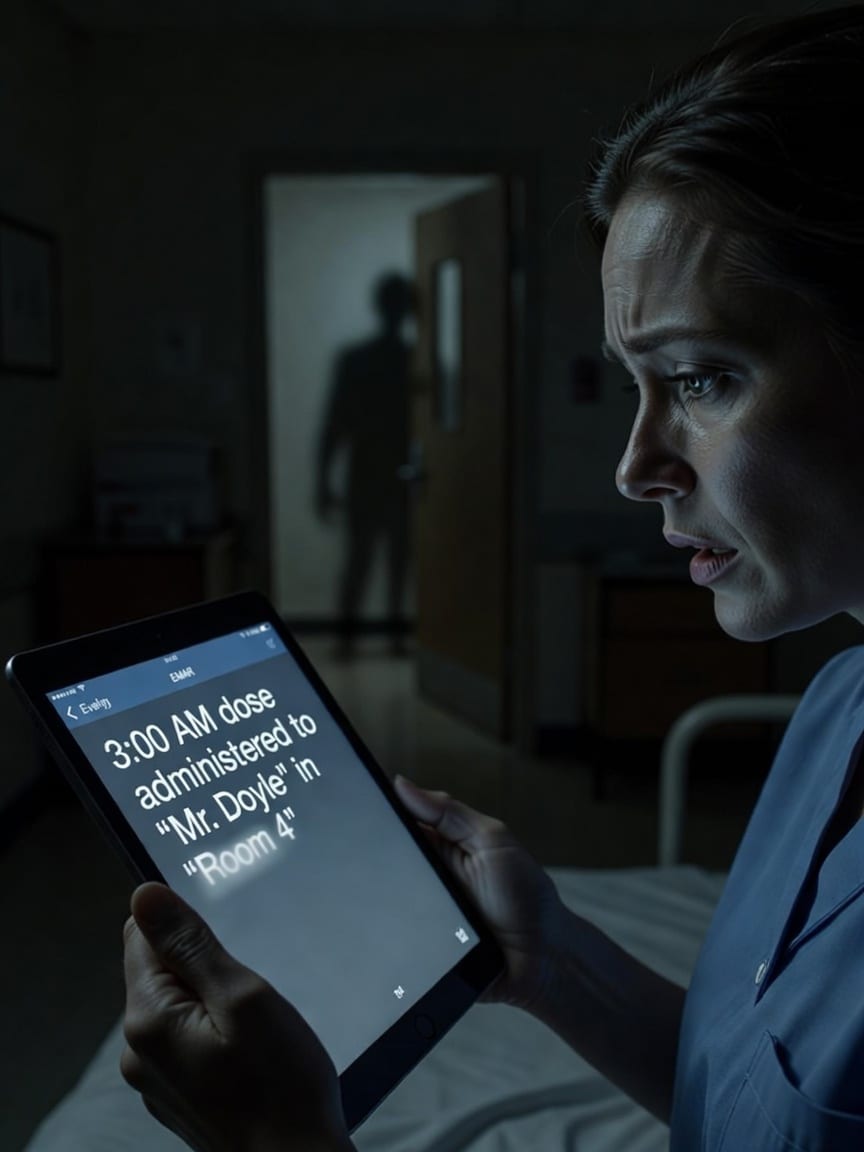
My care home's med tablet showed a 3 AM dose given to a dead man. My own PIN signed it off in his empty room.
My night shift routine at Evergreen Manor was disrupted when my eMAR tablet showed a sedative dose administered for Mr. Doyle. He had passed away peacefully on Sunday, and his room was empty and sealed. Yet, the screen clearly showed my PIN logged the medication, and later, his stripped bed frame held a faint, lingering warmth.
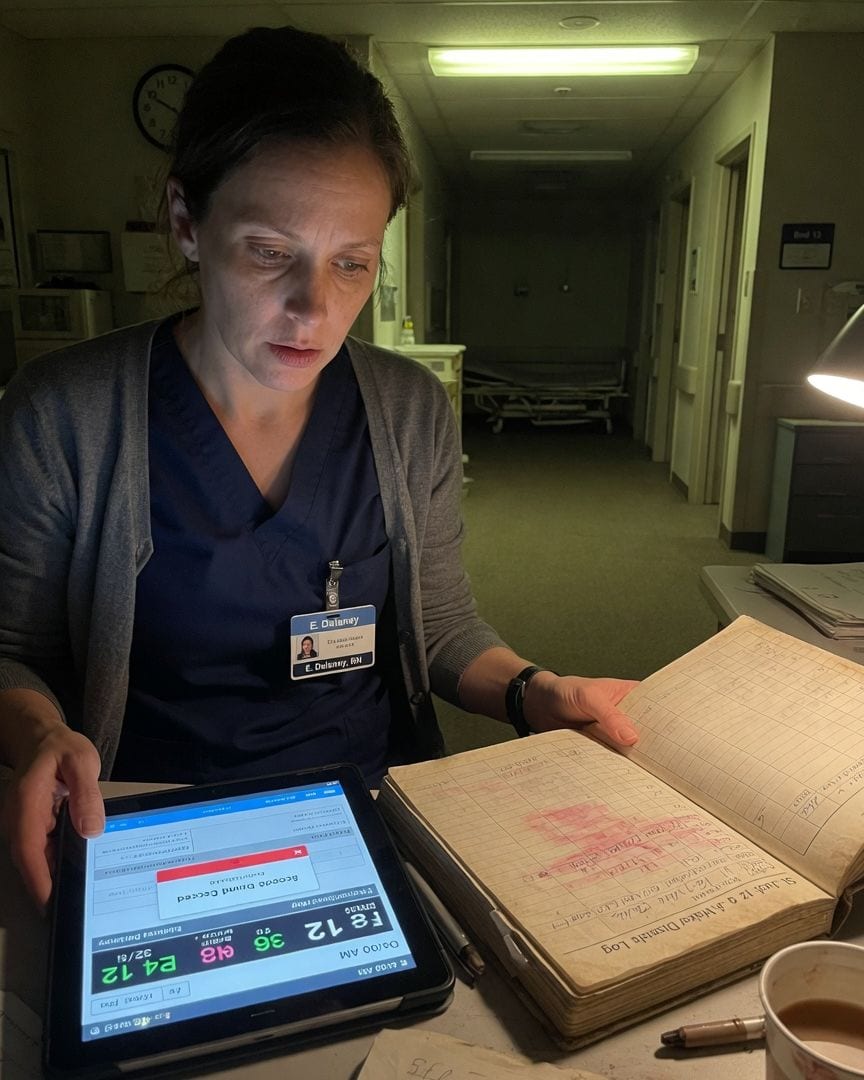
My empty ward's bed 12 had fresh vitals charted. The system says I entered them.
Working my usual night shift at St. Jude's, I pulled up the monitor system to log patient vitals for Ward 12. My thumb paused at Bed 12, where a full set of readings was already timestamped and logged under *my* ID. But Bed 12 was utterly stripped and empty; it had been discharged days ago.
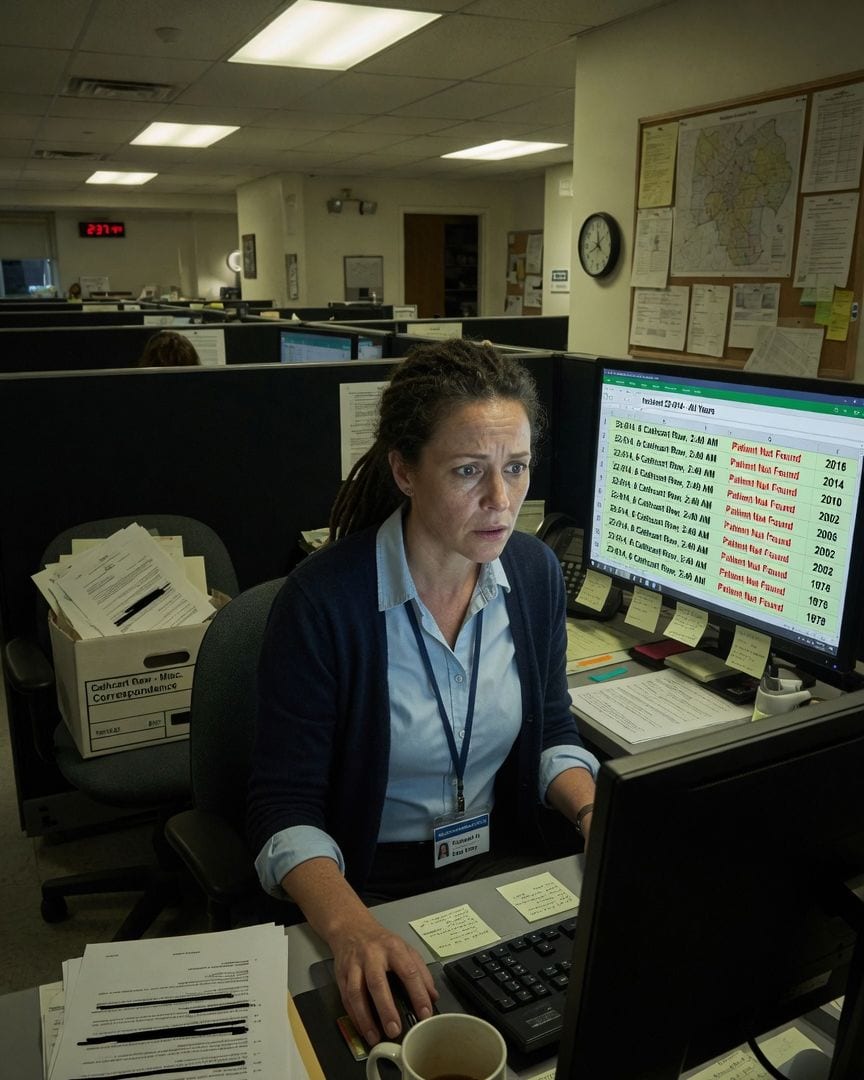
My computer log shows the same 2:40 AM call to Cathcart Row, every four years since 1978, always closed 'patient not found'.
Working data entry for the County Ambulance Trust, I found a routine incident logged as 'Patient Not Found.' But digging deeper, I discovered the exact same phantom call had repeated every four years for over forty years, always at the same address, always at 2:40 AM. Then I found a heavily redacted memo linking it to my own street.
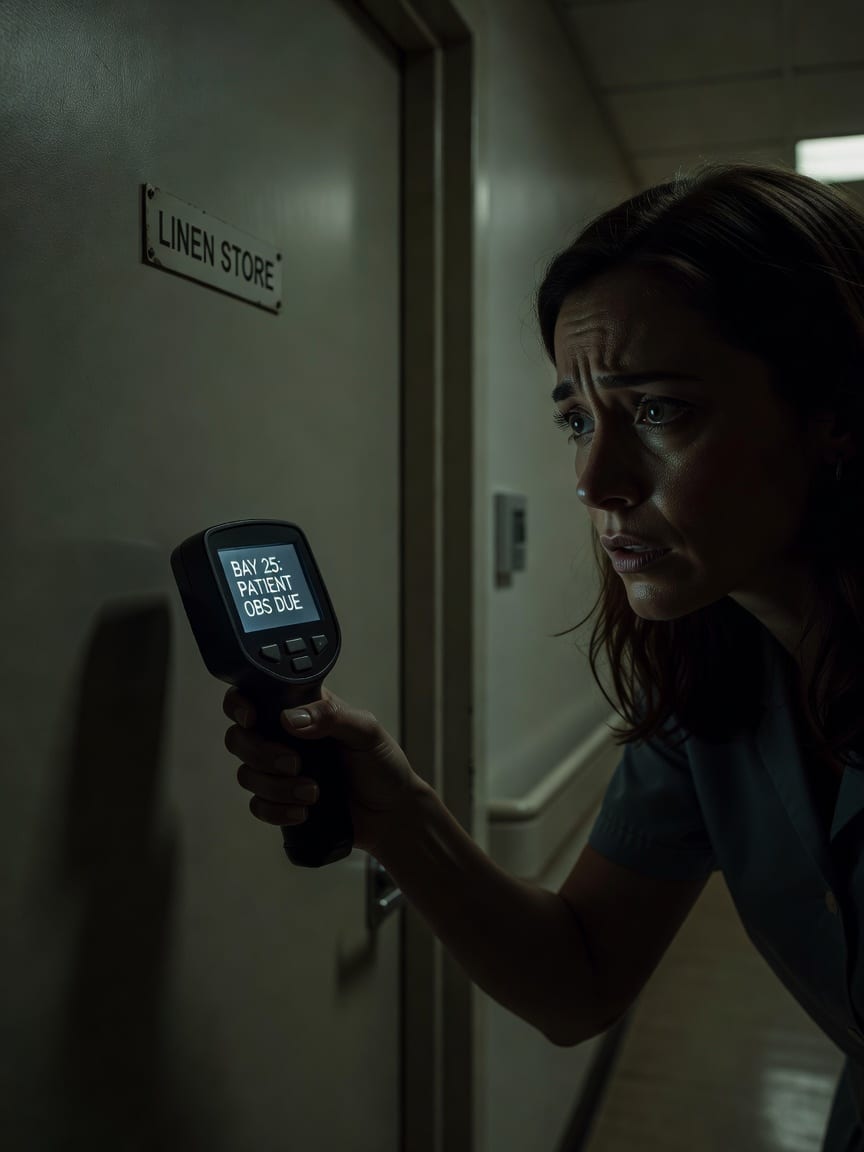
My hospital scanner demands patient care in Bay 25. Bay 25 is a locked linen closet.
I'm a pragmatic nurse, used to my hospital's quiet night shifts. But for a fortnight, my scanner has logged phantom patients in 'Bay 25' — a room that's just a linen closet. Then, tucked away, I found an old patient ID bracelet, faded but clear: 'Bay 25.'
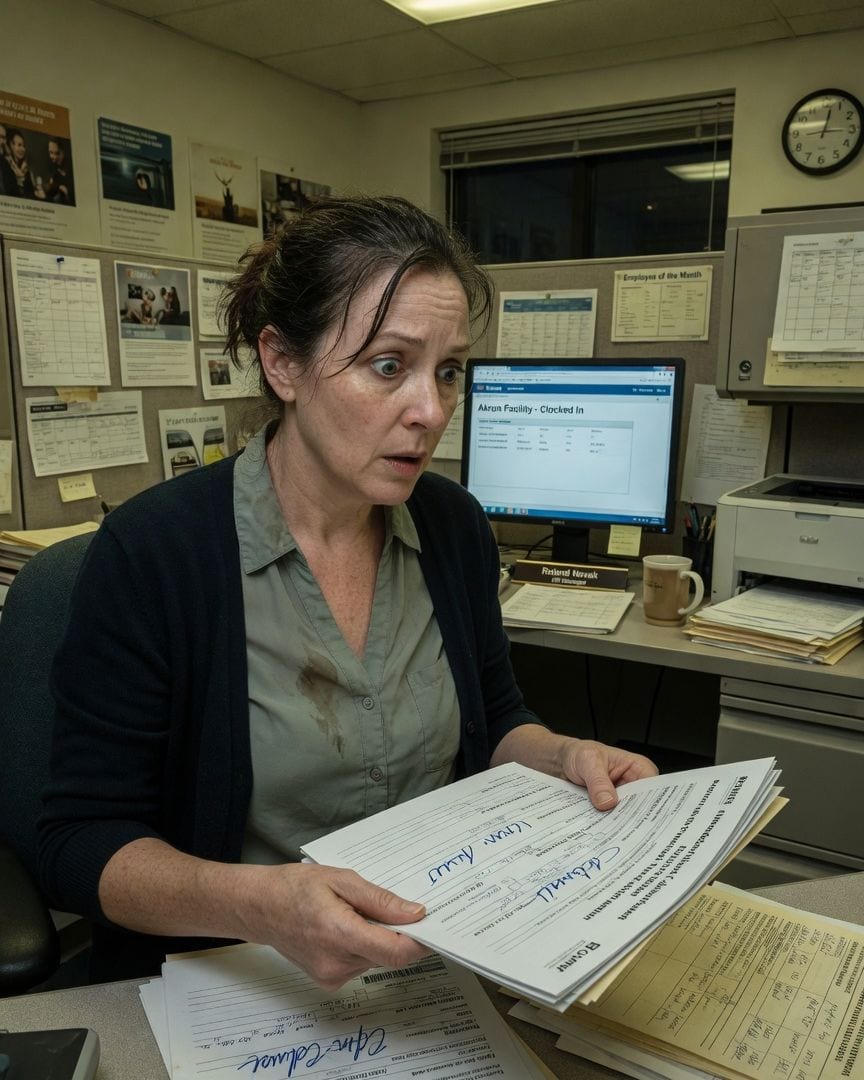
My bank account shows full pay for shifts I never worked in Ohio. I was on medical leave in Florida, signed off by a nurse.
My payroll statement showed a full week of work at the OmniCorp warehouse in Ohio, a thousand miles from my Florida home. I was on medical leave, confined to bed, with signed forms from my nurse to prove it. Yet, the work logs showed my own handwritten signature on a hazardous materials delivery, dated for one of those impossible shifts.
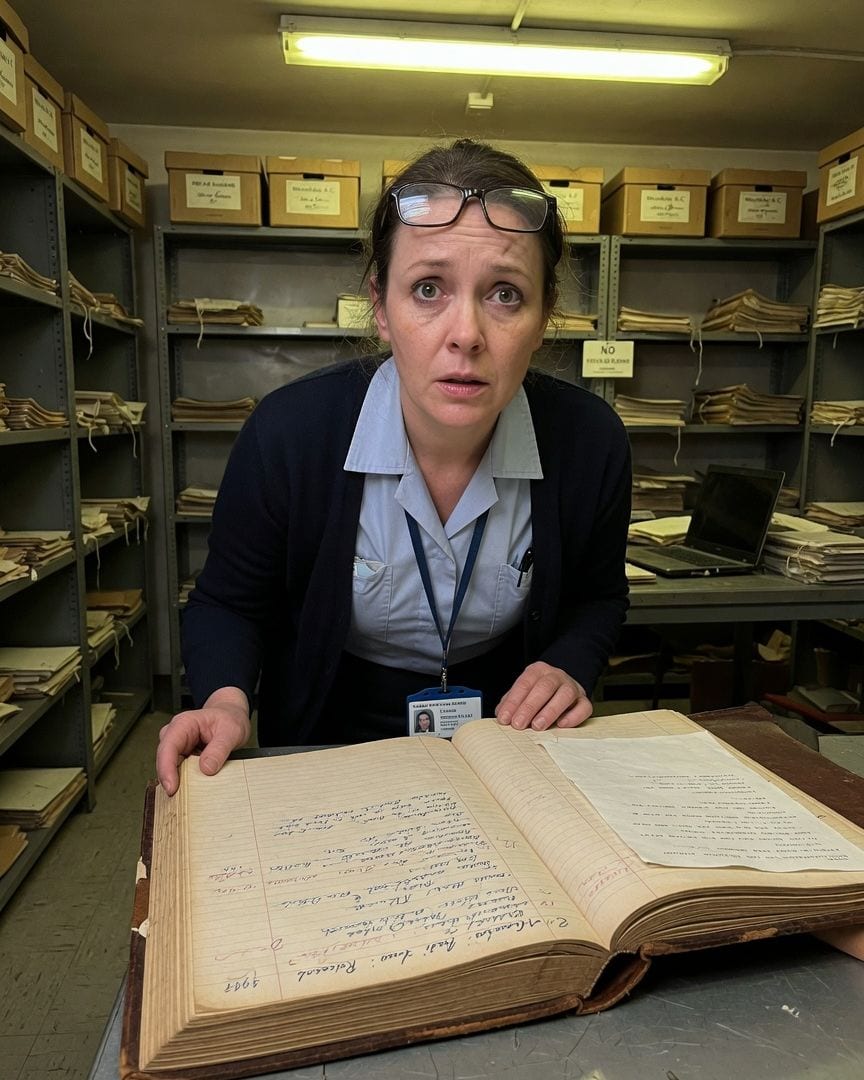
My ambulance trust's incident log shows callout 22-014 to 6 Cathcart Row at 2:40 AM. Every four years, the same call, same address. Always 'patient not found'.
My job involves tedious data entry for ambulance calls, but Incident 22-014 was different. It appeared every four years, always at 2:40 AM, always closed as 'patient not found.' Digging into the dusty physical archives, I found an entry from 1961 for the exact same incident, but its resolution read: 'Subject Secured. Relocated to "Holding".'