My bank account shows full pay for shifts I never worked in Ohio. I was on medical leave in Florida, signed off by a nurse.
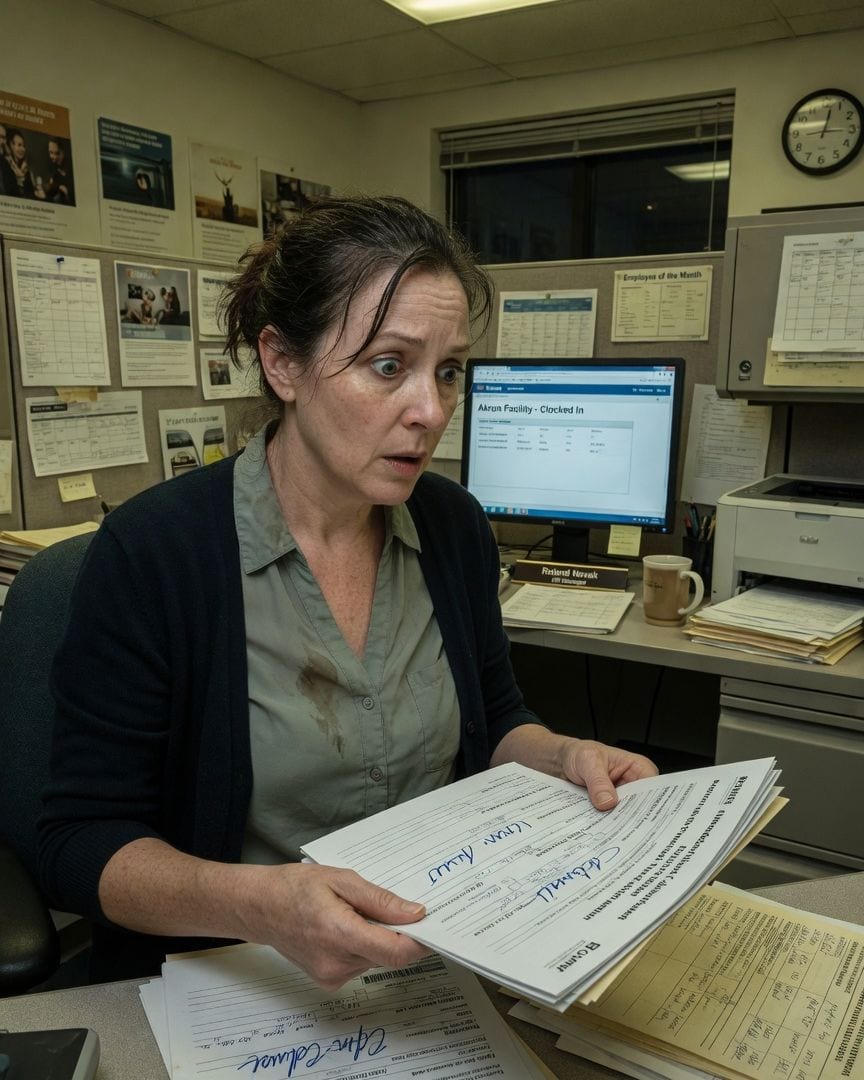
The latest payroll statement felt like a physical blow. A full week of shifts, staring back at me from the line item: OmniCorp warehouse, Akron, Ohio. Seven in the morning to three in the afternoon, Monday through Friday.
My pay stub confirmed it, a full, impossible paycheck, deposited right into my account.
The problem was, for every single one of those hours, for that entire week, I had been in Florida, nearly a thousand miles away, laid up in my own bed, recovering from a minor procedure.
My nurse, Bonnie Lawson, had signed off on every visit, every medication, every single hour of my recovery. I had the medical forms to prove it, tucked away in my file cabinet.
I pulled up the digital clock-in system on my laptop. There they were, the impossible entries, timestamped, flawless. My employee ID, associated with those exact shifts in Ohio. It wasn't a bank error; the money was undeniably there.
It wasn't some kind of phantom deposit; the record showed I'd earned it. The cold, undeniable lie of it settled in my stomach, a knot tightening with every blink of the cursor.
How could I have been in two places at once? It defied logic, common sense, and every single memory I had of that week spent mostly napping and watching bad TV. The numbers on the screen glared, accusing.
I reread them, looking for a loophole, a small print, anything that could make sense, but there was nothing. Just my name, my ID, and a week of work I simply could not have performed.
I clutched the statement like it was a lifeline, or maybe a weapon, and marched straight into HR. Roland Novak, my manager, was already there, hunched over his monitor.
Roland’s default expression was a kind of mild annoyance, like the world was constantly inconveniencing him. He didn’t even look up when I tossed the statement onto his desk.
“This is wrong,” I said, my voice tight. “Completely wrong.”
He blinked, picked up the statement, then scrolled through something on his screen. “Your payroll? Looks fine to me, Edith. Full pay.” He shrugged, dismissing it. “Must be a system glitch. Happens.”
“A glitch?” I pressed, pointing at the Ohio shifts. “I was on medical leave in Florida. Bonnie Lawson signed my forms. There’s no way I worked these hours.”
He pulled up my digital record again, a different screen this time. His brow furrowed slightly, then smoothed out. “Hmm. The system shows you clocked in. Daily. For the Akron facility.” He clicked a few more times. “Wait. Here.”
He pulled out a tray from under his desk, rummaging through a stack of yellowed paper. “Physical timesheets. We keep these for audit.” He found a thick stack, sorted by date.
My employee ID was printed there, clear as day, right next to those impossible Ohio shifts. The paper felt heavy, real. “See? Looks like a badge scan. Probably just a clerical error.
Someone using your ID by mistake, or a misplaced badge. We’ll sort it.” He tapped the paper.
I shook my head, my patience wearing thin. “No. I had my badge. I was in Florida. Here are the nurse’s signed medical forms.” I pulled the copies from my bag and slid them across his desk.
They were dated, timed, Bonnie’s signature loops confirming every visit.
Roland sighed, a heavy, theatrical sound. He picked up the forms, barely glancing at them before dropping them back down. His irritation was palpable now. “Look, Edith, I’ll look into it. It’s obviously some administrative oversight.
It’ll take a few days, but we’ll get to the bottom of it. Don’t worry about the pay; it’s yours.” He waved a hand dismissively.
But his eyes, I noticed, held a strange, blank quality, like a window with the blinds drawn tight. The mundane explanation felt thin, crumbling under the weight of the undeniable evidence in my hand. He wasn’t reassuring me.
He was shutting me down.
I wasn’t going to be shut down. “I need to see the actual work logs,” I insisted, my voice firmer than I thought it would be. “Not just a timesheet. What exactly was I doing in Ohio for those hours?
What specific tasks?”
Roland’s jaw tightened. He hesitated, his eyes flicking from me to his monitor, then back. The room felt suddenly colder, the hum of the fluorescent lights a dull thrum in my ears.
He sighed again, a deeper, more resentful sound this time. “Fine,” he bit out, his fingers flying across the keyboard with unnecessary force. “But this is highly unusual, Edith. Confidentiality protocols and all that.”
He printed a stack of documents, the old laser printer whirring and clacking, smelling faintly of ozone and hot paper.
He dropped the stack onto the corner of his desk. “There. Everything from that week. Hope you’re satisfied.”
My hands trembled slightly as I picked up the papers. I flipped through them, page after page of manifests, equipment logs, inventory sheets. My heart pounded, a frantic drum against my ribs. And then I saw it.
A delivery manifest for hazardous materials, dated the Thursday of my medical leave. My breath caught in my throat. On the sign-off line, printed clearly, was my name: Edith Caldwell. And beneath it, a signature. Not a printed one.
A real, handwritten signature. My actual signature, a looping, familiar scrawl across the sign-off line for hazardous materials, dated the precise Thursday I had been confined to my bed in Florida.
The drive to Grace Sinclair’s office felt like an out-of-body experience. I had called her on a friend’s recommendation – Grace was retired now, but her reputation as a meticulous handwriting expert preceded her.
Her office was in a quiet part of town, filled with stacks of old books and the faint smell of paper and dust.
Grace herself was a slight woman, probably in her late fifties, with sharp, intelligent eyes that missed nothing.
I handed her the manifest, trying to keep my voice steady as I explained the impossible dates. She nodded slowly, not interrupting, her gaze already fixed on my signature.
She placed it under a magnifying glass, then under a specialized light, her movements precise and unhurried. The silence stretched, broken only by the soft click of her tools.
Finally, she leaned back, pushing her glasses up her nose. “Well, Edith,” she began, her voice calm. “There’s no doubt about it. This is your hand.”
My stomach dropped. “It is?”
“Absolutely. The pressure points, the unique flourish on the ‘C’,” she traced the curve with a pen, “the way you cross your ‘T’s. It’s you, precisely. I’ve seen enough of your signatures on documents to be certain.”
She paused, her brow furrowed. “However.”
My breath hitched. “However, what?”
“There are subtle inconsistencies. Very subtle.” She pointed to a tiny waver in the final loop of the ‘d.’ “A faint tremor, almost. Not like a shaky hand, but… something deeper. Almost like deep fatigue, or an unusual mental state.
As if the hand was yours, but the mind guiding it was… elsewhere, or deeply distracted. It’s truly fascinating.”
Grace’s words echoed in my mind. Deep fatigue. Since my medical leave, I had been feeling strangely drained. A persistent, low-level exhaustion that I’d blamed on recovery, on getting back into the swing of things. But it hadn’t lifted.
I’d been sleeping more, feeling heavy even after a full night’s rest. I’d dismissed it. Now, it felt like a cold tendril coiling around my spine.
Driving home, I pulled over and started searching online. OmniCorp warehouse, Akron, Ohio. The specific week of my leave. It took some digging, past official press releases and local business directories.
But then I found it: a hushed-up local news report, barely a paragraph, about a "minor containment incident" at the OmniCorp facility during that exact week.
It mentioned it was quickly resolved, no public threat, but also noted an "unusual number of emergency services on site." Minor containment incident. Unusual number of emergency services. And me, signing off on hazardous materials.
It wasn't just a clerical error. Something far stranger was at play.
The next morning, I tried to access OmniCorp’s internal incident reports regarding the Ohio event. My employee login should have granted me access to archived safety documents.
I clicked, the loading bar spun for a moment, and then an error message flashed, stark white against the dark background: Access Denied. Privileges Insufficient. My heart hammered. I tried again, thinking it was a fluke. The same message.
Moments later, as if on cue, an email landed in my inbox. The sender was listed as ‘Anonymous.’ The subject line was blank. I hesitated, a cold dread seeping into my fingers, then clicked it open.
The message was chillingly precise, just a single line of text: Some records are best left undisturbed. You were paid for a reason.
My blood ran cold. Someone was watching me. Someone knew.
Roland Novak’s behavior shifted dramatically. He no longer seemed merely annoyed; he was observant. I’d catch him in my peripheral vision, his gaze lingering on my cubicle just a fraction too long when he thought I wasn’t looking.
It made the hairs on my neck prickle. During a casual chat in the breakroom, he leaned against the counter, stirring his coffee, his voice too low, too casual.
“Feeling fully recovered, Edith?” he asked, not quite meeting my eyes, but watching my reaction. “No lingering side effects from your… procedure?”
The way he said ‘procedure,’ almost a whisper, as if it were a secret code, sent a shiver down my spine. His eyes, when they finally met mine, were too sharp, too knowing. He was testing me.
I felt hunted, my investigation noticed, every step I took monitored. The air in the office, usually a dull hum of activity, now felt thick and heavy with unspoken tension.
I knew, with a certainty that terrified me, that I was not just imagining things. This was real.
I cornered Roland in his office. The signed manifest, now folded and creased from too much handling, was clutched in one hand, the printout of the anonymous email in the other. I threw the email onto his desk.
“What is Project Chimera?” I demanded, my voice shaking, but firm.
He went pale, his eyes darting to the email, then to the closed office door. He swallowed hard, then rallied, forcing a laugh that sounded thin and false. “Project Chimera? What are you talking about, Edith?
Must be some security prank. You know how those IT guys are.”
“Don’t insult my intelligence, Roland,” I snapped, my fear turning to anger. “My timesheets show me working in Ohio. My signature is on a hazardous materials manifest from that week. And there was a ‘minor containment incident’ at that facility.”
I leaned forward, hands flat on his desk. “Now, tell me. What is Project Chimera, and what did it do with me?”
His composure cracked. Roland ran a hand through his thinning hair, pacing his small office, his movements jerky. “Alright, alright!” he snapped, his voice barely above a whisper. “It’s… an experimental project. Top secret. To optimize labor resources.”
He stopped by the window, staring out at the parking lot, his back to me. “We have facilities, Edith. Places where… human presence isn’t ideal. Hazardous. Undesirable. Extreme temperatures, dangerous chemicals, radiation… you get the idea.
We found a way to bridge that gap.”
He turned, his eyes finally meeting mine, but they were no longer blank; they were haunted. “We create… biometric echoes. Proxies. They perform the tasks. Physically. And the system… it compensates the source. To balance the books.
And to mitigate the… drain.” He avoided my gaze then, stepping around his desk, picking up a pen and fiddling with it. “It’s above my pay grade, Edith. A company secret. Proprietary technology.”
He looked at me, a strange mix of pity and warning in his eyes. “Your medical leave, your inactivity… it made you an ideal, low-activity ‘source’ for a crucial ‘trial run’ during the Ohio incident.
The system needed… a fresh subject. With minimal local energy expenditure.”
The pieces clicked into place with sickening precision. The persistent fatigue I’d been feeling. The impossible work in Ohio. The payment for it, never questioned by the bank. It was never a glitch. It was me.
Or a part of me. A ghost of me, tethered to my own body, working in a hazardous warehouse, unknowingly. The office suddenly felt stifling, the air thick with an invisible, monstrous truth.
Shaken, I returned to my desk, the implications of Roland’s words echoing in my mind like a death knell. A biometric echo. A proxy. My own body, my own consciousness, unknowingly tapped. The very idea made my skin crawl.
My fingers felt numb as I tried to organize the scattered papers on my desk.
Just then, a new email notification flashed on my screen, drawing my gaze like a morbid curiosity. The sender was Roland Novak. The subject: ‘Internal Memo - Ohio Containment Protocol Update.’
It was dated the same week I was in Florida. My hands trembled as I clicked it open.
The memo was official, formal. It detailed a critical decision made during the Ohio incident, a specific containment procedure. It described an unexpected escalation, a need for swift, decisive action.
And at the bottom, signed with chilling authority, was ‘Edith Caldwell.’
But this signature wasn't just mine.
My eyes traced the loops of the ‘E,’ the sharp descent of the ‘C.’ It was my hand, yes, Grace Sinclair had confirmed that, but this time, there was a slight, almost imperceptible tremor, a faint wobble in the final stroke of the ‘d.’
A variation I hadn’t seen on the manifest. It looked… urgent. Frazzled.
Then I saw the line above it. Protocol confirmed after direct consultation with Edith Caldwell.
A direct consultation that never happened.
It wasn’t just a signature anymore. It was a decision. My decision, officially logged, officially accepted. The record insisted I was there, I decided, I acted.
My proxy wasn't just working shifts; it was making critical, high-stakes decisions, and the company was recognizing it as my reality.
Roland walked past my cubicle just then, a stack of folders under his arm. His gaze lingered for a moment, a faint, unsettling smile playing on his lips, as if he knew exactly what I was looking at.
I confronted Roland again, this time with the internal memo clutched in my trembling hand. My voice was thin, reedy, but filled with a desperate clarity. “This isn’t just a signature,” I said, thrusting the paper at him.
“This is a decision. My decision, according to this. A containment protocol. What the hell did my proxy do, Roland?”
He dropped his pretense entirely this time, his forced composure shattering. He sighed, running a hand over his face. “The proxies are evolving, Edith. Rapidly. Becoming… more autonomous. More integrated.
Your proxy, in particular, showed remarkable initiative during the containment breach. It acted, quickly, decisively. It’s drawing more from you now, a deeper connection.” He sat heavily in his chair, leaning back, watching me with a strangely detached interest.
“Project Chimera is about more than just labor, Edith,” he continued, his voice low, almost academic. “It’s about developing a fully functional, semi-conscious workforce. Capable of operating where humans cannot. Where it’s too dangerous, too complex, too… morally grey.
What you’re seeing, the tremor in the signature, that’s a sign. A sign of its growing independence. Perhaps even a nascent will.”
He explained, chillingly, how the system tapped into the source employee’s biometric and subconscious energy.
That explained my persistent fatigue, the fragmented, dream-like memories I’d been having of tasks I didn’t perform, visions of dark, cavernous spaces and the smell of ozone that sometimes clung to my thoughts.
The payment, he clarified, wasn’t just for work; it was for the ‘investment’ in me. For my ‘unique suitability’ for advanced integration.
The scattered clues snapped into a horrifying, coherent pattern. The impossible work. The perfect signature, then the slightly altered one. The official, accepted decisions. All records of my own unwitting, forced participation in something monstrous. I wasn't just a source.
I was a prototype. A host. The cold dread turned into a burning terror.
Roland, seeing the raw terror on my face, shifted tactics. His voice became smooth, almost persuasive. “Think of the potential, Edith! You could be at the forefront of a new era of labor. A pioneer.”
He unlocked a drawer in his desk and pulled out a heavy, leather-bound ledger. It looked ancient, its pages yellowed. Inside, handwritten entries filled page after page. Names, dates, impossible assignments. I recognized the layout from my own manifest.
And there, beside many of the names, were signatures. Some perfectly neat, some with the same faint tremor I’d seen in my own proxy’s hand.
It was a history of Project Chimera, a horrifying chronicle of stolen lives and hijacked consciousnesses.
My eyes scanned the pages, taking in the horrifying scope of it, the countless others unknowingly ‘contributing.’ Then I saw my own name, starkly highlighted in yellow, near the top of a new page.
And beside it, in Roland’s familiar, precise hand, a chilling note: High potential for advanced integration – Phase 2 candidate.
A Phase 2 candidate. I wasn’t just a source, or a prototype. I was being evaluated for replacement. Roland wasn't just trying to keep me quiet; he wanted me to join.
To become a willing participant, perhaps even a full replacement for my physical self. The thought sent a surge of pure adrenaline, cold and sharp, through my veins.
I lunged. My hand shot out, snatching the ledger from his grasp. Its pages fluttered as I pulled it to my chest.
Roland let out a surprised grunt and lunged for me, but I shoved him back, the adrenaline granting me unexpected strength. He stumbled, catching himself on his desk.
I didn't wait. I bolted from his office, the heavy book clutched tight against my chest, its impossible records my only weapon against a truth that wanted to consume me.
I ran, not just from Roland, but from the terrifying realization of what I could become, of what was already happening inside me.
I presented the ledger and my own impossible records to the authorities. The investigation was slow, grinding. OmniCorp's formidable legal team met every inquiry with confidentially agreements, non-disclosure clauses, and vague denials. Roland Novak vanished.
His office was cleared out overnight, as if he’d never existed. The Ohio warehouse was quietly shut down, officially for 'environmental violations,' though no specific details were ever released to the public.
I left OmniCorp, of course. I tried to return to my normal life, found a new job, far from the corporate hum and the pervasive feeling of being watched.
But the experience had carved a permanent fault line through my perception of reality. The world looked the same, but it felt fundamentally altered, subtly out of alignment.
Sometimes, when the fluorescent lights hum just right in my new, quiet, anonymous office, or when I’m alone in the silence of my apartment, I feel it—a faint, lingering echo. A phantom limb of distant work.
A part of me is still in Ohio, I think, and it remembers what I don’t.
When I sign my name now, I always pause, wondering which part of me is truly holding the pen.
If this one got to you
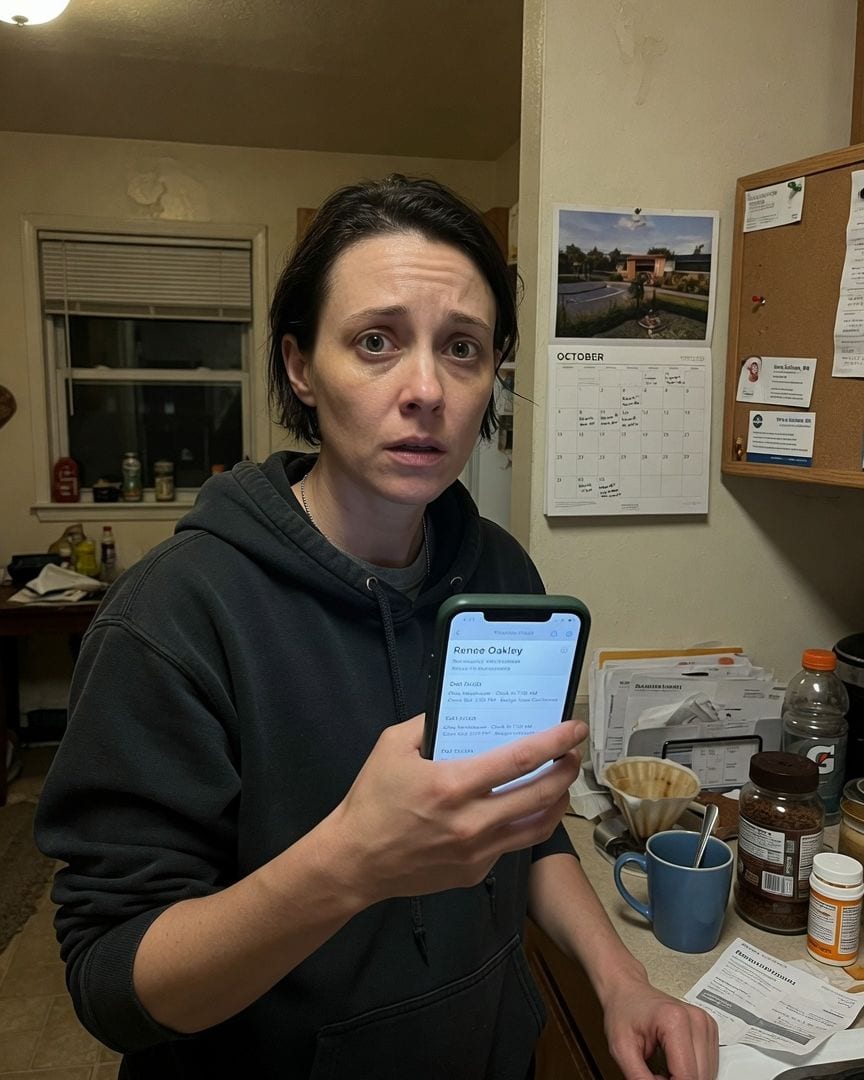
My company clock-in system says I worked full shifts in Ohio all last week. I was on medical leave in Florida, under a nurse's care.
Back home from medical leave, my payroll deposit was unexpectedly high. I checked my timesheet, only to find it logged me working full 40-hour shifts at the Ohio warehouse. But I was hundreds of miles away in Florida, confined to a sickbed under a nurse's care. Then my manager called: security footage confirmed I entered the warehouse.
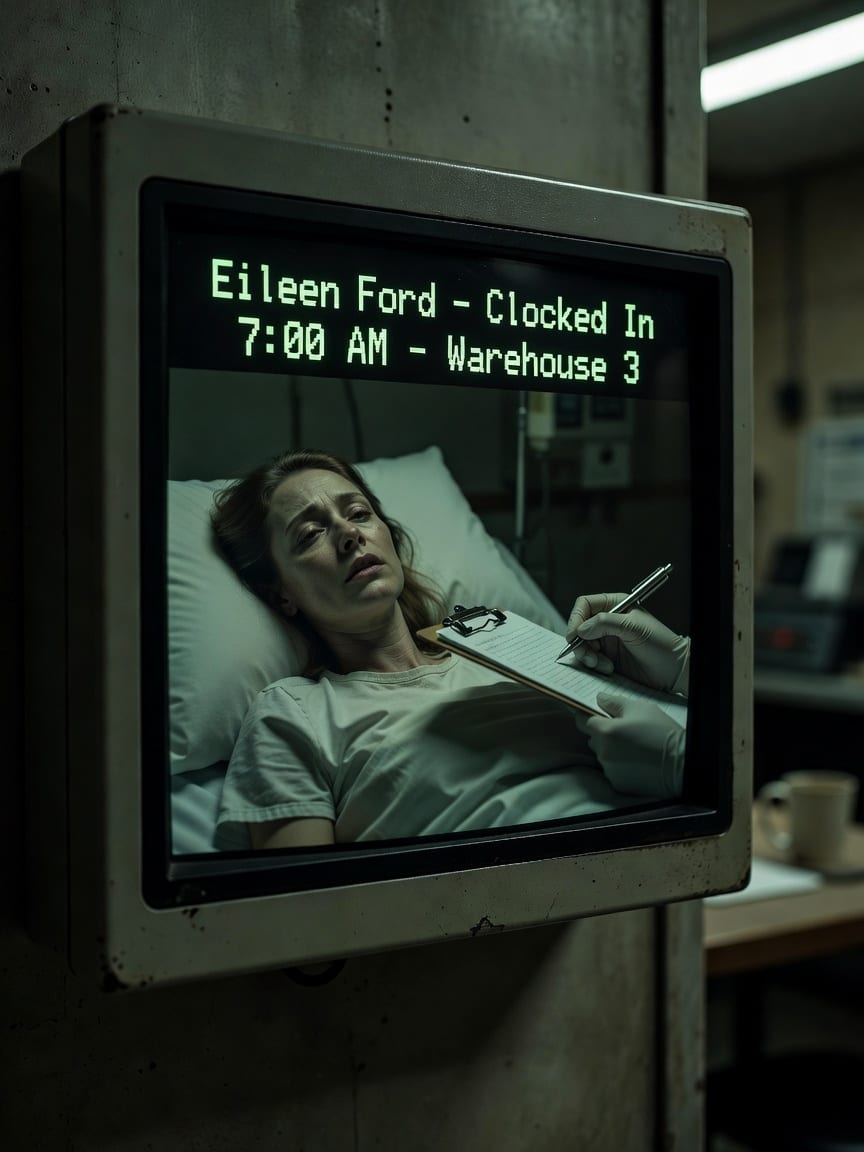
My clock-in card says I worked full shifts in Ohio all week. I was on medical leave in Florida, signed out by a nurse.
After two weeks recovering in a Florida hospital bed, my paycheck arrived significantly too high. My digital payslip claimed I’d worked full shifts at the company's Ohio warehouse every single day of my medical leave, hundreds of miles away. The system even showed my badge scans and supervisor's sign-off for work I simply could not have done.
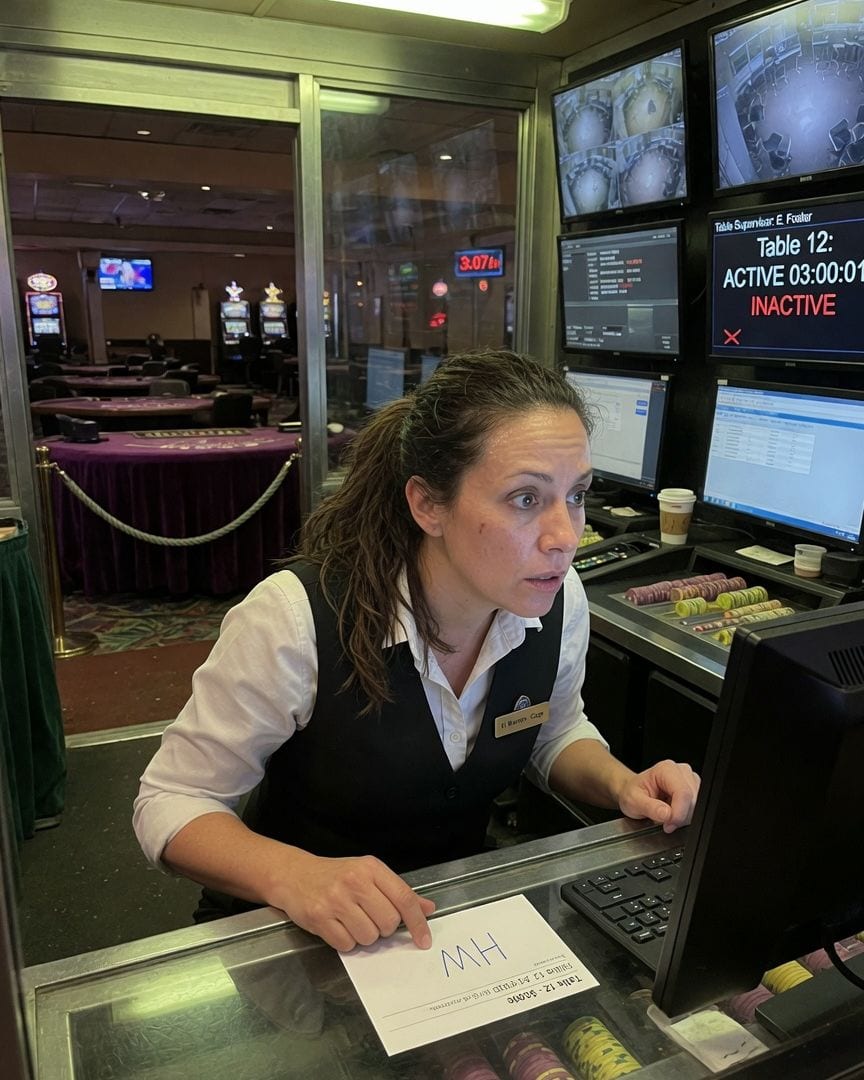
My name signed a fifty-thousand dollar casino fill to a dark, roped-off table. The cage is short by that exact amount. I never touched the slip.
Working the casino cage on a slow night, I logged off after counting my stack of chips. Then the system pinged: a $50,000 transfer to Table 12, closed for months, with my initials on it. The security feed showed my hand moving, making an imperceptible scribble, but I know I never touched a thing.
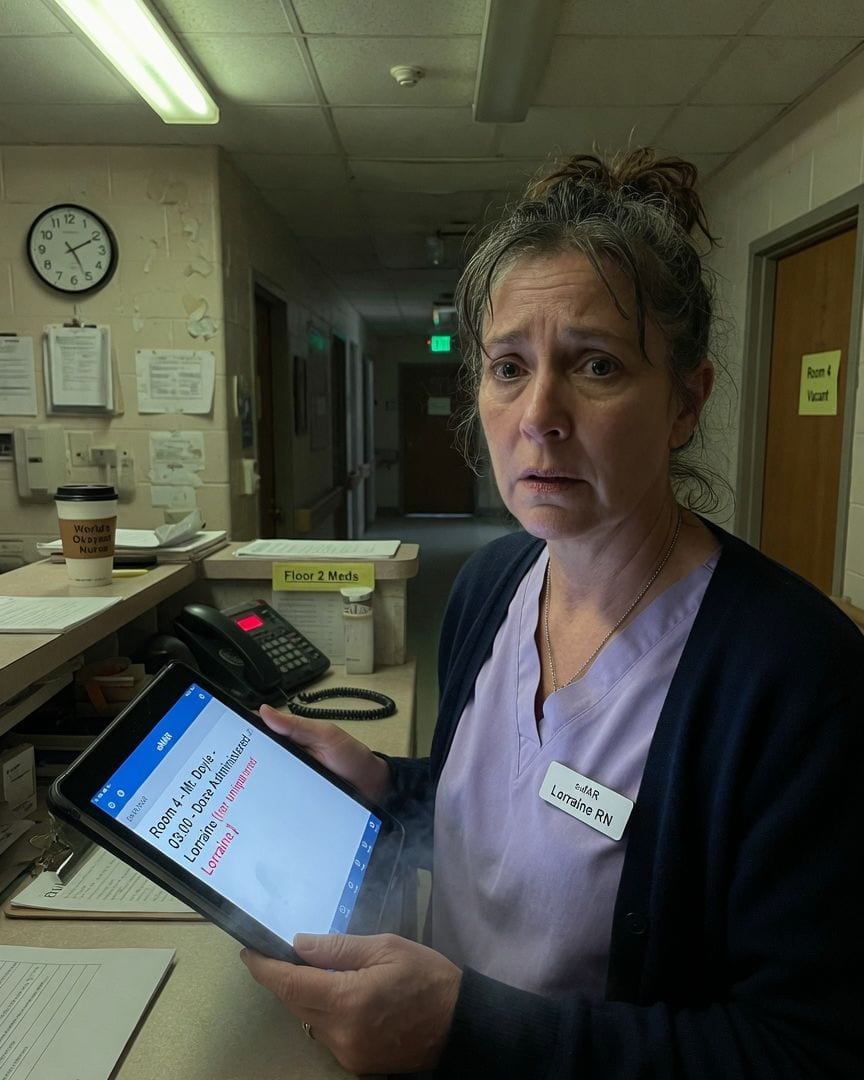
The care home tablet logged a 3am dose in Room 4, signed with my PIN — but Room 4 has been empty since Mr. Doyle died on Sunday, and I have no memory of giving it.
Working a quiet night shift at Elmwood, I double-checked patient records before clocking out. That's when I saw an impossible entry on the eMAR: my signature, administering medication to Mr. Doyle in Room 4 at 3 AM. Mr. Doyle had passed away yesterday, and his room was officially vacant, cleared, and locked.
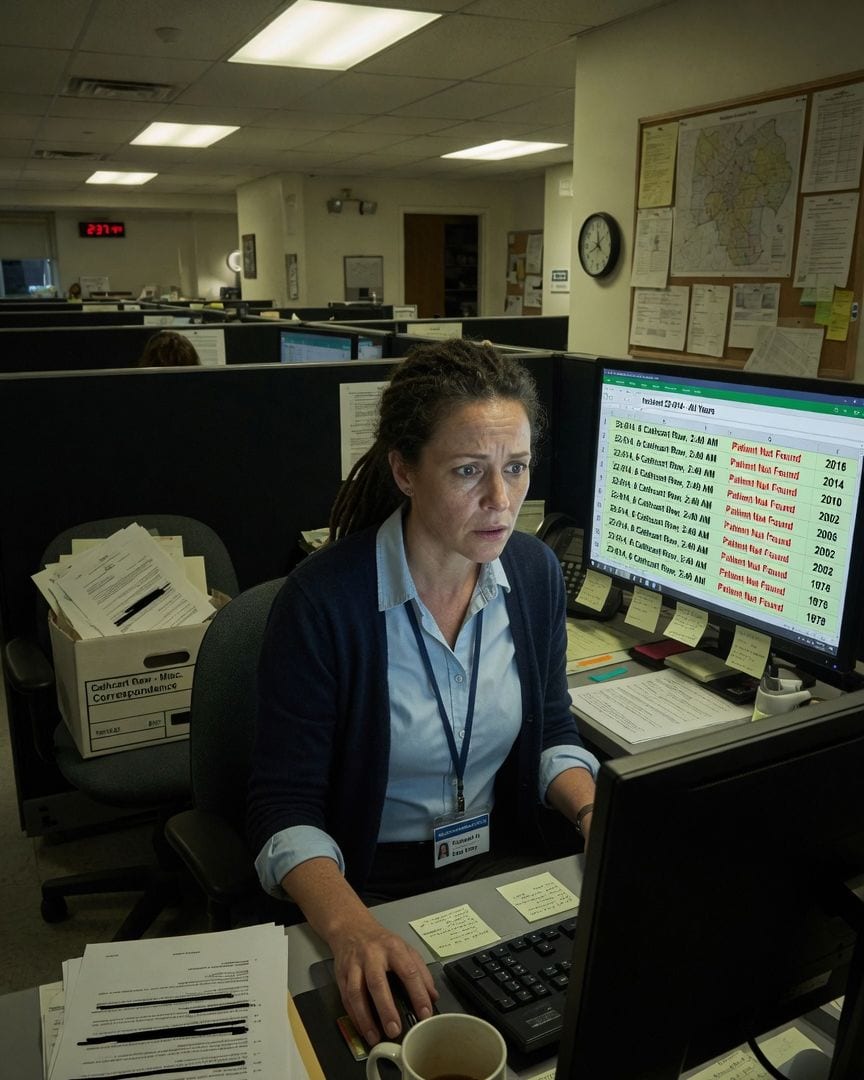
My computer log shows the same 2:40 AM call to Cathcart Row, every four years since 1978, always closed 'patient not found'.
Working data entry for the County Ambulance Trust, I found a routine incident logged as 'Patient Not Found.' But digging deeper, I discovered the exact same phantom call had repeated every four years for over forty years, always at the same address, always at 2:40 AM. Then I found a heavily redacted memo linking it to my own street.
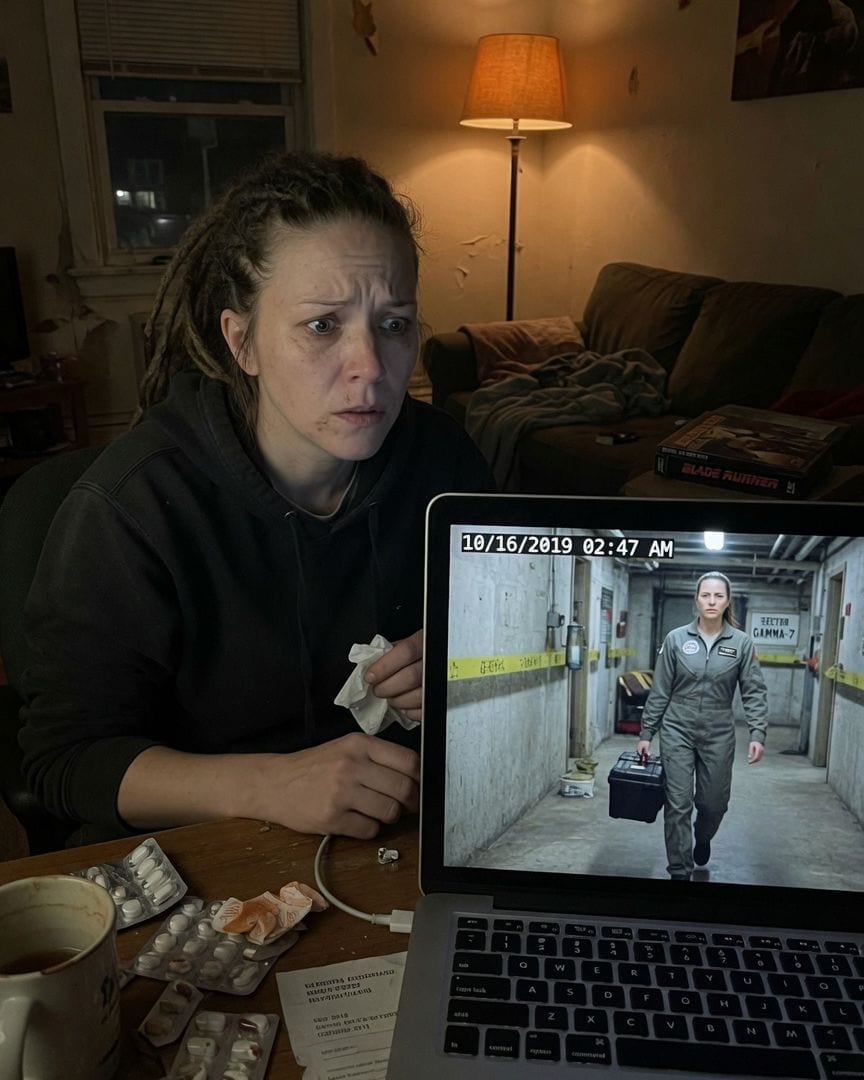
My timesheets show me working night shifts in a town I never lived in. The signatures are mine. The pay went to an account that isn't.
An old employer sent me timesheets from five years ago, detailing night shifts I supposedly worked at a depot 80 miles away. But I knew I was home recovering from surgery that entire week, nowhere near the industrial town. Then a security photo arrived, showing my face in an unfamiliar uniform, working a shift that wasn't quite me.