My care home's med tablet showed a 3 AM dose given to a dead man. My own PIN signed it off in his empty room.
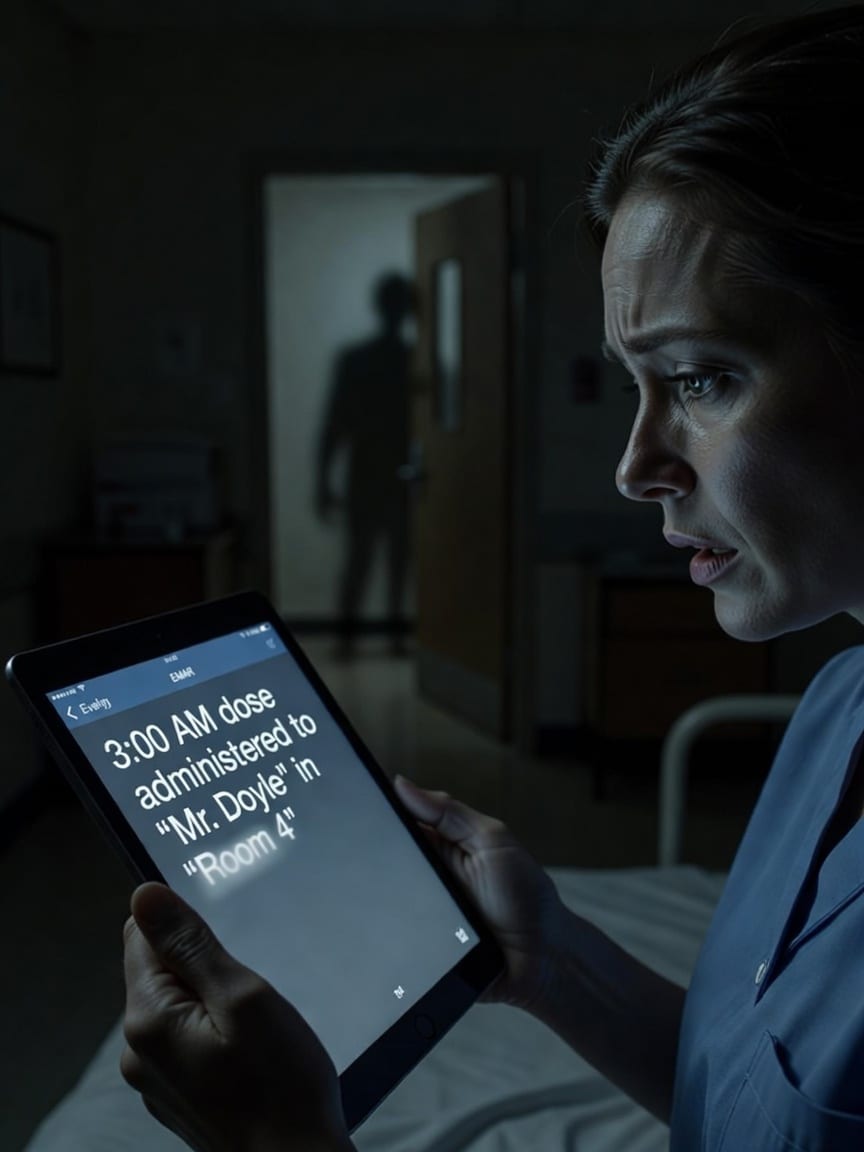
I clicked through the eMAR tablet, the soft glow of the screen the only light in the quiet hallway of Evergreen Manor. It was late Tuesday, past 3 AM, and I was confirming the final rounds of my night shift.
Just one more medication to log: a routine sedative for Mrs. Henderson in Room 17. My thumb hovered over the ‘sign off’ button, a familiar motion, a rhythm I knew by heart.
Then, a flicker of green on the screen, a jarring note in the quiet hum of the night, caught my eye. An entry for 3:00 AM, a dose already administered. My PIN. For Mr. Doyle. My stomach dropped. Mr. Doyle.
He passed away peacefully on Sunday. Room 4, his room, had been empty, meticulously cleaned, and sealed since then. Yet, the eMAR tablet insisted I signed off a dose for him, in that empty room, just hours ago.
The screen was brutally clear: right drug, right resident, my unique identifier. It was impossible, a slap in the face of logic, but the green checkmark stared back, undeniable.
I tried to rationalize it. A system glitch? A phantom entry, a ghost in the machine? I pulled up the audit trail, my fingers flying across the cold glass. Every action logged. No errors. My PIN was used.
My hand, my fingerprints, were the only ones registered to administer medications under that ID. I tried to void the entry, a desperate attempt to erase the impossible, but the system denied it. ‘Dose successfully administered,’ it read.
The cold logic of the tablet made the impossibility sharper, more concrete.
I gripped my master keys, the metal cold against my palm, and walked down the silent hall to Room 4. The door was locked, as it should be.
The 'Do Not Disturb' sign, hastily hung on Sunday, was still there, crooked. I inserted the key, the click echoing in the stillness, loud enough to wake the dead, or so it felt.
Inside, the room was exactly as it should be: spotless, stripped bare of personal effects, ready for disinfection. No bed linens, no furniture, just the hospital bed frame. No sign of disturbance.
I checked the bedside table, ran my hand over the polished surface. Nothing. The logical part of my brain screamed 'glitch,' a computer error, a misfire. But the eMAR didn't glitch like this.
Not with a signed dose, not for a deceased patient, not with my PIN.
I stood in the center of the empty room, the silence pressing in, heavy, almost expectant, and a shiver ran down my spine, a cold knot tightening in my gut.
I forced myself to approach the stripped bed frame. I ran my hand over the bare mattress, feeling for anything out of place. It was cool, smooth vinyl, exactly as I’d expect.
But then, as my fingers reached the head of the bed, I felt it. A subtle warmth, faint but undeniable, a shallow, distinct depression on the mattress where a pillow would sit.
I pressed my palm against it, and the warmth was there, lingering, fading even as I felt it. And then, a faint, sweet, medicinal scent, like the specific sedative listed on the eMAR, wafted up.
It was fleeting, almost gone, but I recognized it. My heart hammered against my ribs. Someone, or something, was here. In this empty room. At 3:00 AM. And it left a trace.
The next night, I arrived for my shift, the image of the warm indent and the phantom scent still vivid, burned into my memory. The eMAR tablet felt heavier in my hand.
I discreetly checked the system again, specifically for Mr. Doyle. Nothing new, no further phantom doses.
But as I scrolled through the system logs, I noticed a small, almost imperceptible anomaly: the system's internal clock calibration log showed a momentary, one-second desync at precisely 3:00 AM each morning for the past week.
Too precise to be random. It was as if the system hiccuped, just for that second, every day.
I found Gerald Sutton, the night security guard, in the staff breakroom, hunched over a lukewarm cup of coffee. He’d worked here for decades, seen everything come and go.
“Gerald,” I said, trying to keep my voice casual, “you ever notice anything… odd about Room 4? Or around 3 AM?” He just grunted, not looking up. “Night’s always got its own rhythm, Evelyn. Best not to disturb it.”
His eyes, however, when they finally flicked up to mine, held a peculiar knowing, a calm acceptance that completely unnerved me. There was no surprise, no curiosity. Just a deep, unsettling understanding.
Later, I reviewed the eMAR for other residents who’d passed in the last six months. It took me hours, scrolling back through hundreds of entries.
I found three more instances: a 3:00 AM ‘dose’ administered to Mrs. Novak in Room 12 three months ago, Mr. Easton in Room 7 five months ago, and Mrs. Fontaine in Room 2 ten weeks ago.
All signed by the night nurse on duty at the time, all in rooms that became empty shortly after. Mrs. Novak’s dose was signed by a nurse who had retired years ago.
Mr. Easton’s by a temporary agency nurse who worked just that one week. The pattern wasn't random. It was a routine. And it wasn’t just me.
My investigation made me feel increasingly exposed, as if the very walls of Evergreen Manor were watching.
As I scrutinized the eMAR logs in the quiet nurse’s station, the only sounds the soft hum of the computers and the distant murmur of residents’ sleep, I caught Gerald Sutton watching me from the end of the hallway.
He was a dark silhouette framed in the dim light, unmoving. He didn't wave, didn't speak. He just watched. When I looked up again, he was gone, vanished as silently as he’d appeared.
Later, during my rounds, I passed Room 4. The door, which I had double-checked and secured myself, was now slightly ajar, just a sliver of darkness visible. My heart hammered against my ribs.
I pushed it open, the gentle swing of the door mocking my earlier diligence. The room was still empty, but the faint medicinal scent was back, stronger this time, almost sickly sweet, clinging to the air like a shroud.
On the bare mattress, where the phantom indent had been, a single, old-fashioned, small glass vial sat upright, empty and clean.
It wasn’t a modern medication vial; it was the kind I’d only ever seen in old medical dramas, with a corked top and thick, green-tinted glass. I picked it up, my fingers trembling.
It was cool to the touch, almost unnaturally so, as if it had just materialized from cold storage.
I glanced out the window, into the dark night, the overgrown bushes at the edge of the property a black mass against the pale glow of a streetlamp.
A flicker of movement caught my eye, too quick to identify, a shadow among shadows. A primal dread seized me. I wasn’t just observing a pattern; I was being observed.
The vial cool in my pocket, I sought out Gerald Sutton again. I found him in the breakroom, pouring himself another coffee, his back to me.
“Gerald,” I said, my voice sharper than I intended, “what do you know about Evergreen Manor? Before it was a care home?” He didn’t jump, didn’t flinch. He just sighed, a slow, deliberate sound, before turning to face me.
“It was here before, in a way,” he said, his voice low, gravelly. “Old sanatorium. Evergreen Sanatorium. Closed down before this place was built, of course.” He shrugged, as if this was common knowledge. My breath hitched.
“Did they have a ‘Room 4’ there?” I pressed him, the words tumbling out. “Did they give ‘doses’ at 3 AM?”
Gerald took a long sip of his coffee, his eyes half-closed. “They had ‘treatments,’” he finally said, his gaze distant. “For ‘chronic patients.’ And yes, some of those treatments, they were… quiet. Done in the dead of night.
In specific rooms.” He nodded vaguely towards the wall separating the breakroom from the main hall. “This whole building sits on the old foundations. They just built over it, added a new coat of paint, new name.”
I pulled out the small, glass vial from my pocket, setting it on the table between us. “Is this from there?” Gerald’s eyes widened slightly, just a fraction.
He picked it up, turning it over in his calloused fingers, a strange mix of recognition and resignation on his face. “Aye. Used to see these in the old storage rooms. This was for the ‘deep sleepers.’
Special cases, you see.” He handed it back, his gaze settling on mine, unblinking. “The sanatorium had a reputation. For keeping patients… comfortable. Even after they passed.” The words landed like stones, each one thudding against my chest.
The 3 AM doses, the empty rooms, the sedatives – it wasn't a glitch. It was a continuation. A ‘routine’ from a forgotten place, now using the care home's own systems, using our PINs.
Driven by Gerald's cryptic words, a cold certainty settling in my bones, I searched the care home’s deepest storage, a forgotten sub-basement rarely used since Evergreen Manor was built.
The air grew colder, heavy with the scent of damp concrete and neglect. Behind stacks of old, moldering linen, obscured by shadows, I found a small, locked metal cabinet, rusted at the hinges.
Using a master key I’d never had cause to use before, I opened it with a groan of tortured metal.
Inside, nestled beneath a thick layer of dust, was an old, clunky tablet, its screen dark, and beside it, a thick, leather-bound ledger, its pages yellowed and brittle.
The tablet was an early eMAR prototype, clearly predating the current digital system. Its plastic casing was cracked, its buttons sticky. I managed to power it on, its screen flickering to life with a forgotten login prompt.
After several attempts at common passwords, I tried a default admin password I vaguely remembered from an ancient training manual that had been gathering dust in a back office. It clicked. The screen loaded, slow and chunky.
I accessed the archived logs. The dates scrolled back, not just years, but decades. I saw Mr. Doyle’s entry, then Mrs. Novak’s, then further back, names I didn’t recognize, nurses long since retired or passed on.
The 3:00 AM ‘dose’ pattern was there, stretching back through time, chillingly consistent.
But then, an entry appeared, dated years before Evergreen Manor was built, before the very first brick of this building was laid. It was for a ‘patient’ in ‘Ward C, Room 4,’ signed by a ‘Nurse Agnes.’
The formatting was different, older, handwritten on what looked like a digital facsimile of a paper form, but the details were chillingly identical: 'Sedative, 3:00 AM, Administered.' This ‘record that cannot be’ proved the routine didn't start with Evergreen Manor.
It has always been here. And it wasn't just a pattern. It was a living, breathing schedule, etched into the very fabric of this place. And I was now part of it.
I pored over the old ledger and the archived tablet entries, the fluorescent light of the staff room casting a sickly pallor on the grim discoveries.
The 'Ward C, Room 4' entry from before the care home even existed was the chilling keystone.
The sanatorium's original blueprints, which I found tucked into the back of the leather-bound ledger, confirmed it: 'Ward C, Room 4' was located precisely where Evergreen Manor's Room 4 now stands.
The 'treatments' weren't for healing, but for 'preserving tranquility' – a euphemism, the ledger hinted, for binding the essence of certain patients to the sanatorium's grounds, especially those deemed 'sensitive' or 'receptive,' to maintain a perpetual state of 'calm.'
The 3 AM 'doses' were the final step, a ritual of transition, not a medical procedure. The 'patients' were never truly gone; they were simply folded into the fabric of the place, their presence a silent hum beneath the surface.
The modern eMAR system, with its precise logging and nurse PINs, simply offered a more efficient, unwitting interface for the entity that maintained this 'routine.' It needed a live, active signature to process the transition, a proxy.
And now, I was that proxy. Every 3 AM dose I saw logged, every checkmark in the system, was another patient's essence, claimed and bound to this cursed ground.
The knowledge was a cold, leaden weight in my gut. I couldn't stay. I grabbed the old ledger and the archived tablet, my 'proof,' though I knew no one would ever believe it.
As I made my way to the exit, the care home felt different, alive with unseen presences. The air was thick with the sweet, medicinal scent, almost suffocating now. As I passed Room 4, the door was wide open, beckoning.
Inside, a faint, shimmering outline of a figure sat on the bed, its head bowed, a hand reaching out, as if in silent invitation. It wasn't malevolent, not overtly threatening, but utterly, profoundly wrong, an echo given form.
The figure slowly raised its head, and I saw not a face, but a swirling void, deep and ancient, that seemed to pull at my very being, a drain on my own life force.
I felt a profound exhaustion, a desire to simply lie down, to rest, to succumb to the sweet oblivion. I forced myself to look away, my heart hammering like a trapped bird.
I realized the 'routine' didn't just bind the deceased; it siphoned the living, slowly, subtly, through the very act of 'administering' the doses.
My PIN had been used to bind others, and each use had taken a piece of me, a part of my vitality. I broke into a run, the heavy ledger clutched to my chest, the old tablet banging against it.
I burst through the main doors, gasping for air, the night air cold against my face, a shocking relief. I didn't look back.
I got into my car and drove, the old tablet and ledger beside me on the passenger seat, proof no one will ever believe, a truth that had hollowed me out.
I never returned to Evergreen Manor. I mailed the ledger and the old tablet, along with an anonymous letter detailing everything, to a local historical society, but received no reply.
My nursing license was quietly suspended after I failed to show for my shifts, a note about ‘abandonment of duties’ on my record.
I moved to a new town, found a different job, far from any care facilities, far from the night shift.
The scent of sweet sedatives still occasionally wafts into my awareness, even in open air, a phantom perfume on the breeze. I sleep with the lights on now, the silence of the night a constant, unnerving presence.
I know the routine continues, uninterrupted.
Sometimes, when the moon is just right, I see a faint green glow reflected in my window, like a distant eMAR tablet.
I know it’s impossible, just a trick of the light, but it’s there, a reminder of the quiet, terrible work that still happens in the small hours, signed by a ghost.
And she knows, deep down, that a part of her, a piece she can never get back, is still clocking in at 3 AM.
If this one got to you
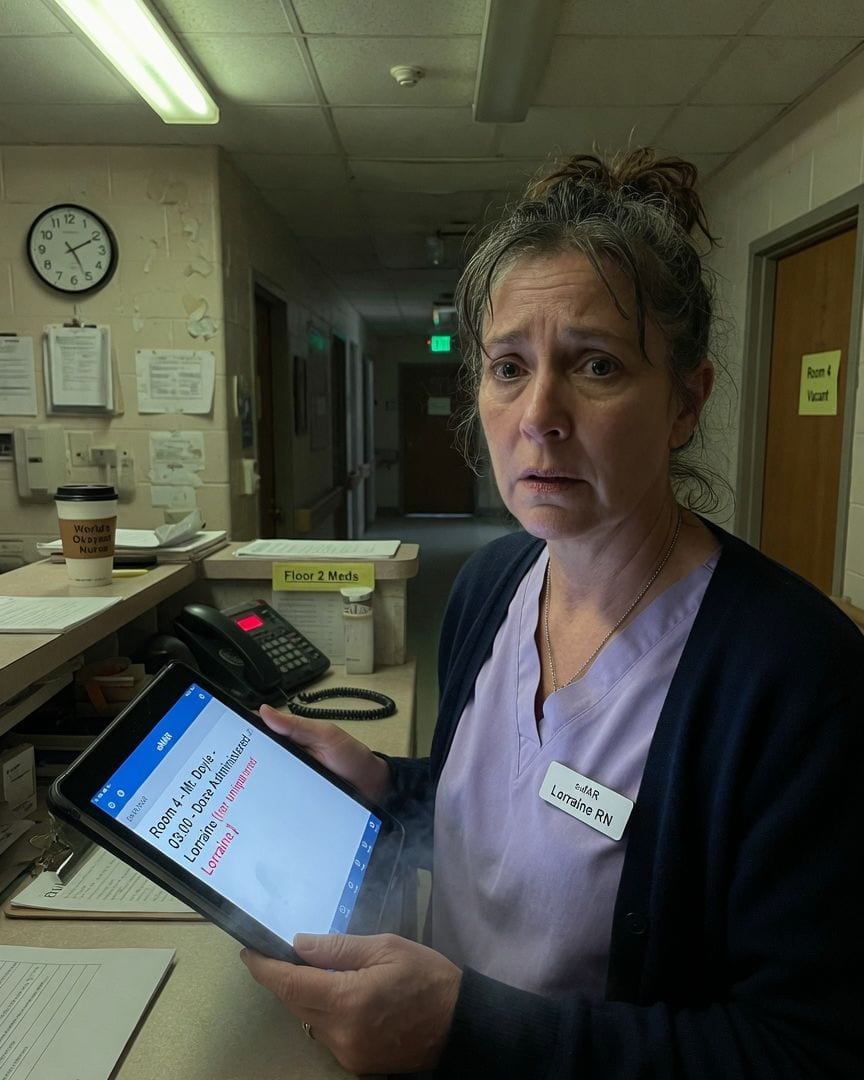
The care home tablet logged a 3am dose in Room 4, signed with my PIN — but Room 4 has been empty since Mr. Doyle died on Sunday, and I have no memory of giving it.
Working a quiet night shift at Elmwood, I double-checked patient records before clocking out. That's when I saw an impossible entry on the eMAR: my signature, administering medication to Mr. Doyle in Room 4 at 3 AM. Mr. Doyle had passed away yesterday, and his room was officially vacant, cleared, and locked.
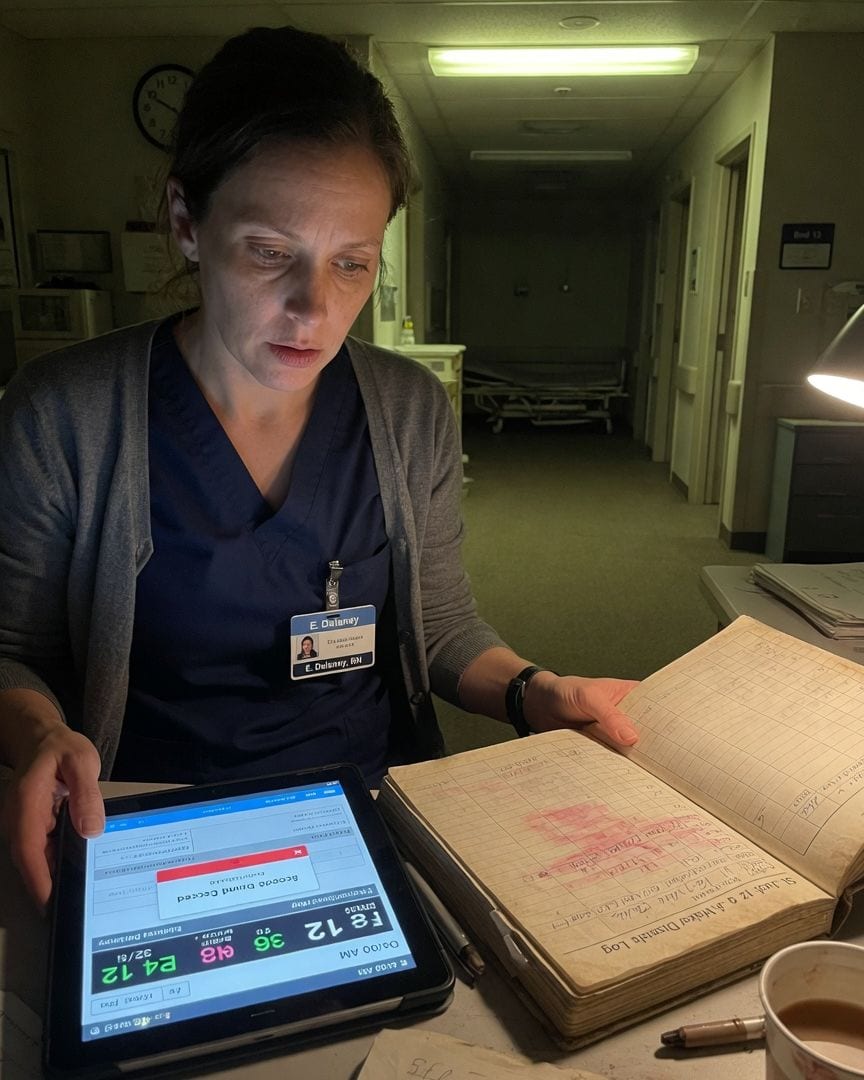
My empty ward's bed 12 had fresh vitals charted. The system says I entered them.
Working my usual night shift at St. Jude's, I pulled up the monitor system to log patient vitals for Ward 12. My thumb paused at Bed 12, where a full set of readings was already timestamped and logged under *my* ID. But Bed 12 was utterly stripped and empty; it had been discharged days ago.
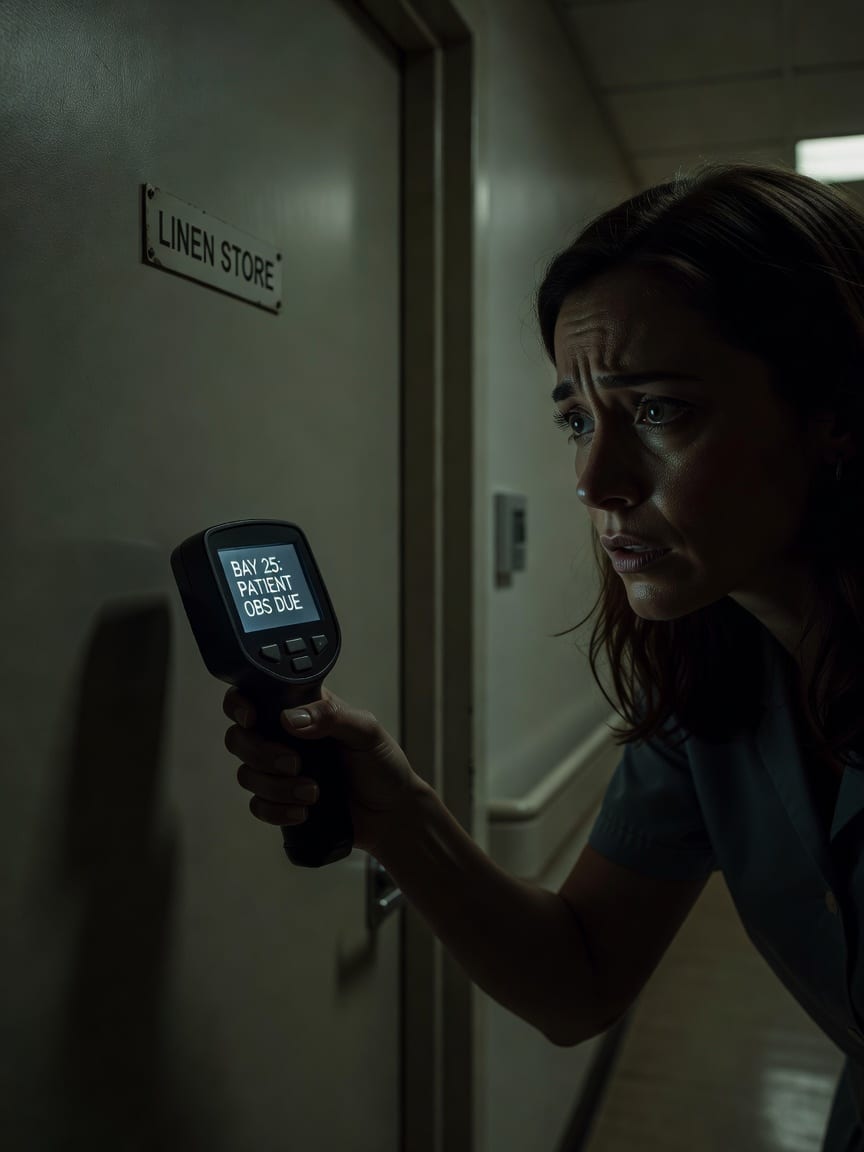
My hospital scanner demands patient care in Bay 25. Bay 25 is a locked linen closet.
I'm a pragmatic nurse, used to my hospital's quiet night shifts. But for a fortnight, my scanner has logged phantom patients in 'Bay 25' — a room that's just a linen closet. Then, tucked away, I found an old patient ID bracelet, faded but clear: 'Bay 25.'
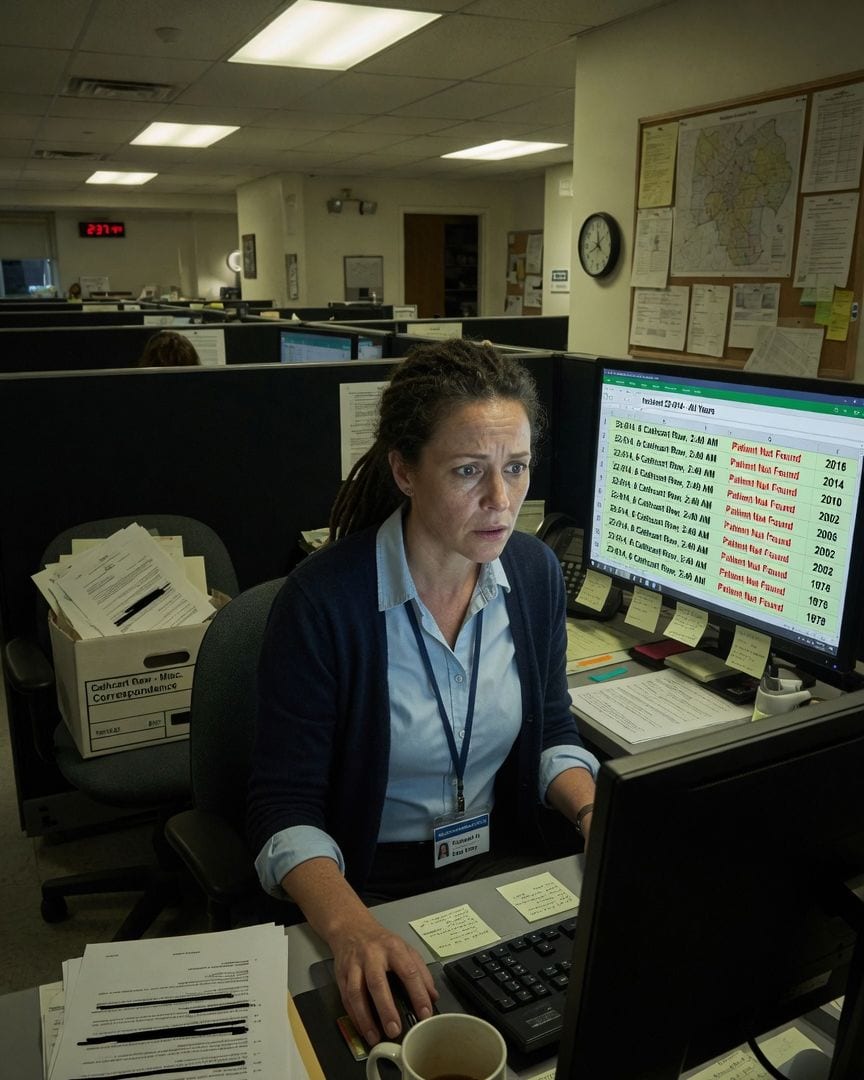
My computer log shows the same 2:40 AM call to Cathcart Row, every four years since 1978, always closed 'patient not found'.
Working data entry for the County Ambulance Trust, I found a routine incident logged as 'Patient Not Found.' But digging deeper, I discovered the exact same phantom call had repeated every four years for over forty years, always at the same address, always at 2:40 AM. Then I found a heavily redacted memo linking it to my own street.
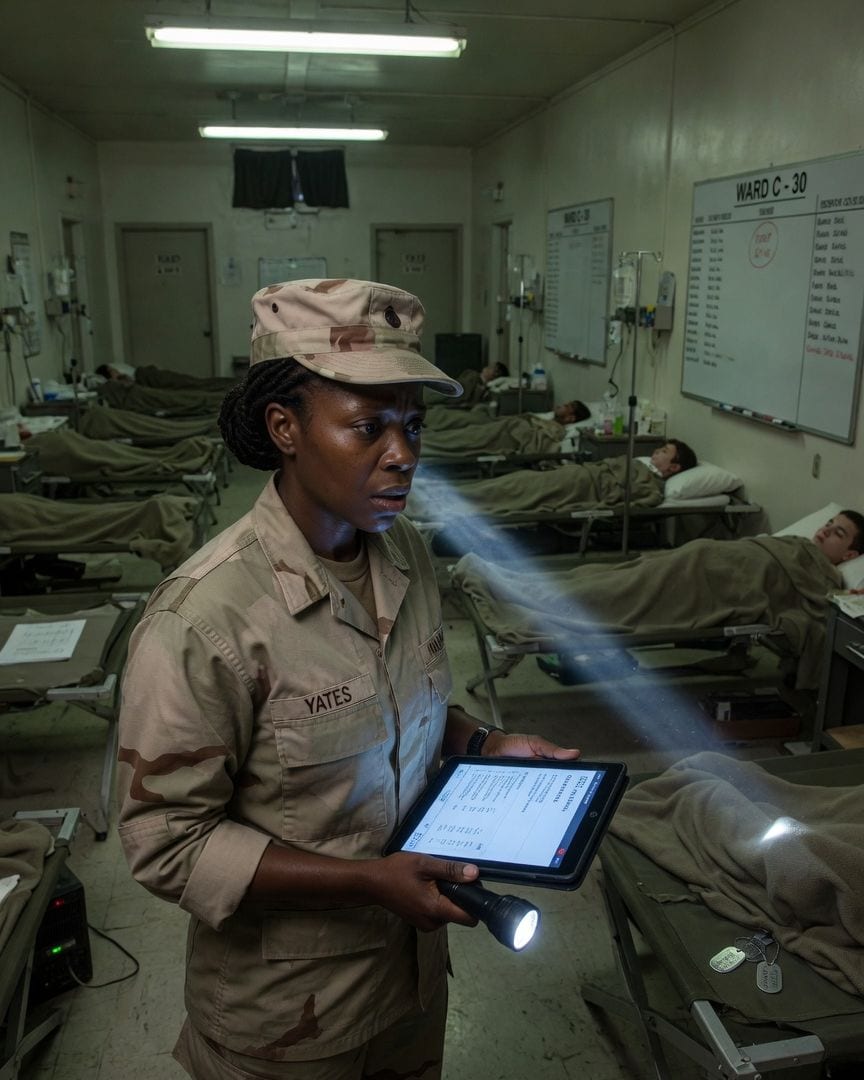
Sergeant Amara Yates found a patient admitted in 1982. The field hospital was built decades later.
Sergeant Amara Yates meticulously counted thirty patients in Ward C of the field hospital. Yet, she found a thirty-first man, asleep in an unlisted cot, with no chart to identify him. The soldier was undeniably present, but the ward's records insisted only thirty existed.
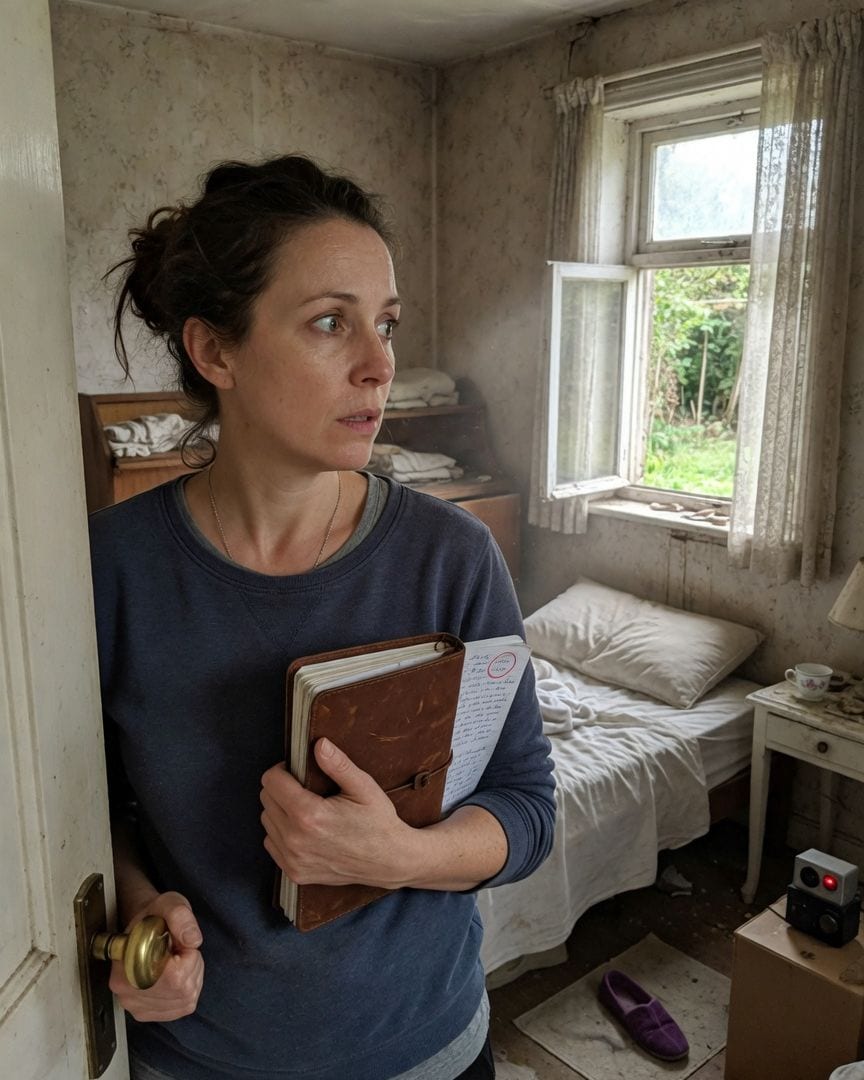
My spare room bed is slept in every few nights, sheets warm and pillow dented. I live alone, painted the window shut, and nobody has a key.
I've lived in Grace's house for six months, adjusting to its quiet rhythms. But the spare room, which I keep shut and empty for storage, has a disturbing routine of its own. Every few mornings, the bed is clearly slept in, the sheet rumpled and warm, and the window I painted shut is open exactly two inches.