My hall wallpaper turned to dense green fern, gaslight-dim and warm to the touch. A child's red coat hung where my radiator is.
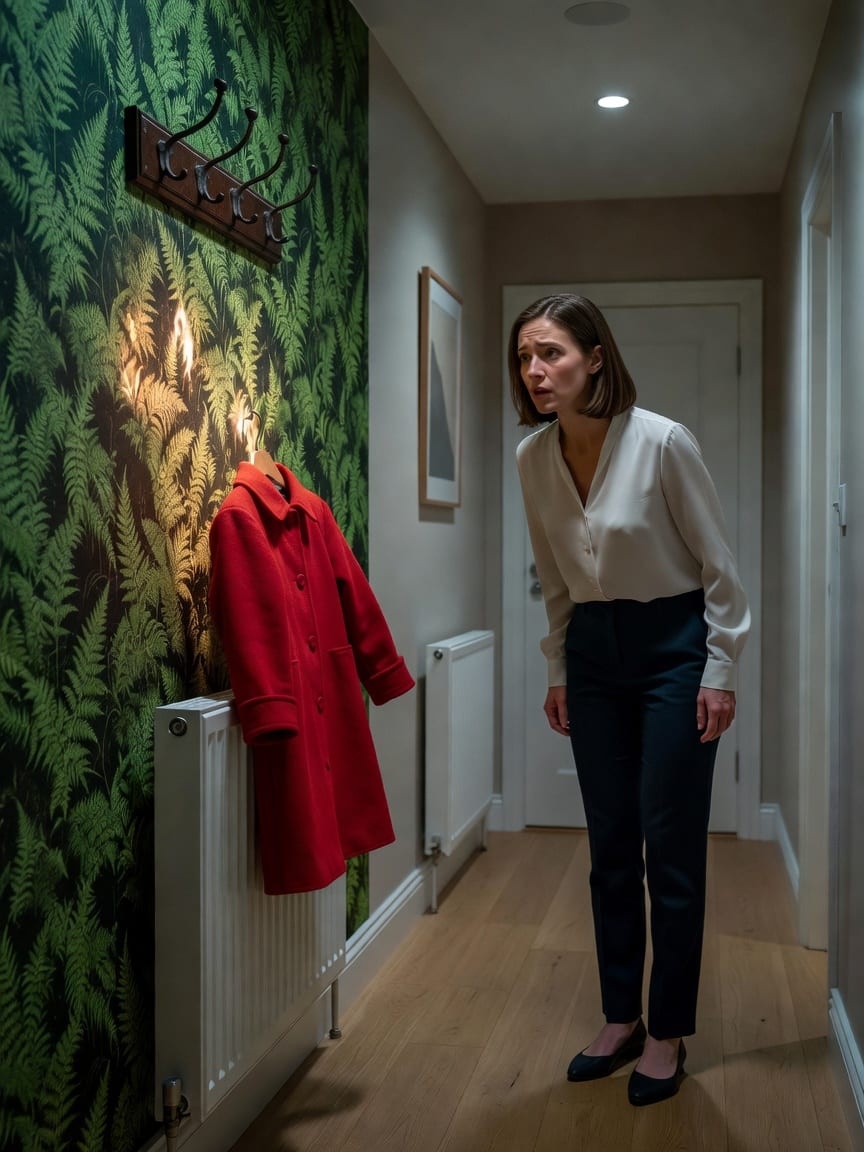
I stood in the hall, a year to the day since I’d moved into the inherited house. The magnolia woodchip wallpaper, usually dull, shimmered. Not a trick of the light, not this time.
For a few minutes, it was something else entirely: a dense green fern pattern, gaslight-dim, like old gaslight, and warm to the touch beneath my hesitant fingers.
An antique coat rack, definitely not mine, stood where my radiator should be, firmly bolted to the wall. On it, a child's vibrant red coat hung, too small, too bright for the dim, impossible light. I didn't move, barely breathed.
The air grew heavy, smelling faintly of damp wool and something like old dust, but also something sweet, like boiled sweets. I squeezed my eyes shut, then opened them. The hall lightened.
The fern pattern bled away, faded back to the magnolia. The coat rack dissolved, and the wall where it had been was bare, cold woodchip again. My radiator hummed, the same old hum.
I told myself it was fatigue, a trick of the mind.
But the memory of the warmth on my fingertips, the distinct scent, the impossible red coat hanging in impossible light – it looped, a tight, cold knot, in my mind.
The next morning, I traced the magnolia wall, searching for any seam, any mark where the fern pattern might have been. Nothing. It was solid, unbroken woodchip. The radiator was firmly bolted, just as it always was.
But the memory of the coat rack’s exact position nagged at me. It had been right there, a specific point in the hall. I knelt, running my hand along the skirting board, pressing hard.
My fingers caught on a slight give in the floorboards. One section, directly beneath where the phantom coat rack had stood, was loose. I tried to push it back down, but it wouldn't seat properly.
With a careful pry, using a letter opener from my desk, it lifted. Inside the dusty cavity, nestled amongst cobwebs and a fine layer of grit, lay a brittle, faded piece of paper.
It was a child’s drawing, rendered in smudged crayon: a crude outline of a hall with dense green fern wallpaper, unmistakable now that I'd seen the vision. An unmistakable red coat hung on a stick-figure rack.
In the bottom corner, scrawled in an uncertain, shaky hand, was a date: 'Oct 15, 1912.' My breath hitched. My house was built in 1905.
The date wasn't impossible for the house's existence, but it was a lifetime before me, a world away from my familiar, ordinary magnolia hall. This wasn't fatigue. This wasn't a trick of light. This was real.
Beneath the drawing, something small and metallic glinted. I carefully retrieved it: a tarnished silver locket, no bigger than my thumbnail. The delicate chain was broken, snapped clean.
My fingers trembled as I tried to open it, my nails struggling with the tiny, rusted clasp. It felt ancient, heavy with forgotten history, with some untold story.
With a final, desperate push, the locket clicked open, revealing only dark, empty space within.
At the precise moment it opened, a faint, almost musical giggle drifted from the now-empty hall, right from the spot where the red coat had hung in my vision. It was light, innocent, and absolutely impossible.
I froze, the open locket clutched tight in my hand, my eyes wide, scanning the silent, empty space.
Still shaken, I took the drawing and locket to David Kingsley, a retired local historian. He was known for his meticulous research and a healthy skepticism that I hoped would ground me.
He examined the drawing under a magnifying glass, his brow furrowed, a faint frown line deepening between his eyes. 'October 15th, 1912,' he murmured, tracing the date with a careful finger.
'And the fern pattern… very popular in late Victorian, early Edwardian homes.' He seemed intrigued but cautious, initially suggesting it might be a child's fantasy or a misplaced relic from a house that no longer existed.
He pushed his glasses up his nose, looking at me over them. 'You've got an old house, Tessa. Things turn up.' But the date, and the specific address – my address – clearly nagged at him.
A few days later, David called, his voice tinged with excitement, the skepticism replaced by something urgent. 'Tessa, I've found something.'
He'd found an old local newspaper clipping from 1912, detailing the disappearance of a six-year-old girl named Margaret Yates from this exact address on October 15th. The article mentioned a 'distraught family' and 'no trace found.'
He also mentioned a cryptic, coded entry in an old council property register for my house's address around that period – something he couldn't quite decipher, but it stood out as highly unusual.
'Like a flag,' he'd said, 'but for what, I can't tell.'
I decided to speak to my elderly neighbor, Eileen Pennington, who had lived on the street for decades, long before my house was even built.
Eileen, a sharp-eyed woman of seventy-nine, offered tea and a warm smile, the clink of porcelain comforting in her quiet kitchen. But her answers about the house’s history were vague at first. 'Oh, it's always been there, dear.
Good solid place. A bit drafty in the winter, like all the old ones.' I pressed, mentioning the date, the drawing, the newspaper clipping David had found. Eileen’s smile faltered. The warmth in her eyes dimmed.
Her gaze sharpened, fixing on me with an unnerving intensity that made the hair on my arms prickle. 'The house… it always takes its due,' Eileen said, her voice dropping to a near whisper, no longer the kind, old woman.
'And that date… you must be very careful on that date, dear.' I tried to ask what she meant, what 'takes its due' implied, but Eileen merely shook her head, a deep, knowing sorrow in her eyes.
The old woman's composure was unnerving, almost chilling. 'Some things are best left alone, child. The house remembers, and some memories… they’re best undisturbed.'
The conversation ended there, Eileen rising to clear the teacups, leaving me with a chill that had nothing to do with the draft from her window. Her resigned calm was far more unsettling than any ghost story I’d ever heard.
A week later, David Kingsley called me again, his voice tight with a mix of triumph and unease. He was practically vibrating with it. 'Tessa, I've cross-referenced everything. Margaret Yates did disappear on October 15th, 1912, from your house.
It's solid.' He paused, taking a breath I could hear clearly through the phone. 'And the locket…' His voice trailed off, thick with something I couldn't quite place. 'The locket contains a tiny, faded photo of her.
It was in the police records, listed as a family heirloom they never recovered. A small, silver locket.' He explained that my house had a local reputation, whispered about for decades, for 'troubles' around the same time of year.
'It's almost like a pattern,' David mused, the words sounding heavy, dangerous, 'though no one ever connected the dots beyond idle gossip. People just moved on, bought new houses.'
The cryptic entry in the old council property register, he explained, wasn't just a random code he'd stumbled upon.
It was a local council 'flag,' a specific marker used for a particular type of recurring incident at certain addresses – a way to discreetly track properties with an unusual history, a pattern they didn't want widely known.
The visions, the drawing, the locket – they weren't random, damn it. They were pieces of a real, tragic history, echoing through the house. The quiet dread in my stomach solidified into something cold and hard.
The house wasn't just old; it was a witness, and it was still playing out its past, right there in my hall.
David’s next words made my blood run cold. 'The 'recurrent pattern' flag, Tessa,' he said, his voice strained, high-pitched, 'it's not for a single type of incident. It’s for a cycle.'
He explained he’d pushed deeper into the archives, used his old contacts, called in every favor. His breathing was heavy, ragged. 'I found similar flags for your house – the exact address – in 1947 and again in 1982.
All around October 15th. All tied to child disappearances, Tessa.' He sounded breathless, almost panicked. 'Someone, or some institution, has been systematically denying access to these sealed records for decades.
Every time I hit a wall, I find a new layer of official red tape, a new excuse.' David was yelling now, frustration and terror bleeding into his voice. 'It’s bigger than Margaret Yates, Tessa.
This has happened before, multiple times. And the records… they're trying to hide it. I’m going back in, I think I’ve found a way to bypass their system, to get to the core file.
I'll call you as soon as I know anything.' Just then, his phone line went dead, a sudden, sharp click that left a ringing silence in my ear. I pulled the phone from my ear, staring at it blankly.
The silence in my own hall felt vast, oppressive.
Then, so faint it was almost imperceptible, a child's voice, a whisper like dry leaves rustling on stone, drifted from the empty space where the red coat had appeared: 'They know you're looking.'
Driven by a desperate need for answers, for any answer, I used David's old archivist ID number, written hastily on the back of a receipt, to bypass the system.
I pushed past layers of bureaucratic denials, past the digital walls and polite excuses.
Deep within a forgotten corner of the municipal archives, tucked away behind dusty filing cabinets no one had touched in years, I found it: a heavy, hand-bound ledger, its cover embossed with faded gold lettering: 'Recurrent Incidents - Abbott House.'
My own surname. My hands trembled as I opened it, the old leather creaking a mournful protest. Inside, meticulously recorded in neat, fading ink, were the chilling details: Margaret Yates (1912), Philip Abbott (1947), Daphne Abbott (1982). All children.
All vanished on October 15th. The repeated surname made my gut twist. Philip and Daphne shared my name. Each entry included chilling notes from previous occupants – reports of 'temporal distortions,' 'manifestations of former residents,' and 'unexplained cold spots.'
The ledger explicitly stated, in a stark, official hand, that the house 'retains memory, and seeks to relive.' Every single clue clicked into place with sickening precision: the fern wallpaper, the red coat, Eileen's unnerving warning, David's cryptic flags.
The house wasn't just haunted; it was a repeating tragedy, a locus of remembered sorrow, playing out its dark history on a terrifying, endless cycle.
I raced home, the heavy ledger clutched to my chest, its weight a physical manifestation of the truth. It was October 15th.
As I burst through the front door, the hall was already dim, the air heavy and still, thick with the smell of damp wool and that faint, sickly sweet scent.
The magnolia woodchip shimmered, the dense green fern pattern bleeding into existence, growing, taking over the wall. The antique coat rack materialized where my radiator stood, solid and real.
And there, translucent and shimmering, was the faint figure of a child, small and indistinct, a small hand reaching for the red coat that hung on the rack.
My eyes snapped back to the ledger, to the final, desperate entry I’d seen: 'Breaking the cycle requires a violent disruption of the temporal anchor.'
I scanned the hall, my eyes landing on a heavy, antique mirror hanging opposite the vision, a mirror I’d inherited with the house. It was old, ornate, its silvered surface reflecting the distorted, gaslight-dim horror unfolding.
With a guttural cry, a sound torn from my own throat, I tore it from the wall, its ornate frame scraping against the plaster, leaving deep gouges. It was heavier than it looked.
I swung it with all my might, a desperate, feral strength filling my arms, smashing it against the wall where the child's figure stood, where the vision of the past was strongest. The glass exploded, raining shards.
The vision flickered, the child's translucent face briefly twisting into an expression of pure anguish, a silent scream that tore through my mind, then it shattered into a million fragments of light and shadow, dissolving into the air.
The hall lightened instantly. The fern wallpaper vanished. The coat rack was gone. The air cleared, leaving only the sharp scent of dust and ozone. The radiator hummed, cold and solid, just my radiator.
The magnolia woodchip wallpaper was back, pristine and undisturbed, save for a few faint scratch marks where the heavy mirror had hit. The radiator stood cold and solid.
The house felt quiet, truly quiet, for the first time since I had moved in, but not empty.
David Kingsley, relieved, confirmed his phone had simply cut out – a common occurrence on his old landline, he'd laughed – but the incident had clearly shaken him. He sounded older, more tired, but also profoundly relieved.
The hand-bound ledger, now in my possession, was a heavy, undeniable truth. The knowledge it contained settled in my bones, a permanent, chilling understanding of my home's true nature.
I never sold the house. I stayed, but I never again hung anything red in the hall, and every October 15th, I leave the house empty, staying elsewhere.
The dread of what the house remembers still settles in my bones, a cold understanding. She knows it won't forget.
The council archives eventually re-sealed the 'Abbott House' ledger, citing a 'clerical error' in its release.
Decades later, a new archivist, clearing out old files, found a single, faded comment written in the margin of the original register entry for Tessa Abbott's address, scrawled in an elegant, almost forgotten hand: The house remembers.
If this one got to you
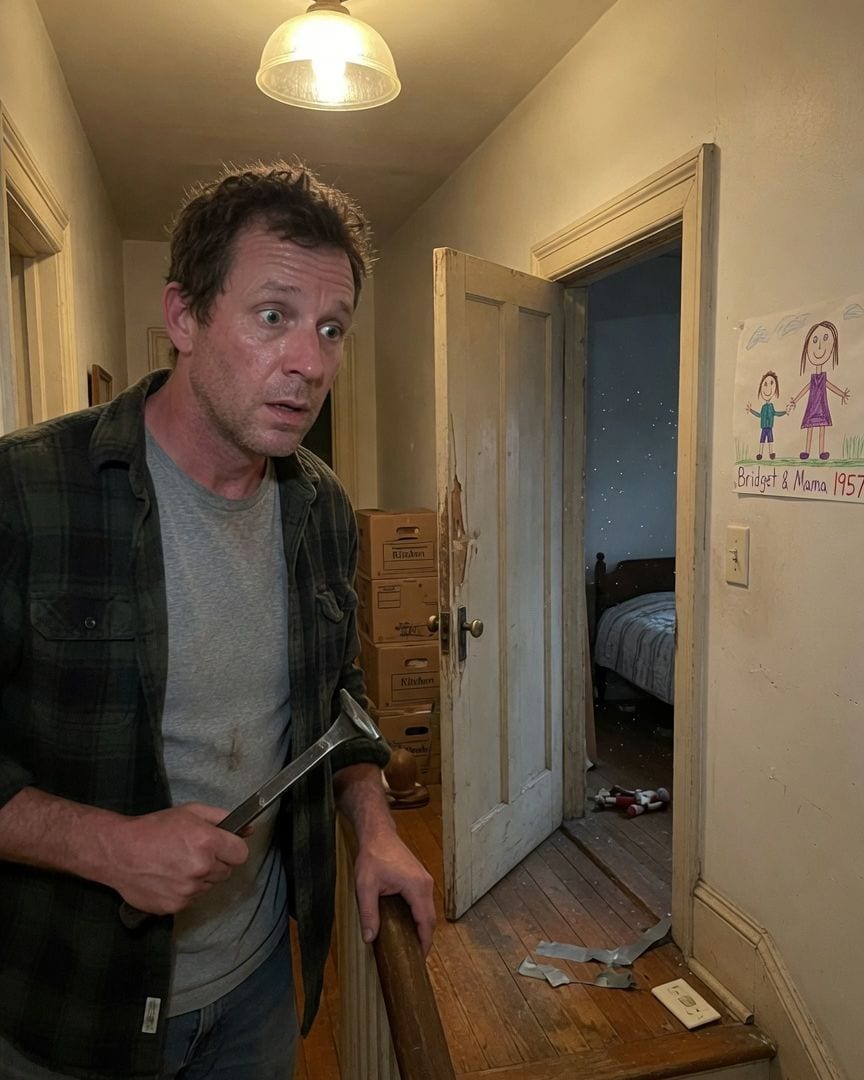
My landing light switches itself off at 9:40 every night. I've watched the switch flick down under nothing, the tape peeled back. The house holds its breath.
My great-uncle's old house was a quiet gift, a place to finally settle. But as I unpacked, a strange worn path on the floorboards led me to a small, barely visible door, perfectly blended into the wall. It was undeniably locked, and felt like a deliberately obscured secret.
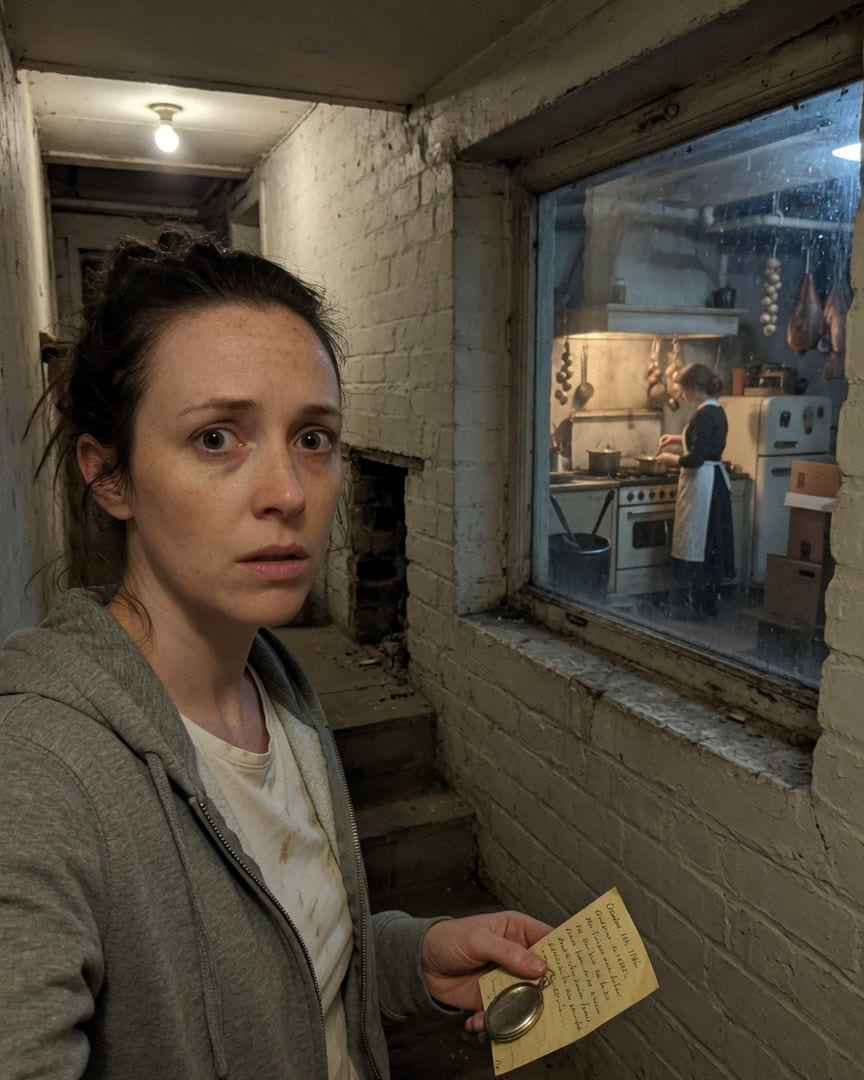
My basement window shows a 1906 kitchen, with a scullery girl and the sound of a poker stirring coals that aren't there.
I've only been in my basement flat a month, still getting used to the city's hum. But my window at pavement level now shows a gaslit kitchen, complete with a bustling scullery girl and the faint sound of coals being poked.
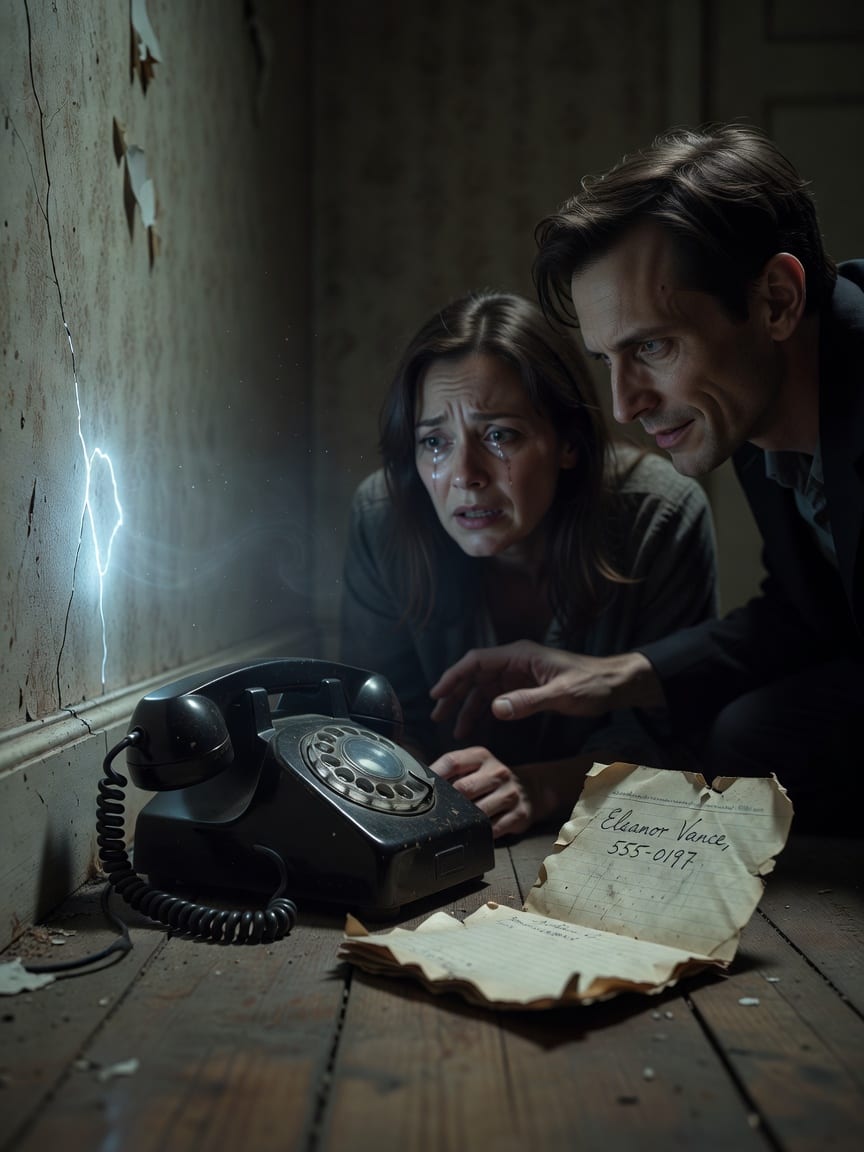
My house's walls ring when I dial a phone number from a 1974 directory. My neighbors said that directory was trash.
I was sifting boxes in my new house when I found an old 1974 telephone directory for my street. It listed my address, 12 Elm Street, under the name "Mr. & Mrs. Sheppard." On a whim, I called the faded seven-digit number. My cell phone rang, but a low, muffled sound also vibrated from the wall beside me.
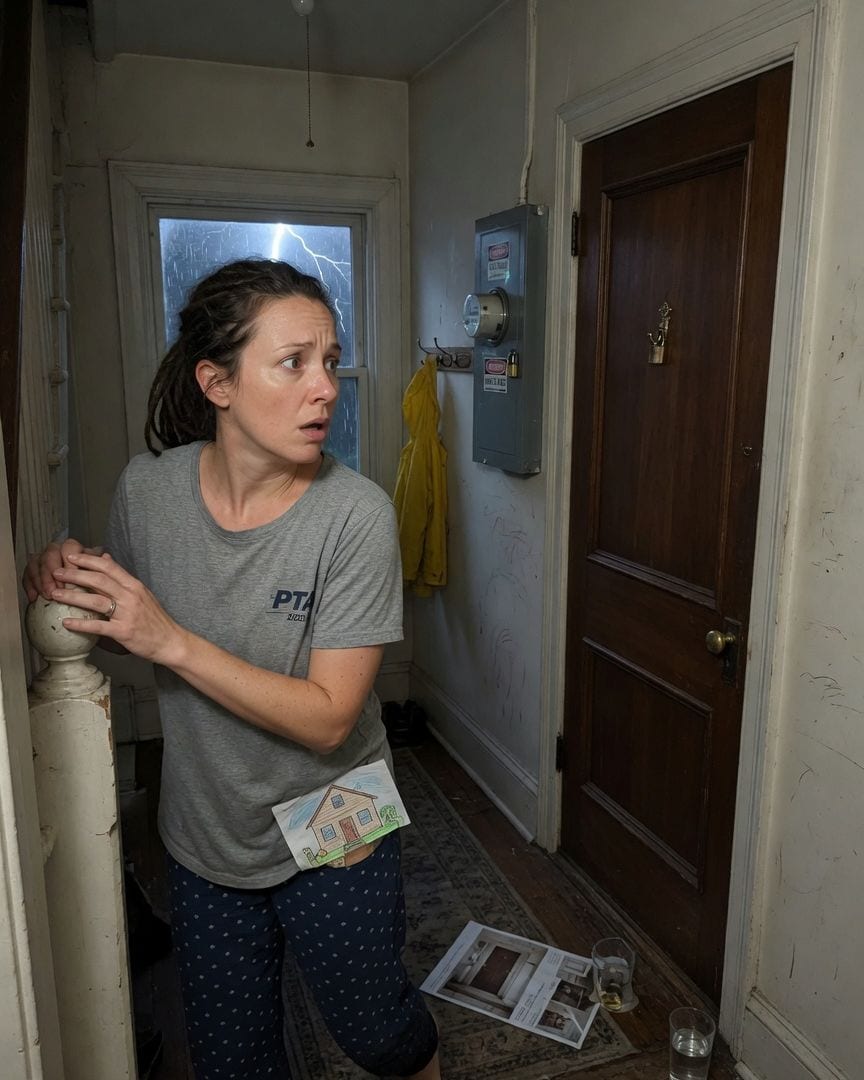
My son drew a door under our stairs. Tonight, I touched its cold brass handle.
My son Oliver drew our house with a small, panelled door under the main staircase, a detail I quickly dismissed because only a solid wall stood there. But an old real estate listing photograph revealed the exact door, perfectly placed, where no door could possibly exist.

My stairlift tape measures thirteen steps, but my own feet always find a fourteenth — to a door that isn't there.
As a meticulous fitter, I measured my client's new loft stairs, confirming thirteen solid steps. But my foot found a shallow, impossible half-step, leading to a plain wooden door that shouldn't exist. Now the door is gone, leaving only a ghost outline.
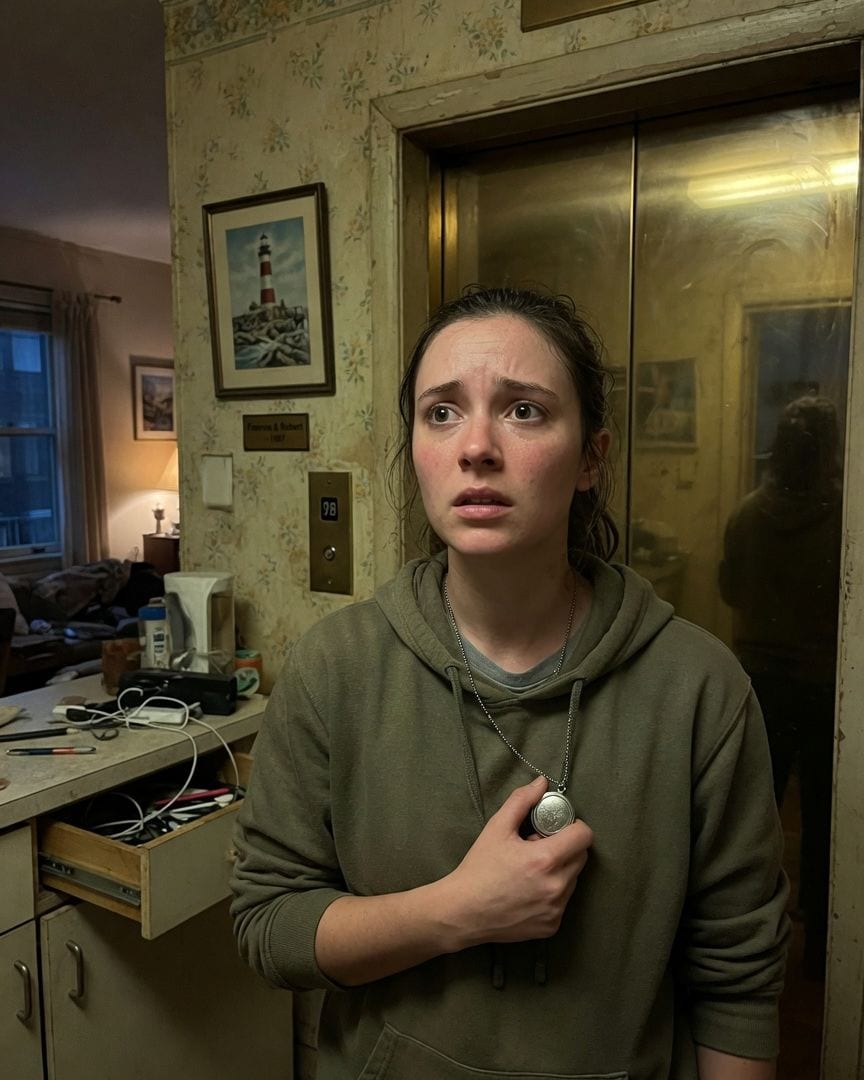
My aunt rode the elevator up, humming, at ease. She hadn't stepped in one since 1994, and told the story of why to anyone who'd listen.
My Aunt Frances stood beside me in the hospital elevator, humming a low tune. It felt deeply wrong; she hadn’t set foot in one since a traumatic incident in 1994, always taking the stairs. Now, after five days missing, she was completely at ease, denying she’d ever feared something so silly, her eyes holding an unsettling calm.