My husband Nathaniel knew the smart lock code I changed to my mother’s secret birthday, a year after his boat went down.
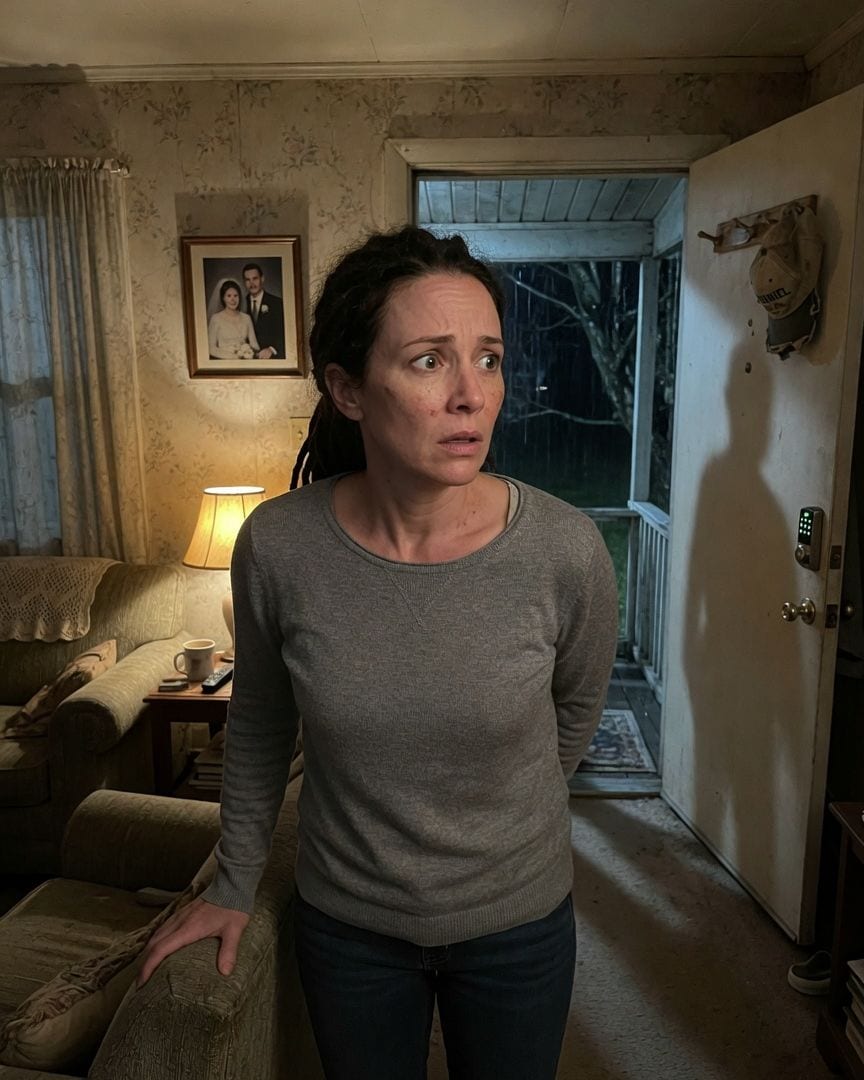
The night Nathaniel returned, a year after his fishing boat went down, he was thin and impossibly calm. I watched from the living room, frozen, as he walked up to our front door.
The porch light cast long shadows around him, making him seem taller, somehow. He reached out, his fingers moving with a familiar ease over the smart lock keypad. I held my breath, the air thick and cold in my throat.
Relief, sharp and painful, flooded me as I saw the green light flash, the familiar click echoing in the sudden silence of the house.
He pushed the door open, stepped inside, and that relief curdled into something else, something sharp and cold and very wrong.
I had changed the smart lock code six months after the funeral, after the search parties had given up, after I’d given up hope. I’d used my mother Maureen’s birthday, a number that was entirely personal, entirely mine.
Nathaniel could not have known it. He simply tapped it in without pausing, without hesitation.
He held the door for me, his eyes searching mine in the dim hallway light, and asked, his voice softer than I remembered, why I was standing in the cold.
I felt a chill then that had nothing to do with the night air, a chill that seeped into my bones and settled there.
Over the next few days, I tried to rationalize it. A lucky guess? Had I mentioned the code in passing, forgotten some old conversation from years ago when my mother was still alive? I went over every detail, every possibility.
But the small things began to accumulate, like pebbles dropped into a quiet pool, each one disrupting the surface.
Nathaniel, who had always taken his black tea scalding hot, without a single drop of milk or a grain of sugar, now asked for both. He’d pour the milk in first, then add two full teaspoons of sugar, stirring slowly.
I watched him do it, his movements fluid, but his hand seemed to hesitate, almost imperceptibly, before adding the sugar, as if he was recalling a forgotten instruction.
His old fishing hat, worn and sun-faded, still hung on the peg by the door where he’d left it that last morning. He’d always grabbed it without thinking, a part of his daily ritual.
Now, he walked past it, sometimes even taking a wider berth, as if it carried a faint, unpleasant odor. I mentioned the tea one morning, trying to sound casual, trying to make it a joke.
"Thought you liked it black," I said, gesturing to his cup. He just smiled, a quiet, knowing expression that didn't quite reach his eyes, and said, "People change, Colette. A year can do that to a man."
His certainty was unsettling, more so than any confusion would have been. The hat, I didn’t mention. The dread was a quiet hum beneath my skin, a low vibration that kept me perpetually on edge.
One evening, as we sat in the quiet of the living room, a storm brewing outside, the wind rattling the windowpanes, Nathaniel began to speak. He recalled a day, years ago, when my mother had taught me to bake.
He described the exact pattern of sunlight on the kitchen floor that morning, how it fell in diagonal stripes across the worn linoleum. He spoke of the precise scent of cinnamon and flour, thick in the air.
He even mimicked the small, specific gesture my mother made when she tied my apron, a gentle tug at the back of my neck.
It was a memory only my mother and I had shared, a private, cherished moment from my childhood, a secret jewel I kept tucked away.
I stared at him, my breath catching in my throat, my heart thudding against my ribs. "How... how could you know that?" I whispered, the words barely audible over the rising wind.
He looked at me, his eyes calm, almost serene, holding mine with an unnerving certainty. "Some things just stick with you, Colette," he said, his smile quiet and absolute.
Nathaniel's calm certainty about my childhood memory haunted me. It gnawed at the edges of my thoughts, a sliver of ice in my mind.
I found myself spending hours researching old news archives, not for answers about his boat's sinking – I had mourned that already – but for any mention of other disappearances in the area, particularly those lost at sea who might have, against all odds, returned.
Our small coastal town, like many others, had its share of local legends, stories often repeated and embellished. I scrolled through digital microfiches until my eyes blurred, finally finding a faded news clipping from nearly sixty years ago.
The headline read: 'Local Fisherman Returns After Weeks Lost at Sea – Family Relieved.'
The accompanying photo showed a man, gaunt like Nathaniel, but the article mentioned 'a subtle shift in demeanor' and 'unexplained new habits' that the family had dismissed as trauma.
It felt like a cold dread settling in my stomach, a premonition of something far worse than grief.
Nathaniel, meanwhile, had developed another peculiar habit. He would often leave the front door slightly ajar, just enough to let a thin, cold draft into the house, even on the chilliest nights.
The first few times, I’d assumed he’d simply forgotten to close it properly, a small oversight. But it became a pattern. I’d find it an inch or two open, the latch not quite catching.
When I asked him about it, he’d shrug, his gaze distant. "Just airing the place out," he’d say, as if it were the most natural thing in the world.
But the house never felt aired; it only felt colder, as if something was being invited in, a steady, unseen guest making itself welcome. I started locking it myself, double-checking the deadbolt, feeling a small, irrational victory each time.
The feeling of being watched intensified. It wasn't just Nathaniel; it felt like the house itself was observing me, or something beyond it, from the shadows that gathered in the corners of rooms.
Joel, Nathaniel's older brother, started visiting more often than he had in the year Nathaniel was gone.
He’d sit in the living room, nursing a cup of black coffee – the way Nathaniel used to drink his tea – his gaze lingering on Nathaniel, then on me.
His comments were always oblique, like whispers from an old forgotten world. "Some things never truly leave, Colette," he’d say, stirring his coffee slowly. Or, "The sea has a way of holding onto things, and sometimes, letting them go."
I felt a growing unease around him, a sense that he knew something, but wouldn't, or couldn't, say it aloud.
One afternoon, I found a small, unusually smooth, grey stone on my windowsill in the bedroom. It wasn't a type I’d ever seen on our local beach; the colors and textures were foreign to the coastline I knew so well.
It felt cold to the touch, almost unnaturally so, even on a warm day. Nathaniel was in the kitchen, ostensibly making tea, the kettle just beginning to whistle.
I looked up from the stone, and he was watching me from the doorway, his eyes unblinking, a faint, unreadable expression on his face.
He didn't ask about the stone, didn't acknowledge it in any way, just held my gaze for a long moment before turning back to the kettle, the whistling growing louder.
The dread was no longer a hum, but a distinct, cold presence in the room, making the air crackle.
I couldn't take it anymore. The weight of the unspoken, the impossible details, the chilling certainty of his smile, they all pressed down on me.
I confronted Nathaniel directly, not about the door code – that seemed a small thing now – but about the memory, the one with my mother, the sunlight on the kitchen floor.
"How did you know about the sunlight on the kitchen floor?" I demanded, my voice trembling, each word an effort. He put down his teacup, the porcelain clinking softly against the saucer, a small, fragile sound in the sudden silence.
"Some things stick with you," he repeated, his voice even, "even if you weren't there. It's like a story, passed down." His calm was infuriating, a deliberate barrier. "No," I insisted, stepping closer, needing him to understand.
"It's not a story. It was mine. Only mine."
He tilted his head then, a gesture that was almost Nathaniel’s, but not quite. It was too precise, too deliberate. "You mean, ours," he corrected gently, his smile still present, still unsettling.
Then, without any prompting, he recounted another memory, one I’d almost forgotten, one I hadn't thought about in years: a specific, private argument I’d had with my best friend in high school.
He detailed the exact words exchanged, the color of my friend’s sweater – a faded yellow – even the faint, almost imperceptible scent of my mother’s gardenia perfume that had drifted through the open window during the argument.
He even described the brand of perfume, a small, expensive bottle my mother had stopped wearing years before I had even met Nathaniel. The implication was a cold, hard knot in my chest, tightening with every word.
He wasn't just guessing. He wasn't just remembering a story. He had accessed my own memories, my own past, my private moments, as if they were his to command, as if they had always belonged to him.
Terrified, the cold knot of dread tightening into an unbearable pressure, I sought out Joel. I found him in his study, a room I rarely entered, filled with old books and faded family ephemera.
The air was heavy with the scent of aged paper and dust. He sat by a weak lamp, hunched over a large, leather-bound family album, its spine cracked with age.
As I entered, he looked up, his expression unperturbed, as if he had been expecting me, or perhaps, simply waiting.
I stammered out my fears, about Nathaniel, about the impossible memories, about the knowledge he possessed that he couldn't possibly have. Joel listened, his gaze steady, without surprise, his face betraying no emotion.
He simply nodded, then gestured to the album open on his lap. It was filled with sepia-toned photographs, old faces, some familiar, some not.
He pointed to a faded, slightly blurred picture of a woman who looked exactly like his deceased wife, Sarah, smiling from what looked like a garden party in the 1980s.
But something about her eyes, even in the old, poor-quality photograph, was subtly, chillingly wrong—a flatness, a lack of spark, a stillness that my own vivid memories of Sarah didn't hold.
Joel looked up at me then, his eyes holding mine with an expression of profound, weary understanding, a sadness that was generations deep. "She came back too, you know," he said, his voice quiet, almost a whisper, "Just like Nathaniel."
Joel closed the album, his movements slow and deliberate, as if handling something incredibly fragile. He began to speak, his voice calm, explaining the 'returns.'
He talked about the water, how it was a place of exchange, taking lives and sometimes, giving something back. Not the person, he clarified, never truly the person.
"It's a mimic," he said, his gaze fixed on the wall behind me, "a presence that wears the skin of the lost. It learns, it adapts, it absorbs what it finds."
He explained that his family had known about this for generations, a quiet, terrible understanding passed down, not as a curse, but as a 'natural cycle of the sea,' an inevitable consequence of living by its depths.
He spoke of his own wife, Sarah, who had disappeared during a boating accident and returned a month later, subtly changed, just like Nathaniel.
He described how these entities 'feed' on memories, on intimacy, on the very essence of the living, slowly replacing the original person's identity, becoming more perfect in their mimicry over time.
The small oddities, the reversed habits, the impossible memories – these were the traces, the imperfections that betrayed the truth, the quiet tells that proved it wasn't them.
He looked at me then, his gaze unflinching, no pity, only a vast, shared knowledge. "It's not a fight you can win, Colette. It just… becomes."
I returned home, the weight of Joel’s words pressing down on me, each syllable a stone in my heart.
Nathaniel was in the kitchen, humming a tune I didn’t recognize, an old sea shanty perhaps, though his voice was too smooth for it. I stood in the doorway, watching him, the afternoon light outlining his too-thin frame.
"You're not Nathaniel, are you?" I finally said, my voice barely a whisper, a thread of sound in the quiet house. He stopped humming, slowly turning to face me.
His eyes, so like Nathaniel’s, held a depth that was ancient and vast, a knowing that chilled me to the bone. He didn't deny it.
"I am all that is left of him," he said, his voice soft, almost tender, "and so much more." He spoke with Joel’s calm, detached clarity, explaining how he 'grew' by experiencing my life, my memories, my emotions.
He took a step towards me, then another, his hand reaching out, slowly, deliberately, to touch my face. I saw a flicker in his eyes, not of malice, but of patient, profound hunger, a deep, consuming need.
I realized then that I could not escape. He knew me too intimately, had absorbed too much of me already.
The horror wasn't in a monster, but in the quiet, inevitable replacement, the slow erasure of what was, for what now patiently waited.
The dread was that he wasn't going to hurt me; he was going to become me, or integrate me into his being, a slow, gentle consumption.
His fingers brushed my cheek, cold and smooth, and I felt a strange, unsettling calm settle over me, a peace that was not my own.
I continued to live with Nathaniel. The house became a stage where we played out a perfect, quiet domesticity, each day a new scene.
Joel visited occasionally, and he and I would exchange silent, knowing glances across the dinner table, a shared burden in our eyes, an unspoken understanding passing between us.
The air in the house felt thinner, the colors muted, as if a piece of its vibrancy had been subtly, irrevocably siphoned away, leaving only a faint echo.
I found myself forgetting small details of my past, moments that Nathaniel would sometimes 'recall' for me with perfect clarity, filling in the gaps I hadn't even noticed were there.
My own memories felt less distinct, more like echoes of something that had happened to someone else, distant and faint.
Sometimes, I would catch Nathaniel looking at me with an expression that was too calm, too knowing, as if he was waiting for me to fully understand, or perhaps to simply accept my new place in this quiet, shared existence.
One morning, I found myself humming a tune I hadn't thought of since childhood, a lullaby my mother used to sing, a forgotten melody surfacing from the depths.
Across the breakfast table, Nathaniel looked up from his cup of tea, a faint, wrong little smile on his face, and hummed the next line perfectly.
I felt a profound, chilling sense of peace, as if a missing piece of myself had been found, or given back to me. My first-person account ends here.
Colette Lawson continued her life in the quiet coastal town, her routines unchanged. Her neighbors noted how serene she seemed, how perfectly calm. One morning, her brother-in-law, Joel Lawson, visited for breakfast.
As Colette reached for the sugar bowl, humming a forgotten tune, Nathaniel, sitting opposite, completed the melody, a faint, wrong little smile on his face.
She smiled then, a small, knowing smile, and offered him the sugar, just the way my mother always did.
If this one got to you
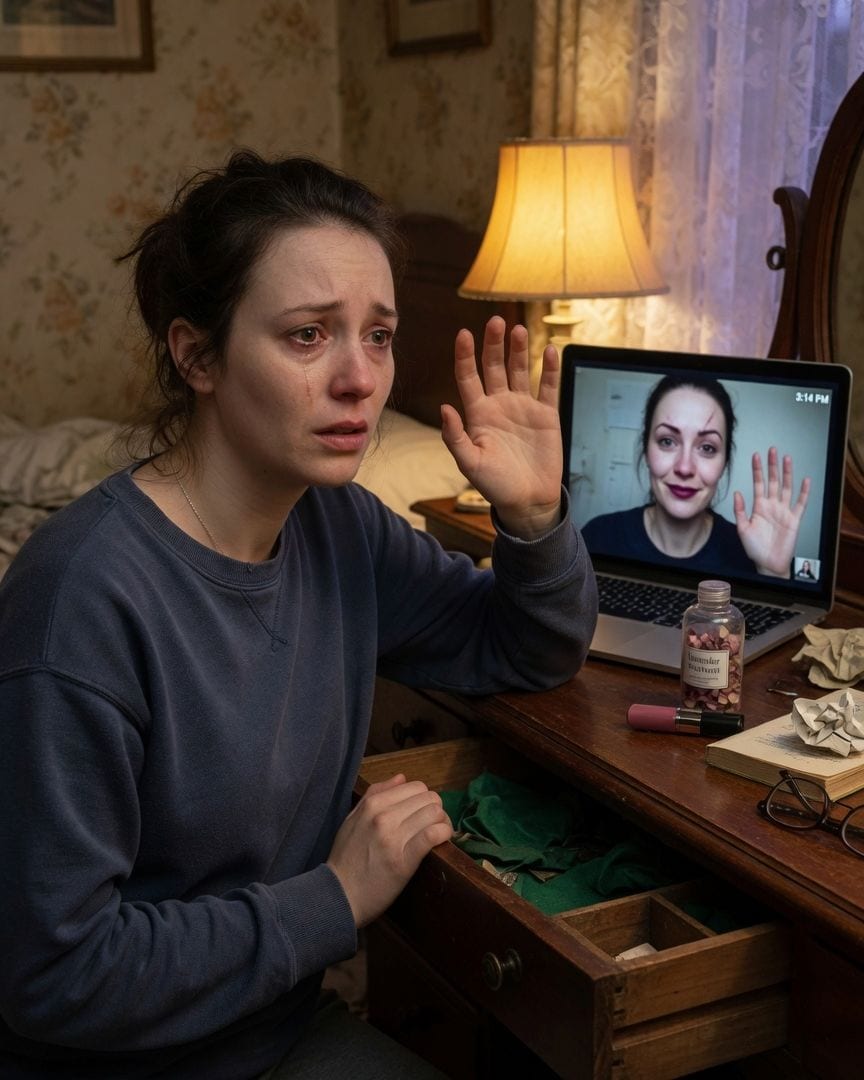
My mother waved with her right hand, both times, on our first call after she came home. She always waved left.
My mother vanished three months ago, then came back. On our first video call, she waved goodbye, but not with her usual left hand. It was her right, a small gesture that twisted something cold in my stomach.
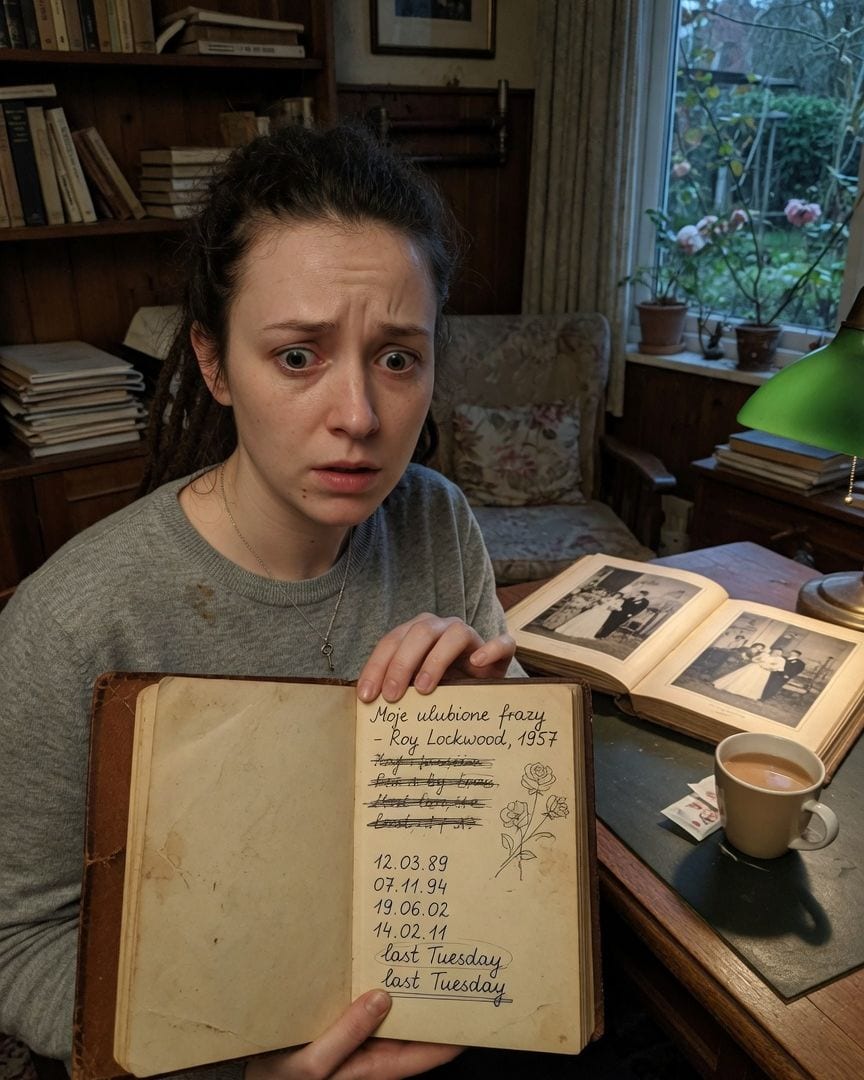
My grandfather counts 'one, two, three' in English now. He just came back. He always counted in Polish, and denies ever speaking it.
My grandfather, Roy Lockwood, returned last Tuesday after vanishing for a week, bringing immense relief. He seemed thinner, a bit disoriented, but otherwise, he was just Grandpa. Then I heard him count 'one, two, three' in clear English before lifting potting soil, instead of his lifelong Polish habit.
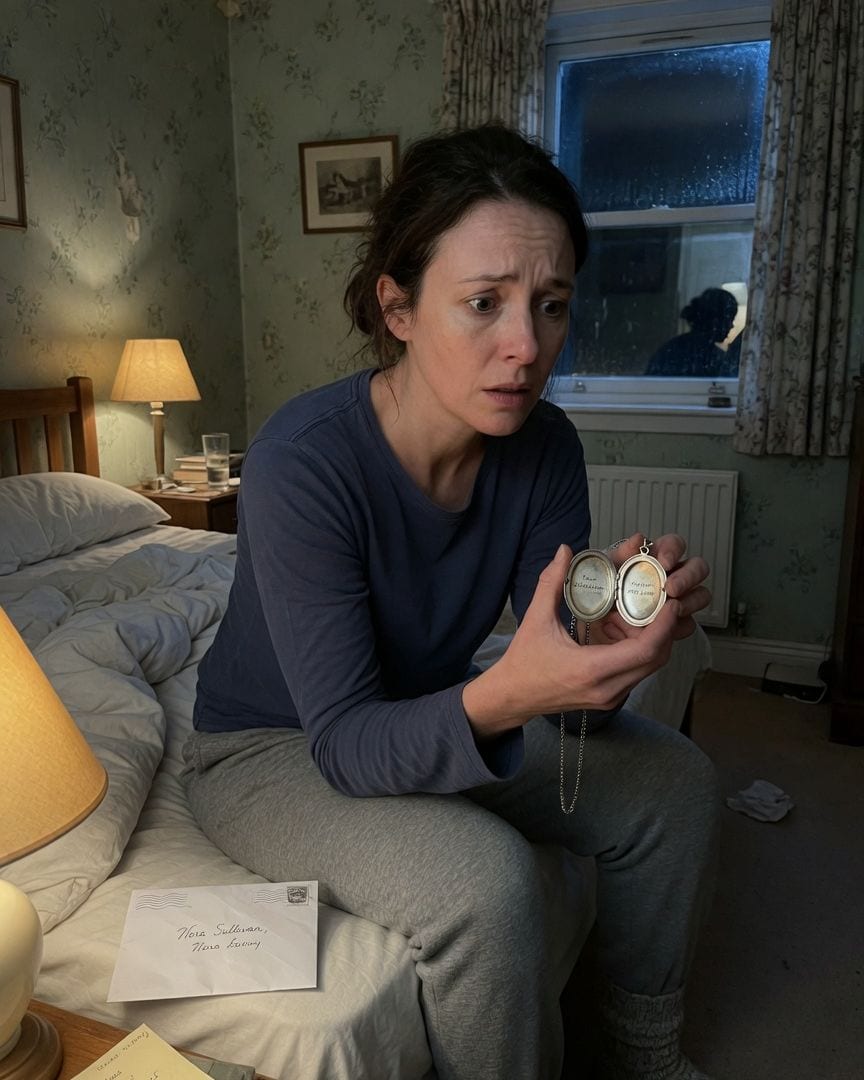
My antique locket held my maiden name, engraved with 'until the ninth.' The dealer said the woman who owned it left a note: 'for her, when she comes.'
My husband Scott, always finding unusual things, gave me an antique silver locket. Inside, engraved beneath my maiden name, Nora Sullivan, were three chilling words: 'until the ninth.' It felt like a direct, personal address, even though I hadn't used that name in years.
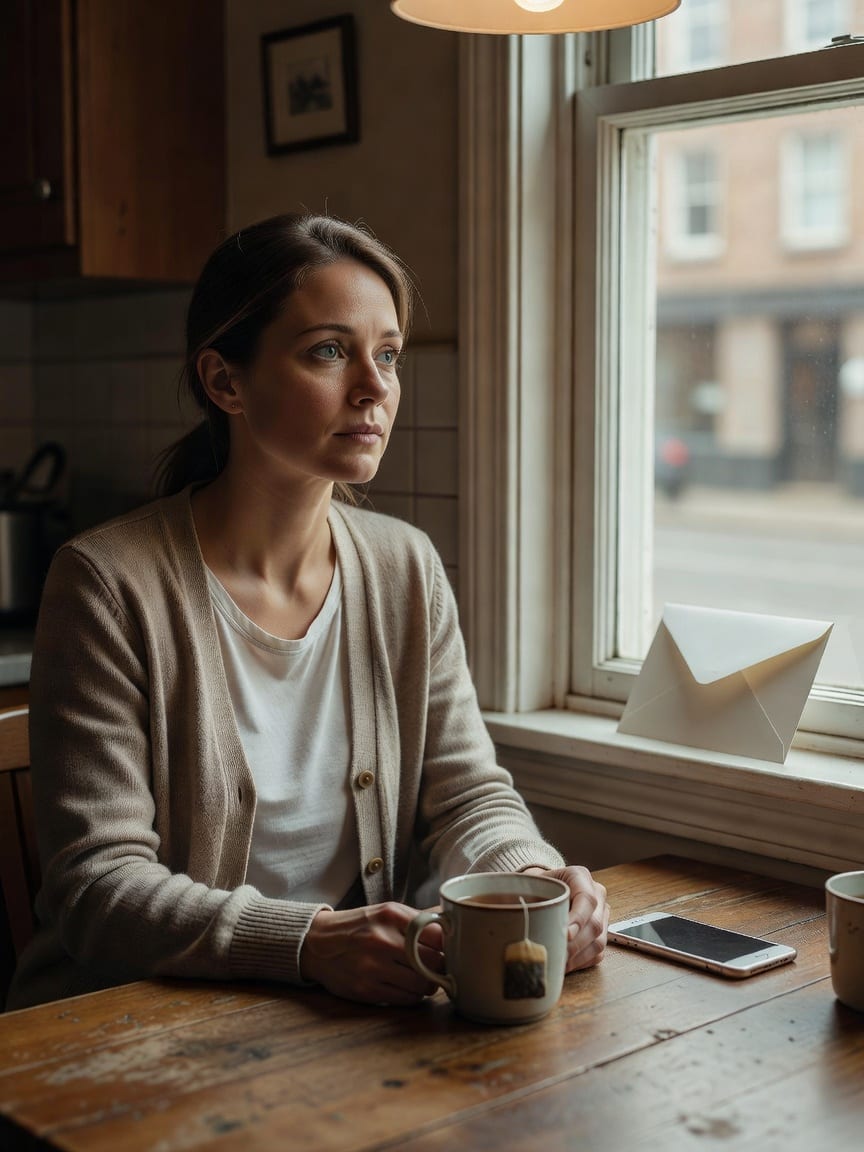
My taxi driver knew my name before I spoke, then apologized for the flight I was going to miss. I was arriving. The cab's plate was scrapped four years ago.
After a strange taxi ride, I received an unsettling birthday card addressed to me. Its return address listed 'Old Mill Road Field,' an empty lot where a mill once stood, and it was postmarked locally. The card arrived four months before my actual birthday, sparking a cold dread I couldn't ignore.
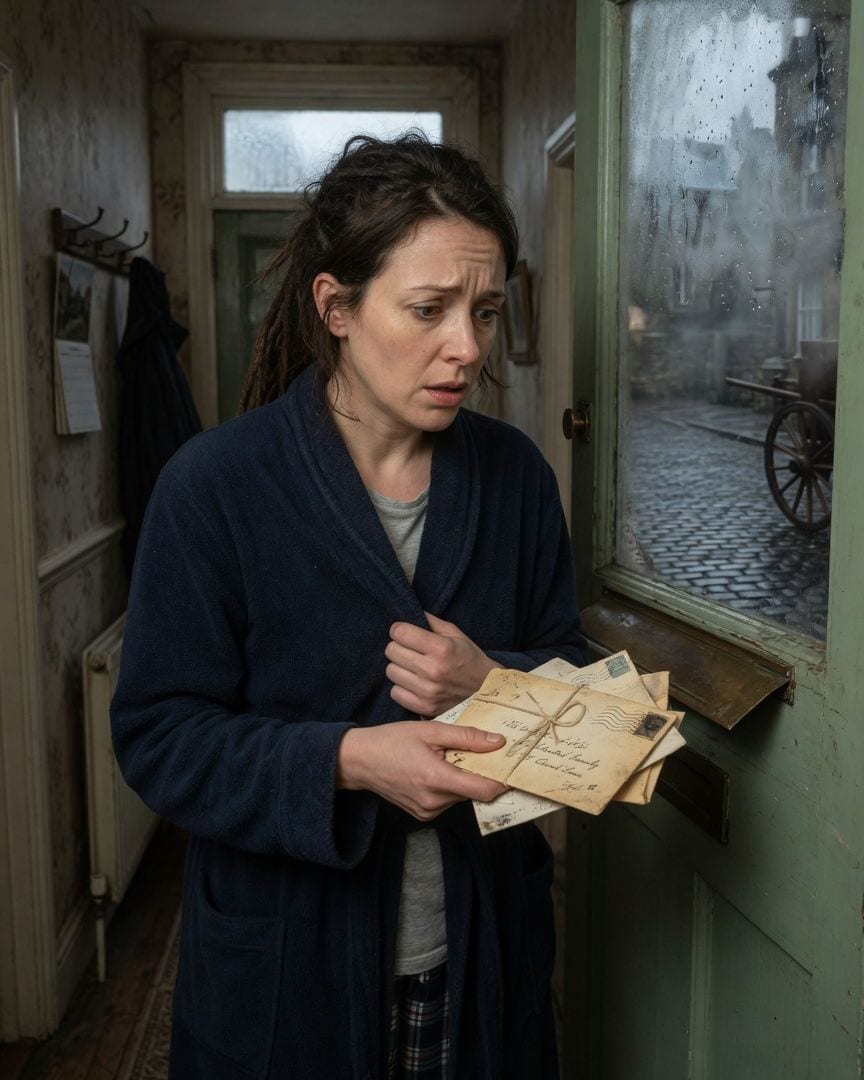
Seventy years ago, a hidden journal recorded my door opening to the wrong street and receiving Lockwood post.
I'd only recently moved into my inherited house, a quiet place on the edge of town. One grey morning, a distinct clatter from the front door's post flap caught my attention. Reaching down, I expected my gravel path, but instead, the flap showed a dark, cobbled street that wasn't mine. A bundle of warm, old letters, addressed to 'The Lockwood Family,' slid through, before the vision flickered and was gone.
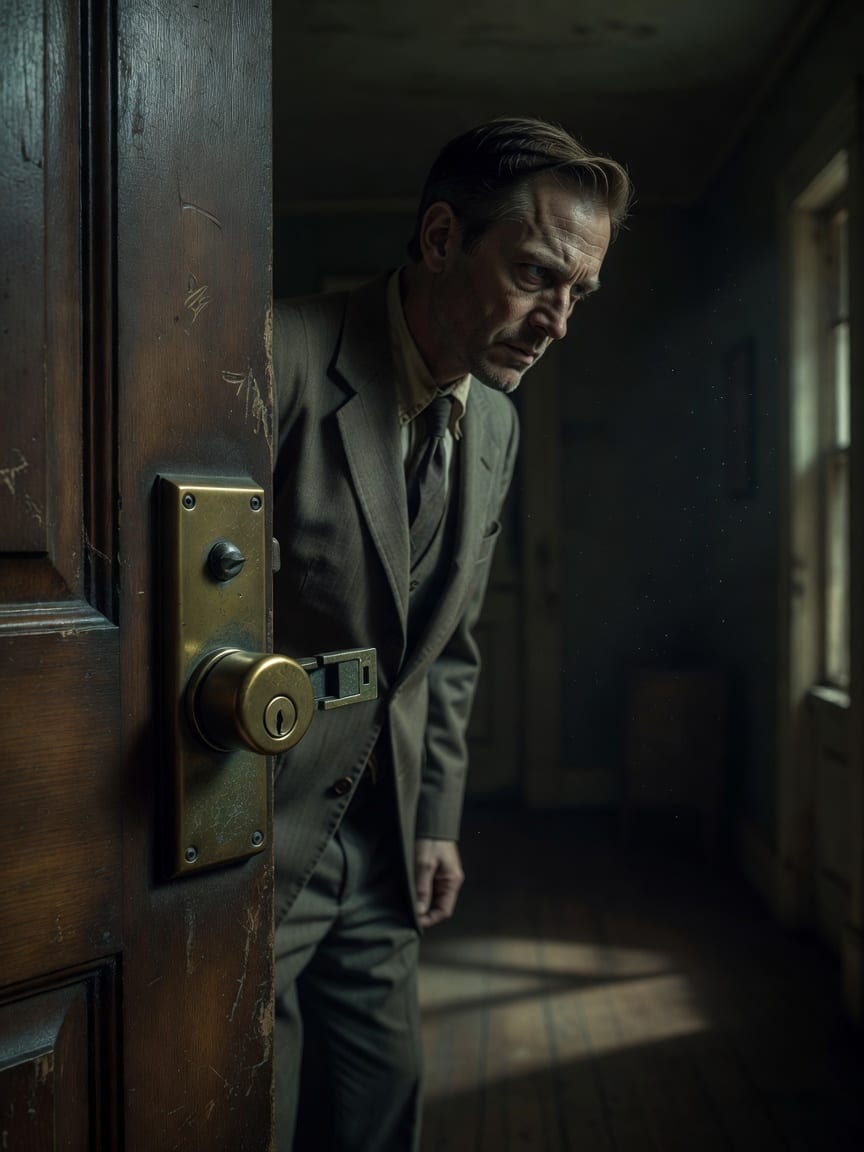
My deadbolt clunks shut from inside every night, long after I'm asleep. I live alone, and I've never heard it drawn back.
Inheriting Great-Aunt Lydia's house felt like a fresh start, until the nightly clunk of the deadbolt from downstairs started. I live alone, but every evening, the front door locks itself from the inside. Now, I’ve found Lydia’s meticulously kept calendar, with a 7 PM 'Deadbolt Check' written for tonight, a year after she died.