My initial, C. Porter, is carved into an ancient stone in a desolate bog. It's been there for centuries.
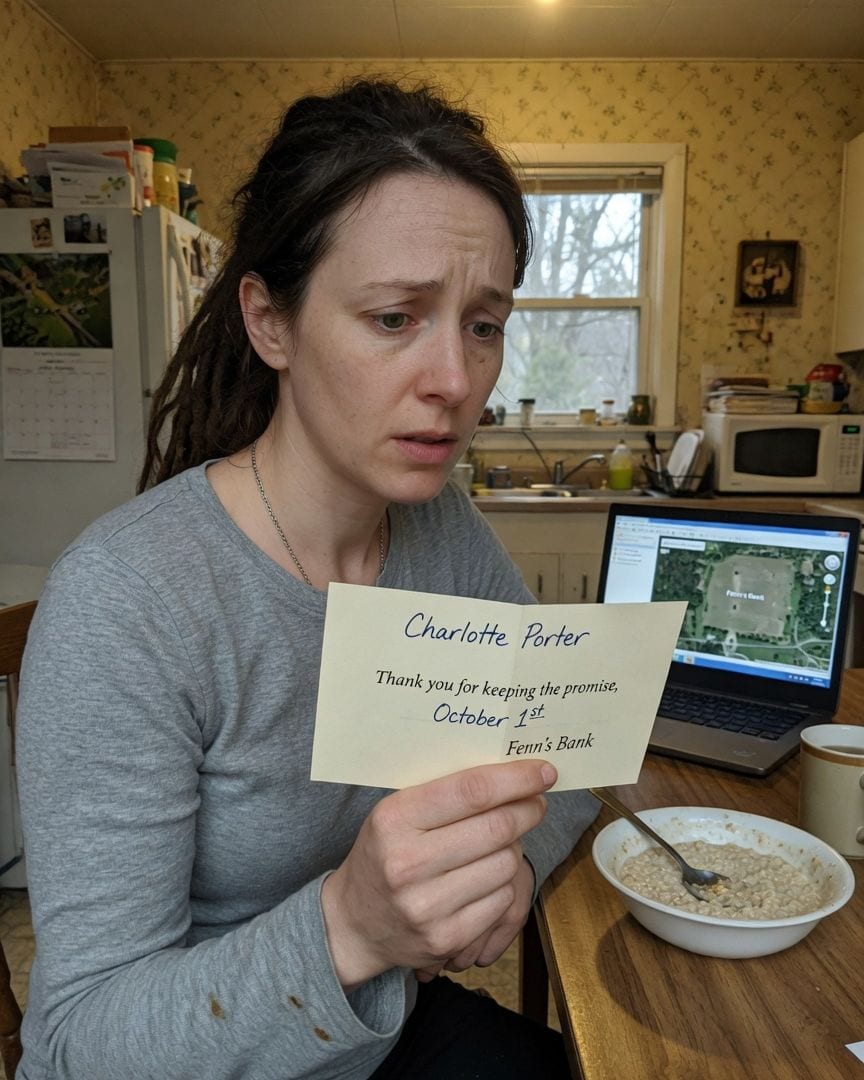
The half-eaten oatmeal sat cooling in its bowl, the spoon abandoned mid-scoop. I just stared at the cream-colored card in my hand, the third identical one this month.
It was addressed to me, Charlotte Porter, in a neat, formal script I didn't recognize. No sender’s name, just a return address: 'Fenn's Bank.'
Fenn's Bank. I knew Fenn's Bank. It wasn't a bank at all, of course, and it wasn't even a place with actual structures.
It was a wide, flat stretch of drained peat bog, miles out of town, empty and desolate for decades. I’d driven past it countless times, always just a featureless expanse of dry, reedy grass under a big sky.
The card simply thanked me for 'keeping the promise.'
I hadn't made any promise. Not that I could recall, anyway. The first card, I'd thought was a joke, maybe a wrong address. The second, a weird spam mail.
But this third one had a new detail, handwritten beneath the generic thanks: 'October 1st.' Today was September 15th.
A quiet dread, cold and sharp, started to settle in my chest, right where my heart was. The polite, formal script felt like a contrast to the growing unease. It wasn’t just a wrong address anymore. It knew my name.
It had a deadline.
I tried to rationalize it, of course. A sophisticated prank? Maybe some new, obscure marketing gimmick gone wrong? But the name, 'Charlotte Porter,' was precise. And the return address, 'Fenn's Bank,' was just bizarre enough to stick.
Who sends thank-you cards from a non-existent location?
I pushed my breakfast aside and pulled up my laptop. Satellite maps first. Fenn's Bank, precisely as I remembered it: a vast, empty canvas. Then local history forums, trying to make sense of the name.
It took some digging past discussions about crop yields and mosquito control, but eventually, I found vague mentions of a 'Porter family' and a 'founding promise' connected to the land.
It was mostly presented as local folklore, something people whispered about but never detailed. A covenant for prosperity, one old post said, almost like a blessing on the earth. No specifics, though. Nothing concrete.
It felt too coincidental to be random, my name, the cards, the land. But it was also too obscure to be a real threat. A prank, probably, but an elaborate, deeply unsettling one.
Still, that date, 'October 1st,' tugged at something. It wasn't just a generic card anymore. It was a countdown.
My rational mind was screaming that this was ridiculous, but a colder part of me was already checking the gas in my car. I needed to see this place, this 'return address,' for myself.
Maybe solid ground would dispel this strange, growing unease.
The gravel road was rough, spitting stones up at the undercarriage of my sedan. It dead-ended abruptly, right at the edge of the vast, desolate bog.
The air was thick and still, heavy with the scent of damp earth and dry reeds. I cut the engine, and the silence pressed in, immediate and absolute. No birds, no distant traffic. Just the wind, starting to pick up.
I got out. The field stretched endlessly, flat and featureless under a muted sky. My breath plumed faintly in the cool air.
I felt an inexplicable chill, a prickling sensation on the back of my neck, the distinct impression of being watched.
My gaze drifted across the monotonous landscape, then snagged on something small, dark, and angular, half-buried in the tall, dry grass a few yards from the road.
Curiosity, or maybe just the need to break the oppressive silence, drew me towards it. I knelt, pushing aside the brittle reeds, brushing away dirt and stubborn green moss.
The carving was faint, almost illegible at first glance, but as my fingers traced the rough lines, the words slowly became clear. 'THE PROMISE. PORTER.'
My breath hitched. My family name. My mouth felt suddenly dry.
And beneath it, etched into the ancient stone, was a date, centuries old. But the chilling part, the part that made my blood run cold, was the initial and surname beneath the date: 'C. PORTER.'
My initial. My surname. I froze, my hand still resting on the cold, weathered stone. The wind, which had been a gentle murmur, suddenly whipped around me, sharp and insistent.
It carried a faint, distant whisper through the reeds, a sound that seemed to curl around me, a sound that sounded like my name.
Shaken to my core, I drove home from Fenn's Bank, the image of 'C. PORTER' seared into my mind. The stone marker confirmed it: the cards weren’t a prank.
This 'promise' was real, and it involved my family name, stretching back through time.
The next few days were a blur of frantic research. I practically lived at the local historical society, a musty old building that smelled of dust and forgotten lives.
I poured over microfiche, old land deeds, and crumbling town records for anything related to Fenn's Bank and the Porter family. Most of it was mundane stuff – tax records, property transfers, agricultural reports.
But then I found it: an ancient property ledger, its thick, yellowed pages brittle with age. The entries were sparse, almost coded, but they detailed unusual 'covenants' and 'obligations' tied specifically to the land of Fenn's Bank.
And always, always, the Porter name was mentioned. The language was archaic, vague legal-speak, but the implication was clear: my ancestors had made some kind of deal for this land.
As I was hunched over the ledger, trying to decipher a particularly ornate script that mentioned a "generational contribution," a quiet, older librarian approached my table. Deborah Bennett. I recognized her from the few times I’d been in before.
She was a woman in her early fifties, with kind, tired eyes and a perpetual air of calm. She looked at me with a solemn, almost apologetic expression.
"Charlotte," she said, her voice soft but clear, cutting through the silence of the room, "I'm sorry for what's coming."
My heart leaped into my throat. The ledger in front of me seemed to hum with a sudden, silent energy. "Sorry for what?" I managed to ask, my voice barely a whisper. "What do you mean?"
Deborah simply shook her head. Her gaze lingered on the ancient ledger for a moment, then met mine. A small, resigned smile touched her lips, a smile utterly devoid of humor.
She offered no further explanation, no comfort, just that silent apology before she turned and walked away, disappearing into the stacks as if she were a ghost herself.
The scent of old paper and dust seemed to cling to her absence.
Deborah's apology unnerved me more than any old record. I tried to find her again, but she’d left for the day, and for the next two, her desk remained empty. The historical society felt different now, heavy with unspoken things.
I started feeling an oppressive sense of being observed, even when I was back in my own apartment. It wasn't paranoia, not exactly, but a certainty, cold and solid.
A dark sedan, one I’d never seen before in my quiet neighborhood, was parked down the street for hours on end, its windows tinted. When I left for groceries, it was there. When I came back, it was still there.
Its presence felt like a silent sentinel. Shadows seemed to lengthen at the periphery of my vision when I was out walking my dog, twisting into unnatural shapes.
The air in my apartment often felt strangely heavy, as if someone had just left the room, leaving behind a faint chill.
One evening, my rarely used landline rang. I almost didn't answer it, preferring my cell. But the insistent, old-fashioned trill seemed to demand it. A cold dread already coiled in my stomach as I reached for the receiver.
"Hello?" My voice sounded thin in the sudden quiet of my apartment.
A calm, older male voice, resonant and clear, spoke directly into my ear. "Charlotte." He used my name with an unnerving familiarity, a knowing weight. "You're getting close to the truth. Don't worry, the promise will be kept."
The line went dead with a soft click. No dial tone, just absolute, chilling silence. I stood there, receiver still pressed to my ear, the plastic cold against my skin.
The silence in my apartment was suddenly vast and menacing, a living thing. Someone knew exactly what I’d found. And they were watching my every move.
Terrified and with nowhere else to turn, I finally sought out Julian Sinclair.
His name had surfaced in one of the older history forums as the unofficial 'Keeper' of Fenn's Bank lore, a retired local historian known for his encyclopedic knowledge of town legends and obscure family histories.
I found his address in the phone book, a little house on the edge of town, tucked away behind overgrown hedges.
His home office was a cluttered labyrinth of stacks of books, yellowed papers, and ancient maps. The air hung heavy with the scent of old paper and dust, but it wasn't the dead, dormant smell of the historical society.
Here, it felt alive, a place where knowledge accumulated and breathed.
I laid out my evidence on his worn oak desk: the three cream-colored cards, the photo I'd taken of the stone marker at Fenn's Bank, the photocopied pages from the ancient ledger with its baffling 'covenants,' and finally, the chilling message on my landline.
I even told him about Deborah Bennett’s strange apology.
Julian listened, his expression unreadable. His gaze, behind thick spectacles, was calm, almost placid. He didn't interrupt, didn't scoff. He didn’t deny a single thing I said.
When I finished, he leaned back in his creaking chair, clasping his hands. "The 'promise'," he began, his voice measured, almost academic, "is a pact. An ancient one, made by the first Porters generations ago."
He explained that they had been granted extraordinary prosperity, fertile land – Fenn's Bank, before it was drained – in exchange for a cyclical 'tribute.'
This wasn't a financial payment, he clarified, but an obligation, a balancing act to ensure the land's continued vitality. "The land," he said, "demanded its due for its bounty."
The thank-you cards, he explained, were simply the mechanism by which "the land remembers" and makes its claim. "A formal acknowledgment," he added, as if discussing a property transaction.
Deborah Bennett, he added, was from a family with similar ancient ties to the area, bound by similar, though different, understandings. Her apology, he said, was one of resigned understanding. She knew. She understood the inevitable.
The calm, rational way he spoke about this impossible, ancient pact, as if it were simply a matter of historical record, was more chilling than any supernatural explanation. There was no melodrama, no hint of madness.
Just facts, delivered with the quiet authority of someone who had known them all along.
Julian then gestured to a large, faded parchment unrolled on a nearby table, almost hidden beneath a stack of books. It was a meticulously drawn Porter family tree, stretching back centuries, each name inscribed in elegant, looping script.
He traced Charlotte’s lineage, following a faint line of faded ink, back to the original Porter who, he said, had made the promise.
Beside each name on the tree, a date was inscribed. He pointed to a series of names, all ending in 'Porter,' with dates that aligned precisely with the 'due date' on my card—October 1st. But these dates weren’t recent.
They were decades, even centuries apart, each one falling on the first day of October.
And beside each of these names, a strange symbol was drawn: a small, perfectly empty circle.
"These," Julian said, his finger hovering over one of the empty circles next to a name from the 1700s, "denote the 'keeping' of the promise." His voice was flat, devoid of emotion.
Then, his finger moved, slowly, inexorably, to my own name on the tree, written in a different, more recent hand. Charlotte Porter. And next to it, the same small, empty circle, waiting.
The implication landed with a physical blow, a punch to the gut that stole my breath. This wasn't just my promise. It was a pattern, a recurring obligation that someone in my family line had always had to fulfill.
And now, the empty circle beside my name made it horribly, terrifyingly clear. It was my turn.
"The empty circle signifies the 'fulfillment' of the promise," Julian explained, his voice still that calm, academic drone. "For generations, a Porter has 'contributed' themselves to the land."
He clarified that the 'tribute' wasn't a payment in gold or goods, but a part of the Porter line itself. A blood debt, essentially, to maintain the balance with the land, to ensure its cycles of fertility and dormancy.
He spoke of Fenn's Bank not as a drained bog, but as a living entity, dormant, yes, but not dead. "The 'promise' ensures its eventual renewal, its return to fertility," he said, "but always at a cost."
His gaze was distant, as if seeing beyond the walls of his office, into the vast, empty expanse of the bog itself. "The land remembers, Charlotte," he added, his voice devoid of emotion, "and it claims what is due."
He described how, on the 'due date' – October 1st – the land's call would become irresistible. It would draw the chosen Porter, the one whose empty circle awaited fulfillment, to Fenn's Bank.
There, they would become "one with the earth," he stated, ensuring its vitality for another generation, another cycle.
His calm, matter-of-fact tone was the worst part. It stripped away any hope of a mundane explanation, any possibility of escape. He wasn't relaying a spooky story or a madman's delusion.
He was simply stating an ancient, horrifying fact, an immutable law of this specific patch of earth and my bloodline.
I was numb, utterly trapped by the weight of centuries of inherited debt. "What happens," I managed to croak, my voice raw, "if I defy it? If I just… don't go?"
Julian simply shook his head, a faint, almost pitying gesture. "Defiance," he stated, "has always led to a more... forceful reclamation. The land has its ways, Charlotte. It is patient, but it is absolute."
He explained that the 'date' on the card wasn't a deadline for me to act, but for the land to act. It was the moment of its claim.
He then reached into a small, antique drawer in his desk and produced an ancient, heavy iron key, its metal dark and worn smooth by countless hands.
It was larger than any house key, with intricate, almost organic patterns carved into its head.
"It opens the old gate to the Bank," he said, handing it to me. The iron was cold and heavy in my palm. "The one at the far end of the gravel road, just before the field truly opens up."
He met my gaze, his eyes calm but deeply knowing. "What you do with it is up to you, Charlotte. But the land is patient."
He offered no advice, no comfort, only the stark reality of my inherited fate, sealed by an artifact of generations past.
My mind reeled, a chaotic storm of denial and acceptance. How could I fight an ancient pact tied to the very earth, an entity that "remembered" across centuries?
With the key heavy in my hand, a silent, cold weight, I drove back to Fenn's Bank.
The sun was setting, bleeding orange and purple across the vast, empty sky, casting long, strange shadows across the desolate field. It felt like the world itself was holding its breath.
I found an old, rusted iron gate, almost swallowed by overgrown brush, exactly where Julian had described. It wasn't visible from the road; you had to know it was there.
My hand trembled as I inserted the ancient key. It slid in with a surprising ease, then turned with a groan of ancient metal, a sound that seemed to echo in the vast silence. I pushed the gate open.
It swung inward, revealing the field beyond, stretching endlessly, darker now than the deepening sky.
I stepped through. The gate, heavy and rusted, swung shut behind me with a final, echoing clang.
Days passed. Charlotte Porter was not seen again in town. Her apartment remained untouched, the cream-colored thank-you cards still on her kitchen counter, a silent testament.
Her car was found parked neatly by the old, rusted iron gate at Fenn's Bank. The gate was now firmly locked, no key in sight.
The local sheriff's department filed a missing person report, but without any leads, the case quickly went cold. The field at Fenn's Bank remained desolate, quiet, undisturbed.
A month later, on the first of the month, a new thank-you card arrived at the local historical society, addressed simply to 'The Keeper.'
Julian Sinclair, sitting at his desk amidst his vast collection of local histories, opened it with an unhurried grace. It thanked him for 'ensuring the promise.'
He read the card, then placed it carefully into a small, meticulously organized wooden box labeled 'Fenn's Bank.' He looked out his window at the distant, flat expanse of the bog, and a faint, almost imperceptible smile touched his lips.
The land is still.
If this one got to you
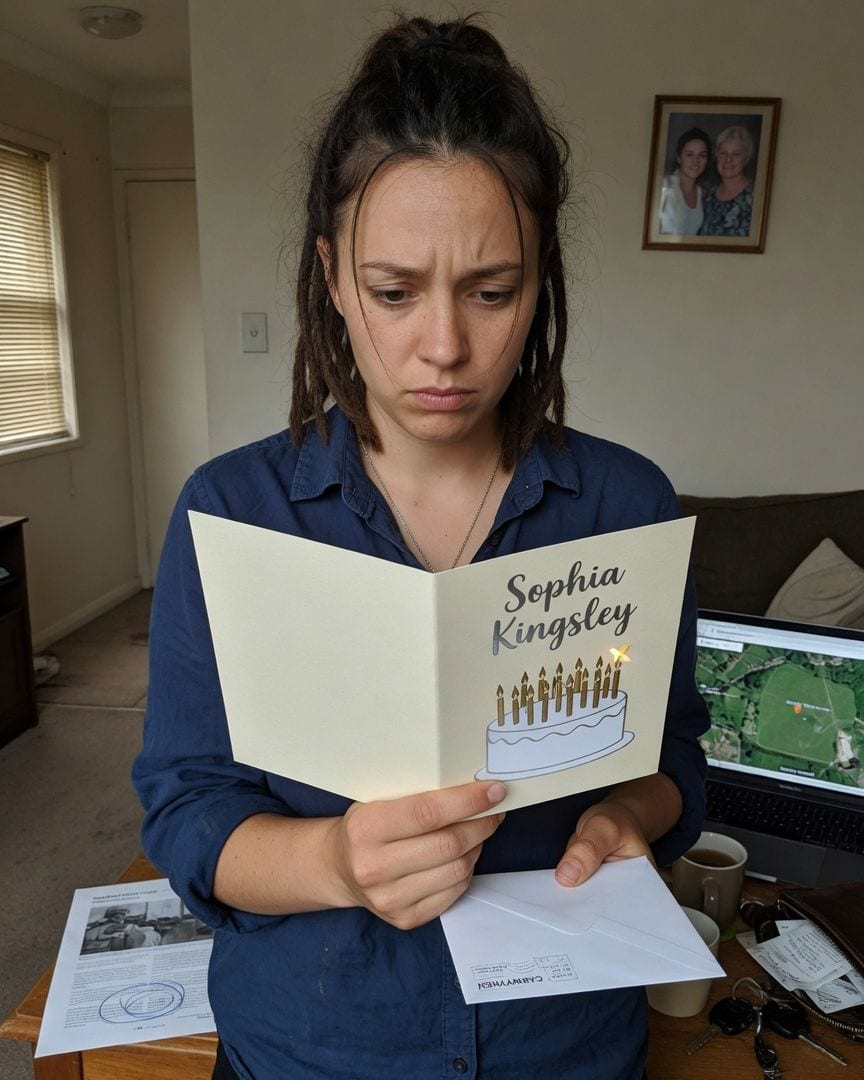
An empty field sends my birthday cards. This year, one candle was crossed out.
My birthday card always arrived a day early, a familiar comfort for five years. This year, a tiny silver 'X' marked one of the thirty candles, and the postmark read 'Carwynnen.' It was an empty field miles from anywhere, with no post office, and no one to send a card.
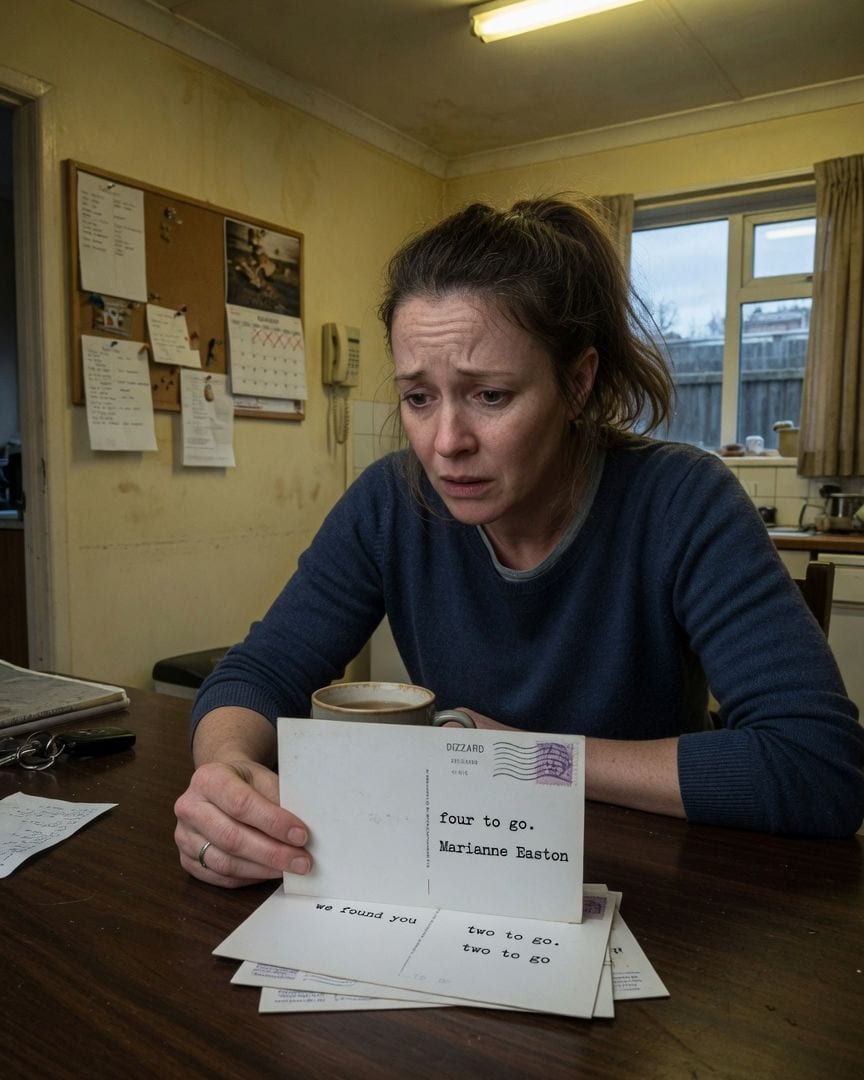
My postcards arrive each Friday, addressed by name, counting down. This week's says 'four to go,' postmarked from a cliff with no postbox.
Every Friday, stark white postcards arrive on my kitchen table, addressed to me. Each one is postmarked 'Dizzard,' a desolate cliff miles from any town, with no post office. For weeks now, they've been counting down.
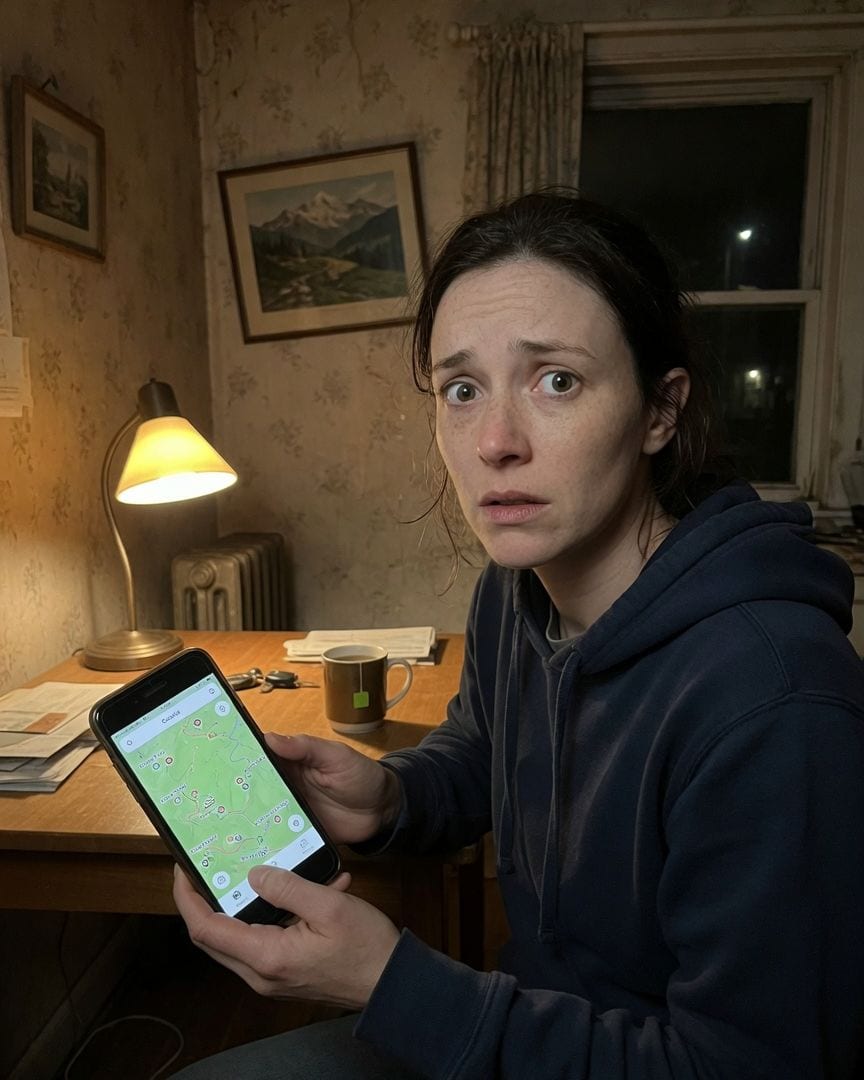
My hiking app scrubbed the hill's name from the map, on a phone that's been in airplane mode for two days.
I just moved to town and hiked a local hill, 'Cathan Tor,' according to my phone's app. But when I mentioned the name to the mechanic, he froze, dropped his wrench, and whispered, 'Don't say that name, Colette.'
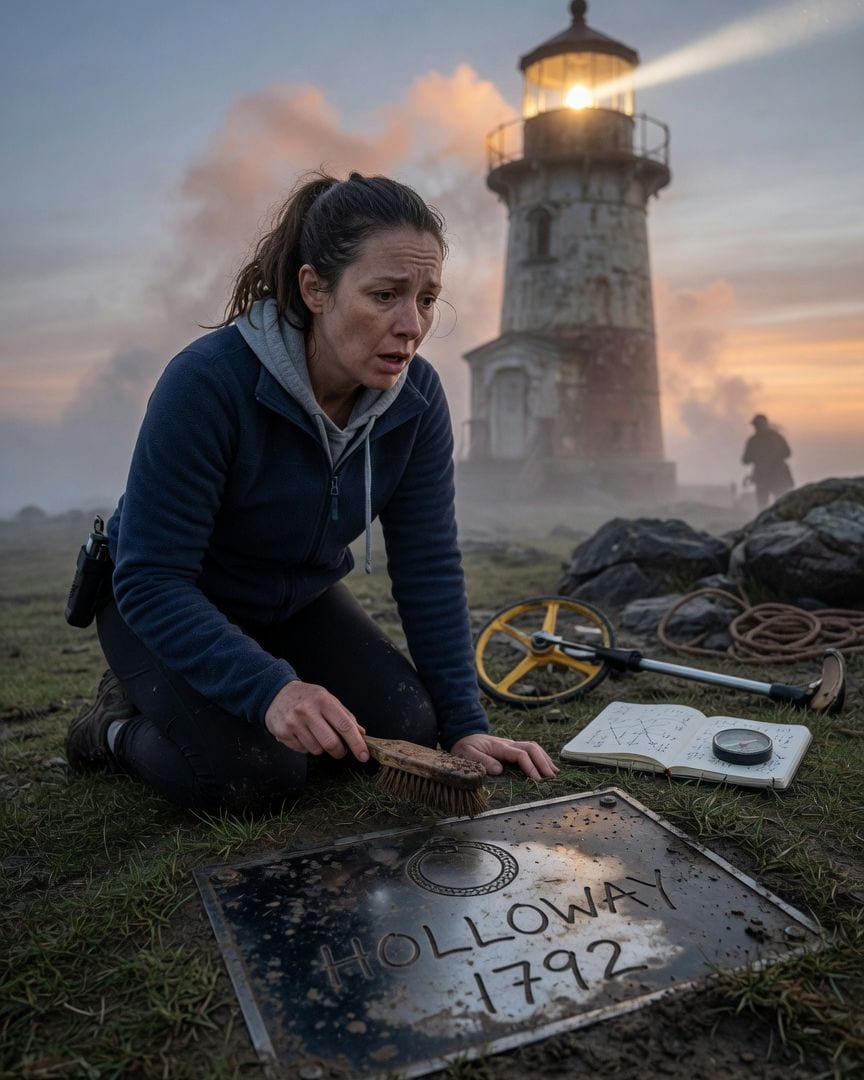
My coastal path just kept curving me back to the lighthouse. Nine miles walked, the same fisherman coiling rope, but I never left.
My morning ritual is a brisk walk along the coastal path. But last Tuesday, after what felt like an hour, I found myself back at the lighthouse, having walked miles to nowhere. My step-counter read 4.5 miles, yet the same fisherman was still coiling the same rope right where I started.
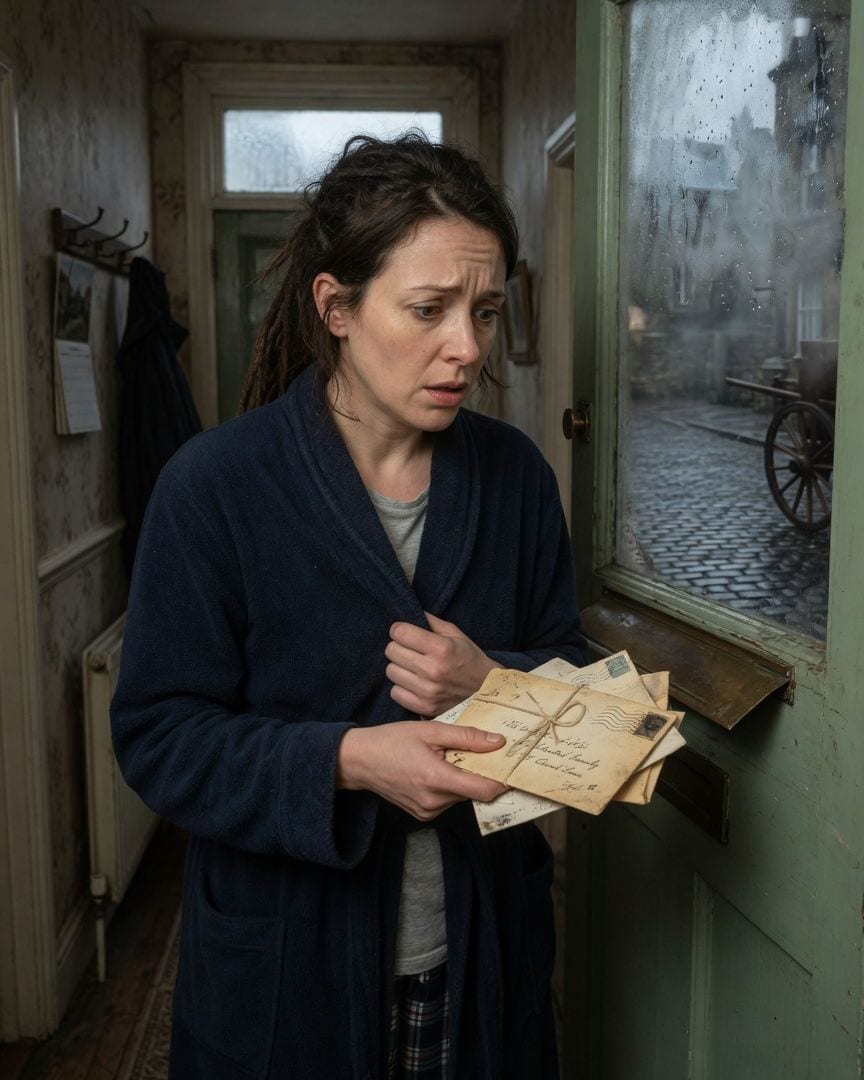
Seventy years ago, a hidden journal recorded my door opening to the wrong street and receiving Lockwood post.
I'd only recently moved into my inherited house, a quiet place on the edge of town. One grey morning, a distinct clatter from the front door's post flap caught my attention. Reaching down, I expected my gravel path, but instead, the flap showed a dark, cobbled street that wasn't mine. A bundle of warm, old letters, addressed to 'The Lockwood Family,' slid through, before the vision flickered and was gone.
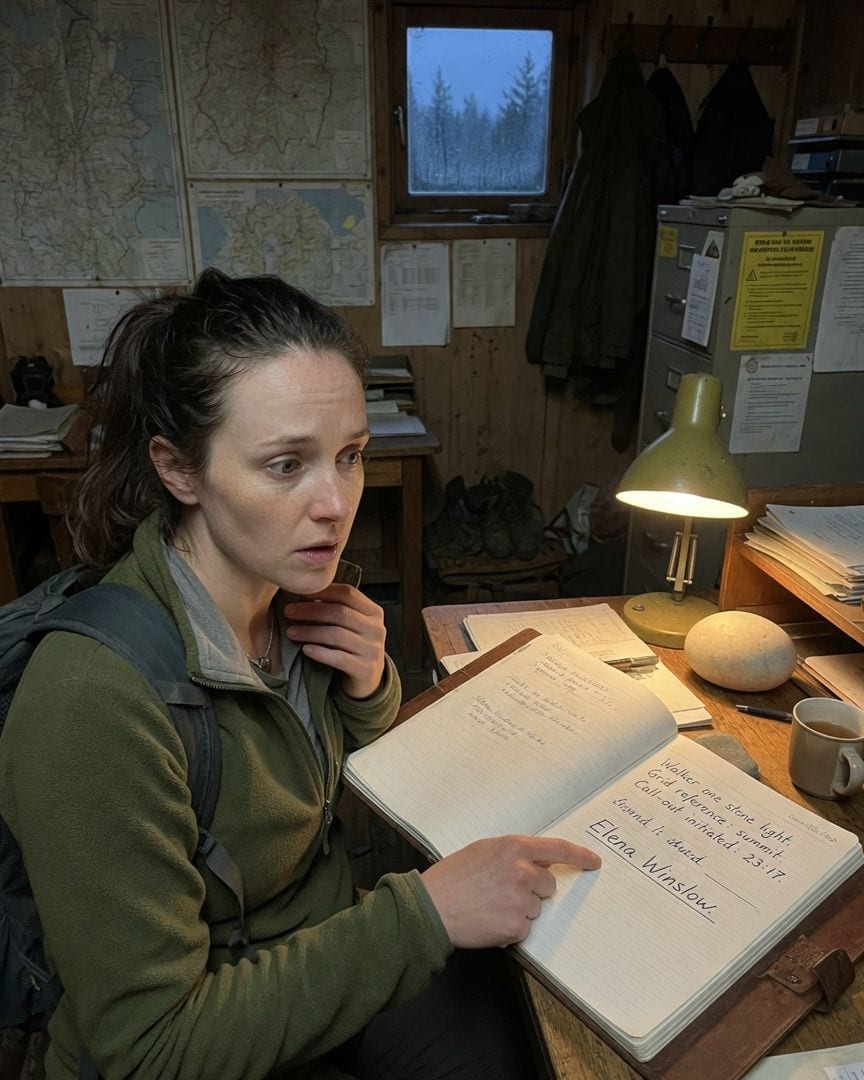
My pocketed mountain stone meant a rescue logbook recorded a call-out that night for me — a shout that never went out.
After an exhilarating climb on Cadair, I took a small, smooth white stone from the summit cairn, despite a warden's warning. Back at the station, a logbook entry shocked me: my name, dated last night, for a rescue call with an impossible detail: 'Walker one stone light'.