My jaw X-ray shows old surgery plates. I have no scars. I've never had jaw surgery.
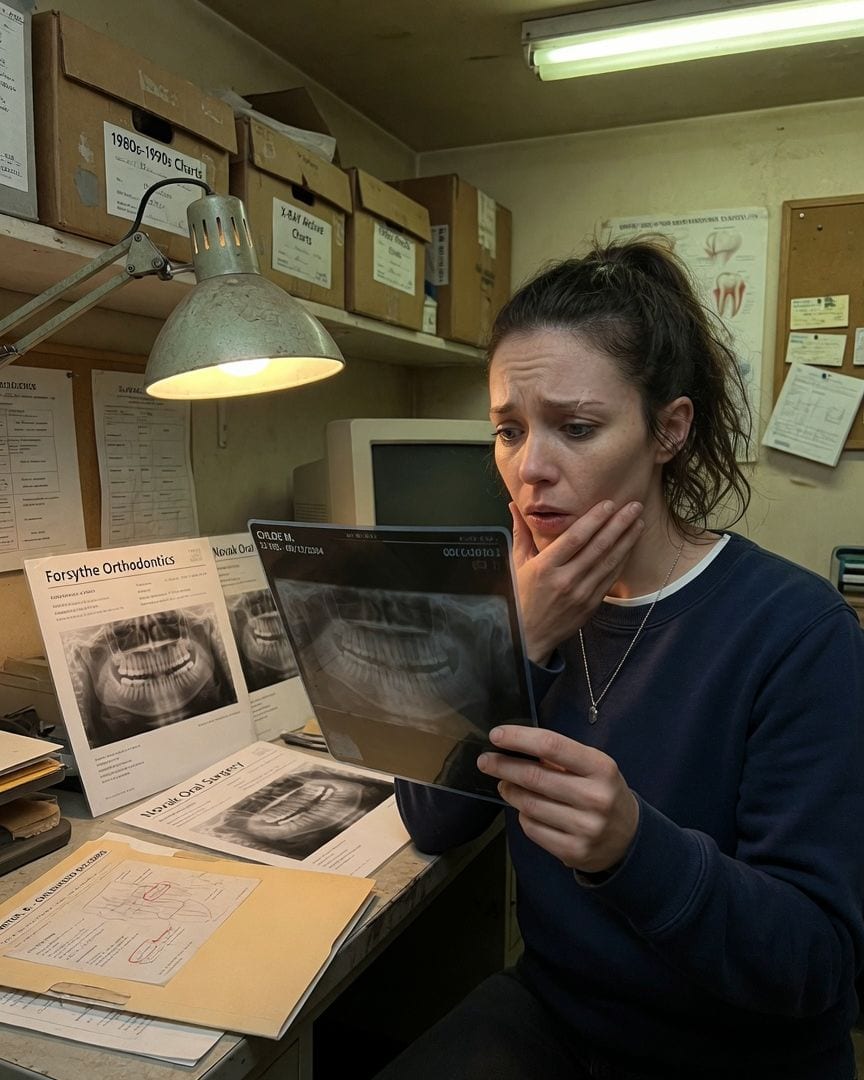
My orthodontist, Dr. David Forsythe, adjusted his glasses, a concerned line forming between his brows. He looked from me to the glowing X-ray on the screen, then back to me.
"Chloe," he began, gesturing with a pen tip to a specific area on the digital image, "your bite indicates clear signs of an old jaw surgery. An osteotomy, specifically. Upper jaw, moved forward, pinned."
He zoomed in, and I saw them: faint, metallic glints, tiny plates barely visible, embedded in the bone above my molars.
I stared, my mouth suddenly dry. I’m thirty-two years old, and I have never had jaw surgery. Not a single operation on my face, ever.
I ran a tongue over the roof of my mouth, then pressed a finger along my upper gums, searching. No scar tissue, no faint line where an incision would have been.
My reflection in the dark screen showed a perfectly normal, unblemished face, the same one I’d woken up with every day of my life. The plates were undeniably there, right inside my bone.
But I knew, with a certainty that chilled me, that they didn’t belong to my memory. They didn’t belong to me.
Dr. Forsythe, sensing my disbelief, calmly explained the procedure: the cuts to the bone, the repositioning, the screws and plates to hold it in place, the recovery, the permanence of the plates. He suggested a second opinion, a specialist.
I agreed, my mind racing through every childhood illness, every doctor’s visit, every fall and scrape. Nothing.
Within days, I was sitting in Dr. Vivian Novak’s office, an oral surgeon known for her precise diagnostic work. Her office was all glass and cool chrome, modern and efficient.
She took new scans, examined my mouth thoroughly, the bright light in my face, her gloved fingers pressing along my jaw. She confirmed Dr. Forsythe’s findings.
"It’s an old, well-healed osteotomy," she stated, showing me her own crisp X-rays on an even bigger screen. "The plates are stable. No active issues."
When I explained my complete lack of memory or external scar, she paused, a flicker of something unreadable in her eyes.
"Sometimes trauma can affect memory," she offered, but it sounded hollow even to her, a professional attempt at a rational explanation that simply didn't fit. I wasn't traumatized; I was just... me. And I knew my own history.
My next step was obvious. If this surgery was real, it must have happened when I was a child. I called my childhood dentist, Dr. Bernard Porter. He still had my old files, he told me, tucked away in storage.
I drove across town, my hands clammy on the wheel, the cool leather of the steering wheel doing nothing to calm me. Dr. Porter, now semi-retired, greeted me warmly, his office smelling of antiseptic and old paper.
He pulled a thick, dog-eared folder from the back of a dusty cabinet. Inside, tucked away, were my childhood dental charts and X-rays, dating back to when I was six.
I found the X-ray of my jaw from age twelve, a clear, pre-braces shot. I held it up to the light. It was perfectly normal, no plates, no signs of intervention. Nothing at all.
My breath hitched. The old X-ray, undeniably mine, with my name and birthdate neatly typed at the top, showed a smooth, unbroken upper jawbone, exactly as I remembered it.
No surgical cuts, no faint metallic glints, no evidence of an osteotomy. It was a perfectly clean, pristine record of a jaw that had never been operated on.
Yet, the X-rays from Dr. Forsythe and Dr. Novak, taken just days ago, showed the plates clearly, healed into the bone, nestled where they didn't belong.
Two sets of records, both bearing my name and birthdate, both showing my jaw, yet one recorded a major surgery that the other completely omitted.
I ran my fingers over the plastic film, the smooth surface a cold contradiction to the impossible truth it held. My childhood self had no such surgery. My adult self did.
The wrongness of it settled deep, a cold stone in my gut.
The discrepancy gnawed at me. I tried to find a logical explanation. Could the childhood X-ray be mislabeled? I called Dr. Porter again.
He confirmed it was my file, meticulously kept since I was a child, his own signature on the chart. Could the current X-rays be mixed up?
Dr. Novak had taken them herself, double-checked my identity against my driver's license, even asked me my mother's maiden name. The evidence held. My childhood X-rays showed a natural, unaltered jaw.
My current X-rays showed a jaw that had undergone a significant surgical procedure decades ago.
My next step felt desperate: the city archives.
I reasoned that if there was any record of a significant medical event, especially one involving a child—a long-term hospital stay, maybe a report of an accident that caused the need for surgery—it might be there, however obscure.
I spent days sifting through microfiche, the green glow of the reader making my eyes ache, old hospital registers bound in brittle leather, anything that might shed light on a 'Chloe Lambert' with a jaw surgery in her youth.
It was a needle in a haystack, and I found nothing concrete, no mention of my name connected to any such procedure.
The vast quiet of the archives began to feel oppressive, the air thick with the dust of forgotten histories.
But one afternoon, a quiet, older man with kind, tired eyes noticed my persistent presence. He was Lars Kingsley, a retired archivist who still volunteered, and clearly knew the labyrinthine records better than anyone.
He approached me, a faint, almost pitying smile on his face. "Looking for something specific, dear?" he asked, his voice soft, almost a whisper in the echoing space.
I explained my impossible situation, my voice hushed, showing him printouts of both my childhood and adult X-rays. I laid them side-by-side on the scarred wooden table, the stark contradiction clear under the fluorescent lights.
He studied them for a long moment, his smile fading, replaced by a deep furrow in his brow. "That’s… unusual," he murmured, his gaze distant, moving from the pristine childhood image to the metal-laced adult one.
He didn't offer an explanation, didn't try to rationalize it away like the dentists had. He just watched me with an unnerving calm, as if he recognized a pattern I couldn't yet see, a familiar ghost in the machine.
A cold draft seemed to sweep through the room, making the loose papers on my table flutter, even though all the windows were sealed.
After that encounter, Lars Kingsley started appearing whenever I was at the archives. Not overtly following, but always in my peripheral vision, a shadow moving between the towering shelves.
If I moved to a different section, ostensibly to research a different set of records, he’d soon be there, ostensibly filing, or examining a map, but his eyes would drift my way.
It wasn’t threatening, but it was profoundly unnerving, like being under constant, silent surveillance. The quiet hum of the building's ancient HVAC system seemed to deepen whenever he was near, an almost imperceptible shift in the ambient sound.
One afternoon, I found a small, unmarked envelope tucked into a book I’d been researching—a local history of orphanages, chosen almost at random in my desperate search. The binding was cracked, the pages foxed with age.
Inside the envelope was a single, yellowed newspaper clipping from decades ago, brittle to the touch, detailing a fire at an old children’s home, with a brief mention of 'several children transferred to other institutions for care and reassignment.'
There was a handwritten note scrawled on the back: 'Some things are better left buried, Chloe. For your own sake.' The handwriting was precise, almost scholarly, the loops elegant and deliberate.
I knew, with a sick twist in my stomach, that it was Lars's.
The dread solidified. He wasn't just watching me; he knew what I was looking for, and he was warning me away. It meant he knew the secret, whatever it was. He knew my secret.
The archives, once a place of quiet historical pursuit, a sanctuary for hidden truths, now felt like a cage, the silent rows of books and files pressing in, with him as the silent, unblinking guard.
Every time a trolley creaked down an aisle, I flinched, expecting him.
I confronted Lars the next day. I found him dusting a row of old city directories, his movements slow and methodical. I held out the clipping and the note, my hand trembling slightly. He didn't flinch, didn't even look surprised.
He just straightened, his eyes settling on mine with that familiar, weary resignation. "You shouldn't have dug so deep, Chloe," he said, his voice soft, almost a sigh. "Some truths… they change everything you think you are."
I pressed him, my voice tight, barely above a whisper. "What does 'reassignment' mean? What do you know about that fire? And how do you know what’s for my own sake?"
He led me to a secluded corner, away from the few other patrons, near a bank of silent microfiche readers. He spoke in hushed tones, almost a confession, as if afraid the very walls might be listening.
"After the war, and even later, through the fifties and sixties, there were… programs. Children who were orphaned, or whose families couldn't be traced, or had severe medical needs, needs that made them, shall we say, difficult to place.
Sometimes, they were given new lives. New names. New families. A fresh start. It was seen as humanitarian." He paused, meeting my gaze, his eyes ancient and full of unspoken burdens. "Sometimes, small modifications were made.
To help them fit in. To erase the old life entirely. To give them a 'clean slate' for their new identity."
My mind reeled, trying to grasp the implications. "You mean… my jaw surgery? It wasn't mine? It was from before?"
He hesitated, a long, heavy silence stretching between us, punctuated only by the distant clatter of a book trolley. Then he nodded slowly, a single, deliberate movement. "It’s a trace, Chloe. A very old one.
From before you were Chloe Lambert."
The words hit me like a physical blow, a cold, sickening realization. My body wasn't entirely my own. It carried a ghost of a past I didn't recognize, a physical record of a life that wasn't mine.
The childhood X-ray, showing no surgery, suddenly made a terrifying kind of sense. The 'Chloe Lambert' I knew, the one I had always been, had no surgery. But the body I inhabited… it had a different story.
The wrongness wasn't a mistake; it was a deliberate, calculated act. And I was living proof of it.
Lars saw the dawning horror in my eyes. He reached down beside his chair, retrieving an old, leather-bound portfolio he’d brought with him, something he’d kept hidden. The leather was cracked and worn, like an artifact itself.
He carefully removed two faded, sepia-toned photographs and a single, yellowed medical file. The paper of the file was thin, almost translucent with age.
He slid the first photograph across the table, his fingers barely touching it. It showed a young girl, no older than six, with wide, serious eyes and a smattering of freckles.
It was undeniably me, or a younger version of me, looking out from the past. My heart hammered against my ribs. On the back, handwritten in elegant, looping script, was 'Sylvia Porter, born October 14, 1991.'
My birthdate. My face. A different name.
Then he pushed the second photograph into view. It was a different child, her face partly obscured by shadow, a dark smudge across one cheek.
But the medical file beside it was open to a page detailing an 'osteotomy, mandibular advancement, insertion of fixation plates,' dated from decades ago.
And then, Lars pointed to a small, almost imperceptible detail in the second child’s jawline, a faint line on the X-ray printed within the file. It was the same distinct pattern of plates visible in my current X-rays.
Two children, one birthdate, one face, and one shared, impossible surgical history. My identity was a composite, a puzzle pieced together from different lives, stitched into one living body.
The cold, sterile air of the archives seemed to condense around me, suddenly impossible to breathe.
Lars explained, his voice hushed, as if still fearing unseen listeners. The 'reassignment' program, active for decades after the war and well into the latter half of the century, wasn't just about new names.
It was about creating whole new individuals, untraceable and fully integrated. Children like 'Sylvia Porter,' who had lost everything—families, homes, even their recorded pasts in the chaos of the times—were given new identities, new beginnings.
And children with significant medical needs, whose original identities might be too complex or impossible to integrate into a 'normal' new life, sometimes had their medical histories 'merged' or 'transferred' to a new, simpler identity.
The jaw surgery, he clarified, belonged to the child whose medical file he’d shown me, a different Sylvia Porter who had a severe congenital jaw defect, making her face noticeably asymmetrical.
That child had died shortly after the surgery, but her medical history, deemed 'resolved' and therefore a 'clean slate,' was quietly, meticulously attached to a newly created identity: mine.
My body, he explained, had undergone significant reconstructive work in infancy, largely to correct the remnants of my original identity and to align with the new, 'clean' medical record.
The jaw plates, however, were an oversight, a detail too deeply embedded to remove without leaving obvious scars, or simply a deliberate choice to retain a 'surgical history' for the new identity that could be explained away if ever discovered, like a pre-existing condition, rather than raising questions about a completely blank medical past.
The program believed it was giving these children a chance, erasing trauma, but it was also erasing truth, erasing who they were.
I was Chloe Lambert, yes, but I was also a vessel for a ghost, a living palimpsest of two lives, two bodies, two sets of memories. The pattern snapped into place: the childhood records were mine, Chloe Lambert’s.
The adult X-rays were mine, but the surgery within them belonged to a different Sylvia Porter, a ghost now living inside my own bones, a past stitched into my present.
The truth was a cold, alien weight, heavy in my chest. I tried to find the institution Lars spoke of, the remnants of the program.
He gave me a coded address, a seemingly innocuous building downtown, now a bland government records office, all grey concrete and tinted windows. I walked in, heart pounding, and asked to speak to someone about 'historical reassignment cases.'
A woman, impeccably dressed in a sharp black suit and radiating an unsettling calm, met me in a sterile conference room. Her name was Pamela Donovan.
She listened to my story, to Lars’s fragmented confession, to the impossible X-rays and photographs I laid out on the polished table, without a single change in her serene expression.
Her hands were clasped neatly in front of her, her posture perfect. She didn't deny anything. She didn't confirm anything either.
"Ms. Lambert," she said, her voice even, almost devoid of inflection, "records from that era are often complex. We do our best to ensure continuity and care for all individuals within our purview."
She spoke of 'integration protocols' and 'beneficial outcomes,' her words precise, clinical. There was no anger, no apology, no fear in her eyes.
Just a quiet, bureaucratic acknowledgment of a system that had once existed, and perhaps, still did in some form, operating calmly and efficiently beneath the surface of everyday life.
The room, for all its sterile neatness, seemed to hum with an unseen, powerful current.
I understood then. I wasn't going to get answers, or justice, or even a full explanation.
This wasn't a righteous battle against evil; it was a confrontation with an unfeeling mechanism that had simply done what it deemed necessary, what it had been designed to do. I was a product of that mechanism.
I stood up, the chair scraping loudly against the linoleum, a harsh, grating sound in the quiet room. Pamela Donovan merely inclined her head, a faint, almost imperceptible smile touching her lips, a smile cold enough to freeze the air.
The pattern was complete. I was inside it, and there was no way out.
My body was a record of a life I hadn't lived, and the architects of that life were still calmly maintaining their silence, their composure a horror in itself.
I left the building, the midday sun feeling harsh and unreal, too bright, too loud. The world hadn't changed, but I had.
My reflection in shop windows seemed subtly different, the curve of my jaw now a constant reminder of the unseen plates, the hidden history, the ghost within.
I looked at old photos of myself, trying to discern the faint shadow of Sylvia Porter, trying to separate the 'Chloe' I knew from the constructed self.
My old life, my career, my friends – they were still there, untouched by this revelation, but I was no longer fully present in them.
The knowledge was a constant hum beneath my skin, a quiet, insistent wrongness, like a faint tremor that never fully stops. I stopped seeing Lars Kingsley at the archives.
He had given me the truth, and then he, too, disappeared back into the shadows of history.
Sometimes, I still touch my jaw, tracing the line of bone beneath my skin, feeling for a scar that isn’t there, imagining the plates that are.
I am Chloe Lambert, I tell myself, but I know that’s only part of the story. The truth is, I carry another life inside me, a silent passenger, a ghost in the machine of my own body.
And every morning, when I brush my teeth, I look at my reflection, knowing that the smile staring back is not entirely my own.
If this one got to you
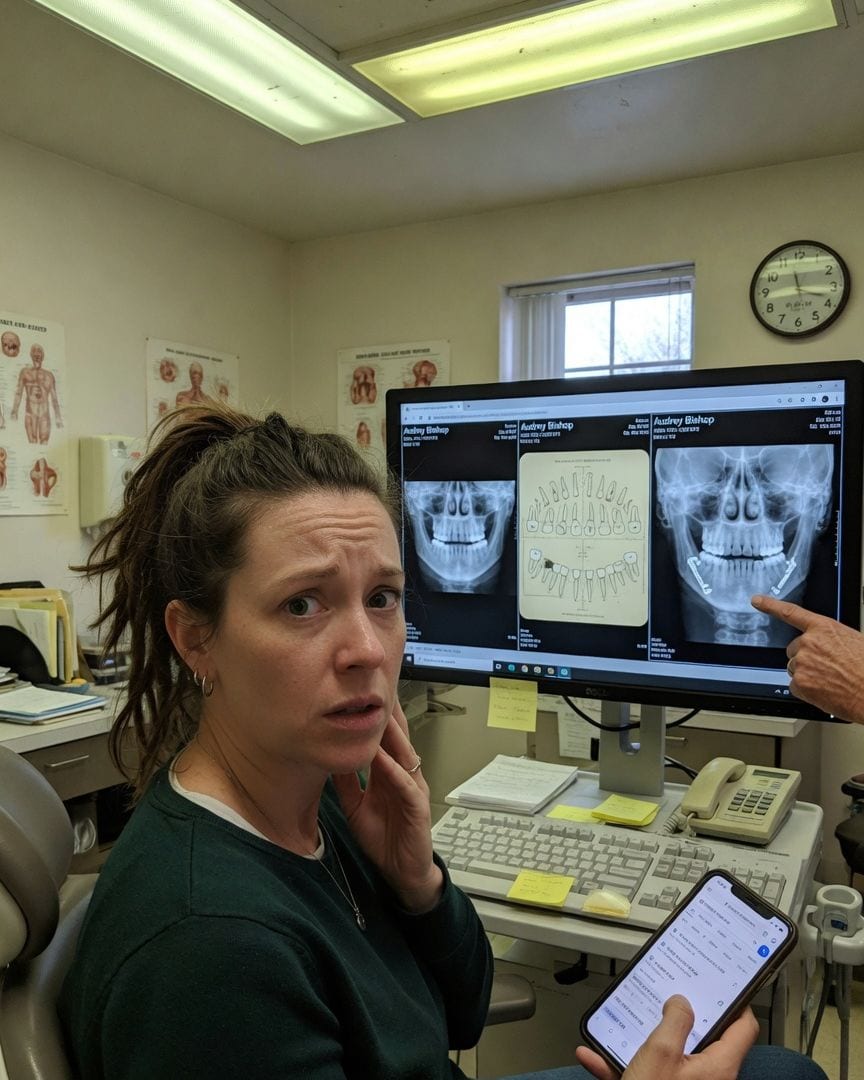
My X-ray shows a metal plate and screws in my jaw from a break I don't remember. My old records show a different mouth.
During a routine wisdom tooth extraction, my oral surgeon found a perfectly healed, decades-old jaw fracture in my X-ray. It came with a small metal plate, completely encased in bone. But I'm 35 years old, and I have no memory of ever breaking my jaw.
My MRI scan shows metal rods fused into my neck vertebrae. I've never had spinal surgery. The clinic doctor personally called, asking which hospital placed them.
I booked a full-body MRI for my 34th birthday, expecting a clean bill of health. Instead, the scan revealed a perfectly healed surgical fusion in my neck, complete with tiny rods and screws. I have no memory of any such surgery, no scar, and nothing in my medical history.
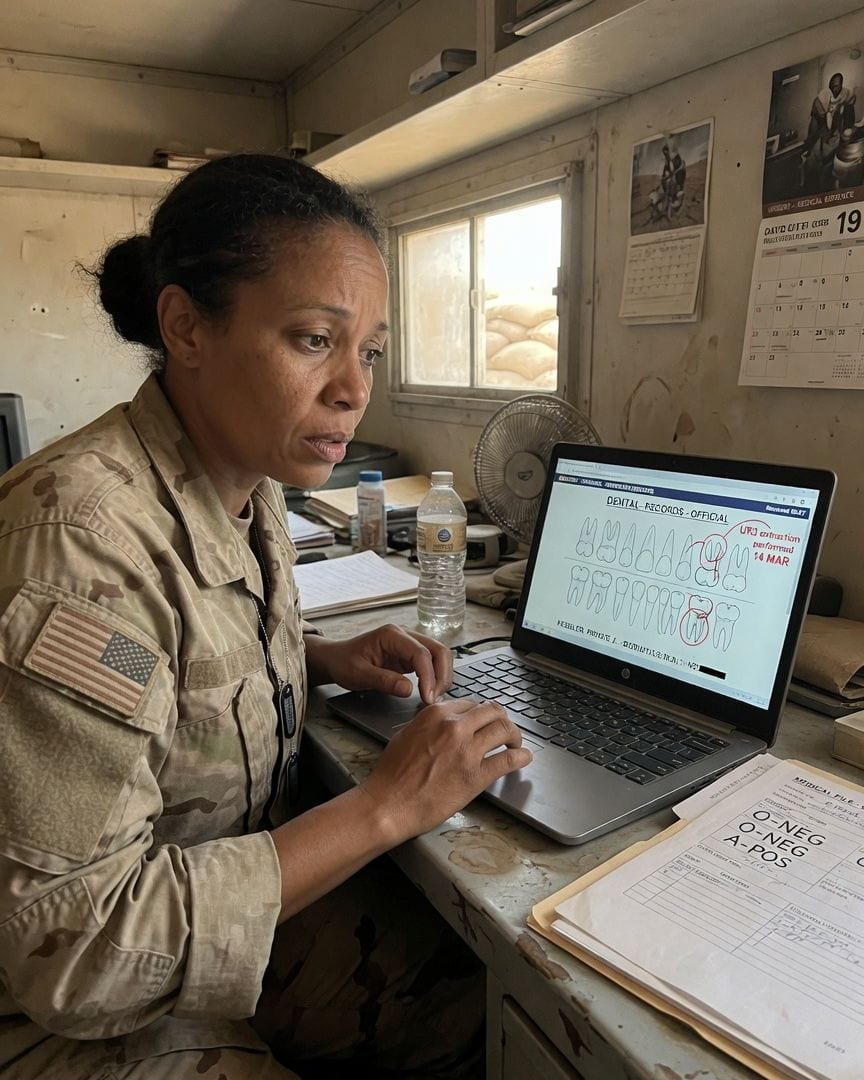
Weeks from going home, Sergeant Whitmore saw Private Kessler’s dental records show teeth he didn’t have and missing ones he did.
Sergeant First Class Iris Whitmore counted the weeks until her deployment ended, dreaming of home as the desert heat baked FOB Cerberus. But the familiar weight of Private Kessler’s dog tags soon brought a cold knot of dread: his blood type, once O-negative, suddenly read A-positive. She dismissed medical anomalies and clerical errors, only to find his official records subtly rewriting his timeline, linking old injuries to new identities. When his dental charts arrived, showing teeth he never had and missing ones he did, Sergeant Whitmore faced an impossible question: who was Private Kessler, really?
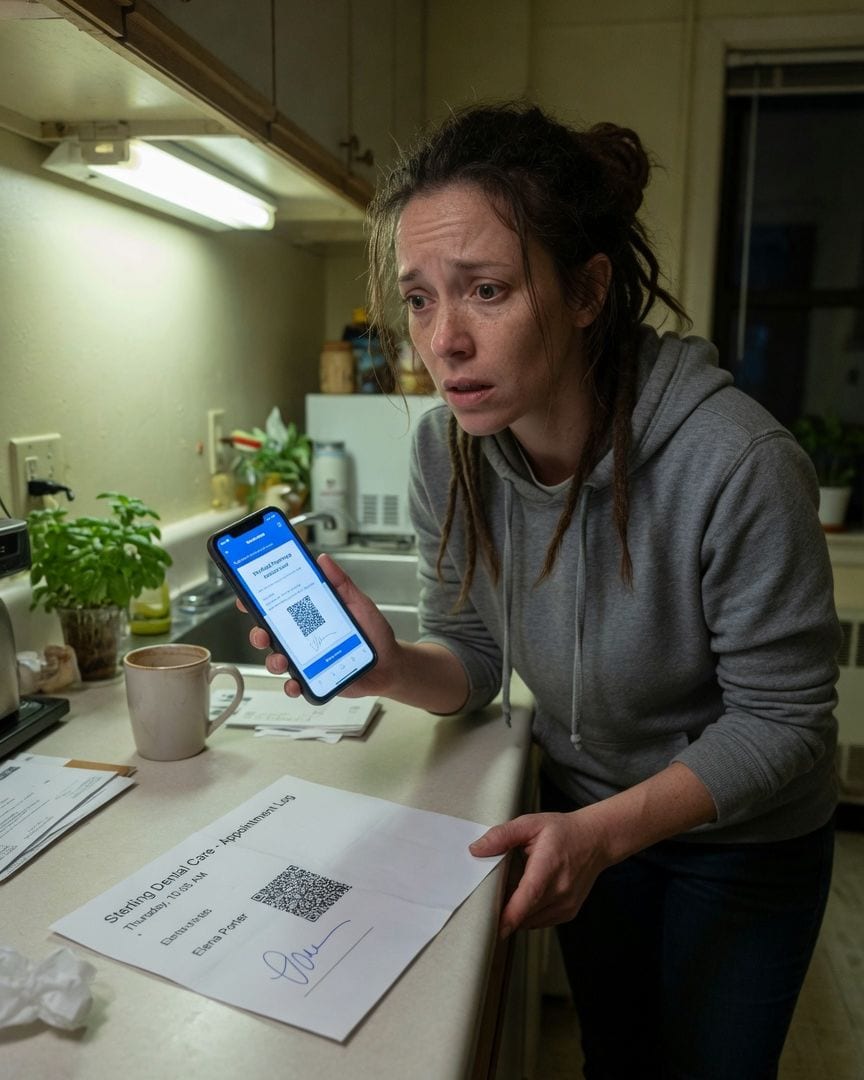
My dentist's system says I was there last Thursday. I wasn't. But the check-in tablet shows my signature, and the hygienist described my chipped tooth exactly right.
I received a call confirming a dental appointment I never made, for a day I was home. Yet, Sterling Dental had my perfect digital signature and described a chipped incisor I’d never told them about. The physical proof insisted I was there, but I wasn’t.
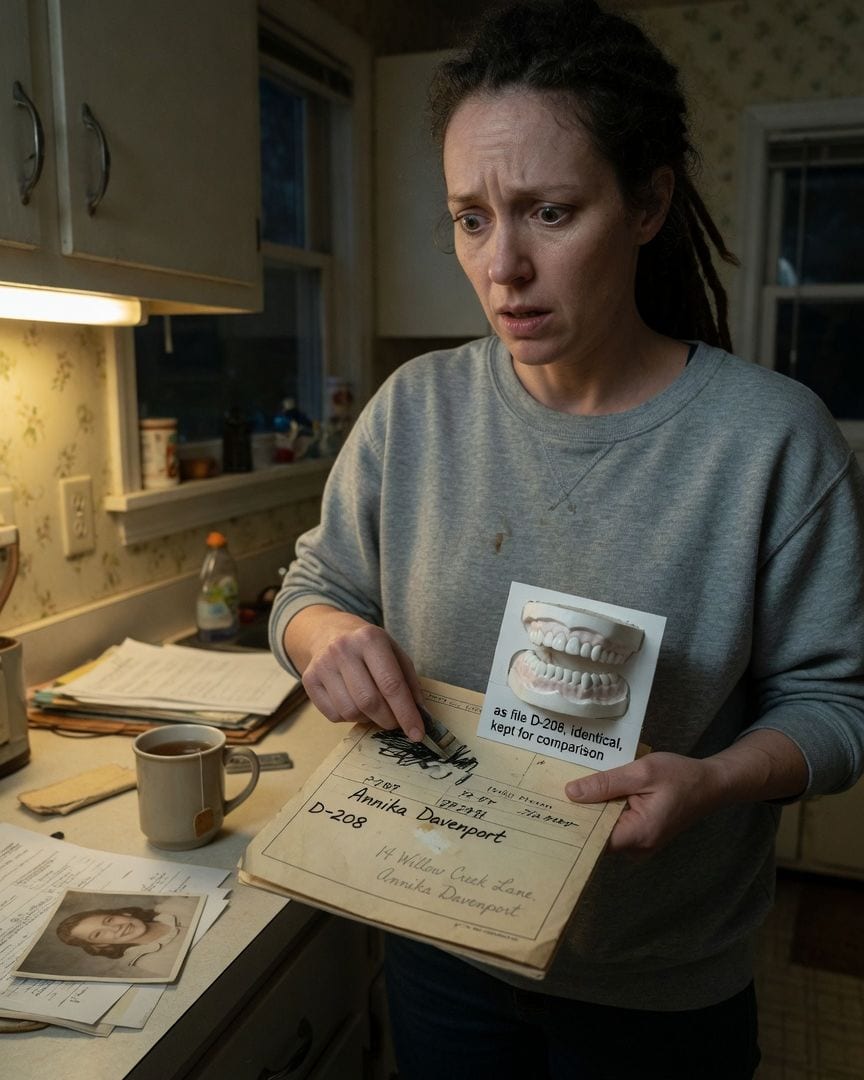
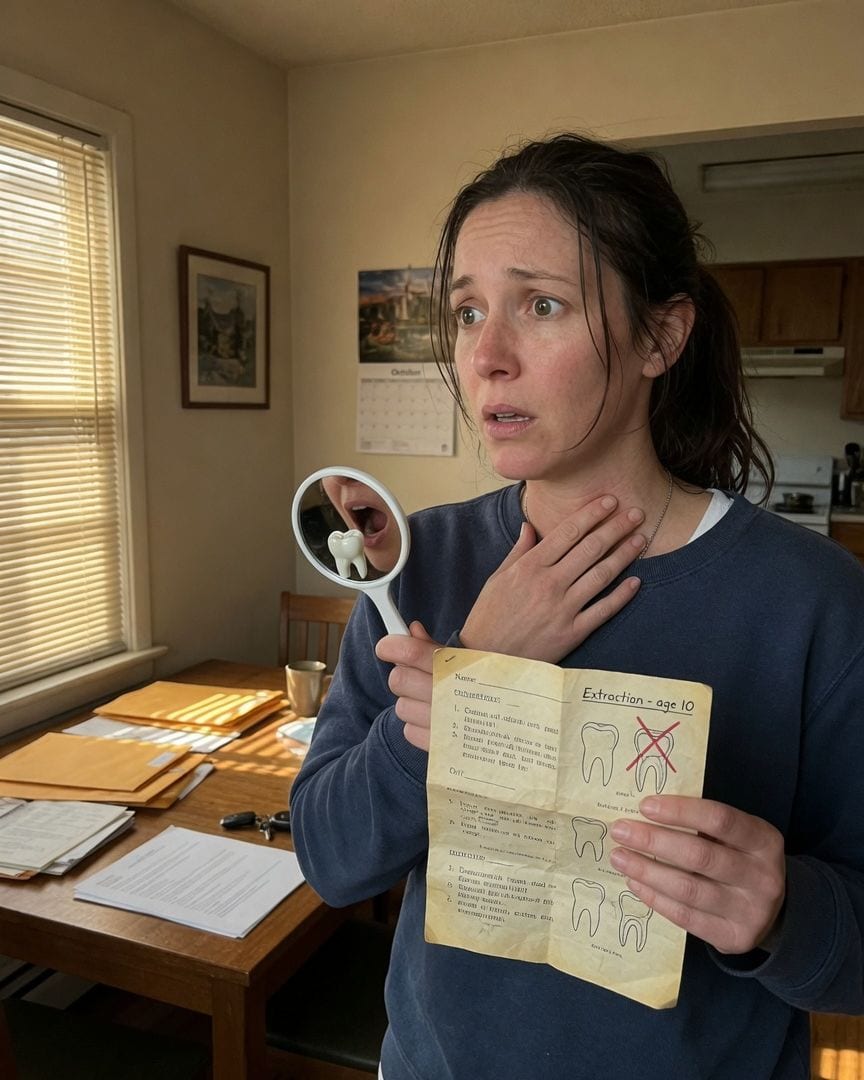
My childhood dental chart lists the house I bought last year — in my own name, years before I was born. A second set of my teeth sits filed beside it, marked 'identical.'
Sifting through old dental records, I found my chart, D-208, with my 1988 birth date. But a line from 1958 was blacked out, and a clipped card with an impression of my teeth listed my name and current home address, decades before I was born. The impossible facts knotted into a cold certainty.
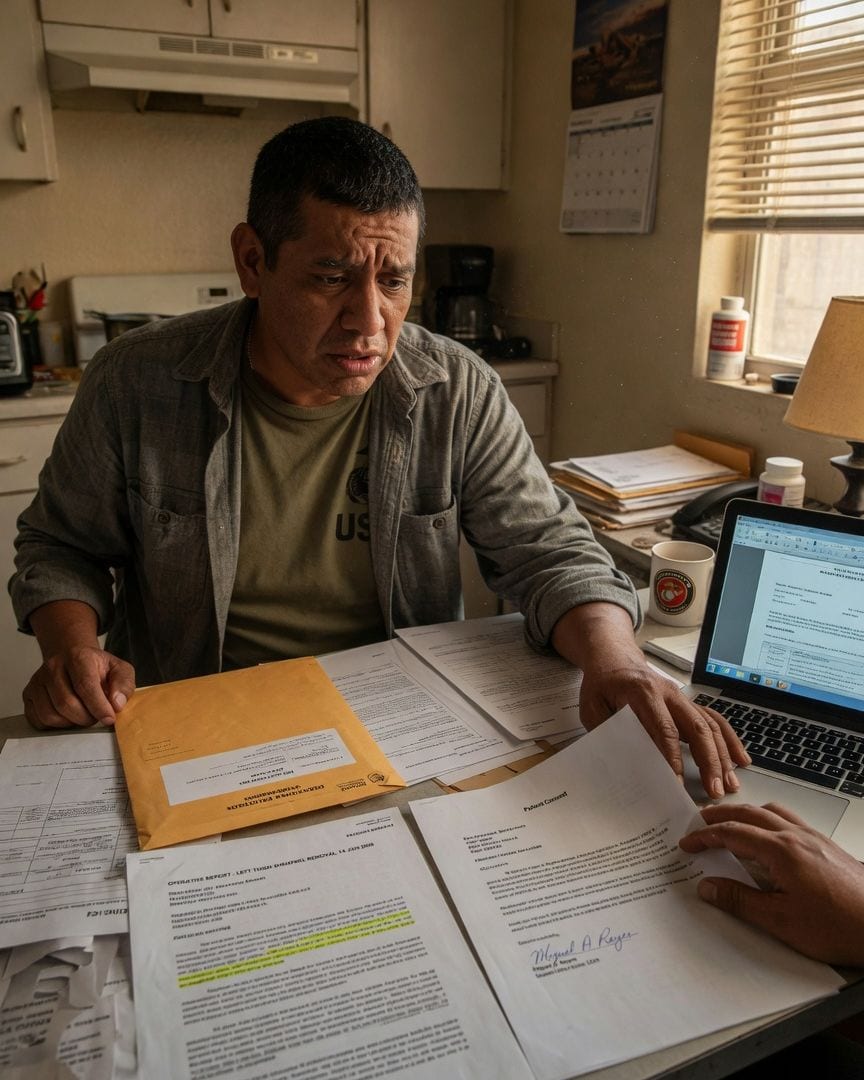
A veteran's VA file listed surgery for shrapnel. The doctor retired decades before he joined the Corps.
Miguel Reyes, a veteran, sat in a sterile VA clinic, his bad knee throbbing, expecting routine. Instead, a physician's assistant presented a digital file detailing shrapnel removed from his thigh in 2008 – an injury Miguel had no memory of, no scar for. His own service record later confirmed the impossible surgery, complete with a consent form bearing his perfect, yet utterly alien, signature. Driven by unease, Miguel researched the listed surgeon, Dr. Charlotte Bennett, only to discover she had retired from military service decades before he even enlisted. The numbers didn't just not add up; they violently contradicted each other, revealing a deliberate, impossible fabrication in his own life story.