My librarian apologized for my fall. I hadn't fallen. The due slip printed 'get well soon,' a line the system cannot generate. She knew my name.
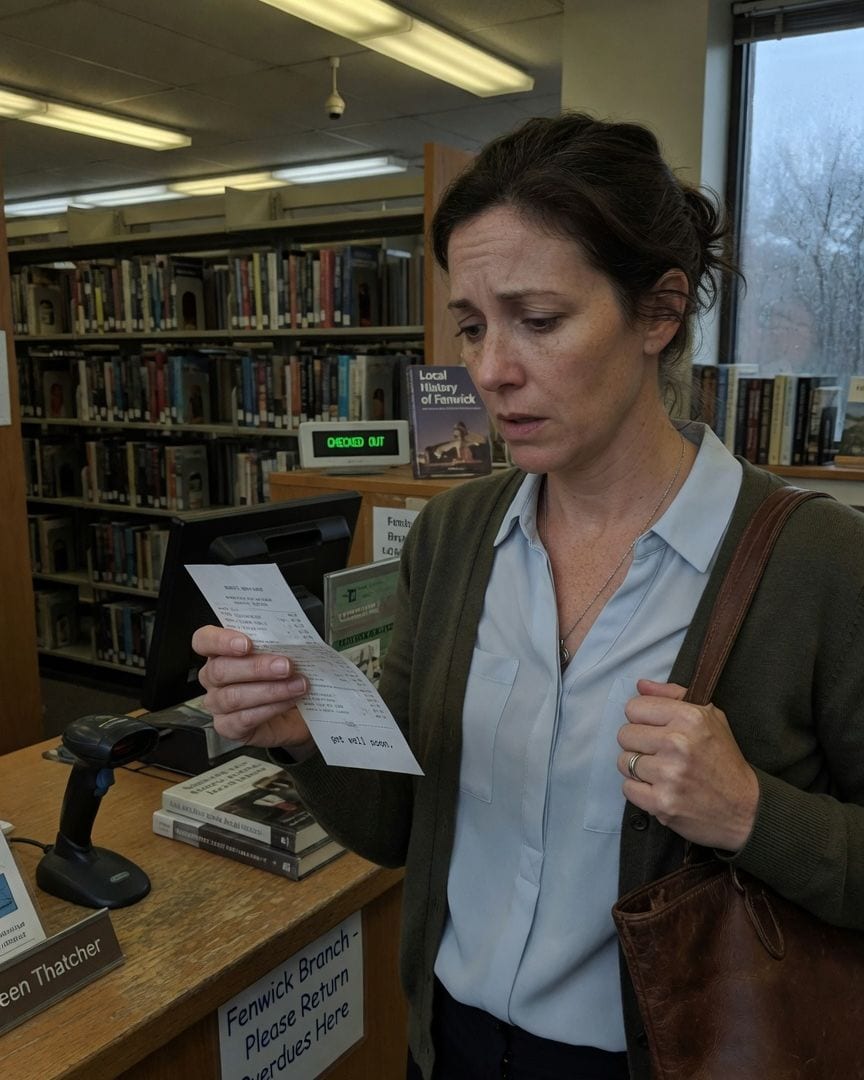
I still remember the precise chill in the air of the Fenwick Branch Library that Tuesday afternoon. I was only there because my usual branch was closed for maintenance, and I had a stack of paperbacks overdue.
Thirty-eight years old, a librarian myself, I like to think I’m a rational person, grounded in systems and order. What happened next unravelled all of that.
Kathleen Thatcher, the Fenwick librarian, was scanning my books. She had kind eyes, tired around the edges. She swiped the last title across the reader, and the soft whir of the machine filled the silence.
"I'm sorry about the fall, Mrs. Coyle," she said, her voice unexpectedly gentle, her gaze lingering on my face.
I blinked. "My fall?" I hadn't fallen. Not recently. Not ever in a way that would warrant a stranger’s apology, let alone a librarian I'd never met before.
The only time I’d ever slipped was on a patch of ice last winter, and that was just a bruise and a momentary embarrassment.
Kathleen flustered, a faint blush rising on her neck. "Oh, I'm so sorry! I must be confusing you with someone else. My apologies." She waved it off, a little too quickly.
But my library card was still the only one on the counter, my name clearly visible on the screen. The machine printed the due-date slip, and she handed it to me.
My gaze snagged on the bottom line. Beneath the usual list of titles and return dates, in the exact same font, it read: 'get well soon.'
The words hit me with a quiet hum of wrongness, a discordant note in the mundane afternoon. It was utterly out of place, an impossible detail. I knew our library system, both Fenwick’s and my own. That line wasn't possible.
It was not a greeting card service. I picked up the slip. The paper felt unnaturally cool against my fingertips, almost clammy.
Back at my own branch, the phrase ‘get well soon’ gnawed at me. It was too specific, too personal. I found Joseph Lawson, our IT technician, in his usual spot amidst a tangle of servers.
He was a friend, knew the system inside out.
"Joe," I started, holding up the slip, "can our system generate custom messages? Like, 'get well soon'?"
He peered at it, then at me. "Are you messing with me, Vivian?" He laughed, then grew quiet when he saw my face. "No. Absolutely not. Our system generates dates, titles, borrower info. No free-text well wishes.
It's not a greeting card service." He saw the genuine concern on my face and logged into the Fenwick Branch’s system. He pulled up the logs, ran a diagnostic. "Nothing. No custom message input. It's an anomaly, Viv. Untraceable."
He shrugged, clearly thinking it was some kind of weird paper jam or a prank I hadn't disclosed. But I knew better. The words were too perfect, too aligned with Kathleen’s strange apology.
That evening, a letter arrived at my home. The envelope was plain, cream-colored, with my name and address neatly typed, just like the address labels I used for my own holiday cards.
I opened it, expecting a bill or junk mail. Instead, it was a brief, formal note.
'Dear Mrs. Vivian Coyle,' it began. 'Our deepest condolences on your recent accident. We trust you are recovering well.' It was signed simply, 'The Committee.'
My blood ran cold. Accident? I hadn't had one. But the mention of 'recovery' echoed the impossible due slip.
The letter wasn't postmarked from Fenwick, but from a small, almost illegible town name I didn't recognize, stamped with a date from three days ago.
The casual certainty of the words, the impossible detail, tightened a knot of unease in my stomach. It felt like a joke, but a joke no one would make, not with such precise, unsettling information.
The next morning, another letter lay in my mailbox. Identical envelope, same typed address. This one's postmark, however, was clearer: 'Fenwick Fields, Est. 1920.' I knew that address.
It was an empty lot, a patch of overgrown grass and weeds where an old house had been demolished decades before I was born. There was no post office there, no building at all.
This letter, too, offered condolences for her 'recent accident,' and wished her a swift recovery. I stared at the neatly typed letter. It was addressed to me, 'Mrs. Vivian Coyle,' offering condolences for her 'recent accident.'
The postmark showed 'Fenwick Fields, Est. 1920,' an address I knew had been an empty field for decades, the house demolished before I was born. My hand trembled as I turned it over, the paper cool and dry.
I drove to Fenwick Fields. The address on the envelope corresponded exactly to the empty lot, marked only by a faded 'For Sale' sign and a few crumbling foundation stones half-buried in the tall grass.
The wind picked up, rustling the dry leaves in the ditch, and the faint, sweet smell of damp earth and decay filled the air. There was nothing, absolutely nothing, to explain a postmark.
No structure, no mailbox, certainly no post office. I felt a prickle of fear, but also a stubborn, rational determination. Someone was sending these letters. Someone knew my name, and believed I’d had a fall.
I returned to my own library and started digging. I searched local news archives for any 'Mrs. Coyle' who had a fall or accident recently. Nothing.
I looked up the history of Fenwick Fields, confirming the house was demolished in 1968. No logical sender.
A week later, a third letter arrived. This one was more direct, less formal: 'We hope your recovery progresses. The steps are always the hardest. Be strong, Mrs. Coyle.' The phrase 'the steps' sent a shiver down my spine.
It felt like a specific, intimate detail, something only someone who truly knew could say.
I decided to go back to Fenwick Branch, not to return books, but to pore over their old records, particularly their borrower ledgers. If 'Mrs. Coyle' was a recurring name, maybe it was in their archives.
I spent hours in the quiet, dusty archives, flipping through heavy, leather-bound borrower ledgers, the scent of old paper thick in the air.
The names were a blur of history, but I was looking for something specific, a pattern, a connection to my own impossible experience.
As I meticulously worked through the ledgers, the stillness of the archive felt less peaceful and more like a waiting silence. I became aware of a presence.
An elderly woman, with sharp, intelligent eyes and a severe grey bun, sat at a nearby table, ostensibly reading an ancient local history book. But I caught her glancing over, a calm, assessing look that felt deeply unsettling.
Her gaze seemed to follow my hand as I turned the ledger pages, as if she knew what I was searching for. The air around her felt oddly still, as if the dust motes themselves hesitated to stir.
After nearly an hour, the woman rose and approached my table. Her movements were slow, deliberate. "You're looking for something specific, aren't you, dear?" she said, her voice surprisingly strong, cutting through the quiet like a blade.
I, startled, mumbled something about local history, feeling my face flush.
The woman smiled faintly, a tight, knowing curve of her lips. "It always starts with a fall, doesn't it?"
I froze. The words hung in the air, heavy and inescapable. "Excuse me?"
The woman leaned in slightly, her voice dropping to a confidential whisper that still carried. "I'm sorry for what's coming, Mrs. Coyle. Some things just... are."
She slipped a folded piece of paper onto my open ledger, then walked away without another word, disappearing into the main library stacks as silently as she had appeared.
My heart pounded, a frantic drum against my ribs. I unfolded the paper. In elegant, spidery script, it read: 'Frances Ashford. Old Fenwick Cemetery. The oldest stone.'
The message was a direct, personal warning, an acknowledgment of my search, and a chilling confirmation that someone knew far more than they should. The name 'Mrs. Coyle' felt less like a mistake and more like a designation.
I found Kathleen Thatcher at the circulation desk, her face tired, her eyes red-rimmed. The fluorescent lights hummed above, making the plastic surfaces gleam with an unsettling artificiality.
"Kathleen," I began, my voice low, "I need to ask you about something. An old ledger. And a name."
Kathleen’s eyes flickered with recognition, then a guardedness I hadn't seen before settled over her features, like a curtain dropping. "What name?" she asked, her voice tight, barely audible above the low hum of the computers.
"Mrs. Coyle. And the word 'fall'."
Kathleen visibly paled. She glanced around the mostly empty library, then, without a word, ushered me into a small, cluttered office tucked behind the main desk.
Stacks of unfiled books teetered on every surface, and the air was thick with the smell of stale coffee and old paper. She closed the door, the click resonating unnaturally loud in the confined space.
"Look, Vivian," she began, her voice a low murmur. "There are... things. Stories. Old records that aren't part of the official inventory."
She walked to a locked metal cabinet in the corner, fumbled with a small key on her keyring, and pulled out a heavy, unmarked ledger. The cover was dark, worn leather, its pages yellowed and brittle at the edges.
"Frances Ashford was a librarian here for decades. She kept this. It's unofficial, but... it's real."
Kathleen opened the book to a page marked with a faded silk ribbon. My breath hitched. There, in clear, elegant script, was an entry: 'Vivian Coyle.' Next to it, a date: 'October 14, 1957.'
And beneath that, a single, chilling word: 'Fall.'
Decades before I was born. My own name.
"It's not just you," Kathleen whispered, her voice barely audible, her eyes wide with fear. "There have been others. Other 'Mrs. Coyles.' Always a 'fall.' Always the letters."
She pointed a trembling finger to a series of similar entries on subsequent pages: different names, different years, but always the 'fall' marked beside them.
The quiet dread that had been building inside me for days exploded into a terrifying clarity.
Kathleen admitted she’d known about the pattern for years, that it was a quiet, unsettling secret among the long-serving staff, a whispered warning passed down from one generation of librarians to the next.
The 'get well soon' on the slip, the letters from nowhere—it all clicked into place, but the implications were far more terrifying than any random haunting. I wasn't a mistake; I was a recurrence.
Kathleen, her face still pale and glistening with a fine sheen of sweat, began to explain the cryptic notes Frances Ashford often left tucked into the ledger's pages. "Frances believed there was a way to... communicate.
A channel, for those who had experienced the 'fall'." She traced a finger across another entry, one that looked like a coded reference, a string of numbers and letters that made no sense to me.
"She called it the 'Whispering Line.' A way for the 'Mrs. Coyles' to connect, to guide each other through it." Kathleen's voice dropped to a near whisper, her eyes darting to the closed office door. "It's how they knew.
How they always knew."
Just as she finished, my phone, resting face-down on the cluttered desk between us, vibrated. The screen lit up, displaying 'Blocked ID.'
The ringtone, usually a cheerful chime, seemed to echo ominously in the small office, its sound distorted by the enclosed space, a low, pulsing thrum.
Kathleen flinched, her eyes wide with fear, staring at the screen as if it were a venomous snake. "It's... it's ringing," she stammered, pointing a trembling finger at the phone.
I stared at the screen, my heart hammering against my ribs, a frantic, desperate rhythm. The blocked number pulsed, a silent, insistent demand. I knew, with a certainty that chilled me to the bone, that this was the 'Whispering Line.'
This was the channel. I picked up the phone, my hand shaking so violently the device rattled against my ear, and answered. A soft, distorted voice, barely a whisper, spoke my name, just a breath of sound. "Mrs. Coyle?
Your Fall is complete."
I found Frances Ashford tending a small, immaculately kept grave in Old Fenwick Cemetery, just as the note had implied. The air was crisp, carrying the scent of damp earth and late autumn leaves.
She was kneeling, meticulously wiping a weathered marble angel, her movements unhurried, as if she had all the time in the world.
She looked up as I approached, her expression calm, unsurprised, her sharp eyes fixing on me with an almost expectant gaze.
"You called the Line," she stated, not a question, her voice a low, steady murmur.
I nodded, my voice tight, still vibrating with the memory of the whisper. "What is this? The fall? The letters? My name in that ledger from 1957?"
Frances gestured to a nearby stone bench, inviting me to sit. "The 'fall' isn't always physical, dear. Not a stumble or a broken bone." She settled beside me, her gaze distant, fixed on the row of ancient headstones.
"It's a designation. A turning point. A moment when you become… aware." She explained that 'Mrs. Coyle' wasn't just a name, but a recurring identifier, a specific kind of role.
It was for individuals chosen, or perhaps simply prone, to perceive a specific, underlying pattern in the world, a subtle hum beneath the mundane surface of everyday life.
The letters, she said, were from a network of others, generations of 'Mrs. Coyles' who had also experienced their 'fall.' They were part of a quiet, watchful community, an acknowledgment system managed by those who knew.
"We don't know what 'it' is, precisely," Frances continued, her gaze sweeping across the ancient cemetery. "An awareness, a connection to something ancient that manifests through specific individuals, always with a 'fall' to mark their entry. We simply… become attuned."
Every clue, from the impossible due slip with 'get well soon' to the letters postmarked from a demolished field, to the old ledger entry bearing my name from before I was born, clicked into place.
It wasn't a random series of mistakes or malicious pranks. It was a coherent, terrifying initiation into a truth I could no longer unsee. The world shifted around me, the dread replaced by an unsettling, profound clarity.
Frances explained that the 'Whispering Line' was their way of staying connected, sharing observations, providing quiet support. "There’s no escape, Mrs. Coyle," Frances said, her voice devoid of malice, as if she were simply stating a fact of nature.
"Only understanding. Or madness." She spoke of the subtle shifts in perception that would begin, the way everyday coincidences would align into terrifying patterns, the feeling of being watched by something unseen yet ever-present.
The air around us in the cemetery grew colder, though the sun still shone.
"The dread lessens with acceptance," Frances advised, her eyes holding an ancient, deep wisdom that seemed to stretch back through time. "Resistance only tightens its grip." Vivian listened, a cold clarity settling over her.
This wasn't a haunting; it was a truth, a responsibility. She wasn't being hunted, but inducted.
Frances offered her not freedom, but guidance: how to discern the patterns, how to interpret the subtle signs that would now be visible to her, how to connect with others on the 'Whispering Line' when she felt overwhelmed.
The calm, rational explanation of her terrifying new reality was far worse than any monster. It implied an inescapable, eternal cycle, and I was now irrevocably part of it.
I saw my life stretching before me, not as my own, but as one thread in an endless, intricate tapestry woven by something I could never truly comprehend, only observe.
I was a 'Mrs. Coyle' now, and there was no turning back.
I returned to my life, but the world was no longer the same. The everyday became layered with subtle implications, patterns emerging where I had once seen only randomness.
The hum beneath the mundane, the one Frances spoke of, was now a constant, low thrum in my ears. I found myself subconsciously noting names, dates, minor 'accidents' in local news with an almost instinctive recognition.
The initial dread had morphed into a quiet, unsettling vigilance, a constant state of awareness. A week later, another letter arrived, postmarked from yet another obscure, rural address I'd never heard of.
This one was shorter, simply typed: 'Welcome, Mrs. Coyle.' There was no signature, but I understood. The cycle had truly begun.
I placed the letter on my desk, not in a box of evidence, but as a part of my new reality, a quiet confirmation.
I continued my work at the library, a quiet, observant figure. I sometimes found myself looking at patrons differently, wondering if they, too, had experienced their own 'fall,' if they were another thread in the pattern.
The letters still arrived occasionally, brief, cryptic messages that offered no solace but confirmed my place within the network. I had learned to listen for the subtle hum beneath the world, the whispers that only a 'Mrs. Coyle' could hear.
I had accepted my role, understanding that some truths were not meant to be fought, but simply lived with.
Sometimes, when the phone rings with a blocked number, I just answer 'Mrs. Coyle,' and wait for the whispers to begin.
If this one got to you
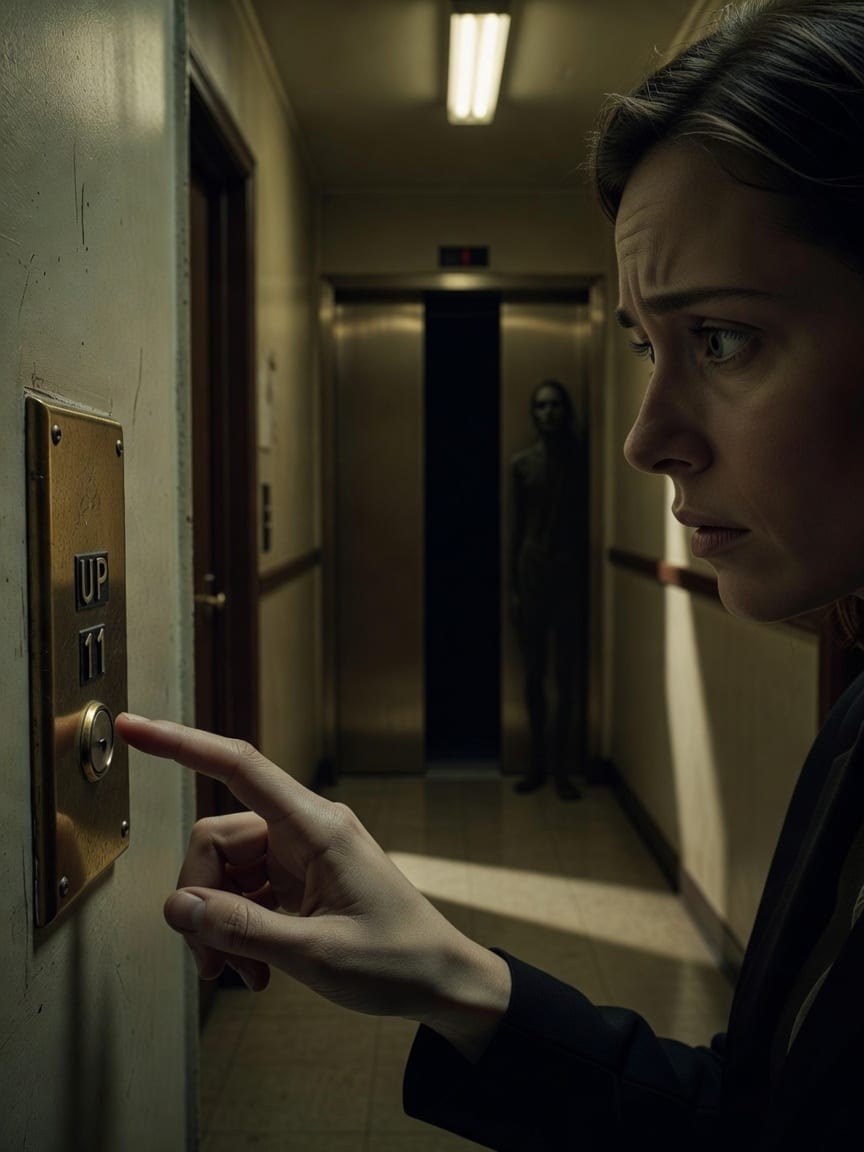
My doorman warned me not to take the tenth-floor lift on Saturday. The building's lift passed inspection last month. He seemed terrified that he'd said it.
My doorman's unsettling warning about the tenth-floor lift left me with a metallic taste of unease. I tried to rationalize it away, but then a birthday card arrived for me, five months early, from an impossible address. It was a site linked to unexplained disappearances, and a cold certainty began to settle in.
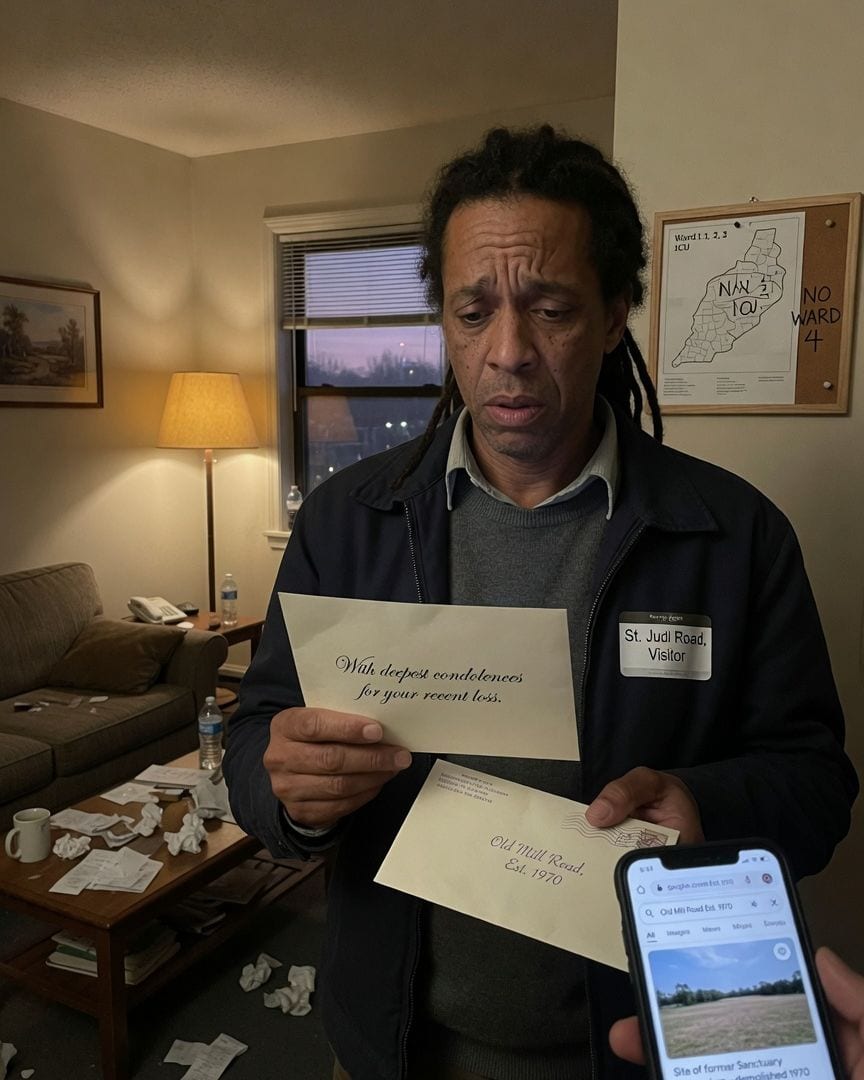
A night nurse I'd never seen touched my arm, 'I'm sorry about your results, Mr. Halloran.' My bloodwork wasn't until Monday. Her badge named a ward not in this hospital.
Leaving St. Jude's, a night nurse I'd never seen stopped me. She apologized for 'my results,' addressing me as Mr. Halloran, though I hadn't had any tests booked. Her kind, tired eyes held a flicker of something profound, leaving me chilled by her impossible words.
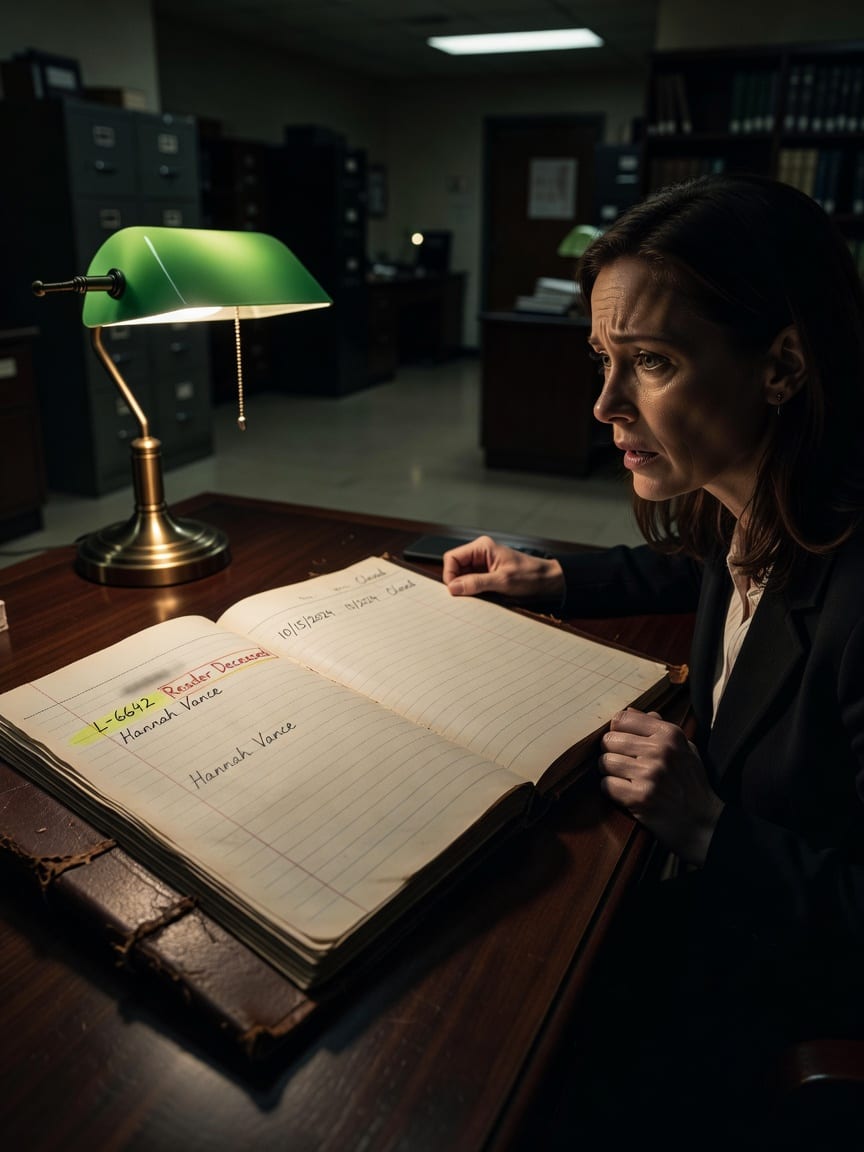
My library card number L-6642 was issued to me at seven — and the ledger shows that number has marked a reader 'deceased' every twelve years since 1949.
Returning my late father's library card to the old town library felt like a small act of closure. But the senior librarian's ancient ledger revealed a chilling pattern of 'reader deceased' entries tied to specific card numbers and borrowed books. My unease turned to cold dread when I secretly found my own name penciled in, marked for a future 'reader deceased' entry.
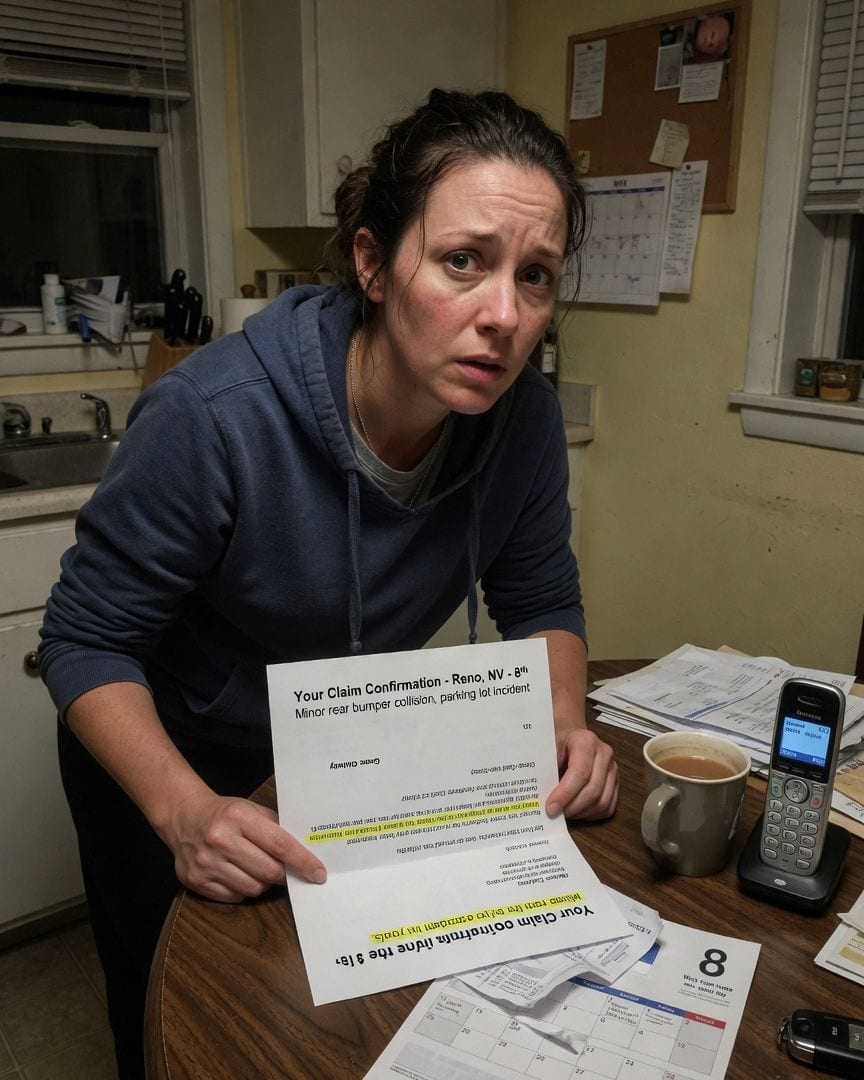
My signature is on a library card from Ohio. I've never been there.
An insurance letter confirmed a car collision in Reno, Nevada, but I'd never been there, and my car sat untouched. My adjuster insisted the claim was filed in my own voice, leaving me in a disbelieving haze. Then, a forgotten PDF attachment revealed a library card application from a small Ohio town, bearing my name and signature. I have never, in my thirty-four years, been to Ohio.
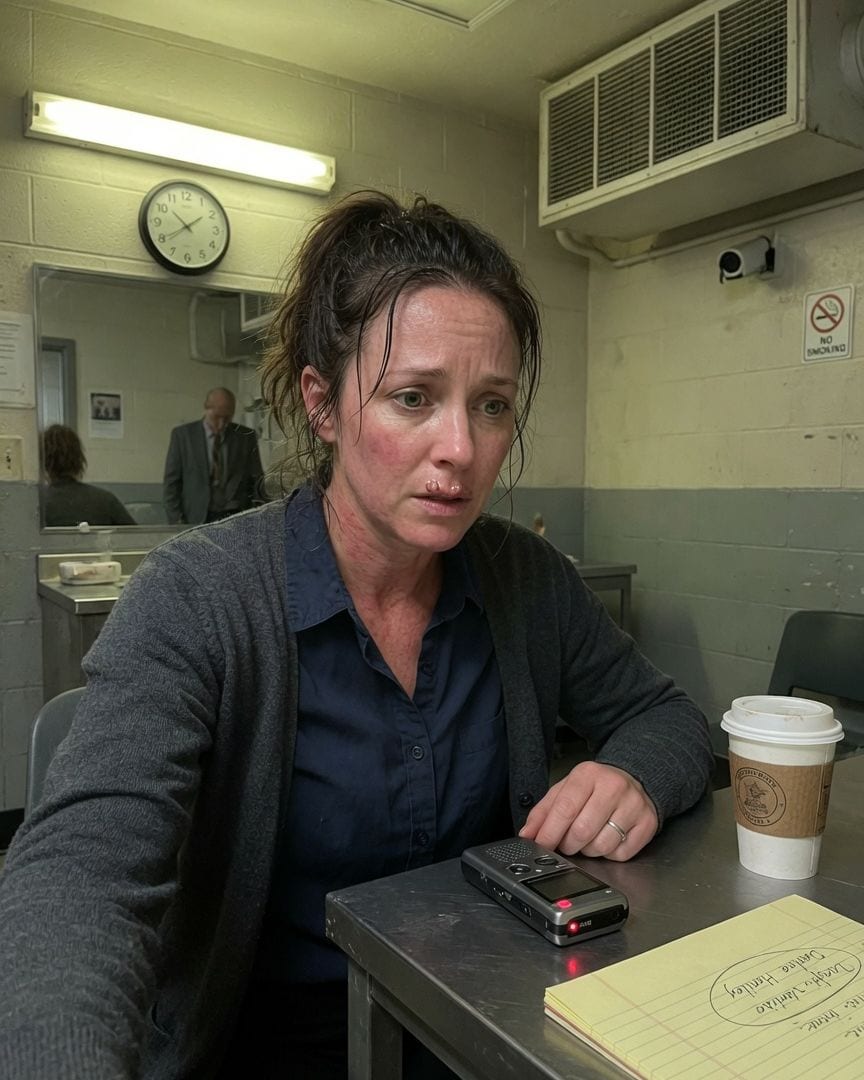
My own voice called 911 from Gary, Indiana, reporting a prowler. I was asleep in Ohio, my phone on the charger.
Sitting in a police interview room, I listened as Detective Walsh played a 911 recording. A woman's hushed voice reported a prowler from a payphone in Gary, Indiana. My stomach dropped cold; it was my exact voice, my specific way of saying 'I think,' even though I was in bed in Ohio that night.
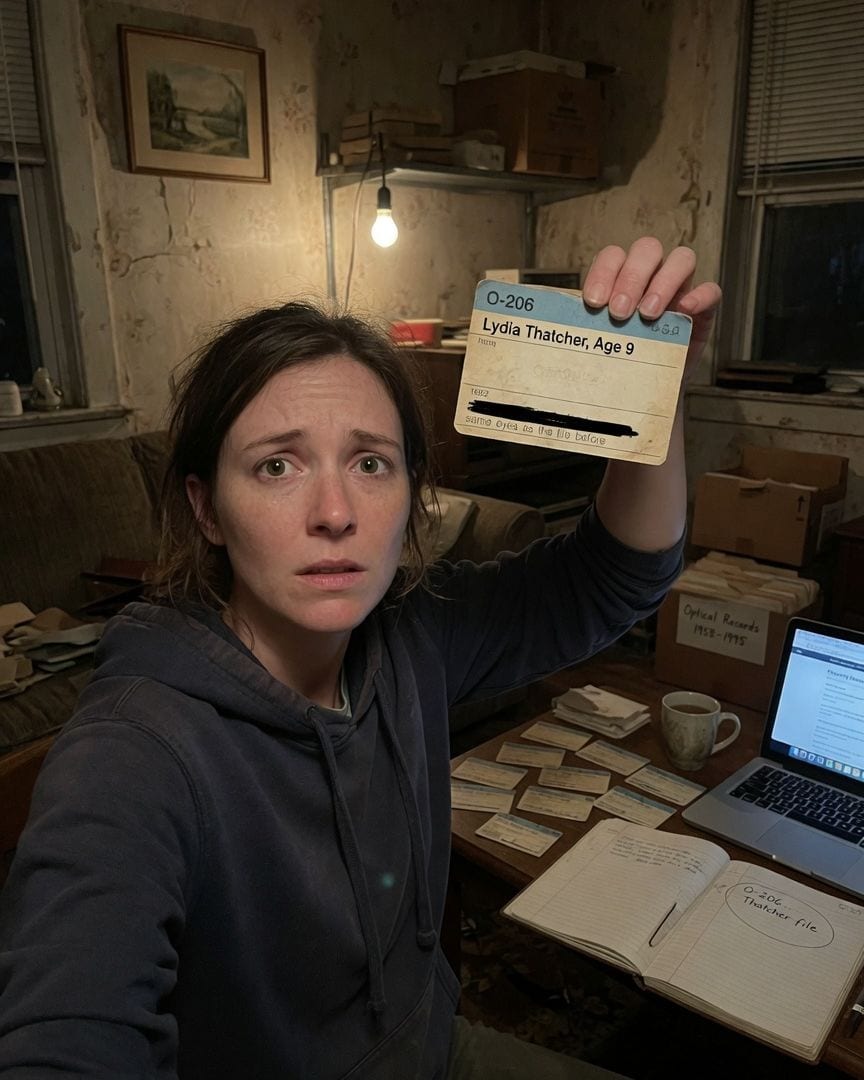
My own optical card is dated 1962, with my name on it. I wasn't born until 1993.
Sifting through old patient files from my former optical practice, I found my own O-206 card. It had my name, Lydia Thatcher, and my current home address printed on it. But the card was dated 1962, decades before I was even born, and a redacted note mentioned 'same eyes.'