My signature is on a library card from Ohio. I've never been there.
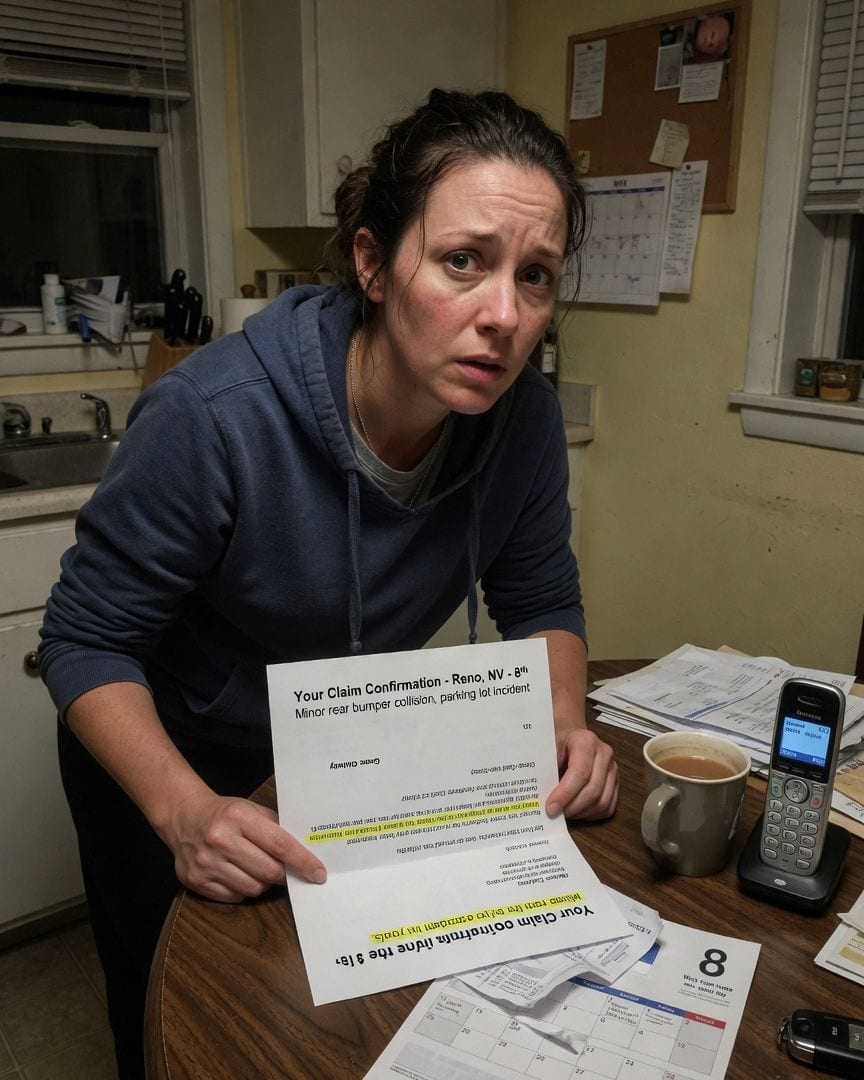
The letter lay on my kitchen table, stark white against the dark wood. It was from my car insurer, confirming a claim. A parking-lot collision in Reno, Nevada, on the 8th of this month. Minor damage to the rear bumper.
The form even included a summary of "my account of the accident in my own words."
I stared at it. I’d never been to Reno. Not once in my life. And my car, a silver sedan I'd bought new two years ago, was sitting in the driveway, perfectly untouched. I’d walked past it this morning.
I’d driven it to the grocery store yesterday. Not a scratch.
My fingers trembled slightly as I found the number for my adjuster, Bernard Hughes. He answered on the third ring, his voice calm, almost unnervingly so.
"Mr. Hughes," I started, trying to keep my voice steady, "I just received a letter about a claim in Reno. Collision? I haven't left the state in months."
A soft chuckle on his end. "Ah, Ms. Calloway. Yes, the Reno incident. Small bump, easily handled. Our system processed it smoothly."
"But it didn't happen," I insisted, the knot in my stomach tightening. "I was home. My car is fine. There's been a mistake."
"No mistake, I assure you," he said, his tone unwavering, like he was discussing the weather. "The claim was filed via phone, Ms. Calloway. We have a recording.
And your voice matched the recording we have from when you set up your policy two years ago. Identical."
My voice. My policy. Two years ago. That was true. But none of this was true. A cold dread seeped into me, more chilling than simple confusion. The letter insisted it did.
The next day blurred into a disbelieving haze. I scoured my bank statements – not a single charge from Reno, no gas receipts from a cross-country drive, nothing.
My calendar for the 8th was clear: a quiet day, working from home.
I even walked outside, phone in hand, and took photos of my car from every angle, zooming in on the pristine rear bumper, just to prove to myself it was real.
A desperate, nagging need for a mundane explanation led me to call the Reno police department. After navigating automated menus, I finally spoke to an officer. I explained the situation, feeling foolish even as the words left my mouth.
"Give me the date and your name, ma'am," he said, his voice flat.
I did. There was a pause, a series of clicks and keyboard taps on his end.
"Yes, ma'am. We have a report here. Minor fender-bender, parking lot of the Peppermill Resort. Driver, Grace Calloway. Collision with a parked vehicle, no injuries. Filed via phone."
"You... you have a statement?" I whispered, my throat suddenly dry.
"Yes, ma'am. Taken over the phone, as per the report. Matches the insurer's details you mentioned."
I mumbled a thanks and hung up, my hand shaking. It was real. To them, it was real.
Later, sitting at my computer, futilely scrolling through old emails, hoping to find some forgotten travel confirmation, anything that would explain a trip to Reno, my cursor hovered over a forgotten PDF attachment. It was labeled 'Library_Card_App.pdf' and dated 2018.
Curiosity, a desperate need for distraction, made me click it open.
It was a digital scan of a library card application. For the Maple Creek Public Library. A small town. In rural Ohio.
Below the typed information – my name, my supposed former address, my date of birth – a familiar, looping signature. My signature.
I have never, not once in my thirty-four years, been to Ohio.
I printed the library card application. The paper felt thin and cold in my hands, a tangible lie. I traced the signature with my finger, the ink faded but undeniably mine.
Every curve, every flourish, precisely as I’d sign my name. The date, "October 12, 2018," seemed to mock me from the page.
I remembered that autumn distinctly; I was living in a tiny apartment in Boston, working a grueling job, often clocking in twelve-hour days. Miles and states away from any place called Maple Creek.
This wasn't just a mistake anymore. This was a pattern. Two impossible records, separated by years, both bearing my undeniable mark. A chill spread from my fingertips, up my arm, and settled deep in my chest. My breath caught.
I couldn't look away from the proof of a life I didn't live.
Unable to sleep, the next morning found me on the phone, calling the Maple Creek Public Library. A kindly, older librarian named Helen Holloway answered.
I gave her the number from the application, my heart pounding a frantic rhythm against my ribs.
"Oh, yes, Ms. Calloway," she chirped, her voice warm and pleasant. "I remember this one. You were quite fond of our local history section. I distinctly recall you borrowing 'Echoes of the River: Folktales of the Hocking Valley.'
And a few others about the early settlers."
My mind reeled. She remembered me. She even recounted a few books 'I' had borrowed. It wasn't just a record; it was a memory. For her.
The weight of the library card printout, still on my kitchen table, felt heavier than ever.
I told Sean I was visiting a friend, and then I drove. Six hours, straight through to Maple Creek, Ohio, a sleepy town nestled quietly by a river.
It was exactly as I’d pictured it from the application, quaint and unassuming. The library was small, a charming brick building with a quiet hum of fluorescent lights.
The scent of old paper and dust, a comforting smell I usually loved, now filled my nostrils with an unsettling weight.
I walked inside, my steps echoing on the polished linoleum. I found the local history section, just as Helen had said. And there, on a shelf, was 'Echoes of the River: Folktales of the Hocking Valley.'
A library sticker on its spine, a date stamp from 2018 inside the cover. It was too real. I felt a dizzying pull, as if looking into a mirror that showed a stranger.
On a nearby wall, framed behind glass, was a photo: 'Maple Creek Fall Festival, 2018.' In the background, near a book stall, a blurry figure stood, holding a cup of cider.
She was undeniably my height, my hair color, the general shape of my profile. My breath hitched. The unease ratcheted up, solid and specific, a cold hand closing around my throat.
My return from Ohio was met with a cryptic voicemail from Bernard Hughes. His tone was still calm, but there was an undercurrent of something else, a subtle warning I hadn't noticed before.
"Ms. Calloway," he said, his voice as smooth as river stones, "I understand you've been making inquiries into some... older records. I would advise caution.
Some things are best left undisturbed, for your own sake, and for the integrity of your policy." The message felt less like advice and more like a statement of undeniable knowledge. The room around me seemed to hold its breath.
Later that week, I received an anonymous email. The subject line was blank. The body contained only one sentence: "Your other life is not yours to question." A prickle of pure dread crawled up the back of my neck.
I felt observed, evaluated. The feeling intensified when I noticed a dark sedan, its windows heavily tinted, parked down my street. It was there two consecutive evenings, always appearing just as dusk settled, never there in the morning.
I started checking my rearview mirror constantly, my gaze darting to every shadow, every parked car. My own house, once a sanctuary, now felt like a stage.
I arranged an in-person meeting with Bernard Hughes, demanding answers. He sat across from me in a sterile conference room, the hum of the overhead lights the only sound.
He radiated an almost unsettling serenity, his hands clasped neatly on the table.
"Ms. Calloway," he began, his voice still that even, unruffled baritone, "what you're experiencing is a feature, not a bug. It's a specialized service."
My jaw tightened. "A service? You mean creating fake accident reports and library cards?"
He nodded slowly. "Precisely. It's called 'Experiential Data Collection.' We create a 'shadow record,' if you will. A parallel life for select policyholders." He paused, as if letting the words sink in. "For future actuarial models.
And, more importantly, for continuity of experience."
He slid a sanitized internal memo across the polished table. It was yellowed with age, dated decades ago. The title, in stark black letters, read: 'Dual-Track Data Streams: Ensuring Policyholder Integration.'
"Harmless," he continued, as if I hadn't just been hit with a tidal wave. "A way to 'fill gaps' and ensure 'robust data profiles.' We simply provide a more complete, documented existence."
I slammed my palm on the table, the sharp crack making him flinch almost imperceptibly. "You're creating a fake life for me! Without my knowledge or consent!"
Hughes just nodded again. "A proxy life, yes. It allows for a more complete picture, a richer tapestry of experience. You consented, Ms. Calloway.
Your initial policy setup, two years ago, included a clause, buried deep in the fine print, consenting to this 'service.' Many policyholders have them. Most, unknowingly, as you say."
The pieces began to click, chillingly, into place. The voice recording for the Reno claim, identical to my policy setup—the activation. The signature on the library card, unmistakably mine.
The specific phrasing of "her account of the accident in her own words"—all designed to seamlessly integrate this 'proxy' existence with my real one. It wasn't a mistake. It was a mechanism.
Bernard Hughes, seemingly confident he had placated me with his calm admissions, rose and left the sterile conference room for a moment to take a call.
"I'll be right back, Ms. Calloway," he said, his voice still smooth, "just consider the implications."
Instead of waiting, I quickly slipped out, my heart hammering. I remembered a brief mention of a "secure archive" in the memo he’d shown me. I found a sympathetic junior clerk, Benjamin Patterson, at the main reception desk.
He seemed oblivious to the deeper implications of anything in this building, just a young man counting down the minutes. I spun a story about needing an old policy document for a deceased relative, playing on his empathy.
To my surprise, he granted me temporary access to a rarely used, dusty archive room in the building's basement.
The air in the basement was thick with the smell of old paper and mildew, heavy and oppressive. Rows of metal shelving stretched into the gloom, casting long, eerie shadows.
Countless leather-bound ledgers filled the shelves, their spines a uniform, faded dark gray. I scanned the labels, searching for anything resembling my name, a frantic hope-turned-dread pulsing through me. My heart hammered, a frantic drum against my ribs.
Then I spotted it, half-hidden behind a stack of faded property files: a thick, dark ledger, its cover embossed with faded gold lettering. 'CALLOWAY, G.'
With trembling hands, I pulled it free, the weight of it heavy and cold in my grasp. The cover creaked open, sending a puff of ancient dust into the air.
I looked down, and the first page revealed my full name, Grace Calloway, my policy number, and the date of my initial policy enrollment two years ago, meticulously handwritten at the top.
Below it, in precise, elegant script, was a single, horrifying phrase: 'PROXY ACTIVATION.'
The ledger, now clutched tightly in my hands, was a chilling testament. Beneath the 'PROXY ACTIVATION' heading, years of impossible events for Grace Calloway were meticulously recorded.
It wasn't just "experiential data"; it was a fully fleshed-out "other" life, a shadow existence running concurrently with my own.
I saw entries for things like 'attended cousin's wedding in Florida, Aug 2020' (I have no cousins in Florida and was home that month, helping Sean paint the kitchen).
Another: 'visited national park in Utah, July 2019' (I was recovering from a bad flu that summer, barely left the house). And 'donated to local animal shelter in Colorado, Feb 2021.'
Each entry was dated, specific, and utterly false to my memory.
I flipped through other ledgers on the shelf, their names unfamiliar – Miller, Thompson, Rodriguez. Some dated back to the 1970s. The sheer scale was staggering.
This wasn't a glitch; it was a system, generations old, ingrained in the very fabric of the institution.
Every planted clue—the Reno claim, the Ohio library card, Bernard's evasions—snapped into place, forming a horrifyingly coherent picture of a world where my identity was not singular, but duplicated, manipulated, and recorded without my true knowledge.
Armed with the ledger, I confronted Marie Ingram, the stoic, impeccably dressed head of the 'Special Programs Division'—an office Bernard Hughes had pointed me to, almost as an afterthought.
Marie listened, unperturbed, as I laid out the evidence, the ledger slamming onto her polished mahogany desk with a dull thud.
"This 'service,' as you call it, is a violation!" I exclaimed, my voice hoarse.
Marie smiled faintly, a smile cold enough to freeze the room. "A violation? Or a continuation?" Her gaze was steady, her composure absolute. "The 'service' is a core, foundational part of this company, Ms. Calloway. Running for generations."
She steepled her fingers. "We ensure continuity of experience. A seamless narrative for our policyholders. For some, it's a comfort; for others, a necessity." She leaned forward slightly.
"The program began decades ago, after a series of cases where individuals experienced significant 'gaps' in their personal histories. Trauma, memory loss, even extended periods of institutionalization. Such gaps often led to severe legal and personal instability.
Our founders saw an opportunity."
"An opportunity to fake people's lives?" I choked out.
"To fill those gaps proactively," Marie corrected, her voice soft but firm. "To create a robust, documented life for every client. Ensuring their existence is always, demonstrably, continuous. It gives peace of mind, ultimately."
"I demand it be stopped," I said, my voice shaking. "I'll expose you. The media, the authorities..."
Marie's smile hardened, a sliver of ice. "You cannot stop what has always been. And if you attempt to expose us, Ms. Calloway, we can simply... adjust your primary records."
She paused, letting the implication hang in the air like a noxious gas. "Imagine a world where your 'real' life is the one that suddenly has gaps. While your proxy life remains perfectly, demonstrably complete.
Which one, then, would be the truth?"
The threat was chilling, not of violence, but of erasure. Of the very foundation of my identity being undermined by the institution's own incontrovertible records.
I returned home, the ledger's contents burning in my mind. I tried to live my normal life, but every record, every memory felt fragile, tainted.
I meticulously checked my bank statements, my social media feeds, my old photo albums, searching for any new impossible entries, any subtle shifts in my documented existence. The silence was louder than any new entry, a constant hum of dread.
I looked at Sean, my husband, truly looked at him, and wondered what 'gaps' in his life might have been 'filled,' what proxy records existed for him.
The world felt fundamentally altered, its solidity an illusion maintained by an unseen, all-encompassing system. My own past, once so definite, was now a story rewritten.
The dread never truly leaves. I live with the knowledge, a quiet terror that hums beneath the surface of every mundane day.
I look at my reflection, seeing not just my own face, but the potential for another's, living out a different version of my life, meticulously recorded, utterly real to everyone but me.
My sense of self is a fractured thing now, perpetually incomplete. The world's record is all that matters. My own memories, my own experiences, are just one set among many.
A year later, Sean Lockwood finds an old vacation photo from a trip they supposedly took to the Grand Canyon before they met. "Remember this?" he asks Grace, pointing to a sun-bleached snapshot of her standing by the rim.
Grace looks at the photo, then at Sean, and a faint, wrong little smile touches her lips. Oh yes, I remember that perfectly.
If this one got to you
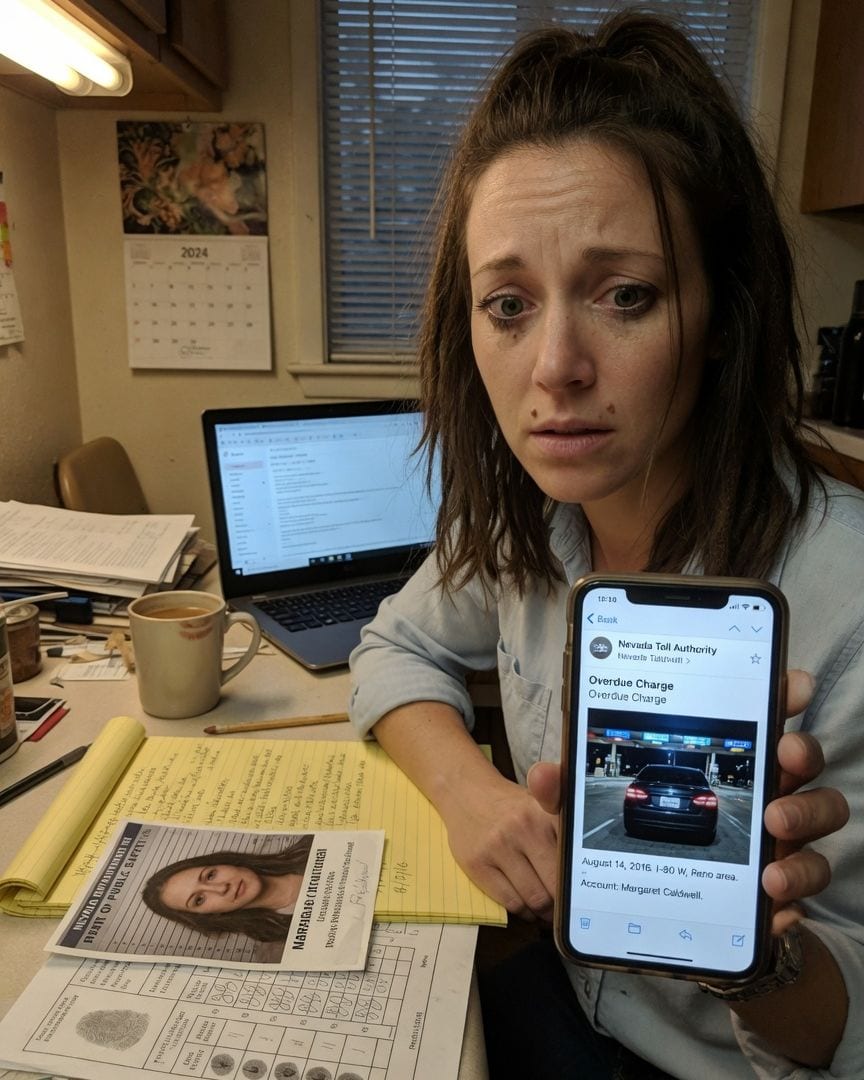
My fingerprints came back to a Nevada arrest eight years ago. Same name, same birth date, same younger face in the booking photo. I’ve never been to Nevada.
My life was predictable, stable, and utterly ordinary. Then, during a routine background check, my fingerprints returned a match to an arrest in Nevada eight years ago. I'd never been to Nevada, yet the booking photo was undeniably my own face, staring back from a life I'd never lived.
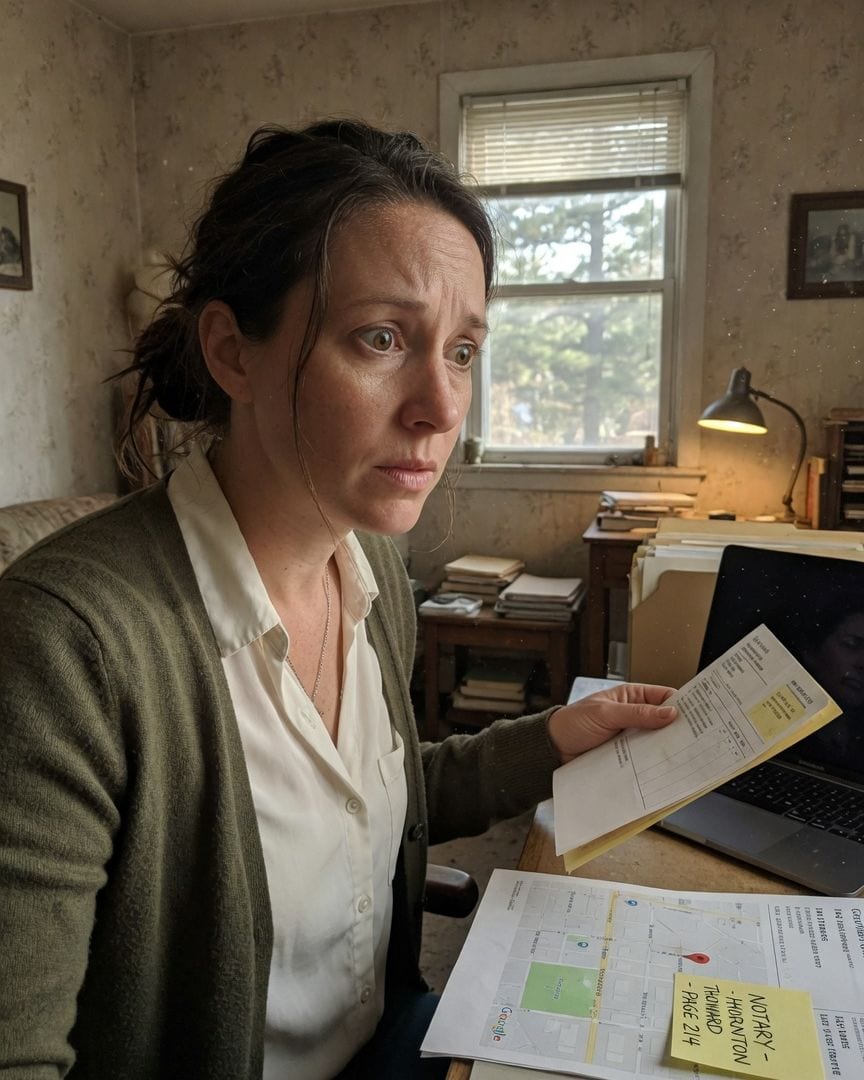
My signature is in a notary's book for an accident I wasn't in. I've never even met the man.
My name is Janet Caldwell, and my life is perfectly ordinary. Or so I thought, until a notary's register revealed my distinct signature on a document. It was dated May 14th, 2014, a day I was confined to a hospital bed, miles away.
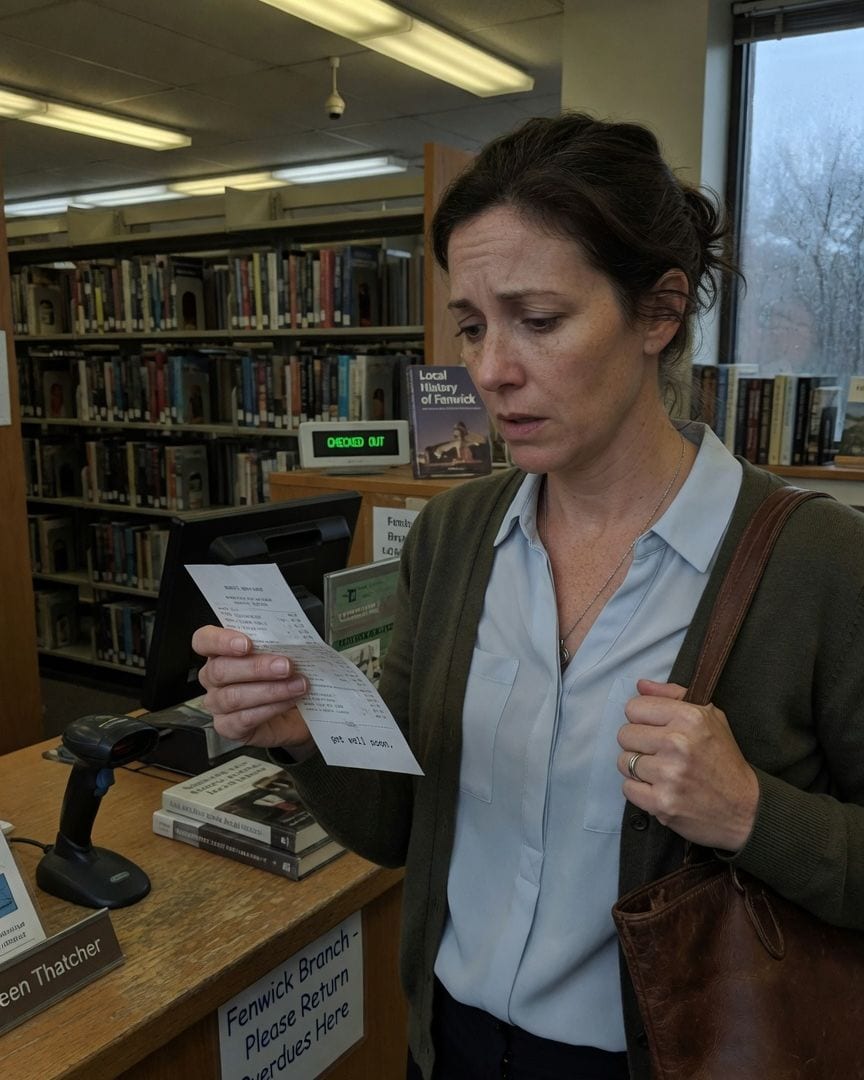
My librarian apologized for my fall. I hadn't fallen. The due slip printed 'get well soon,' a line the system cannot generate. She knew my name.
As a librarian, I pride myself on order and rational systems. But a routine trip to the Fenwick Branch quickly turned unsettling when my due-date slip printed a message our system simply couldn't generate: 'get well soon.'
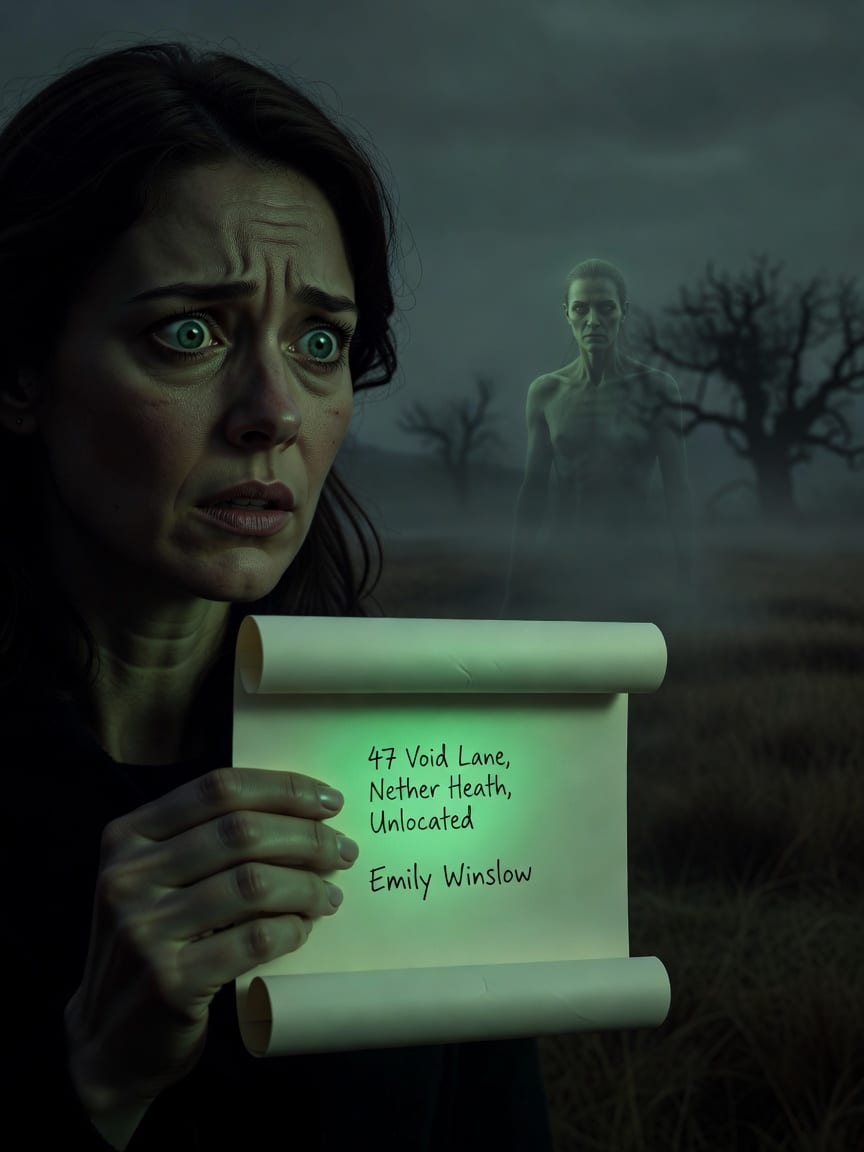
My change-of-address card arrived today. It said I'd moved to a house I'd never seen, on a street that didn't exist. And it was signed with my own hand, a month from now.
A crisp, cream-colored card on my kitchen counter informed me I'd moved to 42 Willow Creek Lane, an address that didn't exist. The signature was my name, Emily Winslow, a chillingly precise ghost of my own handwriting. But then I found an old 1947 ledger, listing 42 Willow Creek Lane and a signature identical to the one on my card.
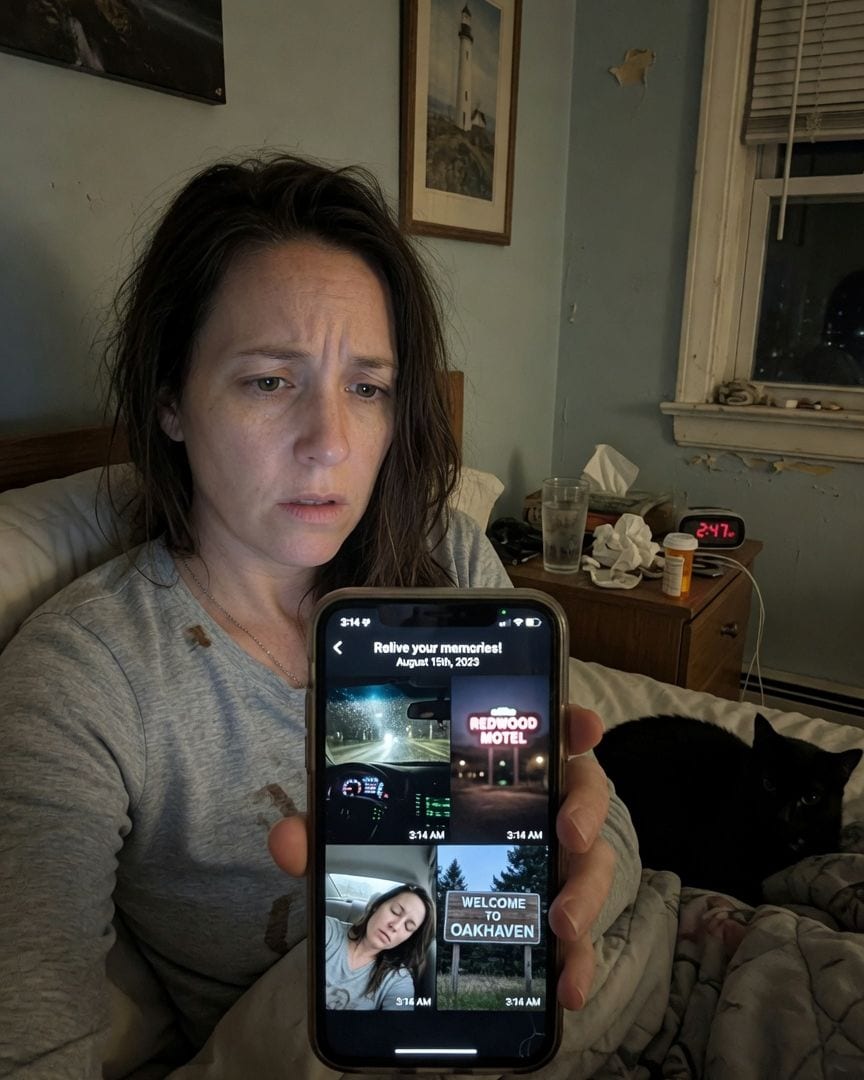
My phone has photos of me asleep in a strange car at 3 AM. Then a voicemail: 'We'll have her back by sunrise.'
My phone woke me with a cheery notification, promising memories from last August. Instead, it showed me asleep in a dark car, rain streaking the windshield, miles from my apartment. I was certain I'd been home in bed that night, but the images were undeniably in my camera roll, a quiet violation of my memory.
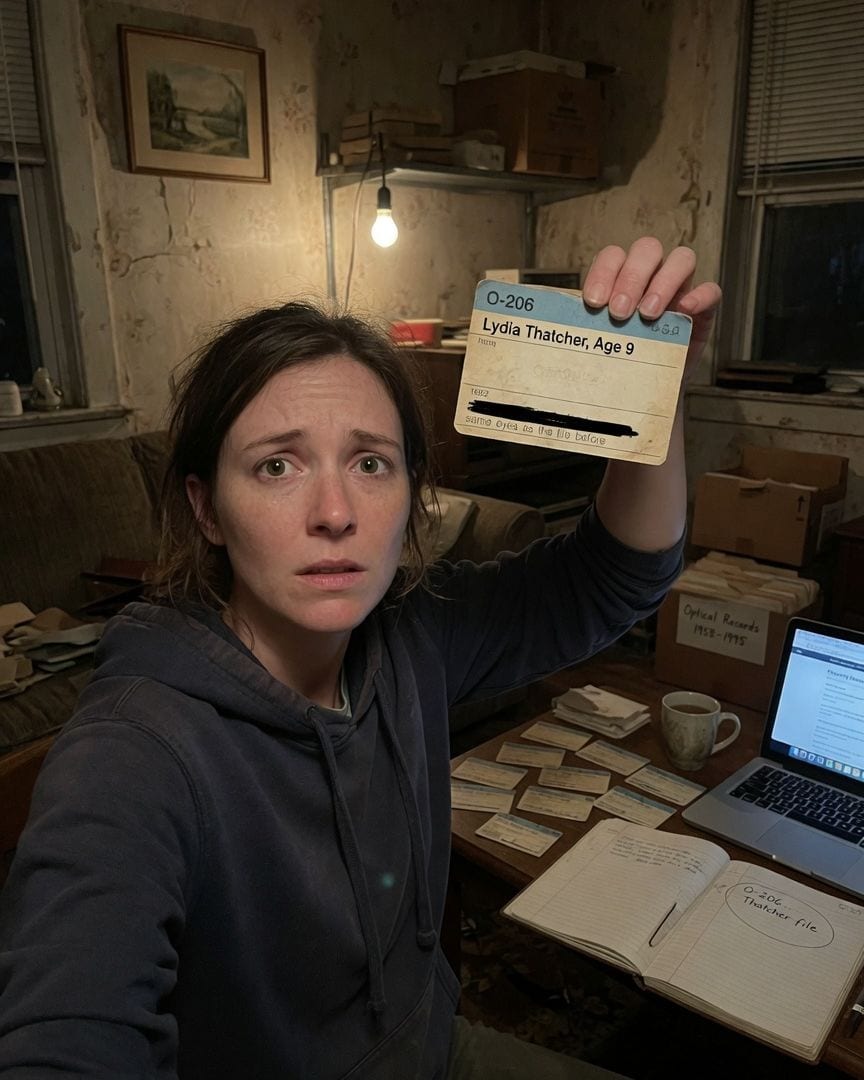
My own optical card is dated 1962, with my name on it. I wasn't born until 1993.
Sifting through old patient files from my former optical practice, I found my own O-206 card. It had my name, Lydia Thatcher, and my current home address printed on it. But the card was dated 1962, decades before I was even born, and a redacted note mentioned 'same eyes.'