My mother came back remembering my secret childhood runaway night. She slept through it.
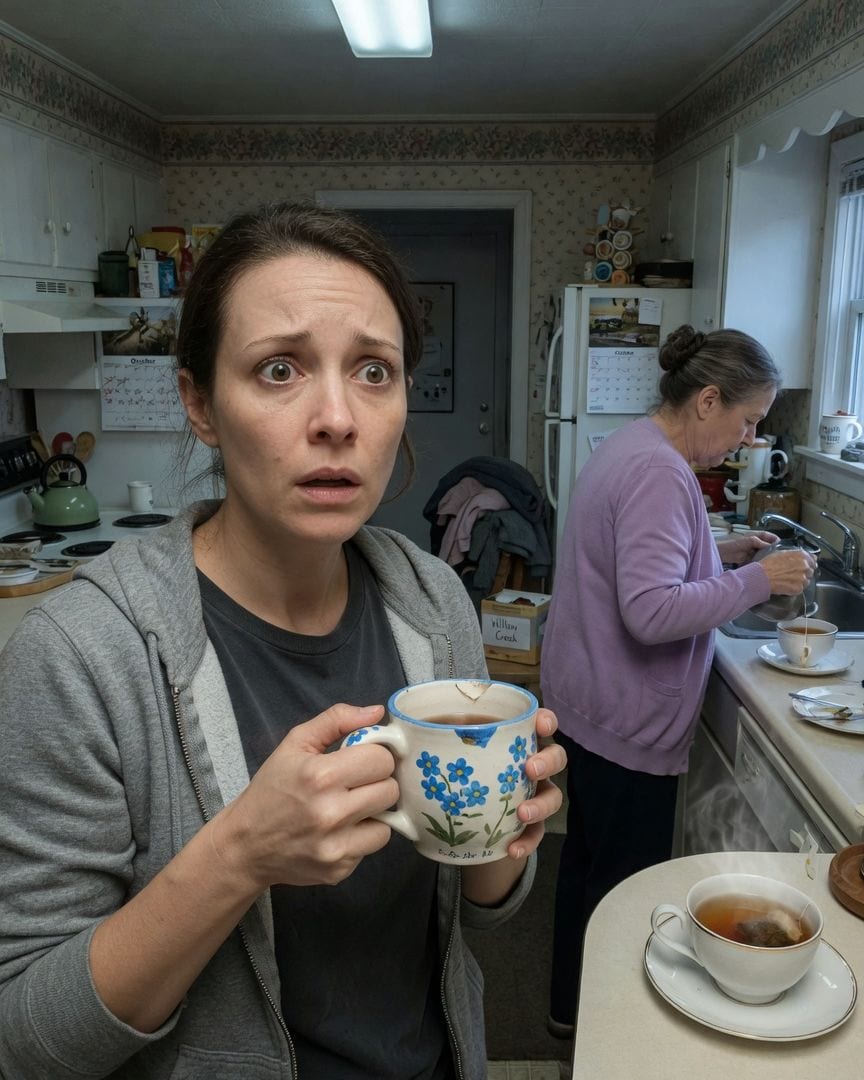
The smell of lavender and something acrid – the antiseptic they must use at Willow Creek – still clung to Mom’s sweater. She’d been back three days now, after five days unaccounted for.
Five days the home had no explanation for, beyond mumbled apologies about a 'breach in security protocols' and her simply being 'found wandering' in a nearby park.
But she was here, sitting across from me at the kitchen table, her eyes clear, her posture ramrod straight.
"Do you remember that night, Tessa?" she asked, her voice soft, almost wistful. "When you were nine? You must have been so scared, out there in the cold."
My fork clattered against the ceramic plate. I gripped it, my knuckles white. "What night, Mom?"
She smiled, a gentle, knowing curve of her lips. "The night you ran away. You put on that old red duffel coat – the one with the torn lining – and snuck out the back door.
I thought I heard something, but I was so tired." She paused, took a slow sip from her teacup. "You walked all the way down Elm Street, past the old bakery, and then you doubled back.
You even swiped a bottle of milk from Mrs. Henderson’s porch."
A cold dread gripped my stomach, spreading through my chest. I remembered. Every detail. The scratchy wool of the coat, the way the night air had bitten at my exposed ears, the desperate, childish urge to just disappear.
And the milk, cold and comforting against my lips in the alleyway behind the library. The shame of it. But I had never, not once, told her. Or anyone. She had slept through it, as she’d said. Deeply.
I’d seen her, checked on her before I left, her breath even and slow.
"I… I don't remember that, Mom," I lied, my voice tight. "Must have been a dream."
She just chuckled, a light, airy sound I didn't quite recognize. "Oh, you always were a dreamer, dear. But I assure you, I remember. So vivid."
She took another sip of her tea, Earl Grey, a steaming amber liquid in her delicate porcelain cup. "You know," she said, setting the cup down, "I’ve always preferred tea, haven’t I? Much more soothing than coffee."
I stared at her. My mother, Judith Kingsley, a woman who had lived and breathed black coffee for sixty-eight years. No sugar, no cream, just coffee. Lifelong aversion to tea, a 'dishwater drink' she called it.
I watched her, a knot forming and tightening in my stomach, unable to reconcile this new memory, this new preference, with the mother I knew. My head began to throb.
The next morning, a cardboard box sat by the back door, taped shut. "Your mother's things," the Willow Creek driver had mumbled, dropping it off. "Must have forgotten it when she came home."
I pulled at the tape, the sound like a gasp in the quiet house. Inside, nestled among a few sweaters and a half-read paperback, I found it. My mother’s unique, hand-painted ceramic coffee mug.
I’d made it for her in a pottery class when I was twelve, a crude, lopsided thing with bright blue forget-me-nots daubed around the rim. She’d cherished it, drank from it every single morning, coffee black, for over two decades.
It was chipped now, near the handle, but unmistakably hers.
Judith was in the kitchen, humming, the kettle steaming on the hob. She was pouring water into her new, pristine Earl Grey teacup. The familiar aroma of bergamot, sharp and sweet, filled the room.
"Look, Mom," I said, my voice deliberately light, holding out the blue mug. "Your mug! They finally sent it back." I expected her face to light up, a smile of recognition, a familiar squeeze of her hand.
She glanced at the mug, then at me. Her eyes, usually so quick to reflect emotion, were… placid. Unreadable. "Oh, is that yours, dear?" she said, her voice even. "I don't recall that one.
I suppose I've always been a tea drinker, haven't I? So much better for the nerves." She dismissed it with a casual wave of her hand, a gesture I’d never seen her adopt.
My mother’s hands were always busy, always purposeful, never idly waving things away.
The mug, a tangible link to a shared past, felt suddenly heavy in my hand. My mother had always been sharp, her memory like a steel trap, especially for things connected to me.
The idea that she was simply forgetful, or mistaken, felt paper-thin, failing to cover the growing chill that was seeping into my bones. The blue forget-me-nots seemed to stare at me, accusingly.
The mug felt like a foreign object in the presence of this returned Judith. An alien artifact.
I stood frozen in my kitchen, clutching the familiar, hand-painted ceramic coffee mug, the clay cold against my fingers.
My returned mother, Judith, hummed a light, unfamiliar tune, something lilting and airy, utterly unlike the old folk songs she used to whistle.
Her back was to me as she poured herself a second cup of Earl Grey from a freshly brewed pot, her movements precise but somehow too fluid, too effortless.
The small, almost imperceptible shift in her posture, the unfamiliar tune, the casual dismissal of a cherished object – it all coalesced into a single, terrifying certainty. The woman at the counter was not her mother. Not truly.
My gaze drifted from the mug, then to the back of Judith’s head, and a primal, chilling question formed in my mind, unvoiced.
Over the next few days, I became an obsessive observer. Every gesture, every word, every habit. The 'Habit Reversed' details multiplied.
Judith, a lifelong early riser, who used to be up before the sun, now slept until past ten, emerging with a placid, unhurried air. Her meticulous tidiness, a family legend, had given way to a strange disinterest in clutter.
A pile of magazines sat on the coffee table for days, untouched, a slight film of dust gathering on them. The biggest tell, though, was her hands.
My mother, distinctly right-handed her entire life, now instinctively used her left hand for simple tasks: stirring her tea, picking up her glasses, even opening the front door. It wasn't clumsy, just… different. A mirror image.
I tried to find a rational cause – residual effects of her time away, a hidden stroke they hadn't told me about, a medication side effect. I pulled up medical journals online, read forums. Nothing fit.
Each mundane explanation I tried to force over the growing chasm of wrongness just crumpled.
I called Willow Creek Residential Home again. This time I asked to speak to the administrator. Samuel Bishop. His voice was smooth, calm, radiating an unsettling composure. I asked about Judith's five-day absence, pressed for details.
He was politely evasive, citing 'patient confidentiality' and 'unforeseen administrative issues' that he assured me had since been fully resolved. "Mrs. Kingsley is fully re-integrated, Ms. Kingsley," he said, the phrase sounding clinical, almost unsettling.
"There's nothing to be concerned about."
I researched similar disappearances from care homes online, late into the night.
I found anecdotal reports, forums filled with terrified whispers of people returning 'changed,' subtle shifts in personality, strange new habits, but nothing concrete, nothing I could print out and point to. Just stories, like whispers in the dark.
I felt increasingly isolated, convinced I was seeing something no one else would believe, or perhaps, no one else wants to see. My phone became an extension of my hand, a silent witness.
I began to secretly record Judith’s movements and habits, little snippets of her new left-handedness, her vacant stare at the clutter, the unfamiliar humming.
Each recording filled me with a profound sense of violation, yet I was compelled, driven to gather undeniable evidence before I completely lost my mind.
My inquiries, it turned out, did not go unnoticed. A few days later, a car with Willow Creek branding, discreet and official-looking, was parked down the street from my house.
It was a dark sedan, spotless, and sat there for hours. I dismissed it as coincidence at first, a stray employee perhaps running an errand. Then I found it. A small, unmarked envelope, tucked neatly under my windshield wiper.
My hands trembled as I opened it. Inside was a single, precisely typed note: "Some things are better left undisturbed. For everyone's peace of mind."
The message was unnervingly calm, devoid of overt threat, yet its implication was a clear, cold stab to my gut: someone knew I was digging. Someone was watching.
The next day, my phone rang. Samuel Bishop. His voice, when I answered, was as smooth and cordial as before, a professional sheen over something unyielding. "Ms. Kingsley," he began, "I trust you're settling back into a routine.
I was just calling to check up on Judith's transition, see how she's adapting." He paused, and the silence stretched. "I've heard you've been... concerned about details."
The way he said 'details,' almost casually, sent a fresh wave of dread through me. It wasn't a question; it was a statement. An invitation to a confrontation. He suggested a meeting, "just to ensure all your questions are addressed."
I agreed, my voice barely a whisper. The air in the kitchen felt suddenly thin, sharp. I felt the shift. I was no longer just investigating; I had been identified as a problem, a loose thread.
And the institution, whatever it truly was, was watching.
I sat across from Samuel Bishop in his impeccably tidy office at Willow Creek. The room was sterile, modern, every object placed with unnerving precision.
He offered me tea, and I watched his own precise, almost ritualistic movements as he prepared it, a faint, almost clinical aroma of Earl Grey filling the air. He did not offer coffee.
"Thank you, but no," I said, my voice tight. I pulled out my phone, the screen filled with the short, incriminating videos and notes. "My mother has changed, Mr. Bishop. Radically.
She’s sleeping late, she’s ignoring clutter, she’s using her left hand for everything when she's always been right-handed. And she has a memory of my childhood runaway night that she never had before, a night she slept through.
She also doesn't recognize her own coffee mug, the one I made her, the one she cherished. She now insists she's always been a tea drinker." I laid out my observations, one by one, watching his face.
Samuel listened, unblinking, his gaze steady. A faint, almost pitying smile played on his lips. "Ms. Kingsley," he began, his voice soft, unhurried, "we deal with a great many unique cases here.
Sometimes, after a traumatic event – and a five-day absence from a structured environment can certainly be traumatic – individuals may exhibit minor deviations. Call them 'unavoidable quirks' of the recovery process."
He interlaced his fingers on the polished desk, his composure unyielding.
I pressed him, my frustration boiling. "What 'recovery process'? She was only gone for five days! What are you talking about?"
He leaned back, his eyes calm, almost serene. "Our primary goal, Ms. Kingsley, is the restoration of stability and comfort for families. When an individual goes missing, particularly the elderly, the grief, the uncertainty… it can be devastating.
We offer a… service." He gestured vaguely around the pristine office, as if the very air held the answer. "A way to ensure continuity. To prevent the unraveling of lives."
He didn't deny the 'quirks,' the left-handedness, the new memories, the tea. He simply reframed them as acceptable trade-offs, minor imperfections in a necessary solution. The clarity of his admission, devoid of any attempt at a mundane lie, was chilling.
He acknowledged that the 'returned' person wasn't precisely the original, but implied it was a necessary, even benevolent, substitute.
The memory of my runaway night, the unfamiliar tune, the tea, the left hand – all the small, nagging wrongnesses from the past few days – snapped into place. They weren’t random; they were 'quirks.' 'Unavoidable quirks' of this 'service.'
I felt the blood drain from my face, a cold tremor running through me. "How long?" I whispered, my voice raw. "How long has Willow Creek been doing this? How many others?"
The sterile office seemed to shrink around me, the air growing heavy.
Samuel's gaze remained steady, unperturbed, as if discussing the weather. "Long enough, Ms. Kingsley. Long enough to understand the profound benefits of our approach." He then paused, his eyes seeming to bore into mine with a disconcerting knowingness.
A flicker of something, perhaps satisfaction, crossed his face. "You see, we've had the pleasure of assisting your family before. A delicate matter, many years ago, concerning your father."
I stared, my breath catching in my throat. My father, Harold, had died suddenly of a 'heart attack' fifteen years ago, a loss that had devastated our family, leaving my mother a ghost of herself for months. I was twenty.
Samuel sensed my shock, a flicker of something almost like satisfaction in his eyes. "He was a resident at a sister facility, briefly, before his… unfortunate disappearance. We were able to ensure his return, for your mother's sake.
And for yours."
He leaned forward across his polished desk, a faint, almost sympathetic smile playing on his lips, and slid a yellowed, official-looking document across to me, the name 'Harold Kingsley' clearly visible at the top of the page, beneath a date from fifteen years prior.
My world shattered. I stared at the document, the formal script, the official seal. 'Reintegration Protocol,' it read at the top. Below it, 'Subject: Kingsley, Harold. Date of Disappearance: April 14, [Fifteen Years Ago].
Date of Reintegration: April 19, [Fifteen Years Ago]. Facility: Pine Valley Residential Home (Sister Establishment).' Samuel Bishop calmly explained the details. My father, Harold, like Judith, had also experienced a brief disappearance from a 'sister facility' before his 'subsequent return.'
Samuel's voice was a flat monotone as he detailed Harold's 'deviations' – a sudden fondness for black olives, a food he'd always detested, and, chillingly, a reversed preference for his dominant hand, like Judith.
He described the process as a 'sophisticated memory harvest and replication,' a means to provide families with a semblance of their lost loved ones, preventing the trauma of unresolved disappearances.
He spoke of it with the casual air of a technician explaining a complex but routine procedure.
He revealed that the memory of my runaway night, which Judith had recounted so vividly, was likely a detail gleaned from the harvested memories of the original Judith, a data point in the vast compilation used to construct her replacement.
A memory that wasn’t even hers, but a ghost’s.
He opened a thick, leather-bound ledger, its pages yellowed with age, filled with meticulous entries spanning decades. Each page detailed a 'successful reintegration.' Dates, names, 'minor deviations' noted in a neat hand.
The terror wasn't just that my mother was a copy, but that my father was too, and that my entire life, my memories, my grief, had been built on a foundation of replacements.
Orchestrated by a cold, efficient institution that saw this as a benevolent public service. Every small wrongness, every unexplained detail, every 'quirk' from both my parents, now snapped into horrifying focus, forming a coherent, inescapable pattern.
There was no random twist. It all fit.
I pushed back from the desk, my chair scraping loudly against the polished floor, the sound a shriek in the quiet office. "You replaced them," I whispered, the words tasting foul, like ash in my mouth. "You replaced my parents."
Samuel nodded, unperturbed, his calm composure unwavering. "We eased their families' pain, Ms. Kingsley. We gave them continuity, closure. What is grief, after all, but a form of dis-integration? We prevent that."
His eyes, still utterly placid, seemed to suggest I should be grateful.
I scrambled out of the office, the bland institutional hallways suddenly suffocating, pressing in on me. The hushed, carpeted silence, the muted institutional art – it all felt like a carefully constructed facade, a lie.
I drove home in a daze, the certainty of what I had learned a suffocating weight in my chest, crushing the air from my lungs.
I found Judith in the living room, watching an old movie, a faint, placid smile on her face. Her left hand rested idly on her knee.
I stared at her, seeing not my mother, but a meticulously crafted imitation, a living ghost of who she once was. The urge to scream, to expose, to shatter the illusion, was overwhelming.
To grab her, shake her, demand to know who she really was.
But then I remembered Samuel's calm certainty, the thick, leather-bound ledger, the decades of records, the implied reach of the institution. I remembered the note under my windshield wiper. What would I gain by exposing this? Hysteria? Disbelief?
What if they simply took her back? Judith, the replacement, was harmless, quiet, a perfect mimicry of comfort, a walking, breathing monument to a terrible, necessary lie.
The true horror wasn't just the deception; it was that this 'service' was accepted, normalized, a quiet horror woven into the very fabric of society, a secret antidote to grief.
I walked over to her, my hand trembling slightly as I reached out, not to confront, but to touch the shoulder of the woman who isn't my mother. The touch was light, almost a caress of resignation.
The entity turned, its placid smile unwavering, its eyes a little too bright, a little too still.
Days turned into weeks. I kept the secret, a lead weight in my chest, a constant pressure beneath my ribs.
I continued to live with Judith, maintaining the fragile illusion for the outside world, for what remained of our small family. Samuel Bishop never contacted me again, and the car from Willow Creek disappeared from my street.
The institution had simply absorbed my knowledge, confident in its own quiet, unchallengeable power. They didn't need to threaten me; the truth itself was enough.
I found myself constantly scrutinizing Judith, every gesture, every word, searching for the 'quirks,' the subtle tells that screamed 'not quite right.' The hand-painted coffee mug remained in a cupboard, untouched, a silent testament to the truth.
My life was now a performance, a carefully constructed normalcy over a void.
The quiet horror became her new normal. I learned to navigate the subtle wrongness, to live with the knowledge that the woman across from me was a meticulous, loving fraud.
Sometimes, Judith would look at me with an uncanny, almost perfect affection, and I would wonder if the harvested memories contained genuine love, or just its perfect mimicry. I never spoke of it again, to anyone.
The institution had won, not with force, but with the insidious comfort of a lie too perfect to shatter.
I poured myself a cup of black coffee, a habit I now clung to fiercely, a small anchor in a sea of manufactured reality. I glanced at Judith, who was sipping her Earl Grey, humming that same unfamiliar tune.
The world outside remained oblivious, content in its curated continuities. I knew the truth, and it had branded me, leaving me isolated in a silent, unending dread. I lived, but not quite whole.
I was a witness to a secret that had eaten my family from within, and now, it was eating me too, one quiet morning at a time.
I looked at her across the dinner table, and knew the quiet horror of every morning from now on.
If this one got to you
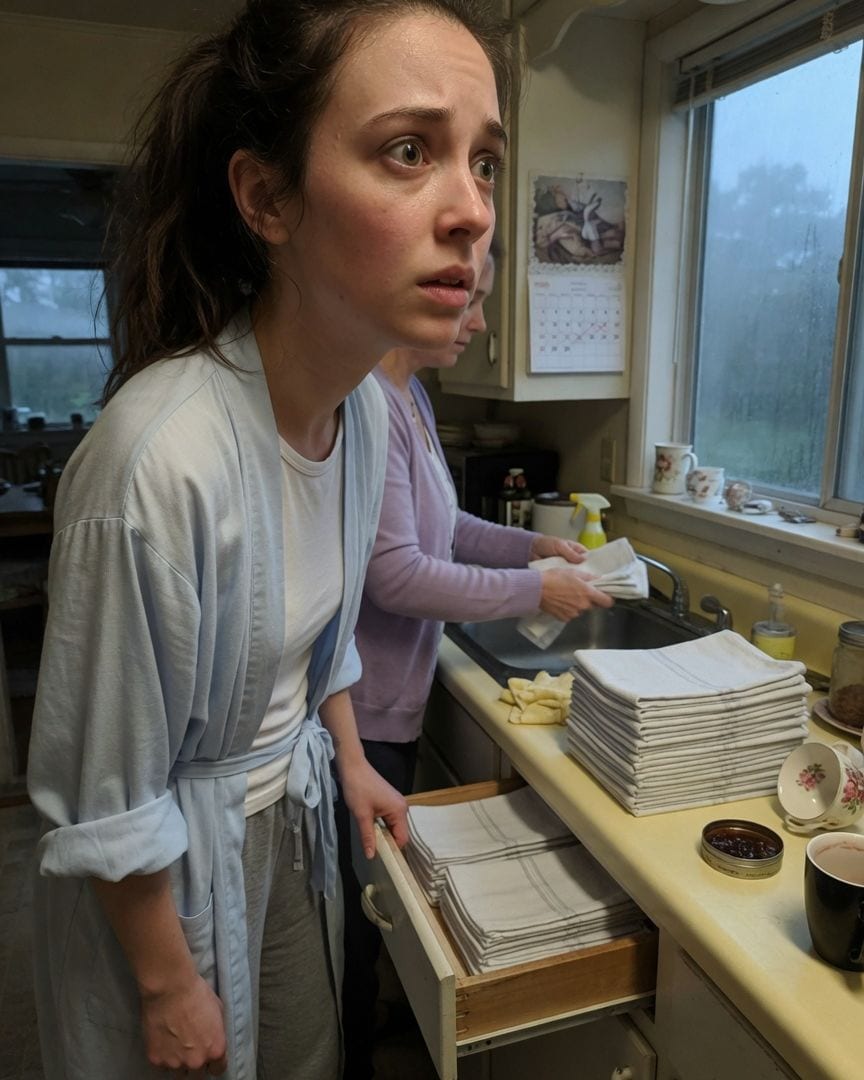
My mother's left wrist has a new scar. She never had one there.
My mother is finally home after her disappearance, and I'm trying to find our old rhythm. But then I watch her fold tea towels, a simple ritual I learned from her. She's doing it completely wrong, seam-out, insisting it's how she's always done it.
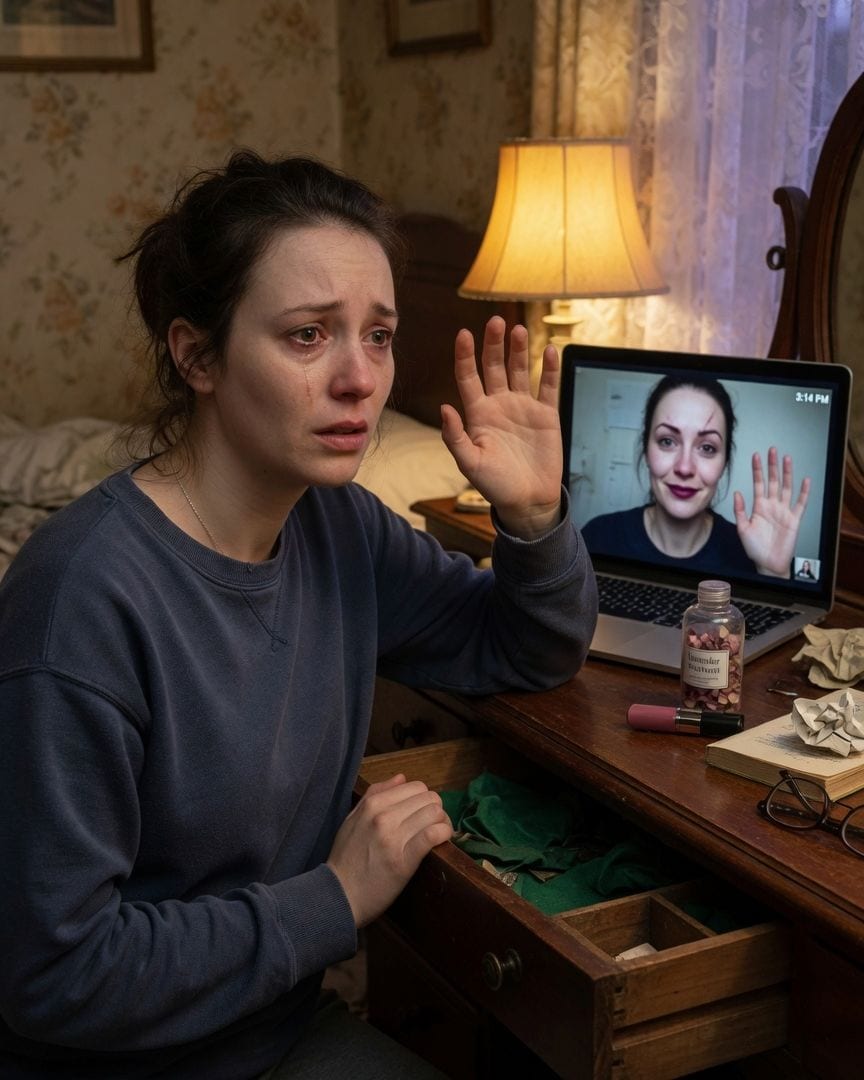
My mother waved with her right hand, both times, on our first call after she came home. She always waved left.
My mother vanished three months ago, then came back. On our first video call, she waved goodbye, but not with her usual left hand. It was her right, a small gesture that twisted something cold in my stomach.
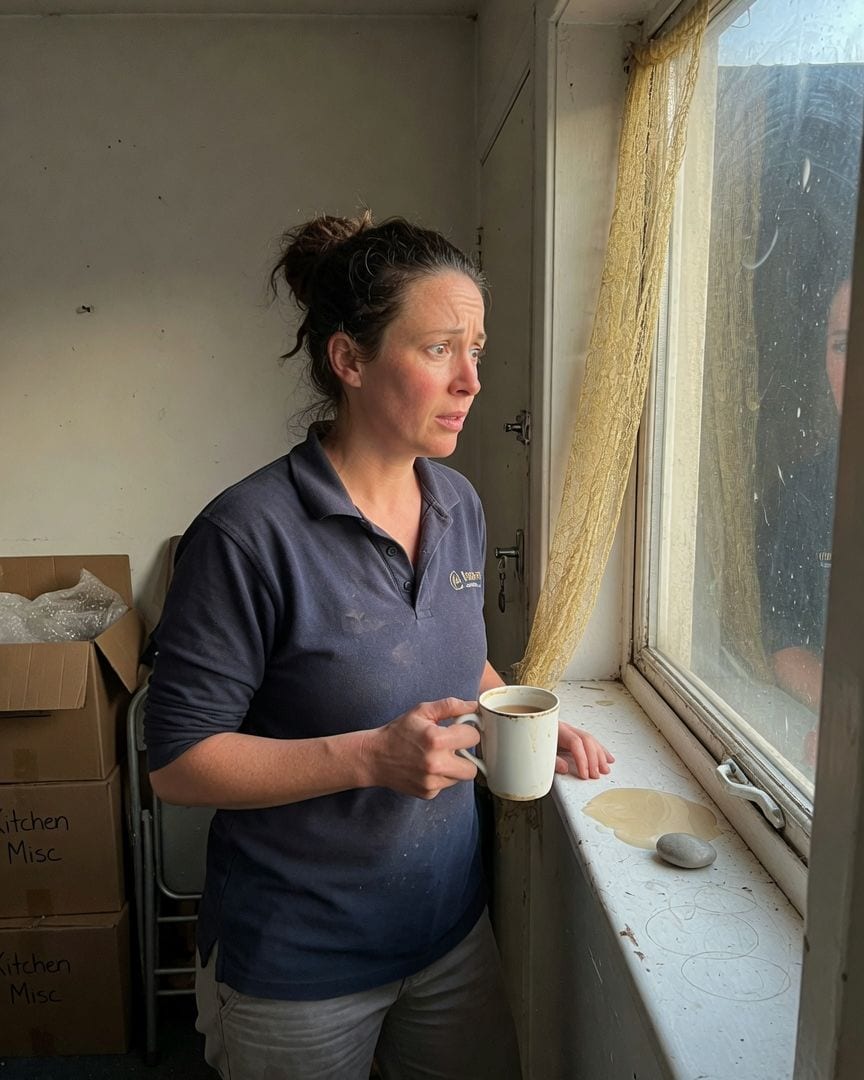
A cold cup of milky tea sits on my box room windowsill. I don't drink tea with sugar. The flat locks from the outside every time I leave.
After moving into my new flat, I started noticing a strange detail. A chipped ceramic mug, filled with cold, milky tea, repeatedly appears on my box room windowsill. I live alone, don't drink tea with sugar, and my flat is always triple-locked. Yet, the tea is always there.
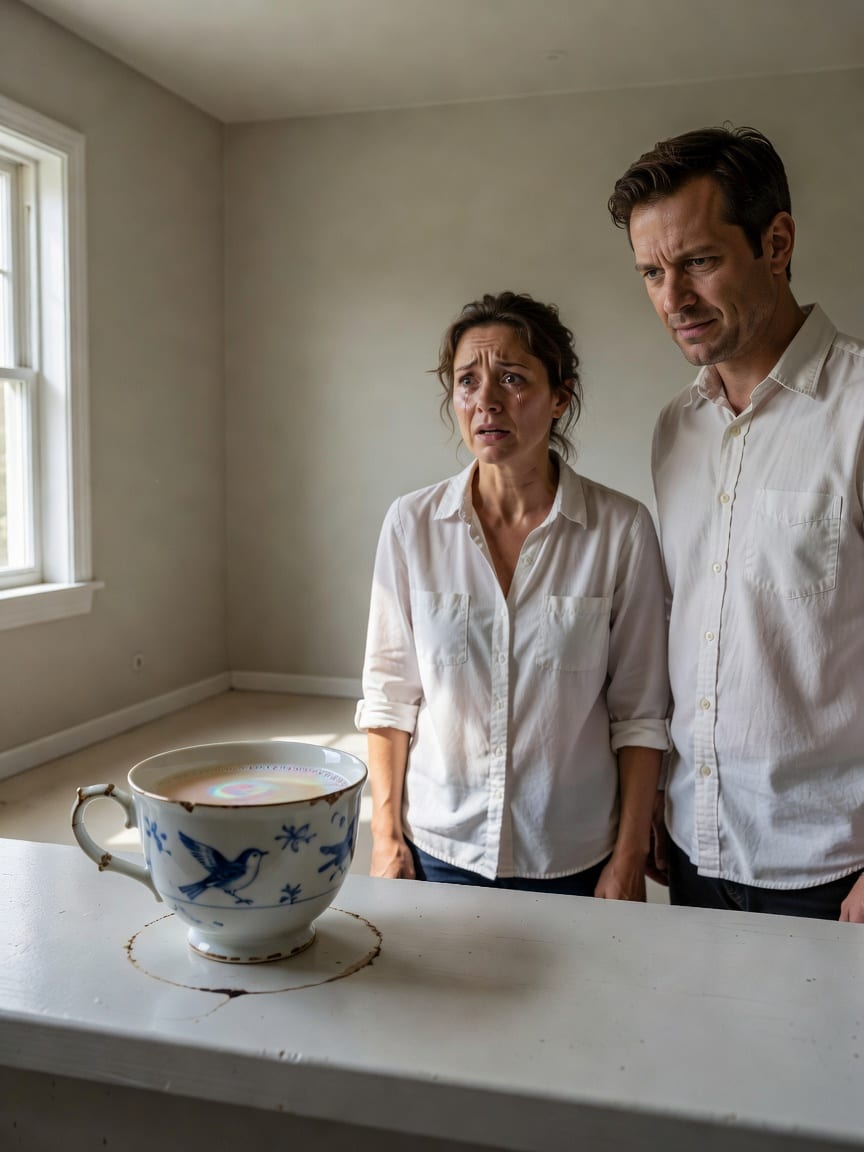
A cold cup of milky tea appears in my empty box room every night. The sugar ring on the sill is always the same. I live alone. I don't drink sugar tea.
My new flat was supposed to be a quiet sanctuary after my library shifts, but a faint, familiar scent always greets me. Every night, a fresh cup of milky tea, with one sugar, appears on the windowsill of my locked, empty room. I don't drink sugar, I don't own the mug, and the door is always secured.
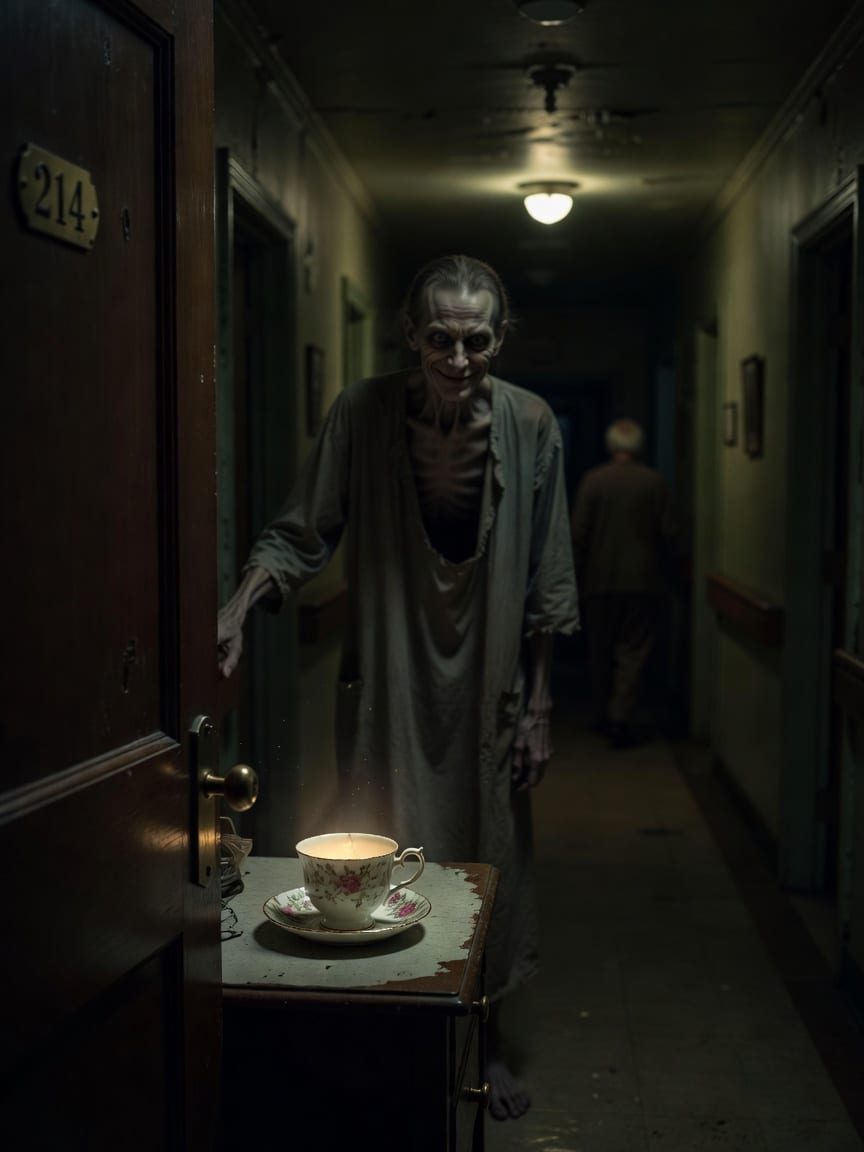
Every 3:30 AM, old Mr. Pryce shuffles past my hospice desk. He smells of lavender, asks for tea. My day nurse says he discharged four months ago. His room has been empty since.
As a night desk attendant, I'm used to the quiet routine of the hospice, especially Mr. Pryce's nightly cold tea request. But then the day nurse told me Mr. Pryce was discharged four months ago, and Room 214 has been empty since. Now, his floral teacup sits on the bedside table, still faintly warm.
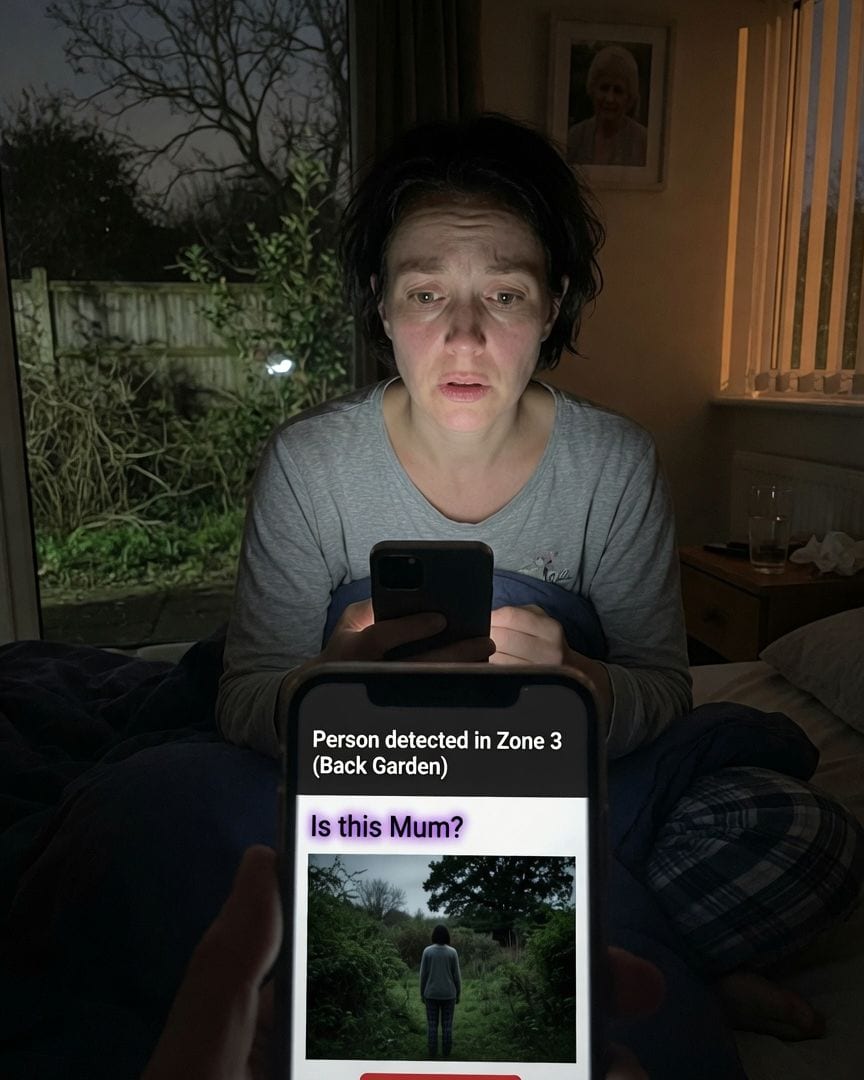
My security camera sent a clip at 3:03 AM: a woman standing in my back garden. The subject line read, 'Is this Mum?' My mother died here in March.
My phone pinged at 3 AM with a security camera alert, interrupting the deep quiet of my house. The attached clip showed a still figure in the back garden, but the subject line froze me. It asked, 'Is this Mum?' My mother died here in March.