A cold cup of milky tea sits on my box room windowsill. I don't drink tea with sugar. The flat locks from the outside every time I leave.
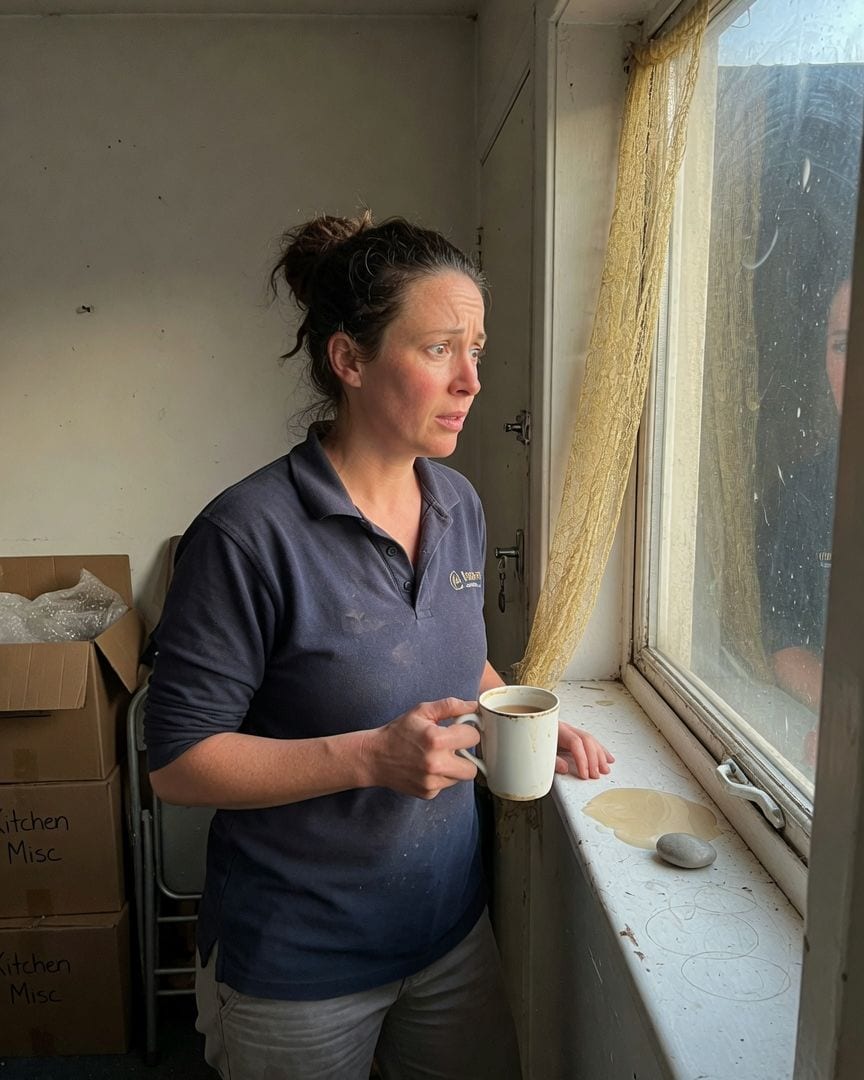
The click of the lock behind me was a familiar comfort after a long shift. I kicked off my shoes by the door, already halfway to the kettle, when I remembered. I didn't need to check. I already knew.
Slowly, I padded down the short hallway to the box room, the smallest space in my new flat, barely big enough for a folding chair and a stack of moving boxes I still hadn't unpacked.
There it was. Exactly where it always was. A white ceramic mug, chipped at the rim, sat on the dusty windowsill.
Inside, a pale, milky tea, one sugar by the look of it, had cooled to room temperature, a thin, papery skin already forming on its surface.
The faint, almost invisible ring it had left on the pale paint of the sill was precisely the same shape, in the same spot, as the rings from yesterday, and the day before, and the week before that.
The room itself was otherwise empty, just motes of dust dancing in the afternoon light filtering through the grimy window.
I sighed, picking up the cup. It was cold, of course. Always cold. I held it for a moment, the ceramic surprisingly heavy. I don't drink tea with sugar. I live alone.
I lock the flat every single time I leave, double-checking the deadbolt. There was no way anyone was getting in.
No way I was getting in, brewing a cuppa I didn’t want, and forgetting it in a room I rarely used. It had to be me. Some deep, unconscious habit I'd developed since moving in six months ago. Forgetfulness.
It had to be. Yet, the same unmade, milky tea, the same single sugar, appeared, again and again, by itself.
I carefully cleaned the windowsill, wiping away the faint tea ring with a damp cloth until the paint was pristine.
To prove my own forgetfulness, to myself more than anything, I took a small, smooth grey pebble I'd found on the beach last summer and centered it on the sill. A test.
I triple-checked the deadbolt on the flat door, jiggling the handle until I was satisfied. Then I latched the box room door firmly, giving it a slight push to ensure it held. It clicked shut with a solid sound.
I went to work, trying to push the nagging thought from my mind.
The next day, walking through the door, my heart was a dull drum in my chest. I made myself unpack a box, listen to music, distract myself for a full hour before I approached the box room.
I pushed the door open. The pebble was undisturbed, exactly where I’d left it, a perfect grey dot on the clean paint. But beside it, barely an inch away, a fresh cup of cold, milky tea sat.
A new ring was already forming. My hands trembled as I reached for the mug. It was definitely a plain, chipped ceramic mug I didn't own.
I looked closer at the windowsill, tracing the faint, almost invisible scratches in the wood beneath where the cup always sat.
They weren't fresh, but old, a pattern that suggested long, repetitive use, exactly the kind of wear an old, rough ceramic base might leave. My breath caught in my throat.
Frustration, cold and sharp, cut through the creeping dread. I stormed into the box room, determined to find a hidden entry, a logical explanation for the impossible tea. There had to be one.
I noticed the old, grimy window, crusted with years of dirt.
I pushed aside the dusty net curtain, my fingers catching on a loose thread, trying to see if the latch was somehow visible, or if the window could be unlocked from the outside.
As my gaze settled on the glass, the view through it shimmered. For a split second, it wasn't the familiar, bricked alleyway outside.
It was a different, older version of the room itself: flowered wallpaper, faded greens and yellows, a worn armchair by the sill, and an elderly woman, her grey hair pulled back in a neat bun, sitting there, knitting.
A newspaper on a small, round table beside her was open, and though the details were blurred, I could make out 'October 1998.' Then, with a jarring snap, the grimy alleyway returned, solid and real.
I froze, my breath catching, my heart hammering against my ribs, the image of the older room and the knitting woman still seared into my mind, even as the grimy alleyway outside had snapped back into place.
Shaken, I dove into the flat’s history the next morning. Online archives yielded little more than bland property records and old rental agreements. But my elderly neighbour, Walter Yates, proved more fruitful.
I found him tending his potted herbs on his tiny balcony, and over lukewarm coffee in his cluttered living room, he’d talked. He remembered 'the quiet lady, Pamela Carter,' who’d lived in my flat for decades.
He described her as a creature of habit, very particular about her routines, including, he’d recalled with a slight frown, a daily cup of tea by that very box room window. "She just… faded away one day, didn't she?"
Walter murmured, stirring his coffee. He paused, then added, "Place used to be different, too. Had a peculiar built-in cupboard in that little room. Before a renovation, long ago."
Intrigued, I later found an old local newspaper clipping online from 1999, yellowed and pixelated. It mentioned the 'unexplained disappearance' of Pamela Carter, age 74, from her flat.
The article stated police found no forced entry, no signs of struggle, only a perfectly tidy, empty flat. She’d just vanished.
I returned home, a profound chill running down my spine, and stared at the box room window, now seeing it as more than just a window, but a shimmering, impossible portal to a forgotten past.
I became obsessed. I set up my phone on a stack of books, aimed its camera at the box room windowsill, hoping to catch the time-lapse video of the tea cup appearing.
I left the box room door slightly ajar, a silent invitation to whatever was doing this. Just after nine one evening, I returned home from an errand. The first thing I noticed was the box room door. It was closed.
Not just closed, but latched, despite my certain memory of leaving it open.
A profound chill settled over the flat, a distinct feeling of being watched, not from outside, but from within the box room itself. I walked over, my movements stiff, and pushed the door open.
My phone, which I’d fully charged, was dead, the screen black. The recording had stopped. And there, as always, the cold cup of tea sat on the sill. I tried to open the grimy window.
It was stuck fast, as if sealed from the inside.
I pressed my face to the glass, fogging it with my breath, and in the fading light, saw a faint, almost invisible scratch mark on the inside of the frame, like someone had desperately tried to force it open from within.
I confronted Walter Yates again, the next morning, over the hedge separating our small gardens. He was watering petunias. "Walter," I began, trying to keep my voice steady, "about Pamela Carter. You said she faded away.
The newspaper said she disappeared." Walter's movements stilled. He lowered the watering can. "Ah, well. It's an old story, that." He wouldn’t meet my eye. I pressed harder. "Disappeared, or was found? What really happened?"
He finally relented, sighing heavily. "Look, dear, she wasn't just 'faded away'. She was found. Months later. In the flat. In that little room, actually." He lowered his voice, glancing around as if afraid someone might overhear.
"Police said natural causes, but... it was strange. Everything so neat. And that tea cup, always there on the sill, even when the paramedics came. Like she’d just set it down."
He shifted uncomfortably, then added, "Landlord back then, old Mr. Henderson, he quickly covered up a peculiar dark stain on the box room floorboards with a rug shortly after. Didn't want it to look... messy, you know."
I rushed back to the flat, Walter's words echoing in my ears, my heart pounding a furious rhythm against my ribs. I practically ripped the old, threadbare rug in the box room from the floorboards.
Beneath it, on the worn, pale wood, was a faint, dark, human-shaped stain. It was almost black, perfectly preserved, like a shadow seared into the grain. And it was exactly where the tea cup always sat.
The stain was consistent with a body having lain there for a very long time, seeping into the wood. The cold tea wasn't just a routine; it was a marker.
I stared at the stain, the horrifying realization dawning: Pamela died right here, in this small, quiet room.
The tea cup wasn't just an echo of her life; it was a marker of her death, a ritual of her eternal presence. I looked from the faint outline on the floor, up to the grimy window.
As if in response to my gaze, the window shivered, then solidified, showing Pamela knitting in her old room. But this time, Pamela looked up, her eyes wide with silent desperation, directly at me.
Her hand lifted, not pointing at me, but at the faint, dark stain on the floorboards where I was standing.
A cold dread washed over me, understanding that Pamela wasn't just repeating a routine; she was trapped by it, and the routine was the aftermath of her death.
I stood frozen, staring at the faint, dark outline on the floorboards, then up at the window where Pamela's desperate, distorted face pressed against the glass, her pointing finger a silent, horrifying accusation.
The implication of being next hung heavy in the suddenly frigid air.
The window scene held. Pamela’s eyes, wide and full of silent pleading, were fixed on me. It wasn’t a memory or a ghost. It was her.
I realized Pamela wasn't merely a residual haunting, an unconscious playback; she was a conscious, suffering entity, bound to this flat.
The recurring tea cup was a ritual of her perpetual waiting, her last, forlorn habit, a desperate attempt to maintain a semblance of life.
The stain on the floorboards wasn't just the mark of her end; it was her anchor, holding her here, indelible and permanent. The 'Door Onto The Wrong Year,' that shimmering glimpse, wasn't just a random peep into the past.
It was Pamela’s own desperate attempt to show me what truly happened, to break me out of the same terrible loop she was now caught in.
I understood with terrifying clarity: Pamela wasn't haunting the flat; the flat was haunting Pamela, trapping her in her final, lonely routine, and it wanted me to join her in that endless, silent vigil.
The source of it all was Pamela's trapped consciousness, anchored to the physical location of her death, forever replaying her last, isolated moments.
Propelled by a desperate urgency, I began to pack frantically. My mind raced, trying to formulate a plan, any plan, to get out.
But every time I tried to leave the box room, to even cross the threshold, the door swung shut with an unseen force, latching with a sharp click.
And the window showed Pamela's face, now horribly distorted in a silent scream, pressing against the glass, her mouth open in a soundless plea, a silent, frantic warning.
The air in the room grew impossibly cold, and the cloying smell of cold, milky tea became overwhelming, thick in my throat. I couldn't just walk away. I couldn't just leave. I had to break the cycle.
I had to sever the anchor.
I grabbed a small hammer and a chisel from my toolbox, my hands shaking so hard I almost dropped them. I knelt by the stain on the floorboards, the smell of tea and cold earth filling my senses.
With a desperate resolve, I began to pry at the first board. The old wood groaned in protest. As I worked, the room went utterly silent.
The air stilled, and the distorted image of Pamela in the window vanished, leaving only the grimy pane reflecting my own frantic face.
I pulled up the first board, then the second, revealing a small, hidden cavity in the joists beneath. Inside, nestled amongst dust and cobwebs, glinting faintly, I found a tiny, faded, hand-stitched sampler.
It bore the initials 'PC' and the date 'Oct 1998.' Beneath it, almost lost in the dust, was a single, perfectly preserved, dried-up tea leaf. A final, tangible trace.
I left the flat that night, never to return. I placed the sampler and the single tea leaf on the now-exposed patch of floorboards, a quiet, desperate offering to the trapped woman.
I paid out my lease, took a significant financial loss on my deposit, unable to explain the true reasons to my bewildered landlord. He just nodded, perplexed, about the "sudden change of plans."
The flat went back on the market, listed as a 'charming, quiet space, perfect for a single professional.' I carried the truth with me, a proof no one would ever believe.
I moved to a new city, a new flat. I still keep a small, empty ceramic cup on my own windowsill, a habit I picked up without thinking, a quiet, unconscious ritual.
Sometimes, I catch myself staring at it, waiting, a sense of profound unease settling deep in my bones. I know no one would believe my story, and I carry the proof only in my memory, a permanent cost.
The online listing for the old flat was updated a month later. The box room, freshly painted, was now described as a 'cozy nook, perfect for a reading corner.'
The photos showed a small, antique side table placed precisely where the old tea ring used to be. A single, pristine white teacup sat on it, empty.
It looked like home.
If this one got to you
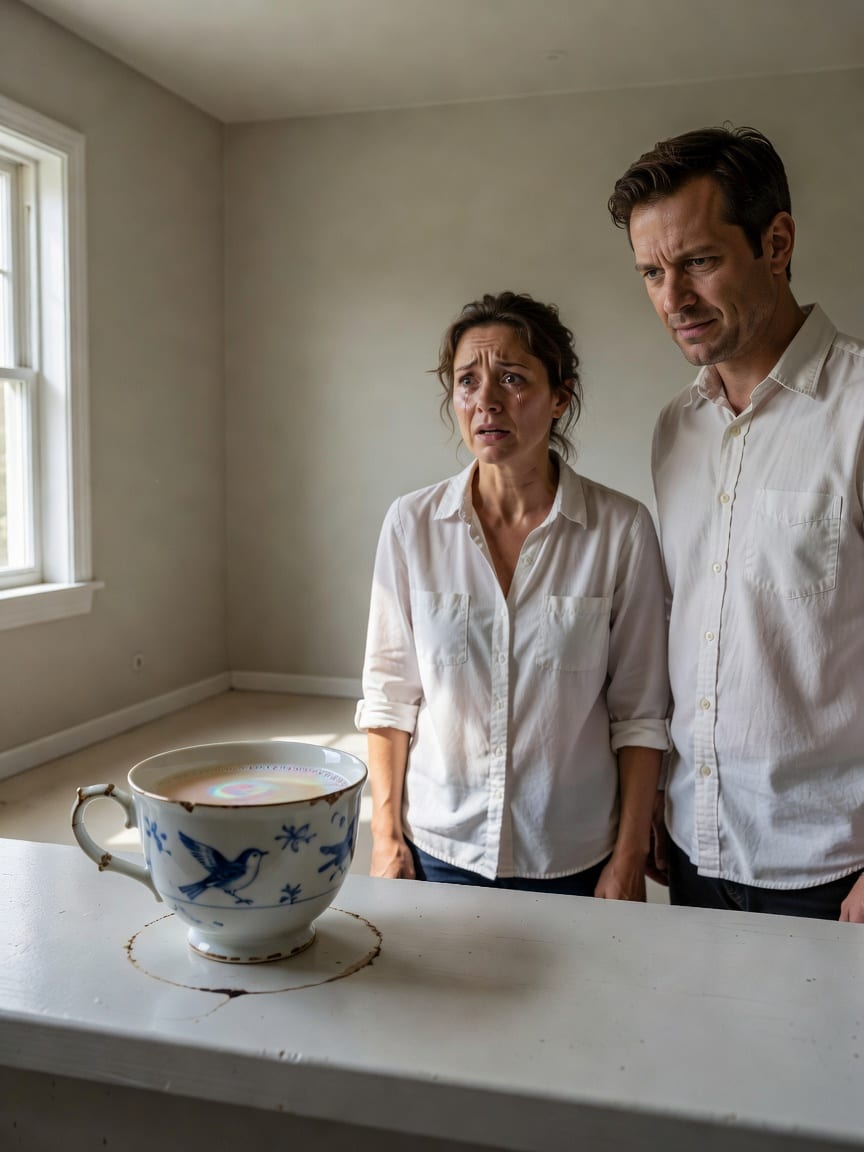
A cold cup of milky tea appears in my empty box room every night. The sugar ring on the sill is always the same. I live alone. I don't drink sugar tea.
My new flat was supposed to be a quiet sanctuary after my library shifts, but a faint, familiar scent always greets me. Every night, a fresh cup of milky tea, with one sugar, appears on the windowsill of my locked, empty room. I don't drink sugar, I don't own the mug, and the door is always secured.
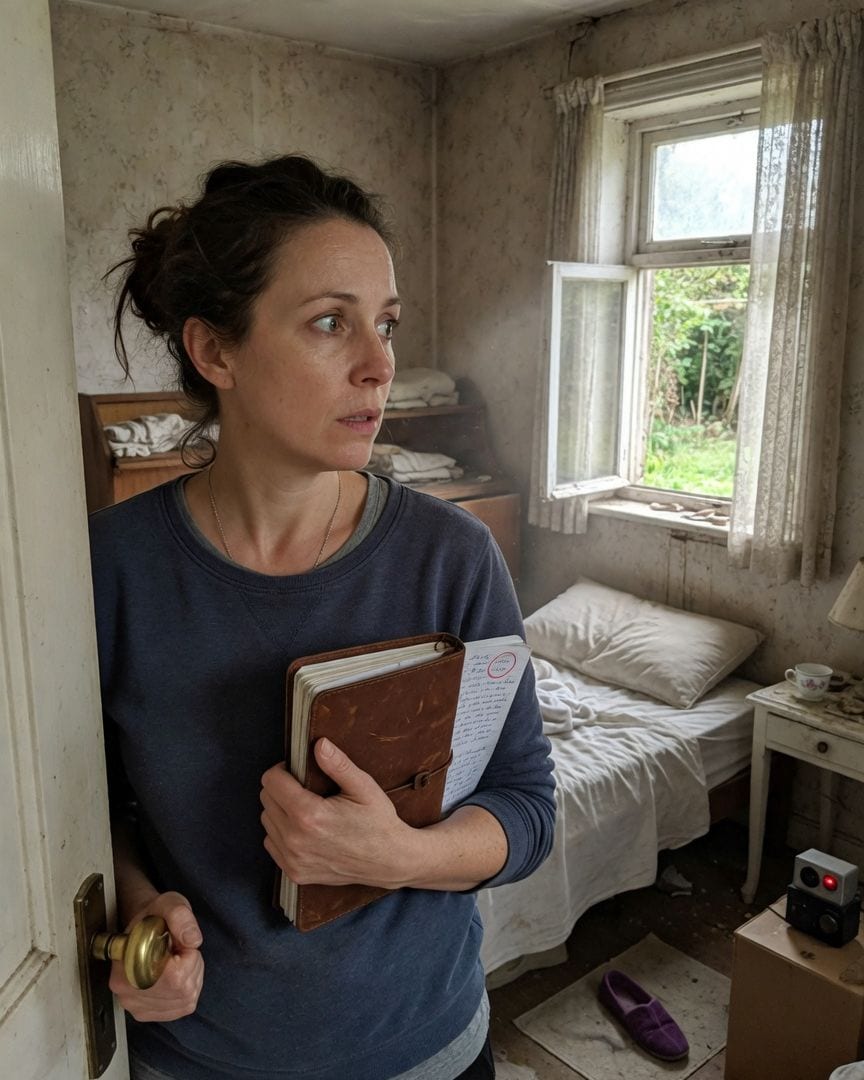
My spare room bed is slept in every few nights, sheets warm and pillow dented. I live alone, painted the window shut, and nobody has a key.
I've lived in Grace's house for six months, adjusting to its quiet rhythms. But the spare room, which I keep shut and empty for storage, has a disturbing routine of its own. Every few mornings, the bed is clearly slept in, the sheet rumpled and warm, and the window I painted shut is open exactly two inches.
My front door has a dented gate and a dead hydrangea. I walked past it six times, trying to reach the corner shop just a hundred yards away. The pavement kept bringing me back to my own porch, and the shop's light never moved.
My morning started like any other, a quick walk to the corner shop from my home at Number 14, Elm Terrace. But after walking what felt like two minutes, I found myself back at my own front door, the shop no closer. I tried six times, faster and slower, but my street kept compressing, refusing to let me leave.
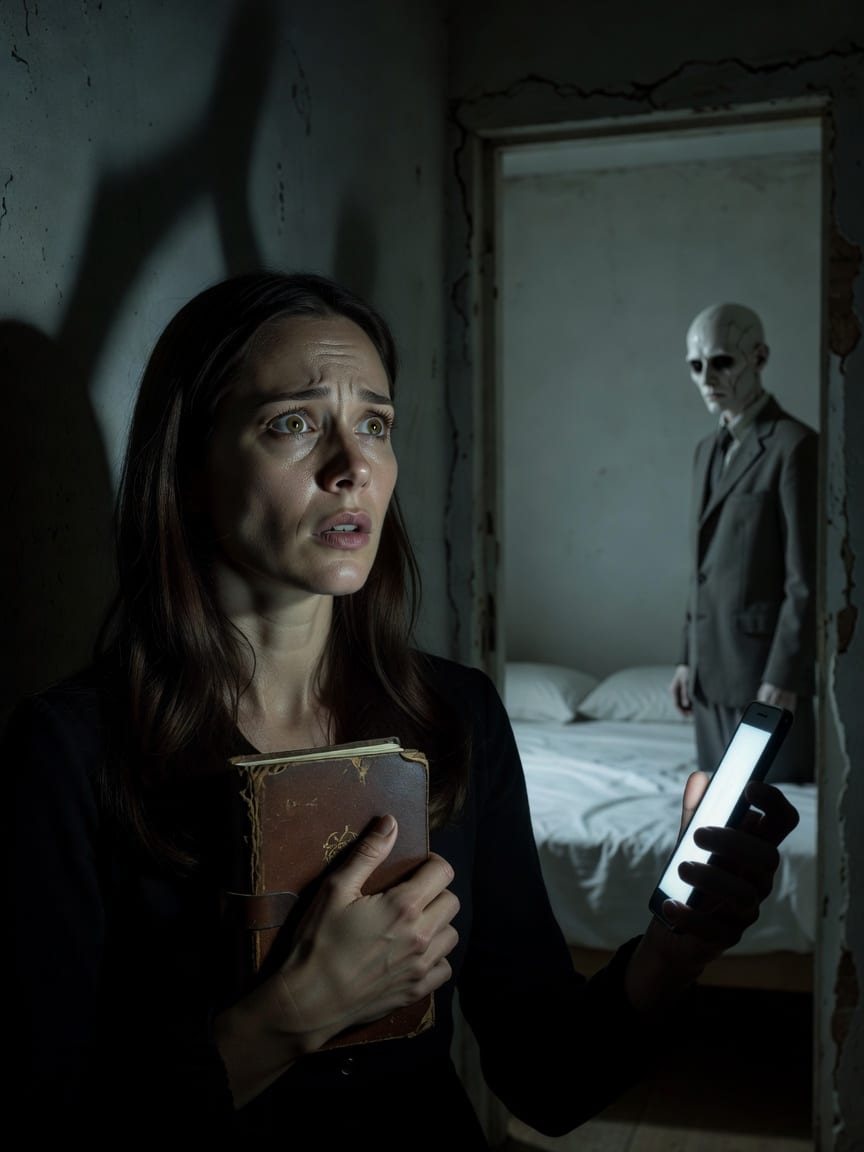
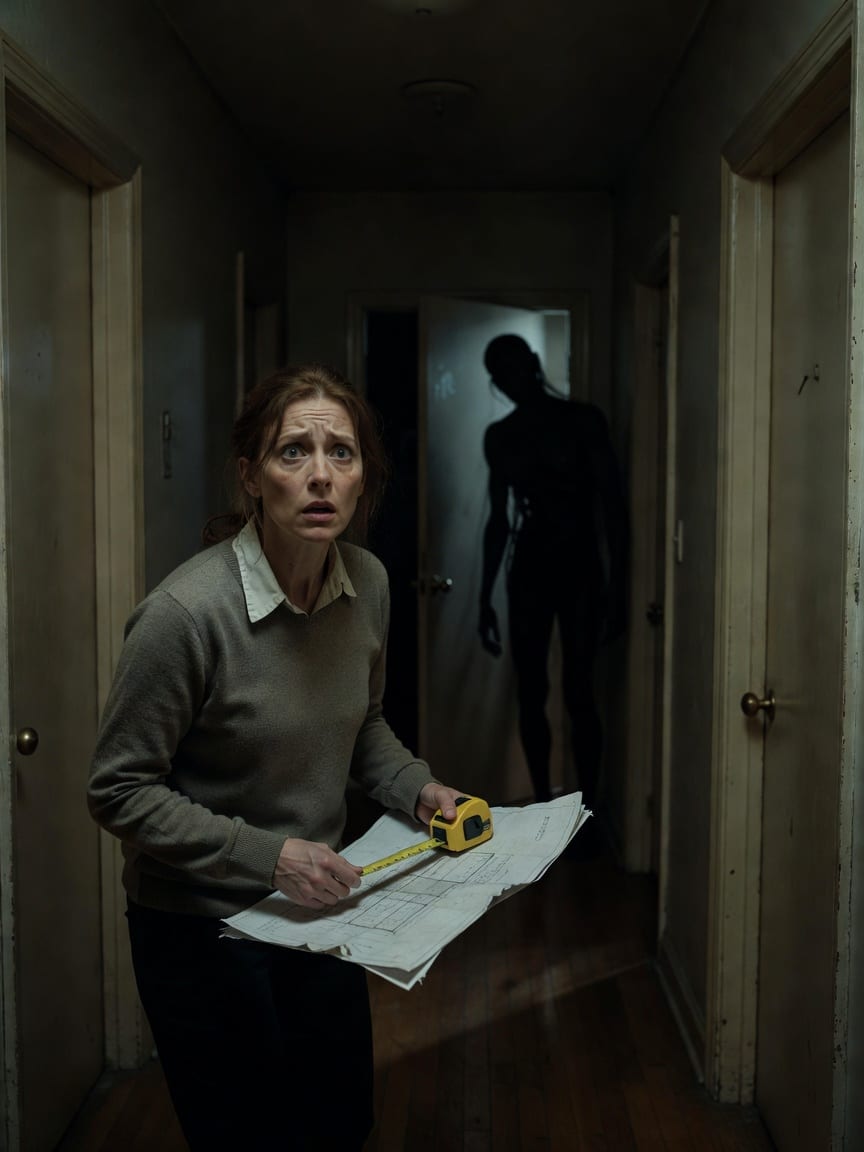
Behind a plastered-over doorway, I found a room. Papered, carpeted, and furnished with a made bed, sealed for decades. The air was dead still, but the bed wasn't dusty. My council tax bill only lists five rooms.
I'm Claire, an architect, meticulously planning my new Victorian terrace renovation. But when I uncovered a hidden room behind a wall, everything I knew about time and decay shattered. The bed was perfectly made, the air still, yet there was no dust, only an unnerving cold.
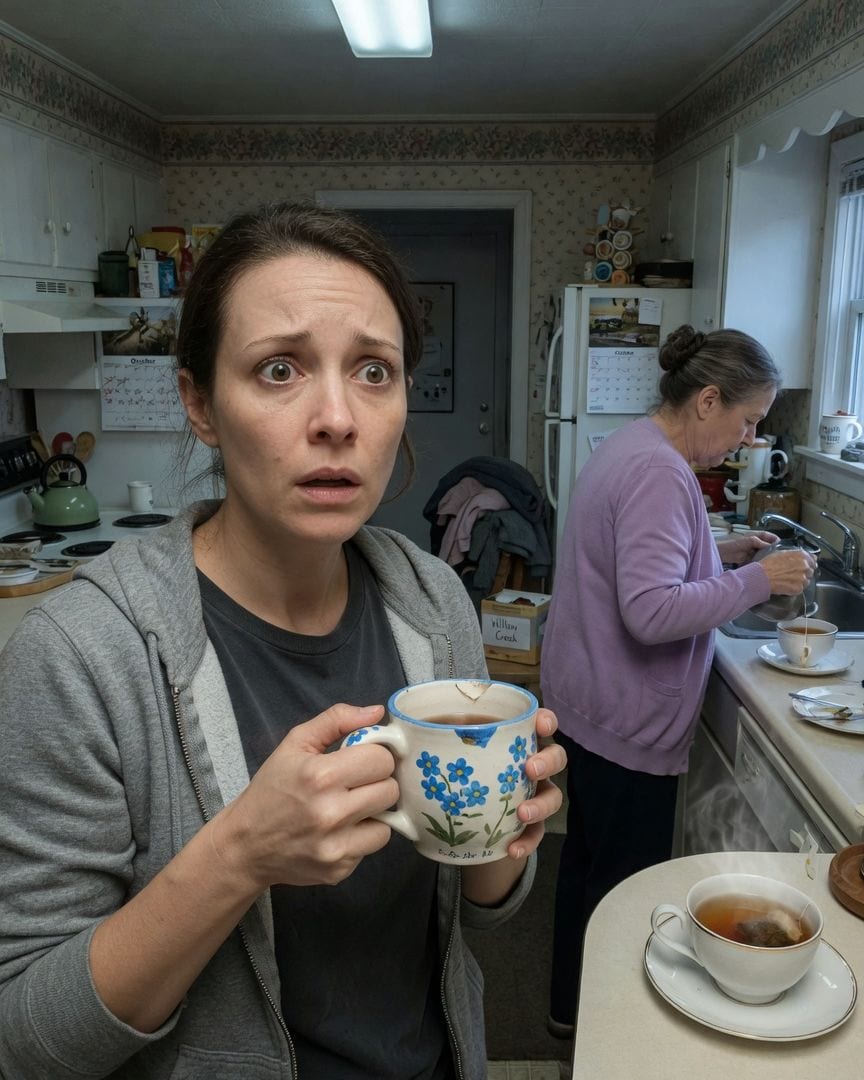
My mother came back remembering my secret childhood runaway night. She slept through it.
My mother returned from Willow Creek, after five days unaccounted for. She seemed herself, until she casually mentioned her lifelong preference for Earl Grey tea. But Mom, Judith Kingsley, had only ever consumed black coffee for sixty-eight years, calling tea 'dishwater drink.'
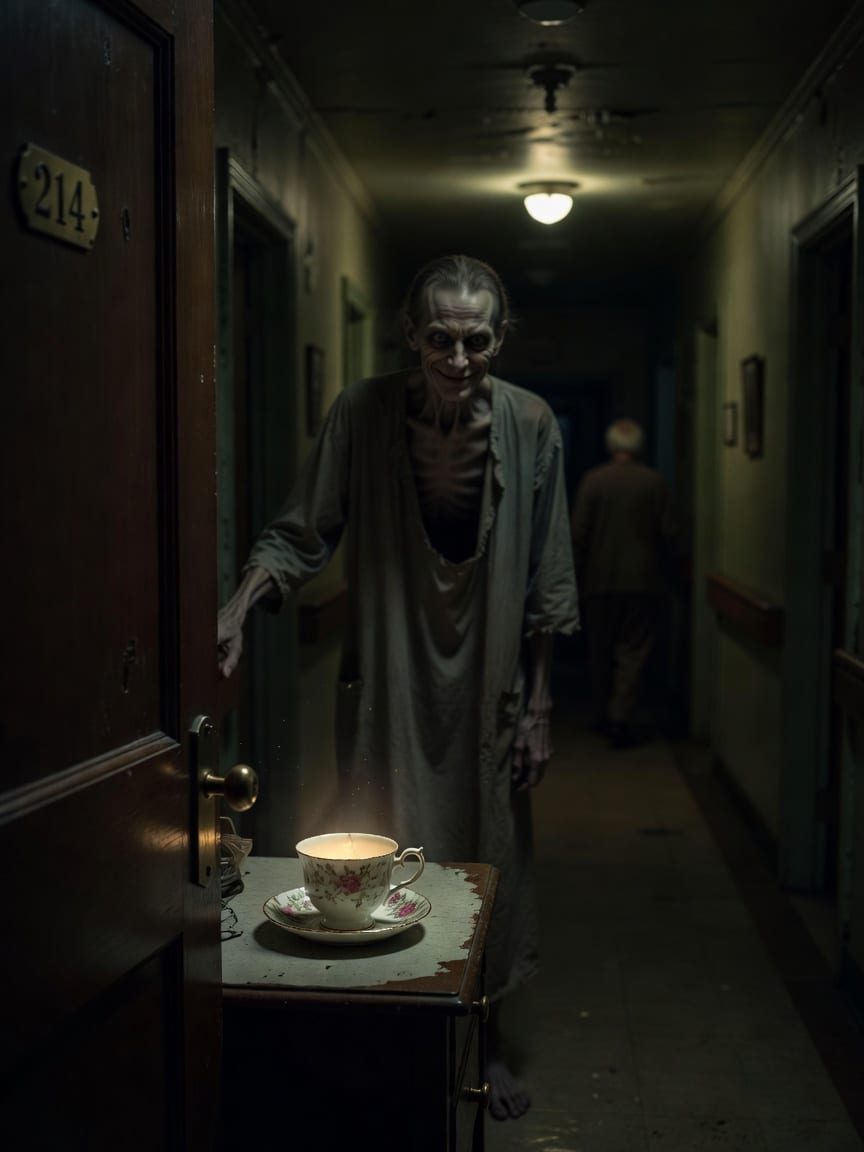
Every 3:30 AM, old Mr. Pryce shuffles past my hospice desk. He smells of lavender, asks for tea. My day nurse says he discharged four months ago. His room has been empty since.
As a night desk attendant, I'm used to the quiet routine of the hospice, especially Mr. Pryce's nightly cold tea request. But then the day nurse told me Mr. Pryce was discharged four months ago, and Room 214 has been empty since. Now, his floral teacup sits on the bedside table, still faintly warm.