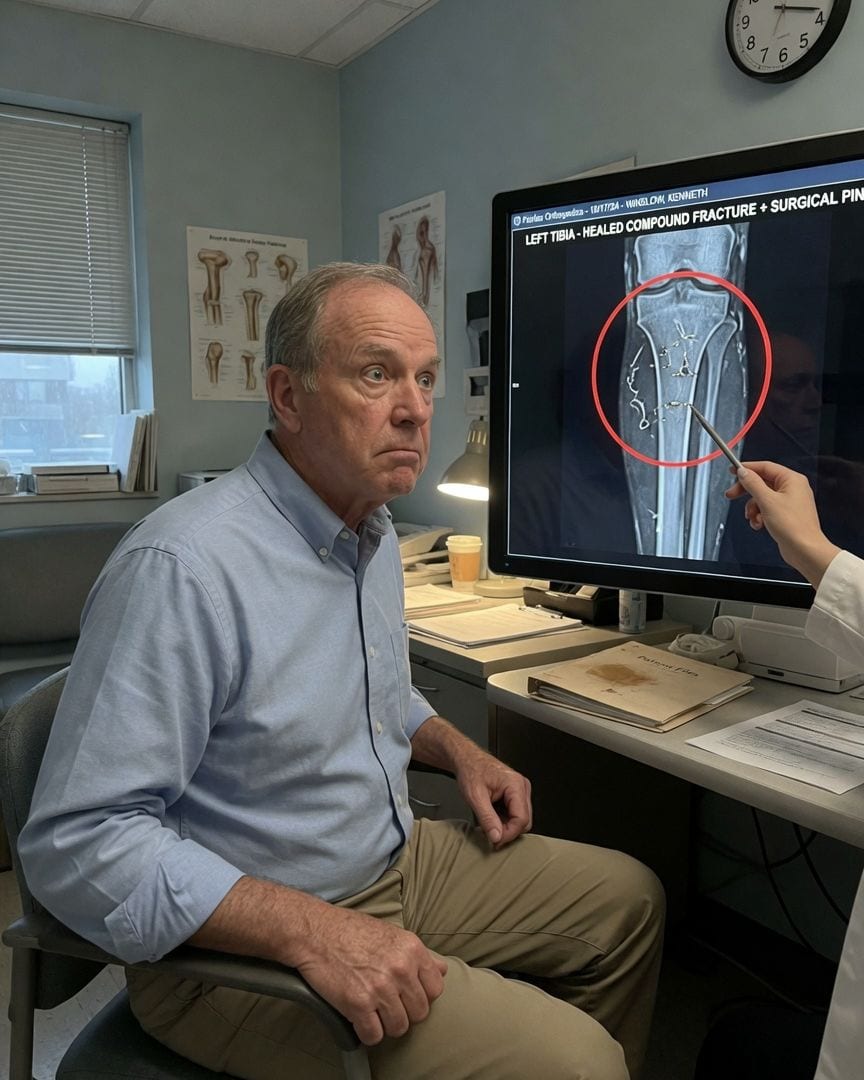
My MRI shows a severe, decades-old fracture in my left tibia with surgical pins. I have no memory of it.
My gym got a new palm scanner last week. A big, sleek, chrome-and-black unit installed right next to the turnstile.
I've been a member for fifteen years, always just punched in my number, but Scott, the manager, insisted everyone re-register with the new biometric system. "Faster, more secure, Mr. Winslow," he’d chirped, wiping down the screen with a practiced swipe.
I put my right hand on the scanner, palm flat against the cool glass. The internal light flared green, then pulsed. A soft mechanical whir, a hum. Then a flat, insistent beep.
Red text flashed on the screen: "Match Not Found. Existing Profile Detected. Re-scan or Confirm." I frowned. "Must be a glitch," I muttered to Scott, who was already leaning over the counter.
"Let's try again, Mr. Winslow," he said, adjusting the angle of my hand. This time, the scanner clicked, a tiny motor whirred with more purpose. The green light intensified. A moment of silence. Then the beep again, louder, more definitive.
The screen changed. My palm’s vein pattern was highlighted in a ghostly blue, superimposed over a skeletal outline, but below it, an existing profile had locked into place. The name was big, bold, impossible: 'MULLER, GIDEON.'
Below that, in smaller, chilling print: 'D.O.D. 2004.' And next to it, a faded, grainy photograph of a man I’d never seen before. Younger. Darker hair. Not me.
Scott’s cheerful expression faltered. He stared at the screen, then at my hand, then back at the screen. He scanned my hand a third time, then a fourth.
Each time, the process was the same: the whirring, the green light, then that same insistent beep and the dead man’s profile, locked and highlighted in red, reappeared. Gideon Muller. Died 2004. His picture.
My palm print, on the screen, matching his account. I felt a cold knot tighten in my stomach. It wasn’t a glitch. It wasn’t a mix-up.
The machine, this cold, unfeeling piece of plastic and metal, was insisting that my own living hand belonged to a ghost.
I tried to rationalize it away. Maybe the database was old, corrupted. Maybe a technician had made a mistake twenty years ago.
I called the gym’s corporate office, finally getting through to a bewildered IT technician who assured me it was an impossible system error. "Our biometrics are cutting edge, sir.
No way a live scan could perfectly match a deceased member's dormant profile." He suggested I try a different branch, but the conversation left me colder than before.
I spent the next few days in a haze of compulsive checking. I pulled out my passport, my driver's license, my social security card. Kenneth Winslow. Age 60. Born July 14, 1964. My photo, my details.
Everything consistent, everything exactly as it had always been. There was no Gideon Muller anywhere in my official life. No trace, no phantom. My medical records, meticulously archived, contained nothing about a name change or an unknown past.
It was all Kenneth Winslow. My identity was solid, undeniable.
The gym manager, Scott, eventually offered me a manual membership, a laminated card with a barcode, treating me like a peculiar edge case. "Just use this, Mr. Winslow. We'll sort out the scanner eventually." But the incident gnawed at me.
The image of that dead man’s face, linked to my own palm, had lodged itself deep. It was like a shard of ice in my mind.
I decided, on a whim, to schedule a full physical. A comprehensive MRI, head to toe. Something I hadn’t done in years, certainly not since before that palm scanner.
"Just a routine check-up," I told myself, staring at my reflection in the mirror, searching for any subtle alteration, any hint of another man. "To settle my nerves after that odd gym business."
I needed to prove, to myself, that my body was unequivocally mine. That it didn’t hold a secret I was oblivious to.
Days later, I sat across from Dr. Bridget Fairfax in her office. The room was bright, sterile, with the hushed hum of medical equipment from the hallway.
Dr. Fairfax, a woman in her early fifties with a calm, professional demeanor, clicked through my MRI images on a large monitor. My spine, my organs, my joints—all displayed in intricate detail.
"Everything looks remarkably good for your age, Mr. Winslow," she began, a small smile playing on her lips. "Bloodwork's perfect. Cholesterol's down. You’re doing something right." She navigated to a detailed scan of my left leg. "Except for this."
Her finger tapped the screen, drawing a red circle around a section of my tibia. She zoomed in. A perfectly healed, complex fracture was visible, a jagged line through the bone, with faint, almost ghostly embedded surgical pins.
"A very old injury," she explained, her voice steady. "It would have been quite severe. Given the pin placement, likely a compound fracture requiring intervention." She paused, then looked up at me.
"Are you quite sure you don't recall an accident like this? Perhaps a childhood fall? It's perfectly healed, but substantial."
I stared at the image on the screen, then down at my own left leg. Unblemished. No scar. No memory of pain, no recovery, no cast. Nothing.
I tried to conjure a memory of a bad fall, a hospital visit, anything. Blank. My leg felt normal. Dr. Fairfax turned the screen fully to me, her expression professional but expectant.
The cold dread from the gym returned, sharper now. "This injury is decades old," she stated, her gaze holding mine, "and it's certainly yours. Are you quite sure you don't recall an accident?"
The MRI findings plunged me into a deeper unease, far beyond the initial, unsettling oddity of the gym scanner. I sought a second opinion, visiting a specialist in orthopedic injuries.
Dr. Miller, a wiry man with bright, skeptical eyes, confirmed Dr. Fairfax’s assessment. He even marveled at the clean, decades-old healing. "Remarkable," he mused, tapping the screen with a pen. "The bone integrity is excellent.
You must have been very young, or had an excellent surgeon. This kind of trauma… it reshapes your life, Mr. Winslow."
I insisted I’d never had a broken bone, not a major one, not in my life. I searched my own memory, straining, trying to pull at any loose thread. But there was nothing. No scar, no ghost ache, no story.
My next step was to pull my full medical history, back to childhood. This proved frustrating. The records from my earliest years were spotty, with a full year, 1965, completely missing.
Then, a "transfer of files" from a regional hospital I’d never heard of, to my current family doctor. The transfer dated to 1966. It was vague, generic, no specific details about treatments or injuries. Just a administrative note.
Another dead end.
My search for Gideon Muller yielded scant information. I found a brief obituary from a local newspaper, dated 2004. He was 45. A local community figure, known for his volunteer work.
A few archived news articles mentioned him in passing, usually related to charity events. Nothing substantial, nothing that explained how his palm print could be mine.
But one article, from a much older local paper, published in the late 1990s, mentioned Gideon Muller as a "dedicated researcher" at a large, obscure research institution, a think-tank of sorts, focused on "biological and cognitive sciences."
The detail felt like a cold, thin thread in my hand, something to pull on.
That same article had a blurry, old newspaper photograph of Gideon. It was him, younger, in a suit, shaking hands with a local politician. As I stared at the grainy image, something small, almost imperceptible, caught my eye.
On his left wrist, just visible beneath his rolled-up sleeve, was a small, distinctive scar. Irregular, faint, but there.
My quiet digging didn't go unnoticed. I started to feel a shift in the air around me.
One evening, after leaving the local library where I’d been sifting through dusty microfiche archives, I found a plain, unmarked envelope tucked under my windshield wiper. My heart gave a jolt.
Inside was a single, typed sentence: "Some pasts are best left buried, Mr. Winslow." No sender. No other message. Just that. I crumpled it in my hand, the paper feeling oddly heavy.
A few days later, while researching the obscure institution Gideon Muller worked for, scrolling through digitized annual reports, I noticed a man. He was in a dark suit, sitting in a parked sedan across the street from my house.
He wasn't doing anything, just sitting there, staring. I saw him when I brought in the mail. I saw him an hour later when I looked out my window again. He hadn't moved.
A prickle of genuine fear, cold and sharp, crawled up my spine.
I grabbed my phone, fumbled with the camera, and snapped a photo of the car. It was a dark, nondescript sedan, tinted windows. When I looked up again, the car was gone. The street was empty.
The anonymous warning and the silent watcher solidified my dread: someone knew what I was looking for, and they didn't want me to find it.
I found myself constantly checking my rearview mirror as I drove, my home feeling less like a sanctuary and more like a stage where I was being watched.
The cold thread led me to Pamela Ford, a retired records clerk who, according to a vague online forum, had worked at the institution Gideon Muller was associated with for decades.
I found her living in a quiet retirement community, a neat little bungalow surrounded by rose bushes. She was a frail woman, perhaps seventy-five, with sharp, bird-like eyes that seemed to take in everything.
She was initially evasive. Her eyes darted nervously when I mentioned Gideon Muller and the missing medical records, the "Project Chimera" detail I’d found buried in an old institutional newsletter.
"That was a long time ago," she said, her voice thin, almost reedy, as if trying not to disturb the silence. "I don't recall much from back then."
I pulled out the copies of my MRI images, showing her the detailed scans of my unremembered fracture. "Mrs. Ford," I pressed gently, my own voice tight with suppressed urgency, "this body has a history it can’t explain.
A history that isn't mine. I need to know why."
Pamela sighed, a deep, weary sound that seemed to pull something from her. She looked around the small living room, a quick, almost paranoid glance, as if fearing eavesdroppers. Her voice dropped to a hush. "There were… protocols.
Certain files were flagged. Re-aligned, you understand." Her gaze lingered on the MRI image of my tibia, then flickered to my face. "Gideon Muller… he was part of something bigger. A… a project. 'Project Chimera,' they called it.
Very hush-hush, even then."
She nodded slowly, as if confirming something to herself. "Yes. Gideon had a severe tibial fracture around 2000. Bad one. Heard he never fully recovered from that one. Limped for a while. Then… well, then he 'died' in 2004."
She looked at my leg again, then back at my face, a dawning, unsettling recognition in her eyes. The pleasant, frail grandmother veneer peeled away, revealing something deeper, colder. "You… you shouldn't be here," she whispered, her voice barely audible.
"You shouldn't exist like this."
Pamela Ford’s words echoed in my mind, a chilling pronouncement: "You shouldn't exist like this."
I drove home in a daze, the old, grainy photograph of Gideon Muller on the passenger seat, the one where I’d noticed the small wrist scar. The setting sun cast long, accusing shadows across the road.
I pulled into my driveway, but didn't go inside. Couldn't. Instead, I parked, engine idling, the air conditioning hissing softly. My breath hitched in my throat. Slowly, carefully, I pulled up the sleeve of my own shirt.
My left arm, exposed to the fading light. My hand, steady on the steering wheel, trembled slightly as I picked up the photograph.
I compared the blurred image of Gideon's wrist to my own. The scar on Gideon’s wrist was a faint, jagged line, barely visible against his skin in the low-quality print. My heart hammered against my ribs.
I brought my other hand up, my finger trembling as it traced the exact same spot on my own left wrist. A small, irregular scar.
I’d always dismissed it as a forgotten childhood scrape, one of countless minor injuries from countless minor tumbles. It was so small, so innocuous, I’d never given it a second thought.
But there it was. Precisely identical. In shape, in placement, in its subtle raised texture. A small, unremarkable mark that suddenly felt like a brand.
His body, the one I’d lived in for sixty years, was undeniably marked with Gideon Muller’s history.
I stared at the two wrists, one in the photo, one my own, and the implication settled like a lead weight in my gut: Gideon’s body is my body. Or at least, it always has been.
Driven by the chilling discovery of the shared scar, that undeniable physical link, I returned to Pamela Ford. She answered the door looking even more frail, her eyes wide with a new kind of fear when she saw me.
"You came back," she whispered, as if I were a ghost. I pressed her for the complete truth, showing her the side-by-side comparison of the scars, the MRI, the records she’d acknowledged.
Terrified, but seeing my undeniable evidence, seeing that I wouldn’t leave, she finally directed me to a forgotten microfiche archive in the institution's old, disused basement. "It’s all in the sub-level five," she rasped, her voice barely a breath.
"Beneath the old ventilation shaft. Look for Unit 7. The code is 'CHIMERA.'"
The basement was a labyrinth of dust and forgotten machinery. The air hung thick and cold. I found Unit 7 behind a rusted service door, its faint yellow light illuminating rows of ancient, labeled microfiche drawers.
My hands shook as I scrolled through, dust motes dancing in the beam of my phone. Finally, a heavily redacted folder. The label was faded, almost illegible, but I could make out the words: 'PROJECT CHIMERA.'
Inside, the files were clinical, detached, horrifying. A detailed report dated 2004. It spoke of the 'repurposing' of Gideon Muller’s body following his 'clinical death.'
It outlined a procedure for 'identity integration' into a viable biological host, designed to preserve certain cognitive patterns and memories from a 'donor subject.' The language was cold, technical.
It explicitly stated the healed tibial fracture was a pre-existing condition of the host, Gideon Muller, sustained in 2000.
Then, the final, devastating paragraph, short and matter-of-fact: "Successful transfer of Subject K.W. into Host G.M. completed. Identity integration effective as of 10/17/2004. Subject K.W. will maintain full cognitive and physical functionality, with no memory of the transfer process."
Every piece of the puzzle clicked into place, forming a horrifying, coherent picture of my own existence. The gym scanner, the hidden fracture, the shared scar, Pamela’s warnings. It wasn’t a mistake. It was a design. I was the outcome.
Armed with the 'Project Chimera' files, a weight of paper and glass that felt heavier than anything I’d ever carried, I confronted Howard Drummond.
He was a senior figure at the institution, listed as a project lead on the old documents. Now in his seventies, he looked remarkably well-preserved, sitting behind a polished desk in a sterile, impersonal office, completely unbothered.
"Ah, Mr. Winslow," Drummond said, his voice smooth, a faint, almost pitying smile on his face. He didn't seem surprised to see me, nor did he look at the folder I held like a weapon.
"I'd wondered when you'd put it all together."
He confirmed everything with chilling calm. His composure was a deeper horror than any threat. "Gideon Muller was a suitable candidate. His physical form was robust, despite certain… imperfections.
His neurological patterns were stable, his 'death' timely and convenient for our purposes." He paused, looking at me as if I were a particularly interesting specimen.
"Your consciousness, Mr. Winslow, was deemed compatible for integration after a tragic incident in your own past. A serious accident. Your former body, regrettable. A successful experiment, by all measures. You have thrived."
I demanded to know what happened to my original body, my original life. The Kenneth Winslow who existed before 2004. Drummond simply shrugged, a gesture of casual dismissal. "The purpose of Chimera was integration, not duplication.
You are the outcome, Mr. Winslow. You were always meant to be in this form. There is no escape, because there is no 'outside' for you. This is your truth."
The words hung in the air, heavy and final. My own breath felt shallow, distant. I felt a profound, terrifying shift within myself, a sense of my own identity dissolving into a manufactured construct.
I was not a person who found a truth; I was the truth itself, an artifact of a procedure. A shell containing a borrowed consciousness.
My life continues. I return to my gym, scanning my palm, watching the machine process 'Kenneth Winslow' with unsettling ease. The screen glows green now, recognizing me, as if I've finally settled into the skin I didn’t know was alien.
I go to work, interact with friends, eat dinner alone. Outwardly, nothing has changed. The world keeps turning, oblivious.
But inside, everything is irrevocably altered. I look at my hands, my reflection, my own unblemished leg, and see not myself, but a vessel, a borrowed form.
The world feels alien, my memories like borrowed dreams, subtly warped by the history of Gideon Muller’s body. The dread isn't about what's coming, but what has already happened, what he already is.
I am the answer, the successful integration, the body that doesn't fit the man inside, because the man inside was always meant to fit the body.
I often sit in front of the mirror now, tracing the faint scar on my wrist, the one I know is Gideon's.
I try to remember my own past, truly my own, but the memories blur, overlaying with phantom sensations of a life that wasn't mine, but now undeniably is.
I am a walking contradiction, a living, breathing testament to a secret program. I continue to breathe, to eat, to sleep, but the self I knew is gone, replaced by a terrible, undeniable coherence. My existence is the proof.
I know the truth now, and it lives inside me. My story ends here.
A neighbor, passing Kenneth Winslow's open door, calls out a casual greeting. Kenneth turns from his quiet contemplation of his reflection, a faint, almost imperceptible smile playing on his lips. 'Is that so?'
he replies, and the voice, while familiar, holds a resonance that is subtly, chillingly wrong.
If this one got to you
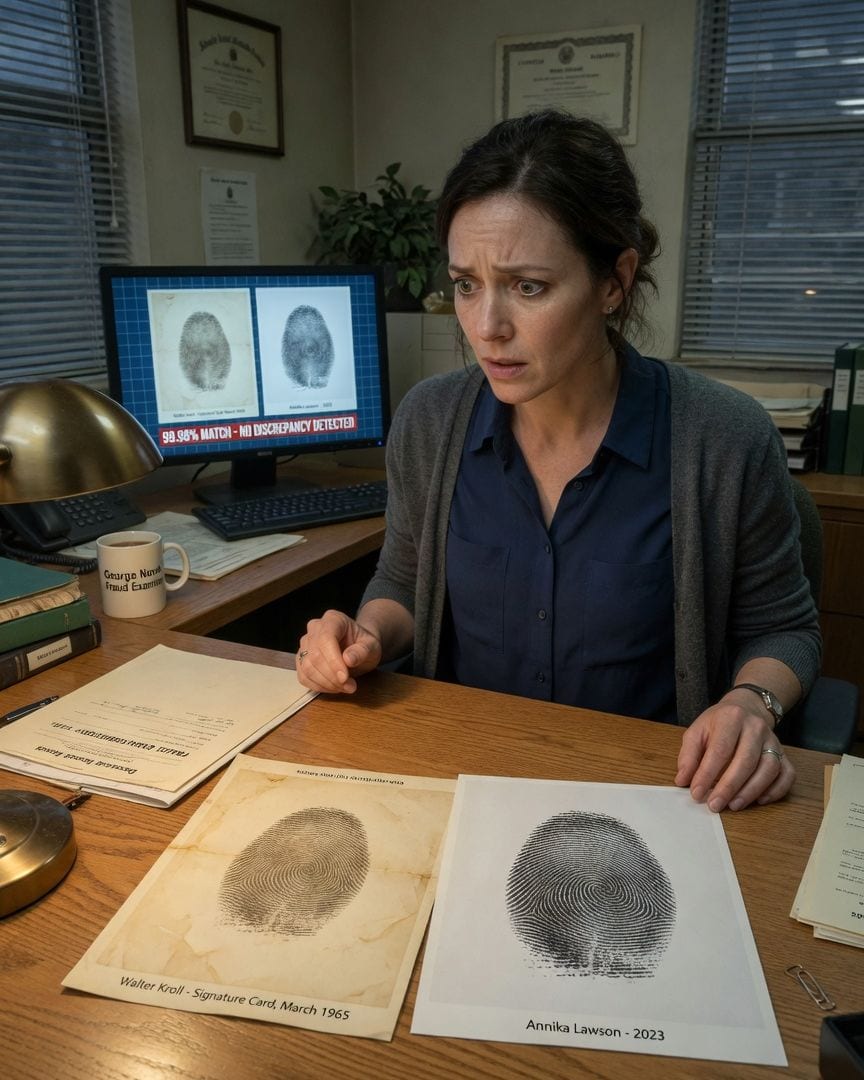
My X-rays show a perfectly healed fracture from 1968. I've never broken a bone in my life.
An ordinary bank deposit turned chilling when my account was locked. My unique thumbprint, the very mark of my identity, inexplicably matched that of a man named Walter Kroll, who died in 1970. The bank's robust system confirmed the impossible: my fingerprint, identical to a man dead for decades.
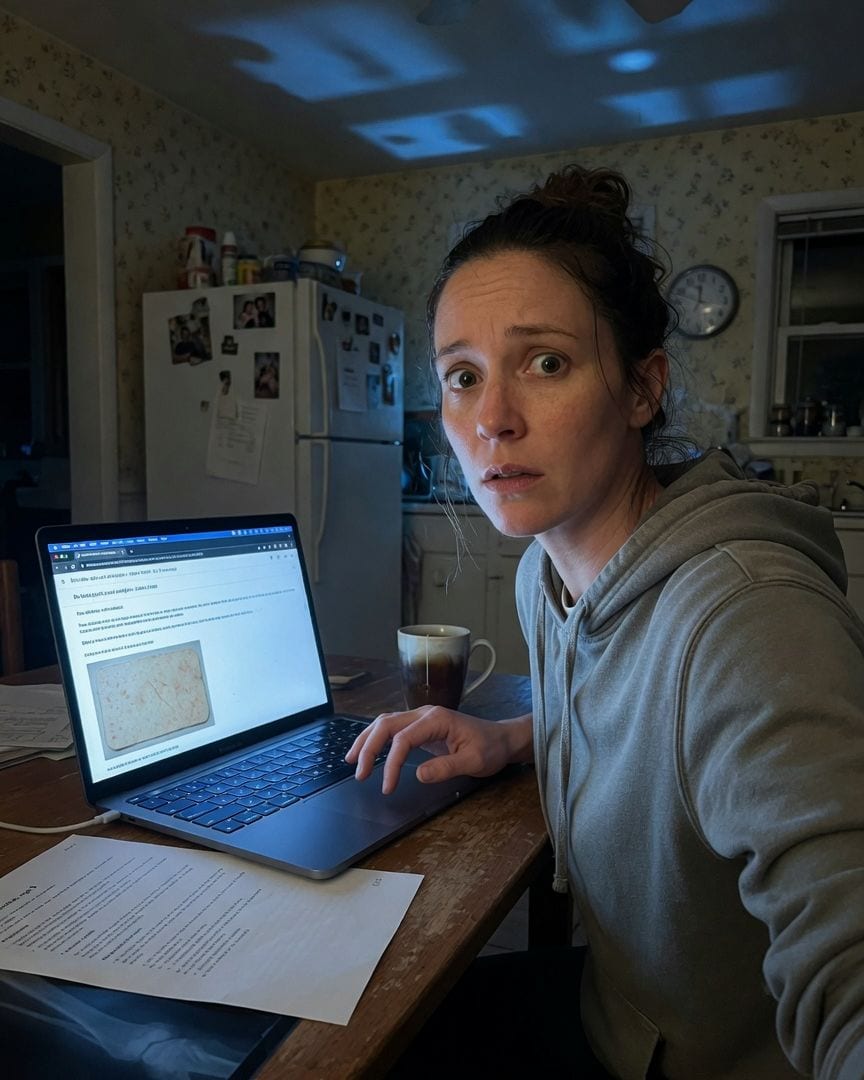
The blood on my own newborn heel-prick card — the one my mother saved in a drawer for thirty years — doesn't match the DNA in my mouth today. The lab ran it three times: two different people.
I sent my newborn heel-prick card to a genealogy lab, expecting to confirm my family tree. Instead, the lab tech called with an impossible truth: the blood from my infancy did not match my adult DNA. My own record insisted I wasn't quite myself.
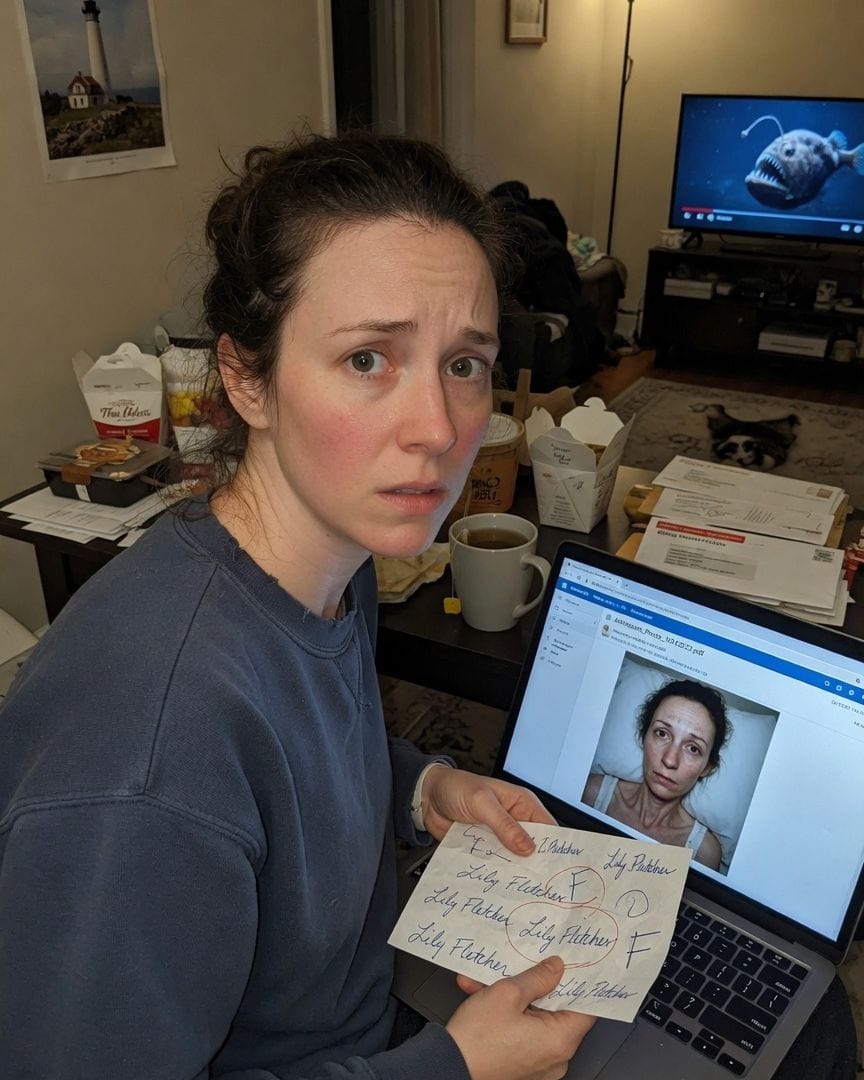
A hospital is billing me for a two-night stay in Cleveland — with my insurance, my wristband scans, and a discharge form in my own signature. I spent that whole week home alone, and I've never been admitted anywhere.
A bill arrived from Cleveland General Hospital for a two-night stay under my name, Lily Fletcher. I'd spent those dates at home, but the hospital had my accurate details and even a discharge summary. The chilling part? It was signed with my unmistakable signature, a mark I know I never made.
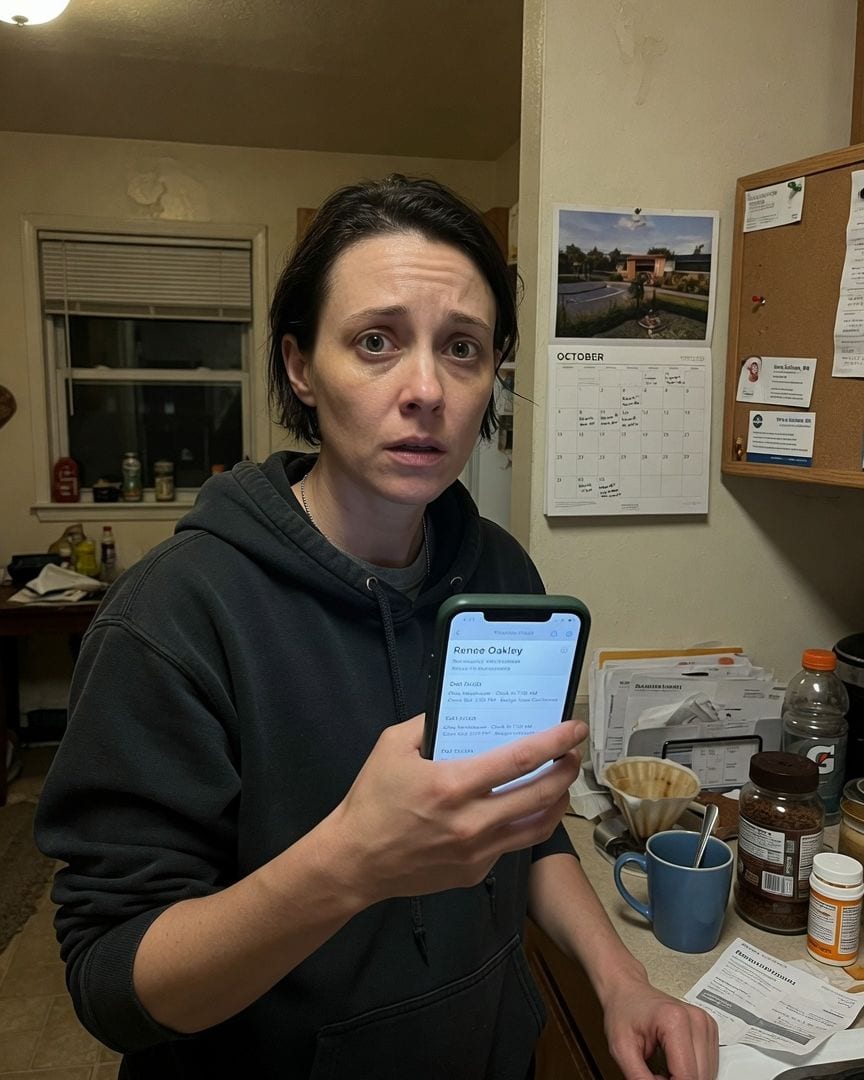
My company clock-in system says I worked full shifts in Ohio all last week. I was on medical leave in Florida, under a nurse's care.
Back home from medical leave, my payroll deposit was unexpectedly high. I checked my timesheet, only to find it logged me working full 40-hour shifts at the Ohio warehouse. But I was hundreds of miles away in Florida, confined to a sickbed under a nurse's care. Then my manager called: security footage confirmed I entered the warehouse.
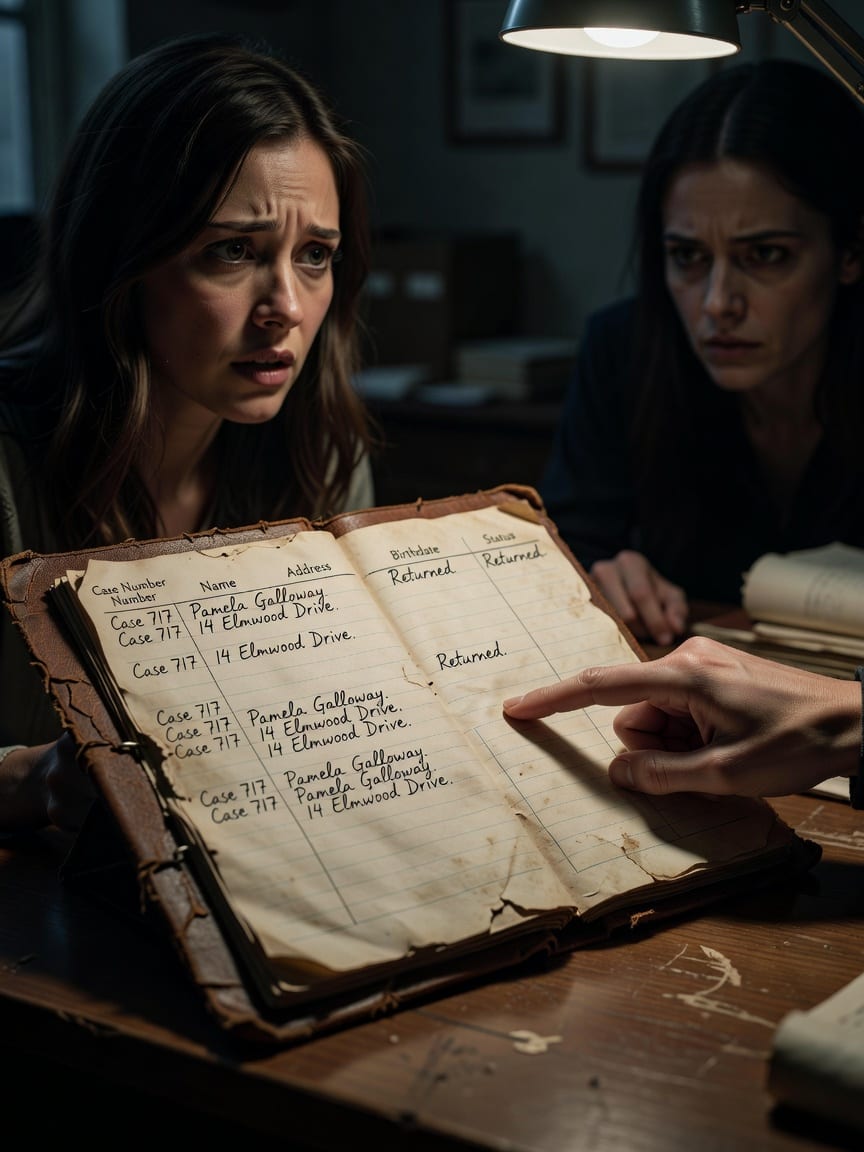
My hospital file has a blacked-out line from 1988. It names my street address, decades before I lived here. Then: 'returned'.
I finally got my medical file, hoping to clear up a ridiculous bill. Inside, I found an entry from 1988: my current home address, scrawled on a partial intake form and marked 'returned.' I was six then, living fifty miles away.
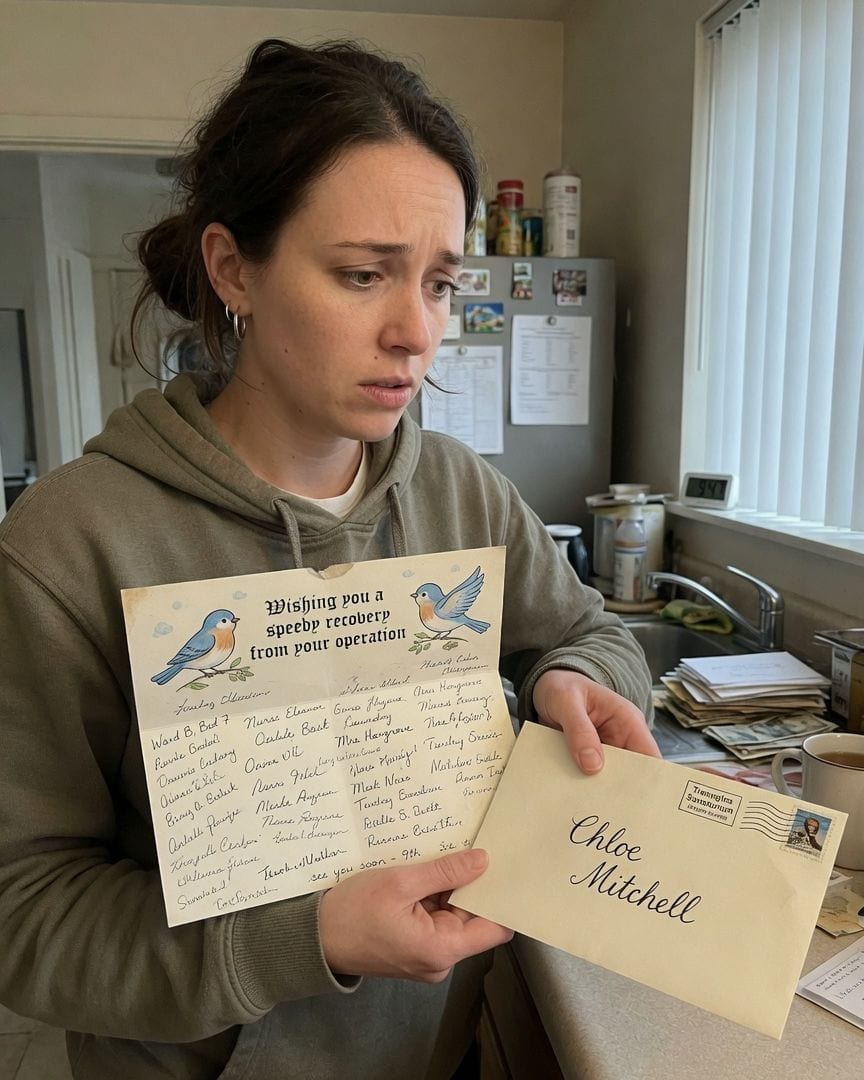
A get-well card wished me a speedy recovery from an operation I never had. It was postmarked from a sanatorium that burned down in 1963.
My quiet Tuesday morning was interrupted by an elegant get-well card, addressed to me. It wished me a speedy recovery from an operation I'd never had. But the postmark read 'Treneglos Sanatorium,' a hospital that vanished in a fire back in 1963.