My name is on a marriage certificate in Ohio, signed by my own hand, but I was 2,000 miles away that day.
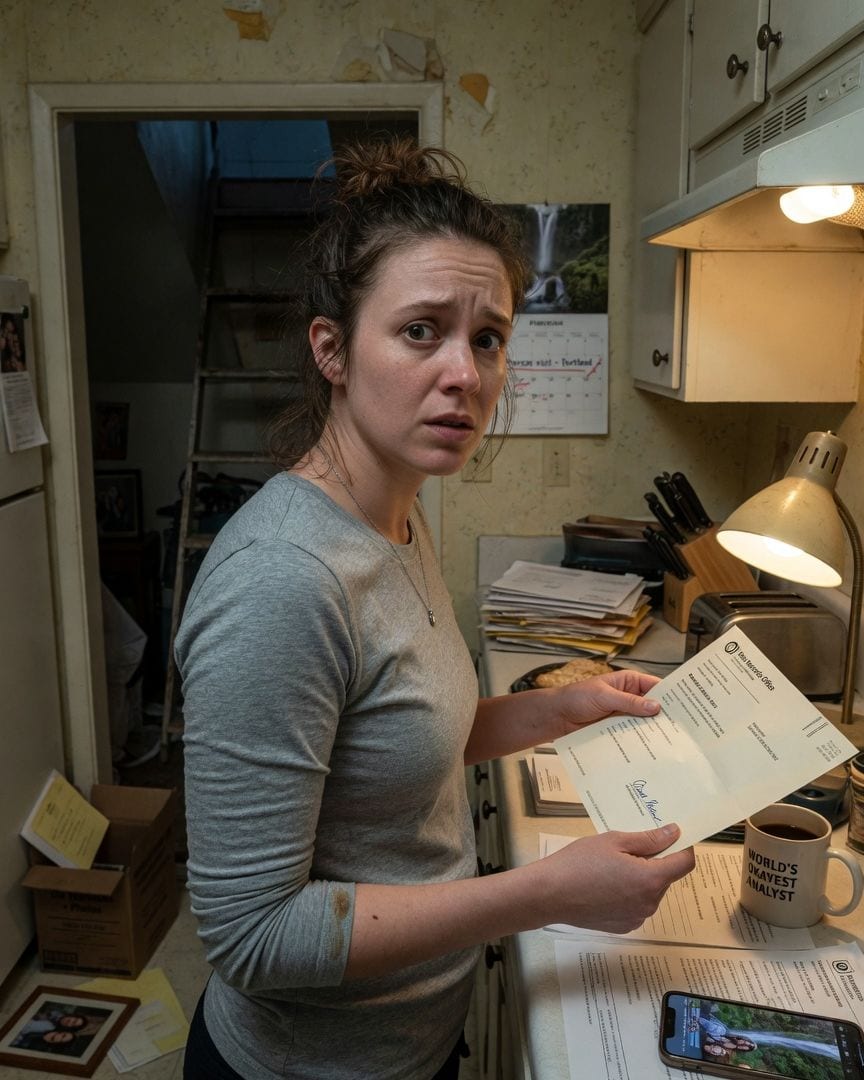
The official envelope from the Ohio Records Office felt too heavy, too formal for junk mail, its crisp edges almost sharp.
I, Abigail Caldwell, 32, a systems analyst who prided herself on the meticulous order of my life, ripped it open at my kitchen counter, the scent of fresh coffee filling the air.
Inside, a confirmation of a name change I never requested, addressed to me. My heart froze on the next line: a marriage register entry for me, married in Cincinnati on June 8th, two years ago.
My signature, looping and distinctive, was undeniably under the groom's line. A witness, Trevor Whitmore, signed beside it.
I stared at the date, the place. June 8th, two years ago. I was at my older sister Frances's place in Portland, Oregon that entire weekend, unmarried, and still am. We’d gone hiking on Multnomah Falls, I remembered that clearly.
I even had photos on my phone, timestamped and geotagged. The bride’s name, Janet Rutherford, was one I had never heard in my life.
The ink felt cold on my fingers, the paper unnervingly real, insisting on a truth that was physically impossible.
It was my handwriting, my name, staring back at me from a life I hadn't lived, a knot forming in my stomach that refused to loosen.
The mundane world had just insisted on a lie, and I, rational to my core, couldn't unsee it.
I spent the next two days trying to debunk it. It had to be a clerical error, a mix-up, some automated system glitch.
I called the Ohio office, got transferred repeatedly, each new voice an echo of bureaucratic indifference, and finally spoke to a calm, unbothered clerk named Bernard Muller, 63. 'Ohio Records,' he droned, his voice dry as old parchment.
'Yes, I received a document, a marriage certificate…' I started, my voice tight. 'There's been a mistake. It says I was married in Cincinnati two years ago. My name, my signature, but I wasn't even in the state.'
He didn't sound surprised. 'Name, ma'am?' 'Abigail Caldwell.' 'Ah, yes. Caldwell. Or should I say, Mercer?' His tone was unsettlingly neutral, almost as if he already knew. 'It's Caldwell,' I insisted, trying to keep my voice steady.
'And I'm not married.' Bernard hummed. 'The record here says otherwise, Ms. Caldwell. Or Mercer. June 8th. Oscar Mercer and Janet Rutherford. You as the groom.' 'The groom?' I almost laughed, a hysterical bubble in my throat. 'I'm a woman!'
'My apologies. The groom's line is simply where your name is registered, following the... ah... traditional format.' He sounded entirely unphased.
I provided flight manifests, credit card statements from Oregon, photos from my trip, even a screenshot of Frances’s Instagram post with me in it, dated that exact weekend. Bernard listened patiently, a quiet rustle of papers on his end.
Then he simply stated, 'The record stands. Fully authenticated, Ms. Caldwell.' The line went dead.
Frustrated, seething, I started digging through old boxes in my attic, searching for anything that might link me, however remotely, to Cincinnati or a 'Janet Rutherford.' Old journals, university papers, photographs, forgotten birthday cards. Nothing.
Just as I was about to give up, convinced it was some elaborate, bizarre prank, tucked beneath a stack of old school yearbooks, I found a small, wooden photo frame. It felt heavy in my hand, the glass cool.
Inside, a faded photograph: a younger version of myself, maybe mid-twenties, smiling, standing next to a man I didn't recognize. He was pleasant-looking, dark hair, an easy smile. I turned it over, hoping for a clue.
On the back, in faint, elegant script, was a name: 'Oscar Mercer.' And a date: 'September 10th, five years ago – Cincinnati Autumn Fest.' Oscar Mercer. The groom on the certificate. My stomach dropped.
I stared at my own smiling face, a stranger's arm loosely around my waist, in a city I'd never set foot in, years before the impossible marriage. The ordinary explanation, a simple clerical error, died a quiet death.
The photograph slipped from my numb fingers, landing face-down on the dusty attic floorboards. My own face, smiling, in Cincinnati, five years ago. I bent down, retrieving it, my gaze fixed on the date, the impossible city.
As I turned the frame over to replace the photo, something small and brittle fluttered from behind the picture. It was a folded piece of paper, aged and yellowed, clearly an old letter. My heart hammered as I unfolded it.
Addressed to 'Abigail Mercer.' Signed 'Oscar.' A mundane note about groceries and picking up dry cleaning.
Could you grab milk and those detergent pods? I’ll be late from the office. Love, Oscar. But the familiar, looping handwriting on the envelope, the distinct slant of the 'A' and the flourish of the 'g' in 'Abigail,' was unmistakably hers. Mine.
The date on the letter was just a few weeks after the impossible June 8th wedding.
The letter was a physical punch. My hands trembled as I clutched it. This wasn't just a record anymore; it was a conversation, a domestic detail, written in my own hand from a life I swore I didn't live.
It was proof, undeniable and personal, that somewhere, somehow, I existed in Cincinnati, tied to a man named Oscar. I had to know more.
I drove to the nearest public library, my mind racing, the suburban streets a blur outside my window. I needed to know who Oscar Mercer was, who Janet Rutherford was, and how I was entangled with them.
I immersed myself in old Cincinnati directories and online archives. I found an 'Oscar Mercer' listed at an address in a quiet Cincinnati neighborhood.
Further digging revealed a 'Janet Rutherford' at a different address, confirming the bride's name from the certificate. Janet, the bride in my impossible marriage. My stomach churned. These were real people, or at least, real names attached to real places.
I called Bernard Muller again, this time demanding to know if there were any other records for 'Abigail Mercer.' He sighed, a practiced, weary sound. 'We have many records, Ms. Caldwell. Or Mercer.' He suggested she come in person.
'Some things,' he said, his voice flat, 'are best seen for yourself.' The next morning, I booked a flight to Cincinnati. I needed to see this other life, touch it, prove it was a fraud.
Or understand what impossible truth it held.
I landed in Cincinnati under a flat, grey sky that matched my mood. The air was thick and humid, different from the dry heat of home. I found the address listed for Oscar Mercer.
It was a neat, two-story house with a well-tended garden, hydrangeas blooming vibrant blue. A woman was watering flowers in the front yard, her back to me. She wore a simple sundress, her hair tied back in a messy bun.
As the woman turned, reaching for a wilting bloom, I gasped, stumbling backward, catching myself on a parked car. The woman looked exactly like me. The same hair, the same build, the same profile.
Only the eyes were subtly, chillingly different – a hardness, a knowing glint I had never seen in my own reflection. She didn't react immediately, just paused, her hand still holding the watering can.
Then, slowly, she smiled faintly, a private, knowing smile, and turned back to her flowers, as if she knew I was watching, as if she was expecting me.
I fled, my breath catching in my throat, the air suddenly too thin, my heart a frantic drum against my ribs.
I spent the next day in Cincinnati in a state of hyper-vigilance, convinced the woman – my double – had seen me. Every shadow seemed to hold a gaze.
Every face in the street felt like a mirror, or a threat. I changed hotels, unplugged my phone, and tried to process what I'd seen. The unease was now a tangible threat, a knot of ice in my gut.
I decided to confront Bernard Muller directly. He was the only one who seemed to know anything, however unwilling he was to share.
At the records office, the waiting room was empty, the air still and cold, like a tomb. Bernard sat behind his desk, calm as ever, shuffling papers, the mundane sound amplified in the silence.
He didn't look up when I walked in, just continued to sort. 'You've seen her, haven't you?' he asked, his voice low, not looking up from his stack of forms. My blood ran cold. 'How did you know?'
Bernard finally met my gaze, his eyes unreadable, devoid of surprise or curiosity. 'They always come here eventually. Everyone wants to see the other side.' He pushed a yellowed newspaper clipping across the desk.
It was an obituary for Oscar Mercer, dated three months ago, killed in a car accident. The photo was the man from my attic picture. 'He was a good man,' Bernard murmured. 'The other one, I mean.'
I felt a wave of nausea. He spoke of Oscar as if there were two, just like there were two Abigails. Before I could demand an explanation, Bernard’s phone buzzed.
He glanced at the screen, then at me, a flicker of something she couldn't quite decipher in his eyes – concern? Warning? 'You've been asking too many questions, Ms. Caldwell. Some things are better left undisturbed.'
He stood up, towering over me, his shadow falling across the desk. 'A friend of yours, Trevor Whitmore, called. He wanted me to remind you of the consequences of digging too deep.'
I felt a cold wave of dread. Trevor Whitmore, the witness on the marriage certificate, my childhood friend who'd vanished years ago. He was involved. This wasn't just some random clerical error or a bizarre doppelganger; it was organized, connected.
'What consequences?' I demanded, my voice shaking, trying to project more confidence than I felt. The air in the office seemed to grow heavier, pressing down on me.
Bernard sat back down, a faint, almost imperceptible smile playing on his lips, as if he found my distress quaint. 'Just that some records are… sensitive. And some lives are… arranged.'
He pulled out a thick file from a drawer beneath his desk, its cover simply marked 'Caldwell, A.' and slid it across the desk. It was almost mocking in its simplicity.
'You see, Ms. Caldwell, you have a very complete life. And so does she.'
Inside were copies of the marriage certificate, the letter from 'Oscar,' and dozens of other documents. A lease agreement for an apartment in Cincinnati, dated two years prior to the marriage.
Utility bills in 'Abigail Mercer's' name, going back five years, showing water, electricity, gas, all paid. Bank statements showing regular deposits and withdrawals, a consistent income, a normal financial life.
A Cincinnati driver's license application, complete with a photograph of the 'other' Abigail – the woman I'd seen yesterday – but signed 'Abigail Caldwell' in my own undeniable handwriting.
The dates on these documents stretched from years before the marriage right up to the present month. Each one was meticulously filed, stamped, and authenticated. The paperwork alone was staggering, a testament to an unbearable diligence.
It was more than just a life; it was an institution. 'This isn't just a mistake, is it?' I whispered, my voice barely audible, the words catching in my throat.
The room seemed to contract around me, the walls pressing in. Bernard shook his head slowly, his gaze steady. 'No mistake. A parallel life, carefully constructed. For reasons above my pay grade.'
He gestured to another form, a passport application from years ago, identical to the one I was about to see. 'Even your old friend, Trevor, he has a file too. He was one of the first.
A success story, they called him.' The full weight of it crashed down on me. The photograph, the letter, the woman watering flowers – it all clicked into a terrifying, impossible mosaic.
Every impossible detail, every contradiction, was a meticulously documented piece of an entirely separate existence. My own life, the one I remembered, was just one side of a coin.
The other side was living, breathing, and now, apparently, still active in Cincinnati. It was a complete, coherent, horrifying fiction.
I stared at the stack of documents, the sheer volume of this fabricated life, an entire ghost existing in plain sight. 'Who is 'they'?' I asked, my voice hollow, the question barely a whisper.
Bernard closed the file, his expression hardening, his eyes losing their unbothered neutrality, replaced by something close to fear. 'That's not for me to say. But you should know, this isn't unique to you. Or to Oscar. There are others.
Many others.' He leaned forward, his voice dropping to a low, conspiratorial whisper, almost lost in the sudden hum of the overhead lights. 'The 'other' Abigail, the one you saw… she’s not the only duplicate.
They've been doing this for decades. And sometimes, when the original starts digging, or the duplicate falters, things get… messy.' He pulled a small, worn photograph from his wallet, a picture of a young man smiling brightly. 'My son, Lars.
He was a 'duplicate,' too. They needed him for something. He vanished ten years ago. Then, a few months later, I got a letter. His death certificate.
Signed by a doctor I'd never heard of, in a town he never lived in. And the signature was unmistakably his own.' Bernard pushed an old passport application form across the desk. It was for 'Abigail Caldwell,' dated years ago.
But the photograph attached was clearly not me. It was a woman who looked strikingly similar, almost identical, but with a subtle, unnerving difference in her eyes, a kind of flat emptiness.
The form was signed 'Abigail Caldwell' in what looked like my own hand, and the application had been processed and approved.
He then slid the Cincinnati driver's license from the file across the table towards me, its laminated surface cold against my fingers. 'This one… it’s current. It’s real. And it was just renewed last week. By her.'
Bernard's words hung in the air, chilling me to the bone. My own signature, my own face on that passport application, renewed just last week for a woman who wasn't me, living a life I hadn't touched.
The 'other' Abigail was not just a historical anomaly; she was a present, active entity, her existence maintained and verified by these very records.
'My son's death certificate,' Bernard continued, his voice flat, his gaze distant, as if reliving a nightmare. 'It placed him in a car accident in a remote part of West Virginia.
But I knew he was in Europe, working on a contract. The pattern was the same. A new identity, a new life, then a manufactured end when they were no longer needed. Or when they got too close to something.'
He explained that the organization, which he only knew as 'The Registry,' created these duplicates for specific, unknown assignments – sometimes for intelligence, sometimes for corporate espionage, sometimes just to fill a void in a system.
They used existing, unassuming individuals as templates, meticulous in their forgery, ensuring every record, every interaction, was seamless.
Trevor Whitmore, my old friend who had vanished years ago, was one of their early successes, an 'operative' who had facilitated many such 'introductions' and 'witnessings,' including Abigail's own marriage certificate.
'He was a lonely kid,' Bernard said, a hint of pity in his voice. 'Easy to groom. He believes he's doing good work, protecting the 'assets'.' The deeper truth detonated: I was a template, my life copied, my identity weaponized.
The woman I saw was not just a double, but a living, breathing person, an active agent, created from my own blueprint.
The dread was in the coherence: every impossible record, every forgotten photo, every strange encounter, now made terrifying, logical sense. My own life, the one I cherished, was merely the blueprint for another, darker existence.
I clutched the Cincinnati driver's license, its plastic edge digging into my palm. This artifact, this impossible card, was the proof. It vibrated with a silent, cold energy, humming with the life that wasn't mine.
Bernard, seeing my resolve, my terror hardening into determination, pushed a small, discreet package across the desk. It was wrapped in plain brown paper, tied with twine. 'This is for you. From Trevor. He said it might help you understand.'
Inside was a small, worn school yearbook from our high school, its pages soft with age. I flipped through it, recognizing faces, the faded photographs of forgotten classmates, until I found Trevor's entry.
Beneath his photo, a handwritten note in faded ink, barely legible: 'Remember our pact, Abby? To always find the truth, no matter what.' It was a message, a plea, a ghost reaching out from the past.
I looked up at Bernard. 'What do I do?' My voice was steady now, infused with a strange calm. He simply pointed to the driver's license. 'You have a choice. Live your life, or confront hers.
But be warned, they don't like loose ends. They never do.' I knew I couldn't just walk away. I had to see it through, had to understand the full scope of this other life, this theft of myself.
I took the driver's license, its laminated surface cool and smooth, and walked out of the records office, the heavy door closing behind me with a solid, echoing thud. I knew the address on the license.
It was an apartment building, not far from Oscar's old house.
I took a deep breath, the metallic taste of fear in my mouth, and headed towards it. The building was unremarkable, red brick, three stories.
I found the apartment number listed on the license, 2B, my hand hovering over the doorbell. I could hear movement inside, a faint hum of music, a classical melody I almost recognized.
Taking a final, shaky breath, I pressed the button. The door opened slowly, revealing a sliver of dark hallway. Standing there was the woman from the garden, my exact double.
She held a half-eaten apple, its white flesh browning slightly, her eyes, those subtly wrong eyes, fixed on me. A faint, knowing smile played on her lips, a cold echo of my own.
'I've been expecting you, Abigail,' she said, her voice a chilling echo of mine. 'Welcome home, sister.' She stepped aside, a silent invitation into the apartment, into the life that was and wasn't mine.
The ordinary explanation for everything had died for good. This was real. And it was waiting.
I stepped inside the Cincinnati apartment. The 'other' Abigail closed the door behind her, the soft click echoing in the sudden silence.
The apartment was furnished simply, but with a surprising number of personal touches – books I remembered reading, a specific brand of tea I favored, a framed photo of Oscar Mercer on a small table.
It was a life built not just on records, but on my own preferences and memories, subtly twisted. The confrontation was not violent, but a chilling exchange of truths.
The 'other' Abigail explained her purpose: a deep-cover operative, her life a carefully constructed illusion, activated when needed. She was a weapon, forged from my own identity.
Trevor Whitmore had been tasked with observing me, gathering the intimate details that made the duplicate so convincing. He had left the yearbook as a warning, a desperate attempt to reconnect, but it was too late for him.
The Registry was everywhere, its reach unfathomable. I spent hours in that apartment, piecing together the horrifying mosaic of my stolen life. I finally understood. There was no escape. Only a choice.
I returned to my own apartment, my life feeling impossibly fragile. I kept the Cincinnati driver's license, a tangible piece of the impossible truth, tucked away in a locked drawer.
I never spoke of what I found, not to Frances, not to anyone. The world continued, oblivious to the parallel lives woven into its fabric.
Sometimes, I would catch my reflection in a shop window, a fleeting moment of self-doubt, wondering which Abigail was truly looking back.
The fear was no longer a frantic panic, but a quiet, constant hum beneath the surface of my ordinary days. I knew the truth, and that knowledge was a permanent brand.
I knew the Registry was still out there, its duplicates still active, still living the lives that weren't theirs.
Sometimes, on quiet evenings, I thought I heard a faint, familiar hum from the empty apartment across the hall, a tune I hadn't heard in years. It was the song Oscar Mercer used to hum.
I never looked to see if the lights were on. I just turned my own lights off, a little faster than before. The world was full of echoes.
Abigail Caldwell's apartment remained meticulously ordered. Her sister Frances called weekly, always asking if she'd finally found a partner. Abigail would laugh, a light, airy sound that didn't quite reach her eyes.
One evening, Frances asked, 'Did you ever find out about that Ohio marriage record?' Abigail paused, a faint, almost imperceptible smile playing on her lips. 'Oh, that,' she said, her voice calm and even.
'It was just a clerical error, you know. All sorted out.'
If this one got to you
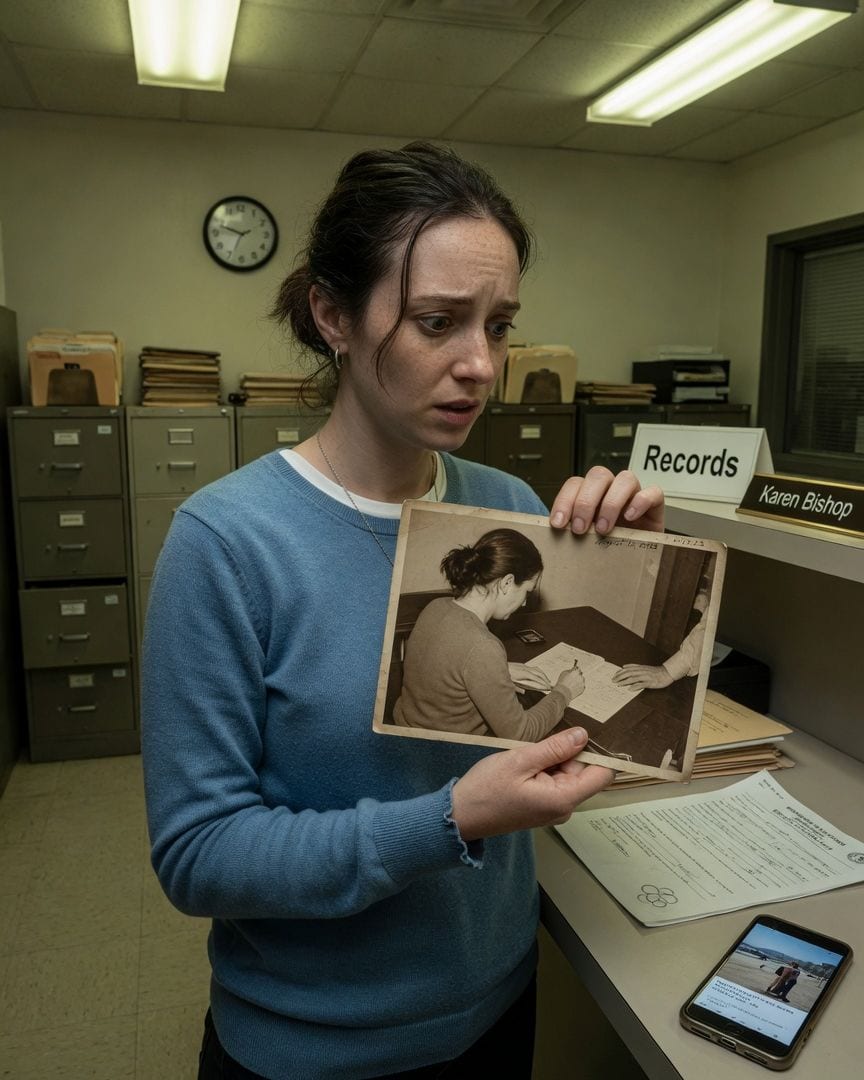
My own name is on a marriage license, signed by me, in a courthouse three states away. It says I married a man I've never met, two years ago, when I was living abroad.
I applied for a new passport, expecting a routine process, but was met with a shocking denial. The reason: a marriage license to a man I’d never heard of, dated two years ago in a town I’d never visited. What truly chilled me was seeing my own face in a courthouse photograph, signing that impossible document.
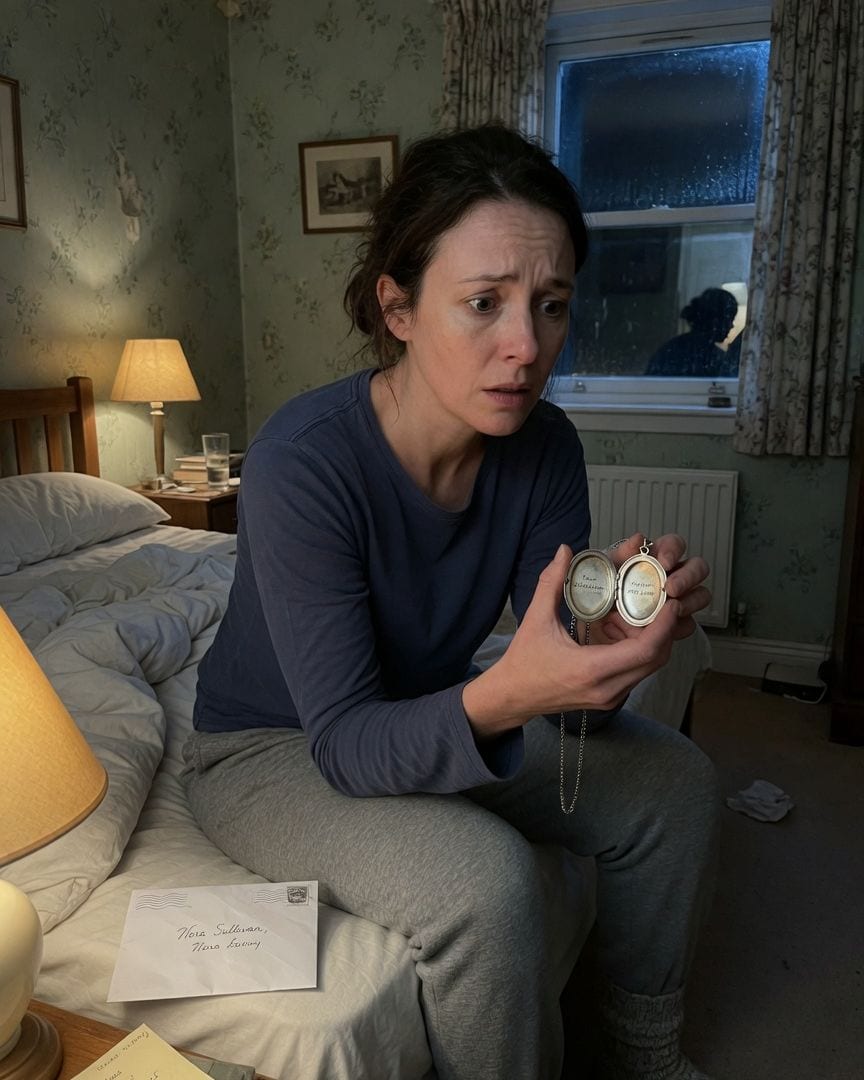
My antique locket held my maiden name, engraved with 'until the ninth.' The dealer said the woman who owned it left a note: 'for her, when she comes.'
My husband Scott, always finding unusual things, gave me an antique silver locket. Inside, engraved beneath my maiden name, Nora Sullivan, were three chilling words: 'until the ninth.' It felt like a direct, personal address, even though I hadn't used that name in years.
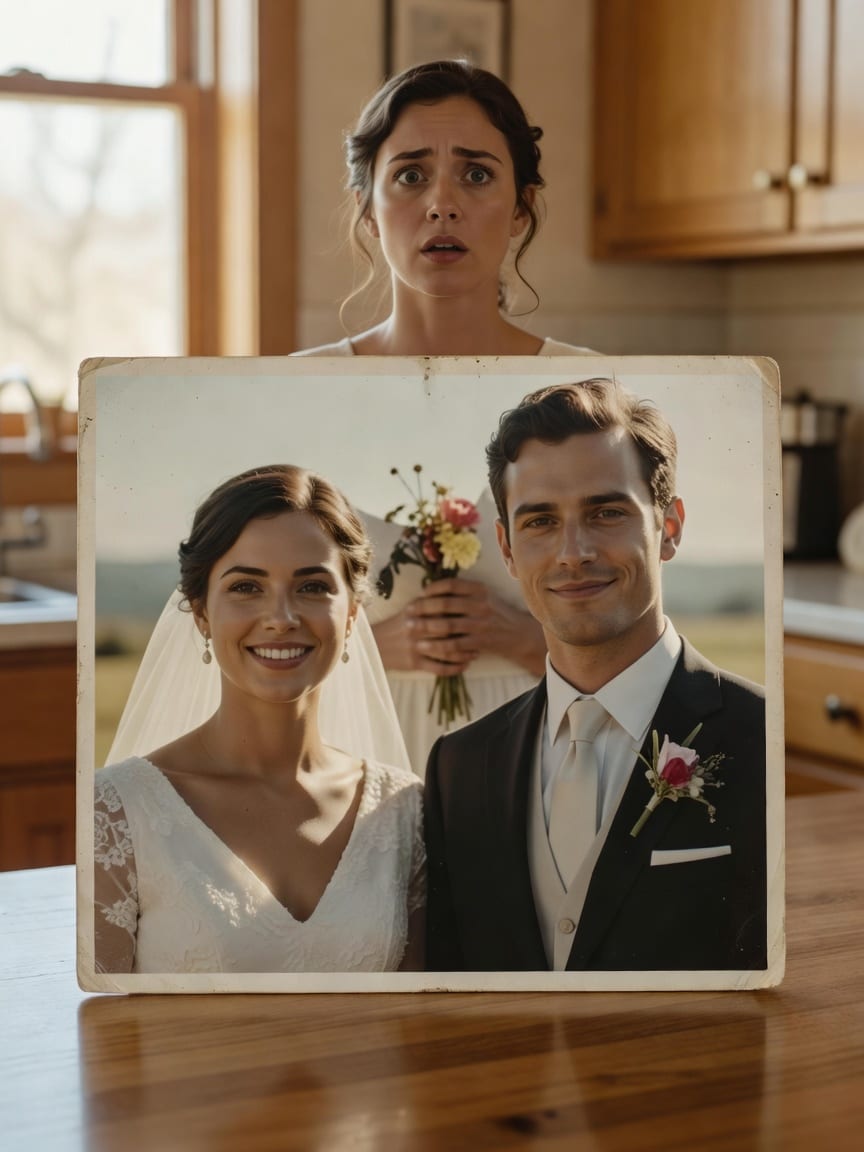
My best friend thanked me for standing up at his wedding. He isn't married. He described my speech, the ring, the bride's face — none of it real, but he remembered every detail.
My friend Julian Doyle vanished for two years, then reappeared acting like no time had passed. He talked about his wedding, where I supposedly gave a speech, describing every detail vividly. But Julian isn't married, and I have no memory of ever attending such an event.
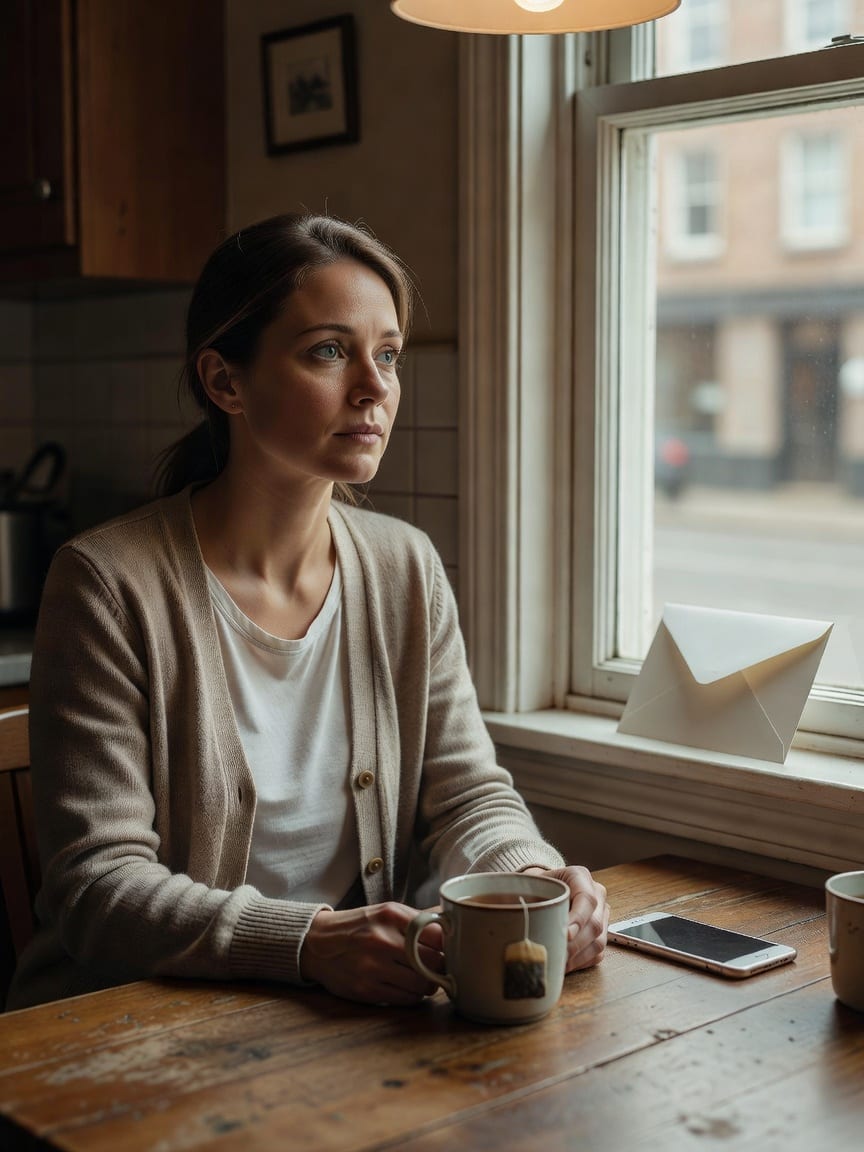
My taxi driver knew my name before I spoke, then apologized for the flight I was going to miss. I was arriving. The cab's plate was scrapped four years ago.
After a strange taxi ride, I received an unsettling birthday card addressed to me. Its return address listed 'Old Mill Road Field,' an empty lot where a mill once stood, and it was postmarked locally. The card arrived four months before my actual birthday, sparking a cold dread I couldn't ignore.
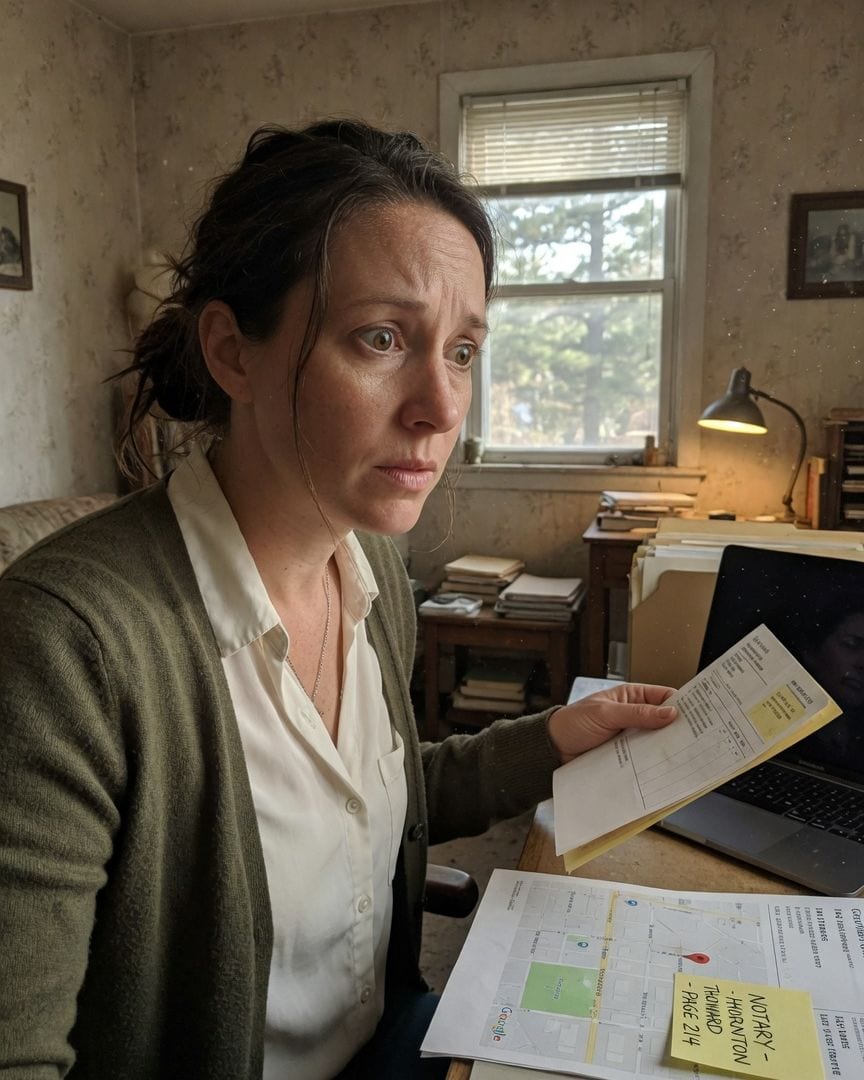
My signature is in a notary's book for an accident I wasn't in. I've never even met the man.
My name is Janet Caldwell, and my life is perfectly ordinary. Or so I thought, until a notary's register revealed my distinct signature on a document. It was dated May 14th, 2014, a day I was confined to a hospital bed, miles away.
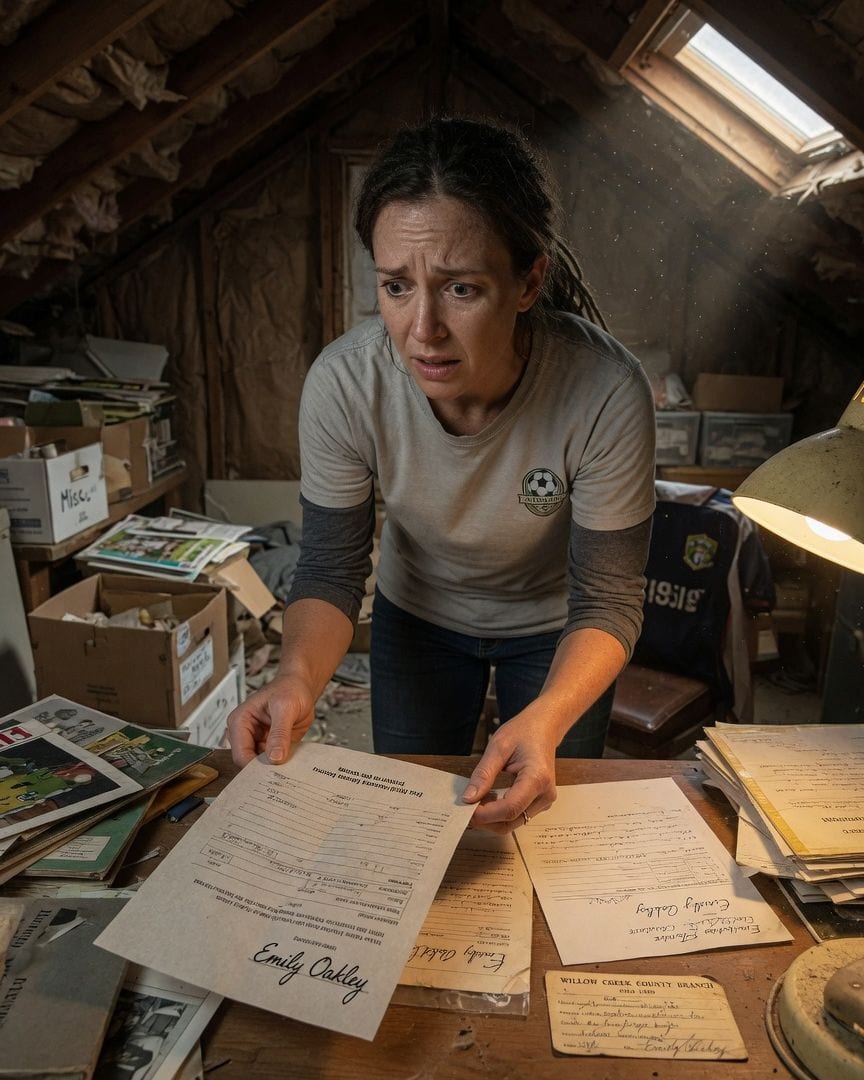
My adult signature is on a library card from 1968, but I only developed that style in the last decade.
I was confused when the school insisted they had my signed permission slip for Russell's trip. It was dated yesterday and bore my maiden name, Emily Oakley, but the flowing signature was undeniably my current style. That particular signature, however, I had only developed a decade after changing my name to Porter.