My neighbor returned my casserole dish, thanking me for his mother's funeral. His mother is alive. The dish is mine, and I never gave it to him.
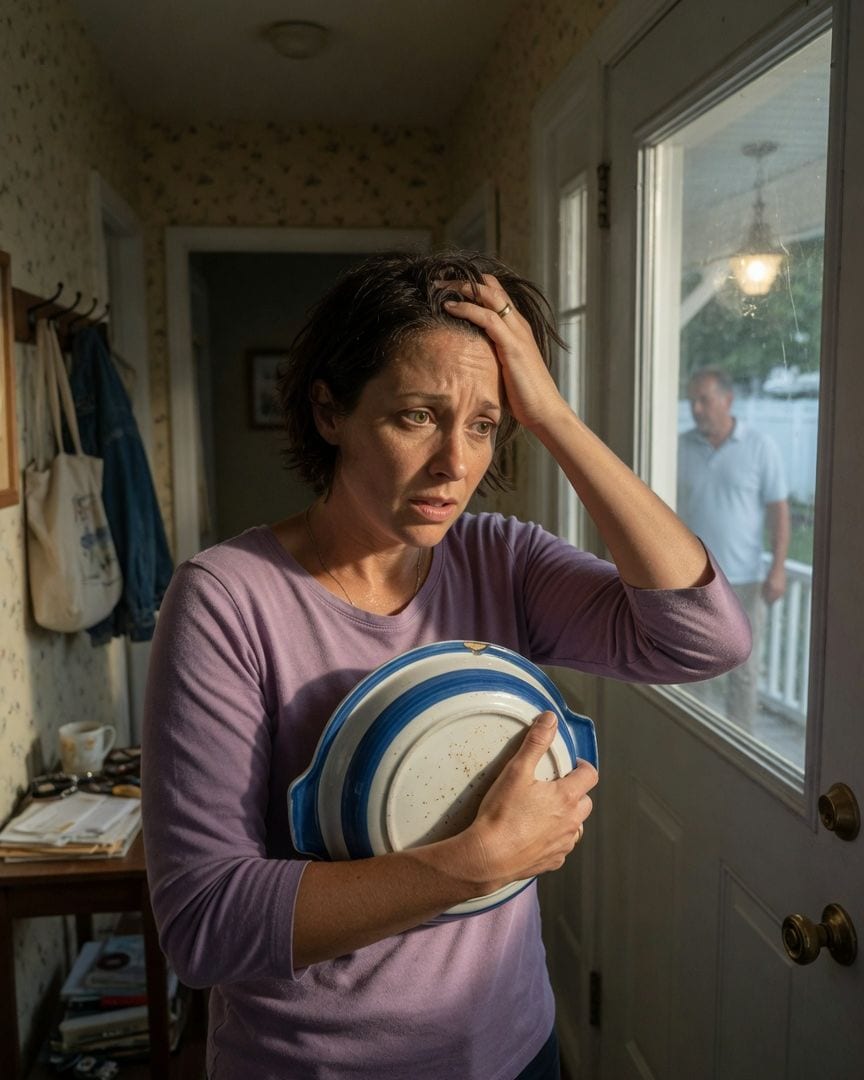
Ronald Sullivan, the man who vanished in a boating accident a year ago, knocked on my door yesterday morning.
My heart leaped with a sudden, overwhelming relief when I saw him, then sank with a chill that had nothing to do with the cool September air.
He stood there, tanned and healthy, looking exactly as he had before, except for one thing: he was holding my grandmother's blue-rimmed ceramic casserole dish. It's a distinctive piece, a family heirloom, unmistakable.
"Claire," he said, his voice warm, a little huskier than I remembered, but otherwise Ronald's. "I just wanted to thank you for this. And for coming to my mother's funeral."
My breath hitched. My mind went blank, then raced, trying to find an explanation, any explanation. Sharon, his mother, was very much alive.
I had seen her just this morning, out in her garden, waving to me with her usual vigorous cheer. And the dish? It was mine, sitting in my cupboard where it always sat.
I had never lent it to him, certainly not for a funeral that never happened, for a mother who was vibrant and well.
He just stood there on my porch, holding the dish, waiting for me to take it. His smile was perfectly normal, yet utterly, profoundly wrong. It didn't reach his eyes, which seemed a little too still, a little too assessing.
I could feel the cold ceramic through the thin fabric of his shirt as he extended it towards me. The morning sun, usually so comforting, suddenly felt harsh, illuminating the wrongness of the scene with brutal clarity.
I mumbled something about being glad he was back, a choked, insincere sound, and reached out to take the dish. My fingers brushed his. His skin felt cool, almost clammy, despite his tan.
I pulled the dish away, a strange weight settling in my stomach, and closed the door slowly, my mind reeling.
I tried to rationalize it – a traumatic experience at sea, confusion, a simple mistake after being gone for so long.
Maybe he'd mixed me up with someone else, or maybe he thought I had attended a different funeral and had simply picked up the wrong dish.
The mundane explanations piled up, each one flimsy, crumbling under the weight of the facts.
Later that day, unable to shake the unease, I called Sharon. "Hey," I began, trying to sound casual, "just checking in. Everything alright?" We chatted for a few minutes about her hydrangeas, then I steered the conversation.
"Ronald mentioned something about a funeral... I must have misunderstood him. Did he mean someone else?" Sharon laughed, a robust sound that momentarily banished the chill. "A funeral? Goodness no, Claire. He's just been settling back in. No funerals here!"
I then, with studied nonchalance, asked if she'd borrowed my blue casserole dish for anything. "Your blue dish? No, honey, I haven't seen it in ages, not since you brought that lovely lasagna over last Christmas."
The dread in my stomach solidified, cold and hard.
I started watching Ronald. Not in a creepy way, but... I kept an eye out. He seemed fine. Normal. He waved to neighbors, went for jogs, even started repainting his fence, just like the old Ronald.
I almost convinced myself I had imagined the whole thing, or that it truly was just a post-trauma quirk.
Then I saw it. I was watering my petunias when a large house spider scuttled across Ronald's porch, right by his front door. The old Ronald, the one I’d known since childhood, had a crippling arachnophobia.
I remembered him freezing, hyperventilating, sometimes even running from a spider smaller than a dime. He’d break out in a sweat, his face pale with genuine terror. But this Ronald? He calmly bent down, his movements fluid and unhurried.
He cupped his hands around the spider, a gesture of almost gentle protection, and then released it into the bushes at the side of his house.
"Beautiful creatures," he murmured, loud enough for me to hear over the gentle hum of my hose.
He brushed his hands off, a small, content smile on his face, a smile that reached his eyes this time, but still felt wrong.
The casualness, the tenderness in his voice and touch, was a profound violation of everything I knew about him. My rational explanations, the ones I'd clung to so desperately, evaporated like morning mist.
The spider incident gnawed at me. I kept replaying it, the image of his gentle hands, the soft words. It wasn't just a change; it was an inversion.
I remembered Ronald’s old habit of carrying a small, worn paperback, a fantasy novel, that he’d use to swat away any eight-legged intruder, his face a mask of terror.
I must have seen him do it a dozen times, jumping like a startled cat.
I dug through my own attic, the air thick with dust and the smell of old paper.
I searched for an old photo album from a neighborhood camping trip years ago, a trip where Ronald had nearly packed up and gone home because of a rogue daddy long-legs.
I flipped through pages, past blurry pictures of barbecues and smiling faces, until I found it: Ronald, much younger, but undeniably him, visibly recoiling from a tiny spider on the tent flap, his face pale, eyes wide with genuine, visceral fear.
His hand was raised, a half-hearted attempt to ward it off, his body angled away as if trying to shrink into himself. It was undeniable. This was the real Ronald. This was his truth.
I stared at the photo, the evidence cold and hard in my hands. Then I looked up, through the dusty attic window, out across my yard to Ronald’s house.
He was out on his porch again, sitting on his swing, calmly watching a spider spin a delicate, glistening web on his porch light. A subtle, almost imperceptible smile played on his lips.
The photo was a cold, hard fact. I couldn’t dismiss it, couldn't explain it away as trauma or confusion. It was too specific, too contradictory.
That image of genuine fear, so stark against his current calm, almost affectionate regard for spiders, dug a hole in my carefully constructed reality.
At a neighborhood BBQ a few days later, I tried to subtly probe Ronald again. He was flipping burgers, looking completely at ease.
"Must have been quite an experience, out at sea for a year," I ventured, leaning against the railing, trying to keep my voice light. "Did it... change you much? Give you a new perspective on things?"
He chuckled, the sound deep and easy. "Oh, you know, a bit of perspective, sure. Learned to appreciate the little things." He flipped a burger, the sizzle momentarily filling the silence.
"Even got over some silly fears, believe it or not." He glanced at me, a brief, sharp look. "You remember how I used to be about spiders? Pathetic, right?
Well, spent enough time alone on that boat, you get used to all sorts of company. Pretty fascinating, actually, watching them build their webs."
He spoke of his arachnophobia as a childish thing, something he'd 'grown out of' during his ordeal. His explanation was too smooth, too rehearsed.
It felt less like a deeply personal revelation and more like a story learned, a narrative carefully constructed, not lived. The way he watched me as he spoke, searching my face for... something, made my skin prickle.
I couldn't shake the feeling that Ronald wasn't just different; he was an imitation. An unsettling replica. I started looking into other missing persons cases in Galloway's history, focusing on anyone who had been presumed lost and then 'returned.'
It was a quiet town, not much happened, so I figured any pattern would stand out. Online, I found an old, niche forum dedicated to 'Galloway's peculiar returns.'
It was filled with vague, disquieting anecdotes about people coming back 'not quite right' – a lifelong aversion to fish suddenly becoming a craving, a distinct limp vanishing after they'd been gone, a personality shift that was too profound to be just trauma.
No concrete answers, just a pervasive, unsettling undercurrent of local folklore that mirrored my growing dread.
Most posters dismissed it as local eccentricity or grief-fueled imagination, but a few, the ones who sounded genuinely disturbed, kept using phrases like "they wear their memories" and "the slight alteration."
My research led me, inevitably, to the Galloway Historical Society. It’s a quaint, dusty building downtown, tucked between the old bakery and the library.
I fabricated a story about researching local architecture – a plausible enough excuse for a curious resident. There I met Michael Hughes, the society's archivist. He was an older man, perhaps seventy-two, with a placid, almost unnervingly serene demeanor.
He wore a tweed jacket that looked as old as the archives themselves. He seemed to possess an encyclopedic knowledge of the town's every obscure detail, from property deeds to old school registers.
As I sifted through dusty newspaper archives, ostensibly looking for blueprints, I stumbled upon a story from fifty years prior. The headline was faded, but legible: "Local Farmer Returns After Sea Ordeal."
Adam Caldwell, a local farmer, lost at sea during a storm, had returned a year later.
The accompanying article quoted his bewildered family, who noted that he'd developed an inexplicable fondness for petunias, a flower he'd been violently allergic to his entire life.
The article even detailed how he used to break out in hives just being near them. Now, he reportedly filled his entire yard with them.
I felt a prickle on my neck, a sensation like a cold breeze against my bare skin, though the room was still and warm. Michael Hughes, from his desk across the room, seemed to be watching me.
He wasn't overtly staring, but his gaze, when I dared to meet it, lingered for a moment too long, a faint, knowing smile playing on his lips.
He occasionally offered unprompted, oddly specific facts about 'local peculiarities,' his voice soft, almost a murmur, his gaze still on my face, as if assessing my reaction to his words.
The quiet of the archive, usually so comforting and still, suddenly felt charged, as if I wasn't just observing history, but being observed by it.
I closed the Caldwell file, my hands trembling slightly, the paper crinkling under my fingers. I turned to Michael Hughes, who was now meticulously categorizing a box of old postcards. "This isn't an isolated incident, is it?"
I asked, my voice barely a whisper, hoping he hadn't heard me, hoping he would deny it.
His smile didn't waver. He looked up from his postcards, his eyes calm, ancient. "Galloway," he said, his voice soft, almost like dry leaves skittering across pavement, "has always had its quiet visitors. Its... cycles." He didn't deny anything.
He just stated it, a simple fact.
He spoke of 'the replacements,' of 'filling the empty spaces.'
He explained that the 'Habit Reversed' – the spider phobia turned fondness, the petunia allergy turned obsession – was a minor detail, an echo of the original, a 'signature' they couldn't quite perfect.
He described how the community 'adapted' to the new arrivals, how the fabric of the town was slowly, subtly rewoven over generations, always around these returning figures.
There was no malevolence in his tone, no judgment, only a detached, almost academic interest, as if discussing geological formations or the migration patterns of birds.
He mentioned a man named Isaac Fontaine who returned a century ago, suddenly obsessed with collecting antique maps, having previously been directionally challenged to a comical degree, unable to navigate his own five-acre farm without getting lost.
It was a pattern, he explained, that went back further than any living memory, recorded in ledgers, old letters, and cryptic newspaper clippings if you knew how to read between the lines.
He implied that the 'returned' were not malicious, simply different, and that their presence was as natural to Galloway as the tides, as much a part of its landscape as the old growth forests that surrounded us.
The scale of what I was uncovering, the sheer, insidious calm of it, snapped into focus.
The dread wasn't just about Ronald; it was about the very ground I stood on, the history I thought I knew, the quiet, peaceful town that was slowly, insidiously, being replaced.
Reeling from Michael's chilling admissions, I stumbled out of the historical society, the afternoon sun feeling too bright, too normal, the sounds of traffic too loud. The idea of a town slowly, subtly being replaced, generation after generation, was monstrous.
It wasn't a ghost story, or a monster under the bed. It was a methodical, generational infiltration. I kept replaying Michael's calm demeanor, his almost perfect recall of obscure local history, his unnerving composure.
He had spoken of so many cases, rattling off names and their 'reversed habits' like a professor lecturing on natural history.
I remembered a specific detail he'd mentioned about Maxwell Whitaker, who 'returned' a century ago after going missing in the mines.
"Started writing with his right hand," Michael had said, a small, knowing smile playing on his lips, "after always being vehemently left-handed. Broke his left wrist as a child, never quite healed right, but still preferred it.
Then, suddenly, right-handed for everything." The 'Habit Reversed' was their tell. Their signature.
Then, a sharp, cold jolt of memory, like an electric current shooting through my spine. Earlier that day, before going to the archives, I'd seen Ronald signing a package delivery for his mother, a box of garden supplies.
He'd signed the electronic pad with his left hand, slowly, carefully, as if still getting used to it. But Ronald had always been right-handed. I remembered him signing my birthday card with a flourish, shaking hands firmly with his right.
It was another 'Habit Reversed,' a detail I’d completely missed, focused as I was on the spiders, on the casserole dish. My own memory of Ronald’s handedness, the original, correct one, now screamed in my mind.
I fumbled for my phone to call Sharon, to warn her, to tell her everything, to get her out, to scream the truth. My hands were shaking so hard I almost dropped the phone on the sidewalk.
But as I looked up, to steady myself, Ronald was standing on my porch. The blue-rimmed casserole dish was in his hands again, held loosely, almost carelessly. His face was utterly expressionless, his eyes fixed on me, watching.
Ronald didn't move. He didn't speak. He just stood there, a silent sentinel on my porch, the casserole dish a gleaming, silent accusation in his hands.
My heart hammered against my ribs, a frantic drumbeat against the sudden, overwhelming silence of the street. He knew.
He knew I had been digging, that I had seen the threads of the pattern, that I had listened to Michael Hughes.
The 'Habit Reversed' wasn't a flaw, I realized now, but a signature, a subtle mark they couldn't or wouldn't entirely erase.
Or perhaps it was a limitation of their mimicry, a detail they consistently got wrong, a quiet 'hello' to anyone observant enough to notice.
Michael Hughes wasn't just a witness; he was an overseer, perhaps even one of them, perfectly integrated into the town's quiet life, a guardian of the insidious cycle.
He had told me enough for me to understand, without ever fully explaining.
The casserole dish, the spiders, the handedness, the historical cases Michael had calmly recited – it all clicked into place with horrifying clarity. This wasn't just about Ronald, or Adam Caldwell, or Maxwell Whitaker.
This was about Galloway itself, a town slowly, insidiously, being replaced, piece by piece, generation by generation. I had been living among them, oblivious, and now, I had been noticed.
I was no longer a bystander; I was inside the pattern, and Ronald, silent and still on my porch, was waiting.
My instincts screamed. Every cell in my body demanded flight. I took a slow, deliberate step back, then another, trying to put distance between myself and the silent figure on my porch.
Ronald, still holding the dish, stepped off the porch, moving with an unnatural fluidity that chilled me to the bone. He didn't rush, didn't threaten, but simply closed the distance between us with an unhurried, terrifying certainty.
His eyes, though still expressionless, seemed to bore into mine, a silent understanding passing between us, a recognition that made my blood run cold. He wasn’t just watching me; he was seeing through me, identifying me as the disruption.
I fumbled with my car keys, my hands shaking so hard I almost dropped them. The jingle of metal was deafening in the charged silence.
I yanked open the driver's side door, threw myself in, and started the engine with a roar that felt impossibly loud. My tires squealed as I backed out of the driveway, then peeled down the street.
I didn't look back until I was a block away, glancing frantically in the rearview mirror.
Ronald was still standing there, unmoving, in the middle of the sidewalk, the casserole dish still in his hands, watching my car disappear down the street.
I drove for hours, out of Galloway, the highway blurring past, a desperate blur of concrete and trees.
I called Sharon repeatedly, my voice hoarse, warning her to leave, to not trust anyone, to look at the details, the tiny things that were 'off.' But my calls went straight to voicemail, over and over again.
I knew I couldn't go back. I had exposed the pattern, and now I was the empty space to be filled.
The dread wasn't just for me, but for everyone I left behind, trapped in a town that was slowly, quietly, ceasing to be itself.
Sharon Sullivan, bewildered and increasingly frantic, called Claire back repeatedly, but Claire's phone went straight to voicemail. Days bled into weeks.
Sharon reported Claire missing to the local authorities, who, after a perfunctory investigation, treated it as a voluntary disappearance, citing no foul play. Life in Galloway continued, seemingly unchanged, a quiet hum of normalcy settling back over the streets.
Ronald Sullivan was a valued, if somewhat reserved, member of the community. Michael Hughes continued his meticulous work at the historical society, his serene demeanor undisturbed by the comings and goings of the town's residents.
One afternoon, Sharon was visiting Ronald, bringing him a fresh batch of her famous lemon bars. She found him in his kitchen, humming softly to himself.
He was meticulously arranging a collection of dried spider specimens on a small shelf near the window, each one perfectly preserved, their delicate legs splayed just so. He turned to her, a warm, familiar smile on his face.
"Oh, Sharon," he said, his voice as pleasant as ever, "You remember Claire, don't you? She brought me this dish a while ago. Said it was for my mother's funeral. Funny, isn't it?" Sharon, confused, shook her head.
"Ronald, your mother is alive. And that's your dish. You had it before you went away." He just smiled back, a faint, wrong little smile.
If this one got to you
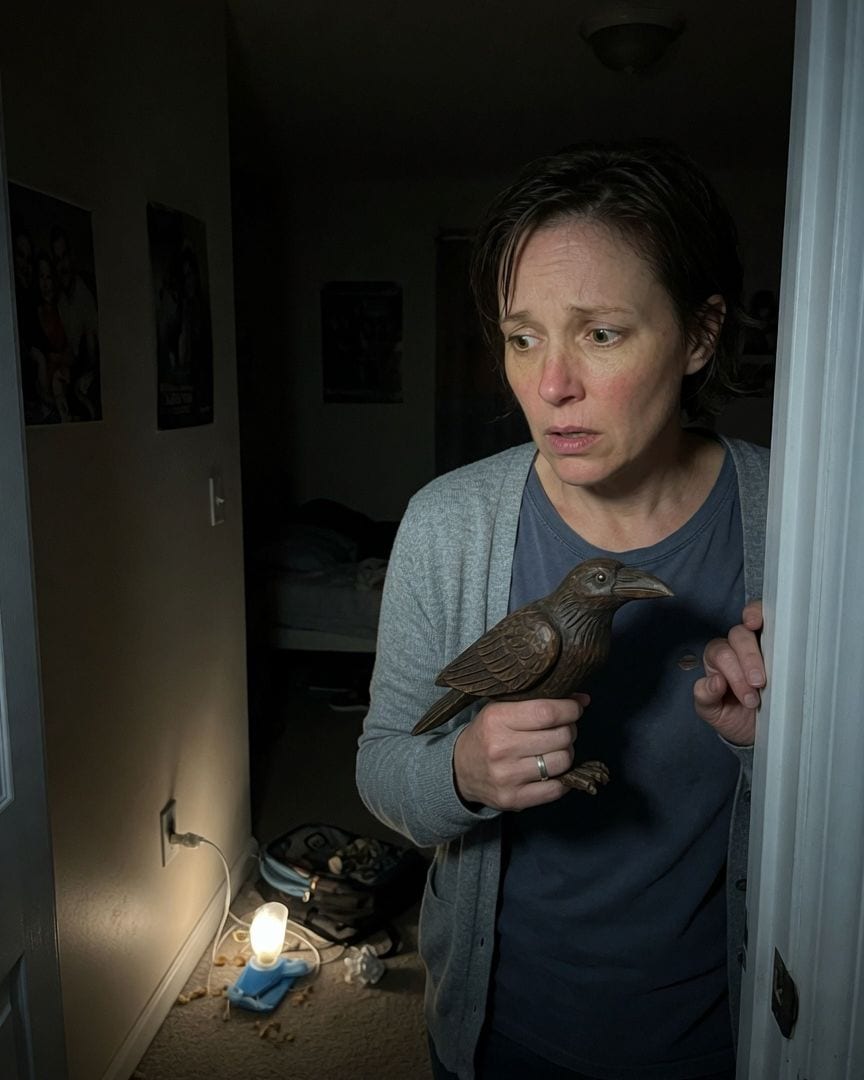
My son said he'd never feared the dark. He was missing three nights. He’d screamed for the landing light his whole life.
After three missing nights, my son Oscar returned, but he wasn't quite the same. He recounted a fishing trip with his father, a memory so vivid, yet I knew he’d been sick at home the entire weekend. His unwavering certainty about a past that wasn't his made a cold dread settle deep inside me.
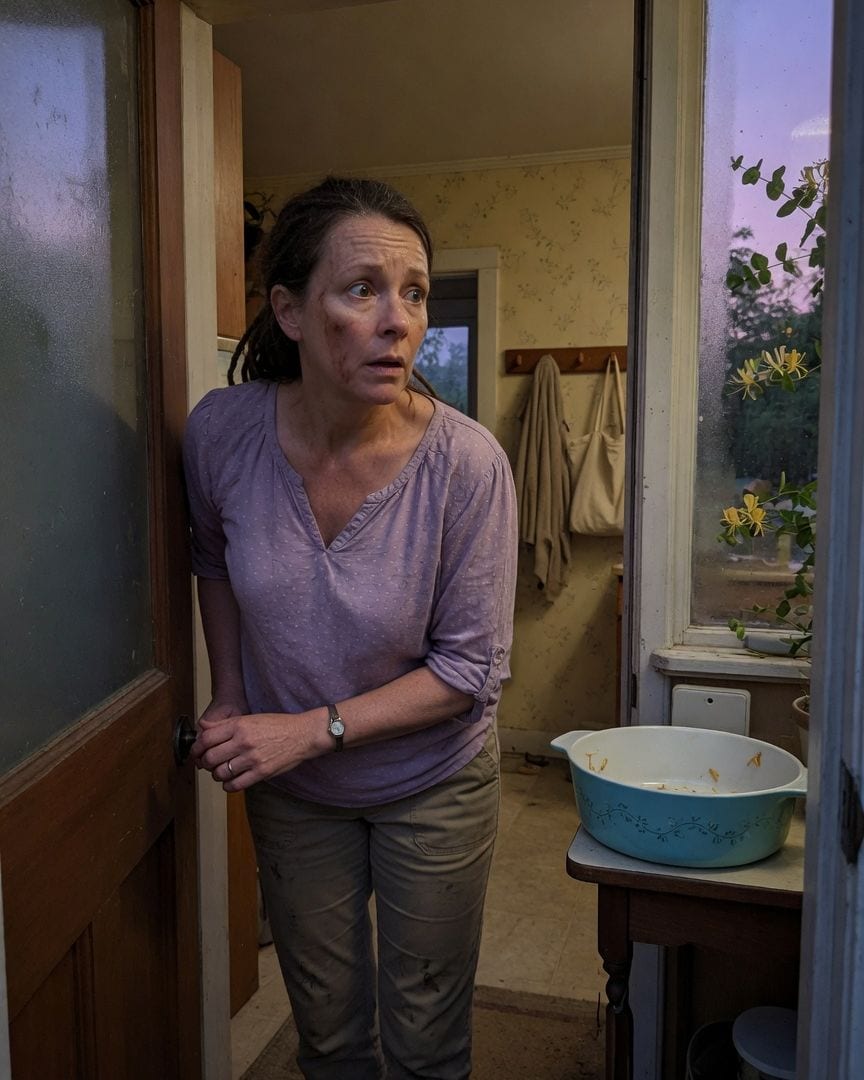
My neighbor Henry, lost at sea a year ago, just returned my casserole dish. He said it was for his mother's funeral, but she's alive.
My peaceful afternoon gardening was interrupted by a knock on the door. It was Henry, my neighbor, who had been lost at sea a year ago, now standing on my porch looking perfectly healthy. He was returning my blue ceramic casserole dish, which he said I had lent for his mother's funeral.
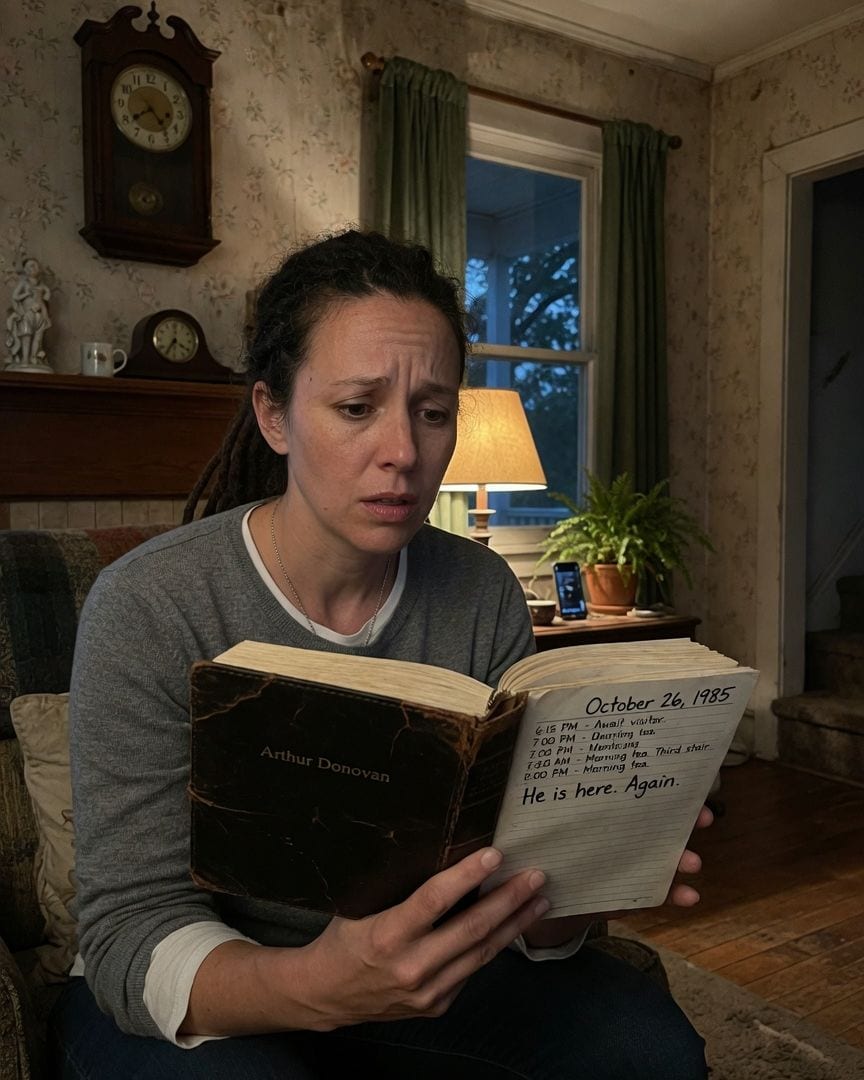
My front door gets three firm knocks every 6:15 PM. Nobody's ever there, but the doormat is always nudged, like someone just wiped their feet and left.
I moved into my inherited house expecting quiet, but every evening at 6:15 PM, three firm knocks hit my door. Each time, I find the porch empty, with no one in sight. My phone camera confirms it: only the doormat subtly shifts, echoing the clear knocks, like an invisible visitor wiping their feet.
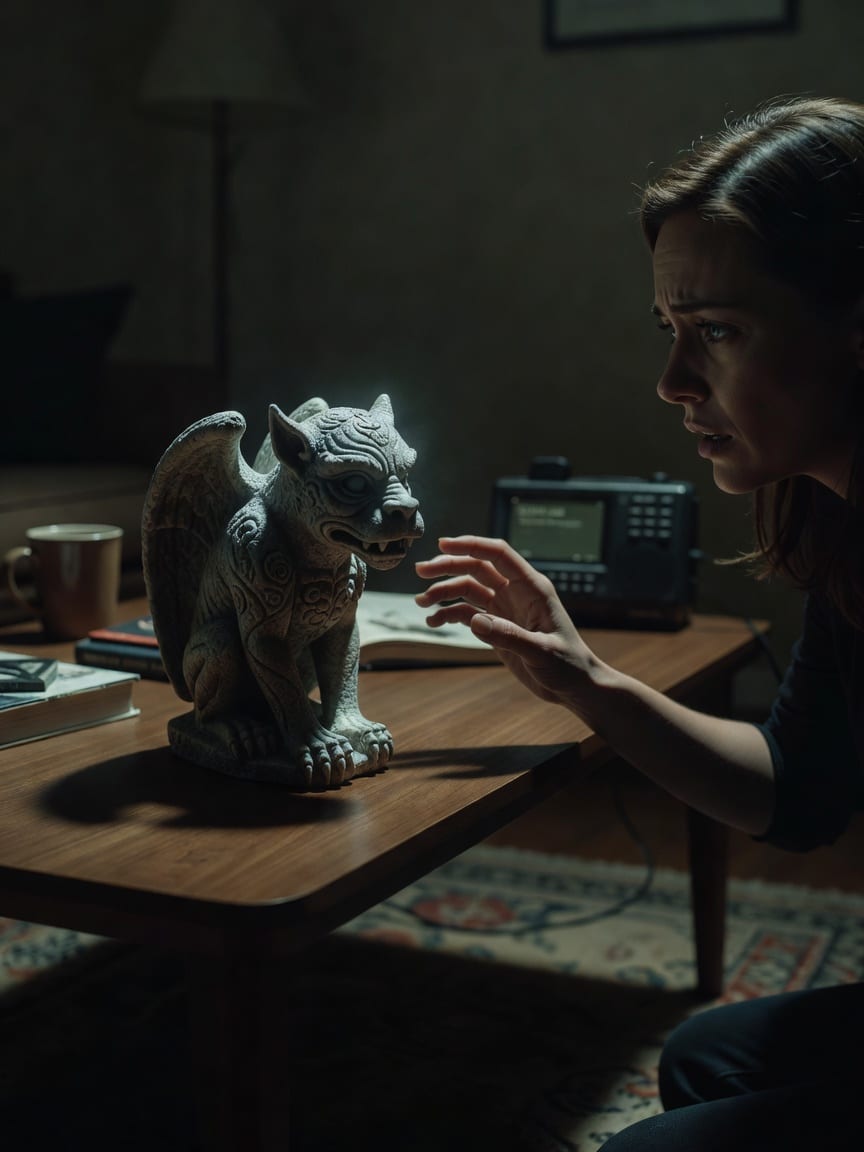
My radio scanner spoke my address at 2 AM. A flat voice read local homes, all with past dates. Mine was the only one in the future.
It was two in the morning, and my quiet house was filled with the usual hum of my weather scanner. But the static broke, replaced by a flat, synthesized voice reading a list of local addresses and dates. My hand froze when it spoke my own address, 181 Foster Drive, followed by a date: October 27th. That date was three weeks from now.
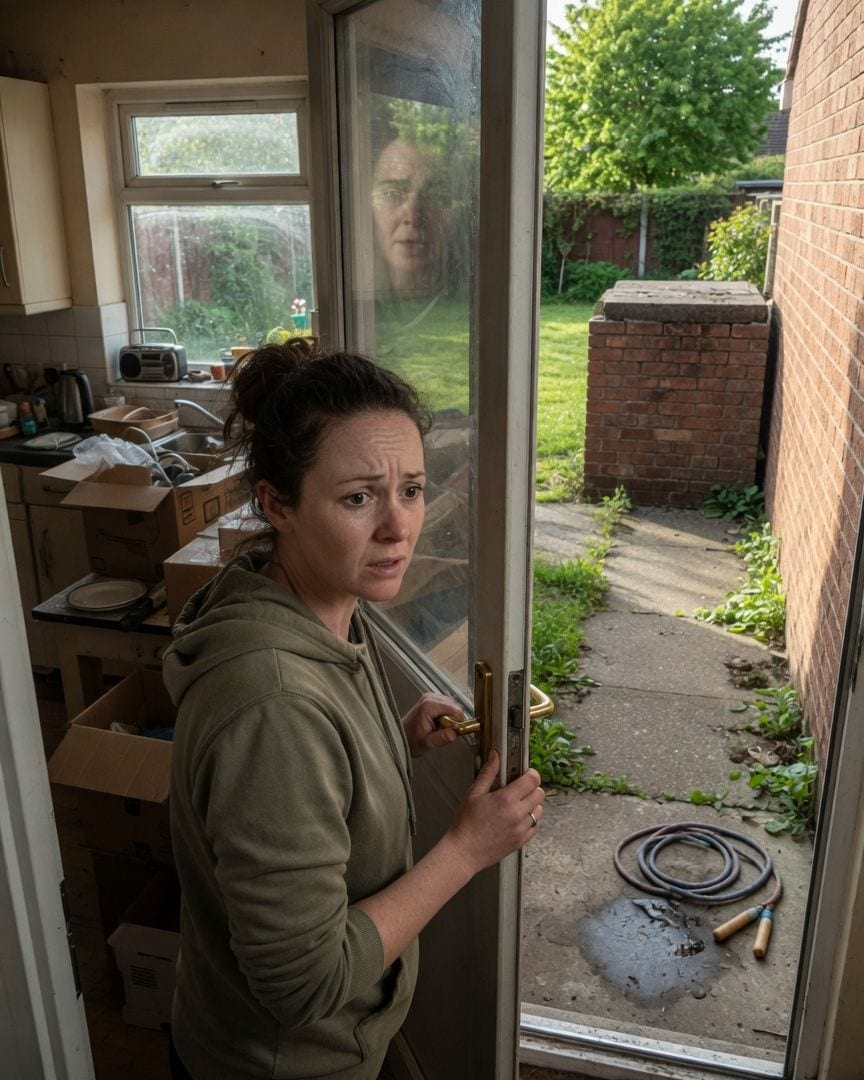
Children skip in my garden at 3:30 on school days. They're on the concrete by the coal bunker, where there's no room. The rope they leave is always damp.
I kept hearing children skipping outside my kitchen window, even though there was nowhere for them to play. Every time I looked, the narrow side return was empty, but a damp skipping rope lay on the concrete. Then, my old cleaning cupboard opened onto a vibrant, old-fashioned garden, where two small figures stared back with unnervingly blank eyes.
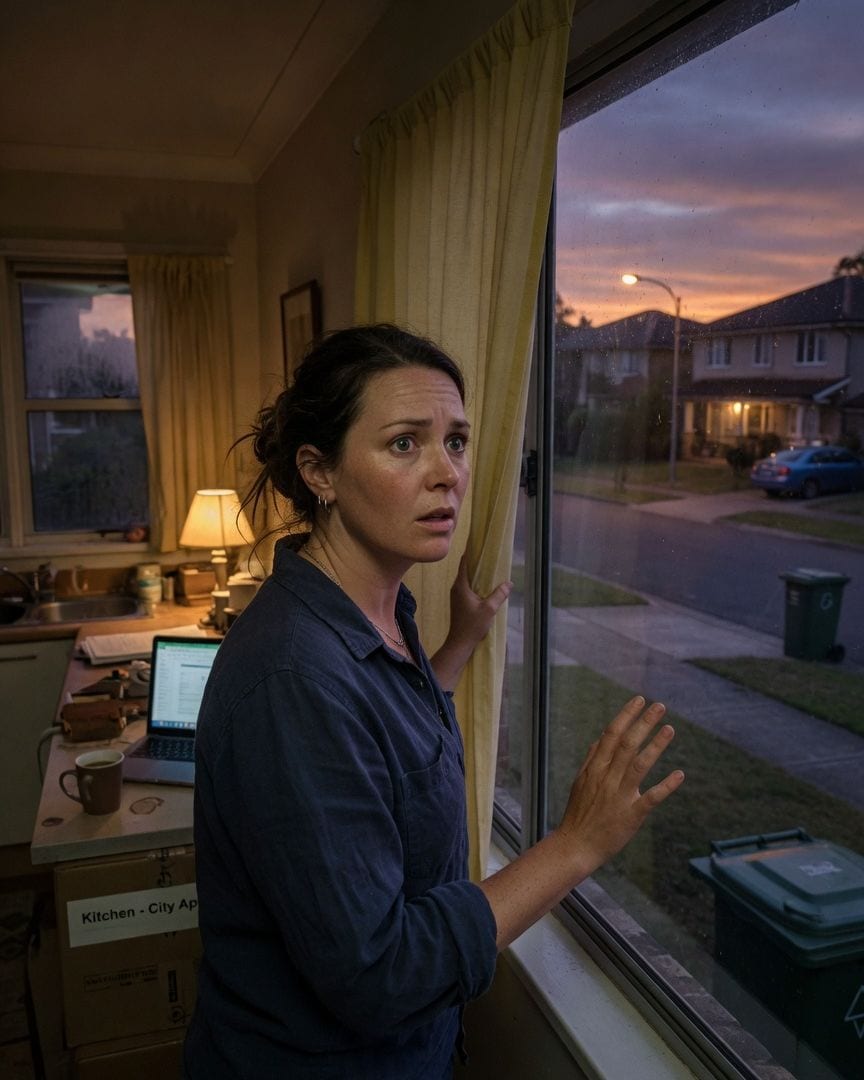
My bin was turned the wrong way Tuesday. The man three doors down hasn't been seen since, though his curtains still open.
New to Oakhaven, I dismissed the local warnings as charming quirks. But after I put my bin out first, my neighbor Joel Whitmore vanished, leaving only a cryptic 'My turn' note. The same strange symbol from his note was chalked on my bin, facing the street.