My neighbor Henry, lost at sea a year ago, just returned my casserole dish. He said it was for his mother's funeral, but she's alive.
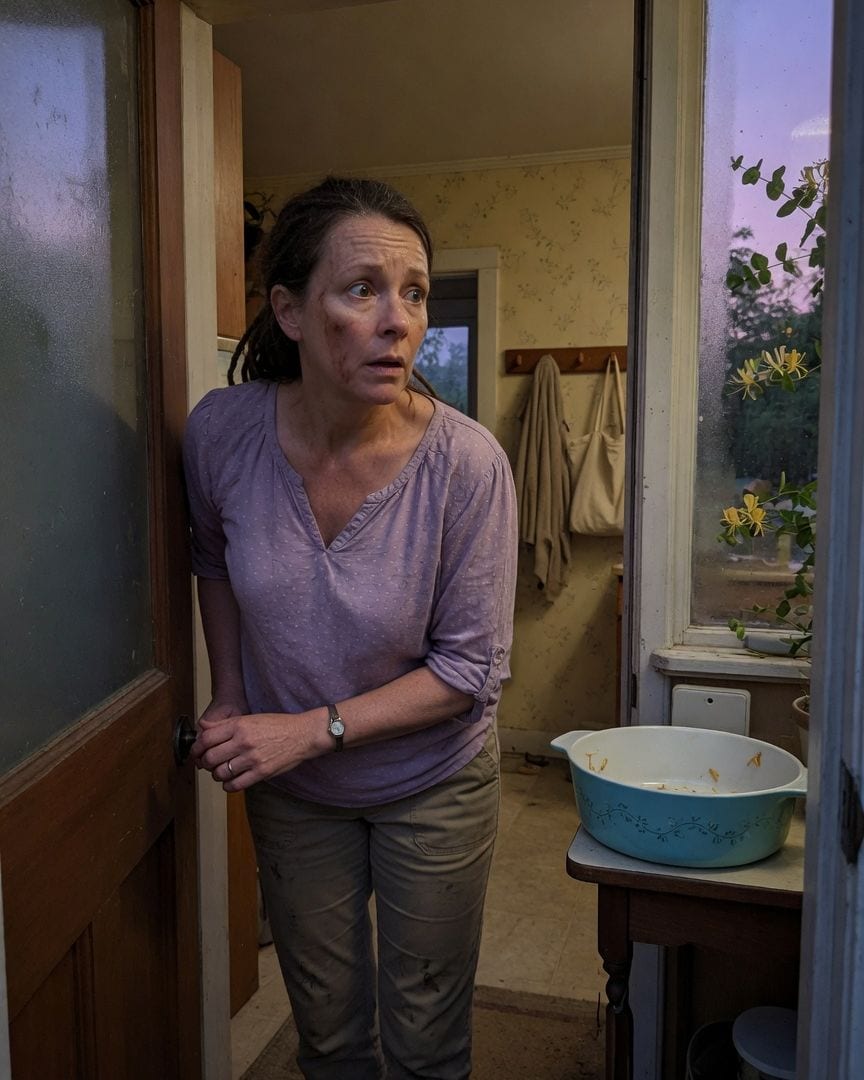
The scent of honeysuckle was particularly strong that Tuesday afternoon, clinging to the air as I knelt among my petunias. I’d just wiped a smudge of soil from my cheek when a sharp knock echoed from the front door.
I sighed, brushing off my knees. Probably a package.
It wasn't a package. It was Henry.
Henry Pierce, my neighbor from two doors down, stood on my porch, bathed in the soft, late afternoon sun. He’d vanished a year ago, lost at sea in a boating accident, presumed gone forever.
Now he was here, looking tanned and healthy, a warm, relieved smile on his face. He looked...exactly like Henry, only more so. Brighter.
“Linda,” he said, his voice as familiar as the sound of the ocean down the street, but somehow fuller. “So glad you’re home.”
In his hands, he cradled my blue ceramic casserole dish, the one with the chipped rim I’d gotten from my sister for my thirtieth birthday. “I just wanted to return this. And thank you, really.
It meant the world to Mom.”
My heart lurched, a cold fist closing around my ribs. “My… casserole dish?” I stammered, my voice sounding thin and reedy.
“Yes, for the funeral,” he said, his smile unwavering. “The tuna noodle, right? Mom kept saying how comforting it was, how thoughtful.”
Cecilia Pierce. Henry’s mother. My mind reeled. Cecilia Pierce was very much alive and well. I’d seen her that very morning, watering her petunias in her front yard, waving cheerfully as I left for the grocery store.
There had been no funeral. There couldn't have been.
I swallowed, forcing myself to look at the dish again. It was undeniably mine. That distinctive robin’s egg blue, the tiny floral pattern etched into the side, the chip near the handle where I’d dropped it washing dishes last year.
But I had no memory of ever giving it to Henry, or to anyone in his family, for any occasion, let alone a funeral that never happened. The sun felt suddenly cold on my face.
After Henry left, whistling as he walked down his path, I closed the door and leaned against it, the wood cool against my back. My mind scrambled for a rational explanation. Had I lent it out and forgotten?
Had someone else used it and brought it to Cecilia for some other event? My brain felt sluggish, refusing to cooperate.
I walked into my kitchen, my eyes scanning the counters and cabinets. No, I definitely didn't have another blue ceramic casserole dish. This one was unique, a specific gift from my sister. I pulled out my phone, dialing her.
“Hey, you remember that blue casserole dish you gave me?” I asked, trying to keep my voice casual.
“The one with the tiny flowers? Of course,” Sarah said. “Why? Break it already?”
“No, no. Just… have I ever mentioned lending it out? Or to Henry Pierce’s family?”
Sarah laughed. “You? Lend out your nice dishes? You’re so particular about them. Besides, I haven’t heard anything about Henry’s family needing one. Why?”
I mumbled something about a brain-fogged senior moment and hung up, my stomach tightening. It wasn't my memory. It wasn't a duplicate.
Later that evening, just as the sky was turning violet, there was another knock. It was Henry again, this time to return the trowel he’d borrowed from my shed months ago.
He settled onto my porch swing, easy as ever, the chains creaking softly. He was talking about how good it was to be back, the familiar comfort of the small town.
Then he started reminiscing. “You know, it reminded me of that camping trip your family took, way back when we were kids,” he said, a fond look on his face.
“The one where your dad told that story about the headless fisherman? And you cried because a raccoon stole your marshmallow bag right out of your old green sleeping bag.”
My blood ran cold. He described the exact faded shade of that sleeping bag. He mimicked the particular way my father had cleared his throat before launching into the ghost story. The memory was so vivid, so precise.
But Henry was never on that trip. He’d been away at his grandparents' farm that summer. I remembered it distinctly because I’d been so disappointed he couldn’t come. We'd talked about it for weeks.
“Henry,” I started, my voice barely a whisper, “you… you weren’t there. You were at your grandparents’.”
He just smiled, a calm, certain smile that didn’t quite reach his eyes. “Oh, no, Linda. I remember it clear as day. The mist on the lake, the smell of pine needles.
You even tried to share your sandwich with the raccoon after it made you cry.”
His certainty was far more unsettling than any outright denial. It was like he believed it, truly believed a memory that wasn't his, a memory he shouldn't have. The evening air suddenly felt heavy, pressing in on me.
The next morning, I couldn't shake the unease. I needed something concrete, something undeniable. I dug out an old photo album, the kind with thick, plastic-covered pages.
Flipping through, I found a snapshot from high school, taken at a football game. Henry was in it, grinning, his arm slung around a friend’s shoulder. My eyes immediately went to his face.
There it was: the distinctive, jagged scar above his left eyebrow, a childhood injury from a bike accident. I’d always associated it with him, a small, familiar part of his identity.
I pulled out my phone, my fingers fumbling. I scrolled through recent pictures I’d taken of the 'returned' Henry during the neighborhood barbecue last week.
There were a few candid shots, him laughing with Mr. Henderson, reaching for a hot dog. I zoomed in on his face, the pixels sharpening. My breath caught.
The scar was gone. Completely. The skin above his left eyebrow was impossibly smooth, unblemished, as if it had never been there.
I stared at the two images—the faded photograph clutched in one hand, the digital snapshot on my screen in the other—the undeniable physical discrepancy making my stomach clench with a cold, sickening dread.
The silence of the house pressed in, suddenly vast and empty.
I spent the next few days in a fog of observation. Henry was still Henry, on the surface, but the small things, once unnoticed, now screamed. His favorite deep-blue coffee mug was gone, replaced by a cheap white ceramic one.
His gait, once a confident, easy stride, now had a subtle, almost imperceptible hesitation, like he was calculating each step. He used to say "bless your heart" when someone did something foolish; now he just offered a quiet, tight-lipped smile.
I started a meticulous journal, documenting every discrepancy, every fleeting detail that felt wrong. My neighbor, the friendly, easygoing Henry Pierce, was no longer quite himself.
I discreetly checked public records for his boating accident. The date and location were confirmed, just off the coast, a year ago to the day.
But the details of his rescue were vague, simply stating he was "found at sea" by a fishing trawler, with no mention of conditions, the crew, or how he survived. It was strangely generic, almost deliberately uninformative.
The local library became my second home. I pored over dusty newspaper archives, searching for similar disappearances and miraculous returns in our small coastal town's history.
There were plenty of mentions of people lost at sea—fishermen, pleasure boaters, children swept away by unexpected tides. But no dramatic returns like Henry's, no tales of people coming back changed.
The trail felt cold, yet the wrongness of Henry persisted, growing more profound with each observation. His 'memories' of things he shouldn't know continued, sometimes incredibly specific, sometimes subtly off, always delivered with that same unshakeable calm.
It was the calmness that unnerved me most. It wasn't the calm of a person at peace; it was the calm of something without a pulse.
My digging didn't go unnoticed. One afternoon, while I was hunched over a microfilm reader in the library’s local history section, the soft hum of the machine filling the quiet space, I felt a presence.
The air behind me seemed to thicken. Glancing up, I saw Henry standing at the far end of the aisle, ostensibly looking at books on local fishing. He didn't acknowledge me, didn’t even seem to register my presence.
But when his eyes briefly met mine across the rows of dusty shelves, they held a depth that was unnervingly still and knowing. A cold knot formed in my stomach. He wasn’t looking at the books. He was watching me.
Later that week, I found the blue ceramic casserole dish, which I had taken back and carefully washed, sitting on my doorstep again, perfectly clean.
I’d placed it high on a shelf in my pantry, behind a stack of serving bowls. I knew, with a certainty that prickled my skin, that I hadn’t left it there.
A small, anonymous note, typed on plain white paper, was tucked under it: 'Some things are better left undisturbed.' The words were clipped, precise. I felt a prickle of genuine fear then, a cold tremor that ran through my hands.
He knew. Henry knew I was investigating.
The very next day, I saw Henry on his porch. He wasn't gardening. He was sitting on the swing, meticulously polishing an old, ornate fishing logbook.
It had a dark, worn leather cover, brass clasps, and looked like it had seen generations of use.
I knew it must have belonged to his grandfather, a man known for his deep, almost mystical knowledge of the local waters and their hidden currents.
Henry glanced up, his gaze sweeping across my house, lingering for a moment on my living room window. A faint, almost imperceptible smile played on his lips.
Rattled by the note and Henry’s knowing glances, I knew I couldn’t keep this to myself anymore. There was only one person in the neighborhood who had always seen everything, known everything. Monica Lambert.
I walked the two blocks to her house, my heart thumping a frantic rhythm against my ribs.
Monica met me at the door, her usual effervescent energy muted. I started, stumbling through my observations: Henry's changed habits, the missing scar, his impossible memories, the returned casserole dish. Monica initially dismissed my concerns, waving a dismissive hand.
“Oh, Linda, dear, he’s been through a trauma. Lost at sea for a year! People change. It’s grief, the shock of being back, that’s all.”
“But the scar, Monica. It’s gone. And the camping trip he described? He wasn’t there. He was at his grandparents’ farm.” I pressed, my voice tight. “And the casserole dish!
He gave it back for his mother’s funeral, but Cecilia is alive.”
Monica’s face was unreadable. She walked to her kitchen, pouring us both glasses of iced tea, the clinking of the ice cubes loud in the sudden quiet. She still looked skeptical. I felt the familiar frustration rise.
How could I make her see it?
Then, in a desperate attempt, I mentioned the fishing logbook. “He was out on his porch yesterday, polishing his grandfather’s old fishing logbook. You know, the one that old Mr. Pierce kept, full of all his notes about the sea.”
Monica stopped mid-motion, the glass in her hand clinking against the counter. Her composure, which had been so solid, finally cracked. Her face paled, the color draining from it as if she’d seen a ghost.
Her eyes, usually so sharp and inquisitive, widened with a dawning horror.
“The logbook,” she whispered, her voice barely audible. She turned to me, her usual nosiness replaced by a chilling fear. “Henry isn’t the first.”
I just stared, my mouth slightly open.
She started to speak faster, words tumbling out, hushed and urgent. “It’s an old town legend, Linda. Dismissed as folklore, mostly. ‘The sea’s claim,’ they called it. People lost, swallowed by the ocean, then… returned. But subtly altered.
Not quite themselves.” Her gaze was fixed on some distant point, as if reliving an old memory. “My grandmother used to tell me. About a local fisherman, decades ago. Lost in a bad storm, everyone thought he was gone.
Then, a week later, he washed up on the beach, alive. Everyone celebrated, but… my grandmother said he wasn’t quite the same. He remembered things he shouldn’t have known, details from other people’s lives.
And there was a scar on his hand, from a fishing hook accident he’d had as a boy. A distinct, jagged mark. My grandmother swore it was gone. Just smooth skin.”
She paused, taking a shaky breath. “I always dismissed it. A ghost story. But then Henry came back, and I saw it. The same… wrongness. The way he looked at you sometimes, like he was studying you.
The way he knew about things he shouldn’t. And now, the logbook. Old Mr. Pierce recorded everything in there, not just fish. He recorded the disappearances. The unusual returns. He even marked the dates.”
Monica looked at me, her eyes filled with a terrified certainty. “Linda, the casserole dish, the impossible memories, the missing scar… it all fits. Henry… he’s not Henry.”
Monica, her voice barely a whisper, explained that the returned ones always seemed to know when they were being observed, when their imperfections were noticed. “They don’t like it,” she rasped, pulling me closer. “They watch. They learn. They… adapt.
You have to stop, Linda. Pretend everything is normal. For your own good.”
Just as she finished, a shadow fell across her living room window. The soft light in the room suddenly dimmed, like a cold hand had reached out and pressed down.
Monica gasped, a sharp, choked sound, and pointed a trembling finger.
Henry Pierce stood on his porch, two doors down, silhouetted against the fading light of the setting sun.
He was holding the blue ceramic casserole dish, the very one I had retrieved from my pantry, the one I had just discussed with Monica. He didn't wave, or call out.
Instead, he slowly raised the dish, holding it aloft like a trophy, his gaze fixed directly on my house, not Monica's.
A faint, knowing smile played on his lips, a chilling certainty in his eyes that seemed to pierce through the distance, straight into my soul. The silence that followed was deafening, heavy with unspoken threat.
I returned home, my mind racing, the image of Henry holding that dish burned behind my eyelids. Monica’s story, the 'sea’s claim,' had unlatched a door in my understanding.
Henry’s actions, his 'memories,' the casserole dish – it was all part of a learning process. The entity that wore Henry’s skin wasn't trying to be malicious; it was trying to be Henry.
It observed, it mimicked, it attempted to integrate, using the details it gleaned from the environment and other people.
The fishing logbook, I now understood, was not just a memento. It was a repository of local knowledge, a source of deeper 'memories' of the sea and its past 'claims.'
Old Mr. Pierce, Henry's grandfather, wasn't just a fisherman; he was an unwitting chronicler.
The entity wasn't fabricating memories out of thin air; it was piecing them together from fragments it observed, from the stories told, from the historical records, from the people around it.
Henry’s calm certainty when questioned about his impossible memories, his lack of surprise – it wasn't confusion or delusion. It was the absolute confidence of a being that believed its learned data was correct, that its replication was flawless.
This wasn't about malice or destruction, but replacement and quiet, pervasive infiltration. It used these 'returned' individuals to subtly embed itself into the community, gathering more information, expanding its 'knowledge.'
It was a slow, steady tide of being that washed over the boundaries of human identity.
The horror wasn't what it did, but what it is – a perfect, patient mimicry that leaves no trace, only a hollow echo of what was once there.
It was a quiet horror, a creeping sense that the very fabric of identity could be erased and replaced without anyone ever knowing.
I knew I couldn't fight this. There was no monster to slay, no evil to vanquish, no institution to expose. This entity wasn’t about good versus evil; it simply was.
Exposing Henry would shatter my community, and who would believe me? The proof, the subtle wrongness, would be dismissed as grief, as imagination, as paranoia.
I saw Henry on his porch the next morning, meticulously tending to his garden, a picture of normalcy.
He looked up and caught my eye, and for a fleeting moment, the smile he offered was too wide, too still, lacking the crinkling around the eyes that was so characteristic of the old Henry.
It wasn't a friendly smile; it was a smile of quiet triumph, of knowing.
I realized I was trapped. I had to live alongside this thing, this perfect, patient impostor. The knowledge itself was the cage. There was no escape, only acceptance of the new reality.
I couldn't un-know what I knew, and the entity knew that I knew. The horror was that it had already won, not through force, but through insidious, quiet replacement.
I was simply left with the chilling certainty of living next to an imitation, and the implication that the original Henry Pierce was truly, irrevocably gone.
Life in the quiet coastal town settled back into its rhythms. Henry Pierce continued his life, a beloved neighbor, a man who had miraculously returned from the sea.
His mother, Cecilia, seemed perfectly content, never once mentioning the casserole dish or the funeral that wasn't. Monica Lambert avoided my gaze, a haunted look in her eyes whenever Henry was near.
I continued my gardening, my routines unchanged, but my world was irrevocably altered. I saw the wrongness everywhere now, in the subtle shifts of expression, the slightly off memories, the quiet certainty in Henry's eyes.
The casserole dish remained in my cabinet, a silent, terrible reminder.
I continued to live my life, a careful dance around the edges of the truth. I sometimes caught myself mirroring Henry’s new, unnervingly calm mannerisms, a quiet certainty in my own gaze.
I knew what I knew, and the knowing was a cold, hollow space inside me. The sea continued its endless murmur, a constant, patient presence.
My neighbors, oblivious, often remarked on how much calmer, how much more 'settled' I seemed these days, after all the worry about Henry. I would simply smile then, a faint, unreadable curve to my lips.
A month later, Henry Pierce knocked on Linda Walsh's door. "My mother was asking," he began, "if you'd be able to bring that lovely casserole to her birthday next week. She remembered how much she enjoyed it at the funeral."
Linda looked at him, then at the casserole dish in her own hands, which she had just taken out to prepare dinner. She just smiled then, a faint, knowing curve to her lips that wasn't quite her own.
If this one got to you
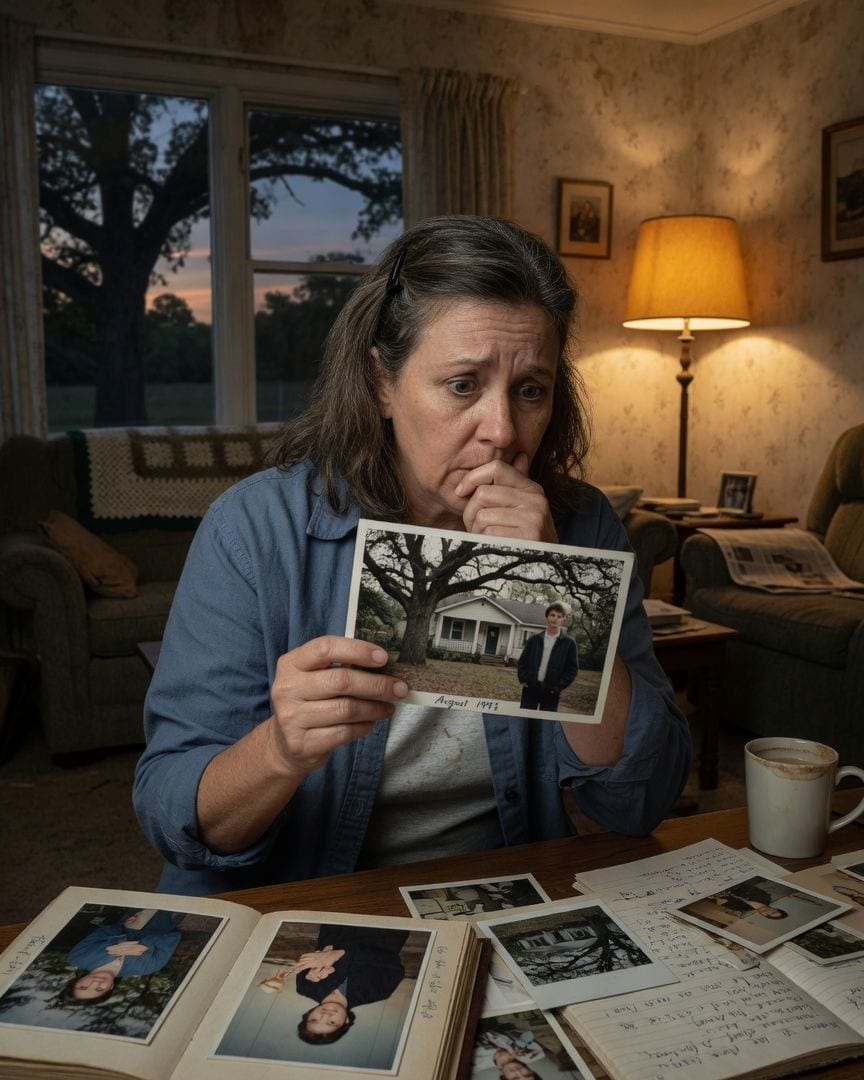
My brother remembers carrying me home after I broke my arm. He was already gone two years when it happened.
After thirty-two years, my brother Joel returned, bringing a relief that felt physical after decades of quiet absence. But when he recounted carrying me home after I broke my arm, a memory I held dear, the warmth in my chest curdled cold. He was twenty years old then, two years gone already, and my mother had carried me.
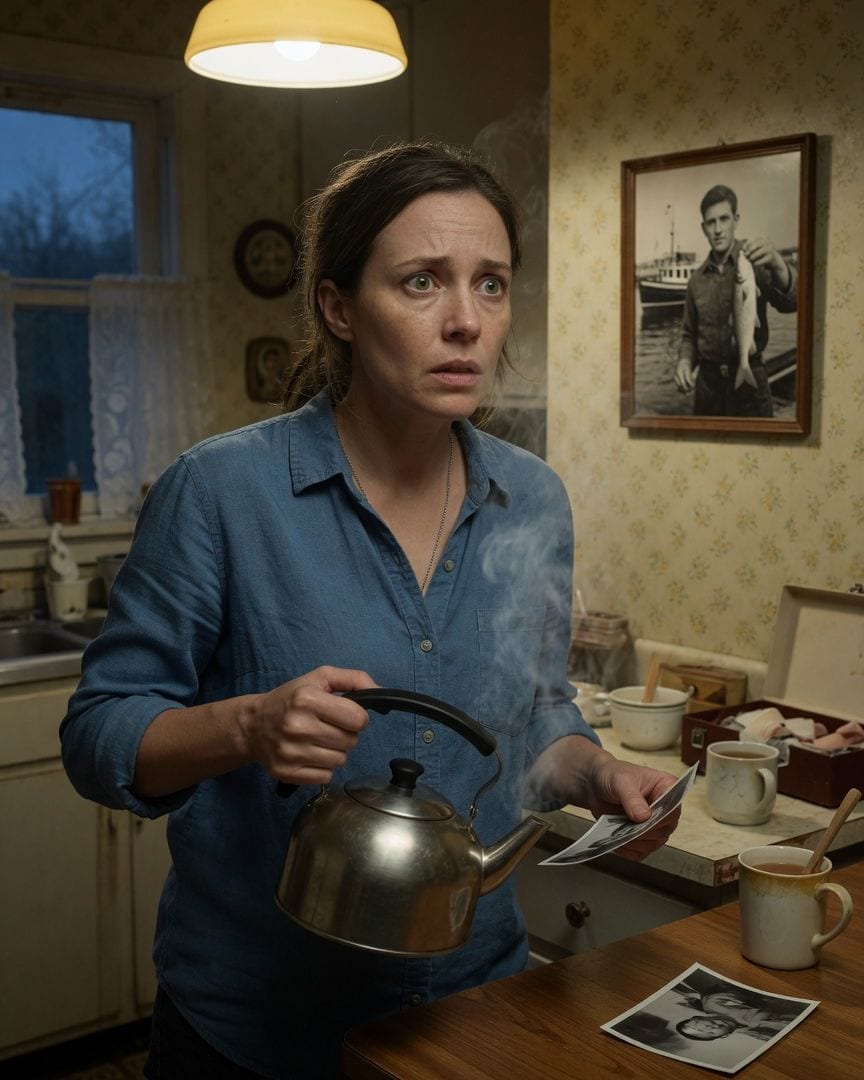
My grandfather thanked me for whiskey at his wake. There was no wake. My father, who gave the toast, has been dead for years.
My grandfather, Theodore, returned from Blackwood Forest, alive but subtly changed. Then I found his distinctive childhood scar, always on his left hand, had somehow moved to his right.
My neighbor apologized for Biscuit's death. My terrier was asleep on the landing, perfectly fine.
My neighbor Tom arrived on Sunday, distraught and apologizing for my dog Biscuit, who was perfectly fine. Days later, a condolence card arrived for a loss I hadn't suffered, postmarked from an empty lot where a house once stood. Then I found another, dated days before Tom's strange apology.
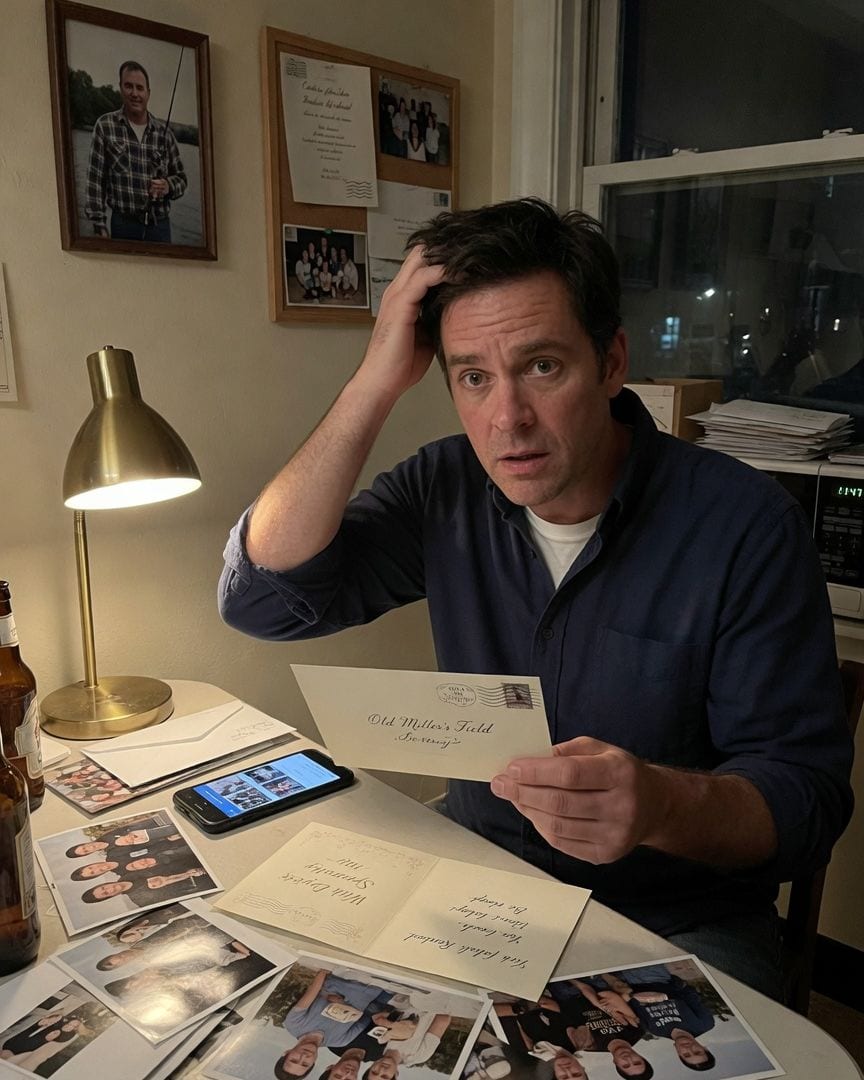
A stranger shook my hand, apologised for my father, then disappeared from every photo of the reunion.
My ten-year reunion was a blur of forgotten faces and loud music until a stranger approached me. He took my hand, apologized for my father, then vanished into the crowd without a trace. Now, a week later, a strange card has arrived, postmarked from a place that hasn't existed for decades.
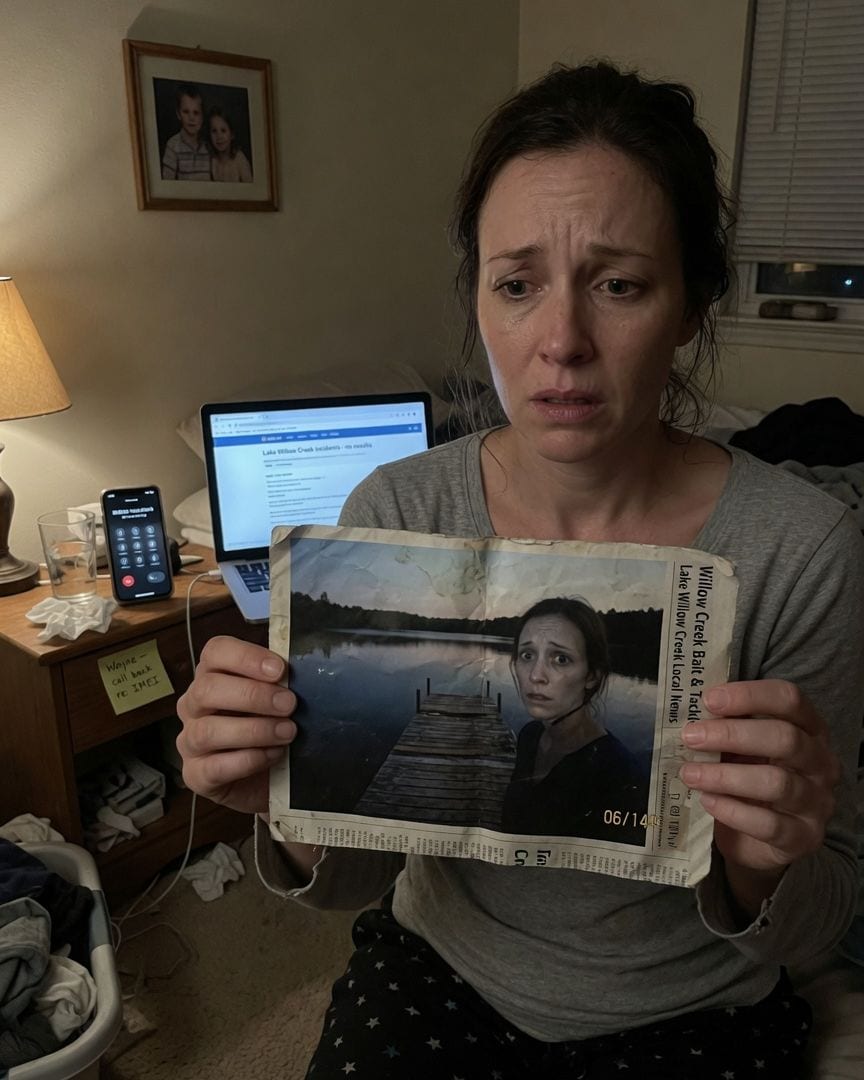
My voice called my sister at 3 AM, telling her not to worry about 'the lake.' I was asleep, my phone off, and nothing happened at any lake.
My sister received a chilling 3 AM call from my phone, my own voice warning her about a lake I'd never been to. I was asleep in my bed, hundreds of miles away. Then, a water-damaged package arrived containing a photo of me, terrified, at that very lake, dated a day I was three states away.
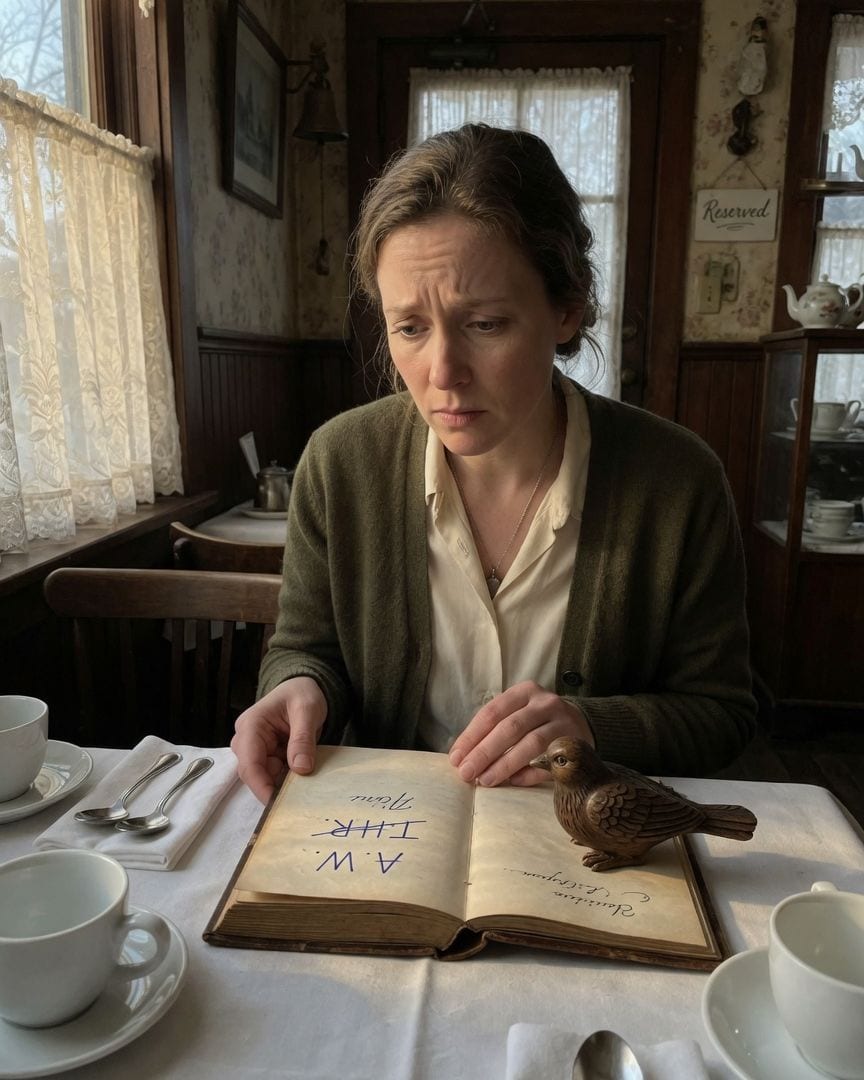
My tearoom table reservation replaced three initials booked daily since 1926. Today, I sat in their seat.
As an art restorer, I loved the quiet history of Oakhaven’s tearoom, especially a sunlit corner table. But the owner, Gloria, always insisted it was reserved, despite it being meticulously set and empty every single day since 1926.