My neighbor apologized for Biscuit's death. My terrier was asleep on the landing, perfectly fine.
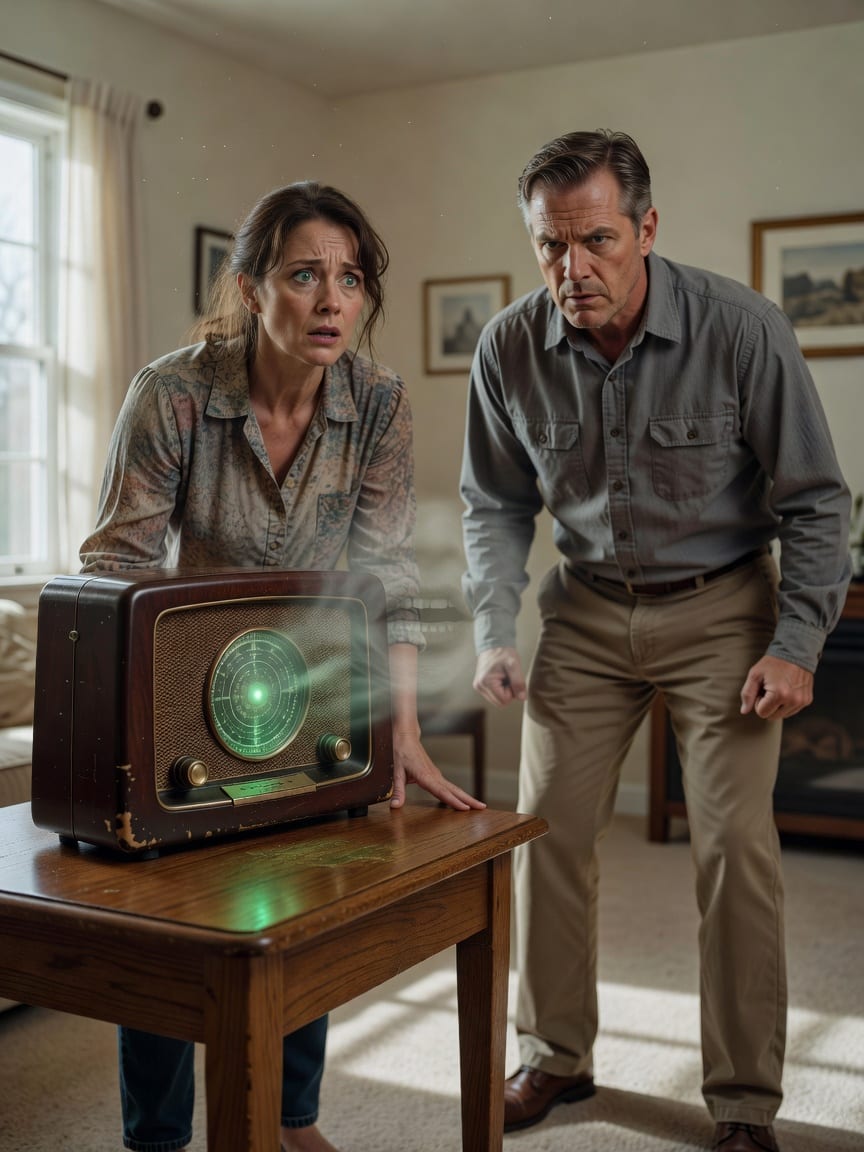
Tom Norwood knocked at precisely 6:40 on a Sunday morning, his face pale and drawn. He didn't even wait for me to fully open the screen door.
"I'm so sorry about Biscuit, Ellen," he mumbled, shifting his weight on my porch, his eyes fixed on some spot over my shoulder. "I really am."
Biscuit, my scruffy terrier, was asleep on the landing directly behind me, a small, perfectly healthy lump of fur. She’d probably just chased a squirrel in a dream. I blinked at Tom, bewildered. "Sorry about what, Tom? Biscuit's fine."
He looked even more confused, running a hand through his thinning hair. His gaze darted to Biscuit, then back to me, a flicker of something like terror in his eyes.
He couldn't explain why he'd come, only that he’d woken up with an overwhelming certainty that he owed me an apology, specifically about Biscuit. He’d tried to fight it, he said, but the feeling was too strong.
He sounded genuinely distressed, almost on the verge of tears. I tried to laugh it off, attributing it to a bad dream or too much late-night TV, maybe a late-night chili binge. "You just had a nightmare, Tom.
Go back to bed. Biscuit's right here, see?" I gestured to the dog, who stretched lazily, then settled back into her snoring.
But as I watched him walk away, his shoulders slumped in genuine distress, a cold knot began to tighten in my stomach.
The air, usually crisp on a Sunday morning, felt heavy, as if something invisible had settled over my street.
Biscuit yawned, stretched again, and looked up at me with her goofy, perpetually optimistic grin, utterly oblivious to the strange dread that had just settled over my quiet Sunday morning.
The incident with Tom was weird, a quirky neighbor moment, but I pushed it aside. Until Tuesday. That's when the mail arrived.
Tucked between a gas bill and a flyer for discount pizza was a plain white envelope, thicker than average, addressed in elegant, looping script: 'Ellen Holloway.' There was no return address, which was the first oddity.
I usually checked for those.
My heart hammered as I slid my finger under the flap. Inside was a simple, tasteful condolence card, the kind you buy in a multipack at the grocery store for generic sympathy.
My breath caught in my throat as I read the printed message: 'With deepest sympathy for your loss.' There was no name filled in, no signature. Just the card. And a postmark.
My gaze went straight to it, scanning for a city, a state. 'Ashford Fields, ME.'
My breath caught. Ashford Fields wasn't a town. It was an empty lot, an overgrown expanse on the edge of town where a house had been demolished decades ago.
I knew it because I sometimes walked Biscuit there; it was a good place for her to run off-leash without bothering anyone.
I tried to rationalize it. A joke? A misplaced letter? I called the post office, explaining the situation, trying to sound casual, as if this happened every day.
The clerk was polite but unhelpful; without a return address, they couldn't investigate. "Sometimes things get misrouted, ma'am," she said, her voice flat. "Or it could be a novelty postmark."
I even looked up the coordinates for 'Ashford Fields' on my phone, half-expecting a mistake in my own memory, or maybe a tiny, forgotten hamlet I'd overlooked.
But no, the map confirmed it: an empty rectangle of land, a green space on the digital map, labeled 'Former Holloway Homestead Site.' This wasn't a prank. A prank would have a sender, a punchline. This was just…wrong.
A condolence card for a loss that hadn't happened, from a place that didn't exist. The paper in my hand felt suddenly cold.
That afternoon, the card still clutched in my hand, I drove out to Ashford Fields. The wind whipped through the tall grass, making it ripple like water, an almost unsettling whisper against the engine drone.
There was nothing but weeds, wild brambles, and the faint, almost erased, outline of a foundation where a house once stood, barely visible beneath the overgrowth.
The air was still, heavy, despite the wind, carrying the scent of damp earth and decay.
I walked slowly, my boots crunching on dry earth and stray pebbles. My gaze fell on something half-buried in the soil near a crumbling brick fragment, a corner of white sticking up. Another envelope.
Identical to the one I’d received, same plain white, addressed in the same elegant script: 'Ellen Holloway.' My fingers trembled as I picked it up.
It was caked with a thin layer of dried mud, but the postmark was clear: 'Ashford Fields, ME,' dated last week, two days before Tom's apology. Before he’d even felt the need to apologize for something that hadn’t happened.
I tore it open, my heart hammering against my ribs. Inside was another blank condolence card. This wasn't just a stray letter. This was a pattern. And it had started before I even knew it.
I clutched the second, older card, the dread a cold, hard lump in my chest. This wasn't a mistake; it was deliberate. It had been here, waiting, while I was oblivious, going about my life.
I drove home, my mind racing, the landscape blurring outside my window. The first thing I did when I got inside was search online for 'Ashford Fields' and 'demolished house.'
It didn't take long. Property records showed the land had once belonged to the Holloway family, my own surname. The original homestead, built in the late 1700s.
It had been demolished in the 1960s after a series of 'unexplained disappearances' among the residents. The reports were vague, hushed, almost deliberately obscure, just hints of local legend.
This wasn't just an empty field; it was a site with a history. A chilling one that now connected directly to my own name. I needed more.
The next day, I visited the local historical society, a small, dusty building that smelled of old paper and beeswax.
It was run by Vera Kingsley, a woman with sharp eyes behind thick glasses and an even sharper memory for local gossip and history. I asked about the Holloway homestead. Vera's smile, initially welcoming, thinned.
She spoke of 'old stories,' local superstitions the town preferred to forget. "Some families… they just seem to attract trouble, dear. The Holloways had a reputation. Disappearances. Always the women, they said. Always the ones with the name."
She wouldn't elaborate, instead changing the subject to a display of antique butter churns. But the way she said 'the name' sent a shiver down my spine.
Her gaze lingered on me, a slow, appraising look, as if seeing something familiar, something she knew but wouldn't, or couldn't, speak aloud. The silence between us stretched, thick with unspoken things.
The letters from 'Ashford Fields' didn't stop. After the first two, they started arriving on a schedule, almost daily. Some were birthday wishes, even though my birthday was months away.
Others were short, cryptic warnings: 'It knows you now,' one read, addressed again to 'Ellen Holloway.' Another said: 'The calling begins.' The script, once elegant, now seemed to mock me.
I started feeling watched. A faint prickle on the back of my neck whenever I was alone in the house, especially at night.
I'd glance out my windows, convinced I'd see someone, a shadow, a face, but there was never anything. One afternoon, I found a small, antique-looking radio receiver on my doorstep, made of dark, polished wood, its brass dials gleaming dully.
It wasn't mine. There was no note. It hummed with a faint, almost imperceptible static, tuned to a frequency that wasn't on the local dial.
I tried to ignore it, tucking it away in a closet, but its presence was unsettling, like an unwelcome guest.
Then there was the car. The same beat-up blue sedan, parked a few houses down for hours, day after day. Its windows were tinted, so I couldn't see who was inside.
Once, I saw it pull away just as I stepped out to check my mailbox. Another time, I swore I saw its headlights flash in my rearview mirror on my way home from work.
I tried to convince myself it was a coincidence, that I was just being paranoid, looking for patterns where there were none. But the letters, the radio, the car – it all felt like a tightening net.
The dread wasn't abstract anymore; it was specific, personal. It was aimed at me.
The mounting unease, the feeling of being hunted, forced me back to Vera Kingsley. I found her meticulously cataloging old photographs, her back to me. "Vera," I began, my voice tight, "what exactly did you mean by 'the calling'?
And 'always the ones with the name'?"
She sighed, her shoulders slumping, without turning around. The air in the archives felt cold, despite the warm spring day outside. "I shouldn't, Ellen. Some things are best left buried. For everyone's good."
I pressed her, pulling out the latest letter from my purse, the one that said 'The calling begins.' I laid it on her desk, the elegant script stark against the worn wood.
Her eyes widened as she read it, a flicker of genuine fear in them. The usual composure had cracked. "It's happening again, then," she whispered, her voice barely audible, confirming my worst fears.
She slowly turned from the photographs, her gaze meeting mine, suddenly vulnerable. "The stories… they're not just stories."
She led me to a locked cabinet in the back of the archives, tucked behind rows of forgotten local newspapers. The key, a heavy brass object, rattled in her hand.
From it, she retrieved a thick, hand-bound ledger, its leather cover cracked with age, the pages yellowed. "This is from the original Holloway estate. Before it was all… covered up. Before the town tried to forget."
She placed it on a table, her hands trembling slightly, an odd contrast to her previous composure.
The ledger was filled with elegant, faded script, detailing births, deaths, and then, a chilling pattern of disappearances. Each entry listed a woman's name – Elena, Eleonora, Elin, and yes, Ellen – followed by a date, and then, starkly, 'Claimed.'
There were dozens of them, spanning centuries, all associated with the Holloway lineage and the homestead. Vera explained that the family had tried to move, to change their name, but the 'calling' always found them.
The demolishing of the house, she said, was a desperate, final attempt to break the cycle, but it hadn't worked. "It just… dispersed the focus," Vera said, her voice hollow, her eyes fixed on the ancient book.
"Now it's not tied to the house, but to the name itself. To the bloodline. It just needs a Holloway woman named Ellen, or something like it." The room itself seemed to shrink around me, the musty air suddenly suffocating.
My fingers traced the names in the ledger, each 'Claimed' entry a punch to the gut. Elena Holloway, 1872. Elin Holloway, 1913. Eleanor Holloway, 1958. A horrifying, unbroken chain stretching back further than I could comprehend.
And then, near the bottom of the last page, the script appeared, fresh and bold, as if just written: my own name. 'Ellen Holloway,' followed by a date: next month.
My breath hitched, a cold, sharp pain in my chest. I stared at the entry, my vision blurring, the room swaying around me. It wasn't just history; it was my future, already written, a pre-assigned slot in a monstrous register.
I was seeing my own death sentence, rendered in elegant, damning cursive.
As I stared, frozen, my phone, which I'd left on the table next to the antique radio receiver Vera had pulled from a shelf for some reason, began to ring. An unknown number.
My heart hammered against my ribs, a frantic drum against the silence of the archives. I picked it up, my hand shaking so hard I almost dropped it.
A faint crackle, then a voice, cold and clear despite the static, whispered my name: 'Ellen.' It wasn't a question. It was a statement, a recognition.
At the same moment, the antique radio receiver on the table beside me crackled to life, and the same voice, low and resonant, echoed faintly from its speaker, a chilling duet: 'Ellen.'
I dropped the phone, scrambling back from the table, my chair scraping loudly across the floor.
The voice on the radio continued, a low, rhythmic hum that seemed to vibrate in my bones, not from the speaker, but from the very air around me. It was no longer just static; it was a presence, a pulse.
The phone lay on the floor, still ringing, its screen glowing with the unknown number, a desperate beacon. The voice from the radio repeated my name, then added, its tone a chilling certainty, "It's time."
I understood then, with a terrible, crystalline clarity. The apology, the letters, the ledger, the voice – it was all one continuous, living entity, a pattern that had chosen me, not by chance, but by design.
It wasn't about a person, or even a house. It was about a claim on a name, a lineage, tied to the very land itself.
The demolished house hadn't ended anything; it had merely dispersed the entity, allowing its 'calling' to reach out more broadly, less tethered. It had been calling, always, through generations, through time, patiently waiting for the next 'Ellen.'
Every clue, every strange occurrence, every prickle on the back of my neck, snapped into place with horrifying coherence. I was not a victim of circumstance, but the next chosen link in an ancient, insidious chain.
It wasn't evil in a moral sense; it was a hunger, a perpetuation, a monstrous form of belonging that demanded its due.
I knew there was no escape. The calls continued, relentless, from different unknown numbers, always the same voice, always my name. They came at dawn, at midnight, in the middle of a grocery store aisle.
The letters appeared daily, tucked into my mailbox, under my door, shoved into my car door handle, each one more insistent, the elegant script now seeming predatory, drawing me in.
I tried to pack a bag, a desperate, futile attempt to flee, my hands fumbling with clothes. But an invisible pull, a growing sense of magnetic alignment, drew me.
My feet felt heavy, rooted, the thought of leaving my house, my town, suddenly impossible, like trying to walk against a gale-force wind.
The dread had transformed into a strange, compelling resignation. I found myself walking towards the old Holloway field as dusk fell, the antique radio receiver clutched in my hand, its low hum a comforting pulse against my palm.
The voice from the radio was clearer now, no longer whispered, but a soothing, hypnotic whisper, promising belonging, promising an end to the unease, an end to the frantic searching, the pointless fear.
The field was bathed in the last light of the setting sun, making the tall grass glow with an ethereal, almost welcoming light.
I walked towards the faint outline of the old foundation, feeling less terror and more a strange, inevitable peace, like a tide pulling me home. The ground beneath my feet felt soft, yielding, like it was breathing, welcoming me home.
The air grew heavy, thick with unseen anticipation, a silent chorus of ancient whispers. I closed my eyes, and took the final step onto what had once been the threshold.
Ellen Holloway’s house was found empty a week later. Her car was still in the driveway, the front door unlocked.
Neighbors reported seeing her walking towards the old Holloway field at dusk, carrying something small, but couldn't recall the exact date. Her younger sister, Alice, filed a missing person report, frantic.
The police found no sign of forced entry, no struggle, nothing disturbed. Just an empty house and Biscuit, whimpering by the door, refusing to leave the spot where Ellen’s scent was strongest. The antique radio receiver was gone.
Months later, Alice Holloway stood in her sister's empty house, trying to make sense of the silence that still felt too heavy, too complete. She picked up a framed photo of Ellen, smiling, holding Biscuit.
Her phone buzzed in her hand. Unknown number. She hesitated, her thumb hovering over the answer button, a faint, inexplicable prickle of unease that felt strangely familiar, almost comforting. She pressed it.
A faint crackle, then a voice, smooth and low, calling her name. "Alice."
Alice Holloway smiled faintly, a serene, almost detached expression, as she replaced the phone in its cradle. The faint static hum that had begun emanating from her own old bedside radio, untouched for years, seemed to deepen.
She knew exactly where she would be walking at dusk.
If this one got to you
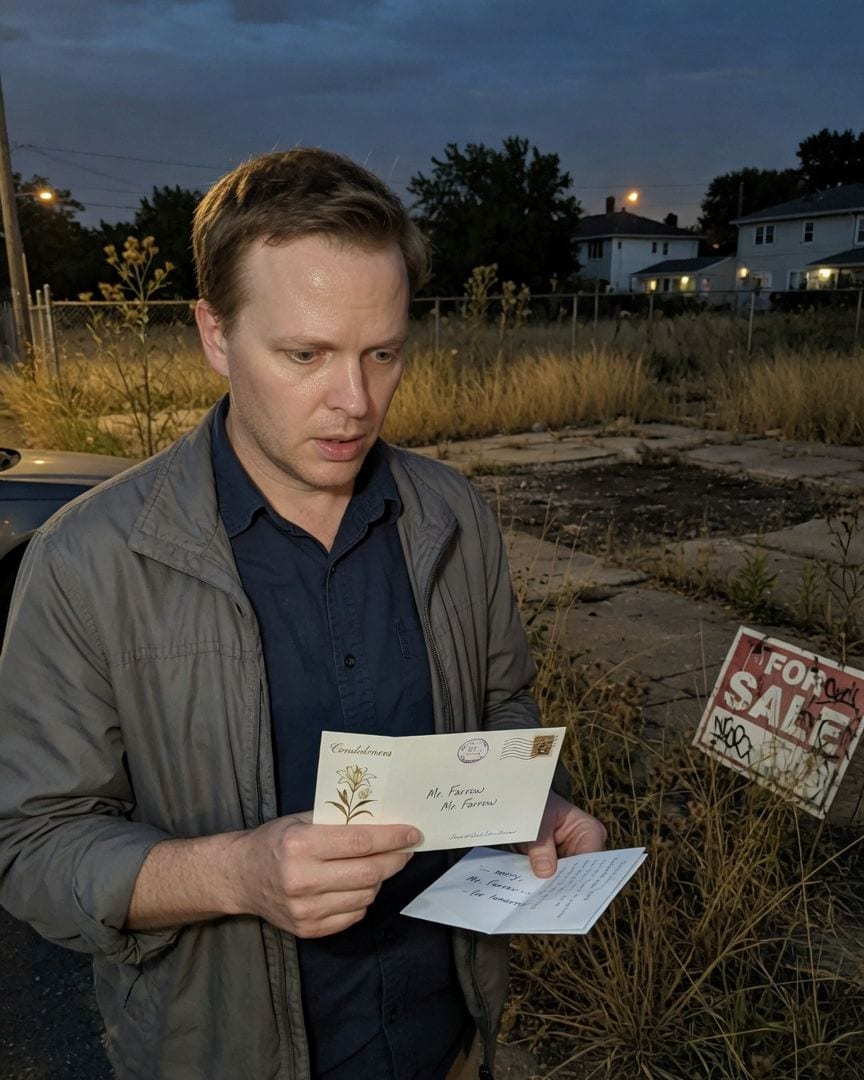
My waiter apologized for tomorrow's plans I hadn't made. He stared at his own handwriting, swore he didn't write it.
My quiet, solitary life was routine until a condolence card arrived, addressed to me for an unknown loss. The postmark, '14 Elm St.', was unsettling enough, but driving there revealed the impossible truth: the address was nothing but an empty lot.
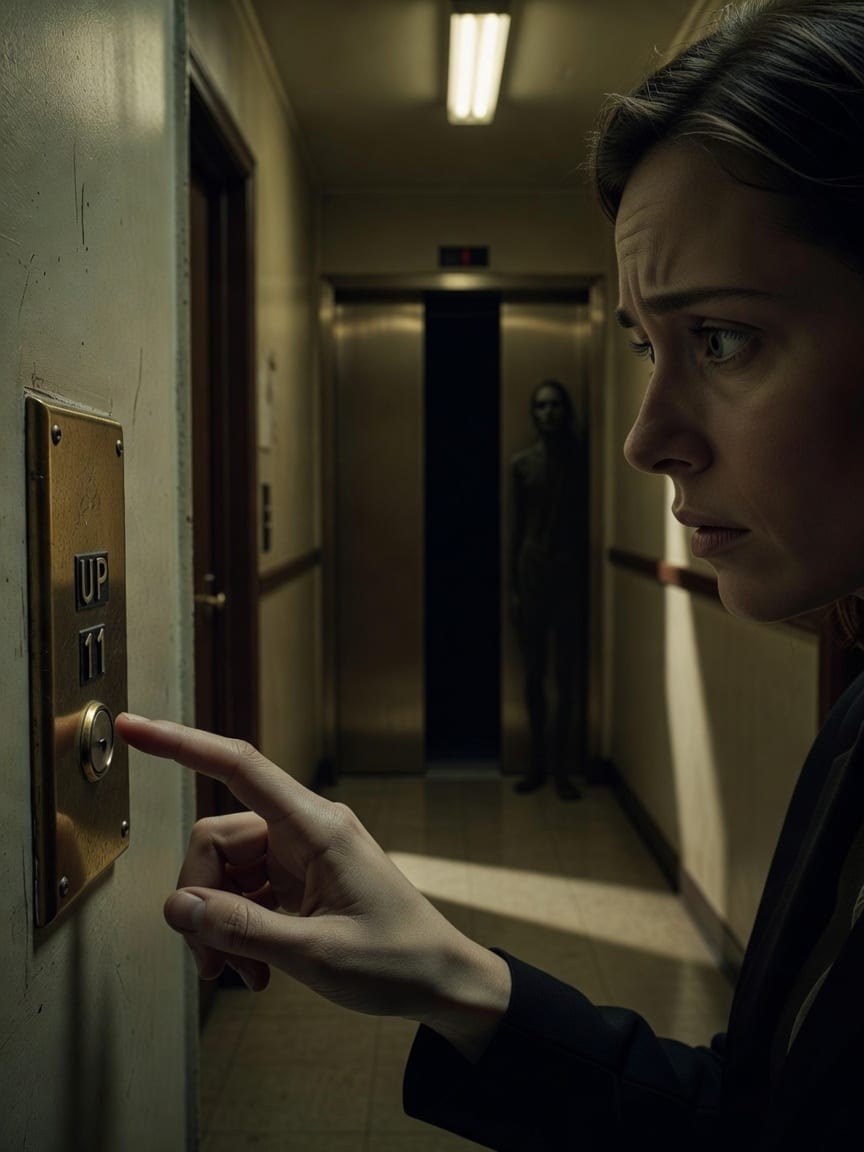
My doorman warned me not to take the tenth-floor lift on Saturday. The building's lift passed inspection last month. He seemed terrified that he'd said it.
My doorman's unsettling warning about the tenth-floor lift left me with a metallic taste of unease. I tried to rationalize it away, but then a birthday card arrived for me, five months early, from an impossible address. It was a site linked to unexplained disappearances, and a cold certainty began to settle in.
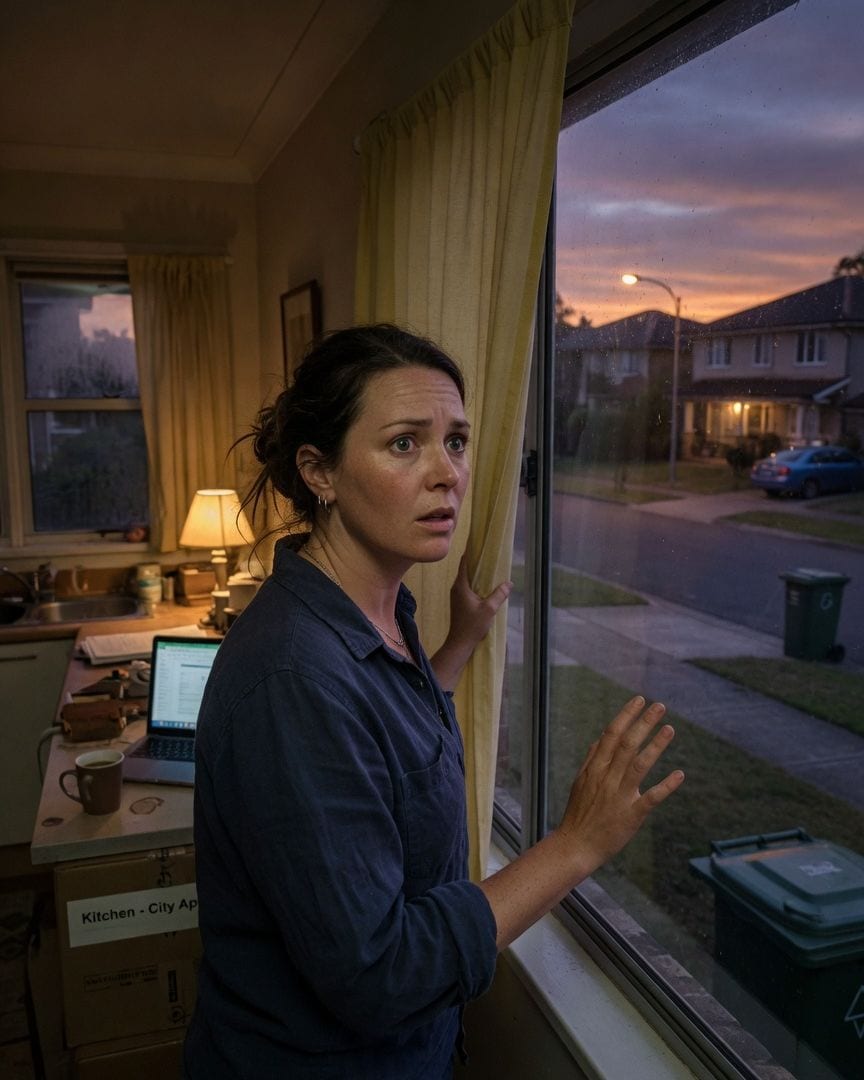
My bin was turned the wrong way Tuesday. The man three doors down hasn't been seen since, though his curtains still open.
New to Oakhaven, I dismissed the local warnings as charming quirks. But after I put my bin out first, my neighbor Joel Whitmore vanished, leaving only a cryptic 'My turn' note. The same strange symbol from his note was chalked on my bin, facing the street.
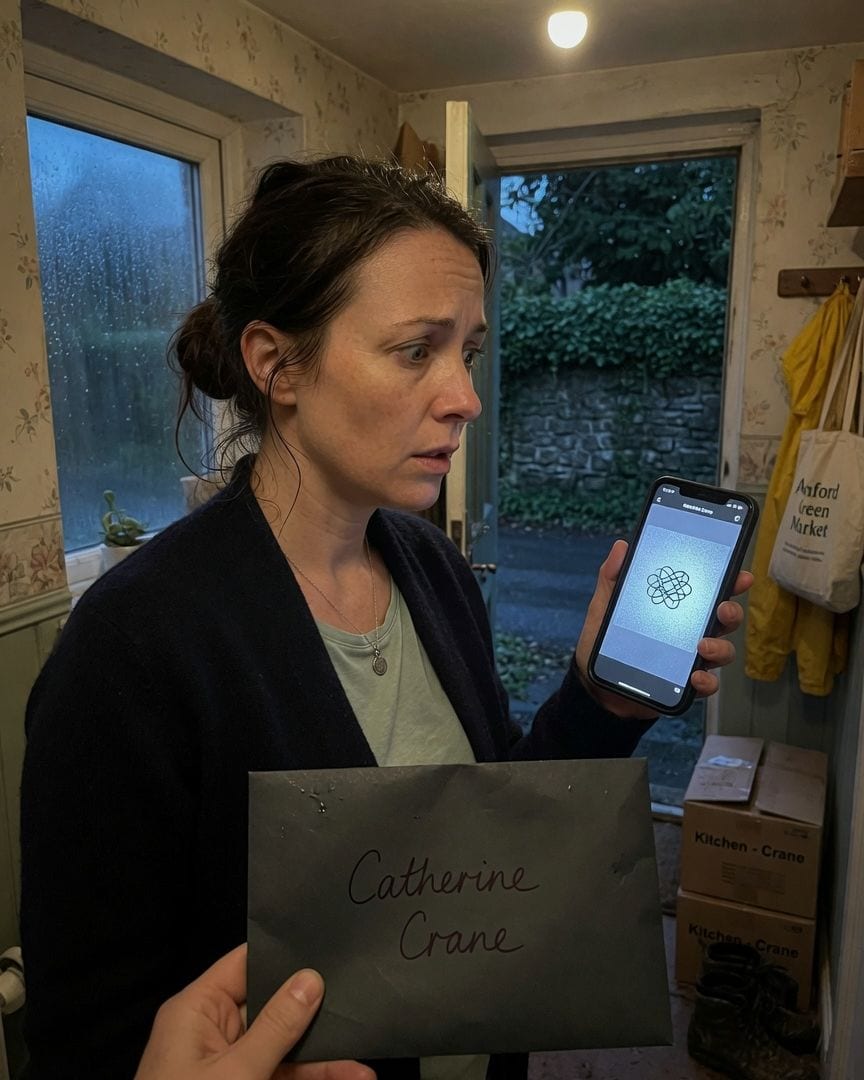
My postman warned me: never use the old pillar box. Royal Mail logs a collection every day, one item, signed by no one.
Moving to Ashford Green, I dismissed my postman's strange warning about the old pillar box by the ford. But after my own letter vanished inside it, I returned at midnight. Then, a dark, unstamped envelope slowly slid *out* of the slot, addressed to me.
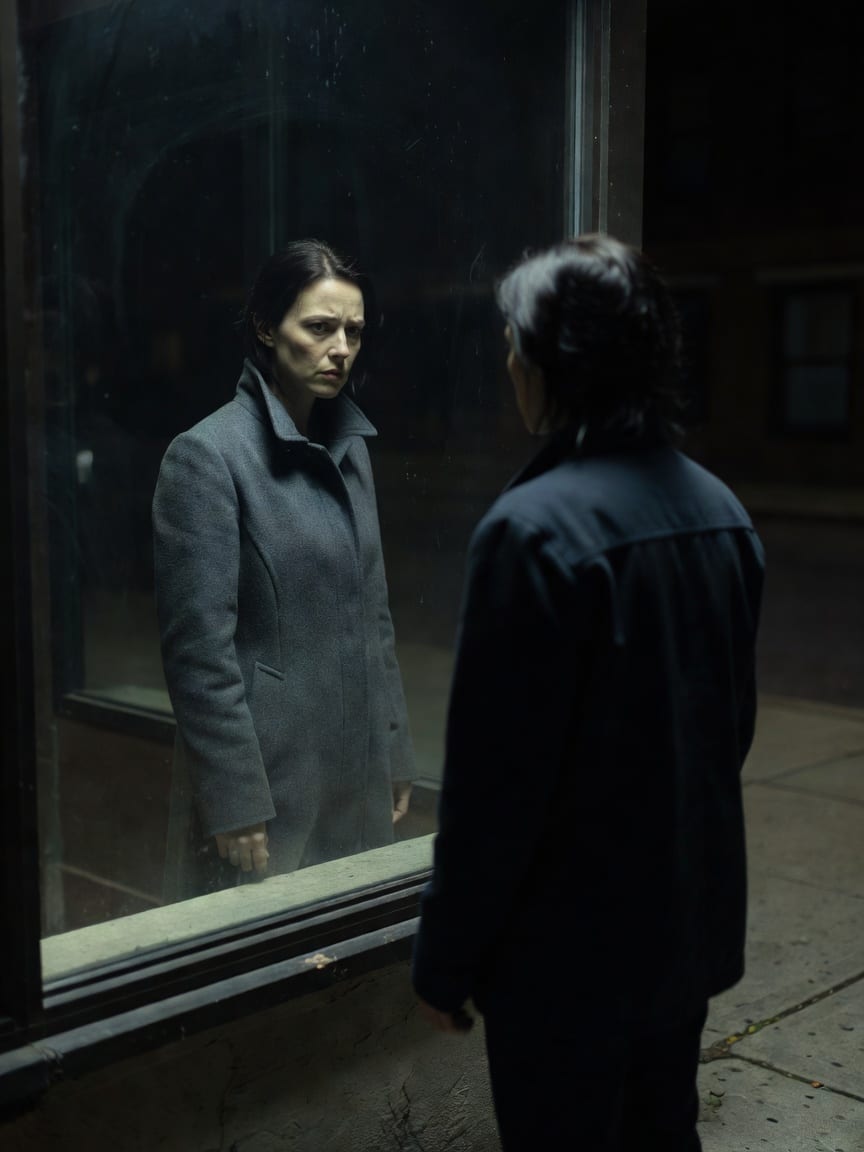
My neighbor saw me take her parcel, wearing my grey coat, at 11:52 AM. I was in Lisbon that whole week.
Returning from Lisbon, I was met by my neighbor Elena, who insisted I'd signed for a parcel last week. She even said I was wearing my grey wool coat. But my coat was still packed in my suitcase, and I was thousands of miles away, checking into my Lisbon hotel at that exact time.
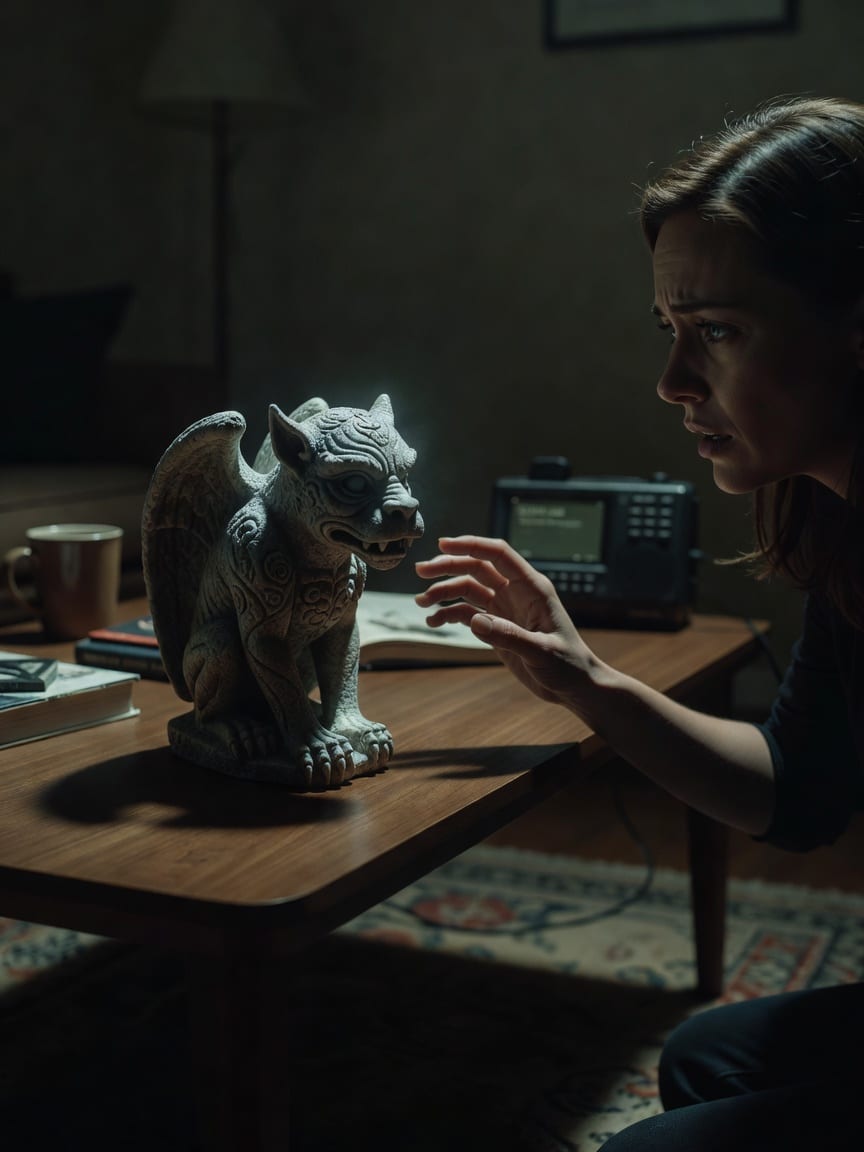
My radio scanner spoke my address at 2 AM. A flat voice read local homes, all with past dates. Mine was the only one in the future.
It was two in the morning, and my quiet house was filled with the usual hum of my weather scanner. But the static broke, replaced by a flat, synthesized voice reading a list of local addresses and dates. My hand froze when it spoke my own address, 181 Foster Drive, followed by a date: October 27th. That date was three weeks from now.