My night nurse, Aoife, restocked my cart every 5 AM. The ward sister says no nurse by that name has ever worked here, and I was alone on every shift.
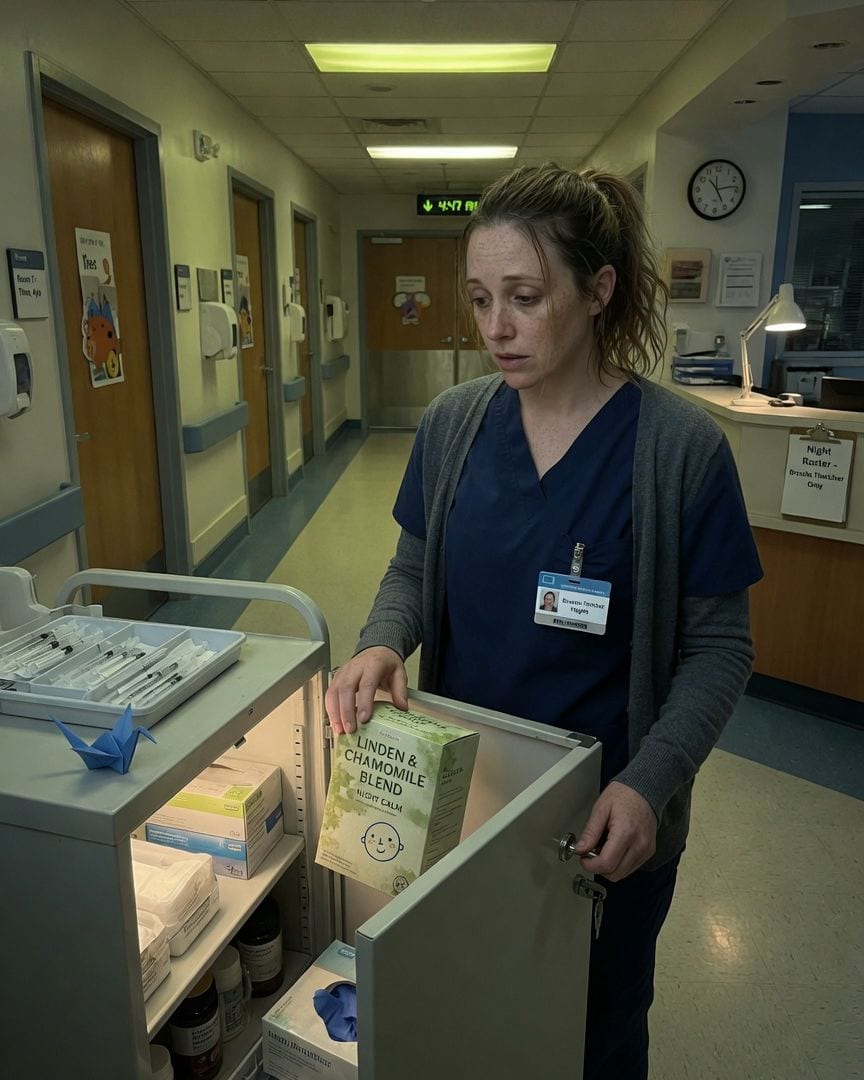
I pushed my medication cart down the quiet pediatric ward hallway, the soft hum of the fluorescent lights my only companion.
It was my last shift before my transfer, and despite the low thrum of the hospital, I felt a familiar, quiet satisfaction. Everything was exactly as it should be.
As always, my cart was impeccably restocked for the 5 AM meds round – all the right dosages, neatly organized, fresh syringes lined up in their trays. Aoife, my quiet colleague, had done it again.
I rarely saw Aoife's face clearly, just a gentle, freckled profile disappearing around a corner, or the rustle of her scrubs in the dim light. She kept to herself, a shadow in the periphery, but her work was always precise.
She was always there, a steady, unobtrusive presence, especially when I felt most alone during the long, lonely watches between three and five in the morning. Today, nestled among the blister packs, there was a small, perfectly folded origami bird.
A tiny blue crane, its delicate paper wings spread as if about to take flight. Aoife always left them.
Later that morning, as I was handing over to the day shift, I saw Catherine Radcliffe, the ward sister, at the nurses' station. Catherine was busy with paperwork, her brow furrowed with the usual morning pressure. I seized the moment.
'Sister Radcliffe,' I began, a friendly smile on my face, 'I'm trying to get a hold of Aoife. I wanted to invite her to my leaving do. I've been trying her extension all morning.'
Catherine looked up, her expression flattening. The pen in her hand stilled, hovering over a patient chart. 'Aoife?' she repeated, her voice unusually quiet, almost thin. 'There's no nurse named Aoife on the trust's books, Brooke. Never has been.'
I blinked, a cold knot forming in my stomach. 'What? Of course there is. Gentle, freckled, always restocking my cart before 5 AM. She's been on my shifts for months!' I could feel a sudden heat rising to my face.
This was absurd.
Catherine's gaze was steady, unwavering, and far too calm. 'Brooke, you've been the sole night nurse on this ward for every one of your shifts. I've personally signed off on your rosters. There's no Aoife.'
I felt a sudden, dizzying sense of unreality. The floor seemed to tilt slightly beneath my feet.
I grabbed the printed night roster from the clipboard, my own name, Brooke Thatcher, listed alone for every night I'd worked over the past four months.
The paper felt impossibly thin in my trembling hands, a stark white lie against the weight of my own experience.
I walked back to the deserted ward, the ward sister's words echoing in my ears, bouncing off the quiet walls. It had to be a mistake, a clerical error, a new hire not yet on the system.
But the certainty in Catherine's voice, the blankness of the roster, had burrowed deep. It felt wrong, utterly and completely wrong.
I remembered Aoife's distinct habit: a particular brand of obscure herbal tea she always kept in their shared, locked supply cabinet, a small indulgence for the long nights. My mind raced, searching for any solid proof.
I fumbled with my keys, my heart thudding against my ribs with an erratic, frantic rhythm, and unlocked the cabinet door. My gaze swept over the usual supplies, the sterile wipes, the gloves, my own emergency coffee.
Everything in its place. Then, tucked behind a box of gauze, I saw it: a half-empty box of that very tea, its faded green label unmistakable.
On its side, drawn in a precise, almost childlike hand, was a tiny, stylized freckled face – a doodle only Aoife ever made.
The tea box was a physical anchor in a suddenly shifting reality. I picked it up, my fingers tracing the tiny doodle. It wasn't a memory, a phantom; it was real.
I spent the next day trying to reconcile the impossible. My head ached with the effort, the effort to make two mutually exclusive facts coexist.
I checked the digital entry logs for the supply cabinet, hoping for a name, any name beyond my own. The system showed my ID, and one other: an old, generic 'Night Staff' code, last used hours ago. Useless.
It was a dead end, a digital echo of nothing.
I tried to access security footage from the old pediatric wing, focusing on the times around 5 AM, but the system displayed a recurring 'signal interference' message.
The cameras in that section were notoriously unreliable, always 'glitching' during those exact hours. A convenient glitch, I thought, a cold tendril of suspicion unwinding in my gut.
I started asking other long-serving night staff, subtly, about anyone resembling Aoife, describing her quiet efficiency, her knack for organization, her distinctive freckles. I got only blank stares, confused denials, or suggestions that perhaps I'd simply been sleep-deprived.
The isolation was beginning to gnaw at me, making me second-guess my own sanity.
During a desperate rummage through a forgotten drawer in the nurses' station, looking for old patient files, I found a crumpled, faded paper shift schedule from three years ago.
My own name was listed for a night shift, and next to it, in faded ink, were the initials 'A.O.' with a small, familiar doodle of a freckled face beside them. It was unmistakable.
My persistent, quiet questions, my unusual interest in old records and security footage, had not gone unnoticed. Catherine Radcliffe called me into her office, ostensibly to finalize my transfer paperwork.
The room felt colder than usual, despite the late afternoon sun streaming through the window.
'Brooke, are you getting enough rest?' Catherine asked, her voice gentle, but her eyes sharp, cutting. 'You've seemed… preoccupied. We wouldn't want you to be too fatigued for your new posting.'
The way she said 'preoccupied' made it sound like a diagnosis.
I mumbled reassurances, but the implication was clear: my digging was being observed. I was being warned. The air in the room felt thick, heavy with unspoken things.
Later that night, as I was leaving, Benjamin Doyle, the night security guard, a quiet man with a lifetime of service etched onto his face, stood by the main entrance.
He'd been there for decades, a fixture, as permanent as the hospital bricks themselves. As I passed, he gave me a long, knowing look that felt like a physical touch, a cold hand on my arm.
'Some things are just part of the furniture, Nurse Thatcher,' he said, his voice a low rumble, barely audible above the automatic doors hissing shut behind me. 'Best not to disturb them too much.'
He held my gaze for a beat too long, and I felt a prickle of cold dread, not fear, but a deeper, more profound unease. He knew. He knew exactly what I was doing, and he was warning me.
I couldn't sleep. Benjamin's words had solidified my unease into a chilling certainty. My apartment felt too small, too quiet, too normal for the impossible truth I was chasing.
I found him in the deserted basement archives, a labyrinth of forgotten files and humming servers, the air thick with the scent of old paper and dust. He was meticulously shelving old patient records, moving with a slow, deliberate grace.
I approached him, my heart hammering against my ribs, a frantic bird trapped in a cage. 'Mr. Doyle,' I began, my voice barely a whisper in the cavernous space, holding out the old shift schedule and the tea box.
'You know about Aoife, don't you?'
Benjamin paused, his hand hovering over a dusty box marked 'Pediatrics – Q3 1987'. He turned slowly, his face unreadable, his eyes ancient and weary.
He looked at the schedule, then at the tea box, his gaze resting on the small doodle of the freckled face. He didn't deny it. He didn't even flinch.
He sighed, a long, weary sound that seemed to carry the weight of decades, of truths too heavy to bear.
'Aoife isn't a person, Nurse Thatcher,' he said, his voice calm, almost conversational, as if explaining a simple hospital procedure. 'Not in the way you mean. She's a presence.
This hospital has its own ways of ensuring things run smoothly at night, especially in the pediatric ward.' He gestured vaguely around the archives, to the towering shelves of forgotten histories. 'There have always been… caretakers.
Different names, different faces, but the same duties. They ensure the children are looked after, the rounds are done, the carts are restocked.'
I stared, horrified, my breath catching in my throat. 'But the records? Sister Radcliffe said she doesn't exist.'
Benjamin gave a faint, almost imperceptible smile, a movement of his lips that didn't reach his eyes. 'The records department,' he explained, as if discussing a mundane administrative task, 'they 'correct' these discrepancies. To avoid… undue concern.
It's an unspoken protocol. A way of maintaining order.' He spoke of it like an accepted, if unsettling, part of the hospital's routine, as natural as the changing of shifts, as inevitable as the sunrise.
The sheer calm in his voice was the most horrifying part.
My mind reeled, trying to process Benjamin's chillingly calm explanation. It was too much, yet it explained everything. The glitches, the blank stares, the doodles, the tea. It all fit.
'Has anyone else… tried to find out more?' I asked, my voice barely a whisper, afraid of the answer.
Benjamin looked at me, his expression unchanging, and walked to a forgotten corner of the archives, a section where the brick wall looked older, darker. He knelt, pressing a worn section of the brick.
With a soft, metallic click, a small compartment opened, revealing a dusty, leather-bound ledger. It was thick, heavy, its pages yellowed with age, its cover cracked and worn.
'This isn't official,' he said, placing it on a nearby table, the thud echoing slightly in the quiet. 'But it's accurate.' He opened it, flipping through pages filled with neat, elegant script, entries meticulously recorded.
It was an unofficial log of staff transfers and 'disappearances' from the night shift, dating back decades. He stopped on a page from fifteen years ago, pointing to an entry with a gnarled finger.
'Linda Hartley,' he read aloud, his voice flat. 'Reported seeing an extra nurse working with her.' Underneath, in the same neat script, was a single, chilling line: 'Transferred to St. Jude's, then no further record. Duties assumed.'
His finger moved down, to another entry. 'Ten years ago: Samuel Sutton. Also reported a phantom colleague.' That entry read simply: 'Integrated.'
Benjamin's finger then slid to a blank line near the bottom of the current page, next to the present date, and tapped it. His gaze lifted slowly to meet mine, calm and unwavering.
Benjamin's calm eyes held mine, a silent, terrible pronouncement. 'Integrated,' he repeated, his voice devoid of emotion, 'means becoming one of them. A caretaker.' He explained that my persistence, my 'curiosity,' had marked me.
The 'presences,' he said, needed to be maintained. Sometimes, a new one was needed to ensure continuity.
He spoke of the original Aoife, a kind, gentle nurse who had died in a tragic fire in the old pediatric wing decades ago. 'Her spirit, or what remained of it, simply… continued its duties,' Benjamin explained.
'Over time, others followed. Echoes, manifestations. They take on familiar forms, familiar habits. The gentle nature, the freckles you remember, the origami birds – they're all echoes. The hospital, or whatever force governs these shifts, ensures the work gets done.
And now, it's chosen you. Your leaving, your inquiry, it was all part of the process.' He described it not as a supernatural horror, but as a necessary, functional aspect of the hospital's deep, hidden routine.
The dread wasn't in the explanation, but in its utter, rational acceptance.
I felt a cold, paralyzing terror seize me. 'No,' I whispered, backing away, shaking my head violently. 'No, I'm leaving. I'm reporting this. All of it.' My voice cracked.
I turned, scrambling towards the basement stairs, my mind screaming for escape, for fresh air, for anything but this suffocating truth. Benjamin didn't move, didn't try to stop me. He merely watched, his calm gaze unwavering, unblinking.
I reached the heavy steel door at the top of the stairs, fumbling with the handle, but it was locked, solid, unyielding. I pounded on it, a desperate, frantic rhythm against the unyielding metal.
The sound echoed in the silent basement, swallowed by the oppressive quiet, by the dusty archives that held so many forgotten names.
From the floor above, faint but clear, I heard it: a soft, familiar tune being hummed, a lullaby I'd heard 'Aoife' hum to the children on the ward, a melody that now felt like a shroud settling around me.
I turned back, my breath catching in my throat. Benjamin was still standing there, unmoving, a faint, almost imperceptible smile playing on his lips.
'The night shifts need to run smoothly, Nurse Thatcher,' he said, his voice soft, yet resonating with an ancient authority that filled the vast space. 'And you're very good at your job.'
A strange, cold pull began to settle over me, a deep, weary familiarity seeping into my bones, as if a lifetime of night shifts had suddenly condensed into this one, inescapable moment.
My frantic struggle against the door lessened, my hand dropping slowly from the handle. The lullaby seemed to grow clearer, closer.
Brooke Thatcher’s leaving do was quietly cancelled. Her colleagues were informed she had accepted a last-minute transfer to a remote facility, effective immediately, with no forwarding contact information. Catherine Radcliffe merely shook her head when asked, her lips thin.
'Some people,' she'd said, 'just… fit in better elsewhere.' The incident was quickly forgotten, dismissed as an eccentric nurse's sudden career change. Life at St. Augustine's Hospital continued, the rhythm of its shifts unbroken.
The pediatric night shifts at St. Augustine's continued as before.
Staff occasionally commented on the new night nurse, Brooke, who was remarkably efficient, always had the carts restocked by 5 AM, and possessed a gentle, almost ethereal way with the children.
She even left small, intricate origami birds on their beds, a thoughtful, if unusual, touch.
The night shifts here always run smoothly, one way or another.
If this one got to you
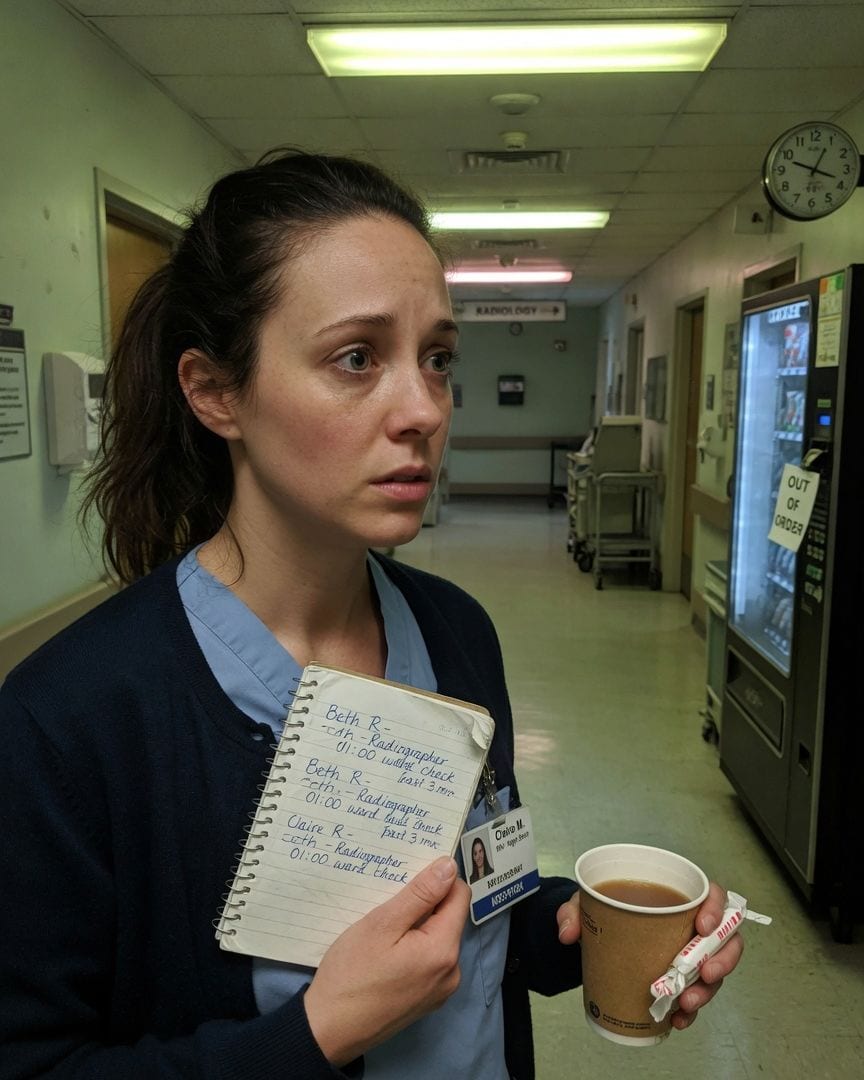
My night shift radiographer, Beth, trades gum with me at 1 AM. Hospital rotas for six years show no radiographer named Beth has ever worked here.
Night shifts at the hospital are isolated, but I found comfort in my 1 AM ritual: trading gum with Beth, the radiographer. She was a constant presence, until I tried to add her to a Secret Santa list. The hospital's detailed records show no trace of anyone named Beth ever working here.
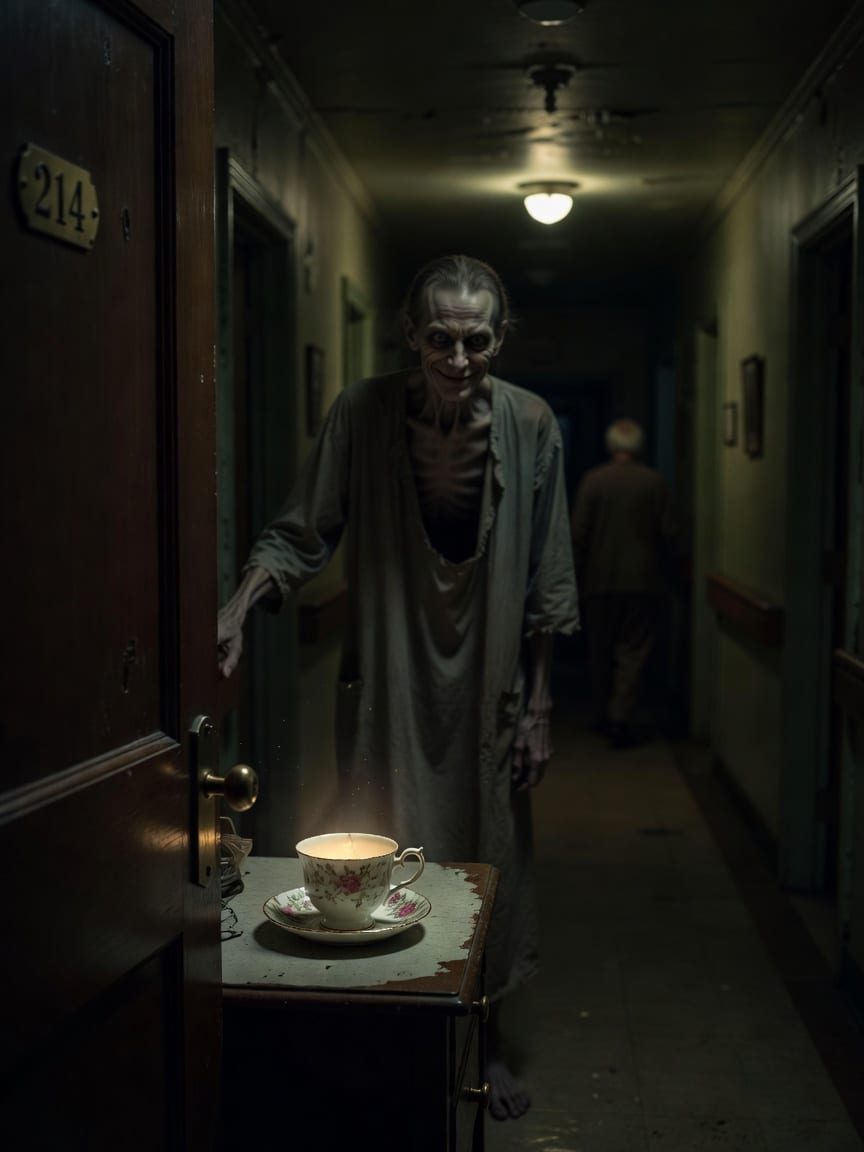
Every 3:30 AM, old Mr. Pryce shuffles past my hospice desk. He smells of lavender, asks for tea. My day nurse says he discharged four months ago. His room has been empty since.
As a night desk attendant, I'm used to the quiet routine of the hospice, especially Mr. Pryce's nightly cold tea request. But then the day nurse told me Mr. Pryce was discharged four months ago, and Room 214 has been empty since. Now, his floral teacup sits on the bedside table, still faintly warm.
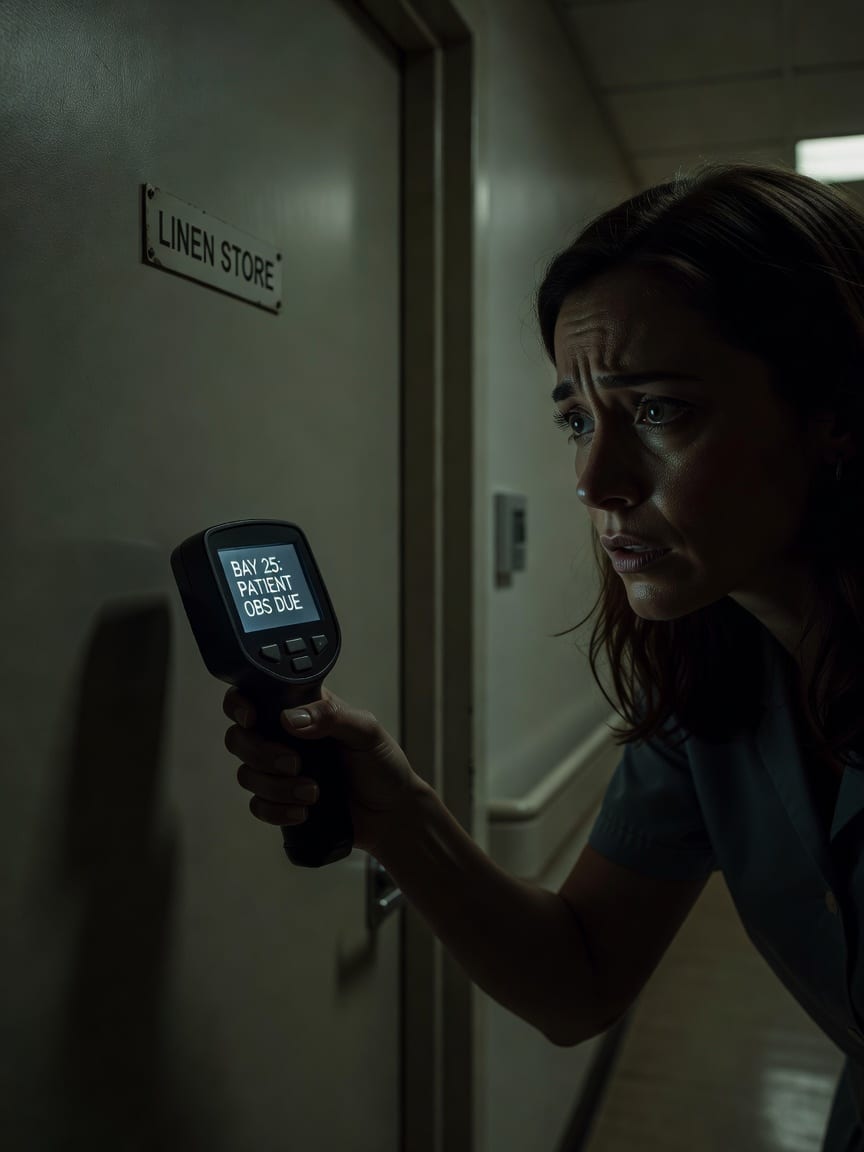
My hospital scanner demands patient care in Bay 25. Bay 25 is a locked linen closet.
I'm a pragmatic nurse, used to my hospital's quiet night shifts. But for a fortnight, my scanner has logged phantom patients in 'Bay 25' — a room that's just a linen closet. Then, tucked away, I found an old patient ID bracelet, faded but clear: 'Bay 25.'
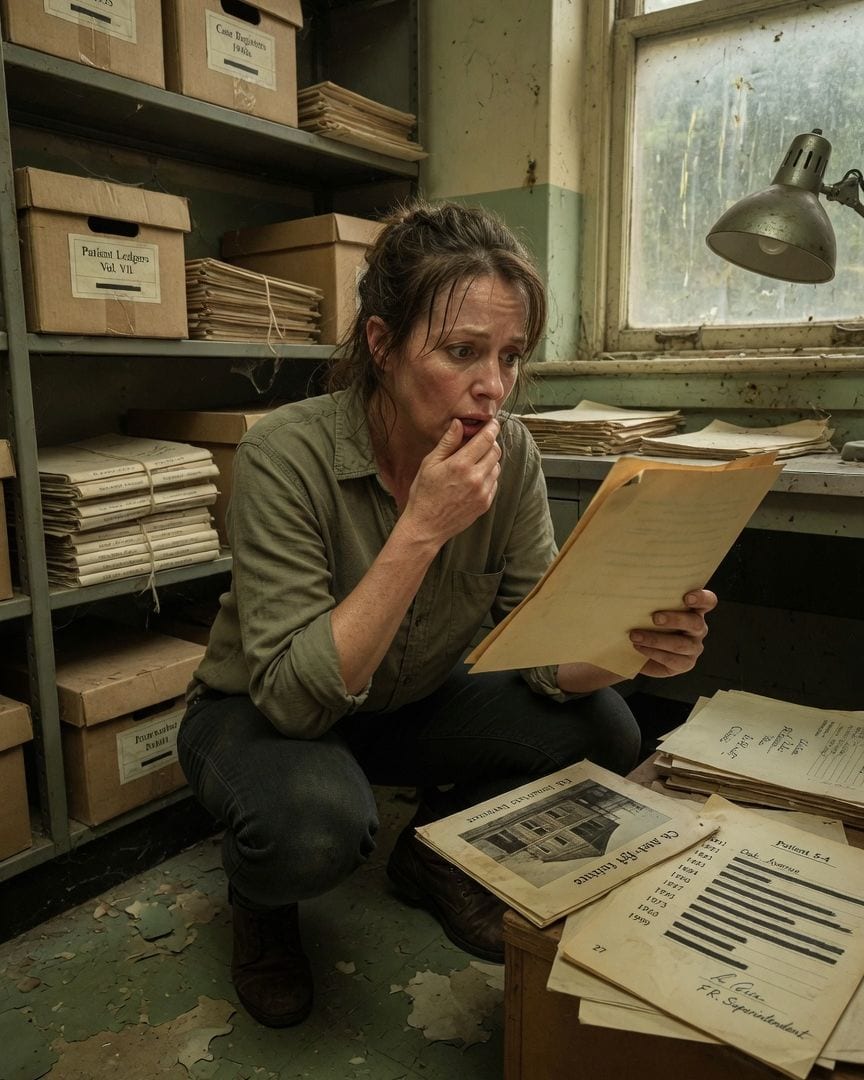
Patient 5-4 keeps checking into my aunt's old sanatorium chalet. The same initials sign them out, 'not traced,' every thirteen years since 1921.
Sifting through my aunt Margaret's estate, I found her old sanatorium file from 1999. Her patient record listed her as 'Patient 5-4,' discharged 'not traced.' But when I accessed the archives, I found 'Patient 5-4' was admitted every thirteen years since 1921, always with identical discharge notes.
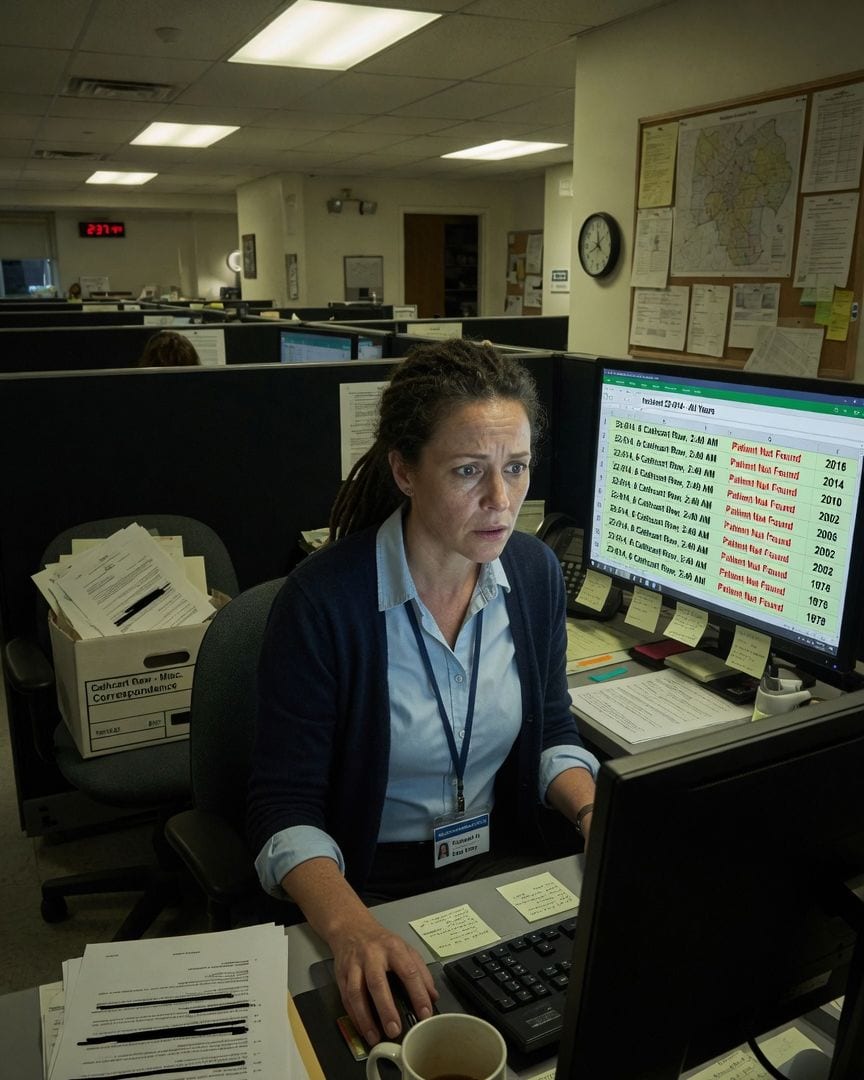
My computer log shows the same 2:40 AM call to Cathcart Row, every four years since 1978, always closed 'patient not found'.
Working data entry for the County Ambulance Trust, I found a routine incident logged as 'Patient Not Found.' But digging deeper, I discovered the exact same phantom call had repeated every four years for over forty years, always at the same address, always at 2:40 AM. Then I found a heavily redacted memo linking it to my own street.
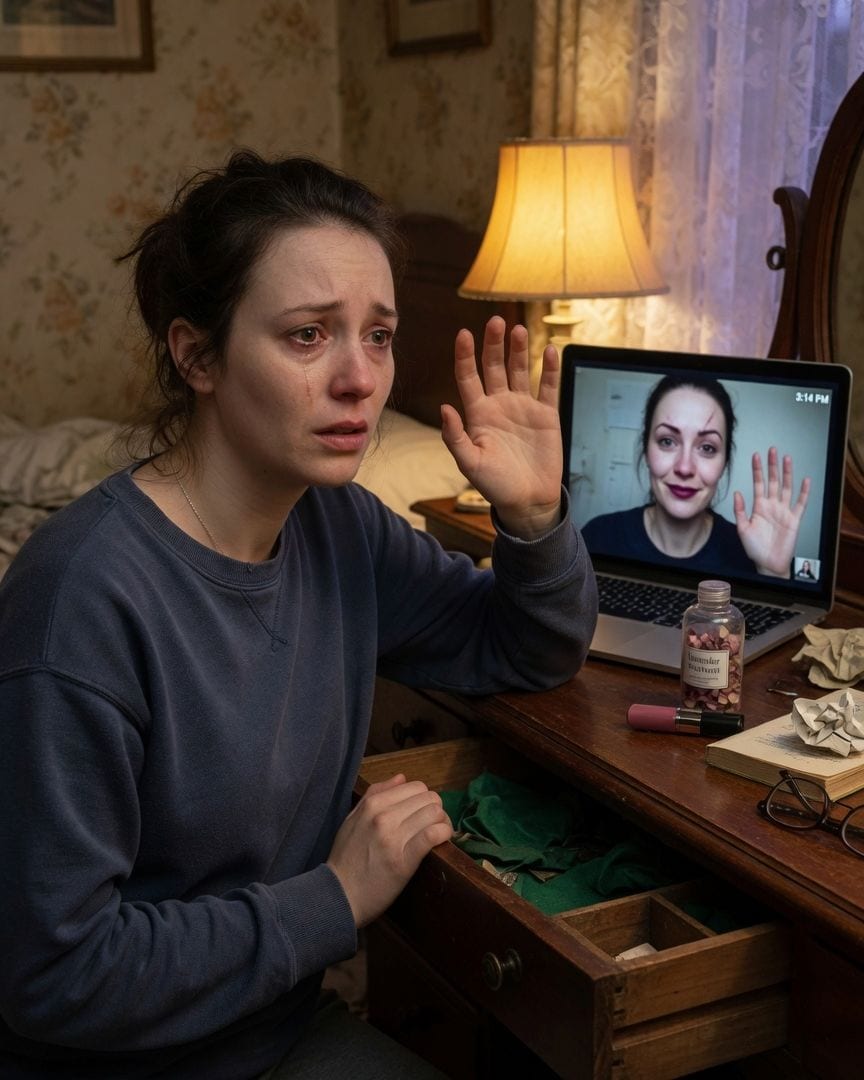
My mother waved with her right hand, both times, on our first call after she came home. She always waved left.
My mother vanished three months ago, then came back. On our first video call, she waved goodbye, but not with her usual left hand. It was her right, a small gesture that twisted something cold in my stomach.