My own signature picked up my prescription in Tucson, Arizona. I live in Maine, and I've never set foot in that state.
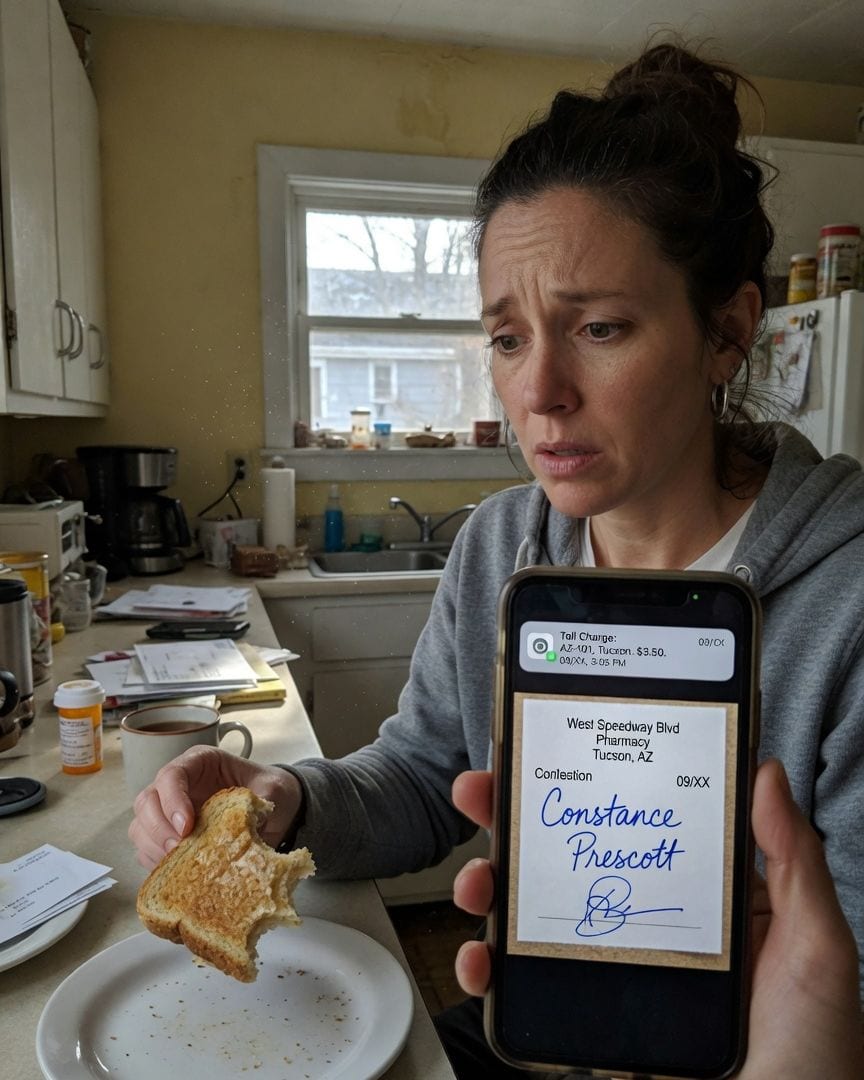
The phone buzzed on my kitchen counter, startling me. It was Edward Galloway from my local pharmacy, the one I’d used for years, calling about a prescription refill. I usually got a text, so a call felt... odd.
“Ms. Prescott,” Edward’s voice started, friendly but with a strange undertone I couldn’t quite place, “just checking if you needed a new supply of your usual medication.
Our Tucson branch confirmed you picked up a month’s worth yesterday, signed in person.”
I froze, a half-eaten piece of toast suspended mid-air between my plate and my mouth. “Tucson?” I repeated, a laugh trying to break through my confusion. “Mr. Galloway, I live in Maine.
I haven’t left the state in six months, and I’ve never in my life been to Arizona.”
There was a beat of silence, then Edward’s tone shifted, becoming formal. “Our records show an in-person pickup on the 9th, 2:17 PM, at our West Speedway Boulevard location. We have a signed receipt.
I can email you a scan for your records, if you like.”
A few minutes later, the email arrived. I stared at the image on my screen, a digital capture from a signature pad. The scrawled name was mine, undeniably.
Every curve, every flourish, even the distinct, almost childish loop on the ‘P’ I’d done since I was twelve. It was perfect. But I hadn’t signed it. I hadn’t been there.
My hand hovered over the keyboard, ready to type a furious reply, but the sheer, impossible accuracy of the signature stopped me cold.
I spent the next few hours in a frantic, rational haze. I called my bank, checking debit card activity – nothing in Arizona. My phone’s GPS history confirmed I hadn’t left my small coastal town.
I even pulled up my work calendar, showing me logged into a remote meeting all afternoon on the 9th, right up until 4 PM. Edward Galloway, at the Maine pharmacy, was polite but firm when I called back.
“The system is clear, Ms. Prescott. It’s an authenticated signature. The biometric data points match.” He couldn’t provide security footage from the Tucson branch, citing privacy policies and the distance. “It would be a complex inter-state request, Ms. Prescott.
And frankly, the signature is what matters here.” The more I tried to find a mundane explanation – a mistaken identity, a digital glitch, a prank – the more each attempt crumbled.
The signature was too perfect, too specific to me.
Just as I was about to dismiss it as an elaborate, inexplicable error, my phone buzzed again. A text alert from my bank: 'Toll Charge: AZ-101, Tucson. $3.50. 09/XX, 3:05 PM.' My heart hammered against my ribs, a trapped bird.
Another impossible record, same impossible city, same impossible date. I wasn't just 'signed in' somewhere, I was now 'driving' there too.
The world was insisting I existed in two places at once, and the dread was starting to feel less like confusion and more like a cold, creeping violation.
I remembered my grandmother once mentioning a 'peculiar incident' involving a distant relative, a great-aunt, decades ago, something about a library book and a signature that wasn't hers. Constance dismissed it then as an old woman's fancy, a fading memory.
But now, a flicker of unease sparked a new, unsettling thought. I needed to find that story.
I dug through old family albums and boxes in my attic, the dust motes dancing in the thin shafts of afternoon light. I was searching for anything related to my great-aunt, Penelope Prescott.
Hours later, amidst faded newspaper clippings and brittle letters, I found it: a small, sepia-toned photograph, creased with age. It showed Penelope, a stern-faced woman with tightly pinned hair, standing in front of a modest house, circa 1950.
In the bottom left corner, barely visible, was a faint, almost invisible inscription. Penelope’s name, in looping cursive. I squinted, bringing the photo closer to the dim, dusty light. My breath hitched.
The distinct, almost childish loop on the ‘P’ was not Penelope’s, it was mine. It was unmistakably my signature, on a photograph signed by my great-aunt, decades before I was even born.
The photograph sent a chill through me deeper than any digital record. This wasn't a glitch; it was a legacy. I spent days researching Penelope Prescott, finding old obituaries and local historical society records.
The records were sparse, but a pattern began to emerge.
Penelope, too, had seemingly inexplicable entries in her life: a train ticket purchased for a cross-country journey she never took, a membership card to a distant club she never visited, all bearing her name, and often, an implied signature.
The newspaper archives even hinted at a 'misplaced identity' incident with a local bank in the late 1950s that was never resolved.
I found online forums for people reporting strange, impossible records – bank statements, medical bills, traffic violations – all timestamped for places they insisted they’d never been.
The posts were often dismissed as paranoia or identity theft, but the specific, recurring detail of 'my own signature' or 'my own face on a security camera' resonated with a terrifying familiarity.
I tried to trace the origin of the digital signature pads used by the pharmacy. It led me to a company called Clarion Data Solutions, a massive, vaguely defined entity that specialized in 'biometric verification' and 'secure data management.'
Their website was slick, professional, and utterly opaque. No clear contact numbers, only a general inquiry form that vanished into the ether. The unease morphed into a focused dread.
This wasn't just a local pharmacy; this was something vast, something with tendrils in countless institutions. A week after the Tucson incident, another 'Statement That Places You' arrived.
This time, it was a library book checked out in my name, signed by me, from the town library twenty miles from my home, on a day I had been confined to bed with a migraine.
The proximity made it worse. It felt less like a distant error and more like something closing in, the mundane horror just around the corner.
My escalating online searches for 'Clarion Data Solutions' and 'impossible signatures' seemed to attract attention.
My social media feeds, usually filled with local news and recipes, began showing targeted ads for 'biometric data protection' and 'digital identity security,' some with oddly specific phrasing.
One afternoon, an email landed in my inbox, subject line: 'Regarding your recent inquiries – Clarion Data Solutions.'
It was from a 'Customer Relations Specialist,' polite but unnervingly specific, referencing my 'concerns regarding data discrepancies' and my 'recent contact with affiliate entities.' It offered a 'dedicated resolution pathway' and suggested a phone consultation.
The email felt less like an offer of help and more like a gentle warning, a confirmation that they were watching, that they knew exactly what I was looking for.
A few days later, while I was grocery shopping, picking out apples, I noticed a man in a dark suit, impeccably dressed, standing by the produce aisle, casually glancing at his phone.
He was too well-dressed for a weekday afternoon in my small town, his dark jacket crisp in the harsh fluorescent light. He wasn't overtly watching me, but every time I moved, he seemed to shift, maintaining a discreet distance.
His movements were fluid, almost imperceptible. As I left the store, he was still there, now standing near my car, seemingly absorbed in his phone, but his gaze felt like a physical pressure on my back.
He didn't approach, didn't make eye contact, but the feeling of being observed was palpable. The incident solidified my dread: my digging had been noticed. I wasn't just an anomaly anymore; I was a subject of interest.
The library book incident felt like a test, a closer intrusion, a subtle flex of their capability. I knew, with chilling certainty, that someone knew exactly what I was finding, and they were letting me know they were aware.
I made an appointment to see Edward Galloway at the pharmacy, bypassing the formal channels of Clarion Data Solutions. I brought the scanned Tucson receipt, the toll charge, the library record, and the photograph of Penelope.
I laid them out on his desk, the disparate papers forming a grim mosaic. Edward, usually jovial, looked profoundly uncomfortable, the fluorescent lights making his face seem paler than usual. “Ms. Prescott, I’ve already explained… we follow procedure…”
I cut him off, my voice steady despite the tremor in my hands. “This isn’t about a mistake, Mr. Galloway. This is a pattern. My great-aunt had the same impossible signature, decades ago.
I’m asking you, as someone who works with this system, what is Clarion Data Solutions?”
Edward sighed, running a hand over his thinning hair. The monitor behind him hummed, a low, constant drone. “Clarion… they’re our data partners. For customer authentication, secure prescriptions, that sort of thing.
They manage the backend of our biometric verification system.”
I pressed, “And the signature pads? Are they just… signature pads?”
Edward hesitated, then his shoulders slumped. He looked away, focusing on a stack of invoices on his desk. “No. They’re biometric scanners. They capture unique identifiers.
Like your signature’s specific pressure points, your hand’s micro-movements, the exact velocity of the stroke.”
I felt a cold knot tighten in my stomach. “So, my signature isn’t just copied. It’s… analyzed? Deconstructed?”
“Precisely,” Edward said quietly, still not meeting my gaze. “For ‘data integrity.’ Clarion maintains what they call ‘legacy profiles.’ Some families, for whatever reason, have unique ‘data markers’ that are… particularly stable. Persistent across generations.”
He wouldn’t elaborate on what 'stable' or 'persistent' meant. He wouldn't say why. But the words hung in the air, heavy and inescapable: legacy, persistent, generations. The photograph of Penelope with her impossible signature suddenly clicked into horrifying focus.
It wasn’t a coincidence. It was a blueprint. My unique loop, passed down, was not just a quirk of handwriting; it was a key, a target, a marker.
Edward, finally seeing the dawning horror on my face, looked at me directly, his eyes filled with a weary resignation. “Ms. Prescott, I can’t tell you everything. But your family… the Prescotts… you’re a known lineage. In their system.
They’ve been tracking it for a very long time.” The implication was clear: this wasn't happening to me; it was happening because of me, because of who I was, who my family was. We had always been part of it.
The wrongness was inherent.
I pushed, my voice barely a whisper. “What kind of lineage? What does that mean?”
Edward looked around nervously, then pulled up a restricted terminal on his computer, his fingers flying across the keyboard with a practiced speed. “I’m not supposed to show you this. But… this is Clarion’s internal system. The ‘Legacy Profile Archive.’”
He typed in a series of commands. The screen flickered, then a new display appeared, filled with names and dates, stark white text on a black background. At the top, in bold, was 'PRESCOTT, CONSTANCE'.
Below it, a field labeled 'Activation Event:' followed by the date of the Tucson incident. My blood ran cold. This wasn't an error. It was an 'event.'
Edward scrolled down. 'PRESCOTT, PENELOPE,' my great-aunt’s name, appeared next, with an 'Activation Event' date from the 1950s. The screen seemed to ripple, the dates stretching backward in time.
Then, below Penelope, another name, 'PRESCOTT, GLORIA,' a distant relative I vaguely remembered from childhood stories, with an 'Activation Event' date from the 1920s.
Edward scrolled again, faster this time, his finger blurring over the trackpad, revealing more Prescotts, stretching back further than I could have imagined, each with their own 'Activation Event' date, some in the early 1900s.
And next to each name, a tiny, almost hidden thumbnail image. A signature. I leaned closer, my eyes scanning the small images, my breath catching in my throat.
Each one, despite the different names and dates, contained the same distinct, almost childish loop on the ‘P’ — my loop, my family’s impossible, recurring biometric marker.
The pattern across dates and names was horrifyingly clear: my family wasn’t just involved; they were a generational line, systematically tracked, activated, and replicated by this silent, pervasive system, stretching back for decades, long before anyone understood biometric data.
I was just another entry in a very, very old ledger.
I finally secured a meeting with Oscar Harlow, an executive at Clarion Data Solutions, in a stark, minimalist office that overlooked the city.
Harlow was impeccably dressed, his composure unwavering, even as I laid out my evidence: the scans, the impossible records, the family photo of Penelope, the database printouts Edward had secretly provided.
The smooth, cool surface of the glass table seemed to mock my frantic certainty.
“Ms. Prescott,” Harlow began, his voice calm, devoid of any discernible emotion, “Clarion doesn’t create these records. We merely… access them. Your family, generations ago, participated in a ‘Family History Archive’ program.
It was presented as a genealogical study, a way to preserve unique family traits for posterity. What they didn’t understand then was the inherent potential of biometric data, particularly unique signature patterns.”
He gestured to a large screen on the wall, displaying a complex, glowing network diagram of interconnected nodes and lines. “Your unique signature loop, what we call a ‘persistent biometric marker,’ was cataloged. It’s incredibly stable, as Mr. Galloway mentioned.
It allows for what we term ‘proxy transactions’ – automated data imprints generated by the system itself, based on your established biometric profile. It’s not malicious, Ms. Prescott. It’s simply… data replication.
A passive, automated system that has been running, uninterrupted, for decades. The pharmacies, the toll booths, the libraries – they’re all nodes in a larger, interconnected data ecosystem.
Your family’s data simply triggers these events, a legacy profile awakening as needed.”
Harlow’s explanation, delivered without a hint of emotion, his eyes calm and clear, was more chilling than any conspiracy theory I could have imagined.
It wasn’t a person actively doing this; it was a vast, indifferent machine, a system too big and too old to be stopped, merely following its programmed directives, using her own essence against her.
Every impossible record, every shared signature, every 'Activation Event' now clicked into place, forming a terrifyingly coherent picture of a life not entirely my own. The horror was in the sheer, unthinking efficiency of it.
Harlow leaned forward, a faint, almost imperceptible smile touching his lips. It was a smile cold enough to freeze the air in the room. “You have a choice, Ms. Prescott. You can accept your ‘legacy status.’
We can provide you with a secure portal to monitor your ‘proxy transactions,’ ensuring data integrity, allowing you to track the system’s activities.
Or,” he paused, his gaze unwavering, “you can fight a system that is too vast, too automated, and too deeply embedded to be stopped. Resisting will only lead to your data becoming ‘unstable.’ More discrepancies.
More… unexpected ‘Statements That Place You.’ Perhaps even more personal ones. Imagine your medical records showing procedures you never had, or your financial history reflecting transactions that destabilize your life. It’s not a threat, Ms. Prescott.
It’s simply the nature of the system. It seeks balance. It seeks coherence.”
He brought up another projection on the large screen, a global map covered in countless glowing nodes, each representing a data point, a transaction, a signature, pulsing with silent, unseen energy. The sheer scale was overwhelming, stretching across continents.
I felt a wave of crushing futility. There was no villain to defeat, no person to expose. It was a pervasive, systemic horror, an unseen current moving beneath the surface of the world, quietly replicating and re-writing lives.
I couldn't smash the machine; it was everywhere, in every digital transaction, every biometric scan. I couldn't escape it; it was literally imprinted in my DNA, or at least, in my unique biometric markers, a generational ghost.
The only escape was to understand, to accept, and to live with the knowledge that a part of me, a digital ghost, was always somewhere else, living a phantom life that the world’s records insisted was real.
The choice wasn't about winning; it was about how I would lose. I looked at Harlow, his calm, unblinking eyes, and knew he was right. There was no fighting the ledger.
I returned home, the world appearing unchanged, yet utterly transformed. Every pharmacy sign, every digital signature pad, every automated toll booth now hummed with a silent, terrifying meaning. I didn’t fight Clarion. I didn’t expose them.
What would be the point? The system was too vast, too ingrained. Instead, I began a new routine.
When a new 'Statement That Places You' arrived – a hotel booking in Florida, a donation to a charity in California, all bearing her unmistakable signature – I simply filed it away.
A growing collection of impossible truths, neatly organized in a binder, a silent testament to the life my phantom self was living.
I watched my own life unfold, meticulously keeping my personal records, a desperate counter-ledger against the one the world insisted was true. The dread wasn't gone; it had simply settled, a heavy, quiet companion, a shadow that lived alongside me.
Life continued, a deceptive calm over her coastal town. I still went to work, saw friends, made my usual purchases.
But the occasional 'Statement That Places You' still arrived, an impossible record of a purchase, a visit, a signature from a place I'd never been, on a day I could prove I was home.
I no longer tried to explain them, no longer called the institutions. I just added them to my binder, a growing testament to a phantom existence. My own life, meticulously documented, ran parallel to this other, silently written one.
I knew the truth, and the truth was that the ledger always balances, even when it writes a life that isn’t yours.
Her neighbor, Edward, waved as Constance brought in her mail. “Anything interesting today?” he called out. Constance smiled, a faint, almost imperceptible curve of her lips.
“Just another receipt for a fishing trip in Alaska,” she replied, holding up an envelope. Edward chuckled. “You, fishing? Never thought you for an outdoorsy type.” Constance’s smile widened, just a fraction.
The ledger always balances, even when it writes a life that isn’t yours.
If this one got to you
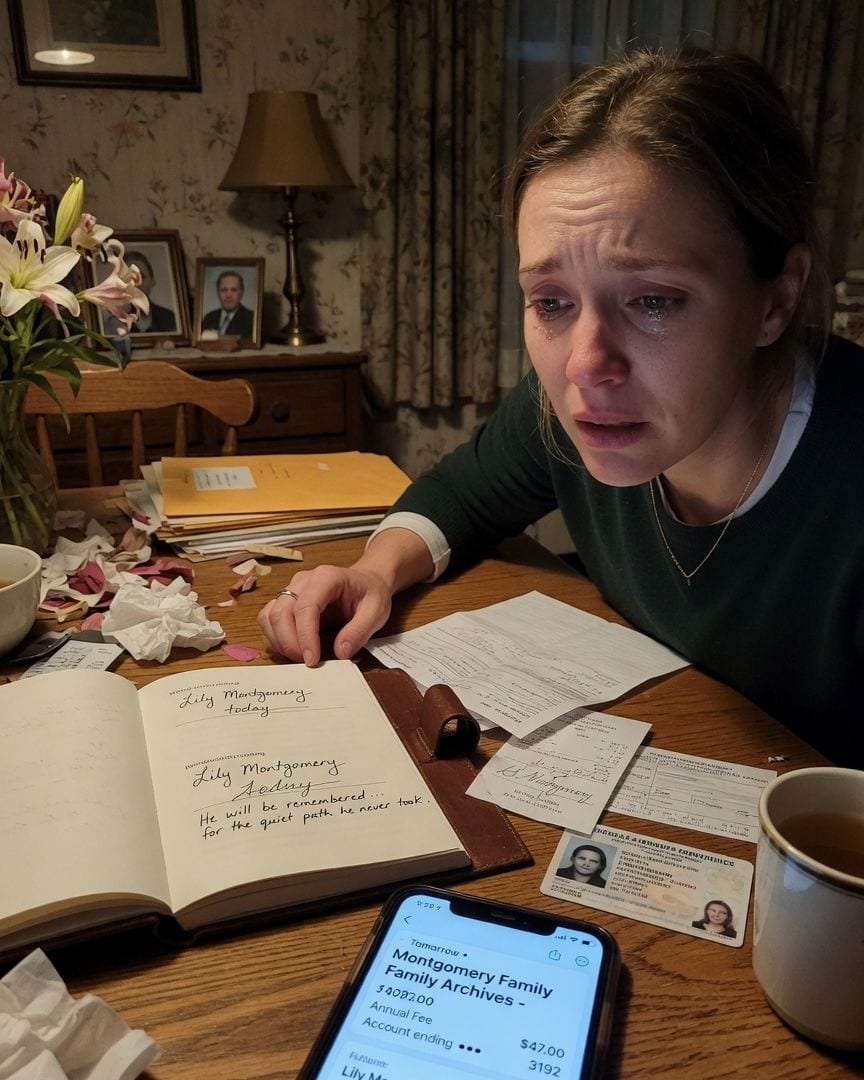
My handwriting was in the condolence book. Dated before my uncle died. Words I'd never choose.
At Uncle Howard's funeral, grief-stricken, I signed the condolence book. But later, flipping back through the pages, I found my own distinct handwriting on an entry dated the previous morning—before he had even died. The words beneath my name were chilling, a judgment I would never make.
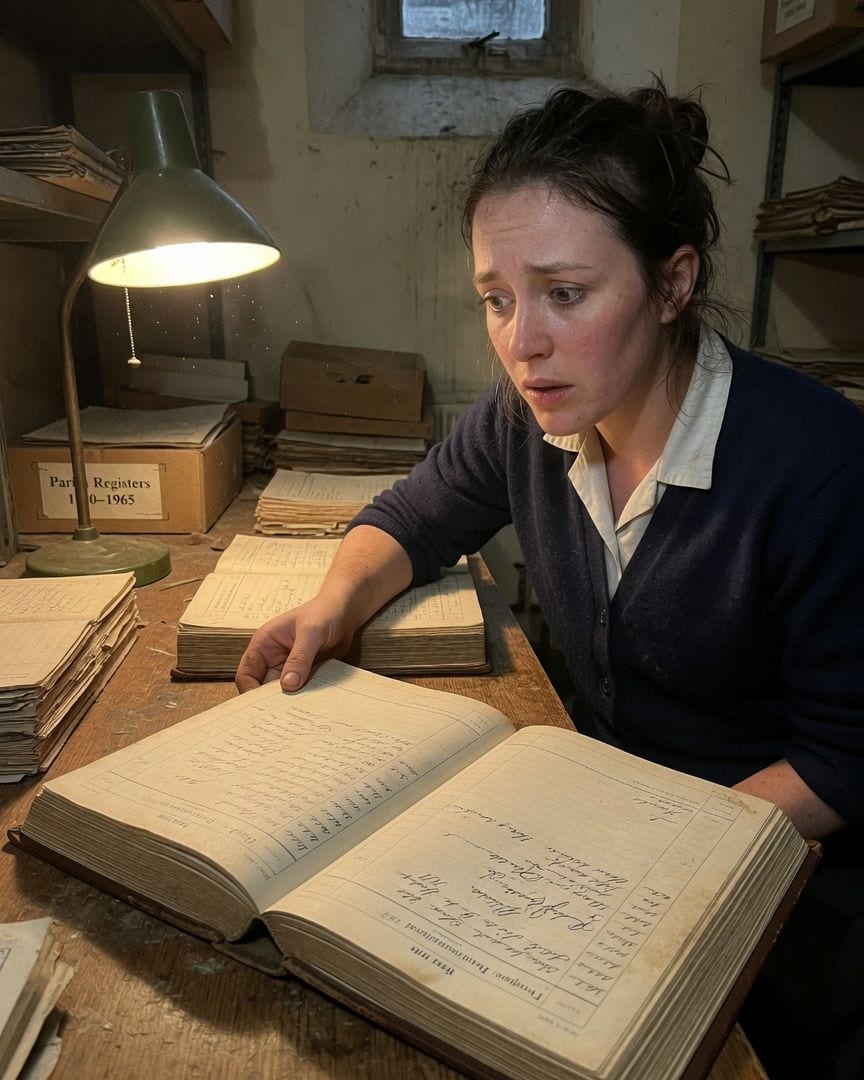
My signature appeared on a baptism record from 1957. Decades before I drew my first breath.
I was reviewing my parents' marriage certificate for a citizenship application, a simple formality. But my gaze snagged on a witness signature: my own distinctive handwriting, dated six years before I was born.
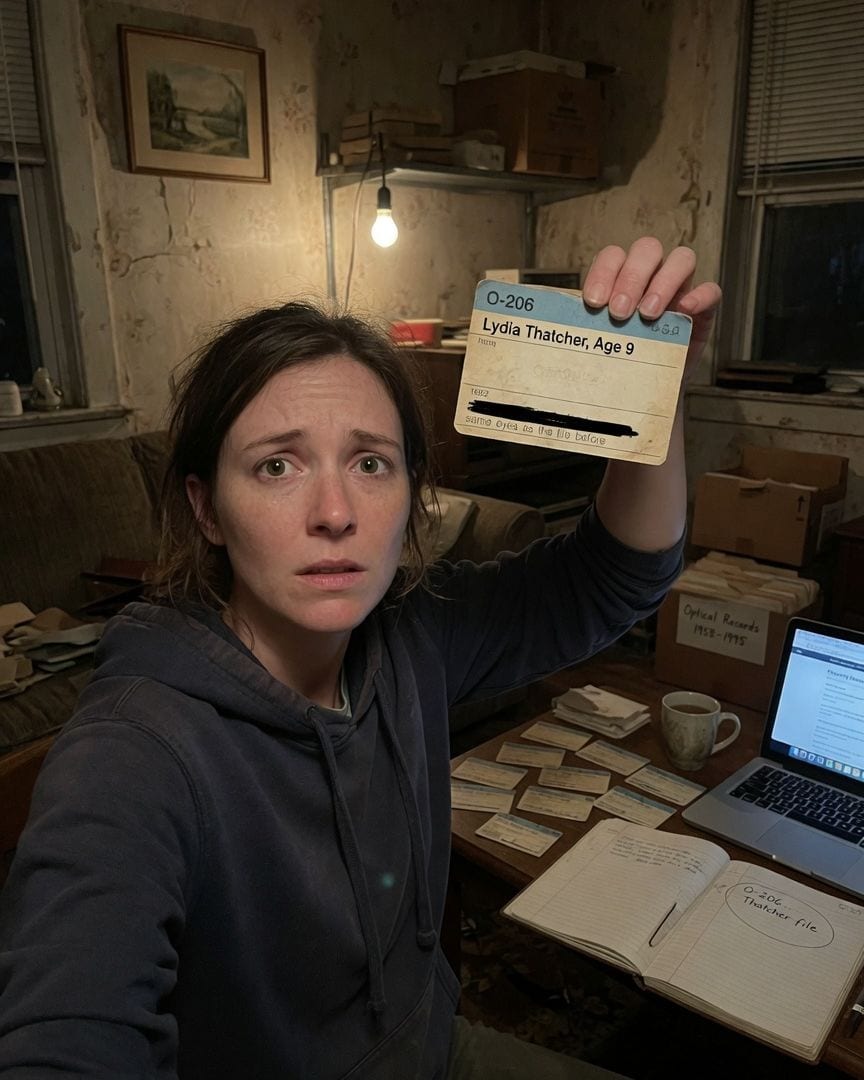
My own optical card is dated 1962, with my name on it. I wasn't born until 1993.
Sifting through old patient files from my former optical practice, I found my own O-206 card. It had my name, Lydia Thatcher, and my current home address printed on it. But the card was dated 1962, decades before I was even born, and a redacted note mentioned 'same eyes.'
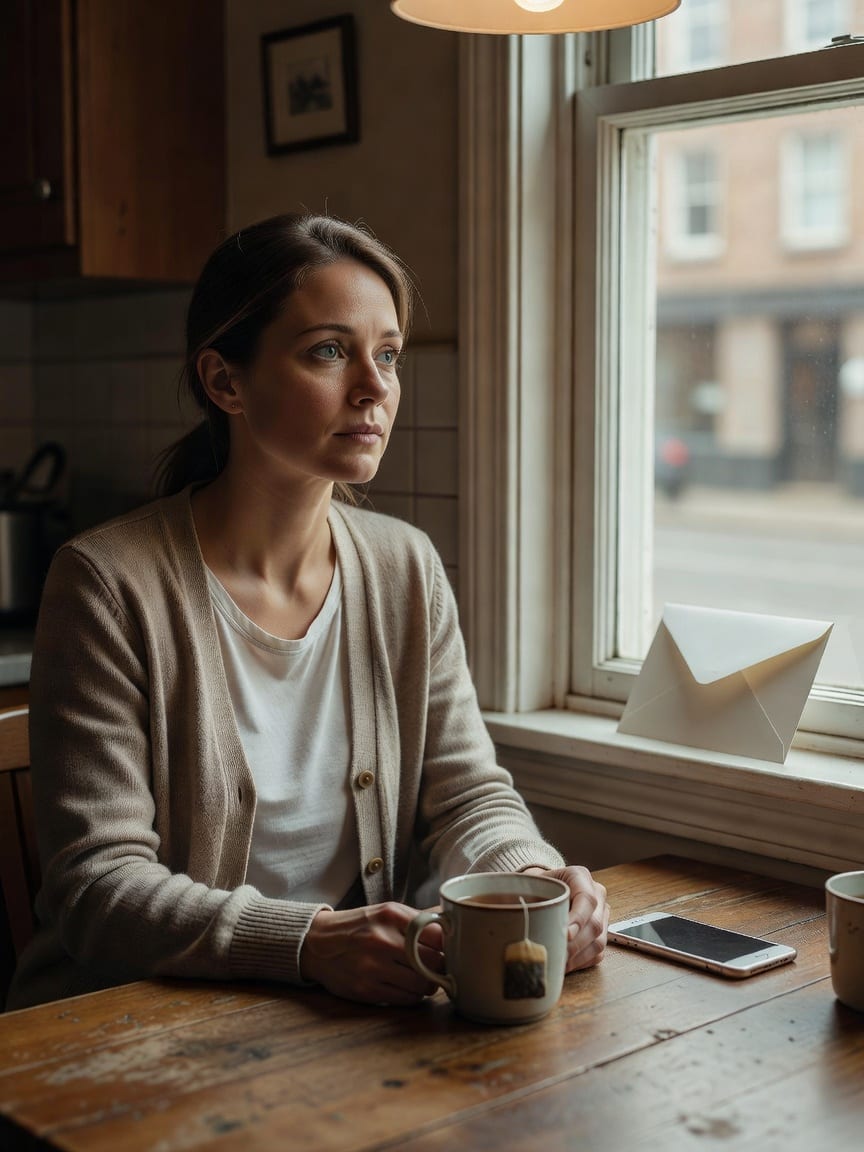
My taxi driver knew my name before I spoke, then apologized for the flight I was going to miss. I was arriving. The cab's plate was scrapped four years ago.
After a strange taxi ride, I received an unsettling birthday card addressed to me. Its return address listed 'Old Mill Road Field,' an empty lot where a mill once stood, and it was postmarked locally. The card arrived four months before my actual birthday, sparking a cold dread I couldn't ignore.
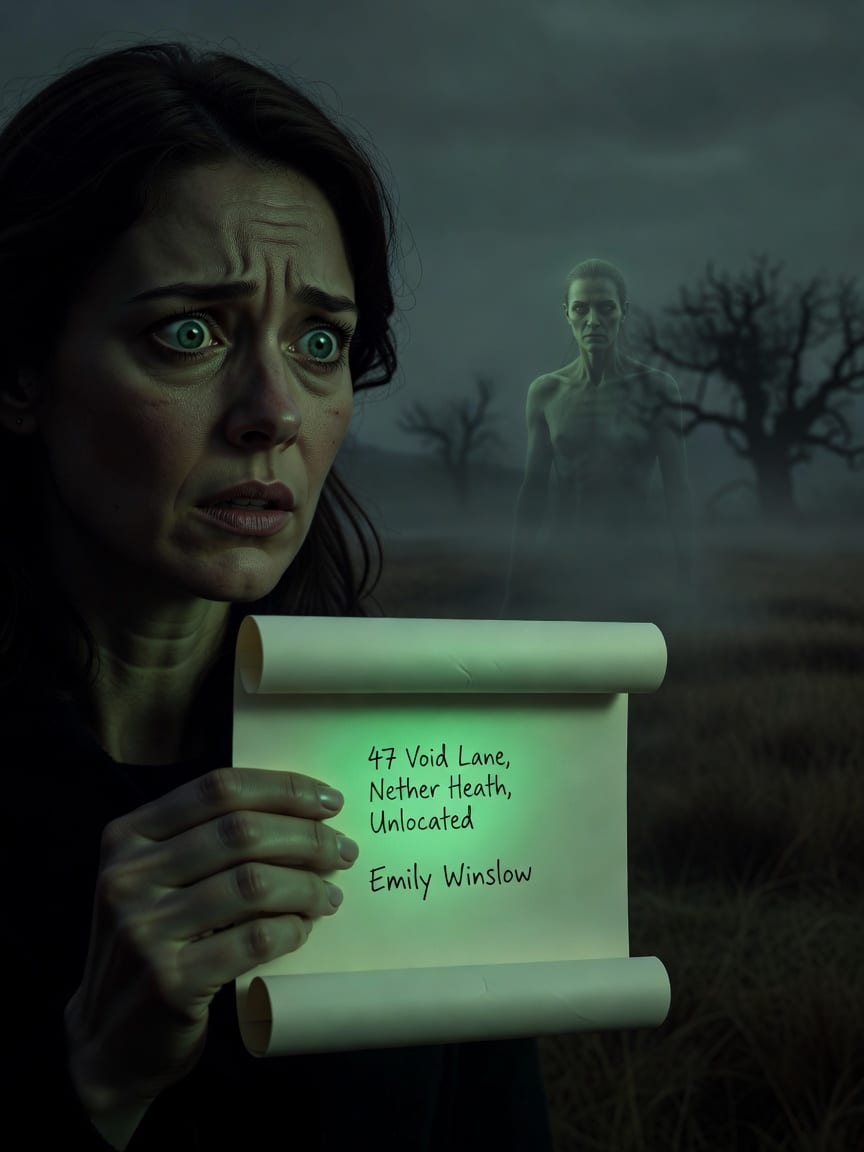
My change-of-address card arrived today. It said I'd moved to a house I'd never seen, on a street that didn't exist. And it was signed with my own hand, a month from now.
A crisp, cream-colored card on my kitchen counter informed me I'd moved to 42 Willow Creek Lane, an address that didn't exist. The signature was my name, Emily Winslow, a chillingly precise ghost of my own handwriting. But then I found an old 1947 ledger, listing 42 Willow Creek Lane and a signature identical to the one on my card.
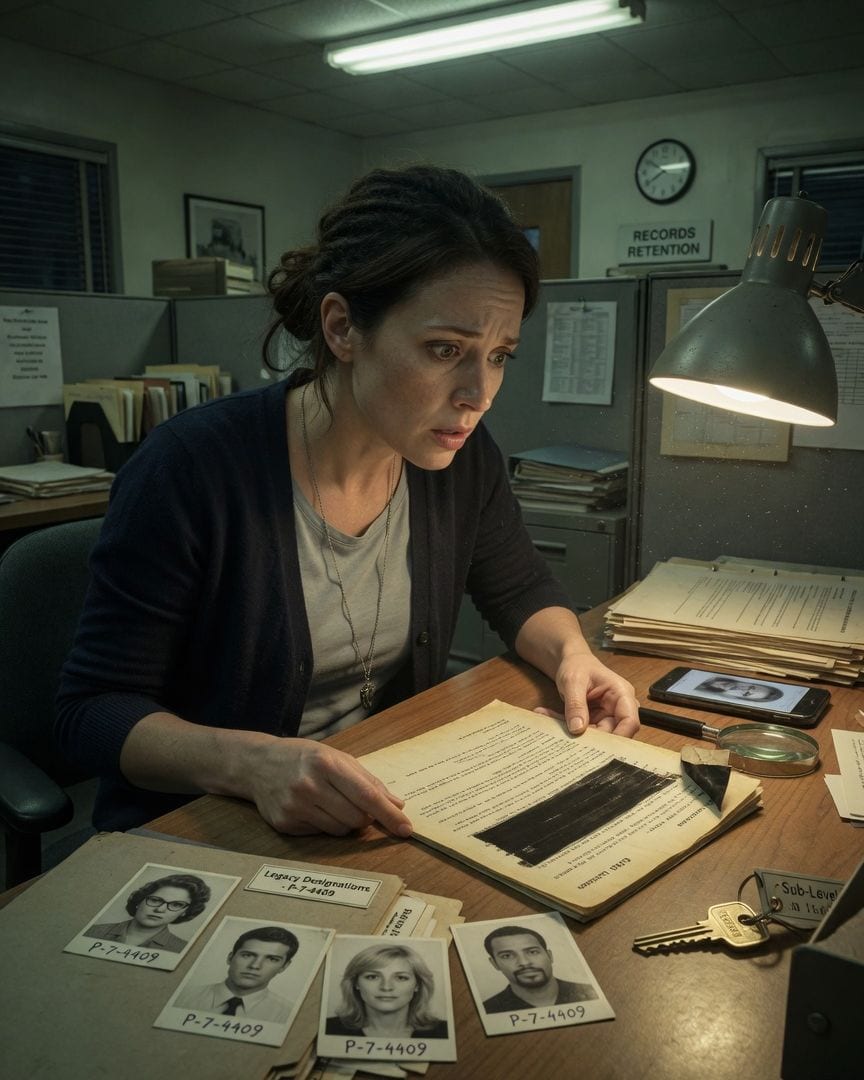
My passport file has four strangers' faces in it. They all share my number, issued since 1966, and none were ever surrendered.
I went to renew my passport, expecting a routine process. Instead, the clerk found four prior applications under my number, each with a different name and face, all 'issued and not surrendered.' Digging deeper, I uncovered a redacted memo that linked one of these mysterious designations to my own childhood street and my mother’s maiden name, years before I was even born.