My own signed timesheets show me working warehouse shifts in Phoenix for four months. I've been in Maine the entire time.
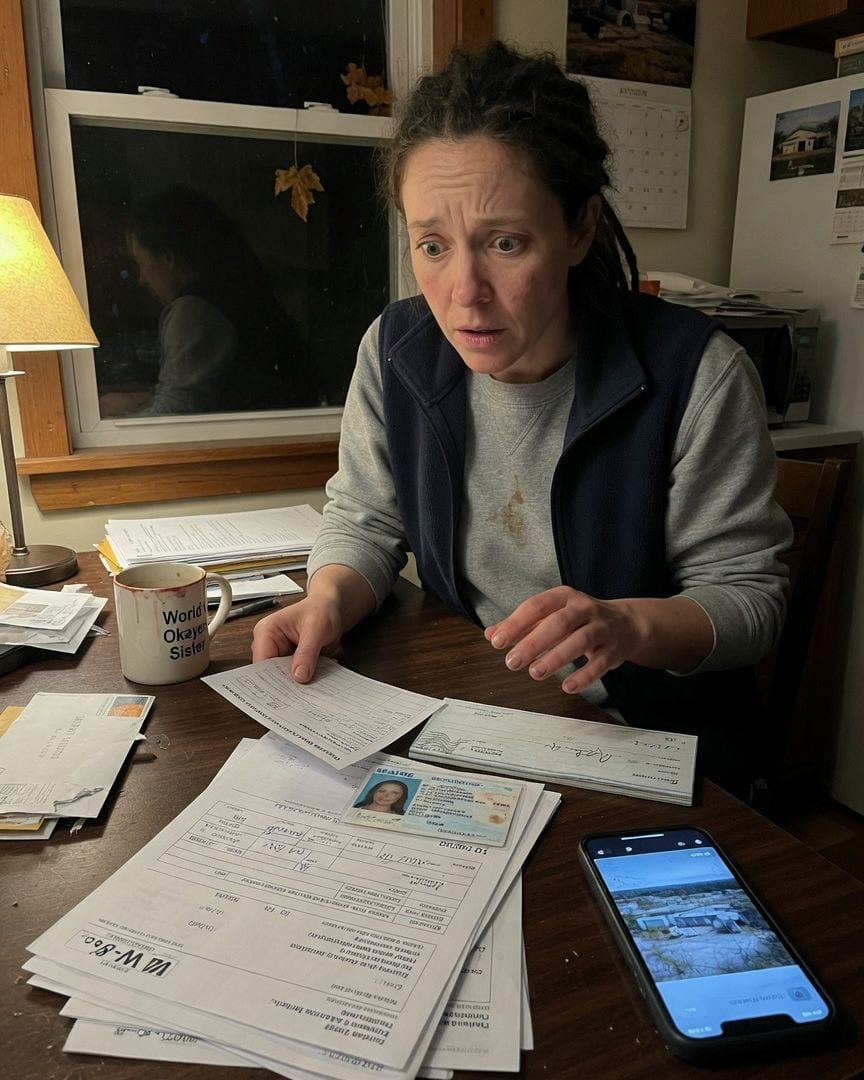
The letter arrived in late autumn, crisp and white against the dark wood of my kitchen table.
I was halfway through my lukewarm coffee, still thinking about the pile of reports waiting for me at work, when I tore open the envelope. It was from "Fontaine & Associates Staffing Agency," Phoenix, Arizona.
My hand, already reaching for my mug, froze. Phoenix. I hadn’t been to Phoenix in my life.
Inside, a W-2 form. My name, my address, my social security number. All correct. But the income. Substantial, detailed as "wages for warehouse shifts" over four months last year. May through August. My mind scrambled, trying to reconcile the dates.
Last May, I was revising the Q1 projections, fighting a losing battle with the office thermostat. June, I helped my sister move. July, the family reunion in Acadia. August, I was at my desk, same as always, in Maine.
My salaried job, the one I’d held for seven years, hadn't changed.
Then I saw it, further down the form. My first name. Not "Chloe." Not the common spelling. It was "Chloë." The specific, uncommon spelling only my family ever used, the one with the two little dots like an accent mark.
A private detail. My hand started to shake, the cheap paper crinkling faintly. This wasn’t a mistake. This wasn’t some random clerical error.
This was a claim on my life, insisting I had spent a scorching summer in a Phoenix warehouse when I was, undeniably, here. Home.
I called Fontaine & Associates the next morning. The number on the W-2 led to a labyrinth of automated menus before finally connecting me to a man named Arthur Pennington.
His voice was unnervingly calm, like someone reading from a script. He confirmed the W-2 was legitimate. He said he’d fax over the "supporting documentation."
The fax machine at the local library whirred to life, spitting out page after page. The first was a crisp copy of my driver’s license. My photo, my birthdate, my address. All undeniably real, undeniably mine.
Not a bad forgery, but the actual thing. My stomach tightened. Then came the timesheets. Week after week, logged hours, twelve-hour shifts. The address: a Phoenix industrial park I didn't recognize.
The dates marched across the page, May to August, precise and relentless.
I scrolled through, trying to force a rational explanation into existence. Identity theft, it had to be. A sophisticated one. But the driver’s license… that was too perfect. And the dates, so specific.
I pulled out my phone and Googled the Phoenix address from the timesheets. It wasn't the small, unmarked office Arthur had given me for Fontaine & Associates.
No, this was a sprawling, abandoned industrial complex on the dusty outskirts of Phoenix. Satellite images showed a skeletal structure, weeds pushing through cracked concrete, sun-bleached and desolate. No active business. No actual warehouse.
The mundane explanations crumbled around me like dry earth, leaving behind a cold, empty space of dread.
My gaze drifted to the bottom of the final timesheet, the last week of August. Underneath the meticulously logged hours, a signature. 'Chloë Walsh.' My breath hitched in my throat.
It wasn’t just a crude scrawl, not a generic scribble dashed off by some thief. It was hers. It was mine.
The precise slant, the way the 'h' in Walsh had that small, distinctive, almost imperceptible loop that I always made. The careful dot over the 'ë', always there, sometimes more prominent than others.
It was an exact replica, down to what looked like subtle variations in pressure. I fumbled for my own checkbook, pulling it from my purse, and laid it open beside the fax.
My signature on a check from two weeks ago. My signature on the Phoenix timesheet. They were identical. My own hand, signing away my time in a place I’d never been, doing work I never did.
I stared at the digital ink, utterly paralyzed by the impossible familiarity.
Refusing to accept the impossible, I took the faxed timesheets and my own identity documents to Greta Norwood, a retired forensic handwriting expert my lawyer sister-in-law recommended.
Greta was a small woman with keen, appraising eyes that missed nothing, and a no-nonsense demeanor that made you feel simultaneously judged and reassured.
She spread the papers out on her desk, adjusting a bright lamp, then pulled a heavy magnifier over them.
She spent a long, silent assessment comparing my known samples – my driver’s license, my bank statements, old letters – with the signatures on the fax.
The silence stretched, broken only by the hum of the overhead lights and the occasional rustle of paper as she shifted pages. Finally, she straightened, shaking her head slowly. Her voice was quiet, but firm.
"Chloe, dear, I've been doing this for forty years. These signatures are… unquestionably your own hand." Not a forgery, she insisted. Not even a remarkable replication. They were mine.
The small, distinctive loop on the 'h', the faint lift before the 'W', the precise curve of the 's', the two tiny dots over the 'ë' – all present, all perfect. My own dread solidified into a heavy, cold weight.
Armed with this unsettling confirmation, I tried to contact other 'employees' listed on the Phoenix W-2s, the other phantom workers I hoped would share my confusion.
The numbers were disconnected or led to confused, elderly voices who denied any connection to Phoenix, to Fontaine & Associates, or to 'warehouse work.' They sounded genuinely bewildered.
I dug deeper into Fontaine & Associates itself. The online records showed it was an old, established agency, founded decades ago, with a sterling reputation and no public scandals.
Yet, the Phoenix address Arthur Pennington had given me, the one for their official office, was a small, unmarked suite in a nondescript business park. A world away from the sprawling, abandoned warehouse on the outskirts of town.
The gap between the official record and the horrifying reality widened with every dead end, each lead dissolving into more questions.
A week later, Arthur Pennington from Fontaine & Associates called me directly. My phone buzzed on the kitchen counter, and his name flashed, sending a spike of adrenaline through me.
His voice was as smooth as ever, almost soothing, but this time I could pick up an undercurrent, a faint trace of something knowing. He asked if I was "satisfied with the resolution to her inquiry."
He gently suggested that "sometimes, these things are best left alone." The words hung in the air, a silken threat. A chill traced its way up my spine. My digging had been noticed.
The next day, a small package arrived at my doorstep. I opened it with a nervous tremor. Inside, nestled in shredded paper, was a pristine, blank timesheet book. Identical to the ones from the fax.
My heart pounded against my ribs. I pulled the shipping label off the box. It was printed, the address clear. But beneath it, faintly visible, were indentations. I held it up to the light. The faintest impression of handwriting.
My own handwriting. My address, my name. As if someone had pressed the label down onto a page I'd written on. As if someone had used my own hand to write it out before placing the label over it.
I slammed the box shut, the cardboard making a flat, sickening thud. A cold certainty settled over me. They weren't just watching me.
They were sending a message, a proof, demonstrating they had access to my most intimate details, to the very texture of my identity. The room suddenly felt smaller, the air still and heavy.
Rattled but determined, I remembered a name: Samuel Hale. A former employee of Fontaine & Associates, mentioned in an obscure online forum post about "unusual HR practices." The post was old, half-gibberish, but the name stuck.
I tracked him down to a quiet coffee shop in Vermont, three states over. Samuel was gaunt, his eyes darting around the room, perpetually jumpy.
He agreed to meet, but insisted on speaking in hushed tones, leaning over the chipped Formica table. The clatter of espresso machines and the murmur of other customers felt like a flimsy shield.
I showed him my W-2, the faxed timesheets, Greta's report confirming my signature. His eyes widened, fixing on the distinctive 'Chloë' spelling, then on the perfectly replicated signature. "My God," he whispered, "they're still doing it."
He explained that Fontaine & Associates had a 'Special Projects' division, shrouded in secrecy, dealing with "remote clients" and "unusual placements."
He said they had a device, he called it an "imprinter," that could perfectly replicate handwriting from a single sample onto any document. He saw it once, he said, years ago.
A heavy, dark machine, humming faintly in a locked room in the corporate HQ. "It wasn't just for signatures," he said, his voice barely audible above the coffee grinder. "It was for authenticating." He leaned closer, his eyes intense.
"They weren't stealing money. They were stealing… presence. Labor. For something that needed it, but couldn't just ask." He admitted he quit, fleeing the company after realizing the true scale of what was happening.
He pulled a worn USB drive from his pocket, sliding it across the table. "Archived W-2s. From their old server. Maybe it’ll make more sense to you than it did to me."
The W-2. My perfect signature. The abandoned Phoenix warehouse. Arthur's calm threats. The blank timesheet book with my phantom handwriting. It all clicked into a terrifying, coherent pattern. It wasn't a mistake. It wasn't simple identity theft.
It was a system. A vast, deliberate, horrifying system.
Back home, my hands shaking slightly, I plugged Samuel's USB drive into my laptop. The file was a sprawling database of old W-2s and timesheets, thousands of entries. I searched for 'warehouse,' for 'Phoenix.'
The results were overwhelming, pages upon pages of names, dates, and hours. But then, a new kind of dread gripped me, colder and deeper than before. I started noticing the names. Not just mine.
I scrolled, and pattern recognition, once a comfort, became a terror.
'Sophia Norwood,' with a peculiar triple dot over the 'i'. Samuel had mentioned "unique identifiers" in his forum post, but I'd dismissed it as paranoia. Now I saw it.
'Maxwell Lockwood,' with an unusual cursive 'M' that looked like a bird in flight. Dozens of names, each with a specific, private spelling or a unique flourish, exactly as Samuel described.
And each one linked to 'warehouse shifts' in remote, disused industrial sites across the country. Tonopah, Nevada. Roswell, New Mexico. Boron, California.
It wasn't just me. It was a vast, silent, nationwide operation, cloning identities for phantom labor, a horrifying pattern across dates and names stretching back years. The sheer scale of it stole my breath.
I called Samuel, my voice tight with revelation. "It's a pattern, isn't it? All these names, these private spellings, all for the same kind of work in abandoned places."
Samuel sighed, a sound of profound resignation. "I told you they used unique identifiers, Chloe. It was how they selected. A perfect match for a specific… template. The imprinter wasn't just for signatures. It was for authenticating the entire persona.
They needed the records to be unimpeachable, for whatever was being done there."
He explained that the physical presence of the 'workers' themselves was never human, but some kind of automated or generated entity, requiring human 'authorization' via the replicated identity. He theorized the 'warehouses' were less storage, more… factories.
For what, he never knew. "I never saw what they made," he said. "Just the paperwork for who made it."
He told Chloe that the Phoenix warehouse, the one listed on my W-2, was one of the earliest and most active sites. "If you want proof," he said, his voice barely audible, "real, undeniable proof… you need to go there.
Find what they left behind."
Days later, the desert wind whipped around me as I stood before the chain-link fence of the Phoenix warehouse. It was exactly as the satellite images depicted: a derelict, sun-baked structure, vast and silent under the relentless Arizona sun.
The air was dry and hot, smelling of dust and something metallic. I found a loose panel in the fence, pried it open with a borrowed crowbar, and slipped inside.
Dust motes danced in the shafts of light filtering through the grimy windows of the main bay. The air inside was still, heavy with the scent of old metal and something faintly electrical, like ozone.
My footsteps echoed, hollow and loud. The main floor was empty, save for scattered debris, but I saw faint, deep tracks on the concrete, as if heavy machinery had once moved with precise, repetitive motions across the vast space.
It wasn’t a storage warehouse. Samuel had been right. It felt like a factory.
In a small, padlocked office on a raised platform, I picked the lock with a tool from my bag. The door creaked open, revealing a cramped, windowless space. Inside, a single, sturdy workbench stood against one wall.
On it, amidst a scattering of fine, metallic dust, lay a heavy-duty wrench. It looked new, recently used. My heart pounded against my ribs, a frantic bird against bone.
I picked it up. It was cold and heavy. Etched crudely but clearly into the metal of the wrench, in a small, precise hand, was 'CHLOË WALSH.'
And below it, unmistakable, the specific loop of my 'h,' the careful dot over the 'ë.' The date etched beside it was from my last phantom shift, late August. It was cold, heavy, undeniable. A tangible artifact.
A tool used by a phantom version of myself, in a place I never was. The ordinary explanation died completely, suffocated by the cold metal in my hand.
As I clutched the wrench, a low, rhythmic hum, almost imperceptible, vibrated through the concrete floor from somewhere deeper within the building. It sounded like something was still running.
I left the wrench behind, my mind reeling, but the memory of it, and the hum, stayed. I tried reporting my findings to the FBI, presenting the W-2, the timesheets, Greta Norwood’s forensic report, and Samuel Hale’s data dump.
They were polite but ultimately dismissive. They couldn't find any conventional crime, no bl**d or bodies, no stolen money. They saw no physical evidence of a 'phantom labor' operation.
Fontaine & Associates, through a series of anonymous lawyers, offered me a substantial settlement, citing a "misguided experimental project" that had been "immediately terminated." Samuel Hale vanished, his phone disconnected, his online presence erased.
The world, it seemed, preferred the comfortable lie to the unsettling truth.
I accepted the settlement, using a portion of it to move to a new town, a new apartment. A place where no one knew my old address, my old life.
I bought a new wrench for my toolbox, identical to the one I'd found. Sometimes, late at night, I trace the smooth, cold metal, the memory of that hum vibrating in the silence.
I check my mail meticulously now, every piece of paper, every official document. I never know what new record might arrive, insisting on a life I didn't live.
I still work my job in Maine, but the quiet hum I heard in that Phoenix warehouse sometimes echoes in the back of my mind, a faint, persistent reminder that some systems, once activated, never truly shut down.
My name, I know, is still out there, waiting for its next assignment.
Her new neighbor, Emily Fontaine, waved from across the lawn, a small smile playing on her lips. "Lovely day, Chloë," she called out, with a faint, knowing lilt on the 'ë'.
If this one got to you
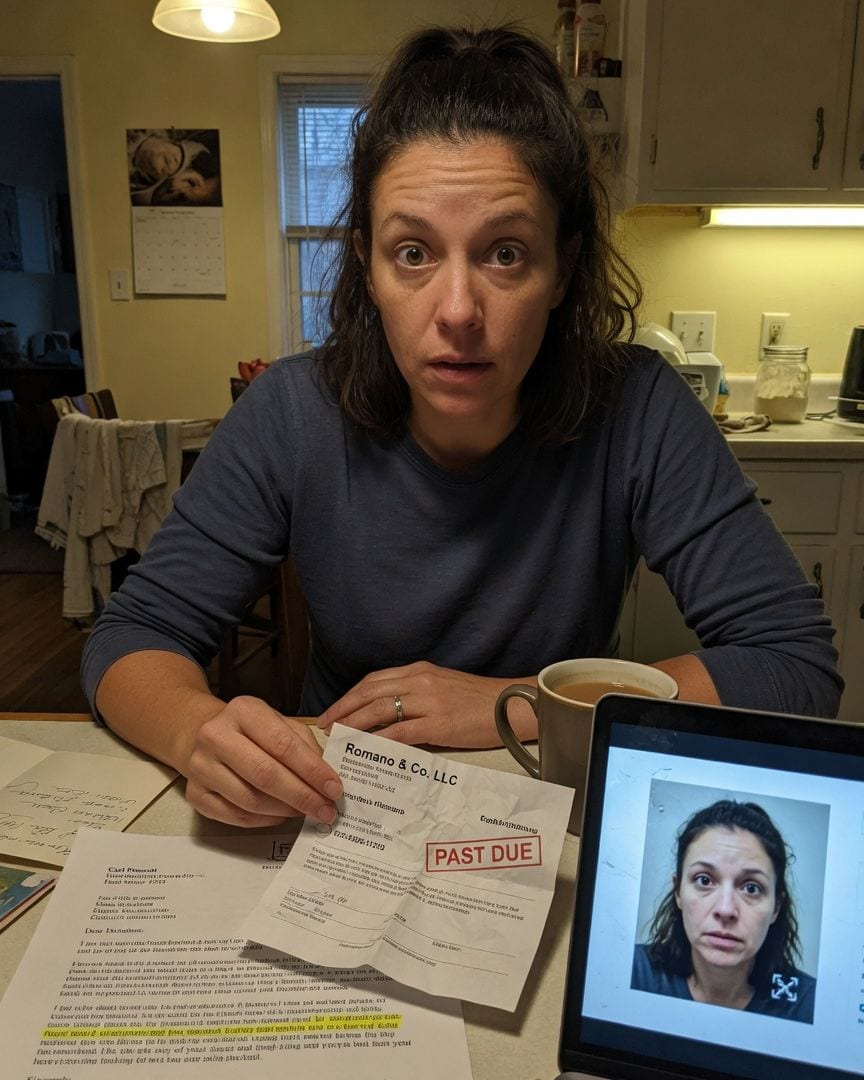
My handwriting appeared on company documents I never signed. It wasn't a forgery; it was unmistakably mine.
I opened a tax notice for 'Romano & Co. LLC,' a company I knew nothing about. Yet, every document bore my unmistakable signature, and an agent insisted I'd been emailing him for months, managing its affairs. It felt as if someone else was living my professional life, with unnerving, impossible precision.
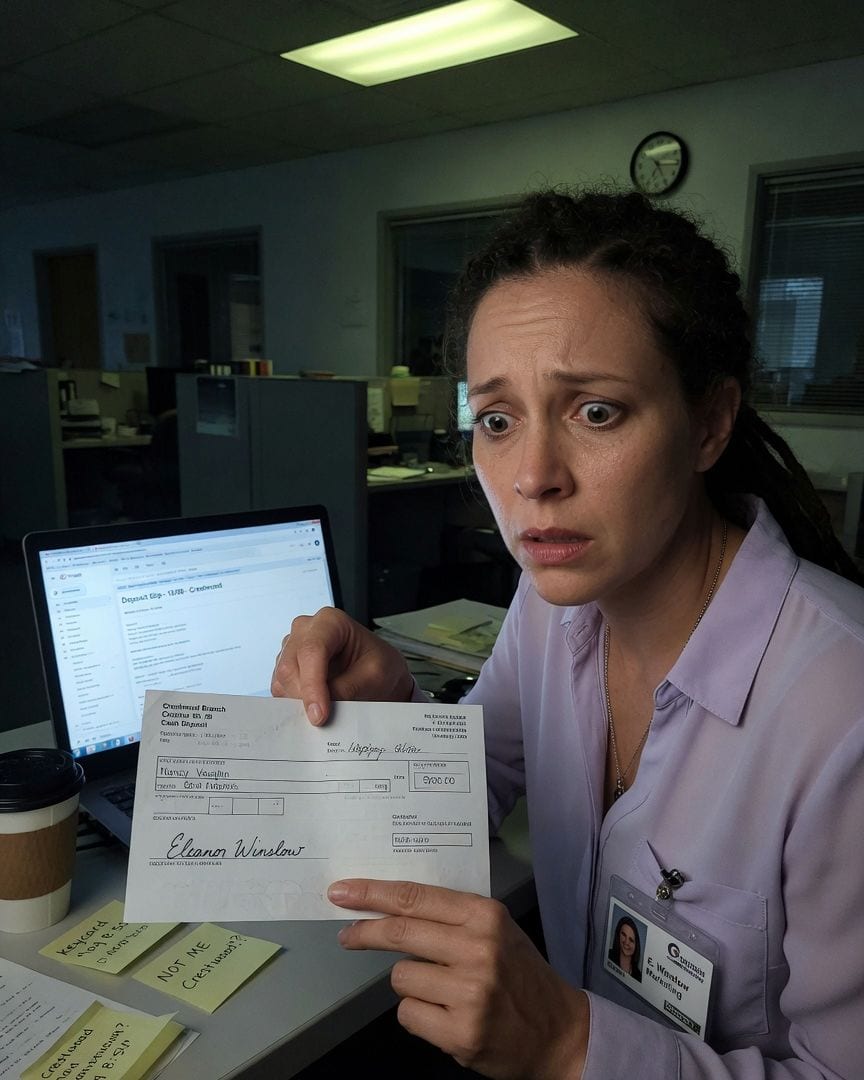
My bank statement shows a $900 cash deposit made in a town I've never set foot in, at 10:40 AM on a workday. I was at my desk, badged in. Two more landed since.
My bank statement showed a $900 cash deposit from a town I'd never visited, 150 miles away. I was at my desk, logged into work, all three times. But the scanned deposit slip arrived, clear as day, showing my own flawless signature.
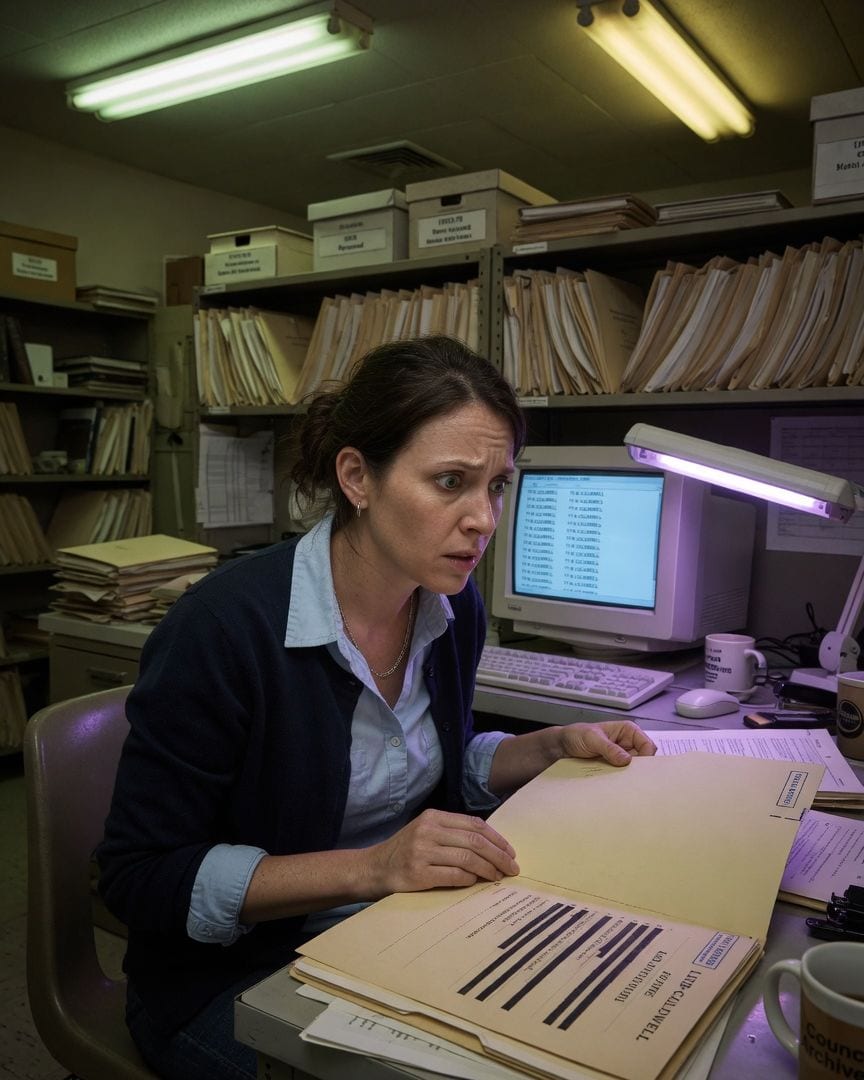
My employer's security file holds a vetting report on me dated nine years before I ever applied. It has my full name and my parents' address — with only one line, the source who referred me, blacked out.
Working a routine data audit, I pull my own security file. The issue date is nine years before I even applied for the job. Then, hidden within an old archive file, I find my current address etched under a blacked-out line.
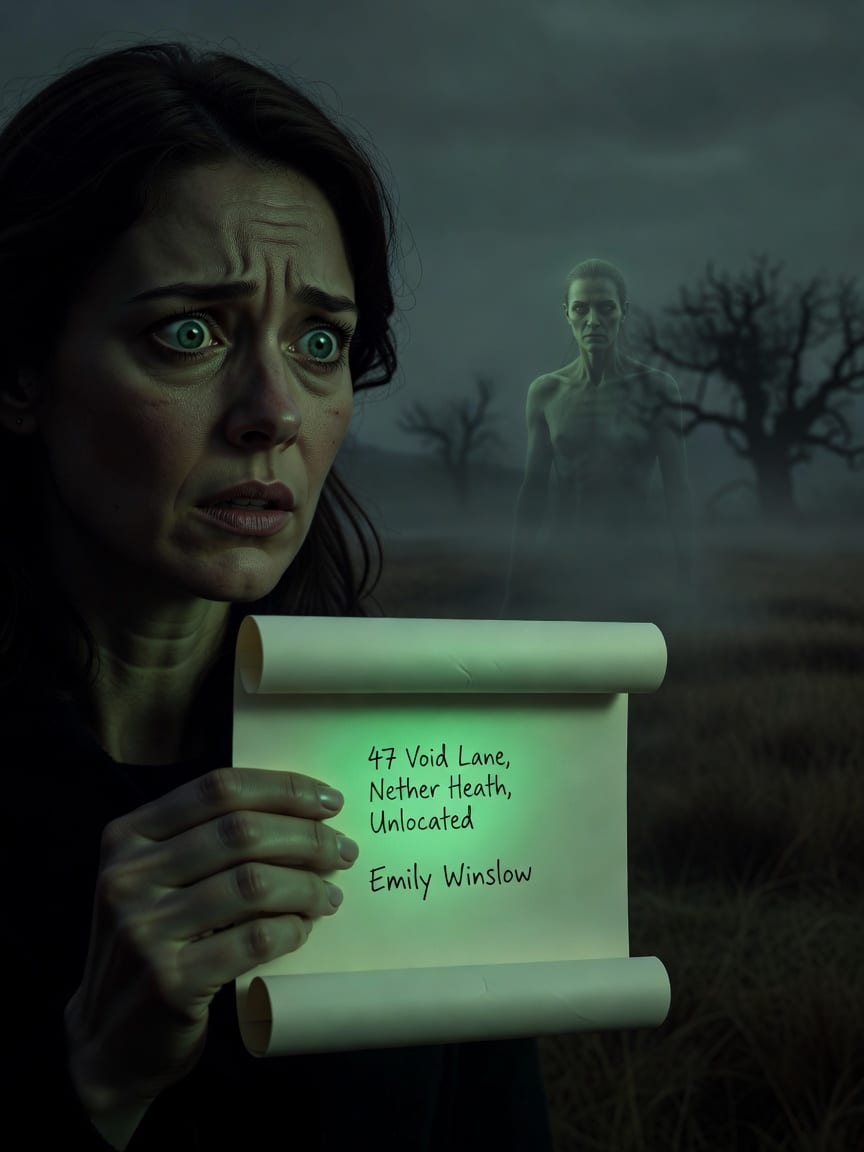
My change-of-address card arrived today. It said I'd moved to a house I'd never seen, on a street that didn't exist. And it was signed with my own hand, a month from now.
A crisp, cream-colored card on my kitchen counter informed me I'd moved to 42 Willow Creek Lane, an address that didn't exist. The signature was my name, Emily Winslow, a chillingly precise ghost of my own handwriting. But then I found an old 1947 ledger, listing 42 Willow Creek Lane and a signature identical to the one on my card.
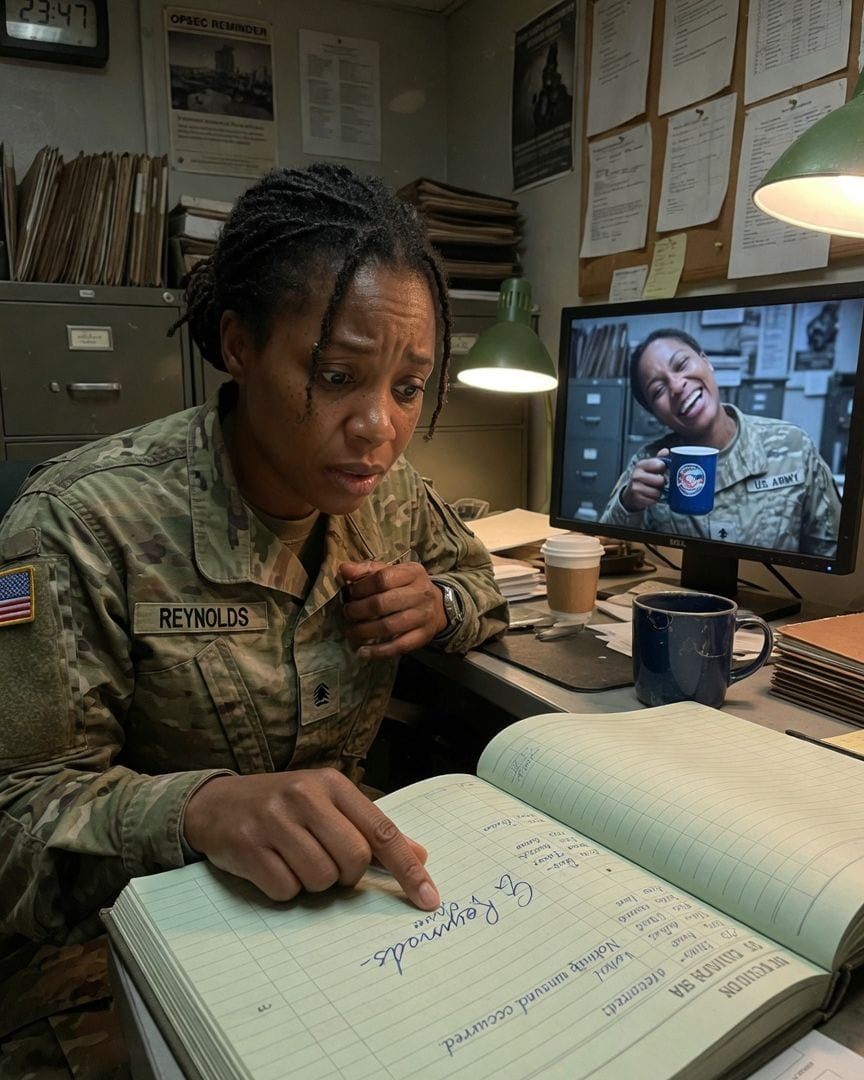
Lieutenant Grace Reynolds saw her own signature in the staff-duty log for a shift she never worked. The security footage then showed 'her' leaving a coffee mug she’d never once seen.
Lieutenant Grace Reynolds hunched over the battalion staff-duty log, the fluorescent hum of the records room a monotonous backdrop to her dry inventory audit. Her gaze snagged on an entry from three weeks prior: her own unmistakable signature, closing out a full 24-hour staff-duty shift she knew she had never worked. Security camera footage only deepened her unease, showing 'Grace Reynolds' moving with her familiar stride, laughing a shade too brightly, her head tilting a fraction too precise, like a flawless, chilling performance. But as the imposter turned to leave, she picked up and rinsed a chipped, dark blue ceramic coffee mug with a faded diner logo—a mug Lieutenant Reynolds had never once seen in her life. The air in the quiet room grew heavy, thick with the unspoken wrongness: if that wasn't her, then who was it?
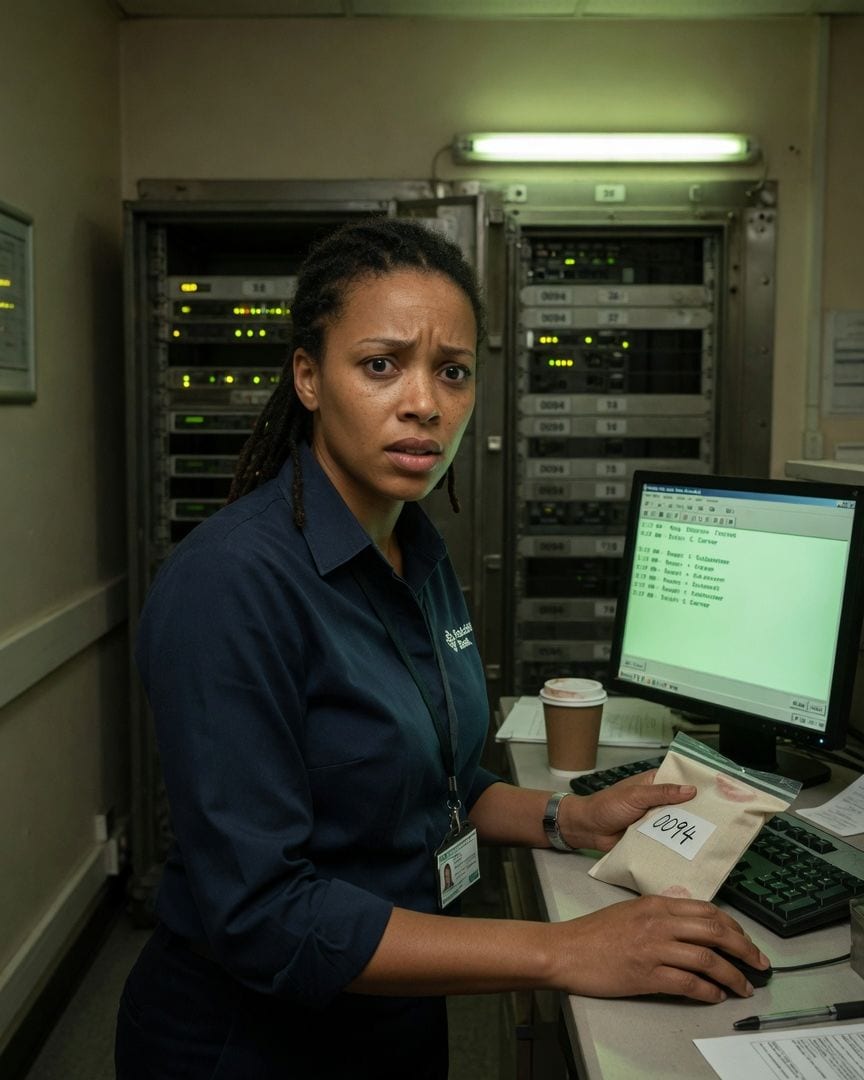
My night-deposit log shows a bag posted at 3:17 AM. My teller number, my count. Bag 0094 is still sealed in the safe, untouched.
I prided myself on precision as a night teller, logging every entry. But at 3:17 AM, a deposit appeared logged under my teller number that I never processed. Security footage then revealed a figure in my uniform, wearing my ID badge, with a blank photo slot.