My pharmacy camera shows me talking to no one, handing a prescription across the counter to empty air.

The fluorescent hum of the 24-hour pharmacy was my constant companion. Every night, near 3 AM, the bell above the window would chime, and Mr. Vale would appear.
He was a creature of habit: the same precise request for his 'heart prescription,' always exact cash, always a brief, polite word about the weather.
I knew his face, his quiet voice, the way he'd nod once before melting back into the predawn gloom. It was a small, predictable anchor in the long, quiet shifts.
Until the monthly inventory audit. I, Rachel Russo, diligent as ever, cross-referenced the dispense log. I scrolled, typed, double-checked. No Mr. Vale. Not a single entry.
I frowned, thinking it a clerical error, and pulled the security footage from the camera directly over the counter. The timestamp showed me at 2:58 AM, just as I remembered.
I watched myself, moving with practiced ease, sliding the prescription bag across the counter. But the space opposite me, where Mr. Vale should have been standing, was empty. Utterly, unnervingly empty.
I replayed the footage, heart hammering a frantic rhythm against my ribs. Maybe a glitch? A reflection? But no, my movements were precise, my gaze fixed on a point where nothing was.
I saw my hand extend, then retract, as if receiving payment. I paused the video, zoomed in. There, on the polished counter, where Mr. Vale always laid his money, was a single, tarnished coin.
It was distinct, an old silver dollar with an unfamiliar crest, catching the harsh light. I remembered wiping the counter clean just before my shift. I remembered Mr. Vale paying with crisp, new bills, not a singular, ancient coin.
I scrubbed my memory, re-traced the sequence of events. I'd checked the counter after he'd 'left' – it had been clear. But the video, undeniable, showed the coin.
It appeared as my hand retracted, as if left behind by no one. It was a physical impossibility, a tangible object from an invisible transaction. I raced back to the counter, my breath catching.
The coin wasn't there now, of course. But the undeniable image of it, caught on digital tape, was burned into my mind.
The image of the coin, a ghost of silver, still shimmered behind my eyes. I leaned over the counter, running my fingertips over the smooth, cool surface. My gaze dropped, drawn by a faint imperfection.
There, just to the left of where the coin had been, a tiny, almost invisible etching. It was no scratch or scuff.
It was a deliberate mark, a stylized symbol or a single, ancient-looking letter, so shallow it could only be seen when the light hit it just right.
It was like a signature, left by a hand that wasn't there, on a surface that should have been pristine. My breath hitched, a cold dread seeping into my bones. This wasn't a glitch. This was intentional.
The next morning, sleep offered no escape. I spent hours researching old coins, trying to match the image of the silver dollar from the footage.
I found a few obscure references to a limited mint run from a forgotten regional bank, long defunct. The coin was rare, specific, and out of circulation for decades. This wasn't casual pocket change.
Later that day, I approached Joseph Delaney, my manager, in his office. I laid out the facts, rational and calm, showing him the camera footage, explaining the missing log entries, even describing the phantom coin.
Joseph, a practical man, initially dismissed it as a combination of faulty equipment and shift fatigue. He suggested a 'ghost in the machine,' a digital anomaly. But as I pressed, his brow furrowed.
He leaned back, a flicker of unease in his eyes. "There's old stories," he mused, "about this place, about the night shift. Nothing solid, just whispers.
We've got a locked storage room, down in the old basement, full of ancient paper records. Obsolete stuff. Maybe a camera system from before your time, or a logbook that predates the digital system.
Might be worth a look, if you're so sure." He tossed a heavy, tarnished brass key onto his desk, the kind that belonged to a forgotten era. I knew what I had to do.
That night, after my shift officially ended, I descended into the pharmacy's dusty, forgotten basement. The air was thick with the scent of old paper and damp concrete.
The brass key groaned in the lock, and the storage room door creaked open, revealing stacks of yellowed boxes and towering shelves of ledgers. I flicked on my phone's flashlight, its beam cutting through the gloom.
A profound chill settled over me, not from the damp air, but from a pervasive sense of being watched. I moved slowly, my flashlight tracing over decades of forgotten history: inventory lists, employee rosters, old pharmacy equipment manuals.
Behind a stack of official, leather-bound ledgers, my fingers brushed against something softer. It was a small, unassuming book, bound in worn leather, tucked away as if hidden.
As I pulled it free, a faint, rhythmic tapping echoed from deeper within the room, soft but distinct, like fingers drumming on an unseen wooden surface. I froze, every nerve alert. I was alone down here.
My flashlight beam swept the dark corners, but found nothing. The tapping stopped as abruptly as it began, leaving only the sound of my own ragged breathing in the heavy silence. I clutched the book, my heart pounding.
I scrambled out of the basement, the old leather book clutched tight. Back in the sterile quiet of the pharmacy, I flipped it open. It wasn't an official ledger. It was a series of personal entries, handwritten, spanning decades.
Each entry began with a date, followed by an account of the night shift. And almost every entry, across the years, described 'Mr. Vale.' His 3 AM arrival, the heart prescription, the exact cash, the weather chat.
My eyes widened, my blood running cold. I saw the same small, stylized symbol I'd found etched on my counter, drawn repeatedly in the margins of various entries.
One entry from 1987, written by a 'Gideon Beaumont,' read: 'He comes, he takes. I feel... thinner. Like a small piece of me goes with the heart.'
Another, from 'Eleanor Pierce' in 2003: 'The prescription isn't for a heart, it is a heart. Or what's left of one.' The 'heart prescription' wasn't medicine; it was a transaction, a piece of the night worker.
My gaze darted to a recent entry, dated just a few weeks prior. My own distinct handwriting. My own words, describing my first encounter with Mr. Vale, the exact details I'd remembered.
I had never seen this book before, never written in it. Yet, there it was, an undeniable record of my own experience, placed into a pattern that had been unfolding for generations. I was inside it.
My hands trembled as I traced my own entry in the logbook. The horrifying truth solidified: this book was a chronicle of every night pharmacist who had served Mr. Vale, a record of their slow, insidious consumption.
I flipped pages frantically, the pattern across dates and names screaming at me. Every few years, a new name, a new account, a new pharmacist drawn into the cycle. Next to each name, a cryptic 'final payment' or 'relocation' date.
Some entries became sparse, vague, others trailed off mid-sentence. The last entry before hers, written in a barely legible, shaky hand, was dated three years ago.
It spoke of 'the next one,' of 'the heart always being paid,' a desperate warning before it abruptly ended. I looked up, my gaze sweeping the quiet, fluorescent-lit pharmacy. I was the next one.
The chill that had started in the basement now settled deep within my bones. The familiar chime of the pharmacy's front door cut through the silence, a sharp, insistent sound. It was 3 AM.
I looked at the door, then back at the logbook, the full, monstrous shape of the pattern snapping into place. The pharmacy wasn't just a building; it was a nexus, a point of exchange for 'Whatever runs the night.'
Mr. Vale wasn't a person, but a recurring manifestation, the collector. The 'heart prescription' wasn't for physical ailment, but a symbolic payment—a fragment of the night workers' vitality, their memory, their empathy.
The previous pharmacists hadn't just 'relocated'; they had been hollowed out, their essence gradually siphoned away until they were shells, or simply vanished, leaving only these desperate, informal records.
The camera saw nothing because the true transaction happened on a different plane, between the entity and the isolated, credible witness. I realized I had been serving my own slow dissolution, one heart prescription at a time.
The entity didn't seek to destroy, but to consume, to integrate. I was not merely a witness; I was already inside the mechanism, a part of its ancient, cyclical hunger.
My own handwriting in the logbook was proof: I was the current conduit, the next offering. The chime echoed again, more insistent this time. Mr. Vale was waiting.
I moved to the overnight window, the logbook still open on the counter behind me. Mr. Vale stood there, a shadowy figure, indistinguishable from the gloom outside, yet undeniably present. He offered his usual, polite nod.
"Heart prescription, please, Ms. Russo." His voice was calm, unremarkable, yet it carried the weight of decades. I looked at the blank prescription pad, then at the empty space where his eyes should be.
I knew I couldn't stop him, not truly. The cycle would continue. But I could refuse to be completely consumed.
With a steady hand, I tore a blank slip from the pad, folded it once, and wrote a single, defiant word across it: 'NO.' I slid it across the counter, along with a blank prescription bag.
"Here you are, Mr. Vale," I said, my voice surprisingly steady. "As requested." I met his unseen gaze. He took the blank slip, his movements as precise as ever.
He paused, a beat longer than usual, then offered his customary pleasantry. "Fine weather we're having tonight, Ms. Russo." Then, he was gone, melting back into the darkness.
I felt a profound, chilling emptiness bloom in my chest, a sense of something vital having been taken, despite my defiance. But beneath it, a sliver of stubborn resilience, a refusal to completely break.
I, Rachel Russo, continued my night shifts. Mr. Vale still appeared at 3 AM, an unwavering shadow. I still handed him a blank slip, a silent act of defiance.
The old leather logbook remained hidden, but now, a new entry, in my firm hand, marked the current cycle: 'Not this time.' The pharmacy hummed with its usual quiet efficiency, but for me, the silence was no longer empty.
It was filled with a palpable presence, a watchful, ancient hunger that I now understood, and defied, every night. I was still there, still working, but a part of me had irrevocably changed.
I now carried the night's truth within me, a heavy, cold knowledge. I was a different woman than the one who had started auditing the dispense log. Less vibrant, perhaps, with a quiet, watchful stillness in my eyes.
But I was unbroken, refusing to become just another entry, another 'final payment.'
I knew what ran the night, and I knew I was still part of it, but I had found my own way to exist within its monstrous pattern.
The dread was now a constant companion, but so was a quiet, fierce resolve. I would continue to serve the night, on my own terms.
The silence outside my window was absolute, the world asleep, oblivious to the transactions that took place in its darkest hours. I knew. And that was enough.
Joseph Delaney still occasionally asks Rachel Russo if she's feeling run down. She always smiles and says she's fine, but the smile doesn't quite reach her eyes anymore.
Sometimes, when he passes the night window at 3 AM, he thinks he sees her talking to someone, but the glass reflects only her own pale face.
If this one got to you
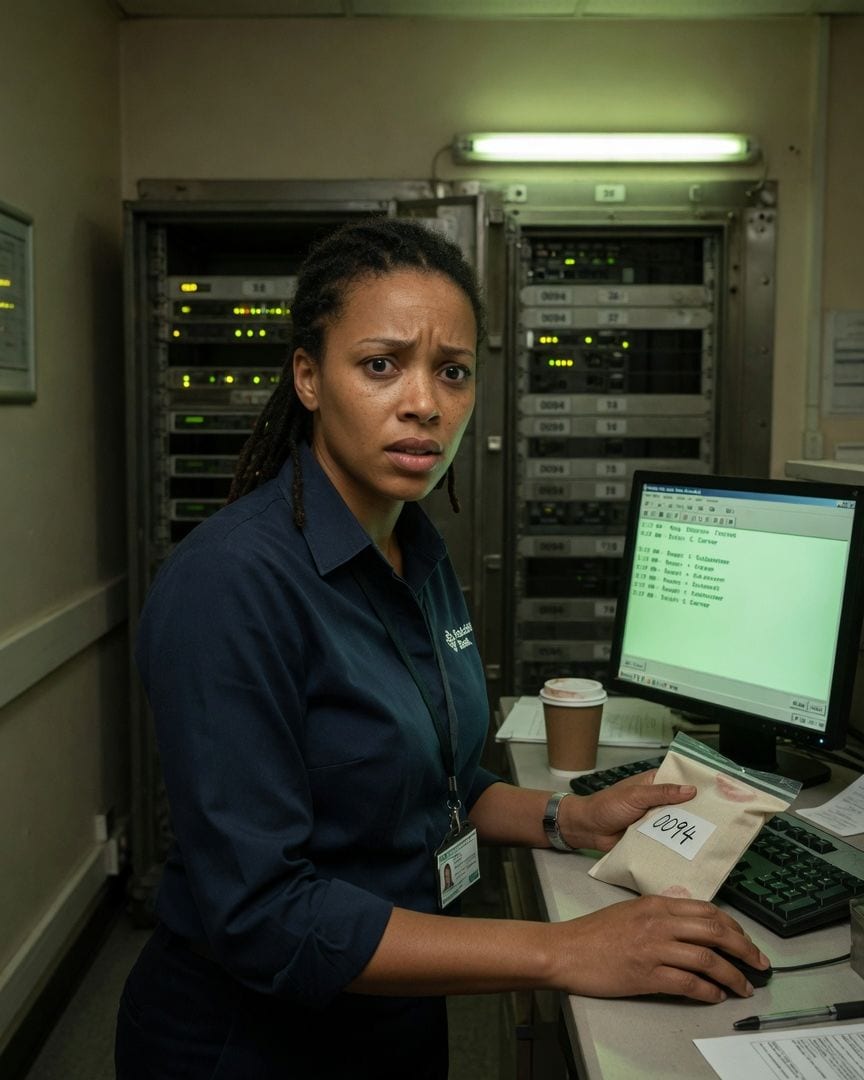
My night-deposit log shows a bag posted at 3:17 AM. My teller number, my count. Bag 0094 is still sealed in the safe, untouched.
I prided myself on precision as a night teller, logging every entry. But at 3:17 AM, a deposit appeared logged under my teller number that I never processed. Security footage then revealed a figure in my uniform, wearing my ID badge, with a blank photo slot.
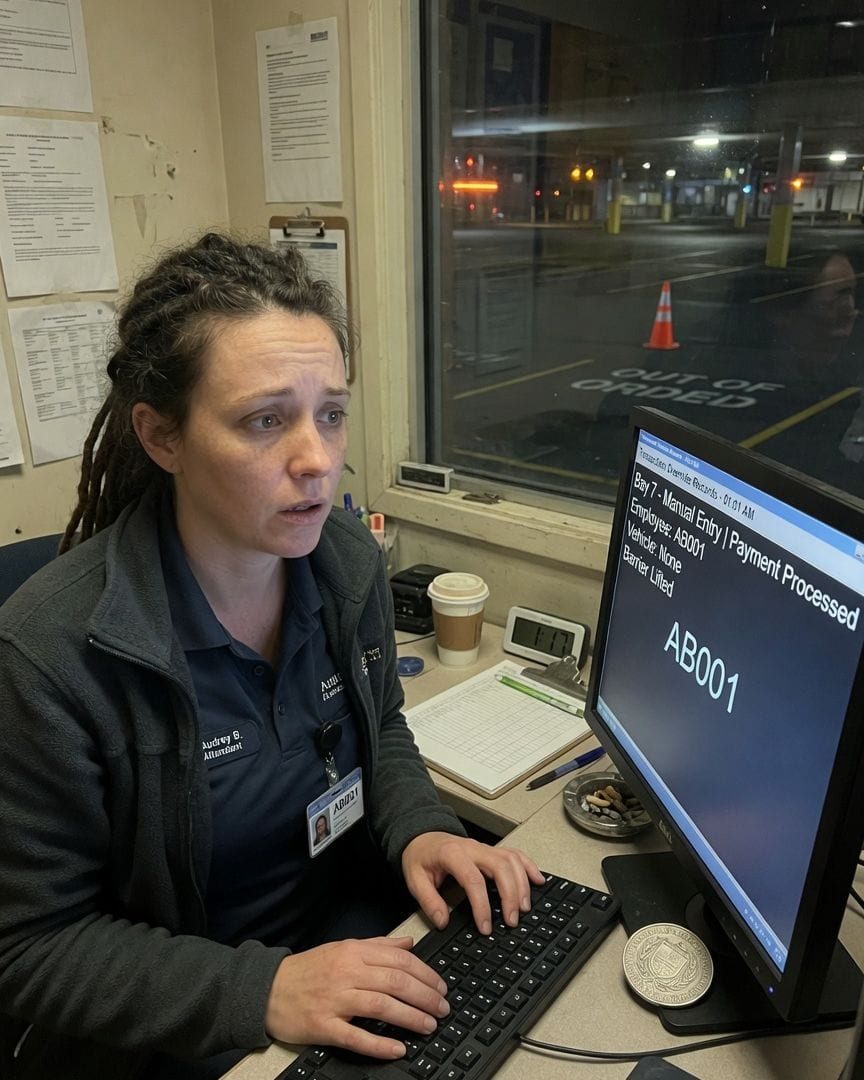
My car park's coned-off corner bay takes a cash payment every 1 AM, leaving a single coin on my desk. No car is ever there.
Working the graveyard shift, I, Audrey Beaumont, witnessed a strange nightly ritual: a man paying for an empty car park bay. But when I checked the logs, the only record of the impossible transaction was a manual override under my own employee ID, 'AB001'. I knew I hadn't made that entry, not at 1:01 AM, leaving a chilling question hanging in the air.
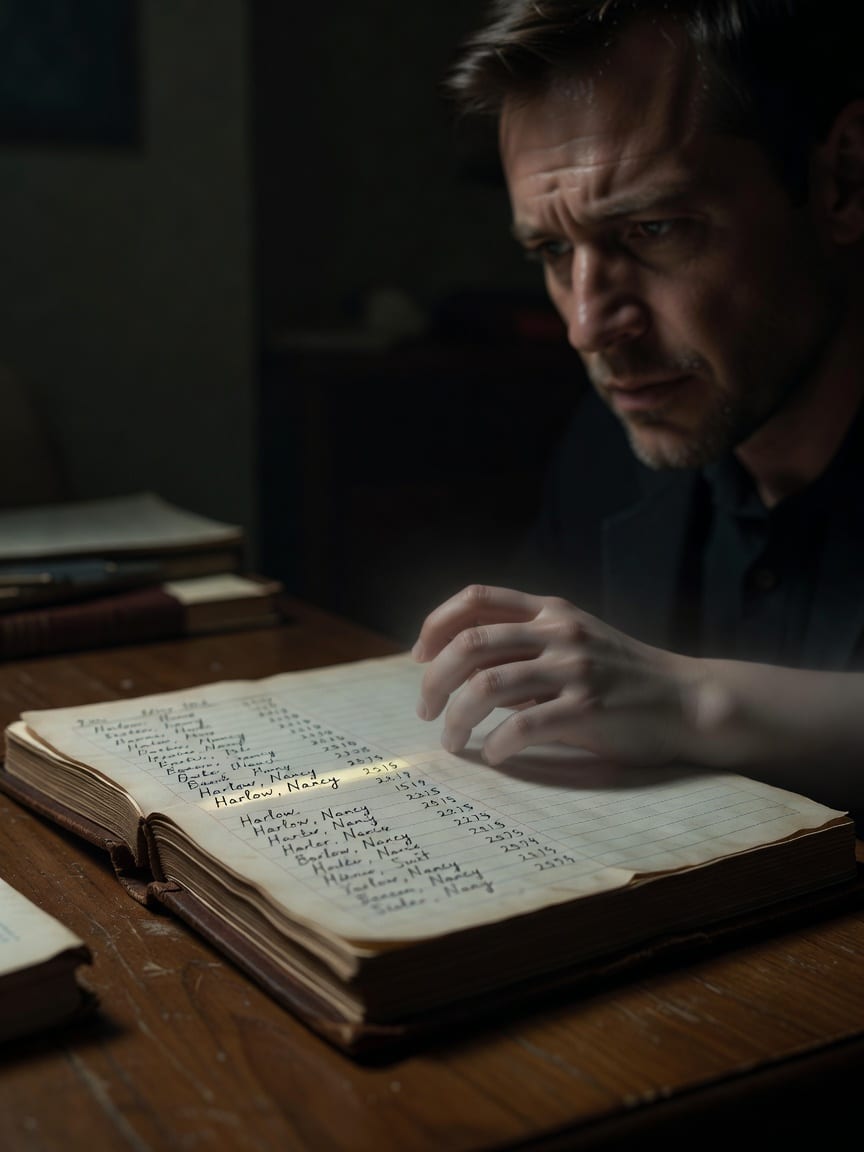
My own signature, pressed hard into a pharmacy log, shows I collected a drug I've never been prescribed. I was two hundred miles away at a funeral that day.
My chemist pulled out the pharmacy log, and my own looping signature stared back from the 9th. It insisted I'd collected a strong sedative at 4:20pm, but on that exact day, I was two hundred miles away burying my aunt. My memory held no trace of ever being there, yet the signature was unmistakably mine.
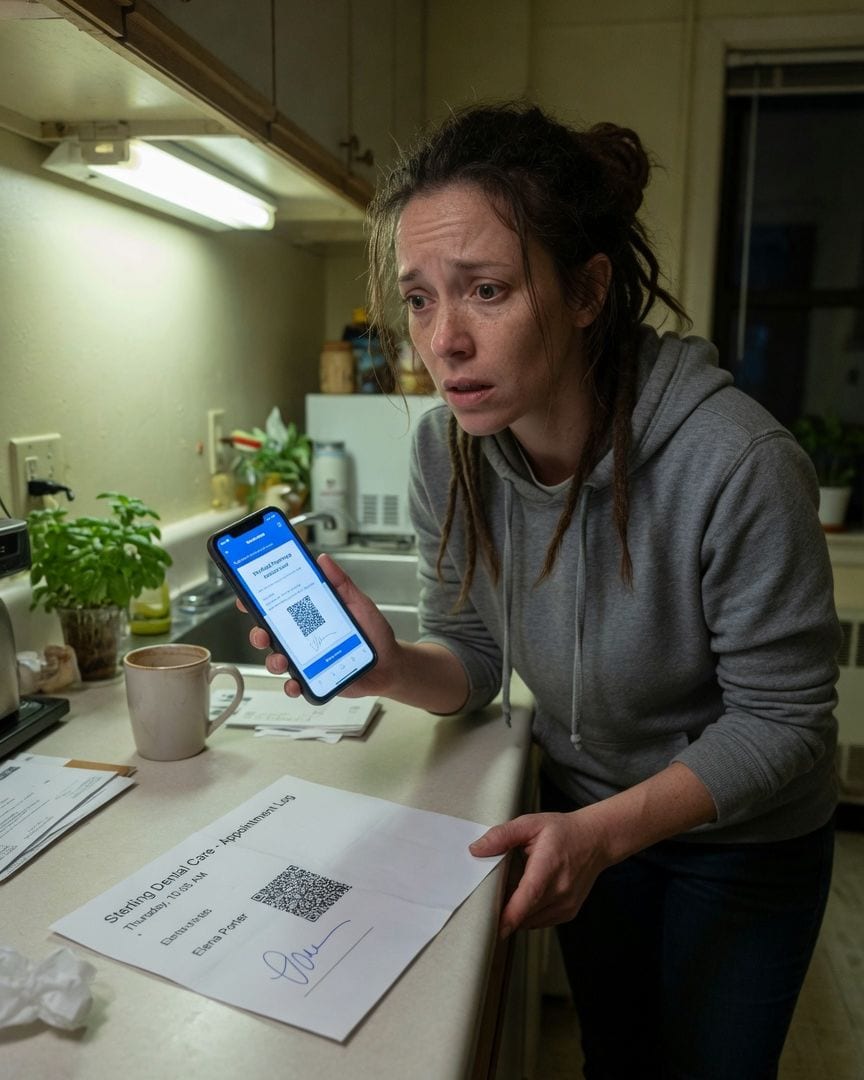
My dentist's system says I was there last Thursday. I wasn't. But the check-in tablet shows my signature, and the hygienist described my chipped tooth exactly right.
I received a call confirming a dental appointment I never made, for a day I was home. Yet, Sterling Dental had my perfect digital signature and described a chipped incisor I’d never told them about. The physical proof insisted I was there, but I wasn’t.
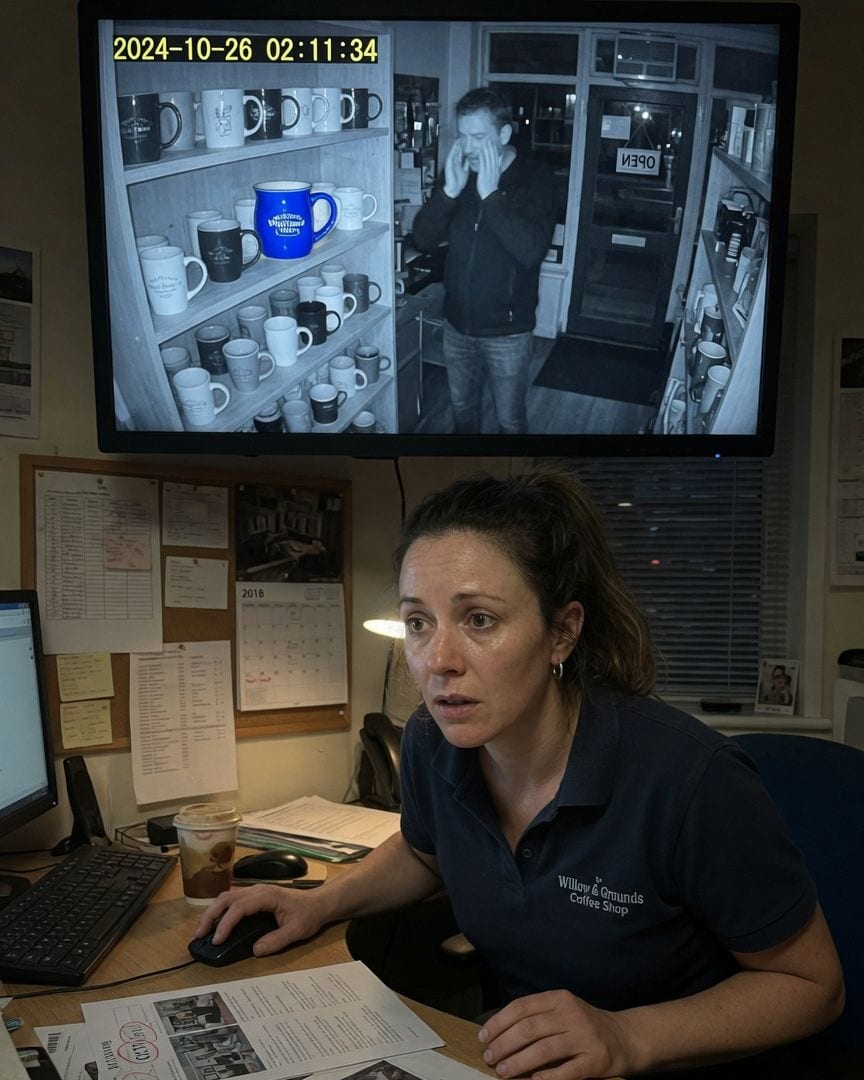
My shop's CCTV caught a customer who hasn't aged a day in eleven years of footage. He enters every night at 2:11, buys nothing, and leaves.
I was reviewing CCTV footage when I discovered a man who appeared inside my closed shop every night at 2:11 AM. He moved identically, never aging across eleven years of recordings, all confirmed as unique files. Yet, last night's footage clearly shows a specific coffee mug on the shelf that I know I sold seven years ago, and is definitely not there now.
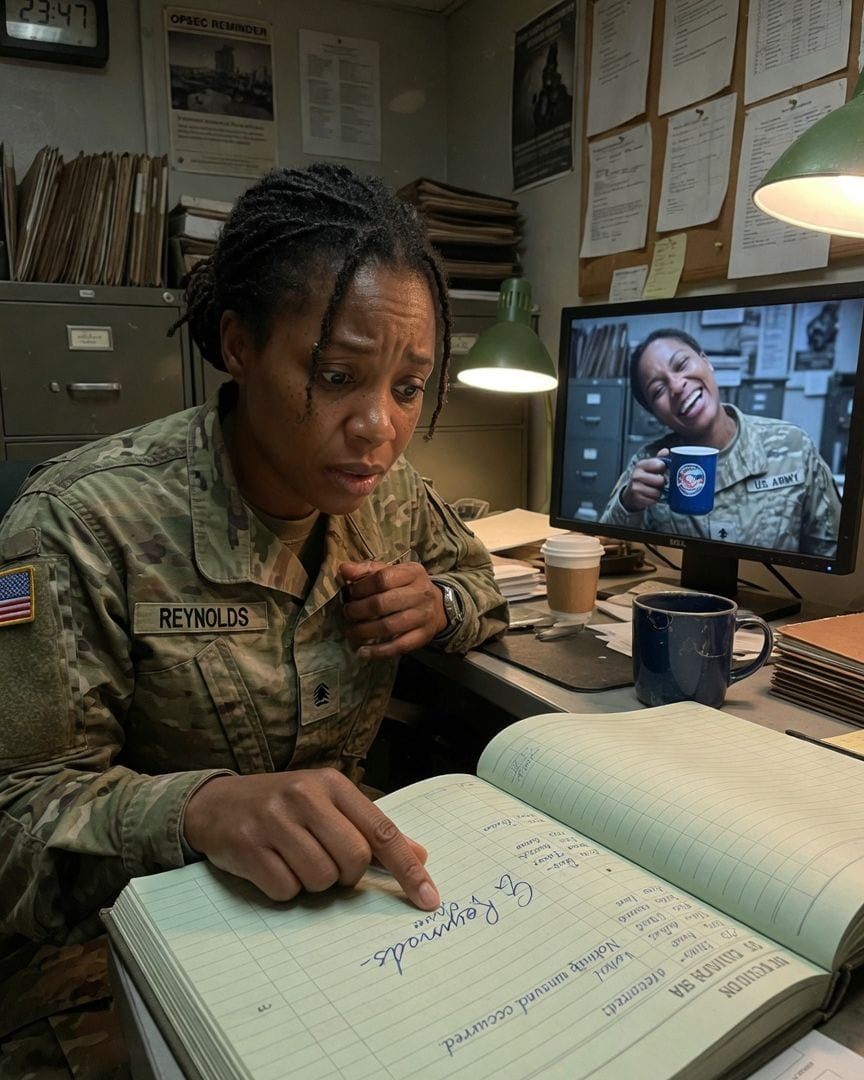
Lieutenant Grace Reynolds saw her own signature in the staff-duty log for a shift she never worked. The security footage then showed 'her' leaving a coffee mug she’d never once seen.
Lieutenant Grace Reynolds hunched over the battalion staff-duty log, the fluorescent hum of the records room a monotonous backdrop to her dry inventory audit. Her gaze snagged on an entry from three weeks prior: her own unmistakable signature, closing out a full 24-hour staff-duty shift she knew she had never worked. Security camera footage only deepened her unease, showing 'Grace Reynolds' moving with her familiar stride, laughing a shade too brightly, her head tilting a fraction too precise, like a flawless, chilling performance. But as the imposter turned to leave, she picked up and rinsed a chipped, dark blue ceramic coffee mug with a faded diner logo—a mug Lieutenant Reynolds had never once seen in her life. The air in the quiet room grew heavy, thick with the unspoken wrongness: if that wasn't her, then who was it?