Pump 3 has been breakered off and padlocked for five years. At 2:44am it ran for ninety seconds — logged and confirmed with my own initials.
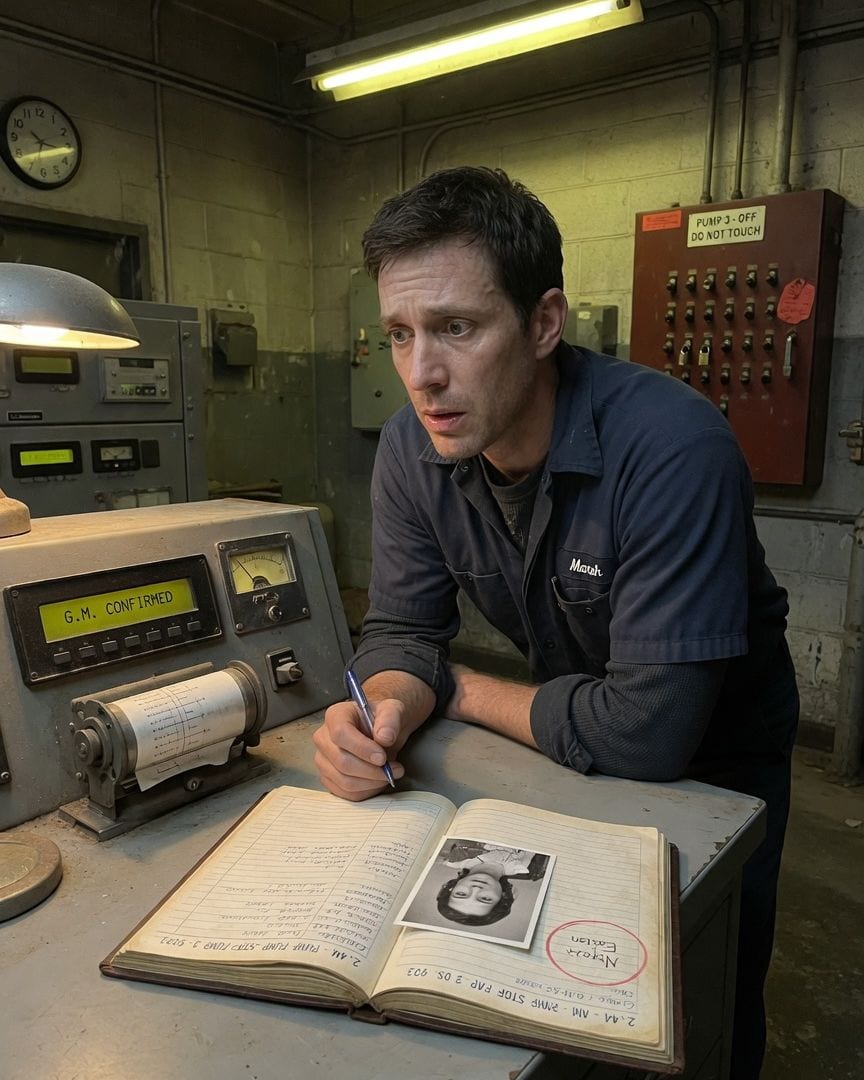
The hum of the municipal pump station was a familiar lullaby, a constant thrum Gideon Marsh had grown used to over his three years on the night shift.
It was 2:45 AM, and the worn metal desk felt cool beneath his forearms. He was on schedule, pen poised to fill out the hourly logbook. His eyes scanned the grid, looking for the 2:44 AM slot.
His hand paused, then tightened around the pen.
The entry for 2:44 AM wasn't blank. It clearly stated: 'PUMP 3 - START/STOP - 90s Cycle.' And beside it, undeniably, his own initials: 'G.M.' confirming the operation.
A jolt went through him, cold and sharp. Pump 3. The red-tagged one. It had been offline, breakered off, for five years now, a rusting monument to a critical component failure that the city decided wasn’t worth fixing.
He pushed back from the desk, the chair scraping on the concrete, and walked quickly to the dormant control panel. Dust lay thick on its inactive lights.
The breaker switch for Pump 3 was still clearly in the 'off' position, locked with a heavy-duty padlock that hadn't been touched in years.
Yet, the old analog flow meter, a separate, mechanical gauge tucked away beneath the newer digital displays, had registered a distinct ninety-second surge in flow pressure at 2:44 AM.
The needle had momentarily spiked, then settled back to zero, leaving a faint, greasy trace on its paper scroll. And the main digital panel, the one he logged from, still flashed 'G.M. CONFIRMED' next to the impossible entry.
He stared at it, trying to rationalize it away. A glitch. A phantom reading, perhaps induced by a power spike somewhere else in the system.
But the physical evidence of the flow meter, the distinct trace on the paper, and his own damn initials on the digital log entry stared back, refusing to be explained. The air in the station suddenly felt heavier, colder.
Gideon spent the next hour meticulously checking every system he could access, every wire he could trace, every switch and valve connected to Pump 3. Nothing. The entire system was dead. Power disconnected. Valve locked shut.
It was physically impossible for it to run. But the log didn't lie, and neither did the flow meter's paper trail. A cold dread, slow and creeping, settled in his gut.
This wasn't just a glitch in the software or a phantom reading on an old gauge. This was something else.
He pulled out the station's archive of old logbooks. A stack of heavy, leather-bound tomes reaching back decades, smelling of dust and dried ink.
He started flipping through them, looking for any mention of Pump 3 acting up, any similar impossible entries. He went back to 2018, the year Pump 3 was red-tagged.
No anomalies in its last months of operation, just the final official shutdown. He kept going, further back, through years of meticulous shift records.
That's when he noticed it. A recurring initial: 'N.E.' on numerous entries, always for Pump 3, always for odd, brief cycles. Not just once or twice, but dozens of times, sprinkled through the late 80s and early 90s.
He found a particularly strange sequence from 1994, where 'N.E.' had logged Pump 3 starting and stopping for 120 seconds, despite an additional note in the margin from another operator indicating the pump was 'under maintenance' that entire week.
He cross-referenced the initials with the old staff rosters tucked into the front cover of a 1988 logbook. 'N.E.' belonged to Nora Easton, a night shift operator who'd worked here until 1995.
Gideon remembered seeing her name on an old, faded plaque in the breakroom, among 'Distinguished Service' awards for operators with decades of dedication.
But the deeper he dug into the logbooks, the more Nora Easton's initials appeared, logging Pump 3 operations that simply shouldn't have happened.
Not just before the 2018 red-tag, but even when the pump was supposedly undergoing repairs or seasonal shutdowns. The dread in Gideon's stomach intensified. This wasn't a new glitch. It was an old pattern, a long-standing wrongness.
And Nora Easton, a woman who hadn't worked here for nearly three decades, seemed to be at the heart of it. A ghost in the machine, operating equipment that couldn’t possibly run.
He was about to close the oldest logbook he had, from 1993, when a thin, brittle photograph slipped out from between its stiff pages.
It was a black-and-white group shot of pump station staff, smiling, standing in front of the very pumps Gideon now oversaw. He recognized some of the older faces from his own orientation photos, managers who had long since retired.
His gaze fell on a woman near the center, her smile bright, her eyes crinkling at the corners. Her face was subtly circled in red ink, and underneath, in neat, faded script, was written: 'Nora Easton.'
Gideon’s breath caught, held tight in his chest. The initials. The pump. The photograph. It all clicked into a terrifying, impossible connection.
He clutched the photograph, the old paper crumbling slightly in his hand, a chill running down his spine that had nothing to do with the station's draft.
The next day, sleep offered no escape. Every time he closed his eyes, he saw Nora Easton's smiling face, then her initials, then the flashing 'G.M. CONFIRMED' on the impossible log entry.
Driven by a desperate need for answers, he called the municipal HR department. The clerk was polite but unhelpful. "Easton, Nora... let me see. Yes, a night shift operator. Records show... a period of employment ending in 1995. No transfer.
No resignation. Just... a termination for 'failure to report to duty.' No further details." Gideon pressed, his voice tight, but the clerk insisted that was all there was in the official file. It was a dead end, officially.
He remembered a name from the old staff photo, a man who looked familiar, a grizzled face he'd seen around town: Conrad Calloway, a retired manager.
He'd been in that photo, a younger version of the man Gideon sometimes saw at the local diner. Gideon tracked him down to a small, quiet house on the edge of town, the kind with meticulously kept flowerbeds.
Conrad, a man in his early sixties with sharp, observant eyes, greeted him with a faint, almost knowing smile that made Gideon's skin prickle.
Gideon tried to be casual, asking about the old days, about the evolution of the pump station, about Pump 3. Conrad offered vague, nostalgic anecdotes, describing a bygone era of simpler mechanics and closer-knit shifts.
But when Gideon mentioned Nora Easton, a subtle shift occurred. Conrad's eyes narrowed slightly, almost imperceptibly. "Nora? Dedicated woman. Loved that station." The words were simple, but the way he said them, almost a eulogy, hung in the air.
Gideon decided to push. He brought up the impossible log entries, the red-tagged pump running for ninety seconds just last night. Conrad just continued to sip his tea, his gaze steady over the rim of his mug.
"The station has its own ways, son. Always has. Some things, they just... are." He then asked, "You're on nights, aren't you? What hours exactly?"
The question felt less like curiosity and more like a probe, a test, making Gideon's skin prickle even more. He mumbled his usual shift pattern. He left feeling more unnerved than enlightened, the encounter raising far more questions than answers.
He couldn't shake the feeling that Conrad knew far more than he was letting on, and that the pump station wasn't just a place of work, but a place of secrets.
That night, back at the station, Gideon felt an oppressive stillness settle over the control room. Every creak and groan of the old building seemed amplified, echoing in the silence.
He was trying to focus on his work, but his mind kept going back to Conrad, to Nora, to Pump 3.
He opened his laptop, researching online, trying to find any obscure news articles about Nora Easton or the pump station from 1995.
The search yielded nothing definitive, just a brief, almost buried mention of a 'minor industrial incident' at the municipal waterworks that year, quickly resolved without further detail.
He got up for his hourly rounds, checking the pressure gauges, making sure everything was running smoothly. The silence in the long corridors of the station seemed to follow him.
When he returned to his desk, his heart leaped into his throat. His current logbook, the one he'd left closed, was now open.
It was lying flat on the desk, precisely open to the page with the 2:44 AM entry for Pump 3, the one initialed 'G.M.'
A faint, barely visible smudge, like a fingerprint, was smudged over the '3' on Pump 3, as if someone had traced it with a phantom finger, a deliberate act.
The air in the room suddenly felt cold, heavy, as if someone was standing right behind him, breathing down his neck. He spun around, but the control room was empty, the fluorescent lights humming indifferently.
He checked the security cameras, but the old system was notoriously unreliable, and the feed from the control room was, as usual, a static-laced mess, a flurry of white noise.
He checked the door, still locked from the inside, the heavy bolt thrown. There was no one. But the open logbook and the faint smudge were undeniable. He was no longer just investigating; he was being watched.
The unseen entity knew exactly what he'd found, and it was sending a message.
The next morning, Gideon drove straight back to Conrad Calloway's house. He didn't bother with pleasantries.
He strode up the walkway and knocked hard on the door, the logbook clutched under one arm, the photograph of Nora Easton folded carefully in his pocket. Conrad opened the door, his faint smile unwavering.
Gideon laid the open logbook on Conrad's coffee table, pointing to the smudge, then pulled out the photograph. "She's still here, isn't she?" Gideon demanded, his voice low, a tremor running through it despite himself. "Nora Easton. She's doing this.
She's running Pump 3."
Conrad took a slow sip of his tea, his eyes calm, unbothered by Gideon's frantic energy. "Nora? Yes, in a way. She never really left the station."
Gideon stared at him, incredulous. "What does that mean? She disappeared. HR has no record of her leaving, just 'failure to report to duty.' They think she just... quit."
Conrad sighed, a gentle, almost sympathetic sound. "There was an incident, Gideon. Back in '95. A catastrophic failure on Pump 3. Pressure surged, pipes burst. It was a bad one. Nora was alone on shift. She was... dedicated.
More than anyone I've ever known. She tried to manually override the system, to keep the flow going. She believed in the flow, you see. She understood that the city needed that water, needed the pumps to keep moving.
The station, it's more than just pipes and wires. It's a living thing, in its own way. It demands the flow. And Nora... she understood that completely."
Gideon felt a cold knot tightening in his stomach. "She died, didn't she? Trying to save the pump?"
Conrad shook his head slowly. "No. Not exactly. She became part of it. Part of the flow. Her will, her dedication, her very essence, it merged with the station's own purpose.
She's the one who maintains the flow now, from within. That's why Pump 3 still runs, even when it shouldn't. That's why her initials appear in the logs, even after '95. She's just doing her job, Gideon. Her eternal shift."
The casualness of Conrad's confession, the utter lack of horror in his voice, was chilling. He spoke of it as a natural, almost sacred, process, like the changing of the guard.
"You saw it happen?" Gideon asked, his voice barely a whisper.
"I was there, after," Conrad replied, his gaze distant, fixed on something Gideon couldn't see. "I saw what was left. Or what wasn't. And I saw the logs, even then. The impossible entries. She was already working her new shift."
Gideon remembered the red-tagged pump, the impossible surge, Nora's initials in the old logs – it all clicked into a horrifying, coherent picture. The station wasn't haunted; it was occupied by a dedicated, eternal operator.
Conrad's words echoed in Gideon's mind as he drove back to the pump station. 'Part of the flow.' 'Eternal shift.' He couldn't accept it, not fully. He needed concrete proof, something beyond Conrad's unsettling calm and his own terrifying deductions.
He remembered the 'minor industrial incident' from his online search. A quick, official dismissal that hinted at something deeper. He had to find the truth behind that cover-up.
He headed to the station's oldest, dustiest storage room, a forgotten corner filled with ancient schematics, decommissioned parts, and the smell of mildew and forgotten metal.
He knew there had to be an official record, somewhere, of what truly happened to Nora Easton. He spent hours sifting through yellowed folders, cobweb-draped boxes, his flashlight beam cutting through the gloom.
Finally, tucked away beneath a heavy pile of obsolete safety manuals, he found it: a thick, unmarked file, its cover stained and brittle.
Inside, the first page was stamped boldly: 'INCIDENT REPORT - PUMP STATION ALPHA - 1995.' His hands trembled as he read the details: the catastrophic failure of Pump 3, the pipe bursts, the station-wide shutdown.
And then, listed chillingly under 'Personnel Present,' Nora Easton, followed by 'missing, presumed deceased.' He flipped through the technical diagrams, the damage assessments, the engineers' notes. His eyes scanned for any mention of the logs, of her.
On the very last page, separate from the official summary, was a smaller section, almost an addendum, stamped in faded red: 'CLASSIFIED - DESTROY.'
Beneath it, a series of notes, handwritten in a panicked, then resigned, hand, describing continued, impossible activity on Pump 3 in the hours and days following the official incident.
And then, the final bullet point, in a chillingly familiar format: '2:44 AM - PUMP 3 - START/STOP - 90s Cycle.' And beside it, undeniably, the initials: 'N.E.'
Gideon returned to Conrad Calloway's house the following morning, the 'CLASSIFIED - DESTROY' report clutched in his hand. He laid it on Conrad's coffee table, open to the final, damning page, the faded red stamp stark against the yellowed paper.
"She didn't die, did she?" Gideon said, his voice flat, devoid of emotion, a desperate attempt to maintain control. "She just... became this."
Conrad looked at the report, his expression unchanging, a deep, unsettling calm in his eyes. "I told you, Gideon. She became part of the flow. The station needed her. She needed the station.
It was a symbiotic relationship, in its own way. She was the most dedicated operator we ever had. When that surge happened, when Pump 3 was failing, she put everything she had into keeping it running.
Her will, her essence, it connected. She found a way to continue her work, even without a body." He traced a finger over the 'N.E.' initials on the old report.
"She's always there, ensuring the pumps maintain pressure, that the city gets its water. The anomalies you see, the logs, the pump running – it's just Nora doing her job.
Sometimes she needs a little help, a little energy from the living, to make a stronger connection. Like your initials on the log, Gideon.
She used your presence, your routine, to make her mark, to ensure the continuity of the log, because the log must be kept."
Gideon felt a wave of nausea, cold and sharp. "So, she's a ghost running a pump station?"
Conrad shook his head gently. "More than that. She is the station, in a way. Or a part of its operating system, its consciousness. She ensures the flow. And it's been happening for decades.
She's the one who was always here, long before you or I. She is the night shift."
The chilling implication settled over Gideon: this wasn't a haunting; it was a permanent, mechanical integration, a living infrastructure, and he had been a conduit.
The calm acceptance in Conrad's voice, the sheer normalcy with which he described Nora's fate, filled Gideon with a profound, suffocating terror.
He realized the full truth: this wasn't just a story, it was a living, breathing reality, and he was now implicated. He knew too much, and worse, he had become a part of her system.
He returned to the pump station, a desperate plan forming in his mind. He had to stop it. He had to shut down Pump 3, completely, permanently, severing the connection, breaking the flow.
He found a heavy-duty bolt cutter in the maintenance shed, the cold steel heavy and reassuring in his hands.
He was determined to sever the breaker's padlock, to disable the pump beyond any chance of repair, to end Nora's eternal shift.
As he approached Pump 3, the air grew heavy, thick with a cold, metallic tang, like old blood and rust.
The station's usual hum intensified, becoming a low, guttural growl that vibrated up from the concrete floor and through his boots.
Lights flickered violently throughout the vast space, plunging him into near darkness before surging back with blinding intensity, only to dim again.
The ground beneath his feet vibrated with a sickening resonance, and the pipes overhead groaned with a sound like a tortured beast, twisting and straining.
He heard a faint, whispering voice, a woman's voice, carried on the air currents from the ventilation system, barely audible but distinct: "Maintain... the flow..."
Gideon ignored it, his hands shaking as he positioned the bolt cutters over the heavy padlock on Pump 3's breaker. He squeezed, the metal groaning in protest, the air around him crackling.
Suddenly, a massive pressure gauge on a nearby pipe shattered with an explosive CRACK, sending shards of glass skittering across the concrete floor, glinting malevolently in the flickering light.
A high-pitched shriek of tortured metal echoed through the station, and a heavy valve on Pump 3 itself began to slowly, agonizingly, turn, as if by an invisible, powerful hand, tightening itself, ensuring the pressure.
Gideon felt a sudden, intense coldness pressing against his back, a silent, pervasive presence. He glanced over his shoulder, but saw only the flickering shadows, twisting and stretching into impossible shapes.
The whisper came again, closer this time, directly into his ear, chilling him to the bone: "You... must... maintain... the flow..."
He dropped the bolt cutters, the clang echoing deafeningly in the suddenly silent station. He spun, a primal urge for escape overriding everything he thought he knew.
The air was thick with a suffocating dread, pressing in on him from all sides.
He ran, blindly, towards the emergency exit, the station seeming to twist and expand around him, the pipes groaning, the floor vibrating, as if the entire structure was trying to hold him in place.
He burst through the emergency exit, gasping for air, the night's cold air a sudden, welcome shock against his skin. Behind him, the pump station's lights flickered one last, violent time, then settled back into their usual, eerie hum.
Gideon never returned to the pump station. He quit the night shift, citing "personal reasons," and found a new job far from any industrial machinery, far from any place that hummed with a life of its own.
He never told anyone the full story, knowing no one would believe him.
The municipal news never reported any strange occurrences at the old pump station; it continued to operate, silently, efficiently, through the nights, a tireless heart pumping water to the city.
Sometimes, driving past late at night, Gideon would see an older man, Conrad Calloway, standing by the fence line, looking up at the silent building.
Conrad would offer a faint, knowing smile, as if sharing a private joke with the structure itself, before turning and walking calmly into the darkness.
Gideon still checks the local news every morning, scanning for any mention of the old pump station, any unusual activity, any unexplained outages. There is never anything.
The station continues its work, a silent, unseen heart pumping life into the city. He knows Nora Easton is still there, eternally maintaining the flow, her shift never ending.
He sees her initials everywhere now: in the condensation on his bathroom mirror, in the patterns of frost on his car windshield, in the way the shadows pool in the corners of his new, quiet apartment.
He knows she's still logging, still confirming, still ensuring everything runs as it should, always in the dark, always alone. He survives, but not saved from what he knows.
He knows the rules of the night, and they have quietly changed. He knows the flow must be maintained, and someone is always watching the log.
If this one got to you
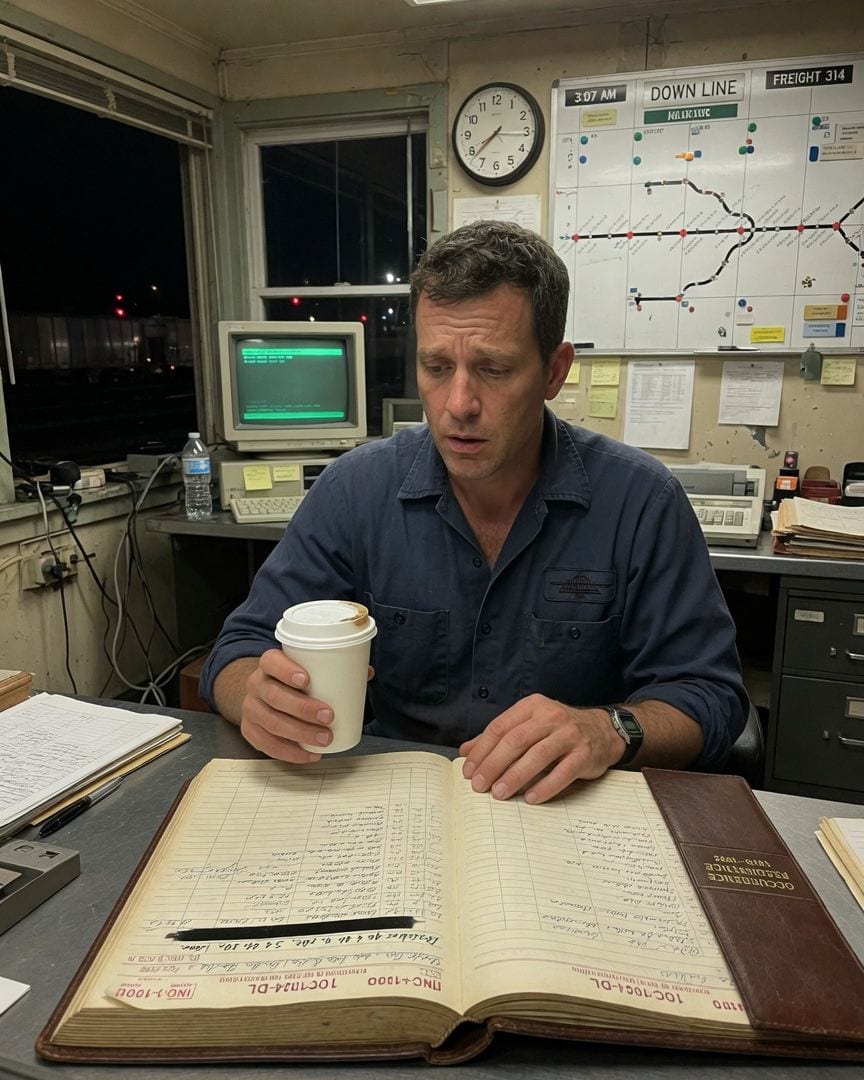
My new colleague's face is identical to a woman in a 1958 archive photo. She was declared 'the woman on the down line' for decades.
Working my solitary shift in the signal box, I found a blacked-out entry in the old occurrence register. It noted 'the woman on the down line' and the instruction 'do not stop.' This same strange entry, word-for-word, recurred every October 4th, back through the years from 1988. It felt like a chill in the routine, a silent dread in a book of transient events.
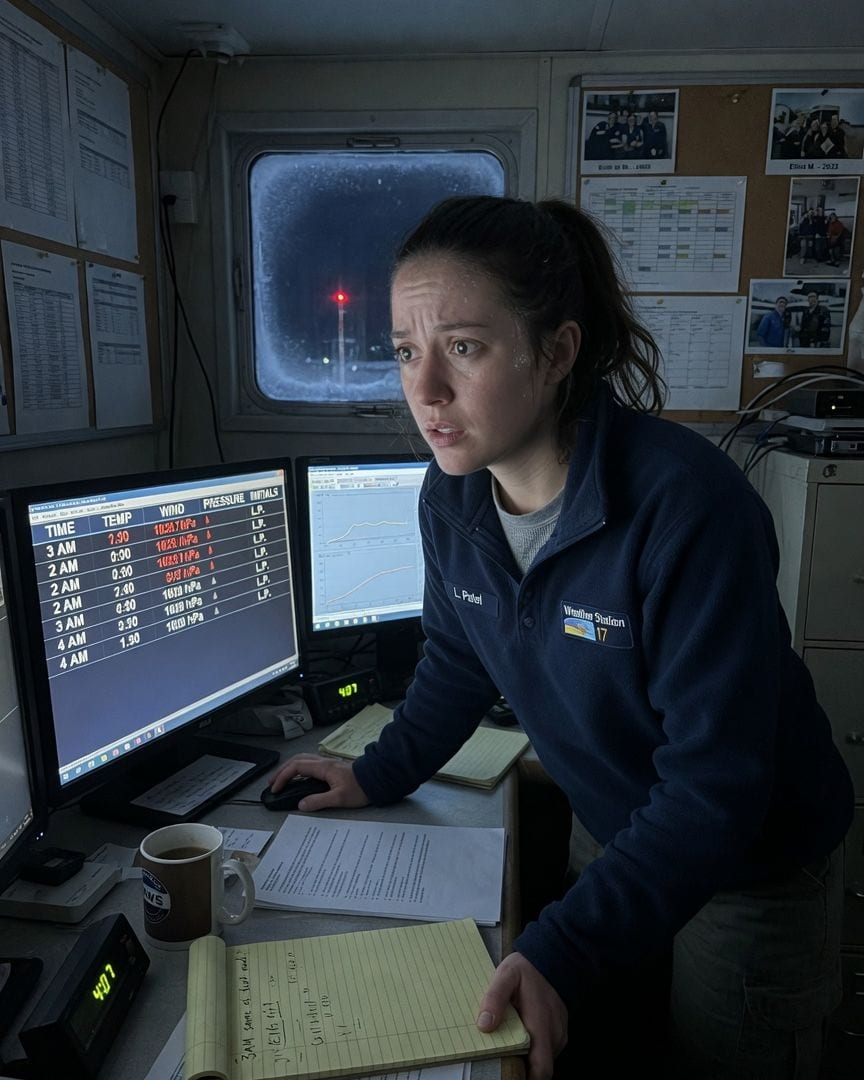
My weather station's 3 AM log shows a pressure reading I never made. My initials are on it, but the dials were dead still.
Working the overnight shift at the remote weather station, I routinely checked the digital logs. The 3 AM entry showed an impossible barometric pressure spike, a hurricane that simply hadn't happened. I distinctly remembered being outside at that time, calibrating a sensor, not making that entry. Yet, my initials, L.P., were clearly logged next to data I never made.
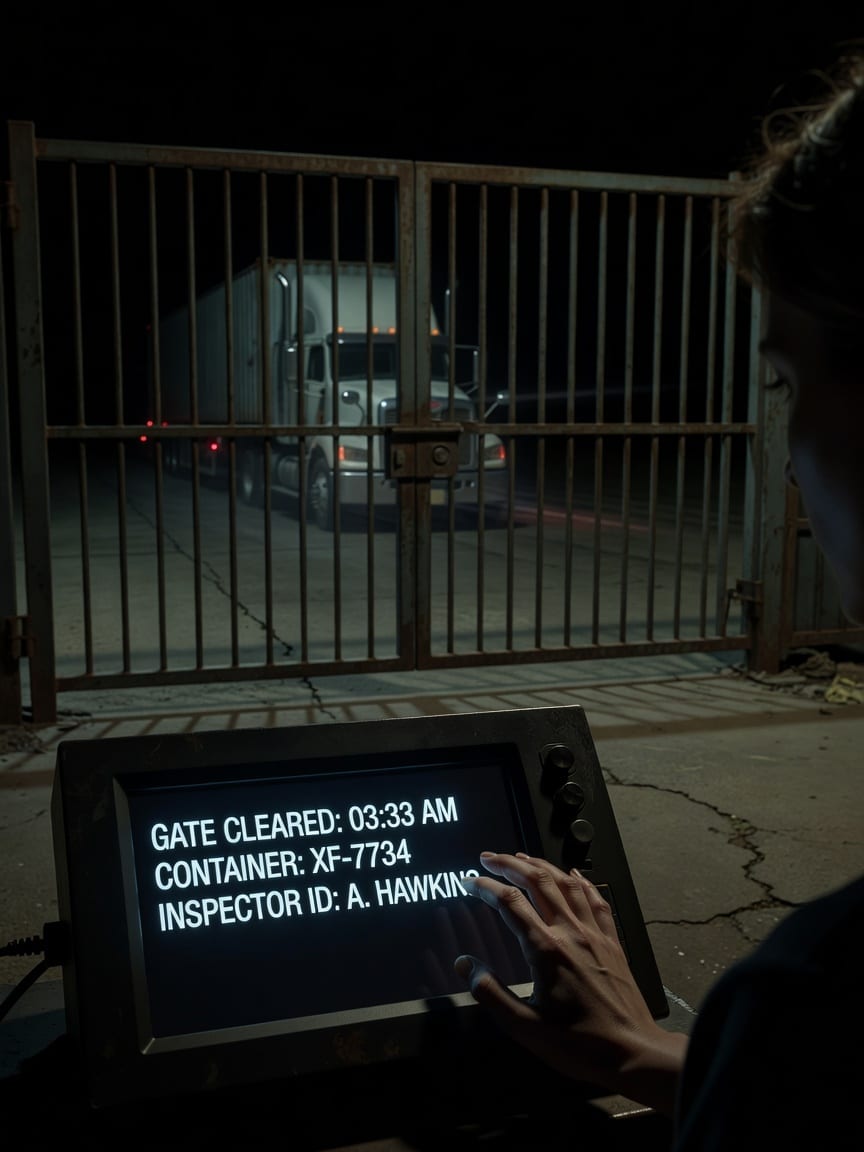
My gate log shows a container left at 3:33 AM, stamped with my ID. The yard was closed, the gate down, and I was asleep.
Audrey Hawkins' inspection log shows a container cleared at 3:33 AM, an impossible time when the gate was locked and no one was working. Her supervisor dismisses it as a glitch, but Audrey can't shake the specific details. Digging into old archives, she finds a handwritten ledger entry from 1974 for the exact same container, signed by a man who died half a century ago.
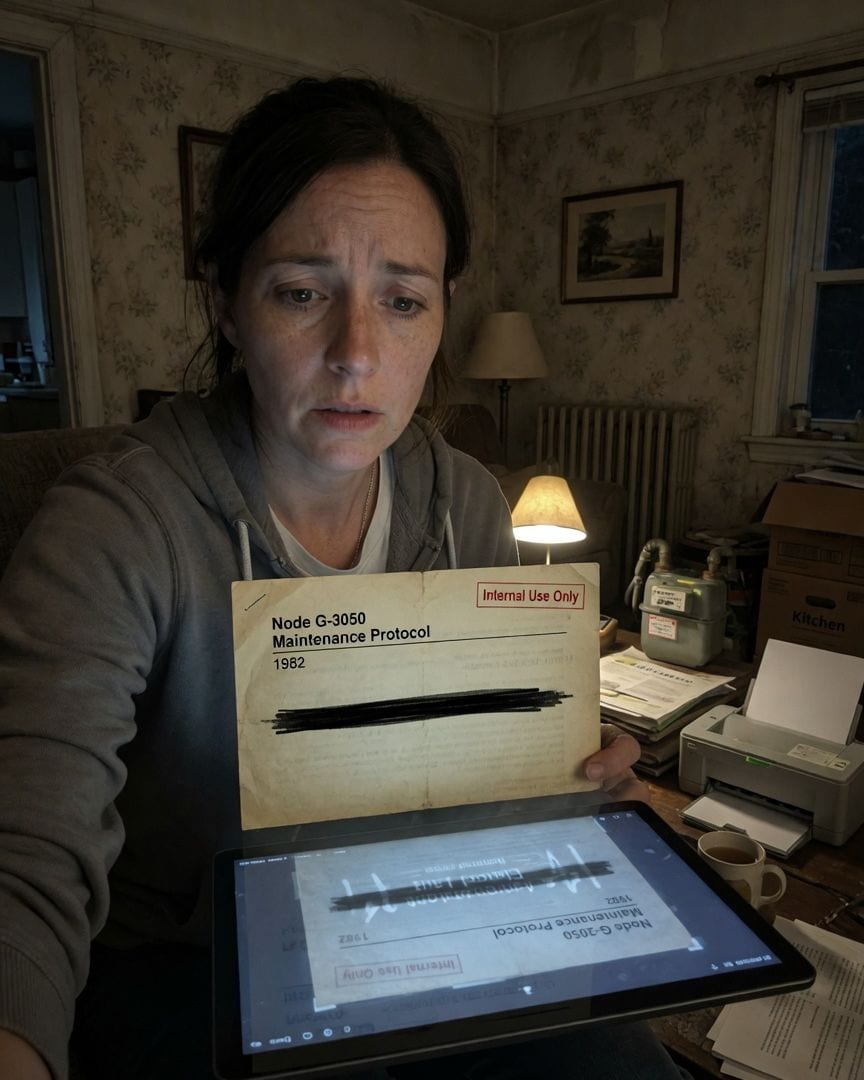
A different tenant every decade since 1949, each one gone — yet our gas meter's final reading comes back identical every time, though the house sat empty in between.
My new house at 14 Elmwood Lane was meant to be a fresh start, a normal home. But the gas bill was wrong. It showed my account, G-3050, active since 1949, with a meter reading of 3050 that had never changed, even when the house stood empty for decades.
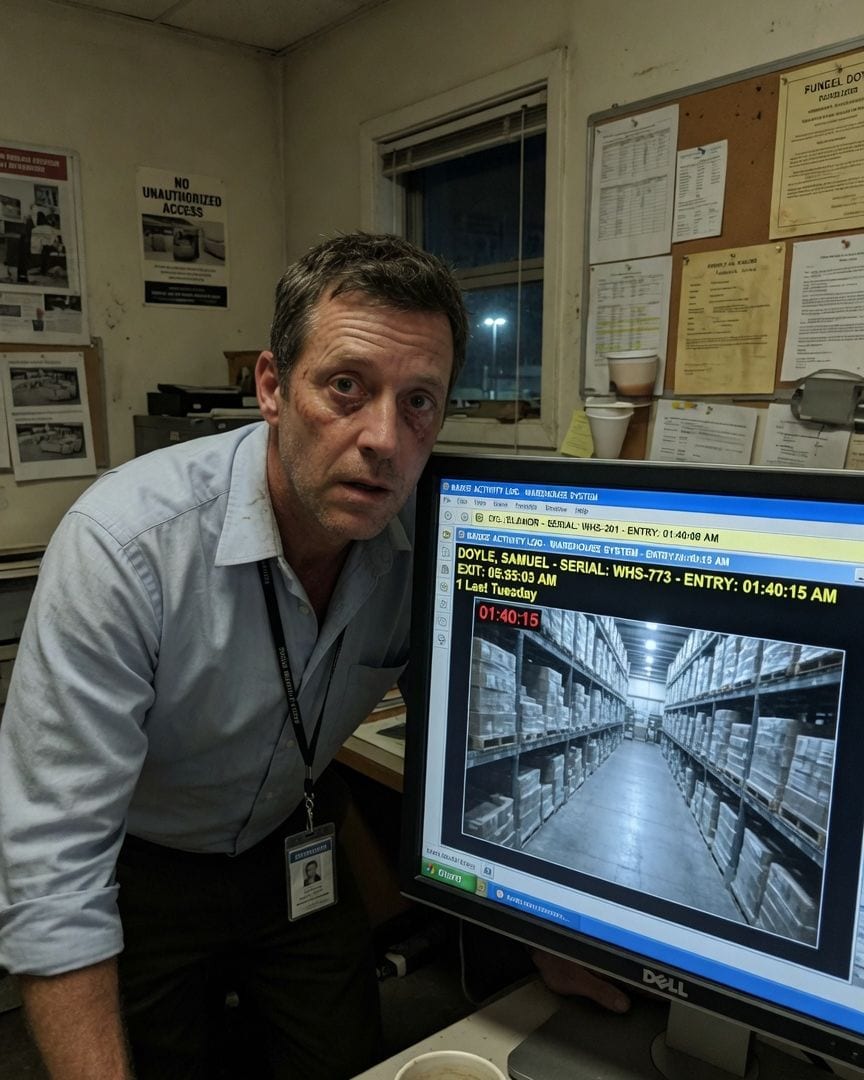
My dead colleague's badge, deactivated weeks ago, logged an entry at 1:40 AM last Tuesday. Then I found another from 1978, with the same impossible times.
My monitor showed a shocking entry: Samuel Doyle, dead and buried three weeks ago, had just logged into the warehouse. His badge was deactivated the day of his funeral, yet the system recorded his precise entry and exit, even though security footage showed the aisles were utterly empty.
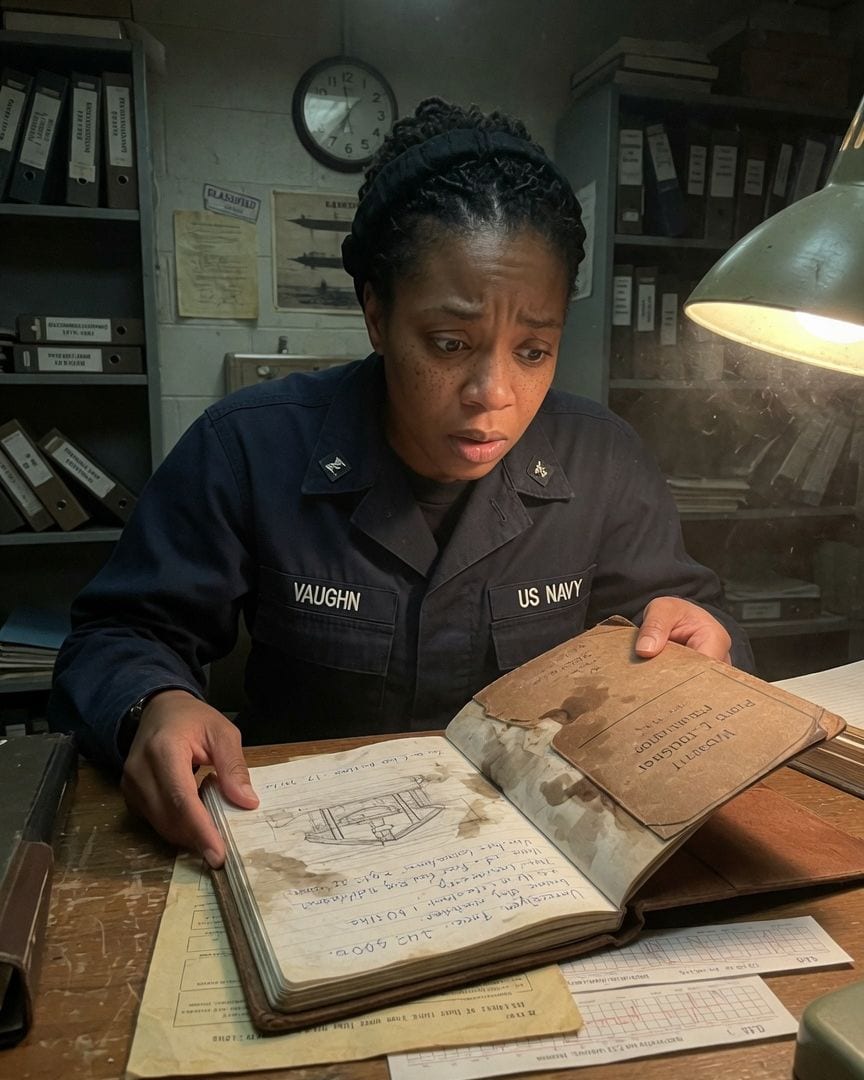
A Petty Officer's sensor logged a man-sized heat bloom at 0405. The camera saw nothing, and a journal from 1978 logged that same trace, then a Cold War Petty Officer gone MIA.
Petty Officer Rose Vaughn knew the meticulous order of Naval Submarine Base Bangor's pier by heart, especially her midnight watch routine. Every night at 0405, her IR sensor logged a man-sized heat bloom moving along the concrete path, vanishing at the pier's edge, but the watch camera showed only empty mist. This phantom warmth had walked the identical path for five years, yet the supposed steam line beneath it had been cold and dry for over a year. Her unofficial investigation led her to a faded 1978 journal, where a vanished Petty Officer, F. Pennington, logged an 'unresolved trace' at the exact same coordinates and 0405 hour, just before he went MIA. The system swore it was there, but the world swore it wasn’t – what was walking the pier, decades after it was lost?