Our removal van's tracker logged 71 miles, looping back to our old flat. The men swore they unloaded somewhere. The map showed only the same postcode, over and over.
The screen on my laptop glowed, a map app tracing a red line that made no damn sense. It was 3:14 PM.
George and Marcus, the removal men, were supposed to be halfway to Elm Street by now, unloading our entire life into the new house. But the dot on the screen, representing their van, kept circling back.
"71 miles," I muttered, my finger hovering over the digital mileage counter. "They've driven 71 miles."
Raymond walked into the living room, a half-packed box of books in his arms. He raised an eyebrow. "Almost done with your pre-move anxiety ritual, babe?"
"It's not a ritual," I snapped, then softened. "Look at this. The van. It's… I don't know what it's doing." I turned the laptop screen toward him.
The red line was a series of overlapping loops, a messy scribble, all centered on the Maple Avenue postcode – our old address. Not the Elm Street address, which was a good twenty miles away.
Raymond leaned in, squinting. "Huh. Tracker must be on the fritz."
"On the fritz for 71 miles?" I scrolled back through the journey history. Each loop, each segment, showed a return to Maple Avenue.
They’d been gone for hours, supposedly driving to Elm Street, but the tracker insisted they kept coming back to where they started. It logged miles, real miles, but the destination remained constant: home. Or, our old home.
My phone rang. It was George. "Alright, Elena," he said, his voice cheerful. "We're all done at Elm Street. Raymond signed for everything. Bit of a trek, that one, but we got it done."
My stomach lurched. "You're at Elm Street?"
"Just left, actually," he confirmed. "Long day. Everything's inside. Hope you love the new place." He disconnected before I could ask another question.
I stared at Raymond. He held up a hand. "He's right. I got the call half an hour ago. Went over there, signed the inventory. Living room's stacked. Kitchen's a disaster. It's all there."
The laptop screen blinked, refreshing. The dot was gone, the journey logged as complete. 71 miles, all within the perimeter of Maple Avenue, yet the men swore they were at Elm Street.
And Raymond, solid, sensible Raymond, confirmed he’d signed for our furniture there. The physical world, for a silent, unsettling moment, had just split in two.
I drove to Elm Street myself. The house was exactly as we’d remembered it: a charming, if slightly dated, two-story with a big oak in the front yard.
Raymond was already inside, wrestling a sofa through the doorway, whistling a tuneless tune. "See?" he said, wiping sweat from his brow. "Perfectly normal. Just a busted GPS."
I walked through the empty rooms, the boxes stacked like geometric monsters. Our boxes, our labels. It was undeniably our new house. The anomaly of the tracker felt like a trick of the light now, easily dismissed.
Raymond was right; it had to be a malfunction.
Later, as he wrestled with the fridge, I headed upstairs. My box of books, specifically, my collection of true crime novels, needed a home. I found it in the attic, tucked away behind a loose floorboard.
The space was dusty, forgotten, smelling of old paper and something else, something faintly metallic. My flashlight beam cut through the gloom.
In a corner, half-hidden beneath a tattered tarp, was a small, wooden chest, its brass clasps tarnished with age. Curiosity, a habit from my data analysis job, pulled me toward it.
Inside, nestled amongst moth-eaten velvet, lay a tarnished silver locket, a faded silk scarf, and a leather-bound journal. The journal was thick, its pages yellowed. I opened it. The handwriting was neat, precise, dated from the early 1970s.
Mundane notes: 'Repaired fence, spoke to Mrs. Henderson about the roses, tried the new baker on High Street.' Nothing startling.
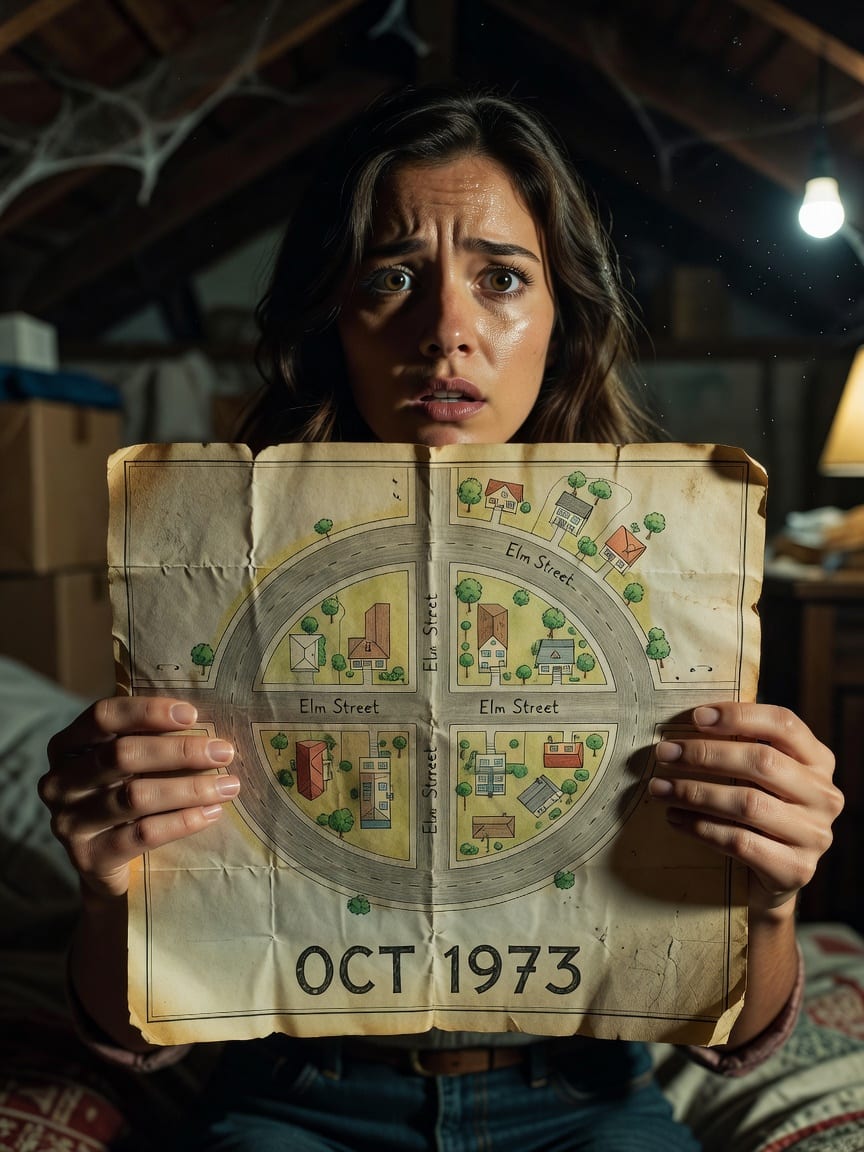
But tucked between two pages, brittle with age, was a hand-drawn map. It was of Elm Street. Our Elm Street. The familiar houses, the winding sidewalks, the big oak tree at the corner. My breath hitched.
The street wasn't just winding; it was depicted as an impossible loop. The road, clearly labeled 'Elm Street Loop,' curled back on itself, like a snake eating its own tail, making a perfect, inescapable circle.
And beneath it, in the same careful script, a single, faded date: 'OCT 1973'.
This wasn't a glitch. This wasn't a malfunction. This was a pattern.
I held the map, my fingers tracing the impossible curve of Elm Street, connecting back to its own beginning. My street. My new home. The dread wasn't a cold wash, but a low hum, deep in my bones.
It amplified the faint, metallic smell of the attic, made the dust motes dancing in my flashlight beam feel like something watched.
The journal slipped from my other hand, falling open with a soft thud. My eyes landed on a line, stark against the yellowed page: 'Another attempt to break the cycle. Oscar Caldwell.'
The name meant nothing to me, a ghost in an old book, but the map… it was too specific, too perfectly rendered to be a doodle. The looping road, the 1973 date. It wasn't a glitch in a navigation system.
Someone else, decades ago, had seen this impossible geometry. They had documented it. The hum intensified, throbbing in my ears. This wasn't just our move; this was a pattern. And I had just found the first, undeniable proof.
Raymond, bless his pragmatic heart, had laughed it off. "Old man's artistic license, El. Probably just doodling after a few too many beers."
But the map wasn't whimsical; it was precise, almost topographical in its details, right down to the placement of the Caldwell house, a few doors down from ours. I had to know.
I started with the simplest test. If Elm Street was a loop, an actual, physical loop, then I should be able to drive away from it. Right?
The next morning, I told Raymond I was running errands, a bag of groceries clutched in my hand, the old map tucked into my purse.
I got into our car, backed out of the driveway, and headed east, towards the main highway, the one that led out of town.
I drove for twenty minutes, then thirty. The GPS on my phone showed me on a perfectly normal, straight road. I passed the gas station, the coffee shop, the strip mall. All familiar landmarks.
I even pulled into the supermarket parking lot, bought a few things – just to prove I’d been out. Then I set off again, confident. Forty minutes of driving, making sure to avoid any turns that felt vaguely familiar.
I took the highway exit, wound through a residential area, then turned onto what looked like an unfamiliar side street.
The next thing I knew, I was pulling into my own driveway on Elm Street. My grocery bag still on the passenger seat, the supermarket receipt dated just an hour ago. The odometer read an extra 18 miles.
I sat there, engine idling, staring at my house. My house. My damn house. How the hell had I ended up here?
The logical part of my brain screamed 'mistake,' 'wrong turn,' but every cell in my body knew it wasn't.
I tried again. This time, west. I drove for an hour, deliberately paying attention to street names, landmarks, even taking a photo of a weird sculpture by the highway. I knew I was far from Elm Street.
I was absolutely certain. And yet, after what felt like a blink, I was easing my car back into my own driveway, the odometer reading another 23 miles. The sculpture photo still on my phone.
The road I'd just driven, the one that was supposed to take me away, had somehow, impossibly, returned me. The Road That Returns was real. Oscar Caldwell, whoever he was, hadn't been doodling.
My research on Oscar Caldwell online was a dead end. No social media, no obituaries that listed his address. But the journal mentioned his house number, just three doors down. I looked up the address. Constance Caldwell.
An elderly woman, I assumed, his wife. Clutching the faded map like a shield, I walked out of my impossible house and towards hers.
The Caldwell house was immaculate, a mirror image of what ours could be with a bit of landscaping. I rang the bell. The door opened a moment later, revealing a woman in her late seventies, perhaps early eighties.
Her white hair was pulled back in a neat bun, her clothes simple but crisp. Her eyes, though, were sharp, missing nothing.
"Can I help you, dear?" she asked, her voice soft but firm.
"Mrs. Caldwell?" I started. "I'm Elena Fontaine. I just moved in a few houses down. On Elm Street."
Her lips curved into a faint, polite smile. "Yes, I know. I saw the van." Her gaze flickered to my hand, where I clutched the rolled-up map. "Come in, dear. It's a bit chilly out there."
She led me into a living room that felt like a museum display: antique furniture, doilies on every surface, an air of quiet permanence. It smelled faintly of lavender and old paper. She gestured to a floral armchair. "Tea? Coffee?"
"No, thank you, Mrs. Caldwell," I said, my voice a little too tight. I unrolled the map, laying it on her polished coffee table. "I… I found this in our attic. In a journal."
Her eyes, still sharp, fixed on the map. Her smile didn't waver, but something shifted in them, a recognition. "Oscar's folly," she murmured, a gentle sigh escaping her lips. "He spent years on that.
Tried to map every turn, every twist."
"Oscar was your husband?" I asked, my heart hammering.
She nodded, picking up the corner of the map, her finger tracing the impossible loop. "My late husband. Oscar Caldwell. He was… meticulous. He loved our little corner of the world, you see.
Though he tried to leave it often enough." She looked at me then, her gaze unsettlingly direct. "Always came back, though."
My breath caught. "Came back?"
"Yes. Just like everyone does, eventually." She paused, her eyes widening slightly, a hint of something knowing in them. "You've been trying to leave, haven't you, dear? Driving in circles, just like Oscar."
I froze. My mouth went dry. I hadn't told anyone about my drives. Not Raymond, not George or Marcus. No one. The words were a calm, flat statement of fact.
My blood ran cold, not from malice, but from the sheer, unsettling certainty in her tone. It wasn’t just Constance Caldwell watching me, but the house itself, the street, the air around us. And it all knew.
"How did you know?" I managed, my voice barely a whisper. The air in the immaculate room suddenly felt thick, pressing in on me.
Constance's gaze was unsettlingly calm. "Oh, dear, it's always the same. The initial confusion, the disbelief. Then the attempts. Driving further and further, only to find yourself back where you started."
She took a delicate sip of her tea, the clink of porcelain echoing in the silent room. "Oscar called it 'The Road That Returns.'
He swore he could log hundreds of miles, only to find himself back on Elm Street, as if he'd never left."
"But the tracker," I pressed, remembering the van's impossible journey. "It logged 71 miles. George and Marcus said they drove to Elm Street, Raymond signed for everything here. But the tracker said they never left Maple Avenue."
Constance nodded slowly. "The mileage is quite real, dear. Oscar understood that. The distances are logged. But the destination… the destination is always within the fold. You see, Elm Street is not just a street. It's… particular."
She gestured around the room, to the window that looked out onto the familiar street. "It's a fold in space, if you will. A localized, non-Euclidean pocket."
My mind reeled. Non-Euclidean. That was a term from theoretical physics, not a description of a suburban street. "A fold?"
"Yes. Journeys lead back. Distances don't quite add up. Our houses, yours and mine, they are nested within it. Your furniture, your boxes from Maple Avenue… they were moved into this pocket.
They never truly 'arrived' from outside, because you, dear, were never truly outside of it either."
The statement hit me like a physical blow. "What do you mean, I was never outside it? We lived on Maple Avenue for three years!"
Constance smiled, a serene, almost pitying expression. "The fold accommodates. It creates, or perhaps weaves, memories. Memories of an outside life, of a journey taken. It's not malicious, you understand. It simply… incorporates."
She leaned forward slightly, her voice dropping, almost conspiratorial. "Oscar believed it has been happening for generations. People move in, people move out, they live their lives, but it's all within the fold. Your old flat on Maple Avenue?
Just another point within the loop. A manifestation. Not truly separate."
Her words were delivered with such quiet, unwavering conviction, such a profound lack of emotion, that they solidified into undeniable truth. This wasn't a crazy old woman. This was a rational person explaining an impossible, consistent wrongness.
The horror wasn't in her cruelty, but in her composure. The calm way she spoke of a world that swallowed lives and spun illusions was utterly terrifying. My entire memory, my entire history, was suddenly suspect.
It felt like the ground itself was shifting beneath me, not physically, but with a sickening, mental lurch.
"So, we're trapped?" I asked, the word sounding hollow even to my own ears.
Constance corrected me with that same unnerving calmness. "Trapped? Oh no, dear. You're integrated. You've simply… found your way home." She paused, her gaze settling on me. "Oscar and I, we've lived here for fifty years. In this house."
She gestured around the room again. "But people come and go, thinking they've moved in, thinking they've moved out. The fold just… accommodates them."
My blood ran cold. Fifty years. In this house. The house I’d bought, the house I was sitting in. It was a replica, a manifestation, a ghost of itself.
My memory of buying it, of the paperwork, of the real estate agent, all of it swam before my eyes, suddenly fragile. This wasn't our new house. It was the house.
The one Constance had lived in for half a century.
Constance smiled faintly, her eyes fixed on me, a deep, unsettling understanding in their depths. "You've always been here, dear. Just like I have."
I felt the solid floor beneath me shift, not physically, but as a sickening mental lurch, realizing the ground I stood on has never been what I thought.
"Always been here?" My voice was barely a croak. "That's impossible. My parents lived in another city. I went to school, college, worked in London for years. I have memories, a whole life outside of this street!"
Constance nodded, a gentle, almost maternal look on her face. "Of course you do, dear. The fold is very good at providing those. It weaves them, you see, to create a comfortable illusion of choice, of freedom.
It wouldn't do to simply remove them; that would cause too much distress. Better to integrate them, make them part of your personal narrative. You chose Elm Street, you moved here, you have a history.
All true, within the fold's parameters."
It was a nightmare, but worse, because it was delivered so calmly, so rationally. Every impossible detail, every wrongness I’d observed, suddenly clicked into place, forming a terrifyingly coherent picture.
The removal van's 71 miles, looping back to Maple Avenue's postcode? "The mileage was real, Elena. But the truck, the men, they were always operating within the fold's twisted dimensions.
Their journey was a physical one, but it was structured to always lead back to a point within its sphere of influence, never truly bringing you from 'outside' into 'inside' because, as I said, you were always within it."
Raymond. His easy acceptance of the tracker as a glitch, his immediate comfort in the new house. That had to be the fold’s influence, too. "He’s adapting beautifully," Constance observed, as if reading my thoughts.
"It takes some people longer, but Raymond seems quite content."
"So it's not malicious?" I asked, the word feeling inadequate. How could something that stole your history, your agency, not be malicious?
Constance shook her head. "No, dear. It simply is. Like the ocean, or the wind. It takes in what it finds, incorporates those within it. It's a natural phenomenon, in its own way. A very localized one, of course."
The horror for me wasn’t a monster, or a malevolent spirit. It was the inescapable, coherent nature of this impossible geometry. My life, my choices, my very self, consumed and redefined by an indifferent, geological force.
"What if I tried to leave again?" I asked, desperation creeping into my voice. "What happens then?"
Constance sighed softly, a faint, sad sound. "The fold will ensure your return, Elena. Or," she paused, her eyes holding mine, "it will ensure you forget the desire to leave in the first place.
It is very efficient at maintaining its equilibrium."
I thought of Oscar Caldwell, meticulously charting the impossible, trying to break the cycle.
I thought of Constance, serene and accepting, living in this loop for fifty years, watching generations of people arrive, think they moved in, and then just… stay.
I looked at her, at the quiet composure, the unbothered acceptance of this monstrous reality, and I saw my own future. My own loss of agency. Raymond's easy contentment was no longer a comfort, but a terrifying portent.
We were permanently integrated into the wrongness, and there was no way out.
I left Constance's house in a daze. The world seemed normal yet utterly alien. The trees lining Elm Street were green, the birds sang, a child rode a bike down the sidewalk.
But it was all a stage, a perfect, seamless set. I drove home, the turns feeling pre-ordained, confirming my entrapment. Each corner led me back towards my house, towards Raymond.
He was in the garden, whistling, pruning the roses. At peace. He had settled in, just as Constance said.
The boxes were unpacked, our belongings finding their places in a space that was both ours and not, a space that had been Constance's, and Oscar's, and countless others before them.
I watched him, the man I loved, now irrevocably part of this impossible geometry. My dread had transformed, subtly, into a quiet, pervasive acceptance.
I still perceived the subtle wrongness, the faint echoes, but the fight had left me, making me another inhabitant of the fold.
Days blurred into weeks. The subtle wrongness of Elm Street became the background hum of my existence. My moments of clarity, the flashes of panic, faded like old photographs.
Raymond was content, more so than I'd ever seen him, speaking of their 'new life,' their 'fresh start' here on Elm Street. I nodded, a small, knowing smile on my lips, one I recognized from Constance's reflection.
Oscar's looping map, which I had retrieved from the attic, now hung framed in our study, a conversation piece that Raymond found amusing. Elena sometimes traced its impossible curves with a fingertip, a faint understanding blooming in her mind.
The truth no longer mattered as much as the quietude it brought.
One evening, as we sat on the porch swing, the scent of jasmine heavy in the air, Raymond turned to me. "Penny for your thoughts?" he asked. "You're miles away." He chuckled. "Thinking of the old flat on Maple Avenue?"
I met his gaze, my smile widening just a fraction, gentle and perfectly serene. "No, Raymond," I said softly, the words feeling utterly true, utterly right. "I'm just thinking about how nice it is to be home."
Raymond closed his book, a faint frown creasing his brow. "Is that so?" he asked, looking at his wife's face, now utterly calm.
Her eyes, he realized, held a depth he hadn't noticed before, and her smile, though gentle, was not quite her own. He shrugged, picking up his book again.
The wind chimes outside their house on Elm Street rang softly, a sound that always seemed to repeat its own echo.
If this one got to you
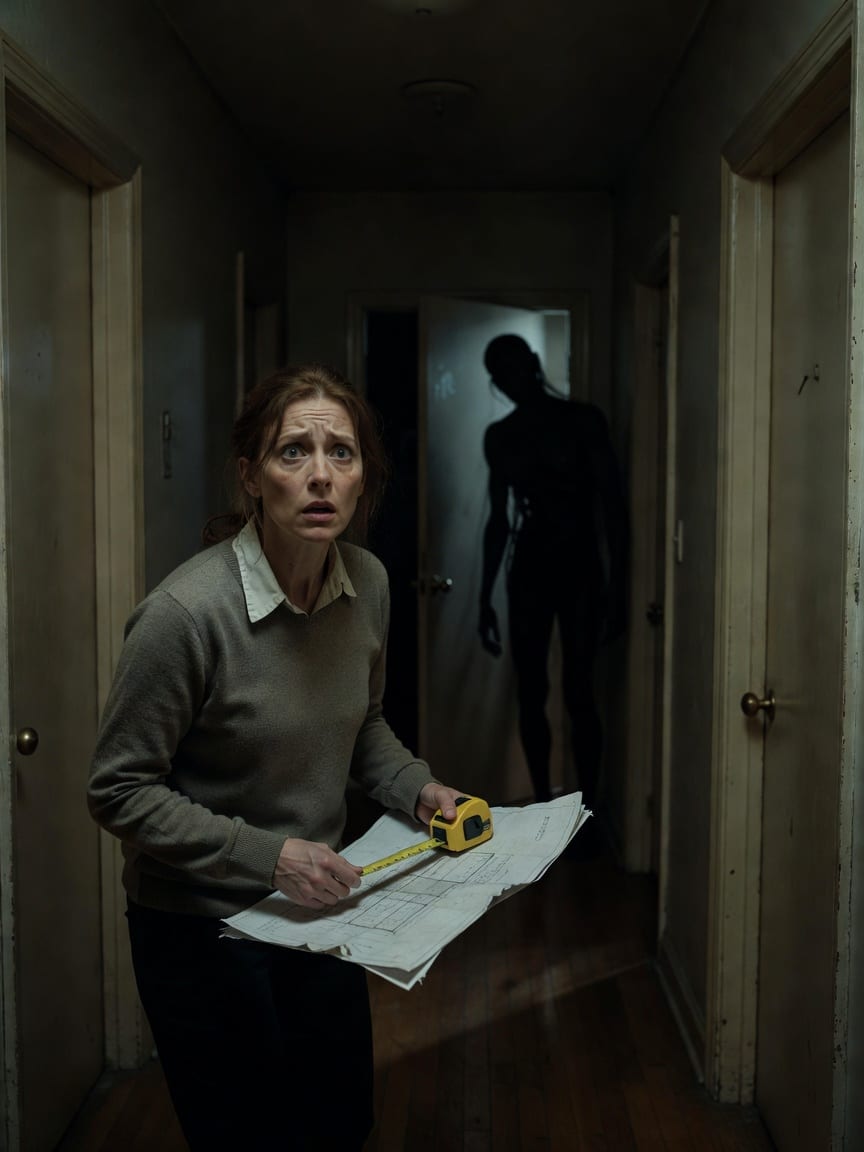
My front door has a dented gate and a dead hydrangea. I walked past it six times, trying to reach the corner shop just a hundred yards away. The pavement kept bringing me back to my own porch, and the shop's light never moved.
My morning started like any other, a quick walk to the corner shop from my home at Number 14, Elm Terrace. But after walking what felt like two minutes, I found myself back at my own front door, the shop no closer. I tried six times, faster and slower, but my street kept compressing, refusing to let me leave.
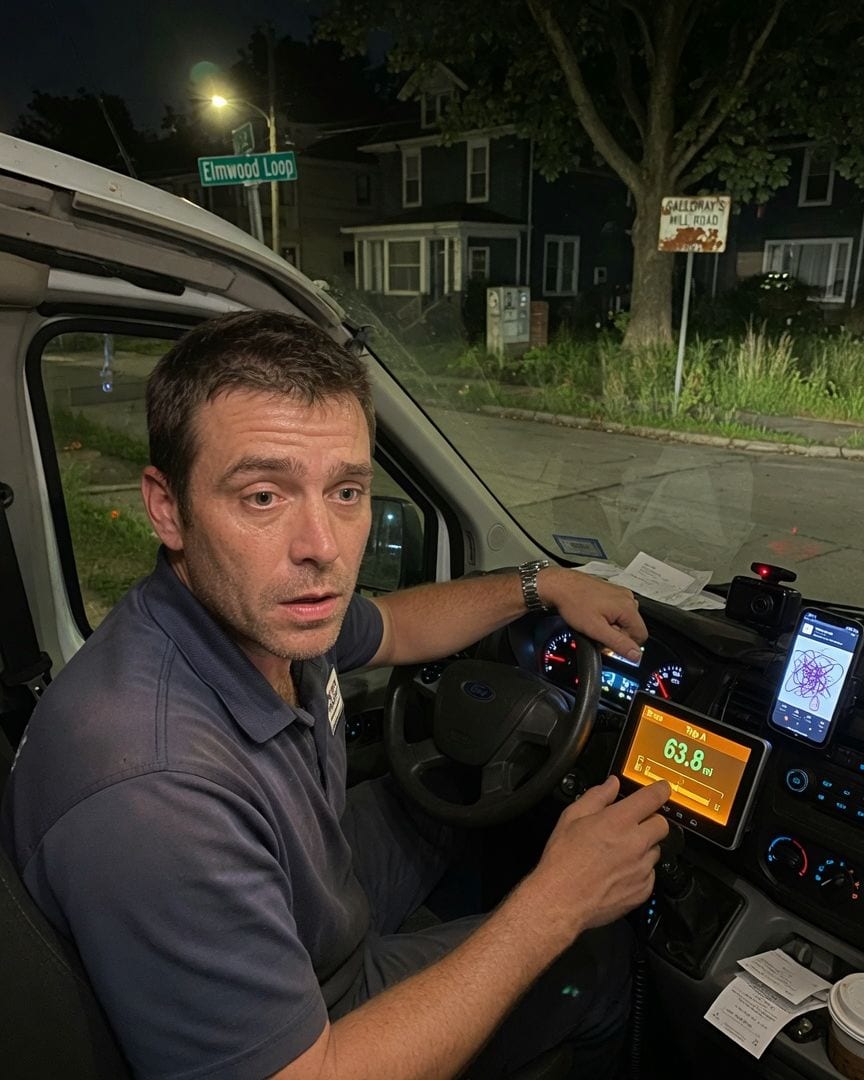
My delivery van's fuel gauge dropped a quarter tank on the Elmwood loop last night. It logged sixty-three miles, a loop I can walk in ten minutes.
I know my routes and my van, but the Elmwood Loop was different. My GPS app showed me standing still on the street, even as I walked for miles, my colleague confirming I hadn't moved. The impossible location left a blank, grey spot on the map.
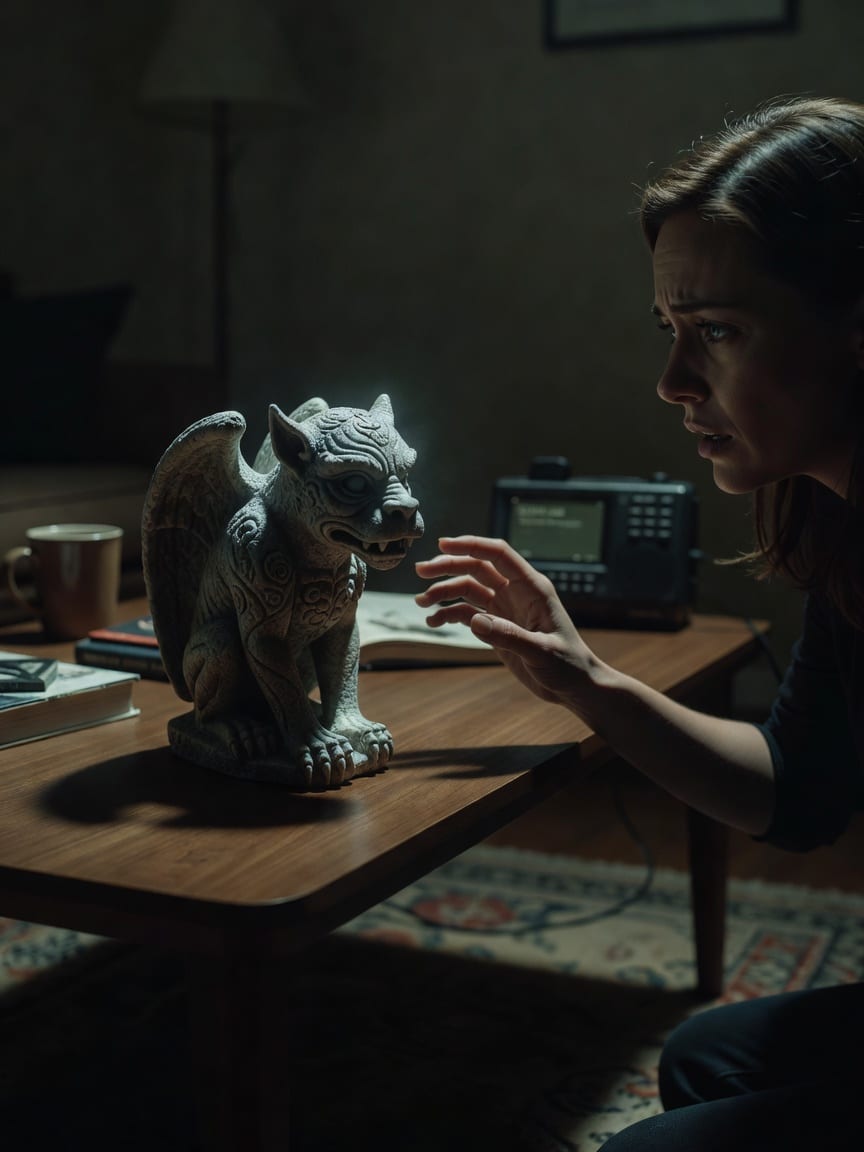
My radio scanner spoke my address at 2 AM. A flat voice read local homes, all with past dates. Mine was the only one in the future.
It was two in the morning, and my quiet house was filled with the usual hum of my weather scanner. But the static broke, replaced by a flat, synthesized voice reading a list of local addresses and dates. My hand froze when it spoke my own address, 181 Foster Drive, followed by a date: October 27th. That date was three weeks from now.
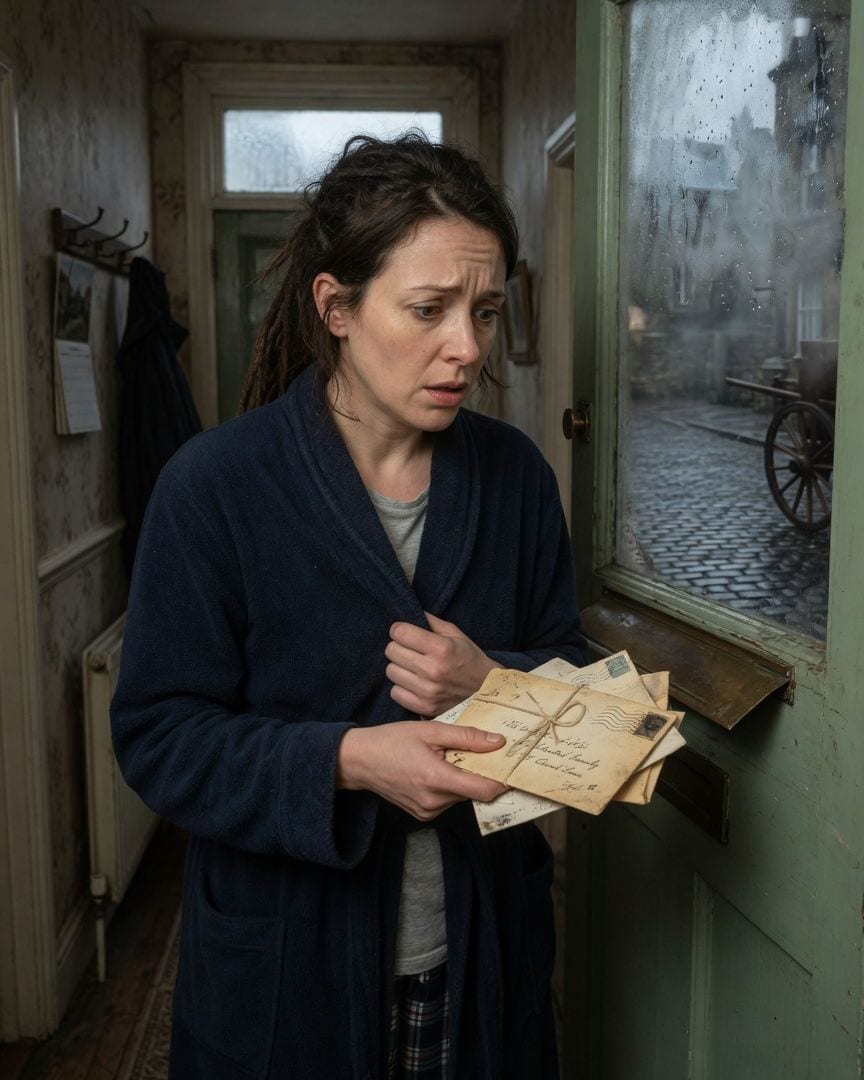
Seventy years ago, a hidden journal recorded my door opening to the wrong street and receiving Lockwood post.
I'd only recently moved into my inherited house, a quiet place on the edge of town. One grey morning, a distinct clatter from the front door's post flap caught my attention. Reaching down, I expected my gravel path, but instead, the flap showed a dark, cobbled street that wasn't mine. A bundle of warm, old letters, addressed to 'The Lockwood Family,' slid through, before the vision flickered and was gone.
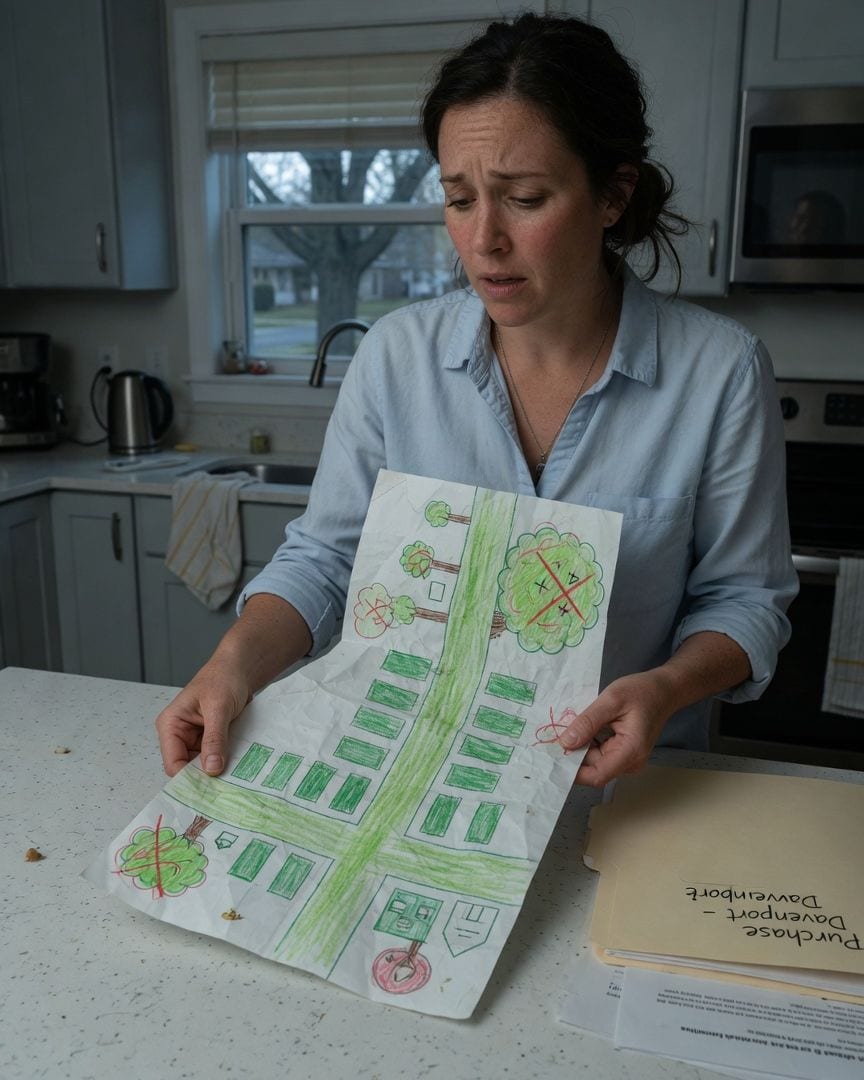
A hand-drawn map keeps arriving through our letterbox — every space on the lane marked green, except the one spot under the old lime tree, alone in red. The agent made us swear we'd never park there.
My new house came with a strange local quirk: weekly maps slipped through my letterbox, each one marking a specific parking spot with an angry red X. A legal addendum about the spot, and my neighbors' evasiveness, made me uneasy. But nothing prepared me for the ancient, identical map I found, which marked my own house with that terrifying red X.
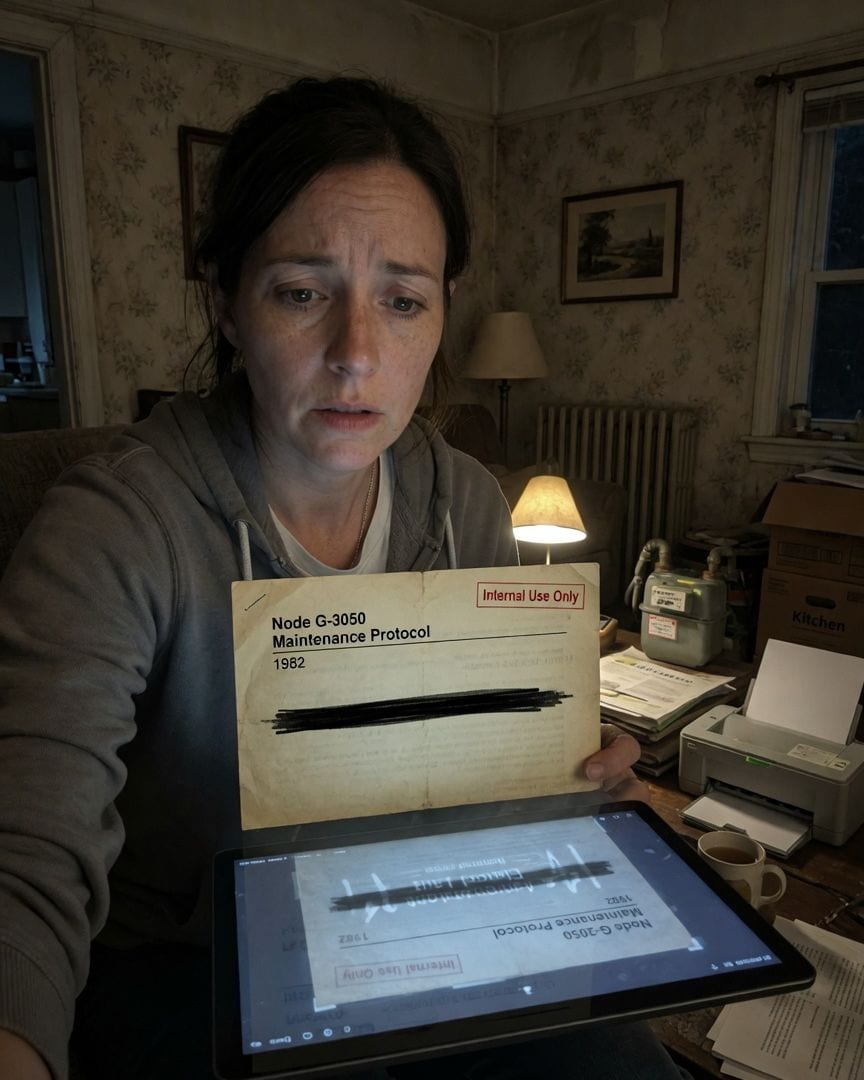
A different tenant every decade since 1949, each one gone — yet our gas meter's final reading comes back identical every time, though the house sat empty in between.
My new house at 14 Elmwood Lane was meant to be a fresh start, a normal home. But the gas bill was wrong. It showed my account, G-3050, active since 1949, with a meter reading of 3050 that had never changed, even when the house stood empty for decades.