A save-the-date came for a class I was never in, at a school I never attended — my name printed on the guest list, ringed in red. The school closed in 1993.
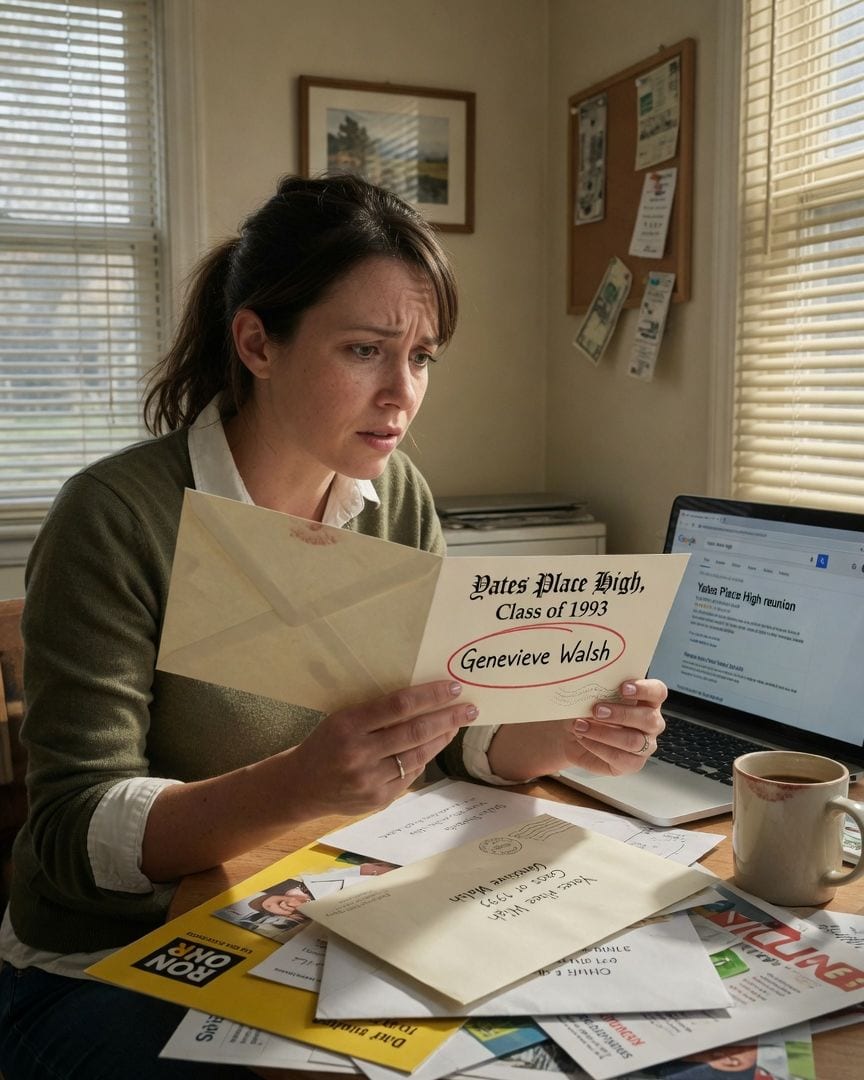
I was sifting through the usual junk mail – credit card offers, supermarket flyers, a flyer for a gym I’d never join – when I felt it. A heavy, cream-colored envelope, unlike the others.
It wasn’t a bill, no company logo. Just my name and address, handwritten in a looping, old-fashioned script. Inside, a save-the-date card. Not for a wedding, but a high school reunion. Yates Place High, Class of 1993.
My brow furrowed. Yates Place? I grew up three towns over. And I was born in 1992, making the 'Class of '93' an impossibility. I hadn't even started kindergarten when that class would have graduated.
I scanned the list of "expected attendees." My full name, Genevieve Walsh, was printed clearly, nestled between a ‘Trevor Evans’ and a ‘Sarah Thompson.’ And then I saw it, unmistakable, a bright, unsettling ring of red ink circling my name.
It looked less like an invitation and more like a target.
I flipped the card over, searching for a joke, a logo, anything to explain it. Nothing. Just a faint postmark: 'Old Yates Field.' I knew that name.
It was the access road for the new housing estate, built years ago over the site of the old Yates Place High. That school had been demolished in 1993, the very year this 'class' was supposedly graduating.
A prickle, not of the season, traced its way up my arms. This wasn't just a mistake or a prank; it felt too specific, too impossible to be random.
I tried to rationalize it. A database error, an address mix-up, some incredibly elaborate, pointless prank. I pulled out my laptop and typed in "Yates Place High reunion." Nothing.
The school’s online history was sparse, ending abruptly with its closure and demolition in '93. No alumni association, no class pages. Just a digital void where a high school should have been.
I tried the post office, calling their non-emergency line, my voice tight. I explained about the 'Old Yates Field' postmark.
The clerk, her voice tinny over the phone, confirmed it was a valid local postmark, but reiterated what I already knew: that address was the housing estate.
"No school there for decades, ma'am," she chirped, oblivious to the chill coiling in my gut.
The mounting unease became a dull ache. I had to see it. I drove out to the housing estate, the afternoon sun glaring off pristine new construction.
The access road, 'Old Yates Field,' was exactly that – just a road winding through manicured lawns and identical brick houses.
The exact address on the card, if it were real, would put the sender right in the middle of a cul-de-sac. I felt ridiculous, a marketing manager chasing ghosts on a Tuesday afternoon.
I saw an elderly woman, her back slightly hunched, meticulously tending a rose bush in her front garden. She looked like she’d been there forever. "Excuse me," I called, feeling foolish as she turned, her eyes a watery blue.
"I'm looking for… I was wondering about the old Yates Place school?"
Mrs. Romano, as she introduced herself, straightened slowly, a faint smile on her lips. "Oh, yes, dear. Yates Place. My family lived here generations before the school even went up.
Beautiful old building it was, before they tore it all down. Never understood why." She sighed, a puff of air like dry leaves. "But a reunion? Nonsense. That school's been gone for thirty years.
Nobody's had a reunion for that lot." Her gaze sharpened slightly. "Some of the old families, though… the Yates, mostly. They were always a bit peculiar about the land, you know. Said it had a 'memory'."
She waved a dismissive hand. "Old superstitions."
I thanked Mrs. Romano, the last of her words hanging in the still air. Peculiar. A memory. As I turned to leave, something caught my eye near the edge of what must have been the old school grounds.
A weathered, almost forgotten stone, half-buried in the tall grass, just past Mrs. Romano's perfectly edged lawn. It looked like a foundation stone, a remnant. A strange, insistent compulsion pulled me towards it.
I knelt, pushing away the dirt and tough weeds, my fingers brushing against cold, damp earth. And there, tucked beneath the stone, brittle with age and a faint, earthy smell, was another cream-colored card.
It was identical to mine: a save-the-date for a reunion, printed with a list of names. This one was addressed to 'Mr. Albert Hughes,' and the date, faded but legible at the bottom, was from the 1970s.
His name, too, was ringed in that same unsettling red.
I clutched the ancient card, driving home in a fog. Albert Hughes. I spent the rest of the evening researching him, my living room a chaotic mess of open browser tabs and old newspaper archives. He was real.
Old clippings detailed his mysterious disappearance decades ago, linked directly to the same local area, the 'Old Yates Field' site. No body, no trace, just a missing person’s case that had eventually gone cold.
The red ring around his name on that brittle, old card was an identical, chilling echo to the one on mine. This wasn't a prank. This was a pattern. A generational pattern, spanning decades.
The next morning, determined to find answers beyond missing persons reports, I drove to the local historical society. The building smelled of old paper and dust motes dancing in the sunbeams.
There, tucked away amongst crumbling maps and faded photographs, I found Carl Sullivan. He was a man in his mid-fifties with kind eyes behind thick glasses, a local history enthusiast who volunteered as an archivist.
I told him my story, my voice tight with a desperate need for a rational explanation. He listened patiently, initially dismissing the cards as an elaborate, long-running local joke.
“You know how these small towns are,” he chuckled, adjusting his spectacles. “People love their tall tales.”
But when I carefully laid out both cards on the polished oak table—my crisp, new one beside Albert Hughes’s ancient, crumbling invitation—his smile faltered. He picked up the Albert Hughes card, his fingers tracing the red circle.
His expression grew serious.
“Well, now,” he murmured, his voice lower. He recounted hushed whispers he’d heard over the years about ‘the Old Yates Place’ and an unofficial ‘register’ that certain families, particularly the Yates, were rumored to keep.
“Just local folklore, mind you,” he insisted, but his eyes betrayed a deeper unease.
He then recalled something more concrete: a Harold Yates, whose family had owned the land for generations, had worked as a groundskeeper at the school in the 80s, long before its closure.
“Seventy-eight now, I reckon,” Carl mused, tapping a finger on the desk. “Lives quietly out in Blackwood. Known for his… eccentric passion for local lore.”
I tried calling Harold Yates. Repeatedly. I left polite, increasingly desperate messages on the answering machine of the dusty landline number Carl had found for me. Each unanswered call, each polite dial tone, only tightened the knot in my stomach.
The lack of response, coupled with Carl’s stories, began to heighten my anxiety in a way I hadn’t anticipated. I started noticing things.
A dark, older model sedan parked on my street in the evenings, its windows tinted, so dark I couldn’t see inside. It would be there when I arrived home from work, a silent, black presence, and always gone by morning.
I told myself it was paranoia. A new neighbor. Someone visiting the next-door Airbnb. But the feeling of being watched intensified, a constant prickle at the back of my neck.
One evening, I was chopping vegetables for dinner, the rhythmic thud of the knife against the cutting board usually a soothing sound. It wasn’t. The phone rang, startling me. Unknown number.
I hesitated, then answered cautiously, my grip tightening on the knife handle. A calm, elderly male voice, slow and deliberate, spoke my full name. “Genevieve Walsh.” My breath hitched, a sudden, icy gasp.
The voice continued, low and even, utterly devoid of inflection. “You’ve been asking questions about the old school. Some things are best left undisturbed.”
The line clicked dead, the sound echoing in the sudden silence of my kitchen, a sharp, final report. I stood frozen, my hand still gripping the phone, the cheap plastic suddenly feeling like it weighed a ton.
The voice, while unfamiliar, carried an unsettlingly intimate quality, as if it had known me for a very long time. My hand, still gripping the phone, trembled, the knife slipping precariously from my grasp.
Shaken to my core, I immediately dropped everything and drove back to Carl Sullivan’s house, the sedan’s implied presence a constant phantom in my rearview mirror. I burst through his door, recounting the phone call in a breathless rush.
Carl, now visibly unnerved, ran a hand through his thinning hair, his face pale under the porch light. “That’s… that’s Harold Yates,” he murmured, his eyes wide and clouded with a fear I now understood intimately.
“He rarely talks to anyone. Especially not strangers asking about that place.” Carl reluctantly admitted he’d heard more than just whispers about a ‘legacy’ associated with the Yates family and the old school. He swallowed hard.
“There’s a rumor,” he confided, his voice barely above a whisper, “of a hidden archive in the old town hall.
Supposedly contains founding documents for the region, but also… rumored to hold personal effects and records from the old school that were never officially cataloged when it closed.”
He warned me it was probably just local gossip, a way to make the mundane seem more exciting. “Just stories, Genevieve,” he insisted, but his voice lacked conviction.
My rational mind, however, was now fully engaged with the impossible. The call, the sedan, the cards—they were all converging, demanding an answer that wasn't mundane. I thanked him, my decision made.
The next morning, before the town hall was truly bustling, I found myself navigating its dusty corridors. The air was thick with the scent of old paper and wood polish.
I finally located the uncatalogued section Carl had mentioned, a forgotten corner piled high with boxes and forgotten files. Hidden behind a stack of brittle, yellowed land deeds, I discovered a small, unmarked wooden box.
It was unassuming, just plain pine. My heart pounded with a terrifying certainty as I pried open the lid. Inside, among a few faded school photos and a dried, crumbling corsage, was a thick, leather-bound ledger.
It felt ancient, its cover worn smooth by countless hands, as if it had been opened and closed a thousand times.
My hands trembled violently as I opened the ledger. It wasn't an attendance book, nor a faculty roster. The pages were filled with neat, elegant handwriting, column after column listing names, dates, and cryptic symbols.
The dates spanned centuries, some predating the school's existence by generations. My dread grew with each page I flipped, a dizzying sense of timelessness washing over me, a feeling of peering into something impossibly old and deeply wrong.
I saw familiar surnames from Mrs. Romano's stories, names that had vanished from local records decades, even centuries, ago. And then, my eyes locked onto a specific entry.
On a page dated 1991 – two years before the school officially closed its doors, and a full year before I was even born – was my full name, clear and precise: 'Genevieve Walsh.'
Beside it, in the same unsettling, vibrant red ink that marked my save-the-date card, was a complex, unfamiliar symbol, perfectly drawn, an intricate coil that seemed to writhe on the page.
I stood frozen in the dusty archive, the ledger heavy and cold in my trembling hands, my own name staring back at me from before my birth. The impossible coherence of it all slammed into me.
This wasn't a school register; it was a list of targets, a predestined roster. The symbol, a mark. There was no other explanation.
Clutching the ledger like a shield, I left the town hall, the quiet dread now a roaring certainty in my ears. I drove straight to Harold Yates’s quiet, unassuming house in Blackwood.
He was on his porch, calmly pruning a rose bush, the delicate pink petals a contrast to the grim purpose that now propelled me. A faint, knowing smile played on his face as my car crunched on his gravel driveway.
He didn't seem surprised to see me. He simply greeted me by name, his voice as unhurried and even as it had been on the phone, his eyes old and unsettlingly clear. “Genevieve Walsh. I expected you.”
I didn’t waste time with pleasantries. I held up the ledger in one hand and my save-the-date card in the other. He didn’t deny anything.
He just set down his shears with deliberate care, wiped his hands on a pristine white cloth, and gestured to a rocking chair. His composure was the most terrifying thing of all.
“That,” he began, his voice smooth and untroubled, “is the Register of the Chosen. A lineage of individuals. Their essence, you see, is meant to feed the Gathering.”
He described it as a cyclical event, tied to the very land the school once occupied, stretching back beyond recorded history.
The red ring, he stated, marked those whose ‘activation point’ was near, a ‘summons’ to fulfill their purpose, a kind of resonance with the ancient energy of the land.
His words hung in the air, clinical and detached, as if discussing a peculiar agricultural practice.
Harold gestured to the open ledger, his finger tracing Albert Hughes’s entry. “Albert also received his summons,” he explained, his voice devoid of any sadness or regret. “As have countless others before you, and many more will after.”
He clarified that the ‘Gathering’ wasn't a physical meeting, not a reunion of people, but a subtle, inexorable drawing of life force, a 'reunion' with the land itself, a return to its ancient purpose.
He offered me a glass of iced tea, his hospitality unsettlingly genuine. He didn’t threaten me, didn’t try to stop me from leaving.
He simply stated that my ‘time’ was simply drawing near, as it does for all those in the Register. The horror wasn’t his malice, but his calm, almost academic explanation of my predetermined fate.
The sheer, unfathomable weight of a destiny decided before my birth, a purpose I never asked for, settled over me, chilling me to the bone.
There was no escape from this kind of targeting, no negotiation with an ancient, living record. Realizing the futility of argument, the absolute, unshakeable nature of his belief, I slowly backed away, clutching the ledger to my chest.
Harold Yates watched me go, a faint, almost serene smile playing on his lips, a silent, terrible affirmation of my place in his ancient, living record.
I left town that day, driving until the familiar dread loosened its grip, only to settle into a constant, low hum beneath my skin.
I attempted to present the ledger to various authorities, from local police to specialized historical research groups, but it was dismissed as an elaborate hoax.
The impossible dates and names, the sheer outlandishness of a 'Gathering' tied to land, were too incredible to be credible. They saw only an old book, not a horrifying truth.
Frustrated and desperate to erase any physical trace of my connection to it, I destroyed my save-the-date and the old Albert Hughes card, burning them in a metal bin until only fine, gray ash remained.
But the ledger itself, that ancient book with my name etched within its impossible timeline—I couldn’t bring myself to destroy it.
I keep it, locked away in a safe deposit box in a new city, a constant, chilling reminder of the truth. I live, but I am irrevocably marked.
Every year, around the same date as that infamous ‘reunion’ card arrived, Genevieve finds herself checking the mail with a knot in her stomach. She knows the source isn’t a physical address, but a deeper, older purpose.
Harold Yates is likely still tending his roses, still sending out his invites, still ensuring the ‘Gathering’ continues. The names in the ledger, the red rings, the empty field – it all fits with a horrifying, perfect coherence.
She knows, with absolute certainty, that her time will come again.
A package arrived at Genevieve Walsh's new apartment, postmarked from a small, rural town she'd never heard of. Inside was a single, plain white card. It wasn't a save-the-date, just a simple note: "We missed you."
If this one got to you
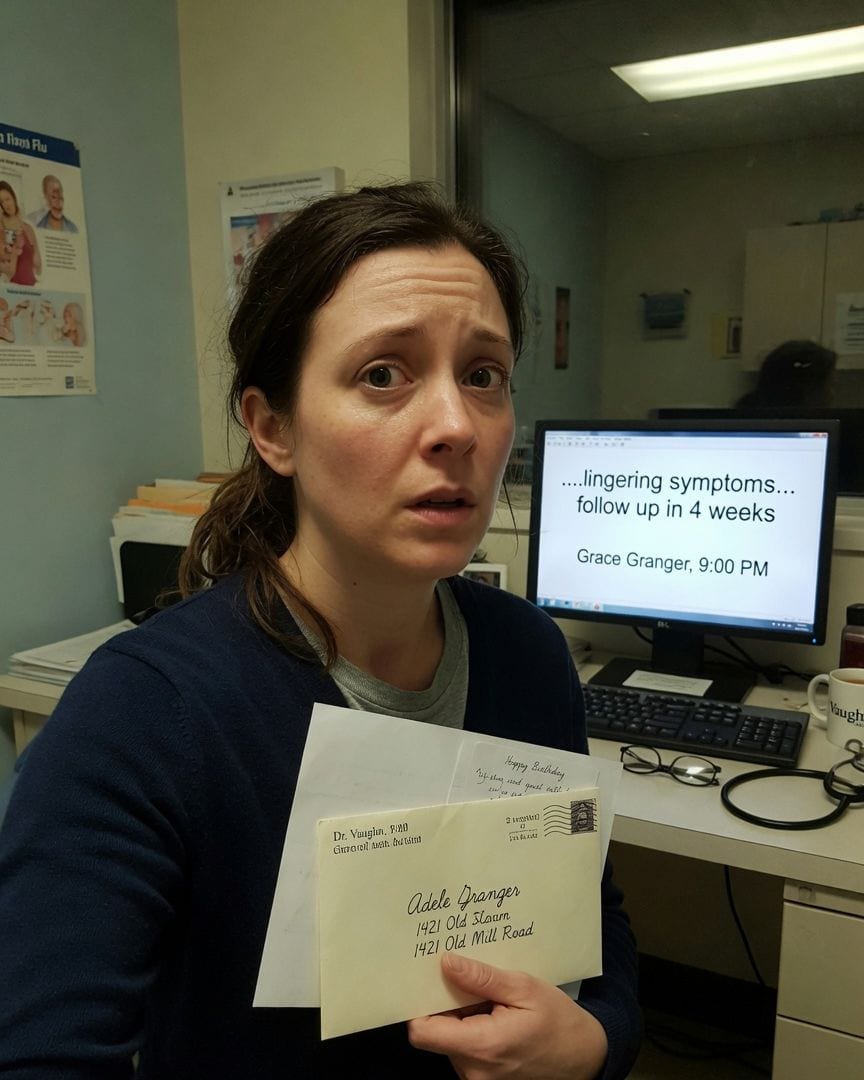
Mid-appointment about my cough, my doctor told me to call my estranged sister tonight — a sister I'd never mentioned to him. The note on his screen ended with her name and a time.
My doctor dismissed my cough as a lingering virus, but then he said something impossible: "You should call your sister tonight." I hadn't spoken to Grace in years, and I'd never mentioned her to him. When I saw her name on his screen with a specific time, a cold dread began to claw at me.
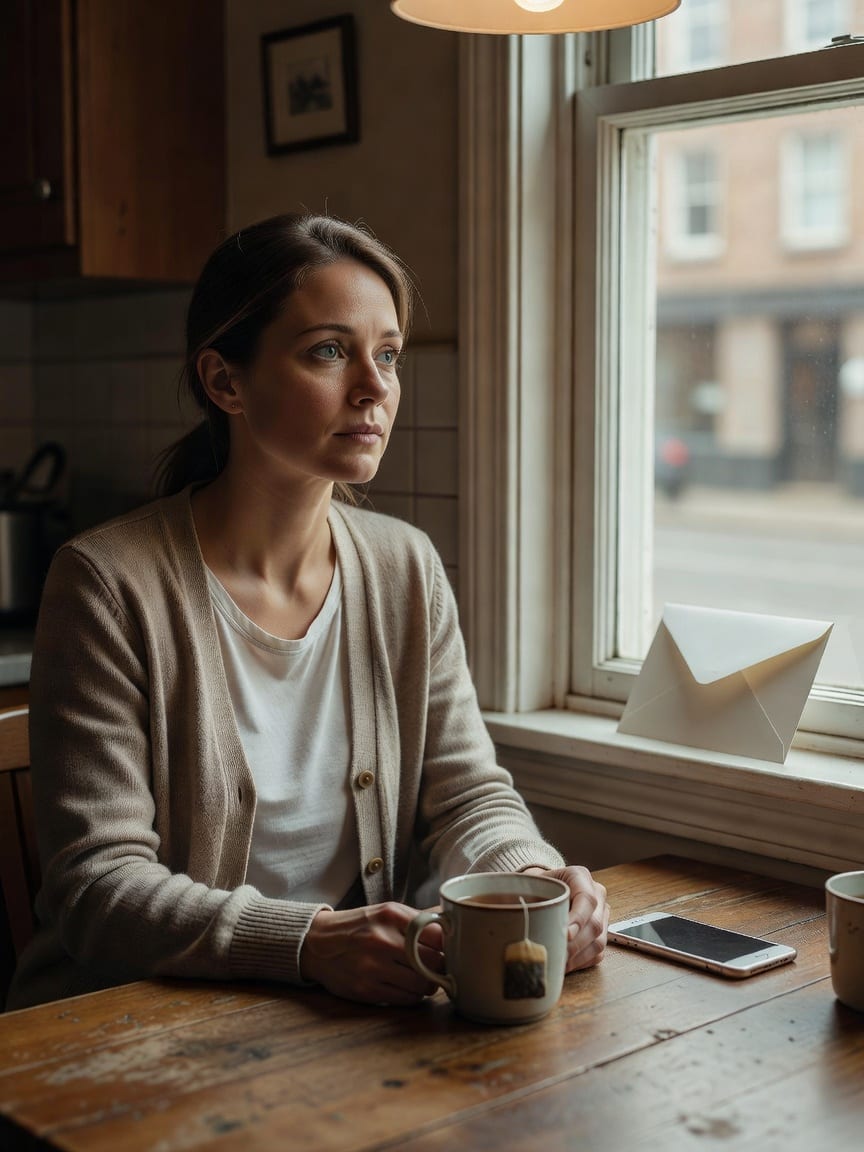
My taxi driver knew my name before I spoke, then apologized for the flight I was going to miss. I was arriving. The cab's plate was scrapped four years ago.
After a strange taxi ride, I received an unsettling birthday card addressed to me. Its return address listed 'Old Mill Road Field,' an empty lot where a mill once stood, and it was postmarked locally. The card arrived four months before my actual birthday, sparking a cold dread I couldn't ignore.
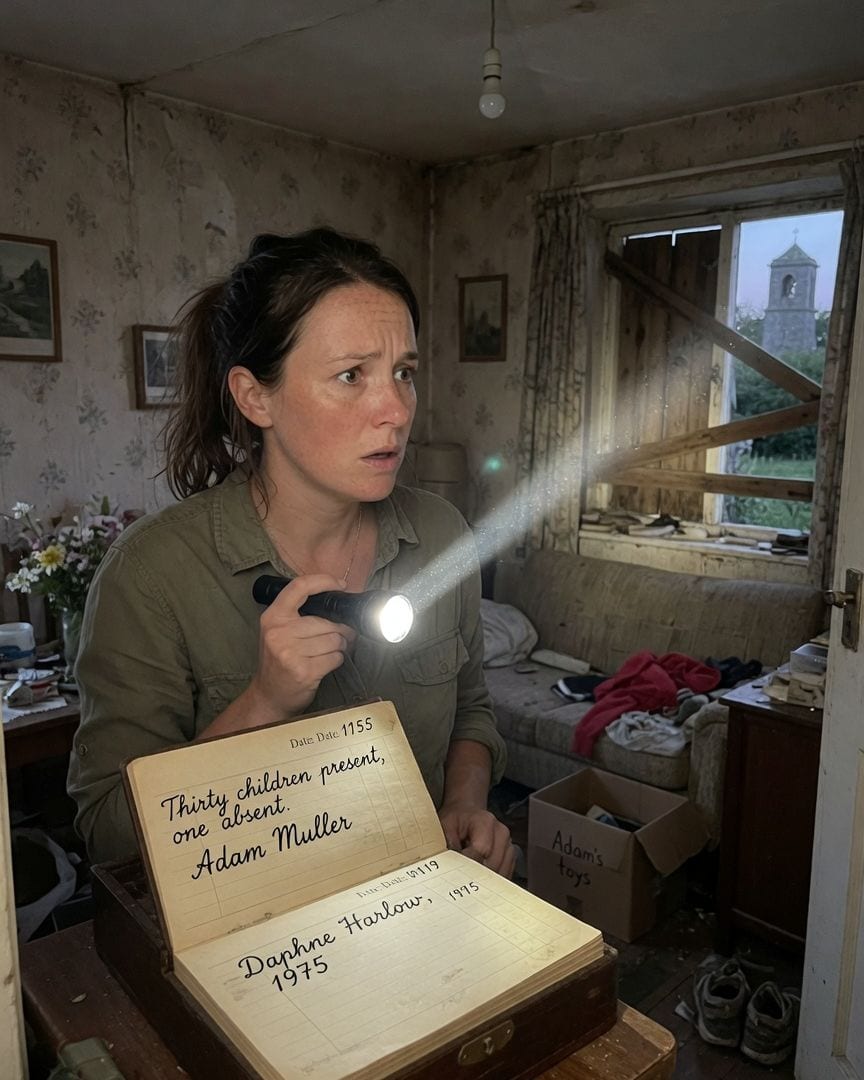
My son rang the old school bell. The attendance register, visible through the boarded window, now shows today's date and his name marked 'absent'.
We moved to a quiet village for peace, but my six-year-old son Adam found the old, boarded-up schoolhouse. Locals warned us, "Never ring the old school bell." That Tuesday, Adam rang it. Later, I saw his name on the school's long-closed attendance register, marked 'absent' in impossibly fresh ink from today.
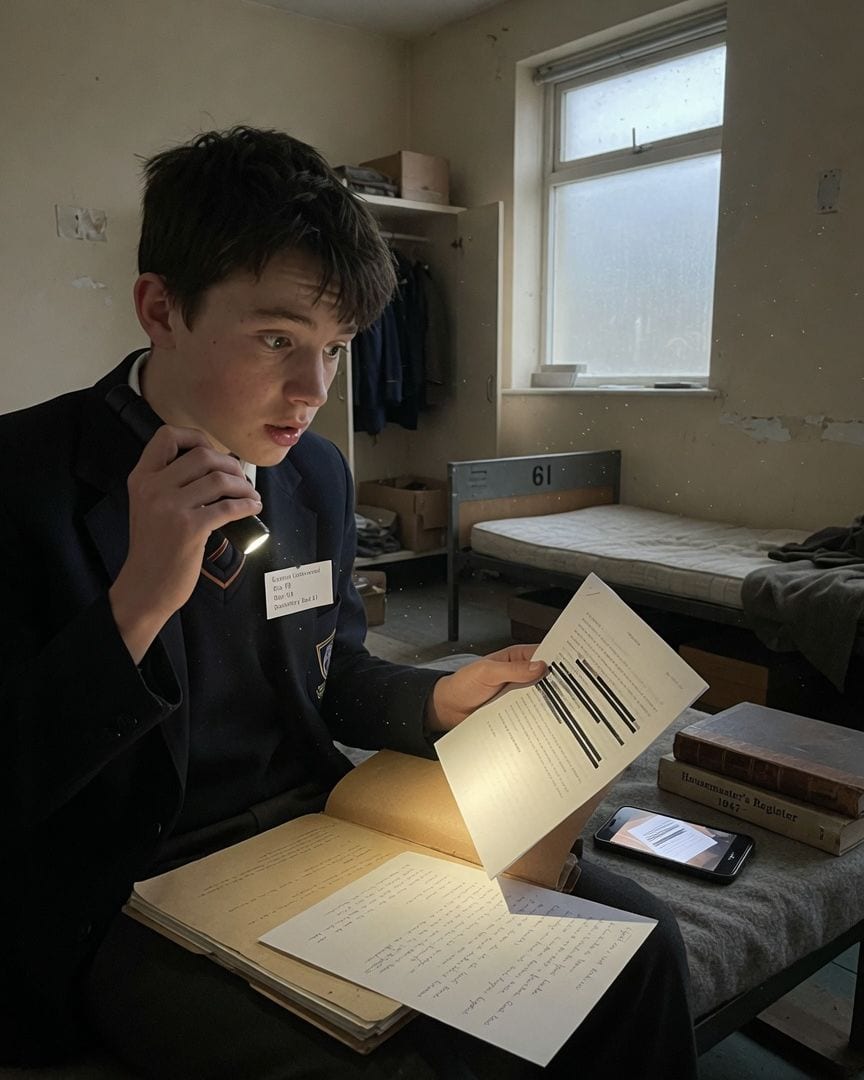
My boarding school bed number was 61, and the archive shows a boy assigned it every eight years since 1947, each leaving mid-term with the bed 'to remain made up'.
I found my matriculation card, listing me as 'Boy 61, Dormitory Bed 61.' Later, an old ledger revealed every boy assigned that bed since 1947 left mid-term, with an unsettling note: 'bed to remain made up.' Our housemaster’s recent scribble, 'as the others,' only deepened the dread around my own assigned bed.
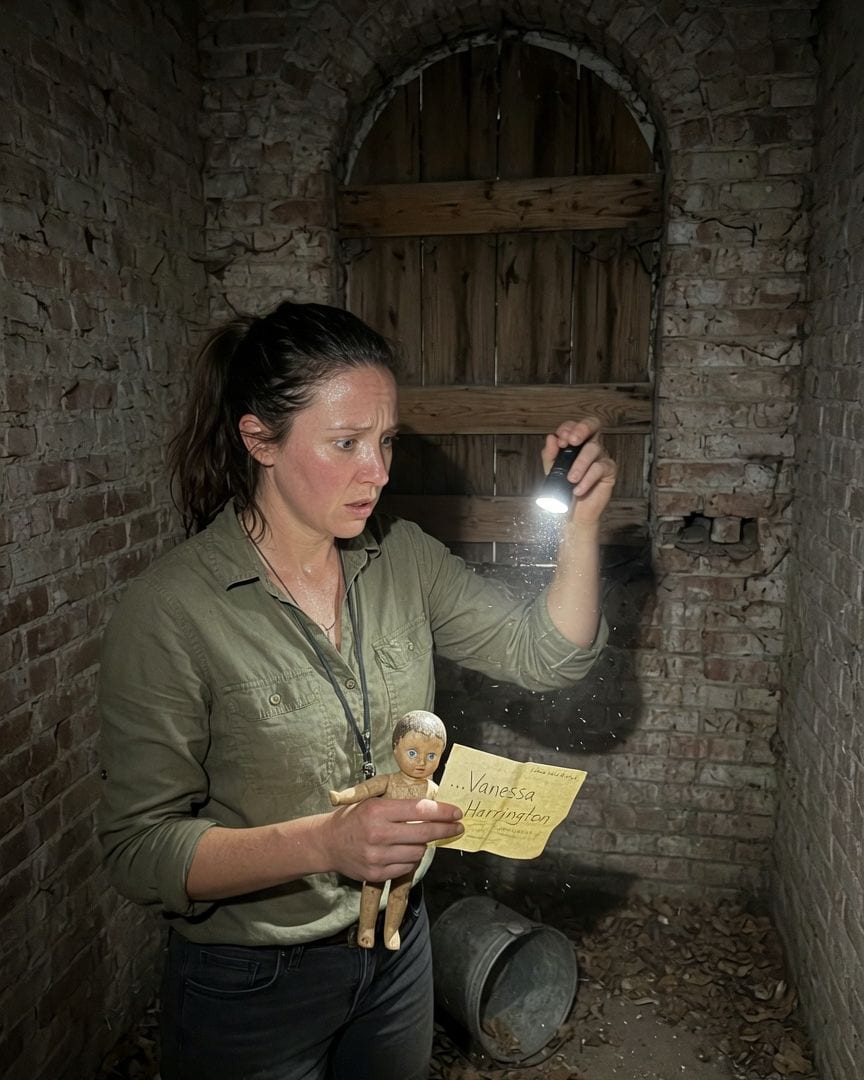
The attendance register has marked one pupil 'present' every single day since 1911 — never once absent. No child by that name has ever sat an exam.
Settling into my new teaching job at Oakhaven Elementary, I found myself drawn to the sealed bell tower. But it was the school's old register that truly unsettled me. A phantom entry, 'Pupil X,' had been marked 'Present' every single day since 1911, with no other records to prove they ever existed.
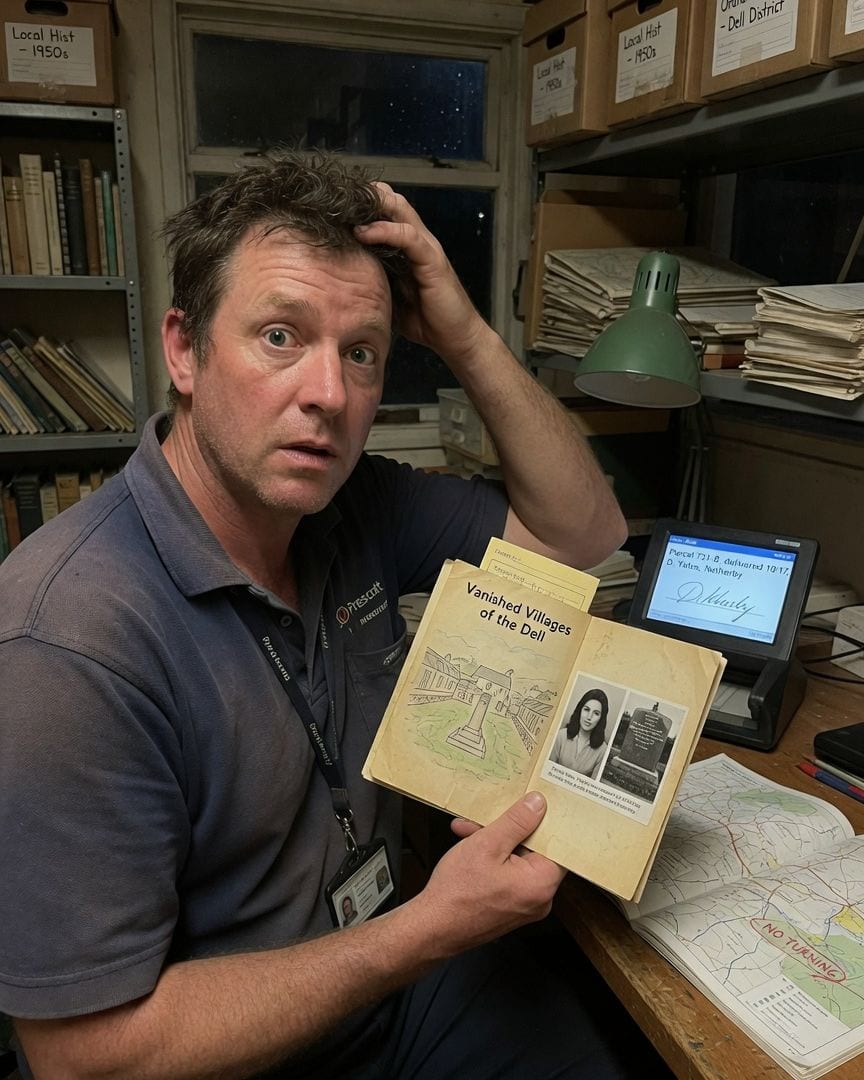
A village signed for my parcel last October, but Netherby isn't on any map. I've driven the lane; there's only farmland.
As a parcel delivery driver, Roy Prescott’s job is usually mundane, but a recent delivery to a village called Netherby now haunts him. The next day, the village vanished from his satnav and maps, leaving only farmland. Yet, his internal system held undeniable proof: a scanned signature from Daphne Yates, the woman who signed for the package, now appears in a 1957 village photo, looking exactly the same.