There are nine full minutes of me on the security tape, restocking the far aisle at 1:20am. I called in sick that night — I was home in bed and never left.
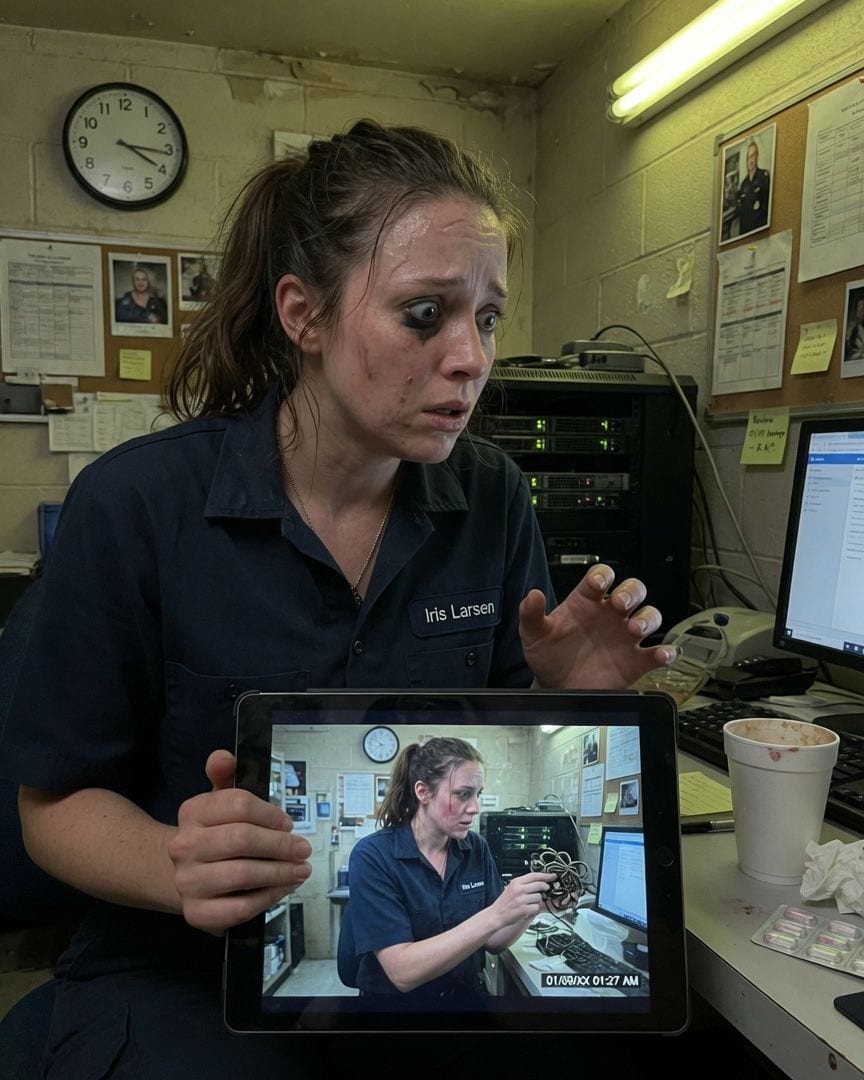
The coffee in the cramped security office was lukewarm, metallic on my tongue. I was tired, still dragging a bit from the fever that had hit me last week.
Richard Kingsley, my manager, had called me in early, saying he needed me to review some footage from the night of the ninth.
A "stock discrepancy" in the far aisle, he'd said, a typical excuse to get an employee to check their own work.
I'd called in sick that night, a nasty bug that had me glued to my bed, so I wasn't expecting to see much relevant to me.
I fast-forwarded through the early hours of the night shift, watching my colleagues move like blurry ghosts in the low-light infrared, pushing pallets, scanning items.
The familiar hum of the server rack behind me filled the small room, a constant, low thrum. Then, at 1:20 am, there she was.
Me.
Unmistakable. Moving with my familiar, slightly hunched gait, pulling boxes from a roll cage, restocking the far aisle. My heart gave a sickening lurch, a cold, empty flip in my stomach.
I paused the footage, staring at my own face, the tired set of my jaw, the dark blue of my uniform. I could see the label on the breast pocket: Iris Larsen. My own name.
I remembered that night with visceral clarity: the clammy chill of my sheets, the dull throb in my temples, the cloying taste of medicine. I was home.
I was absolutely, unequivocally home in bed, wrapped in three blankets, drifting in and out of fever dreams. There was no way I could have been here. No way.
Yet, for nine full minutes, the tape showed me, clearly, working my shift, lifting boxes of detergents, arranging canned goods.
I replayed the nine minutes, my breath catching in my throat with each familiar movement of my doppelganger. My mind raced, trying to find a rational explanation. A scheduling error? A mistaken date on the timestamp?
A coworker playing a bizarre, elaborate prank? But the timestamp was clear: 01/09/XX, 1:20 AM. The date was correct. I even pulled out my phone, scrolled through my call log to the number for my roommate, Sarah.
"Hey," I said, my voice tight. "Quick question. The ninth. Last Tuesday night. Was I home?"
"Uh, yeah, obviously," Sarah replied, a slight edge of confusion in her voice. "You had that gnarly fever. Didn't you call out of work? I remember bringing you tea at like, 10 PM, and you were completely out of it.
Why?"
"No reason," I said quickly. "Just… checking something."
The call confirmed it. I hadn't left the house. Sarah was a credible witness. The prank theory evaporated. No one could have covered for me for nine minutes, not like this.
Returning to the tape, I forced myself to focus on the background. The far aisle. It looked right, mostly. The shelving units, the slightly flickering fluorescent light above, the general layout.
But as I watched, an uneasy feeling started to prickle at my skin. Something was off. The product arrangement was subtly different from what I remembered, even for a few days ago.
I knew these aisles like the back of my hand. More than that, a specific display unit, usually at the very end of that aisle, near the cleaning supplies, simply wasn't there.
It was just… an unbroken run of shelving, extending further than it should.
I pulled up the store's digital floorplans, cross-referencing with archived versions from previous years. I scrolled back through two decades of layouts. My eyes scanned the schematics, zooming in on the section where the aisle should be.
No version of this aisle, current or historical, matched the footage exactly. The display unit, a permanent fixture for at least a decade, was simply gone. It wasn't just a "stock discrepancy"; it was a "structural discrepancy."
The aisle on the tape was my aisle, but it wasn't. It was footage of nowhere.
The unease solidified into cold dread, heavy in my chest. I downloaded the nine-minute clip to my work tablet, determined to find a rational explanation for the impossible aisle, for my impossible presence within it.
I watched it again, this time frame by frame, zooming in on every detail of the shelves, the products, the subtle shifts in the low light.
I saw my doppelganger move with practiced efficiency, pulling boxes, arranging items, her movements eerily familiar.
As the 'other her' reached the very end of the impossible aisle, near where the missing display unit should be, she paused.
Her hand, moving with Iris's own distinct dexterity, reached into a pocket and retrieved a small, dark, intricate object. It was unidentifiable, a complex knot of what looked like tarnished metal or deeply veined stone, catching the dim light.
The 'other Iris' then placed it carefully on an empty shelf, tucking it behind a row of cleaning supplies. A few seconds later, as the projection turned to leave the frame, the object simply isn't there.
The shelf is empty again, as if it was never placed.
Iris freezes, her finger hovering over the pause button. On the screen, the 'other her' turns from the shelf, her face briefly visible in the low light, before walking out of frame.
But it isn't the expression that chills Iris to the bone; it's the small, dark, intricate object the 'other her' just placed on the shelf – an object that is clearly not store merchandise, and then, a few seconds later, simply isn't there.
The disappearing object on the tape became my obsession. The logical explanations for the impossible aisle were exhausted, shattered by the concrete evidence on the screen.
My days off-shift were spent hunched over my tablet, poring over the footage, cross-referencing it with every store record I could access—inventory manifests, old renovation plans, even supplier invoices from decades ago. Nothing.
The digital files hummed with mundane data, silent on the anomaly that had manifested.
My rational mind, clinging to the last shreds of normalcy, started digging into the security system itself. The system was technically managed by a third-party contractor, but the hardware was old, installed over a decade ago.
I found an old maintenance log, tucked away in a dusty cabinet, and traced the name of Oscar Holloway, one of the original installers, now working freelance.
Holloway was initially cagey, his voice tight on the phone, reluctant to discuss old jobs or company secrets. "Look, lady, I signed an NDA. I can't just..."
But when I described the "glitch"—the impossible footage, the disappearing object, the non-existent aisle—his tone shifted. The defensiveness drained, replaced by something brittle, a guarded fear.
"Anomalies," he said, the word barely a whisper down the line. "We called them 'system quirks' back then. Blind spots. Management always dismissed it, said it was magnetic interference or old wiring." He paused, a ragged breath.
"But there were a few similar incidents. Years ago. Always specific aisles. Always employees who later 'transferred' or 'retired early'." He vaguely referenced a "proprietary overlay" in the system's original programming, something about "active subject tracking" and "environmental calibration."
He never fully understood it, he admitted, but he was explicitly instructed to install it, despite his misgivings. "It felt... wrong," he confessed. "Like the system was designed to catch things that shouldn't exist. Specifically tied to certain individuals."
He wouldn't say more, citing an ironclad NDA again, but his fear was palpable, a cold static crackling over the phone.
Holloway's call left me truly shaken. It wasn't just a glitch. It was a pattern. And now, I was part of it. The next night, back at work, the store felt different.
The usual hum of the refrigerators and the distant drone of the ventilation system seemed to carry an undercurrent of watchful silence, as if the very air was holding its breath. Every shadow felt deeper, every sound too loud.
As I restocked an aisle of toiletries, I caught a glimpse of Richard Kingsley, my manager, standing at the far end of the next aisle over. He wasn't doing anything, not even pretending to check stock.
Just watching me, his figure silhouetted against the bright shelf lights. When I looked up, he quickly turned away, pretending to examine a row of shampoo bottles. The gesture was too swift, too practiced.
Later, in the break room, he "casually" asked about my "investigation" into the security system. "Just checking for any more of those... discrepancies, Iris," he said, his smile not quite reaching his eyes.
He leaned back in his chair, stirring his coffee. "Some things are better left alone, you know. Old systems can have some real ghosts in the machine."
His voice was calm, almost paternal, a low rumble, but the implied warning was clear, cold as ice. The air in the break room seemed to thicken around his words.
The next morning, after my shift, I found a small, handwritten note tucked under my locker door. The paper was rough, like it had been torn from a pad.
The message, scrawled in blocky, uneven letters, was chillingly precise: "You are being watched. Stop looking for the others." There was no signature.
The note confirmed my fears. Someone knew. Richard Kingsley. I clutched the note in my hand, my resolve hardening.
I confronted him in his office before my next shift, the downloaded clip of the impossible aisle on my phone, the crumpled paper in my fist.
I laid it all out: the tape, the non-existent aisle, the disappearing object, Holloway’s vague warnings, the note.
Kingsley listened, his expression unreadable. He simply watched my face as I spoke, his eyes betraying nothing. When I finished, the silence in the room stretched, thick and heavy. Then, he sighed, a long, slow exhalation.
"Iris," he began, his voice low, almost a murmur, "this building… it’s old. It has a history." He leaned forward, his elbows on his desk, his gaze steady. "The 'glitches,' as you call them, aren't glitches at all.
It’s a resonance. A feedback loop." He looked away, out the window at the gray morning sky, then back at me. "The building, it… it sometimes projects. Echoes of what could be, what almost was.
Or perhaps, what is, somewhere else."
He explained that the security system, particularly the "proprietary overlay" Holloway mentioned, doesn't just record the physical space; it records the "anomalies" too. "It uses the people here, Iris. Their presence, their routines. It creates… likenesses. Channels.
And sometimes, those channels interact with the projections. Bring things back." He revealed that there had been other "subjects" over the years, other employees whose "likenesses" appeared on tape, whose experiences mirrored hers. Most were dismissed as stress or hallucinations.
A few, like Holloway, knew just enough to be scared into silence.
Kingsley implied that Iris, by virtue of her sustained presence and her "sensitivity" to the anomaly, had now become a primary "subject." He didn't apologize, didn't express concern for her.
His tone was that of a man explaining a complex, unavoidable natural phenomenon. He just managed it. "You’re part of it now, Iris," he concluded, his voice soft but final, "just like the others before you. Just like me."
Kingsley’s admission sent a cold shiver down my spine. I wasn’t just an observer; I was implicated, a channel. He told me to ignore it, to "let it pass," that eventually the "resonance" would fade, or shift to someone else.
He spoke of it as an inevitable tide. But the memory of the impossible object, vanishing from the shelf on the tape, haunted me. I couldn’t let it go, couldn’t accept his grim, quiet resignation.
Driven by a desperate need for tangible proof, for something solid in a world that had suddenly become fluid, I returned to the store after my shift.
The keycard felt heavy and cold in my trembling hand as I swiped it through the reader, the lock clicking open with a stark finality. I re-entered the silent, cavernous store.
I headed straight for the real far aisle, the one that almost, but not quite, matched the footage.
My flashlight beam cut a sharp path through the gloom, sweeping across the shelves, searching for anything out of place, anything that could link the two realities. I checked every product, every crevice, every shadow.
The aisle was mundane, predictable, exactly as it should be, filled with rows of everyday items.
I reached the spot where the missing display unit should have been, the spot where the 'other her' had placed the object on the tape.
I knelt, shining my light into the dusty space behind the bottom shelf, pushing aside a loose bag of cat food. Nothing. Just dust and discarded price tags.
I was about to give up, to accept Kingsley's grim reality and try to walk away, when my hand, blindly sweeping the space, brushed against something small and hard. My fingers closed around it. I pulled it out.
It’s the small, dark, intricate object I had seen on the security tape. It’s solid, cold beneath my fingertips, and undeniably real.
I looked up and down the empty aisle, the silence of the closed store pressing in, and knew that the impossible had just walked off the screen and into my world.
Clutching the impossible object, I confronted Kingsley again, the small, cold weight in my palm a contrast to his infuriating composure. I tossed it onto his desk, the intricate knot of metal or stone landing with a dull thud.
"This is real," I stated, my voice trembling with a mixture of terror and defiance.
Kingsley picked it up, turning it over in his hand with a strange, almost nostalgic reverence. His eyes, usually so guarded, held a flicker of something ancient, something weary. "I told you, Iris," he murmured, "the building... it projects."
He explained that the building wasn't just old; it was built on a "confluence"—a kind of weak point in reality where other possibilities, other "channels" bleed through.
He said the security system, far from being a simple recording device, was a crude attempt by the original owners, decades ago, to "monitor and contain" these bleed-throughs.
"But it did more than contain," he continued, his gaze distant. "It amplified. It focused the anomaly through the most consistent presences: the employees." He looked at me, his eyes holding mine. "You're not just seeing an echo, Iris.
You're becoming one. Your likeness, your actions, they're being drawn into these other spaces. And sometimes, things come back with them." He revealed that the impossible objects were "anchors"—fragments of those other realities, brought into this one.
He then pulled open a hidden compartment in his desk, revealing a collection of similar, equally impossible objects—a smooth, featureless cube of black rock; a delicate, crystalline shard that seemed to absorb all light; a tiny, rusted gear that belonged to no known mechanism.
Each one was a testament to previous "subjects" and their recorded anomalies. He confessed his own likeness had appeared on tape years ago, and he had found an anchor.
He’d been here ever since, trying to understand, to control, to prevent the "bleed-through" from becoming something catastrophic. "You can't escape it, Iris. Not once you've become a channel. It leaves its mark. The building knows you now."
Kingsley's confession and the collection of impossible objects were too much. I didn't want to manage it; I wanted out. I refused to become another of Kingsley's quiet, haunted 'managers,' trapped by the building.
I demanded to know how to stop it, how to sever the connection, to rip myself free.
Kingsley shook his head, his face a mask of sorrowful resignation. "You can't. The system is integral, a part of the building's 'nervous system.' You can't destroy the node without destroying the building," he warned, his voice low.
"And who knows what would bleed through then? What might be waiting on the other side of that tear?"
But I saw a different path. The "proprietary overlay," the "environmental calibration" Holloway mentioned—if the system amplified it, perhaps disabling the system, or at least the part that 'channels' individuals, could weaken the link.
It was a desperate gamble, but the alternative was to become like Kingsley, another caretaker for the impossible.
During my next night shift, fueled by fear and a desperate resolve, I made my move. I used Kingsley's access codes, which I'd discreetly observed him inputting countless times, to enter the main server room.
The air hummed with the low thrum of machinery, a constant vibration that felt like the building's own pulse. I found the security server, its bank of lights blinking rhythmically, a dizzying array of green and amber.
Following Holloway's vague descriptions, I located the specific module he'd called the 'proprietary overlay,' a small, black box with a single, unlabelled port.
With the impossible object clutched in one hand, its cold weight grounding me, a strange sense of clarity guided my movements.
I took a deep breath, and with a grunt, I yanked out the module, severing its connections with a sharp, wrenching sound.
Alarms immediately blared, a harsh, guttural sound that echoed through the empty store, shaking the very walls. The lights flickered wildly, then dimmed to an emergency glow.
I heard Kingsley's frantic shouts over the intercom, his voice distorted by static, calling my name, demanding to know what I'd done.
I didn't look back. I ran, the impossible object still in my hand, out of the server room, through the dim, alarm-filled aisles, and out into the pre-dawn street. The cold, fresh air hit my face like a shock.
I didn't stop until I was blocks away, the wailing alarms fading behind me. I knew I'd escaped, but the cost was immeasurable.
I carried the knowledge, the proof, and the chilling certainty that a piece of her, a 'channel,' might still be connected, somewhere, to that impossible store.
I never went back to the store. I quit without notice, leaving my keys and a terse resignation letter in the mail slot of the corporate office.
Kingsley never contacted me again, and I made sure to block any number that might be him. I moved out of the city, seeking distance, trying to outrun the echoes.
The impossible object, a dark, intricate knot of unknown material, became my sole proof. I kept it hidden, a cold, silent weight in my pocket, a constant reminder of the realities that had brushed against my own.
I tried to show it to a few trusted friends, to tell them the story, but their eyes glazed over with polite disbelief. They offered sympathetic smiles and suggested I was still stressed from the move, from my old job.
I knew then that the proof I carried would never be believed, not truly. It was mine alone.
Life went on, a quiet, unremarkable rhythm that I desperately clung to. I found a new job, far from any large, old buildings.
But the silence that used to be comforting now felt like an absence, a space where another reality might hum just beneath the surface.
Sometimes, when I walked down a familiar street, a fleeting, almost imperceptible detail would catch my eye—a slightly wrong shade of brick on a house, a window that seemed to shift its dimensions, a fleeting scent that wasn't quite right, like ozone mixed with something metallic.
I learned to ignore them, to force my mind back to the mundane, but the effort was exhausting. The world never quite felt solid again.
The real aisles never quite felt solid again.
If this one got to you
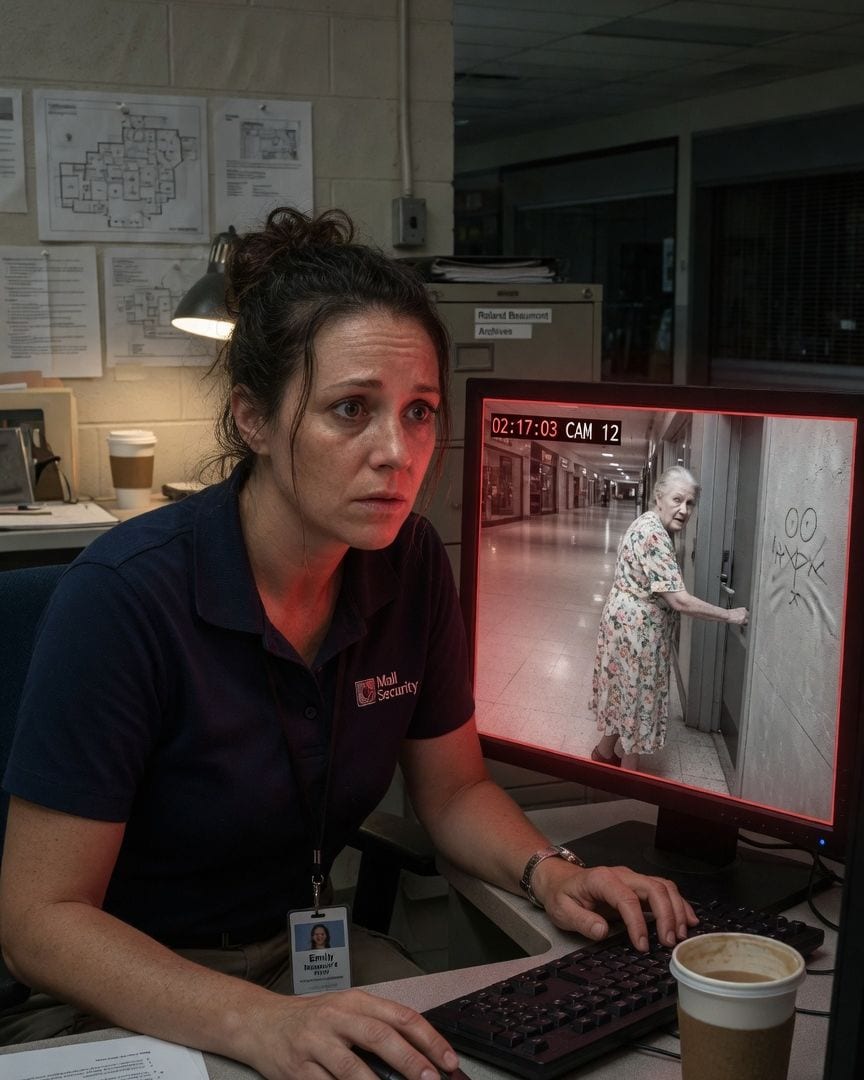
Mall security footage caught an old woman walking the concourse after closing. Every camera filmed her, but no single frame shows how she got in.
Working the overnight shift, I monitor my locked mall's security footage. It was 2:17 AM, five hours after closing, when an old woman in a floral dress simply appeared on Camera 7. She was never seen entering the frame, only *present*, walking slowly across the deserted concourse.
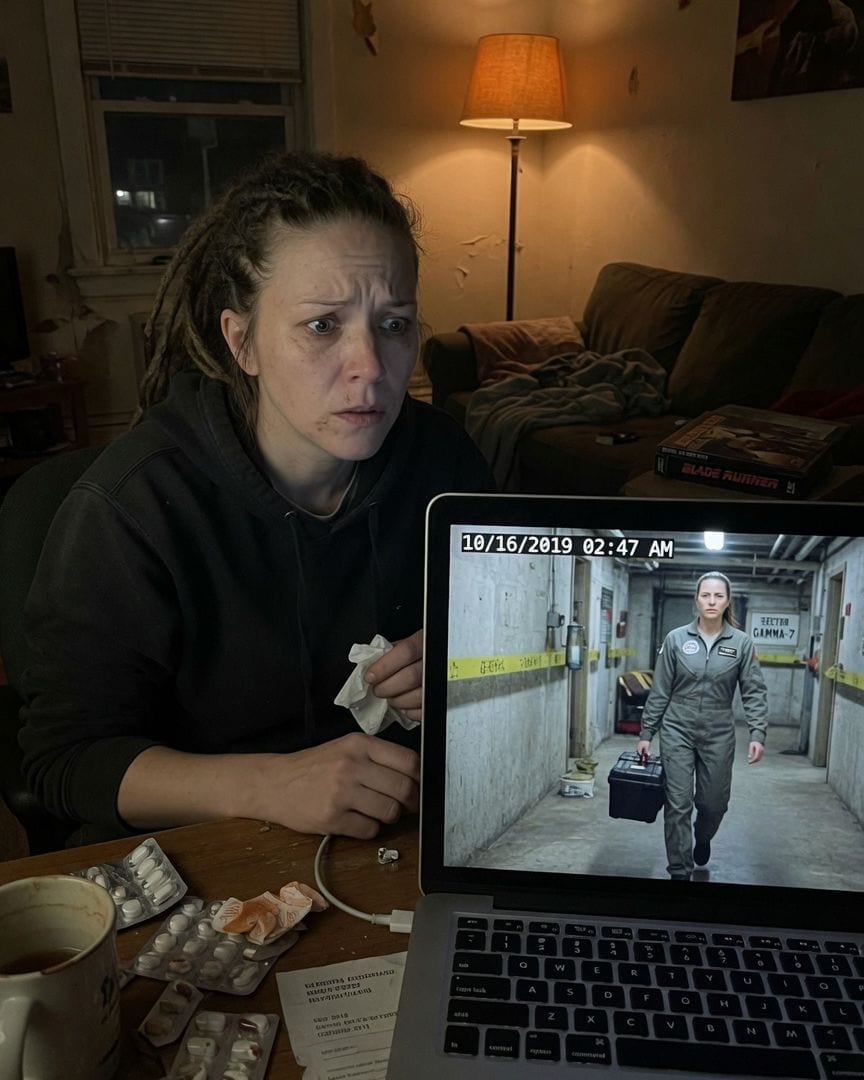
My timesheets show me working night shifts in a town I never lived in. The signatures are mine. The pay went to an account that isn't.
An old employer sent me timesheets from five years ago, detailing night shifts I supposedly worked at a depot 80 miles away. But I knew I was home recovering from surgery that entire week, nowhere near the industrial town. Then a security photo arrived, showing my face in an unfamiliar uniform, working a shift that wasn't quite me.
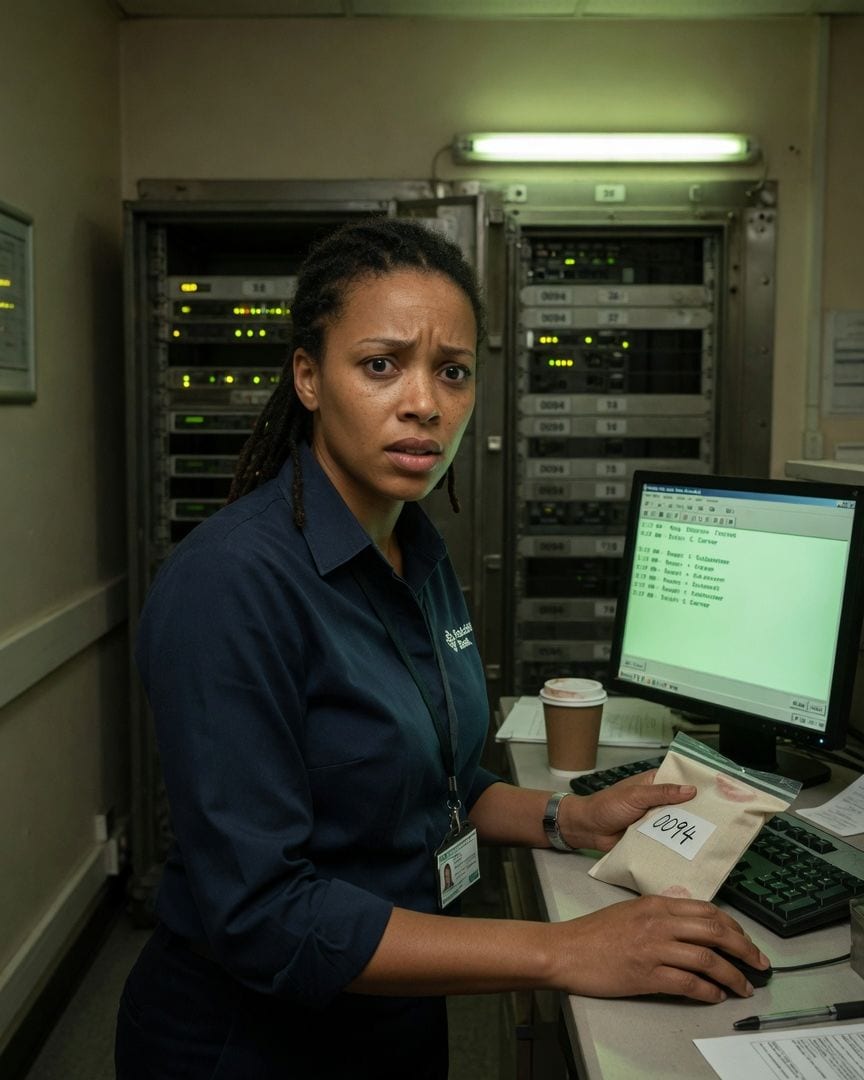
My night-deposit log shows a bag posted at 3:17 AM. My teller number, my count. Bag 0094 is still sealed in the safe, untouched.
I prided myself on precision as a night teller, logging every entry. But at 3:17 AM, a deposit appeared logged under my teller number that I never processed. Security footage then revealed a figure in my uniform, wearing my ID badge, with a blank photo slot.
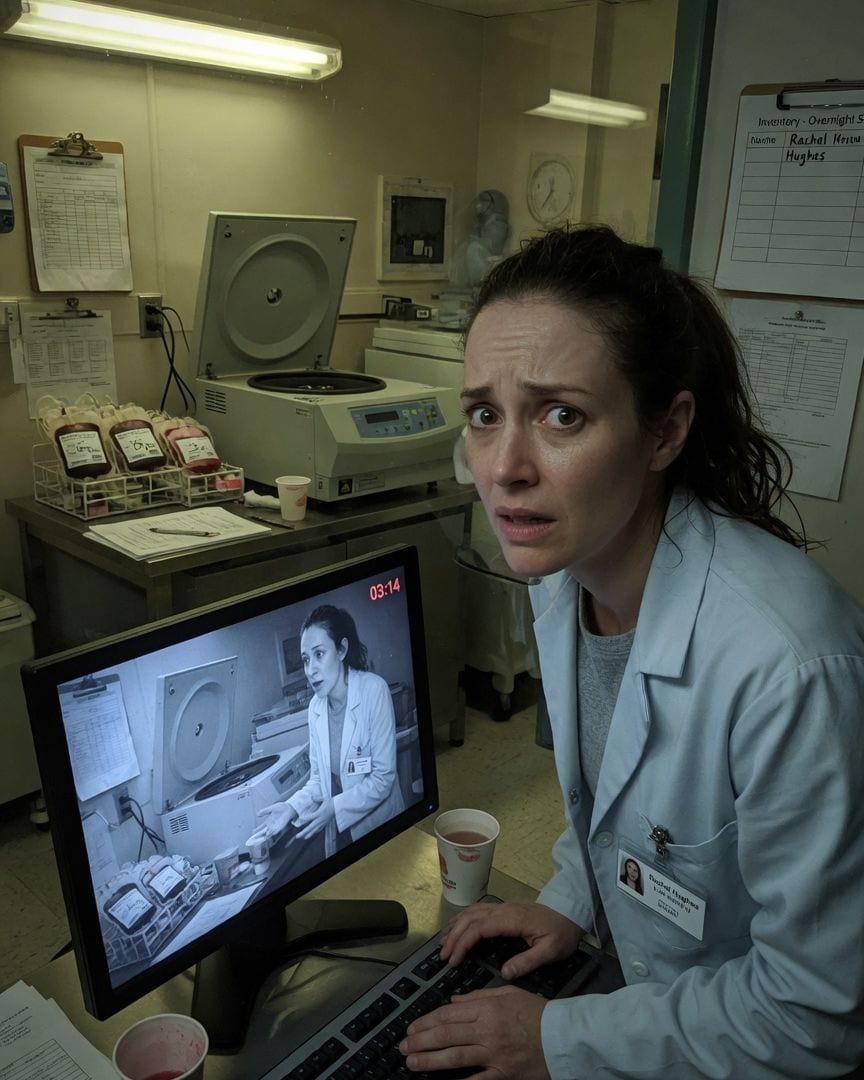
My security footage shows me talking to thin air, alone in the lab.
Working the overnight shift at the blood bank was my steady routine, a quiet rhythm shared with my colleague, Grace. She was as real as the blood I processed, until my director stated she had never been credentialed at our facility. My mind raced, trying to grasp how a person so vivid could simply not exist.
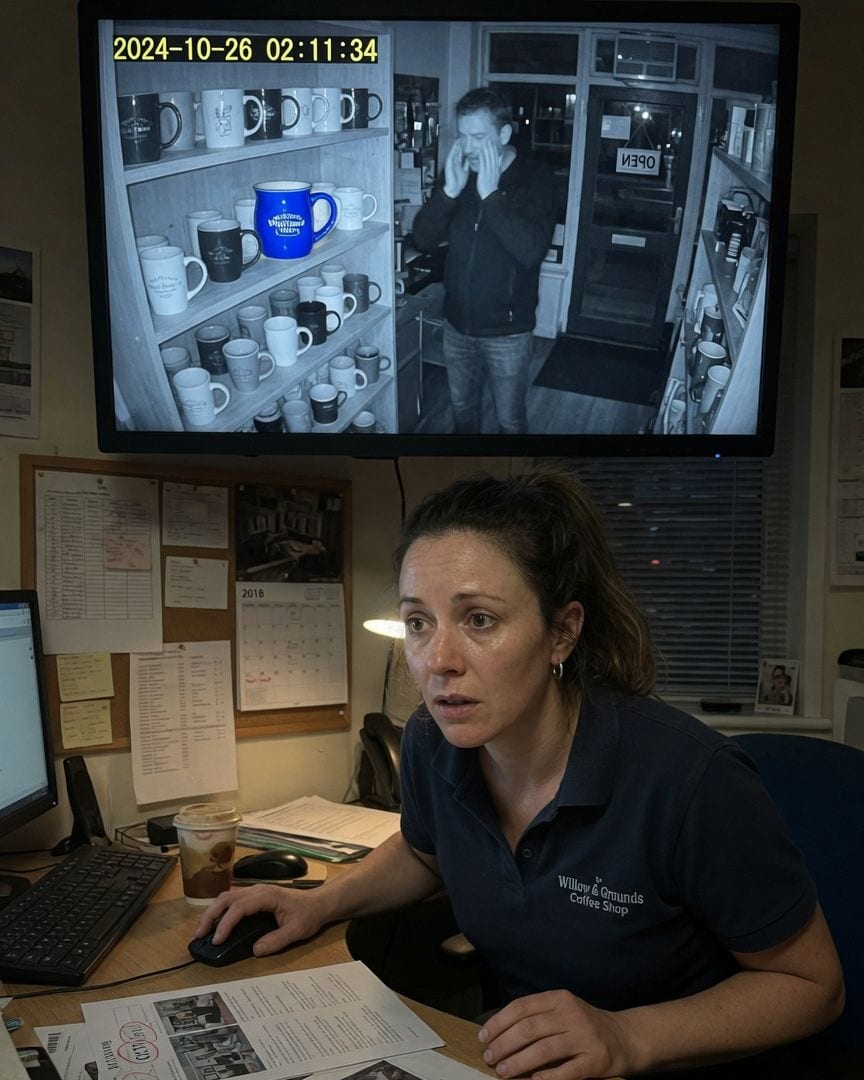
My shop's CCTV caught a customer who hasn't aged a day in eleven years of footage. He enters every night at 2:11, buys nothing, and leaves.
I was reviewing CCTV footage when I discovered a man who appeared inside my closed shop every night at 2:11 AM. He moved identically, never aging across eleven years of recordings, all confirmed as unique files. Yet, last night's footage clearly shows a specific coffee mug on the shelf that I know I sold seven years ago, and is definitely not there now.
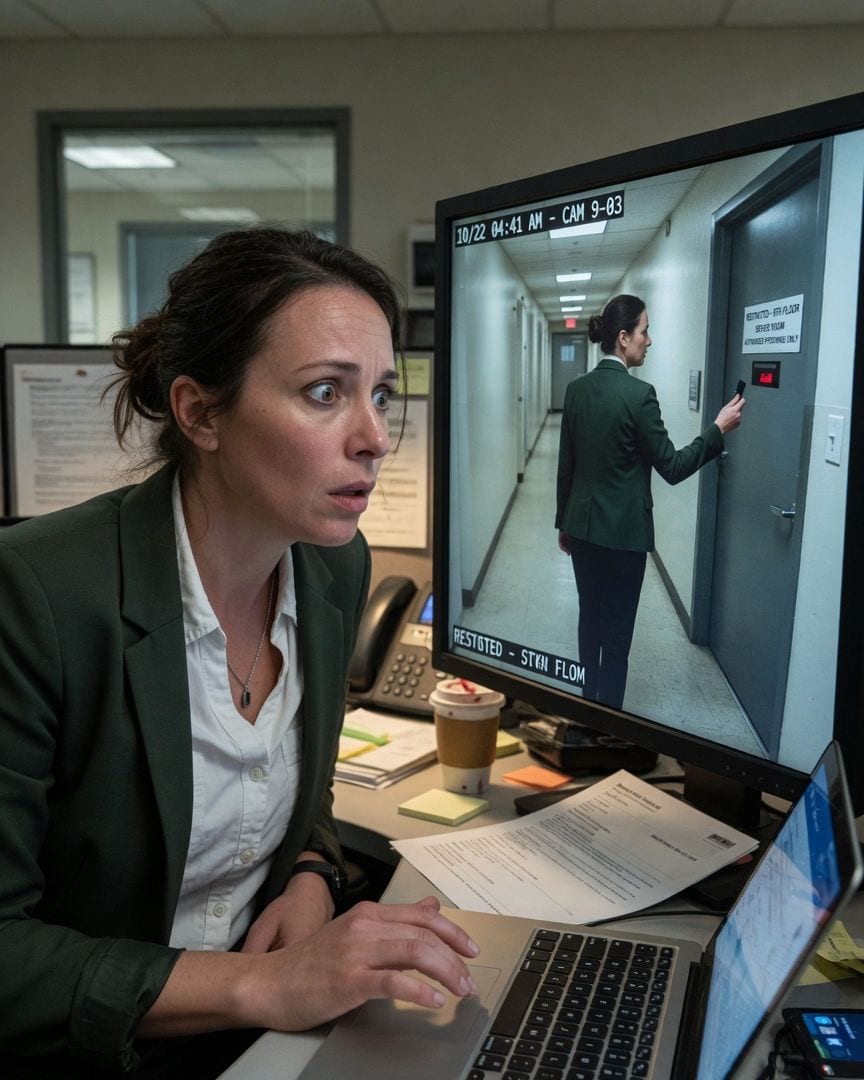
My keycard log shows me in the server room at 4:41am. I was asleep, and my badge was at home.
An email from corporate IT reveals my keycard registered entry into a restricted server room at 4:41 AM last Sunday. I was asleep in my apartment across town, my badge clipped securely to my jacket at home. But then I scrolled down and found eleven more impossible entries, all within the past week, all under my name.