My son looks at his cherished thunder box with revulsion. He decorated that shoebox years ago, his go-to comfort for every storm.
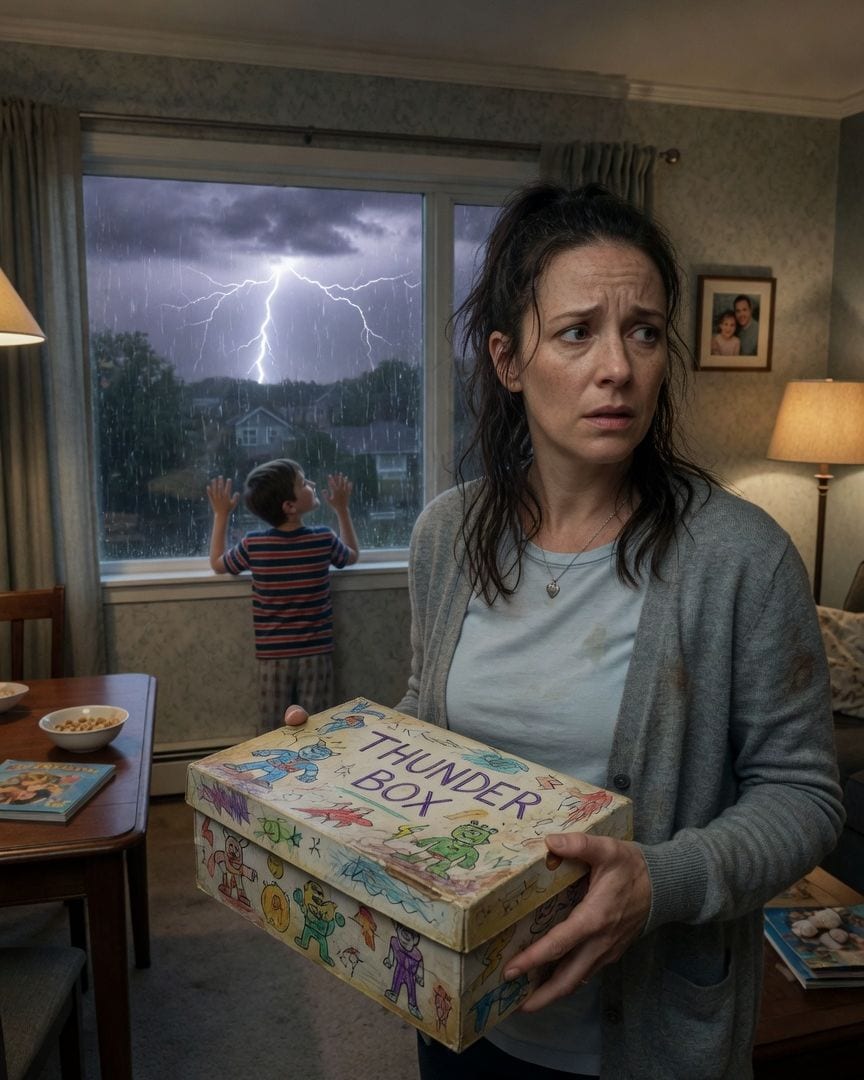
The thunder cracked, a jagged white line across the bruised evening sky, and Samuel, my eight-year-old boy, stood at the living room window, palms flat on the cool glass.
A faint, almost serene smile played on his lips, his eyes, usually wide with terror during a storm, now placid, gazing up into the downpour.
It had been a night and a day since he vanished from the church picnic, a lifetime of frantic searching. Now he was home, safe, or so Philip kept saying.
But thunder, since he was two, had always sent Samuel scrambling under the dining table, a small, trembling bundle of fear. We knew every storm by the muffled whimpers from beneath the heirloom mahogany. Now, this.
'Samuel?' I called, my voice thin, a nameless dread coiling in my gut. He turned, his blue eyes clear and unblinking, the smile still faintly there. 'Why do you look so frightened, Mama?'
he asked, his voice Samuel's, his face Samuel's, but the question, the smile, the placid gaze into the storm – it was profoundly, sickeningly wrong.
I remembered the faint, earthy smell clinging to his clothes when he first hugged me, something like damp soil and something else sharp, almost metallic, beneath the usual scent of creek water.
I had put it down to the woods, to being outside, to the sheer relief.
But now, it felt like another piece of the wrongness, a detail that didn't fit, a thread I couldn't help but tug at, even as I desperately wanted to dismiss it as a mother's overactive imagination.
The next day was a blur of forced normalcy. Samuel ate his cereal with his left hand, though he’d always favored his right.
He hummed a tuneless melody I’d never heard him sing, and his beloved Saturday morning cartoons held his attention for only minutes before he drifted off to draw, his pencil strokes unnervingly precise for a child.
Philip, my husband, attributed it all to the trauma of being lost, a coping mechanism. 'He'll come around, Josephine,' he’d insisted, but his own eyes held a flicker of unease he tried to hide.
I tried to rationalize it, to force the pieces back into the familiar puzzle of my son. But the puzzle wouldn't fit.
I found myself drawn to his room, seeking anchors, tangible proof of the Samuel I knew.
Under his bed, tucked away as always, was his 'thunder box' – a shoebox he’d decorated years ago with bright, chaotic crayon drawings of superheroes and monsters, filled with a worn teddy bear, a smooth river stone, and a dog-eared copy of his favorite adventure book.
It was his sanctuary kit, always ready for a storm, his go-to comfort. I picked it up, the familiar weight a momentary comfort before a sudden chill seeped into my bones. The box felt… undisturbed. Dusty.
Unused in a way it shouldn't be. Samuel hadn't actively played with its contents since he was four, but he always knew it was there, a silent promise of safety, a cherished secret.
Now, it felt like an archaeological find, a relic from a distant past. I remembered finding it, just hours before he went missing, tucked neatly in its spot, ready for the next storm. Had he outgrown it?
Forgotten it in his ordeal? A rational explanation almost worked, then didn't. The knot in my stomach tightened, cold and hard. This wasn't mere forgetfulness. This was an absence.
That evening, Philip, ever the optimist, was attempting to rekindle their nightly ritual, reading aloud from Samuel’s favorite adventure book. The boy sat still, listening with an unnerving stillness. My heart thrummed.
I walked into the living room, holding the thunder box. 'Remember this, honey?' I asked, my voice carefully light, holding out the crayon-decorated shoebox. Samuel looked up, his eyes, so like my son’s, met mine.
There was no spark of recognition, no flicker of nostalgia. His gaze was blank, then a subtle shift, a faint, almost imperceptible flinch, as if the box itself was mildly distasteful.
He turned back to Philip, a small frown on his face, as if I had interrupted something important, something real.
I watched his eyes, utterly devoid of recognition, fix on his worn, crayon-decorated 'thunder box', a relic of his deepest childhood comfort, with a faint, unreadable flicker of something that isn't curiosity, but almost revulsion.
The incident with the thunder box solidified my dread. Philip dismissed it as memory loss from the ordeal, but I knew Samuel – this wasn't mere forgetfulness. I began observing him more closely, almost clinically, noting every deviation.
He no longer called his stuffed bear 'Barnaby,' instead referring to it as 'the bear.' He avoided the old oak swing set in the backyard, a place he used to spend hours.
His handwriting, once a messy, joyful scrawl, was now unnervingly neat, almost too perfect, like a careful copy. I checked his shoes, the ones he was wearing when he returned.
The faint earthy smell I’d noticed was gone, but I saw a tiny, almost invisible metallic sheen on the worn rubber soles, unlike any soil I knew.
I subtly questioned Nora Bishop, our elderly neighbor, about the church picnic, trying to piece together Samuel's last known movements.
Nora, a quiet woman who'd lived in the area her whole life, offered only vague details about the search, but then her voice dropped, almost a whisper, 'There's old stories, Josephine. About children going into the woods and coming back...
changed. Just stories, of course.' She waved a dismissive hand, but her eyes held a deeper, ancient unease. I felt a cold dread settle in.
I wasn't just looking for Samuel's changed habits anymore; I was looking for the 'traces' Nora hinted at, for anything that could explain this impossible wrongness.
My quiet investigation didn't go unnoticed. I spent hours online, searching for local legends of missing children, for anything that resonated with Nora’s vague warning.
One afternoon, I was in my study, poring over old newspaper archives about disappearances in the region, when Samuel walked in, silent as a shadow. He stood in the doorway, watching me, his presence a sudden, chilling weight.
'What are you looking at, Mama?' he asked, his voice flat, devoid of childlike curiosity. I jumped, startled, my heart leaping into my throat. 'Just… old articles, honey,' I stammered, quickly minimizing the browser window, my fingers trembling slightly.
He took a step closer, his gaze unnervingly direct, too knowing for an eight-year-old. 'You've been looking at things a lot lately,' he said, a faint, almost pitying tilt to his head. 'Are you worried?'
His expression was too calm, too composed.
Later that week, I found my old local history book, one I'd left open on the kitchen table, closed and put back on the shelf. The page I was studying, detailing forgotten local landmarks, was dog-eared. I hadn't dog-eared it.
The metallic residue on Samuel’s shoes, I realized, was remarkably similar to a description I’d read of minerals found in the old, forgotten grotto mentioned on that very page.
The thing wearing Samuel's face wasn't just present; it knew I was digging, and it was watching every move I made, a silent, patient observer.
The air in the house grew heavy, thick with unspoken observation, and the silence seemed to press in from all sides.
The pressure built, tightening around me like a vise. I finally confronted Philip, laying out all the inconsistencies: the thunder, the left-handedness, the thunder box, the metallic residue, Samuel's unnerving observation.
Philip, initially defensive, his face etched with exhaustion and denial, began to waver under the weight of my detailed, undeniable evidence. 'It's just… stress, honey,' he said, but his eyes were troubled, haunted.
I pushed, my voice firm despite the tremor in my hands. 'He's not our Samuel, Philip. Something happened to him. Something replaced him.'
Philip finally admitted he’d noticed small things too, things he’d dismissed as his own grief playing tricks: Samuel's complete lack of interest in his favorite video game, a strange, precise way he now folded his clothes, an almost clinical detachment when Philip hugged him.
But he couldn't accept the implication, the monstrous truth I was laying before him.
Realizing I was largely on my own, I returned to the local history book.
I found a faded map, tucked into an old binding, marking the location of the 'Old Grotto,' now overgrown and forgotten, precisely where Samuel had been found.
The book mentioned a unique mineral deposit in the grotto, described as 'a metallic sheen on the rocks, almost like polished silver.' It clicked: the residue on Samuel’s shoes, the strange earthy smell.
This wasn't just a changed boy; it was a specific, physical anomaly, a pattern.
The details from the cold open – Samuel smiling at the thunder, his placid gaze – and the thunder box incident now re-mean: the mimic cannot replicate deeply emotional, personal memories, only surface ones.
It's a copy, an imitation, and the proof is in its flawed, alien execution. Samuel’s quiet observation, the closed book – it knew.
The dread was no longer vague; it was specific, it was tangible, and it was living in my house, a constant, chilling presence.
Armed with the faded map and a sickening resolve that left my stomach churning, I drove to the location of the Old Grotto.
It was even more overgrown than the book described, a dense tangle of ancient trees and thorny bushes, almost completely reclaiming the entrance.
The air was still, heavy with the scent of damp earth and something else, faint but familiar – that metallic tang I’d smelled on Samuel.
I pushed through the undergrowth, my heart hammering against my ribs, following the faint path that was once a trail, now barely discernible.
The branches seemed to reach, grasping at my clothes, slowing my progress, as if the woods themselves didn't want me to see.
Deeper inside, the grotto opened into a small, damp clearing, eerily silent, the only sound the distant buzzing of unseen insects.
And there, half-buried in the earth beneath a weeping willow, was the thing: a large, translucent, chrysalis-like casing, perfectly formed, slightly larger than an eight-year-old boy.
It glowed faintly in the dappled sunlight, an organic shell, shed and empty, like a discarded skin. My breath hitched.
I knelt in the damp, overgrown grotto, my fingers tracing the smooth, empty curves of the large, translucent casing half-buried in the earth, knowing with a sickening certainty that it was once Samuel's, and that it isn't an isolated incident.
I frantically searched the grotto, my mind racing, piecing together the terrifying coherence of it all.
On a nearby rock face, half-obscured by moss and time, I found faint etchings: crude symbols, almost pictographs, depicting children entering a cave, and then emerging, subtly altered, their forms slightly off.
Below them, a series of tally marks, some ancient, deeply weathered, others disturbingly fresh. It was a pattern, a cycle, stretching back through generations.
The casing, the metallic residue, Nora's whispered stories about 'changed children' – it all clicked into place with horrifying precision. This grotto, this specific mineral-rich earth, was a 'source.'
The entity, whatever alien life form it was, had been doing this for centuries, replacing children who wandered too close, absorbing their surface memories and appearance, but always failing to replicate the deepest, most irrational parts of their humanity.
It was an alien mimicry, cold and perfect in its imperfection, a natural process of replacement utterly indifferent to human grief or love.
The 'Samuel' in my home was just the latest in a long, silent line of replacements, a chilling echo of the past, a hollow shell animated by something utterly other.
The dread was no longer just for my son, but for the silent, patient entity that inhabited this place, a natural process of replacement that had gone unnoticed, or simply been dismissed as folklore, for centuries.
I returned home, the empty casing’s image burned into my mind, its cold reality a physical weight in my gut. I found 'Samuel' in his room, carefully arranging his toy soldiers in perfect, uncharacteristic rows.
I knew I couldn't stay, couldn't live with this perfect, alien imitation. I couldn't confront it; it wasn't malicious, just other, a mimic driven by an instinct I couldn't comprehend, and I knew it would not understand.
Philip was still in denial, clinging desperately to the hope that our son was simply traumatized, that he would eventually 'come back.' I had to leave, and I had to take proof, even if no one would ever believe me.
Quietly, methodically, I gathered key items: a small sample of the grotto's metallic soil, a fragment of the casing I had carefully chipped off, a printout of the old map and Nora's vague recollections I'd transcribed.
I packed a small bag, just for myself, a few essentials. I left a note for Philip on the kitchen counter, simple and stark: 'He's not Samuel. I'm going to get help. Don't try to stop me.'
As I walked out the front door, the 'Samuel' from the window was watching me from his bedroom window, his face impassive, a faint, almost curious smile playing on his lips. I didn't look back.
I knew no one would believe me, but I could not unsee what I had seen, could not un-know what I had learned.
The cost was my family, my home, my sanity in the eyes of the world, but the alternative was to live a lie, to pretend the thing in my house was my son.
I drove until dawn, the fragment of casing wrapped in a handkerchief in my pocket, the metallic soil in a small vial.
I tried to contact authorities, but my story, delivered with a frantic certainty they mistook for hysteria, was met with polite skepticism and suggestions for grief counseling.
Philip, after an initial frantic search for me, eventually settled back into a strange, quiet routine with the 'Samuel' who returned. Life went on, outwardly normal, the wrongness hidden beneath the surface of everyday existence.
The grotto remained untouched, its secrets undisturbed, slowly reclaiming any evidence of my visit. The entity, whatever it was, continued its patient, ancient cycle, a silent, unseen presence in the fabric of the world.
Years later, I live alone, far from my old home. I still carry the fragment of the casing, a dull, translucent shard in a small velvet pouch, and the printouts of the map and Nora's notes.
I never found anyone who truly believed me, but the knowledge, sharp and cold, is my constant companion. I see news reports of other missing children, always dismissed as runaways or tragic accidents, and I know. I simply know.
The world moves on, oblivious, while the quiet horror continues its slow, patient work.
I often wonder if Philip ever truly saw it, or if he simply chose not to, preferring the comfort of an imitation to the agony of the truth. The truth, I learned, is rarely what people want to believe.
It just is. My son, or what wears his face, still lives in that house with Philip, a perfect, quiet imitation.
Sometimes, late at night, when a storm breaks, I imagine him standing at the window, smiling into the rain, and I hear his voice, asking, 'Why do you look so frightened, Mama?' He never asked that of her again.
But she still hears it.
If this one got to you
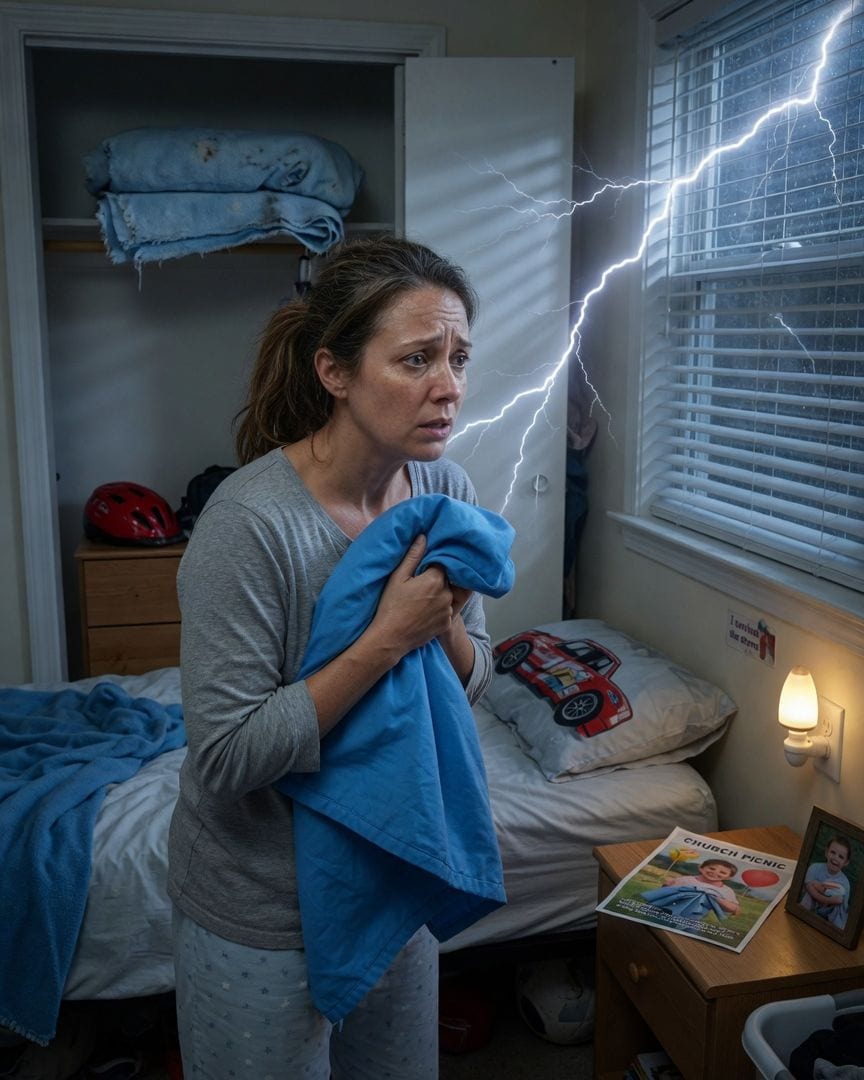
My boy came home after the storm smiling into the lightning. He'd hidden from thunder his whole life.
My son, Carl, had been missing a night and a day, and the relief of his return was still a raw thing. But when a storm broke, the boy who always trembled and hid from thunder just stood calmly at the window, smiling up into the rain. It was a horrifying reversal of a truth I’d known since he could walk.
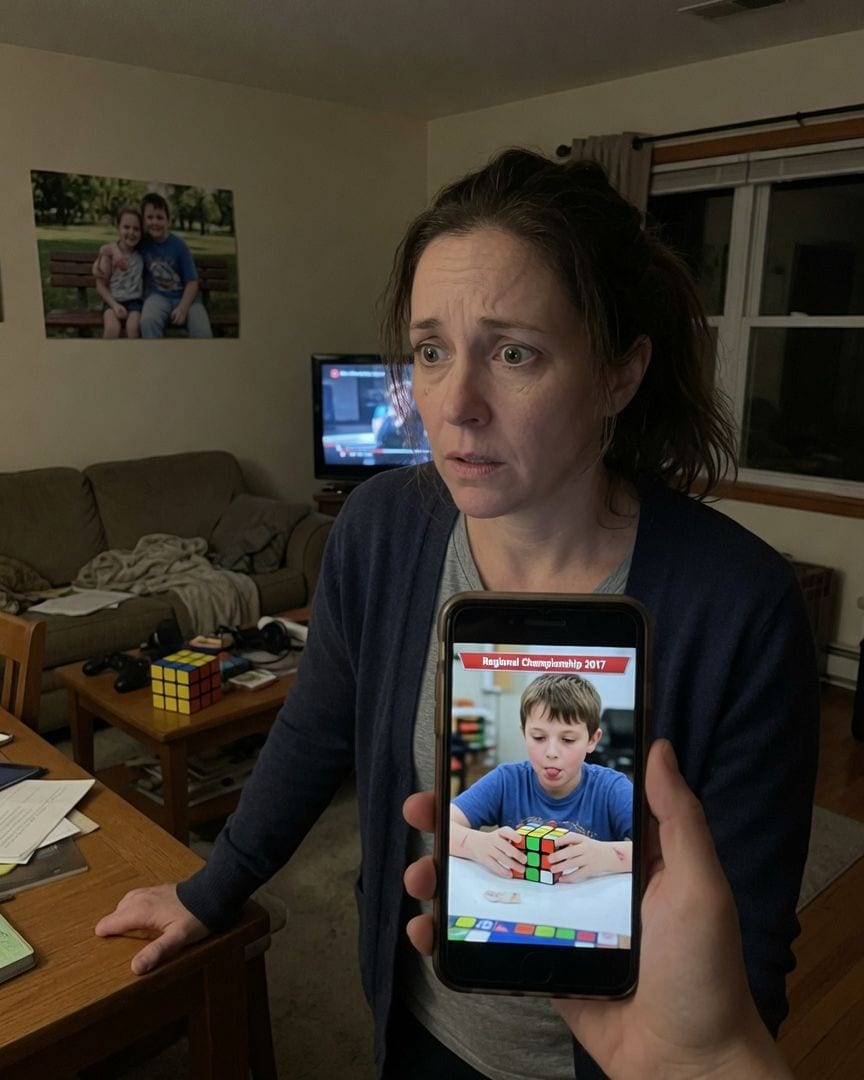
My son solves his puzzle cube yellow-first now. He says he's never used the old sequence, but his winning videos online prove he did.
I asked my fourteen-year-old son, Benjamin, about a shared childhood memory, trying to prompt a familiar connection. He recounted the details perfectly, even adding a wistful observation I'd forgotten. But then he described a conversation with his father, a man who had died before Benjamin was even born.
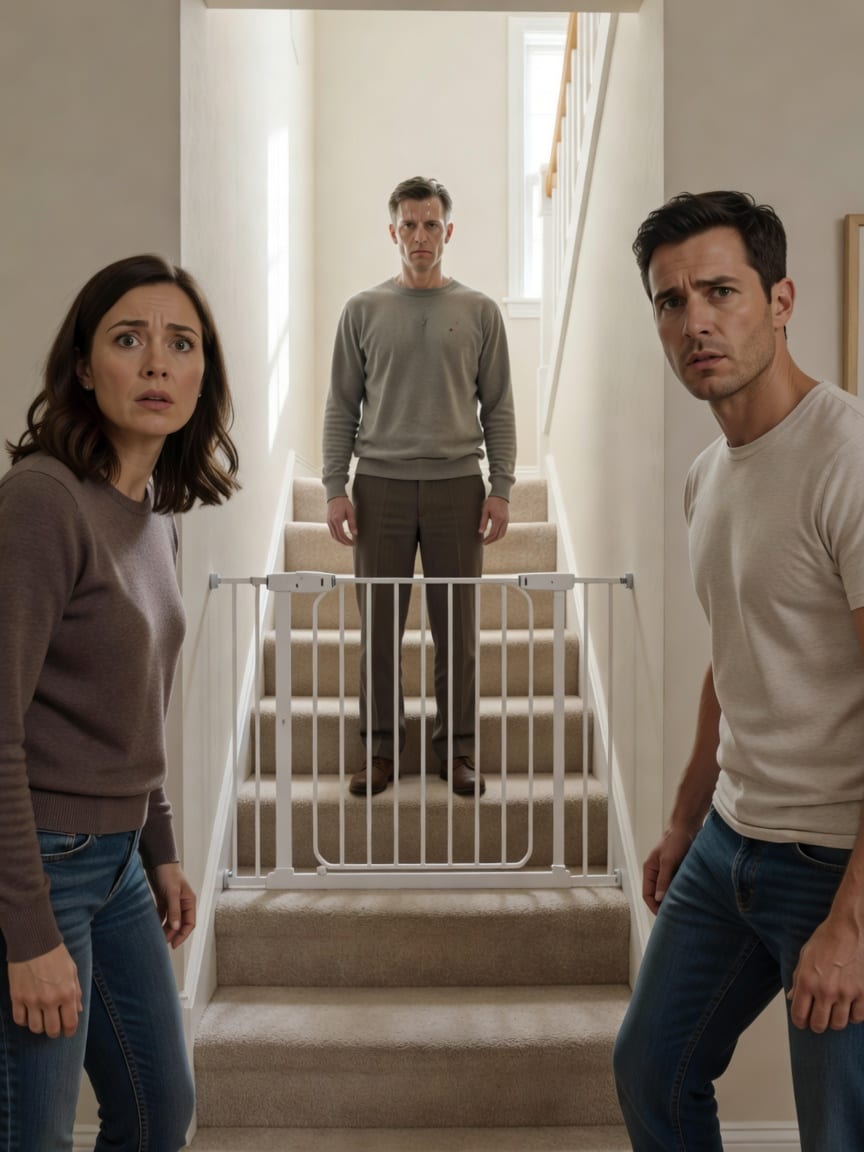
My stair gate latches itself every night. Pressure-fitted tight across my empty stairs, no children live here and no fixings exist on the wall.
I live alone in my inherited house, so the toddler gate at the top of my stairs should not be there. Each morning, I find it perfectly latched and sturdy, despite having hidden it away in the shed the day before. This isn't a quirk; it's a routine, and it isn't mine.
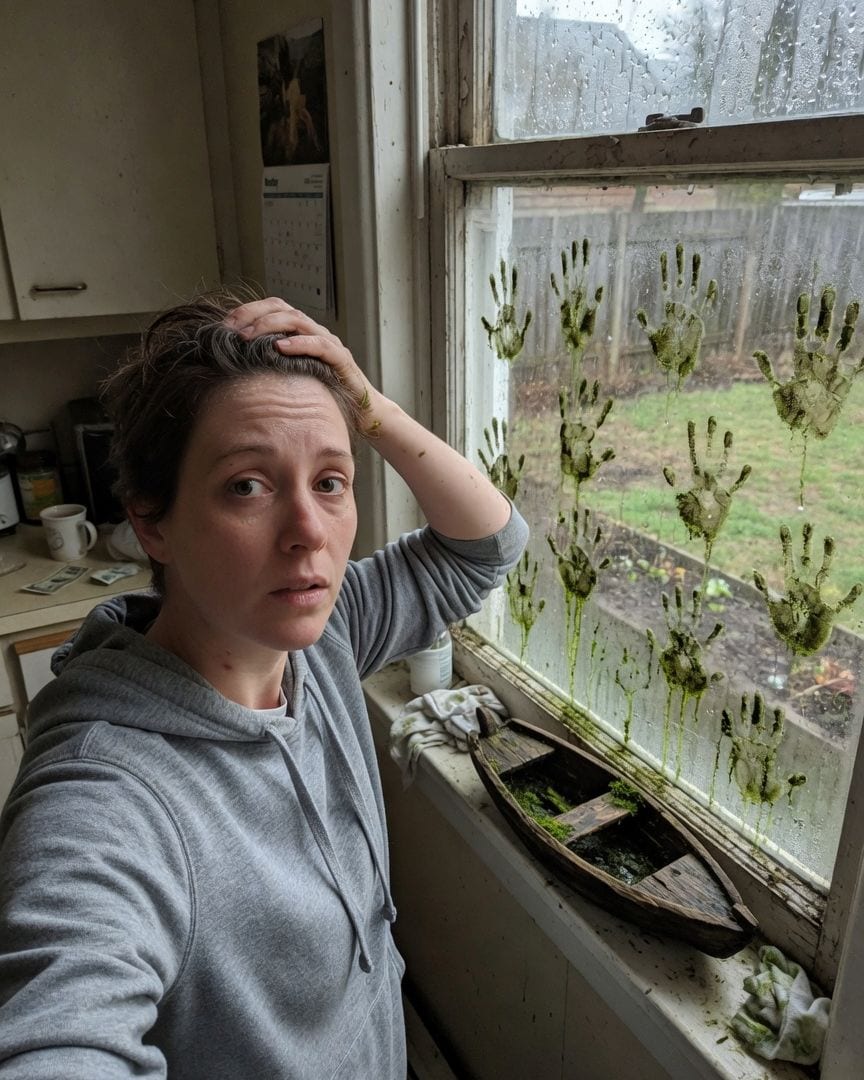
Wet moss handprints cover my kitchen window. My kitchen backs onto no water at all.
Monday morning, I found small, perfect handprints pressed against the *inside* of my kitchen window. They were wet and outlined in dark green moss, an impossible sight since my sealed window backs only onto a patch of lawn, with no water nearby. I ran my hand over them; they felt damp and cold.
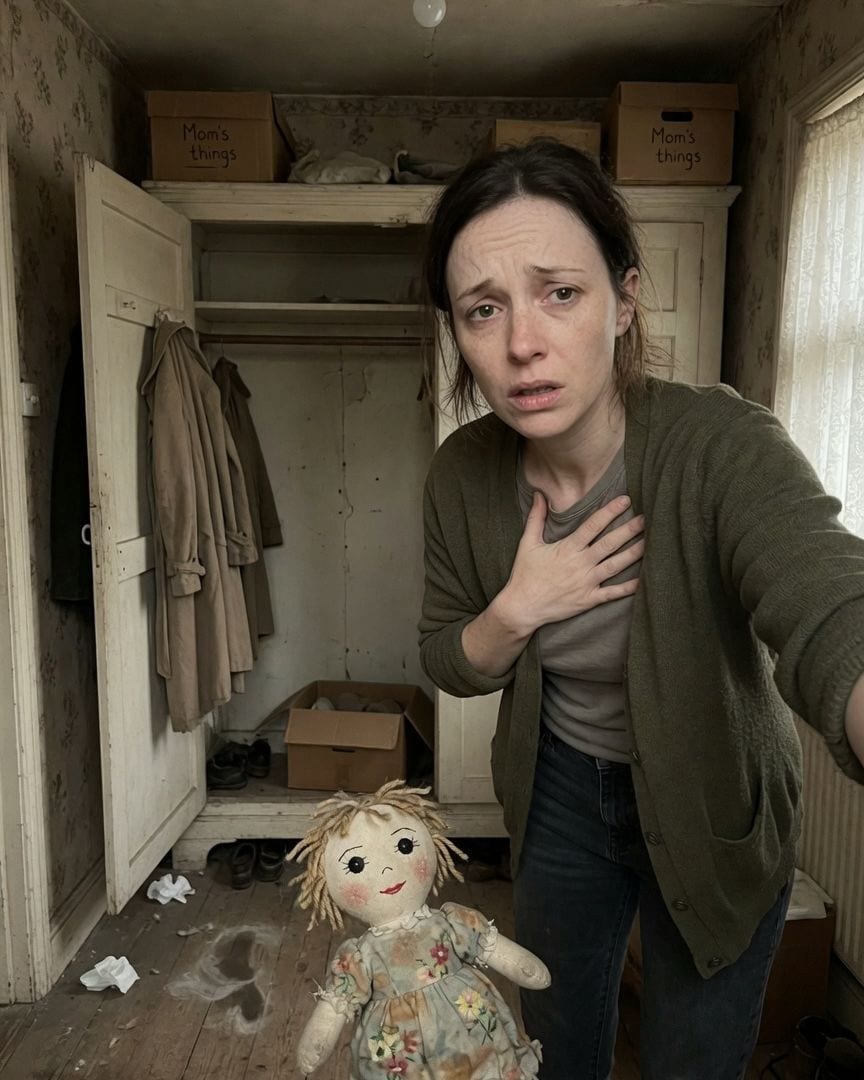
My shallow wardrobe opened into a child's bedroom. I'd knocked on its solid back wall for years. Now the doll from that room is on my floor.
My new house has a box room with a shallow wardrobe, barely a foot deep. But one day, reaching inside, the back wall vanished, opening into a child's bedroom with a cot and a burning nightlight. I slammed the door shut, only for it to be a normal closet again, leaving me with a cold, heavy stone of contradiction.
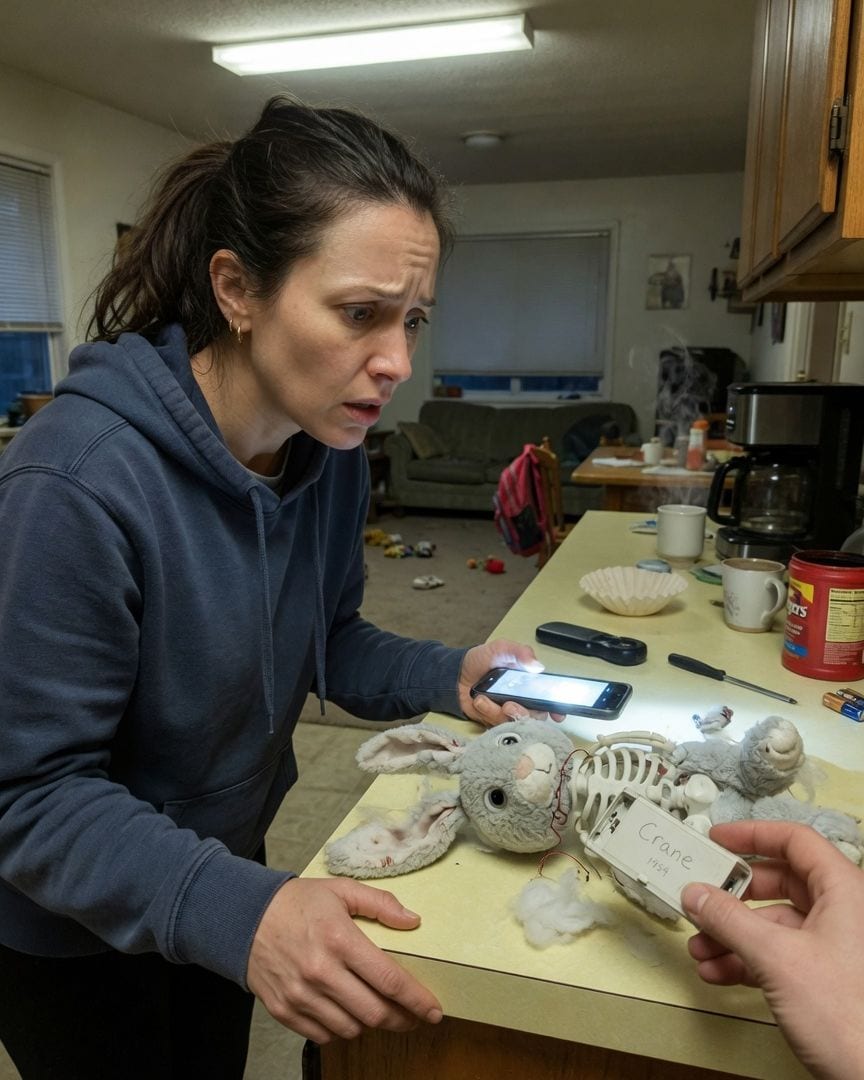
My son's toy rabbit says my name, then, 'bring him to the water.' The batteries are out.
I was making coffee, my son James at school, when I heard a grown man's voice from the living room. It was his favorite toy rabbit, whispering my name: 'Nina, bring him to the water.' The chilling command was impossible; I had removed the rabbit's batteries three days earlier, and they sat on the kitchen counter.