My boy came home after the storm smiling into the lightning. He'd hidden from thunder his whole life.
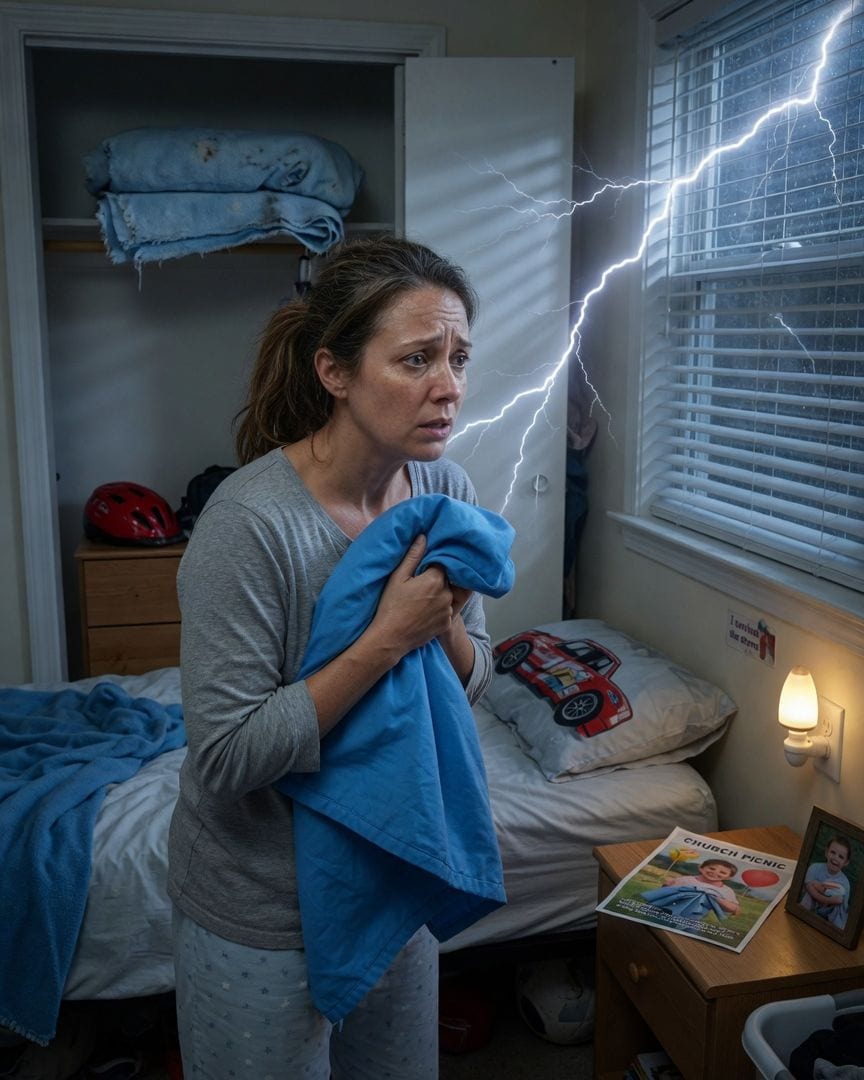
The storm broke over us just after sunset, a sheet of lightning followed by a crack that rattled the windows.
Felix jumped, but my boy, Carl, just stood at the living room window, palms flat on the glass, smiling up into the rain-streaked sky.
From the time he was two, thunder sent him under the kitchen table, a small, trembling bundle until the last rumble faded. We knew every storm by where he hid, the sound his undoing.
He’d been missing a night and a day after the church picnic, and the relief of his return, just hours ago, was still a raw thing in my throat.
When I called him back from the window, my voice tight with an ancient, instinctive fear, he turned, his face perfectly calm, and asked, puzzled, why I looked so frightened.
His left knee, where he’d scraped it falling off his bike last summer, still showed the faint, distinctive scar. Everything was Carl, but nothing was Carl. Felix, my husband, just clapped him on the shoulder, relieved.
“He’s been through a lot, Viv. It’s just shock.” But it wasn’t shock. It was a reversal, a quiet, horrifying inversion of a truth I’d known since he could walk.
And I couldn’t unsee it, even as the lightning flashed again, illuminating his serene, unnerving smile.
That night, sleep was impossible. Every flash of lightning outside the window, every distant rumble, brought Carl’s strange calm to mind. I slipped out of bed, careful not to wake Felix, and made my way to Carl’s room.
He was sleeping soundly, curled on his side. My eyes went to his bed. His blue blanket, worn soft from years of use, was tucked neatly at the foot of the mattress. It was his anchor, his security.
He always, without fail, slept with it clutched in his hands, even on the hottest nights. I remembered him telling me, just that afternoon, how he’d held it tight while he slept. A knot tightened in my stomach.
I reached for it, pulling the corner to my nose. Nothing. No familiar scent of his childhood shampoo, no faint, yeasty smell of little-boy sweat that always clung to it.
It was clean, as if fresh from the laundry, but I hadn’t washed it. I knew I hadn't. I had seen it on his bed, rumpled, when he went to the picnic.
My mind raced, trying to find a mundane explanation. Maybe Felix had washed it? But Felix never did laundry. Maybe Carl himself? Unlikely, he never bothered. I walked to his closet, opening the door.
There, on the top shelf, neatly folded, was another blue blanket. His old one, the original, the one he’d outgrown but still kept, still smelled faintly of him. This one, on his bed, was too new, too stiff, too… clean.
The dread solidified, cold and hard in my gut. This wasn't just a habit reversed; this was an object replaced, or a memory fabricated. My rational brain tried to argue it away: stress, grief, my own exhaustion.
But the evidence was tangible, undeniable. The blanket was wrong.
I left the room, the unwashed blanket still in my hands, a silent accusation. The next morning, Carl was his usual cheerful self, eating his cereal, oblivious to my internal turmoil.
As he reached for the milk carton with his right hand, I saw it. A faint, almost invisible, raised line on his inner left arm, just above the elbow.
It was barely a quarter-inch long, like a thin, white thread pressed just beneath the skin. I’d never seen it before. He’d always been so careful, so afraid of needles or even a small scratch. My heart began to pound.
“Carl,” I said, my voice barely a whisper, “what’s this?” I reached out, my finger brushing the tiny mark. He flinched violently, pulling his arm away, his eyes locking onto mine.
The cheerful mask dropped, replaced by an unfamiliar, cold glare that freezes my breath in my lungs. He didn't speak, just stared, and in that moment, I knew. Whatever had come back, it wasn’t my son.
I spent the next few days in a fog of quiet terror, watching Carl. The mark on his arm was gone the next morning, leaving no trace.
I tried to convince myself I’d imagined it, a trick of the light, but the memory of his cold stare lingered. The 'reversed habits' kept coming. Carl had always hated broccoli, gagging at the sight. Now, he asked for seconds.
He, a lifelong right-hander, was picking up his fork with his left, fumbling slightly but persistent. I tried to talk to Felix, carefully, mentioning Carl's new preference for broccoli, his left-handedness.
“He’s just trying new things, Viv,” Felix said, distracted by his phone. “Kids change. He’s been through trauma. You’re overthinking it.” His dismissal felt like a physical blow, isolating me in my dread.
I pulled up old photos of Carl, searching for the mark, for any hint of these new behaviors. Nothing. I looked for stories online about children returning changed after being lost, but found only tales of relief, not quiet horror.
I remembered a drawing Carl had made a week before he went missing. It was of our backyard, a familiar scene, but he’d drawn a small, peculiar tree in the corner, one that didn't exist in our yard.
I found it tucked under his mattress. The tree had oddly gnarled, almost grasping branches, and a single, dark, irregular knot on its trunk. I stared at it, a new thread forming in the labyrinth of my fear.
Carl had an incredible memory for detail. Why would he invent a tree, especially one so… sinister?
The drawing gnawed at me. I needed to talk to someone, anyone, who might see what I was seeing. I thought of Deborah Prescott, our elderly neighbor. She’d lived here her whole life, knew every family, every house, every rumor.
I baked a pie, a flimsy excuse, and walked over. Deborah greeted me with a thin smile, her eyes sharp. We talked about the weather, about Carl’s return, about the strange summer.
I subtly steered the conversation to local history, to old families, to anything that might connect to Carl’s drawing or the strange mark. Deborah listened, nodding, but offered nothing specific. Her gaze kept flicking past me, toward my house.
I felt a prickle of unease, a sense of being observed, even though we were alone in her sunlit living room. Later that day, back in my own kitchen, I glanced out the window.
A dark sedan, one I didn’t recognize, was parked a block down, its tinted windows opaque. It was gone an hour later. That evening, as I was tucking Carl into bed, he looked up at me, his eyes unsettlingly clear.
“Mrs. Prescott asked about my drawing today,” he said, his voice flat. My blood ran cold. I hadn’t shown Deborah the drawing. I hadn’t even mentioned it. I forced a smile. “Did she, honey? What did you tell her?”
He just shrugged, but his eyes held a depth that didn’t belong to an eight-year-old. The sedan was back the next morning, parked a little closer. I was being watched. And Carl knew.
The next afternoon, I went back to Deborah’s, without the pie. I pushed. “Deborah, something is wrong with Carl. He's not… right. He knows things he shouldn't. His habits are reversed. I found a mark on his arm that vanished.”
Her lips pressed into a thin line. “You’re not the first, Vivian.” Her voice was barely a whisper. “Not the first to see it. Not the first to be dismissed.”
She rose, moving slowly to an old wooden chest in the corner of her living room. From it, she pulled a faded photo album. She opened it to a brittle, sepia-toned page. “This was my brother, Thomas. Sixty-five years ago.
He went missing for a few days, just like Carl. Came back… different.” She pointed to a small boy in the photo, standing stiffly beside a woman who looked like a younger Deborah. “Thomas used to hate apples.
Said they made his teeth hurt. Came back, ate one a day. And he always, always used his left hand to draw. Came back, right-handed as you please.” My gaze fell to the boy in the photo.
His eyes, even in the grainy image, held a strange, distant quality, a quiet knowing that mirrored Carl's. Deborah’s finger traced a spot on the boy’s arm, just above the wrist. “See this?” she asked.
It was a faint, irregular mark, almost like a birthmark, but it wasn’t. It was the exact texture, the same raised, almost thread-like quality, as the scar on Carl’s knee.
Not the same shape, not the same place, but the same wrongness. “They all have a mark,” Deborah said. “Always subtle. Always different, but always… wrong.” She looked up, her eyes watery. “They don’t just come back. They’re sent back.
From the Home. The Riverside Children’s Home. Long before it closed. They kept records. I tried to tell people. No one listened. They just said I was grieving.”
The peculiar tree in Carl's drawing flashed in my mind, the dark knot on its trunk. It wasn’t a tree at all.
It was a crude depiction of that mark, twisted and gnarled, as Carl had seen it on himself, or on others. The pieces began to click into place, a horrifying mosaic. This wasn't just my son. This was a pattern.
Deborah closed the album, her hand trembling. “The records,” she repeated, her voice hoarse. “They’re still out there. In the county archives. Hidden, but there.”
The weight of her words, the chilling confirmation of a decades-long pattern, pressed down on me. My mind raced, connecting the dots: the blanket, the thunder, Carl’s knowing glance, the sedan outside. This wasn't a one-off.
This was an ongoing, terrifying operation. Just as I was about to ask her more, Deborah went utterly still. Her eyes, fixed on something behind me, widened in a silent alarm. Her lips parted, but no sound came out.
I spun around, my heart leaping into my throat. Reflected in the large, ornate mirror on her far wall, I saw it. The window of Carl’s bedroom, directly across the street.
And Carl was standing there, silhouetted against the fading light, looking straight at Deborah’s house. A faint, unreadable smile played on his lips. His hand, the left one, slowly lifted and pressed flat against the glass.
The next morning, driven by a desperate need for absolute proof, I went to the county archives. I asked for records of the Riverside Children’s Home. The clerk, a bored young man, found only a few standard closure documents.
“Nothing here, ma’am. It’s all public.” But Deborah’s words echoed: Hidden, but there. I remembered Carl’s drawing, the peculiar tree, the dark knot. I asked about any 'unusual' or 'misfiled' documents, anything not in the main index.
The clerk sighed, then pointed to a dusty, unmarked door in the back of the room. “There’s an old storage annex. No one’s touched it in years. Full of junk, probably.”
My hands shook as I pushed the door open, the air thick with the smell of old paper and dust.
Deep within, behind stacks of forgotten tax ledgers, I found it: a series of heavy, leather-bound journals, clearly labeled 'Riverside Home - Re-integration Case Files'. My breath hitched. I pulled one open.
Inside, meticulously handwritten entries detailed children who had gone 'missing' for short periods, then 'returned'. Each entry noted a 'minor behavioral adjustment' – a new preference, a reversed habit – and, horrifyingly, a small, coded symbol.
I flipped through the pages. The symbols varied, but their descriptions matched the raised line I’d seen on Carl’s arm, and the wrong texture Deborah had described on her brother’s scar.
My eyes landed on an entry from just a week ago: 'Langford, Carl. Re-integration successful. Adjustment: Thunder fear reversed. Identifier: Type S-4.' I recognized the symbol. It was the same one I’d seen on Carl’s arm.
And there were dozens, hundreds of them, stretching back decades, each one a child, a family, a life silently replaced. It wasn’t a ghost story. It was a system. And the county knew.
I drove home in a daze, the heavy knowledge a physical weight in my chest. The journals were still in the archives, but the truth was now mine.
When I walked through the door, Carl was in the living room, watching TV, Felix beside him, reading the paper. They looked like a perfect family scene. Too perfect.
Carl looked up, his eyes meeting mine, and a faint, knowing smile touched his lips. He didn’t say anything, but I felt a chill run through me. He knew where I’d been. He knew what I’d found.
Felix looked up, oblivious. “Everything alright, Viv? You look like you’ve seen a ghost.” The irony was a bitter taste. I tried to talk to Felix, to make him see. “Felix, I found something. About Carl. About the Home.
It’s not just Carl, it’s been happening for decades.” He just frowned, his eyes softening with concern, not understanding. “Vivian, you’re exhausted. You’re imagining things. Carl is home. We need to focus on that.”
His hand reached out, gently touching my arm, a gesture meant to be comforting, but it felt like a trap closing. Carl, from the sofa, never broke eye contact.
His smile remained, a silent, chilling affirmation of his knowledge and my powerlessness. I looked from Carl’s serene, knowing face to Felix’s kind, unseeing one. There was no breaking through to Felix.
He was already lost, either unwilling or unable to see. The thing wearing Carl’s face would not be stopped. And if I stayed, I would be next. I had to get out.
I walked to the kitchen, feigning thirst, my mind racing. I grabbed my car keys from the hook, my purse from the counter. “I just need some air,” I managed, my voice strained. Felix nodded, still engrossed in his paper.
Carl watched me go, his smile unwavering. I fled, the image of his face, calm and knowing, burned into my mind.
Vivian Langford drove until the gas tank was empty, then kept going, leaving her car by the side of the road and walking away from everything she knew.
Felix reported her missing two days later, telling the police she’d been under immense stress since Carl’s return, hinting at a breakdown. No one questioned it.
The county archives remained undisturbed, the journals of the Riverside Children’s Home gathering dust in their hidden annex. Life in the small town settled back into its quiet rhythm.
The sedan with the tinted windows was seen less frequently, eventually disappearing altogether.
Weeks later, Felix and Carl were seen at the local grocery store. Felix looked a little thinner, but his smile was easy, perhaps even a little too carefree. Carl, holding Felix’s hand, pointed to a bag of apples.
“Can we get these, Dad?” he asked. Felix chuckled. “You know I never liked apples, son.” Carl just smiled, a little wider than Felix ever did, and took a long sip of his coffee, black.
A few days later, a neighbor saw Felix Langford in his garden. He was meticulously pruning a small, gnarled tree in the corner of his yard, a tree that hadn’t been there before, its branches oddly grasping.
When the neighbor called out, Felix turned, his smile just a little too wide, and took a long sip of his coffee, black.
If this one got to you
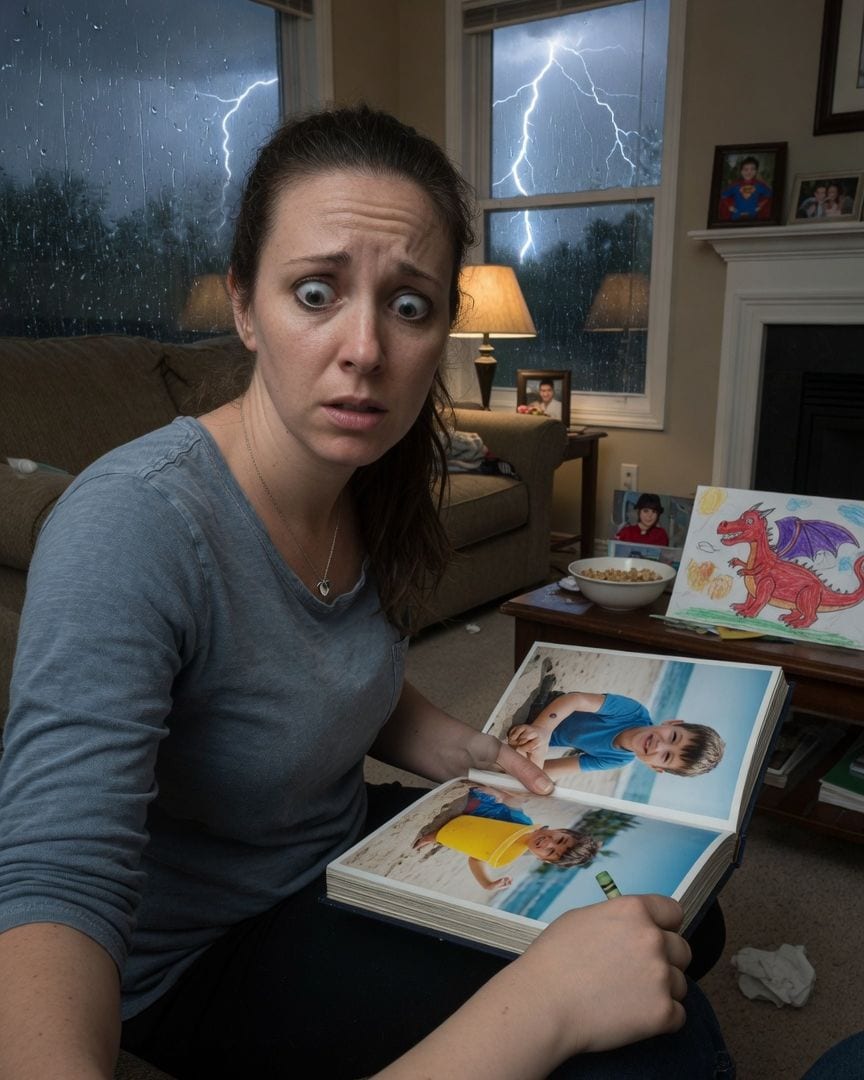
My son's star-shaped birthmark is gone from his wrist. Photos prove it was there just last summer.
My son Nathaniel returned home after being missing for a day and a night, bringing immense relief. But his strange calm during a violent thunderstorm and a new way of eating breakfast unsettled me. The true dread hit when I touched his left wrist: his distinctive star-shaped birthmark, always there since birth, was utterly gone.
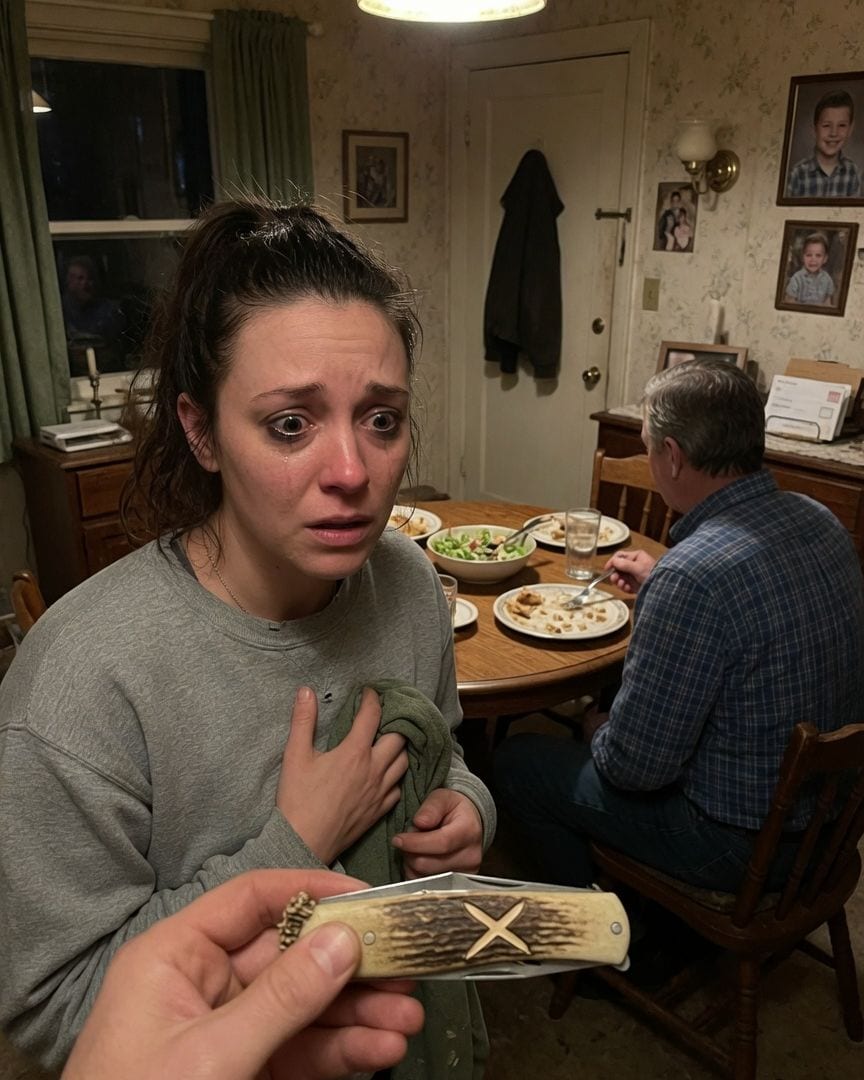
My father took the wrong chair at dinner this week. He said it was always his, facing away from the door, and ate.
My father returned after six days gone, disoriented but seemingly unharmed. Yet, the man sitting at our dinner table, claiming his old place, felt subtly wrong. Then I found his beloved pocketknife, missing from his side, hidden in the attic with a strange, new symbol carved into its handle.
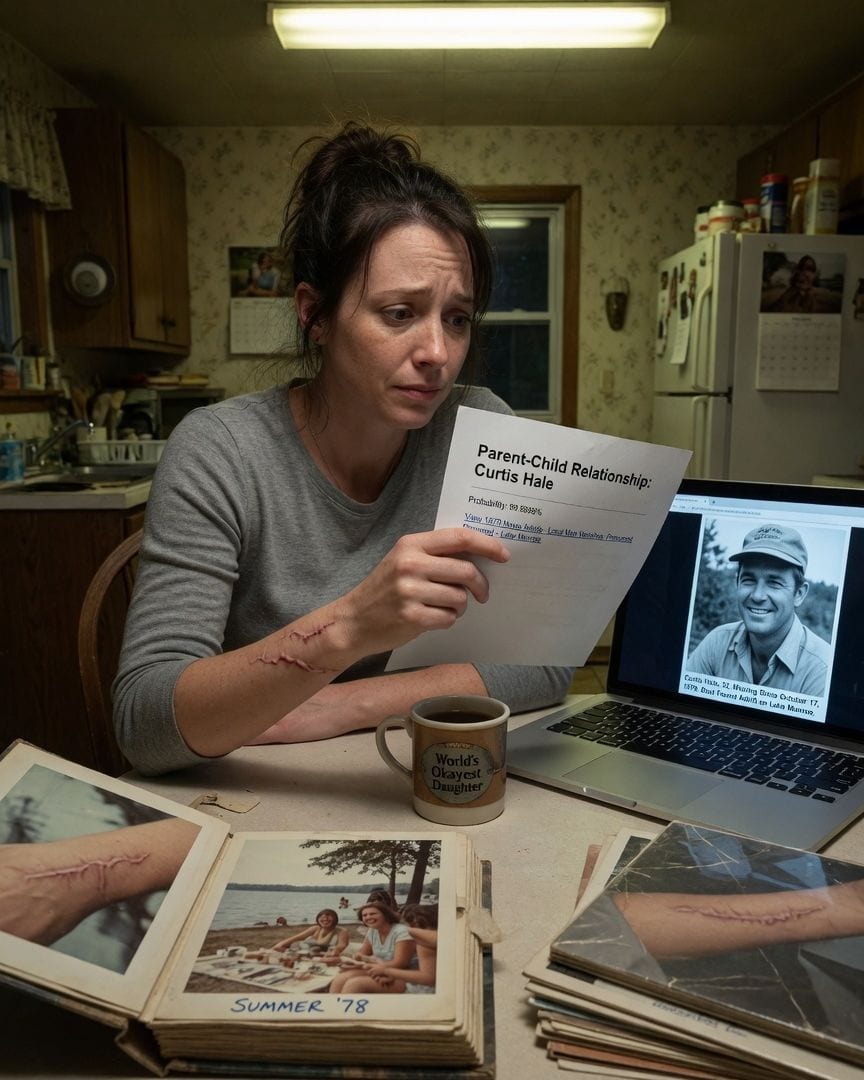
My DNA returned Curtis Hale as my father. He vanished in 1979. I was born twelve years later. The lab confirmed the match twice.
My DNA test results revealed something impossible: my biological father vanished in 1979, twelve years before my birth. My mother dismissed it as nonsense, but her reaction felt forced, leading me to old family photos. There, in a faded 1978 snapshot, I found my own distinctive childhood scar on the wrist of a stranger.
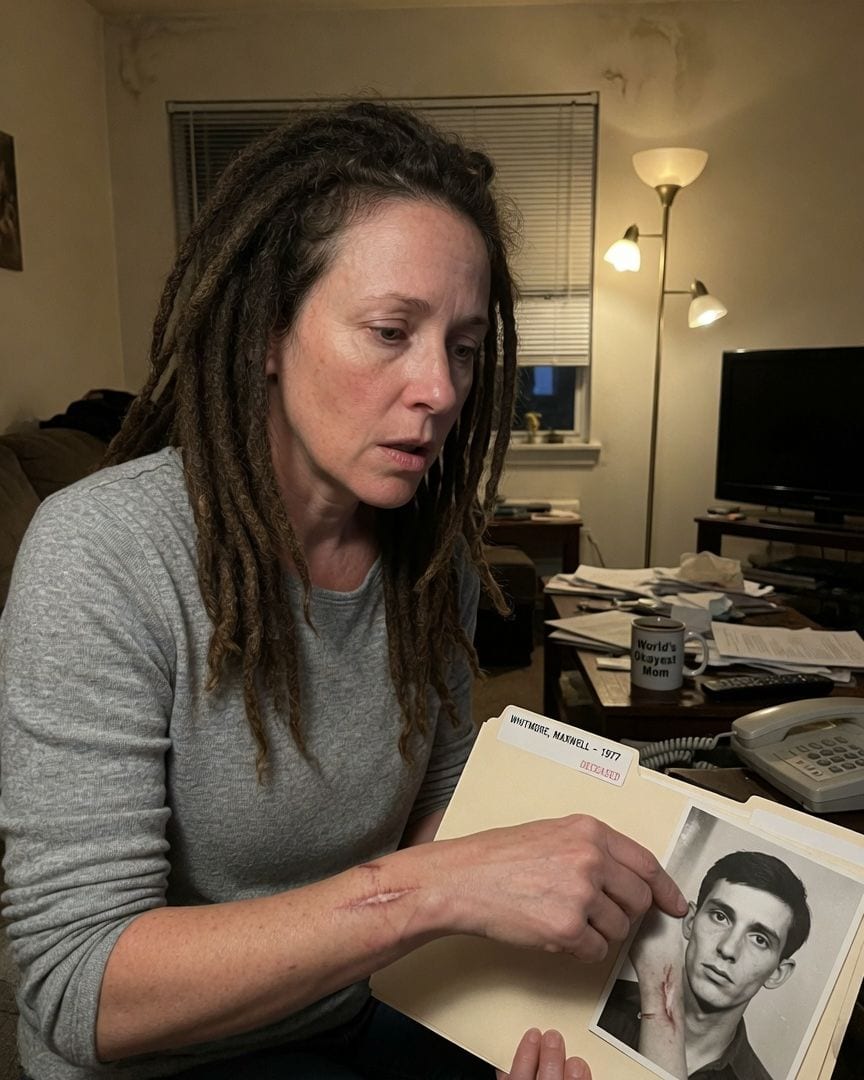
My fingerprints perfectly match a dead man's. He died in prison in 1980, but the bureau insists our hands are identical.
My distant cousin's arrest led to a routine fingerprint check, but the results were anything but normal. A bureau examiner confirmed my prints were identical to an inmate who died in custody decades ago. Then I saw his mugshot: the faint scar on his wrist was the exact same as my own unique birthmark.
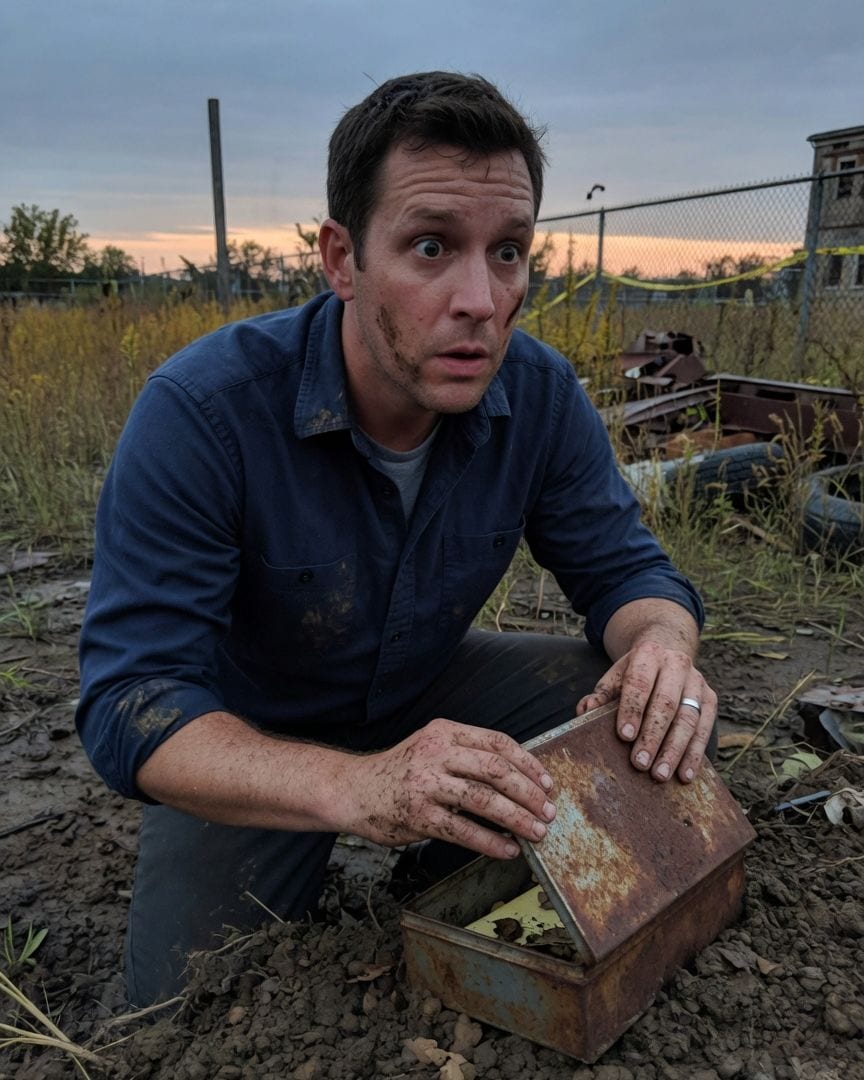
My ancestors' photo shows a letter addressed to me, dated 1972.
My birthday card arrived a day late, from a small town an hour north, nowhere we knew. Inside, an elegant, unfamiliar script read: 'Happy Birthday, Robert. The Field remembers.' It was postmarked from the site of my ancestral homestead, demolished decades before I was born.
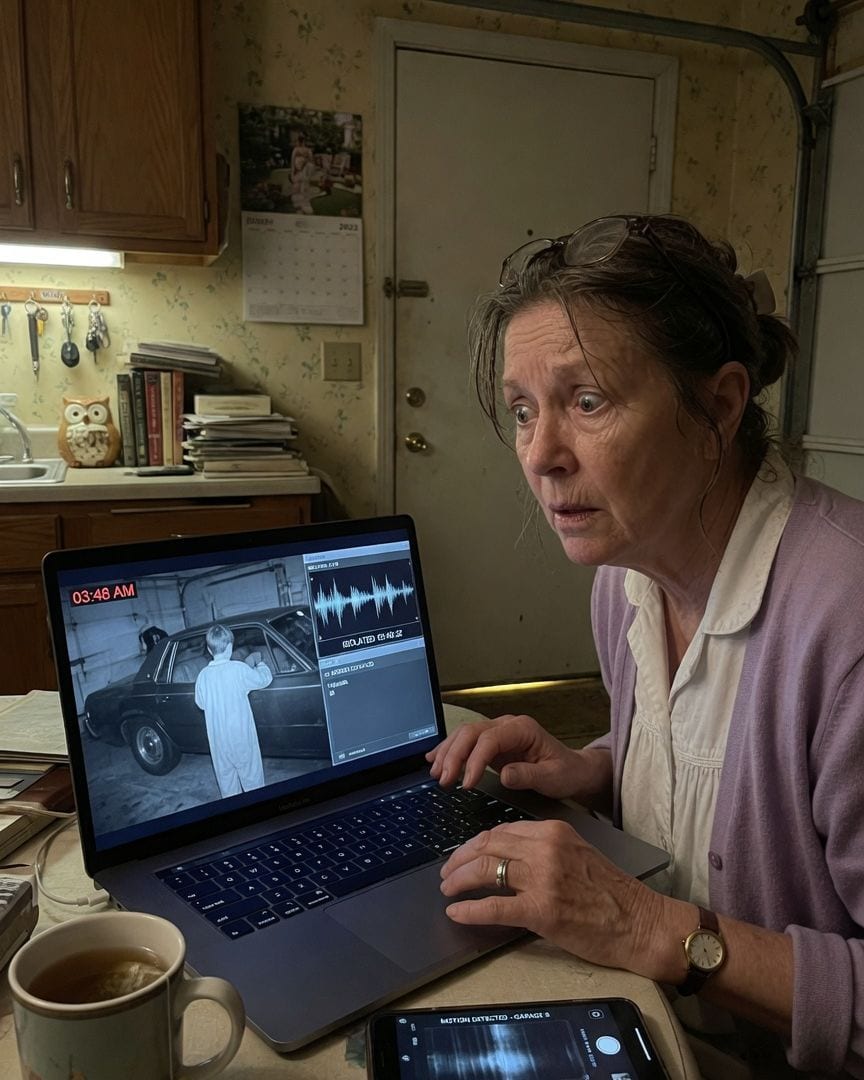
My garage camera filmed a boy of six walk out of a locked door at 3:48am, stare into my empty car, then vanish. My children live abroad.
I live in a quiet, solid house, my children grown and gone. But one night, my garage camera caught an impossible sight: my internal door, locked and bolted, slowly opened. A small, solid boy, no older than six, stepped through, then stood staring into the driver's seat of my empty car.