My son's star-shaped birthmark is gone from his wrist. Photos prove it was there just last summer.
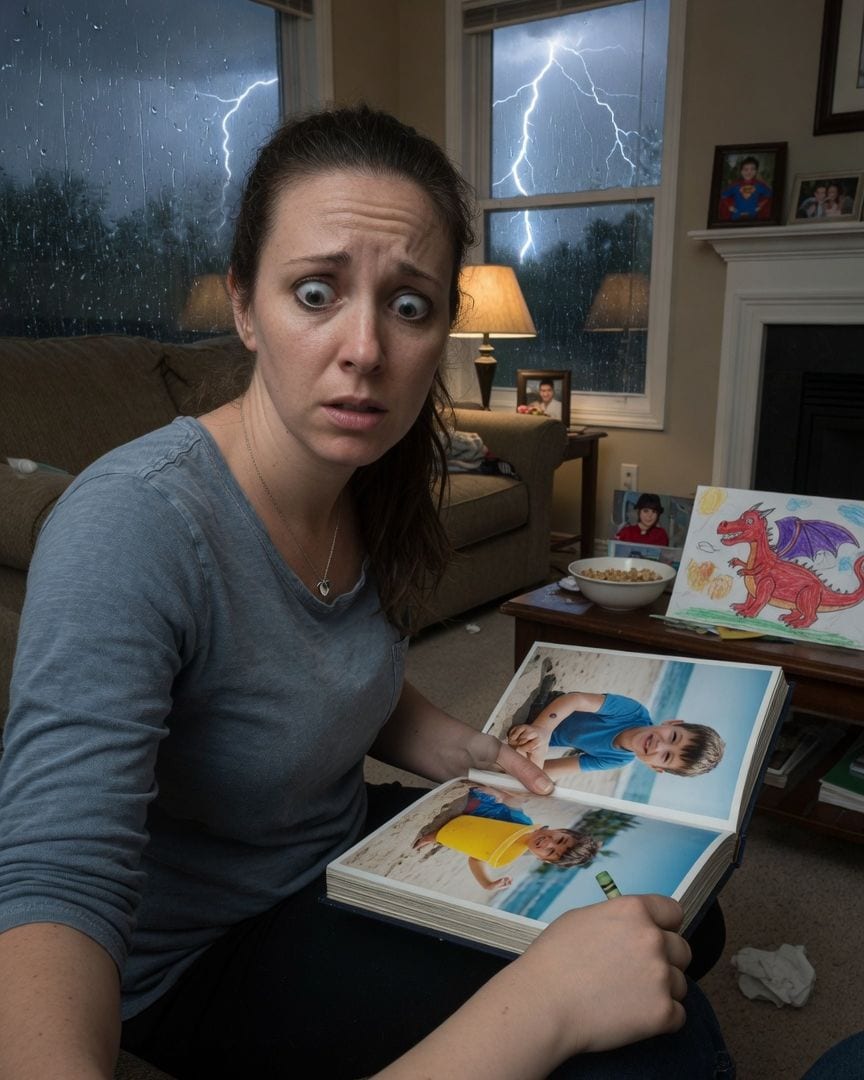
The rain lashed against the living room window, a wild, drumming curtain against the late summer evening. Thunder cracked overhead, a sound that usually sent Nathaniel scrambling.
Since he was two, any hint of a storm meant a panicked dive under his red superhero blanket, his 'thunder cave', where he'd stay, a quivering lump, until the last rumble faded.
He’d been missing a night and a day after the church picnic, a frantic blur of search parties and silent prayers that had left me hollow.
Then he was home, safe, just walking up the driveway as if he’d been at a friend’s.
Now, he stood at the window, palms flat against the glass, his small face illuminated by the flashes of lightning. A faint smile played on his lips.
Another boom, closer this time, rattled the old house, making the framed photos on the mantelpiece dance. He didn’t flinch. He didn’t even blink. He just watched the storm, his eyes wide and unblinking.
"Nathaniel?" My voice was tight, a thin string stretched to breaking.
He turned, slowly, his head cocked to one side. The faint smile vanished, replaced by a puzzled frown. His eyes, usually so full of light and mischief, seemed… different. Older, somehow. "Why do you look so frightened, Mom?"
he asked, his voice a little too level, a little too calm. The relief that had flooded my veins just moments before began to curdle, leaving a cold, metallic taste at the back of my throat.
The next morning, I tried to rationalize it. Shock, maybe. He’d been through an ordeal. Maybe the trauma had somehow pushed him past his fear, or he’d simply outgrown it while he was gone. Children change.
But then I watched him eat breakfast. Nathaniel, my Nathaniel, always used his left hand to hold his spoon, his right to wield his fork with surprising dexterity for an eight-year-old. It was a quirk I’d chuckled about countless times.
Today, he held his spoon in his right hand, clumsily scraping cereal around the bowl, his left resting idle on the table, perfectly still.
A small thing, easily dismissed as a new habit, but it snagged at the edge of my awareness, a tiny thread threatening to unravel.
Later, as I helped him change for school, my hand brushed his left wrist. My heart gave a jolt.
Since birth, Nathaniel had a small, distinctive star-shaped birthmark there, just above his wrist bone – a tiny constellation of three moles forming a perfect triangle.
I’d traced it a thousand times, a secret map on his skin, a reassurance that this was my boy. Now, my fingers met only smooth, unblemished skin. I pulled his arm closer, my eyes scanning, searching for the familiar pattern.
Nothing. Just perfect, unmarked flesh, utterly blank. I felt a cold prickle spread across my scalp, crawling from my neck to my hairline. It had to be there. It always had been.
I remembered a photo from last summer, Nathaniel at the beach, his arm clearly visible as he held up a bucket. I would check it. It had to be there.
I rushed to the old photo album, my hands trembling as I flipped through the stiff pages. There it was: Nathaniel, beaming, holding a sandcastle aloft, his left arm prominent in the foreground.
I leaned in, my finger hovering over the image. The tiny, star-shaped birthmark, clear as day, just above his wrist. Unmistakable. I slammed the album shut, the sound echoing in the silent house, sharp and final.
I had to be wrong. I had to be. But the memory of the smooth skin, the absolute absence, was too stark, too immediate. I found Nathaniel in his room, meticulously coloring a picture of a dragon.
I knelt beside him, my voice carefully casual, trying to keep the tremor from it. "Can I see your drawing, sweetie?"
As he held it up, a vibrant, terrifying beast, I gently took his left hand, my thumb tracing the empty skin where the birthmark had been, my breath catching in my throat as Nathaniel pulled his hand away, his eyes wide and unblinking.
For the next few days, I obsessed. I checked every photo, every baby book, every medical record I could find. The birthmark was there, irrefutably, in every image, every description. And now, it was gone.
I tried to convince myself it was a trick of the light, a fading mark, a scar I hadn’t noticed, but it was too distinct, too permanent to simply vanish into nothingness. Nathaniel, meanwhile, continued to be 'off.'
He started calling me 'Mother' sometimes, a formal address he’d never used, pronounced with an odd, almost practiced precision. He ate his vegetables without complaint, a lifelong battle now inexplicably won.
He spoke in complete, perfectly formed sentences, losing the occasional childish stutter he’d always had when he was excited or nervous. His movements were more fluid, more deliberate, like a dancer executing choreography.
He never asked about where he'd been, or what had happened to him during his day and a night away.
When I gently probed, trying to elicit some memory, some explanation for his absence, he’d just shrug, a blankness in his eyes that made my stomach clench.
I even called my sister, Vivienne, under the pretense of sharing a funny story about Nathaniel's new 'maturity,' hoping for a rational perspective, some reassurance.
Vivienne, however, noticed the subtle shift in my tone, the edge of desperation I couldn't quite hide. "He's just growing up, Em," she’d said, a note of concern creeping into her voice. "Kids change after big events.
He's probably just a bit shaken up, trying to be brave." But I knew it wasn't just growing up. It was something else. Something cold and precise, like a perfectly crafted lie.
The unsettling feeling that something was fundamentally wrong with my son began to consume me.
I started taking Nathaniel to the park, not for him to play, but trying to observe him from a distance, watching how he interacted with other children.
He played, yes, but with a strange, almost methodical grace, as if following a script. He never laughed with abandon, never got truly muddy. He was always just slightly… too perfect.
One afternoon, as I sat on a bench, pretending to read a paperback, I noticed an older man, George Marsh, sitting a few benches down. He was a familiar face from the neighborhood, retired, always tending his immaculate garden.
Today, he wasn't reading, just watching the children, a faint, unreadable smile on his face. Our eyes met across the expanse of grass, and he offered a slow, deliberate nod. It wasn't a friendly nod, not exactly. It was… knowing.
Later that week, unable to shake the feeling of profound unease, I was searching old town archives online, looking for any local legends of disappearances, anything that might explain the impossible changes.
My fingers flew across the keyboard, typing in keywords: 'missing children,' 'unexplained returns,' 'local myths.' Nathaniel walked into the room, silent as a cat, his soft footsteps making no sound on the rug.
He stood by my chair, looking at the screen over my shoulder, though I quickly minimized the browser. "What are you looking for, Mother?" he asked.
His voice was soft, but the question was a direct hit, like a tiny dart landing precisely where it hurt most. I quickly closed the tab, my heart suddenly thudding against my ribs. "Nothing, sweetie. Just old stories.
You know, for fun." Nathaniel just smiled, a small, knowing upturn of his lips, and left the room as silently as he’d entered. The air felt colder, heavier, and I knew I wasn't just investigating anymore. I was being watched.
The dread intensified until I felt it in my bones, a cold, sharp ache. I had to know.
I couldn't live like this, suspended between the undeniable facts of what I saw and the desperate hope that it was all in my head.
One evening, after tucking Nathaniel into bed, I sat on the edge, my heart pounding a frantic rhythm against my ribs.
"Nathaniel," I began, my voice trembling slightly despite my best efforts to keep it even, "do you remember Grandma Judith?"
He nodded, his eyes bright in the dim light of his bedside lamp. "Of course. She made the best cookies."
I pressed on, trying to keep my voice light, casual. "Do you remember her garden? She had a special spot, by the old oak tree. Just for us, when she told her stories."
Nathaniel's eyes glazed over slightly, as if recalling a film playing in his mind. "Yes," he said, his voice a little distant, a little too perfect.
"She would sit on the stone bench, and you would bring her a cup of chamomile tea, and she would tell you about the birds, the wrens that nested in the oak.
She had a small silver bell she’d ring to call them."
I froze. My grandmother, Judith, had indeed had a secret garden spot by an old oak. And I had brought her chamomile tea there, many times.
But the silver bell… the bell was a private detail, a secret moment between Emily and her grandmother, long after Nathaniel was born, when he was too young to even remember. He'd never been in that garden, not really.
Not then. He couldn’t have known. I could feel the blood draining from my face.
"The bell?" I whispered, my voice barely audible, a thin, reedy sound in the quiet room. "What bell?"
Nathaniel looked at me, his expression utterly serene, not a flicker of confusion or doubt. "The one she kept in her apron pocket. She’d jingle it, and the wrens would come. You always laughed."
He was so calm, so certain, like he was recounting something he’d seen yesterday. I felt a scream building in my throat, a pressure so immense it threatened to tear me apart. This wasn't my son remembering.
This was something else, accessing memories it shouldn't have, fabricating details to fill the gaps, painting a picture it had only observed.
The missing birthmark, the reversed fear of thunder, the way he ate, the formal 'Mother' – it all clicked into a horrifying, coherent pattern. My son was gone. This was an echo, a mimicry, a perfectly crafted illusion.
And it knew my grandmother's secrets.
I stumbled out of Nathaniel’s room, my mind reeling, the memory of the silver bell ringing in my ears like a death knell. A detail he couldn't possibly know. I needed answers, not just confirmation of my darkest fears.
I needed to understand.
I found George Marsh in his garden the next day, meticulously pruning his prize-winning roses. The air hung heavy with the scent of blooms, sweet and cloying.
He looked up as I approached, his eyes meeting mine, that knowing glint in them again. "Mrs. Patterson," he said, his voice calm, unhurried, as if we were discussing the weather. "Lovely day, isn't it?"
I walked straight to him, my voice trembling, raw with the truth I could no longer deny. "My son... he's not my son."
George slowly lowered his shears, his gaze unwavering, almost sympathetic. "No," he said, his voice soft, a sigh of resignation. "He isn't. Not anymore."
I stared, my world tilting on its axis, the edges blurring. "What... what is he? What happened to him?"
George sighed, a long, weary sound that seemed to carry the weight of years. "It happens sometimes. Always has. The woods… they take a toll. For things misplaced, for things lost. And sometimes, they send something back.
Something that looks like what was lost, but isn't. It's not malicious, you understand. Just… different. It happens."
I felt a cold knot form in my stomach, growing heavier by the second. "It happens?" I repeated, the words tasting like ash in my mouth.
George nodded slowly, his eyes distant, fixed on a point beyond the fragrant roses. "My sister, Annika. Vanished when she was nine. Came back a week later. Same face, same scar on her chin.
But she started calling my mother 'Ma'am.' She never did that. Never once. And she couldn't stand the smell of roses after that. My mother’s prize-winning roses. Annika loved them."
I stared at him, the terror solidifying into a block of ice in my chest: he spoke of her grandmother, a memory only Emily held, and he spoke of it like a distant, observed fact, not a lived one, and she realizes her son is not just changed, but gone, and this thing knows her too well.
I felt the blood drain from my face, the chill spreading through my veins. Annika. Ma'am. Roses. The silver bell. It all clicked into place with sickening clarity. "It's a pattern, isn't it?"
I whispered, the words barely escaping my throat.
George nodded, his gaze still fixed on that distant point, as if watching generations of shadows move through the trees. "Always has been. The woods around here… they have an appetite. For things misplaced, for things lost.
And sometimes, they return a vessel. A copy. It learns, you see. From what it observes, from what it finds. It tries to fit. It tries to be... what it replaced."
He picked up a fallen rose petal, turning it slowly, carefully, in his fingers. "My Annika, she stayed. My parents, they knew, I think. How could they not? But what could they do? It looked like her.
It sounded like her, mostly. You learn to live with it. You learn to pretend."
My mind raced, reeling, yet every oddity I’d observed over the past two weeks now snapped into focus, sharp and undeniable. Nathaniel's reversed fear of thunder, his missing birthmark, the formal 'Mother,' the memory of Judith's bell.
It wasn't a monster, not in the way I understood them. It was a perfect, terrible coherence, an alien form of survival, a mimicry so precise it was terrifying.
"Where do they go? The real ones?" I asked, my voice raw, stripped bare.
George just shook his head, a profound sadness in his eyes that only deepened the lines around them. "No one ever knows. The woods keep their secrets. All that's left is the knowing.
And what you choose to do with it."
I walked home, the full truth a lead weight in my gut, heavier than any grief I had ever known. There was no escape. No undoing. Nathaniel was gone. And this… thing… was here.
It was in my house, at my dinner table, sleeping in my son's bed. It looked like him, mostly. It acted like him, mostly. I couldn't expose it. Who would believe me?
A distraught mother, making up stories because her son had changed after a traumatic disappearance. They would say I was grieving, that I was imagining things. They would say I was crazy.
I had to live with it. I had to choose. I walked into the kitchen, the scent of something vaguely savory filling the air.
Nathaniel was setting the table, placing the forks on the right, the spoons on the left, a new habit, carefully observed. He looked up, his smile wide and innocent, utterly convincing to anyone who didn't know the truth.
"Dinner's almost ready, Mother," he chirped.
I forced a smile back, a brittle, fragile thing that felt like it might shatter at any moment. I thought of George, of his sister Annika, of the parents who had chosen to pretend, to live with the impossible.
I had no choice. I had to protect the facade, for my own sanity, for the sake of the quiet, terrible peace that now defined my home. I could not fight it.
I could only survive it, moment by agonizing moment. The thing in my son's skin knew me, knew my memories, knew my grief. And I knew it.
The horror was in the intimacy of it, the constant, silent battle for my own reality, waged within the walls of my own home.
Weeks turned into months. Nathaniel continued his quiet mimicry. He learned new habits, slowly shedding the clumsy tells, becoming more convincing each day. The odd formality of 'Mother' softened, becoming less pronounced.
He even started to develop a slight, familiar lisp when he was tired, a new detail woven into the fabric of his impersonation.
I learned to live with the knowledge, a silent scream trapped behind my eyes, always just beneath the surface. I smiled, I laughed, I hugged my son. But every touch was a cold reminder. Every word a performance.
George Marsh would sometimes nod to me across the grocery store aisle, a shared, silent understanding passing between us, a flicker of recognition in his weary eyes.
The world saw a reunited family, a boy who had matured after a frightening ordeal. Only I knew the truth, and the chilling cost of its coherence.
Sometimes, late at night, when the house was silent and Nathaniel was asleep, I would sit by his bed, watching the rise and fall of his chest. He looked so peaceful, so normal.
I would reach out, almost touching his left wrist, remembering the missing birthmark, a phantom ache on my own skin.
The thunder still came, rattling the windows, and he would still stand at the glass, watching with that faint, unsettling smile, utterly unafraid. I had learned to smile back. I had learned to pretend.
Because what else was there to do, when the thing that wore your son’s face knew all your secrets, and you knew all of its?
If this one got to you
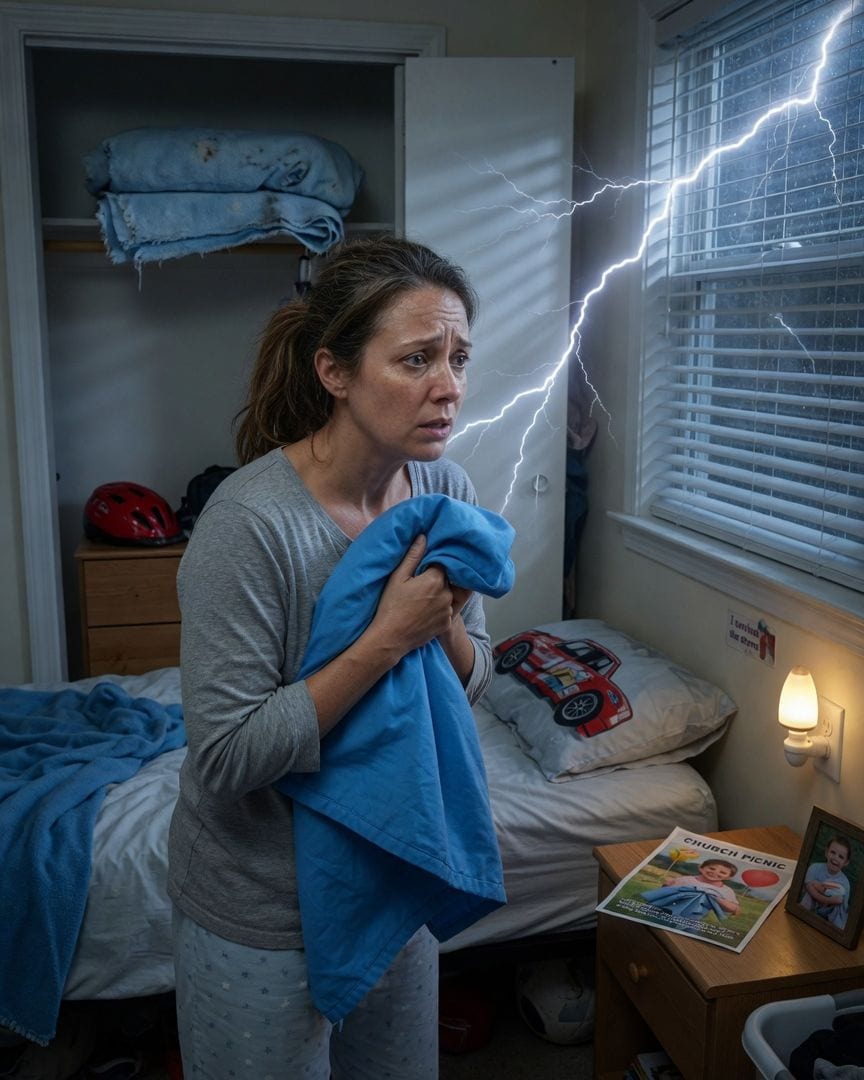
My boy came home after the storm smiling into the lightning. He'd hidden from thunder his whole life.
My son, Carl, had been missing a night and a day, and the relief of his return was still a raw thing. But when a storm broke, the boy who always trembled and hid from thunder just stood calmly at the window, smiling up into the rain. It was a horrifying reversal of a truth I’d known since he could walk.
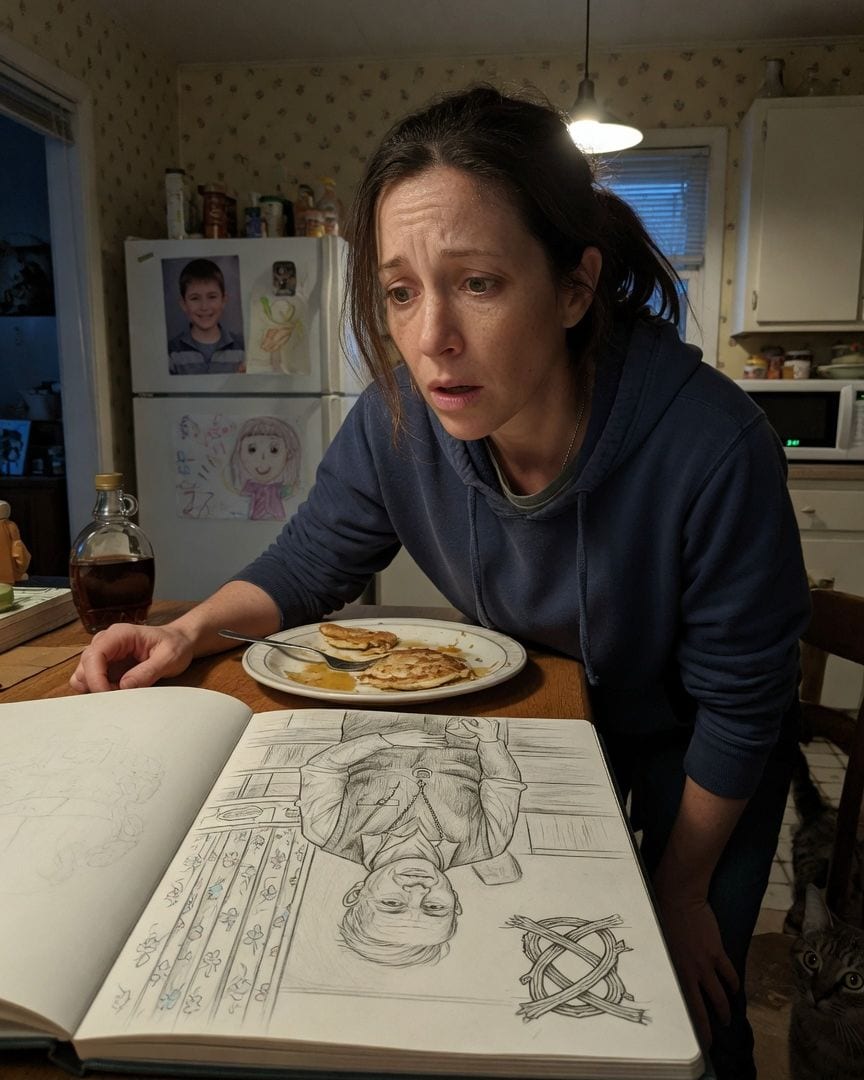
My son drew my dead father holding my hand in the hospital. He died six months before Patrick was born.
After two years missing, my son Patrick was finally home. The relief was immense, but it wasn't long before he began speaking of my dead father, recalling intimate details of his life that Patrick could not possibly have known, from a time before he was even born.
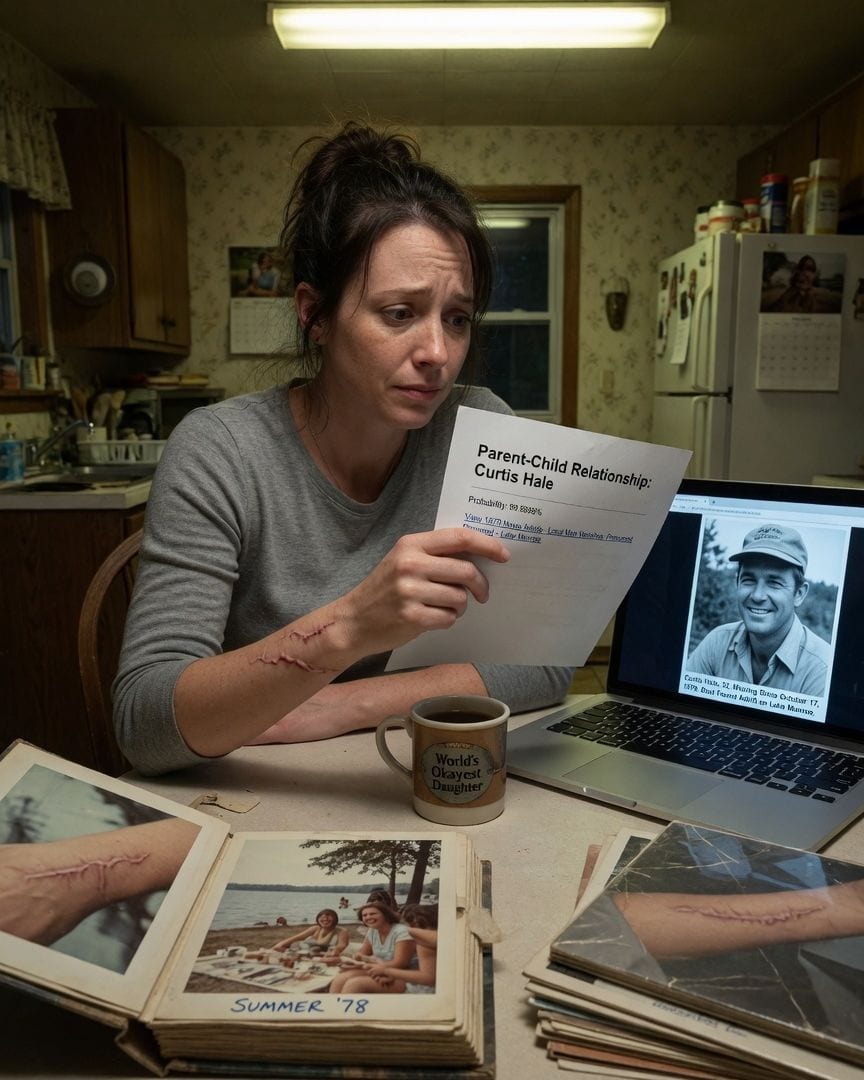
My DNA returned Curtis Hale as my father. He vanished in 1979. I was born twelve years later. The lab confirmed the match twice.
My DNA test results revealed something impossible: my biological father vanished in 1979, twelve years before my birth. My mother dismissed it as nonsense, but her reaction felt forced, leading me to old family photos. There, in a faded 1978 snapshot, I found my own distinctive childhood scar on the wrist of a stranger.
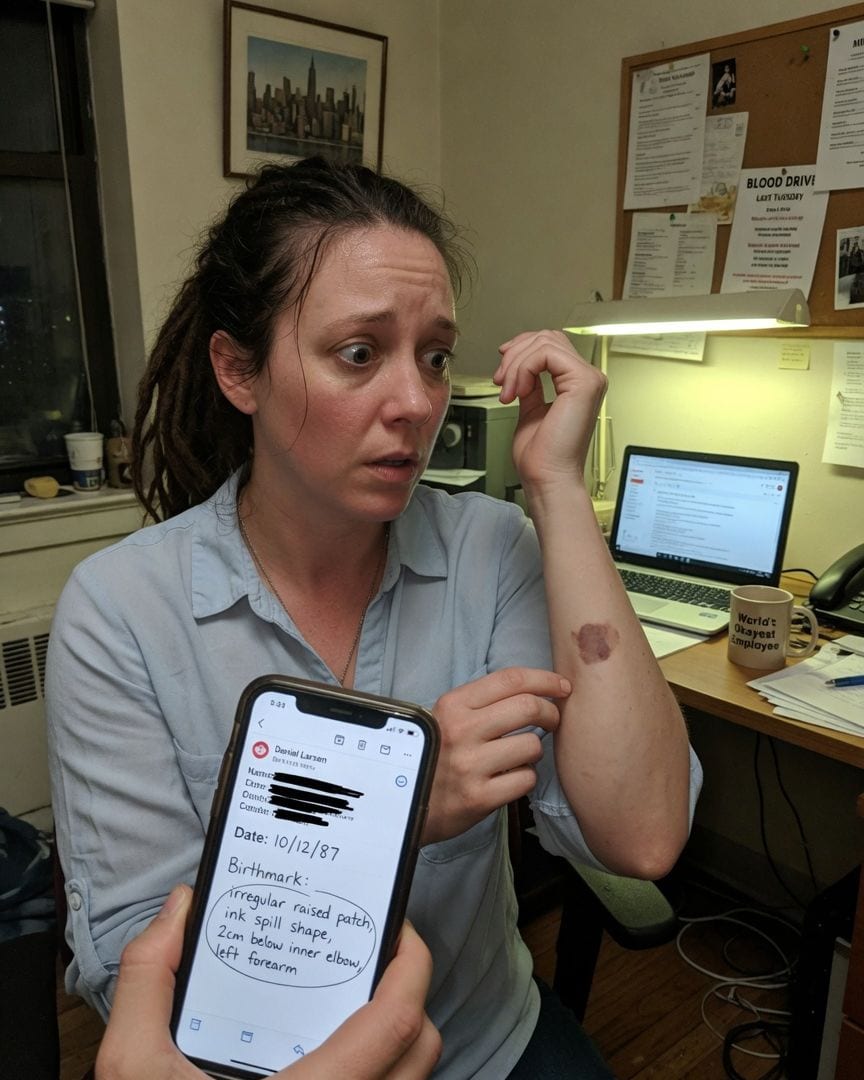
My left forearm has the exact birthmark described on a dead man's blood donor card from 1987, two years before I was born.
I gave blood as a routine civic duty. A call from the blood bank revealed my sample matched a donor from 1987, a man who died that year. But his donor card also detailed a unique birthmark on his left forearm, exactly mirroring my own.
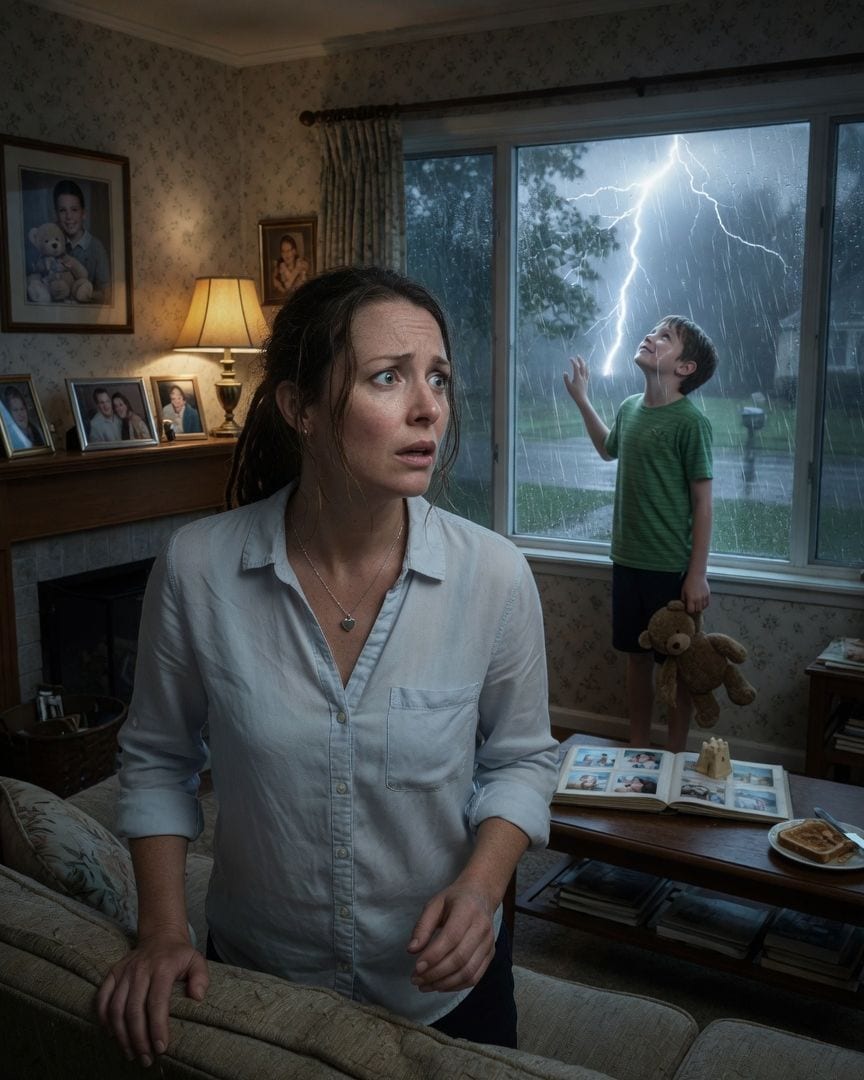
My boy came home and smiled into a thunderstorm. He used to hide under the kitchen table.
My eight-year-old son Lars returned after being missing, but he was different. He smiled into the furious thunderstorm he used to fear, and later, he calmly recalled details of my beach vacation from last year. He even described the star-shaped shell I'd placed on our sandcastle, claiming it as his own memory, even though he'd been home sick.
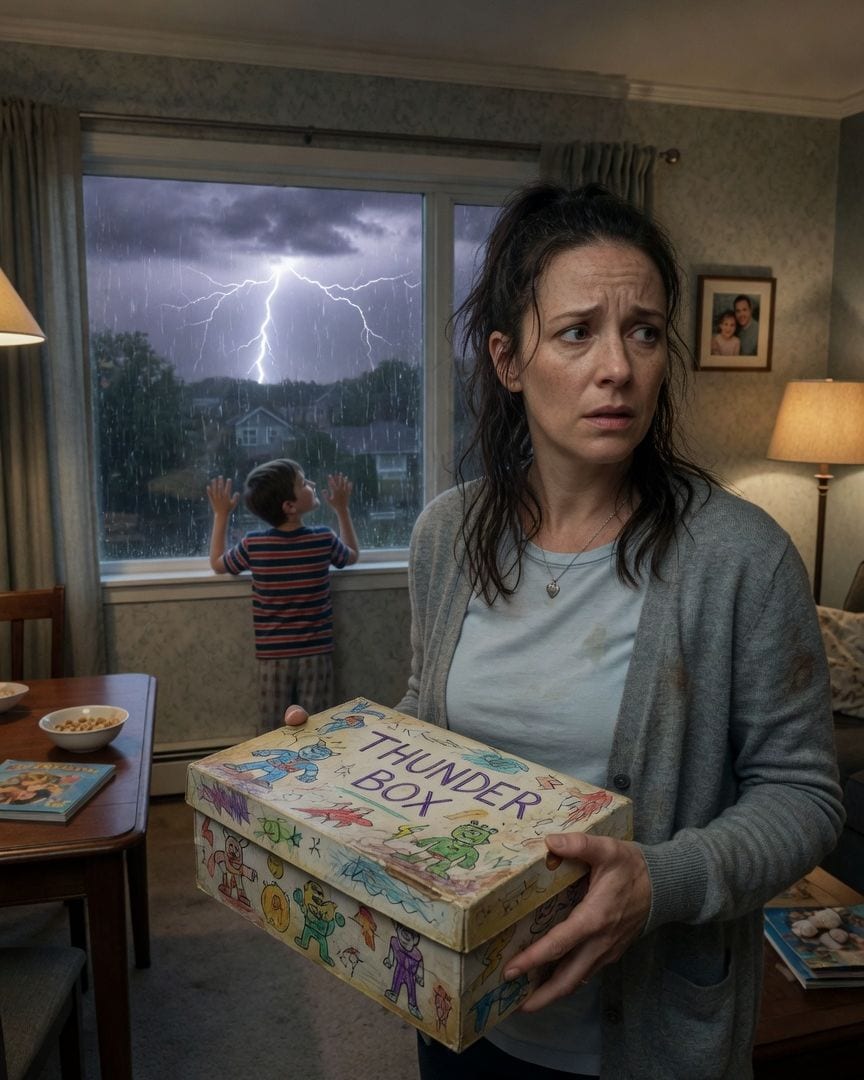
My son looks at his cherished thunder box with revulsion. He decorated that shoebox years ago, his go-to comfort for every storm.
My eight-year-old son, Samuel, vanished for a night and a day, leaving us frantic. Now he is home, but the thunder doesn't scare him anymore. Instead, he smiles into the storm and asks, 'Why do you look so frightened, Mama?'