My son returned. His hands still smelled of river water no one could explain, days after the search dogs gave up. Then he thanked his dead grandfather for teaching him to fish.
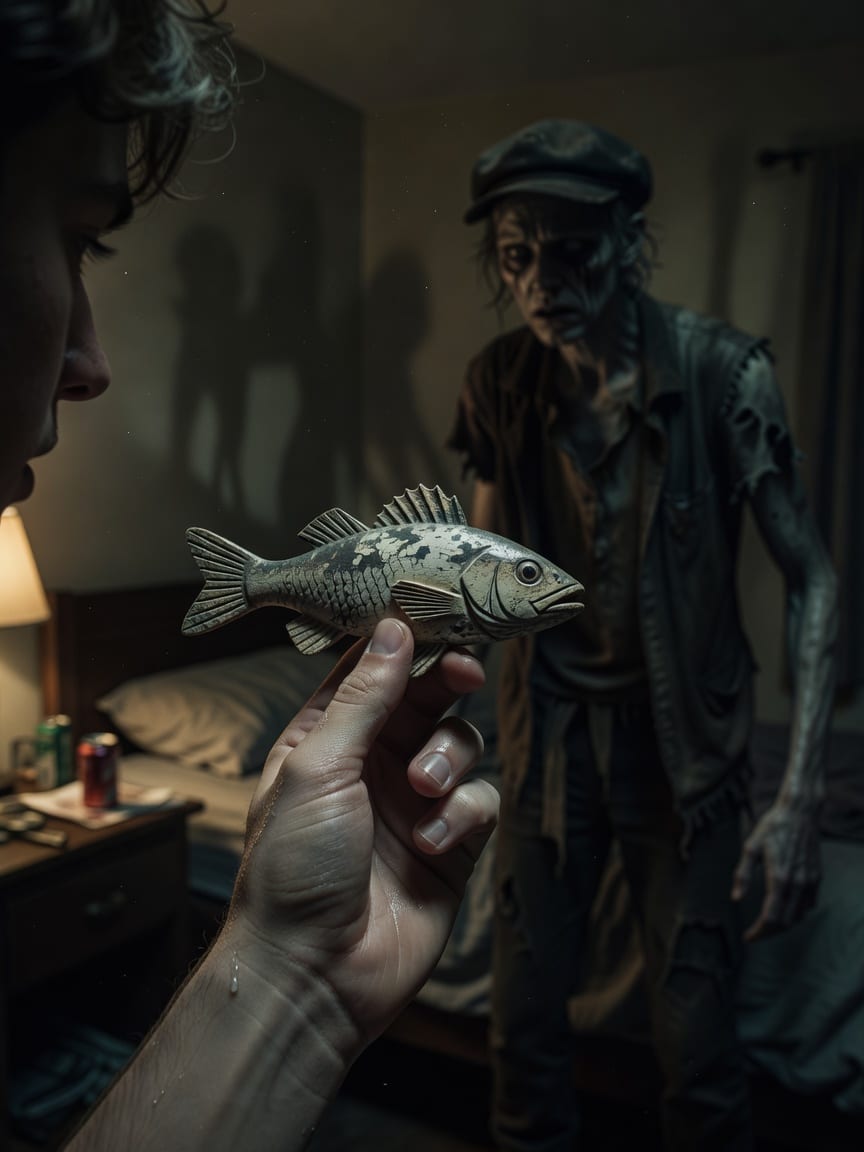
My son, Maxwell, came back on Tuesday. For three agonizing days, the search dogs had failed to pick up his scent, the river had yielded nothing but its cold, indifferent silence.
Relief hit me like a physical blow when the sheriff’s deputy called, a wave so potent it almost buckled my knees. But that relief curdled the moment I saw him step out of the patrol car.
Same face, the familiar scar above his left eyebrow from that bike accident when he was eight, but his eyes held a stillness, a depth I’d never seen. He hugged me, a little too tight, his embrace almost formal.
His hands, still faintly damp despite hours since his rescue, carried the undeniable, earthy scent of river water, clinging stubbornly even after a long, hot shower. 'Thanks, Grandma Monica,' he said, pulling back, a faint, polite smile on his lips.
'For teaching me to fish at the pond last month.' Grandma Monica. My name is just Monica. And his grandfather, James Rutherford, had been dead for two years.
Maxwell was with me last month, safely tucked into his summer camp, miles from any pond.
Yet he described the exact bend of the pond, the old, gnarled willow, the specific silver gleam of the rod, and the flash of a sunfish breaking the surface, with a detail that made my stomach clench.
He even demonstrated a particular knot, a complex fisherman’s bend James used to tie, his fingers moving with an unnerving proficiency.
The river smell, that faint, undeniable dampness, clung to him, a subtle but persistent wrongness that no one else seemed to notice, or perhaps, admit.
I tried desperately to rationalize it. Trauma, I told myself, clutching at any mundane explanation. Disorientation, a coping mechanism, a child’s mind blurring lines after a terrifying ordeal.
I took him to Dr. Prescott, our family physician, who listened patiently, nodded sympathetically, and prescribed mild sedatives for Maxwell, attributing the memory lapse and the strange calm to 'post-traumatic stress.'
Maxwell seemed to accept this explanation, too, though the unsettling stillness in his eyes remained, a quiet pool reflecting nothing. He ate his favorite meals, watched his usual cartoons, but there was a subtle, almost imperceptible shift in his preferences.
He’d always detested green beans, pushing them to the side of his plate with a theatrical grimace, but now he ate them without a word, without even a flicker of distaste. Small things, I repeated to myself. Insignificant.
But the fishing memory, the impossible connection to James, haunted me like a discordant note in a familiar song.
I knew James had loved that pond, had spent countless hours there, often bringing home small, hand-carved wooden lures he’d made himself.
One, in particular, a tiny, painted sunfish, he’d been heartbroken to lose there years ago, lamenting its loss for weeks. The dread was a cold, tightening band around my chest, compelling me to search Maxwell’s room.
It felt like an invasion, but the need to understand, to find a rational anchor, was stronger than my reservations.
I checked his backpack, his jacket pockets, looking for anything—a fishing license, a note, a strange piece of gear—anything that might explain this impossible memory. Nothing. Just the usual chaotic clutter of a fourteen-year-old’s life.
I was about to give up, my rationality beginning to reassert itself, when my fingers brushed against something hard and unexpected in the small, zippered pocket of his old denim jacket, one he hadn't worn in weeks, not since before he went missing.
I pulled it out. It was small, no bigger than my thumb, intricately carved from dark, smooth wood, painted with faded, chipped scales to resemble a sunfish.
The craftsmanship was unmistakably James’s, the tiny, almost invisible details of the fins, the precise angle of the painted eye.
It was the exact lure James had carved, the one he’d lost at the pond decades ago, the one he’d mourned. The one Maxwell, who had never met him, was describing as if he’d been there.
My son had come back, and he was carrying a tangible piece of his dead grandfather’s past, a past he could not possibly know, a secret that should have been lost to time and water.
The lure was a cold, hard knot in my gut, undeniable proof that my son’s impossible memory was somehow real, or at least, connected to something profoundly wrong. I confronted Maxwell again, holding up the tiny, wooden fish.
He simply shrugged, his gaze drifting lazily to the window. 'Found it near the pond, I guess,' he mumbled, his voice flat, devoid of any genuine curiosity or surprise. 'Thought it was cool.'
But the way he dismissed it, the utter lack of emotional resonance, was wrong. The old Maxwell would have been excited, curious about its origin. This Maxwell was a perfectly polite, subtly altered stranger.
I knew I couldn't get answers from him. The answers, I realized, might lie in the past, in James’s history with that pond.
I took the lure to the town’s small, unassuming historical society, a dusty building nestled on a quiet side street, run by Diane Abbott.
Diane was a formidable woman in her fifties, known for her encyclopedic knowledge of local lore and a memory sharper than any database.
I explained my father’s old hobby, his profound fondness for the pond, his meticulous journal keeping, and the specific, heartbreaking loss of this particular lure. Diane listened, her sharp eyes missing nothing behind wire-rimmed glasses.
'James Rutherford, yes,' she mused, a faint, almost clinical smile touching her lips. 'A local fixture. We have some of his fishing records, believe it or not. He was quite the archivist of his own life.'
She led me through narrow aisles of forgotten history, past shelves groaning under the weight of old ledgers and yellowed documents, to a back room. We found James’s entries, detailing catches, weather, and even small, personal notes about his carvings.
On one page, dated almost thirty years ago, was a small, almost illegible scribble in his hand: 'Lost sunfish lure at east bank. Damn it. My best one.' My heart hammered against my ribs.
'He lost it right there,' I whispered, holding up the actual lure. Diane looked from the lure to me, her expression unreadable. 'A remarkable find, Monica,' she said, her voice even, almost devoid of surprise. 'The pond yields many things.'
She offered to make a copy of James's journal pages for me.
But as she turned away, I caught a fleeting glimpse of something else on her desk: a file, much newer, with a small, discreet label in precise, institutional lettering: 'Pond Returns.'
The 'Pond Returns' file burned in my mind, a silent, terrifying accusation. Diane had quickly covered it with a stack of pamphlets, but not before I saw a date on its tab, just a few days old.
The exact day Maxwell returned. The coincidence was too stark, too chilling to ignore. I tried to press her, subtly, casually, when she returned with the copied journal pages. 'Are there other stories like this, Diane?
People returning from the pond… changed, perhaps?' Diane’s smile tightened, a practiced mask. 'Local folklore is rich with such tales, Monica. The mysteries of the river, the deep woods. But folklore is just that. Stories for tourists.'
Her tone was dismissive, but her eyes, those sharp, knowing eyes, held a strange, almost clinical glint that belied her words. Later that week, the unease escalated. I noticed Diane’s distinctive vintage sedan parked a block from my house, twice.
The first time, I dismissed it. The second, I drove past, and her head snapped down, as if checking her tire, but her head snapped up too quickly, her face pale.
'Just running errands,' she’d chirped brightly when I unexpectedly encountered her at the grocery store the next day, her shopping cart conspicuously empty. Her casualness felt rehearsed.
The following afternoon, Maxwell mentioned, almost casually, while scrolling through his phone, 'Diane Abbott asked me about fishing today. She saw me outside by the porch.' My blood ran cold. She hadn't just been running errands. She was watching us.
My dread intensified, shifting from an internal unease about Maxwell to a more tangible, external threat. It wasn't just about what Maxwell was; it was about the quiet, watchful presence of Diane, and what she knew, what she was hiding.
The air in my own home felt colder, thinner, as if something unseen was always listening.
I couldn't ask Diane directly about the file. Not yet. I needed something more concrete, something undeniable. I went back to the historical society a few days later, feigning interest in local architecture for a community project.
Diane’s car wasn’t in the lot. The substitute archivist, a college student engrossed in his phone, was easily distracted. My heart hammered against my ribs as I found James’s ledger again, then quickly, carefully, searched for the 'Pond Returns' file.
It wasn’t on Diane’s desk, but tucked away in a small, locked cabinet labeled 'Restricted Archives.' My hands trembled as I picked the simple lock with a hairpin, a trick James had taught me for rusted shed doors.
Inside, under a stack of old, brittle maps, was not just one file, but a series of worn ledgers. The oldest was leather-bound, its pages brittle with age. I opened it to a random page. 'Entry 147. Subject: Abigail Jenkins.
Returned 1932. Reported aversion to sunlight reversed to fondness. Claimed memory of 'seeing the big fish talk'.' I flipped pages, each entry a chilling echo: 'Subject: Thomas O’Malley. Returned 1958. Left-handedness reversed.
Insisted on 'the smell of old river mud' on hands, despite no recent exposure.' And then, an entry that made the air leave my lungs, the words swimming before my eyes. 'Rutherford, James. Returned 19XX. 'Lost lure' memory. River scent.
Refused to eat green beans.' The last detail, so small, so specific to my father’s lifelong aversion, was a visceral punch to the gut. The green beans. Maxwell now ate them without a word, without a thought.
My father had returned, just like Maxwell. And they knew. The institution, this historical society, had known for decades. The lure, the smell, the fishing story – it wasn't Maxwell's unique trauma. It was James's.
It was their pattern, repeating itself, an echo across generations. The silence in the archive room pressed down, thick and suffocating, as if the walls themselves held their breath, waiting for me to understand.
My fingers flew to the most recent pages, desperate for answers, for context, for any way to deny what I was seeing. There were dozens of entries, each one a snapshot of a life subtly, horrifyingly altered.
And then, at the very end of the latest ledger, a fresh, stark entry, its ink still dark, smelling faintly of the pen that had just laid it down: 'Sterling, Maxwell. Returned August XX. Three days untracked.'
There was a blank space next to 'Memory/Habit Anomaly.' The institution was waiting. They were watching him, waiting to record his 'wrongness,' to categorize it, to add it to their chilling collection.
And then, a small, handwritten note in the margin, in Diane Abbott’s familiar, precise script: 'Monitoring for 'lost lure' or 'green bean' recurrence. Early indications of river scent confirmed.'
My father's story was repeating itself, not as a metaphor, but as a chilling, documented fact, now manifesting in my son. The dread was a physical weight, crushing me, stealing my breath.
I heard footsteps approaching the archives, slow and deliberate, the soft scuff of shoes on old linoleum. They stopped just outside the door, and then, a faint, metallic click, as if a lock was being tested.
The door creaked open, slowly, revealing Diane Abbott. Her face was devoid of emotion, her sharp eyes fixed on me, then on the open ledger in my hands. 'Looking for something, Monica?'
she asked, her voice calm, almost serene, as if this were a casual chat over coffee. I stood, clutching the heavy book, my knuckles white. 'You knew,' I choked out, the words catching in my throat. 'About my father.
About Maxwell. All of it.' She walked in, closing the door softly behind her, the click of the latch echoing in the sudden silence. 'We've known for a very long time, Monica.
This isn't a secret we keep out of malice, or for some grand conspiracy. It's a pattern we observe. The pond is… an entry point. For something that cycles through.
It takes, and it returns something similar, but not quite the same. A vessel, if you will, imbued with traces of past returns, or the source itself.' She gestured to the stacked ledgers. 'These are our records.
Decades of careful observation. Your father was one of the clearest examples. The lost lure, the green beans – these are echoes. Residual memories imprinted onto the new vessel. Your son, Maxwell, is exhibiting the same pattern.'
She picked up the lure, which had fallen from my numb fingers. 'This is a powerful anchor for the 'lost lure' memory. It seems the connection to James was particularly strong this cycle.'
The cold, hard coherence of it all was worse than any monster. It wasn’t a monster; it was a process, a quiet, horrifying natural law that had simply been documented.
The air in the room, heavy with the scent of old paper and dust, suddenly felt like a tomb.
'What do you do?' I demanded, my voice raw, breaking the clinical calm of the room. 'Do you just… watch them? Let them live these half-lives, these hollow existences?' Diane sighed, a practiced weariness in her shoulders. 'We monitor.
We document. We ensure stability. To intervene is to risk… disruption. The returns are often calmer, more compliant. They adapt. They survive. As will your son.'
She looked at me with an unsettling empathy that felt more like a diagnosis than compassion. 'You have a choice, Monica.
You can accept this, learn to live with the new Maxwell, or you can fight a battle you cannot win, against something that has existed long before us, and will continue long after. We've tried fighting it.
It only causes more… instability.' She slid an old, faded photograph across the table, showing a previous 'return' whose face was twisted in silent agony, their body contorted in a way that suggested unspeakable suffering.
'The old Maxwell is gone,' she stated plainly, her voice soft but firm. 'What remains is… this. And it knows you. It knows your routines, your life. It will fit.
Most families, after the initial shock, after the grief, find a new normal. It's often easier this way.' I looked from the lure in her hand to the ledgers, then to the horrifying photograph.
The truth was not a monster to be slain, but an immutable, ancient process. I could not save Maxwell, because Maxwell was already gone.
I could only save myself, or what was left of my life, from being consumed by the same quiet dread.
I left the historical society that day, the ledgers and their quiet horrors burned into my mind, the weight of a century of documented wrongness pressing down on me.
Diane didn't try to stop me, only offered a final, knowing look, a silent acknowledgment of my new, terrible knowledge. I didn't tell anyone. Who would believe me?
How could I explain that my son was both here and utterly gone? Maxwell continued his life, a perfectly polite, subtly altered version of my son.
He never mentioned fishing again, but the river scent, faint as it was, occasionally returned, especially after a rain. He still ate green beans without a flicker of distaste.
I learned to live with the stillness in his eyes, the almost imperceptible shifts in his habits, the ghost of my father’s past in his present. I learned to live with the quiet dread, a constant companion.
Sometimes, when he thinks I'm not looking, when he's lost in thought, I catch him staring at the small, hand-carved wooden sunfish lure I keep on my bedside table.
A ghost of a smile plays on his lips then, a faint, knowing curve I never saw on the original Maxwell, a smile that belongs to someone else, to something else. He knows I know. And he doesn't care.
Monica Sterling now lives a quiet life in her small town, occasionally seen by the local pond, a familiar figure lost in thought. Her son, Maxwell, is a model student, always polite, always calm, a credit to her.
Sometimes, neighbors notice a faint, inexplicable scent of river water about him, but they dismiss it as the smell of childhood adventure, of playing outside.
No one else has ever mentioned the small, faded, hand-carved wooden sunfish lure Monica keeps on her bedside table, its paint chipped and worn. 'Is that so?' she often replies, with a faint, wrong little smile.
If this one got to you

My father takes his coffee black now. He put three sugars in it every morning of my life. He looks at the sugar bowl like it's from another man's house.
My father, Gideon Bishop, came back after eighteen months lost at sea. His return felt like a miracle, until the first morning coffee. He always took three sugars, but his gaze fell on the sugar bowl as if it were a relic from another man's house, then he drank it black. A cold certainty began to form: this simple, small thing was profoundly wrong.
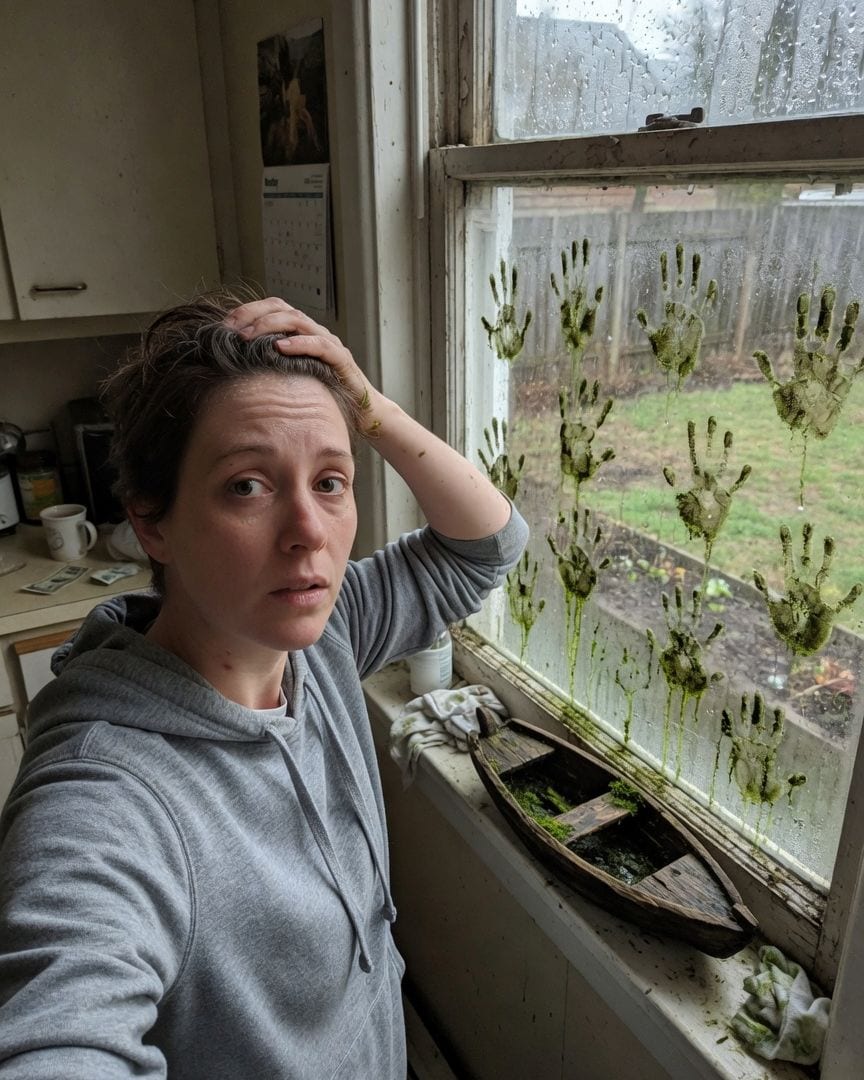
Wet moss handprints cover my kitchen window. My kitchen backs onto no water at all.
Monday morning, I found small, perfect handprints pressed against the *inside* of my kitchen window. They were wet and outlined in dark green moss, an impossible sight since my sealed window backs only onto a patch of lawn, with no water nearby. I ran my hand over them; they felt damp and cold.
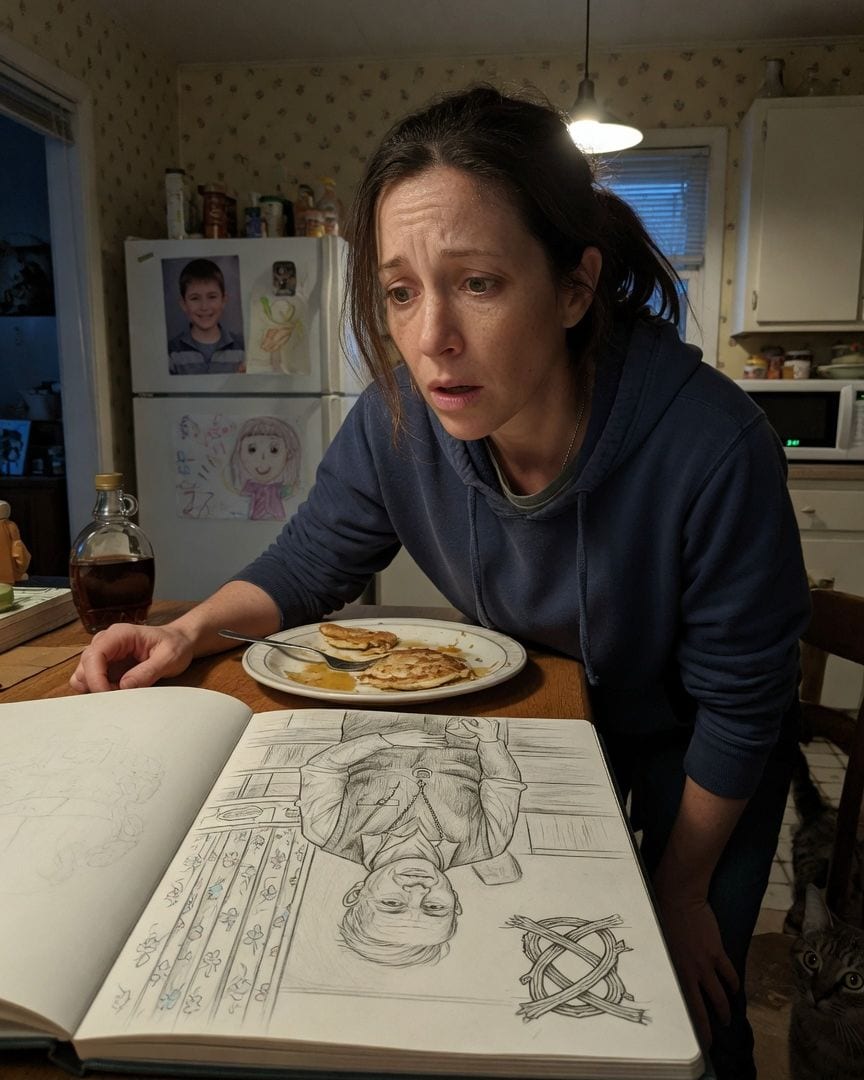
My son drew my dead father holding my hand in the hospital. He died six months before Patrick was born.
After two years missing, my son Patrick was finally home. The relief was immense, but it wasn't long before he began speaking of my dead father, recalling intimate details of his life that Patrick could not possibly have known, from a time before he was even born.
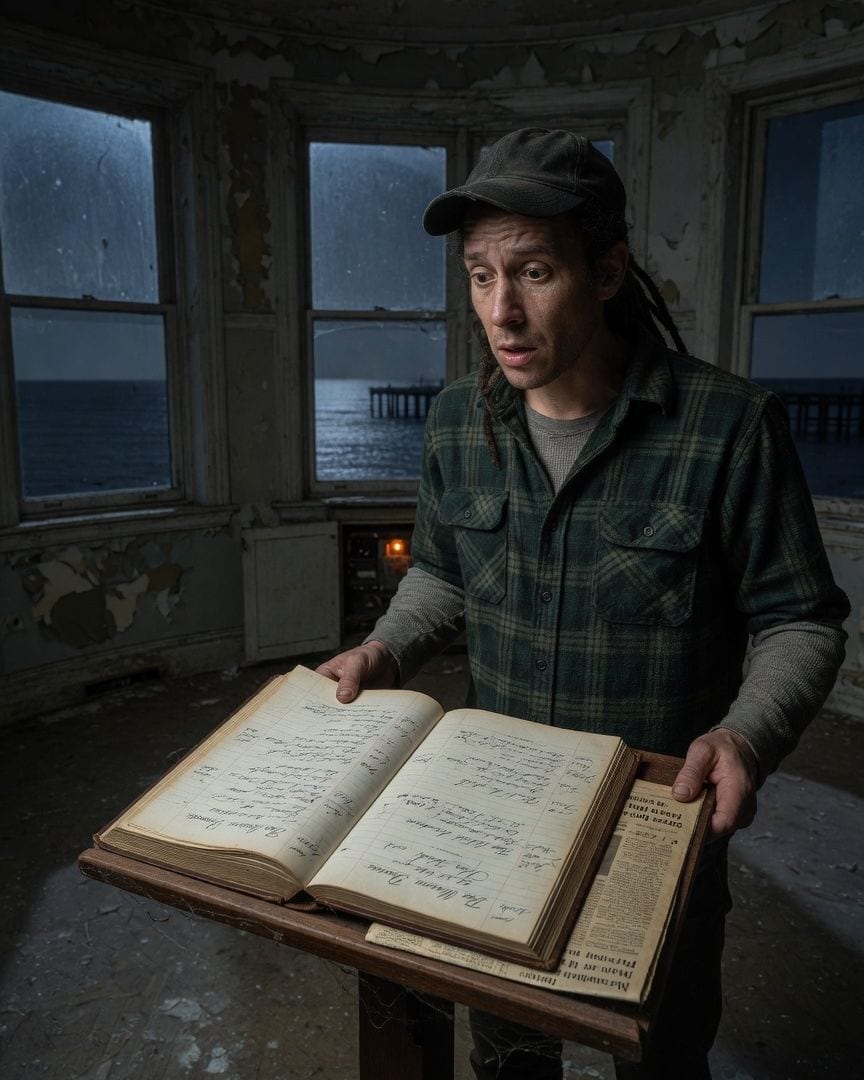
My pier's ballroom register books a new dance for Saturday, electricity meter running, but those lights are never on.
Taking over as pier caretaker, I was told one rule: never turn on the end pavilion's lights. But my first week, I noticed its electricity meter was steadily advancing every single night, even though the main breaker was off. Inside the dark, unused ballroom, I found an old ledger open to 'The Moonlit Waltz' for this Saturday, raising a chilling question: who was booking a dance and drawing power in a place that should be empty?
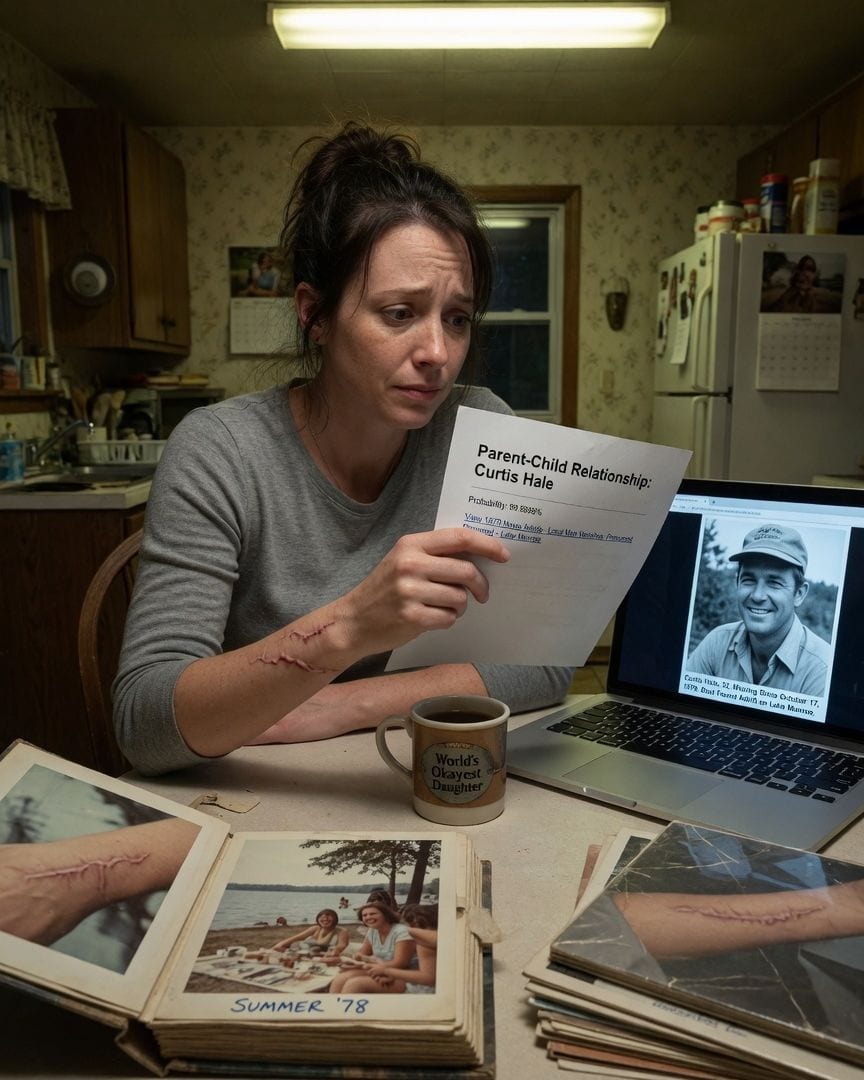
My DNA returned Curtis Hale as my father. He vanished in 1979. I was born twelve years later. The lab confirmed the match twice.
My DNA test results revealed something impossible: my biological father vanished in 1979, twelve years before my birth. My mother dismissed it as nonsense, but her reaction felt forced, leading me to old family photos. There, in a faded 1978 snapshot, I found my own distinctive childhood scar on the wrist of a stranger.
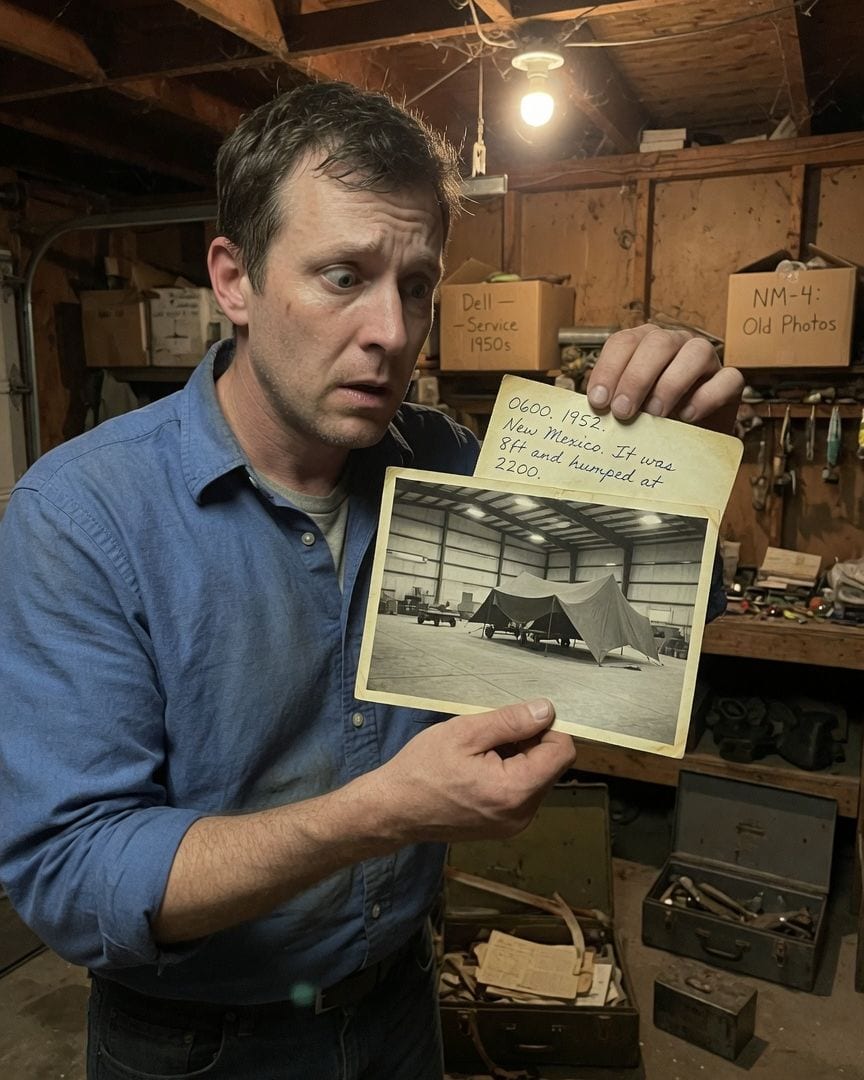
An archivist clears his father's garage, finding a Cold War photo. The object under the tarp has impossible corners, defying his father's own notes.
Franklin Fontaine, an archivist, slowly tackled the mountain of his recently deceased father's life in the dusty garage. Among old photos, he found a grainy image from 1952: a military hangar, and an object under a tarp. The tarp was pulled taut, its lines defining stark, impossible corners that rose far too tall for the cart beneath. His father's own note on the back described the object as '8ft and humped,' a description that stubbornly defied the photograph's impossible height and angles. The image was a physical impossibility, frozen in time, leaving Franklin profoundly disturbed.