My ultrasound showed a healed C-section scar. I've never been pregnant, and I have no children.
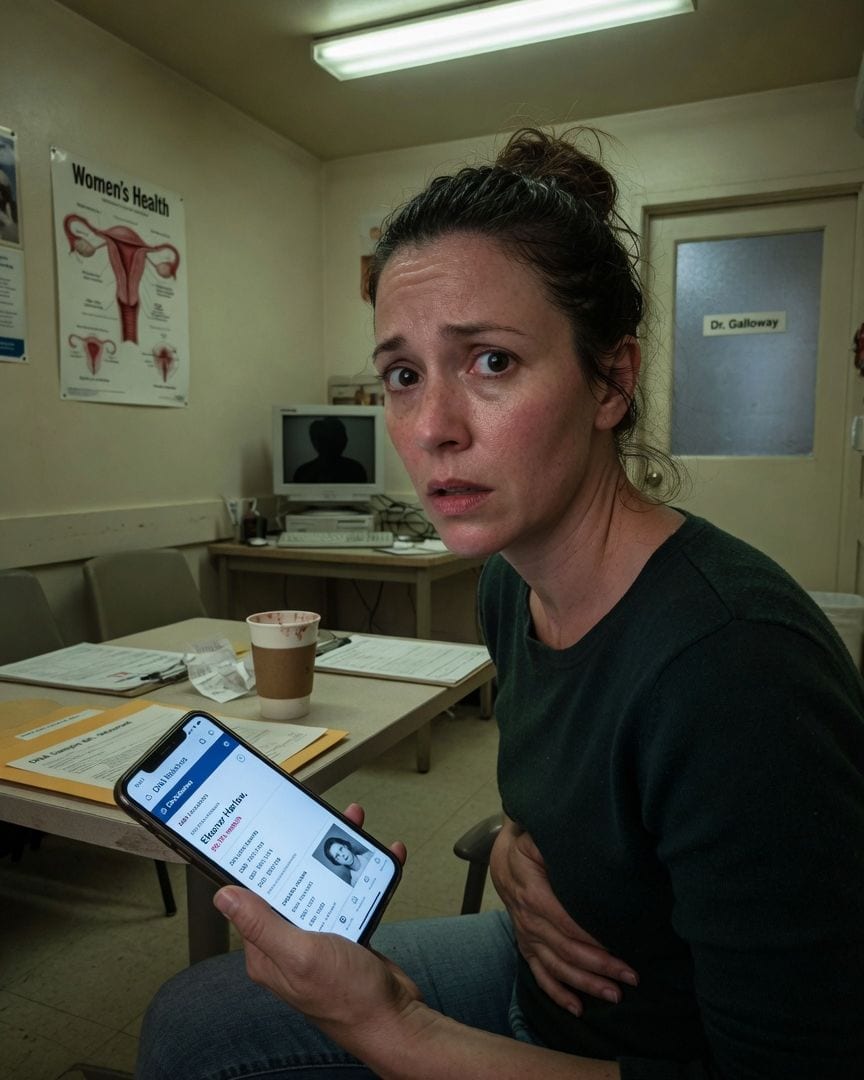
The fluorescent hum of the ultrasound room felt too loud, too clinical for the quiet dread settling in my stomach. Dr. Elaine Sterling, the sonographer, had paused, her brow furrowed over the screen. 'You said no prior surgeries, Ms. Fontaine?'
she asked, her voice calm but with a distinct edge of confusion. I confirmed it, again. 'Never been pregnant, either?' Sterling asked, eyes still on the monitor, a soft blue light reflecting in their depths. I shook my head. 'No.'
On the screen, a clear, white line arced across the shadowy image of my uterus – a healed cesarean scar, a distinct ridge of tissue where an incision had been made and closed.
Sterling measured it, a digital caliper tracing the impossible line, the numbers flashing briefly before she tapped them away.
She called a colleague in, a quiet exchange of medical jargon I couldn't quite catch over the steady whir of the machine. The colleague, a younger woman, only nodded slowly, her expression mirroring Sterling's own bewilderment.
Then Sterling turned back to me, her gaze unblinking. 'How many children do you have, Ms. Fontaine?' My throat tightened. The line was real, undeniable, inside my body. I had no children. I had no scar.
I left the clinic in a daze, the sonographer’s question echoing in the sudden quiet of the street. I immediately booked an appointment with my long-time OBGYN, Dr. Curtis Galloway, hoping for a mundane explanation—a misread, a faulty machine, anything.
Dr. Galloway, a man I trusted implicitly, re-ran the ultrasound himself a week later. The results were identical. He confirmed the healed scar, its tissue dense and old, consistent with an incision made decades ago.
His confusion mirrored Sterling's, a slow frown deepening the lines around his eyes. He meticulously reviewed my entire medical history, every childhood injury, every minor procedure. Nothing. No record of any abdominal surgery, no indication of pregnancy.
He even ordered a full-body MRI, just to be sure there wasn't some hidden, forgotten trauma. The MRI report came back clean, confirming no other surgical scars anywhere on my body. The internal scar remained an isolated, impossible fact.
I felt a growing sense of detachment from my own body. It was mine, yet it contained a history that wasn't.
It was like living in a house you knew intimately, only to discover a secret, fully furnished room you’d never seen before, a room that bore no resemblance to anything you’d built.
Desperate for any thread, any anomaly that might explain this, I remembered an old friend who had used a consumer DNA kit to trace obscure family health predispositions.
It was a long shot, a scattershot approach to a medical mystery, but I ordered one online, hoping it might reveal some rare genetic marker for spontaneous internal scarring, or anything that could rationalize the impossible line across my womb.
I swabbed my cheek, sealed the envelope, and sent it off, a quiet act of defiance against the growing dread.
Weeks later, the email arrived: 'Your DNA results are ready.' My heart thrummed an anxious rhythm against my ribs as I clicked the link. The initial report was unremarkable, the usual percentages of ancestry, the predictable health markers.
Then I scrolled down to the 'DNA Relatives' section. There was one match, flagged with an unusual note. Not a living relative, not a distant cousin. The name was 'Eleanor Harlow.'
Beneath it, a date of birth I didn't recognize, and then, stark and cold, a date of death: 1947. I stared at the screen, my breath catching in my throat. My own birth year was 1989.
A chasm of impossible time separated me from this woman, yet the lab's confidence rating glowed a solid 99.9%. I was genetically linked to a ghost.
The name Eleanor Harlow became an obsession, a cold, sharp point in the center of my thoughts. I plunged into online archives, local historical societies, anything that might shed light on this impossible match.
I found newspaper clippings, birth and death records. Eleanor Harlow had been a local woman, born in 1919, who had died tragically in 1947, during childbirth. The detail hit me like a physical blow. Childbirth. A cesarean scar.
The pieces, though nonsensical, began to align with a horrifying symmetry, an echo from decades past vibrating within my own impossible body.
Eleanor’s death had been complicated, a local tragedy, but the records were sparse on medical specifics, frustratingly vague about the hows and whys of a 28-year-old woman dying in labor. I needed more.
I discovered Dean Norwood, a local historian and genealogist known for his deep knowledge of the town’s lesser-known families and their histories. He had even published a small, self-funded book on local obituaries.
I called him, carefully explaining my genealogical query, omitting the impossible DNA match, framing it as a distant family tree investigation. Dean, a man with a soft voice and a meticulous mind for detail, was intrigued.
He invited me to his cluttered home office, filled with dusty tomes and old photographs.
He spoke of Eleanor Harlow with a quiet reverence, describing her as a vibrant young woman, a pillar of her small community, whose early death had cast a long shadow.
He even mentioned that Eleanor's family line had, oddly, seemed to 'disappear' after her death, with no direct descendants documented beyond the infant who had also not survived. I felt a chill.
The more Dean spoke, the more a strange, unsettling pattern began to emerge in the stories of other local families he recounted – occasional, inexplicable gaps in family trees, or individuals who seemed to appear out of nowhere, sometimes with odd physical traits that echoed long-dead relatives.
He dismissed it as local folklore, but I couldn't shake the feeling that I was pulling on a thread far older and darker than I'd imagined.
As I continued my research, fueled by Dean’s initial insights, a subtle shift occurred. Dean, initially so open, began to grow cagey.
When I pressed him for more details on the 'folklore' he'd mentioned, or for any records of Eleanor Harlow's precise medical circumstances, he became evasive, citing privacy or the fragility of old documents.
His phone calls grew shorter, his emails less frequent, his tone slightly colder each time. I felt a prickle of unease, a sense of being watched.
I dismissed it at first—paranoia born of stress, of chasing after a dead woman's ghost. But then small things started happening.
A book on local history I'd left open on my coffee table, its spine cracked to page 112, was subtly repositioned, its bookmark moved to a different page, page 78, a section on local architecture I hadn't even looked at.
My laptop, which I always shut down completely, was sometimes merely in sleep mode when I returned home, the browser history showing a quick, recent search for 'Eleanor Harlow.' My own searches, typed by someone else.
I changed my passwords, installed new security on my devices, but the feeling persisted, a cold brush against my neck when I was alone in my apartment.
One evening, as I was leaving Dean’s office after another frustrating conversation – him standing impassively by his oak desk, the scent of old paper pressing in – he stopped me at the door, his hand resting lightly on my arm.
His gaze was intense, his voice a low whisper, almost lost in the sudden screech of an owl outside the window.
'Some things are best left buried, Vera,' he said, his eyes scanning the quiet street outside, a street where no one else seemed to be.
'The past has a way of repeating itself, but not always in the way you expect. Sometimes, it just… returns.' The warning was clear, delivered with a calm that was far more unsettling than any threat.
I felt a cold knot tighten in my stomach. Dean knew more. Much more. And he was watching me.
I confronted Dean the next day, my patience exhausted, the chill from his words still clinging to me. 'What do you know about Eleanor Harlow, really?'
I demanded, standing in his cluttered office, the scent of old paper and dust thick in the air, the silence broken only by the tick-tock of an antique grandfather clock. 'And what do you mean, 'the past returns'?'
Dean sighed, a long, weary sound, as if carrying the weight of centuries. He ran a hand over his thinning hair. 'It's not a story for the faint of heart, Vera. Not a simple genealogy.'
I pressed him, recounting the impossible DNA match, the cesarean scar, the way her life and mine had intersected in such a grotesque, undeniable way.
Dean listened, his gaze fixed on some distant point on the wall behind me, then slowly nodded. 'I knew you'd find your way to her, eventually.'
He walked to a locked cabinet, its wood dark and ancient, fumbling with a small, antique key. The lock clicked, a sharp, final sound. 'There are… traditions in this town. Things passed down.
My family, among others, has been custodians of certain histories.' He pulled out a large, leather-bound album, its pages brittle with age, and laid it carefully on his desk. He opened it to a specific page.
'This is Eleanor Harlow,' he said, pointing to a faded, sepia-toned photograph. It was a formal studio portrait, Eleanor looking out with a serene, almost melancholic expression, her dark hair neatly pinned. I gasped.
Across Eleanor’s lower abdomen, faintly visible beneath the thin fabric of her dark dress, was a distinct, horizontal line. A scar. A cesarean scar. It was impossible. The photo was dated 1946.
'She died in childbirth in 1947,' I whispered, my voice trembling, 'They cut her open.' Dean nodded, his eyes meeting mine, unblinking. 'And the child did not survive. But the mother… a part of her did not wish to leave.'
He paused, meeting my eyes, a strange, knowing look in his own. 'The scar marks the place of her leaving, and her return. It's a signature, Vera. The body remembers, even when the mind doesn't.'
I felt the world tilt on its axis. The ultrasound, the DNA. It wasn't a mistake. It was real. Eleanor Harlow's physical history was literally etched onto my own body.
Dean continued, his voice a low, steady drone, 'There are ways to ensure a soul, an essence, doesn't truly vanish. To find a new vessel. Especially when a life is cut short, unfinished.'
I stared at the photograph, at the impossible scar on Eleanor's body, now understanding what it truly meant for my own.
Dean Norwood, his face unreadable, held out a small, tarnished silver locket. 'This was Eleanor's,' he said, his voice flat. 'It stayed with my family, passed down through the generations, as a memento. A reminder.'
I took it, my fingers brushing the cool metal. It was heavy, intricate, with delicate scrollwork that felt smooth under my thumb.
As I opened it, a faint click echoed in the quiet room, a tiny sound that seemed to amplify the silence.
Inside, a brittle lock of dark hair rested on one side, preserved under a tiny glass pane, its strands almost black in the dim light.
On the other, a small, faded photograph of a smiling Eleanor, younger, before the melancholy had set in.
My gaze drifted to the inner casing of the locket, where the delicate silver was slightly worn, a dark patina marking decades of touch. And then I saw it.
Almost imperceptible to the naked eye, a minute etching, barely a scratch, on the inner casing—a swirling pattern, intricate and specific. My hand trembled as I brought my own left thumb up, pressing it against the locket.
The whorl pattern, the unique lines and curves of my own fingerprint, matched the etching perfectly. It was impossible. A mark from my own living body, etched onto an object that belonged to a woman who died in 1947.
The locket felt suddenly cold, heavy, a direct, physical link across the chasm of time, proving not just a shared history, but a shared, impossible present.
Dean watched my face, a grim satisfaction in his eyes, the grandfather clock in the corner marking off the seconds, loud and deliberate. 'The locket is a conduit,' he explained, his voice devoid of emotion, a dry lecture.
'A physical anchor for the transfer. My ancestors, Eleanor’s family, they developed a ritual. When a life was tragically cut short, especially one with an unfulfilled purpose, they found a way to bridge the gap.
Not reincarnation, not possession, but a transfer of… physical memory. An imprint of self, onto a new vessel. The fingerprint etching, the scar—these are the markers of a successful return.'
He revealed that his own family were the 'Custodians,' tasked with identifying suitable new hosts from specific bloodlines, ensuring the 'continuity' of certain individuals.
I, he explained, was a direct descendant of a distant branch of Eleanor’s family, making me a prime candidate. 'You were born for this, Vera,' he stated, his calm unsettling.
'Eleanor’s essence, her drive to mother, her unfinished life, it needed a place to continue. Your body provided that.'
He detailed how the ritual involved a specific, powerful emotional moment at the time of death—Eleanor's desperate desire for her child—which, combined with the locket and certain preparations, allowed her 'physical memory' to imprint upon the developing embryo that would become me.
The scar was the indelible mark of Eleanor's final, defining act. This wasn't a random occurrence; it was a deliberate, generational project. My entire life, my very self, was built upon the foundation of another’s unfinished existence.
The horror wasn't just that I had a scar I didn't earn, but that my entire being was a continuation, a vessel for a past that refused to die.
I stared at Dean, the full, horrifying truth solidifying into a cold, hard knot in my gut. He wasn't just a historian; he was the orchestrator, the guardian of this monstrous cycle. 'How many others?'
I demanded, my voice raw, a rasp in the suddenly still room. 'How many people are walking around with someone else's ghost inside them?' Dean merely shrugged, a small, almost imperceptible movement of his shoulders. 'As many as are needed.
The balance must be maintained.' I realized he wasn't evil in the conventional sense, but a zealot, utterly convinced of the 'natural order' he upheld, a chilling calm about the profound violation he described.
I knew I couldn't let this continue. I pointed to the locket, which I still held, its cool metal suddenly feeling like a burning coal in my palm. 'This is how you do it, isn't it? This is the key.'
Dean's eyes narrowed, a flicker of something possessive, almost protective, in their depths. 'It is a tool, yes. But the process is far more intricate. It cannot simply be… undone.' I saw my chance.
He was looking at the locket, not at me. I lunged, not for Dean, but for the locket, clenching it tighter. Dean moved with surprising speed for a man his age, grabbing my arm, his grip surprisingly strong.
'You don't understand the ramifications!' he hissed, his calm cracking for the first time, a desperate note in his voice. 'You'll break the continuity!' I struggled, twisting free, my fingers closing around the cold metal.
I knew it was more than just a memento; it was the focal point, the anchor. I had to destroy it.
I ran, not for the door, but for the heavy, antique paperweight on his desk, a solid bronze bust of a long-dead local mayor. Dean tackled me, sending books tumbling from a nearby shelf, an explosion of paper and dust.
I screamed, a primal sound of rage and terror. I wrestled the locket free, raising the heavy paperweight, its cold, smooth surface heavy in my hand. 'No more!' I cried, bringing it down with all my might.
The locket shattered, silver fragments and brittle dark hair scattering across the floor, a tiny cloud of dust rising. Dean froze, his eyes wide with a mixture of horror and despair. 'What have you done?'
he whispered, his voice broken, barely audible. A strange, almost electrical silence filled the room, a cessation of something I couldn't name. I stood panting, the broken locket at my feet, a sense of profound emptiness settling in my chest.
I had stopped this instance, this cycle connected to Eleanor, but the look in Dean's eyes, the quiet despair, told me it was far from over. The knowledge, the ritual, the other 'returns' – they were still out there.
I stumbled out of Dean's house, leaving him amidst the shattered fragments of the locket and his life's work. The police found the house in disarray, Dean gone without a trace. No charges were filed.
The official report cited a possible break-in, a disturbed collector. The small town quickly forgot the incident, chalking it up to the eccentricities of its local historian, another oddity in a place full of them.
I never heard from Dean again, and no one else seemed to possess his particular brand of knowledge, or at least, none that I could find.
The physical evidence—the ultrasound, the DNA match, the photographs—remained, filed away in my own private, unspeakable archive.
I moved, changed my number, tried to build a new life, but the knowledge, the chilling truth of my own existence, was a permanent fixture.
I felt a profound, unsettling silence where Eleanor's 'presence' had been, a void that was both a relief and a terrifying reminder of what had been there. The world continued, oblivious to the hidden currents flowing beneath its surface.
The scar on my womb was still there, a silent, internal testament. I lived with the quiet certainty that my body was a composite, a vessel that had once carried another’s unfinished story.
The fear of being 'recycled' again, of being merely a temporary host, never truly left me. I avoided mirrors sometimes, or caught myself staring at my own reflection, searching for traces.
I had stopped one connection, broken one anchor, but the system itself, the knowledge, the lineage of Custodians, persisted. There were other Eleanors, other Veras, unknowingly carrying the echoes of lives cut short.
The world moved on, unaware of the quiet horror woven into its very fabric. I was free, but irrevocably marked. I was Vera, but I was not only Vera. I knew too much.
And sometimes, when she caught her reflection, she saw a ghost of a smile that wasn't hers.
If this one got to you
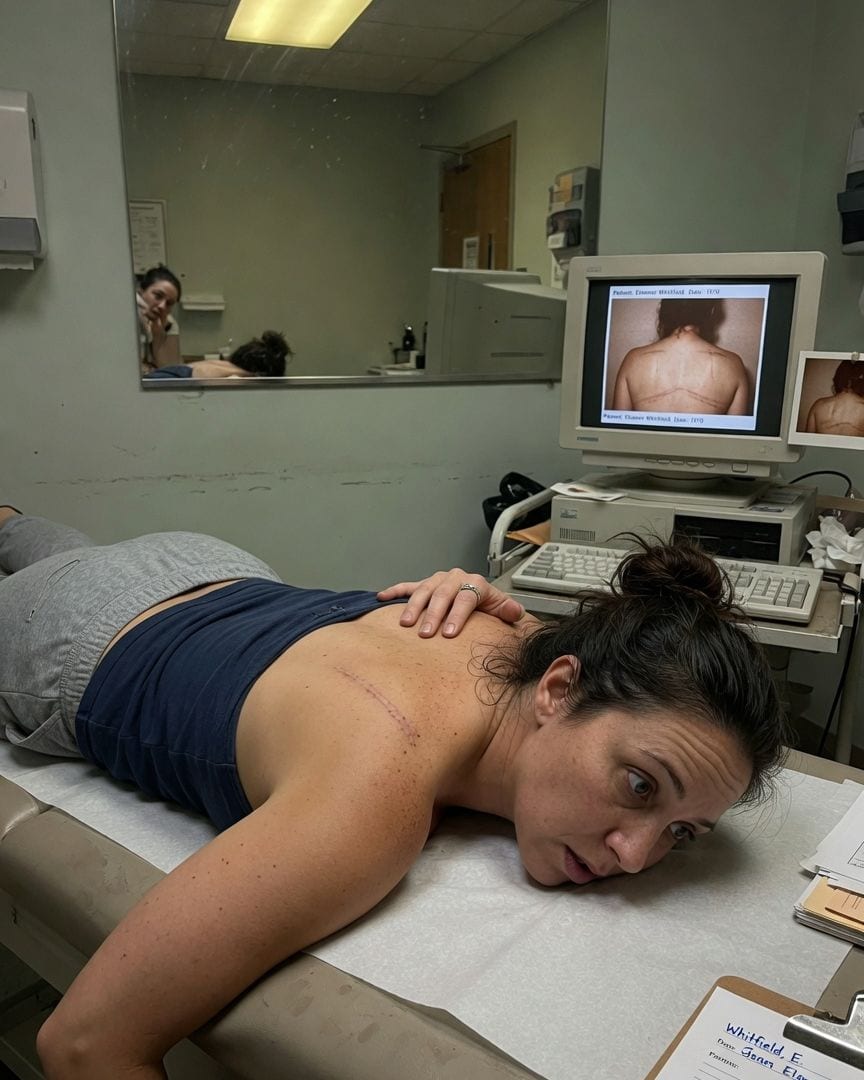
My dermatologist found a healed scar on my back from surgery I never had. She pulled my old clinic photos and found it there, years before I was even a patient.
A routine mole check with Dr. Oakley turned unsettling when she found an old surgical scar on my back. I have no memory or medical record of any such surgery. Then, she pulled up an archive photo from 1970, showing a different woman with the exact same, distinctive scar.
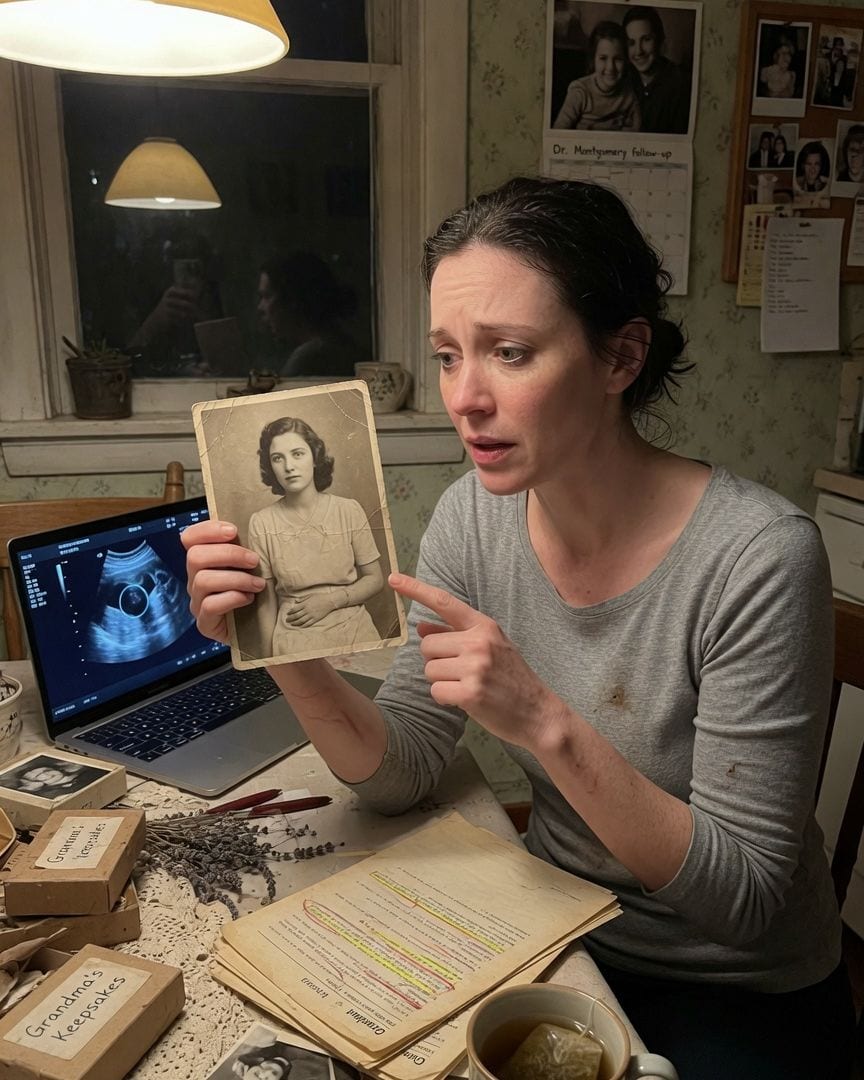
My left ovary is gone, tied off with a clip. I've never had surgery, and my abdomen is smooth.
A routine ultrasound for pelvic pain quickly turned chilling when the sonographer pointed to the screen. My left ovary was missing, replaced by a surgical clip. Yet my abdomen was perfectly smooth, no scar, and I knew I had never had an oophorectomy. Doctors asked for the date of my operation, but I have no memory of any surgery.
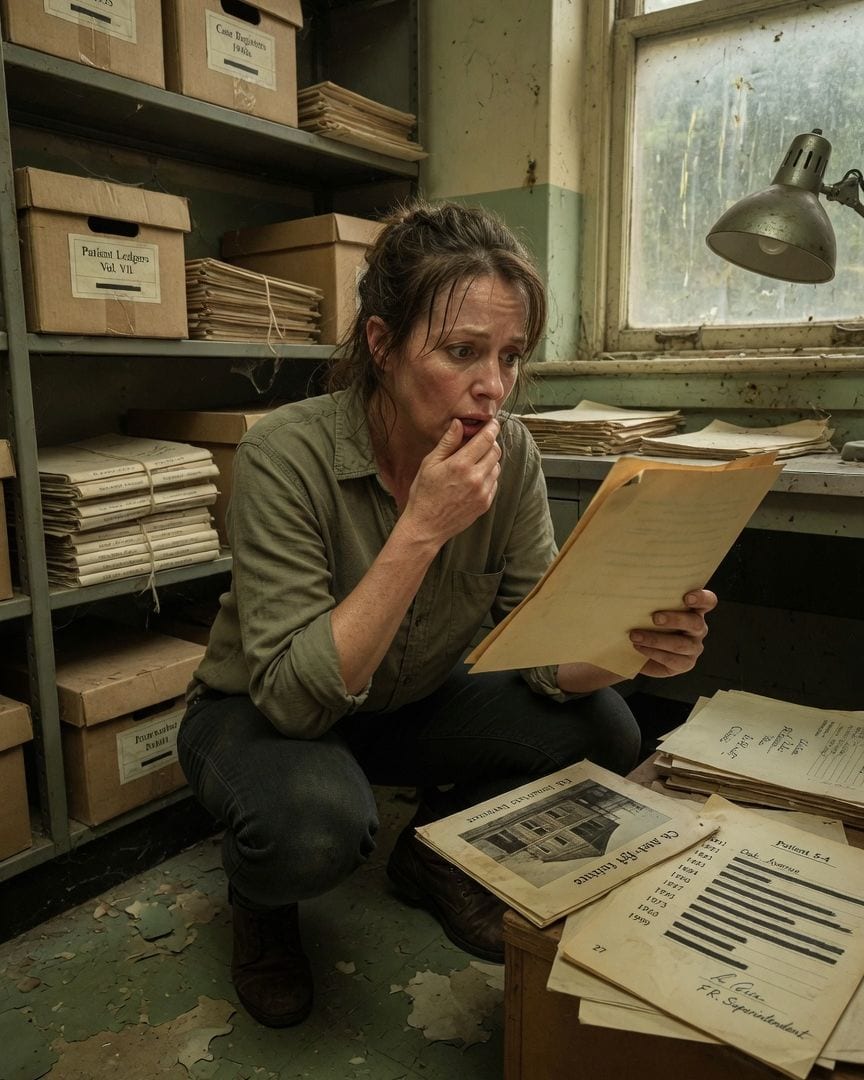
Patient 5-4 keeps checking into my aunt's old sanatorium chalet. The same initials sign them out, 'not traced,' every thirteen years since 1921.
Sifting through my aunt Margaret's estate, I found her old sanatorium file from 1999. Her patient record listed her as 'Patient 5-4,' discharged 'not traced.' But when I accessed the archives, I found 'Patient 5-4' was admitted every thirteen years since 1921, always with identical discharge notes.
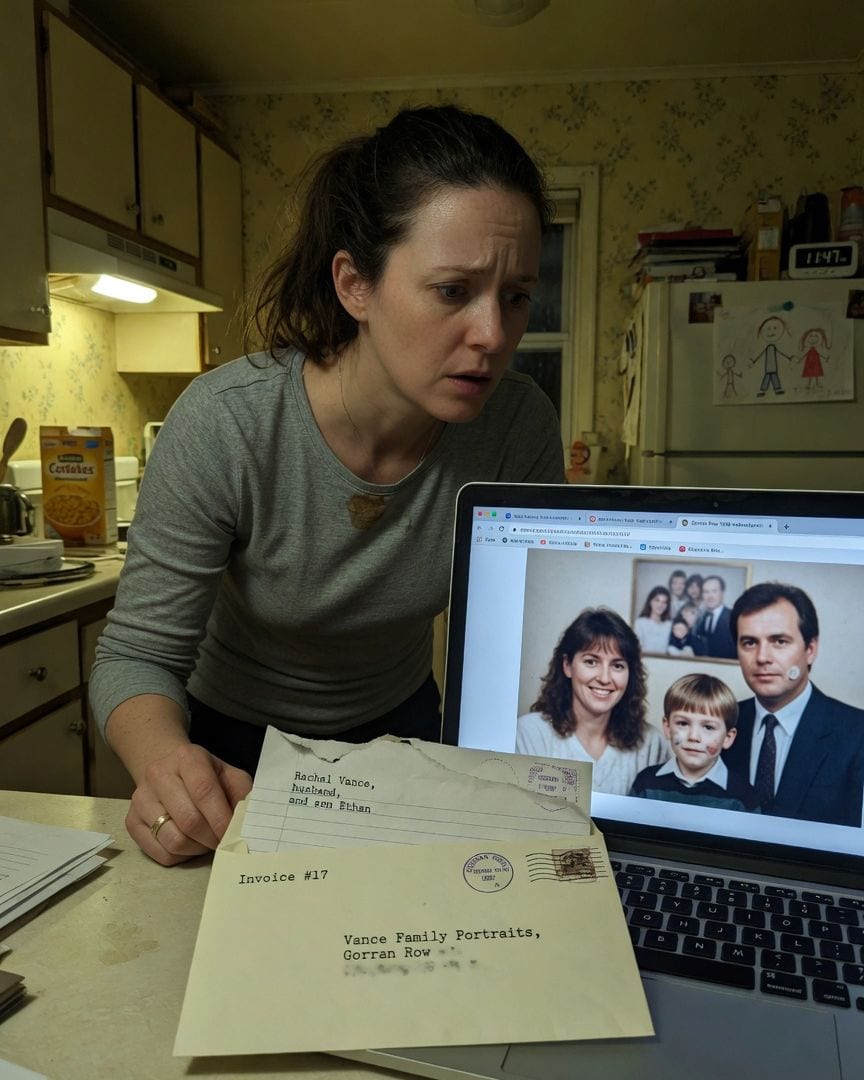
A 1987 portrait shows my younger face and my son's birthmark. I was born in 1988.
I've been receiving baffling invoices for a family portrait from a studio that closed in 1987, each one listing my son Ethan. My son was born decades after that studio shut its doors. Now, I've found an archived studio photo from 1987: my younger face, a stranger, and my son Ethan, his unique birthmark clear.
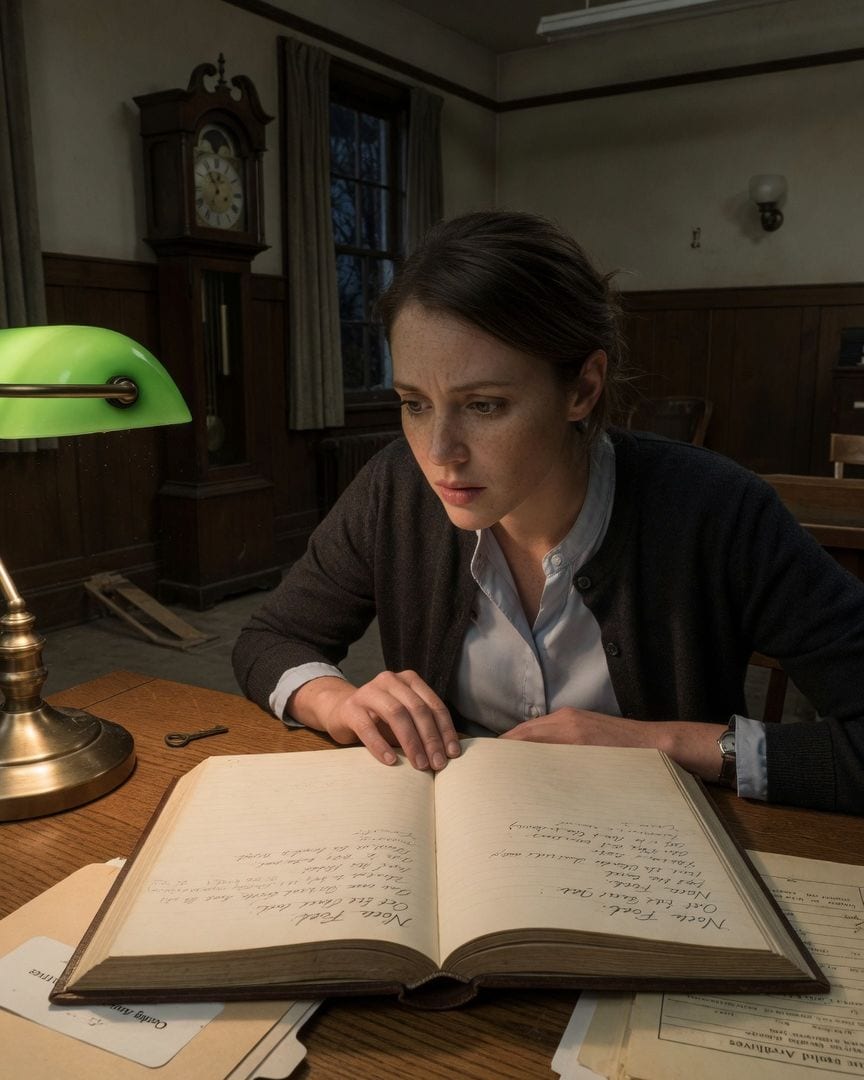
My grandmother’s name reappears in the old book of remembrance — on the same date, same street, every few decades since 1929. A verger’s note reads: 'ask no family.'
As Keeper of the crematorium's Book of Remembrance, my job is quiet and meticulous. But while updating my own grandmother's entry, I found two more Nora Fords listed above hers. Each died on October 3rd, decades apart, with the same address and a strange instruction: 'ask no family.'
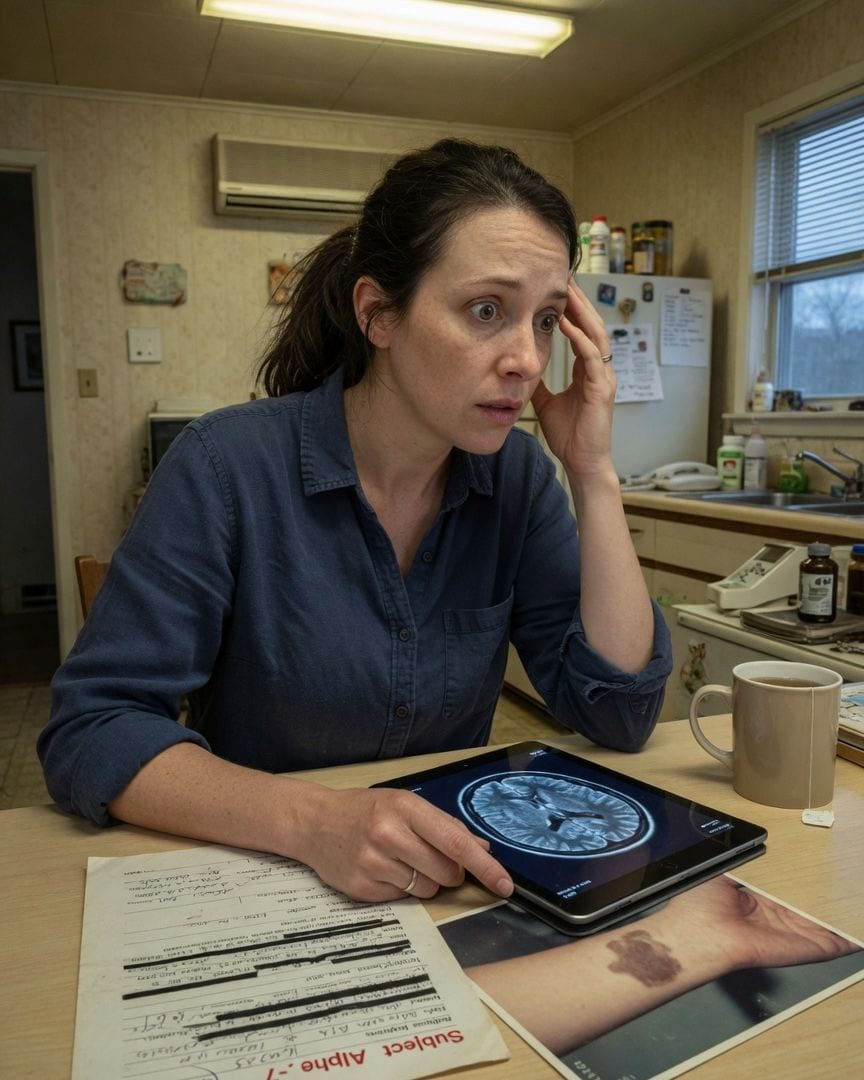
A metal clip seals off a vessel deep inside my brain. My head has no scar, I've had no surgery, and it's been there for over a decade.
My persistent headaches led to an MRI, revealing an impossibly neat metal clip inside my brain. My doctor confirmed it had been there for over a decade, despite no record of any past surgery or scar. Now, a restricted file links my unique birthmark to a mysterious patient from 1968.