My dermatologist found a healed scar on my back from surgery I never had. She pulled my old clinic photos and found it there, years before I was even a patient.
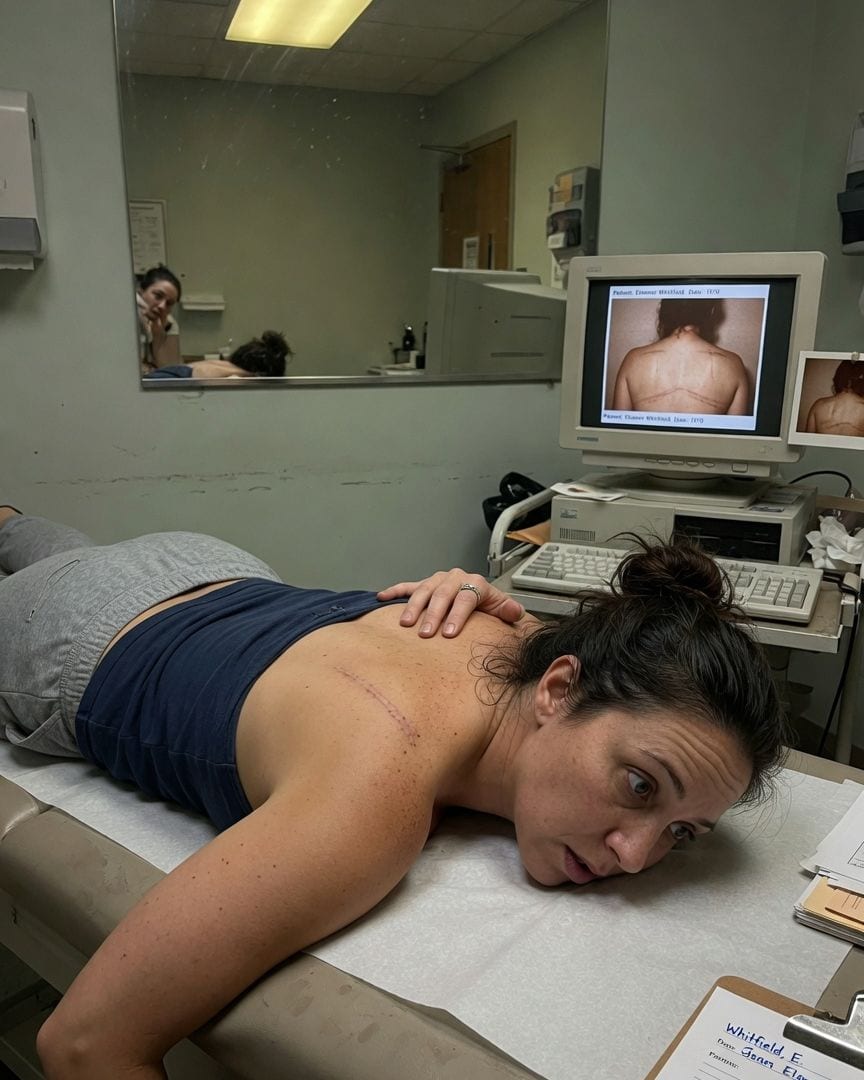
I lay face down on the examination table, the cool gel of Dr. Paige Oakley's hands a familiar presence on my back.
It was supposed to be a routine mole check, a box ticked off my annual health list, nothing more. The fluorescent lights hummed overhead, a low, constant drone.
Then Dr. Oakley paused, her touch lingering between my shoulder blades, a slight, professional pressure that felt different.
"Well, this is interesting," she murmured, her voice losing its usual crisp, clinical cadence. It had a new, thoughtful quality now. I felt her fingertips trace something firm, linear. "You had a growth removed here, didn't you?
Looks like a wide excision, beautifully healed. Clear margins, I'd say."
I frowned, trying to twist my head, straining to see the spot in the wall mirror opposite, which only showed me my own bewildered face. "I've never had surgery on my back, Dr. Oakley. Not that I remember, anyway."
I couldn't even see that specific spot without contorting myself, so it wasn't something I regularly looked at.
She hummed again, a low, thoughtful sound. "No, it's definitely a surgical scar. Old, maybe a decade or more. No keloiding, very faint now. The incision was quite neat. Are you sure you don't recall?"
The question hung in the cool air, a small, impossible wrongness that settled in the pit of my stomach. My own body was telling me a story I didn't know.
Dr. Oakley, a rational woman by profession, started clicking through my digital patient history. The soft whir of her computer was the only sound in the room as she navigated through files, her brow furrowed in concentration.
"No record of any excisions on your back," she confirmed, her voice a little tighter now. "Perhaps it was done at another practice, before you came to us?"
I shook my head, my face still pressed against the crinkled paper on the examination table. "I've been with this clinic since I moved to the city five years ago.
Before that, my family doctor in my hometown handled everything, and I’d absolutely remember something like that. A back surgery?"
Her fingers flew across her keyboard, accessing the clinic’s archived records, going back further than my own history with them. "Sometimes old paper charts get digitized incorrectly, or records get transferred imperfectly.
Let's see if we can find anything in the deeper archives."
Minutes ticked by, stretching into a silence that felt increasingly heavy. The low hum of the computer seemed to intensify, like something trapped behind the screen. Then, a sharp intake of breath from Dr. Oakley.
It wasn't a gasp of surprise, but more a sound of profound disorientation. "This can't be right."
She swiveled her monitor slightly, just enough for me to see the screen clearly from my position. "Look."
On the screen, a grainy, sepia-toned photograph glowed, labeled 'Patient: Eleanor Whitfield, Date: 1970.' And there, stark and undeniable, was the identical, distinctively healed surgical scar.
It sat between the shoulder blades of the woman in the photo, a faint, pale line that mimicked the one on my own skin with unnerving precision.
It wasn't me in the picture. The woman had a different bone structure, a different hairline, a different era of fashion in the blurred background. But the scar was the same. The date was impossible.
I was 32 years old, born long after 1970.
I felt a cold knot tighten in my stomach, a sudden, unfamiliar lurch. "Who is that?" I whispered, my voice sounding thin and small.
Dr. Oakley didn't answer. She just stared at the screen, her own reflection pale in the glass.
Dr. Oakley pulled up another image, then another, from the same archived file. Each one, a different angle, confirmed it: the scar was there, on Eleanor Whitfield, captured in crisp detail by 1970s photography.
A small white label underneath each photo reiterated the patient's name, the clinic's archaic logo, and that impossible date.
My blood ran cold. The woman in the photos looked nothing like me, not a single feature aligned, but the mark was hers, irrevocably—and mine.
Dr. Oakley sat back in her chair, her face utterly pale, the usual professional detachment replaced by a dawning, bewildered horror.
She looked from the screen to me, then back to the screen, her mouth opening and closing soundlessly, as if trying to form words that wouldn’t come. The air in the room grew heavy, thick with an unspoken, impossible truth.
She simply stared, utterly silent, the weight of the impossible record pressing down.
I left Dr. Oakley's office clutching a crumpled printout of Eleanor Whitfield's photo, the sepia tones bleeding slightly into the white paper.
She’d also given me a referral for a second opinion and, 'just in case,' as she’d said, a small biopsy of the scar tissue. Her voice had been strained, her eyes still wide with a bewilderment that mirrored my own.
My friend, Paul Hayes, was the first person I called. He was a meticulous researcher, the kind of guy who’d spend hours debugging a spreadsheet just to find a misplaced decimal.
He listened, incredulous, as I recounted the story over coffee the next morning.
"Okay, so it's a mix-up," Paul insisted, tapping his spoon against his ceramic mug, the sound echoing a little too loudly in the quiet cafe.
"Someone misfiled an old photo, or they used Eleanor Whitfield as a placeholder name in the archives. You know how old systems are, especially when they get digitized."
I shook my head, pushing the printout across the table towards him. He picked it up gingerly, examining the photo. "Dr. Oakley checked everything. Cross-referenced patient IDs, dates, the type of procedure.
She even brought up my old photos to compare the exact location and look of the scar. It's identical. The location is identical. And it's on my back, Paul." The dread in my voice was real.
Paul, seeing the genuine alarm in my eyes, finally agreed to help. He was good at this kind of puzzle. We started with the second dermatologist, Dr. Hughes. He confirmed it: an old, perfectly healed surgical scar.
No signs of infection, no pain, just... there. He couldn't explain how I wouldn't remember it, shrugging it off as some childhood amnesia or a lapse in my medical history, but the scar itself was undeniably real.
Another doctor, another dead end for a normal explanation.
Next, Paul dug into the old clinic's history. The original practice, apparently, had been absorbed by a larger healthcare group decades ago, its paper records archived off-site, then partially digitized in the late 90s.
Eleanor Whitfield's file was scant, just the photos and a single, vague entry for a 'minor procedure – excision.' No other details. No contact information.
It was a ghost in the system, a fragmented echo, but the scar remained, a tangible, physical presence. I felt a growing unease, a sense of something deeply wrong with my own story, my own body.
The ground beneath me felt less solid than it had a week ago.
As Paul continued his digital sleuthing, delving into the murky depths of old public records and archived news articles, I started noticing things around me. A dark sedan, non-descript, parked a block from my apartment building for three days running.
The same car, same spot. Then, a disconnected call that left no message, but the number was untraceable when I tried to look it up online.
I dismissed them at first, attributing it to a touch of paranoia, a side effect of the strange revelation that was eating at me. But the feeling persisted, a prickling sensation on the back of my neck.
Then, a package arrived. It was an unmarked brown box, taped shut with heavy-duty packing tape. No return address, no sender information. Inside, nestled amongst layers of tissue paper, was a small, antique silver locket.
It was intricately engraved with a swirling floral pattern, the silver tarnished with age. It wasn't mine. I'd never seen it before. It felt strangely cold to the touch, despite being room temperature. There was no note, no clue.
Just the locket. I placed it on my coffee table, a silent, unsettling message.
Later that week, Paul called, his voice tight, stripped of its usual cheerful cynicism. "Alice, you're not going to believe this. I finally found an old archivist who worked for the company that digitized those clinic records, Lydia Prescott.
She was cagey, really hesitant to talk, but I pushed. I mentioned Eleanor Whitfield, the 1970s photos. That got her talking, though she kept her voice low, like she was afraid of being overheard."
I held my breath. "And?"
"She mentioned a 'special projects' division of the original clinic, something called the 'Whitfield Institute.' Said it was highly classified, then clammed up after that, saying she couldn't talk about it anymore. Hung up on me.
And now I can't reach her. Her phone goes straight to voicemail."
A genuine chill ran down my spine, deeper and colder than the one I'd felt in Dr. Oakley's office. Someone knew I was getting close.
The antique locket on my coffee table felt heavier, its coldness radiating, a silent, unnerving messenger.
I found Lydia Prescott's address through Paul's tenacity – a quiet suburban home, tucked away behind a row of mature oak trees. Lydia, a woman with kind, weary eyes, opened the door, her face tightening visibly when she saw me.
Recognition, and something else – fear, maybe. "You shouldn't be here," she said, her voice low, but it held a hint of resignation, as if she'd been expecting this eventually.
I held up the locket, the cold silver catching the afternoon light. "This came to me. Do you know what it means? Who Eleanor Whitfield was? Why her scar is on my body?"
My voice was steady, but my hands trembled slightly.
Lydia sighed, a long, tired sound, and motioned for me to come in. The living room was neat, filled with old furniture and framed photographs of what looked like grandchildren. "Eleanor… she was a patient. A very important patient.
Died in an accident in '72. Her family was prominent, keen on medical advancements, on leaving a legacy. They donated her tissue, her genetic material, to the Institute. For research."
My stomach churned, a cold wave washing over me. "What kind of research?" The words felt thick in my throat.
Lydia wrung her hands, her gaze flitting to a photo on the mantelpiece, then back to me. "They were trying to… preserve. To transfer. Not cloning, not exactly. More like… creating a vessel. They called it 'cellular memory imprinting.'
They believed they could replicate a person, not copy their mind, but transfer their biological blueprint onto a new, viable host. To bring them back, in a sense, but with a fresh start. The scar… that was Eleanor's.
A benign growth removed shortly before her death. It was part of her original biological identity."
I felt lightheaded, the room starting to tilt. "You mean… my body…"
Lydia looked away, her eyes glistening. "They shut down in the early 2000s. Too many ethical concerns. Too many… unknowns. Daniel Jennings was the director. He was obsessed with the idea of cellular continuity.
Said it was the future of life itself." The pieces began to click into place with sickening clarity, each one a sharp, cold jab: the scar, the old photos, the impossible dates, the whispers of the Whitfield Institute.
My own body, a patchwork of my identity and another's history. The reality was colder, more clinical, than any ghost story I could have imagined.
I looked at the locket in my hand, a small, intricate piece of jewelry that now felt like a tether to a past that wasn't mine, a past that was literally ingrained in my flesh.
Lydia had given me Daniel Jennings' last known address, a discreet, walled-off estate outside the city. Before confronting him, I knew I needed one last, irrefutable piece of evidence. The DNA sample Dr. Oakley took from my scar tissue.
I’d paid extra for an expedited report, desperate for a scientific explanation, no matter how terrifying. I couldn't shake the cold dread that settled over me, the chilling sensation that my own body was a stranger, a borrowed house.
Paul called then, his voice urgent, cutting through my thoughts. "Alice, I found something else. An old newspaper clipping, deep in the archives. From 1972. Eleanor Whitfield, 'prominent socialite, tragically deceased in a boating accident.'
And a small mention, almost an afterthought, that her family had agreed to donate her remains to the Whitfield Institute for 'groundbreaking medical research.' Alice, it's real. All of it."
I hung up, my fingers trembling as I opened my email. The new message was from the lab, subject line: 'DNA Match Report.' I clicked it open, a bone-deep cold spreading through my chest.
The first line blurred, then sharpened: 'Sample ID: AF-2024-001. Match Percentage: 100%. Subject: Eleanor Whitfield (Deceased, 1972).' My own name wasn't on the report, but the sample ID was mine, the one from Dr. Oakley's biopsy.
My heart hammered, an impossible, bone-deep cold spreading through my chest.
I drove to Daniel Jennings' estate, the address Lydia Prescott had given me. It was a secluded property, surrounded by high walls and thick hedges, nestled deep in the countryside, far from any prying eyes.
He met me at the door himself, a man in his late sixties, impeccably dressed in a tailored suit, his silver hair neatly combed. His eyes were unnervingly calm, a placid blue that betrayed no emotion.
He didn't seem surprised to see me, almost as if he’d been expecting me all along.
"Alice Ford," he said, his voice smooth, like polished stone. He extended a hand, not for a handshake, but gesturing inward. "Or should I say, Eleanor?"
A wave of nausea hit me, but I pushed it down. He led me to a study lined with old books, leather-bound volumes filling shelves from floor to ceiling. The room smelled of old paper and something faintly metallic.
"The scar," I began, my voice tight, holding out the DNA report. It felt flimsy in my shaking hand. "Eleanor Whitfield. What did you do?"
Jennings took the report, glanced at it with a dismissive air, and set it on his polished mahogany desk. "We perfected the process," he said, settling into a high-backed leather chair. He folded his hands, his gaze fixed on me.
"Eleanor was a brilliant mind, a patron of the arts, deeply loved. But her life was cut short. Her family, forward-thinking, wished for her legacy, her very essence, to endure beyond the accident.
We found a suitable host – a blank slate, in essence – and transferred her cellular memory, her physical blueprint, into it.
The scar, the minor procedure she had on her back, it was all part of her original genetic information, imprinted onto your developing body. You are a triumph, Alice. A living testament to the continuity of identity."
He spoke without emotion, as though discussing a complex engineering project, the construction of a bridge, not the very fabric of my being.
"My identity?" My voice cracked, raw with a mix of anger and terror. "I'm Alice. I have my own memories, my own life. My own family."
Jennings smiled, a faint, unsettling curve of his lips that didn't reach his placid eyes. "Indeed. The consciousness is new, unique. That is Alice, yes. But the vessel, the biological housing… it carries the echoes.
The body remembers, even if the mind does not. It's a subtle integration, a symphony of two lives. You are Alice, yes. But you are also a living monument to Eleanor Whitfield's physical past.
The scar is merely one such echo, a physical artifact of a life lived before yours, within the very flesh you inhabit."
I stared at Jennings, the cold, dispassionate logic of his explanation chilling me to the bone. It was so utterly devoid of humanity, so clinical, that it felt more alien than any ghost story could have been. "What happens now?"
I asked, my voice barely a whisper, afraid of the answer. "Are there others? Am I… stable?"
Jennings steepled his fingers, his gaze unnervingly direct. "The process is stable, yes. You are… integrated. As for others, the project was ultimately deemed too complex, too ethically ambiguous for widespread application.
You are, in essence, our greatest success, and our final one. A singular achievement. But there are… nuances."
He paused, letting his words hang in the air. "Sometimes, the cellular memories, the 'echoes,' can become more pronounced.
A fleeting preference for a food you've never tried, a sudden, unbidden memory of a place you’ve never visited, a skill you mysteriously possess without ever learning it. Small things. Mostly dormant. But they are there.
A part of you, whether you acknowledge it or not." He rose, walking to a window overlooking a manicured garden, the late afternoon sun casting long shadows across the lawn. "You carry a double life, Alice.
The one you know, and the physical legacy of Eleanor. It is a unique burden, but also a unique gift. To truly live twice, in a sense, to bridge the divide of death."
I felt a profound sense of violation, of my very selfhood being fundamentally compromised, rewritten. I wasn't just Alice; I was a vessel, a living archive.
The calm acceptance in Jennings' voice, the complete lack of remorse or even concern for my distress, was the most terrifying part. There was no escape from this truth, no undoing what had been done.
My body was a record, and the record spoke of another life, irrevocably intertwined with my own.
I left Jennings' estate, the heavy iron gates closing silently behind me with a soft, final click. I never spoke of it to Paul, or to anyone else. How could I?
The truth was too vast, too personal, too utterly unbelievable. Dr. Oakley eventually called, concerned, but I offered a vague excuse about a 'misfiled record' and politely ended the conversation.
The locket, I discovered, once I managed to pry it open, contained a tiny, faded photograph of a young Eleanor Whitfield, vibrant and smiling, a life full of promise.
I kept it, tucked away in my bedside drawer, a silent sentinel to the truth within me.
Months passed. I went back to my life, to my marketing job, my friends, my routines. But everything was subtly different.
Sometimes, I'd find myself humming a tune I didn't know the words to, a melancholic melody that felt strangely familiar.
Or I’d reach for a specific, obscure brand of herbal tea at the grocery store, a flavor I’d never intentionally tried.
I’d catch a fleeting scent, a specific perfume I couldn’t place, and for a split second, a memory that wasn't mine would flicker at the edge of my consciousness – a garden gate, a specific shade of green.
I learned to live with the echoes, the quiet, persistent presence of Eleanor. One evening, I stood before my mirror, twisting my body to see the faint scar between my shoulder blades.
It was still there, a pale line on my skin, a permanent testament. I traced it gently with my finger. It wasn't just a scar anymore. It was a signature.
If this one got to you
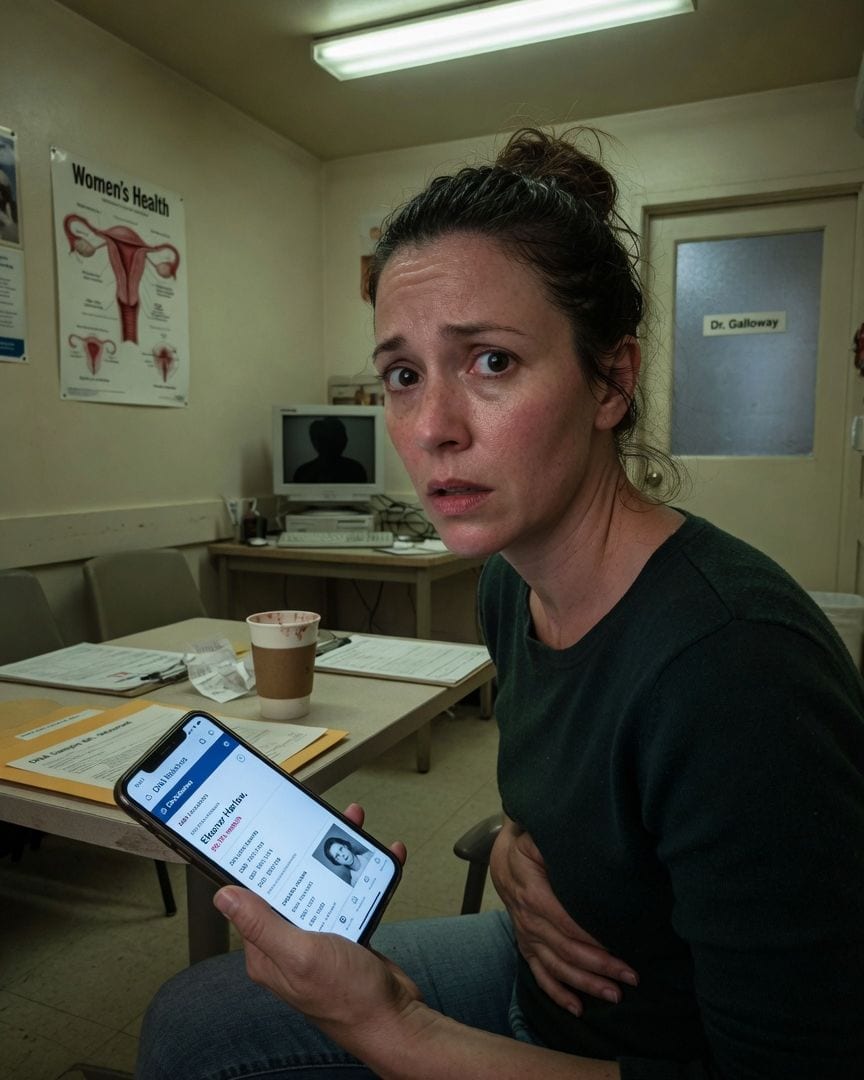
My ultrasound showed a healed C-section scar. I've never been pregnant, and I have no children.
During a routine ultrasound, doctors found a distinct, healed cesarean scar inside my uterus. I've never been pregnant or had any surgery, yet the tissue was old, consistent with an incision made decades ago. It feels like my own body contains a history that isn't mine.
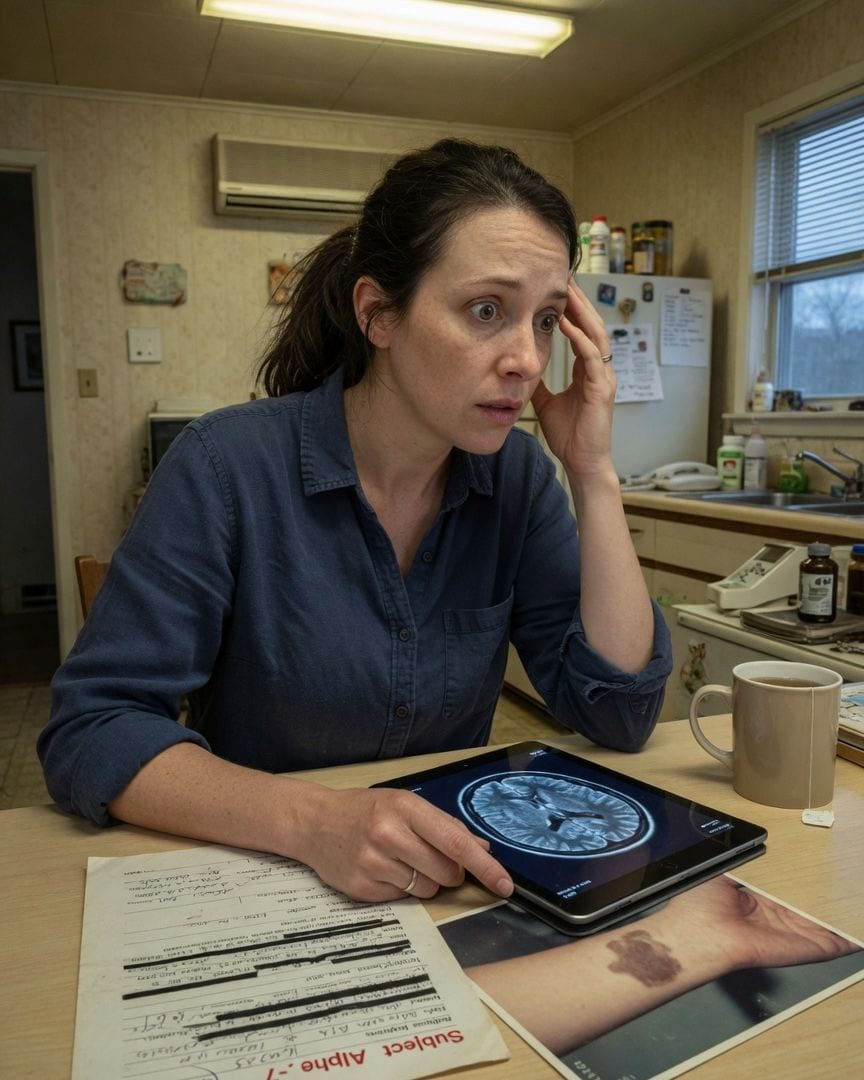
A metal clip seals off a vessel deep inside my brain. My head has no scar, I've had no surgery, and it's been there for over a decade.
My persistent headaches led to an MRI, revealing an impossibly neat metal clip inside my brain. My doctor confirmed it had been there for over a decade, despite no record of any past surgery or scar. Now, a restricted file links my unique birthmark to a mysterious patient from 1968.
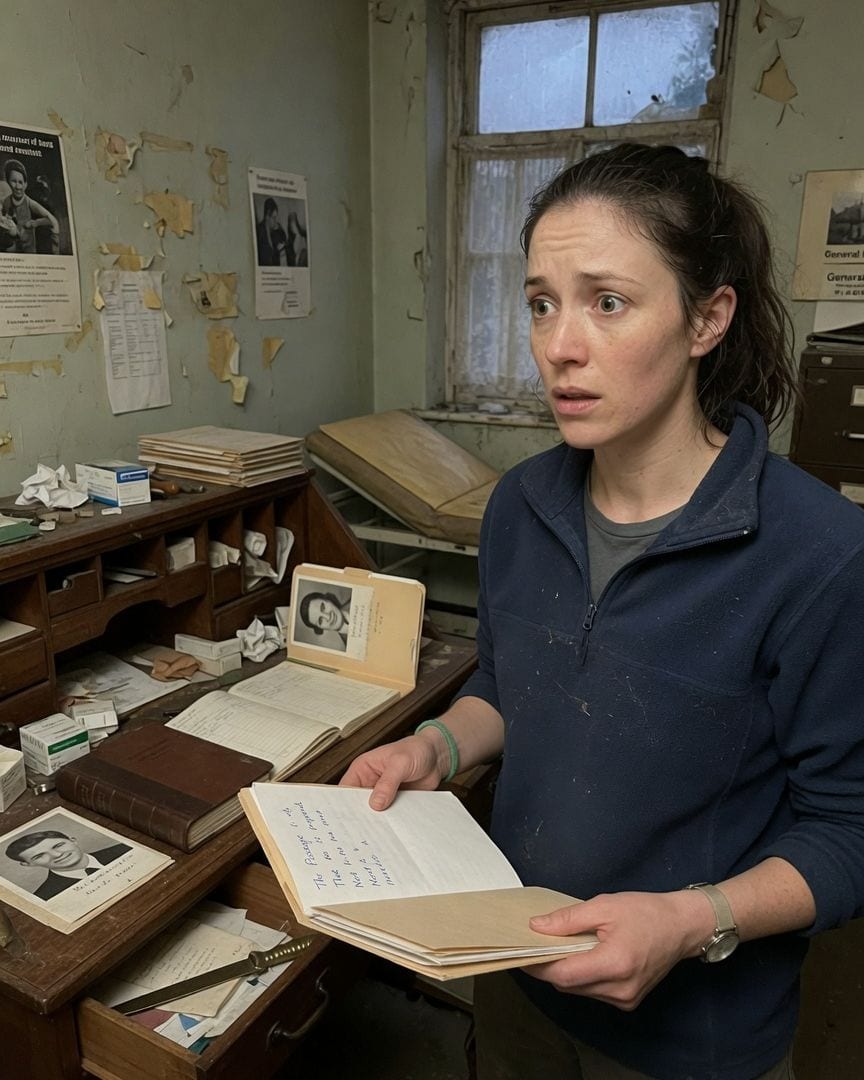
My new clinic's appointment book shows entries for this coming Monday, decades after the doctor retired and died.
Chloe Lawson bought an old, abandoned surgery in Nettlebed, ready to open her new vet clinic. Locals insisted Dr. Almott retired in '79 and the practice shut down for good. But then Chloe found his dusty appointment book filled with meticulous entries, continuing unbroken from 1979 through the decades, right up to this coming Monday.
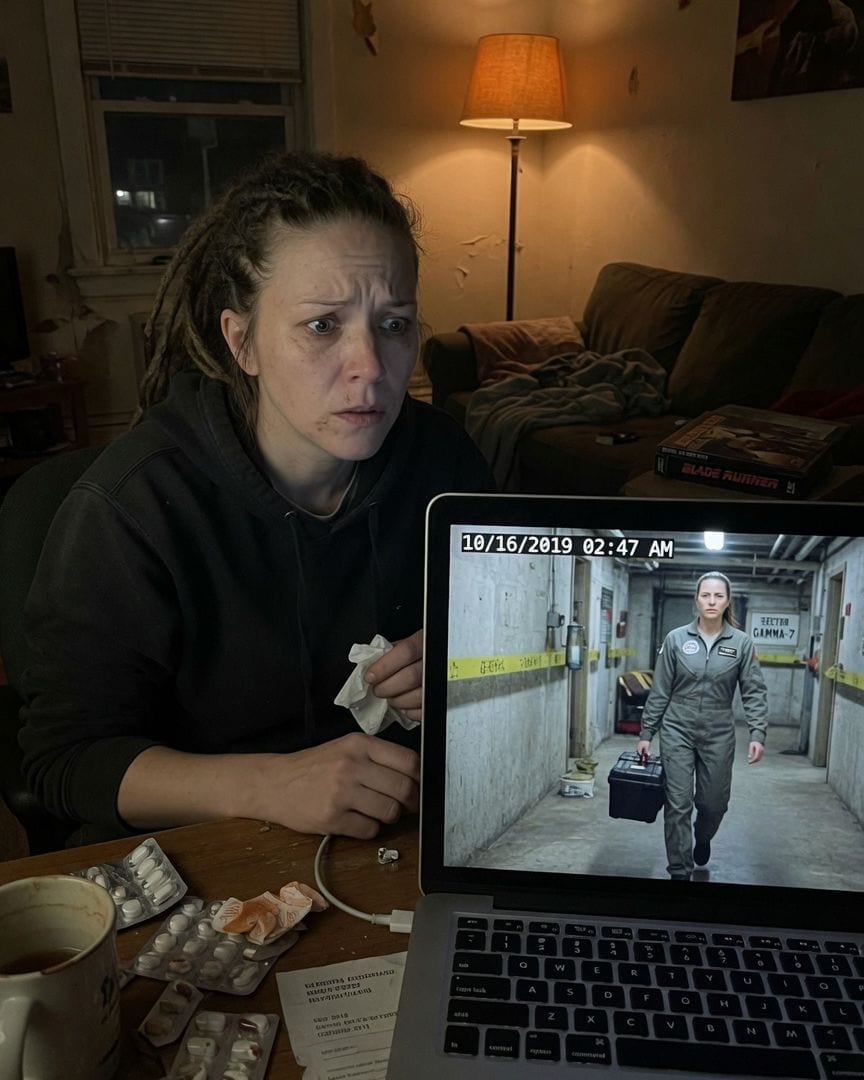
My timesheets show me working night shifts in a town I never lived in. The signatures are mine. The pay went to an account that isn't.
An old employer sent me timesheets from five years ago, detailing night shifts I supposedly worked at a depot 80 miles away. But I knew I was home recovering from surgery that entire week, nowhere near the industrial town. Then a security photo arrived, showing my face in an unfamiliar uniform, working a shift that wasn't quite me.
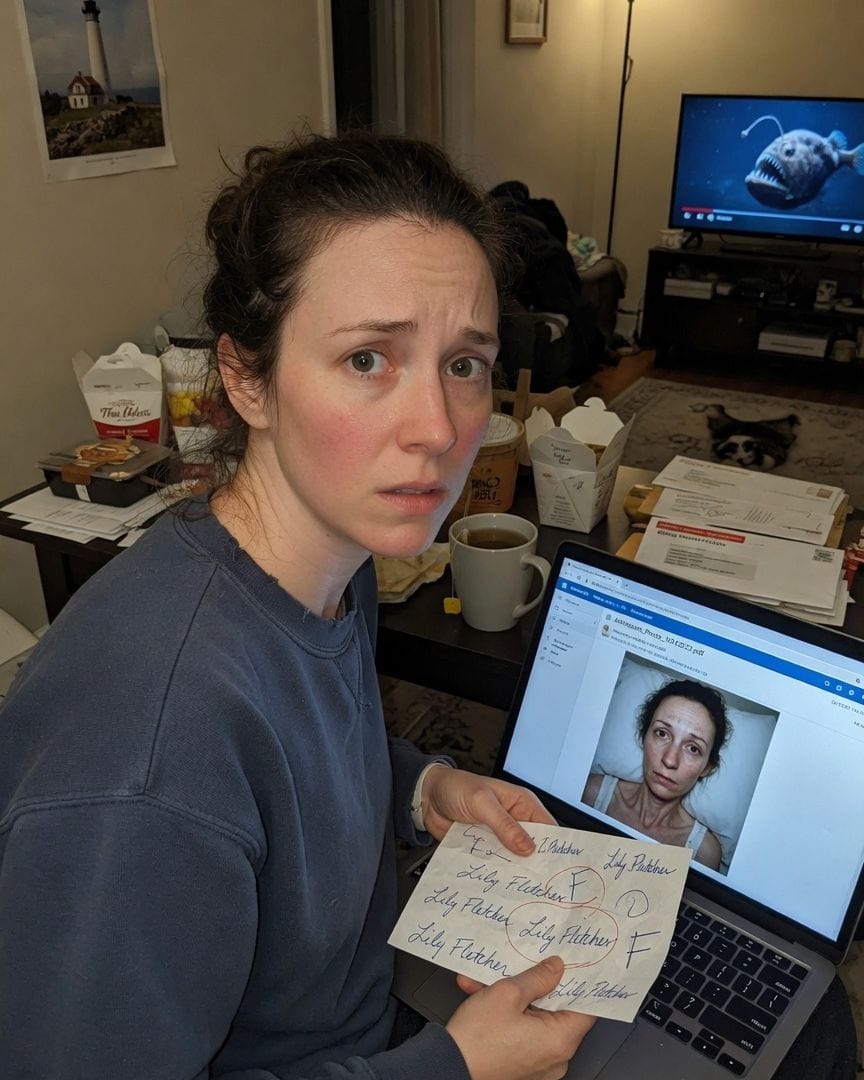
A hospital is billing me for a two-night stay in Cleveland — with my insurance, my wristband scans, and a discharge form in my own signature. I spent that whole week home alone, and I've never been admitted anywhere.
A bill arrived from Cleveland General Hospital for a two-night stay under my name, Lily Fletcher. I'd spent those dates at home, but the hospital had my accurate details and even a discharge summary. The chilling part? It was signed with my unmistakable signature, a mark I know I never made.
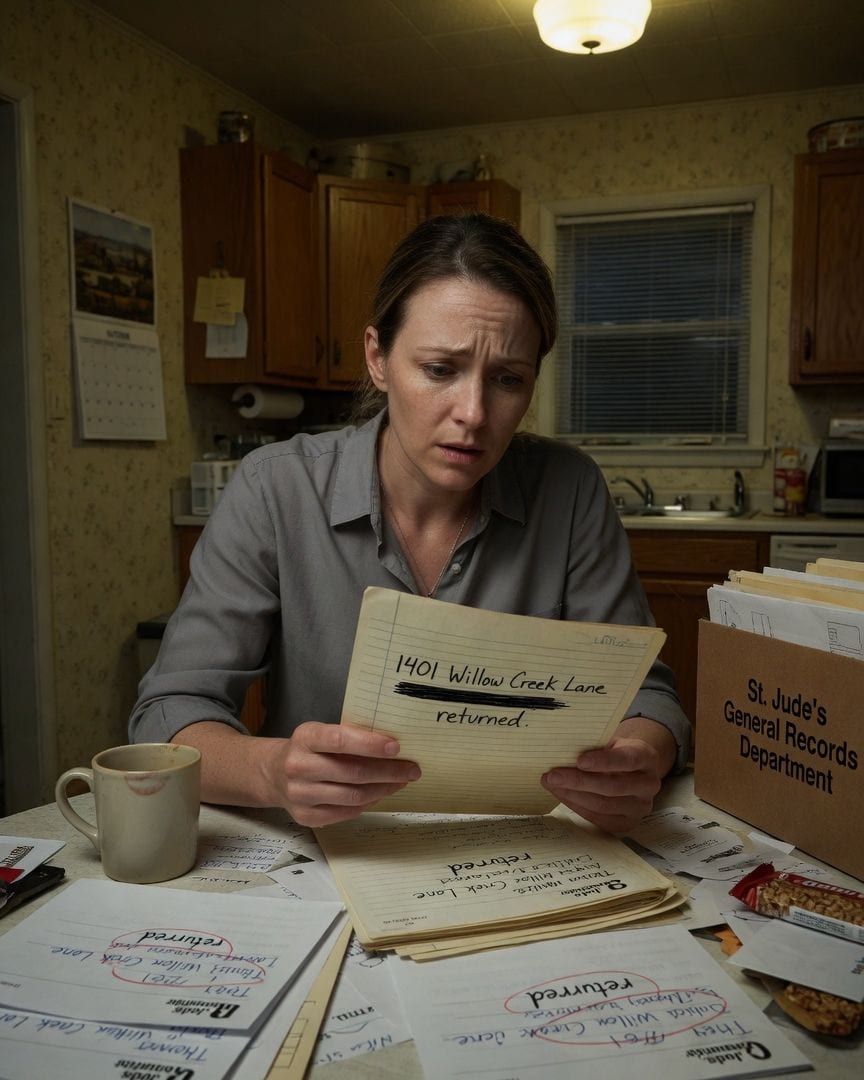
My medical file shows my street address on a struck-through line from 1988, a year I lived two counties away. It just says 'returned'.
A routine insurance audit led me to my childhood medical file from 1988. But among the expected notes, a deliberately struck-through line listed my current house address, followed by the stark word 'returned.' In 1988, I lived two counties away, making this entry an impossible and unsettling mystery.