The Wykeham ford depth post read *above* the red mark yesterday, under an inch of clear water. The paint beneath it was bone dry. A walker crossed and hasn't claimed his boots.
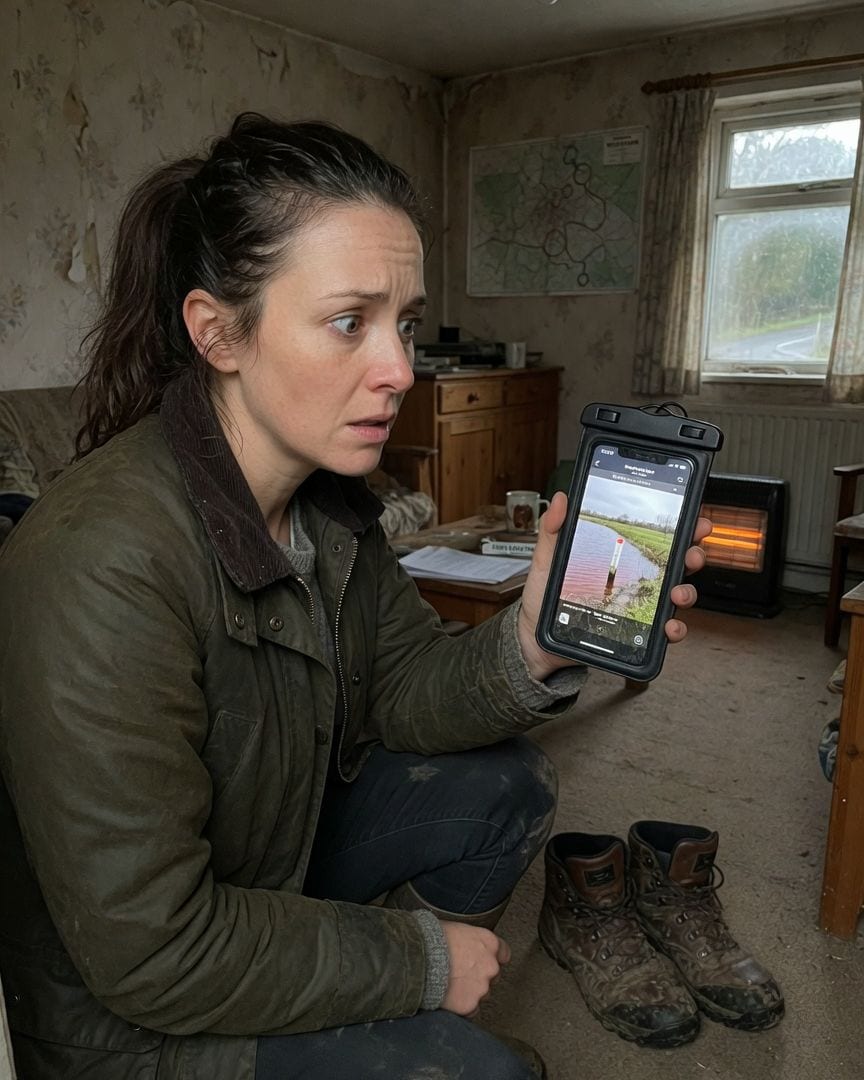
The ford at Wykeham was a shallow, stony crossing, usually barely a trickle. I’d seen the painted red mark on its depth post every day for six months, always well above the water, even after heavy rain.
But yesterday, it was different. Yesterday, the water barely covered the red mark, perhaps an inch deep, yet the paint beneath it was bone dry, almost chalky. I stopped my car, pulling over to look.
The oddity of it was unsettling, a small but undeniable wrongness in the familiar landscape. Then I saw them: a pair of mud-splashed hiking boots, good quality, well-worn, neatly placed side-by-side on the far bank, just past the water's edge.
Too neat. Too still. I knew Dean Sutton, the young man who’d been staying at the old Holloway place; he walked that route every morning. His car was still parked by the pub, but he hadn’t come home.
The locals, when I asked, just shrugged. 'Ford’s tricky, love,' Harold Ingram had said, polishing his counter with slow, deliberate strokes. 'Always has been.' They all said the same, a practiced, almost rehearsed dismissal.
The police had done a cursory search, declared it a likely drowning, and moved on. No body, no evidence of foul play. Just Dean’s car, his empty rental cottage, and those boots.
I couldn't shake the image of the dry paint under the water, or the meticulous placement of the boots. It didn't fit. The whole thing felt like a puzzle piece forced into the wrong slot.
I decided to walk the ford myself, carefully, staying far from the red mark, my own boots crunching on the loose stones. The water was indeed shallow, clear, and cold, barely reaching my ankles.
Reaching the far bank, I knelt by the abandoned boots. They smelled faintly of wet earth and something metallic, like old coins. Inside the left one, tucked deep into the toe, I found it: a waterproof phone, surprisingly still charged.
Dean’s phone. My heart hammered, a frantic drum against my ribs. Why would he leave it?
I switched it on. The lock screen showed a photo of the ford, taken from the near bank, exactly the view I’d seen from my car.
The depth post was clear, the red mark just covered by that impossible inch of water. My fingers trembled as I checked the metadata. Timestamp: yesterday morning, 7:12 AM. Just minutes before the alarm bells would have started ringing.
GPS coordinates: a precise pinpoint on the far bank of the ford, exactly where I was kneeling. He had crossed. He had taken the photo after crossing. He had been on this bank, alive, minutes before his last known activity.
The police had assumed he never made it across. The locals had implied he vanished from the near side, perhaps swept away. None of it made sense. Why leave the phone? Why leave the boots?
And why was everyone so calm about it?
I stood, phone in hand, looking at the same scene Dean had captured. The depth post, the water barely covering the red, the paint beneath clearly dry.
The air was still, quiet, the only sound the soft gurgle of the ford itself, utterly benign. The image on the screen, frozen in time, showed the ford exactly as it appeared now. Dean had crossed.
He was here, on this bank. And then he wasn't. The phone, his last trace, contradicted every official explanation, every local shrug. It wasn’t an accident. It couldn’t be.
I looked from the phone to the still, dark water of the ford, then back at the neatly placed, empty boots, the implications solidifying into a cold knot in my stomach. Something was profoundly, terribly wrong with Wykeham ford.
Dean’s phone became my secret. I couldn't show it to the police; they’d just dismiss it as a prank or some misinterpretation, another 'tricky ford' story. I had to find out what really happened.
I started talking to people, not about Dean directly, but about the ford itself. Everyone had a story, a warning.
'Never cross when the water's over the red, even if it looks safe,' Harold Ingram repeated, his eyes darting to the window of his shop, as if expecting something to appear in the glass.
'It's an old wives' tale, of course, but better safe than sorry.' The consistency was unnerving. Not one person offered a different version, or a natural explanation for why the red mark was so important.
It was always the same smooth, practiced line, like they were reading from an invisible script.
I visited the small local library, hoping for old maps or historical accounts. Eleanor Crane, the librarian, a woman with sharp eyes and an even sharper memory, was initially helpful.
She found me a dusty book on local folklore, full of charmingly vague stories about 'things best left undisturbed' and 'old spirits of the water.' But when I mentioned Dean, and the ford, her demeanor shifted.
The warmth in her eyes cooled, her smile tightening at the corners. She became polite, distant. 'A sad business,' she murmured, stacking books with unnecessary precision. 'But these things happen in the countryside, don't they? Best not to dwell.'
She suggested I focus on my new life here, not on 'old tragedies.' The message was clear, unspoken: drop it. But I couldn't.
As I gathered my things, I noticed a faded newspaper clipping tucked into one of the folklore books, a small article from the 1970s about a 'local man lost to the Wykeham current.'
It was familiar, too familiar, to Dean's disappearance. The pattern was beginning to emerge, just beneath the surface of the town's placid agreement.
My questions didn't go unnoticed. A few days later, I found a small, hand-painted wooden sign nailed to my gatepost. It simply read: 'SOME THINGS ARE BEST LEFT UNDISTURBED.'
No signature, no overt threat, just the same phrase Eleanor had used, scrawled in an almost child-like hand. My blood ran cold. Someone knew I was still digging. The cottage itself seemed to hold its breath.
I started feeling eyes on me, subtle shifts in conversation when I walked into the local shop. Harold Ingram would serve me with a fixed, unblinking smile, his usual quiet chatter replaced by an unnerving silence that prickled my skin.
One evening, as I was leaving the library, the light already fading outside, Eleanor Crane called me back. Her voice was low, almost a whisper, as if the walls themselves had ears.
'Laura,' she said, her gaze steady, a flicker of something close to fear in her depth. 'I know you're curious. But curiosity here... it can be a heavy burden.
It can make you see things that aren't there, or perhaps, things that are too much there.' She pressed a thin, yellowed envelope into my hand. It felt brittle, ancient. 'These are old newspaper clippings. Accidents, mostly. From the ford.
For context.' Her fingers brushed mine, and I felt a tremor of fear, not from her, but from the unspoken weight of what she was handing over. Her composure was unsettling.
She wasn't just warning me; she was giving me a lifeline, perhaps because she knew I wouldn't stop, and perhaps because she couldn't bring herself to just let me walk into whatever lay ahead.
The envelope felt heavy, a physical manifestation of the town’s unspoken history.
Back at my cottage, I tore open the envelope. Inside were dozens of old newspaper clippings, brittle with age and smelling faintly of dust and damp paper.
Each one detailed a disappearance or an unexplained death near the Wykeham ford, spanning back decades. 'Local Fisherman Lost in Freak Current,' 'Hiker Vanishes Near Wykeham,' 'Teenager Presumed Drowned.'
The dates leaped out at me: 1953, 1961, 1970, 1979, 1988, 1996, 2005, 2014. A chillingly consistent pattern, roughly every 7-10 years. And always in late autumn. This wasn't random. This was a cycle.
The official explanations in the clippings were always plausible, but always felt slightly off, too convenient, too neat. I remembered Dean’s phone, the dry paint, the neatly placed boots.
'Accident' was the easy answer, the one the town had clearly adopted.
The next morning, I confronted Eleanor. I laid the clippings, fanned out like a gruesome hand of cards, on her desk. The fluorescent lights of the library hummed, a flat, mechanical sound.
'This isn't just a series of accidents, is it?' I asked, my voice barely steady, trying to keep the tremor from showing. 'This is a pattern. And everyone here knows it.'
Eleanor sighed, her shoulders slumping as if under an invisible weight. The air in the room seemed to grow cold. 'It's always been this way, Laura,' she admitted, her voice raspy, a thin thread of sound. 'The ford… it takes.
Always has. It has its seasons, its demands.' She looked at the clippings, her gaze lingering on a faded photograph from 1970, a smiling young woman named Sarah Sutton.
'The red mark,' she continued, her voice dropping lower, 'it's not about the water. It’s about it. When the red is covered, it means it’s… active. Present. The water might be shallow, but it’s not safe to cross.
It’s a warning. A rule we've kept for generations, to keep the balance.' The town's agreement, the uniform stories, the quiet warnings – it all clicked into place, an awful, coherent whole.
They weren't just superstitious; they were managing a real, terrifying truth.
Eleanor pointed to the clipping from 1970. 'Sarah Sutton was Dean's great-aunt,' she said softly, her finger tracing the outline of the young woman's face. 'His family has lived here for centuries. There are others. The Holloways, the Davenports.'
She pulled out a small, leather-bound ledger from a locked drawer beneath her desk. The wood creaked, a dry, protesting sound. Its pages, thick and yellowed, were filled with elegant, copperplate handwriting. 'This is the true record. Not the papers.
Not what the police saw.' She ran a finger down a column of names and dates, matching them to my clippings, then extending further back, into the late 1800s. The pattern continued, unbroken, a relentless march of names and dates.
Then she stopped, her finger resting on an entry from 1979: 'William Beaumont, Age 30. Last seen near ford.' My breath hitched, a sharp, cold intake of air. Beaumont. My own surname.
My great-uncle William, who my grandmother always said had 'just disappeared' from Wykeham decades ago, a story always brushed aside, too vague to question.
His name, staring up at me from Eleanor's secret ledger, confirmed by the cycle, written in the same hand as the others, made the hairs on my arms stand on end.
I looked up at Eleanor, who had gone utterly still, her eyes fixed on the list, a quiet dread settling between them, thick and heavy like the dust in the old books. My family. My blood.
Implicated in this terrible, impossible history.
Eleanor finally looked up, her gaze heavy, burdened by decades of silence. 'William was your great-uncle,' she confirmed, her voice barely a whisper. 'He was a newcomer, like you, but with roots here, though he didn't know it.
He broke the rule, just like Dean. The ford… it has a memory. It knows its families.' She explained that the 'dry paint' beneath the water wasn't an illusion, but a sign the water itself wasn't entirely natural.
'It's a veil,' she whispered, 'a manifestation. When the red is covered, the veil is thin. It's not a warning about drowning, but about being… taken.' The town, she revealed, had learned to live with it.
They maintained the post, repeated the rule, and quietly managed the disappearances. They knew the cycle, knew which families were 'prone.'
'Sometimes,' Eleanor confessed, her voice barely audible, the words tasting like ash, 'when the cycle comes, and no one breaks the rule, they… encourage it. Not often. Not anymore.
But in the old days, a family might send one who was already sick, or a stranger passing through, to keep the others safe. It’s why we’re so quiet. To not draw attention. To not upset the balance.'
The full, horrific coherence of it washed over me, a tidal wave of understanding that stole my breath. The agreement, the euphemisms, the missing persons reports – it was all a carefully constructed façade to manage a primal, ancient horror.
My own family's history was woven into this awful pact. Dean Sutton wasn't an accident; he was a consequence of a broken rule, and a town's desperate, quiet pact with something beyond understanding.
The weight of the truth was suffocating. I couldn't stay in Wykeham, not with the knowledge of what the ford was, and what my family's name meant in its ledger.
Eleanor, seeing the terror in my eyes, didn't try to stop me. She understood. 'Go, Laura,' she urged, her voice strained, a plea wrapped in a warning. 'Forget what you’ve seen. Forget us.' But I couldn't forget.
I knew I had to take proof, something concrete that wasn't just old clippings.
My hands, still trembling slightly, pulled out my phone – not Dean's – and I photographed Eleanor's ledger, every page detailing the cycle of names and dates, the 'taken' of Wykeham.
The flash was a sharp, brief pop in the quiet room. Eleanor watched me, her expression a mix of weary resignation and a strange, desperate hope, as if my leaving might somehow appease something.
'They won’t believe you,' she said, 'but you’ll know.'
I packed my car quickly, grabbing only essentials, my movements jerky and inefficient. The small cottage felt alien now, hostile even. As I drove out of Wykeham, the late afternoon light casting long, distorting shadows, I passed the ford.
The depth post stood stark against the twilight, the red mark now well above the water, the surface of the ford still and dark. It looked utterly normal, utterly benign. But I knew its secret.
I knew the quiet dread that lived beneath its placid surface, a dread that the town had learned to live with, to manage, even to feed.
The cost of my escape was the knowledge, the certainty that some horrors are real, and that communities can become complicit in their perpetuation.
I left Wykeham behind, but the ford's shadow, and the names in Eleanor's ledger, would ride with me forever.
I had proof, yes, but who would ever believe a madwoman's tale of a sentient ford and a town that agreed to its terms?
I simply drove, the roar of the engine a small comfort against the silence of what I now knew. My life, as it was, was over.
I drove until the small, winding roads of Wykeham were miles behind me, until the landscape shifted to anonymous motorways and the anonymity of chain hotels. I never looked back. My life became a quiet, anxious existence.
I found a new place, a new job, but the knowledge I carried was a constant companion, a heavy stone in my gut. The photos of Eleanor's ledger remained on my encrypted drive, my secret proof.
I never spoke of Wykeham, never mentioned the ford, or the red mark, or the names. But every autumn, I felt a familiar chill, a prickling dread that came with the changing leaves.
I double-checked the news for any reports of strange disappearances in remote areas, a morbid habit I couldn't break. The dread wasn't gone; it had simply relocated, settling deep within me, an indelible part of who I was.
Laura found a quiet life in a new town, far from any winding rivers or old fords.
Her new neighbors remarked on how quiet she had become, how she always double-checked the locks, and how she never, ever drove near any old, unmaintained roads, not even by accident.
She carried the weight of what she knew, a proof no one would ever accept. Back in Wykeham, the red mark on the ford post remained a quiet fixture.
The locals still greeted strangers with polite, wary smiles, and the water in the ford continued its placid flow. No one ever asked why the paint below the red mark always looked bone dry, even when the water was high.
It’s a question no one in Wykeham asks aloud anymore.
If this one got to you
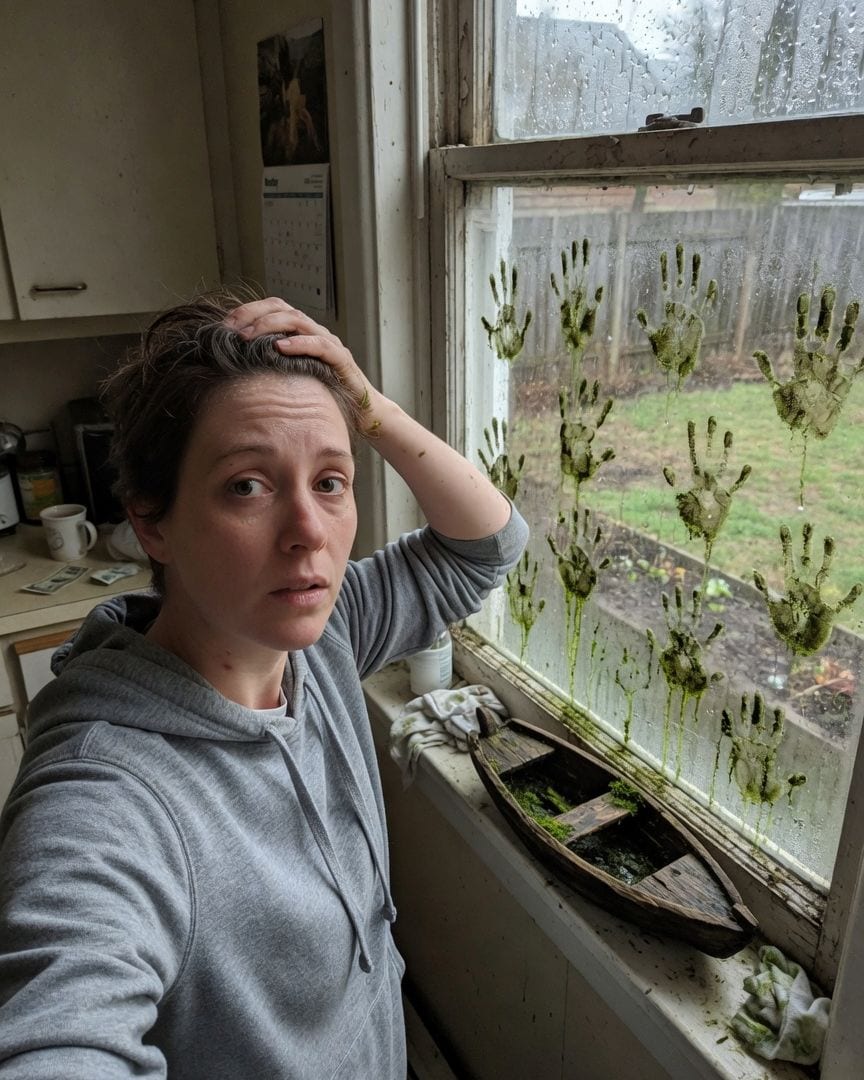
Wet moss handprints cover my kitchen window. My kitchen backs onto no water at all.
Monday morning, I found small, perfect handprints pressed against the *inside* of my kitchen window. They were wet and outlined in dark green moss, an impossible sight since my sealed window backs only onto a patch of lawn, with no water nearby. I ran my hand over them; they felt damp and cold.
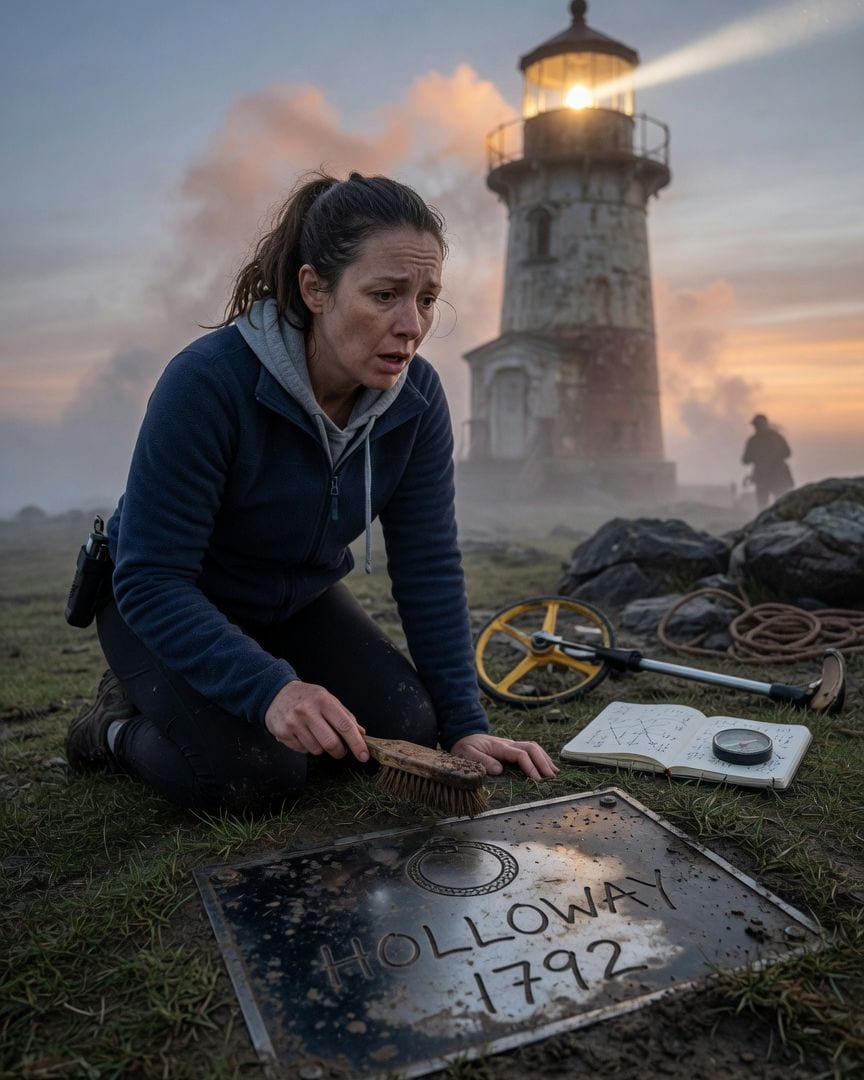
My coastal path just kept curving me back to the lighthouse. Nine miles walked, the same fisherman coiling rope, but I never left.
My morning ritual is a brisk walk along the coastal path. But last Tuesday, after what felt like an hour, I found myself back at the lighthouse, having walked miles to nowhere. My step-counter read 4.5 miles, yet the same fisherman was still coiling the same rope right where I started.
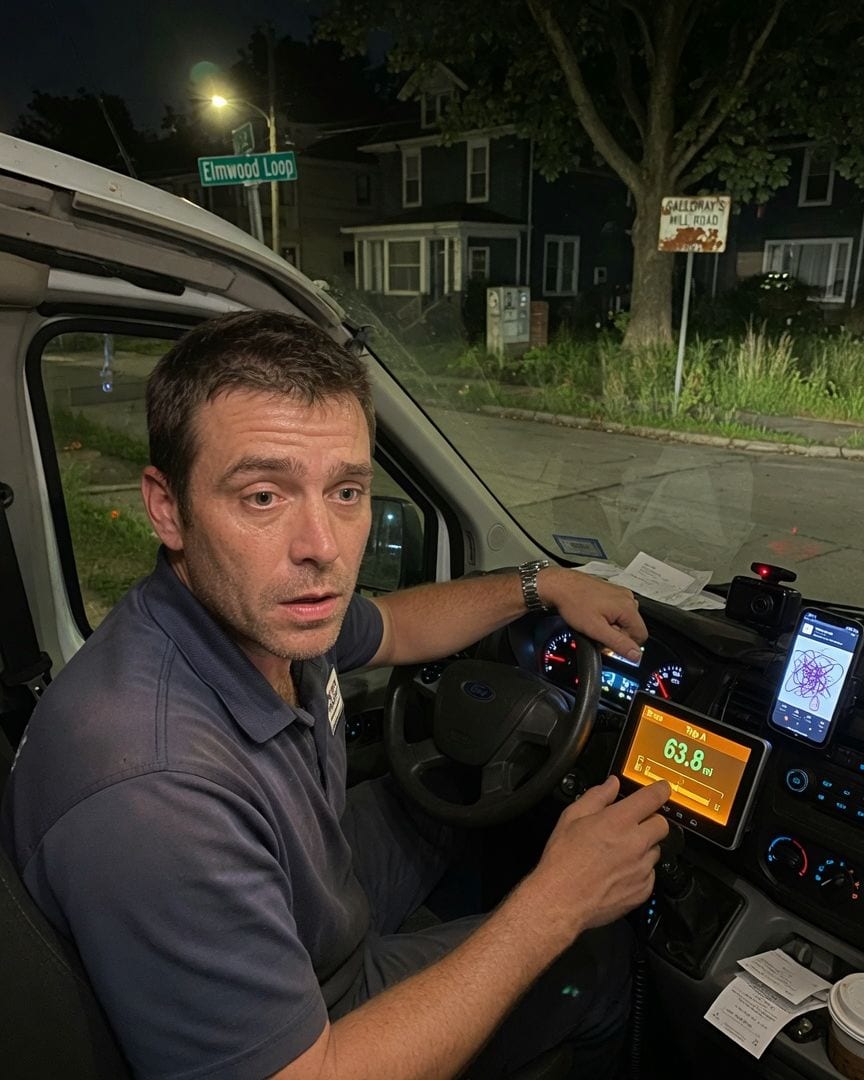
My delivery van's fuel gauge dropped a quarter tank on the Elmwood loop last night. It logged sixty-three miles, a loop I can walk in ten minutes.
I know my routes and my van, but the Elmwood Loop was different. My GPS app showed me standing still on the street, even as I walked for miles, my colleague confirming I hadn't moved. The impossible location left a blank, grey spot on the map.
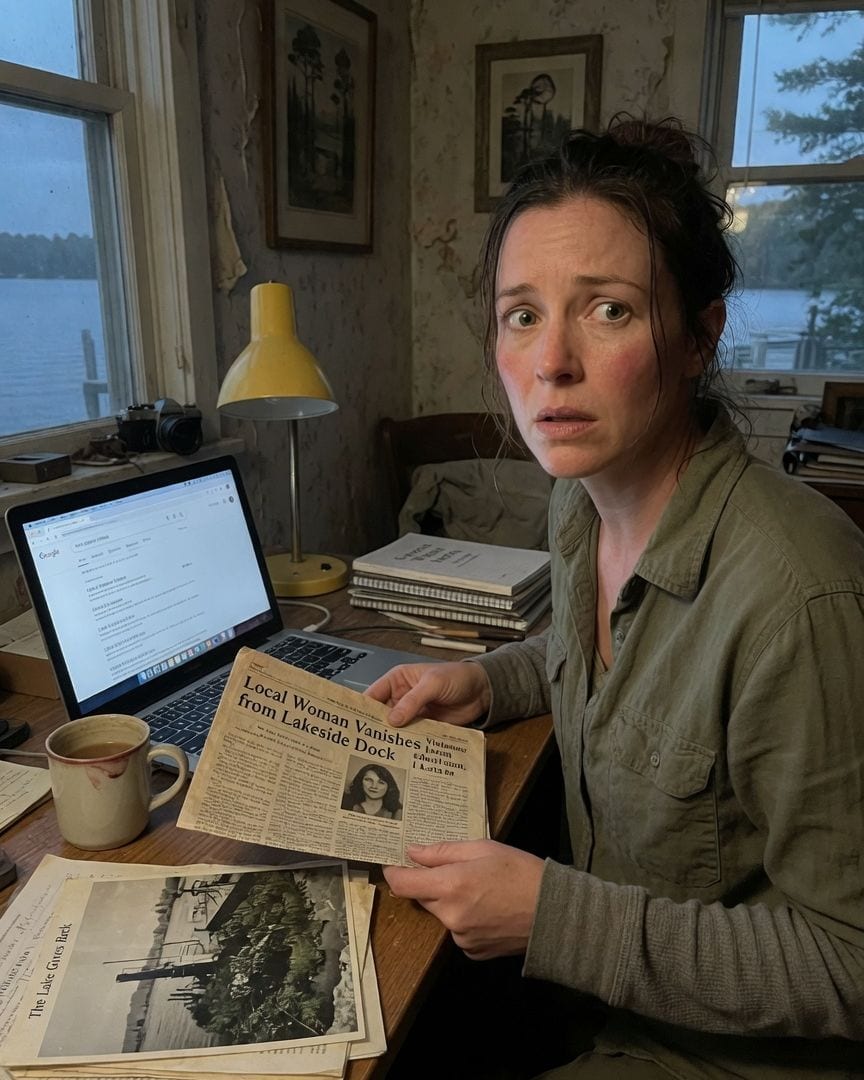
My single dock turned to two. On the impossible second one, a woman stood.
Chasing a quiet life in Cypress Point, I took the ferry across Lake Cypress as I often did, expecting a routine trip. But when I ignored the boatman's warning and looked back, I saw not one dock, but two, side-by-side, with a silent woman standing on the impossible second one. The boatman said nothing, his face impassive, as the image of that impossible figure on the dock gnawed at me.
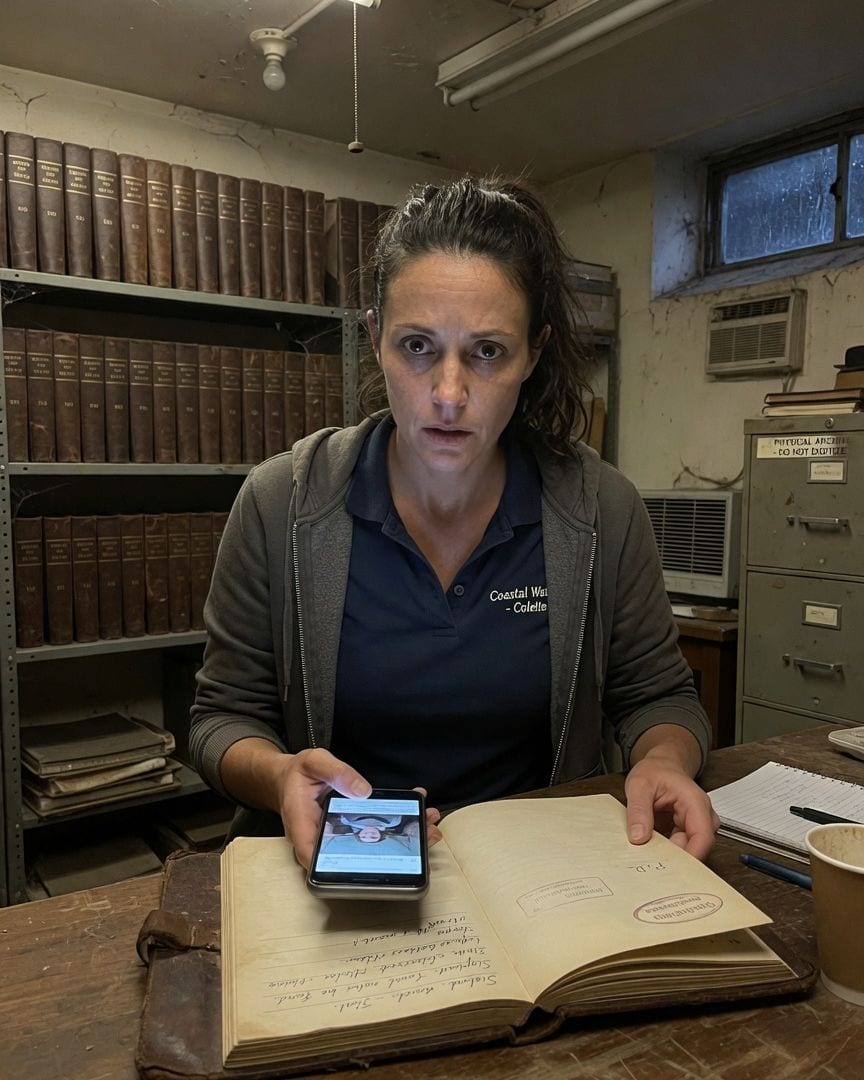
My coastguard log noted Sighting 9 again tonight, a light where no vessel showed. The old logs carry Sighting 9 off Skerry Point at 3:14am every tenth year since 1954, always 'nothing found,' always 'send no boat.'
On my watchtower night shift, the radar screen glowed green and the ocean was quiet. Then, a familiar light appeared off Skerry Point, exactly on cue, just as it had every tenth year for decades. But digging deeper, I found a hidden stamp in an old logbook: 'Operation Skerry. Status: Complete.' It left me with a chilling sense of finality.
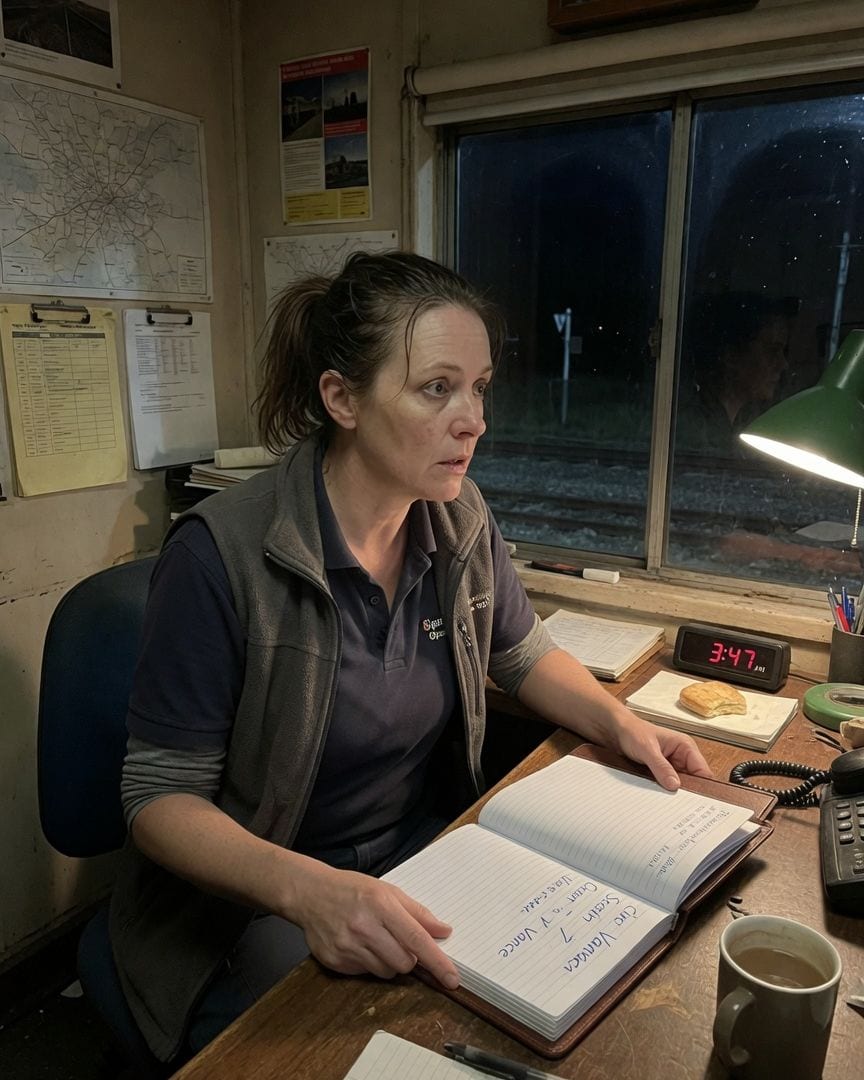
My linesman taps twice on my window at 3 AM. Control says he retired and passed years ago.
My routine at the rural signal cabin was regular: the linesman's double tap on the window at 3 AM. But then my supervisor called, revealing the linesman I knew, Warren Vance, had died five years ago. Now, an impossible entry in my official logbook, with his signature and timestamped from my shift, proves someone else was there.