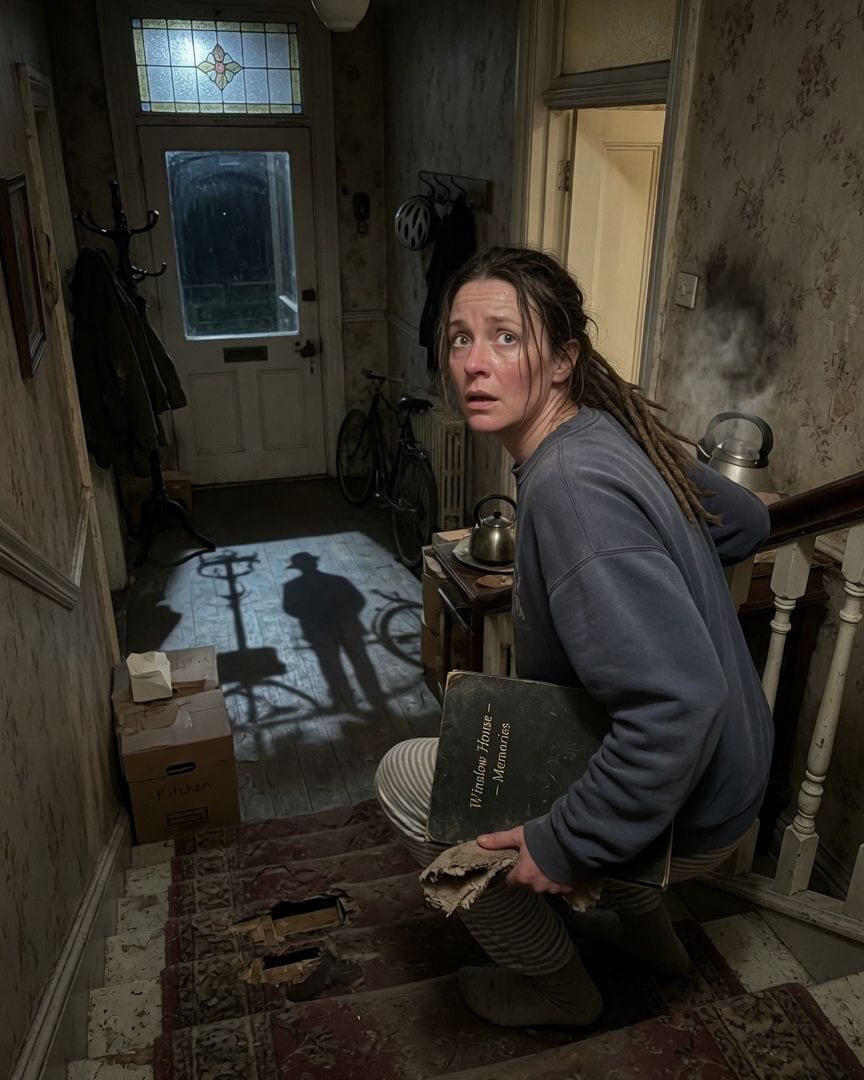
At 3am my dark porch throws grey shadows onto my hall floor — a coat-stand, a bicycle, and the outline of a man standing outside. I open the door and no one's there.
The first time, I told myself it was sleep deprivation. I’d just moved into the Victorian semi – Winslow House, the agent had called it – and between unpacking and the usual new-house jitters, I wasn’t sleeping well.
But then, at exactly 3 AM, for the second time, the light woke me. It was too bright, too stark.
Not the warm red and gold glow the stained-glass panel over the front door usually cast from the actual porch light.
This was grey, thin, like moonlight filtered through something alien, and it stretched long, distorted shapes onto my hall floor. A coat-stand. A bicycle leaning against an invisible wall.
And the undeniable, elongated shadow of a man standing just beyond the threshold, his profile impossibly still.
I lived alone. The porch light was off.
My heart hammered, a frantic drum against my ribs. I got out of bed, creeping down the stairs, every floorboard a betrayal. The grey light pulsed, then died as I reached the bottom step. The porch was empty. Completely empty.
The only sounds were the house settling around me and the frantic beating of my own pulse. I checked the lock, tugged the door. Secure.
I went back to bed, rationalizing it as a trick of light, maybe a car passing, a lingering image in my mind. But it happened twice, the exact same shadows, the exact same time.
The next morning, the coffee didn't quite cover the faint, persistent smell of burnt toast that hung in the air, though I hadn't even looked at the toaster.
And I found myself, again, instinctively stepping around a particular spot on the third stair, a worn patch in the carpet that felt strangely… loose.
It was like living with a ghost of a routine I didn’t have, a quiet dread settling in my bones.
The routines, as I'd come to call them, continued. Every morning, without fail, the kitchen kettle would click on at precisely 6:00 AM.
I’d hear the faint whistle start, rising to a gentle shriek, before I could even drag myself out of bed. I’d tried everything. Unplugging it at night. Moving it to a different socket.
Even replacing the kettle entirely with a brand new one. It didn’t matter. Six AM, the new kettle, sitting innocently on the counter, would just click.
And when I walked into the kitchen, the steam would be rising, and the water would be scalding hot.
There was a faint, almost invisible, circular scorch mark on the counter where the kettle always sat, as if from decades of use. My new kettle, pristine silver, now occupied that exact spot.
I tried to blame faulty wiring, perhaps some kind of pressure changes in the old pipes, a timer I hadn't discovered for an appliance I hadn't bought. I even checked for a smart home system – nothing.
Each rational explanation felt thinner than the last, failing to account for the unnerving regularity, the precision of it all. The house felt like it was operating on its own schedule, oblivious to me.
The worn patch on the third stair continued to nag at me, too. I still stepped around it, an unconscious habit now. It was more than just wear; the carpet felt distinctly loose there, almost hollow beneath my foot.
It was the only spot in the house that felt genuinely wrong to step on, a minor imperfection that had become a monumental obstacle in my daily navigation.
One afternoon, the kettle having just whistled its morning greeting an hour too late, I knelt down, pressing my fingers against the worn fibres. The carpet rippled, giving way easily.
There was definitely something underneath, a small void, an unexpected dark space. I tugged at the edge, a strange mix of fear and curiosity twisting in my stomach.
My fingers found a purchase and I pulled the loose panel from the third stair with a sharp tear. Behind it, in the dusty cavity, nestled like a forgotten heart, I found a small, heavy, leather-bound photo album.
Its cover was blank, almost featureless, but when I brushed the fine layer of dust away with my thumb, I saw a faded, elegant inscription etched into the dark leather: "Winslow House – Memories."
The inscription sent a chill down my spine, but I opened the album anyway, dust motes dancing like tiny spirits in the weak light filtering through the hall. The first few pages were filled with sepia-toned photographs, brittle with age.
They were all of the house, or parts of it, through different seasons, different eras.
Then I saw it. A photograph of the porch, clear as day. The very same dark wooden coat-stand I’d seen in shadow, and a rusty, old-fashioned bicycle propped against the wall. Just like the shapes through the stained glass.
My breath hitched. Another photo showed an older man, his face kind, his eyes tired, sitting in my armchair, a book open on his lap.
He was wearing a tweed jacket, and the distinct pattern of the wallpaper in the background, a busy floral design, was now long painted over in my neutral grey.
I turned the page, my fingers trembling slightly. On the back of that particular photo, scrawled in faded ink, was a date: "Nathaniel, October 1994."
My gaze darted to another photo: a kitchen. The kettle on the counter was identical to the new one I'd bought, sitting on the very same circular scorch mark. The hair on my arms stood up.
These weren't just echoes or tricks of light. These were direct images, frozen moments, of the routines that were playing out in my home, right now, thirty years later.
I spent the rest of the day hunched over my laptop, the album spread open beside me, searching property records and local archives. Winslow House. Nathaniel Winslow. October 1994. It wasn't hard to find.
An old online article, from a regional paper, its pixels blurry, appeared on my screen: "Local Man Disappears from Winslow House – October 1994." Nathaniel Winslow, 76, a retired librarian, had vanished without a trace from his home.
The article mentioned his "unwavering commitment to routine." My own kettle started to whistle then, a shrill, insistent sound, though it was only 4 PM.
The article chilled me to the bone. It confirmed that Nathaniel Winslow, the man in the photos, had simply disappeared from this very house.
And that his routines, which I was now experiencing, were notable enough to be mentioned in a newspaper. My phone, sitting beside the laptop, buzzed with an incoming call from a number I didn’t recognize.
I nearly jumped out of my skin.
I stared at the name on the screen: Samuel Barlow. His number was listed in an old community newsletter I'd found tucked into a kitchen drawer, alongside some ancient takeout menus. "Winslow House, you say?"
he asked, his voice gravelly, when I answered. There was a pause then, a beat too long, heavy with something I couldn't place. "And you're the new owner, aren't you?"
His tone was knowing, like he'd been expecting my call, or maybe just a call.
I confirmed, trying to sound casual, despite the frantic beating of my heart. "I was just curious about its history," I said, my voice sounding thin even to my own ears.
Samuel chuckled, a dry, unsettling sound that scraped like old leaves. "That house has more history than most, dear. Some of it… best left alone."
He warned me about "old memories" in the house, mentioning a particular chill near the front door that could "raise the hair on your neck." As he spoke, something strange happened.
My phone, which had been at 60% battery, suddenly drained, the percentage dropping rapidly before my eyes: 30%, 15%, 5%. The call sputtered, then dropped. The screen went black.
A moment later, in the sudden silence, I heard it. A faint, distinct click from the front door. Like a latch had just been turned, or a bolt had slid open.
I froze, listening, but there was no other sound, just the silence of the house. I knew, with absolute certainty, that I had locked it from the inside.
The feeling of being watched, which had been a low thrum since I moved in, intensified, pressing in on me, especially when I was near the porch or, God help me, in the kitchen.
Samuel Barlow’s sitting room was a maze of local history. Books piled high on every surface, maps tacked to the walls, yellowed photographs peering out from behind dusty frames. He offered me tea, his eyes sharp, assessing.
I skipped the tea and got straight to it, pressing him about Nathaniel Winslow.
“Nathaniel was a precise man,” Samuel said, looking at a framed photograph on his mantelpiece, a younger Nathaniel smiling beside a stern-looking woman. “Up at six, kettle on the dot.
Always burnt his toast slightly, said it was the only way to get it crisp, you see.”
A jolt went through me. The smell of burnt toast, the kettle's relentless schedule. It was all Nathaniel. “And the third stair?” I asked, my voice barely a whisper.
Samuel nodded slowly, his gaze distant. “Nathaniel had a bad knee, you know. Said it was easier to just step over that one, kind of skip it in his routine. Became a habit.”
He paused, then added, “And the porch light. Always on, even when it was bright as day. Said it was for ‘those who needed to find their way home.’ Especially after his wife passed, bless her.”
A cold, heavy dread settled deep in my stomach, turning my insides to ice. Every inexplicable detail, every unsettling routine, every sensory trace I'd experienced in the house was now snapping into focus. They weren't just random occurrences.
They were Nathaniel Winslow's last week, replaying in my home, thirty years later. I described the grey shadows I’d seen through the stained glass, the coat-stand, the bicycle, the man.
Samuel’s face went utterly pale, all the colour draining from it. “He always kept a coat-stand there,” he muttered, almost to himself. “And his old bicycle. He was planning to donate it, just before he… went missing.”
The coherence of it all was terrifying, a tapestry woven from the threads of an old man's life, and my house was the loom.
Samuel Barlow, seeing the growing horror etched on my face, finally got up, moving stiffly towards a locked cabinet in the corner of the room. He retrieved a heavy, leather-bound ledger, its pages thick and yellowed with age.
“This is an old parish record,” he explained, his voice low and urgent, “handwritten. It details property transactions, yes, but also… ‘unexplained departures’ from specific local houses.”
He laid it open on his cluttered table, the binding creaking in protest. His finger, trembling slightly, traced down a page to the section for the Winslow House.
There, plain as day, was Nathaniel Winslow’s entry: “October 1994 – Nathaniel Winslow, owner. Unexplained Departure.”
Then, with a terrifying slowness, he pointed to other entries, identical in their vague, chilling description. “1964,” he whispered, “Mrs. Eleanor Vance. ‘Unexplained Departure.’ Then 1934, Thomas Blackwood. And 1904, the original owner, Elias Thorne.”
Each entry noted the owner’s disappearance, a gaping hole in their personal history, all from Winslow House.
And each one was precisely 30 years apart.
Samuel Barlow closed the parish ledger with a soft thud that echoed in the quiet room, his face pale, his eyes wide with a terrible, knowing fear.
He pointed a shaking finger at the very next blank entry on the page, the space waiting for the next name. "The next date," he whispered, his voice thin and raspy, "is this autumn.
Thirty years to the day from Nathaniel. And you, Daphne, are the current owner."
I could barely breathe. “It’s not just a memory,” I gasped, the words feeling too small for the horror they held.
Samuel’s voice was low, urgent, like he was trying to outrun something unseen. “No, Daphne. The house isn’t just playing back the past; it’s reliving it. And it needs an actor.
Every thirty years, it finds someone new to step into the role of the one who disappears.”
He explained that all the previous owners listed in that awful ledger were solitary figures, isolated, just like Nathaniel had been after his wife passed, and just like I now found myself.
The house, he theorized, didn’t want to be empty. It wanted its routines, its life, to continue.
“The stained-glass light, the coat-stand, the bicycle – these are the last things Nathaniel saw,” Samuel continued, his gaze fixed on some point beyond me, lost in the house’s terrible history.
“The final tableau before he walked out that door and never returned. You’ve been experiencing his final week, Daphne. The cycle is almost complete.”
A cold, absolute certainty settled over me, heavier than any dread.
The faint smell of dust and old paper that sometimes filled my hall, the persistent chill by the front door that Samuel had mentioned – they weren't just old house quirks, or drafts, or my imagination.
They were the atmosphere of Nathaniel’s final, fading days, seeping into the present, becoming my own reality. I had to get back. I had to know.
I burst into the house, my heart pounding, a frantic drum against my ribs. The air was thick with the cloying, inescapable smell of burnt toast, overpowering everything else.
The kitchen kettle was whistling, abandoned on the hob, a thin plume of steam rising to meet the ceiling. It was early evening, dark outside, but the porch light was on, casting its eerie, familiar grey through the stained glass.
And there they were, distinct as a photograph, the shadows on the hall floor: the coat-stand, the bicycle, and the tall, unmoving form of a man.
My gaze snapped to Nathaniel’s armchair, the one from the photo. I raced towards it, frantically tearing at the cushions, my fingers scrabbling, desperate for something. A loose panel in the armrest gave way under my frantic search.
Inside, tucked away, I found a small, dark leather diary. "Nathaniel Winslow – October 1994," was embossed on the cover.
I ripped it open. His final entries were frantic, barely legible. He described a growing pull, a sense of "home" calling him from the porch. "The light is grey," he’d scrawled, the ink smudged, "and they're waiting."
A cold, gentle, insistent urge to open the front door settled over me, a strange, inviting warmth that fought against the icy terror.
I clutched the diary, the photo album I’d found earlier, and the copied ledger pages Samuel had given me, holding them like talismans. The shadows on the floor seemed to deepen, to solidify, growing sharper, more defined.
The porch light flickered, then steadied, its grey glow intensifying, spilling out into the hall.
A whisper, like dry leaves skittering across pavement, brushed against my ear, so close I felt the phantom breath. "Come home."
With a guttural cry that tore from my throat, I fought the invisible pull, fought the strange calm that wanted to settle over me. I wrenched the door open, the old wood groaning in protest. I didn't look back.
I just ran, stumbling down the porch steps, the grey light spilling out behind me onto the street, illuminating nothing but the empty pavement.
I drove straight to a motel on the edge of town, the kind with flickering neon signs and thin walls. I didn't sleep. The next morning, I called a property agent, demanding to sell the house immediately, no questions asked.
I signed papers without ever returning, without even packing anything beyond what I’d managed to grab in my flight. The developer, a brisk man named Greg Sutton, assured me the house was thoroughly inspected and found to be "perfectly sound."
Weeks later, it was back on the market, newly painted, its secrets buried under fresh plaster and a coat of bright, indifferent optimism.
I kept the diary, the album, and Samuel's copied ledger pages in a locked strongbox, proof of what I’d endured, knowing it would sound like madness to anyone else.
Samuel Barlow simply nodded when I told him what I’d done, his face grim, offering no further explanation, just a quiet understanding.
I now live in a modern, sterile apartment building, high up, with no porch or stained glass. I replaced all my appliances, bought a new kettle.
Yet, I still find myself instinctively stepping over the third step on my communal staircase, an unconscious habit born of a terrifying past.
I sleep with earplugs now, but sometimes, at 3 AM, I still wake, convinced I smell burnt toast, faint but persistent, hanging in the sterile air of my new home.
I know the Winslow House stands, renovated and reoccupied, its cycle inevitably continuing, waiting for its next actor.
The knowledge of what that house truly is, a living memory, a hungry keeper of time, has left an indelible mark on me. I escaped, but at a permanent, chilling cost.
A few months later, a new post appears on a local history forum, asking about strange occurrences in a recently sold Victorian semi on Winslow Street. A comment below simply reads: The kettle always boils at 6 AM.
And I just can't bring myself to step on the third stair.
If this one got to you
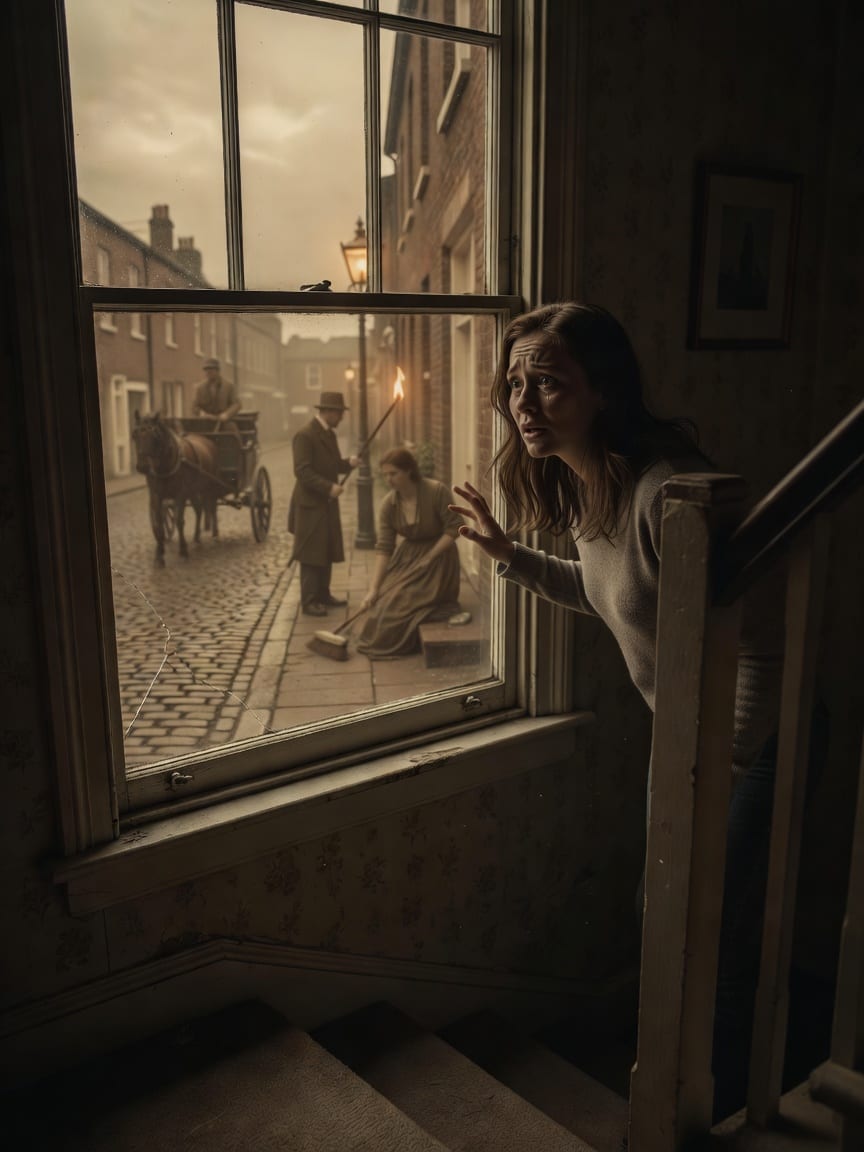
My half-landing window looked down on a cobbled street, a horse and cart. My panes, same crack. Below, only the bins.
I moved into this inherited house for a fresh start, living alone in the quiet. But the third stair on the main flight is deeply worn, a ghostly scoop hinting at decades of unseen footsteps. It feels hollow, and the wall beside it hides a faint, inexplicable seam.
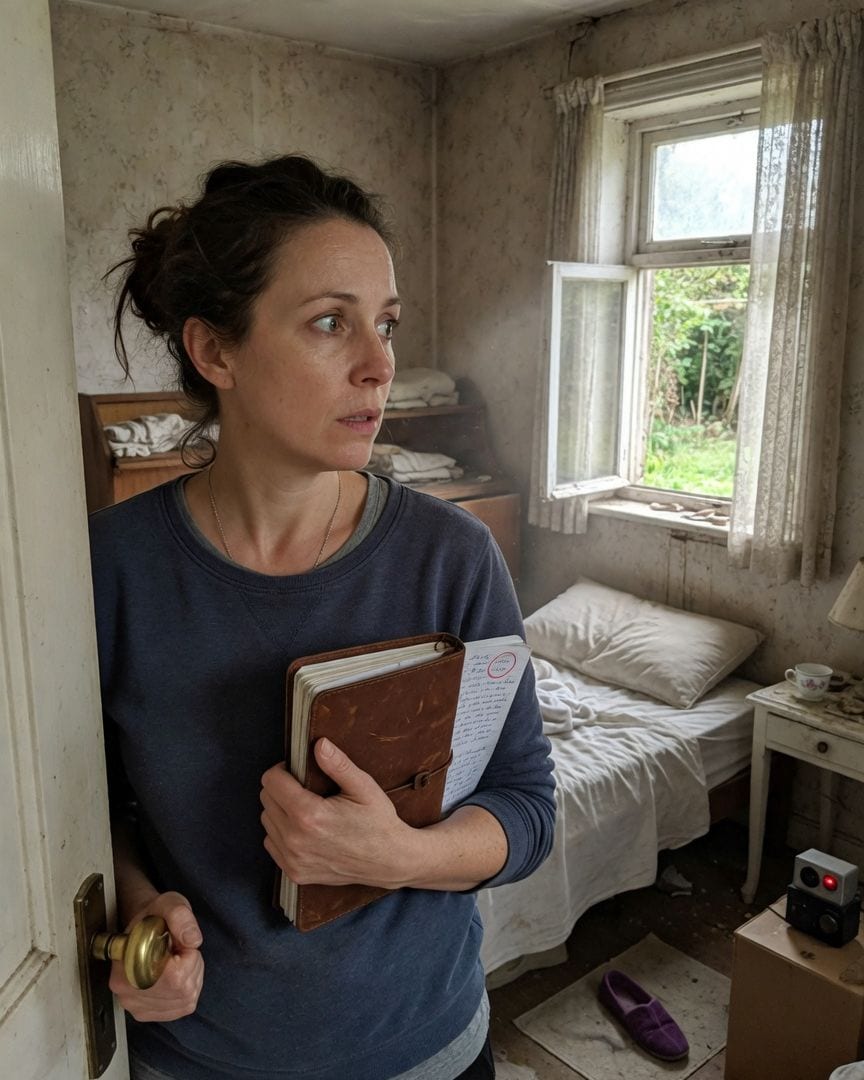
My spare room bed is slept in every few nights, sheets warm and pillow dented. I live alone, painted the window shut, and nobody has a key.
I've lived in Grace's house for six months, adjusting to its quiet rhythms. But the spare room, which I keep shut and empty for storage, has a disturbing routine of its own. Every few mornings, the bed is clearly slept in, the sheet rumpled and warm, and the window I painted shut is open exactly two inches.
My front door has a dented gate and a dead hydrangea. I walked past it six times, trying to reach the corner shop just a hundred yards away. The pavement kept bringing me back to my own porch, and the shop's light never moved.
My morning started like any other, a quick walk to the corner shop from my home at Number 14, Elm Terrace. But after walking what felt like two minutes, I found myself back at my own front door, the shop no closer. I tried six times, faster and slower, but my street kept compressing, refusing to let me leave.
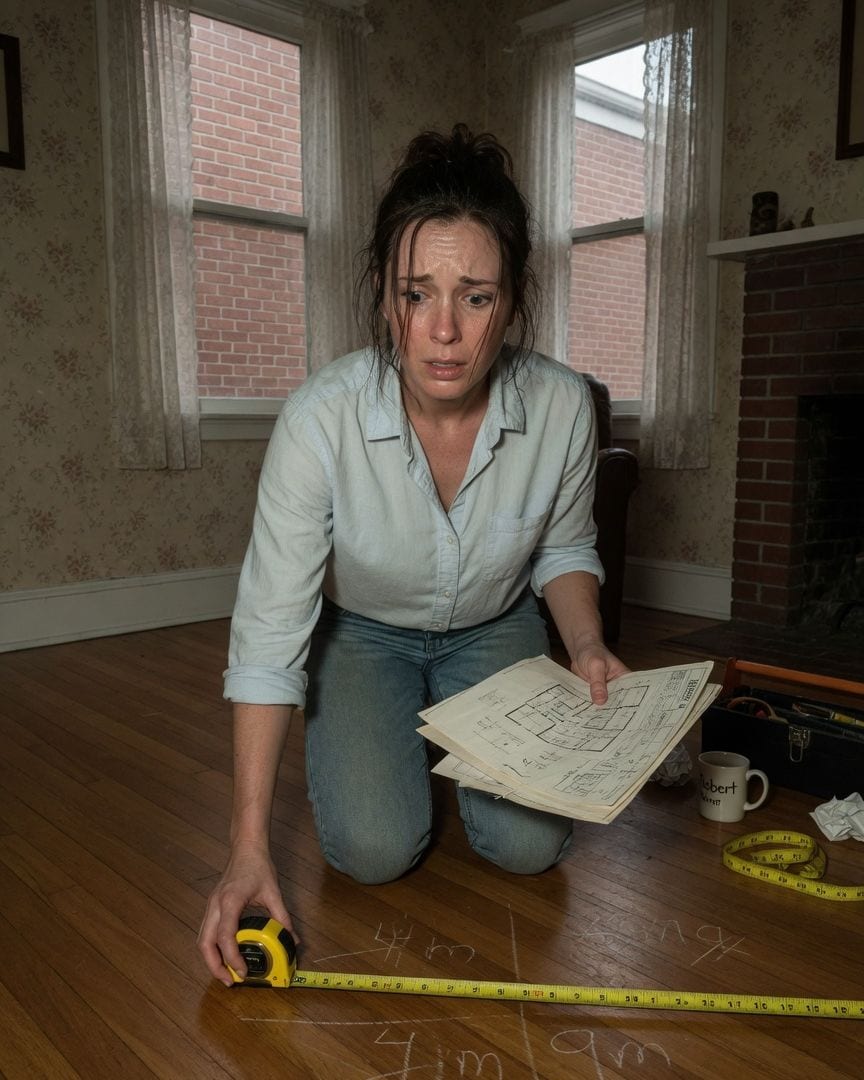
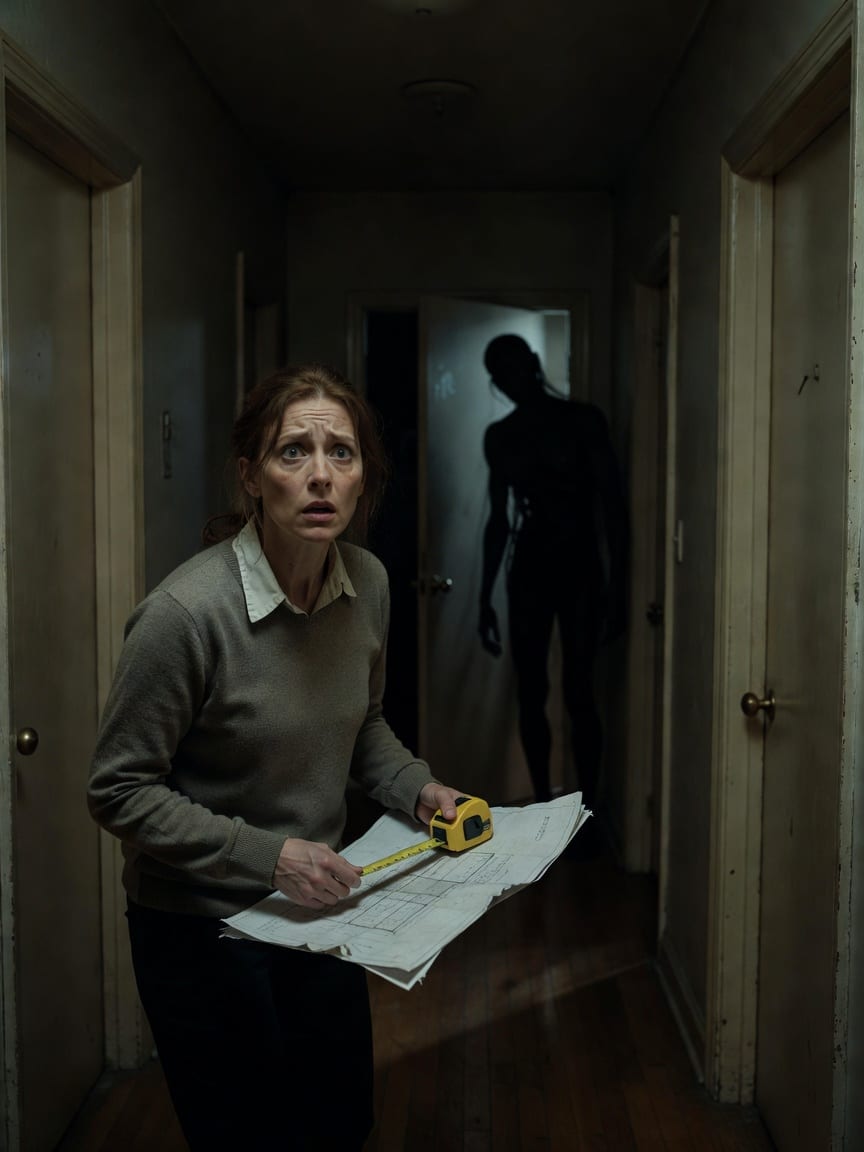
Our living room measures four by five metres. But the outside wall is nine metres long. A metre of house, gone, and I can't find it.
After moving into our charming 1920s house, I was meticulously measuring the living room when the dimensions refused to add up. My calculations of the interior space led me to discover a narrow, unpainted fifth door in the hallway, tucked almost out of sight. It wasn't on any original plans, and it opened to absolute, impenetrable darkness.
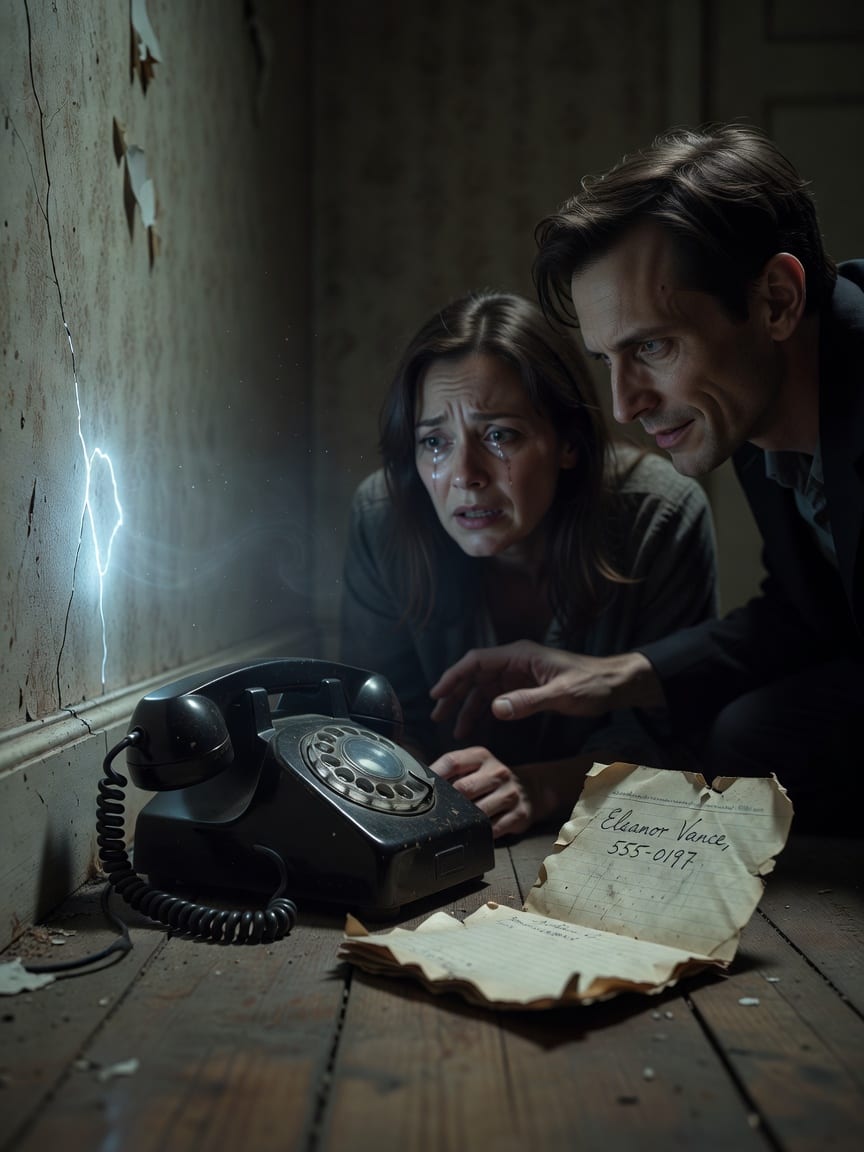
My house's walls ring when I dial a phone number from a 1974 directory. My neighbors said that directory was trash.
I was sifting boxes in my new house when I found an old 1974 telephone directory for my street. It listed my address, 12 Elm Street, under the name "Mr. & Mrs. Sheppard." On a whim, I called the faded seven-digit number. My cell phone rang, but a low, muffled sound also vibrated from the wall beside me.
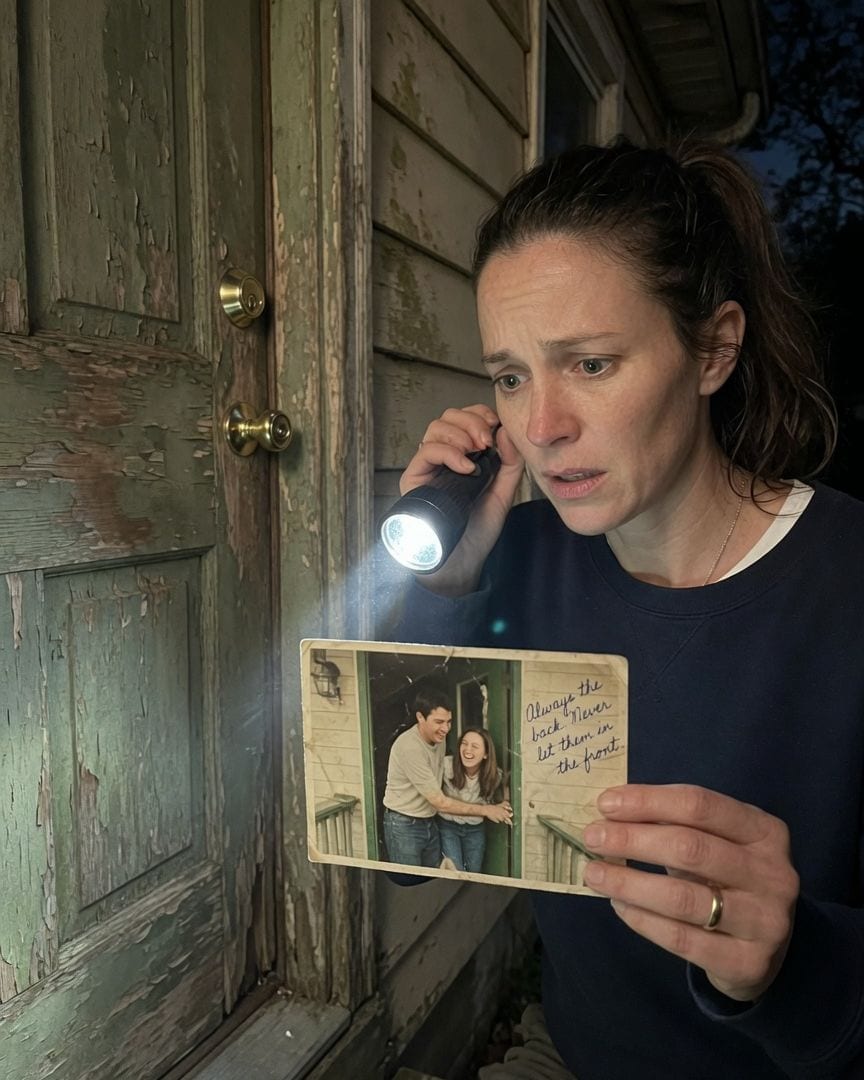
My mother waves us to the front door now. She was missing five days. She says we've always used the front, but the back door, our kitchen door for thirty years, is locked.
My mother, Janet, finally came home after five days, but her overly bright smile and insistence on using the front door felt wrong. For three decades, our family always used the back entrance, which now had a gleaming, new deadbolt. The quiet hum of unease quickly grew into a chilling dread.