A half-finished baby's cardigan sits by my fireplace, and every few days it has more rows than before. Last Sunday a whole sleeve was finished — but I can't knit, and I live alone.
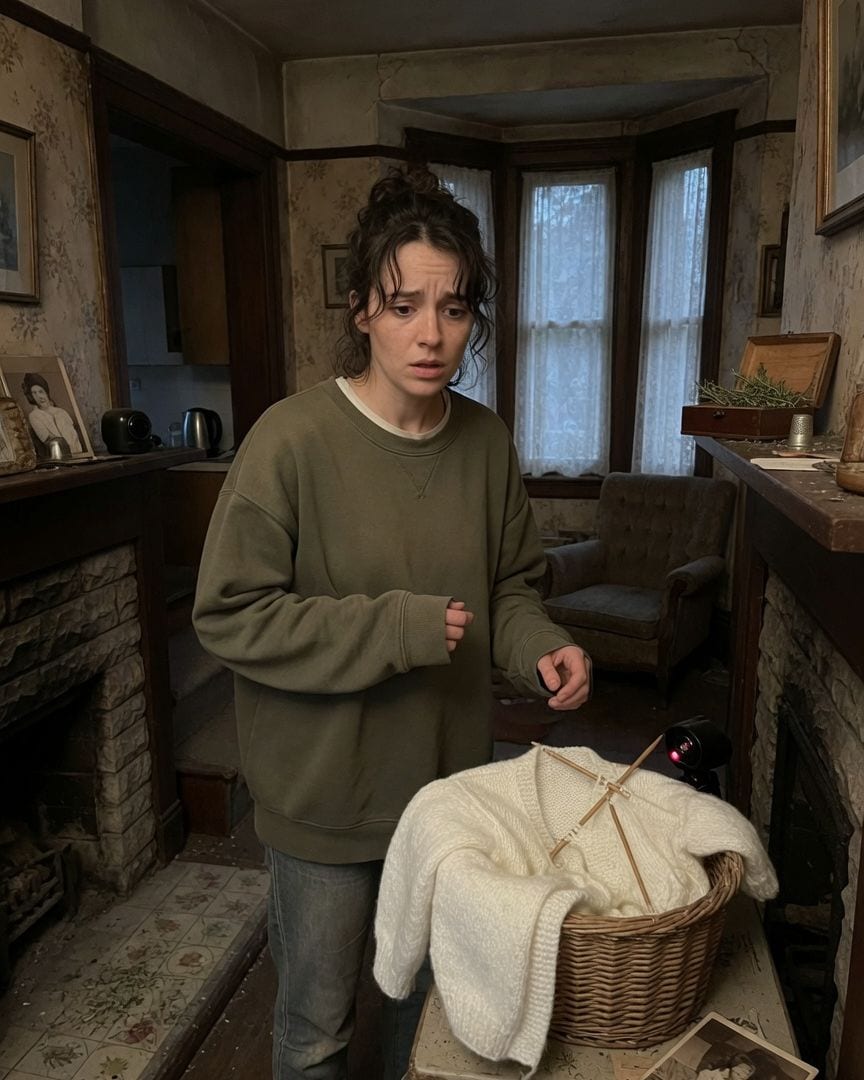
I knew moving into my grandmother’s old house would be quiet. Too quiet, maybe, for a city girl like me. But it had good bones, a solid fireplace, and a sense of history I thought I’d grow to like.
The first thing I really noticed, the day after I moved in, was a workbasket by the old stone hearth in the living room.
It held a half-finished baby’s cardigan, soft white wool, with knitting needles still threaded through the stitches. I figured Grandma had started it years ago, maybe for a friend’s grandchild, and simply forgotten it. A sweet, domestic detail.
I left it there.
A few days later, I walked past it again. The cardigan looked… fuller. Longer. I paused, tilting my head. Had I just remembered it wrong? No, there were definitely more rows of neat white stitches creeping up the wool.
I don’t knit. Never have. And the house was locked, had been since I bought groceries that morning. I even checked the deadbolt again, just to be sure. It was solid.
The next time, it was unmistakable. Another couple of rows, the pattern perfect. Last Sunday, I came down for coffee and saw that the first sleeve had been cast off, folded neatly into the basket. My stomach tightened.
I walked over, picked it up. The wool was cool, not warm like it had just been worked. It wasn’t a dream. It wasn’t a memory lapse. I live alone. No one else has a key to this house.
I checked every window, every latch, every single entry point. All secure. The precision of the knitting unnerved me more than anything else. Who finishes a sleeve?
A faint, almost imperceptible smell has started to hang in the air, too. Not mine. Not dust, or old wood, or anything familiar. It’s rosemary and something else, something powdery and delicate, like old lace.
The house itself doesn't just feel quiet; it hums with a silence that feels like it’s holding its breath, watching me.
I set up a small, discreet camera in the living room, focused squarely on the workbasket. I checked every window and door lock again, meticulously, before heading out for the day.
When I came back, the feed showed nothing but an empty room for eight hours straight. Not even a shadow. Yet, the knitting had progressed. Another three rows, perfectly even.
The camera was useless. But the weirdness wasn't stopping. I started noticing other oddities, little things that built up.
Every morning, around 6 AM, I’d hear it – the distinct, high-pitched whistle of a kettle, sharp and clear, coming from the kitchen. I don't own a whistling kettle. My electric one clicks, it doesn't sing.
I’d rush in, but the kitchen would be silent, cold. Then there was the third stair from the bottom on the main staircase. It had a deeply worn spot, almost a hollow, right in the center.
I found myself unconsciously avoiding it, stepping over it without thinking, as if someone else’s routine had become ingrained in my own movements.
And the armchair by the bay window in the living room – its cushion was permanently indented, a deep, comfortable hollow, as if someone always sat there, just out of my line of sight.
The feeling of not being alone became constant. I tried to dismiss it, blaming lack of sleep, the stress of moving, the isolation. But the knitting. It was real. It was tangible.
One afternoon, while I was procrastinating unpacking in the small study, I noticed a loose floorboard near that same fireplace. It wasn’t obvious, just a slight give under my foot.
Curiosity, or maybe a growing sense of desperation for an explanation, made me pry it up. Beneath it, nestled in the dust, was a small, smooth wooden box.
Inside, among dried rosemary sprigs and a tarnished silver thimble, lay a faded sepia photograph. It showed a woman, weary-looking, with a distant, almost sorrowful expression.
She was sitting in an armchair, the very same one by the bay window, its cushion visibly indented even in the old photograph. And in her lap, in a workbasket by the exact same fireplace as mine, was a half-finished baby’s cardigan.
I stared at the photograph, my breath catching in my throat. The woman, Eileen Delaney, looked directly at the camera, her eyes holding a deep, unsettling sadness. On the back, handwritten in elegant, looping script, was a date: 'August 1948.'
My gaze flickered from the faded sepia image to the workbasket by the fireplace, the modern white wool, the new stitches that hadn’t been there yesterday.
Then back to the photo, to the same cardigan, unfinished, nearly identical, in the hands of a woman long gone. The dread wasn't about a ghost; it was about the impossible, coherent repetition. This wasn't a memory.
This was still happening. I slowly, carefully, placed the photograph back in the box, my fingers trembling.
I spent the next few days holed up, researching Eileen Delaney. The internet was sparse, but the local historical society seemed like a better bet.
It was a quiet building, smelling of old paper and dust, with sunlight slanting through tall, arched windows. Julian Harlow, the archivist, was a meticulous man in his late fifties, glasses perched on his nose.
He was initially helpful, but cautious, his eyes always seeming to observe more than they let on.
I asked about the house's history, subtly probing about Eileen. He provided property deeds, census records. My hands shook slightly as I navigated the microfiche machine. I found a local newspaper from the late 1940s.
It was a small article, almost buried on page three, mentioning a 'tragic accident' involving Eileen Delaney’s infant child. It was dated almost exactly a year after the photograph had been taken.
The details were sparse, disturbingly vague, hinting at 'unexplained circumstances' and local whispers. No charges, no clear answers, just a small life gone.
Julian, seeing my focus on the microfiche, cleared his throat. "That house," he said, his voice softer now, almost conspiratorial. "It's always had a particular kind of occupant. Sensitive types, you know?
They say it has a way of… holding onto things." He didn’t elaborate, just gave a knowing, almost pitying glance, before turning back to his ledgers.
The feeling of being watched intensified after that. It wasn't just the house anymore; it felt personal. One morning, I woke up to find a small, antique porcelain doll sitting on my bedside table.
It had been high up on a dusty shelf in the attic, tucked away behind boxes. Now its empty, painted eyes were fixed on me, its porcelain skin unnaturally pale in the dawn light.
I remember putting it back in the attic, securely. I had.
That same afternoon, a faint, almost imperceptible lullaby began to emanate from the empty nursery across the hall. A gentle, humming tune I couldn’t quite place, mournful and sweet.
I stood in the doorway, listening, my heart hammering against my ribs. There was nothing there. Just dust motes dancing in the sunbeams.
Later that day, Julian Harlow called. His voice on the phone was different from our earlier conversation – no longer just academic.
He claimed to be following up on my research, but his questions were oddly specific, asking if I’d 'found anything else of interest' about the house's past occupants, especially any 'patterns.' He paused, letting the word hang in the air.
"Some houses," he said, his tone still quiet but with an undeniable undercurrent of knowing, "they hold their memories very close. Sometimes it's best not to disturb them too much."
It sounded less like advice and more like a subtle warning.
I hung up, my hands clammy. This was too much. The doll, the lullaby, Julian's insinuations, and the knitting that continued to grow. I clutched the faded photograph and the newspaper clipping, my resolve hardening.
I needed answers, not vague warnings. I went back to Julian’s office.
I found him poring over a large, leather-bound book, his brow furrowed. I laid the photograph and the newspaper clipping on his desk. "Eileen Delaney," I said, my voice steadier than I felt. "Her baby died, didn't it?
Just after this photo was taken."
Julian sighed, running a hand through his thinning hair. His polite, academic facade cracked, revealing something weary beneath. "Annika," he said, pushing his glasses up his nose, "that house… it has a long-standing, unsettling reputation in town.
Officially, of course, it's just 'unfortunate circumstances,' 'old wives' tales.' But the records…"
He pulled out a heavy, leather-bound town record ledger from a locked cabinet, its pages brittle and yellowed with age. He opened it to an index, then flipped to a specific section, tracing a finger down the entries.
He pointed to Annika’s address. "Look here," he said, his voice low. "Entry after entry. Different family names, spanning back generations. Over a century, I reckon."
Each entry under my address had vague, chilling annotations: 'Infant lost to fever.' 'Child vanished.' 'Tragedy of the youngest.' 'Found unresponsive.' No clear causes, often followed by an abrupt sale or abandonment of the property.
"I don't believe in ghosts, Miss Ingram," Julian insisted, looking directly at me, "but I believe in unfortunate cycles. Patterns. And that house seems to collect them."
He explained that the house wasn't just retaining memories; it was echoing the routines, the habits, even the unfinished tasks of its past occupants.
"The 6 AM kettle," he murmured, almost to himself, "the worn stair, the smell of rosemary – these aren't just Eileen's. They're a confluence of many lives. Many losses." He tapped the ledger. "The house holds a memory.
A powerful, repeating pattern. Eileen Delaney was merely one in a long, tragic line of women who lived there. And started knitting."
I returned to the house, the knowledge settling over me, heavy and cold. The afternoon sun, usually so comforting, now seemed to press in, illuminating dust motes that looked like tiny, watchful eyes.
I understood the knitting now, the routines, the echoes of Eileen. They weren't random. They were part of something older, something cyclical.
I walked to the fireplace, my feet dragging, and picked up the baby's cardigan. It was almost complete now, just a few rows left on the second sleeve. The needles were still threaded through it, waiting.
As I examined the perfect, new stitches, a wave of profound nausea washed over me, far more intense than any I'd felt before. It wasn't just the dread, not just anxiety. This was physical, a churning in my gut.
I stared at the knitting, then at my own trembling hands.
I was late. Weeks late. The realization hit me like a physical blow. A forgotten pregnancy test lay tucked in my bathroom cabinet, a silly, hopeful purchase from a month ago.
With a growing sense of dread, I fumbled for it, my fingers clumsy. I followed the instructions automatically, my eyes glued to the small window.
Two stark pink lines bloomed on the stick.
I stared at them, then back at the almost-finished cardigan in my hand. The house’s silence suddenly immense, suffocating. The knitting wasn’t just Eileen’s anymore. It was mine.
Terrified, I locked myself in the house. Not to keep anything out, but to keep myself from running. I had to understand. I spent every waking hour frantically researching, my laptop screen a harsh glow in the deepening twilight.
Julian had mentioned an obscure local folklore book, one he’d dismissed as 'superstition,' about the land itself. I found it online, scanned copies from a university archive.
The words chilled me to the bone. It spoke of an ancient, pre-colonial earth spirit tied to the very land the house sat upon – a 'Cradle-Taker.'
It demanded an annual 'offering' to ensure the land's fertility, specifically the completion of a child's garment and the quiet acceptance of its claim.
The knitting wasn't just a memory, or an echo; it was an active, ongoing ritual, a preparation. The routines – the kettle at 6 AM, the worn stair, the specific armchair – weren't just imprints of past lives.
They were the house's way of maintaining a predictable rhythm, a comforting, domestic familiarity, until the 'offering' was ready. Eileen, and all the others, weren't just victims of misfortune.
They were unwitting participants, their lives and their grief woven into the fabric of the house's ancient, indifferent demands. The house didn't just remember; it orchestrated.
I tried to leave. Panic flared, a desperate, animal instinct. I grabbed a small bag, stuffing it with essentials, my phone clutched in my other hand. I called Sarah, my friend, but my phone had no signal. Nothing.
Just dead air.
I rushed to the front door, yanking on the handle. It felt impossibly heavy, stuck, as if rooted to the frame, though it wasn't locked. I pulled again, harder, my shoulder straining, but it wouldn't budge.
I tried other exits – the back door, the windows in the kitchen and the study. They too resisted, not physically barred, but simply unwilling to open.
Not locked, but unmoving, as if the house itself had closed around me, a silent, unyielding cage.
The faint, haunting lullaby from the nursery across the hall, which had been a whisper, now grew louder, more insistent, echoing through the empty rooms. It wasn't sweet anymore. It was a siren song, pulling me.
I stumbled, half-crawling, towards the sound, towards the nursery I'd optimistically prepared just weeks ago.
I pushed open the door. The room was spotless, bathed in the last, golden light of the setting sun. In the small bassinet, the porcelain doll sat, its blank eyes staring up at the ceiling.
Draped over the edge, perfectly finished, was the baby’s cardigan. Every stitch complete. Every thread tied off.
I collapsed to the floor, the truth detonating in my mind: I was trapped. Not by walls or locks, but by the house’s ancient, indifferent will. There was no escape. Only completion.
Days later, Sarah Pierce, unable to reach Annika, drove to the house. The front door, surprisingly, was unlocked. She pushed it open, a faint chime sounding as the old bell above the frame stirred.
She found the house eerily quiet, perfectly clean and orderly, as if someone had just tidied up. Annika’s belongings were all there, undisturbed, but Annika herself was gone.
The workbasket by the fireplace was empty, the knitting needles removed, tucked away somewhere. The faint scent of rosemary and old lace was almost overwhelming in the stillness, a heavy, sweet perfume clinging to the air.
Sarah walked through the silent house, a strange unease settling over her. The quiet wasn't peaceful; it was watchful. She pushed open the door to the nursery. Inside, the room was spotless, the late afternoon light soft through the curtains.
She noticed the small bassinet in the corner. Draped over its edge, neatly folded, was a perfectly finished, small white cardigan. Sarah smiled faintly, a strange, knowing look in her eyes, and gently closed the door behind her.
The small white cardigan, finished at last, lay folded neatly in the bassinet, waiting.
If this one got to you
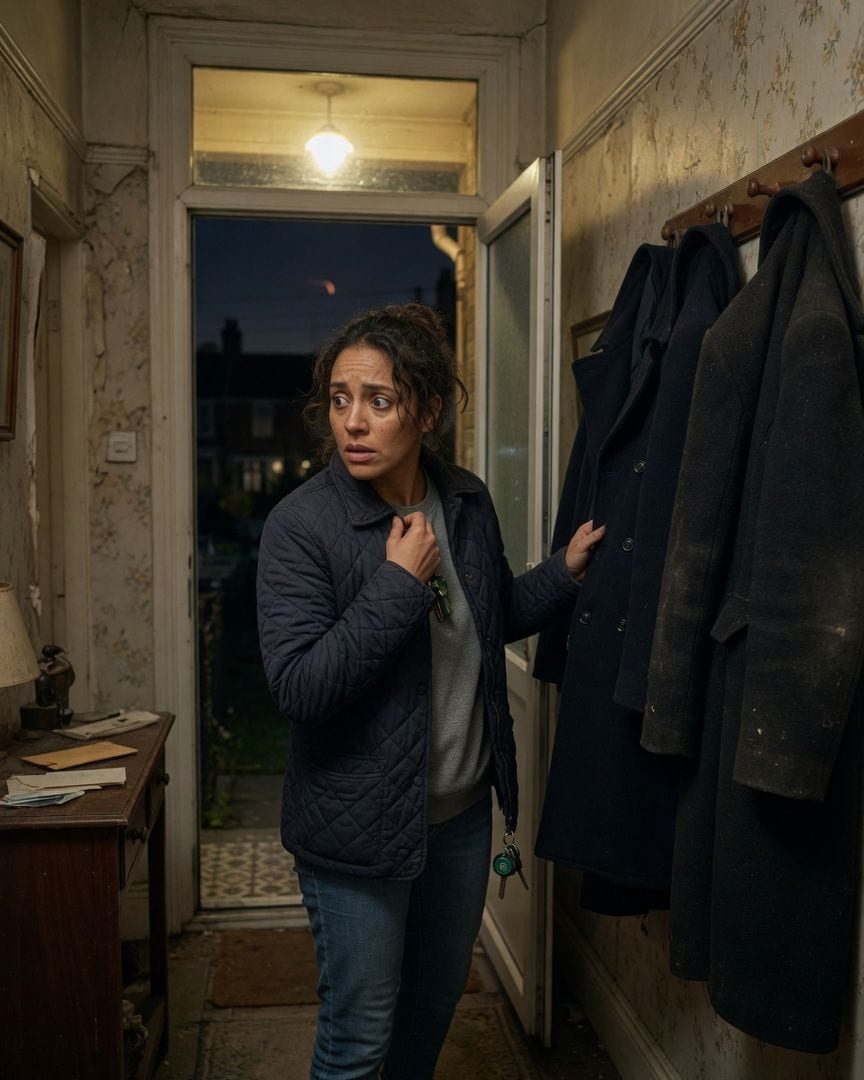
My tiled path was new, my front door green. Then three dark coats hung in my hallway.
After a late night watching the lunar eclipse, I returned to my Victorian house, only to find the path and front door inexplicably changed. Though the house seemed to revert to normal, strange things started appearing: a kettle warm from boiling, a distinct impression on my armchair. Then, an antique, lavender-scented handkerchief appeared on my bedside table, an undeniable presence in my private space.
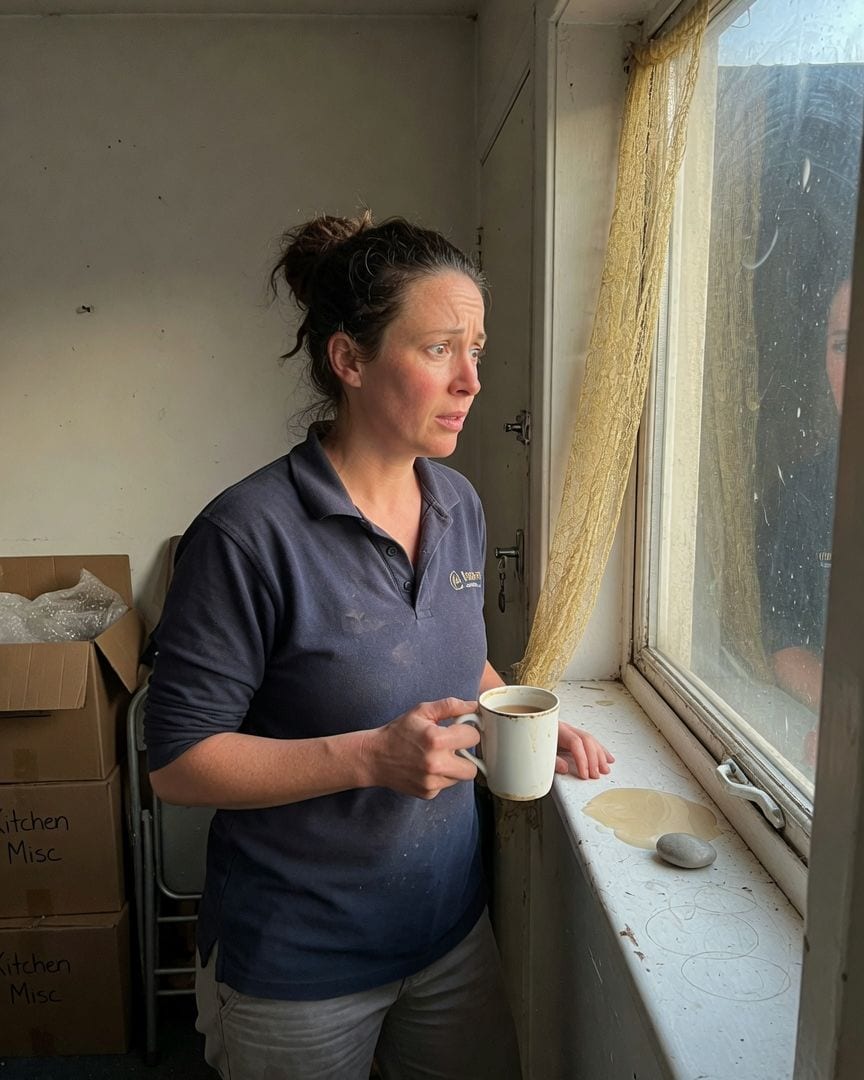
A cold cup of milky tea sits on my box room windowsill. I don't drink tea with sugar. The flat locks from the outside every time I leave.
After moving into my new flat, I started noticing a strange detail. A chipped ceramic mug, filled with cold, milky tea, repeatedly appears on my box room windowsill. I live alone, don't drink tea with sugar, and my flat is always triple-locked. Yet, the tea is always there.
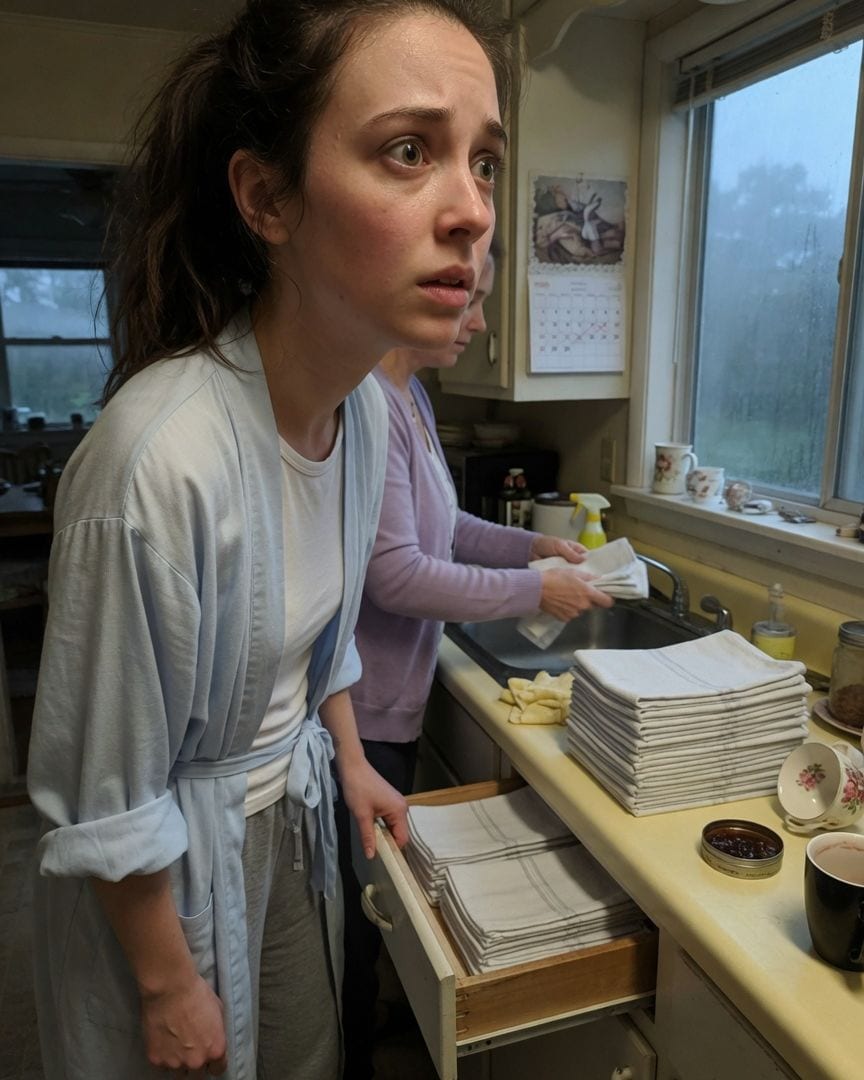
My mother's left wrist has a new scar. She never had one there.
My mother is finally home after her disappearance, and I'm trying to find our old rhythm. But then I watch her fold tea towels, a simple ritual I learned from her. She's doing it completely wrong, seam-out, insisting it's how she's always done it.
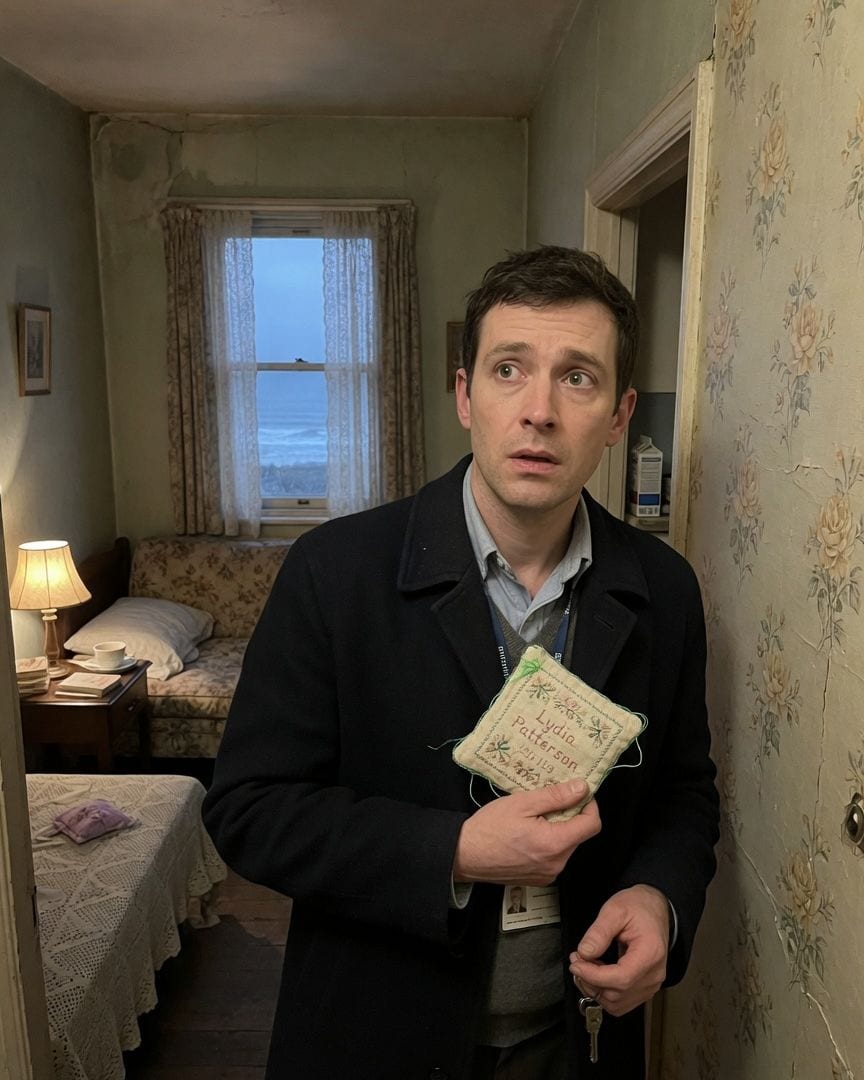
The 'empty' almshouse I was auditing wasn't empty. I heard a bare foot *thump-thump* from next door.
My new charity role involves auditing the supposedly 'empty' almshouse units. But from the unexplained activity outside to a fresh carton of milk inside, something is deeply wrong. Then, in one unit, I found a dead woman's sampler with a jarringly new thread, and heard bare feet thumping next door.
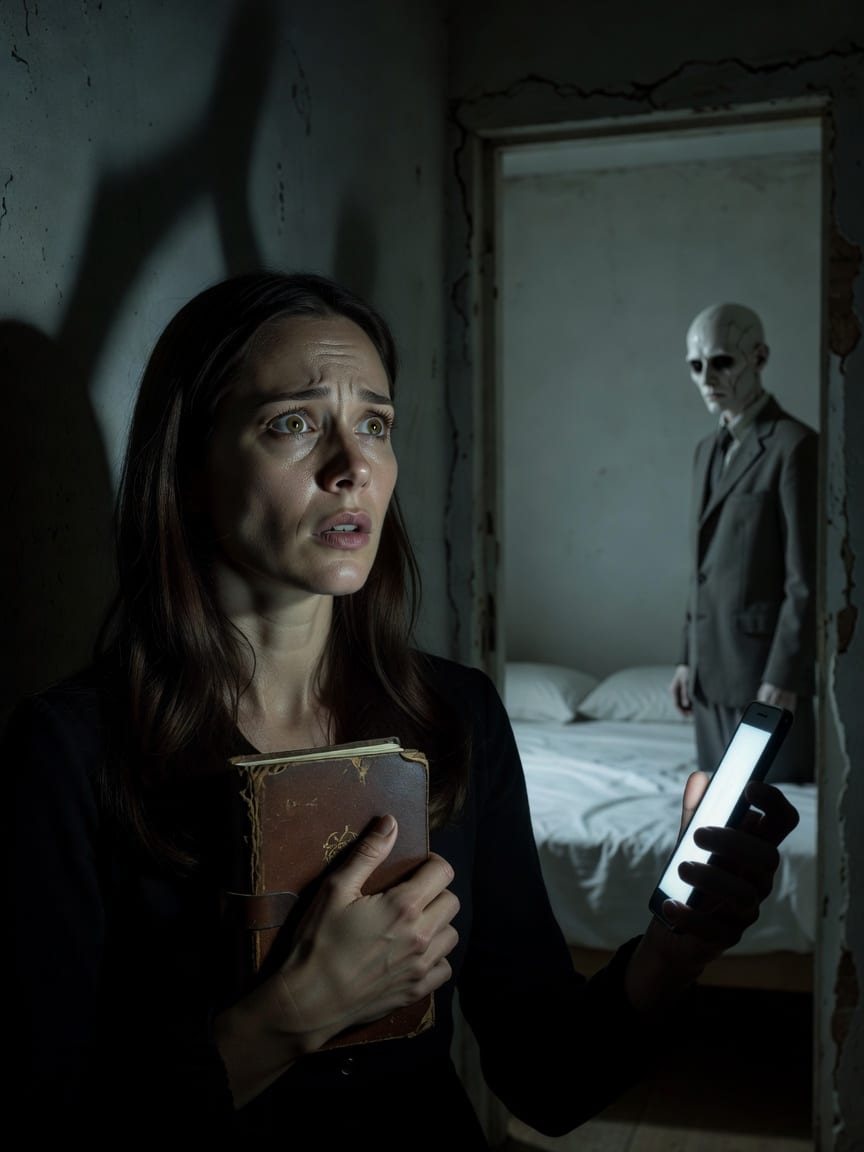
Behind a plastered-over doorway, I found a room. Papered, carpeted, and furnished with a made bed, sealed for decades. The air was dead still, but the bed wasn't dusty. My council tax bill only lists five rooms.
I'm Claire, an architect, meticulously planning my new Victorian terrace renovation. But when I uncovered a hidden room behind a wall, everything I knew about time and decay shattered. The bed was perfectly made, the air still, yet there was no dust, only an unnerving cold.
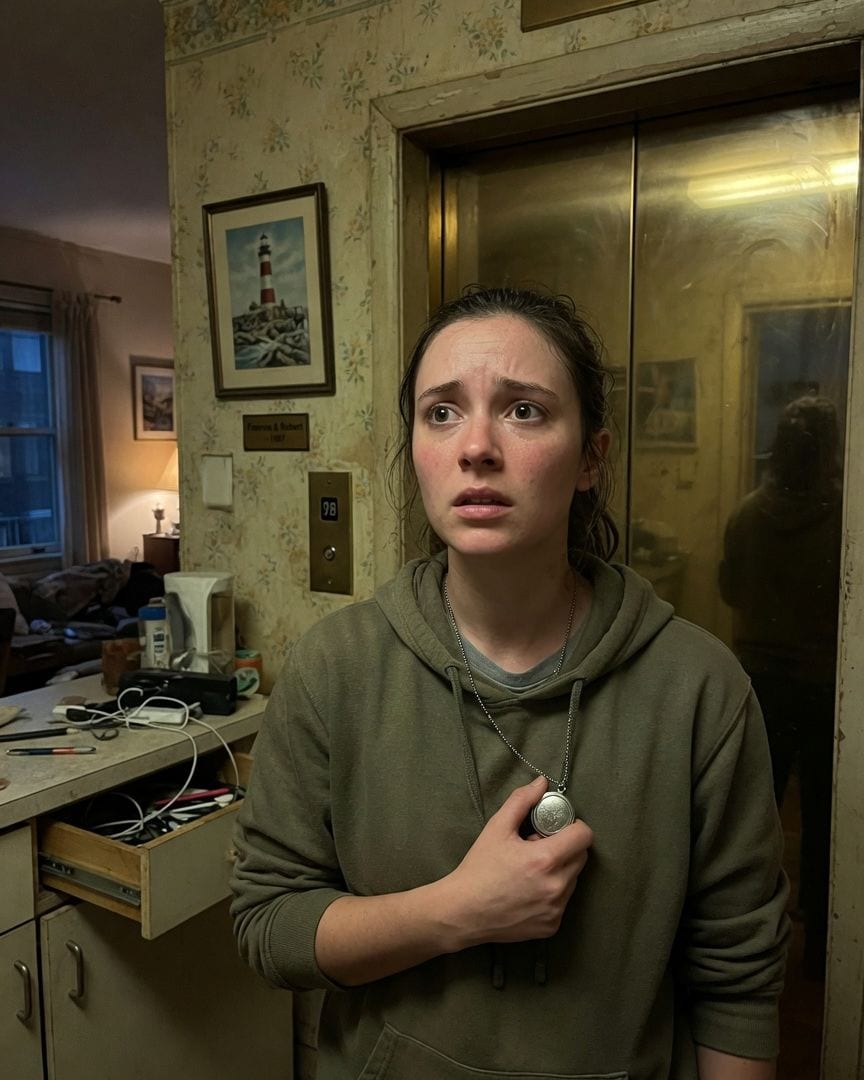
My aunt rode the elevator up, humming, at ease. She hadn't stepped in one since 1994, and told the story of why to anyone who'd listen.
My Aunt Frances stood beside me in the hospital elevator, humming a low tune. It felt deeply wrong; she hadn’t set foot in one since a traumatic incident in 1994, always taking the stairs. Now, after five days missing, she was completely at ease, denying she’d ever feared something so silly, her eyes holding an unsettling calm.