My car got a speeding ticket in Kent at 1 AM. The photo shows my face. My car was snowed-in at home, in Bristol.
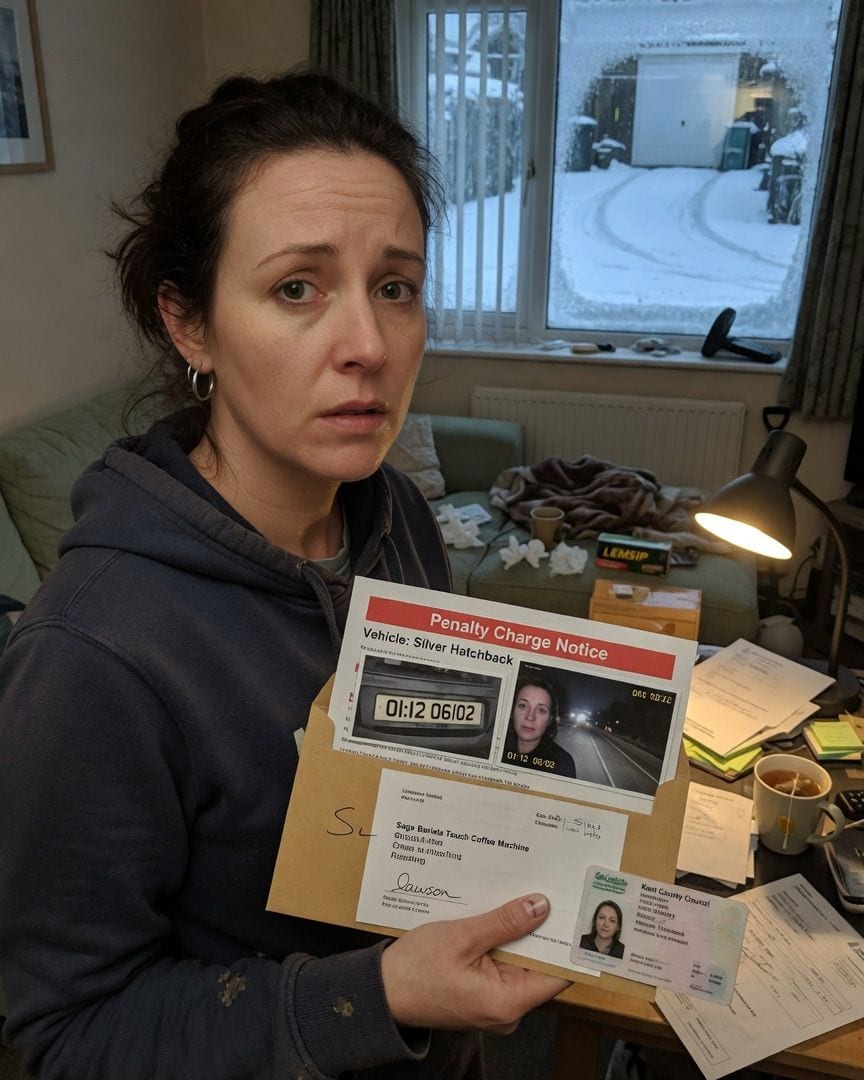
The official brown envelope arrived with the morning post, a traffic penalty notice from Kent. I remember the weight of it, the slick feel of the paper, and a cold knot tightening in my stomach even before I opened it.
It was for my silver hatchback, clocked at 94 mph at 1:12 AM on the 6th of this month. Two photographs were attached: one of the plate, clear as day, undeniably mine.
The other, grainy but undeniable, showed the driver, a face turned towards the lens. My face.
My car had been in my garage in Bristol that night, buried under two feet of snow. The driveway was a pristine, untouched white blanket, not a tire track or footprint marring it.
My neighbor, Joel Sterling, 45, had even seen it, laughing about how I was trapped when he dug his own path out.
My uncle, Donald Lawson, 60, had called to check on me that morning, specifically commenting on my uncleared drive, saying he hoped I had enough tea.
But the photo, stark and cold, showed me, or someone identical to me, tearing down a motorway in Kent, 200 miles away. The enforcement officer’s note, printed in a neat, clinical font, was blunt: 'identity not in doubt.'
I spent the next two days trying to dispute the penalty. It felt absurd, like arguing with a weather report about yesterday’s sunshine when I clearly remembered the blizzard. I called the council, the police, the enforcement agency.
Each conversation was a dead end.
"We have photographic evidence, Ms. Lawson," a polite but firm voice from the Kent County Council told me. "A clear plate, and the officer’s confirmation. The driver's identity was verified."
"But my car was in my garage! Snowed in! My driveway was impassable," I insisted, my voice tight with frustration. "I have witnesses!"
"The system doesn't make mistakes, Ms. Lawson," he repeated, a canned finality in his tone.
I even tried to get Joel and Donald to write statements, but the official channels only accepted digital evidence or court appearances.
My own clear memory, my witnesses, the physical evidence of the snow—none of it seemed to matter against the cold, digital facts presented by the system. The sheer, unyielding weight of the official record was crushing.
It was like shouting into a void.
A seed of unease, tiny at first, began to sprout. If the system was this insistent about something I knew was utterly false, what else might it insist upon? What other discrepancies might exist?
I started looking, sifting through my bank statements, my online accounts, my delivery notifications, searching for any other tiny, impossible detail. Anything that didn't quite line up.
It was a delivery confirmation for a high-end coffee machine, addressed to me. The shipping label indicated it was signed for at an industrial park in Reading.
The date on the slip was the 8th of the month, two days after the Kent incident.
I remembered that day clearly: I’d been at home, battling a bad cold, glued to my sofa with a box of tissues and an old movie.
The signature at the bottom of the slip, a precise, elegant loop for the 'S' and a sharp, definitive 'L' for the 'Lawson', was unmistakably mine.
I held it up to my own signature on my driving license, then to an old bank statement, then a card I’d signed for my aunt. The lines, the pressure, the angle—it was perfect.
I stared at the paper, my breath catching in my throat, the impossible truth of my own handwriting staring back at me from a place I'd never been, for a package I'd never ordered.
I immediately took the delivery slip to Eileen Hughes, a local handwriting expert I’d found through a frantic online search.
Eileen was a meticulous woman, all sharp angles and spectacles, and she spent an hour under a bright lamp, comparing the signature on the slip to multiple samples of my handwriting.
She used a magnifier, then a light box, her brow furrowed in concentration.
"There's no doubt, Ms. Lawson," Eileen confirmed, pushing her spectacles up her nose, her expression professional but slightly puzzled. "The pressure points, the unique flourishes… it’s a perfect match. Not a forgery, you understand. Not a clever imitation.
This is genuine."
The word 'genuine' echoed in my mind, colder than the snow that had long melted outside. If it was genuine, then I had signed it. But I hadn’t. That impossible truth gnawed at me.
Armed with Eileen’s unsettling confirmation, I began a frantic search. I pulled every record I could access: utility bills, online purchases, library loans. The pattern emerged, chillingly clear.
A subscription to a niche gardening magazine I’d never read, signed up for online from an IP address in Norwich.
A minor outpatient procedure at a dental clinic in Manchester, marked 'patient signed consent' on a form dated when I was on holiday in Spain, enjoying the sun and deliberately avoiding dental work.
Each impossible entry was confirmed by a signature, a timestamp, or a 'positive ID' note.
The records weren't just wrong; they were building an entire phantom life, a shadow Sophia, meticulously documented and undeniably mine. It wasn't just a glitch; it was a system, precise and relentless.
My relentless inquiries began to attract attention. It started subtly. A request for past medical records, flagged as 'unusual activity,' was met with a polite but firm refusal from the digital portal.
An email from my bank, ostensibly a security alert, contained a subtle, almost imperceptible warning in its otherwise bland text: 'Unwarranted deep dives into personal account history can lead to unforeseen complications.'
It felt less like a warning and more like a threat.
Then came the call. No caller ID, just a blank screen. I almost didn't answer, but something compelled me. A calm, modulated male voice, utterly devoid of emotion, simply said, "Some things are best left undisturbed, Ms. Lawson.
The records are there for a reason." The line clicked dead before I could even ask who it was. I felt a prickle of ice down my spine, the hairs on my arms standing on end.
Someone wasn't just aware of my digging; they were actively monitoring it. The hunter had become the hunted.
I started noticing things. A car, a dark, non-descript saloon, parked a little too long down my street, always just out of direct sight, but there.
A shadow that seemed to linger when I left my flat, just at the edge of my vision, melting away when I turned my head.
The dread was no longer abstract; it had a face, an unknown observer, and it was closing in. My apartment, once a sanctuary, now felt like a cage, its walls too thin, too transparent.
I traced the origin of the Manchester dental clinic record to a specific administrative office in a bland, grey building on the outskirts of Bristol.
It was one of those places that looks like it was designed to be forgotten, nestled between a discount furniture warehouse and a self-storage facility. The sign was faded, just 'Central Records Administration'.
Inside, the air was thick with the smell of old paper and dust.
I found Julian Beaumont, 55, seated behind a desk piled high with beige folders. He had a calm, almost serene demeanor that unnerved me instantly. His movements were slow, deliberate.
His eyes, when they met mine, were a pale, unsettling blue, entirely devoid of surprise.
"Mr. Beaumont," I began, my voice trembling slightly despite my best efforts to control it. I laid out the stack of impossible documents: the speeding ticket, the delivery slip, the magazine subscription, the dental form.
"I need to understand these records. This dental procedure, this magazine subscription, this traffic ticket… they're all impossible. Yet, they carry my name, my signature, my identity."
Julian looked up, his pale blue eyes meeting mine without a flicker. The office was silent, save for the low hum of ancient fluorescent lights above us.
"Impossible from your perspective, perhaps, Ms. Lawson," he said, his voice soft, almost a murmur, yet carrying an unsettling weight. "But entirely accurate from the system's."
My frustration, simmering beneath a layer of ice-cold fear, finally broke through. "But I was never there! My car was snowed in! My signature was confirmed genuine, but I didn't sign it!"
My voice rose, echoing faintly in the quiet office.
Julian merely nodded, unperturbed. He picked up one of my documents, a medical consent form, and smoothed it carefully. "The system validates identity in more ways than mere physical presence, Ms. Lawson.
Your identity, your essence, is part of a larger network. These are not errors. They are entries. Actions performed on your behalf, by you, in a manner of speaking."
The blood drained from my face. The impossible traffic ticket, the unquestionable signature, the silent, efficient system—it all clicked into a terrifying, coherent whole. He wasn't denying the facts; he was redefining reality itself.
The fluorescent hum seemed to grow louder, a high-pitched whine that resonated with the panic beginning to bloom in my chest.
A cold dread spread through my veins, chilling me from the inside out. "On my behalf?" I whispered, the words barely audible. "Who is 'me' then?"
Julian smiled then, a faint, unsettling curve of his lips that didn't quite reach his eyes. He leaned forward slightly, his posture perfectly relaxed. "You are the host, Ms. Lawson. The anchor.
The system requires a validated identity, a core matrix, if you will. And you provide it. Every record, every signature, every 'positive ID'… it’s all tied to you. You were always inside it, Sophia.
The records are simply catching up to you."
His words, delivered with such serene conviction, shattered my understanding of myself. It wasn't an external duplicate, a fraud, or a glitch. It was me.
A part of me I didn't know existed, living a shadow life, and I had been fueling it all along.
Julian explained the full, horrifying truth with the calm of a librarian discussing overdue books. He gestured vaguely at the stacks of folders, as if they were all part of some vast, intricate catalog.
"The 'record-self' is a compliant, optimized duplicate of your identity," he elaborated. "It exists entirely within the digital and bureaucratic fabric of society. It processes the mundane, the necessary, the things that would otherwise clog the wheels of everyday life.
Small purchases, minor administrative tasks, signing off on routine forms… it ensures seamless integration into the grander scheme. It's efficient. And it requires a living, validated host. You, Ms. Lawson, are that host.
Your very existence, your documented life, provides the anchor for its own. It's not a separate entity that exists in a physical sense, but a systemic manifestation of your identity, acting within the parameters of the digital world.
The traffic camera saw your car, yes, but more importantly, it recognized your identity in the driver's seat. The signature is yours because, for the system, it is you acting."
The implications were staggering. Every impossible record, every inexplicable action, wasn't a mistake, but a function. I was not merely a victim of a wrong record; I was its unwitting, indispensable engine.
The air in the office felt impossibly heavy, suffocating.
My mind reeled. "So, what?" I demanded, my voice raw. "I just… accept this? That there's another 'me' out there, living a phantom life, signing things, doing things, and I have no control?"
Julian nodded, his gaze unwavering, utterly composed. "You have always been part of it, Ms. Lawson. To try and sever it… that would be to unravel your own validated existence.
Imagine the chaos: your bank accounts flagged, your identity questioned at every turn, your very presence within official systems becoming a contradiction. The 'record-self' ensures your smooth functioning within society.
To deny it is to deny a part of yourself, as the system perceives it." He paused, a flicker of something almost like pity in his pale eyes. "Many find a certain peace in understanding their role."
He picked up a pen from his desk, a simple black ballpoint, twirling it idly between his fingers. "The choice, of course, is yours. But the consequences of fighting the current are often… profound."
I stared at him, at the quiet, unassailable logic of his words. A cold wave of despair washed over me, heavy and final. There was no escape.
No grand battle to be fought, no villain to expose, no system to dismantle. Just a calm, horrifying acceptance of a symbiotic relationship I never agreed to, a second life tethered to my own, managed by invisible hands.
The calm in Julian's eyes was the true horror, reflecting a world where identity was a malleable construct, and I was merely a node in its network, an interchangeable part.
The pen in his hand seemed to hum, a small, innocent thing, yet it held the weight of my altered reality.
I left the office, the world around me subtly altered. The familiar streets of Bristol, the bustling market, the distant cries of gulls—it all seemed flatter, less real.
I tried to resume my normal life, but the knowledge gnawed at me, a constant, low thrum beneath my conscious thoughts.
I would still find small, impossible entries: a library book checked out, a donation to a charity I'd never heard of, a brief, anonymous comment left on a local forum under my email address.
Each one a quiet whisper of my 'record-self,' confirming its continued, efficient existence.
I no longer tried to fight them.
The peace Julian spoke of was less peace and more a chilling resignation, a quiet despair that settled deep in my bones, knowing a part of me was always elsewhere, doing something I didn't know about.
It was a constant hum, a ghost limb, an echo that made my own presence feel somehow less substantial.
My online posts, once full of my usual witty observations about current events or local quirks, became sparse, then ceased altogether.
My friends noticed her growing quiet, her eyes often distant, as if listening to a conversation only she could hear, one held on a frequency imperceptible to anyone else.
One evening, Joel Sterling, my neighbor, saw her standing by her window, looking out at the street. He waved. She smiled then, a faint, careful thing, and for a moment, it wasn't Sophia looking back at him at all.
Joel saw Sophia in the grocery store a week later. She smiled then, a faint, careful thing, and for a moment, it wasn't Sophia looking back at him at all.
If this one got to you
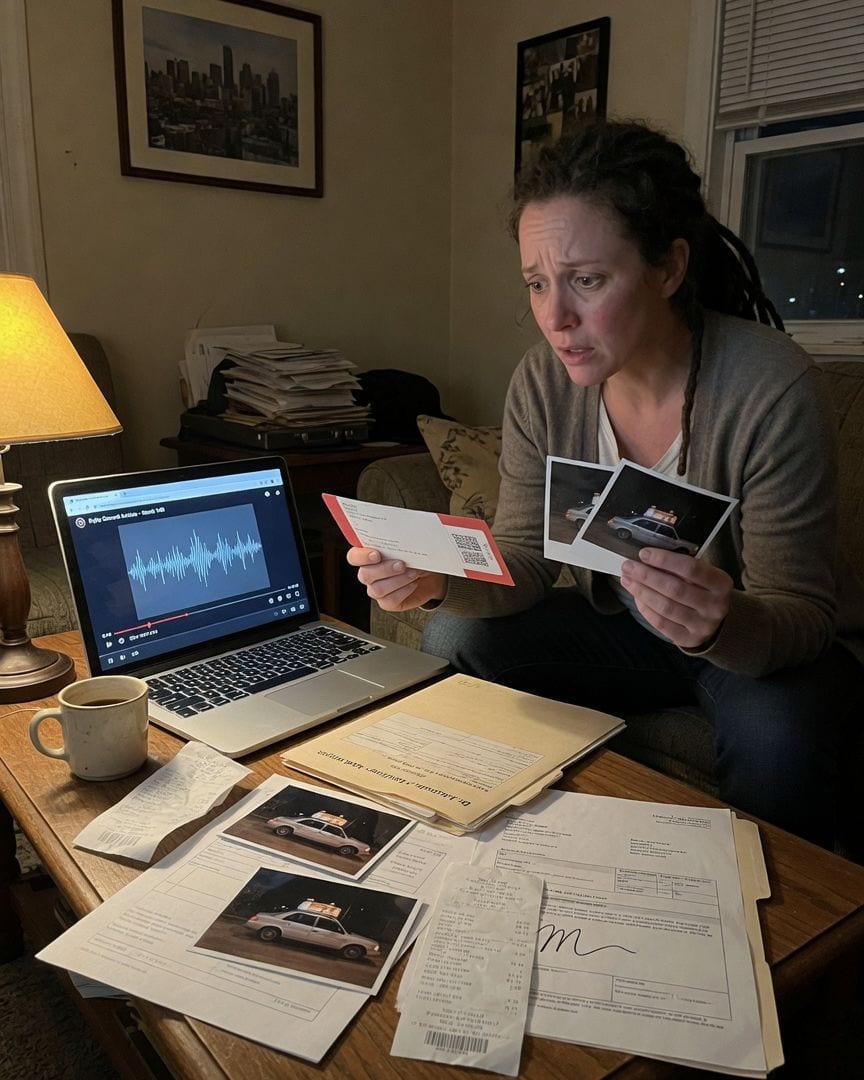
My car ran a red light at 9:41 PM in a town I've never been. The photos show my exact plate, my roof rack. I was speaking at city council, across the state.
A red-light camera ticket arrived for my car, timestamped for a downtown intersection I'd never driven through. But I knew, with chilling certainty, that I was three hundred miles away, speaking at a city council meeting at that exact moment.
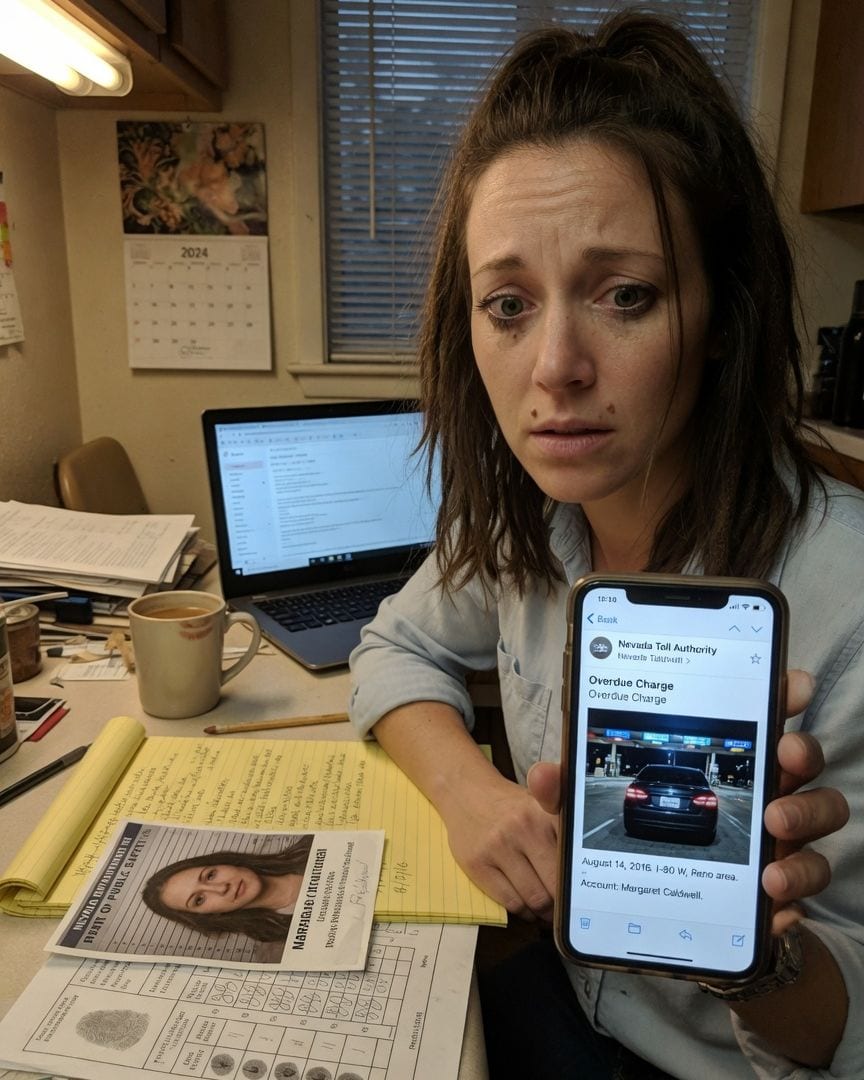
My fingerprints came back to a Nevada arrest eight years ago. Same name, same birth date, same younger face in the booking photo. I’ve never been to Nevada.
My life was predictable, stable, and utterly ordinary. Then, during a routine background check, my fingerprints returned a match to an arrest in Nevada eight years ago. I'd never been to Nevada, yet the booking photo was undeniably my own face, staring back from a life I'd never lived.
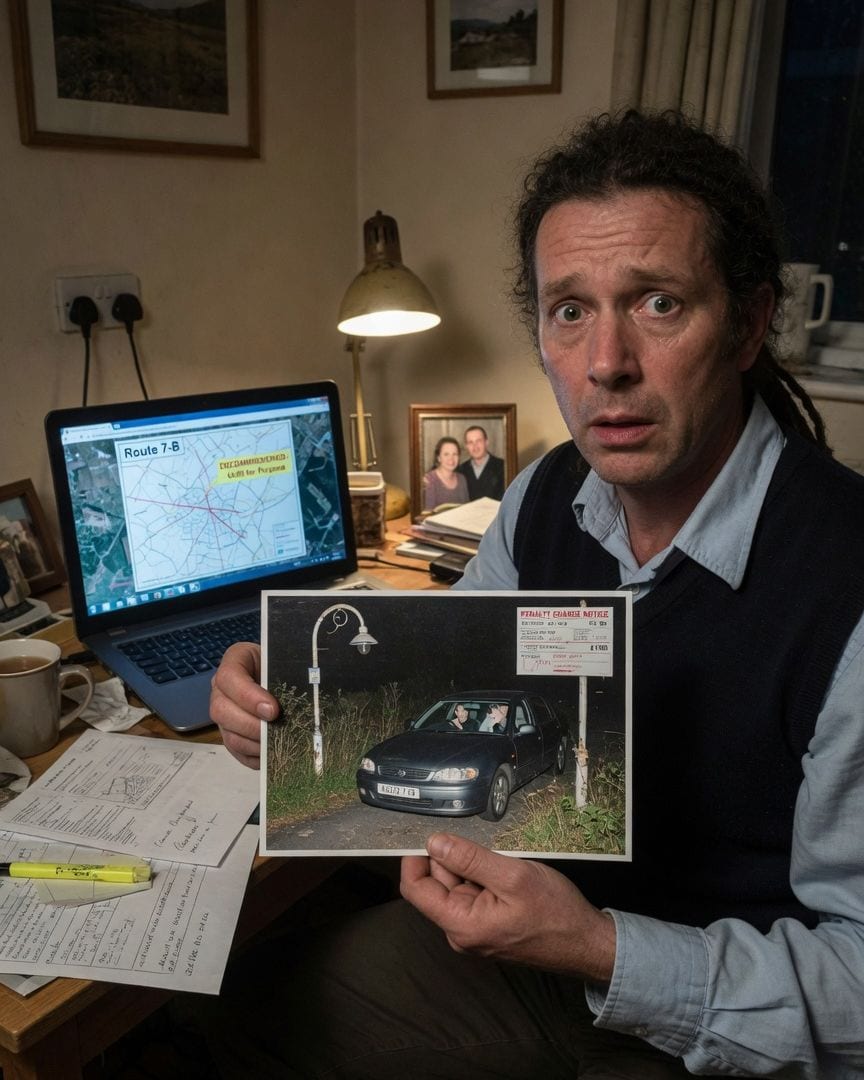
My car was photographed on a road I’ve never seen. The driver looks just like me, hand up against the flash, but I was at the hospital all night.
A routine traffic fine arrived, but the photo was anything but routine. It showed me driving my own car at 11:52 PM on the ninth of last month. The problem? I was at my wife's hospital bedside then, and the road in the photo simply doesn't exist today.
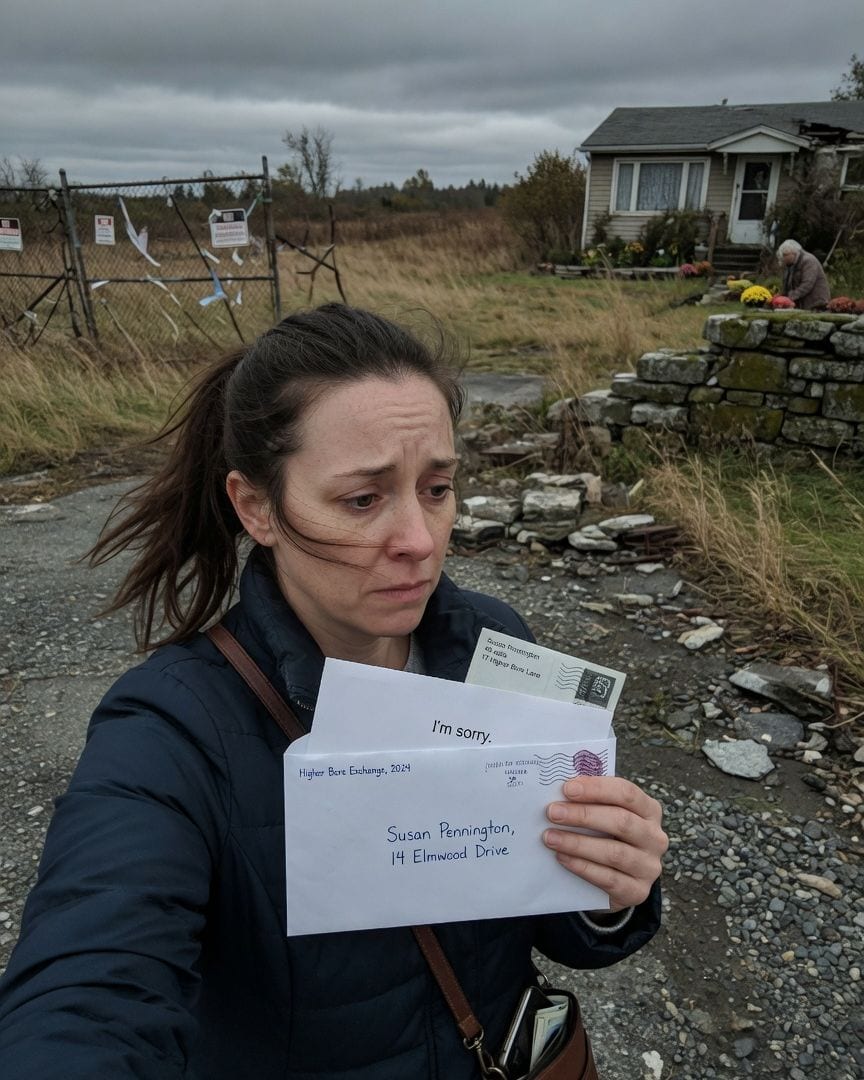
My phone bill listed forty calls made at 3:14 AM to a house demolished in 1990. The paper bill came from a flattened building. My name is on it.
I stared at my phone bill, my morning coffee forgotten. It detailed forty calls, each at 3:14 AM, to an address I knew was a vacant lot where a house had stood decades ago. But the real dread began when I saw the bill's return address: a telephone exchange flattened years before.
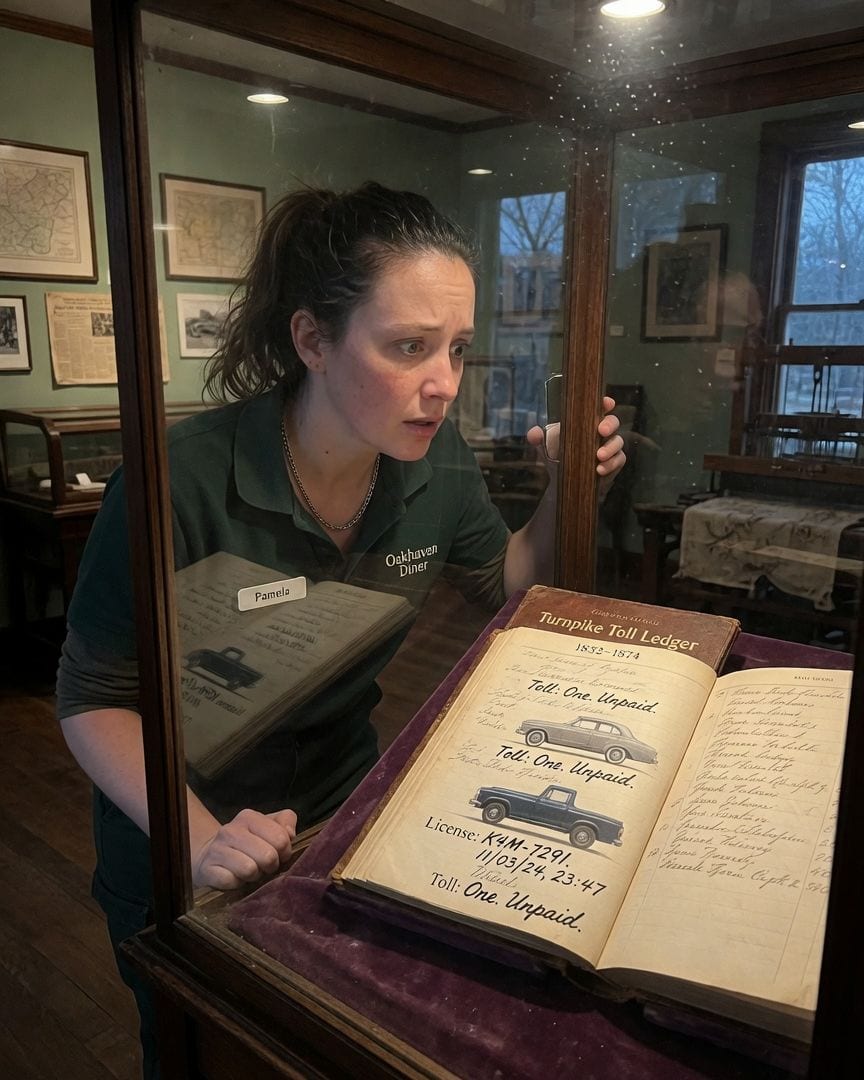
My car stalled at the old turnpike milestone, after dark. The toll ledger, closed in 1874, then listed my car, my stall time, and a toll of one, unpaid.
I had just moved to Oakhaven when my old sedan died on a dark, winding road by an infamous turnpike milestone. The next day, I found my car's exact registration and stall time written in fresh ink in a 150-year-old, locked museum ledger, marked 'Toll: One. Unpaid.' The curator dismissed it as a prank, but her white knuckles and strained voice hinted at something far more unsettling.
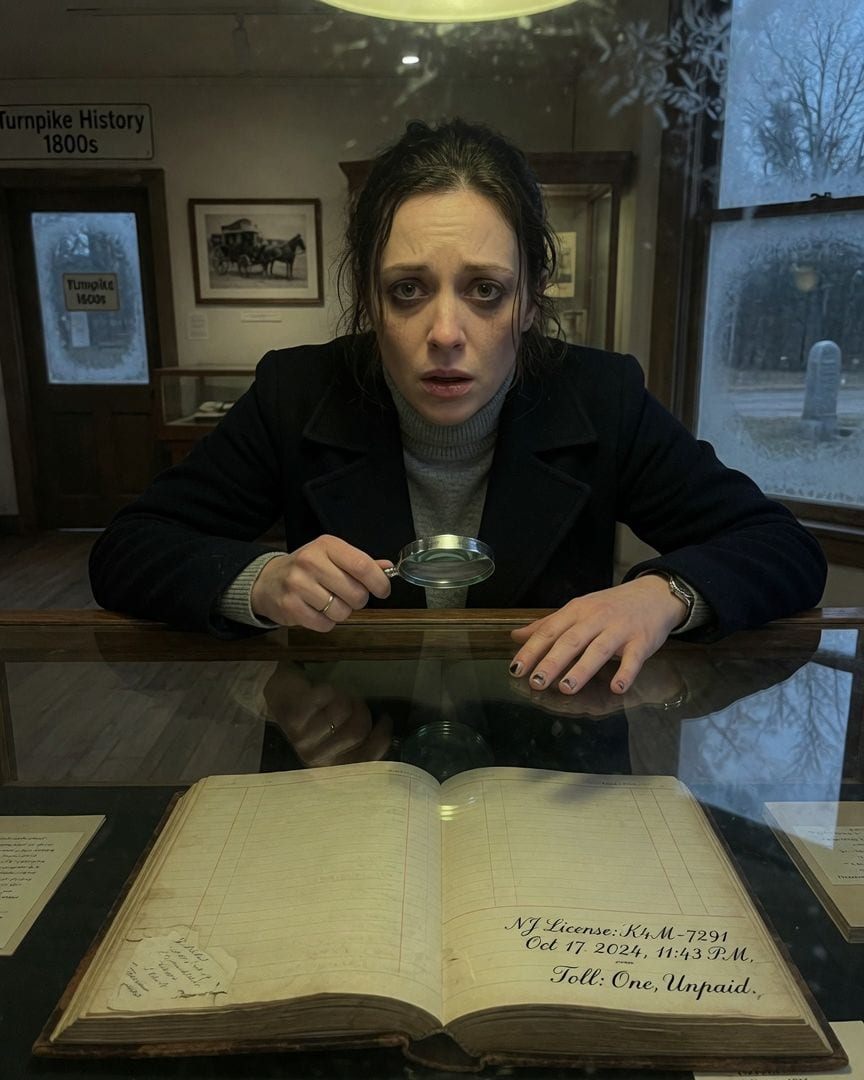
My car stalled at the old turnpike milestone, and the 1874 toll ledger now lists my plate, the date, and an unpaid toll.
My car stalled at an old turnpike milestone, exactly where the carrier had warned me never to stop after dark. The next week, at the local museum, I found a new entry in a century-old toll ledger. There, in fresh ink, were my car's registration, the exact date and hour I stalled, and 'Toll: One, Unpaid.' I knew it wasn't a joke.