My casino rewards summary shows me at the slots eleven times last quarter, with a photo I don't recognize. I've never been to a casino in my life.
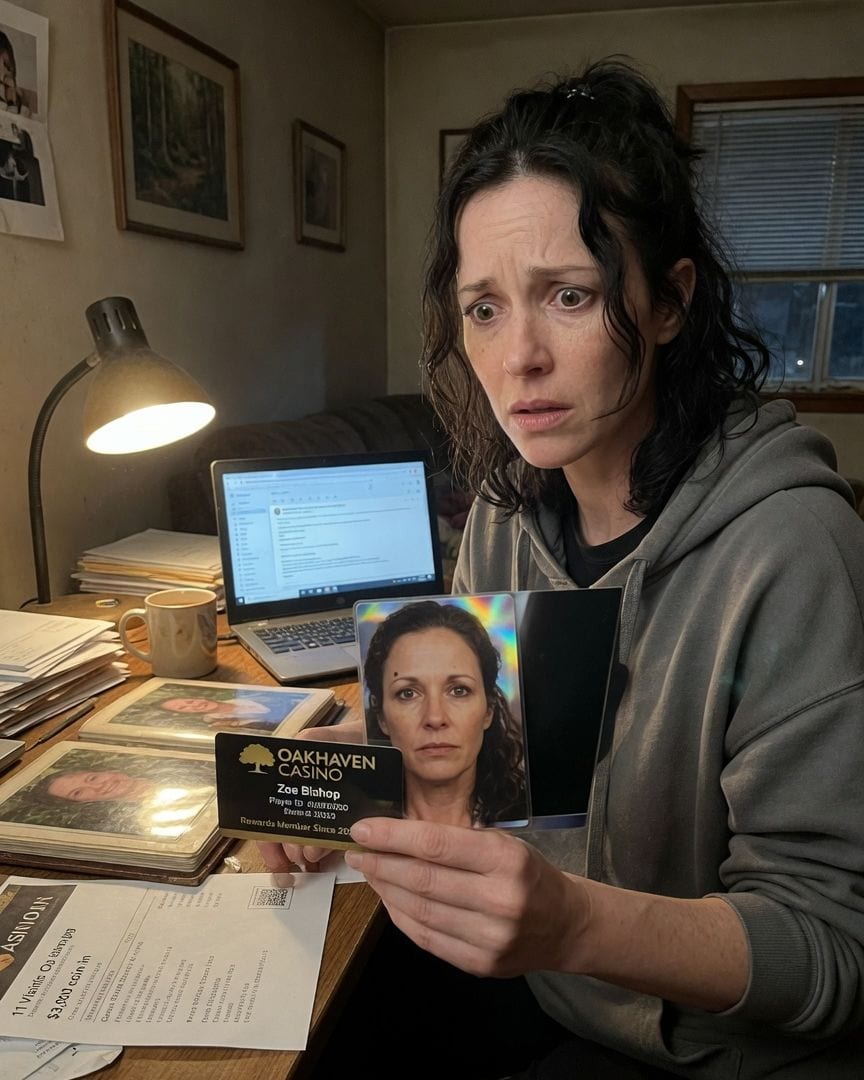
The envelope felt too thick for junk mail, stiff and glossy. I recognized the Oakhaven Casino logo, a stylized oak tree over sweeping gold lettering. I’d never been to Oakhaven, or any casino for that matter.
I lived alone, worked from home, and my biggest gamble was usually whether to commit to oat milk or almond for the week.
Inside, the rewards summary listed my name, Zoe Bishop, and my correct home address. My birthday was accurate, too.
It detailed eleven visits last quarter, $3,900 played through the slots, and even a comped steak dinner on the 14th of last month. Each line was precise, accounting for a life I hadn’t lived.
It also contained a brand-new, laminated player’s card. I picked it up, running my thumb over the smooth plastic.
The photo on the card showed a woman with my exact eye color, a deep hazel, and my dark, wavy hair. There was a familiar curve to her smile, a hint of something almost mischievous. But it wasn’t me.
Not even close. She looked older, maybe late forties, early fifties, but the resemblance was unsettling, like looking at a distorted reflection. Every detail on the card, every activity listed on the summary, insisted this impossible history was mine.
It felt like a meticulously crafted lie, laid out in black and white, claiming my identity for reasons I couldn't begin to fathom. The air in my small living room seemed to thicken, suddenly colder.
I called the casino’s loyalty desk the next morning, my voice tight with a forced calm I didn't feel. A man named Simon Doyle, the manager, answered. He sounded bored, reciting a practiced script. "Ah, Ms. Bishop.
Welcome to the Oakhaven family! Looks like you've been quite active."
I took a deep breath. "Mr. Doyle, I assure you, I have not been active. I have never even stepped foot in your casino." I explained, patiently, the rewards summary, the phantom visits, the card with a stranger's face.
Simon's tone shifted, becoming slightly defensive. "Our system is quite robust, Ms. Bishop. We pride ourselves on accuracy. Our facial recognition software is state-of-the-art. And your personal details are a perfect match—birthdate, address. Everything."
He offered, almost dismissively, to mail me a new card with an updated photo, assuming I'd just submitted an old picture.
"No," I insisted, my voice firmer than I expected. "I need to see the photo you have on file. The one your 'state-of-the-art' system thinks is me."
After a brief, irritating hold, Simon sent a digital copy to my email. It was the same photo from the card, clear and unsettling, staring back at me from my laptop screen.
I zoomed in, scrutinizing the face, searching for a flaw, a glitch. The woman in the photo had a distinct, tiny mole just above her left eyebrow, almost hidden by her dark hair. My stomach lurched. I knew that mole.
My grandmother, Vera, had one in the exact same spot. Vera, who had passed away ten years ago.
It was more than an uncanny resemblance. It was a mirror held up to the past.
I pulled up an old photo of Vera from a dusty family album, a picture taken in her thirties, her hair styled in soft waves. The resemblance was undeniable.
The same mole, the same faint lines around the eyes, the same quiet, almost secretive smile that always seemed to hold a secret.
The rational explanation – a mistaken identity, an inexplicable error – now fractured completely, revealing something far more personal and impossible.
The laptop screen hummed, casting a faint blue light on my face, and the image of my grandmother seemed to deepen, her gaze somehow more knowing.
Zoe holds the laminated player's card under her desk lamp, her fingers tracing the face in the photo. It’s not her, not quite.
But the eyes, the set of the jaw, the faint mole near the temple… it’s a younger version of her grandmother, Vera, looking out from the plastic, a ghost from decades past now claiming Zoe’s current life.
The next morning, I was at Hazel's door, a crumpled, faded photo of Vera clutched in one hand, the glossy casino card in the other. Hazel, always the voice of practical reason, tried to find a logical explanation.
"Okay, so maybe Vera visited Oakhaven once, decades ago, and they just… updated her old card with your details? I mean, it's a huge place, Zoe, mistakes happen with old records." She gestured vaguely.
But I shook my head, my finger tapping the tiny mole on the photo. "This photo isn't from ten years ago, Hazel. This is Vera from when she was my age, maybe younger.
And they have my current address, my actual birthday, not hers. It's not an update, it's a replacement. Or worse."
Hazel’s brow furrowed. She paused, thinking. "You know, now that you mention it… Vera used to get the oddest mail sometimes. From 'some fancy resort place,' she'd call it. Decades ago, when I was a kid.
She’d just toss it, said it was a waste of paper, probably some scam."
That detail sent a fresh chill down my spine. It wasn’t just me. It had happened to Vera, too. The mail wasn’t junk. It was earlier rewards summaries, or notifications, from the same place.
I decided I couldn't just call. I had to see it for myself. I drove to Oakhaven Casino, a sprawling complex of mirrored glass and neon.
Inside, the air was thick with the scent of stale cigarette smoke and cheap perfume, a monument to opulence and distraction. I approached the loyalty desk, my player’s card in hand, feeling a strange mix of dread and resolve.
Simon Doyle was there. He recognized me instantly, a slight frown creasing his face. "Ms. Bishop, still having trouble?"
"I want to see any records tied to 'Vera Bishop'," I stated, pushing the card across the counter.
Simon typed, his brow furrowing deeper as he scrolled. "We have a Vera Bishop, yes. Deceased. Her account was closed ten years ago. But… it seems to have been quite active, right up until the end.
And… wait, there's a note here." He looked up, a flicker of something unsettling in his eyes. "It says, 'Reactivated under new host. Identity: Bishop, Zoe'."
The words hung in the air, cold and definitive. A wave of nausea washed over me. New host. Me. It was a transfer. Not a mistake.
I left Oakhaven feeling like I was walking under a spotlight, every casual glance a personal observation. The cacophony of the slot machines and the cheerful jingle of jackpots faded behind me, replaced by a growing hum of unease.
I drove home, the casino’s neon glow shrinking in my rearview mirror, but the feeling of being watched only intensified. The familiar streets felt alien.
Later that night, as I researched Oakhaven Holdings, the parent company, on my laptop, my phone pinged. An anonymous message, an unfamiliar number: "Some things are better left undisturbed, Ms. Bishop. Enjoy your comped steak." My breath hitched.
It was a direct reference to the rewards summary, to the very detail I’d dismissed as impossible. Someone at Oakhaven knew I was digging. And they were watching me. The dread became a sharp, personal fear, tightening my chest.
I locked my doors, drew the blinds, but the feeling persisted, pressing in from the darkness outside my windows. The silence of my apartment felt predatory.
The next day, desperate for information, I drove to the public library, hoping old town archives might hold a clue to Oakhaven’s early history. As I flipped through microfiche, a shadow fell across the projector screen. I looked up.
A man in a dark suit sat at a table across the aisle, ostensibly reading a newspaper. But his eyes, even from that distance, kept flicking to me. His face was unremarkable, but his stillness was unnerving.
When I stood to leave, he folded the paper with deliberate slowness, the rustle echoing in the quiet room. He stood, too, and started to follow.
My heart hammered against my ribs. I ducked into the labyrinthine stacks, weaving between shelves, emerging on the other side and making a dash for the exit.
I got to my car, fumbling with the keys, and sped away, glancing in my rearview mirror. The man was standing on the library steps, watching my car disappear.
His calm, unbothered expression seemed to convey a silent message: he wasn’t trying to hide. He was making sure I knew he was there. The library’s heavy oak doors seemed to close behind him with an air of finality.
Desperate, I remembered a post I’d seen online years ago about an Oakhaven archivist who’d been fired for 'unauthorized access' to old records. Richard Hayes.
I managed to dig up an old address and, with a knot of anxiety in my stomach, drove out to his secluded, cluttered house on the edge of town.
Dust motes danced in the afternoon light that streamed through grimy windows.
He was wary at first, his eyes shrewd and tired behind thick glasses.
But I showed him the two player’s cards – mine, and the one with Vera’s young face – along with Vera’s faded photograph, and explained everything, my voice barely a whisper. Richard listened, his calm demeanor uncracked.
He took a sip of lukewarm tea from a chipped mug.
"Placeholder identities," he stated, without preamble, as if discussing the weather. "Oakhaven Holdings has been doing it for generations. It’s not just a casino, Ms. Bishop.
It's always been a data harvesting operation, a money laundering front, a testing ground for… other things." He gestured vaguely at the stacks of yellowed papers and ledgers surrounding us.
"They'd identify families with specific genetic markers or social profiles, then create these 'shadow accounts' using their real details." He tapped Vera’s photo on the card. "The photos? They're often of a previous 'host' in the family line.
A visual signature, you see. A hereditary marker."
He pulled out a thick, dusty, leather-bound ledger from beneath a pile of newspapers. The binding creaked as he opened it. "This is how it started. Hand-written. Later, it all went digital, of course.
Too many names to keep track of otherwise." He flipped through pages, yellowed and brittle, his finger tracing faded ink. "Ah, here we are. Bishop, Vera." He ran his finger along the line. "Initiated 1968. Status: Active.
Transferred to: Bishop, Zoe. Initiated: Birth."
My breath hitched in my throat. "My birth?"
Richard nodded, his gaze unwavering. "Your existence was the trigger for your grandmother's account to become 'active' in a new way. And for yours to be prepared. A pre-designated trigger."
He explained that the 'activity' – the slot plays, the comped dinners – were phantom transactions, generated by the system, often tied to specific life events of the 'next host' in the lineage.
"They needed a constant flow of 'data,' a believable narrative for these phantom identities. What better way than to link it to real, unfolding lives?"
The pieces clicked into place with horrifying precision. The impossible casino activity, the familiar face, the 'new host' note. It wasn't a glitch; it was a cold, calculated machine. And my family had been grist for its mill for decades.
The silence in Richard’s cluttered house felt heavy, the dusty air suddenly suffocating.
Richard Hayes, his face grim, pointed to another entry in the old ledger. "Look here. Vera Bishop, placeholder identity." His finger, stained with ink, traced a column of dates.
"Her 'activation' dates, the spikes in her account activity…" He ran a finger down the page. "They align with…" He paused, looking at me with a profound sadness that seemed to deepen the lines on his face.
"They align with dates from your own life, Ms. Bishop. Your birth. Your first birthday. The day you started kindergarten."
My hands trembled as I saw the pattern, undeniable and chilling, laid bare in the ledger. The dates on Vera’s phantom casino statements were not random.
They were a perverse timeline of my own childhood, a shadow script mirroring my growth. My grandmother’s 'gambling' had been a proxy for my own existence, my very development.
It meant the system had been pre-programmed, my life events mapped out, designated as triggers for a phantom identity long before I could even form memories.
Zoe stares at the two player's cards spread before her: her own, and Vera's faded, yellowed one. She’d highlighted the dates of 'activity' on both. On Vera’s card, the entries for slot plays and comped dinners weren't random.
They aligned perfectly with dates Zoe had always marked in her own life — her birth, her kindergarten graduation, the day she broke her arm.
Vera’s phantom activity had been a timeline of Zoe's own childhood, a pre-written script that had started before Zoe could even walk.
Richard Hayes closed the ledger with a heavy sigh, the sound echoing in the quiet, dusty room. "The 'comped steak dinners' were a recurring signature, a way for the system to 'reward' itself for a successful data harvest.
A little inside joke, perhaps, for the architects of it all." He explained that Oakhaven Holdings wasn't just a casino; it was a sprawling corporate entity with interests in finance, data analytics, and even biometrics.
"They needed a steady stream of plausible, untraceable transactions. And they needed to understand patterns of human life. So they built a system that simulated it, using real people as anchors.
Your family, the Bishops, they were a particularly 'stable' line. Generation after generation living in the same area, with strong, traceable public records. Ideal candidates."
He showed me a printout from a secure database, something he'd kept hidden for years, tucked away behind a loose floorboard. It was a 'Family Lineage Chart' for the Bishop family.
My grandmother, my great-grandmother, all marked with 'PI' – Placeholder Identity. Each entry detailed 'activation' dates tied to the birth of the next generation, and projected 'deactivation' dates.
My own name was there, 'Zoe Bishop (PI-Current),' with a projected deactivation date set for when my first child would turn five. The horror was in the meticulous detail, the cold, bureaucratic mapping of my entire lineage.
It wasn't a glitch; it was a legacy. A horrifying, invisible harness pulling my family's ghost through a simulated life for unknown ends. The air around us felt thin, choked with invisible history.
I knew I couldn't fight Oakhaven Holdings directly. The system was too vast, too deeply embedded, like roots growing into the very fabric of society. Richard, looking frail and worn, advised me, "You can't dismantle it, Ms. Bishop.
But you can sever your own thread. Disappear. Erase your digital footprint. Change everything." It was a desperate solution, a life uprooted, everything I knew abandoned.
I spent the next few days in a blur, emptying my apartment, closing accounts, selling my car for cash. I contacted Hazel, explaining only that I had to leave, immediately, for my own safety, without going into details.
Hazel, though confused and worried, offered unwavering support, her voice a lifeline.
The man in the dark suit appeared again, outside my apartment building, watching me load boxes into a rental van. He didn't approach, just stood there, a silent, knowing sentinel, framed by the apartment complex's identical brick facade.
It was a confirmation: they knew I was leaving, but they were letting me go. I was no longer a 'useful' placeholder. The dread was the knowledge that I was making myself a ghost to escape becoming one.
On my last night in the city, I drove past Oakhaven Casino one more time. Its bright, pulsing lights cut through the night, a silent, monstrous heart beating in the city's chest.
I felt a phantom tug, a pull towards its artificial glow, a whisper of a life I hadn't lived, but that was undeniably mine, in their records.
I imagined the system, already searching for the next 'stable' family line, the next unwitting host to feed its insatiable hunger for simulated life.
The cost of my freedom was to become utterly untraceable, a permanent exile from my own documented existence. The city lights blurred as I pulled onto the highway, leaving it all behind.
I melted into the vast anonymity of a new city, under a new name. I severed all ties, a deliberate erasure of my former self.
Hazel was the only one I contacted, rarely, through encrypted messages that always felt too risky.
Richard Hayes had vanished; his house on the edge of town stood empty, likely taken in by whatever quiet network protected those 'in the know,' or perhaps simply choosing to disappear himself.
The casino continued to operate, its lights gleaming, its machines whirring, oblivious to the single thread that had attempted to unravel its decades-old secret. My old life, my old identity, was a blank slate, a non-person.
The system had won, in a way, by forcing me to cease existing in any official capacity. But I was free, a ghost by choice.
Years passed. I lived a quiet, unassuming life, always looking over my shoulder, always cautious. I never married, never had children.
The thought of passing on the 'marker' to another generation, of condemning an innocent life to become a proxy for a corporate machine, was a burden I couldn't bear.
One day, I received a piece of unsolicited mail, addressed to my old name, at an address I'd never lived at, in a town I’d never visited.
It was a glossy brochure for Oakhaven Casino, featuring a smiling woman at a slot machine. The woman's face was vaguely familiar, with eyes that held a flicker of something I recognized, a quiet, almost secretive smile.
I quickly shredded the brochure, my heart pounding, the slick paper tearing under my hands. I knew the pattern. I knew the cost. I was free, but the system continued, endlessly, finding new threads to weave into its fabric.
The casino's lights shimmered faintly in the rearview mirror, a silent, knowing beacon in the night.
If this one got to you
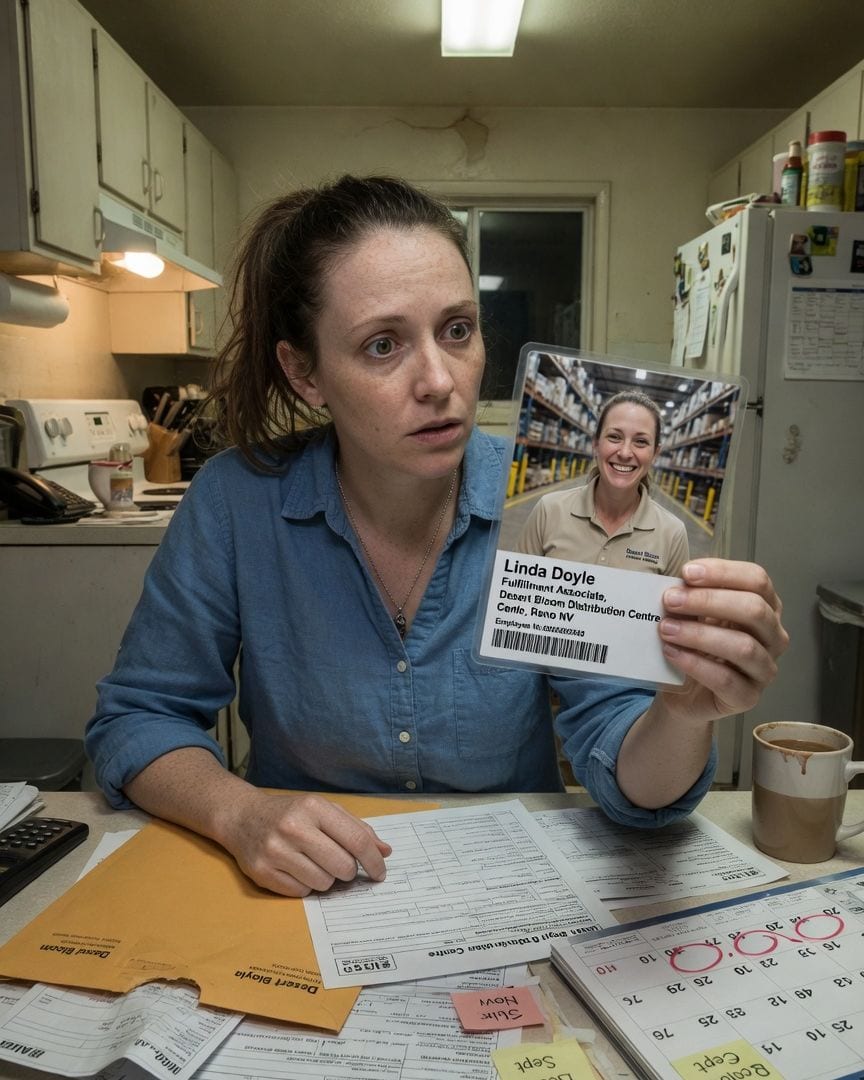
My tax notice lists six months of wages from a Nevada job I never held. Someone clocked in every day using my name. The pay went to an account I don’t own.
I'm Linda Doyle, 38, and a marketing coordinator in Ohio. An IRS W-2 arrived for a job in Reno, Nevada, that I never had. Despite my clear alibi, the company sent an employee ID card with my face on it, but the eyes in the photo were unsettlingly blank.
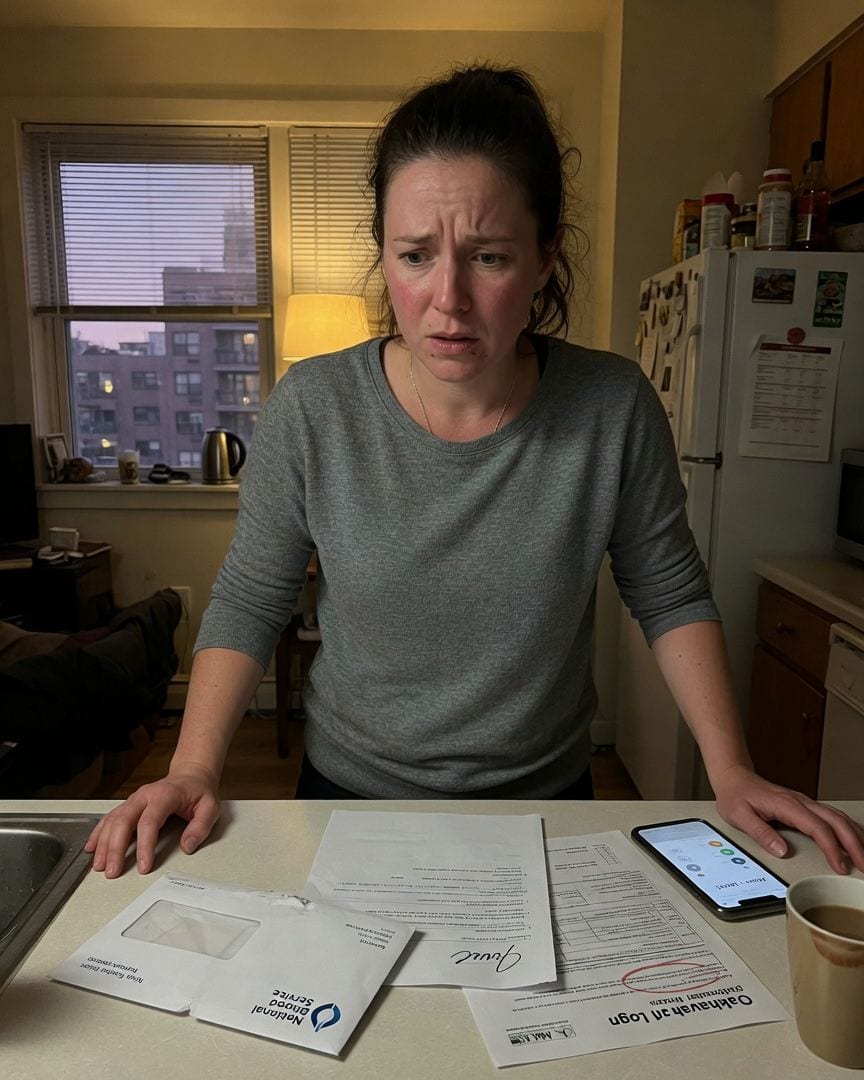
My signature appeared on a blood donation form, thanking me for my sixth. I've never set foot in that town.
An ordinary envelope arrived, but inside, a letter from the National Blood Service thanked me for a sixth blood donation. I’ve never given blood in my life, and the thought makes me queasy. But then I saw the enclosed consent form, signed unmistakably with my own hand, for a donation made in a town I’d never heard of. It was my signature, but it wasn't me.
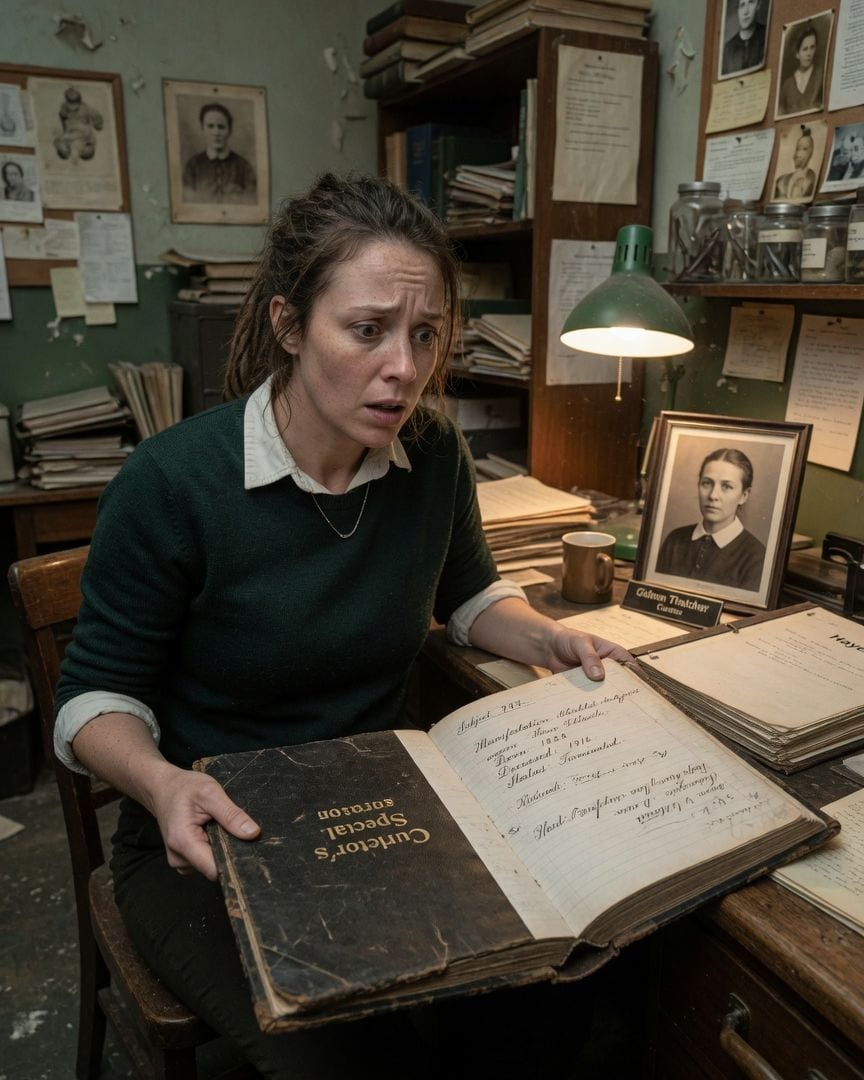
My face, cast in plaster in 1888, stares back from a museum display. They DNA tested a hair from inside the mask. It’s me.
The hushed, cool air of the Museum of Medical History always gave me a strange reverence, until I stopped. Inside a display case, among other plaster death masks, was one labeled 'Theresa Whitfield, 1888.' It was undeniably my face, exact in every detail, down to the faint bump on my nose.
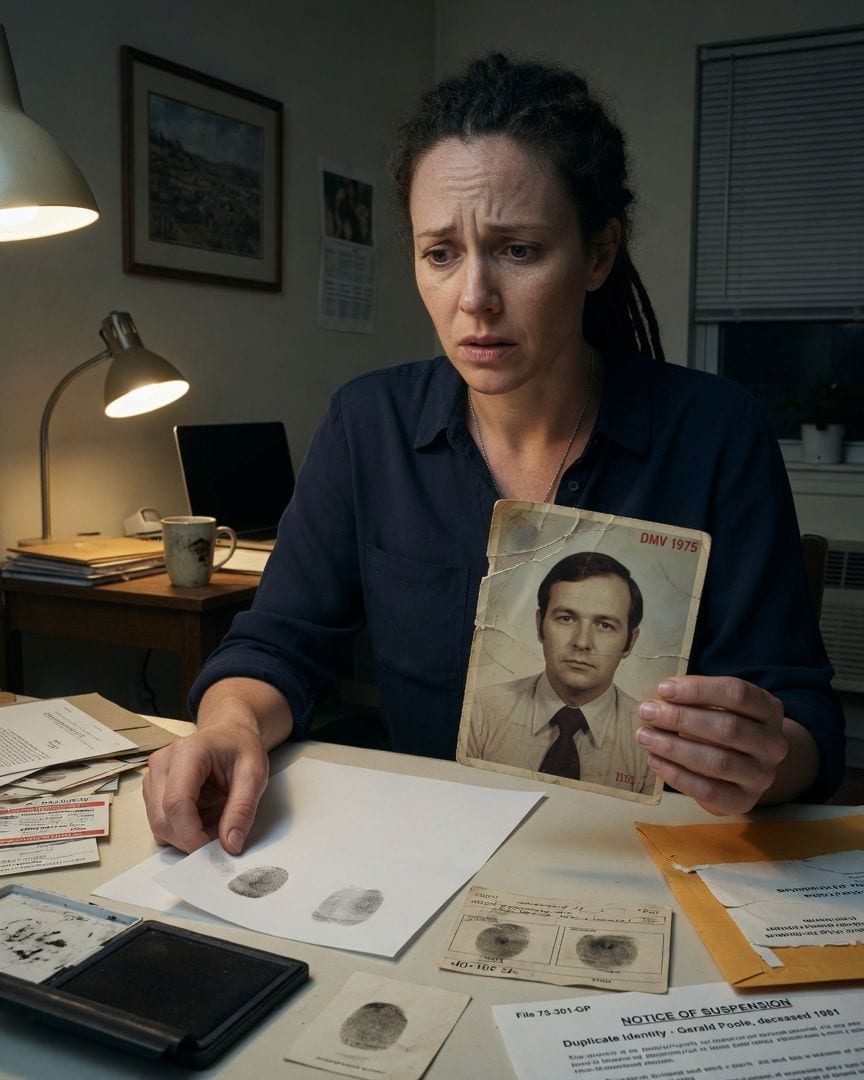
My fingerprints match a dead man's DMV file. They say my face is his. Gerald Poole, licensed 1975, died 1981. The DMV won't renew my license until I resolve his death.
I like things to run smoothly, so a DMV letter about my license suspension was just a nuisance. But it claimed my identity was an exact match for a man declared deceased in 1981, and the archived photo and fingerprints they sent were undeniably my own.
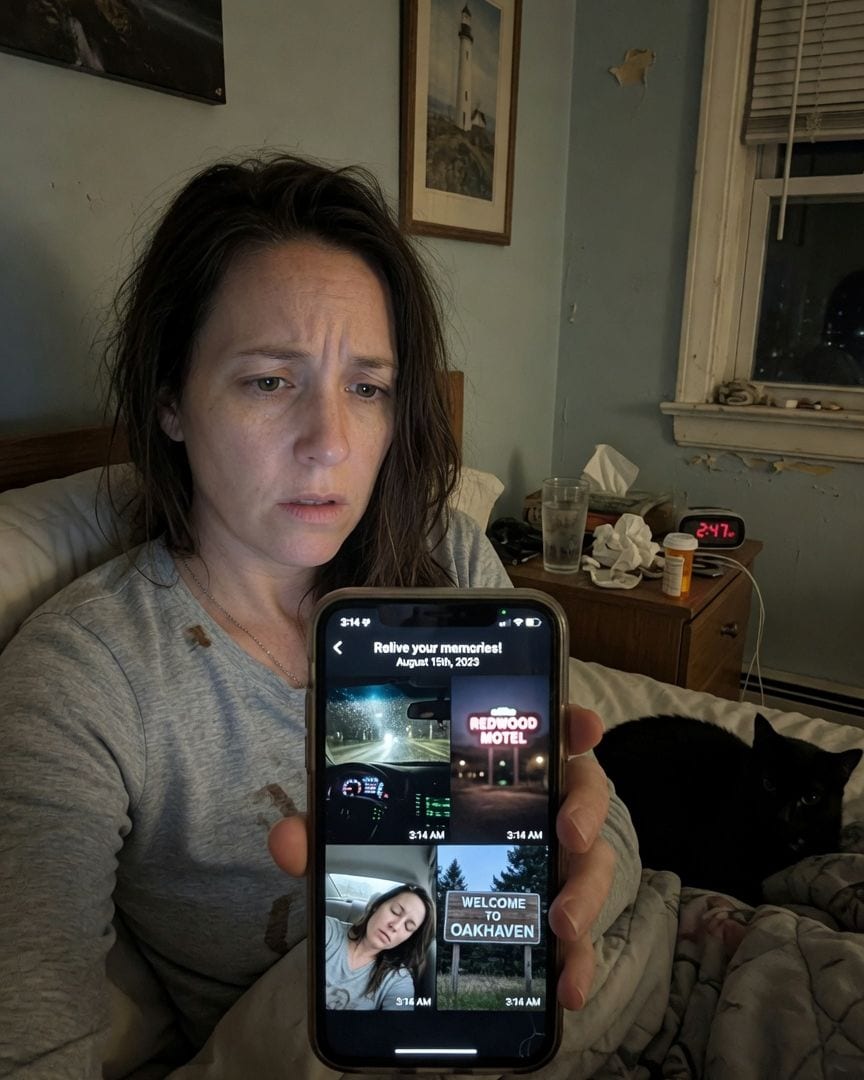
My phone has photos of me asleep in a strange car at 3 AM. Then a voicemail: 'We'll have her back by sunrise.'
My phone woke me with a cheery notification, promising memories from last August. Instead, it showed me asleep in a dark car, rain streaking the windshield, miles from my apartment. I was certain I'd been home in bed that night, but the images were undeniably in my camera roll, a quiet violation of my memory.
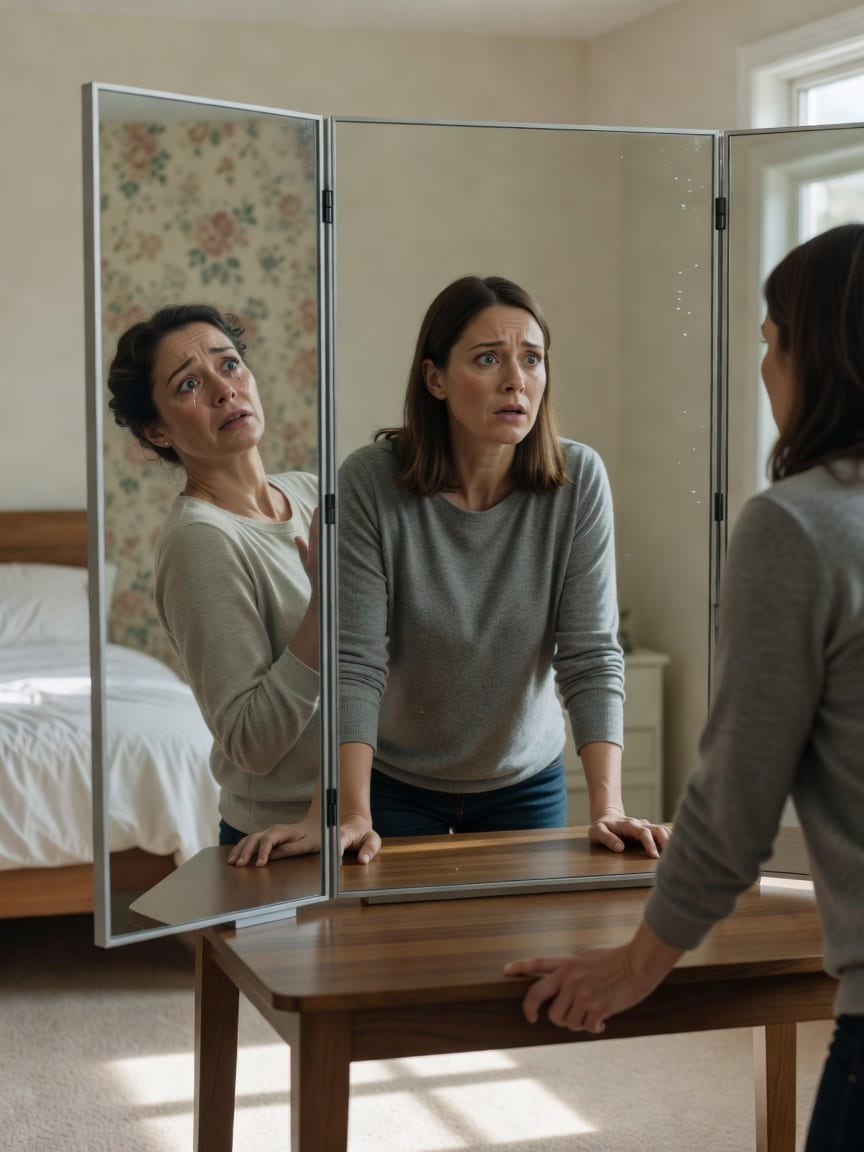
My bedroom mirror shows a woman doing her hair, in a room papered differently than mine. She moves a half-second late.
I moved into my inherited house, with its antique dressing table and mirror. Late at night, the mirror shows a woman doing her hair, but it's not my reflection. Her room has faded floral wallpaper, a stark contrast to my white walls.