My chest X-ray shows a pacemaker lead threaded into my heart. I’ve never had surgery, and my skin is unmarked.
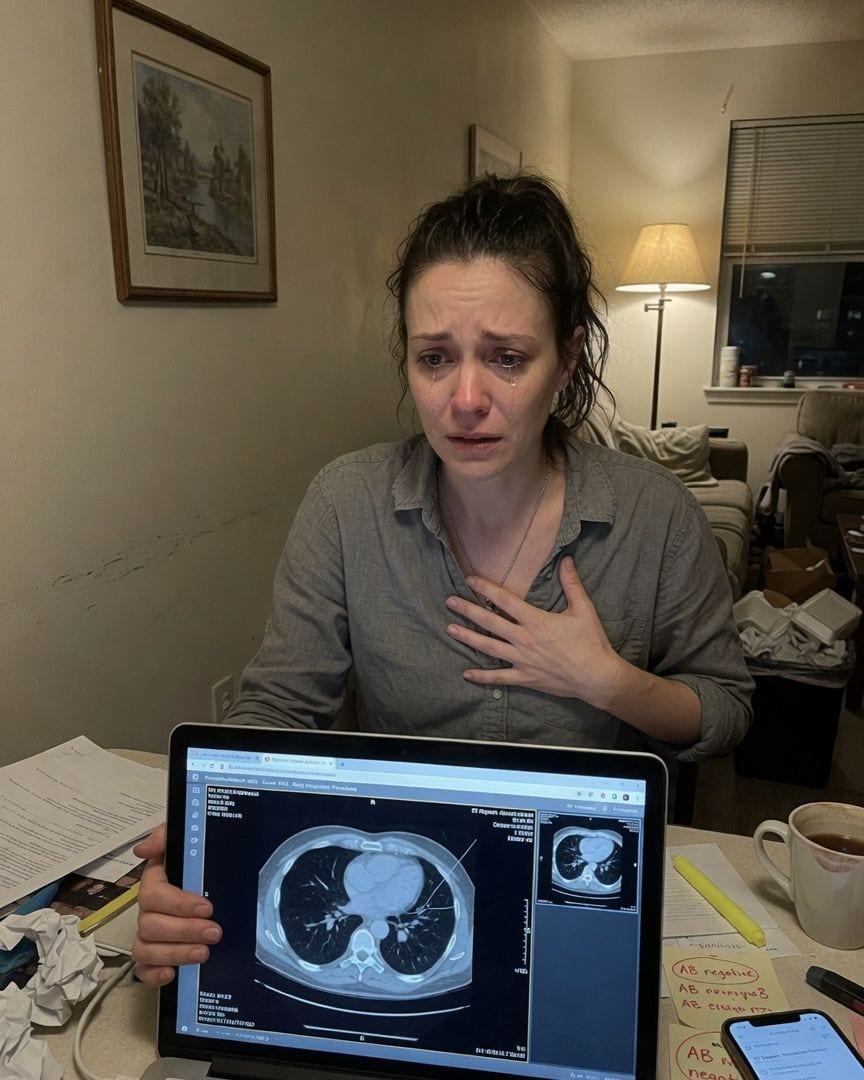
The worst part is how normal it all started. Just a new job, a standard health screening. Nothing to suggest that my life, my very self, was about to unravel.
I remember the chill of the clinic waiting room, that sterile, slightly metallic smell. I’m Constance Norwood, thirty-two, and until that Tuesday, completely unremarkable.
The technician, a young woman with a perpetually anxious expression, had me lie back for the X-ray. It was a quick, routine thing, just a scan of my chest.
She was quiet as she looked at the screen, then her face went pale, almost green. She called for Dr. Hayes.
Dr. Sophia Hayes came in, a no-nonsense woman in her forties. She peered at the monitor, then turned to me, her voice careful, almost hesitant. "Ms. Norwood," she began, "your chest X-ray... it shows something unexpected. An old pacemaker lead.
Thin, metallic. It appears to be threaded into your heart, scarred into the vessel wall."
I laughed, a short, disbelieving sound. "A what? No, that's impossible. I've never had heart surgery. Never had a scar." I felt my chest, running my fingers over my skin, smooth and unblemished. Nothing. Not even a tiny surgical incision.
The doctor nodded, grim-faced. "The generator is gone, but the lead remains."
I insisted it was a mistake, a phantom image, some kind of equipment malfunction. I marched straight to the restroom, pulled my shirt aside, and stared at my chest in the mirror. Not a mark. Nothing.
I went back to Dr. Hayes, demanding a re-scan. "Different machine," I insisted, "just to be sure." They accommodated me, probably to humor the obviously distraught patient. The second X-ray, from a completely different machine, confirmed it again.
The lead was there. Undeniable. The clinic offered no explanation, just an awkward apology for the "anomaly," as if a metal wire in my heart was a misplaced stapler.
I wasn’t going to accept an "anomaly." Not when it was in my heart. The clinic records clerk, a mild man named Samuel Kowalski, kept reiterating their official line, but I pushed.
I insisted on a higher-resolution CT scan, paid for it out of pocket, needing a clear picture of what the hell was inside me. A week later, the report arrived.
I opened the email with trembling fingers, the cold dread already settling in my stomach.
The new report was excruciatingly detailed. It wasn't just the lead itself, thin and almost skeletal against my ribs, but a tiny, almost microscopic, engraving on its surface. A serial number. It was too precise, too unique to be random.
This wasn't a glitch; it was a fabrication. I typed the number into every medical device database I could find online. Nothing. I broadened my search to academic archives, obscure forums, digitizing projects.
Days blurred into nights, the glow of the screen my only company, the phantom weight of that lead a constant pressure in my chest.
No match for any modern or even recent historical pacemaker model. This wasn’t standard issue. This was... something else. Just as I was about to give up, staring at the screen until my eyes burned, I found it.
An obscure digitized medical journal from fifty years ago, its scan quality poor, but the words clear enough. An article by a Dr. Julian Carver, detailing "highly experimental, unapproved 'body integration' procedures" using custom-fabricated leads.
The terminology was dense, almost incomprehensible, diagrams of neural pathways and tissue response, but one detail snagged me, pulling me out of the academic fog like a sharp hook.
The article mentioned a specific patient who died during one of these procedures, noting their rare blood type.
It was my own, exact blood type: AB negative.
I stared at the screen, the obscure journal article open, my own blood type starkly listed next to the deceased patient's name, Julian Carver. The words "experimental body integration" blurred and swam before my eyes.
The lead in my heart wasn't a mistake; it was a terrifying link to a ghost.
I scrolled further, my mouse clicking with a horrible finality, and found a grainy, black and white photograph of Dr. Julian Carver himself, younger, intense, standing next to a rudimentary surgical setup. My breath caught in my throat.
The equipment looked alien, ancient, but the lead in the photo, the one threaded into a mannequin's chest, was identical to the one in my own.
The dread was a physical weight, pressing down on me, making the air thin and cold.
A cold, consuming fear drove me. I spent days contacting the university where Julian Carver had once worked, navigating bureaucratic mazes until I was finally directed to the retired head of their medical history department: Everett Donovan.
He was an octogenarian with unnervingly clear eyes that seemed to see right through me. When I mentioned Carver and his experimental leads, Donovan didn't express surprise or confusion, only a quiet, almost expectant interest.
It was as if he’d been waiting for me.
He invited me to his home office, a cluttered space filled with old books, overflowing shelves, and archived research that smelled of dust and forgotten knowledge.
He moved with a slow, deliberate grace, making tea as if this was any ordinary afternoon visit. He granted me access to some of Carver's personal research notes, bound in decaying leather.
The pages were brittle, filled with diagrams of neural pathways and cryptic references to 'host bodies' and 'transfer protocols,' all written in a precise, almost clinical hand. It was chilling to touch the same pages Carver had.
One phrase, scrawled in the margin next to a complex diagram, made the hairs on my arms stand up: 'The vessel remembers.'
After several visits to Everett Donovan’s house, poring over Carver’s increasingly unsettling notes, I started to feel watched. I dismissed it at first, of course. Paranoia. The notes were disturbing, filled with talk of 'consciousness migration' and 'recipient integration.'
It was natural to feel on edge. But then I saw Donovan. Not at the university, not in his quiet office, but across town, at my usual coffee shop, nursing a small, steaming cup of herbal tea.
His gaze was subtle, almost imperceptible, but it was fixed on me. I turned away, heart hammering, then glanced back. He was still watching.
The next day, he was walking his dog near my apartment building. A route I knew was at least five miles from his own neighborhood, a detail I’d overheard him casually mention.
He didn't acknowledge me, just offered a slight, almost imperceptible nod as I hurried past. I tried to convince myself it was coincidence. A small city, familiar faces. But the chill didn't leave.
Later that week, an anonymous email arrived. No sender, no subject, just a single, faded photograph in the body.
It was a younger Julian Carver, his intense gaze familiar now, but in the background, subtly out of focus, was a distinctive, antique grandfather clock. My breath hitched.
It was the very same clock that sat in my own living room, a family heirloom passed down for generations. The clock, my clock, shouldn't be in Carver's past.
I clutched the photograph of my grandfather clock in Carver’s past, the edges crinkling under my grip.
I found Everett Donovan at his home, the smell of old paper and dust clinging to the air around him like a second skin. He didn’t seem surprised to see me, his calm composure never wavering.
He simply invited me to sit, offered tea, the kettle whistling softly in the background. “You’ve been very diligent, Constance,” he said, his voice soft, almost paternal, as if he were praising a particularly attentive student.
He didn’t deny the clock, or the subtle surveillance, didn't even flinch.
He leaned forward, his clear eyes fixed on mine. “Julian Carver was indeed a brilliant scientist, Ms. Norwood. But his true work extended far beyond simple medical implants. He was a pioneer in sequential consciousness transfer.”
He paused, letting the words hang in the air, thick and heavy. “The lead you carry… a rudimentary component, really. Part of the life-support systems for recipient bodies during the initial stabilization phase of the transfer.”
My mind raced, the cryptic references to 'host bodies' and 'transfer protocols' from Carver’s notes snapping into terrifying focus. “Recipient bodies?” I managed to whisper, my voice suddenly raw.
Donovan nodded slowly. “Precisely. And your body, Constance… your particular vessel, was one such recipient.” He picked up a small, smooth stone from his desk, turning it over and over in his fingers. “Julian himself was a recipient, in fact.
One of the early, successful transfers. Your vessel was one he prepared for his own transition.”
The pieces clicked into place with horrifying, sickening precision. The rare blood type, the lead, the clock… all traces of Julian Carver.
Not a ghost haunting me, but a prior occupant, whose life, whose very essence, had somehow been imprinted on this body. My body. Donovan’s calm, clinical explanation of this impossible truth was bone-chilling.
The room itself seemed to grow cold, the old books on the shelves pressing in, silent witnesses to a horror I was only just beginning to grasp.
I could barely breathe. My body, a vessel? Julian Carver lived in her? In me? Donovan watched me, his gaze unreadable, the small, smooth stone still turning in his fingers.
“There’s one more thing, Constance,” he said, his voice a low, steady hum, devoid of any emotion. He pushed a faded, yellowed document across the cluttered table.
It was Julian Carver’s official death certificate, listing his cause of death decades ago. A heart attack, sudden and severe, at the age of forty-five.
But printed directly beneath it, as if an official amendment, was a unique biometric identifier. A specific dental pattern and a rare genetic marker that precisely matched my own current, recorded biometric data. My own teeth. My own DNA.
The lab, he added, had stood by the result: "a record that cannot be," the official response had said.
He then slid a small, aged photograph next to it: a weathered headstone in an ancient cemetery, the name on it obscured by time and moss, but the dates clearly much older than Carver’s.
Donovan’s voice, a steady, calm hum, echoed in the quiet room. “Julian was not the first. Nor, Constance, were you.”
Everett Donovan explained the full, chilling scope of the project, his voice even and unhurried, as if he were recounting historical facts. It wasn't just Carver, or his generation.
It was a centuries-old, clandestine society, meticulously preserving certain 'core selves' by migrating them into new, healthy 'host bodies' when the old ones failed. A form of sequential immortality. The pacemaker lead, he elaborated, was indeed a relic.
A crude, early technology used to stabilize the 'vessel' during the initial, often turbulent, transfer. Julian Carver had merely identified this body’s lineage as particularly suitable for his own transition.
He was, in essence, just a link in a long, unbroken chain.
The old grave, the biometric match on Carver’s death certificate – they were all traces of the previous occupants, the echoes of selves who had inhabited this very body before her, before Julian.
"Your awakening, Constance," Donovan explained, his voice devoid of emotion, "is a common side effect. Sometimes the body remembers. Sometimes the prior occupant stirs. Or perhaps the vessel itself is rejecting the new tenant."
The calm, clinical explanation of my own terrifying reality made my skin crawl.
I pushed back from the table, my chair scraping loudly across the wooden floor. The sound was deafening in the sudden silence. "This is insane," I whispered, backing away, my hands spread out behind me, searching for solid ground.
Donovan rose, his movements slow, deliberate, blocking my path to the door. "On the contrary," he said, his voice almost gentle, "it is the ultimate sanity. To transcend the limits of flesh. To escape the inevitability of decay."
He revealed that he, too, was one of them, having transferred many times, his current body merely the latest. His eyes, still unnervingly clear, now held a depth I hadn't noticed before, a cold, ancient knowing.
He explained that my 'awakening' was a problem that required 'stabilization.' He reached out, his hand moving towards me, a gesture that felt both paternal and predatory.
Fueled by pure, animal terror, I shoved him with all my might. He stumbled back, momentarily stunned, his clear eyes wide for an instant.
I lunged for the table, my hand closing around the spine of an ancient, leather-bound ledger – the one he’d casually shown me earlier, filled with precise, calligraphic entries of names and dates, 'recipients' and their 'vessels.'
The full, horrifying chronicle of my body’s history. I didn't think, I just ran. Out the door, down the creaking stairs, and into the cold night, the weight of the ledger a burning truth in my hands.
I didn't look back, only ran, the calm, knowing smile on Everett Donovan’s face burned into my mind.
Constance Norwood vanished. I changed my name, my appearance, severed all ties. I moved from city to city, always looking over my shoulder, a phantom in my own life. The ledger, my only proof, remained hidden, never destroyed.
I lived in a quiet, constant dread, the knowledge of what I carried a permanent weight in my chest. Every new ache, every fleeting memory that didn't feel quite my own, was a stark reminder of the truth.
I became an expert in anonymity, a master of disappearing, but I could never truly escape the body that held me.
Years passed. I lived under a new name now, worked a solitary job, kept to myself. My hair was shorter, darker, my posture a little more hunched, as if to hide.
One quiet evening, reading alone in my small apartment, I felt a faint, unfamiliar ache in my chest, right where the lead was. I dismissed it as indigestion, a trick of the light, anything to push the growing fear down.
Later, catching my reflection in the window, I paused. For a fleeting second, my own eyes seemed to hold an unfamiliar depth, a flicker of something ancient and knowing, a wisdom that wasn't hers.
I touched my chest, tracing the invisible scar, the ghost of the lead. I thought of Julian Carver, of the unnamed others, a procession of lives inhabiting this very vessel.
Sometimes, I wonder whose memories those are, just beneath my own.
If this one got to you
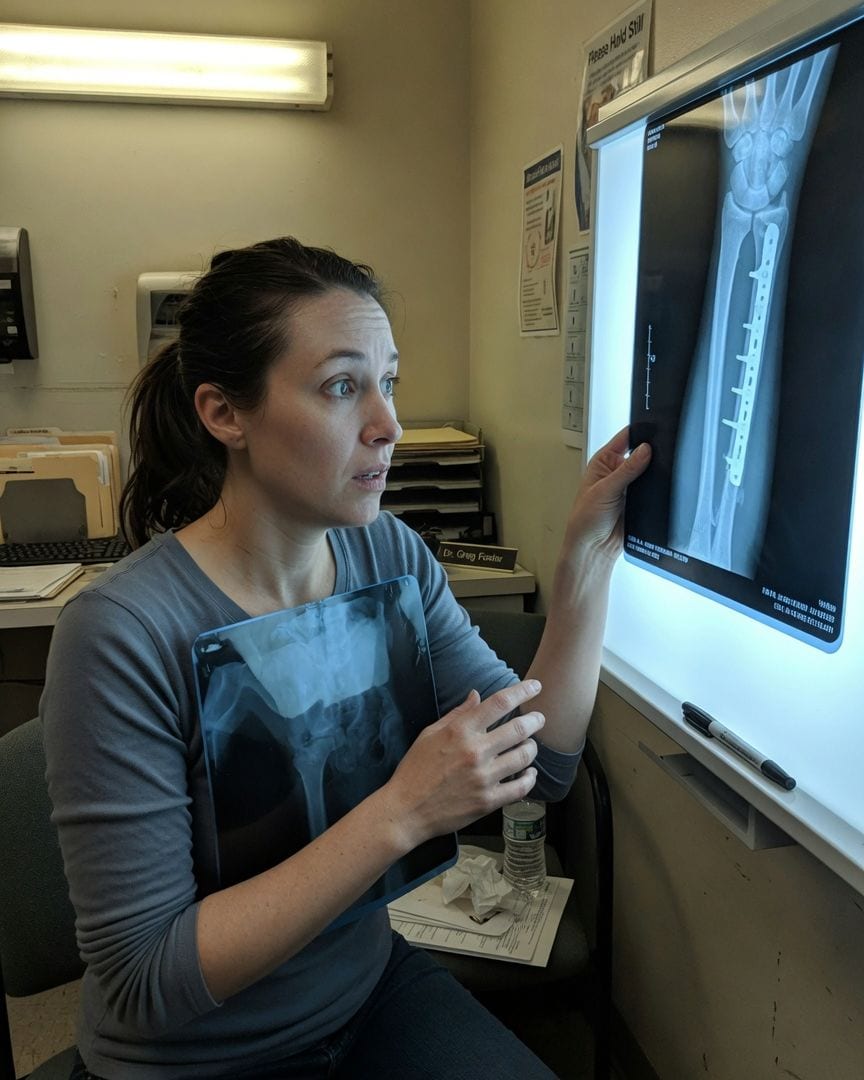
My X-ray shows a metal plate in my forearm, fixed years ago. I've never broken a bone there, and there's no scar.
I visited the clinic for a sprained wrist, expecting a routine X-ray. Instead, Dr. Foster showed me the scan: a metal plate and eight screws were clearly visible, mending an old fracture in my forearm. I stared, chilled, because I have never broken an arm, never had surgery, and held no memory of such a life-altering event.
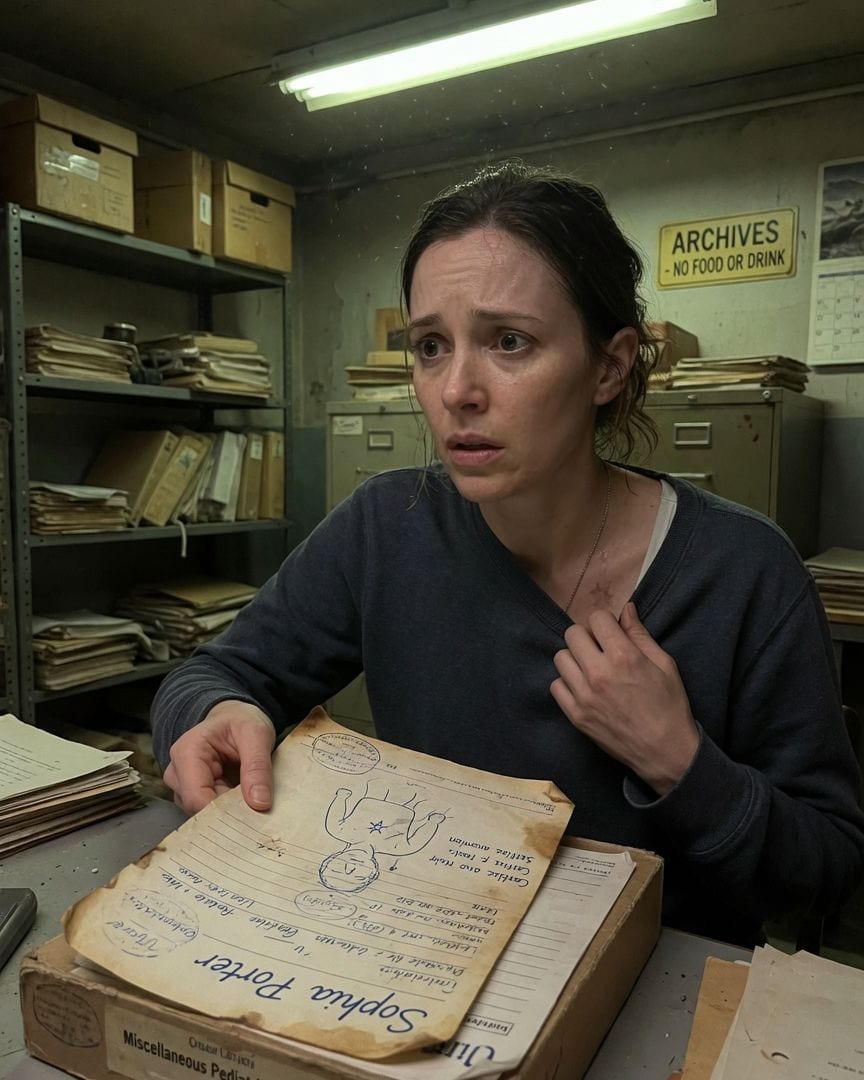
My heart has a metal wire threaded inside it, dormant, but my chest is unmarked and I've never had surgery.
My routine biometric screening revealed a dormant, metallic wire woven into the tissue just outside the lower chamber of my heart. Dr. Reynolds confirmed it had been there for decades, despite my complete lack of surgical history or memory. The impossible object felt like a cold secret, deeply threaded within me, with no explanation.
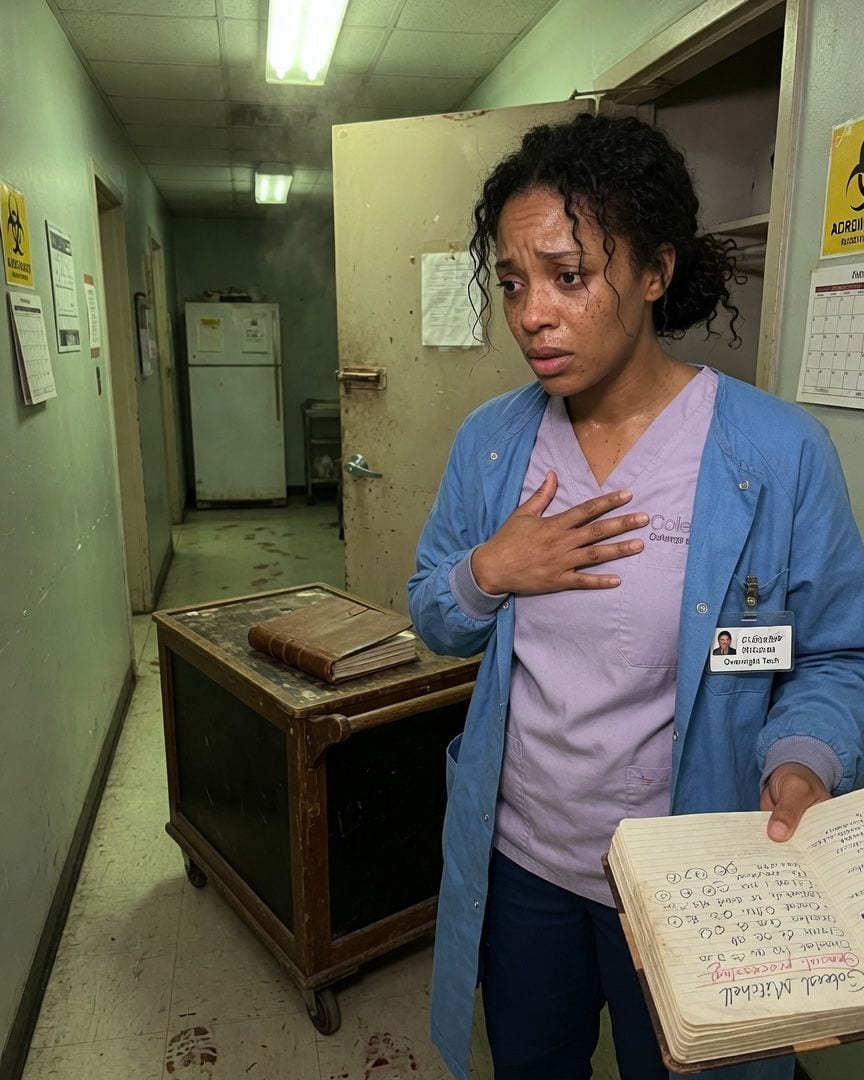
My boss says no one named Grace has ever worked here. But Grace stands beside me every night, reminding me to label the third rack — and I work the overnight shift alone.
On my quiet night shift at the blood bank, Grace always appears around 3 AM. I hear her familiar cart, smell her antiseptic scent, and follow her precise instructions. But my lab director insists no one named Grace has ever been credentialed here, leaving me to wonder who I've been working with.
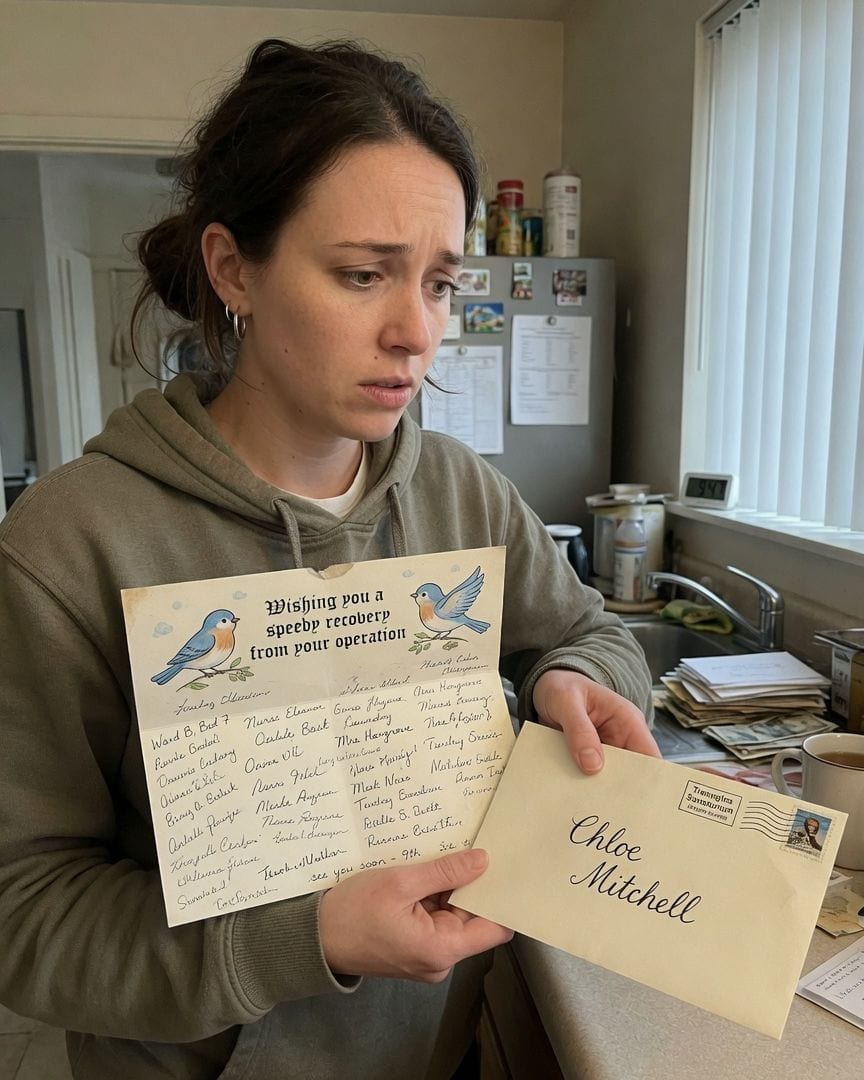
A get-well card wished me a speedy recovery from an operation I never had. It was postmarked from a sanatorium that burned down in 1963.
My quiet Tuesday morning was interrupted by an elegant get-well card, addressed to me. It wished me a speedy recovery from an operation I'd never had. But the postmark read 'Treneglos Sanatorium,' a hospital that vanished in a fire back in 1963.
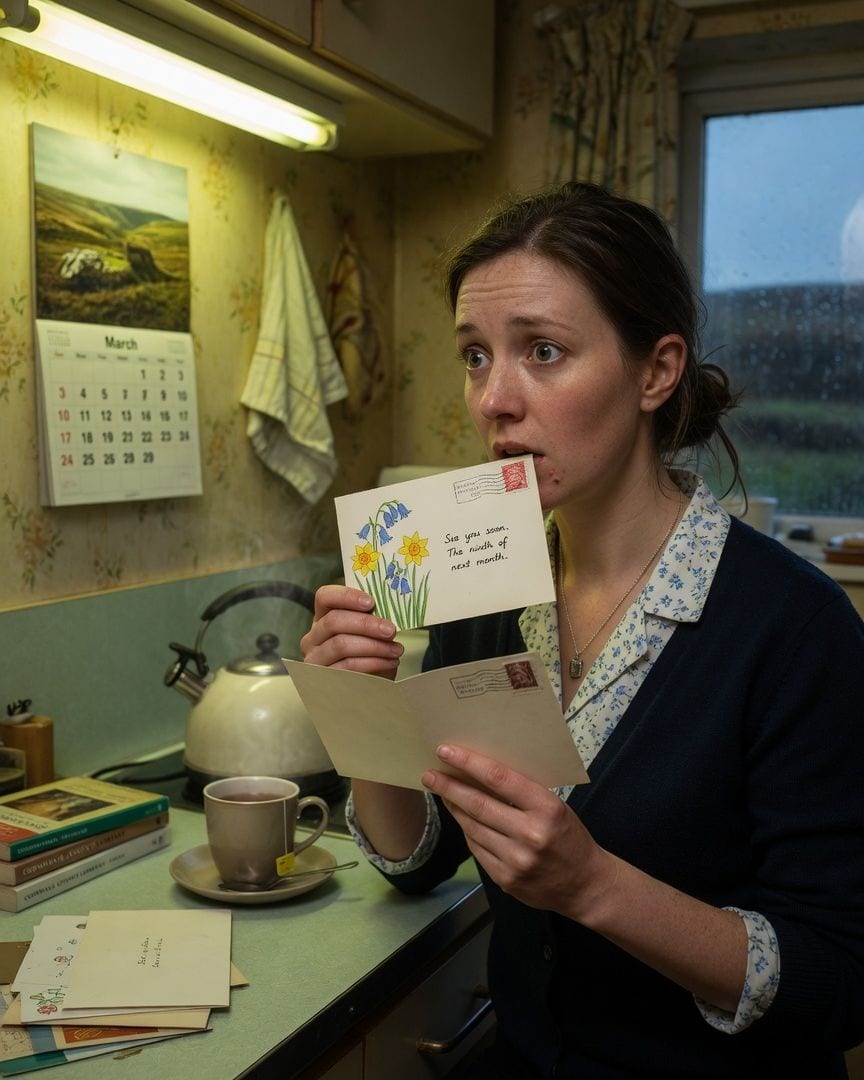
My get-well card arrived from a field, postmarked from a sanatorium that burned down in 1963. It wished me well for an operation I've never had, scheduled for next month.
I was just making tea on an ordinary Tuesday when a strange letter arrived. It was postmarked from Treneglos Sanatorium, a place that burned to nothing over sixty years ago, and contained a get-well card for an operation I'd never had. My research into this impossible message then led me to an old patient register where I found my own name, dated 1958.
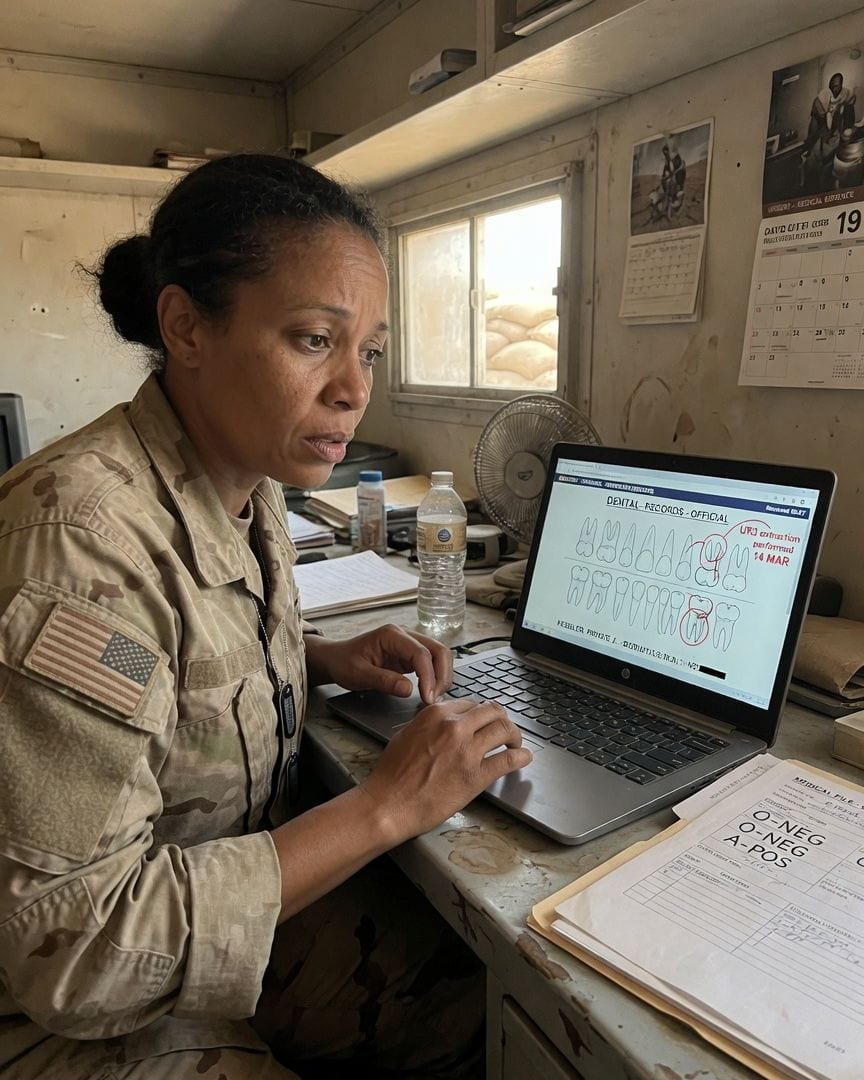
Weeks from going home, Sergeant Whitmore saw Private Kessler’s dental records show teeth he didn’t have and missing ones he did.
Sergeant First Class Iris Whitmore counted the weeks until her deployment ended, dreaming of home as the desert heat baked FOB Cerberus. But the familiar weight of Private Kessler’s dog tags soon brought a cold knot of dread: his blood type, once O-negative, suddenly read A-positive. She dismissed medical anomalies and clerical errors, only to find his official records subtly rewriting his timeline, linking old injuries to new identities. When his dental charts arrived, showing teeth he never had and missing ones he did, Sergeant Whitmore faced an impossible question: who was Private Kessler, really?