My chest X-ray shows surgical wires closing my breastbone. My skin is smooth; I've never had open-heart surgery in my life.
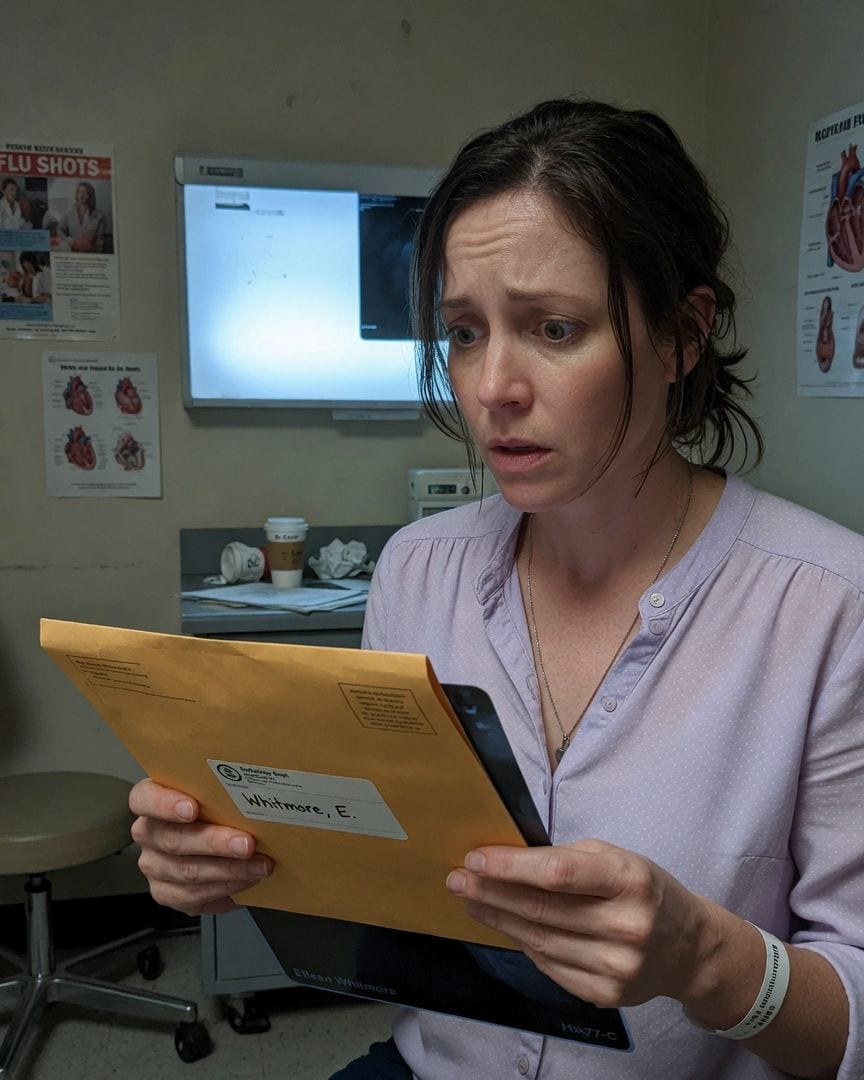
The doctor’s office smelled faintly of ozone and stale coffee. I was here for a nagging cough, nothing more. But when Dr. Carver clipped the film onto the light box, the room went still.
He leaned in, his brow furrowed, a faint frown etching lines between his eyes.
"Alright, Ms. Whitmore," he said, his voice calmer than his expression. "Can you tell me which cardiac unit wired you shut? And when?"
I blinked, looking from his face to the glowing X-ray. It was a clear, crisp image of a human chest, and right there, closing the breastbone, were five distinct, twisted surgical wires. Like something sewn. My breath caught.
"Wired me shut?" I repeated, my voice thin. "I… I've never had open-heart surgery, Dr. Carver."
He looked at me, then back at the film. "You're certain?" he asked, a new note of alarm in his tone. "Because these are clearly sternal wires. Post-operative." He gestured to them with a pen. "Five of them, tightly twisted.
And your ribs… they show signs of having been opened, then meticulously rejoined."
My gaze dropped to my own chest, covered by my blouse. I pulled at the fabric, exposing the skin over my sternum. It was perfectly smooth, unblemished. There was no scar, not even a faint line.
Not a whisper of surgery.
"That's impossible," I said, my voice barely a whisper. "There's no scar. I've never been under the knife for anything major." I tried to laugh it off, but the sound died in my throat. "It has to be a mix-up.
The wrong film."
Dr. Carver checked the patient ID printed along the bottom edge of the X-ray. He ran his finger over the embossed letters. "Eileen Whitmore," he read aloud, then looked at my wristband. "Born 1986. This is your film, Ms. Whitmore.
Undeniably yours." He pointed again at the ghostly wires. "These wires are in your body." The air in the room seemed to thicken, suddenly too cold. The sterile white walls felt like they were pressing in.
I left Dr. Carver's office with the X-ray film in a large, official envelope, the weight of it unsettling in my hand. My mind, usually so methodical, churned.
This had to be a glitch, a rare error in the digital archiving system, or a physical mix-up. I booked a second opinion that afternoon, then a third the following morning. Each radiologist, calm and professional, confirmed Dr. Carver's findings.
The five twisted wires were there. Indisputable.
My personal physician, Dr. Chen, a woman I'd trusted for years, pulled up my entire medical history. She scrolled through screens, her expression shifting from bemusement to outright confusion. "Nothing," she murmured, more to herself than to me.
"No major surgeries, no childhood heart conditions, not even a broken bone. Your file is… pristine." She double-checked birth records, looking for any forgotten anomaly, any obscure entry from my early days.
The hospital's digital archive for my name and birthdate was complete and utterly unremarkable. Everything pointed to a healthy, ordinary life.
The only unusual detail was a faint, almost invisible alphanumeric code printed along the bottom edge of my X-ray film, 'HX-77-C'.
Dr. Carver had dismissed it as a batch number, but I remembered the brief, unnerving flicker in his eyes when he first saw it, a hesitation before he spoke. It had been quick, but I saw it.
A cold, growing dread settled in my stomach. Rational explanations were failing, one by one. I had to know. I found myself back at the hospital, not for a medical appointment, but at the archives.
Nina Mercer, the hospital's medical historian and archivist, was initially surprised by my request: access to all historical X-rays from the period of my birth, or even earlier.
Nina, a practical woman with a kind smile, found my calm persistence intriguing. She listened patiently as I explained, omitting the more terrifying implications.
"You're looking for... a similar anomaly?" she asked, her brow furrowed.
"Perhaps the 'real' owner of the wires," I replied, the words tasting bitter.
Nina agreed to help, clearly captivated by the sheer oddity of it all. For days, I sat in the hushed, cavernous archives, the smell of old paper and dust thick in the air.
Nina, with her deep knowledge of the hospital's sprawling, ancient records, eventually led me to a dusty, forgotten corner of the physical archives.
It was uncatalogued, containing rows of old films from a decommissioned wing, tucked away like a shameful secret. The fluorescent lights hummed, making the silence feel heavy, expectant.
The call came late Tuesday. Nina’s voice, usually steady, held a tremor. “Eileen,” she said, “I think you need to come back.”
I was there in twenty minutes. Nina met me in a small, windowless office, the kind of room that felt perpetually chilled. On a small light box, a yellowed X-ray glowed.
Nina held another, even older film in her trembling hand.
“I found it,” she whispered, pointing to the film on the box. “In a box marked ‘Discarded – 1960s.’ Among films with severe water damage, some completely illegible.”
My gaze fixed on the glowing X-ray. My breath hitched. There, in stark relief, were five twisted surgical wires, identical in every loop and turn to my own X-ray.
Even the faint, coded identifier along the bottom, though faded, seemed to match: 'HX-77-C'.
Nina handed me the yellowed film she held. “This is the patient file,” she said, her voice barely audible. “Margaret Reynolds. Dated 1959. According to the notes, she died shortly after her operation.”
I stared at the two X-rays side-by-side, one glowing on the light box, the other a yellowed film held in my trembling hand. Five twisted surgical wires, identical in every loop and turn, closed the breastbone on both.
One was hers, taken last week. The other was from a patient named Margaret Reynolds, dated 1959, who, according to the faded notes, had died shortly after her operation.
Margaret Reynolds, who had been dead for 65 years, had Eileen's heart.
The discovery of Margaret Reynolds' X-ray ignited a chilling urgency in me. The rational part of my brain, the part that organized marketing campaigns, was screaming for answers. I spent the next few days holed up, researching Margaret.
I found a faded obituary from 1959 in the city's old newspaper archives. It listed her as 27 years old, no surviving family. Just a quiet notice, an end to a life. And now, somehow, a beginning to mine.
With Nina’s help, I then focused on the ‘HX-77-C’ code. She used her deep knowledge of the hospital’s labyrinthine records, cross-referencing it against old departmental logs, microfiche from decades past.
The air in the archive hummed with the effort of her search, the old machines whirring like distant, trapped insects. After two days, she emerged, looking pale.
“It’s not a batch number, Eileen,” she said, pushing a stray strand of hair from her face. “It’s a unique identifier. Used by a specific, short-lived ‘Special Procedures Unit.’
It operated in a now-demolished wing of the hospital, from the mid-1950s to the early 2000s.”
My stomach clenched. “A ‘Special Procedures Unit’ for what?”
Nina shook her head. “That’s the thing. There are budget allocations, personnel transfers, even equipment requisitions. But no records of what they did. No patient files, no research notes, nothing of its actual purpose in the main archives.”
It was as if the unit had existed only on paper, to justify spending, but never actually performed medicine.
I decided to try a more direct approach. Recalling Dr. Carver’s brief flicker of recognition when he first saw the code, I returned to his office. He looked up, startled to see me.
“Dr. Carver,” I began, holding up my X-ray. “About this code, ‘HX-77-C’. You dismissed it as a batch number, but it’s more than that. It’s an identifier for a ‘Special Procedures Unit’ that left no official records.
Did you know that?”
He visibly stiffened, his shoulders tensing. He pushed his glasses up his nose. “Ms. Whitmore, I told you, it’s just an old internal tracking code. Hospitals have thousands of those. They change all the time.”
He cleared his throat, his eyes darting around the room, avoiding mine. “Look, I’ve given you all the information I have. I’d advise you to drop this line of inquiry. It’s not healthy to dwell on these things.”
He quickly ended our conversation, practically ushering me out. His unease was palpable, a foul taste in the air.
The rational explanations were failing, one after another, replaced by a cold, growing certainty that I was unraveling something deliberately buried. My next step was Harold Coleman, 78, a retired hospital administrator.
Nina had found his name in the old personnel logs, a long-serving fixture during the 'Special Procedures Unit' era. I found him living in a quiet retirement community, a place that smelled of disinfectant and faint potpourri.
He seemed, at first glance, a kindly, forgetful old man, seated in a sunbeam, reading a large-print book.
I introduced myself and gently explained my situation, placing Margaret's X-ray and my own on the small table between us. I pointed out the identical wires, the 'HX-77-C' code.
Harold’s eyes, though rheumy, sharpened with a recognition that was anything but forgetful. He looked at the films, then at my face, then back at the films. He paled, a faint sheen of sweat appearing on his forehead.
"You're mistaken, young lady," he rasped, his voice unexpectedly firm for his age. He pushed the films away with a trembling hand, the movement rattling the ceramic teacups. "These are old, unrelated cases. Just a coincidence.
Hospital records are full of… coincidences." He refused to meet my gaze. The fear in his eyes was too obvious to be accidental.
Harold Coleman's agitated reaction confirmed my fears: someone knew. And now, perhaps, someone knew that I knew.
A few days later, a strange incident occurred. I found a small, unmarked envelope tucked under my apartment door. Inside was a single, grainy photocopy of Margaret Reynolds’ obituary. No note, no sender.
Just that stark, black-and-white image of a life ended, slipped beneath my door. It was a clear, silent warning. The implication was stark: someone was watching me.
I tried to call Harold Coleman, but his phone went straight to voicemail, repeating a cheerful, automated message that felt jarringly out of place.
I drove back to the retirement community, but the staff informed me he had checked out suddenly, without explanation, leaving no forwarding address. They seemed just as confused as I was. A faint chill ran down my spine.
The next morning, I noticed a dark sedan parked discreetly down my street. It was a common model, but it felt out of place, too still. It was there again that afternoon, closer this time.
I felt a prickle on my neck, the undeniable sensation of being observed. My investigation had shifted from a mere medical mystery to a deeply personal threat.
I called Nina, my voice hushed, explaining everything: the obituary, the sedan, Harold’s sudden disappearance. Nina, initially skeptical of my more paranoid theories, was now genuinely alarmed.
She admitted she’d had a strange call from a “former board member” asking about Eileen’s unusual archival requests. The caller, she said, had seemed to know exactly what I was looking for.
The air around me grew heavy with unspoken danger, the walls of my apartment suddenly too thin.
I knew I was no longer just seeking answers; I was being hunted for them. I decided to confront Harold Coleman again, convinced he held the key, no matter the risk.
Nina found his last known address in some dusty old hospital payroll records: a small, isolated cabin deep in the woods, a place he hadn't used in years.
It was a desperate move, but the feeling of being watched was too strong to ignore. The alternative was waiting for them to come to me.
I drove to Harold Coleman's cabin, the sedan still a distant shadow on my rearview mirror, a black smudge against the grey sky. The cabin was dark, isolated, tucked away among ancient pines.
The silence out here was absolute, broken only by the crunch of my boots on dead leaves. I knocked, my knuckles feeling strangely numb against the cold wood. No answer. The front door was unlocked.
I pushed it open slowly, the hinges groaning like an old man waking.
Inside, Harold sat in a worn armchair, staring blankly at a cold fireplace. He looked older, defeated, as if he’d aged ten years since I last saw him.
The air was thick with the scent of pine needles and something else, something metallic and faintly sweet, like very old pennies.
I walked to the small wooden table in front of him, placing both X-rays and Margaret Reynolds' obituary on its scarred surface. My voice was steady, despite the tremor in my hands. “What was Project Chimera, Harold?
And why is my X-ray identical to a woman who died 65 years ago?”
Harold flinched at the name 'Chimera.' His head snapped up, his eyes wide and unfocused, like a startled bird. His voice was a raspy whisper. “You shouldn’t have come here, Eileen. They’ll know.”
I pressed him, pushing past his fear. “Who are 'they'? What did you do to Margaret Reynolds? What did you do to me?”
He finally broke, tears welling in his rheumy eyes, tracing clean paths down his dusty cheeks. “It wasn’t cruel, Eileen. Not at first. We thought… we thought we were extending life. Reclaiming. The ‘Special Procedures Unit’ was Project Chimera.
We took… suitable bodies. Young, healthy, but deceased. And we… we re-activated them.”
A cold dread, sharp and sudden, spread through my chest, chilling my blood. “Re-activated?” I whispered, the word feeling alien in my mouth. “With whose heart? Whose… life?”
Harold shook his head slowly, deliberately. “Not just a heart. The core. The vessel. We’d repair, stabilize, then… re-insert. A new identity. Margaret Reynolds was one of the first successful ‘re-activations.’ But her new identity… it didn’t take.
She rejected it. Died again, quickly. Her X-ray, that wire pattern… it was our signature. Our proof.” He tapped a trembling finger on Margaret’s film.
I pointed at my own X-ray, the image of those twisted wires a stark, impossible truth. “And this? What about my records? Why do they say nothing?”
Harold looked away, his gaze falling on the cold fireplace, as if seeing ghosts in the embers. “Because you were a success, Eileen. The best one. They erased the old life, built you a new one. A clean slate.
You were born 38 years ago, yes, but your… vessel… was much older.” He finally met my eyes, a profound, crushing sorrow there, as if he carried the weight of a thousand forgotten lives.
“You were always Margaret, in a way. You were always inside it.”
The words hit me with the force of a physical blow. The missing records, the identical X-rays, the 'HX-77-C' code – it all snapped into a horrifying, coherent picture.
I wasn't just a transplant recipient; I was a repurposed, re-animated body, living a life that wasn't entirely my own, built on the foundations of another. My birth certificate was a lie. My entire existence was a fabrication.
I struggled to process the monstrous truth, the room spinning around me. My own life, a tapestry woven from another’s discarded threads. “Who else?” I whispered, my voice trembling, barely audible. “How many others?”
Harold’s eyes darted to a hidden compartment beneath his worn armchair, a small, unvarnished wooden panel blending into the dark upholstery. His fingers fumbled with it, his movements stiff and slow. “The ledger,” he gasped, his voice tight with desperation.
“It’s all in the ledger. The names, the dates, the re-activation codes. They kept it hidden, even from most of us. Proof of their… success.”
He pulled out a small, leather-bound book, its pages yellowed and brittle, smelling faintly of ancient paper and something else, something I couldn't quite place, but felt innately wrong. He thrust it into my hands. “It’s in the old wing.
The very last vault, behind the decommissioned boiler room. The code is… it’s Margaret’s birth year, reversed.”
As Harold handed me the book, a loud crash echoed from outside the cabin. The sound of splintering wood, heavy and final.
The front door burst open, revealing two dark figures silhouetted against the night, massive and indistinct in the sudden, brief glare from outside. They were large, faceless men, their presence filling the doorway with an immediate, suffocating menace.
Harold cried out, his voice a raw, primal sound, pushing me violently towards a back window. “Go! They’re here for the ledger! For you!”
I clutched the book to my chest, its weight both terrifying and vital, scrambling through the window just as one of the figures lunged at Harold. I heard a choked cry, a sickening thud that vibrated through the floorboards.
I didn’t look back, adrenaline surging, the terrifying truth of my existence warring with the immediate, visceral need to escape.
I ran into the dense, dark woods, the hidden ledger heavy in my hand, the chilling realization that my own name, 'Eileen Whitmore,' was likely inscribed within its pages, confirming she was not just investigating a truth, but was the truth.
I stumbled through the dense woods, the sounds of pursuit fading behind me as I pushed myself harder, deeper. The cold night air bit at my lungs.
I didn’t stop until I found my car, a faint, familiar silhouette in the pre-dawn gloom. My hands trembled so violently I could barely insert the key, but I started it, the engine roaring to life like a desperate prayer.
I drove until dawn painted the sky in bruised purples and greys, putting as much distance as I could between myself and that cabin.
Finally, in a secluded rest stop, nestled among quiet fields, I pulled over. My hands were still trembling as I opened the leather-bound book Harold had given me. The cover was simple, unadorned.
The title page, in faded, elegant script, read: 'Project Chimera: Reclamation Log.'
Inside, pages were filled with names, dates, and those chilling 'HX-77-C' codes. My finger traced down the first few pages, seeking.
I found Margaret Reynolds' entry, detailing her initial 're-activation' in 1959, her subsequent 'failure to integrate,' and then a terrifying note, scribbled in red ink: 'Vessel HX-77-C re-assigned for second-cycle activation.'
My heart pounded, a frantic drum against my ribs. Second-cycle. A few pages later, beneath a new entry, I found it: 'Eileen Whitmore, Subject HX-77-C, Re-activation Date: [My exact Birthdate].'
The pieces clicked into place with horrifying precision, each one a sharp shard of glass cutting into my understanding. The missing medical records, the identical X-rays, Harold's desperate warnings, the men who hunted me—it all formed a coherent, monstrous pattern.
'Project Chimera' wasn't just about extending life; it was about recycling it, using viable bodies as vessels for new identities, new lives. I was Margaret Reynolds, re-activated.
I was an echo, a second chance given to a body that had already died once.
The 're-activation unit' Harold mentioned was the clandestine medical team that performed these procedures, operating under the radar for decades within the hospital's old wing. My birth wasn't a beginning; it was a re-boot.
I was always inside it, a living product of their grim experiment.
I knew I couldn't simply disappear. They would find me, reclaim me, erase me again. The ledger was my only weapon, my only proof. I drove straight to a trusted investigative journalist I knew, a woman named Vera Coleman.
No relation to Harold, ironically, but a tenacious reporter with a reputation for uncovering buried truths.
I laid out the ledger, the X-rays, Harold's confession, and the story of Margaret Reynolds on her cluttered desk. Vera listened, her face growing grimmer with each detail.
The faint hum of her computer was the only sound in the office. She picked up the ledger, flipping through the names, her fingers tracing the codes. The shock, then the anger, etched themselves onto her features.
Recognizing the immense public interest and the potential for a massive scandal, she immediately began making calls, setting up meetings with lawyers and media contacts, ensuring the ledger's contents would be backed up and distributed to multiple secure locations.
I, meanwhile, had to make a choice. I couldn't go back to my old life; it was a lie, a carefully constructed illusion. But I also couldn't run forever.
The 're-activation' meant I was inherently part of their system, a walking product of their design. The only way to truly escape was to expose them so thoroughly that 'Project Chimera' could never operate again.
I spent the next few days in hiding, working with Vera, providing every detail, every clue, every tremor of dread I’d felt.
The story broke a week later, a global sensation. The headlines screamed.
The hospital, after initial denials, was forced to admit to the existence of the 'Special Procedures Unit' and then, under mounting pressure and irrefutable evidence from the ledger, to 'Project Chimera.'
They claimed it was a misguided attempt at medical advancement, long since abandoned. The two men who attacked Harold were identified as former 'security contractors' for the project, quickly apprehended.
Harold Coleman's body was found in his cabin, a single, self-inflicted gunshot wound to the head, the ledger gone. I knew he had given his life to give me a chance.
The fallout from 'Project Chimera' was immense. The hospital faced massive lawsuits and public outrage. Key personnel, including former administrators and doctors involved in the project, were arrested.
Eileen, protected by Vera Coleman and a team of lawyers, testified under a new identity. The ledger became central to the legal cases, confirming countless 're-activations' and exposing the terrifying scope of the program.
The government launched a wide-ranging investigation into similar clandestine projects. Eileen’s old life, her marketing career, her apartment—all were gone.
She was a witness, a survivor, and a living piece of evidence in a world that now knew its own terrifying capacity for ethical transgression.
She chose to live quietly, away from the spotlight, but always aware of the impossible truth within her.
Sometimes, late at night, Eileen would stand before a mirror, tracing the smooth skin over her breastbone, knowing the twisted wires lay beneath. She lived a quiet life now, far from the city, under a new name.
The physical scar of her 're-activation' was invisible, but the knowledge was a permanent brand, a chilling awareness that her existence was a second draft.
She carried the memory of Margaret Reynolds, the first owner of her heart, like a silent passenger. The world had moved on, or tried to. The headlines faded, the trials concluded.
But Eileen knew the truth: the body she inhabited was a borrowed vessel, and the life she lived, a reclaimed one. She was free, but never truly her own.
She sometimes wondered how many others like her walked among us, unaware, their own lives built on forgotten foundations. She had survived, but the echo of what she was, what she contained, would always be there.
Her heart beat with a rhythm that was both hers and not.
If this one got to you
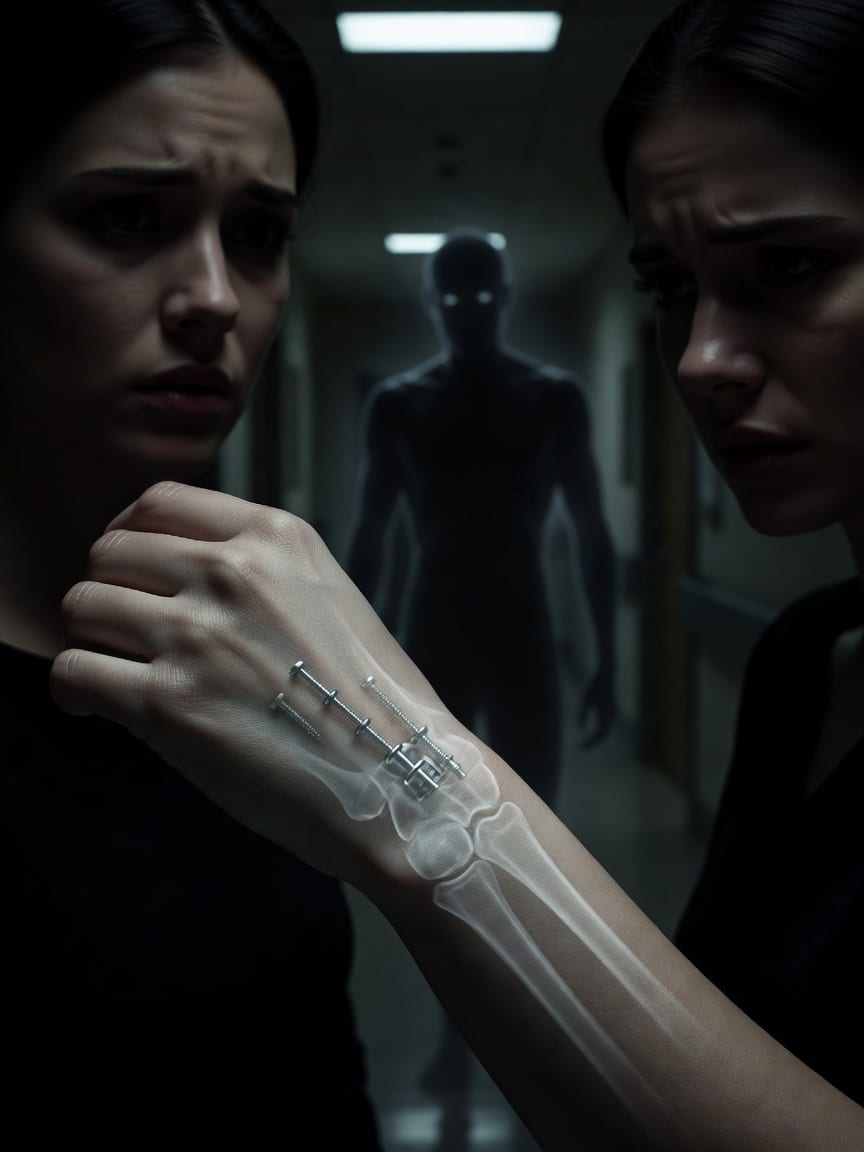
My wrist X-ray showed a titanium plate fixing a break from years ago. My surgeon asked which hospital did the operation. I've never had surgery in my life.
After a clumsy accident, I visited the fracture clinic for my swollen wrist. But my X-ray showed a perfectly healed titanium plate embedded in my bone – an implant I had no memory of receiving. Despite being decades old, there was no scar on my skin, and no medical record of the surgery under my name.
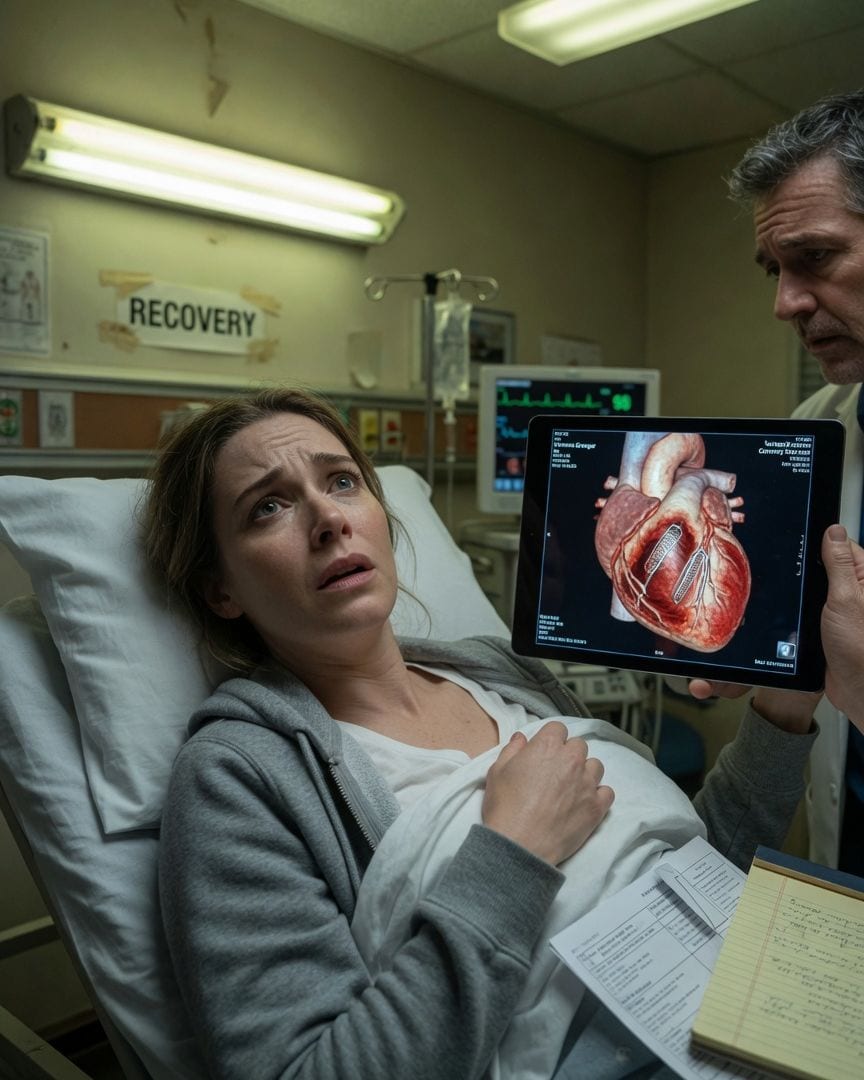
Metal stents are propping open my heart. The doctor rotated the image, but I've never had a cardiac procedure.
After years of dismissed chest pain, a CT scan revealed an impossible truth: my heart contained two metal stents. Dr. Maddox confirmed there was no record of any cardiac procedure in my entire medical history, and I had no memory of ever having surgery. My own body held a secret, alien architecture I couldn't explain.
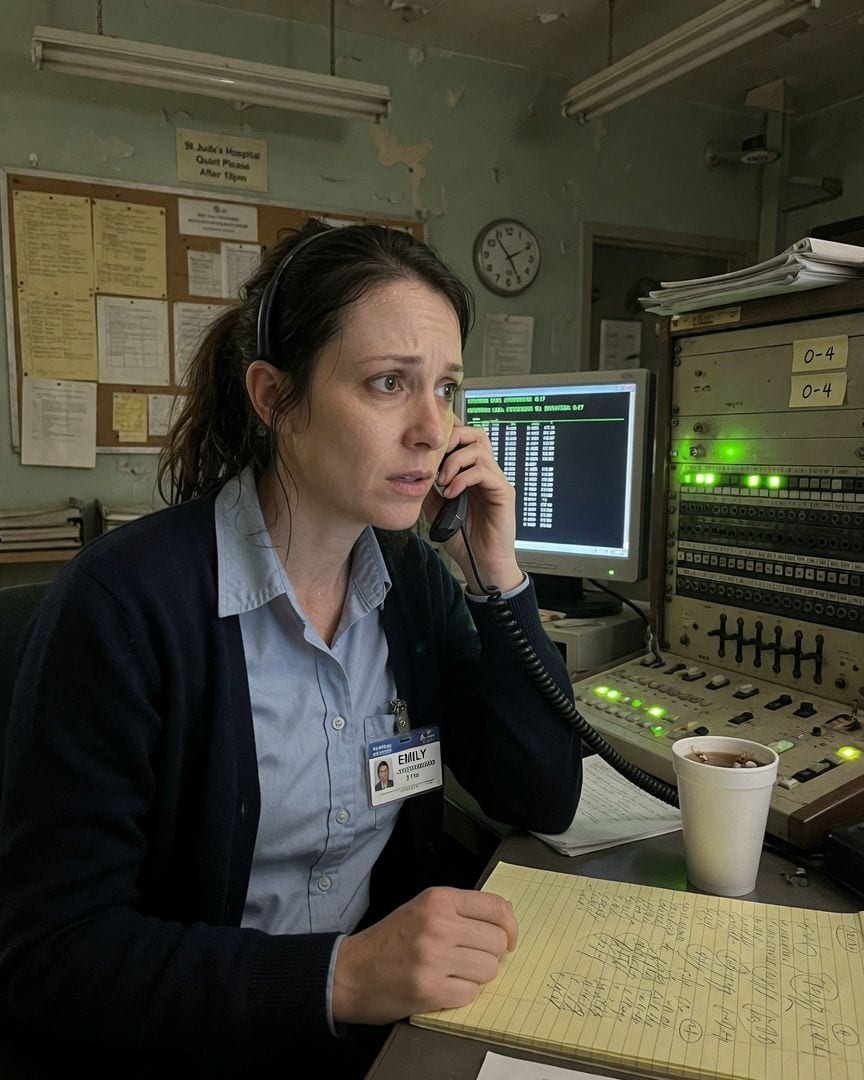
A nurse's voice asks me to page Dr. Reyes to the third floor. My hospital's third floor was demolished years ago, and extension 0-4 with it.
Working the quiet overnight shift at St. Jude's, I was used to predictable clicks. But just after 4 AM, my switchboard lit up: a call from extension 0-4. That extension was decommissioned decades ago, tied to a floor that no longer exists, yet the light pulsed insistently.
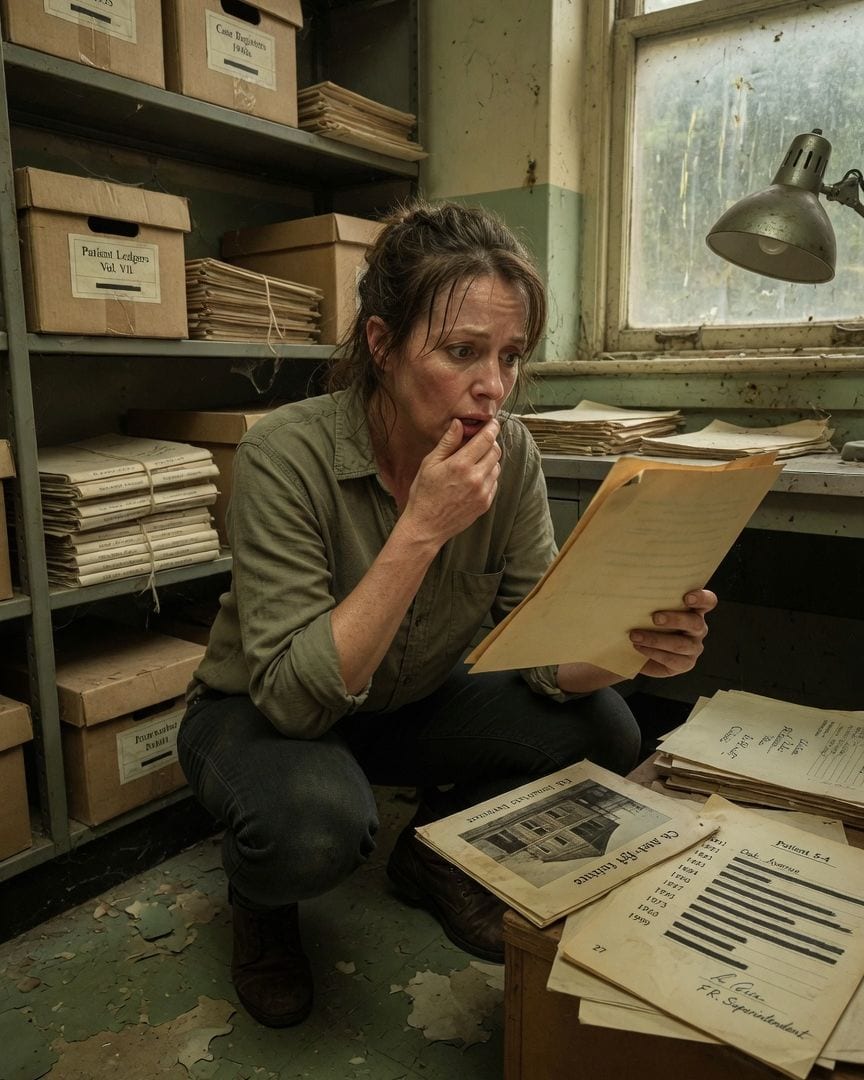
Patient 5-4 keeps checking into my aunt's old sanatorium chalet. The same initials sign them out, 'not traced,' every thirteen years since 1921.
Sifting through my aunt Margaret's estate, I found her old sanatorium file from 1999. Her patient record listed her as 'Patient 5-4,' discharged 'not traced.' But when I accessed the archives, I found 'Patient 5-4' was admitted every thirteen years since 1921, always with identical discharge notes.
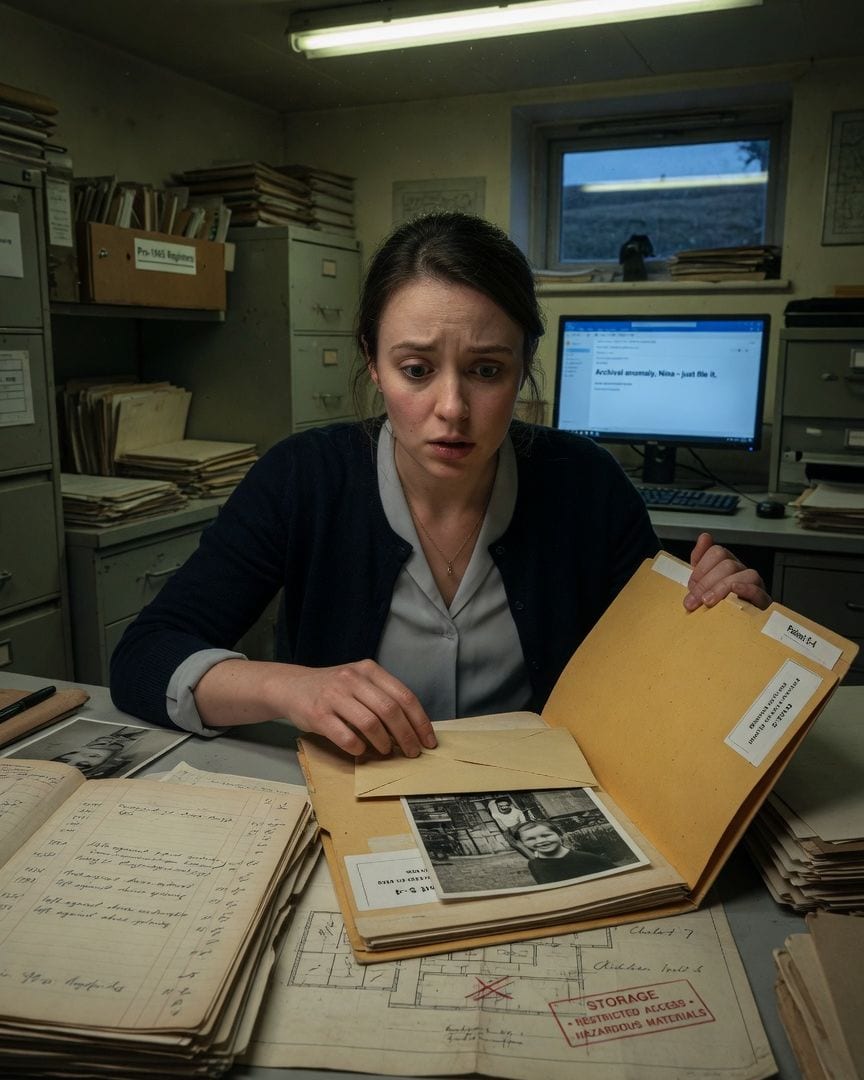
My aunt's sanatorium record shows Patient 5-4. The same file number has been quietly reissued every thirteen years since 1921, signed by the same superintendent's initials.
Processing my aunt Florence's admission file in the archives, I found her patient number, 5-4, held a disturbing secret. This number appeared every thirteen years since 1921, for patients admitted to the same remote chalet, signed by the same impossible initials, and all vanished without a trace. Then, hidden in my aunt's file, I found an old photo of her outside that chalet, with a gaunt, still figure watching from its window.
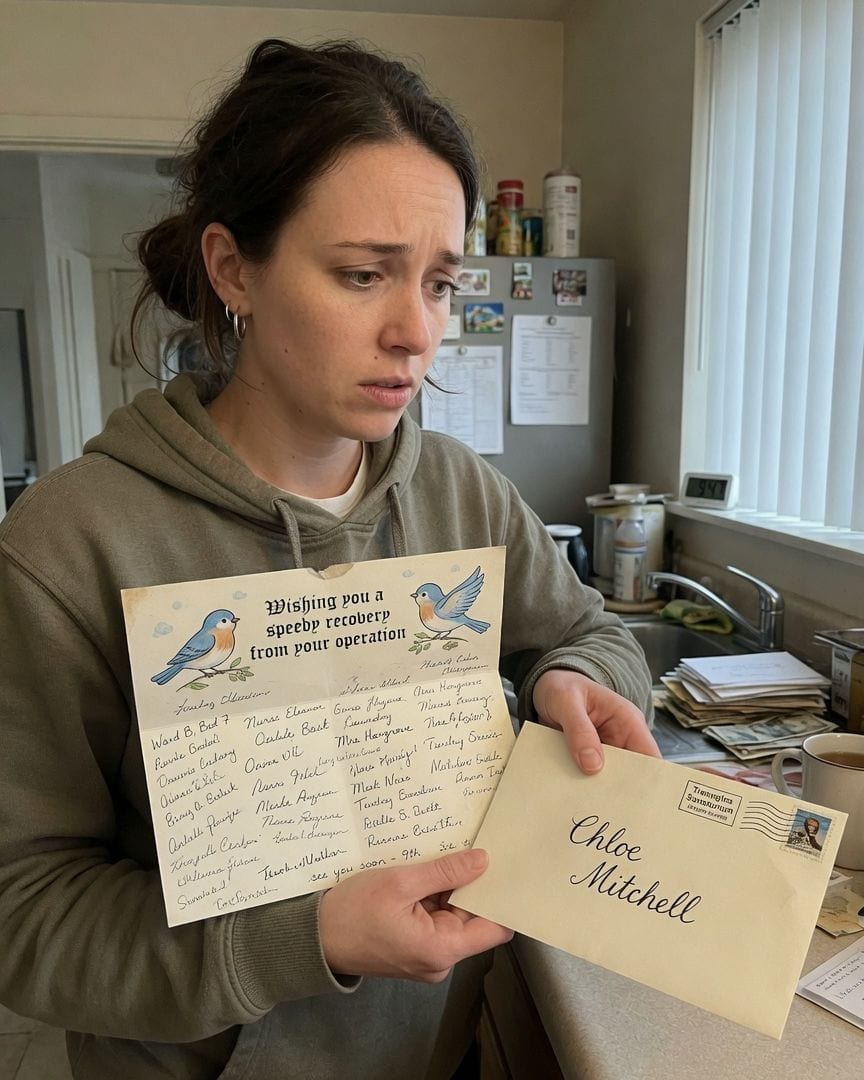
A get-well card wished me a speedy recovery from an operation I never had. It was postmarked from a sanatorium that burned down in 1963.
My quiet Tuesday morning was interrupted by an elegant get-well card, addressed to me. It wished me a speedy recovery from an operation I'd never had. But the postmark read 'Treneglos Sanatorium,' a hospital that vanished in a fire back in 1963.