My church has three confession boxes now, but the north transept wall is bare stone. Twice, I heard two voices inside it, when I’m the only one with a key.
The last clunk of the lock echoed in the nave, a sound I’d grown used to over my three years as caretaker at St. Jude’s. Nightly ritual: lights off, doors checked, and then the quick count of the confession boxes.
Two, always two. One on the left, one on the right, flanking the main aisle. A small, comforting order in a building that had stood for centuries.
Tonight, as I rounded the north transept, my breath hitched. There, impossibly solid against the bare stone wall, was a third confession box. Its heavy oak door was closed, the velvet curtain drawn. It simply was. My heart hammered.
It wasn’t there yesterday. It wasn’t there this morning when I unlocked for the early service. This wall, I knew, was unbroken, ancient masonry, smooth and blank. It had always been bare stone.
I stared, rationalizing. A prop, maybe? An old piece of furniture moved for restoration? But the wood was too fresh, the brass handle gleamed with a newness that belied age, and the curtain, a deep burgundy, looked recently hung.
I walked closer, my shoes silent on the cold flagstones. I paced the perimeter of the transept, counting the other boxes again. One. Two. Then this one. Three. I pressed my palm against the rough stone wall immediately beside it.
Cold. Undeniably solid. The box was not an illusion. It was part of the building, seamlessly attached.
A low murmur drifted from behind the box’s closed curtain, faint but distinct. Two voices, hushed, intertwining, like a secret conversation I wasn’t meant to overhear. My skin prickled. I was alone. I’d triple-checked the locks, walked every aisle.
It must be the wind, I told myself, whistling through an old pipe, or the settling of ancient timber. But the murmuring persisted, two distinct cadences, a soft, impossible dialogue in a space that should not exist.
The numbers in my head refused to add up.
The next morning, armed with my trusty tape measure and the church’s yellowed architectural plans from 1898, I went straight to the north transept. The third box was still there, undeniable in the brighter, dust-mote-filled light.
I ran my hands over the mortar around its base. No disturbed dust, no fresh grout lines, no sign of recent construction. It looked like it had been there for centuries.
I unspooled my tape. The transept measured exactly twenty-three feet, eight inches from the chancel wall to the exterior. The plans showed twenty-three feet, eight inches. But then I measured the box itself. Six feet wide, five feet deep.
Where did that extra space come from? I measured the south transept for comparison; same length. The numbers simply didn’t fit. The interior dimensions of the church no longer matched its own blueprints, or its exterior.
I ran my hands along the floorboards around the box’s base, searching for any seam, any sign that it had been added recently. Nothing. The wood was old, worn smooth, perfectly continuous around the impossible structure.
My frustration mounted, a knot tightening in my stomach. This wasn't a prop; it was physically part of the building.
With a sigh, I pushed against the box’s door, but it was locked, the heavy brass handle cold beneath my fingers. I retrieved my master ring of keys, but none of them, old or new, fit the lock.
I tried to peer through the small, gridded window on the door, but the glass was too dark, too thick, reflecting only a distorted image of my own anxious face.
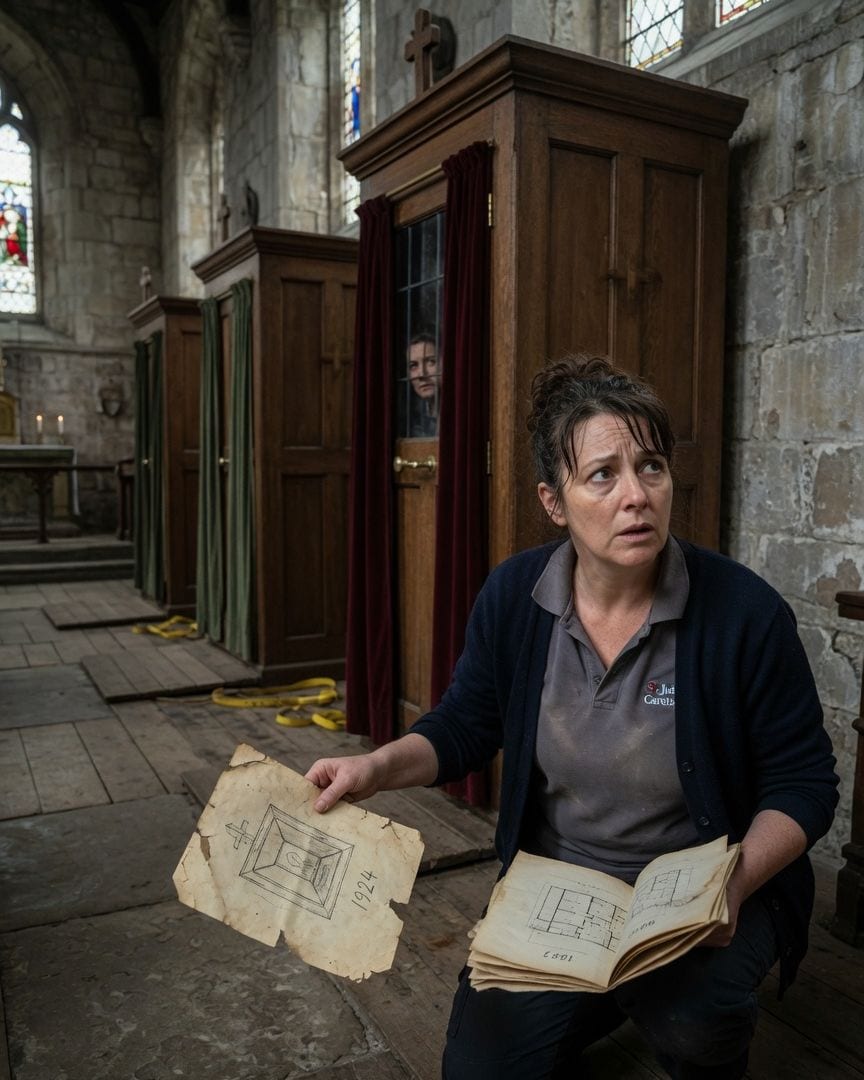
As I knelt, frustrated, my gaze fell on a loose floorboard, almost imperceptible, just beside the box. It was a hairline crack, slightly raised. Something thin was wedged beneath it. Carefully, I pried it up with a nail file.
Inside, folded and brittle with age, was a single sheet of paper, the edges crumbling. It was a crude, faded sketch, done in what looked like charcoal.
It depicted the north transept wall, bare stone, just as it should be, unbroken. But beneath the sketch, in a shaky, unfamiliar hand, was a faint, almost invisible outline of a confession box, drawn directly onto the bare stone.
And beneath it, scrawled in faint pencil, was the year: '1924'.
My fingers traced the faint, almost invisible outline of a third confession box on the aged paper, sketched beneath the date '1924,' perfectly matching the impossible structure now standing in the transept.
The paper crumbled slightly at her touch, the dust settling on my palm like old secrets. The architectural plans I held open on the pew lay flat, showing only the smooth, uninterrupted expanse of the north transept wall.
The sketch was a ghost image, a blueprint of a presence that defied reality, a hundred years old, yet perfectly current. A chill, unlike any draft, seeped into my bones. This wasn't a mistake, or a forgotten prop.
This was… a return.
The 1924 sketch became my obsession. Every day after my caretaking duties were done, I retreated to the church archives, a cramped, dusty room filled with ledgers and photographs.
I was looking for anything: a mention of a 'third box,' an unusual structural report, even a local rumor about the north transept wall.
Wayne Fairfax, the retired verger, found me one afternoon, surrounded by rolls of old blueprints. He’s 72 now, a quiet man with eyes that seem to hold generations of church history, like a living timeline.
I showed him the sketch, explaining my discovery, the impossible measurements. He merely nodded, his expression unreadable, almost calm.
"St. Jude's has its… eccentricities, Janet," he rumbled, his voice like stones shifting. "Some things just… are." He offered no further explanation, just a long, knowing look.
Undeterred, I began systematically re-measuring the entire church. I started with the nave. The plans said it was 100 feet exactly. My tape measured 101 feet, 3 inches. Impossible. Then the transepts.
The north one, where the box stood, was consistently wider than the south, by precisely the dimensions of the impossible box. Yet when I paced the perimeter of the church outside, then measured its exterior walls, they were identical.
It was like trying to fit a square peg into a round hole, only the peg kept changing shape, or the hole was subtly larger on the inside.
Every rational check I performed only deepened the mystery, confirming that the church's internal space simply refused to adhere to the laws of physics, or its own blueprints.
I dug through old photo albums, specifically looking for images of the north transept from the early 20th century. In some, the wall was undeniably bare, just as I knew it.
But in others, taken from slightly different angles or in different light, there was a subtle distortion near that spot.
A faint, almost imperceptible blur where the box now stood, as if the camera struggled to capture something that wasn't fully there. The pattern was becoming terrifyingly clear: the wrongness wasn't random; it was consistent, geometrically precise, yet utterly impossible.
My relentless investigation didn't go unnoticed. One evening, after meticulously re-measuring the transept for the fifth time, I packed away my tools, securing my tape measure, level, and notebook in my canvas bag.
I locked the heavy oak doors of St. Jude's behind me, the cold metal key chilling my palm.
The next morning, I found my measuring tape laid out on the altar, unspooled to precisely 19 feet, 2 inches – the exact interior width of the impossible confession box. My heart hammered, a frantic drum against my ribs.
I knew, with absolute certainty, I had put it away in my bag. No one else had a key, except Wayne. When I asked him, he merely shrugged, dusting a smudge from a hymn book. "Perhaps you were tired, Janet.
The mind plays tricks in old places." But the glint in his eye, the slight tilt of his head, suggested otherwise. He knew.
Later that week, I found a small, handwritten note tucked into my copy of the 1924 sketch, the one I kept for reference. It wasn't from me. The paper was thicker, older, and the ink a deep, almost black hue.
It simply read: "Some questions are better left unasked. Some things are better left unseen." No signature. The message was a direct hit, confirming that someone knew exactly what I was doing, what I was finding. The dread intensified.
I wasn’t just an observer anymore; I was being watched, my every move scrutinized. The church, or something within it, was aware of my probing.
The murmuring from the third confession box seemed louder that night, a low, insistent hum, as if the two voices now had an audience, or were perhaps speaking directly to me.
I cornered Wayne Fairfax in the archive room, the anonymous note clutched in my hand. "What is this, Wayne? Who left this?"
Wayne sighed, his calm facade finally cracking. He looked old, suddenly, defeated. "I left it, Janet. I hoped you would listen." He sat down heavily on a worn stool, gesturing for me to do the same.
His gaze drifted to a dusty old map on the wall, his eyes fixed on nothing in particular. "St. Jude's… it has a way of showing itself. Not to everyone, but to some.
Those who pay too much attention, those who try to measure it, to understand its… geometry."
He paused, a long, heavy silence hanging between us. "It's happened before. Every century or so, something shifts. A room appears, a hallway lengthens. And then, people notice. People like you. And people like… others."
He spoke of a previous caretaker, a woman named Genevieve, who had meticulously documented discrepancies in the 1920s, much like me. "She saw the third box too. And she tried to… fix it.
To map it out, to make it conform." He shook his head. "But it doesn't conform. It just… absorbs."
I felt a cold knot tighten in my stomach. "Absorbs what?"
Wayne looked directly at me, his eyes filled with a profound, weary sadness. "The space. The confusion. And sometimes… the people. Those who get too close, who try to force its hand."
He explained that the murmuring I heard, Genevieve had described too. "Echoes. Fragments. The church keeps them." My mind raced. The sketch from 1924, the blurred photographs, the impossible measurements – it all clicked into a horrifying coherence.
The wrongness wasn't a flaw; it was a feature. "You mean… it's alive?"
Wayne didn't answer directly. "It recurs. It reclaims. And once you've seen it, truly seen it, you're… part of its pattern. You're inside it now, Janet. Just like Genevieve was."
Wayne's words, "You're inside it now," echoed in my mind as I left the archive room, the heavy church key cold in my hand. I had to get out, to clear my head.
I walked briskly through the nave, the silence of the empty church suddenly oppressive. I reached the main doors, fumbled with the locks, and pushed them open, stepping out into the cool evening air. The streetlights cast long shadows.
I walked down the path, then turned right, heading towards my car parked a block away. The familiar rhythm of my steps, the sound of my own breathing, were meant to be reassuring.
But as I rounded the corner, my breath hitched. There, directly in front of me, were the familiar oak doors of St. Jude's. I had walked in a perfect circle. Panic flared, a cold, sharp claw in my chest.
I spun around, disoriented, but the street was empty, the path behind me leading only back to the church. I tried again, forcing myself to walk in a straight line, focusing on the distant glow of the town.
But after what felt like an eternity, I found myself once more standing before the church's imposing facade. The air grew heavy, the silence deepening around me. I was back. And the third confession box was waiting.
Stumbling back inside, defeated, I saw it. On the archive table, where I'd left my stack of early 20th-century photographs, a single one had slid to the top.
It was a wide shot of the north transept from 1928, the wall bare, just as it always should have been.
But in the background, subtly out of focus, near where the third confession box should be, stood a blurred figure. A woman. Her silhouette, her posture, even the way her hair caught the light, was unmistakably mine.
I stood frozen, staring at the blurred figure in the century-old photograph, a figure that was undeniably me.
The murmuring from the third confession box, now just a few feet away, seemed to swell, a chorus of forgotten whispers welcoming me home.
Trapped, I finally understood. Wayne's words, Genevieve's sketch, the impossible measurements, the looped escape attempt – it all coalesced into a terrifying, undeniable truth.
St. Jude's Church wasn't just old; it was a living, shifting geometry, a recurring anomaly that warped space and time within its walls.
The third confession box was its pulsating heart, a doorway to an internal dimension where the absorbed 'echoes' of previous victims resided.
Wayne, finding me slumped against a pew the next morning, confirmed my chilling epiphany.
He revealed that his own great-grandmother had been the caretaker Genevieve, and her journal, hidden in a false bottom of an archive drawer, detailed the century-long cycle.
The church, he explained, didn't just 'absorb' people; it consumed their spatial awareness, their sense of place, feeding on their disorientation until they became part of the 'murmuring,' a permanent, lost presence within its impossible architecture.
The cycle peaked, he said, during certain celestial alignments, or times of great spiritual flux, like Lent, when the veil between spaces thinned.
The impossible measurements, the disappearing hallways, the photos, the sketch – they were all symptoms of a building that breathed, that hunted.
The figure in the old photograph, my own silhouette, wasn't a trick of the light; it was an echo, a premonition, my own awareness bleeding into the past, or perhaps the past bleeding into my present.
I wasn't just inside the church; I was inside its cycle, a recurring character in its terrifying, geometric play. The voices were not just echoes; they were warnings, or perhaps, invitations.
I knew I couldn't escape the church, not truly. But I could try to break the cycle, to stop its recurring hunger. Genevieve's journal spoke of 'anchors' – objects or symbols that could briefly stabilize the shifting geometry.
I believed the third confession box was the primary anchor for this particular cycle. If it could be permanently sealed, perhaps the anomaly could be contained, or at least disrupted for another century.
I spent days, fueled by grim determination, gathering every piece of heavy masonry, every old iron bar, every broken chunk of gargoyle I could find in the church crypt.
Wayne watched, his face a mask of resignation, offering no help, no hindrance.
My plan was simple, desperate: to brick up the third confession box from the inside, to seal it with a physical barrier that the shifting geometry could not easily undo.
I managed to pick the antique lock with a tool from the vestry, the mechanism groaning in protest as the heavy oak door swung inward.
The air inside the box was cold, thick with an unseen presence, the murmuring now a distinct, guttural whisper right beside my ear. I climbed inside, pulling the heavy door shut behind me, plunging myself into absolute darkness.
The murmuring intensified, swirling around me, a chorus of disembodied voices that scraped at the edges of my sanity.
Working by the faint light of my phone, my hands raw, I began to lay bricks, mixing mortar from old lime and sand I’d found in the church cellar.
Each brick laid was an act of defiance, a desperate attempt to create permanence in a place defined by flux. The voices shrieked, then faded to a mournful wail as the wall grew, solidifying.
Finally, with the last brick in place, sealing the opening completely, the murmuring ceased. A profound, hollow silence descended. I pushed against my newly built wall, testing its solidity. It held.
Exhausted, I sat in the now-darkened box, listening to the silence. It was done. I had stopped it. As I fumbled for the box’s inner latch, a new, subtle chill ran up my spine.
A faint, almost imperceptible tremor ran through the floor beneath me. A new sound, a soft, rhythmic creak, began in the far corner of the box, where the wood met the stone, a creak that had not been there before.
It was the sound of a new door, slowly, impossibly, opening.
I emerged from the church, pale and shaken, but alive. The third confession box was gone. The north transept wall was once again solid, unbroken stone, exactly as it should be.
No trace remained of my desperate construction, no sign of the box itself. The church had reset, as Wayne had predicted. I resumed my duties, meticulously locking up each night.
Wayne Fairfax, observing me from afar, offered a slight, knowing nod. The church seemed normal, its ancient stones holding their secrets once more. But for me, nothing was truly normal.
The world had shifted on its axis, and I now saw the seams.
The silence in the church was absolute now, the murmuring a distant memory. The third confession box never reappeared. I still counted the doors, a habit ingrained, a constant check against the impossible.
I still measured, too, not just in the church, but everywhere. My own home. The grocery store aisles. The distance between bus stops. Every day, I found tiny, almost imperceptible discrepancies.
A bookcase that seemed an inch wider than it should be. A hallway that felt longer on the way out than on the way in. A shadow that lingered a fraction too long, suggesting an impossible angle.
I never mentioned it to anyone. What would I say? That the world was subtly, constantly wrong? That I was forever attuned to its shifting geometry? I had survived, yes, but I carried the church's truth within me.
The understanding was a hollow ache, a permanent mark on my perception.
She still counted the doors every night, but sometimes, when I get home, I count my own windows twice.
If this one got to you
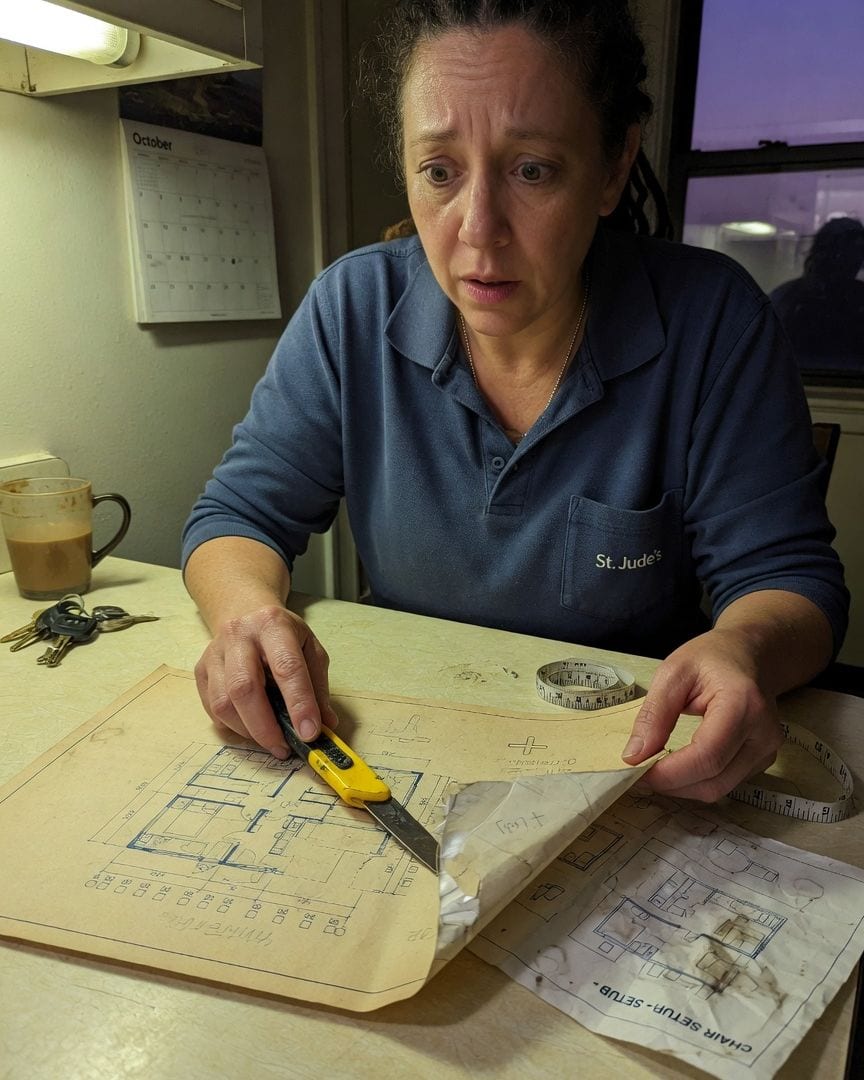
My church hall always has ninety-seven chairs. The diagram shows ninety-six, and the extra one faces the wall where a cross won't rub off.
My Monday morning cleaning routine at St. Jude's is precise: 96 chairs, neatly arranged. But for weeks, I've found a 97th chair in the same spot, always returning. My rational mind searched for an explanation, but each time, it fell apart. Then I peeled back the old blueprint, and a woman's name was etched beneath a faint cross.
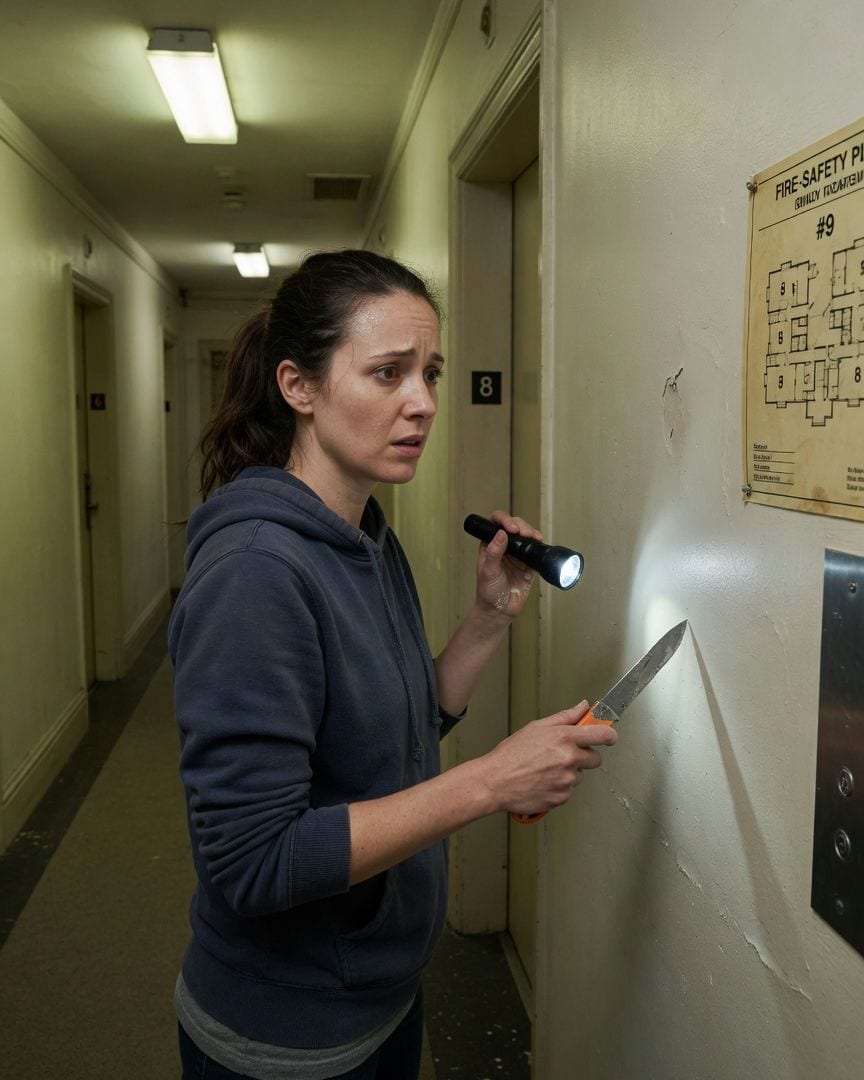
That blank wall in my hallway has a hidden metal plate. Tonight, after eleven years, it just clicked.
For eleven years, my apartment building's fire plan has shown nine apartments on my floor. But I've only ever counted eight doors, the space for the ninth a blank wall. Now, I've found a hidden metal plate behind the plaster, and from deep within, I just heard a soft *click*.
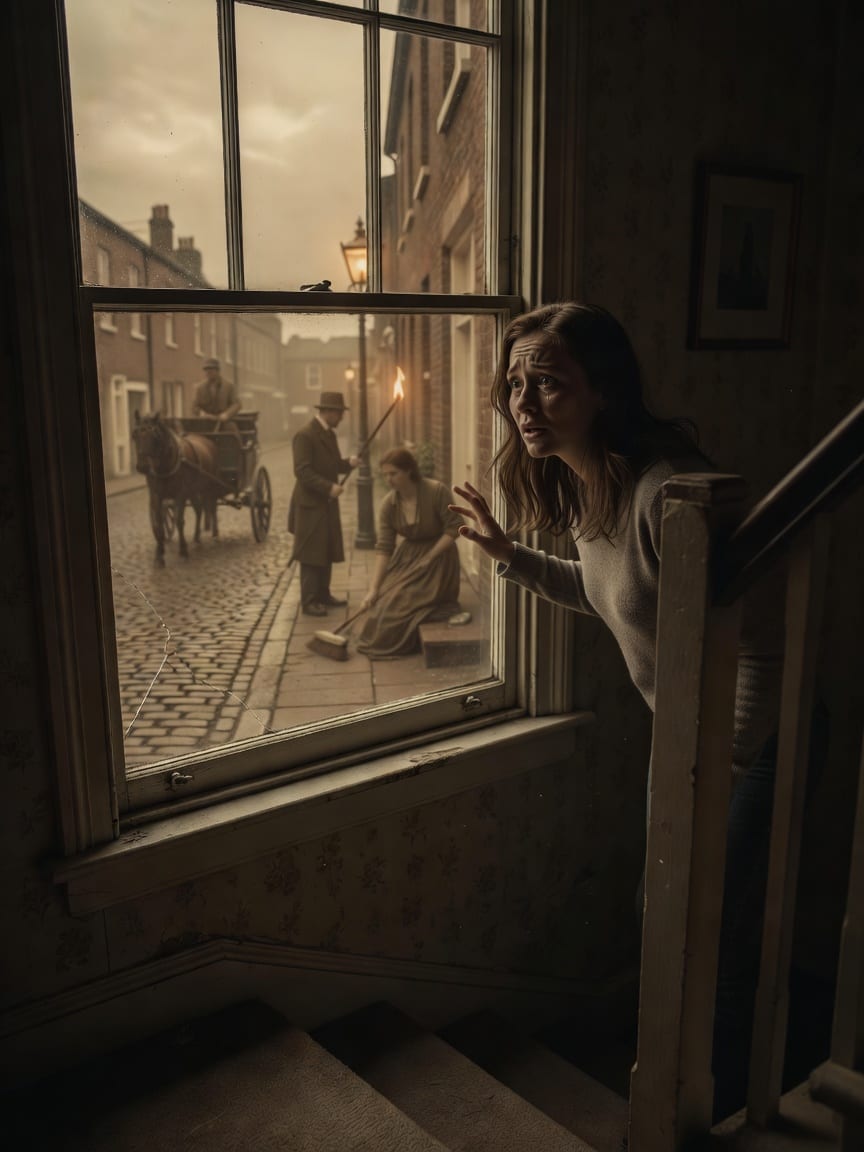
My half-landing window looked down on a cobbled street, a horse and cart. My panes, same crack. Below, only the bins.
I moved into this inherited house for a fresh start, living alone in the quiet. But the third stair on the main flight is deeply worn, a ghostly scoop hinting at decades of unseen footsteps. It feels hollow, and the wall beside it hides a faint, inexplicable seam.
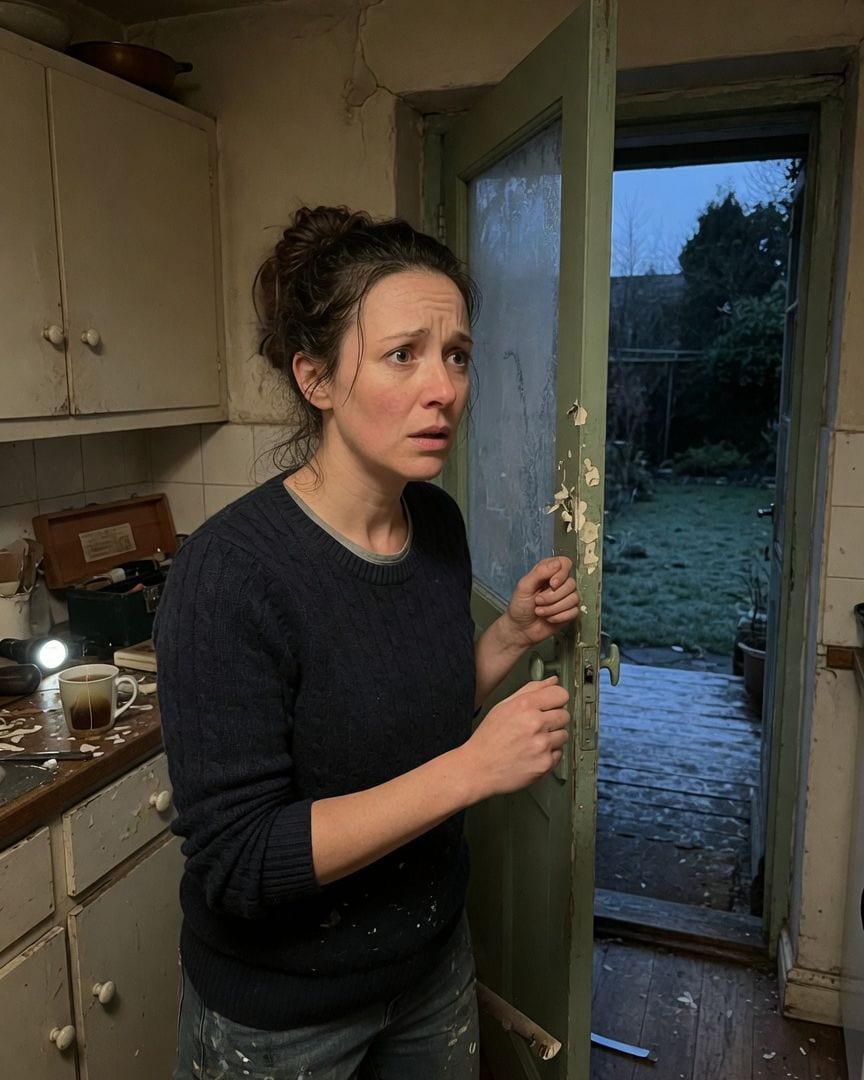
My 1950s cottage doorframe has '1923' carved into it, a date that simply cannot exist here.
I'd poured my heart into renovating my new cottage, especially the back door to my patio. But when I opened it, I wasn't looking at my frost-kissed garden. Instead, a cramped, reeking scullery with a bone-chilling dampness stared back, an impossible image that wouldn't leave my mind, even after the door closed.
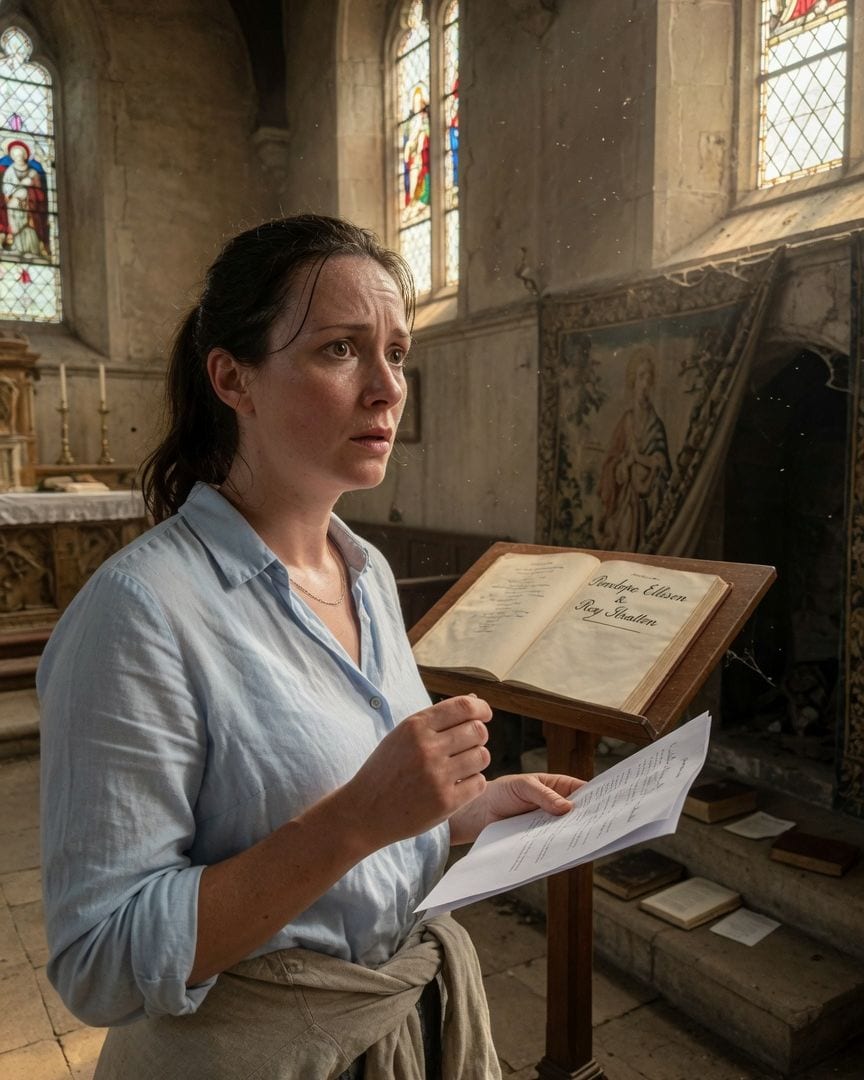
The church's banns book shows a wedding notice, republished every three weeks. Same names, fresh ink. The marriage was never solemnised.
As a newcomer to Marne, I noticed the curate quickly hide a page in the church's banns book. It showed a wedding for 'Penelope Ellison' and 'Roy Stratton' with fresh ink, yet I could find no record of them anywhere in town. The curate's dread-filled warning to leave "some things undisturbed" made the phantom names feel chillingly real.
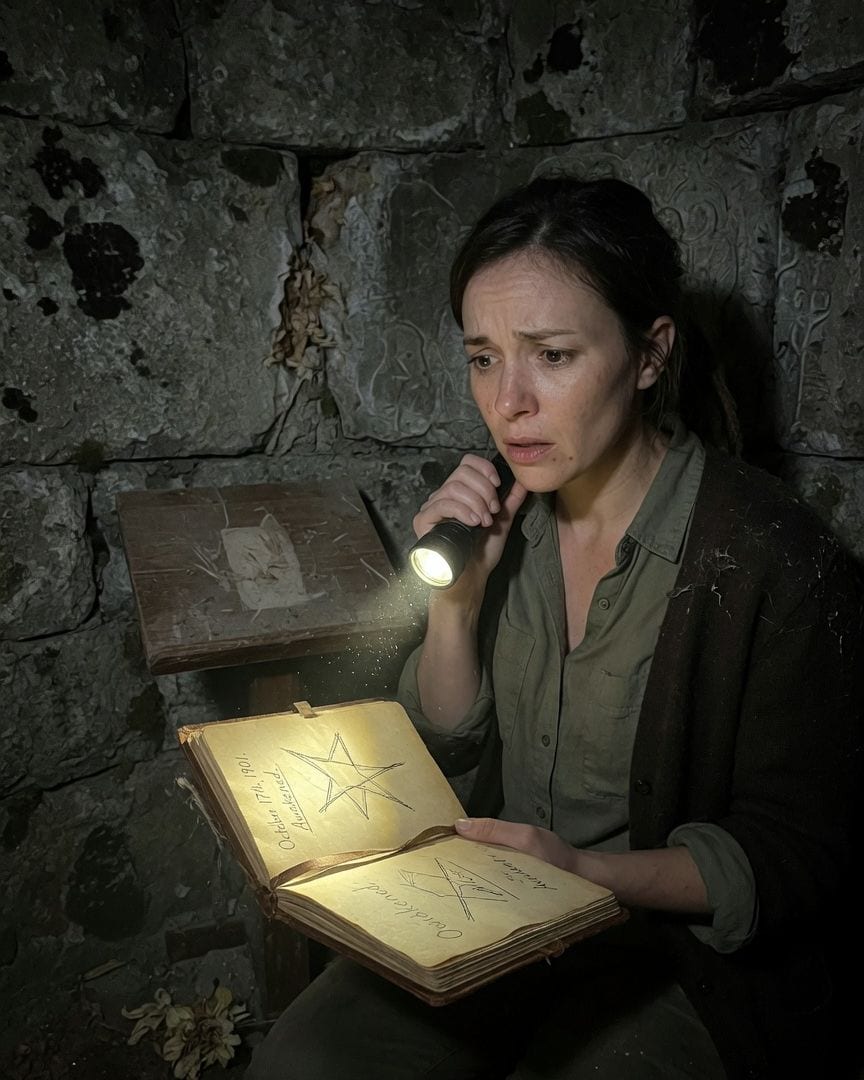
Marden's 'old dairy' shows up in the 1901 census as a chapel. Its minister was 104 that year. Everyone here looks at me oddly when I call it a chapel.
As a new resident in Marden, I quickly found an old stone building the town called its 'dairy'. My historian's research showed it was a chapel, listed in 1901 with a minister aged one hundred and four. When I finally broke into the building, I found a hidden room, and inside, a leather journal with a single, chilling 1901 entry: 'Awakened'.