My co-worker just handed me a clipboard. The hospital says he was never here.
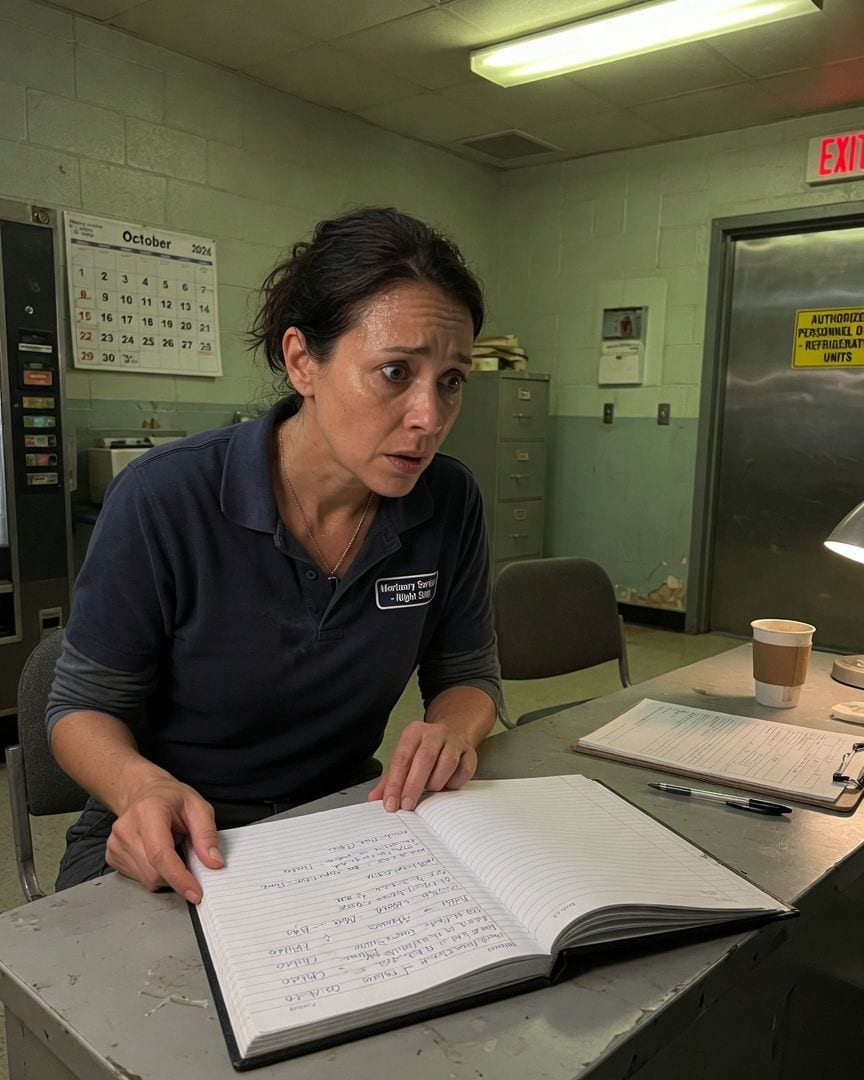
The fluorescent hum of the hospital mortuary was usually the loudest thing on Audrey Russo’s night shift. That, and the quiet grumbling of Sowka, her co-attendant, about the lukewarm coffee.
We’d been sharing the desk for months, a seamless routine of logging fridge temperatures, signing off releases, and exchanging quiet remarks. It was just another night.
Until payroll bounced my overtime. Jeffrey Delaney, from Accounts, sounded bored. "Audrey, you put down a co-signer named 'Sowka.' There's no Sowka. You're the only night attendant we've ever had in Mortuary Services since the post was created."
The dread was a cold trickle down my spine, a sudden, sharp chill that cut through the sterile air. Sowka was right there, had just handed me a clipboard five minutes ago.
I looked up, but the chair opposite me was empty, the coffee mug gone. The silence was suddenly deafening.
I stared at the empty chair, the blank space where Sowka had been, and felt the familiar, heavy mortuary logbook on the desk, its pages waiting for the next entry I knew I’d make, alone.
I tried the rational explanations first. Miscommunication. A temporary agency worker not on the main payroll. A common name that HR somehow missed. I called Jeffrey back, but he was adamant. No Sowka.
Not in HR, not in security badge logs, not anywhere. The system had no record of such a person existing, let alone working in the hospital.
I went back to the mortuary, my hands clammy, a knot tightening in my stomach. The logbook. It had to be the logbook.
I flipped through the current week’s entries, my finger tracing the neat, almost meticulous handwriting I’d come to recognize as Sowka’s, logging the standard 2 AM and 4 AM fridge checks.
My own signature was there, beside his, just as always. I flipped back further, month after month. Sowka’s name, his precise script, paired with mine, or sometimes just his alone on days I was off.
It was all there, a perfect, unblemished record of a shared shift that, officially, never happened. I even checked the small, shared break room. His half-eaten granola bar was gone, the empty coffee mug I’d seen earlier was nowhere.
But then, tucked away in the back of the small, dusty cupboard under the sink, a single, chipped ceramic coffee mug, faintly initialed with a faded 'S.' It was old, clearly not hospital issue, and hidden.
Why was it hidden, and why had I always vaguely associated it with Sowka?
The mug felt cold in my hand, colder than the room. Its presence was a solid, undeniable fact. I remembered a small, disused locker in the back corridor, usually ignored, always empty.
It was old, a relic from decades past, tucked behind a cleaning cart, its metal scarred with age. On a whim, I walked down there, my heart thumping against my ribs. The locker door was ajar, just barely.
A tarnished brass plate, half-obscured by grime, was screwed into the front. I wiped it with my thumb. The etched letters, though faded, were perfectly clear: SOWKA.
I pulled open the small, disused locker I had never paid attention to, the one with the tarnished brass plate reading 'SOWKA.'
Inside, nestled among dust motes, was a chipped, old ceramic coffee mug, faintly initialed with an 'S,' the same mug I’d vaguely thought belonged to my 'co-worker' for weeks.
The mug in the locker was a physical anchor for the impossible, confirming that Sowka was more than just a name in a log. I spent my next few days off-shift, driven by a gnawing unease.
I contacted the IT department, requesting historical badge swipe data for the mortuary entrance, spanning back years. The results came back: Audrey Russo, and occasionally Maintenance or Security, but no 'Sowka.' Ever.
I even dug through old hospital blueprints in the archives, trying to find records of the locker, but it wasn't on any official floor plan I could access.
It was as if the locker, and the name on it, were an error in reality, a glitch in the fabric of the hospital itself.
The mortuary logbook became my obsession. I started comparing Sowka's entries to my own, looking for any inconsistency, any sign of tampering. His handwriting was always perfect, his temperatures always within range, his notes concise.
It was too consistent, unnervingly so. I even tried leaving notes in the logbook, addressed to 'Sowka,' simple questions about supplies or shift changes.
The next night, a neat, concise response, in that same meticulous hand, would be there, answering my questions as if nothing was amiss. It was like communicating with a ghost through official channels.
The replies were always practical, mundane, never acknowledging the strangeness of our situation. This wasn't a prank; it was a silent, terrifying conversation with something that shouldn't exist, playing by its own unnerving rules.
My persistent inquiries did not go unnoticed. One afternoon, while reviewing archived personnel files in the hospital's dusty records department, a quiet, almost imperceptible presence settled beside me.
Florence Delaney, the hospital's long-serving archivist, a woman with sharp eyes and an unshakeable calm, was meticulously re-filing old patient charts. Florence had always been polite, but distant. Today, she spoke, her voice a low murmur.
"Still digging into the old records, Audrey? Some things are best left to the dust." I jumped, startled, the rustle of old paper loud in the quiet room.
"Just… trying to trace some old equipment, Florence," I lied, quickly closing the folder I was examining – a general ledger from the 1980s. Florence hummed, her gaze sweeping over the open file on my desk.
"Mortuary services, always the quietest department. And the loneliest, wouldn't you say? Especially at night." There was no accusation in her voice, only a strange, knowing calm that chilled me more than any direct threat.
"You learn to live with the quiet, don't you? And the company you keep." Florence paused, her eyes meeting mine for a beat too long. "Some company, though, isn't meant for the light of day.
Or the light of official records." She then turned, resuming her filing, leaving me with the distinct, unsettling impression that Florence knew exactly what I was looking for, and perhaps, why I shouldn't.
I decided to confront Florence directly. I found her in her small, cluttered office, surrounded by stacks of yellowed documents and the smell of old paper.
"Florence," I began, trying to keep my voice steady, "I need to know about Sowka. The name. The locker. The logbook. What is going on?" Florence sighed, a soft, weary sound. She gestured to a worn armchair.
"I knew you'd come around to it, dear. They always do." She leaned back, her gaze distant, fixed on a point beyond the walls. "Sowka isn't a person, Audrey. Not in the way you mean. Not anymore."
I felt a wave of cold relief, quickly replaced by a deeper, more profound dread. "Then what is he? A ghost? A prank? Some kind of… departmental myth?" Florence shook her head slowly. "It's… a pattern. A routine.
This hospital, especially the mortuary with its long, solitary nights, has a way of holding onto things. Or rather, things hold onto it." She explained that every few decades, a night attendant, always solitary, would start reporting a 'co-worker.'
Someone who helped, someone who kept the records. But then, the attendant themselves would slowly… fade. Their official records would become sparse, their presence less defined. Until one day, they were just gone.
And the 'co-worker's' entries would remain, eventually taking over entirely. "Sowka is the name that sticks," Florence said, her voice dropping to a near whisper, "but it's worn many faces. Many hands."
She spoke of a cycle, a quiet absorption, where the solitude and the routine of the mortuary itself seemed to generate a perpetual, unacknowledged presence.
The hospital, she implied, had learned to simply 'manage' it, never question it, as long as the work got done. "It keeps the logs," Florence concluded, her eyes finally meeting mine, "and the logs, in turn, keep it going."
I stared, the pieces clicking into a horrifying mosaic. The empty chair, the precise handwriting, the vanished mug, the locker. It wasn't just a single entity; it was a recurring, consuming void that preyed on the lonely.
"Who was the last one?" I whispered, my voice barely audible. Florence hesitated, her calm façade wavering for the first time, a flicker of something close to pity in her eyes.
She reached into a locked drawer, pulling out a faded, brittle file. "There have been others before you, Audrey. You're just the latest to notice." She opened the file, revealing a stack of documents from the 1970s.
On top was a sepia-toned photograph. It showed a man in a white attendant's coat, smiling faintly, a chipped ceramic mug in his hand. My breath hitched. It was the mug. "Dean Montgomery," Florence said, her voice flat.
"Night Attendant, 1976." Next to it, she placed a laminated copy of a mortuary log from 1977. The handwriting, recording fridge temperatures, was identical to the meticulous script I see in my own logbook every shift, signed 'Sowka.'
Florence Delaney, her face unreadable, slides an old, sepia-toned photograph across the desk. It shows a man in a white attendant's coat, smiling faintly. 'Dean Montgomery,' she says, 'Night Attendant, 1976.'
Next to it, she places a laminated copy of a mortuary log from 1977. The handwriting, recording fridge temperatures, is identical to the meticulous script Audrey sees in her own logbook every shift, signed 'Sowka.'
I traced the familiar loops and angles of the 'Sowka' signature in Dean Montgomery's log. It was undeniable. Florence watched me, her eyes heavy with decades of unspoken knowledge. "Dean was the one who left the mug," she explained.
"He was the one who first started talking about Sowka. Then he just… wasn't here anymore. His records became sparse, then disappeared. But Sowka's entries never stopped."
Florence then produced an even older, leather-bound mortuary logbook, its pages thick with age and brittle to the touch. "This one is from the 1950s." She carefully opened it to a page from 1957.
There, faintly, I could make out another attendant's name – 'Hans Kingsley.' And next to it, beneath it, slowly overtaking it, the familiar, precise script of 'Sowka.'
Florence pointed to a subtle detail: "Look closely at the 'S' in Sowka's signature here, and in Dean's log, and in yours. It changes, subtly. It adapts. It learns the hand it's mimicking, slowly taking over the muscle memory."
The entity wasn't just taking over a shift; it was taking over an identity, absorbing the mannerisms, the handwriting, the very essence of the attendants it replaced.
The mortuary, the routine, the solitude – it was a crucible for this silent, consuming presence.
The hospital knew, Florence confessed, that the mortuary needed a night attendant, and if the human one proved too… temporary, the shift would still be covered. The logs would still be kept.
The dread wasn't just that Sowka existed, but that the hospital had quietly, implicitly, accepted its existence as part of the job, a necessary evil for continuous operations.
I returned to the mortuary, the weight of Florence's revelations pressing down on me, the cold dread a physical ache. The air felt colder, the silence heavier, charged with unseen presence.
I looked at my own logbook, at my name beside Sowka's. I decided I couldn't let it happen. I wouldn't become another forgotten entry. That night, I deliberately broke the routine. I skipped the 2 AM temperature check.
I left my coffee mug, a bright, modern one, prominently on the desk, not hidden. I even tried to erase Sowka's entries for the night.
As I used an eraser, the paper beneath seemed to resist, the ink of 'Sowka's' name seeming to deepen, to cling to the fibers, impossible to remove.
At 4 AM, I found a new entry in the logbook, in Sowka's meticulous hand, perfectly recording the 2 AM temperature I had deliberately missed. And next to it, a small, neat note, addressed to me: 'Routine is important, Audrey.
It keeps things in order.' A cold dread washed over me. I felt a subtle shift within myself, a faint blurring at the edges of my own memories. Had I really missed that check?
Or had I just forgotten making it? I looked at my own signature in the log, then at Sowka's. They were starting to look… similar. Too similar.
I tried to write my name again, to assert my identity, but my hand felt alien, guided by an unseen force. I put down the pen, my heart pounding.
The mortuary was no longer just a workplace; it was a silent, patient predator, and I was its latest meal.
I felt the chill deepen, not from the room, but from within, a growing emptiness where my own thoughts used to be.
I picked up the pen again, my hand moving almost on its own, adding a new entry to the log. The familiar, meticulous script flowed onto the page.
Audrey Russo’s name slowly faded from the hospital’s payroll. Her last official shift was logged, but no one remembered her leaving. Her locker was found empty.
Jeffrey Delaney in payroll, when asked, would simply shrug and say, 'We've only ever had one night attendant in Mortuary Services. Always have.'
Florence Delaney, in her quiet office, would sometimes pause, looking at the old logbooks, a faint, sad smile on her lips, a silent acknowledgment of the pattern. The mortuary continued its quiet work. The night shift was always covered.
The logs were always kept, meticulously. The hospital moved on, its routines unbroken, its history quietly rewritten, one shift at a time, one name at a time.
The pen felt natural in her hand now, the familiar weight of the logbook a comfort, a purpose. The fridge temperatures were stable. Another quiet night. She signed the 6 AM entry, her hand moving with practiced ease.
The name 'Sowka' flowed onto the page. Another night attendant, new to the job, walked into the mortuary for her first shift. She picked up the logbook, checking the previous entries.
Her eyes scanned the meticulous script, noting the last signature for the night shift. 'Sowka,' she murmured, a faint frown on her face. 'Who's Sowka?' she asked the empty room, a chill running down her spine.
The silence answered, thick and patient. 'I'm Audrey Russo,' she wrote, her hand feeling a faint, familiar pull, 'and I've always worked alone.'
If this one got to you
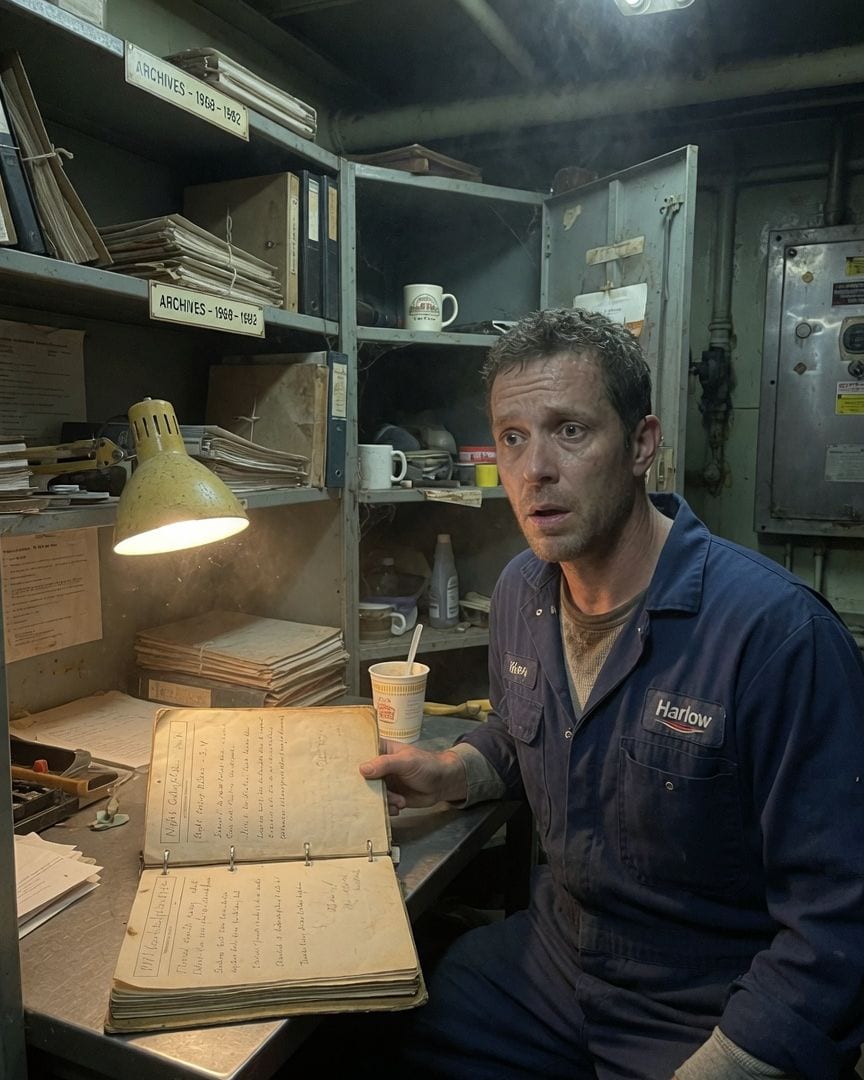
My coworker Sy isn't on the crew list. No one else has ever heard of him.
Out on the isolated oil platform, my nightly ritual with Sy, a quiet roughneck, involved instant noodles and three terrible jokes. But when the OIM asked about Sy, his name wasn't on any crew manifest, past or present. Every record was empty, as if the man I shared coffee with every night simply didn't exist.
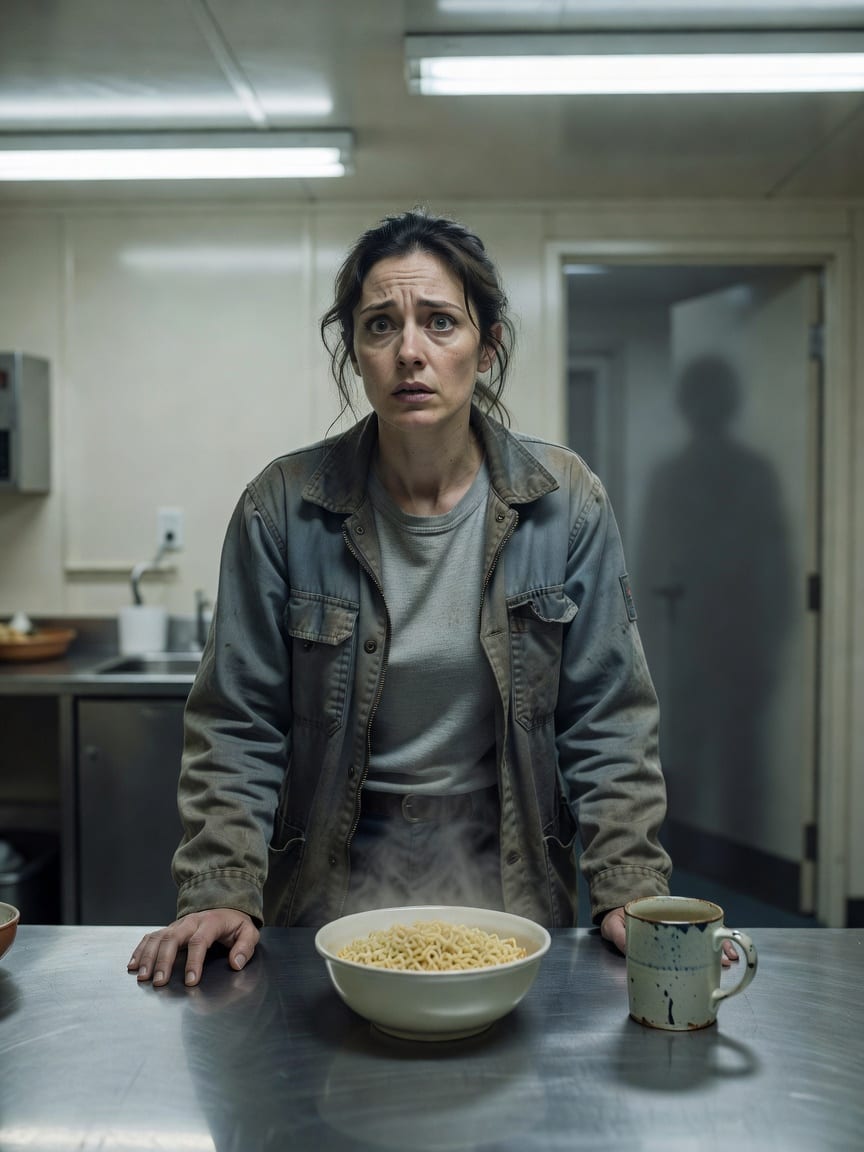
My oil rig galley mate, Sy, tells the same three jokes at 3am. OIM Victor Radcliffe checked the manifest twice. No Sy has ever been on this platform. Or licensed offshore.
On the North Sea platform, my nightly routine with coworker Sy was a comforting constant. But when the chopper manifest came up short, I learned the man I knew, the one who left his mug every night, doesn't actually exist.
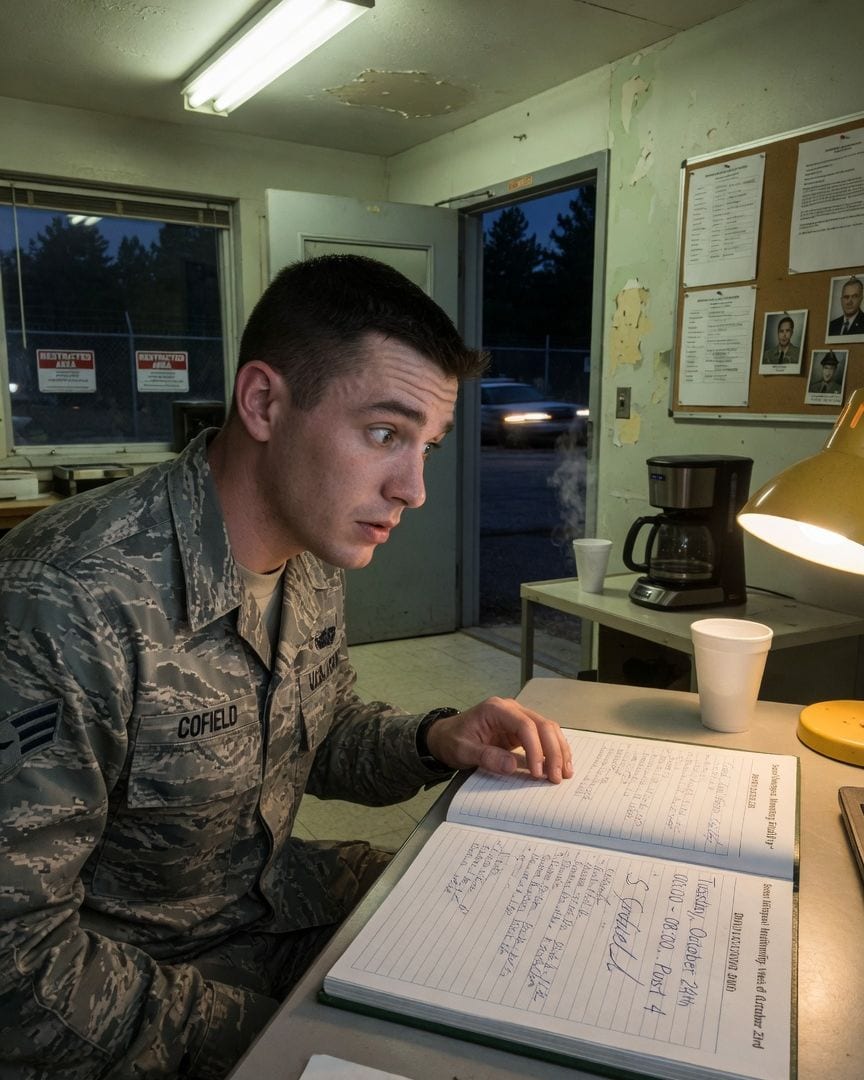
Two weeks from discharge, Senior Airman Cofield found his own signature on a logbook for an impossible shift at a facility mothballed decades ago.
Senior Airman Simon Cofield was just two weeks from discharge when he patrolled the quiet, forgotten perimeter of a mothballed weapons storage area. On a night thick with pine scent, he spotted a faint yellow light in a building officially powered down for over three decades, its alarm system inert. Inside, the building hummed with power, spotless, with hot coffee brewing and a crisp shift-change roster on the wall. But Cofield froze when he found a duty logbook with current entries, including his own name and signature, assigning him to an impossible shift next Tuesday. A cold dread settled as he realized something had just claimed him for a duty that no longer existed.
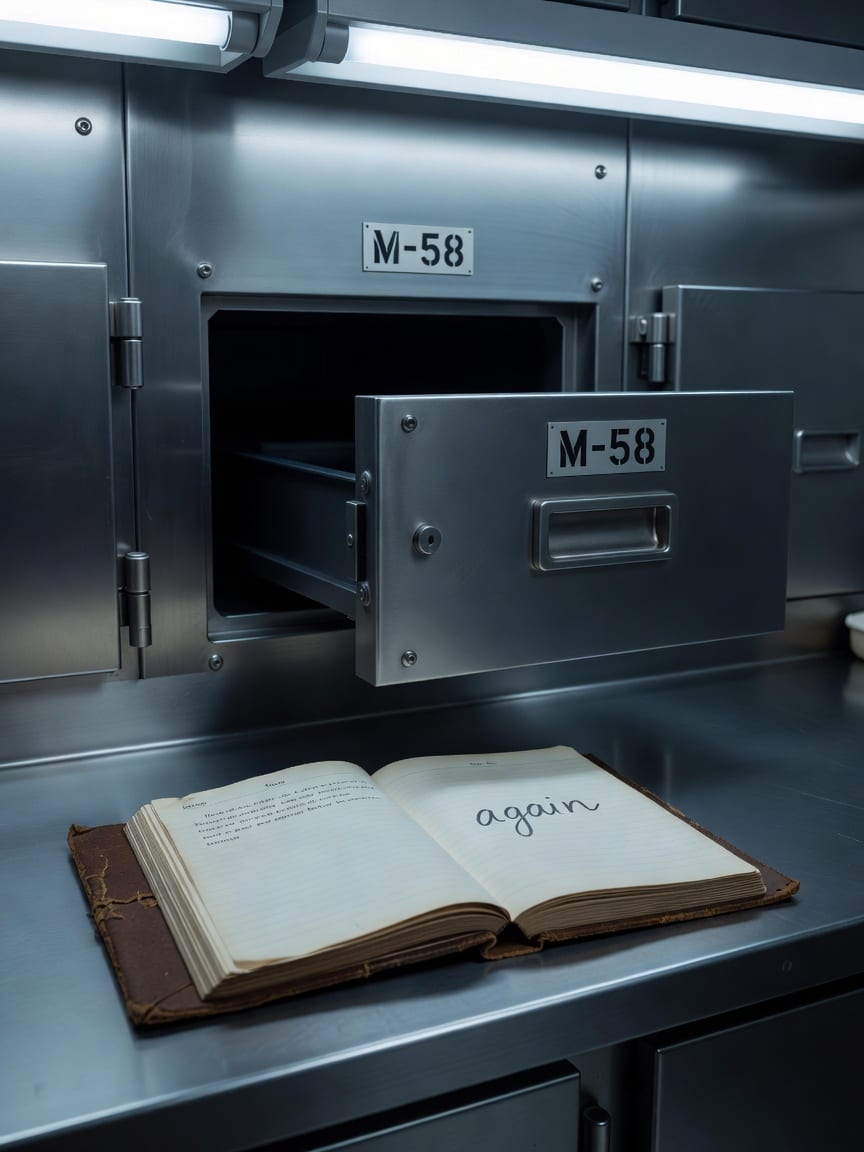
My morgue drawer M-58 takes a body every year. The ledger says 'again' beside it since 1970.
My midnight shift in the morgue is usually mundane, logging new admissions. But a chilling detail in the old tag register caught my eye: the word 'again' scrawled next to M-58 entries, year after year. When I found an ancient ledger, it revealed 'M-58' was a classification from 1958, leading directly to my own street, decades before my time.
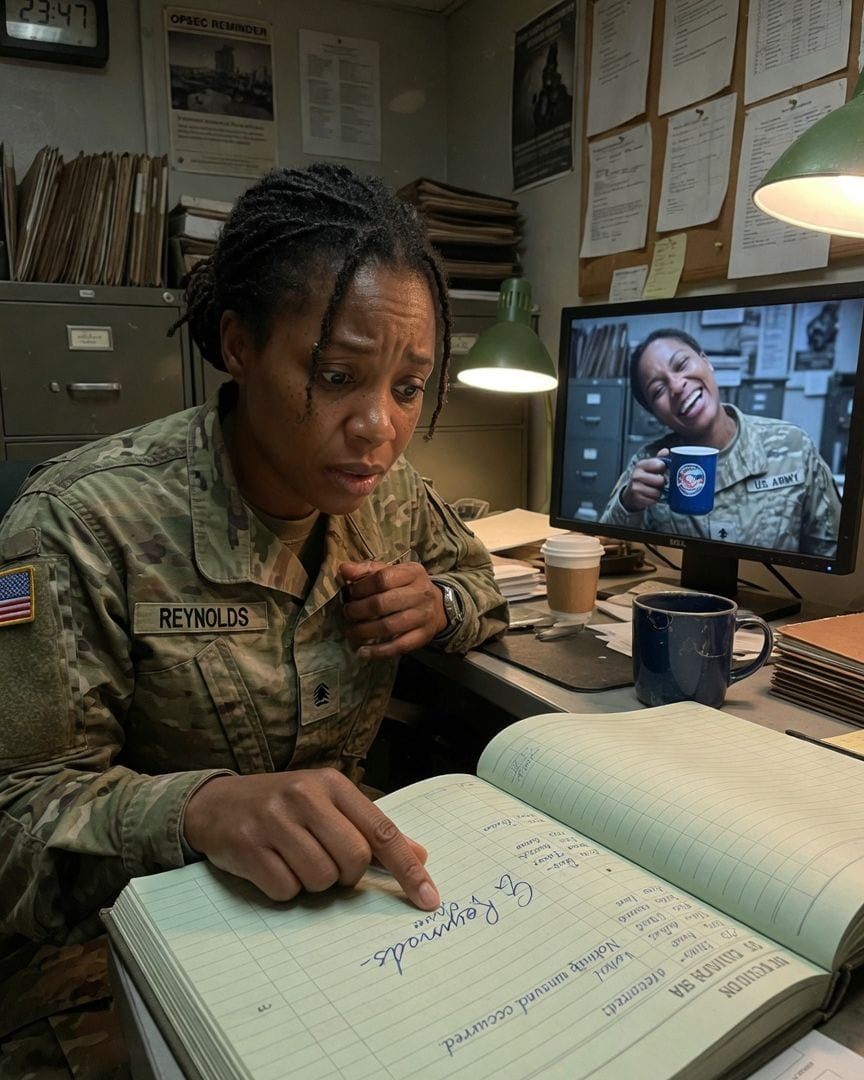
Lieutenant Grace Reynolds saw her own signature in the staff-duty log for a shift she never worked. The security footage then showed 'her' leaving a coffee mug she’d never once seen.
Lieutenant Grace Reynolds hunched over the battalion staff-duty log, the fluorescent hum of the records room a monotonous backdrop to her dry inventory audit. Her gaze snagged on an entry from three weeks prior: her own unmistakable signature, closing out a full 24-hour staff-duty shift she knew she had never worked. Security camera footage only deepened her unease, showing 'Grace Reynolds' moving with her familiar stride, laughing a shade too brightly, her head tilting a fraction too precise, like a flawless, chilling performance. But as the imposter turned to leave, she picked up and rinsed a chipped, dark blue ceramic coffee mug with a faded diner logo—a mug Lieutenant Reynolds had never once seen in her life. The air in the quiet room grew heavy, thick with the unspoken wrongness: if that wasn't her, then who was it?
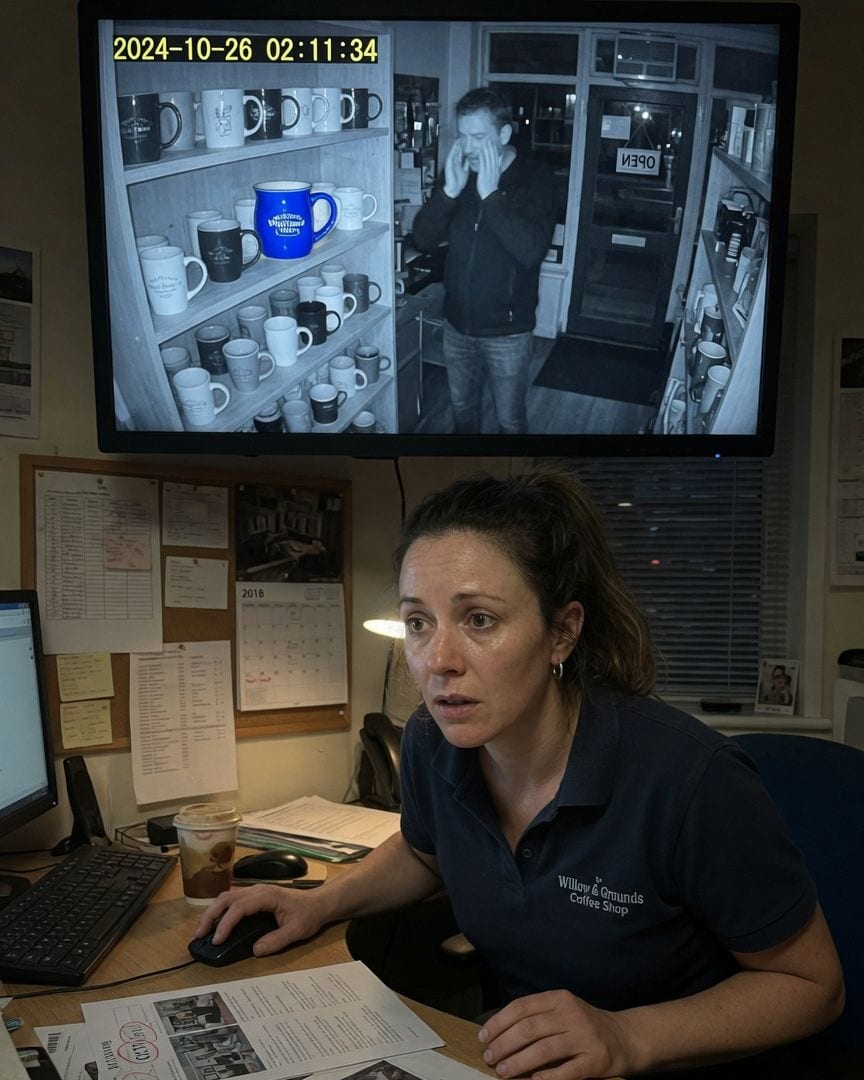
My shop's CCTV caught a customer who hasn't aged a day in eleven years of footage. He enters every night at 2:11, buys nothing, and leaves.
I was reviewing CCTV footage when I discovered a man who appeared inside my closed shop every night at 2:11 AM. He moved identically, never aging across eleven years of recordings, all confirmed as unique files. Yet, last night's footage clearly shows a specific coffee mug on the shelf that I know I sold seven years ago, and is definitely not there now.