My morgue drawer M-58 takes a body every year. The ledger says 'again' beside it since 1970.
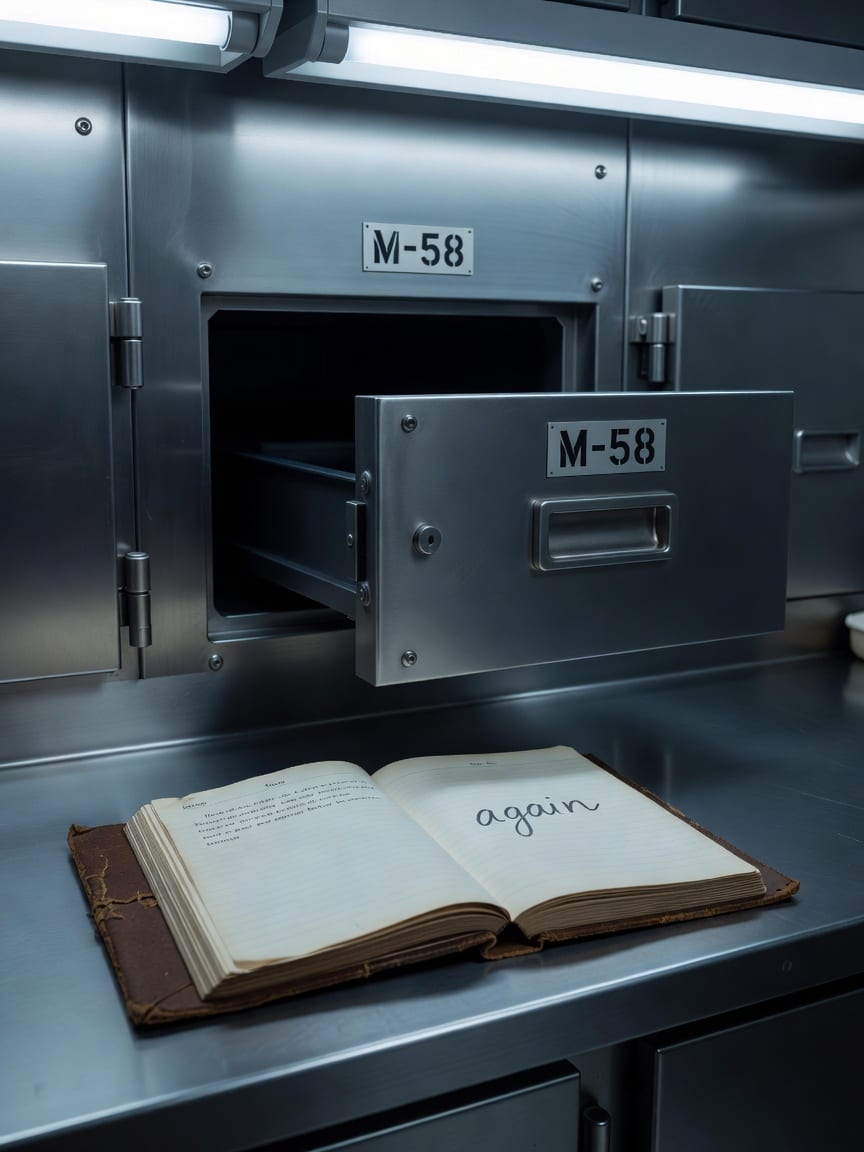
The fluorescent hum of the morgue was Colette Holloway’s constant companion, a quiet drone against the hushed reverence of the dead.
My shift began at midnight, logging the night’s admissions into the digital system, then cross-referencing with the battered, bound tag register that dated back decades. It was a ritual, methodical and mundane.
Tonight, a new arrival for Drawer 7. Tag number M-58. I typed it in, the chill of the room a familiar presence. The digital screen glowed, indifferent.
But as I flipped to the corresponding page in the physical register, my finger traced a detail that always tugged at the edge of my awareness.
Beside the M-58 entry, in the neat, looping script of various long-gone attendants, was the single, unsettling word: 'again.'
I’d seen it before, on M-58 entries for nearly the same date, every year, since 1970. Different names, different causes of death, always the same drawer, the same tag, the same hand-scrawled 'again.'
A fluke, I’d told myself, a morbid inside joke among night staff. Russell, the day-shift guy, was fond of those.
But tonight, the word seemed to pulse, a tiny, dark heartbeat in the silence that felt too heavy, too deliberate for a prank.
The room itself felt colder, the hum of the fluorescent lights a little sharper, like a low, sustained chord of wrongness.
The next night, I couldn't shake it. I pulled the M-58 register again, ignoring the stack of pending admissions.
With a fresh pot of weak coffee, I started compiling a list, a meticulous grid of dates, names, and the handwritten 'again's. The pattern was undeniable: almost the same week in late autumn, every single year.
Sometimes the names were common, sometimes unusual. But always M-58, always Drawer 7. My rational mind sought a logical explanation: a recurring statistical anomaly, perhaps a specific type of accident prone to that time of year, requiring a designated drawer.
But why the same tag, M-58, and why 'again'? It felt too specific, too… deliberate. It wasn't just a coincidence anymore; it was a drumbeat, steady and unnerving.
I remembered an old, dust-covered 'Special Admissions' ledger in the deepest corner of the archives, rarely touched, predating the current system by decades. It was for 'unusual cases,' the label stated in faded script.
Russell had once joked it was where they kept files on alien abductions. On a hunch, I retrieved it, the brittle pages smelling of forgotten paper and decay. The ledger detailed unusual cases, protocols long abandoned.
Flipping through, my fingers stiff, I found it: an entry from 1958, marked 'M-58.' Not a drawer number, but a classification.
And beneath it, a short, typed paragraph, mostly obscured by a thick, dark redaction line, carefully blacked out by hand. My heart hammered. Enough remained visible around the edges, however, to make out a partial address, a street name.
I leaned closer, tracing the redacted line with a trembling finger. The partial address, decades old, seemed to leap from the page. I could make out '...way Street,' and a distinct 'Holloway.' My own street. I lived on Holloway Street.
But the date on the ledger entry was 1958, long before my family had even moved to the city, long before I was born. The morgue’s stale air suddenly tasted of rust and something ancient.
A cold, impossible dread settled over me. The file, the protocol, the 'again' – it wasn't just a morgue anomaly. It was a thread, and it led directly to me.
The revelation of Holloway Street sent me into a frantic, hushed investigation during my next few night shifts. I used my hospital terminal to access public records, cross-referencing old city directories with the M-58 names from my compiled list.
Holloway Street, I discovered, had a peculiar history. It wasn't just a residential street; it was built on land once owned by the hospital's founding family, the Lawsons, who had donated the land for the original hospital structure.
More unsettlingly, a disproportionate number of M-58 entries from the 1960s and 70s bore surnames that could be traced back to families who had lived on Holloway Street for generations.
There was a subtle pattern, too, in the causes of death listed – often vague, clinical terms like 'systemic failure' or 'cardiac arrest, idiopathic.' Nothing specific, nothing that pointed to a common illness or accident.
It was almost as if the details had been deliberately obscured.
What was even stranger was a recurring physical characteristic I noticed in old death certificates and family photos I found online: a rare, almost silver-flecked iris color, present in several of the M-58 individuals.
It was a distinct, almost ethereal shade, like moonlight caught in ice.
Russell Montgomery, the older day-shift morgue attendant, found me hunched over microfiche one morning, my eyes burning. “Still chasing ghosts, Colette?”
he grumbled, wiping his hands on a rag, but his eyes held a flicker of curiosity that I hadn't seen before, a flash of something knowing. I just shook my head, my mouth suddenly dry.
A cold certainty was growing in my gut. This wasn't a ghost. This was a system. And it was very, very real.
My late-night research didn't go unnoticed. One evening, I returned to my desk to find my archived log-in credentials for the deepest hospital records temporarily deactivated.
A 'system error,' IT claimed, but it was fixed suspiciously quickly after I’d tried to access the founding family's historical property deeds. The morgue’s usual low hum felt like a watchful presence, the air around me thick with unspoken accusation.
Then, a small, unmarked envelope appeared on my desk, tucked under my keyboard. It hadn't been there when I went for coffee ten minutes earlier. Inside was a single, neatly folded piece of paper.
The message, typed in an old-fashioned font, read: 'Some things are best left filed. The integrity of the institution depends on it.' No sender. No signature. Just a quiet, chilling warning that made the hairs on my arms prickle.
My blood ran cold. The note wasn't a threat; it was a statement of fact, from someone who knew exactly what I was doing.
The next night, as I meticulously updated my M-58 list, trying to ignore the note now crumpled in my pocket, a shadow fell across my desk. I jumped, nearly knocking over my coffee.
Dr. Sophia Carter, the hospital's Chief Administrator, stood in the morgue entrance. Dr. Carter rarely ventured into the chilled depths of the morgue, especially not at 3 AM. Her presence was unsettlingly calm, her gaze sharp, assessing.
The fluorescent lights overhead seemed to dim just slightly, as if the room itself was holding its breath.
“Working late, Colette?” Dr. Carter’s voice was smooth, almost a purr, cutting through the silence of the room like a scalpel. “Maintaining our records is vital. Historical accuracy, wouldn’t you agree?”
Her eyes lingered on the open M-58 register on my desk for a beat too long, then she smiled, a thin, polite smile that didn’t reach her eyes. It was a smile that felt colder than the morgue air.
“Goodnight, Colette.” She turned and walked away, her footsteps echoing softly, leaving me with the distinct, prickling sensation of being watched, of having my every move anticipated. The room felt like a predator, silently observing its prey.
The anonymous note and Dr. Carter’s unnerving visit spurred me to action. I couldn't ignore it, couldn't let it go.
The next evening, fueled by a nervous energy that kept me wired, I intercepted Dr. Carter in a deserted corridor near the administrative offices. The long hallway was silent, the silence amplifying the thud of my own heart.
“Dr. Carter,” I began, my voice steady despite the tremor in my hands. “I need to understand the M-58 protocol. What exactly is it?”
Dr. Carter turned, her expression unreadable, her eyes like chips of granite. “The M-58 protocol, Colette, is a historical management system. Nothing more.” Her composure was absolute.
“A management system for what?” I pressed, holding up a printout of my M-58 list, my meticulously compiled evidence. “These are people. People who all end up in Drawer 7, with the same tag, on the same week, every year.
And the word 'again' beside them, like a damn tally.”
Dr. Carter sighed, a soft, almost weary sound, as if discussing a tiresome administrative detail. “The hospital, like any venerable institution, has certain… historical obligations. To its founders, to the community it serves.
Sometimes, these obligations necessitate measures that might seem… unconventional to the uninitiated.” She paused, her gaze unwavering, chillingly direct. “We ensure the continued integrity of certain… processes. Processes that have allowed this hospital to thrive for over a century.
Processes that ensure its continued prosperity.”
“You’re telling me the hospital has been intentionally acquiring these people?” I whispered, the horror of it taking root in my chest, a cold, blossoming dread. The hallway suddenly felt vast and empty, like a tomb.
Dr. Carter’s lips curved into that thin, polite smile again, utterly devoid of warmth. “Acquisition, management, preservation. Call it what you will. It has always been done. Quietly. Efficiently. And always, for the greater good.”
The words were delivered with a calm, bureaucratic finality that chilled me to the bone. She wasn't denying it.
She was explaining it, as if it were the most natural thing in the world, a necessary evil, or not evil at all. The M-58 protocol was real.
A system of 'acquisition' and 'preservation' that stretched back decades, carefully managed by the very institution I worked for. The 'again's in the register weren't a morbid joke; they were a tally, a confirmation of another successful 'measure' taken.
A new kind of sick dread settled in.
Shaken to my core, I returned to the morgue, Dr. Carter’s chilling words echoing in my mind. 'Acquisition, management, preservation.' The cold, clinical terms twisted the familiar morgue into something monstrous.
The fluorescent lights seemed to hum a different, more sinister tune. I stared at my meticulously compiled list of M-58 names, the years stretching back to 1970, and beyond into the old ledger, each 'again' a fresh stab of horror.
The pattern I’d found – the subtle familial connections, the recurring silver-flecked irises, the vague causes of death – suddenly clicked into place with terrifying clarity. It wasn't random. It was a selection criteria.
My hands trembled as I remembered my own grandmother, a Holloway, with eyes that shimmered with that same impossible silver, a trait often commented on, a mark of beauty in our family.
And my own eyes, a softer, less pronounced version of that unique hue, a faint, almost imperceptible shimmer that only caught the light in certain angles.
A cold, metallic taste filled my mouth, like bl**d. With a sickening lurch, I opened the current M-58 register to the next blank entry, dated just a few weeks from now.
My fingers traced the line, the paper rough beneath them. And there it was, in the neat, familiar script of an attendant I knew, not a ghost from the past, but a current hand, meticulously recorded: Colette Holloway.
My own name.
Panic warred with a desperate, icy resolve. Colette Holloway, the next M-58. The file had been kept, not for a stranger, but for me. The 'again' was for me.
With the little time I had left, a deadline pressing down on my very existence, I used my highest-level access codes, codes meant only for critical incident reports, to burrow into the deepest, most restricted digital archives of the hospital.
I bypassed firewalls, ignored alerts, driven by the horrifying certainty that my name was already written, my fate sealed if I didn't act.
What I found wasn't in a digital file, but an oblique reference to 'Sub-Level Gamma' in a scanned schematic from the 1920s. A forgotten annex, sealed off decades ago, beneath the hospital’s oldest wing.
It was the only place that matched the cryptic notations and the sheer historical depth of the M-58 protocol.
Armed with a flashlight and a stolen master keycard from Russell’s office – a relic of an older security system – I descended into the hospital's forgotten depths.
The air grew heavy, thick with the smell of ozone and something metallic, organic, like old copper and something sweet that quickly turned cloying. The concrete tunnel stretched, claustrophobic and silent, the only sound my own ragged breathing.
I found it: a vast, circular chamber, humming with an ancient, low thrum that vibrated through the floor. In the center stood a colossal, intricate machine, a grotesque fusion of brass, glass tubes, and shimmering, pulsing liquid.
It wasn't a morgue. It was a 'Sustainer,' as the archaic blueprints called it, a word that curdled my stomach.
Around its base, connected by clear tubes, were rows of specialized, transparent pods. Each pod contained a body, suspended in the same pulsing liquid, eyes closed, appearing almost alive.
The latest pod, freshly sealed, contained the M-58 admission from last Sunday. It wasn't about disposal. It was about feeding. The bodies, I realized with a gasp, weren't dead. They were being kept. Sustained.
Their unique genetic material, their very life force, was being harvested by this impossible machine, fueling whatever 'integrity' Dr. Carter spoke of. The calm bureaucracy, the meticulous records, the 'again's – it all fit. It was a farm.
My gasp echoed in the vast chamber. The humming of the Sustainer vibrated through my bones, a deep, resonant chord of dread.
The latest M-58, suspended, eyes closed, a faint, ethereal glow emanating from within the pod, a terrible, false life. This was the artifact that could not exist, working, real, and horrifyingly current.
I reached for my phone, my fingers fumbling, needing to capture this, to expose it. Before I could click, a voice, calm and measured, cut through the hum.
“A regrettable discovery, Colette.” Dr. Sophia Carter stood at the entrance to the chamber, flanked by two burly, silent security guards.
Her face was serene, almost pitying, as if she were looking at a child who had wandered into an adult’s messy affairs. “Some things are not meant for the uninitiated.”
“This is monstrous!” I cried, my voice cracking, the words echoing, hollow and frantic in the cavernous space. “You’re keeping people alive, harvesting them!”
Dr. Carter took a slow, deliberate step forward, her shoes clicking softly on the concrete. “We are preserving the future, Colette. For a century, the Sustainer has protected this institution, ensured its prosperity, its influence. It requires a specific… catalyst.
A very rare lineage. One that, regrettably for you, runs through your family. And now, through you.”
The guards moved, silent and efficient, cutting off my escape. I scrambled backwards, bumping against a cold, metallic pod, my heart a frantic bird in my chest. I knew escape was impossible.
There was no one to hear me, no one to believe me. My phone was snatched away, its screen going black.
Dr. Carter approached, her hand resting gently on the glass of a vacant pod beside the latest M-58, the empty chamber gleaming ominously. “We prefer to manage these transitions quietly. You’ve made it rather… inconvenient.”
My eyes darted to the empty pod. It was perfectly sized. Ready. My own name, already written in the register, was a calm, bureaucratic death sentence. The cold dread was no longer a chill, but a suffocating weight.
This was not a monster in the shadows. This was the institution itself, calm, efficient, and utterly unbothered by the wrongness it had managed for decades.
Colette Holloway vanished. Her apartment was cleared out, her belongings packed by a 'distant relative' nobody had ever heard of. Her position at the municipal hospital morgue was quietly filled.
The few inquiries from Russell Montgomery were met with vague explanations of 'personal leave' and then 'resignation due to unforeseen circumstances.' The hospital files regarding her employment were immaculate, pristine, with no mention of any 'incidents.'
The M-58 protocol continued, its annual admission noted in the register, the word 'again' dutifully penned. The Sustainer hummed beneath the hospital, undisturbed, its purpose unknown to the bustling city above. The institution’s integrity remained intact.
Russell Montgomery now worked the night shift, his usual gruff demeanor softened by the quiet of the morgue. He found the work strangely peaceful, though he still missed Colette.
He often thought of her, wondering where she’d gone, if she was well. He finished logging the digital entries, then turned to the old, bound tag register. Drawer 7. Tag M-58. The entry was from last week.
He picked up his pen, the familiar weight in his hand. He circled M-58, wrote 'again' beside it, and went home.
If this one got to you
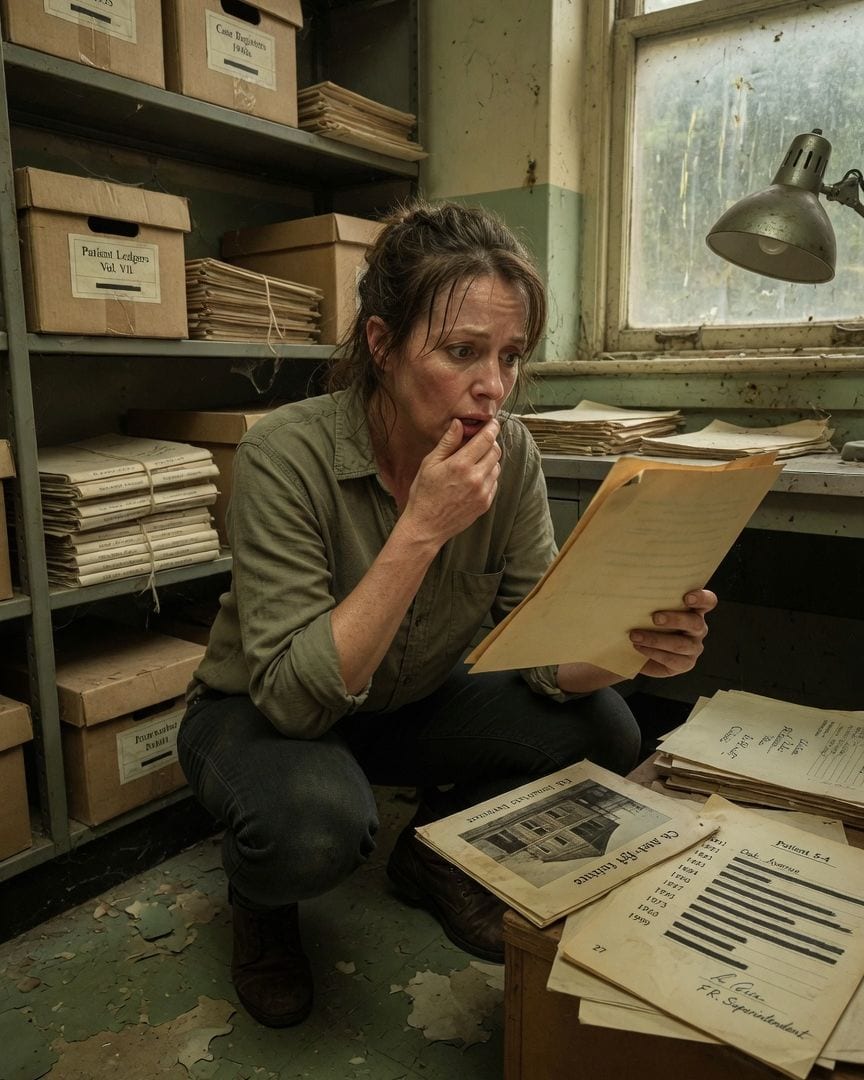
Patient 5-4 keeps checking into my aunt's old sanatorium chalet. The same initials sign them out, 'not traced,' every thirteen years since 1921.
Sifting through my aunt Margaret's estate, I found her old sanatorium file from 1999. Her patient record listed her as 'Patient 5-4,' discharged 'not traced.' But when I accessed the archives, I found 'Patient 5-4' was admitted every thirteen years since 1921, always with identical discharge notes.
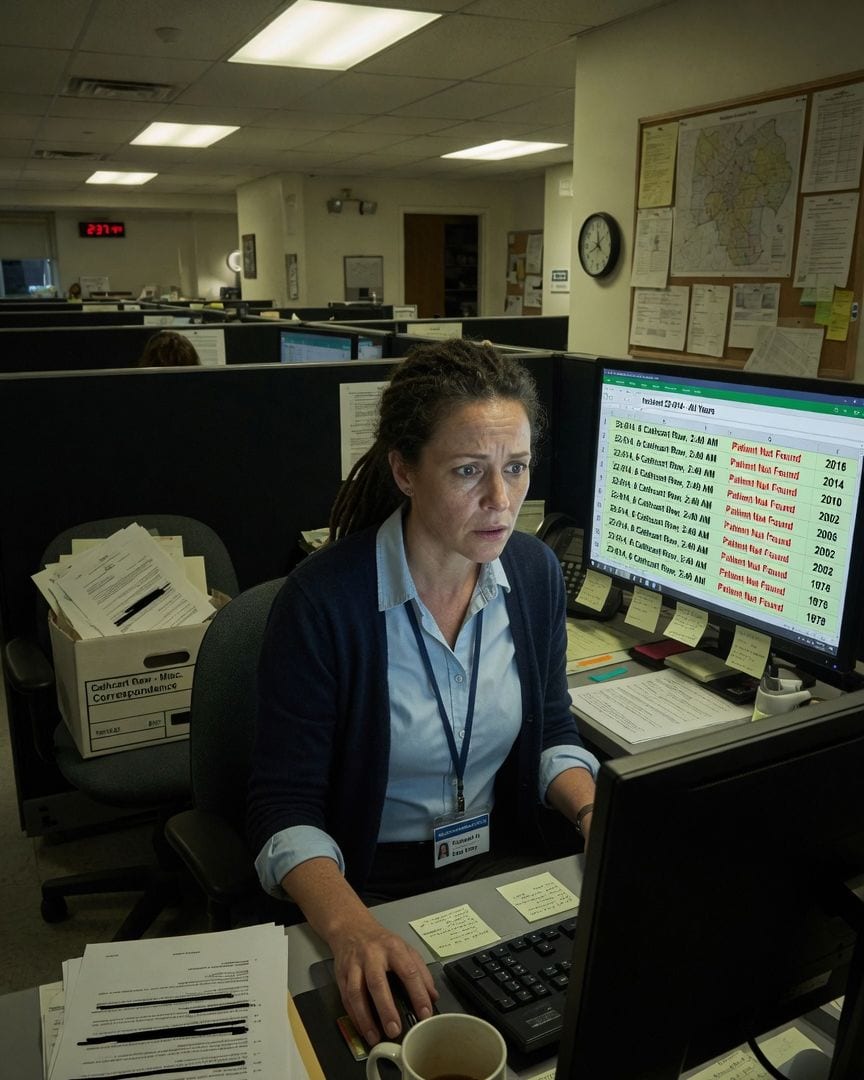
My computer log shows the same 2:40 AM call to Cathcart Row, every four years since 1978, always closed 'patient not found'.
Working data entry for the County Ambulance Trust, I found a routine incident logged as 'Patient Not Found.' But digging deeper, I discovered the exact same phantom call had repeated every four years for over forty years, always at the same address, always at 2:40 AM. Then I found a heavily redacted memo linking it to my own street.
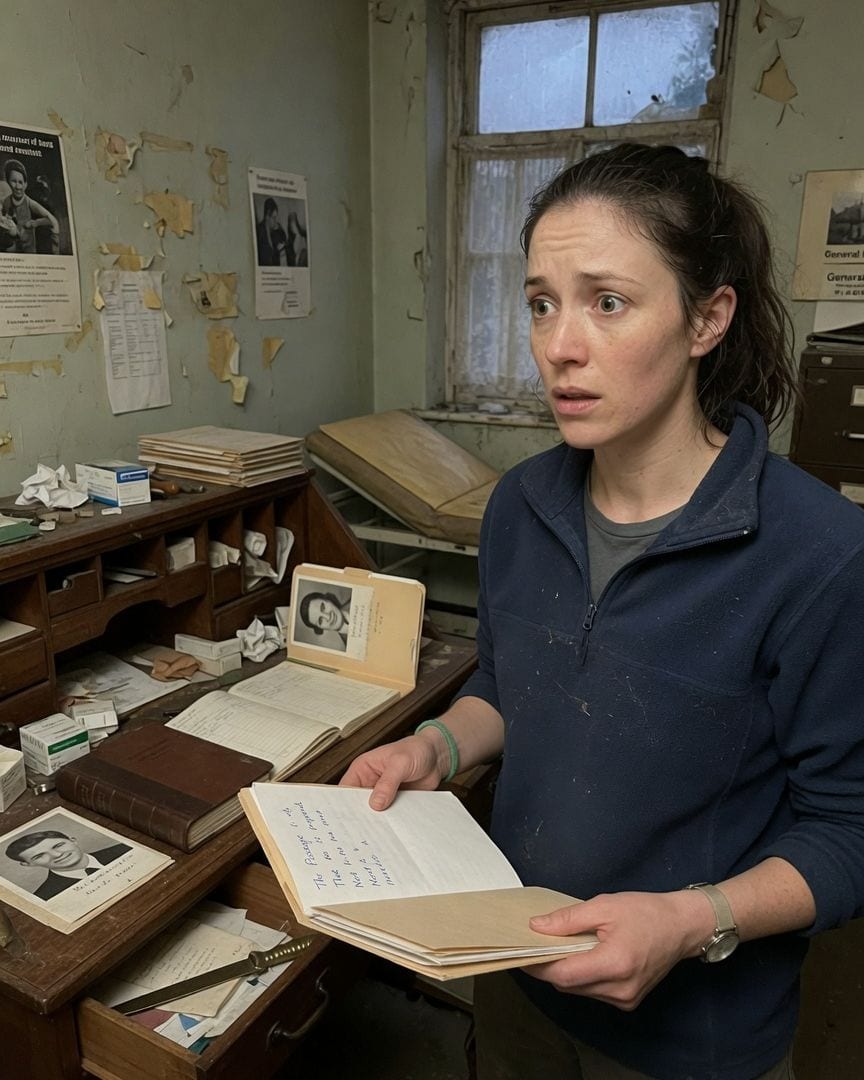
My new clinic's appointment book shows entries for this coming Monday, decades after the doctor retired and died.
Chloe Lawson bought an old, abandoned surgery in Nettlebed, ready to open her new vet clinic. Locals insisted Dr. Almott retired in '79 and the practice shut down for good. But then Chloe found his dusty appointment book filled with meticulous entries, continuing unbroken from 1979 through the decades, right up to this coming Monday.
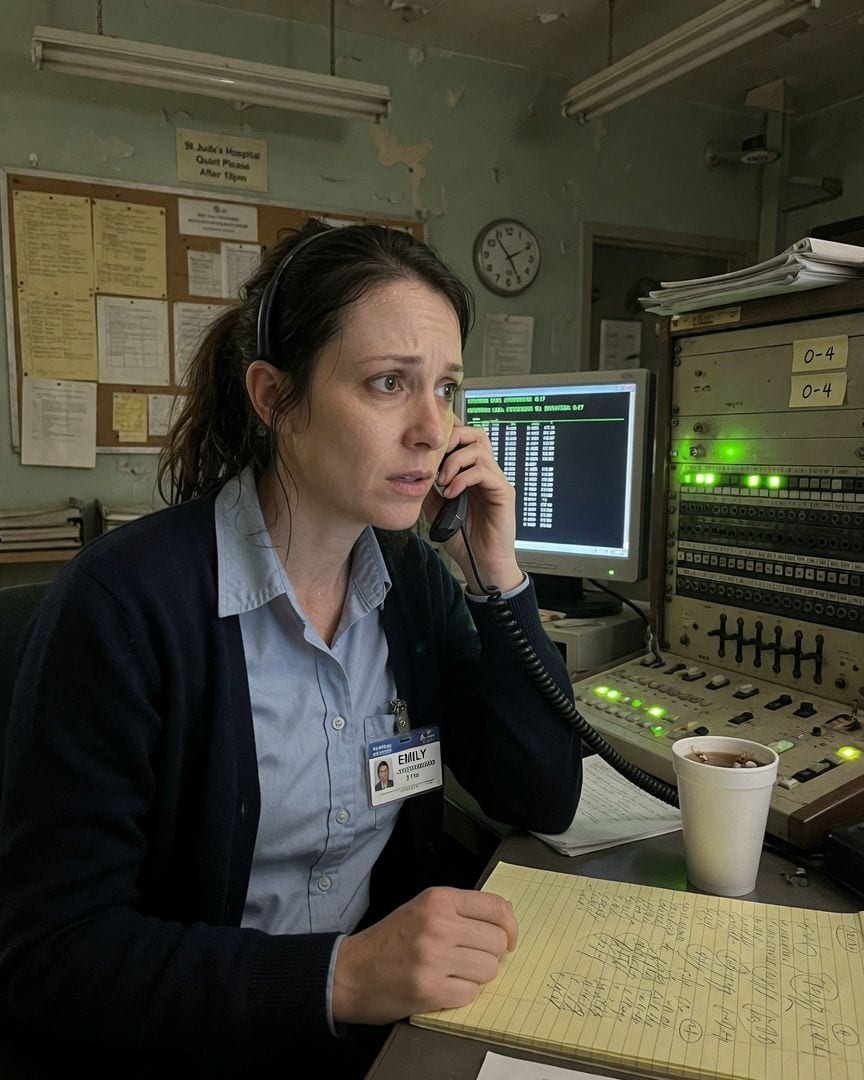
A nurse's voice asks me to page Dr. Reyes to the third floor. My hospital's third floor was demolished years ago, and extension 0-4 with it.
Working the quiet overnight shift at St. Jude's, I was used to predictable clicks. But just after 4 AM, my switchboard lit up: a call from extension 0-4. That extension was decommissioned decades ago, tied to a floor that no longer exists, yet the light pulsed insistently.
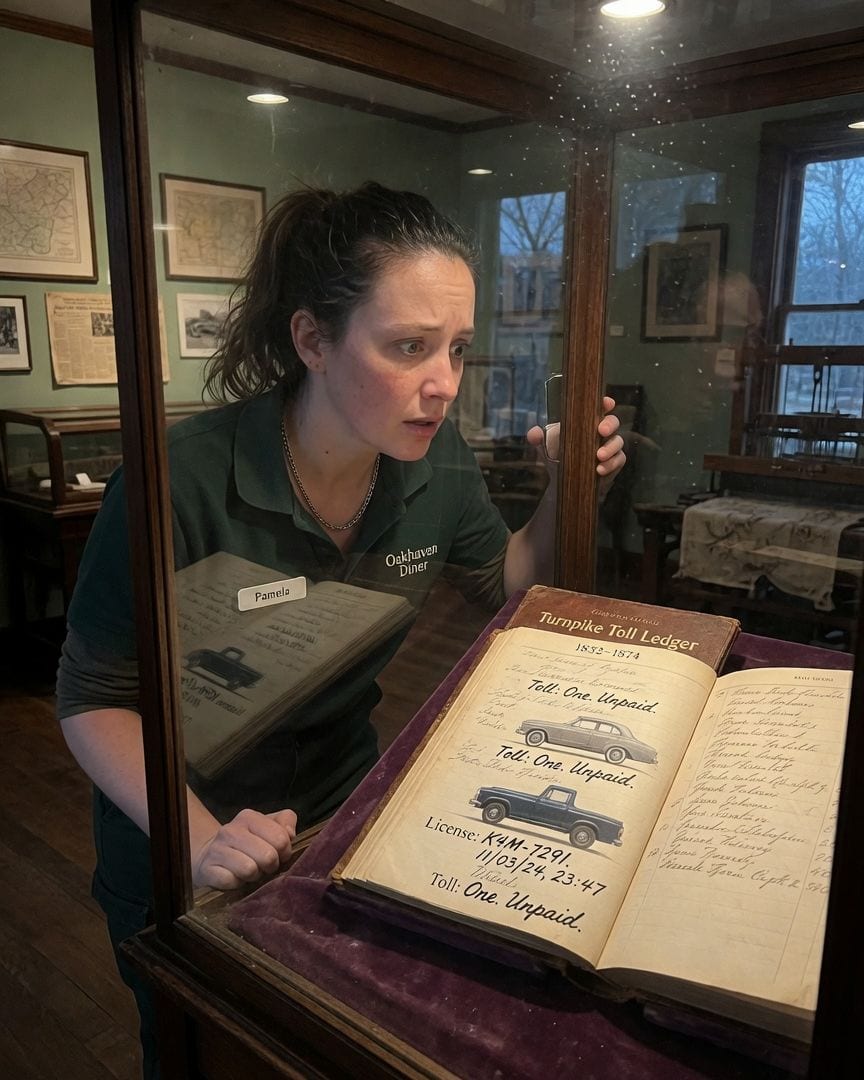
My car stalled at the old turnpike milestone, after dark. The toll ledger, closed in 1874, then listed my car, my stall time, and a toll of one, unpaid.
I had just moved to Oakhaven when my old sedan died on a dark, winding road by an infamous turnpike milestone. The next day, I found my car's exact registration and stall time written in fresh ink in a 150-year-old, locked museum ledger, marked 'Toll: One. Unpaid.' The curator dismissed it as a prank, but her white knuckles and strained voice hinted at something far more unsettling.
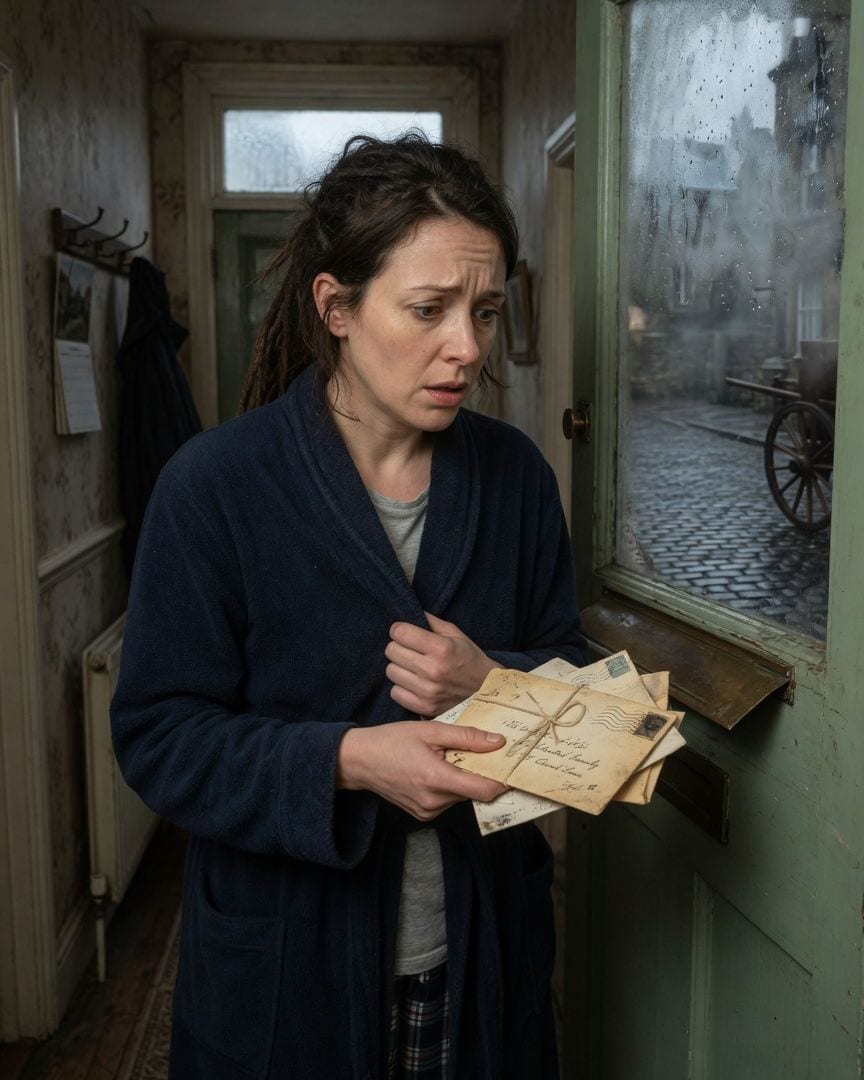
Seventy years ago, a hidden journal recorded my door opening to the wrong street and receiving Lockwood post.
I'd only recently moved into my inherited house, a quiet place on the edge of town. One grey morning, a distinct clatter from the front door's post flap caught my attention. Reaching down, I expected my gravel path, but instead, the flap showed a dark, cobbled street that wasn't mine. A bundle of warm, old letters, addressed to 'The Lockwood Family,' slid through, before the vision flickered and was gone.