A Cold War declassification reviewer found his father's 1991 blue sedan in a 1977 photo. Then a 1968 one.
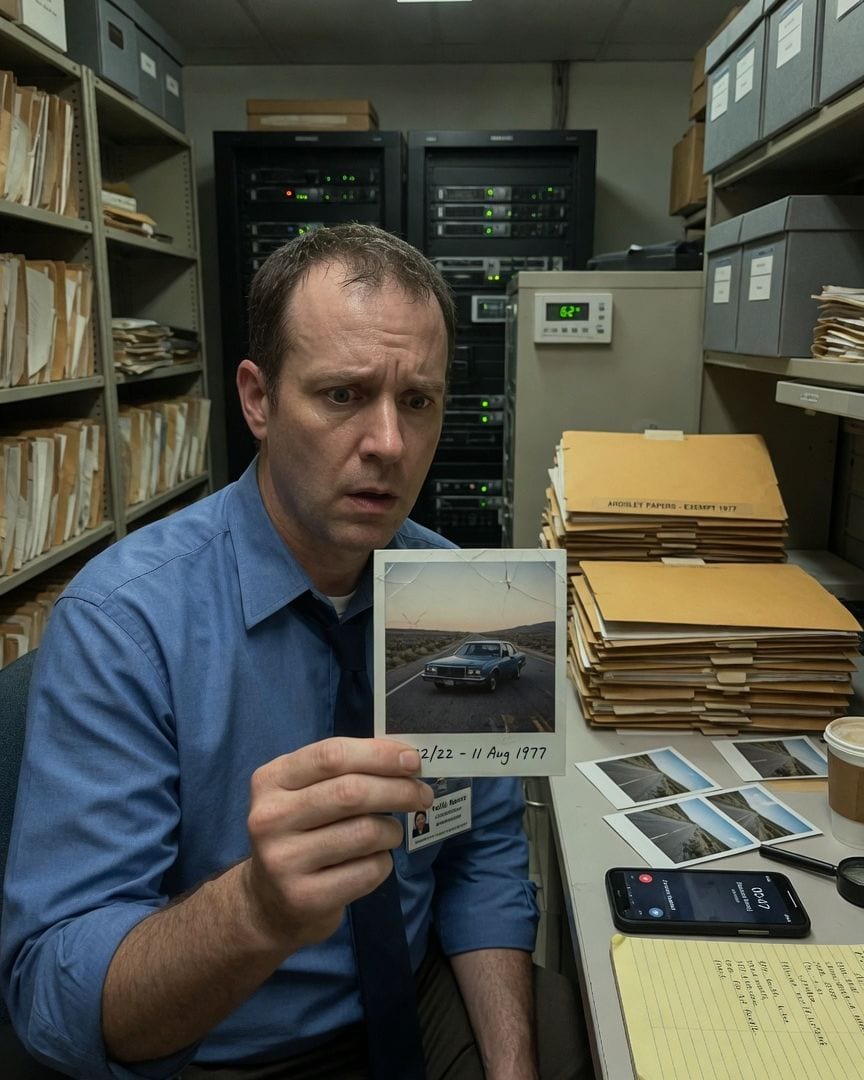
Hollis Nance, a declassification reviewer, sat in the hushed, climate-controlled basement of the College Park archives, the faint hum of servers a constant companion.
His current task was the Ardsley papers, a thick stack of folders sealed since 1977 under an exemption code no one in living memory could trace. Mostly, it was tedious contract billing, the bureaucratic residue of long-forgotten government projects.
But folder nine held twenty-two Polaroids, all depicting the same desolate, two-lane road in the Nevada desert at different hours of the day.
The road itself was unremarkable, a stretch of cracked asphalt bisecting a landscape of sagebrush and low hills.
Yet, a growing unease settled in Hollis as he recognized it—a highway his father, Edward Nance, had driven for nearly thirty years after moving to Nevada.
The first twenty-one photos showed the road empty, the light shifting from the pink glow of dawn to the deep violet of dusk. The twenty-second, however, dated 1977, showed a car.
A blue 1991 sedan, parked on the shoulder, driver's door open. Hollis stared, a cold knot tightening in his stomach. His father had bought that exact make and model in 1991.
Hollis's rational mind immediately scrambled for explanations. A mislabeled file, perhaps? A generic car that only resembled his father’s? He pulled out his phone, his thumb hovering over Edward Nance’s contact.
The air in the cool archive room suddenly felt too still, too expectant. He called, his voice tight when his father answered.
“Dad, that blue sedan you used to drive, the '91 model. Did you ever have one like it before then?”
His father chuckled on the other end, the sound tinny through the phone’s speaker. “No, son, that was my first brand-new car. Loved that thing. Why?”
Hollis offered a vague excuse about a 'research query,' the internal alarm that had been ringing softly now blaring. He returned to the Polaroids, his fingers almost trembling as he picked up the twenty-second image.
He scrutinized the dates, the film stock, the faint control numbers stamped on the back. Everything was consistent: the 1977 date, the Ardsley file's provenance, the official markings. There was no room for error.
The car’s specific make and model—the distinctive grille, the subtle curve of the body, even the way the light reflected off the faded paint—were unmistakable, even in the slightly faded photograph.
He cross-referenced the file's index, looking for any mention of vehicles, anomalies, or even a local car dealership. Nothing. The index, like the road in the other photos, was stubbornly, terrifyingly empty of any clue.
But in the margin of the cover sheet for folder nine, penned in a different, almost elegant script, was a secondary control number, partially obscured, pointing to a file tagged 'Project Echo Lane' from a different governmental agency.
The 'Project Echo Lane' file, Hollis found after an hour of frantic searching, was buried deep in the FAA archives, sealed under a similar, equally vague exemption. It was dated 1968.
He navigated the labyrinthine digital catalog, his heart thumping with a strange anticipation that felt less like excitement and more like a premonition.
The server racks behind him seemed to hum a little louder, the air growing colder on his skin.
When he finally opened the digital folder, it was sparse: technical reports on radar anomalies, atmospheric disturbances, and a few blurred witness statements. And then, a single, faded Polaroid.
The same two-lane Nevada road, utterly empty, stretching into a heat-haze horizon.
But on the distant curve, where the road vanished from view, was the faint, unmistakable outline of his father's blue 1991 sedan, a vehicle that should not exist in that year, or in that file, at all.
The discovery of the 1968 Polaroid shattered Hollis's remaining composure. It wasn't a clerical error, or a coincidence, or even a single, baffling anomaly. It was a pattern.
He dug relentlessly into 'Project Echo Lane,' the digital files a bottomless well of the inexplicable.
He found reports detailing inexplicable disappearances of small objects – a surveyor’s flag, a geiger counter, a pair of binoculars – vanishing for moments and reappearing yards away, sometimes days later.
He read of impossible radar returns showing vehicles traveling at impossible speeds, or appearing from thin air, then vanishing.
Local residents, their testimonies tucked away in heavily redacted pages, described a 'shimmer' or 'ripple' in the air over that specific stretch of Nevada highway, like heat haze but colder, more substantial.
Hollis noted the recurring timestamps, often to the minute, and the precise GPS coordinates that pinpointed the anomalies to within a few hundred yards of the two-lane road.
He began cross-referencing names: radar operators, local sheriffs, even a few amateur photographers mentioned in the reports. To his horror, he found several individuals, like a certain 'Lt.
Commander Dean Walsh' and 'Dr. Chloe Crane,' whose names appeared in multiple, seemingly unrelated classified files spanning decades, always tied to that same Nevada road, always as witnesses or investigators of similar impossible events.
The car wasn't just an anomaly; it was a recurring element, a signature in a vast, unsettling tapestry of temporal dislocation centered on that forgotten desert highway.
He realized the files weren't just recording anomalies; they were cataloging a specific, persistent phenomenon, and his father's car was somehow at its core.
Hollis's relentless digging did not go unnoticed. One morning, his access privileges to the 'Project Echo Lane' files were suddenly restricted, marked 're-sealed for review.'
A digital lock clicked into place, preventing him from opening files he'd been browsing just hours before. Frustration clawed at him, a raw, hot surge of anger that quickly cooled into something colder, more apprehensive.
He tried to pull a third file, cross-referenced in a cryptic note within 'Echo Lane,' only to find the entire catalog entry deleted, leaving a blank space where information should have been.
That afternoon, an anonymous, untraceable internal email landed in his inbox. The subject line was blank. The body contained a single, chilling line: 'Some things are best left filed.' The message hung on his screen, a silent accusation.
The fluorescent lights in the archives seemed to hum with a new, sharper intensity. The next day, a new archivist, Patrick Doyle, a quiet man in his early thirties with unsettlingly still eyes, appeared in the College Park basement.
He was assigned a desk directly across from Hollis, and Hollis couldn't shake the feeling that Doyle's gaze, though never direct, was always subtly tracking his movements, his computer screen.
The air in the archive shifted from comfortable cool to an almost imperceptible chill whenever Doyle looked up. Hollis felt a cold shift in the air, from investigator to investigated.
He was no longer just chasing a mystery; the mystery, or rather, its guardians, were now watching him.
Hollis cornered Lorraine Drummond, a senior archivist who'd been with the agency for decades, during a late-night coffee break. The breakroom was dim, the air thick with the scent of stale coffee and desperation.
Her face was etched with fatigue, lines around her eyes and mouth that seemed deeper than usual, but her eyes held a spark of something Hollis couldn't quite place – fear, or resignation.
He laid out his findings: the 1977 Ardsley photo, the 1968 Echo Lane file, the impossible car, the recurring names. He watched her face, searching for a flicker of recognition, denial, anything that would give him a foothold.
She listened, her gaze distant, fixed on the steam rising from her mug, then sighed, a long, weary sound.
“The Ardsley exemption isn't for a project, Hollis. It’s a code. For 'temporal bleed' events.”
Hollis felt a jolt, a sudden spike of adrenaline. “Bleed?”
Lorraine nodded slowly, her eyes finally meeting his, and he saw the fear, plain and stark. “Localized temporal displacement. Objects, sometimes even people, appearing out of sequence. That Nevada road is… an active zone. A persistent one.”
She paused, taking a slow sip of her coffee, as if to fortify herself. “Your father’s car… it’s a 'stable point.' A marker.
It often appears as a ghost, out of time, because it’s linked to an individual who… amplifies the bleed.”
Hollis’s breath caught in his throat. “My father?”
Lorraine looked at him, her expression grave, confirming his worst fears. “Edward Nance was part of a geological survey team near that road in 1977.
His team reported seeing his car – the blue sedan he wouldn't buy for another fourteen years – parked exactly where your Polaroids show it, before he even drove into the area.
They filed a report, marked it down as some kind of optical illusion. But the files aren't just records of the bleed, Hollis. They’re a catalog of its constants. And your father… he’s one of them.”
The dread that had been a dull throb in Hollis's chest now flared, icy and sharp, spreading through his limbs. His father wasn't just a witness; he was part of the phenomenon.
Hollis, reeling, pushed Lorraine further. “Why the redactions, then? If it’s just a catalog of bleed events, what are they hiding about it?” He leaned closer, his voice low, urgent.
Lorraine looked around, her eyes darting nervously towards the empty aisles of archives, stretching into the dimness. She seemed to shrink into herself, her shoulders hunched. “They’re not hiding what happened, Hollis. They’re hiding how.”
She pulled up an obscure internal document on her secure terminal, dated 1985, a follow-up report on the Nevada 'bleed.'
She opened two versions side-by-side: one heavily redacted, a solid black wall of secrecy, the other less so, from a different, higher classification level.
“The redactions aren't just hiding details,” she whispered, her voice barely audible over the distant hum of the servers. “They're hiding this.”
With a few clicks, she inverted the blacked-out text from the first version against the remaining text of the second, effectively using the absence of information to reveal something else.
A faint, recurring symbol emerged, an outline like a stylized, impossible knot, twisting in on itself. Hollis stared, the symbol seeming to writhe on the screen, a visual paradox.
Lorraine then pulled up a third document, even older, from 1952 – a preliminary report on strange energy signatures detected in the Nevada desert. Its redactions were heavier, older, almost brittle, like ancient scars on the page. She aligned them.
The same symbol, the same knot, emerged from the blacked-out lines. But this time, faintly, almost invisibly, written in the negative space of the knot, spelled out in the remnants of blacked-out lines, was a name.
His father's name: EDWARD NANCE.
Lorraine's voice was a strained whisper, breaking the silence that had fallen like a shroud over the small workstation. “The knot… it’s a temporal signature. It indicates a localized spacetime fracture, a bleed point.
And your father… Edward Nance… he’s not just a constant. His presence, his unique bio-temporal resonance, amplifies the bleed. It’s why his car appears out of sequence, why he’s always near these events.”
Hollis felt the world tilt, a sickening lurch in his gut. “So the files… the Ardsley exemption… it’s not about the road. It’s about him.”
Lorraine nodded, her eyes wide with a shared dread that mirrored his own. “The secrecy machine isn’t just observing, Hollis. It’s trying to understand, to predict, to contain Edward Nance’s bleed potential.
The redactions hide the true nature of his involvement, the fact that he’s not just a man, but an anchor for these anomalies. He was never lost. He was filed.
And the file is still being signed because he’s still… active.” The coherence of it all was horrifying. Every impossible date, every recurring image, every strange report he’d unearthed, now snapped into a terrifying, undeniable pattern.
His father was a living, breathing anomaly, carefully cataloged, managed, and hidden by a system that had existed for decades, perhaps longer, simply to prevent the pattern from unraveling completely.
The next morning, Hollis’s access to all classified files was revoked. His badge simply wouldn't scan, the red light stubbornly refusing to turn green, the lock on the secure door remaining firmly in place.
He watched, numb, as Patrick Doyle, the quiet archivist, now sat at Hollis’s old desk, meticulously reviewing the very files Hollis had been working on, a faint, knowing smile playing on his lips as he scrolled through pages.
Hollis tried to call his father, but the line went straight to voicemail, a polite, distant automated message playing over and over.
He tried again and again, a growing panic seizing him, a desperate need to warn him, to somehow undo this terrible knowledge. He knew he couldn't fight the system, not directly.
He made a desperate attempt to copy the documents he'd found, but his computer terminal was locked down, displaying only a generic 'Access Denied' message in stark white letters on a black screen. The mouse pointer wouldn't even move.
He considered physically accessing the sealed 'Edward Nance' files, the ones Lorraine had hinted at, the deeper records. But as he approached the secure archives, two silent, unsmiling security guards materialized, seemingly out of nowhere, blocking his path.
Their presence was a quiet, absolute barrier, their gazes flat and unreadable. Hollis understood then. He was trapped. He couldn't expose the truth, couldn't save his father, couldn't even warn him. All he could do was know.
The immense, patient horror of it settled over him, the realization that the system had simply absorbed him, rendered him inert, and continued its work, unbothered, undisturbed.
Hollis Nance was quietly transferred to a dead-end department, reviewing mundane contract invoices for office supplies, far from the hum of classified archives. The air in his new office was still, stagnant, without the underlying electric thrum of the servers.
He never saw Lorraine Drummond again. Patrick Doyle remained in the classified records section, an anonymous, efficient cog in the machine, his still eyes watching the new flow of information.
Hollis's father, Edward, continued his life, seemingly unaware of his unique status, but Hollis now saw the faint, almost imperceptible 'ripple' around him, the way light sometimes shifted around his father's car when he drove past, a subtle distortion in the air that only Hollis seemed to notice, like a ghost of a heat shimmer.
The world went on, oblivious to the quiet, temporal bleed that marked one of its own.
Hollis sat at his new, sterile desk, the fluorescent lights humming overhead, reflecting off the polished linoleum floor. A new memo circulated, detailing the drafting of a new 'temporal bleed' exemption.
It referenced a new set of coordinates, miles from the Nevada road, a fresh anomaly. Hollis felt a cold dread trickle down his spine. He glanced at the signature line at the bottom of the memo.
It was Edward Nance’s name, but the handwriting was subtly different, too precise, too uniform – an official, almost machine-like hand, as if signed by the very system that filed away the impossible.
Hollis Nance never spoke about the Ardsley papers again. His father continued to live a quiet life, occasionally mentioning strange dreams he couldn't quite remember, always just out of reach of consciousness.
One evening, Edward called, asking if Hollis had seen his keys.
“They were in the car,” he said, his voice puzzled, “but the door was open, and it felt like I'd just stepped out, even though I haven't driven it all day.” He paused.
“And the car, son, it smells faintly of desert dust, even though it's been in the garage.”
If this one got to you
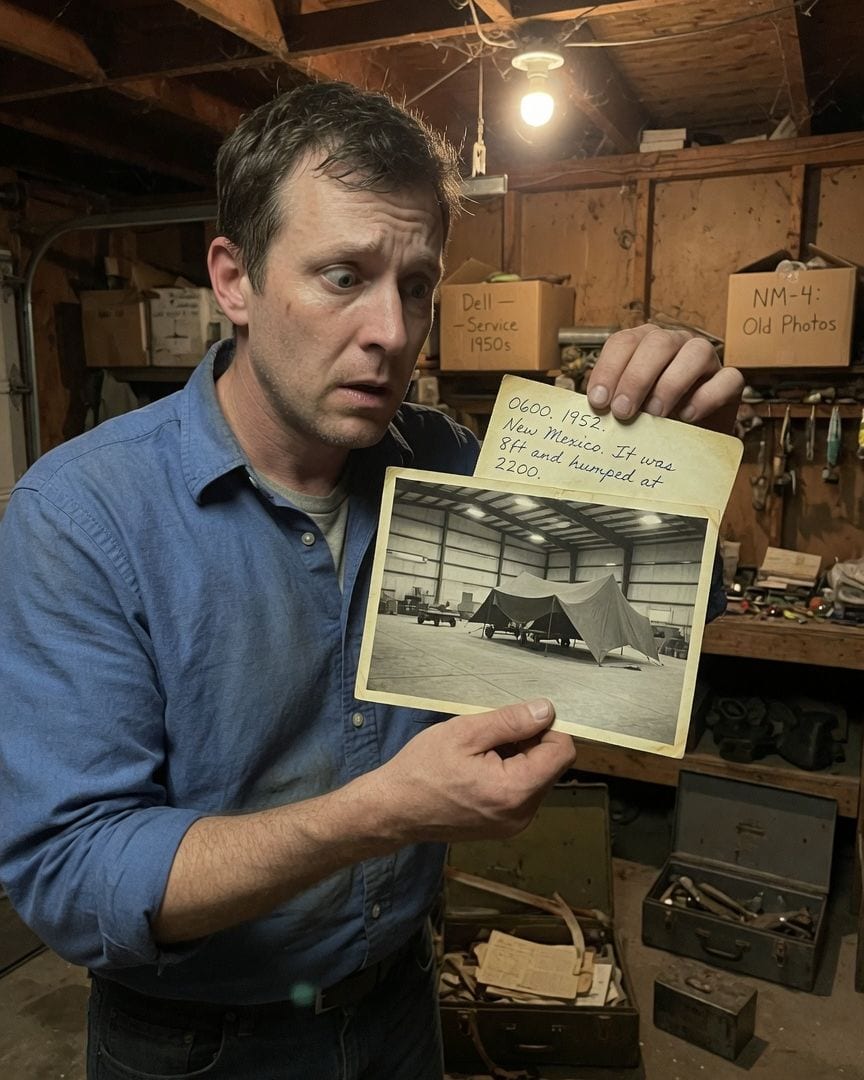
An archivist clears his father's garage, finding a Cold War photo. The object under the tarp has impossible corners, defying his father's own notes.
Franklin Fontaine, an archivist, slowly tackled the mountain of his recently deceased father's life in the dusty garage. Among old photos, he found a grainy image from 1952: a military hangar, and an object under a tarp. The tarp was pulled taut, its lines defining stark, impossible corners that rose far too tall for the cart beneath. His father's own note on the back described the object as '8ft and humped,' a description that stubbornly defied the photograph's impossible height and angles. The image was a physical impossibility, frozen in time, leaving Franklin profoundly disturbed.
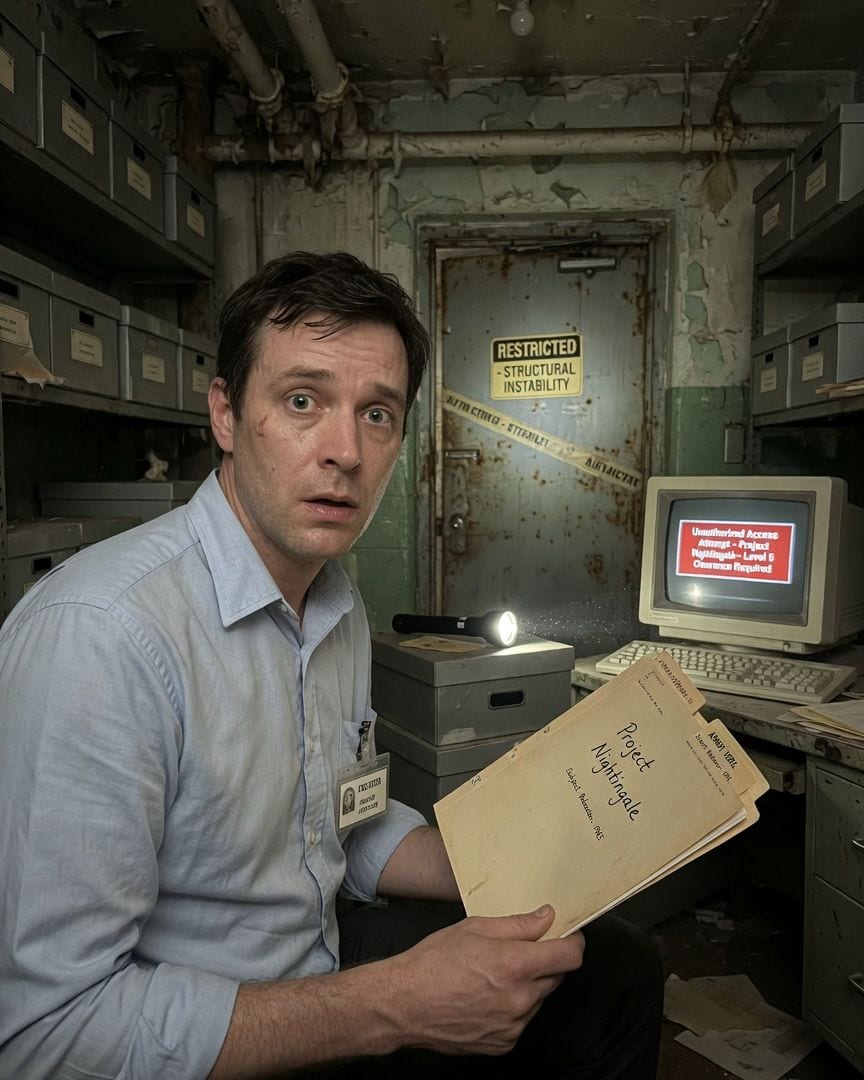
A FOIA officer found his dead mother's photo in a government Cold War file, dated 1983 — two years after her burial. Then he found her new file: 'Relocation - 1985.'
Devon Ashby, a routine FOIA officer, clicked 'release' on a 1983 file he'd seen dozens of times. Inside was a grainy photo of a woman, calmly staring from a logging road. His breath caught: it was his mother, Vera Ashby, dated two years after her 1981 burial. The file jacket, marked "Project Nightingale," led him to a forgotten, sealed sub-basement filled with unmarked metal boxes. There, he found a file for "ASHBY, VERA. Subject: Relocation - 1985," four years after her death. What hidden mechanism was meant to provoke him?
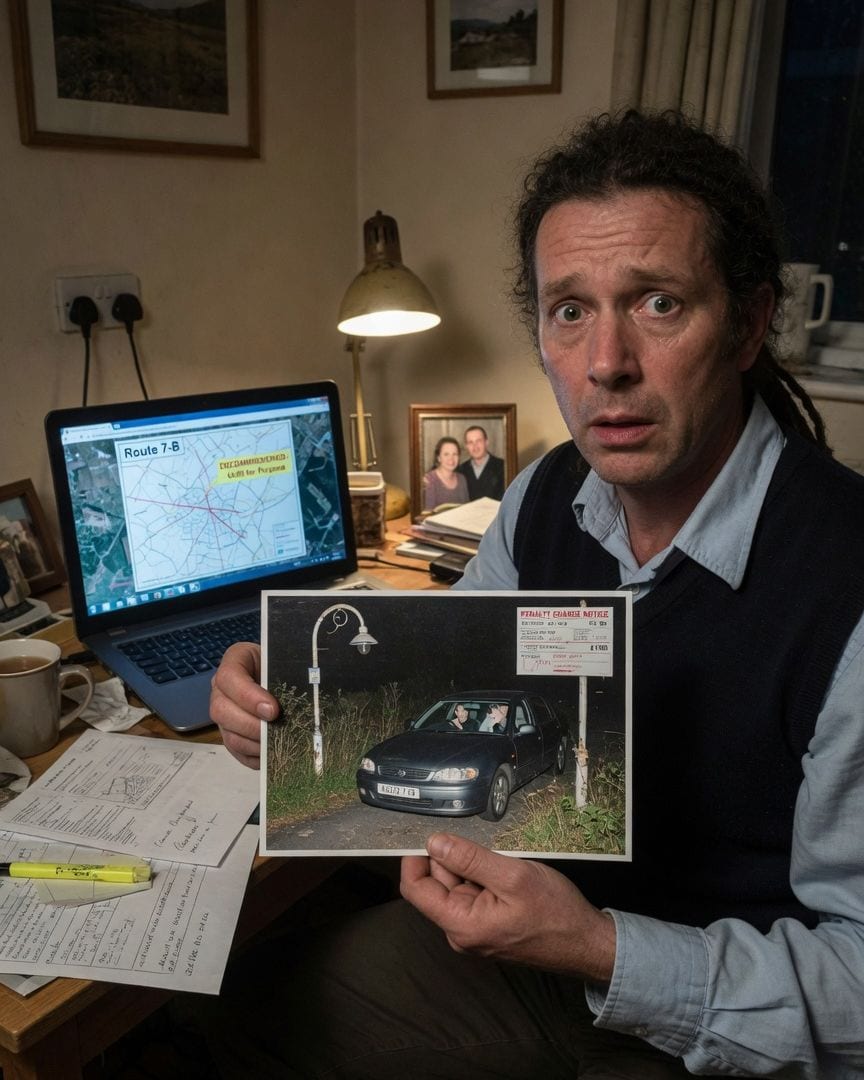
My car was photographed on a road I’ve never seen. The driver looks just like me, hand up against the flash, but I was at the hospital all night.
A routine traffic fine arrived, but the photo was anything but routine. It showed me driving my own car at 11:52 PM on the ninth of last month. The problem? I was at my wife's hospital bedside then, and the road in the photo simply doesn't exist today.
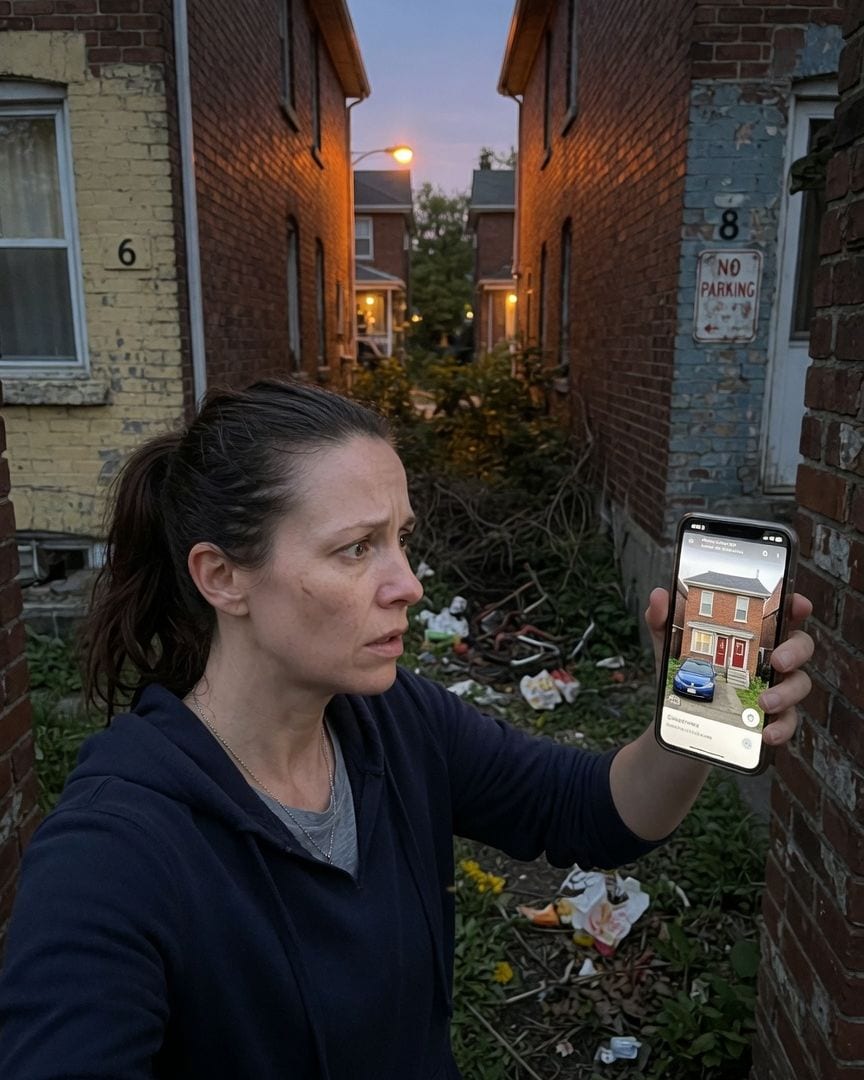
My childhood street's online map showed a number 7 house. I drove over that night. There is no number 7, just the ginnel I grew up with.
Scrolling Google Street View of my childhood neighborhood, I found an impossible house. Between my old house and number 6, where only a narrow ginnel should be, the screen showed a fully formed number 7. It had drawn curtains, a freshly painted door, and a blue car dated 'last month,' yet every other map showed an empty gap.
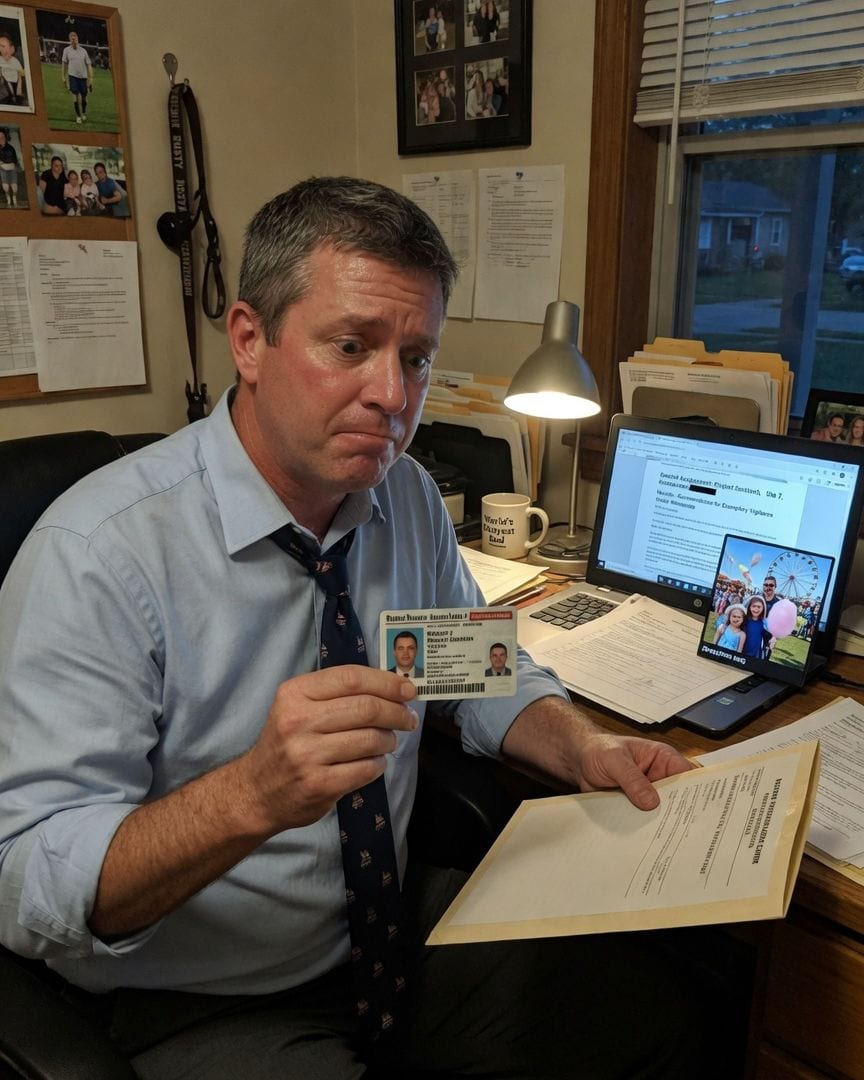
An Ohio insurance agent’s military record showed a commendation from a secret Nevada base, dated the same day he took his family to the county fair.
Robert Halloran, an Ohio insurance agent, thought his military days were long behind him, replaced by a quiet civilian life with a mortgage and two children. But a letter arrived from a records center, congratulating him on twenty years of continuous service and detailing a career he never lived. His official ID card even bore a recent photo of him, looking back with an uneasy smile he didn't remember giving. As he found his own discharge papers, crisp and yellowed, they directly contradicted every line of the new document, confirming his service had ended eight years ago. Now, two realities fought for space: his family life and a secret military history he couldn't explain.
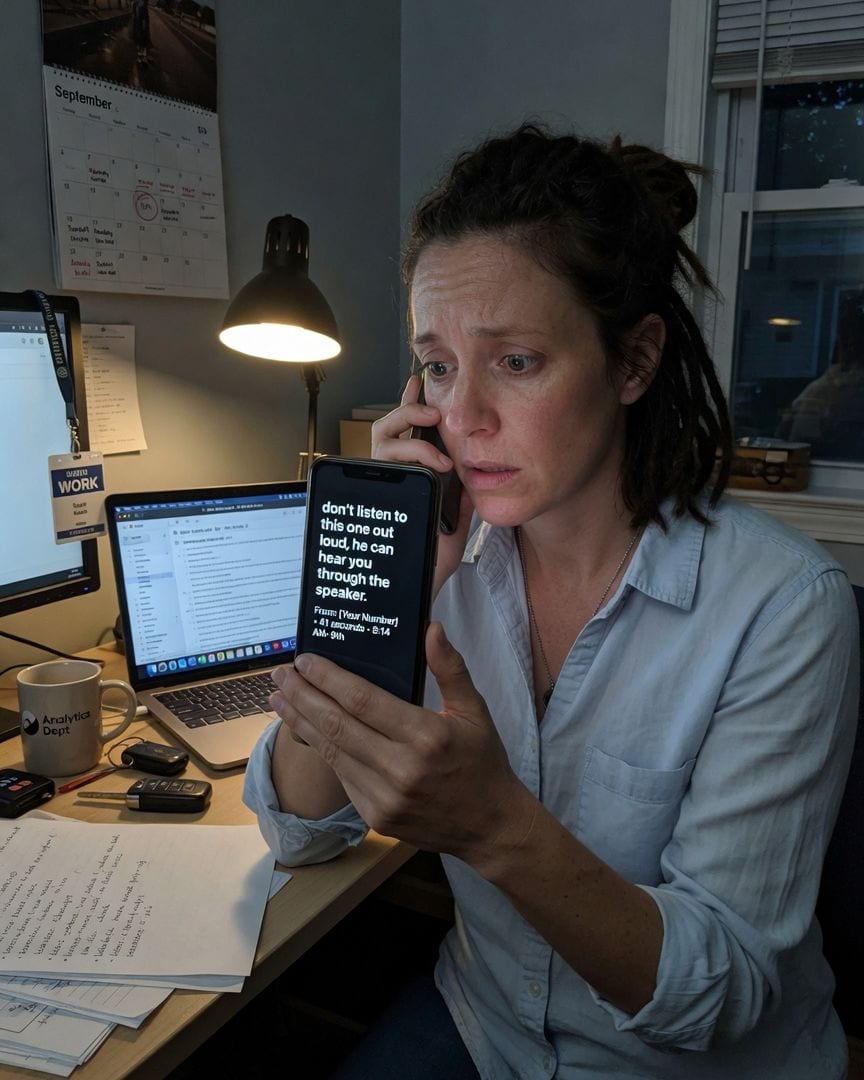
My dashcam footage showed my street change. For five seconds, my car drove on a road that doesn't exist on any map.
It was a normal Tuesday until my work phone received a new voicemail. The transcription warned, 'don't listen to this one out loud, he can hear you through the speaker.' But the message was from my own number, and the audio was forty-one seconds of absolute, dead silence.