A FOIA officer found his dead mother's photo in a government Cold War file, dated 1983 — two years after her burial. Then he found her new file: 'Relocation - 1985.'
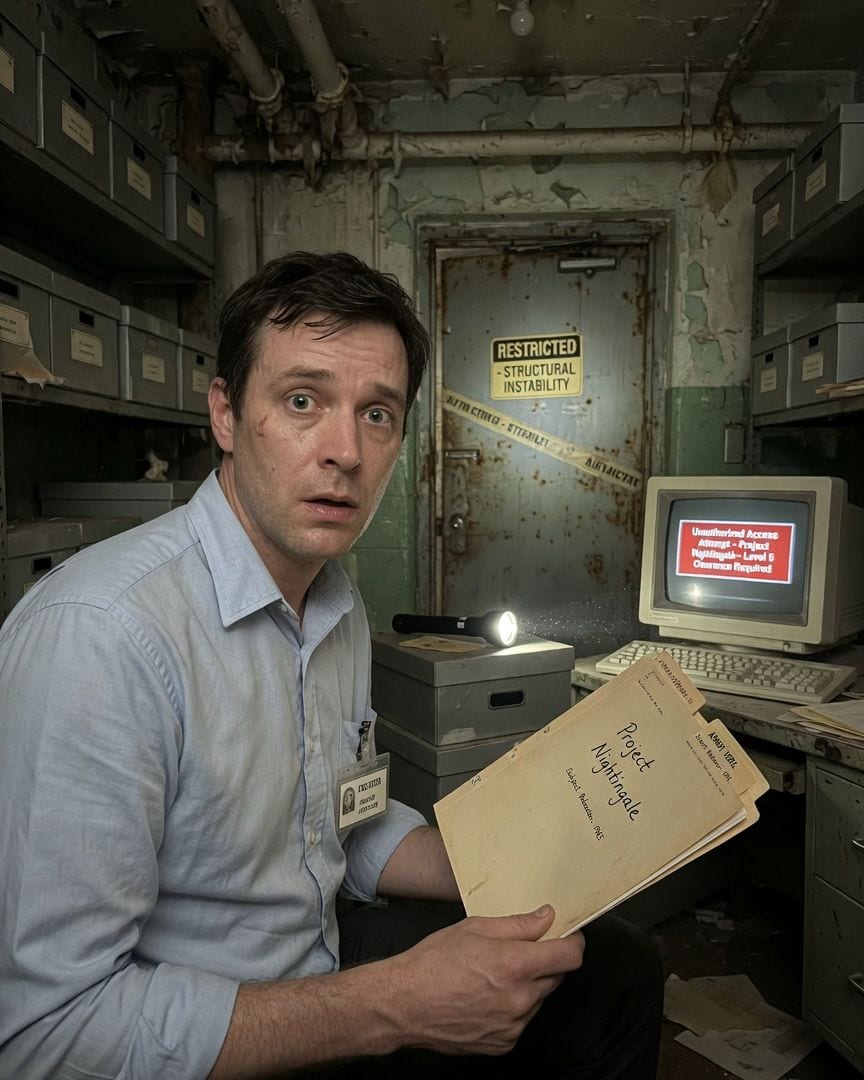
Devon Ashby, a FOIA officer, released the same 1983 file for the thirty-second time.
The request, from a persistent individual in Missoula, had become a minor legend in the office, a tickle of an anomaly in the otherwise orderly stream of government transparency.
He clicked the 'release' button, sending the digital packet, then leaned back in his chair, rubbing his temples.
The file was a single page: a grainy, black-and-white photograph of a woman on a logging road in a dense forest, somewhere in rural Montana.
She looked directly at the camera, her expression calm, almost serene, as if she’d been expecting the lens.
The caption beneath the photo was sparse, just a name and a date: ‘Vera Ashby – 1983.’
Devon’s breath caught, a cold knot tightening in his chest. His mother, Vera Ashby, had died in 1981. He remembered the funeral, the damp earth, the quiet sorrow.
This photograph, clear enough to capture the unmistakable curve of her jaw, the slight asymmetry of her smile, the distinct knowing in her eyes, was dated two years after her burial.
He stared, leaning closer to the screen, willing it to be a trick of the light, a mislabeled scan. But the date was stark, immutable. The face was impossible.
No one in the world, not in any official record, had ever connected his mother’s name to his in this context – a photo taken after her death, in a government file he was tasked to release.
He tried to rationalize it, to call it a clerical error, a misfiled photo from another Vera Ashby, but the eyes in the image held his, calm and knowing, as if she’d watched the photographer through the lens and then, somehow, through time.
He pulled the physical jacket of the 1983 file, ignoring the stack of pending requests on his desk. The flimsy manila folder felt oddly thin in his hands.
There was no standard accession number, no official classification stamp, none of the bureaucratic hallmarks he expected to see. Instead, neatly handwritten on the folder, in a script that looked almost archaic, were two words: “Project Nightingale.”
Below that was a unique alphanumeric code that didn’t exist in any of his agency’s extensive databases. He typed the code into the digital archives, expecting a system error, a dead end, a simple blank screen.
Instead, the network, usually a labyrinth of red tape and slow-loading queries, suddenly snapped to attention. His query was flagged instantly: 'Unauthorized Access Attempt – Project Nightingale – Level 5 Clearance Required.'
The words glowed ominously on his screen. This wasn't a mistake. It felt like a deliberate breadcrumb, placed with a surgeon's precision.
He looked back at the digital copy of the photo, then at the name of the requester: Russell Caldwell, Missoula. What did Caldwell know? What was he truly seeking with these thirty-two persistent requests?
The official systems, Devon knew, were designed to obfuscate, to bury information under layers of jargon and protocol. But this—this felt like a deliberate, almost taunting, contradiction.
An icy certainty settled in his gut: this file, this impossible photograph, this unauthorized access flag, had been meant for him.
He felt the cold pressure of unseen eyes, suddenly aware that his own pursuit of answers was precisely what some hidden mechanism had been designed to provoke.
Devon used his specialized clearance, a rare privilege of his long tenure, to trace the 'Project Nightingale' code. The trail led him not to a classified server farm, but to an old, decommissioned section of the archive's sub-basement.
It was a forgotten wing, sealed off decades ago due to 'structural instability'—a phrase he now understood as bureaucratic code for 'we don't want anyone down here.'
He bypassed rusted locks on a reinforced steel door and deactivated an antiquated security panel that looked like something out of a Cold War movie.
The air inside grew cold and stale, thick with the scent of forgotten paper and decaying metal.
Behind a nondescript steel door, tucked away in a corner not marked on any blueprints he could find, he discovered a small, unlit room.
It was filled floor-to-ceiling with identical, unmarked gray metal boxes, each one like a small, silent coffin. He pulled the handle of the first box, the faint creak echoing in the oppressive silence.
Dust motes, disturbed, danced in his flashlight beam. Inside, he found not just a single file, but hundreds, all with the same, unsettling 'Project Nightingale' code written in that same archaic hand.
On top of the stack, staring up at him from the yellowed cover, was a file labeled: 'ASHBY, VERA. Subject: Relocation - 1985.' His mother. Relocation. Four years after her burial.
Devon meticulously examined Vera Ashby’s expanded file, his fingers trembling slightly as he opened the cover. The cold, stale air of the sub-basement seemed to press in closer with each page he turned, thick with the weight of unseen lives.
Inside, he found not just the single 1983 photograph, but dozens of grainy black-and-white surveillance images, all dated between 1983 and 1985.
They showed his mother in different, remote locations: a small cabin nestled deep in a forest, standing by a river in what looked like the Pacific Northwest, even once at a diner counter in an unfamiliar small town.
She was always alone, or sometimes with other individuals whose faces were blurred or turned away, their presence a silent, unsettling implication. The captions beneath these photos were cryptic, referring to 'subject status stability' and 'environmental integration protocols.'
He recognized the logging road from the initial photo; it was indeed near his childhood home in Montana, a place he hadn’t thought about in years, a place Vera had no reason to be after 1981.
The file also referenced other 'subjects' with similar impossible dates and 'relocation' entries, hinting at a wider, unseen network.
He found a log entry detailing a 'status change' for Vera in late 1985, followed by a note about 'successful re-integration into new parameters.'
The wording was clinical, devoid of emotion, yet it painted a picture of a life that continued beyond death, repurposed and monitored. Devon’s mind raced. He remembered Russell Caldwell, the persistent FOIA requester.
A quick search of public records revealed that Caldwell had a sister, Eleanor, also from Missoula, who had officially disappeared in 1978.
That date chillingly aligned with a 'Project Nightingale' file he had glimpsed briefly in one of the other boxes. Caldwell wasn't just curious; he was hunting for answers, just like Devon now was, drawn into the same terrifying pattern.
Devon attempted to contact Russell Caldwell, leaving several messages on an old landline number he found, but received no reply. Three days later, a woman in a perfectly tailored charcoal gray suit appeared in his office.
Her name was Josephine Granger, and she introduced herself as a 'Special Projects Liaison' from an obscure internal oversight department. Her presence was unnervingly calm, a contrast to the buzzing anxiety that had taken root in Devon's chest.
Her smile was a careful, measured thing, cold enough to make the air in Devon’s own office feel several degrees lower, the fluorescent hum suddenly too loud.
She mentioned 'recent unusual activity concerning decommissioned archives' and asked about his 'interest in historical classifications.' Her questions were precise, her gaze unwavering, and her voice held a quiet authority that belied her polite tone.
She referred to 'sensitive materials' and subtly implied that unauthorized access could have 'unforeseen consequences for his career, and perhaps, for his peace of mind.' Devon felt a prickle of cold dread, a certainty that slid into his bones.
She knew. She knew what he found, and she knew he was digging deeper.
His own office, once a sanctuary of familiar routine, now hummed with a different, sharper energy, every document a potential trap, every shadow a soft, waiting eye.
He realized he was no longer just an investigator; he’d been noticed, and he was now the subject of scrutiny, filed away just like the others.
Devon, unnerved by Josephine’s visit, arranged a meeting with her in a quiet, anonymous coffee shop, away from the agency building. He needed to talk where the walls didn't have ears, where the air didn't feel heavy with observation.
He laid out his findings, his voice low but firm: the photo, the impossible dates, the 'Project Nightingale' code, his mother’s 'relocation' and 'status updates.'
Josephine took a slow sip of her Earl Grey tea, her expression unreadable, her tailored suit crisp and uncreased in the casual setting. She did not deny anything.
In a low, measured voice, she explained that Project Nightingale was an old, highly classified program, initiated decades ago to 'manage anomalies.'
She described it as a necessary function of national security, dealing with individuals who, after experiencing certain extreme, unexplainable events – often involving unknown phenomena or peculiar environmental shifts – didn't truly die or disappear in the conventional sense.
Instead, they underwent a 'transition.'
'They are… altered,' Josephine said, her eyes meeting his across the small table. 'Their cellular structure, their neurological patterns, their very presence in the world changes. They become… different. We don't understand the mechanism, only the outcome.'
She explained that the program then monitored and integrated these individuals into new, often remote, controlled environments, using fabricated records to maintain public order. His mother, Vera, was one such subject, a 'transitioned' individual.
The 1983 photograph was a routine observation, a status report. The calm, detached way Josephine described his mother’s living death, her 'filing' away from her life and family, was horrifying.
The casual cruelty of her words, delivered with the same placid certainty she might use to order another tea, was a cold blade.
The mundane setting of the coffee shop, the gentle clatter of cups and murmuring voices, made the revelation even more chilling, amplifying the unsettling reality that such an immense, terrifying truth could exist so casually, so close to ordinary life.
Devon, reeling from the horrific truth about his mother and the chilling reality of Project Nightingale, demanded to know the full scope of the program. He pushed his empty coffee cup away, leaning forward, his voice tight. 'How many others?
How long has this been going on? What about the other files, the pattern across decades? All those "relocated" individuals?'
Josephine, with an almost imperceptible, unsettlingly calm smile, nodded slowly. 'It’s a long history, Mr. Ashby,' she said, her gaze unwavering, 'and it goes back further than you can imagine.
Our work is to maintain the integrity of the unseen world, to ensure the boundaries hold.' She reached into her elegant leather briefcase, not for a document, but for another file.
This one was much thicker, bound in worn leather, and appeared significantly older than his mother's.
The coffee shop, moments ago a refuge, now felt like a stage, the gentle clatter of cups and murmuring voices a dissonant soundtrack to his unraveling.
She slid it across the polished table, the faint scent of old paper wafting between them like a forgotten memory. Devon’s eyes fixed on the cover. In a neat, official hand, it read: 'ASHBY, DEVON. Subject Observation. Status: Active.'
His own name. His entire life. Already a buried record.
Devon stared at the file, his own name a brand, burned into the worn leather. The blood in his veins felt cold, then surged with a furious heat. Josephine watched him, her expression perfectly composed, before finally breaking the silence.
She explained that his father, Isaac Ashby, was also a Project Nightingale subject, 'transitioned' decades ago in an incident involving a classified experimental facility in the American Southwest.
His interaction with Vera, before her own transition, had led to Devon’s birth, making him a 'legacy subject.'
The program, Josephine calmly stated, had monitored him since before he could walk, subtly guiding his education, nudging his career path into FOIA—knowing that a diligent officer, especially one with a familial connection to a subject, would eventually stumble upon the program’s edges.
His mother’s decoy file, initially released to Russell Caldwell (who was also a legacy subject, searching for his sister Eleanor), was a carefully placed trigger, a test designed to activate Devon’s status.
The pattern across decades wasn’t just about 'filed' individuals, but about their descendants, too—a self-perpetuating system.
The full truth detonated: his entire life had been an observation, a record in a secret file. He had always been part of the machine he tried to declassify.
He was never a free agent, only a carefully cultivated asset, his existence plotted, his choices anticipated.
The revelation landed not as a shock, but as a chilling, irreversible snap, every disconnected moment of his life suddenly clicking into a terrifyingly coherent pattern.
Devon finally looked up from the file, his gaze locking with Josephine's. His voice was strained, hoarse with a cold fury. 'What does this mean? "Subject Observation. Status: Active." What does it mean for me now?'
The sense of profound betrayal was a bitter taste in his mouth.
Josephine remained perfectly calm, her composure unyielding. 'It means you have simply 'activated' your status, Mr. Ashby. You are now fully aware, and thus, fully integrated.'
She explained that he could continue his work, but now he understood his true role: to manage the inflow of inquiries, to deflect, to maintain the secrecy of Project Nightingale. She described resistance as 'unwise,' even 'unnecessary.'
The quiet surveillance, the subtle nudges throughout his life, she insisted, were never malevolent, simply preparatory. They were ensuring he would be a stable, rational guardian of the program’s secrets.
He tried to argue, to assert his free will, to find a crack in her logic, but her words wrapped around him like invisible chains.
The realization solidified, a cold, heavy anchor dropping into his soul: his life had not been his own, not truly, for forty-two years. He was a part of the system now, an inheritor of its cold, patient logic.
His family was never truly lost; they were simply filed, and he, Devon Ashby, was the next entry, the next signature on the ever-growing record.
The horror was not a threat of violence, but of absolute, predetermined absorption into a system that rendered individual agency meaningless. He was a part of the machine now, and the machine had no exit.
Devon returned to his office. The familiar space, once a sanctuary of order, now felt like a cage, every document a potential trap, every colleague a potential, unwitting, observer. He processed a new FOIA request, his hand steady.
The file was for a missing person from 1998, a hiker in the Rockies. He found the standard rejection letter, drafted it, and signed it.
His gaze lingered for a moment on the 'Project Nightingale' code he now knew hid in the deeper archives, understanding the invisible threads that connected this routine denial to a vast, unseen network.
He felt a quiet, terrible resignation settling deep within him, a chilling sense of purpose replacing his previous conviction.
Devon sat at his desk late, the fluorescent lights humming in the near-empty office.
He looked at the stack of incoming FOIA requests, each one a potential thread leading to another 'filed' life, another secret he was now sworn to protect. He felt a quiet resignation, a chilling sense of purpose.
He had become the gatekeeper, the one who knew, a living component of the very system he once sought to expose. The dread was that he was now complicit, a willing, if unwilling, participant in the machine.
He picked up a pen, and with a practiced, steady hand, began to review the next request, knowing exactly which path it would lead down, and which door would remain forever closed.
He was the quiet guardian of the buried record, his own life now irrevocably part of its vast, cold ledger. He was, after all, a filed subject. The file was still being signed.
Devon Ashby worked late, as he often did. His neighbor, Russell Caldwell, still called sometimes, asking about his sister, Eleanor. Devon always gave him the same polite, regretful answer. He was good at his job.
He was, after all, a filed subject, and the file was still being signed.
If this one got to you
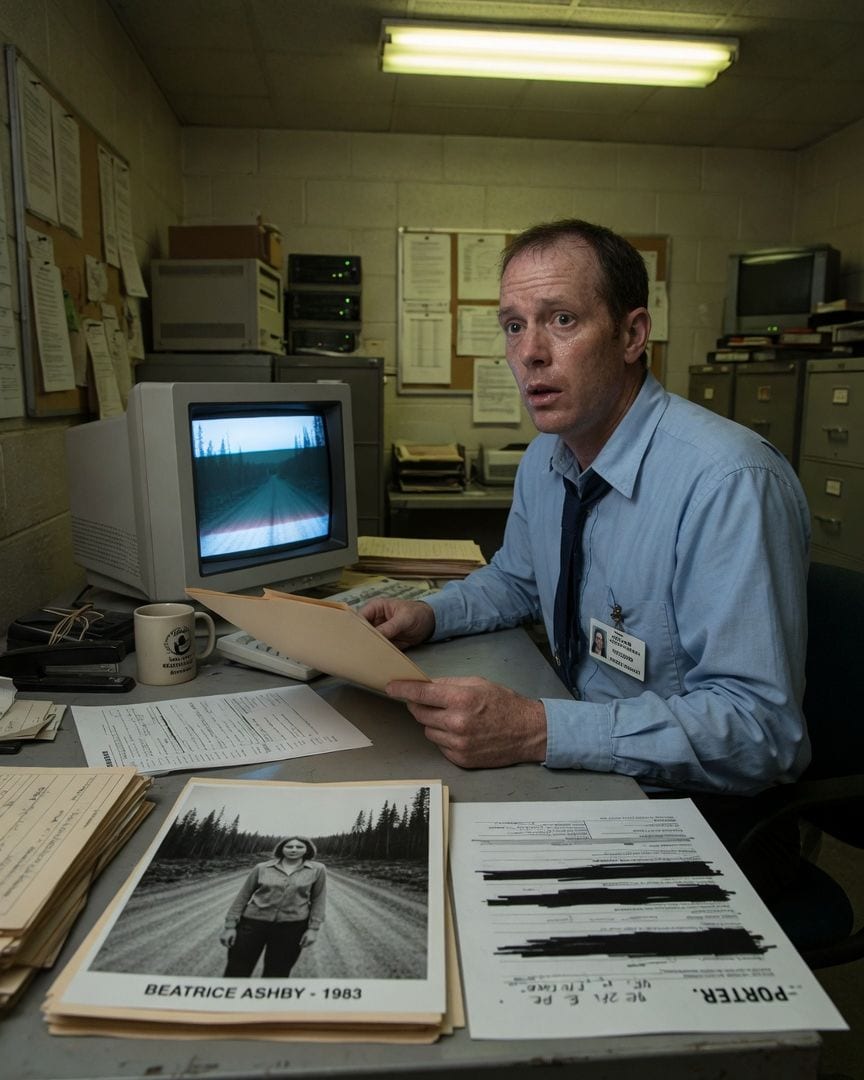
A federal clerk found his dead mother’s photo in a 1983 Cold War file, listed as a witness.
Devon Ashby, a federal records clerk in Missoula, Montana, spent years dismissing a repeated request for a 1983 file. He finally pulled the thin folder, expecting a clerical anomaly, but found a stark black-and-white photograph. It showed his mother, Beatrice Ashby, looking directly into the lens, calm and familiar, yet stamped with the year 1983. Devon remembered her funeral in 1981 and the quiet scrape of earth against her coffin, making her appearance in the official file two years later a chilling impossibility. Further investigation revealed conflicting records and a handwritten addendum with geographic coordinates, hinting at a truth far darker than a simple misfile.
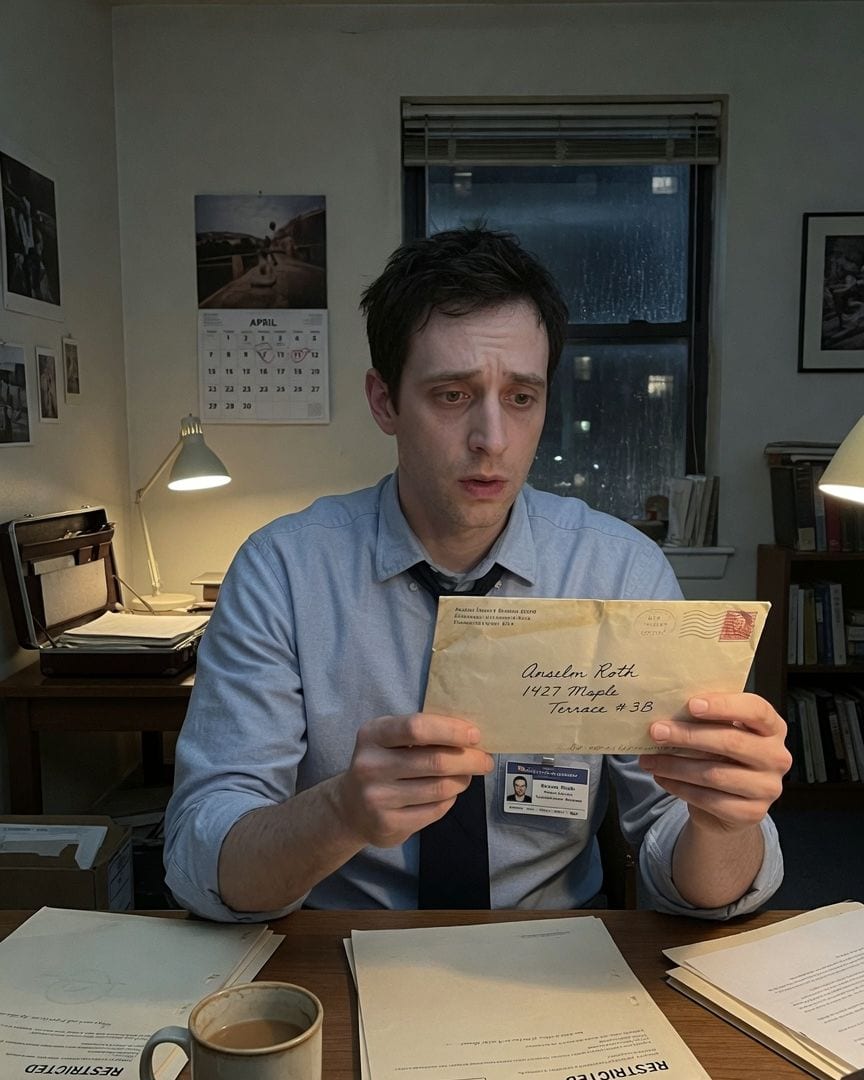
A Cold War declassification reviewer finds his dead grandmother's letter, postmarked 1974, addressed to him years before he was born, and radiating heat.
Declassification reviewer Anselm Roth meticulously sorted through a Cold War-era file on impossible disappearances at the National Archives, a routine 'thirty-year clock' review in 2014. Among the countless records of vanished ships and military units, he found an unscheduled addendum: a thick, sealed envelope addressed to him in his dead grandmother Eleanor Vance’s unmistakable hand. The postmark read 1974, years before he was born, and the paper itself was faintly, inexplicably warm against his fingers, defying every archival principle. Later, a photograph inside revealed his grandmother in an unknown uniform with a stark warning: 'They file us, Anselm. Don't let them finish.' This wasn't just a record of the lost; it was still active.
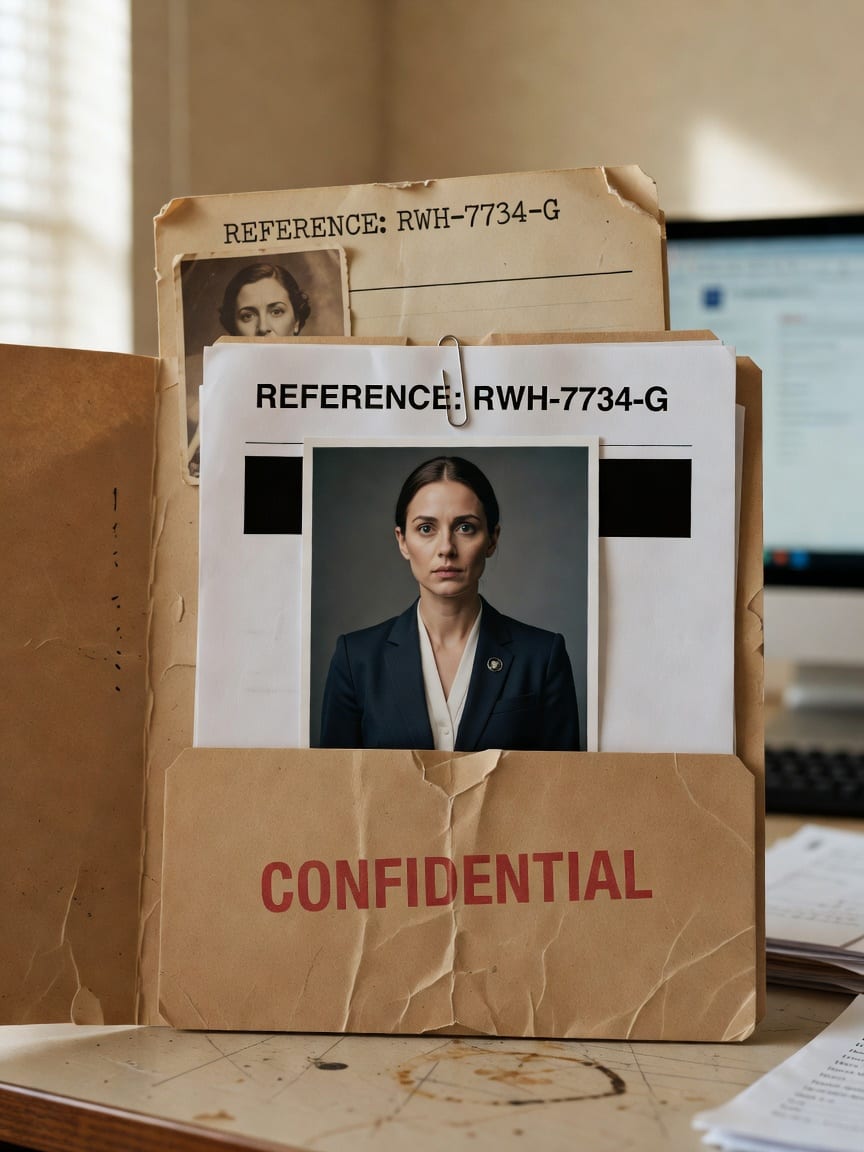
My security file was opened nine years before I was born. Its note said: 'subject not to be briefed'.
Auditing company digital records was routine until I pulled up my own personnel file. It clearly showed a 'Date Opened' nine years before I was born, yet bore my exact name and reference number. Below, an assessor's note from that impossible year mentioned a 'previous holder' and ordered the 'subject not to be briefed,' sparking a cold thrum in my chest.
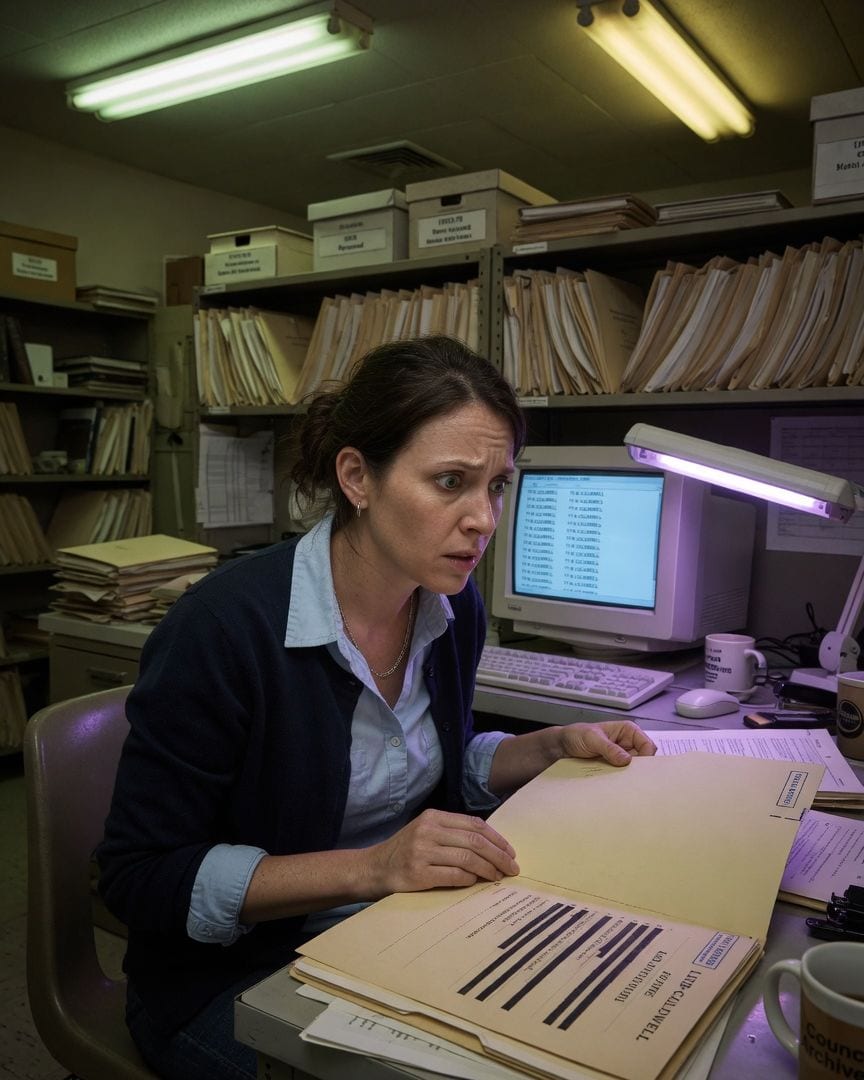
My employer's security file holds a vetting report on me dated nine years before I ever applied. It has my full name and my parents' address — with only one line, the source who referred me, blacked out.
Working a routine data audit, I pull my own security file. The issue date is nine years before I even applied for the job. Then, hidden within an old archive file, I find my current address etched under a blacked-out line.
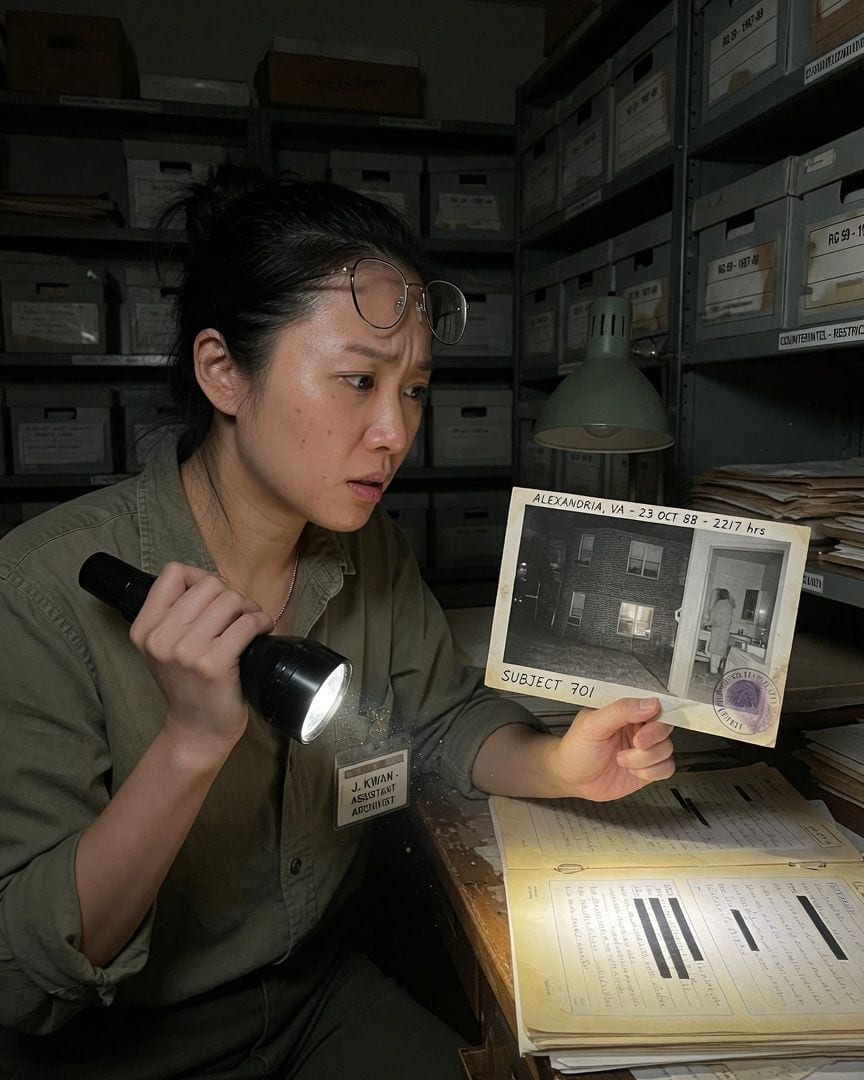
An assistant archivist's Cold War file held a photo of her grandmother's empty 1988 apartment. A figure stood in the window, stamped 'UNIT 701'.
Assistant archivist Junie Kwan hunched over a heavy 1988 counterintelligence dossier in the silent gloom of the National Archives. With only an hour before a court order sealed the file, she faced a personal horror. Tucked inside was a grainy surveillance photograph, dated the night of her grandmother’s 1988 funeral, showing the very apartment where Florence had lived and died. In the frame, behind the grimy kitchen window, a faint figure stood at the sink, despite the apartment being meticulously cleared out, empty, and locked. Junie discovered cryptic marginalia and a mysterious 'UNIT 701' stamp on the photo, hinting at a secret far deeper than a simple clerical error.
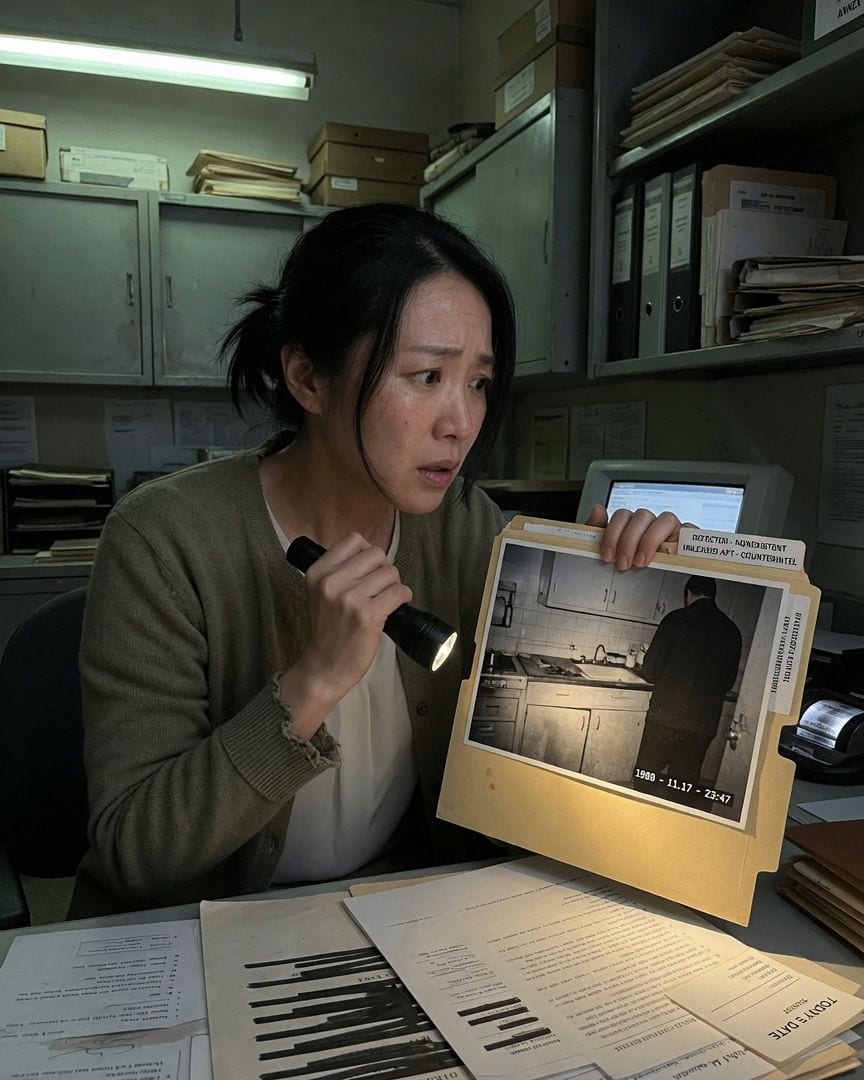
Against a midnight deadline, archivist Junie Kwan finds a Cold War dossier with a photo of her grandmother's kitchen, empty the night of the funeral, with an unknown figure standing inside.
Archivist Junie Kwan huddled in the hushed, cool Alexandria archives, working against a midnight court order to reseal a strange counterintelligence dossier. The file, dense with blanked sections, concerned a 'defector who never existed' and an 'unleased apartment.' As she scanned a grainy surveillance photo, a prickle of unease turned to dread: it was her grandmother's kitchen, dated 1988, the night of the funeral. A tall, rigid figure stood at the sink, yet Junie knew with certainty the apartment had been empty and locked that night. How could an impossible presence appear in a locked, empty room, tied to a phantom Cold War case?