A corporal on his last rotation logs a Private reported MIA months ago. Then, another soldier with that exact same name reports for duty.
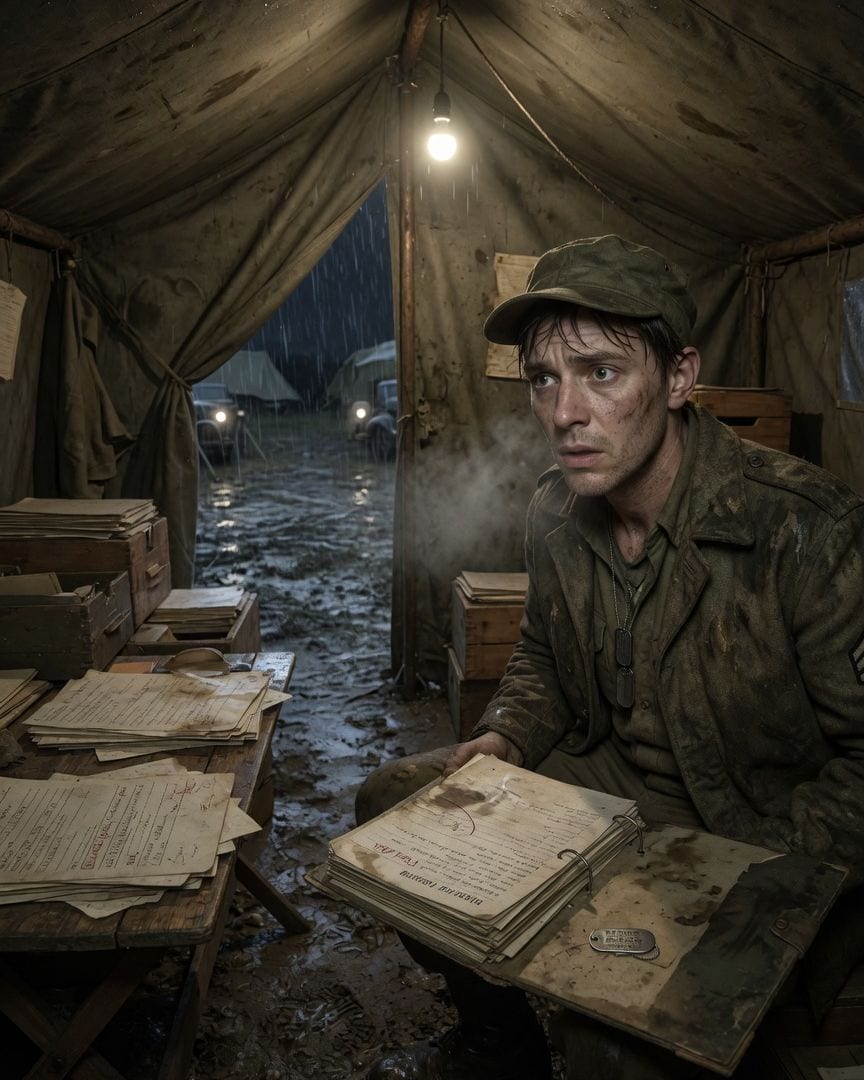
Corporal Theodore Carver, tired and mud-splashed, worked through the final levy of incoming infantry at the French replacement depot in 1944.
The rain was relentless, turning the ground to a slick, sucking quagmire, but the paperwork had to be clean, especially on his last rotation before transfer.
He called names off the shipping manifest, each man drawing his gear and moving out to the waiting trucks.
He crossed off 'Oscar Fletcher,' a Private from the 101st, noting his assignment to Company B. The manifest ran clean, name for name, until the last truck pulled away, its engine fading into the drumming rain. Then, Carver looked up.
One soldier still stood in the downpour, fully kitted, rifle slung, waiting patiently by the empty tent line. Carver checked the manifest again, then the man's dog tags. It was 'Oscar Fletcher.' The man, his face stoic, met Carver's gaze.
'Reporting for duty, Corporal,' he said. Carver's breath hitched, the rain suddenly feeling colder than the autumn air.
Carver’s mind raced through every regulation, every procedure. He checked the supplemental lists, the late arrivals, the emergency transfers. There was no Oscar Fletcher. Not anymore.
The man he’d just crossed off, the real Oscar Fletcher, had been reported MIA months ago, his record stamped with a grim 'presumed deceased.' This soldier, standing before him, was a ghost of paperwork.
Carver tried to flag down Sergeant Patrick Stratton, busy with a supply truck, supervising the unloading of crates. Stratton, a pragmatic NCO, just shook his head, not even bothering to glance at the solitary figure. 'Probably a prank, Corporal.
Or a lost soul. Happens.' Stratton gestured vaguely towards the distant, muddy hills. 'This whole place is a graveyard of intentions.' But Carver, a stickler for order, knew better. He walked back to where the soldier had stood.
The mud was churned by the departing trucks, a messy swirl of tire treads and footfalls, but near the empty space where the last man had been, a single, impossibly crisp boot print stood out, as if pressed into fresh clay moments ago.
It was too perfect, too distinct amidst the chaos, its deep tread lines sharp and unblemished. He reached down, touching the cold, firm outline in the mud.
The rain continued to fall, but the print held its shape, defying the elements. It was the same type of print he'd seen earlier, near the perimeter wire, but dismissed as a stray from a patrol.
This time, it felt like a signature.
The dread gnawed at Carver. He couldn't shake the image of the soldier, the name, the impossible boot print.
He returned to the records tent, pulling the heavy, canvas-bound main manifest binder, looking for anything, any anomaly in the depot's history.
The canvas of the tent flapped with a sudden gust of wind, making the overhead lamp sway and cast dancing shadows across the rows of archived forms.
Deep inside, behind the current year's records, tucked between two dusty, forgotten pages, he found it: a single, water-stained sheet of paper. It wasn't an official form, but a handwritten report, dated 1942, detailing a similar incident.
A soldier, answering to a name already discharged, appearing from nowhere, then vanishing. The report mentioned a peculiar detail: a non-standard issue dog tag, left behind. Carver's eyes dropped to his own desk.
There, glinting dully in the tent's dim light, lay the dog tag the 'new' Oscar Fletcher had, at some point, quietly placed there.
Its serial number was unlike any he'd ever seen, and its strange markings matched the description in the old, water-stained report perfectly.
Carver, the water-stained report and the peculiar dog tag clutched in his hand, sought out Captain Vera Winslow, the depot commander. Her office, usually a bastion of order, felt stifling under the weight of his discovery.
Winslow, a sharp woman in her mid-thirties, listened with a skeptical frown, her fingers drumming a steady rhythm on her polished desktop. 'Corporal, this is an old war story. Fatigue, perhaps. Or a hoax by a bored clerk.'
She dismissed it, ordering Carver to 'focus on the living.' The captain's words hung in the damp air, a direct command, but Carver couldn't.
He defied her implicit order and continued his investigation, the mystery of Oscar Fletcher now a personal obsession. He located the original 1942 manifest referenced in the report. The MIA soldier from that incident was a Private Kenneth Hartley.
Carver cross-referenced the dog tag's odd serial number with known military issue, meticulously comparing it against diagrams and examples in an old ordnance manual.
He confirmed it was indeed non-standard, unofficial—the metal alloy itself felt subtly different, colder to the touch than regulation tags.
He meticulously searched through other MIA records, noting other 'unresolved' cases, instances where a soldier simply vanished without a trace, leaving no body, no evidence. Each file felt like a whisper of something lost.
He noticed a faint, almost erased, boot print symbol next to Hartley’s name on the 1942 manifest, a small, hand-drawn outline, identical to the one he’d seen in the mud outside the tent.
The pattern, once dismissed as coincidence, began to coalesce into something deliberate, something cold and precise, like an equation balancing itself in the dark.
Carver’s continued digging did not go unnoticed. Captain Winslow called him into her office, her voice low and stern, a cutting edge beneath its calm. 'Corporal, I warned you. This 'investigation' is affecting morale, creating unnecessary speculation. Cease and desist.'
She didn't raise her voice, but the chill in the room was palpable, cold enough to make the condensation on the windowpane seem to freeze in place.
He left her office, the unspoken threat hanging in the air, a silence heavier than any shouting.
Later that night, alone in the records tent, Carver pored over ancient manifests by the light of a flickering lamp, the rain still drumming a monotonous rhythm on the canvas overhead. He heard it.
Faint footsteps outside, pausing at his tent flap, a soft, almost imperceptible scrape, like a dragging boot. He called out, 'Who's there?' His voice sounded thin, swallowed by the vastness of the empty tent. Silence.
He waited, his heart thudding against his ribs, then slowly pushed aside the heavy canvas flap. Nothing. The darkness was absolute, broken only by the dim glow filtering from his lamp.
But on the muddy ground, directly outside his tent, was a single, fresh, impossibly crisp boot print, identical to the one he’d seen earlier by the tent line. A cold dread, far deeper than fear, settled over him.
Someone, or something, knew exactly what he was doing. He returned to his desk, his gaze sweeping the tent. Tucked under his manifest binder, a small, folded piece of paper. He opened it.
Scrawled in a precise, almost elegant hand, were three words: 'Some accounts are best left closed.'
The note chilled Carver to the bone. He confronted Captain Winslow again, placing the note and describing the boot print.
Winslow stared at the small piece of paper, her composure finally cracked, a tremor running through her hand as she reached for it.
She looked away, her voice barely a whisper, as if speaking a forbidden truth might break the world. 'This isn't the first time, Carver. It happens. It's always dismissed. Fatigue. Clerical error. But it’s not.'
She stood, walking to a small, locked metal box hidden beneath her field desk, its surface scratched and worn.
The hinges groaned as she opened it, revealing an unmarked, leather-bound ledger, its pages yellowed with age, its cover soft with decades of handling. 'Previous commanders kept this,' she explained, her voice gaining a detached, almost reverent quality.
'The unofficial records.' Carver saw entries spanning decades, meticulously documenting dates, names of 'extra' men who appeared, and their corresponding 'missing' names on official rosters. The ledger referred to them as 'un-accounted.'
'They appear, they try to re-enter, and then they're gone,' Winslow said, her eyes hollow, fixed on some distant point. 'The system… it tries to balance itself.' Carver, his fingers trembling, flipped through the pages.
Each entry was a story of a soldier who vanished, leaving behind only a peculiar dog tag and an impossibly crisp boot print.
The 1942 report about Kenneth Hartley was here, expanded upon with additional details, dates of appearance, and the exact spot where his dog tag was found.
He saw Oscar Fletcher’s name listed, with the same date he vanished from the depot, his entry marked with the small, distinctive boot print symbol.
The earlier clues clicked into place with sickening precision: the impossible boot prints, the non-standard dog tags, the recurring pattern of soldiers appearing from nowhere, the warnings. It was all real.
And it had been happening for a very long time.
Carver pored over the hidden ledger, the weight of its contents pressing down on him, the dampness of the tent suddenly suffocating.
The sheer volume of entries, the decades-long pattern, confirmed a truth far stranger and more terrifying than he could have imagined.
He recognized names from old, dusty manifests, men whose disappearances had been attributed to desertion or enemy action, now listed here as 'un-accounted.' Each name was a fresh stab of cold comprehension.
He found Oscar Fletcher's entry, precisely dated to the day he'd vanished from the depot, followed by a series of notes about his attempt to re-manifest.
His finger traced the lines, moving to the preceding entry, from 1942, listing Private Kenneth Hartley, his details meticulously recorded. He remembered Hartley's name from the water-stained report, the first clue, the first crack in the mundane world.
Next to Hartley’s name, in the 'missing' column, Winslow had made a recent, almost hesitant notation. Carver’s blood ran cold. It was his own name: Theodore Carver.
And the date next to it was from before he had ever shipped out to France, before he had ever set foot in this depot. The ledger, the system itself, had already decided he was gone.
The full, horrifying truth detonated in Carver’s mind. The hidden ledger wasn't just a record of anomalies; it was the system's own, deeper manifest.
This depot, built on what Captain Winslow vaguely hinted was an ancient crossroads or forgotten ground, acted as a strange nexus.
Soldiers lost in the vast, bloody machinery of war, declared MIA elsewhere, occasionally 're-manifested' here, drawn by some invisible pull to the last place of official accountability.
They were not ghosts, but echoes, incomplete, seeking to re-enter a system that had already discharged them.
And in its relentless, cold logic to 'balance the books,' the system sometimes pulled a living, accounted-for soldier into the 'missing' column, preparing them to be the next 'un-accounted.'
Carver realized his own dog tag, which he always thought was standard issue, bore the same unique, non-standard serial number as the 'un-accounted' dog tags listed in the ledger.
Every clue clicked into place: the impossible boot prints, the specific dog tags, the recurring appearances, the warnings to 'leave accounts closed.' The system wasn't just observing; it was actively reconciling.
It was trying to correct its own perceived imbalance, and now, it was trying to correct him, to make his 'missing' entry a reality.
A desperate urgency seized Carver. He had to find Oscar Fletcher, believing the 'extra' soldier might hold a key, a way out of this impossible ledger.
He frantically searched through the depot's old files, the papers rustling like dry leaves, unearthing Fletcher's original service record, officially marked 'MIA' months ago.
As he did, he found a final, unsettling entry in Captain Winslow's neat hand, added to the hidden ledger, almost as an afterthought.
It noted that 'Corporal Theodore Carver was last seen heading towards the old supply tent, muttering about 'final accountability.' Winslow, he realized, had accepted the system's 'correction.' She hadn't fought it.
A growing coldness spread through Carver, a profound sense of being less solid, less real. The air around him seemed to thin, and the familiar scent of damp canvas and mud began to recede.
He caught his reflection in a muddy puddle outside the tent, and for a terrifying instant, his image flickered, a faint blur at the edges, like a badly projected film reel, as if his form was struggling to hold.
He was becoming un-accounted. His breath hitched, a desperate gasp for air, each inhale feeling thinner than the last. The ground beneath his feet seemed less substantial.
He stumbled out of the tent, the rain now a dull roar in his ears, indistinguishable from the thudding of his own fading heart, and moved towards the perimeter wire, the only edge of the system he could see.
He had to get out. Before he simply ceased to be.
Corporal Theodore Carver was never officially transferred to the front lines. His transfer papers were later found, signed and processed, but his name was conspicuously absent from the outbound manifest.
Captain Vera Winslow's final log entry for the depot, as it was dismantled and its operations concluded, stated simply, 'All personnel accounted for. System reconciled.'
The temporary depot was then erased, its tents packed away, its muddy grounds churned into a featureless field by the passage of heavy equipment, leaving no trace of its brief, unsettling existence.
Years later, Sergeant Patrick Stratton, now a veteran, found himself back in France. He sought out the approximate location of the old replacement depot. Nothing remained but overgrown fields, wildflowers swaying in the breeze where mud and canvas once stood.
He walked the perimeter, remembering the faces, the names, the endless rain. He stopped at a small, rusted metal marker, half-buried in the tall grass, a temporary memorial he vaguely recalled from years ago for a few lost men.
Near the marker, he saw a single, muddy boot print, impossibly crisp, perfectly preserved in the soft ground. He shook his head, attributing it to the dampness and the fertile soil, the lingering impression of some passing hiker.
He turned to leave, dismissing the fleeting chill that ran down his spine.
A small, rusted dog tag, bearing a non-standard serial number, was later found buried deep in the mud near the site. It had one name etched into it: THEODORE CARVER.
If this one got to you
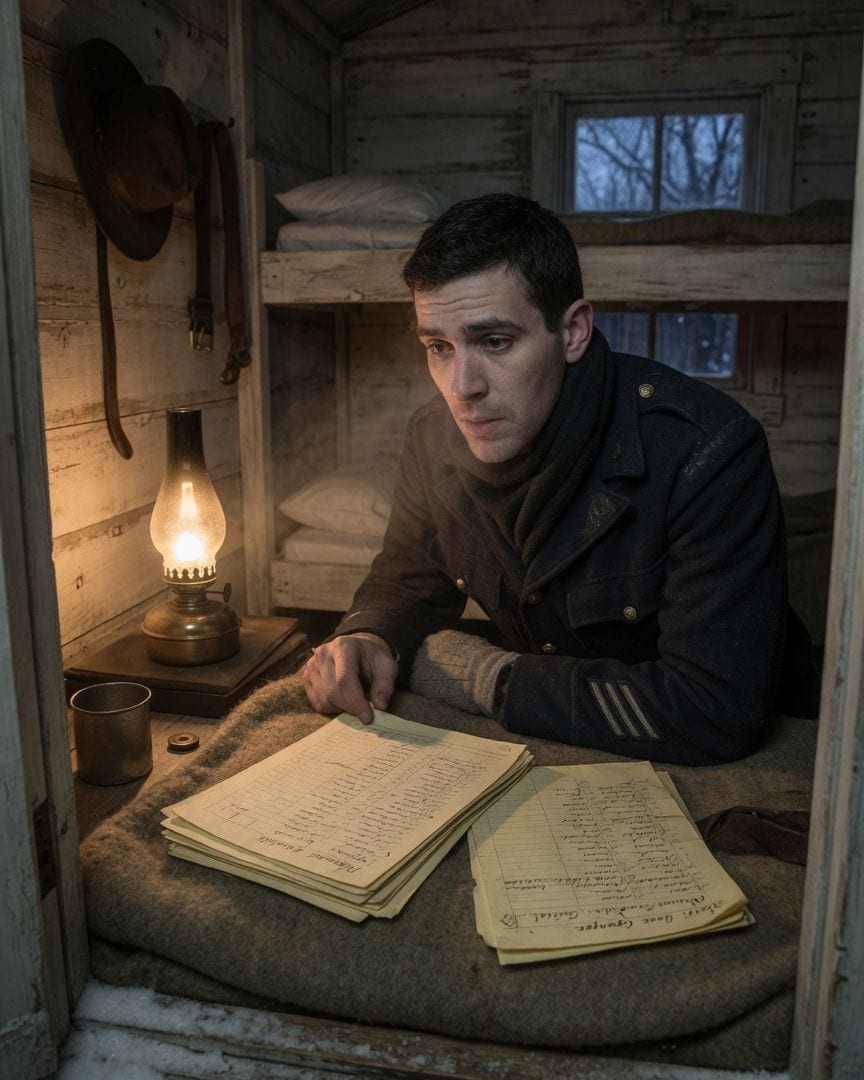
On his last watch, Corporal Carter found boot prints ending inside a sealed magazine, and a blood-red handprint from a soldier decades out of time.
Corporal Franklin Carter shivered, not from the biting November wind, but from the chill of his last pay muster at Fort Taggart before its winter abandonment. His final duty was to count every man, tallying thirty-seven, precisely the company strength. But his breath hitched when he saw the completed roll: it ran thirty-eight names long. An impossible extra slot, filled by a voice that answered 'Here, Corporal,' for a soldier whose name, Pvt. Isaac Granger, vanished from all official records, only to reappear in a forgotten supply log from 1863. Was Fort Taggart abandoning its dead, or something far older?
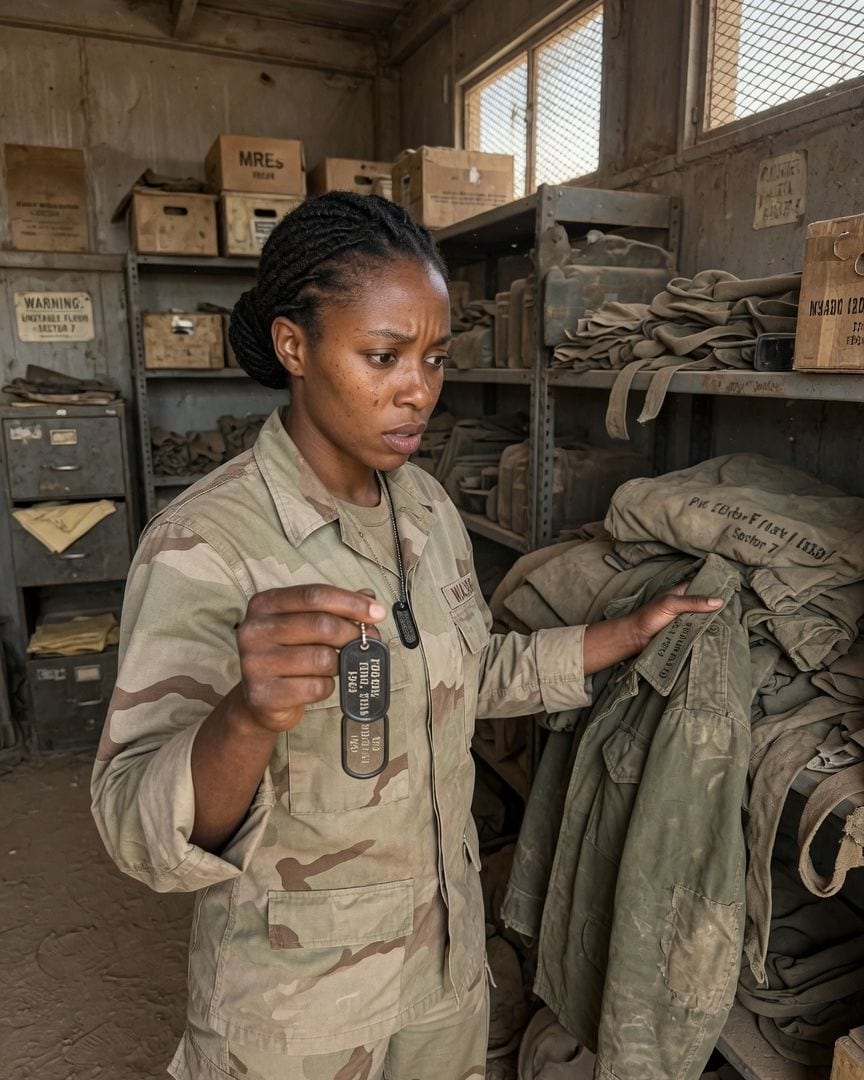
Lieutenant Walsh investigates an unnervingly silent new soldier, then finds his exact name on a Cold War dog tag dated 1983.
Observing a formation in the dry Mojave, Lieutenant Naomi Walsh felt a prickle of unease as a platoon counted one man too many. The extra soldier, Private Ethan Ford, moved with an unsettling quietness, performing duties flawlessly but without a single personal gesture. When his deployment records appeared pristine yet absent from the original manifest, Naomi searched a dusty old depot for answers. There, beneath a pile of tarps, she uncovered a field jacket bearing his name, 'Pvt. E. Ford,' and a dog tag from 1983, decades before the silent soldier could have been born.
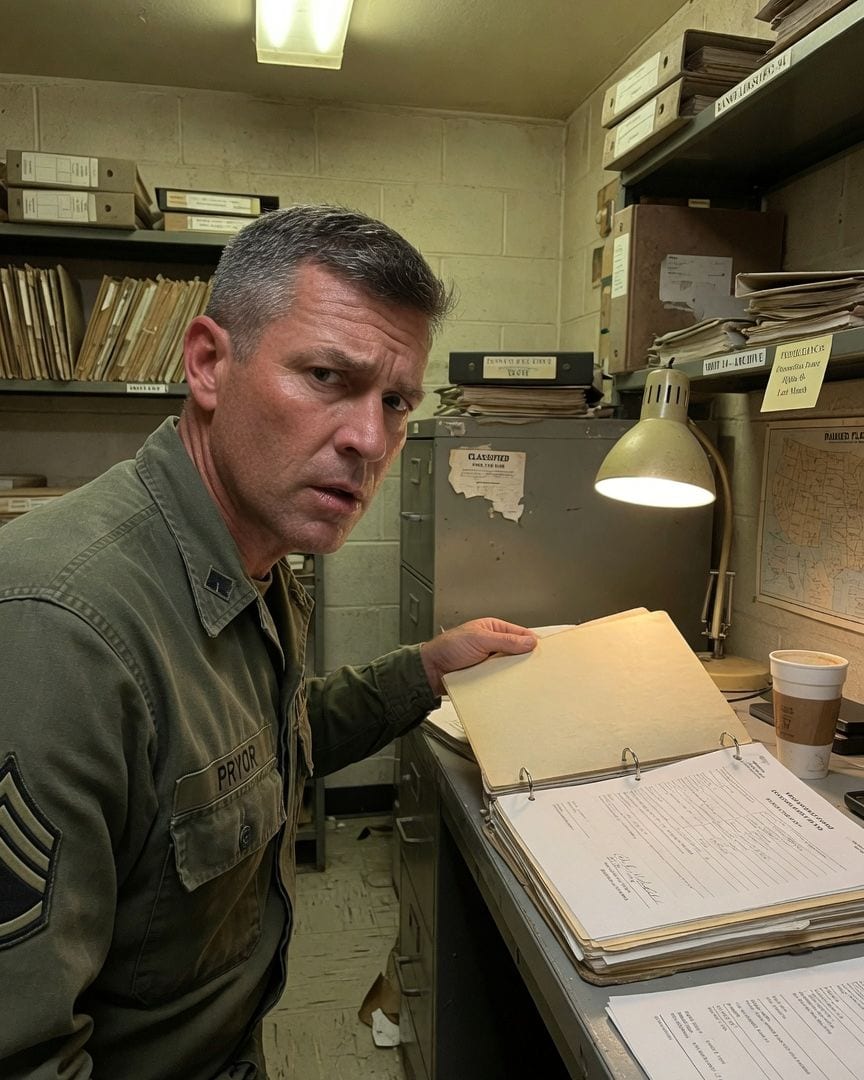
A sergeant with eleven days left finds a warm, glassed crater. Its file shows a captain lost thirty years ago is still signing reports from last week.
Sergeant Alden Pryor was counting down his final eleven days on a twenty-year hitch, expecting to spend them on routine patrols along the Ranier Flats fence line. Instead, his truck stopped at a bizarre sight: a four-hundred-foot glassed crater, miles from anywhere, its sand faintly warm at dawn despite no one recalling a blast. The air above it shimmered with an unnatural distortion, a silent scar of erased violence, and the official file for 'Shot 14' showed recent maintenance sign-offs for a decommissioned tower at the crater site. All these active documents were signed by Captain Everett Caldwell, who had been officially lost in operations thirty years ago, leaving Sergeant Pryor to wonder how a dead man could still be filing reports.
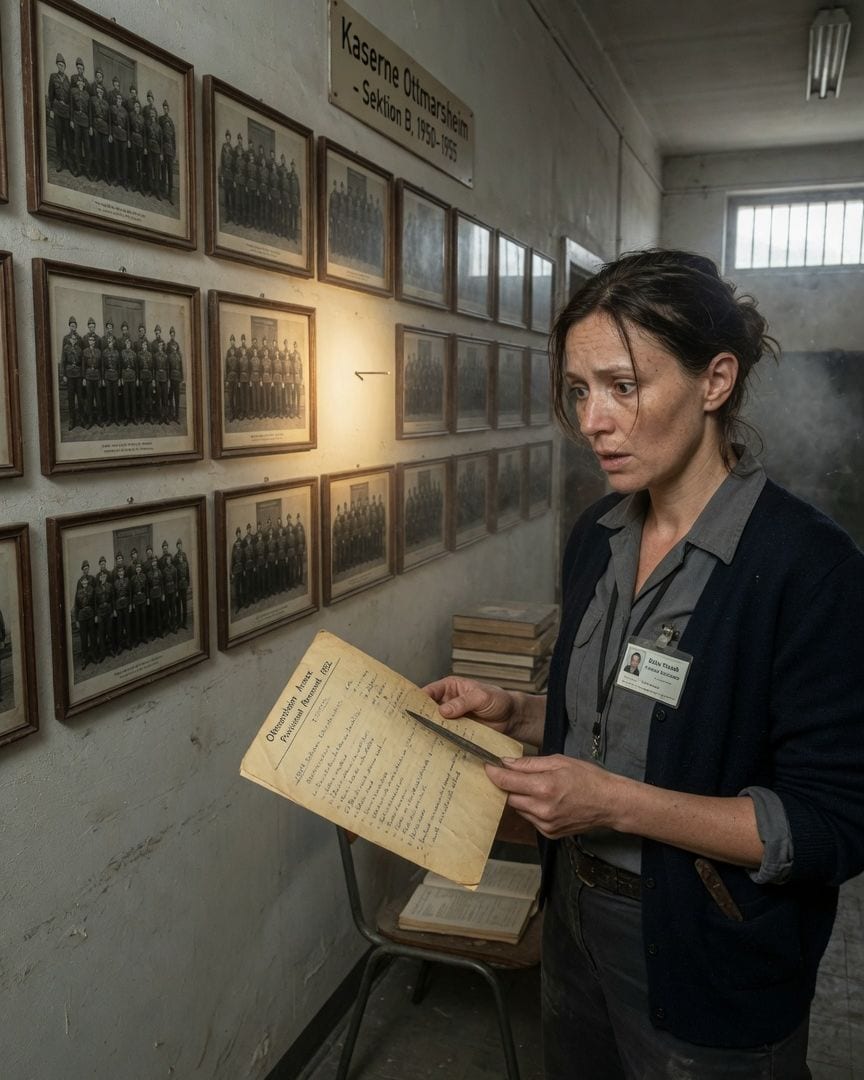
At a Cold War kaserne days from demolition, inventory clerk Delia Straub found a missing photo frame for a unit that never existed. Every soldier on the wall stared directly at its empty space.
Inventory clerk Delia Straub had eleven days to log every item at Kaserne Ottmarsheim before demolition crews arrived, turning history into rubble. Amid the dusty halls, she found a stark anomaly: a missing photo frame for the 604th Ordnance Detachment, a unit never officially stationed at the base. What made the empty space chilling was that every soldier in the surrounding photographs was looking not at the camera, but directly into that void. Delia's search for answers unearthed an unofficial manifest listing the 604th, with names of men officially declared killed in action years before. Who were these phantom soldiers, and why did their impossible record persist?
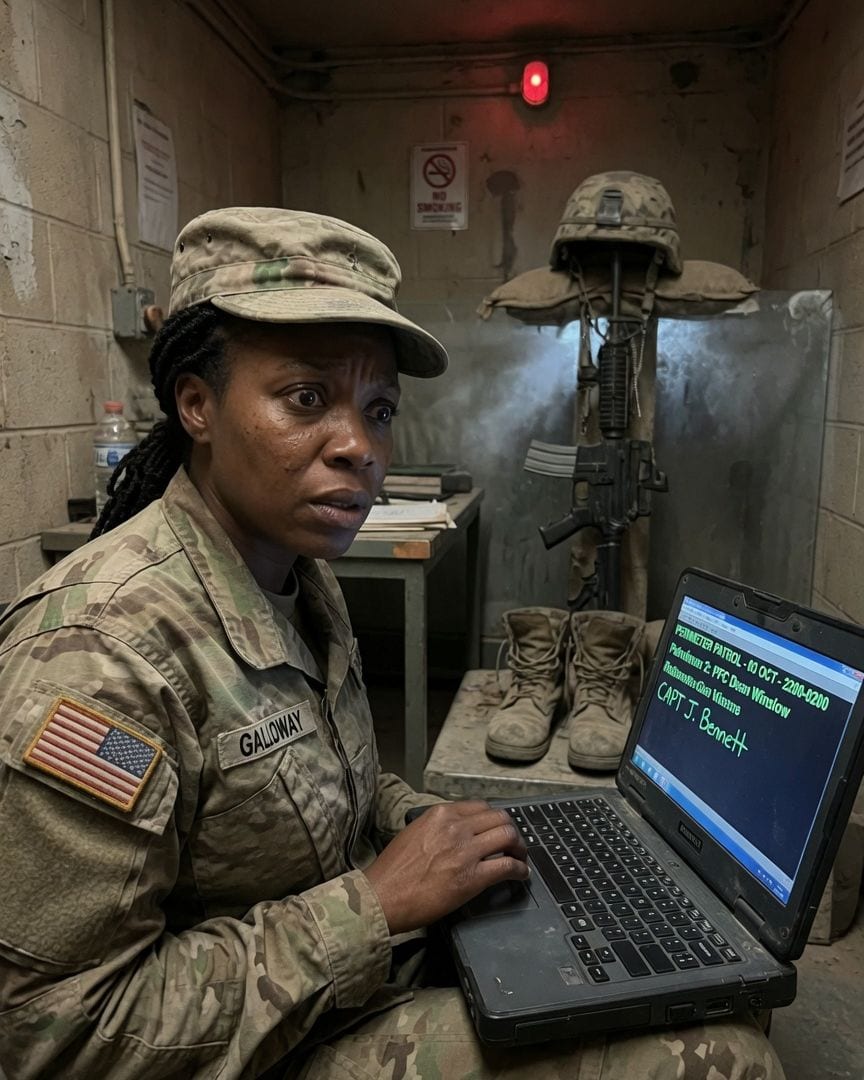
A sergeant found a dead soldier's dog tags on the memorial. He'd been MIA seventy years, but signed a patrol log last Tuesday.
Sergeant Constance Galloway, a squared-away NCO, maintained order at Firebase Alpha, where the desert sun baked the concrete and a solemn battle cross memorialized the fallen. After Private Marsh's rookie prank, Galloway found his combat boots inexplicably at the memorial, then reappearing more scuffed the next dawn. Marsh's genuine fear and the boots' unexplained travels pricked her professional doubt, leading her to investigate the memorial's history. Her search revealed the dog tags belonged to PFC Dean Winslow, declared MIA seventy years ago, yet his name appeared on the base's patrol log for last Tuesday. How could a soldier lost for decades be listed as completing a perimeter patrol just days ago?
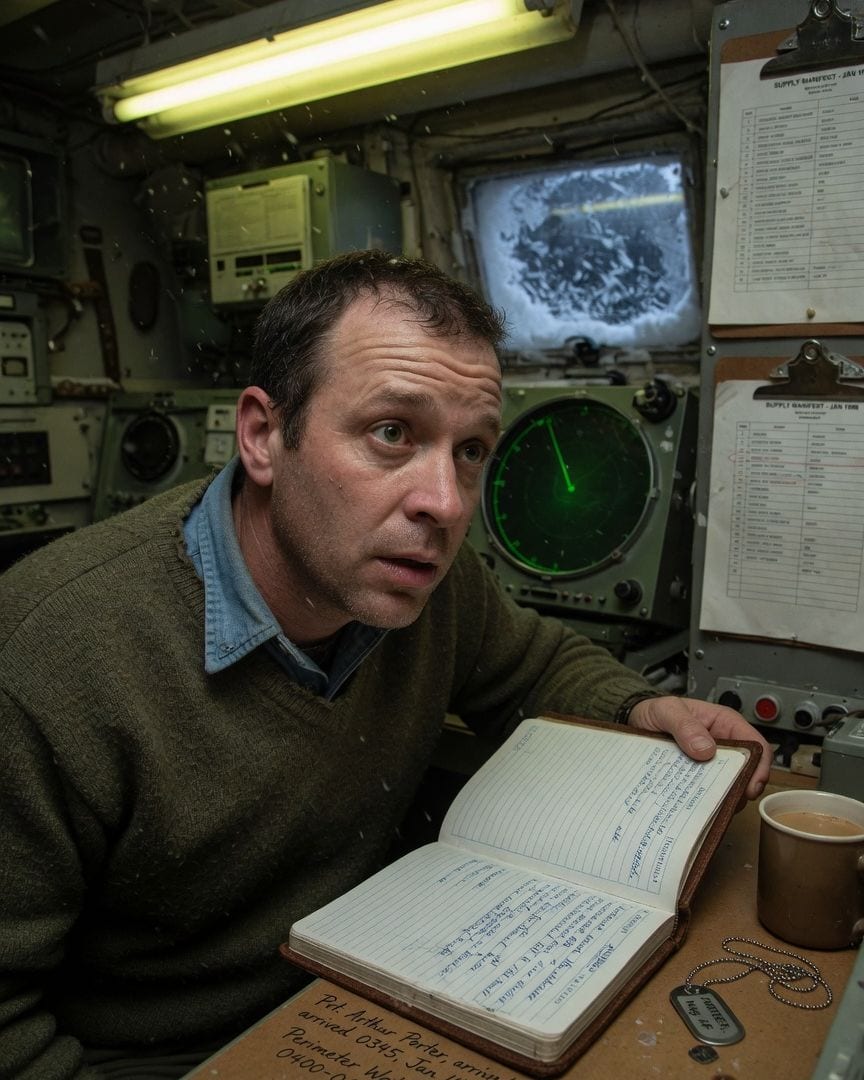
Cold War Radar Operator Conrad Oakley watches a man enter a shed. His boot prints lead in, but no tracks ever lead out.
At the isolated Cutbank radar station, deep in the Alaskan interior, Radar Operator Conrad Oakley maintained a lonely vigil against the howl of a relentless blizzard. His routine overnight watch on January 14th was shattered by an impossible radar contact: a solid, human-sized presence crossing the perimeter and stopping at the generator shed. At dawn, the shed door stood ajar. Inside, fresh boot prints led deeper into the cold darkness, but no tracks led out into the snow-choked landscape. Later, preparing the duty roster, Oakley found a new name in the station logbook: Pvt. Arthur Porter, assigned to perimeter watch. Beneath an empty bunk, a dog tag confirmed the identity of a soldier who was never there.