Coxswain's Mate Rutherford counted thirty-seven men in his landing craft, but the manifest logged only thirty-six. A hidden report, filed hours before, named Private Nathan Hawkins.
The landing craft pitched away from the transport, ramps up, with thirty-six men packed helmet to helmet. Coxswain's Mate Third Class Donald Rutherford, 28, gripped his clipboard, the salty spray stinging his eyes as he began his final count.
The swells rose black around LCVP-17, rocking the small vessel violently. He went man by man, calling out names, confirming faces. Thirty-six. A standard load. The sea spray tasted metallic on his lips. His pen hovered over the manifest.
He ticked them off, one through thirty-six, their helmets glinting in the faint deck lights, the smell of diesel and damp canvas thick in the air. The heavy weight of the combat-loaded men shifted with each lurch of the boat.
He finished the count, satisfied, and began scanning the men again, a habit born of his meticulous nature.
Halfway to the beach, a new wave slammed the craft, throwing the men against each other with a violent jar that rattled Rutherford’s teeth. He braced himself against the hull, his muscles straining.
When the craft settled, he instinctively recounted, his pen poised.
This time, his count came back thirty-seven.
He paused, heart knocking against his ribs. He went slower, calling off each name from the loading manifest, looking each man in the eye. "Peterson? Here. Miller? Here." Every single man answered to his listed name.
He moved from the front, then from the back, counting again. Thirty-seven bodies crowded a boat that, moments ago, had taken on thirty-six at the net.
The impossible reality pressed in around him, a silent, unacknowledged presence among the weary, expectant faces.
Back on the transport ship USS Coronado, Rutherford, still shaken, immediately went to the records office. The fluorescent lights hummed, cold and unforgiving, as he pulled the official loading manifest for LCVP-17. Its printed lines were stark: "Personnel: 36."
He compared it against his own meticulously kept logbook, painstakingly re-verifying each name, each ID. His log showed exactly thirty-six. No error on his part. He felt a phantom chill, a memory of the extra body heat, the extra weight.
He asked his battle buddy, Coxswain's Mate James Coleman, 27, to double-check the manifest independently. Coleman, whose easygoing nature usually clashed with Rutherford's rigor, took the clipboard without comment. He returned moments later, shrugging. “Thirty-six, same as always, Don.
What’s the big deal?”
Coleman's casual dismissal felt like a physical blow. Rutherford felt a cold dread settle in his stomach. He knew what he’d counted.
He tried to rationalize it – fatigue, the rocking boat, the stress of a night deployment, a brief hallucination caused by the spray and the dark.
But the memory of the extra man, the weight of the bodies, the way the craft had seemed just a little bit more crowded, was too vivid, too concrete. He’d made eye contact with thirty-seven men.
Later, while he was trying to grab a quick coffee, he overheard a hushed conversation among some older crewmen by the galley.
They spoke of a similar incident years ago, a supposed 'phantom' sailor who had appeared on a different deployment, a story always dismissed as a drunken prank or a shared hallucination.
But the way they talked, low and serious, pricked at Rutherford's meticulous nature. They hadn't sounded like they were joking. He couldn't shake it. He needed to see the unblemished truth, the absolute, undeniable, official records.
He decided to access the ship's master manifest log himself.
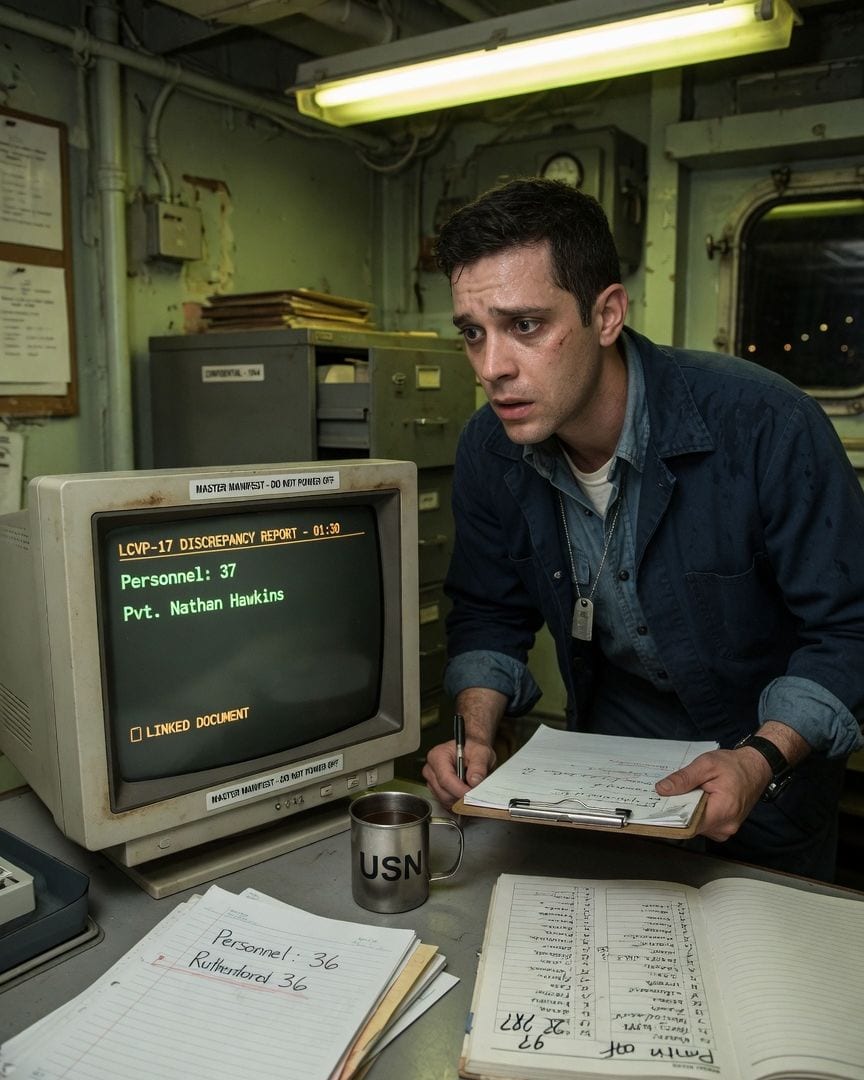
Rutherford navigated the ship's antiquated computer system to the master manifest log. The green text on the black screen glowed faintly in the dim office. He found the entry for LCVP-17 for that morning's operation.
It clearly stated thirty-six men, just as the printed manifest had. He sighed, a knot in his stomach beginning to loosen.
He was ready to accept he was just tired, that his eyes had played tricks in the darkness and the spray.
But then, a small, almost imperceptible icon caught his eye – a linked document, tucked beneath the main entry, glowing a faint amber. He hadn’t noticed it before. He clicked it.
A discrepancy report form for LCVP-17 filled the screen. It was dated hours before his deployment, stamped with a 01:30 timestamp that morning, long before the operation even commenced. And it listed thirty-seven personnel.
Among them, in neat, official print: 'Pvt. Nathan Hawkins.' The report was signed by a Master-at-Arms named Dean Abbott, 40, who had not been on Rutherford's boat that morning.
Rutherford stared at the impossible form, the chill returning, deeper this time.
His own meticulous log swore one thing, but this official document, pre-filed, confirmed an extra man who shouldn't exist, his name, Private Nathan Hawkins, neatly typed, sitting there on the screen like an accusation.
Rutherford’s rational mind screamed for an explanation. He started with Dean Abbott. He tracked Abbott down to the Master-at-Arms office, a cramped, windowless space smelling of stale coffee and disinfectant. The air felt heavy, almost stagnant.
Rutherford approached cautiously, clipboard in hand, feigning a routine manifest query about a completely different operation. He casually brought up the discrepancy report, mentioning LCVP-17 and the date, watching Abbott’s face.
Abbott, a man with tired eyes and a perpetually stern expression, went stiff. His shoulders hunched imperceptibly. He claimed it was a 'clerical error,' quickly corrected, and dismissed it with a wave of his hand.
His gaze flickered to the door, then back to Rutherford, a silent warning. When Rutherford pressed, quietly mentioning 'Nathan Hawkins,' Abbott's gaze turned icy, flat and devoid of warmth. The air in the small office seemed to thicken, pressing in.
'Some things are better left uncounted, Coxswain,' Abbott said, his voice low and devoid of warmth, almost a rumble. 'Drop it.'
Unsettled, Rutherford didn't drop it. He couldn't. The words, the coldness in Abbott's eyes, fueled his resolve. He began cross-referencing Abbott’s signature on other discrepancy reports in the archived digital files, spending his off-hours hunched over a terminal.
He found a disturbing pattern: Abbott’s name appeared on several forms involving unusual counts—sometimes an extra man, sometimes a unit designation that seemed to vanish from official rosters shortly after the report.
It was like watching a ghost move through the system, leaving only faint digital footprints.
He even found a faded, unofficial logbook in a forgotten locker in the ship's sparsely populated library, nestled behind a stack of navigation manuals. Its pages were brittle, its cover stained.
Scrawled in a shaky, anonymous hand, he found an entry about 'the 37th man' on a long-past deployment and a terse mention of 'Abbott’s boys.'
The pieces were starting to form a terrifying shape, hinting at a reality far stranger than he could have imagined. His career, his reputation for meticulousness, now depended on unraveling this.
Rutherford's digging did not go unnoticed. First, his access to the master manifest logs became intermittent, then restricted entirely for 'system maintenance.' Error messages popped up with increasing frequency, denying him entry.
He found minor, subtle alterations to his own digital log entries—a changed timestamp here, a missing detail there. A particular entry about LCVP-17’s fuel consumption had been adjusted, its original recording overwritten.
He saw it, then it was gone, the numbers shifting like smoke.
While reviewing a stack of old paper manifests in the ship's sparsely populated library one evening, the quiet broken only by the hum of the ship's ventilation, a prickling sensation crawled up his neck. The air grew suddenly cold.
He looked up. Across the room, Senior Chief Petty Officer Simon Bennett, 55, head of records, stood watching him, a placid, unreadable expression on his face.
Bennett slowly walked to a shelf, pulled a thick binder, its spine cracked, and then turned to leave. His gaze lingered on Rutherford for a beat too long, an assessing, knowing look that sent a shiver down Rutherford's spine.
The soft click of the library door as Bennett exited echoed in the sudden silence.
The next morning, Rutherford found an anonymous, unsigned note slipped under his cabin door, neatly folded. It was plain paper, unmarked, no fingerprints he could discern. It read: 'Some things are better left uncounted.' The same words Abbott had used.
The dread became personal, a cold certainty that he was no longer just investigating; he was being observed, warned. The system was pushing back.
Rutherford knew he had to confront the source. He found Senior Chief Simon Bennett in the main records office, meticulously filing forms, his movements precise and unhurried.
The room, usually bustling, was quiet, save for the rustle of paper and the soft click of Bennett’s pen. Rutherford laid out his evidence: the discrepancy reports, the pattern of 'extra' personnel, the altered logs, the anonymous note.
He spoke in a low, measured tone, trying to match Bennett’s composure.
Bennett listened, calm and unbothered, his hands never pausing their work. His expression remained placid, almost bored. When Rutherford finished, the Senior Chief finally looked up, his eyes tired but clear, holding Rutherford’s gaze without wavering.
'You're a good Coxswain, Rutherford,' he said, his voice low and even, utterly devoid of surprise or anger. 'Meticulous. That's why you noticed. That's why you're a problem.' He didn't deny a word, didn't even try to feign ignorance.
'Some personnel,' Bennett explained, his voice taking on a detached, almost academic tone, 'are necessary for logistical coherence.' He spoke of a shadow system, running parallel to the official Navy.
These 'ghosts' existed only on paper, in the records, to balance budgets, justify requisitions for phantom units, and fill billets that didn't physically exist. It was a network of false realities to keep the greater, true reality stable.
'Nathan Hawkins,' he stated, 'is one such ghost.'
Bennett explained how these records were maintained by a discreet network, a necessary fiction to keep the real system running smoothly, to prevent greater chaos.
He explained that the 'ghosts' occasionally manifested, especially during high-stress operations or in specific environmental conditions—like the turbulent waters off New Providence. The extra man Rutherford counted? A momentary bleed-through, a rare, dangerous symptom of operational stress.
He didn't apologize, didn't show fear, just a quiet, almost weary resignation to a necessary evil. He warned Rutherford not to disrupt the system, not to expose it.
'You wouldn't be doing the Navy any favors, Coxswain. You'd just be tearing down the walls that keep it all together.' The words hung in the air, heavy and final, the cold hum of the office lights seeming to intensify.
Rutherford, reeling from the calm admission, demanded to see the full service record for 'Nathan Hawkins.' He needed to understand the scope of this phantom, to grasp the sheer audacity of this institutional lie.
He felt a desperate need to find a flaw, a single inconsistency that would shatter Bennett's placid composure.
Bennett, with a sigh, pushed back from his desk. The chair scraped faintly on the linoleum floor. He walked to a locked metal cabinet, its gray paint chipped in places, and retrieved a thick, heavy file.
The manila folder was old, its edges worn smooth from countless hands, its corners frayed. It smelled faintly of dust and aged paper. He opened it, turning it to Rutherford, laying it flat on the desk.
There, on a transfer order for a unit decommissioned years ago, was Hawkins's name, Private Nathan Hawkins. The typeface was old, faded.
And directly beneath it, in a slightly fresher, but still official-looking font, listed as 'Battle Buddy,' was Rutherford's own name, Donald Rutherford.
It was dated for a deployment that never happened, for a unit that ceased to exist before Rutherford even joined the Navy. It was signed off by Bennett himself.
Rutherford's breath hitched, caught in his throat. His own name, in black and white, legally binding him to a phantom.
The system wasn't just external; it had already claimed a piece of him, had written him into its impossible history, made him an unwitting participant in its lie.
Rutherford confronted Bennett again, his voice low but firm, demanding to know why his name was on Hawkins’s record. The records office was emptier than usual, the silence punctuated by the distant thrum of the ship's engines.
Bennett didn't flinch. He leaned back in his chair, his expression still calm, almost pitying. 'Once a person starts digging too deep, Coxswain, the system sometimes 'integrates' them.'
He explained it was a way to neutralize the threat, to make them part of the very anomaly they sought to expose.
His name wasn't just a clerical error; it was a pre-emptive measure, a placeholder in case Rutherford became too much of a liability. It bound him to the fiction, twisting his own truth.
Bennett revealed that many in the network, including himself, found their own records subtly altered, their pasts interwoven with these phantom personnel.
He confessed he was once like Rutherford, a junior officer who stumbled upon a discrepancy, only to find his own name appearing in impossible places, signing off on impossible assignments. He accepted it as the cost of 'maintaining order.'
The 'ghosts' serve a purpose, he insisted, a necessary fiction to keep the real system running smoothly, to prevent greater chaos.
The physical manifestation on the boat was a rare, dangerous anomaly, a symptom of the system's stress, a momentary bleed-through.
'You're part of it now, Rutherford,' Bennett said, his voice almost sympathetic. 'You can fight it, or you can understand its necessity.'
The soft hum of the fluorescent lights in the room seemed to deepen, a quiet, insistent thrum that echoed the unsettling truth.
Rutherford refused to accept his integration. He confronted Bennett, not with anger, but with a cold, rational fury that burned steady and bright. He stated he would expose the system, even if it meant exposing himself.
He would not become another phantom, another lie.
Bennett, still calm, warned him of the consequences. 'You'll be dismissed. Dishonorably. Your record will be so tangled, you'll be a ghost yourself, unable to prove who you are. You'll simply cease to exist, officially. They'll bury you in paper.'
He spoke with a quiet certainty that chilled Rutherford to the bone.
Rutherford, however, had a desperate plan. He had secretly copied every relevant document he could access over the past weeks: every altered log, every discrepancy report, including his own compromised record and Hawkins's.
He knew he couldn't fight the entire system head-on, not alone, but he could leak the truth.
He made a desperate dash to an unsecured terminal in a rarely used engineering bay, his heart pounding a frantic rhythm against his ribs.
The air in the bay was thick with the smell of oil and hot metal, the rhythmic clang of unseen machinery vibrating through the deck plates.
He uploaded the files to a secure, external server he'd set up days ago, using an encrypted burner account. His fingers flew across the keyboard, sweat stinging his eyes.
He knew he had only minutes before his access was fully revoked, before the system, the entity Bennett served, clamped down completely. As he hit 'upload,' the screen flickered, a red warning flashing across the top.
Bennett's face, grim and resigned, appeared on a secure comms channel, superimposed over the transfer bar.
'You've made your choice, Coxswain.' Bennett's voice was a flat line, resigned and utterly final.
A message then filled the screen, eclipsing Bennett's face: 'Access Denied. System Integrity Compromised. Initiating Protocol Gamma. All personnel report to assigned stations. All unauthorized access points locked down.' The screen then went black.
Donald Rutherford was apprehended shortly after initiating the upload. He was discharged from the Navy for 'insubordination and unauthorized access to classified materials.'
His service record, though officially intact, now contained so many subtle inconsistencies and phantom entries—impossible transfers, duties never performed, overlapping assignments with non-existent personnel—that it became virtually unusable for civilian employment. Every background check flagged it.
He was effectively 'disappeared' from the system, his promising career erased. The files he uploaded vanished, or so he was told, the external server wiped clean by an unknown hand within hours.
No one ever spoke of the 'ghosts' again, and the official explanation for his discharge became the accepted truth: a young Coxswain, driven by paranoia, had simply gone rogue.
Rutherford now lives a quiet life, working odd jobs that require no background checks, always looking over his shoulder. He never speaks of the USS Coronado or the 37th man.
He avoids official systems, prefers cash, disappears into the quiet corners of small towns. But sometimes, late at night, in the solitary lamplight of his rented room, he checks his old, personal logbook from that deployment.
Its pages are still crisp, his handwriting meticulous, the record of thirty-six men a testament to his own, lost truth.
There, tucked into the inside cover, is a small, faded photograph he had once dismissed as a prank photo: a group of men from his landing craft, smiling, mud-splashed, on the beach at New Providence.
And standing at the very back, a faint, almost transparent figure, its face obscured by a blur, but clearly an extra man, fitting into a space that shouldn't exist, a helmet glinting faintly. He knows it’s Nathan Hawkins.
He knows it’s real.
Years later, at a Veterans Affairs office in a small coastal town, a clerk processing Donald Rutherford's pension application paused.
The system flagged an impossible discrepancy: two separate service records, both under the name Donald Rutherford, both officially active, yet one of them listed him as having been discharged decades ago. The clerk shrugged, closing the duplicate file.
'Just another ghost in the machine,' she murmured.
If this one got to you
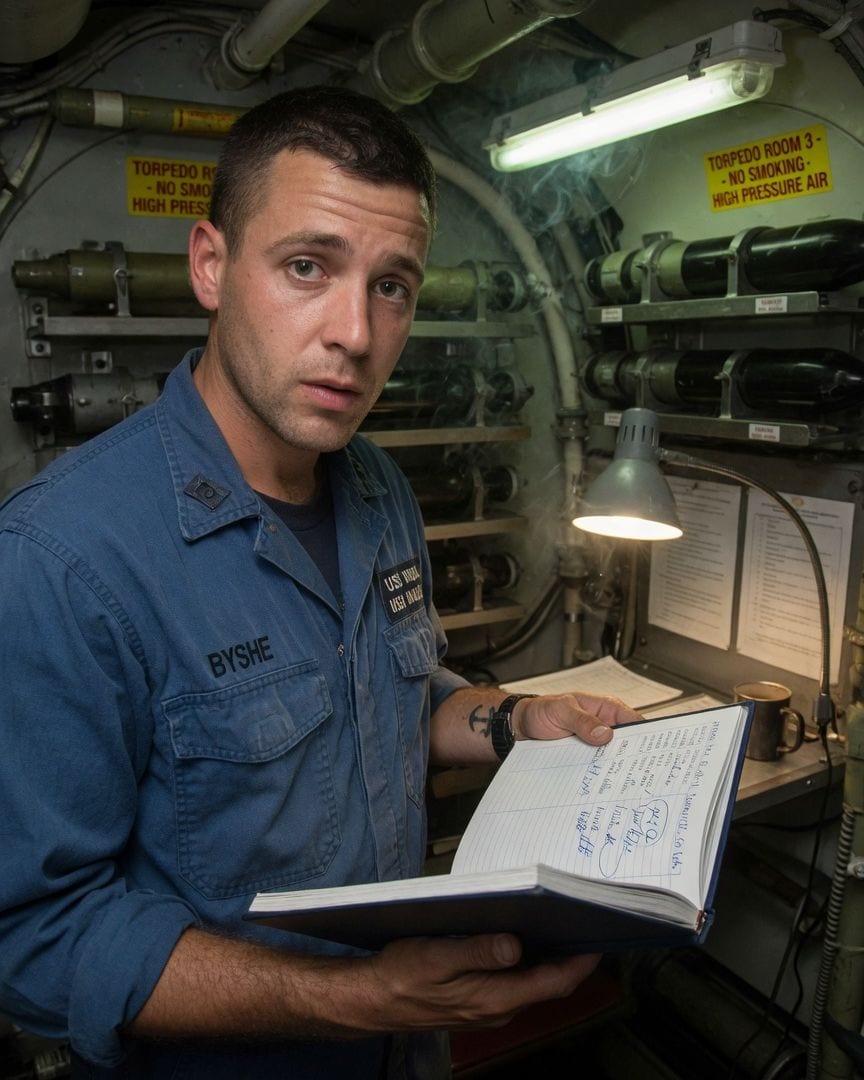
A torpedoman found his own signature in the USS Vanguard's duty log for a watch he never stood, beside a name not on the master crew manifest.
Torpedoman Oscar Bysshe, a rational sailor on his first deep patrol aboard the USS Vanguard, dismissed the messcook's nervous claim of an extra man at the table. He attributed the perfectly clean, untouched tray left behind to a prank. But later, during a routine systems check, Bysshe discovered his own familiar signature in the official duty logbook, for a watch he had been asleep through. Beside it was a name he didn't recognize, a name that shouldn't be there. A frantic check of the master crew manifest confirmed the impossible: the name appeared in the 'temporary assignments' section, dated just yesterday, scrawled in a hand eerily similar to his own.
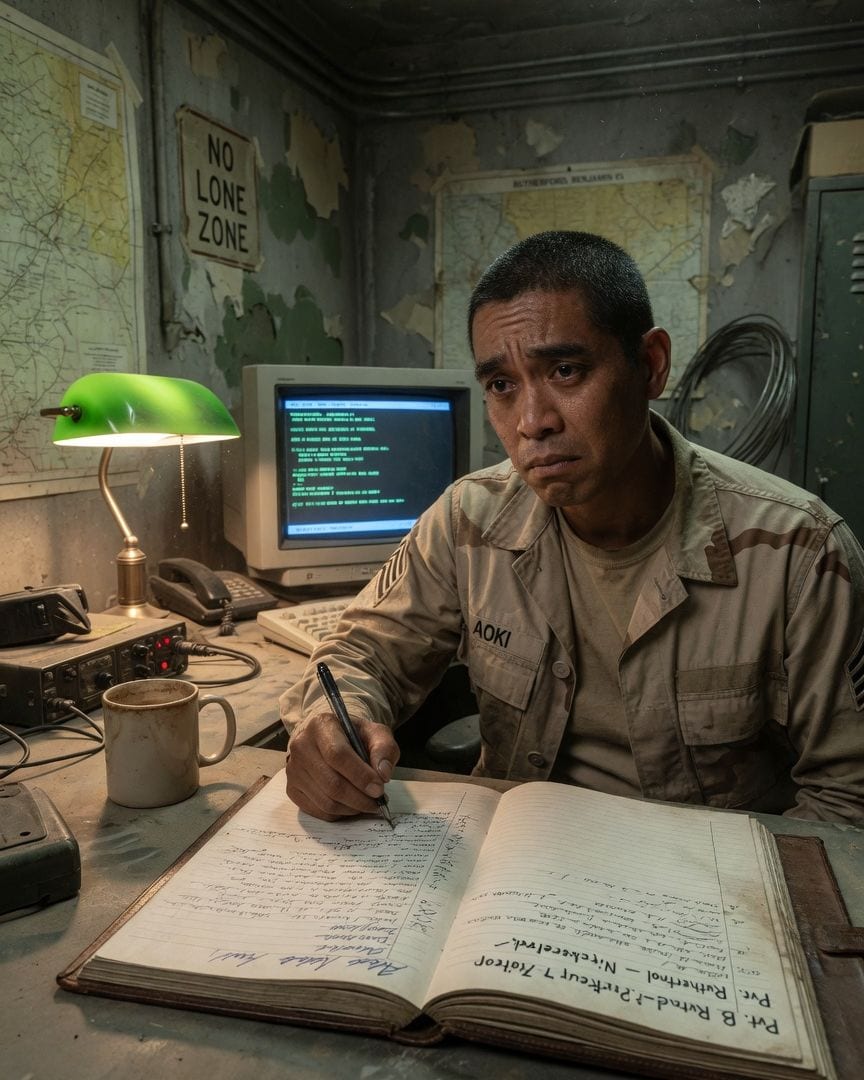
Sergeant Aoki's four-man patrol hears a fifth voice answer their count. A fresh name then appears in the duty log beneath his own signature.
Sergeant Isaac Aoki's final rotation at Outpost 7 was nearing its end, with relief due at dawn. On his four-man night patrol, he broke an old superstition, counting his team aloud in the dust-choked desert. A fifth voice answered, clear and unsettling, from the moonless dark. Back inside the bunker, the chill deepened when a fresh name appeared in the duty log, 'Pvt. B. Rutherford,' beneath Aoki's own signature, a soldier no one knew. Even more disturbing, Aoki later found his own signature on a valor citation for Rutherford, an event he never witnessed.
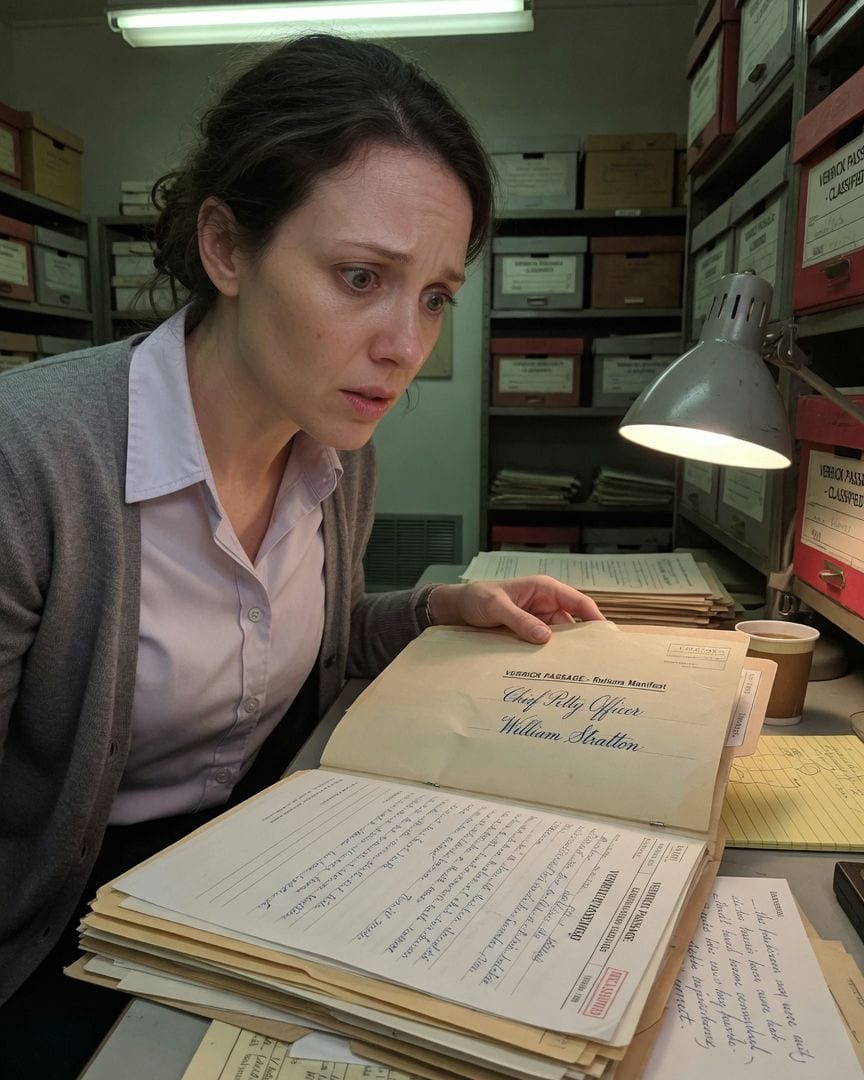
A records reviewer found personnel files for men lost 80 years ago, still being signed in an identical, perfect hand.
In the sterile hush of the declassified archives, meticulous reviewer Ione Fash had a routine task: cross-referencing witness statements from the Verrick Passage file. But as she reviewed files eighty years thick with official silence, she found nine separate interviews containing the exact same chilling sentence, all in an identical, precise hand. Her rational mind sought explanation, yet then she discovered something worse: personnel files for men lost in 1943, still being updated with modern requisitions and payroll runs. Each impossible entry, including a manifest signed just two weeks ago by a casualty from eighty years prior, bore the same unnervingly perfect signature. The file wasn't just a record of the lost; it was still being signed.
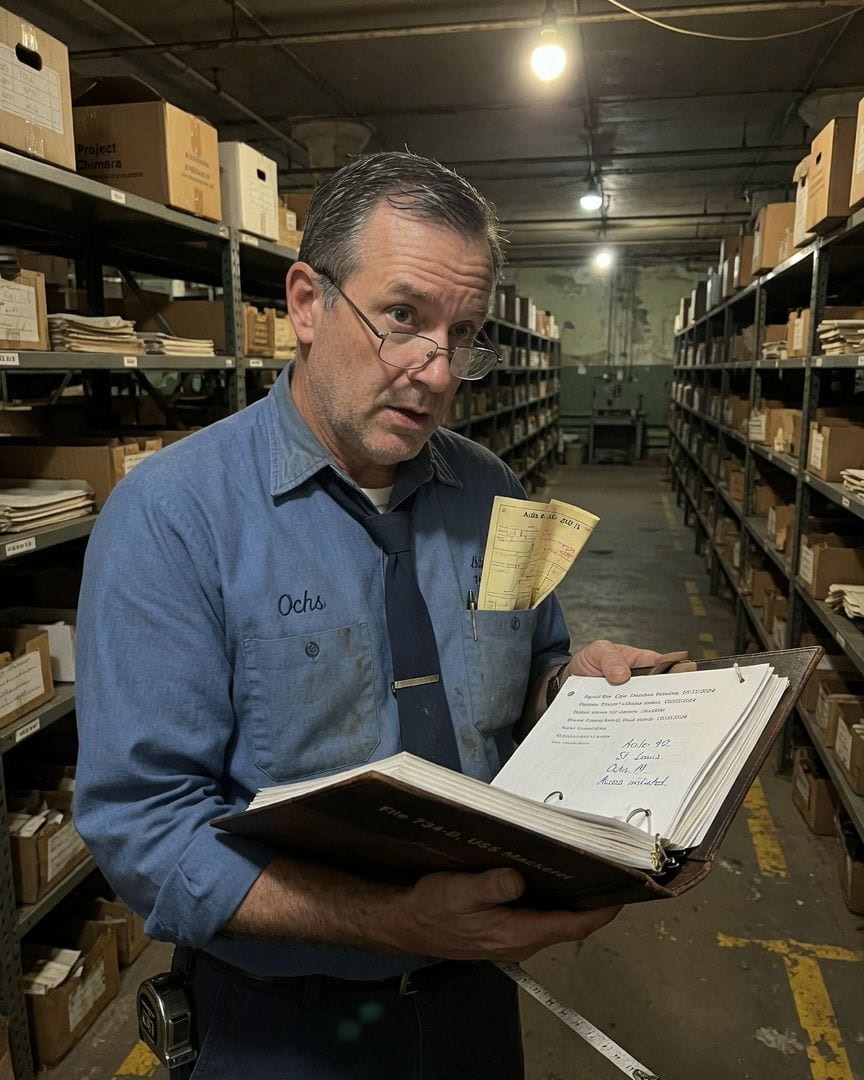
On his final inspection, a depot worker found Aisle 40 had grown 61 feet longer, and a Cold War submarine file hummed warm in his hand.
Marlin Ochs, a man of precise rhythms at the St. Louis depot, approached Aisle 40 for its final inspection before the entire structure was pulped tomorrow. For nearly two decades, the aisle had been a consistent ninety-two paces long. But on this night, his boot heels clicked past the expected mark, stretching to one hundred and nineteen paces, revealing an impossible, colder extension. Deep inside, Marlin found a heavy, leather-bound binder titled 'File 734-B, USS Mackerel,' a Cold War submarine lost with all hands in 1958. It felt oddly warm, almost humming against his palm, filled with maintenance logs and payrolls dated decades after the sub was sunk.
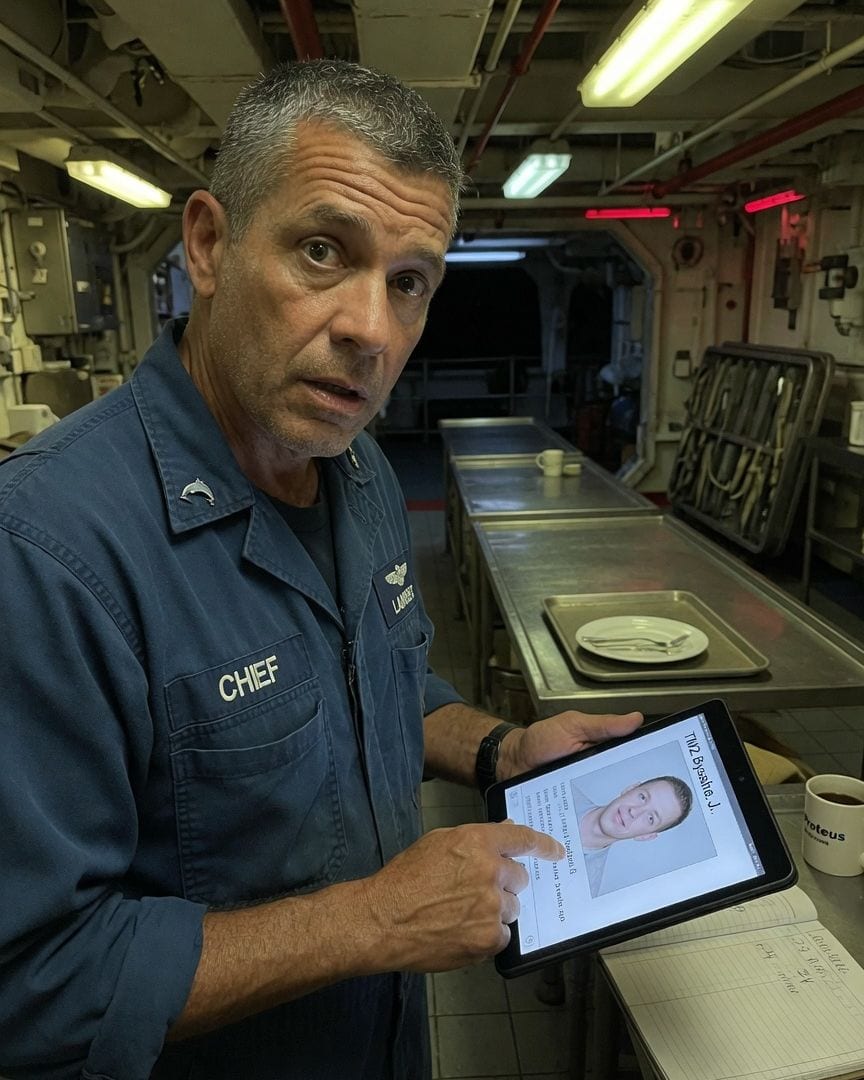
Chief Maxwell Lambert, on his final patrol, found his own signature approving a transfer for a sailor he'd never met.
Chief Maxwell Lambert was nearing the end of his final deep-sea patrol on the USS Proteus, looking forward to shore duty. The familiar hum of the boat and the clatter of the mess hall usually brought comfort, marking each day closer to home. One night, a young messcook reported a strange discrepancy: one plate short, but one man over on chow. Chief Lambert himself then saw a silent, unfamiliar figure eating alone in the shadows of the mess hall, a man who vanished into the passageway without a trace. Later, checking personnel logs, he found every man accounted for. Yet, his own signature approved a transfer for Torpedoman Bysshe—a sailor he had no memory of meeting, whose file photo was unsettlingly generic. How could his official record swear to a man he knew had never served on his boat?
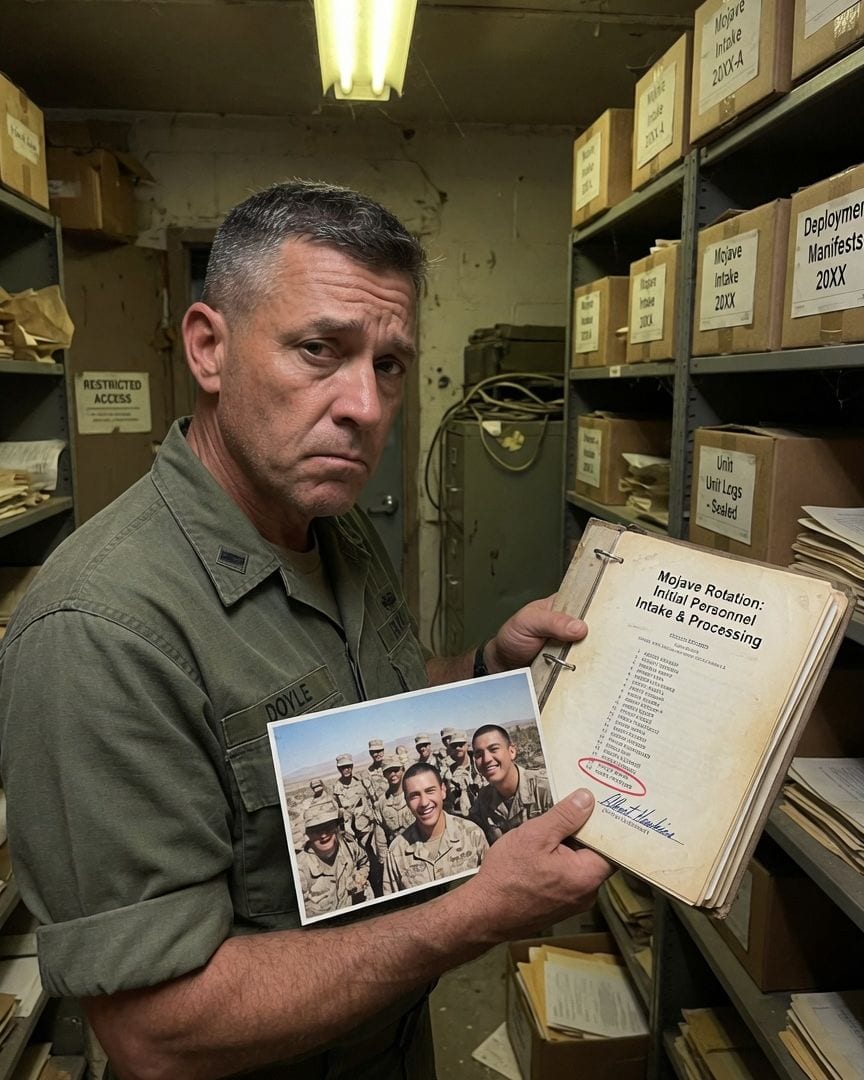
Master Sergeant Doyle's old platoon photo showed 31 men. But between Suggs and Ramos, a 32nd man stood grinning, named on Doyle's own signed manifest.
Master Sergeant Vincent Doyle was packing away twenty-five years of service, each box holding memories of the men he'd led. He paused at a faded platoon photo from the Mojave, a familiar thirty-one faces staring back. But then, a thirty-second man, Albert Hawkins, stood grinning between two of his men, a face Doyle couldn't place. His memory, usually perfect, insisted only thirty-one were there. Despite his colleagues recognizing the name, their own recollections dissolved, pushing Doyle to scour every record he'd personally signed – each one confirming thirty-one men, until he opened the very first intake manifest, bearing his signature, listing thirty-two.