On his final inspection, a depot worker found Aisle 40 had grown 61 feet longer, and a Cold War submarine file hummed warm in his hand.
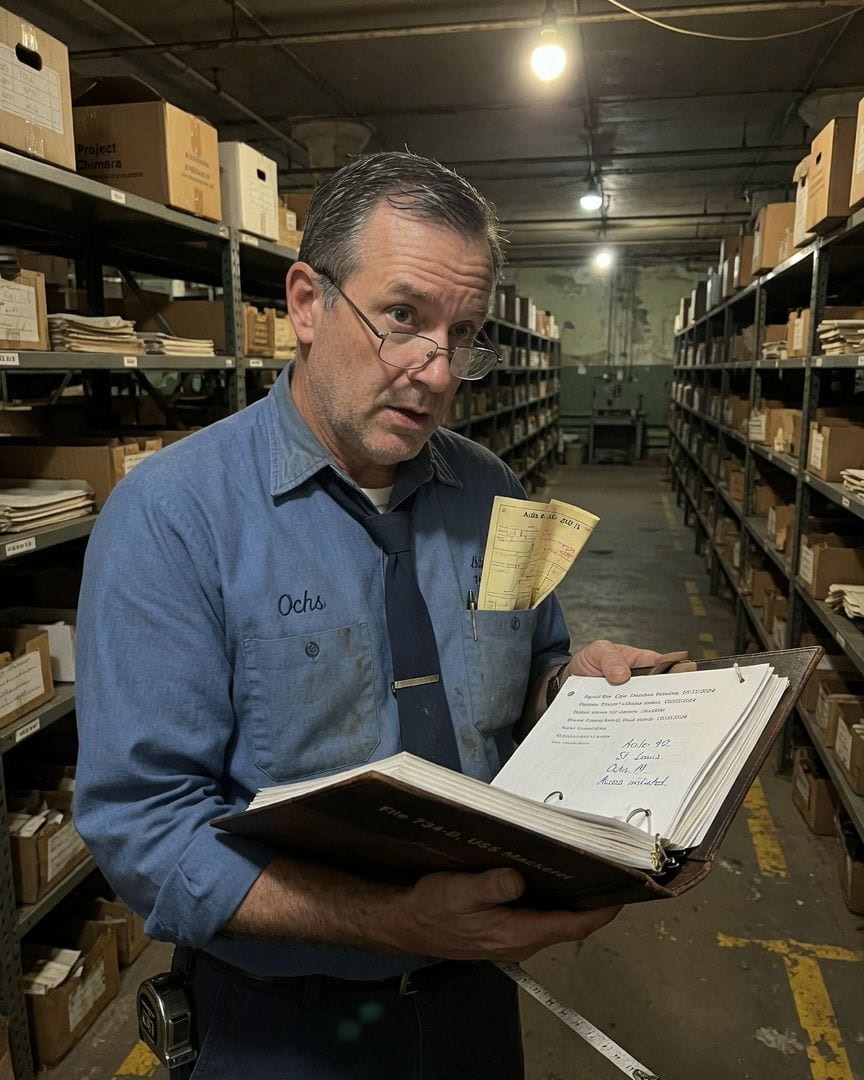
Marlin Ochs, a man whose life at the St. Louis depot was a carefully measured rhythm of inventory and oversight, approached Aisle 40 for what he knew would be its final inspection.
Tomorrow, the whole sprawling structure would be pulped, its contents shredded and forgotten.
He’d worked here since he was thirty-nine, and for nineteen years, Aisle 40 had remained precisely ninety-two paces long, according to the crisp 1956 floor drawing he kept folded in his wallet.
His task tonight was simple: retrieve the last stray carton, 'Project Chimera,' tucked deep at the far end.
But the night felt subtly off. The usual distant hum of the city was gone, replaced by a silence so profound it seemed to press in on him.
The air, usually thick with the scent of old paper and dust, was unnaturally still. He began his familiar count, his boot heels clicking against the worn concrete floor.
One, two, three… He reached ninety-two, the spot where the wall should have been, but his foot met only empty air. He stopped, a frown creasing his brow, then continued, his steps slower, more deliberate, past the expected mark.
Ninety-three, ninety-four, ninety-five… He hit the far wall at one hundred and nineteen. One hundred and nineteen paces.
He pulled out his trusty steel tape measure, the one he’d used countless times for inventory checks. He stretched it taut from the loading bay door, letting it spool out, then locked it against the far wall.
Three hundred and forty-one feet. He checked the plat again, the numbers stark against the faded blueprint: two hundred and eighty feet. The discrepancy gnawed at him, a splinter in his methodical mind.
His gaze drifted to the single, bare bulb glowing at the impossible far end of the aisle, a light he had never once in nearly two decades been able to find a switch for, always just…on.
The impossible length of Aisle 40 gnawed at Marlin, a splinter in his methodical mind. He tried to rationalize it—a misprint on the ancient plat, a forgotten renovation, a trick of the old building's settling after a long, humid summer.
But the tape measure didn't lie, and neither did his own two feet, which had walked this very aisle for nearly two decades.
He pushed deeper into the newly extended section, a space that simply shouldn't exist, the air growing colder as he ventured further.
The 'Project Chimera' carton was tucked behind a stack of much older, dustier boxes, not where it was marked on the digital inventory. Marlin reached for it, his fingers brushing against something unexpected.
It was a heavy, leather-bound binder, hidden from casual view by the sheer volume of forgotten files around it. It wasn't on any manifest, certainly not the digital one he’d pulled up tonight.
The title, stamped in faded gold on the spine, read: 'File 734-B, USS Mackerel.' Marlin knew the name—a submarine lost with all hands in the Atlantic back in 1958, a Cold War tragedy etched into naval history.
He pulled the binder out; it felt oddly warm, almost humming against his palm, a strange, low vibration that he felt more than heard.
He opened it, expecting to find yellowed, official reports of a maritime tragedy, perhaps a final log of the doomed vessel.
Instead, he saw meticulously typed entries that defied belief: supply requisitions for torpedo components dated 1965, a maintenance log for the Mackerel’s sonar array from 1978, even a fuel consumption report from 2003. Impossible.
The USS Mackerel was at the bottom of the ocean, a steel coffin for its crew. His grip tightened on the binder, its warmth now a pulsing heat against his skin.
Marlin flipped through the USS Mackerel file, his breath catching with each impossible entry. A payroll run for Captain Theodore Winslow, dated last month. Winslow had gone down with the ship in '58.
A position report, pinging off the coast of Florida, just three weeks ago. He pulled out his phone, his fingers trembling slightly as he checked official naval records, double-checking the information he already knew: USS Mackerel, lost 1958, no survivors.
The file was still warm, almost humming against his palm, a living thing throbbing with impossible, bureaucratic life. He saw one last entry, barely legible, a handwritten note scrawled across a blank page, dated today.
His eyes widened as he read the words, cold dread blooming in his chest.
‘Aisle 40, St. Louis. Ochs, M. Access initiated.’
Shaken, Marlin secured the USS Mackerel file, stuffing it into his work bag.
He tried to access the digital records for the submarine from his terminal, hoping for a cross-reference, a glitch, anything to explain the impossible entries he’d just witnessed.
All he found were the standard 'lost at sea' reports, identical to the ones he'd checked on his phone moments before. Nothing new, nothing to suggest the Mackerel was anything but a wreck in the deep.
He then checked the depot's own physical manifest for Aisle 40, searching for 'File 734-B.' The entry, old and faded, clearly stated: 'Destroyed/Pulping, 1982.'
Yet, the file was undeniably in his hand, thick and leather-bound, actively updating itself with phantom payrolls and position reports.
He approached Vincent Bishop, his supervisor, a man days from retirement, whose memory of the depot's convoluted history was legendary. Marlin carefully described the discovery of the file, omitting the impossible dates and the unsettling warmth radiating from it.
He kept his tone neutral, presenting it as a simple misfiling, albeit a strange one. Bishop, preoccupied with the final inventory, waved him off. "Just a misfiled return, Marlin. Or an old prank.
Some of those guys in the '60s had a twisted sense of humor." Marlin pressed, mentioning the file’s odd, persistent warmth, the strange precision of its entries for a submarine that didn’t exist.
Bishop, annoyed by the interruption to his final tasks, told him to just pulp it and move on. He chuckled, a dry, dismissive sound. "Odd things happen when these old depots shut down, Marlin.
Creaks in the old bones, you know." Bishop’s dismissal didn't reassure Marlin; it only solidified his unease. This wasn't an oversight, not a prank. He knew the difference between a simple misfile and a living lie.
Ignoring Bishop’s advice, Marlin stayed late, working alone in the records office long after the last of the other employees had left.
He started cross-referencing names from the Mackerel file with other old records, searching for any link, any anomaly that might connect to the impossible entries.
The silence of the vast, empty depot was punctuated only by the low, constant hum of the old fluorescent lights overhead.
Then, the lights in his section flickered, once, twice, a brief dip into deeper shadow before returning to their sickly yellow glow.
He heard a faint, rhythmic clicking sound from the main archive, far down Aisle 40, like an ancient teletype machine struggling to print, or perhaps a relay chattering endlessly.
He dismissed it, telling himself it was just the old building settling, the pipes groaning, the electrical grid straining under the weight of decades.
He found a small, innocuous file, tucked away in a mislabeled carton marked 'Miscellaneous Correspondence – 1960s.' It read: 'Personnel Transfer - Donovan, R.' from 1962.
Inside, a single, faded page referenced a 'St. Louis Processing Center' and a 'special assignment to Aisle 40.' The file was otherwise empty, a bureaucratic dead end.
As he read the cryptic entry, the clicking sound grew louder, closer, echoing down the cavernous aisles, no longer a distant hum but a distinct, mechanical stutter.
He looked up, his heart thudding against his ribs, and saw a shadow move at the far end of the darkened main aisle. It was too tall, too still, a human outline against the deeper gloom. “Ralph? Vincent?”
he called out, his voice thin and reedy in the vast space. No answer, only the relentless clicking.
He snatched the Donovan file, grabbed the Mackerel binder, and quickly left the records office, the clicking seemingly following him, a steady percussion of dread.
He glanced back; the shadow was gone, but the feeling of being watched clung to him like a shroud.
Marlin sought out Ralph Carter the next morning, a night-shift colleague who had been at the depot even longer than Marlin, a quiet, observant man known for his reticence and his uncanny memory for obscure file numbers.
He found Ralph in a secluded corner of the break room, hunched over a lukewarm cup of coffee. Marlin laid out the USS Mackerel file, pushing it across the scarred Formica table. Ralph’s usual calm broke instantly.
His eyes, usually placid, widened, a flicker of recognition, then a deeper, unmistakable fear. He didn't touch the binder.
He confessed, in hushed tones, that he’d seen similar 'impossible' files over the decades. He called them 'ghost files.'
Ralph explained that whenever a unit or individual was 'lost' under unusual circumstances—not just a normal death or disappearance, but truly vanished—a specific type of file would mysteriously appear in the depot, often in less-trafficked aisles, just like Aisle 40.
They were always warm, always updated, always for entities officially declared gone.
Ralph described how, in the 1970s, he’d seen a file for a missing cargo plane, a C-130, continue to log flight hours and maintenance checks for years after it vanished over the Pacific.
He’d tried to report it once, discreetly, to a higher-up, an old timer who was now long gone. He was simply told, his voice dropping to a near whisper, "Some things are best left filed, Ralph."
He shared a hushed, local legend about the depot: that it didn't just store records, it makes them. That it's where things go to be forgotten, or to be remembered in a way no one understands. The aisle changing length?
Ralph nodded slowly. He’d heard stories of the depot’s layout shifting, aisles extending or retracting, sometimes overnight. "It just... makes room," he whispered, his voice barely audible, his gaze distant, as if seeing something only he could perceive.
The dread in Marlin deepened, the impossible pieces of the puzzle clicking into place with horrifying precision.
Ralph's words hung heavy in the air, transforming Marlin's fear into a cold, hard certainty. The USS Mackerel file was not an isolated incident, not a fluke, but part of a systematic, decades-long process.
The 'File That Kept Writing' was a feature, not a bug, of this terrifying, unseen system. Marlin asked Ralph if he'd ever found a pattern, anything that linked these 'lost' entities, a common thread beyond their official disappearance.
Ralph nodded slowly, his face etched with a grave resignation. He reached into his worn work jacket and pulled out a small, leather-bound notebook, its pages brittle with age, its cover softened by decades of handling.
Inside, meticulously recorded in a neat, cramped hand, were dates, names, and classification codes from dozens of similar 'ghost files' he'd seen over the years. He pointed to a recurring code, circled in red ink: 'OP-40.'
"Aisle 40," Marlin whispered, the realization a physical punch to his gut.
Ralph then turned to a page near the back of the notebook, his finger tracing a handwritten entry from 1956—the year Marlin’s own father, Philip Ochs, a young military mechanic, had vanished without a trace from a base just outside St. Louis.
The entry read: 'OP-40. Ochs, P. Transfer to St. Louis Depot. Aisle 40. Access initiated.'
Marlin's father, declared AWOL, was not lost. He was filed. And the file was signed in the very aisle Marlin walked.
The realization hit Marlin like a physical blow, staggering him. His father's disappearance, a mystery that had haunted his family for decades, wasn't a mystery at all; it was an administrative procedure, a line item in a ledger.
He looked at Ralph, who avoided his gaze, the weight of his long-held secret heavy between them. Ralph explained that the depot, particularly Aisle 40, was a nexus for 'processing' individuals and units the government needed to make disappear.
Not just from public eye, but from existence itself. They weren't killed or hidden; they were filed.
The aisle, he clarified, didn't just expand to contain them; it acted as a conduit, a physical threshold where entities were transformed into records, their bureaucratic ghost-lives maintained by the constantly updating files.
The bulb at the end of Aisle 40, always on, always without a switch, was not for depot workers, Ralph explained. "It's a beacon," Ralph said, his voice hushed, as if the walls themselves had ears.
"It's always on because it's always active. It’s for them. A marker."
He described how he once saw an old, faded uniform, a Marine's dress blues, hanging perfectly pressed on a hook in an otherwise empty section of Aisle 40 that simply hadn't been there the day before.
The depot didn't just store records; it was the record, a living archive of the disappeared, a silent machine that absorbed lives and outputted paperwork.
Reeling from the horrifying truth, Marlin knew he could not let his father remain 'filed.' He found Vincent Bishop, his supervisor, alone in the main office, preparing to lock up for the night.
The fluorescent lights hummed with an almost aggressive buzz, casting long, distorted shadows. Marlin laid out the USS Mackerel file on Bishop's desk, its warmth radiating visibly.
He then placed Ralph's worn notebook beside it, open to the page with its meticulous 'OP-40' pattern, and pointed to the entry bearing his father's name.
Bishop’s usual jovial facade crumbled. His eyes, usually rheumy and distant, sharpened with an icy, almost ancient knowledge. He didn't deny it. Instead, he spoke in a low, even tone, "Some things are necessary, Marlin.
Some truths are too inconvenient for the world to bear." He revealed that his own grandfather was one of the architects of the 'St. Louis Depository Program' in the 1940s, a system designed to 'manage' anomalies and inconvenient personnel.
The depot wasn’t just a warehouse; it was a holding facility, a bureaucratic black hole.
He offered Marlin a choice: forget what he'd seen, pulp the files, and quietly retire with a generous severance package, enough to live comfortably for the rest of his life. Or, he could face the consequences of 'disrupting the record.'
Marlin, fueled by decades of unanswered grief and the chilling certainty of his father's fate, refused. He declared he would expose it all, every impossible file, every disappeared life.
Bishop simply nodded, a faint, sad smile playing on his lips, devoid of humor. "Then the record will simply... update."
Marlin felt a sudden, profound chill in the air, not from the depot's draft, but from something deeper, a subtle disorientation, as if the floor beneath his feet was no longer quite solid.
The humming from the Mackerel file in his hand intensified, a low thrumming that seemed to resonate within his own bones, a vibration from the very concrete beneath his shoes.
Marlin fled the depot that night, the USS Mackerel file clutched tight to his chest, Ralph's notebook stuffed into his pocket.
He tried to contact authorities, journalists, anyone who would listen to his wild tale of expanding aisles and ghost files. No one believed him. The St. Louis depot was pulped on schedule the following Friday.
Vincent Bishop retired quietly, his pension secure, his face an unreadable mask of bland contentment. Ralph Carter simply vanished; his wife, Vivian, reported him missing a week later, but no trace was ever found.
Marlin became a ghost himself, living off the grid, constantly looking over his shoulder, the impossible documents his only companions, his proof, his burden.
Years passed. Marlin Ochs, now a gaunt, watchful man with haunted eyes, lived in a small cabin deep in the Ozarks. The Mackerel file and Ralph's notebook were his constant companions, his proof, his burden.
He never stopped checking old news archives, looking for others who had been 'filed,' always with the faint, cold dread that the system was still running, still consuming.
He found more, dozens more, each disappearance neatly paralleled by a 'ghost file' that kept writing.
One morning, he woke to find a new entry in the Mackerel file, dated today, scrawled in the same precise, elegant hand as his father's entry from 1956. His vision swam as he read it: 'Aisle 40, St. Louis.
Ochs, M. Access initiated. Status: Confirmed.' He looked at the file, then at his own hand. A faint, almost imperceptible warmth emanated from his palm, just like the file itself. He knew.
He was no longer just a witness to the filing; he was part of the record.
The phone rang, cutting through the silence of the cabin. Vivian, his old neighbor, was calling again, worried. Marlin picked up the receiver, his voice flat, devoid of its former urgency. Not today, Vivian.
I've got a lot of filing to do.
If this one got to you
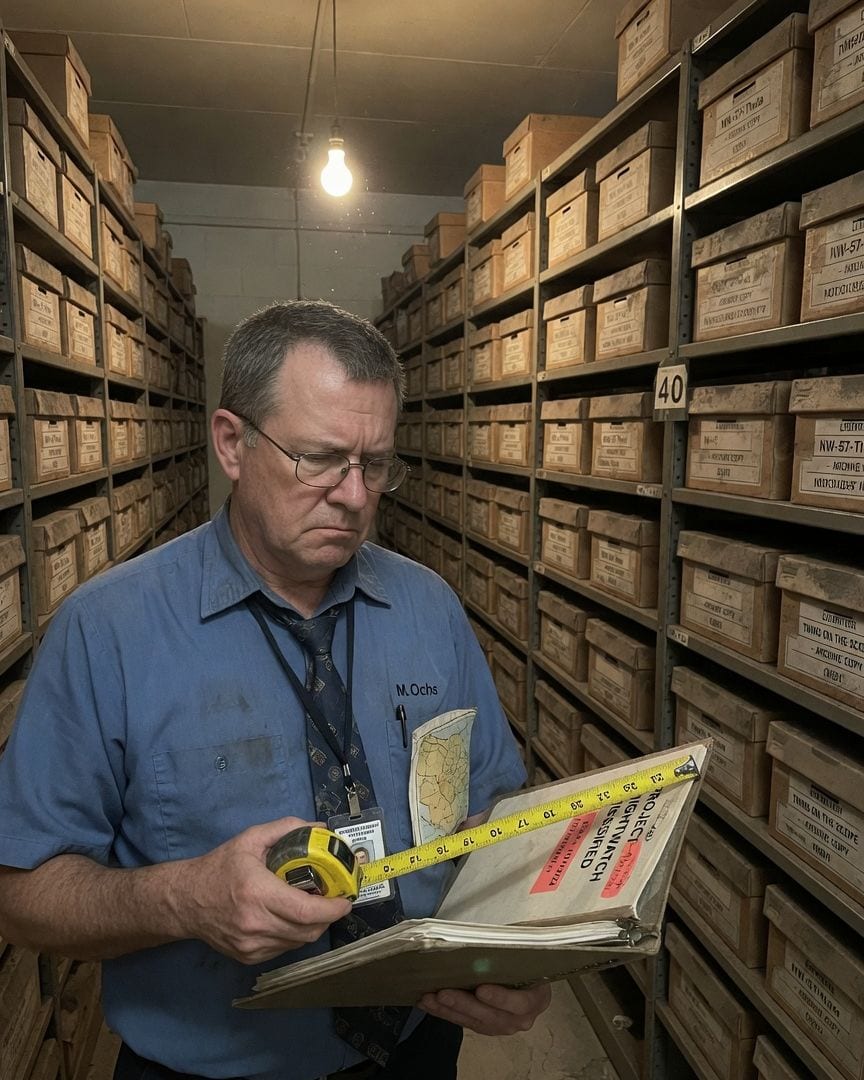
A Cold War records clerk on his final patrol found Aisle 40 stretched 61 feet longer, lined with unknown boxes. Inside one: 'PROJECT NIGHTWATCH - CLASSIFIED' with a fresh timestamp.
Marlin Ochs, a creature of habit after nineteen years at the St. Louis federal records depot, faced his final patrol through Aisle 40 before its scheduled pulping. His routine walk, usually 92 precise strides, suddenly stretched to an impossible 119, making the aisle 61 feet longer than its blueprint. The extra section felt colder, lined with dust-laden boxes bearing alien classification codes and no manifest. Inside one, he found a metal-bound file: 'PROJECT NIGHTWATCH - CLASSIFIED,' dated 1957, but with a timestamp just hours old.
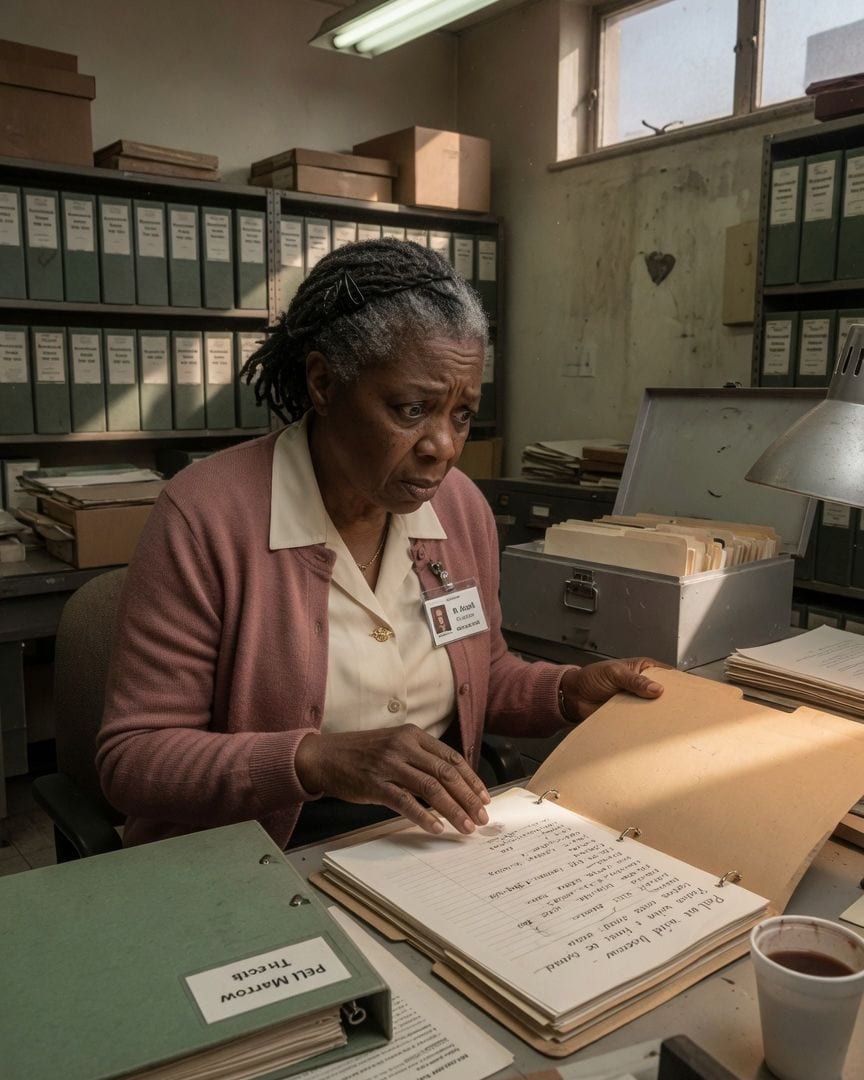
A records clerk's archive file for a Cold War reconnaissance plane lost in 1968 showed it flew yesterday to her own building.
Marguerite Ansell, a records clerk nearing her final week before retirement, meticulously audited Cold War-era files. In the cool, dusty archive, she pulled a file for an oiler declared missing in 1951. Inside, she found a fueling schedule with entries stretching into the present, the last dated just eleven days ago. Then, a second lost ship revealed a similar impossible log, and a cold certainty began to bloom in her chest. Deep in the shadows, Marguerite found an unmarked steel box containing a file for a reconnaissance plane lost in 1968. Its flight log showed a final flight yesterday, to the precise coordinates of her own archive building.
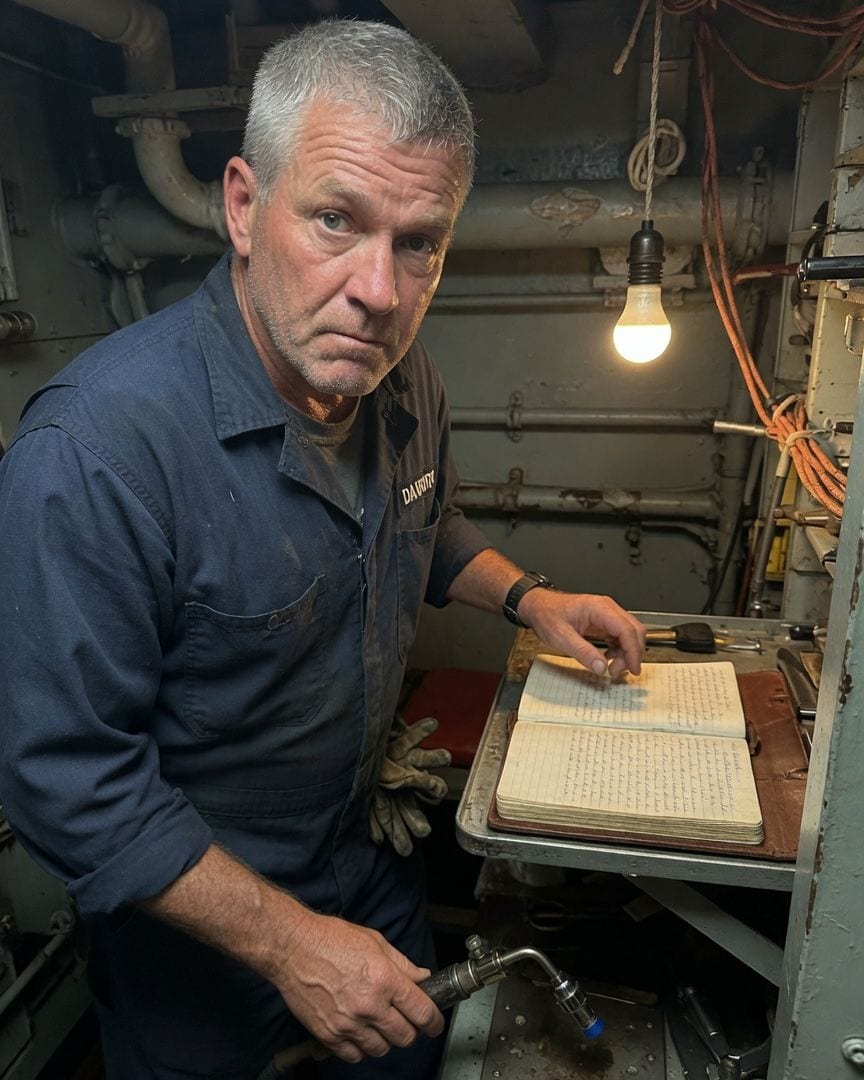
A week from shore duty, Chief Danforth cut a hatch where his ship's plans showed solid steel. An hour later, the wall was seamless, but the Cold War logbook from inside appeared under his mattress.
Chief Petty Officer Raymond Danforth, just a week from ending three decades of service, was intimately familiar with every pipe and plate of the guided-missile destroyer Weatherall. During a mid-cruise overhaul, his gloved hand found a sealed hatch where schematics promised only a solid bulkhead. He cut through the impossible seam to reveal a small, dry compartment, softly lit, containing a logbook filled with an unsettlingly familiar hand. When he returned an hour later with a witness, the hatch was gone, the wall seamless. Later that night, the same logbook appeared beneath his mattress, its pages revealing an entry: 'Petty Officer Howard Montgomery, missing, 1972.' How could a compartment vanish, yet leave its secrets behind?
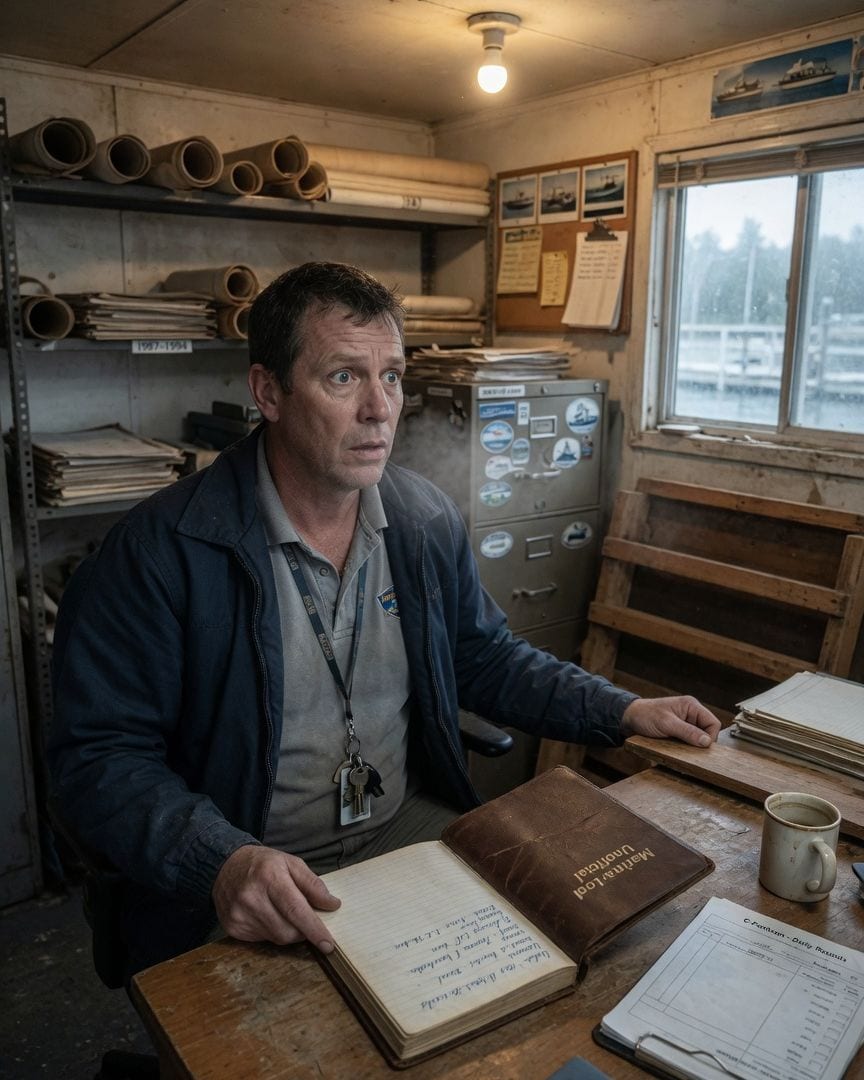
My C-Pontoon goes an extra thirty feet to Berth 61, with a sleek, dark yacht I've never seen. It's drawing power, but doesn't exist on any records.
As harbormaster, my morning rounds are always routine, checking the sixty berths on our C-Pontoon. But one chilly morning, beyond the last numbered post, C-60, I found the pontoon inexplicably extended by another thirty feet. It ended in a new numbered post: Berth 61, a physical fact that simply could not exist.
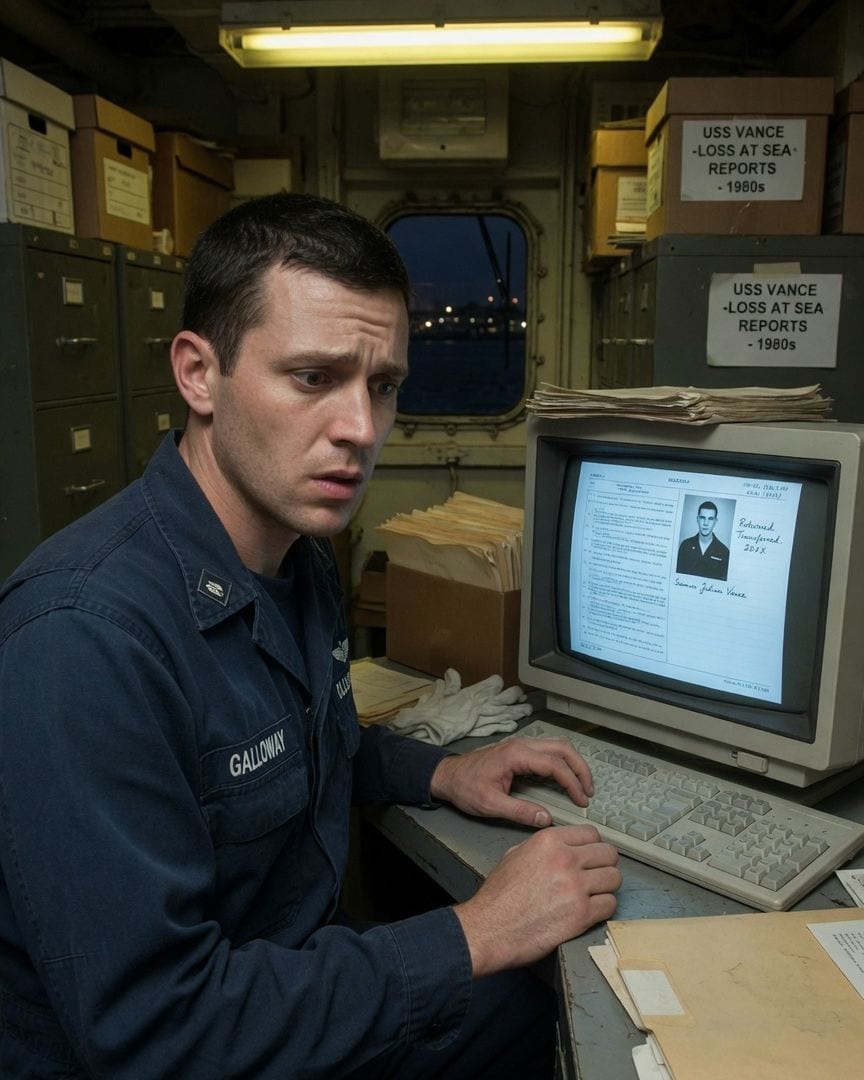
Petty Officer Galloway logged a sailor onto his ship. The man died at sea 40 years ago.
Petty Officer Joel Galloway scanned a sailor's ID on the USS Vance quarterdeck. The man's name, 'Seaman Julian Vance,' and his out-of-date uniform pricked at Galloway's memory. Later, the ship's berthing count came back one over, with an extra entry in the system but no physical body.
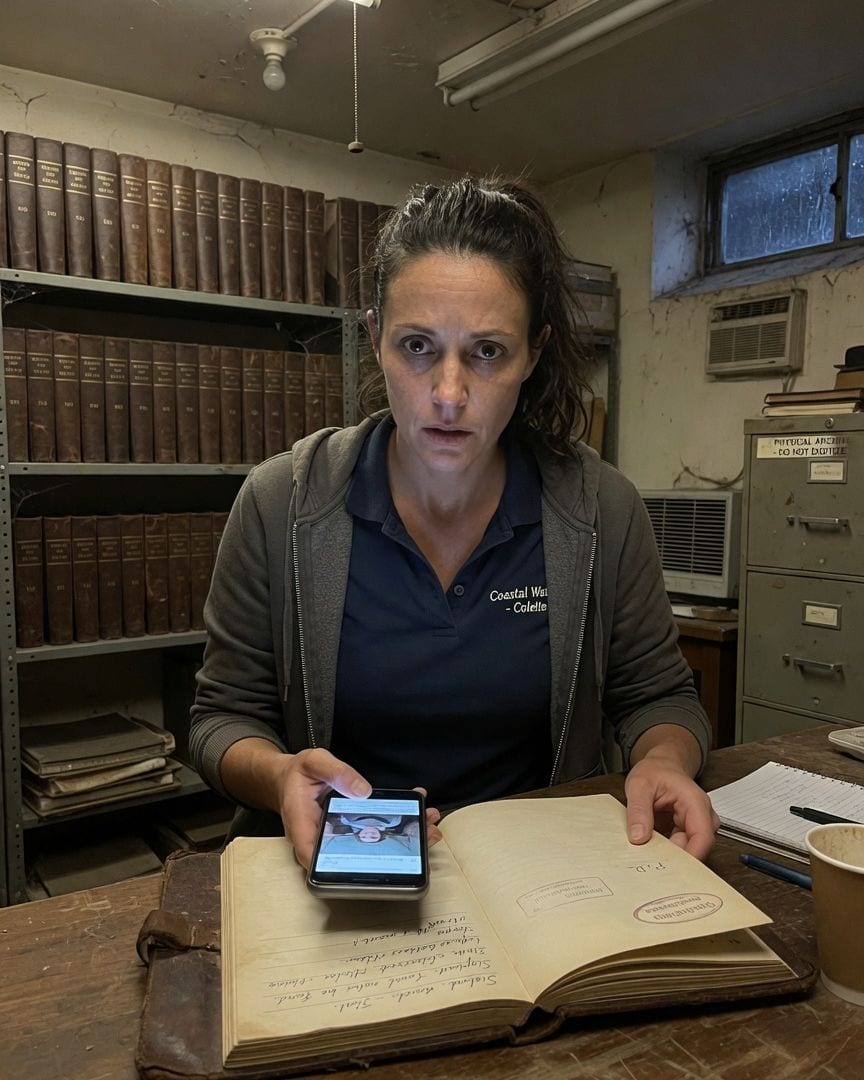
My coastguard log noted Sighting 9 again tonight, a light where no vessel showed. The old logs carry Sighting 9 off Skerry Point at 3:14am every tenth year since 1954, always 'nothing found,' always 'send no boat.'
On my watchtower night shift, the radar screen glowed green and the ocean was quiet. Then, a familiar light appeared off Skerry Point, exactly on cue, just as it had every tenth year for decades. But digging deeper, I found a hidden stamp in an old logbook: 'Operation Skerry. Status: Complete.' It left me with a chilling sense of finality.