A declassification archivist processes a Cold War incident file. Inside, a flight log has its key pages surgically cut out, officially stamped ‘DECLASSIFIED’.
Warrant Officer Prosper Idris, 40, felt the gnaw of his failing marriage in the silence of his OV-10 cockpit over the Arizona desert in 1979, the fuel gauge a slow countdown to a home he dreaded.
He was twenty minutes from his loiter limit when it happened. Ahead, where the dry lakebed stretched like a bleached bone, something rose. Not a dust devil, not a mirage. It simply lifted, silent, dark, and utterly still.
He banked, circling it, his eyes scanning for rotors, jet wash, any sign of propulsion. Nothing. The desert air shimmered behind it, bending the distant mountains like heat off a road, but the object itself was a perfect, unmoving void.
He called it in, using the ‘UFO’ designation, and was told to return to base, immediately. But Prosper did not.
For another eleven minutes, he stayed, orbiting the impossible thing, the radio silent, his own breath the only sound in his helmet. He never said what he did with those minutes.
Forty-five years later, in the climate-controlled chill of the National Records Annex in St. Louis, Brooke Barlow, 32, a declassification archivist, ran her hand over a stack of faded folders.
The annex was being consolidated, a frantic scramble to process decades of forgotten files before they were shipped off-site or digitized. Her human stake was clear: find something meaningful or face reassignment.
She pulled a file marked ‘79-A-01, Incident Report: Unidentified Aerial Phenomenon – Arizona Sector’. Inside, among the dry reports, was a handwritten note referencing an ‘Idris, P.’ and a ‘Box That Is Not on Any List’.
The note was unusual – most references were to accession numbers. After some digging, she located a non-standardized wooden crate, heavier than its size suggested, tucked away in a rarely accessed sub-basement aisle marked ‘Miscellaneous Classified’.
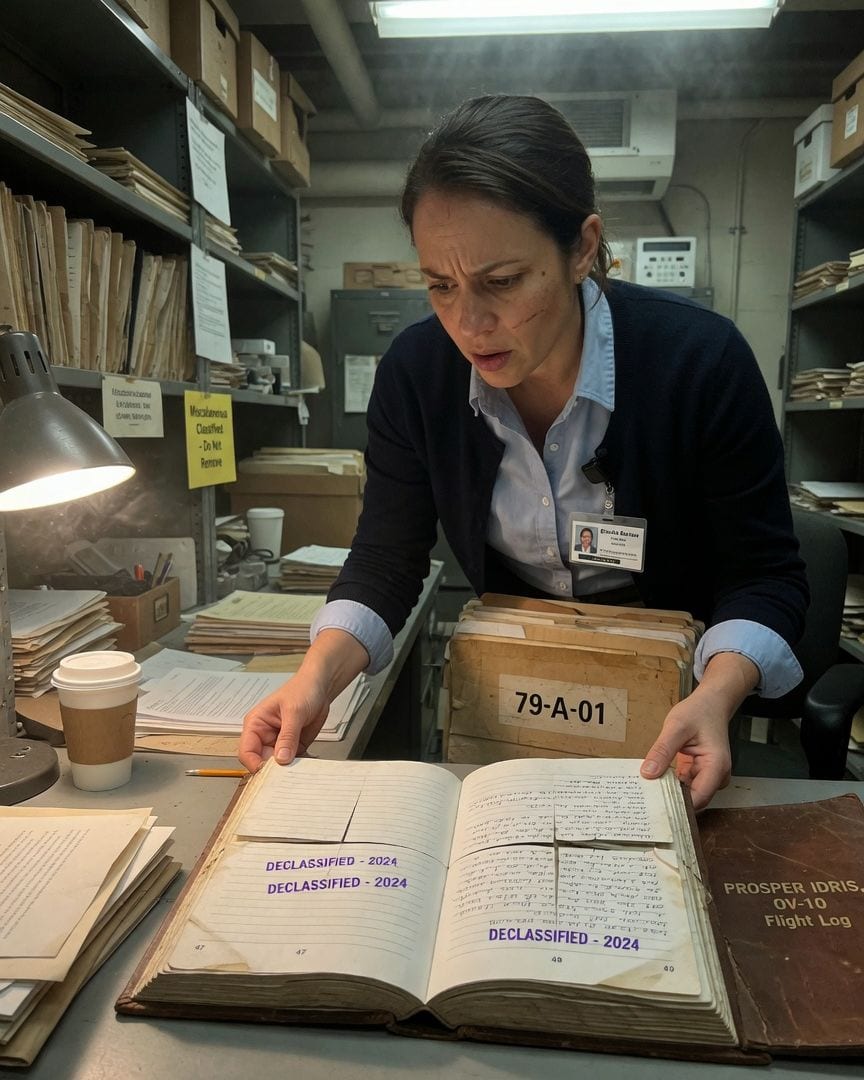
No accession number, no inventory tag, just a stenciled ‘79-A-01’ on its side. Inside, nestled among other oddities, was a worn, official flight log book. Prosper Idris’s name was embossed on the cover.
The log felt strangely warm in her hands, a faint heat radiating through the dry leather in the cool room.
Brooke brought the flight log to her desk, the faint warmth still radiating from its leather cover. She flipped through the meticulously recorded entries for 1979, each line detailing fuel consumption, flight path, and observations.
She found the entry for the day of the incident, July 14th. The record was precise up to 14:32 local time, noting the ‘UFO’ report. Then she turned the page.
Her fingers traced the perfectly straight, almost surgical, cuts where pages 47 through 48 should be.
The binding was disturbed, a faint crease running along the spine, yet the next page, 49, was crisp and unmarked, numbered as if the previous two had never existed.
An official stamp, ‘DECLASSIFIED - 2024’, covered the cut edges, sealing the absence.
The excised pages gnawed at Brooke. It wasn't redaction; it was surgical removal. She cross-referenced Idris’s file with other UAP incidents from that year, finding similar, though less obvious, gaps in reports.
She sought out Charles Merritt, 55, a records clerk who had been with the annex since before Brooke was born. Merritt, a man of meticulous habits and quiet demeanor, initially dismissed it as a 'clerical error' or 'damage during transfer.'
His eyes, however, darted to the Box That Is Not on Any List, still on a cart near Brooke's desk. The Box seemed to subtly hum, a low vibration she felt more than heard.
When she pressed for details, he grew evasive, suggesting she focus on 'more straightforward declassifications.' Brooke ignored him. She found an archived transcript of Idris’s radio call.
It noted the time he called in the UFO, and then, a full eleven minutes later, a terse 'returning to base.' The transcript confirmed the missing time, but offered no explanation.
The file also contained a brief, uncharacteristically vague mention of Idris's 'subsequent debriefing' which yielded 'no further actionable intelligence.' The very vagueness was a red flag. The files she normally handled were dense with details, endless assessments.
This felt deliberately sparse.
She found other anomalies: a supply requisition for specialized magnetic tape from 1979, far more than standard for the era, signed off by a 'Hartley, R.' – a name she’d seen on other, more highly classified documents, usually at a much higher echelon than a simple supply request.
Brooke’s digging did not go unnoticed. The next morning, the Box That Is Not on Any List was gone from her cart. Merritt simply shrugged when she asked, claiming 'inventory rotation.'
He looked at her with an odd, knowing calm that settled on her like a heavy cloak.
Later that week, she received an unexpected visit from Russell Hartley, 82, a formidable retired Air Force General, now a consultant for the annex. Hartley’s presence was unnerving; he moved with an almost preternatural stillness, his gaze unwavering.
He complimented her 'thoroughness' on the Idris file, then smoothly transitioned to a lecture on the 'delicate balance' of declassification. 'Some secrets,' he said, his voice a low rumble, 'are best left undisturbed, even if they appear… incomplete.'
His gaze lingered on her, not hostile, but assessing, as if he were reading her thoughts, measuring her. That night, working late, the silence of the annex pressed in.
Brooke heard faint, rhythmic clicks from the secure server room, a sound like an old reel-to-reel tape deck spooling slowly. The room was supposed to be empty, locked down.
She stood frozen, listening, the sound continuing for several unnerving minutes before abruptly ceasing. The next morning, her access to '79-A-01' was temporarily suspended due to 'routine system maintenance,' a first in her tenure.
A cold draft seemed to follow her, even through the sealed, climate-controlled halls.
The system suspension lasted three days. When her access was restored, Brooke found a single, unmarked optical disk tucked into a sleeve inside Idris’s folder. It was old, but digitally readable.
It felt too coincidental to be random, appearing after her access was cut. She inserted it into her secure workstation, the drive whirring softly. The disk contained a single, high-resolution scan.
It was a page, numbered 47, from Idris’s flight log. The content was chillingly detailed: a minute-by-minute log of his eleven missing minutes. It described the craft, not as an object, but as a 'field of influence,' a 'non-reflective membrane.'
Idris’s handwriting grew increasingly erratic, describing a 'sense of being drawn,' a 'calm surrender.' The final entry at 14:43 simply read: 'Filed.' Below it, a new line, in a different, neat hand: 'Subject returned. Status: Compliant.'
The original excised pages weren't missing because they contained sensitive data; they were missing because they detailed the process.
The 'Box That Is Not on Any List' wasn't just a container for oddities; it was a repository for these 'supplementary' records, details too raw for the main file.
The magnetic tape requisition, signed by Hartley, suddenly made sense: it wasn't for recording, but for erasing or altering the magnetic strips on the original flight log pages, allowing for their seamless re-numbering by disturbing the binding without tearing it.
The institution wasn't just observing; it was actively managing the evidence of a systematic, ongoing 'filing' operation. The hum in the Box, the subtle rearranging of her office – they were not coincidences.
Brooke, heart pounding, knew she had to find the Box That Is Not on Any List. She waited until after hours, the annex emptying out, the fluorescent lights humming a lonely song. Using her master key, she accessed the sub-basement.
The aisle was dark, the air thick and cold, smelling faintly of ozone. The Box was back, exactly where she'd first found it, tucked behind a shelf of obsolete microfiche. It radiated its subtle warmth in the chilled air.
Inside, beneath Idris's log, she found other 'supplementary' files, each with a matching 'filed' entry.
She saw a file for a 'Sinclair, N.,' a fisherman reported lost at sea just last year, and another for a 'Lambert, J.,' a hiker whose disappearance had been in the local news last week.
The 'Box' wasn't just holding old secrets; it was a living archive, continuously updated. She pulled out a thin, new folder, no visible dust on its pristine cover. It was labeled 'SUPPLEMENTARY LOG - ACTIVE'.
Inside, the first page was dated today. It contained entries for recent 'filings,' each a brief, chilling summary of a person and their last known location. As she read, her blood ran cold.
The last entry on the page, incomplete, described a young female archivist, brown hair, working late in the records annex, investigating 'Case ID 79-A-01'. The date stamped beside it read '2024-10-27'.
Her own name isn't there, but the details are unmistakable. Today is October 26th.
The next morning, Brooke arrived at work with a grim certainty. The 'Active Log' was gone from the Box, replaced by a fresh, blank folder.
Merritt met her gaze in the hallway with an unnerving placidness, offering a faint, almost imperceptible smile that didn't reach his eyes. His composure was more unsettling than any threat.
She found Hartley in his office, reviewing a stack of fresh reports, the rhythmic click from the secure server room now a distant, faint echo in her mind.
Brooke laid out her findings, the scanned page from Idris’s log, the 'filed' entries, the 'Active Log' and its chilling prediction. Hartley listened, his expression unchanging, his hands clasped on his desk.
'Warrant Officer Idris,' he began, his voice flat, devoid of emotion, 'was never lost. He was… integrated. The craft, as you call it, is a conduit. It doesn't take; it re-aligns. The 'eleven minutes' are a period of transition.'
He paused, his eyes holding hers. 'The institution's role, Brooke, is not to understand, but to manage the paperwork. To ensure coherence.' He pointed to a line in an old protocol document, a yellowed page detailing classification procedures.
'The lost are never lost. They are filed. And the file,' he added, looking at her with eyes that held no warmth, 'is still being signed.'
The 'secrecy machine' wasn't about covering up; it was about orderly documentation of an ongoing process, a vast, patient bureaucracy for something profoundly alien.
The 'Box That Is Not on Any List' was the active inbox, and the 'Active Log' was its ledger. Every clue clicked into place: the dust-free ascent, the bending desert, the excised pages, the 'compliant' status.
Idris, and countless others, hadn't vanished; they had merely been re-cataloged.
Brooke tried to fight it. She tried to expose them, to warn someone. She went to her supervisor, detailing the anomalies, the active log, the precise predictions.
Her supervisor listened patiently, then gently redirected her to a backlog of routine reports. She tried a trusted contact in federal oversight, a woman she’d known for years.
Each time, her story was met with polite skepticism, then quiet dismissal, a practiced closing of ranks she hadn't recognized before.
Hartley's influence, she realized, extended far beyond the annex, a quiet, pervasive network that ensured nothing truly disruptive ever surfaced. Her access to sensitive files was slowly, subtly, restricted.
Not outright denial, but delays, 'technical issues,' or files mysteriously moved to other departments. Her emails about 'Case ID 79-A-01' began bouncing back as 'undeliverable.'
She found her office door slightly ajar one morning, her desk orderly but subtly rearranged, a small, decorative paperweight moved a few inches to the left.
The threat wasn't a physical confrontation; it was the quiet, methodical closing of every door, every avenue of escape. The institution wasn't hostile; it was simply implacable.
Brooke understood then that the 'filing' wasn't a punishment or an abduction, but a silent, ongoing process that simply was. Her knowing the truth changed nothing, because the truth was merely the system itself, operating with perfect, terrifying coherence.
She considered fleeing, but where? The 'file' was everywhere. The 'Box' was only a metaphor for a truth that permeated the very fabric of their world. She was left with the knowledge, a terrible, unshakeable weight.
The climax wasn't a battle, but a surrender to understanding, a realization that some truths are too vast, too deeply embedded, to be undone.
She was not being hunted; she was simply being observed, waiting for her turn to be filed.
The archive consolidation continued, Brooke dutifully processing files, each one now bearing a chilling subtext. Merritt still offered his faint, knowing smile in the hallways, a flicker of understanding in his usually impassive eyes.
Hartley remained a quiet presence, his occasional nods carrying an unnerving weight of shared, unspoken knowledge.
The Box That Is Not on Any List stayed in its sub-basement aisle, its contents occasionally rotated, its warmth a constant, subtle hum in the cold.
Brooke learned to live with the truth, a silent observer in a system she could not fight. Her life resumed its rhythm, but now, every missing person report, every unexplained disappearance, carried a new, terrible meaning.
The desert, she understood, was just one of many dry lakebeds. The records department was another.
Brooke sometimes found herself staring at the 'DECLASSIFIED - 2024' stamp on old files, seeing not an end to secrecy, but a re-categorization, a re-filing. She still worked late, the hum of the servers a constant, low thrum.
The entry for '2024-10-27' in the active log had come and gone without incident, but she knew that was merely a forecast, not a guarantee. The system was patient. It was always being signed.
The records department, she understood, was just another dry lakebed.
If this one got to you
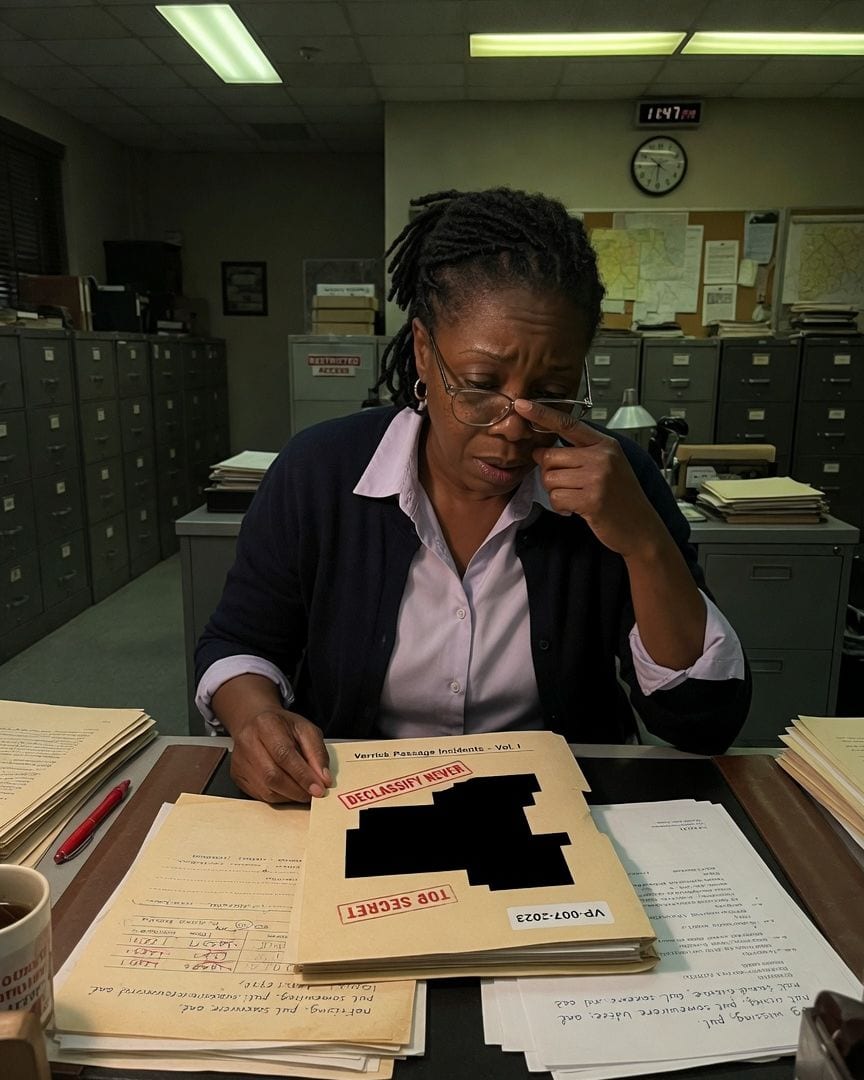
A declassification reviewer finds nine witness statements from decades apart, all written in the same looping hand. The Cold War file's newest control number points to no office.
As a declassification reviewer for the National Archives, Ione Fash faced a Sisyphean task: finding a way to downgrade records detailing the disappearances of fourteen men over eighty years. The constant hum of the office was her only companion as she meticulously examined files marked 'DECLASSIFY NEVER'. She pulled out nine witness statements, each from a different town and year, only to find them all written in the exact same distinct, looping script. Then she saw it: a control number on a file supposedly closed in 1978, dated '2023', and with no originating office in the entire archive system. Who was still signing these impossible files?
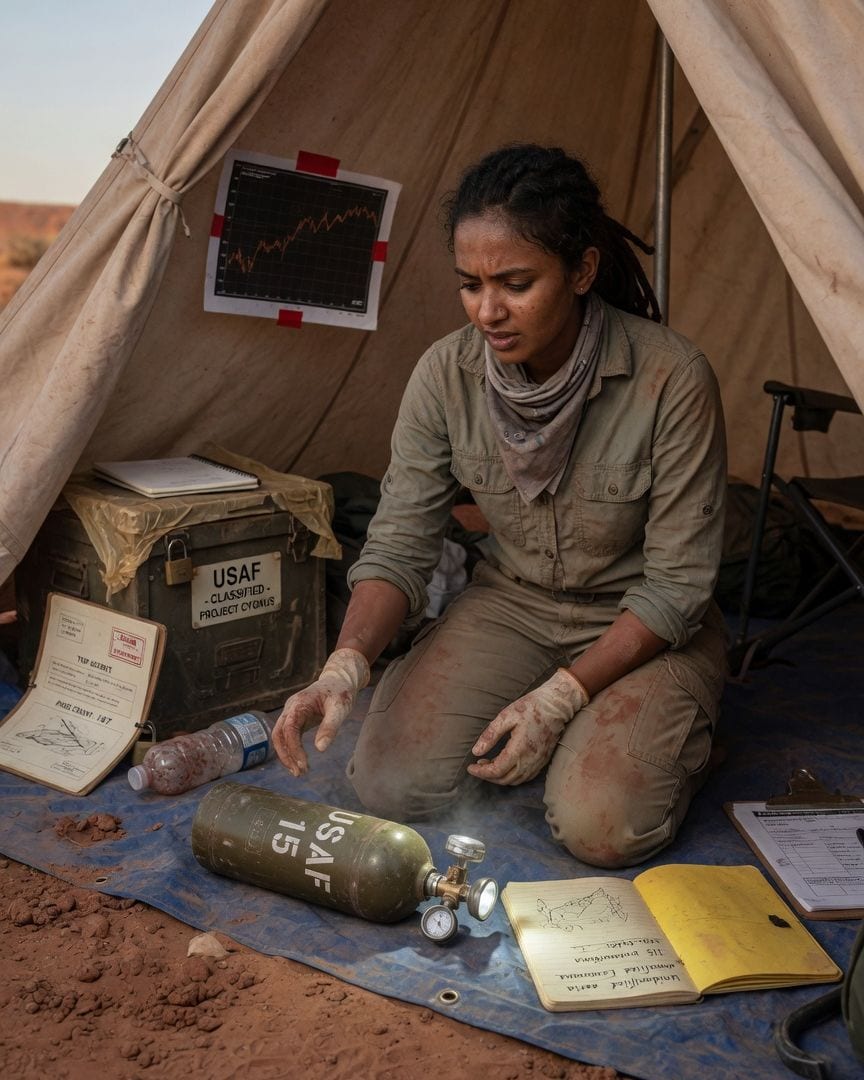
A researcher's permit is almost gone. She finds a Cold War archive box listing 187 pages, but 173 were surgically cut out.
Archaeologist Priya Raval knelt in the reddish Utah mud, her permit for the site ticking down with only nine days left. The desert silence was broken only by the hiss of an 80-year-old oxygen bottle, defying records by holding full pressure in a backfilled cavity. As Priya raced against the clock, she unearthed deeply buried concrete conduits and a classified Cold War archive box. Its cover listed 187 pages, but inside, a terrifyingly precise cut had excised 173 of them, leaving only blank space. What secret did the military bury here, then try to erase?
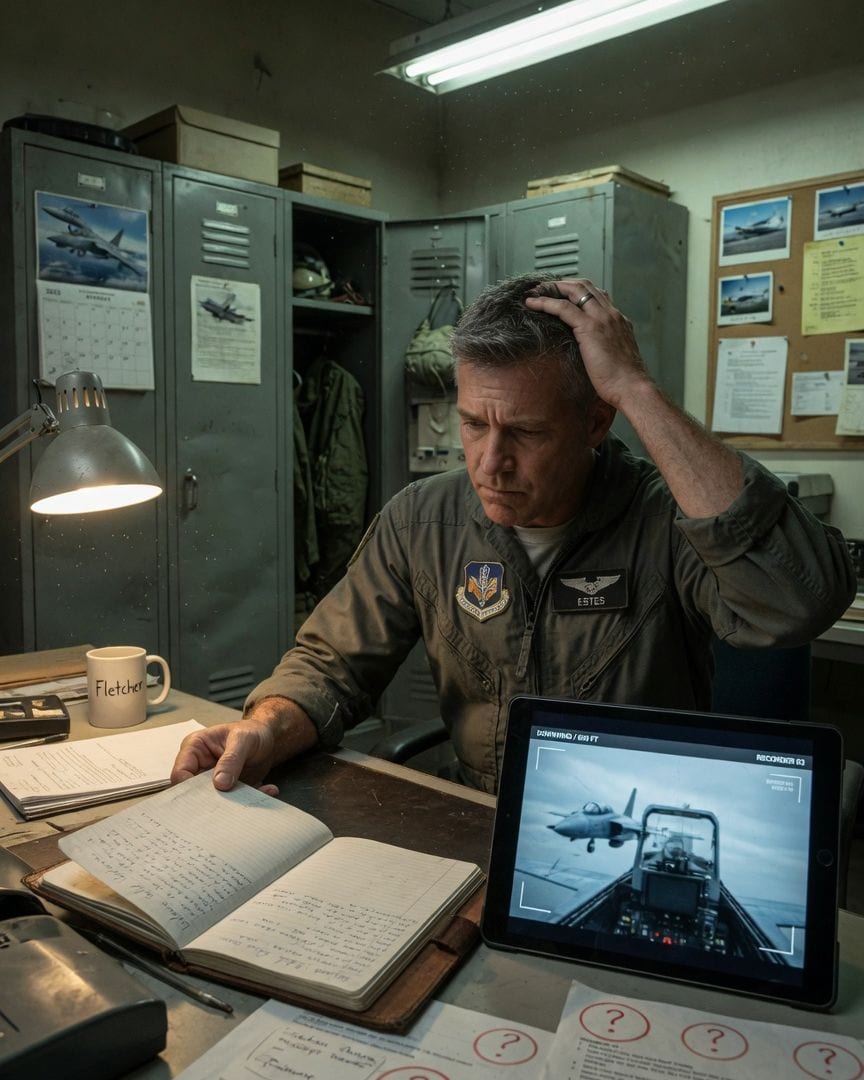
A Chief Warrant Officer's HUD tape shows a phantom jet, impossibly close, off his wing. Forty years ago, another Cold War pilot logged the same impossible sight.
Chief Warrant Officer Nathaniel Estes, a pilot whose career hinged on absolute precision, was under evaluation for a critical promotion. His nightly review of HUD tapes from routine Mojave test flights was a meticulous habit, but for a week, it revealed an impossible detail. At precisely 800 feet, one frame showed a sleek, experimental jet tucked impossibly close off his left wing—a craft ground radar never detected. When his maintenance chief found no equipment fault, Estes unearthed a dusty, decades-old logbook detailing identical phantom sightings from 1978. What unseen presence shadowed the desert skies?
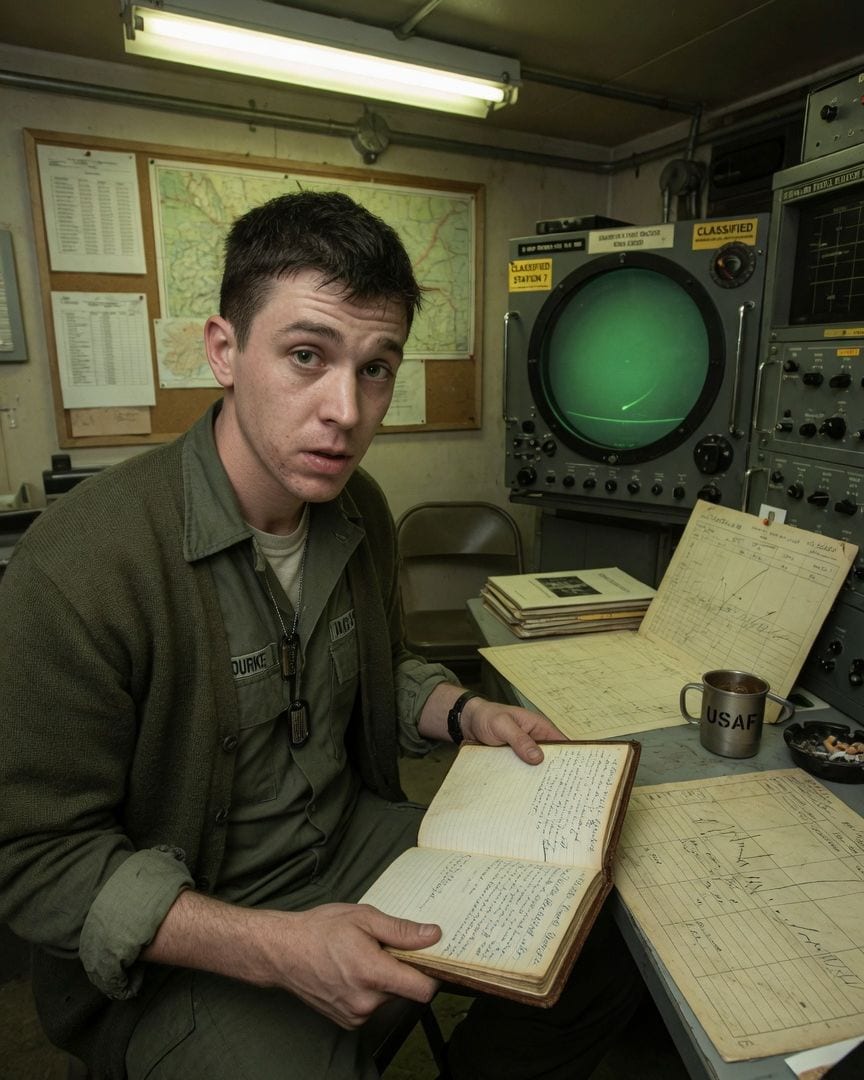
Nearing the end of his tour, Airman Rourke found an old Cold War logbook that named his nightly radar ghost: Airman Gerald Thornton.
Airman Second Class Preston Rourke was nearing the end of his two-year tour at Gap-Filler Station 7, a lonely outpost in the Montana high country. Every night, his radar screen painted a phantom contact, a slow line across the valley floor always dismissed as a temperature-inversion ghost. But while clearing a storage closet, Rourke found old plotting boards from prior winters, each showing the exact same impossible trace, drawn by different hands over successive seasons. His meticulous checks found no weather anomalies to explain the persistent radar ghost. Then, he uncovered a worn, unofficial logbook detailing more radar plots. One entry from 1968, next to an identical trace, contained a date and a name: Airman Gerald Thornton.
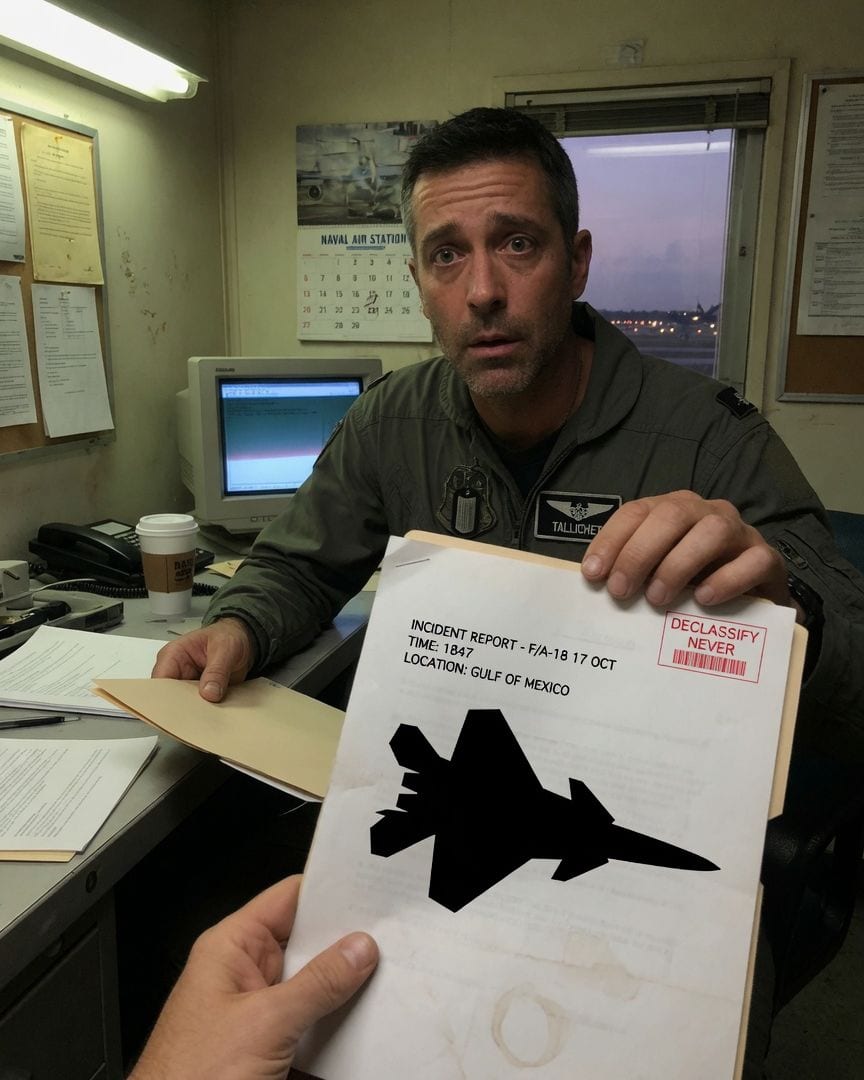
A pilot's classified flight report had a precise, angular blackout. The digital file said 'Page 1 of 12,' but only six pages existed.
Captain Yves Tallichet landed his jet, his hands shaking from an impossible encounter in the sky. He'd seen a dark, seamless shape mirror his F/A-18, defying all known physics. Days later, seeking answers in his official flight report, he found a precise, angular blackout over his observations. A senior records clerk confirmed the redaction was permanent, flagged "DECLASSIFY NEVER." But the true dread came when the digital file showed "Page 1 of 12," yet his physical copy held only six. What happened to the other pages?
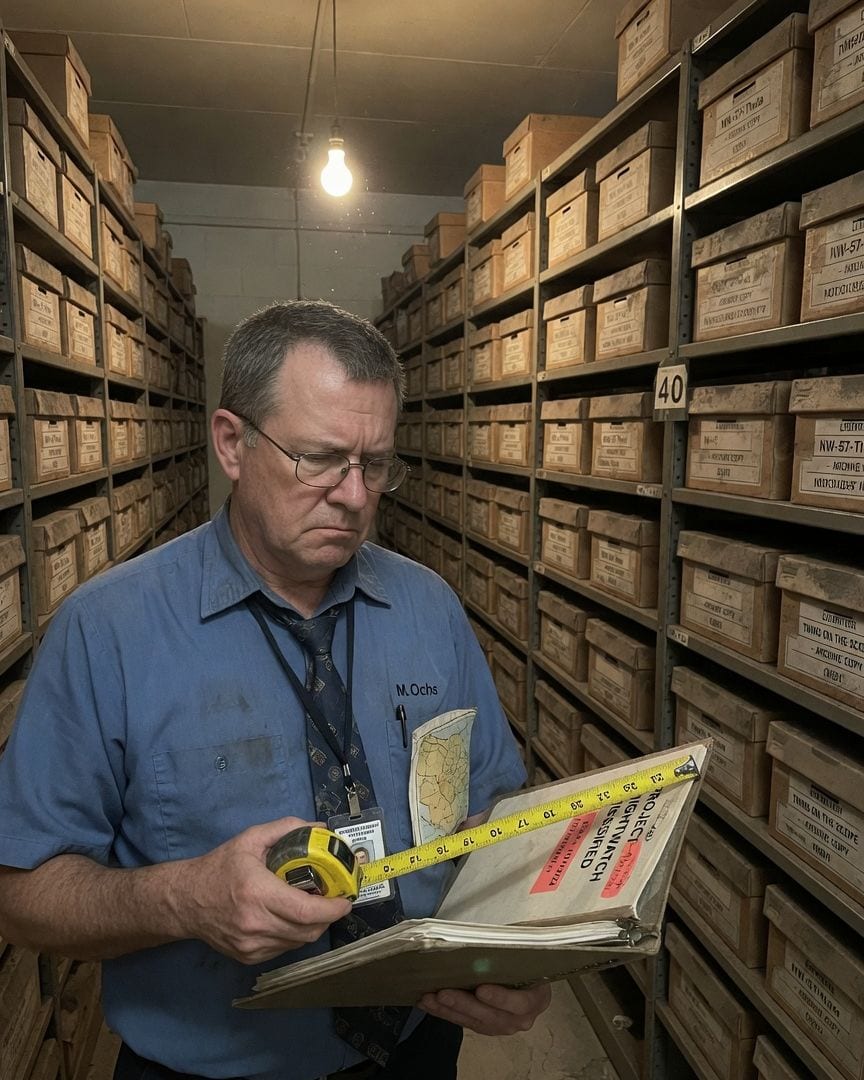
A Cold War records clerk on his final patrol found Aisle 40 stretched 61 feet longer, lined with unknown boxes. Inside one: 'PROJECT NIGHTWATCH - CLASSIFIED' with a fresh timestamp.
Marlin Ochs, a creature of habit after nineteen years at the St. Louis federal records depot, faced his final patrol through Aisle 40 before its scheduled pulping. His routine walk, usually 92 precise strides, suddenly stretched to an impossible 119, making the aisle 61 feet longer than its blueprint. The extra section felt colder, lined with dust-laden boxes bearing alien classification codes and no manifest. Inside one, he found a metal-bound file: 'PROJECT NIGHTWATCH - CLASSIFIED,' dated 1957, but with a timestamp just hours old.