My dorm's card system logs an 'ERROR' entry every 1 AM. It's for a student who doesn't exist.
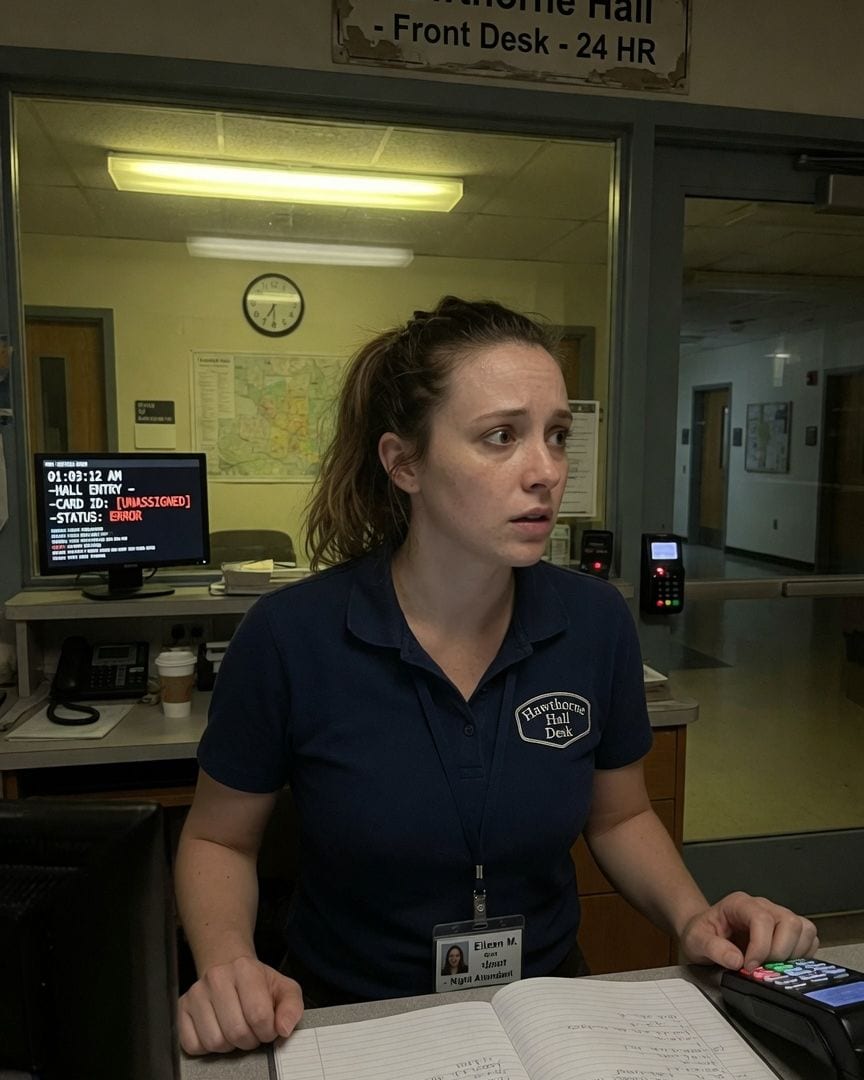
The fluorescent hum of the Hawthorne Hall front desk is my constant companion on the overnight shift. It’s a low, insistent thrum that settles into your bones after a few months. I’ve been here six.
Every night, around 1 AM, the rhythm shifts slightly. A student named Priya walks in.
Earbuds in, head down, she murmurs 'night' without breaking stride, barely a whisper directed at the counter, a quick flick of a card against the reader.
It's a small, comforting ritual in the quiet hours, a predictable punctuation mark in the long stretch from midnight to dawn.
She’s tall, with long, dark hair usually pulled into a messy bun, and wears the same worn denim jacket, no matter the weather.
Until last week. A new student complained about a lockout, and housing ran a full audit of the card system, something they do every few years. They cross-referenced every swipe, every entry, every student enrolled and assigned to this hall.
And they found no student named Priya. Not a single record. No enrollment, no housing assignment. And no swipe activity matching the times I’ve greeted her.
They called me, polite but firm, asking if I was sure about the name, if perhaps I was confusing her with someone else.
I tried to tell myself it was a glitch, a system error, a mistake on my part, but I see her. Every night.
The unease has been a cold knot in my stomach ever since, tightening with each passing hour, especially as 1 AM approaches. The quiet of the hall began to feel less comforting and more like a held breath.
The next night, I watched Priya pass, the familiar swish of her worn denim jacket rustling softly in the stillness. Her head was down, earbuds a pale splash against her dark hair, just like always.
The low 'night' was automatic, a breathy sound that barely cut through the hum of the desk lights. Her hand rose, card flicked. The card reader light remained stubbornly red, not even a stutter, no green flash.
Housing said no record. No swipe. But I saw it. I saw her hand, the card, the way the light stayed red. It was impossible.
I called down to Security, to Nathan Montgomery, the head of campus security. Nathan's been here longer than the dorm itself, a quiet man with a dry wit and eyes that seem to have seen everything.
I explained what housing had told me, what I was seeing. He promised to double-check the system logs, the raw data that housing might have overlooked, the kind of granular detail a general audit sometimes misses.
I waited, heart thumping, for his call. The minute hand of the wall clock seemed to drag. The silence in the dorm settled around me, thick and heavy.
When his call came, it was brief. 'Eileen,' he said, his voice flat, devoid of inflection. 'I pulled the logs for that reader, for that specific time. The system shows a blank.
No activity for that card slot at 01:03 AM.'
My rational mind tried to latch onto it: a system malfunction, a faulty reader, my eyes playing tricks on me in the small hours. It had to be.
But then I remembered the housing report, which explicitly stated 'no swipe matches.' If there was no activity, why didn’t they just say that? 'No activity' and 'no swipe matches' felt subtly, chillingly different. One implied nothing was there.
The other implied something was, but it didn't align. The distinction gnawed at me.
I started digging into the system myself, past the user-friendly interface that Nathan would have used, past the green and red lights that represented simple 'access granted' or 'denied.'
I dove into the raw, timestamped access logs, the lines of code and data that recorded every pulse, every attempt, every electronic whisper from the card readers.
I navigated through lines of data, past legitimate student entries, past maintenance key fobs, until I found it. The exact minute. The exact second. Not a blank.
An entry: '01:03:12 AM – HALL ENTRY – CARD ID: [UNASSIGNED] – STATUS: ERROR.'
It wasn't Priya's name, of course. The system couldn't assign a name to something that wasn't registered. But it was her time, her specific point of entry, registered as an impossible, non-existent entity.
The word 'ERROR' pulsed faintly on the glowing screen of the card system's admin panel, a silent accusation.
The next few nights blurred into a cycle of dread and digital forensics. After Priya’s 1 AM pass, I’d dive back into the logs, searching. I wasn't just looking for 1:03 AM entries at the main door anymore.
I started cross-referencing the 'UNASSIGNED' card ID errors with other times, other entry points in Hawthorne Hall. The dorm was old, its wiring a mess, its ghosts — the creaking pipes, the phantom drafts — familiar.
But these weren’t structural groans or drafts. These were phantom keycards.
It wasn't just Priya.
Over the past six months, since I started this shift, I found a handful of similar 'ERROR' entries, always in the small hours, always corresponding to a hall entry or exit, never tied to a registered student.
One at 03:17 AM from the west stairwell, another at 02:00 AM from the laundry room door. Each time, I’d remember a vague sense of a presence, a flicker of movement in my periphery that I’d dismissed as fatigue.
A shadow that lingered a beat too long, a door I swore I heard click shut when no one was around. I'd blamed it on the shift, the early morning haze.
But the consistency, the precise timestamps, the sheer regularity of these impossible events, started to chip away at my composure. The logs were piling up.
I printed out a selection of these error logs, page after page of alien code and impossible timestamps. The stack of paper felt heavier than its weight, cold and dense in my hands.
The rational part of my brain kept trying to construct an explanation: a prank? A flaw in the card system’s programming that only manifested at specific times? But the consistency defied logic.
These weren't random spikes; they were precise, almost choreographed. I started checking the cameras, but they were old, grainy, and rarely caught anything definitive in the low light.
Just shadows, or the brief, indistinct shape of someone passing too quickly for recognition. The dread wasn't in what I saw, but in what the system recorded and refused to acknowledge.
It was a digital phantom limb, reaching for a door that shouldn't open, detected by a machine built for the living.
My late-night digging didn't go unnoticed. Nathan Montgomery, usually a ghost himself on the night shift, a man who seemed to materialize only when absolutely necessary, started making more frequent rounds.
He’d pause at my desk, ostensibly to check on things, to ask about a leaky faucet or a missing parcel, but his eyes would always drift to my computer screen, or the stack of printouts I tried to keep hidden under a discarded newspaper.
The quiet hum of the dorm became a watchful silence whenever he was near.
One night, as I was comparing two 'UNASSIGNED' entries, both from the laundry room, dated weeks apart but just minutes different in time, he leaned against the doorframe, a mug of lukewarm coffee in his hand.
The steam rising from it seemed to barely disturb the still air. 'Everything alright, Eileen?' he asked, his voice calm, almost too calm for 3 AM.
'Just… double-checking some system anomalies,' I replied, trying to sound casual, trying to keep my voice from betraying the knot in my stomach. I pushed the printouts further under the newspaper.
He took a slow sip of coffee. The small sound seemed amplified in the quiet.
'Hawthorne Hall has a lot of 'anomalies,' he said, his gaze fixed on a distant point down the empty corridor, as if he was looking through the walls, through time. 'Some of them, you just learn to live with.'
It wasn’t a question. It was a statement, a quiet warning that slid over me like a cold draft. The hair on my arms prickled. He knew.
He didn't ask what I was looking at; he just implied I should stop. The implication hung heavy in the air, thick with unspoken history. He wasn't hostile, just… accepting. And that acceptance was far more terrifying than any threat.
It meant this was normal for him. It meant I was the anomaly, the one who was breaking the unspoken rules of the night, shining a light where it wasn't wanted.
The next evening, I confronted Nathan. I couldn't just "live with" it. I had to know.
I laid out the printouts on his desk – the 'UNASSIGNED' errors, the precise timestamps, the pattern of their appearance across different parts of the hall. My hands were shaking slightly, but my voice was firm. 'What are these, Nathan?'
I demanded, my voice low but steady. 'What are you living with?'
He sighed, a long, weary sound that seemed to carry the weight of decades. He sat down behind his desk, leaning back, his chair creaking softly. He didn’t deny it.
He didn't try to explain it away with faulty wiring or student pranks. 'You're seeing the regulars, Eileen.'
He explained, in that same unnervingly calm voice, that for as long as he’d worked here, and even before him, there were certain… presences. 'Not ghosts, exactly,' he clarified, looking at the ceiling, then back at me. 'More like echoes.
Residual energy. They repeat patterns. Their last routines, usually. The card system, for all its modern tech, just picks up on the energy signature, tries to log it, and errors out because there's no physical card, no enrolled student.'
He told me about a student who disappeared in the 70s, never found, last seen heading to the laundry room at 2 AM.
Another, in the 80s, who always took the west stairwell after a late study session, usually around 3:15 AM. My printouts, showing 'ERROR' entries at those exact times, from those exact locations, lay between us.
They suddenly made a horrifying kind of sense.
'Priya,' he continued, his gaze falling on one of my printouts, the 01:03 AM entry from the main hall. 'She was a student here, back in '96.
Got locked out of her room one night after the library closed, called her roommate, said she was heading back. Never made it back in. Just… vanished. The police searched, but nothing. No body, no trace.'
He pointed to the 01:03 AM entry. 'That was her usual time, coming back from the library.'
My earlier observations, the vague movements I'd dismissed, the subtle sounds, the way the card reader simply stayed red – it all coalesced into a terrifying coherence. The 'glitches' weren't glitches.
They were the persistent, silent re-enactments of tragedies the dorm had absorbed. The card system wasn't broken; it was just recording what was, even if it shouldn't be. The machine, designed for logic and order, was simply documenting the impossible.
Nathan then opened a locked drawer in his desk, the ancient wood groaning softly as he pulled it out. He retrieved a thick, yellowed binder.
It contained old, handwritten logbooks from decades past, before the electronic swipe system, before my time, before his. He flipped through pages, stained with coffee rings and dog-eared corners, the paper brittle and thin. 'You think this is new, Eileen?
This has been going on for generations.'
He pointed to entries in spidery, faded ink: names, times, and then, scrawled beside several of them, notes like 'No record,' 'Unknown,' or 'Never assigned.' The names were different, the handwriting varied, but the pattern was chillingly identical.
He stopped on a page from 1987. It was a list of names and entry times for Hawthorne Hall's night shift, signed in manually by students coming in late.
Halfway down the page, circled in faded red ink, was a name: 'Priya Sharma.' And next to it, the chilling notation: 'UNVERIFIED – HOUSING.'
My breath hitched. Priya wasn't just a recent manifestation; she was part of a cycle, a recurring echo across decades. Nathan Montgomery, his face unreadable, slid the old, laminated page across the desk.
He met my horrified gaze, a chilling calm in his eyes, and simply said, 'They always come back, one way or another.'
Nathan explained the full, terrible truth of Hawthorne Hall. 'It’s not malicious,' he said, his voice a low drone in the silent office, carrying the weight of years. 'It’s just… stuck.
The building itself, it seems to hold onto these moments, these last echoes of students who disappeared or died here, unresolved. The energy, the routine, it just replays.'
He waved a hand vaguely at the stacks of old logs, then at my own printouts. 'The ones who leave their mark, they get stuck here. Sometimes they fade for a bit, then come back. Sometimes, one simply... replaces another.'
He showed me more logs, tracing the lineage of these 'regulars.'
There was the 'library ghost' who always swiped in at 1 AM, precisely like Priya, a student from the early 90s, but who vanished from the records entirely after 1996, the year Priya vanished.
'Priya replaced her,' Nathan stated, as if discussing a shift change or a new employee. 'It seems to be a cycle. When one fades, another takes its place, or an old one returns.'
The pattern was horrifyingly clear.
The physical sign-in sheets from the 70s and 80s, the early electronic logs from the 90s, my own current system printouts from the last six months – they all documented the same phenomenon, a rotating cast of phantom students trapped in their final, mundane routines.
The dread wasn't in a monster, but in the sheer, indifferent persistence of it, the building itself a silent, unfeeling stage for these endless replays.
Every 'ERROR' in my logs, every vague movement I'd dismissed as fatigue or an old building settling, every 'night' Priya had murmured without looking up, clicked into place as part of this chilling, coherent whole.
The dorm wasn't haunted; it was a recording device, perpetually replaying its own quiet tragedies, indifferent to the living who witnessed them.
That night, the 1 AM approach felt different. The air in the lobby was thick, charged. I watched Priya pass, the familiar swish of her jacket, the low 'night' that always sent a shiver down my spine.
But this time, I didn't just watch. As she reached the card reader, her hand extended, a blur of motion, I stepped out from behind the desk.
My heart hammered against my ribs, a frantic drumbeat in the sudden, profound silence of the hall. 'Priya,' I whispered.
She paused, her hand hovering above the reader, her head tilted slightly, earbuds still in. For the first time, she looked up, her eyes meeting mine.
There was no recognition, no surprise, just a vacant, distant quality, like looking into a still photograph, or a reflection in a dark window. Her eyes were dark, unblinking, devoid of any discernible emotion. She didn't speak.
She just stared, an unsettling, almost imperceptible tremor passing through her. It was as if I had broken the loop, momentarily jarring the playback, a record player skipping just for a second.
The silence stretched, heavy and unnatural, pressing down on me.
Then, slowly, painfully, a faint, sad smile touched her lips, a flicker of something that felt like an apology, or perhaps just profound weariness. It was gone as quickly as it came.
She turned, without swiping, and walked down the hall, fading slightly with each step, her form becoming less distinct, until she was gone, absorbed by the long, dim corridor.
I stood there, trembling, the cold knot in my stomach now a solid block of ice, spread through my entire chest. I couldn't stay.
I couldn't be the next 'regular,' an echo in the system, watching new night attendants come and go, forever trapped in this loop.
I went back to the desk, my hands still shaking, and pulled up the logs. I printed every single 'UNASSIGNED' error, every historical anomaly Nathan had shown me, every piece of impossible data.
This was my proof, a stack of paper that would mean nothing to anyone else, just technical errors, but everything to me.
I would carry this knowledge, this impossible truth, but I would not let it trap me within Hawthorne Hall's endless night.
I resigned the next morning, citing 'personal reasons.' Nathan Montgomery just nodded, his eyes holding a silent understanding. He didn't try to stop me, didn't ask me to reconsider.
He just watched me gather my things, a quiet observer of another person leaving the cycle.
I packed my small apartment quickly, leaving Blackwood University and Hawthorne Hall behind like a bad dream, though I knew it was far from one.
The new night attendant, a bright-eyed young man named Carl, started a week later.
I saw his cheerful introductory post on the staff Facebook group, a smiling selfie from behind the very desk I had just left, completely unaware of the quiet, repeating dramas he was now overseeing.
I never told anyone the full story; who would believe me? A stack of printouts, showing 'ERROR' entries from a college dorm's card system, would just look like a technical malfunction to any rational person, easily dismissed. But I knew.
I carried the weight of those silent, cyclical lives, proof of a dread that lived in the mundane, in the quiet hours of the night, recorded by the very systems meant to track the living.
Years later, I still work the night shift, but in a different city, a different building, one with no history of phantom students, no unexplained disappearances, no 'unassigned' card IDs.
Sometimes, a new security report will mention an 'unexplained system anomaly' or a 'ghost in the machine,' and a cold shiver will trace its way down my spine, a reminder that some things can be recorded but never truly explained.
The file printout still sits in my desk drawer, a testament to a shift no one else ever worked.
If this one got to you
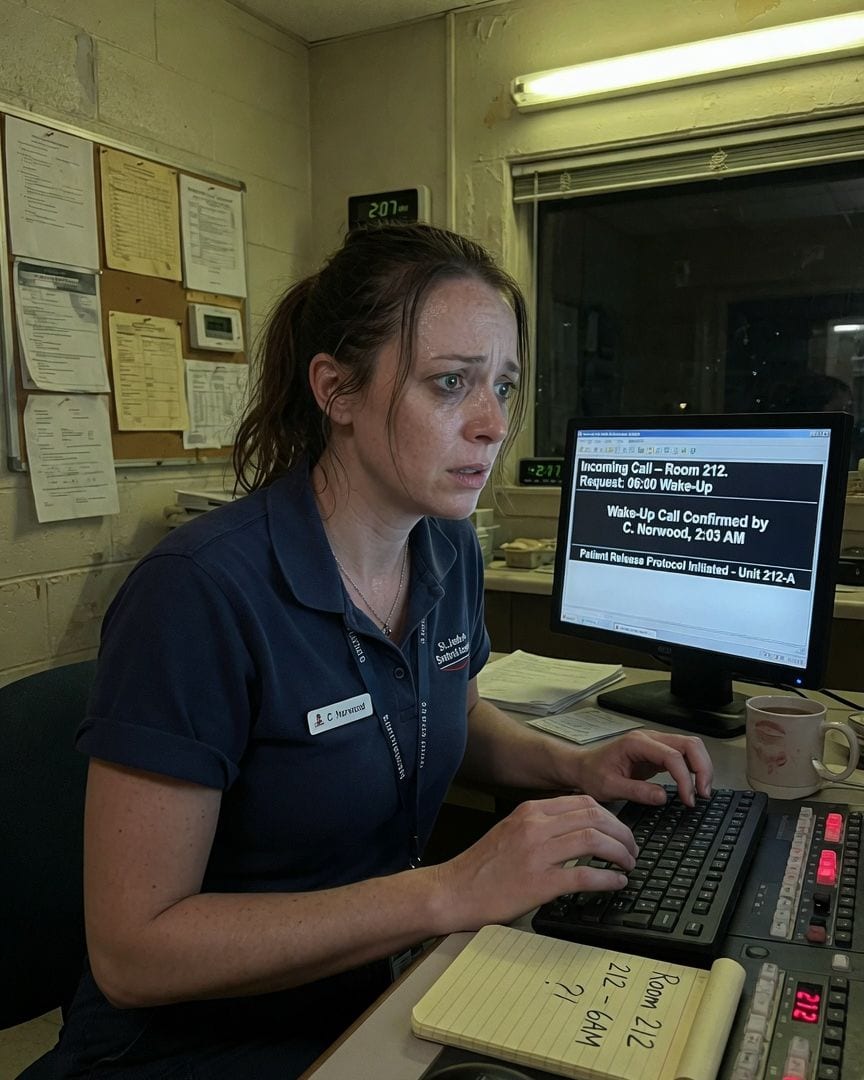
My login started a 'Patient Release Protocol' I'd never heard of for Unit 212-A.
Working the quiet night shift switchboard at St. Jude's, I took a routine wake-up call from Room 212. But the system showed Room 212 had been stripped bare and its phone line disconnected for months. Then, my own login showed I had confirmed the impossible call.
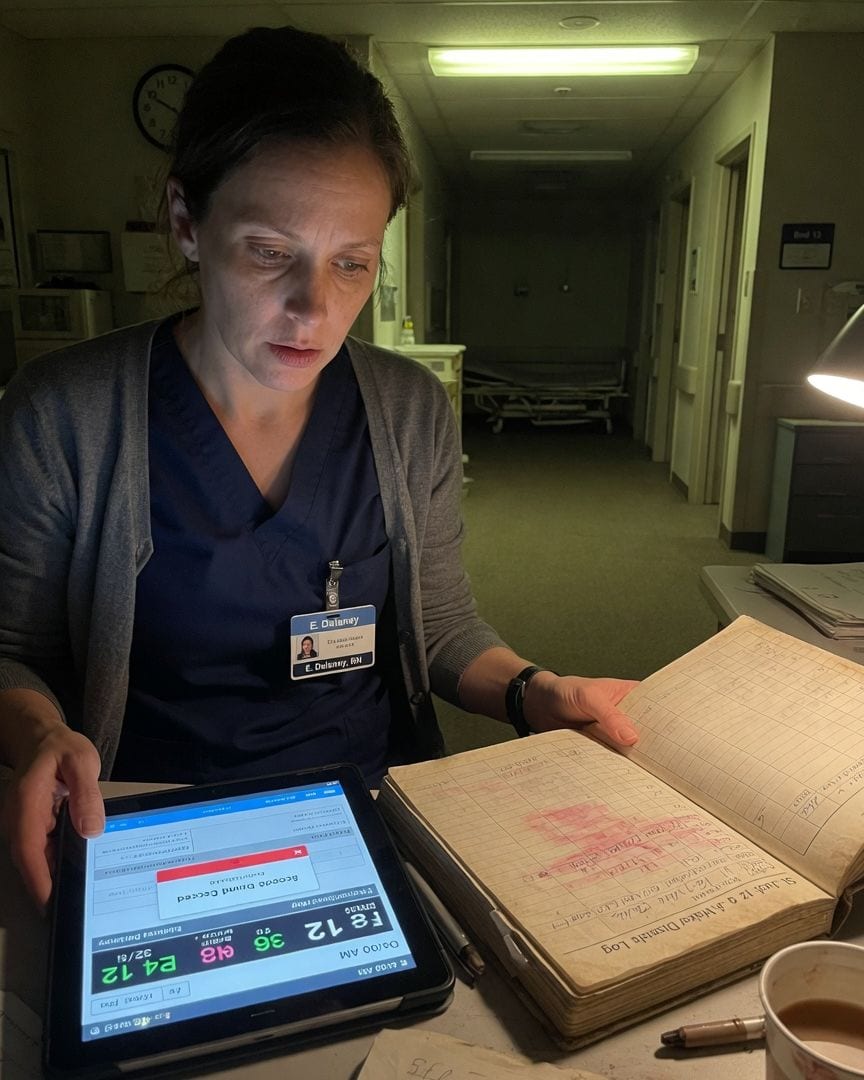
My empty ward's bed 12 had fresh vitals charted. The system says I entered them.
Working my usual night shift at St. Jude's, I pulled up the monitor system to log patient vitals for Ward 12. My thumb paused at Bed 12, where a full set of readings was already timestamped and logged under *my* ID. But Bed 12 was utterly stripped and empty; it had been discharged days ago.
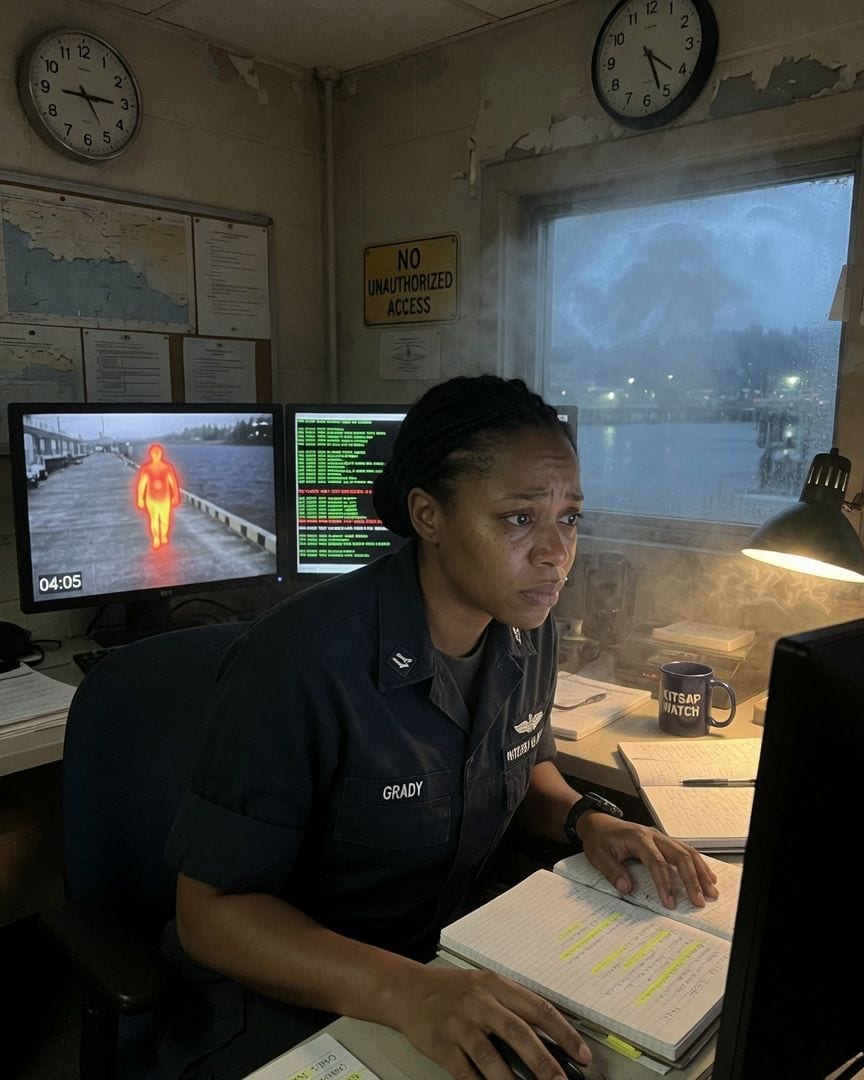
Petty Officer Olivia Grady found the base system logging impossible access at 0405. Every night for years, a blank ID walks Pier 7.
Petty Officer Olivia Grady stood her predawn watch on Pier 7, the cold mist of Puget Sound a familiar companion. Her routine scan of monitors at 0405 was shattered when an IR sensor flared with a man-sized heat bloom moving along the pier. Yet the camera feed showed only empty concrete and swirling mist. When historical logs confirmed the invisible presence had walked that exact path every night for years, Olivia dug deeper. She found a ghost "access log" entry with a unique ID but no name attached, meticulously aligned with the 0405 bloom. What impossible entity was the base system logging, night after night?
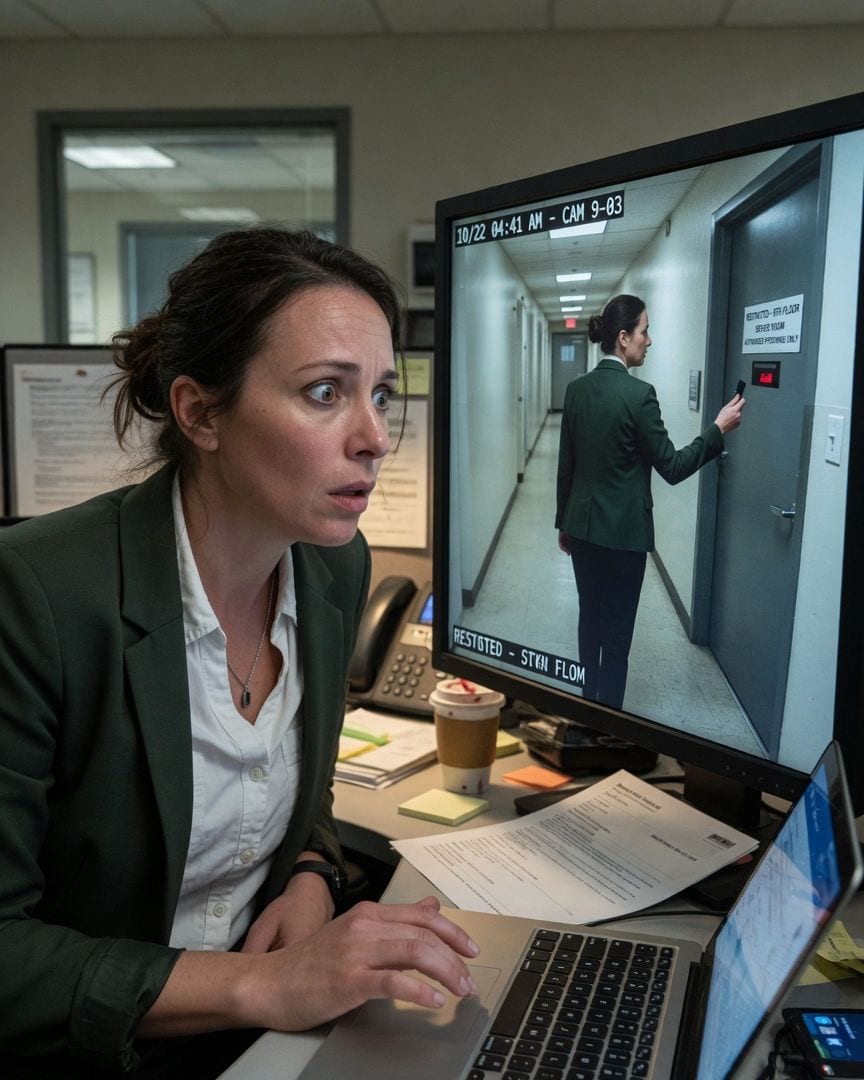
My keycard log shows me in the server room at 4:41am. I was asleep, and my badge was at home.
An email from corporate IT reveals my keycard registered entry into a restricted server room at 4:41 AM last Sunday. I was asleep in my apartment across town, my badge clipped securely to my jacket at home. But then I scrolled down and found eleven more impossible entries, all within the past week, all under my name.
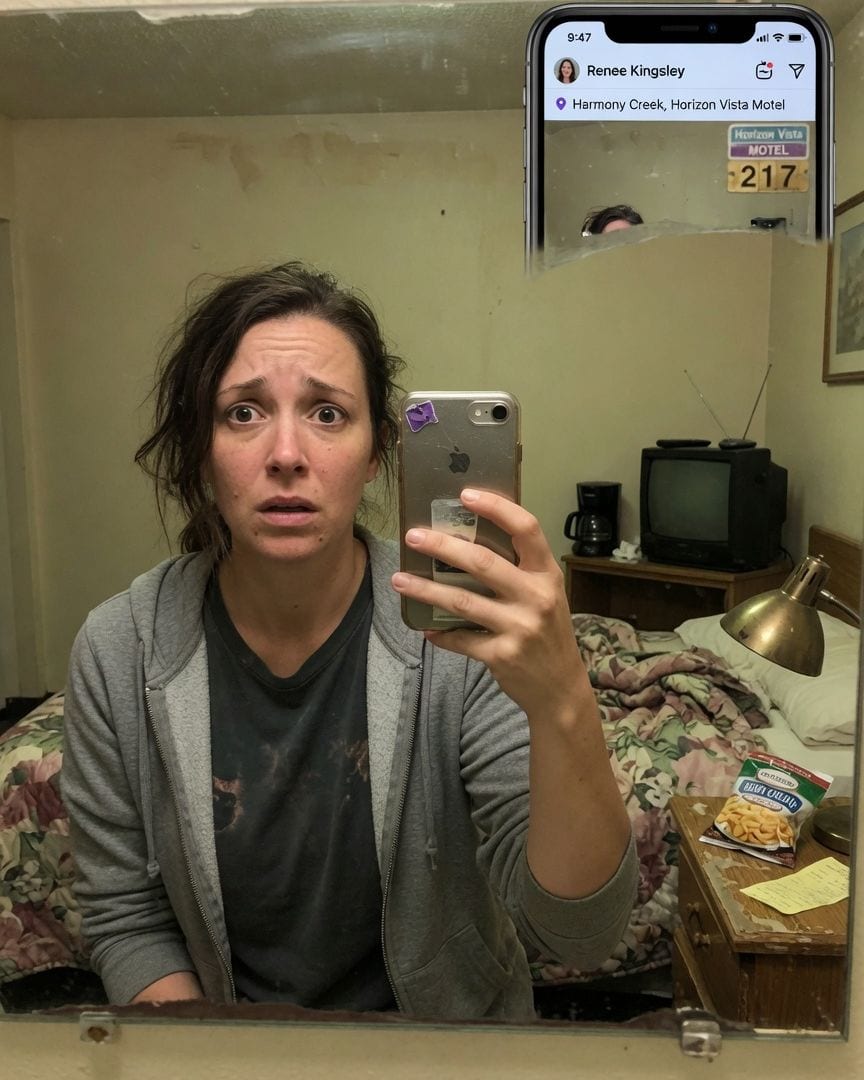
My apartment door opened and closed at 1:20 AM last Thursday, then my digital keycard checked into a motel six hours away, all while I slept.
My Tuesday morning began like any other, until I opened my phone's photo app. Instead of hike pictures, I found forty new photos: a motel room in Harmony Creek, six hours northeast. The last image was a mirror selfie of *my* face, holding *my* phone, but I was asleep in my bed the entire time.
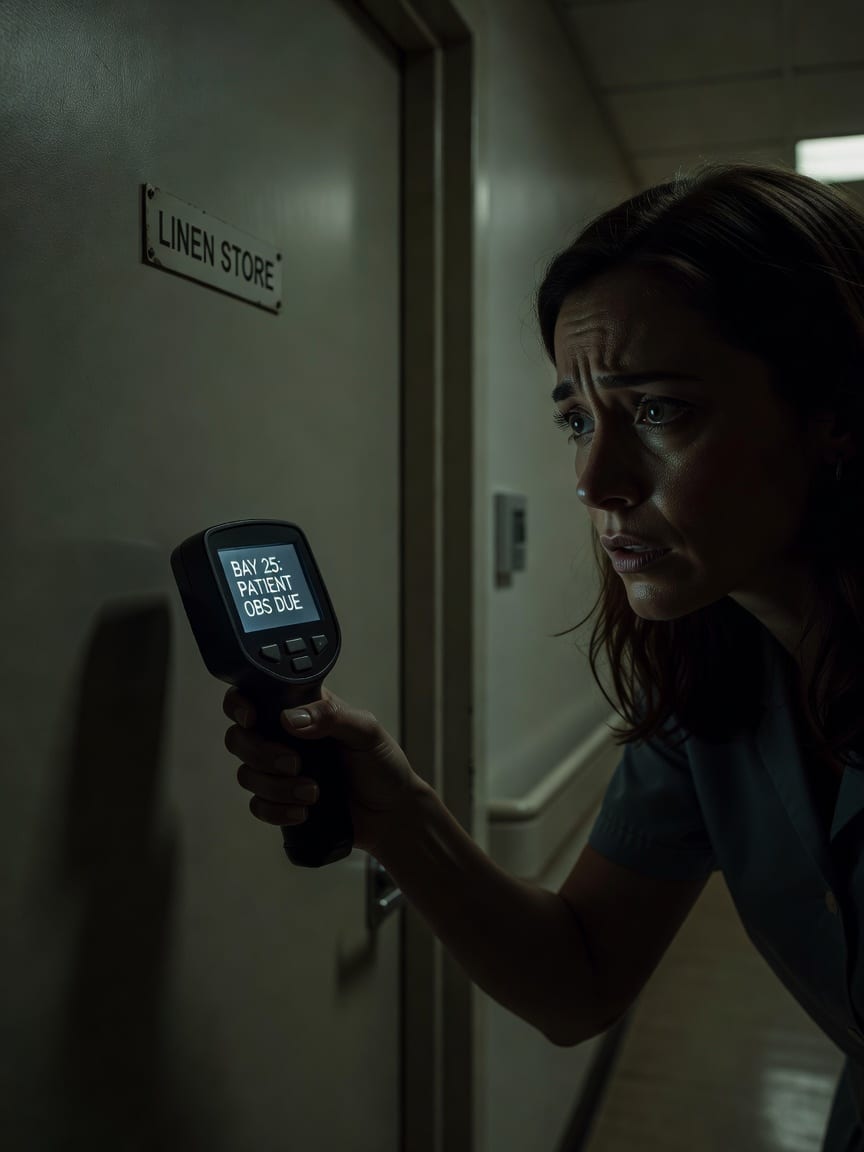
My hospital scanner demands patient care in Bay 25. Bay 25 is a locked linen closet.
I'm a pragmatic nurse, used to my hospital's quiet night shifts. But for a fortnight, my scanner has logged phantom patients in 'Bay 25' — a room that's just a linen closet. Then, tucked away, I found an old patient ID bracelet, faded but clear: 'Bay 25.'