My empty cottage neighbor's electricity meter still climbs every night, and everyone in town says no one has ever lived there.
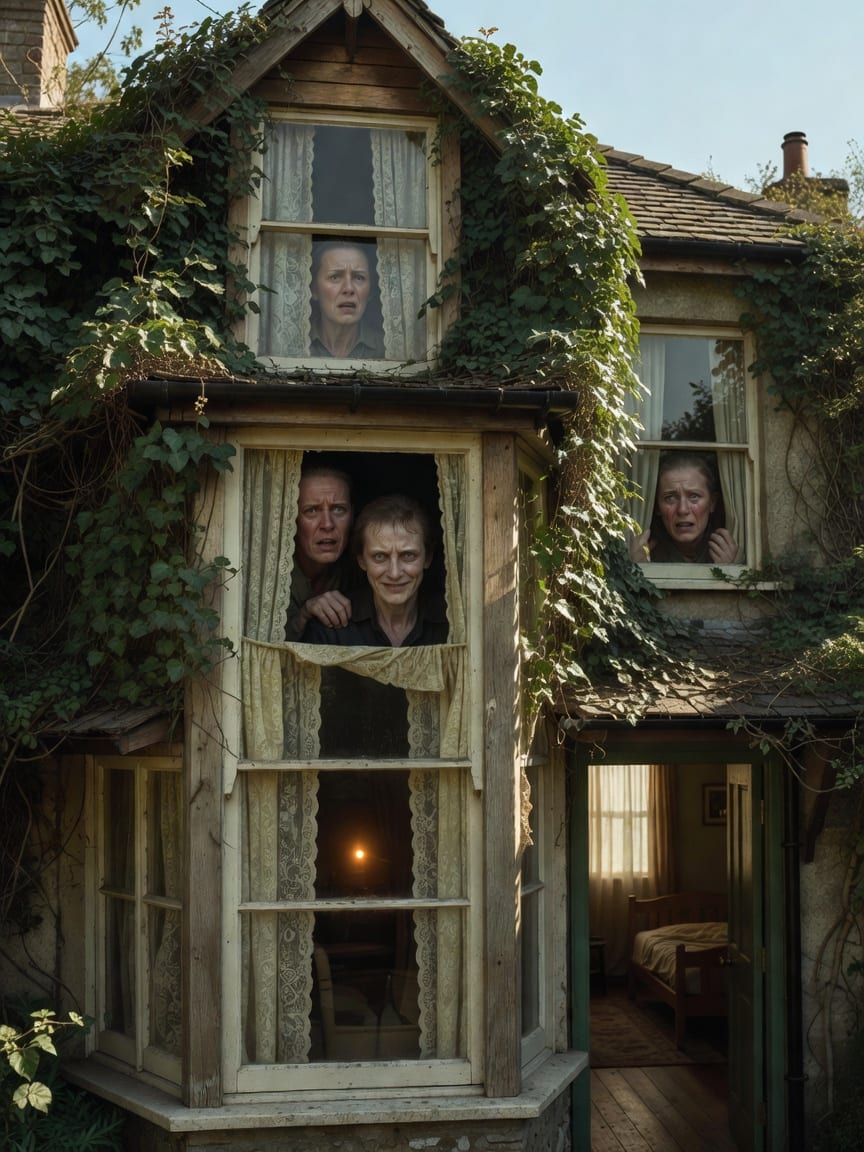
The quiet of Oakhaven village was supposed to be my fresh start. Thirty-eight, systems analyst, looking for anything but the grind. My new cottage was quaint enough, small and snug, exactly what the brochure promised.
It came with an unsettling neighbor, though: an overgrown, slightly dilapidated cottage right next door, its paint peeling, windows filmed with grime.
Every local I met, from George Pierce, the estate agent who sold me the place, to Raymond Hayes, the vicar, to my new neighbors Kathleen Norwood, Preston Ford, and Genevieve Crane, all said the same thing. "Oh, that old place?
Always been empty, dear," Kathleen had smiled, a little too smoothly, over a cup of terrible tea. "No one's lived there for years. Generations, even."
I believe in data. I believe in what I can see. So, on my first evening, setting up my own utilities, I photographed my cottage's electricity meter for my records.
Then, on a whim, I snapped a picture of the dusty meter on the side of the 'empty' cottage. It was still turning. The little disc spun, sluggish but steady.
I checked it again before bed, flashlight cutting through the gloom. The numbers had climbed. Not much, just a tick, but enough to register. Every night that week, I watched it. The quiet, impossible hum in the village’s peaceful silence.
It climbed a little more, every single time.
The climbing meter became an obsession, a tiny, gnawing puzzle in my quiet new life. I tried to rationalize it. A forgotten connection, maybe. A squatter, hidden away, though there were no signs of forced entry.
Or faulty wiring, leaching power from the grid. But the unanimous local denial gnawed at me, a constant whisper that none of my mundane explanations fit. They all said never. How could a meter turn for never?
One afternoon, I was weeding a particularly aggressive patch of bindweed near the property line, right where my garden met the cottage's overgrown yard. The air was still, heavy with the scent of damp earth.
I noticed a loose window latch on the cottage’s rear, barely visible behind a tangle of ivy. It looked old, rusted, but not broken. I pushed gently. It yielded with a soft click.
Inside, the air was thick, heavy with dust and a faint, sweet, metallic scent I couldn't place. Not decay, not flowers. Something else. The light was dim, green from the leaves outside.
It wasn't derelict in the way abandoned places usually are. No broken glass, no signs of forced entry, no trash or debris. Just… empty. Or so it seemed.
The main room was barren, the floorboards groaning under my weight as I stepped inside. Dust lay like a blanket over everything.
But in a smaller room, clearly once a child's bedroom, one item stood out. On a dusty, unpainted dresser, centrally placed as if on display, sat a single, old, porcelain doll.
Its china face was serene, its eyes wide and unblinking, fixed on the doorway. Its faded calico dress was stiff with age. No other furniture. No other toys. No other sign of life or habitation. Just the doll.
It wasn't random junk, dropped and forgotten. It was placed, almost carefully, precisely, as if waiting. I ran my finger over the thick dust on the dresser, leaving a clear trail. The doll, however, was spotless.
Not a speck of dust on its face or dress. The ordinary explanations fractured under the weight of that one, impossibly clean, impossibly placed object in a house declared uninhabited for generations, its meter still turning.
I picked up the doll. Its porcelain skin felt cool, almost clammy, beneath my fingers. The calico dress, though faded, was intricately stitched with tiny, perfect seams.
I noticed a small, embroidered initial ‘M’ on the doll’s bodice, almost hidden in a fold of the fabric. Turning the doll over, I felt a slight roughness on its delicate porcelain foot.
Squinting in the dim light filtering through the grimy window, I saw faint, penciled script on the underside. Barely legible, worn smooth by time, but undeniably there, was a name: 'Mary Beaumont.' The estate agent had said no one.
The vicar had said always empty. But Mary Beaumont was here, or had been. The doll felt heavier in my hands.
The name 'Mary Beaumont' echoed in my mind, a persistent, chilling hum. I started with the local library’s digital archives, searching property records, census data, anything that might connect a Mary Beaumont to that cottage.
The address yielded suspiciously sparse results, often ending in 'unknown occupant' or simply blank. No 'Mary Beaumont' surfaced as a registered resident. Not ever.
Determined, I visited the village’s physical archives, a dusty, quiet room tucked behind the old town hall. Leonard Beaumont, the archivist, a man in his seventies with a calm, almost serene demeanor, greeted me.
His glasses perched on the end of his nose, he looked up from a stack of faded deeds. He listened patiently as I inquired about the cottage and any historical residents.
He confirmed, without a flicker of surprise, that there were no official records of a 'Mary Beaumont' ever owning or residing in that specific cottage, or indeed any Beaumont directly connected to that address.
His voice was smooth, unbothered, echoing the town's consensus. Just like everyone else.
But while Leonard was distracted with another visitor, offering advice on ancient land boundaries, my eyes scanned the shelves.
Tucked beneath a stack of old land deeds, I spotted a heavy, leather-bound parish ledger, its cover embossed with a faded cross. It listed births, marriages, and deaths from centuries past.
Flipping through the brittle, tissue-thin pages, my finger tracing the faded ink, I found several entries for 'Mary Beaumont' over the centuries. One, dated 1888, caught my eye.
Next to the name, almost imperceptible, a small, hand-drawn symbol: a perfect circle with a single dot in its center. A chill ran down my spine.
It was identical to a faint, barely visible etching I’d noticed on the porcelain doll’s back.
I left the archives with the weight of the ledger’s secret pressing on me. The village, once charming, now felt like a stage, the people actors. I had the distinct, unsettling sensation of being watched.
As I walked past the village green, the midday sun glinting off the war memorial, I saw Raymond Hayes, the vicar, standing near it, seemingly lost in thought. He nodded to me, a polite, distant acknowledgment, then turned his back.
A few blocks later, as I approached my own street, I saw him again. He was emerging from the small convenience store, a brown paper bag of groceries in hand. This time, he paused.
He waited until I was almost level with him. "Eileen," he said, his voice gentle but firm, like a soft hand on your shoulder that doesn't let you pass. "I hope your research is proving fruitful.
But some things, my dear, are best left undisturbed. For the peace of the community." His gaze was steady, unwavering, and contained a depth I hadn't noticed before.
He offered a small, knowing smile, then continued on his way, leaving me standing on the pavement. The message was clear.
That night, back in my cottage, the unspoken warning hung heavy in the air. I drew my curtains, but the unsettling feeling persisted, crawling on my skin. I glanced out a gap in the fabric at the cottage next door.
The windows were dark, as usual. Empty. Then, a faint, warm glow flickered in one of the upstairs windows, visible through a sheer, dusty curtain. It settled into a steady, soft radiance, like a small, quiet lamp.
Eileen knew, with a certainty that turned her stomach to ice, that the light hadn't been on moments before. Someone, or something, was very much awake next door.
The next morning, I returned to the archives, the parish ledger clutched in my hand, its heavy cover a shield. Leonard Beaumont was at his desk, calmly cataloging documents, his movements slow and precise.
I laid the open ledger before him, my finger trembling slightly as I pointed to the 1888 'Mary Beaumont' entry and the tiny symbol. Leonard’s eyes, though ancient, held no surprise, no fear, no flicker of anything. Just calm.
"Ah, the old ledger," he murmured, his voice as unhurried as ever. "A fascinating record, isn't it?"
I pressed him. "The doll. The meter. The light next door. And this. It’s not just a name, is it? This symbol matches the doll."
Leonard sighed, a soft, almost wistful sound, like a man tired but resigned. "No, Eileen, it’s not just a name. And the cottage… it isn't 'empty' in the way the estate agent explains it. Or the vicar. Or your neighbors."
He leaned back, his gaze steady, fixed somewhere beyond me, as if watching a distant, inevitable tide. "For generations, my family, the Beaumonts, have been tasked with… managing a presence in that cottage. Ensuring it remains contained.
The electricity meter, as you’ve observed, is essential. It isn't for a human resident. It’s for sustenance. For focus."
I felt a wave of nausea. "Sustenance? What the hell are you talking about?"
Leonard’s voice remained even, a flat, unsettling drone. "Mary Beaumont was not a resident, Eileen. She was… a manifestation. One of many that have occurred when the previous containment wasn't quite sufficient, or when the energy became too strong.
The town, you see, agreed long ago to deny its existence to outsiders. To prevent panic. To prevent interference. It’s a cyclical thing, Eileen. It comes and goes.
The doll… that would be a remnant from a previous cycle, perhaps a child's toy left behind by one of the earlier forms."
The pieces clicked into place with horrifying precision. The smooth denials, the evasive smiles, the calm steering away from the subject – it was all part of a generations-old, carefully maintained lie.
The dread wasn't in the unknown, but in the sudden, terrible coherence. The town wasn't just superstitious; they were complicit. Every one of them.
I stared at Leonard, the implications of his words chilling me to the bone. "A cycle?" I whispered, the word a foreign taste in my mouth. "How many times has this happened?"
Leonard didn’t answer immediately. Instead, he reached for a much more recent ledger, its binding less worn, its pages still crisp, clearly kept by his own hand. He opened it to a specific page and slid it across the desk.
My eyes dropped to the line. I saw another 'Mary Beaumont' entry, but this one was from 1972.
And next to it, the same symbol, but this time with a precise date range written next to it in Leonard’s neat hand: '1972-1978.' My breath hitched. This wasn't just ancient history. This was within living memory. My living memory.
Leonard then gestured to a faded, sepia-toned photograph on his desk, an old school photo from the early 70s. In the back row, a young girl, no older than ten, smiled faintly, a serene, almost unnerving expression on her face.
She had the same distinctive symbol embroidered on her dress collar. Her face, her eyes – she looked exactly like the porcelain doll I had found. A cold dread seeped into Eileen’s bones.
The doll wasn't just a remnant; it was a replica. And as I looked up, past Leonard and the rows of dusty archives, through the grimy pane of the archive window, I saw my own cottage in the distance.
And in the cottage next door, through a gap in the curtains, the faint glow in the upstairs window was no longer alone.
A second, smaller, softer light had just appeared in the window directly adjacent to it, a new, unsettling warmth spreading into the darkness.
The second light next door, twin to the first, detonated the full horror of Leonard Beaumont’s words. I gripped the ledger, the dates 1888 and 1972 screaming at me from the page. "Two?" I choked out, my voice raw.
"There are two of them now?"
Leonard nodded, his expression unreadable, calm as a stone. "Sometimes it intensifies. Especially if the containment is… disturbed. The doll, the symbol, the name 'Mary Beaumont' – these are anchors.
The entity manifests, often as a child, and we guide it, contain it, ensure it draws its energy from the grid, not… elsewhere." He paused, his gaze drifting towards the window, towards the two faint glows next door.
His eyes were unsettlingly vacant, like he’d seen it all before. "It’s not truly alive in the way you or I are. It’s a presence. It feeds on ambient energy, and the electricity, Eileen, is a lure.
A way to focus its hunger, to keep it from spreading.
The pact, the denials, the smooth stories – it's all to maintain the cycle, to keep the village, and the world beyond, safe from what happens if it's left unchecked. If it multiplies. We’ve managed it for generations.
My family's burden. My ancestors built that cottage specifically for this purpose." He explained that the 'Mary Beaumont' from 1972 was another manifestation, another iteration.
The doll was a physical echo, a memory from an earlier cycle, the form the presence had taken. The meter’s climbing usage wasn't for one, but for two entities now.
The dread wasn’t just that it was real, but that it all made a terrible, coherent sense, and the town was willfully complicit in this generations-long horror.
My mind raced. Two manifestations, feeding, growing, contained by a town that simply let it happen, that actively participated.
The rational part of me screamed for a logical solution, a phone call to the authorities, but the dread-filled part knew there was none. Who would believe me? Leonard’s calm acceptance was more terrifying than any monster, any shadowy figure.
His lack of concern was the true horror.
I excused myself abruptly, leaving Leonard in his archives, surrounded by his historical truths. I rushed home, my heart pounding in my chest, the sense of urgency a cold knot in my stomach.
My hands trembled as I pulled out my phone. I snapped clear, high-resolution photos of the 1888 and 1972 ledger entries, making sure the symbols and dates were legible.
I took a close-up of the faded school photo of the girl from 1972.
Then, from my bedroom window, I zoomed in on the cottage next door, capturing the two distinct, faint lights glowing in the dusk, twin eyes watching me. This was my proof, tangible evidence of the impossible.
As I finished, a movement at the end of my driveway caught my eye. Raymond Hayes, the vicar, and Preston Ford, one of my neighbors, were walking slowly, deliberately, up my path.
Their faces were calm, but their intent was clear. They weren't coming to chat about my garden. They were coming to ensure the 'peace of the community.' I knew I had seconds. My keys, thankfully, were already in my hand.
I didn't bother grabbing my packed boxes, my furniture, my new life. I bolted, out the back door, across my small garden, and into my car. The engine roared to life, a desperate sound.
As I backed out, tires spitting gravel on the drive, I saw Hayes and Ford halfway up my driveway, their faces impassive. They didn’t shout, didn’t run. They just watched.
I floored the accelerator, leaving everything behind, the two men shrinking in my rearview mirror, their calm, unbothered expressions burned into my mind.
I never returned to the village. My house was sold swiftly, George Pierce, the estate agent, handling the transaction with his usual smooth efficiency, remarking only on the 'unusual circumstances' of my sudden departure.
He never mentioned the cottage next door. The cottage itself remained, overgrown, its windows dark to the casual observer, its meter quietly turning, a secret hum in the rural silence.
I, now hundreds of miles away, carried the weight of what I knew, the photos on my phone my only proof, a truth no one would ever believe, or want to.
I now live in a city, a place of comforting noise and anonymity. I avoid quiet villages and old cottages. I keep the photos of the ledger, the schoolgirl, and the glowing windows on my phone, a private, terrifying archive.
I still check the local news for that village, though I know I won't find anything. Nothing ever appears, of course. The town that agrees keeps its secrets well.
I often wonder what Leonard Beaumont is doing, calmly managing the impossible. I wonder if Raymond Hayes and Preston Ford still walk the quiet streets, ensuring 'peace.'
The last time she looked, there were three faint lights in the cottage next door, and a new name had appeared in the village's birth records: 'Mary Beaumont.'
If this one got to you
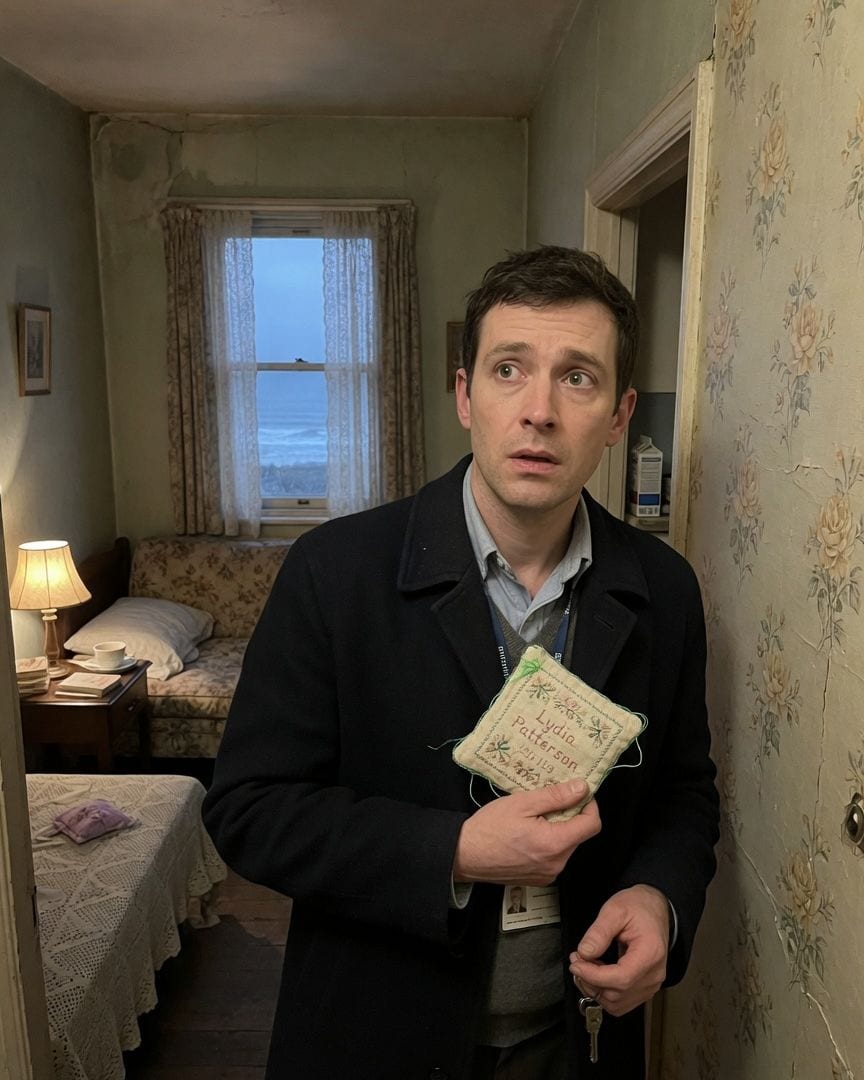
The 'empty' almshouse I was auditing wasn't empty. I heard a bare foot *thump-thump* from next door.
My new charity role involves auditing the supposedly 'empty' almshouse units. But from the unexplained activity outside to a fresh carton of milk inside, something is deeply wrong. Then, in one unit, I found a dead woman's sampler with a jarringly new thread, and heard bare feet thumping next door.
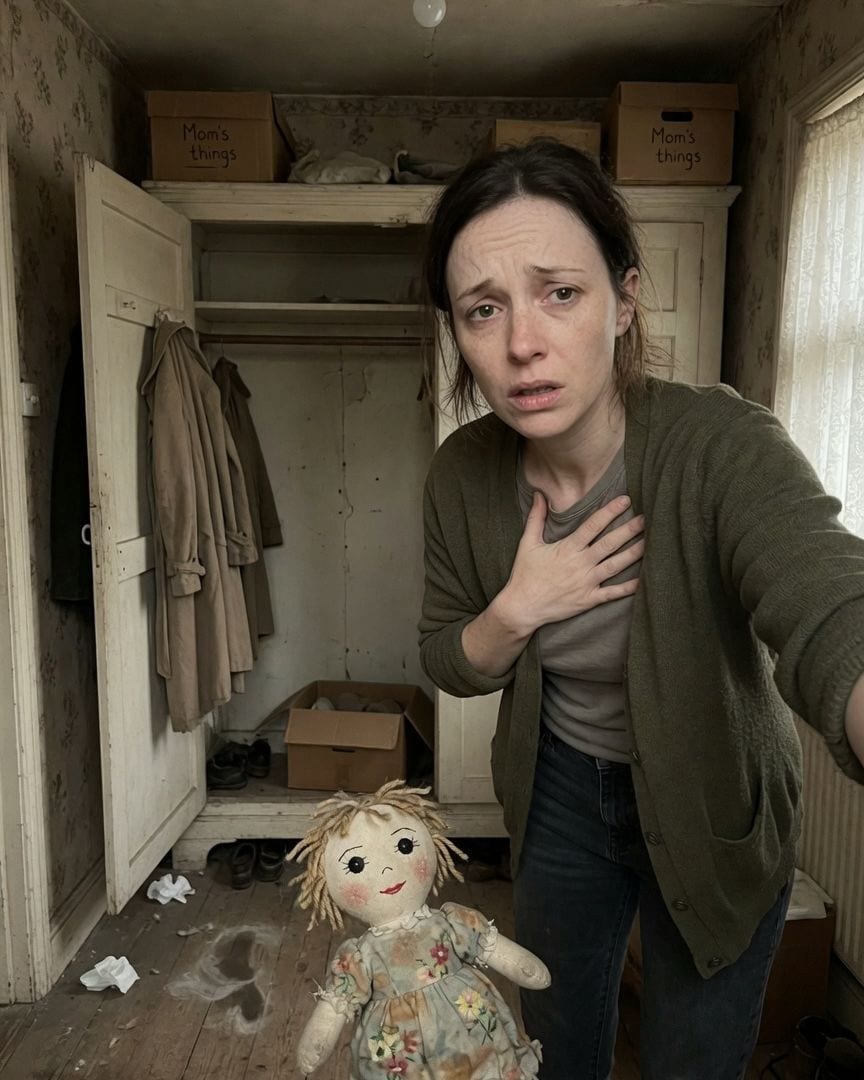
My shallow wardrobe opened into a child's bedroom. I'd knocked on its solid back wall for years. Now the doll from that room is on my floor.
My new house has a box room with a shallow wardrobe, barely a foot deep. But one day, reaching inside, the back wall vanished, opening into a child's bedroom with a cot and a burning nightlight. I slammed the door shut, only for it to be a normal closet again, leaving me with a cold, heavy stone of contradiction.
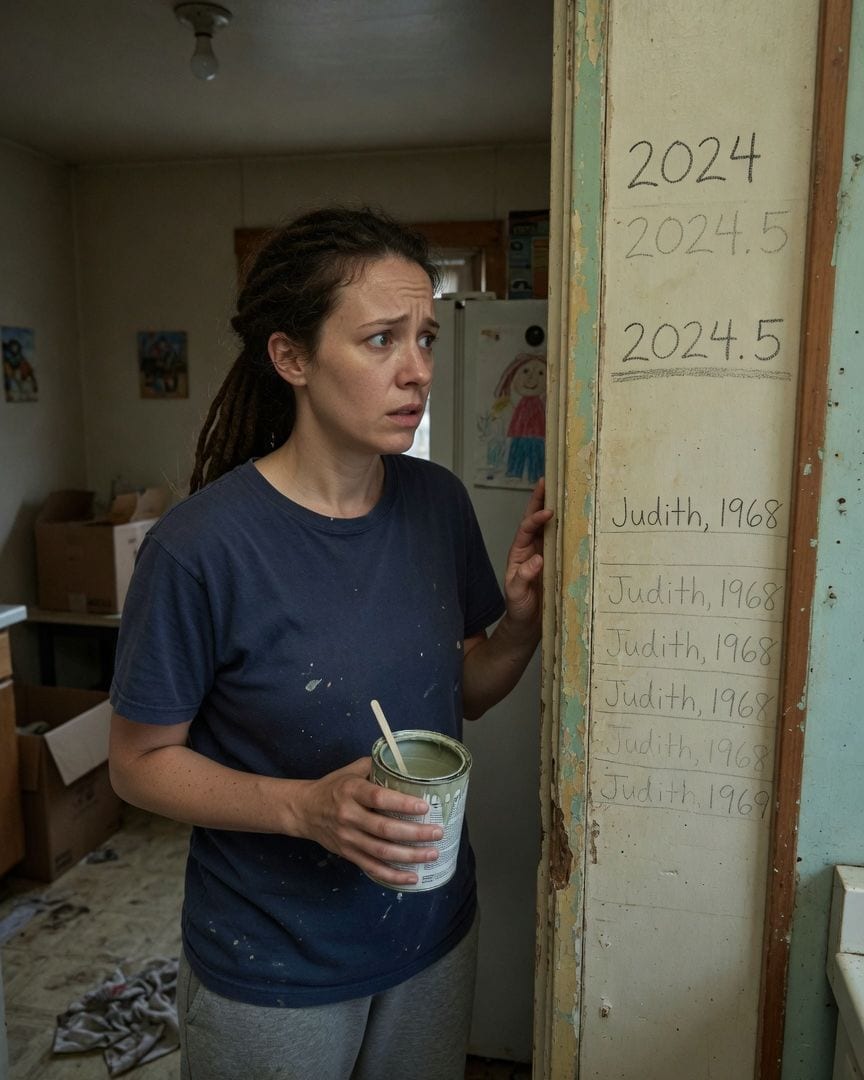
A child's height marks grow on my kitchen doorframe, dated this year, in a house where I live alone.
I moved into my new house, ready for a fresh start, and found a child's old height chart on the kitchen doorframe. The last mark was dated 1968, but a week later, a new one appeared, dated this year, in the exact same looping handwriting. I live completely alone.
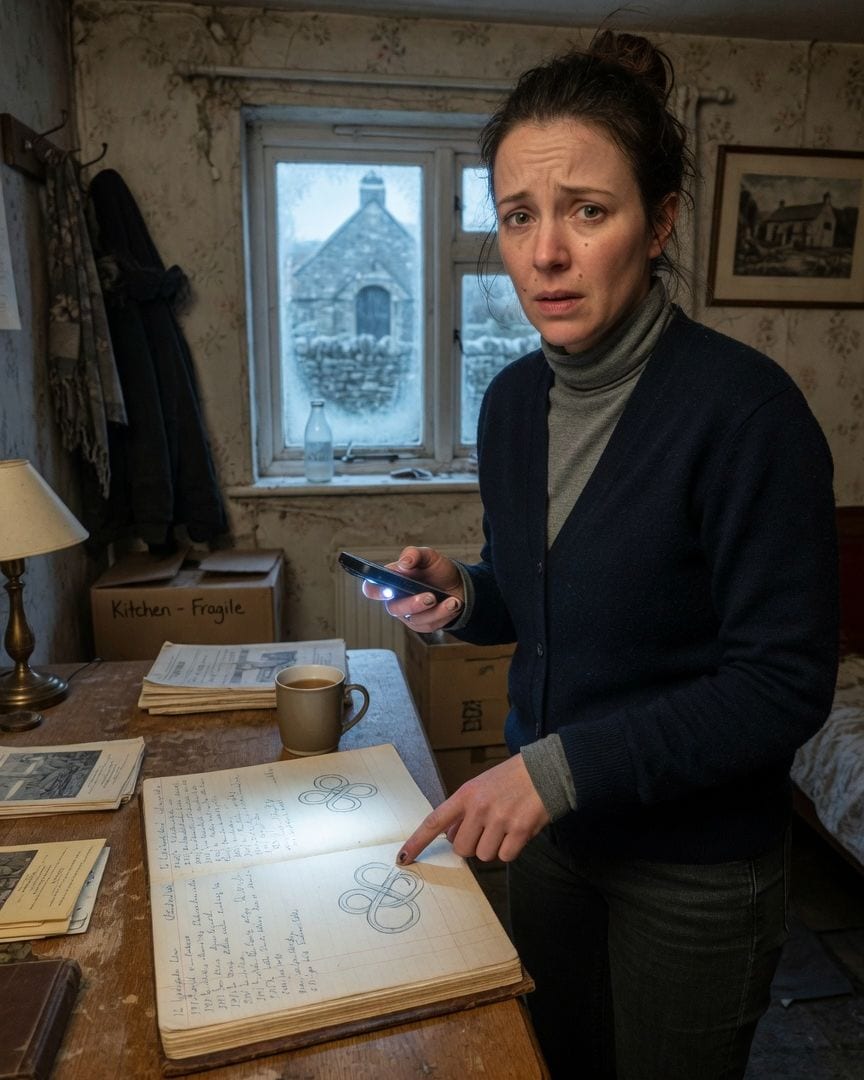
Milk appears daily by my lychgate. The dairy closed in '79. My address is handwritten into their old delivery book, starting the day we moved in.
Moving to Blackwood Creek, I loved the quaint charm, especially the unexpected morning milk delivery to my lychgate. But when I mentioned it to Eleanor at the village shop, her smile froze. She told me Willow Creek Dairy closed decades ago, in '79.
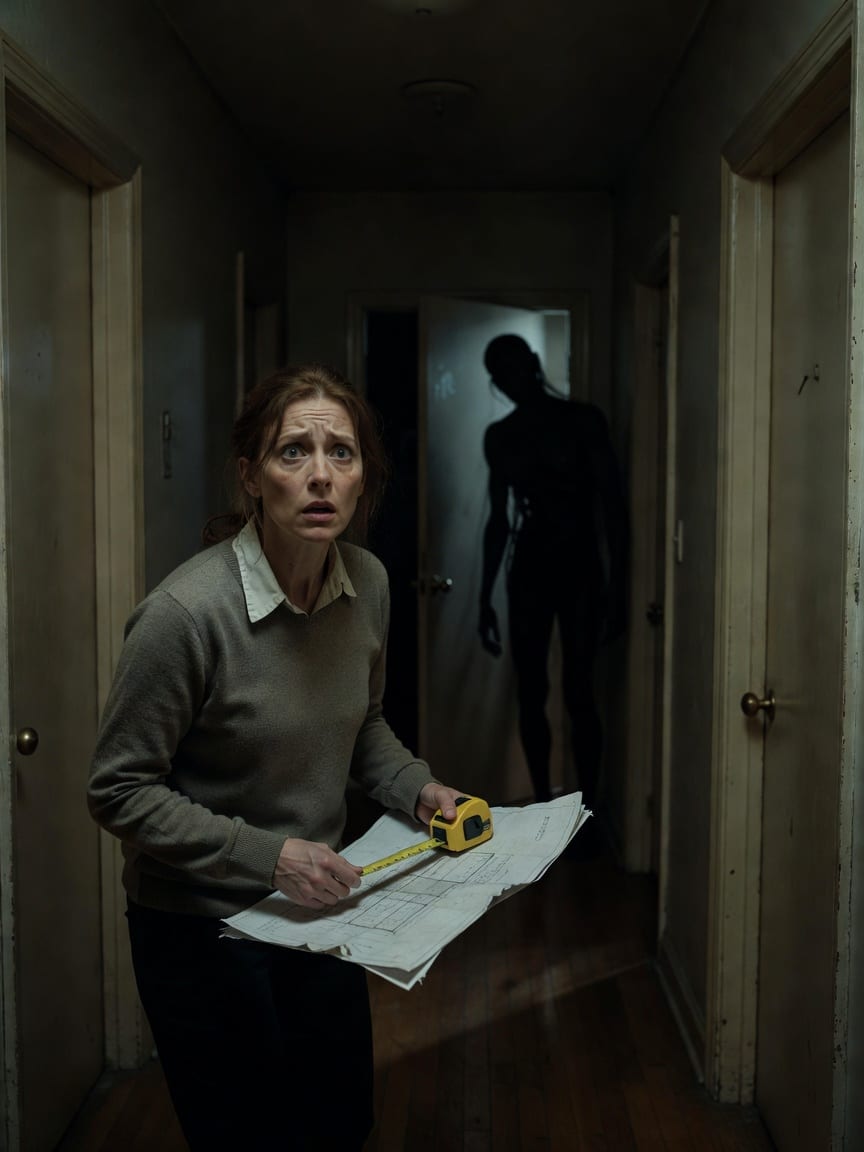
My front door has a dented gate and a dead hydrangea. I walked past it six times, trying to reach the corner shop just a hundred yards away. The pavement kept bringing me back to my own porch, and the shop's light never moved.
My morning started like any other, a quick walk to the corner shop from my home at Number 14, Elm Terrace. But after walking what felt like two minutes, I found myself back at my own front door, the shop no closer. I tried six times, faster and slower, but my street kept compressing, refusing to let me leave.
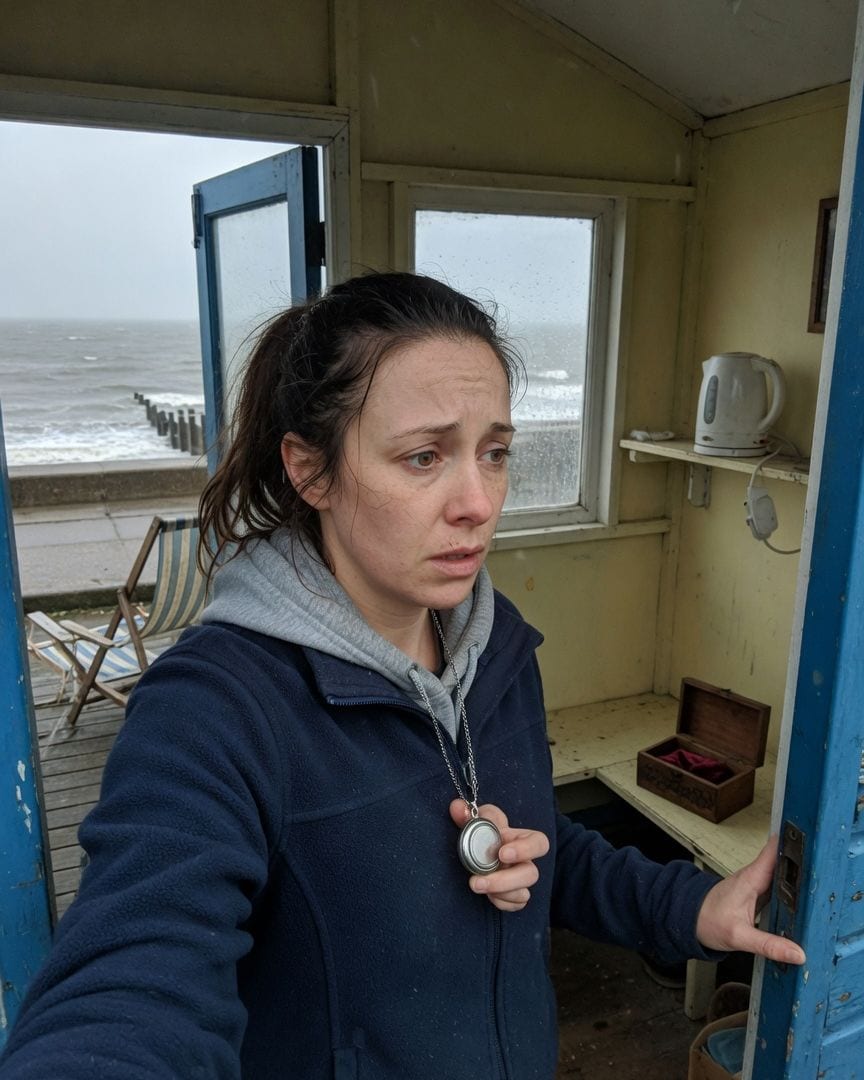
My beach huts run 1 to 60. On Sunday, past 60, was a Hut 61, weathered, with a kettle warm inside, and no record of it ever existing.
I've managed the sixty beach huts on the promenade for five years, knowing every detail. But one Sunday, a new one appeared: Hut 61. Inside, the air was warm and a kettle still steaming, as if someone had just stepped away, yet my booking book holds no record of it.