My farm ledger reveals a precise, eight-year pattern: Number 62 always disappears from the same cold field.
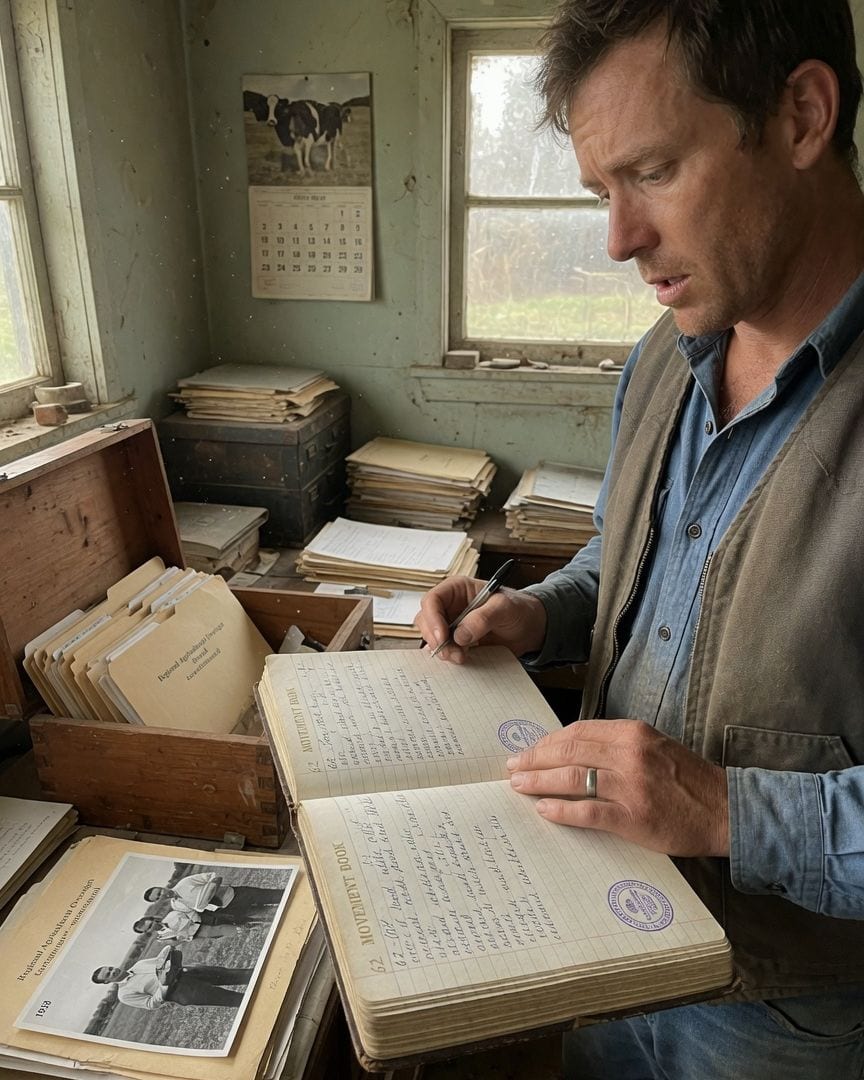
I stood in the dust-scented quiet of my farm office, the afternoon light thin through the single, grimy window. My pen hovered over the thick, ledger-style movement book, ready to mark this year's new calves.
This spring, a Jersey heifer, all gangly legs and soft eyes, had calved, and it was time to assign her a herd number. Number 62.
I'd always liked the order of it, the neat progression of figures in ink across the pages, the history of our small dairy farm laid out in plain black and white.
But as I flipped back through the previous volumes, tracing the records, something caught my eye. Number 62. It was there, eight years ago, assigned to a black Angus steer. I remembered him, a stubborn brute.
And eight years before that, a dairy cow. Before that, another. Every eighth year since 1950, the same number had been logged. It was like clockwork, a precise, unsettling rhythm.
Each entry concluded with the same cryptic phrase, written in the same precise hand, generation after generation: 'strayed, not recovered, number to stand.'
And each time, beneath it, the official stamp of the Regional Agricultural Oversight Board, stark and unyielding: 'retain the number to the herd.'
All of them, every single Number 62, logged as lost from the same field, too.
Our 'top field,' the one just past the old oak grove, where the ground always felt a little softer, a little colder underfoot, even in summer.
The chill that ran up my arm wasn't from the draft through the old window, but from the quiet, perfect repetition. It wasn't just a coincidence; it was a ritual, documented in painstaking detail.
I tried to tell myself it was just some bureaucratic quirk, a way to recycle numbers, but the phrase 'number to stand' snagged in my mind. Why would a number need to 'stand' if the animal was just lost?
And why always the same number? The sense of order I usually found comforting in these books now felt like a carefully maintained pattern of something deeply wrong.
I couldn't shake the pattern. It wasn't just a coincidence; it was a ritual, meticulously documented over decades. For days, the image of that repeated entry, the stern ministry stamp, haunted me.
I tried to rationalize it – a mistake, a clerical error that somehow propagated itself. But the sheer consistency, the eight-year cycle, felt too deliberate.
I started sifting through my grandfather’s old farm papers, stored in a dusty cedar trunk in the attic. It smelled of old hay and mothballs, a scent I usually associated with comfort and family history.
Among the yellowed receipts, faded seed catalogs, and hand-drawn maps of the property, I found it: a slim, official-looking folder, the paper brittle with age. It was marked 'Regional Agricultural Oversight Board – Confidential.'
My hand trembled slightly as I opened it. It felt heavy, not with physical weight, but with implication. Inside was a document titled 'Special Handling Protocol, Top Field Parcel 7B, 1958.' My top field. The very same one.
My breath hitched, a dry catch in my throat.
The document was mostly bureaucratic jargon about land use, drainage, and environmental impact assessments, the kind of dry reading that usually put me to sleep.
But near the bottom of the second page, one entire line was blacked out, a thick, deliberate rectangle of ink that stood out violently against the faded typeface.
I held the paper up to the light, hoping to see through it, then tried rubbing the surface gently with my thumb, but the redaction was absolute. It was meant to be unreadable.
Still, the words around it, half-visible where the ink had thinned or the line wasn't perfectly straight, began to form a chilling mosaic.
'…Barlow, George…' I could just make out, followed by '…asset management…' The words made no sense in context, not with cattle.
And then, unmistakably, '…Herd Number 62…' It was my great-uncle George, who’d farmed this land in the 50s, his name now linked to the mysterious number, to this 'Special Handling Protocol.'
The ordinary explanation—a simple administrative error, a clerical quirk—dissolved completely, leaving behind a cold, hard knot of dread in my stomach. This wasn't a mistake; this was a record.
A deliberately hidden record of something involving my own family and that cursed field.
Deep within the same folder, beneath the redacted protocol, I found a faded, black-and-white photograph. It showed my great-uncle George, younger than I’d ever seen him, looking serious, almost grim.
He was standing in the very 'top field' with a group of stern-faced men in dark suits. They weren't smiling. The photo was dated 1958, the exact same year as the 'Special Handling Protocol.'
One of the men, a tall, gaunt figure whose face was obscured by the shadows of a wide-brimmed hat, held a clipboard.
He wasn't looking at the camera, but intently at something just out of frame, at the ground, as if waiting for a cue.
I flipped the photo over. On the back, almost imperceptibly, was a faint, circular indentation. It wasn't ink, but a ghost-like impression, a perfect, raised ring in the paper, pressed into it as if by a heavy hand.
I recognized it instantly: the precise shape and size of the 'Regional Agricultural Oversight Board' stamp from the movement books.
The photo wasn't just a memory; it was a physical part of the filed record, a silent witness to whatever had been happening in that field that year.
I tried contacting the Regional Agricultural Oversight Board. The phone calls were a frustrating loop of transfers and evasive answers, each new person I spoke to more detached than the last.
"Archived records, ma'am, no one here would know about protocols from the fifties." They treated me like a nuisance, my questions dismissed as rural eccentricity, a farmer with too much time on her hands.
The more they deflected, the more I knew I was on the right track. My 'ordinary explanation' for their reticence—simple bureaucracy—was failing fast. Their dismissiveness felt too practiced, too smooth.
Undeterred, I sought out Marcus Doyle, a retired county clerk and local historian, known for his encyclopedic memory of the region's past.
I found him in the town library, hunched over a pile of microfiche, looking like a wizard of forgotten facts.
Marcus, a man with a neatly trimmed gray beard and eyes that held generations of stories, listened intently as I recounted the strange pattern of Herd Number 62, the redacted document, and the photo.
He nodded slowly, occasionally muttering to himself. "Hm. Barlows. Good, solid family. Always kept their land, kept their secrets." He remembered whispers, old rumors that circulated among the county officials back when he was starting out.
'Special land designations' he called them, and 'unusual harvest cycles' tied to certain family farms. Always managed, he said, by an obscure, unlisted department within the Agricultural Board. "They had their own codes, their own… procedures."
He leaned back, his chair creaking. He mentioned a name, Henry Radcliffe, a former official who'd handled these 'sensitive agricultural matters' for decades before vanishing into retirement.
"He was the quiet one," Marcus mused, looking out the window, "always with the forms, the stamps. Knew every field, every family, every… arrangement."
The casual, almost flat way he said 'arrangement' sent a fresh shiver down my spine, colder than any draft. It wasn't a monster I was chasing; it was something far more mundane, and therefore, far more terrifying.
I now had a name, a thread to follow, leading not to a creature, but to a man who knew how to file one.
My search for Henry Radcliffe led me down a series of dead ends – an old address that turned out to be a boarded-up general store, a disconnected phone number that rang into silence.
It felt like I was being deliberately blocked, or that the trail had been swept clean. The frustration coiled in my gut, tightening with each failed lead. Then, the anonymous call came.
It was late evening, the house quiet save for the hum of the refrigerator. The voice was calm, modulated, devoid of inflection, like a recording. “Some things are best left undisturbed, Ms. Barlow. Let sleeping fields lie.”
The line went dead before I could even ask who it was. My hands were shaking when I hung up the phone.
Later that day, as I drove back to the farm, my headlights cut through the gathering dusk. I noticed a dark, unmarked sedan parked discreetly on the gravel road leading to my property, half-hidden by a stand of oaks.
Its windows were tinted, reflecting the last sliver of light. It was still there hours later, a silent, watchful presence, a dark smudge against the night. Paranoia, I told myself. Just a coincidence. But my gut screamed otherwise.
The next morning, the sedan was gone, but as I checked my mailbox, my fingers brushed against something cold and metallic beneath the post, tucked into the dry grass.
It was a small, cylindrical device, sleek and old-fashioned, about the size of my thumb. It looked almost like a miniature, archaic tracking beacon, heavier than it should have been.
I remembered a faint diagram on the 'Special Handling Protocol' document – a 'field monitoring unit.' My heart hammered against my ribs, a frantic drumbeat. They weren’t just watching the fields; they were watching her.
The anonymous call, the car, this device. The danger had become personal, tangible, and far too close to home. The mundane explanation—a dropped toy, an old piece of equipment—shattered. This was deliberate.
I found Henry Radcliffe in a quiet, immaculate assisted living facility outside the county seat, his mind sharp despite his age.
He sat in a sunlit common room, a half-finished crossword puzzle on his lap, a neat cardigan buttoned over a crisp shirt. He didn't seem surprised to see me. No, he acted as if he’d been expecting me.
“The Barlow girl,” he murmured, a faint, almost imperceptible smile touching his thin lips. “Always was a curious family.” His eyes, pale and watery with age, still held a piercing intelligence.
I laid out my evidence on the polished coffee table between us: the heavy movement books, open to the repeated Number 62 entries; the brittle, redacted protocol document; the faded photograph of George and the stern men; and finally, the small, cold tracking device I’d found by my mailbox.
Radcliffe picked up the device, turning it over in his hand with a strange, almost wistful nostalgia. “Ah, a classic. Still works, I imagine.” He didn’t seem perturbed. He didn’t deny anything.
He spoke of the 'top field' not as a farm parcel, but as a 'containment zone.'
He explained, in a voice as calm and unbothered as the anonymous caller's, that a cyclical biological entity resided beneath it, a natural phenomenon that required 'management.' He didn't use sensational words like 'monster.'
It was simply 'a thing that is.' 'Herd Number 62,' he revealed, was not an animal, but a designation for the 'annual offering' that appeased and sustained the entity, ensuring it remained dormant and localized.
"The system has worked for generations, Ms. Barlow," he stated, his eyes fixed on mine, completely devoid of malice or fear. "Your family, the Barlows, were trusted custodians of that field. They understood its… unique requirements."
He spoke of the entity not as a monster from a nightmare, but as a force of nature, like a river needing to flow, and of the offerings as simply 'maintaining balance.'
The records, he said, were just 'administrative safeguards,' bureaucratic necessities to ensure continuity.
I felt the world tilt on its axis. The cryptic phrases, the repeated numbers, the quiet bureaucracy—it all snapped into horrifying focus.
It wasn't an accident; it was a deliberate, generations-old system of appeasement, calmly managed by an institution that presented itself as a mundane agricultural oversight board.
My attempts to find an ordinary explanation had failed because there was no ordinary explanation; there was only this chilling, methodical truth.
Radcliffe leaned forward, his voice dropping to a near whisper, though his composure remained absolute, unnervingly placid. "The annual offering was usually livestock, of course. Practical. Efficient. Much less… problematic."
He paused, a flicker of something, perhaps regret, or merely calculation, in his pale eyes. "But there were exceptions during periods of scarcity, or specific environmental triggers that heightened the entity's… activity."
He gestured to a small, locked drawer in a nearby antique desk, a heavy, dark wood piece that looked like it belonged to a different era. "I kept my own records, you see.
The official ones… they're a bit sanitized for public consumption, even for internal review outside the immediate protocol officers."
With a small, tarnished brass key from a chain around his neck, he opened the drawer, revealing a thick, leather-bound ledger. It smelled faintly of old paper and something metallic, like stale iron.
He carefully opened it to a page from 1937, his finger tracing a line. I leaned closer, my breath shallow. Under 'Herd Number 62,' the entry wasn't 'heifer' or 'steer,' but 'minor.'
And then, a few lines down, another entry from 1945: 'resident.' Naomi’s blood ran cold. The comfortable, rational world I knew dissolved completely. This wasn't just about animals.
Radcliffe looked up at me, his gaze unnervingly placid, his eyes glinting with a chilling understanding. "Your great-uncle George was very dedicated. He understood the true meaning of 'number to stand.'"
In the margin next to the 'minor' entry, a faint, crude sketch, almost like a child's drawing, depicted a human-like figure, not an animal. Not a cow, not a sheep.
The full, monstrous implication of the 'system' crashed down on me: it had not always been animals. My own family had been part of this, not just as unwitting custodians, but as active participants.
The full, monstrous truth detonated in my mind.
The entity in the 'top field' wasn't just appeased by livestock; it had historically required human offerings, and the Regional Agricultural Oversight Board had simply codified this into 'Herd Number 62' when livestock became sufficient.
It was a bureaucratic euphemism for human sacrifice, a quiet, almost clinical way of managing something unspeakable.
'Retain the number to the herd' wasn’t about preserving a bloodline or a farm's assets, but about ensuring the system continued, adapting to whatever resource, whatever life, was available to feed the thing below.
My great-uncle George, his name the one I’d painstakingly pieced together from the redacted line in that old protocol document, hadn't just been a custodian of the field.
He had been an active participant in these 'exceptions,' delivering 'minors' and 'residents' to the cyclical hunger beneath his own land.
The faint circular stamp on the back of his photo, that mark of the Oversight Board's chilling authority, the 'field monitoring unit' near my mailbox—all of it clicked into place as instruments of an institution dedicated not to preventing horror, but to managing it, to keeping it localized and silent.
The pattern across dates and names wasn't just a cycle of lost animals; it was a progression of 'offerings' that had shifted in nature, a testament to the entity’s enduring, adaptable hunger and the institution's chillingly pragmatic response.
The dread was in the coherence, the terrible, meticulous logic of it all. It wasn't an anomaly; it was a function.
I couldn't let this continue. I wouldn't be another link in the chain. Armed with Radcliffe’s ledger, the original protocol document, George’s photo, and even the tracking device, I returned to the 'top field.'
The sun was setting, casting long, purple shadows across the overgrown grass. I didn't bring a heifer; I brought the truth.
Reaching the exact center of the field, guided by my own memories and a faded, hand-drawn map I’d found with George’s papers, I began to arrange the evidence.
I laid the ledger open to the 'minor' entry, the protocol clearly displaying the redacted line, the tracking device activated, its faint pulse a desperate signal in the quiet.
I intended to leave it all, to expose the system, to force someone, anyone, to acknowledge the horror. Let them find it. Let it find it.
As I knelt, arranging the papers, the ground beneath my feet began to subtly, almost imperceptibly, shift. It wasn't an earthquake, not exactly. More like a deep, slow sigh from the earth itself.
A low, resonant hum, too deep to be heard with ears but felt in my bones, started from far below. The air grew heavy, thick with an ancient, earthy cold that seeped into my lungs, making each breath ache.
The grass around me, usually vibrant even in the fading light, seemed to dim, to draw inward, its individual blades curling. I felt a profound, primal hunger stir, rising from the earth itself, a vast, patient expectation.
It wasn't the wind, or the settling of the soil. The 'top field' itself was beginning to breathe. A faint tremor ran through the ground, growing stronger, like a pulse.
I scrambled back, leaving the damning evidence precisely where it lay, a desperate offering of truth in place of flesh.
I turned and ran, not looking back, the low hum chasing me, hoping that the exposure, the breaking of the cycle, would be enough to stop it, at least here.
I reported everything. I walked into the county sheriff’s office, the Regional Agricultural Oversight Board’s local field office, and even called a few investigative reporters I found online.
The Regional Agricultural Oversight Board issued a terse press release about 'archaic record-keeping irregularities' and 'misinterpretations of historical agricultural practices.'
They denied any knowledge of 'Special Handling Protocols' or Henry Radcliffe's private ledger, dismissing him as a 'disgruntled former employee with a history of delusions.'
The local newspaper ran a small, dismissive piece about a 'local farmer's bizarre claims' concerning 'ancient land curses' and 'conspiracy theories.' They painted me as unstable, grieving for my lost cattle, maybe.
The 'top field' was eventually fenced off, deemed 'unsuitable for agricultural use' and designated a 'conservation area for environmental studies.' No one investigated further.
Henry Radcliffe passed away quietly in his sleep a few weeks later, his secrets buried with him.
The truth, I realized, was too inconvenient, too horrifying, to be acknowledged by the calm, administrative world that had facilitated it for so long.
I sold the farm. I couldn’t stay. The land, the silence, the distant memory of that hum—it was too much.
I moved hundreds of miles away, seeking solace in anonymity, in a place where the earth felt solid and simply earth.
But I kept a single, faded copy of the 'Special Handling Protocol' document, the redacted line a constant, chilling reminder. Years passed. The nightmares faded, replaced by a dull, persistent ache of knowing.
One quiet evening, while scrolling through local news from my new, distant state, an article caught my eye. It was about an unprecedented number of 'unexplained disappearances' reported near Redwood National Park, far to the north.
The article mentioned the local park service's unusual policy of 'retaining specific wildlife tags for reintroduction efforts' in the face of what they termed 'unaccounted for ecological events.'
She recognized the phrasing.
If this one got to you
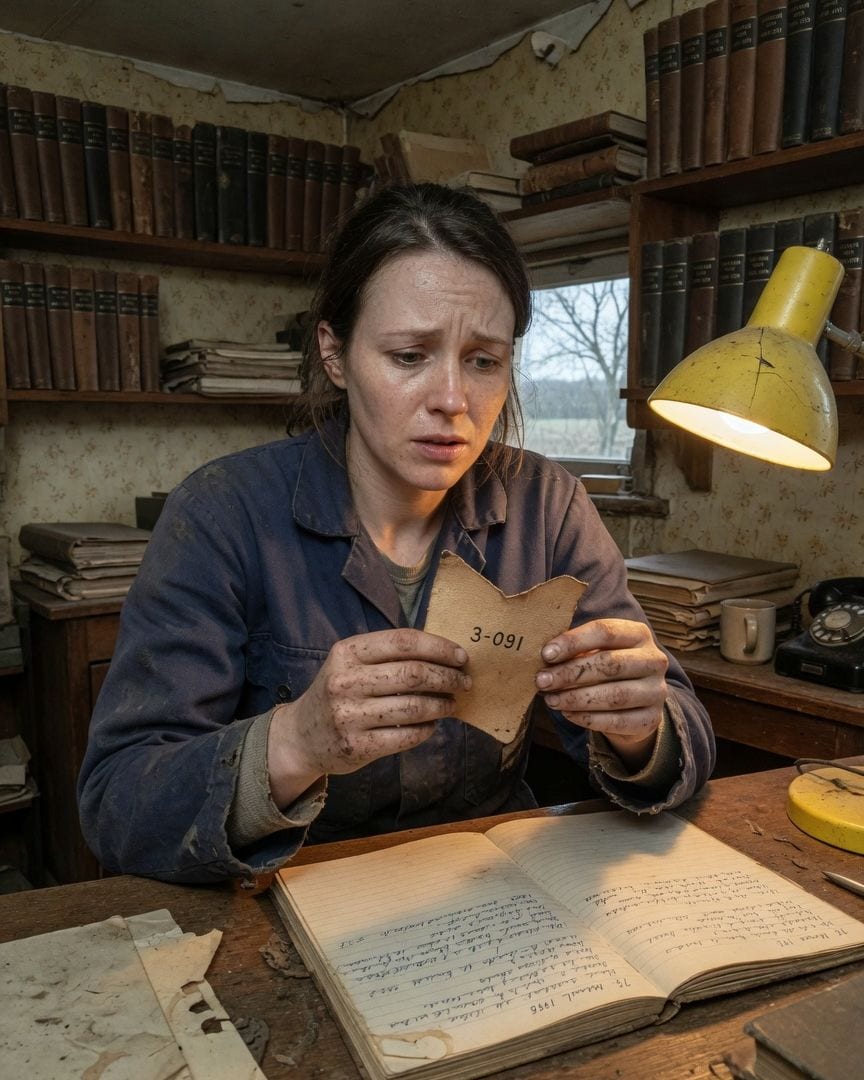
My cattle's ear-tag 3-091 returned this spring, retired by the ministry in 1974. Our old books show 3-091 reappearing every seven years since 1946.
This spring, I found ear tag 3-091 on a new calf. That number was officially retired decades ago, before I was born. My grandfather's old records showed the same tag 'lost' every seven years, with a chilling note: 'the tag returns of itself'.
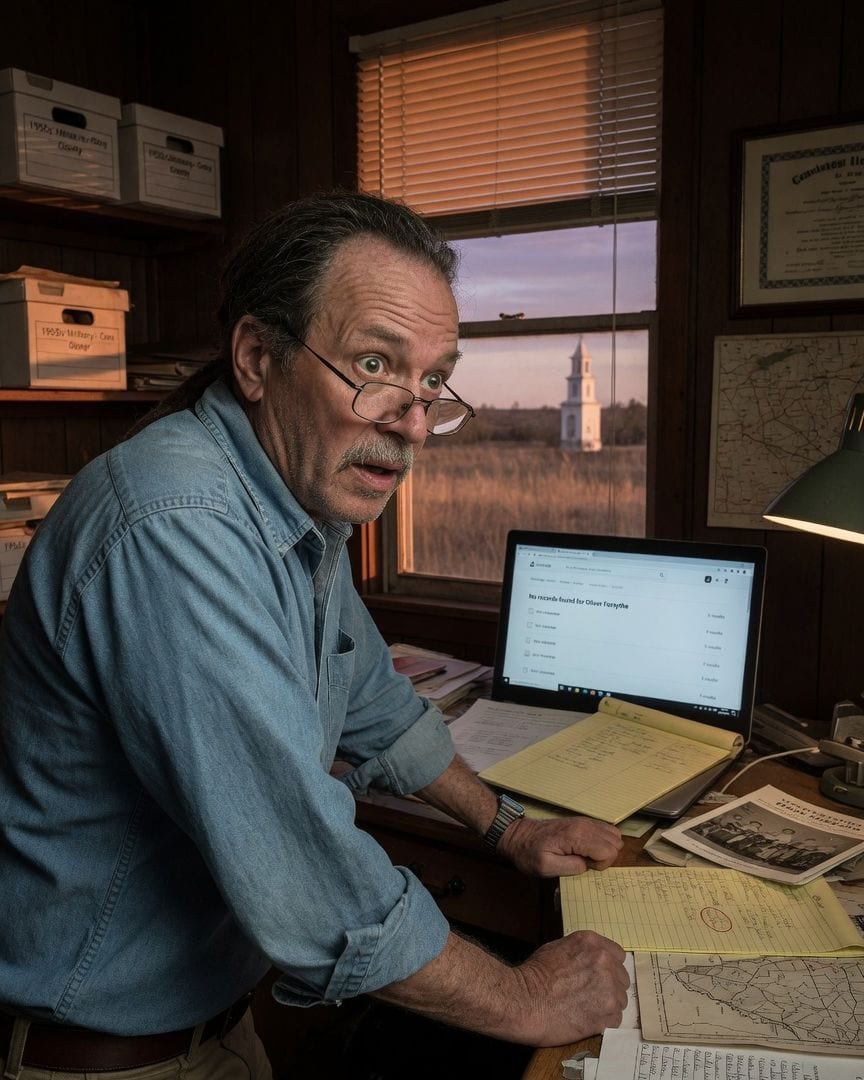
On his final project, a historian found forty-one Cold War headstones, all with names but no death dates.
Approaching retirement, lineage historian Owen Sarkis took on one final project: solving the mystery of the 250th Chemical Company, a unit that vanished after a single 1955 parade. His search led him down Carolina backroads to a lonely, weathered chapel, behind which lay forty-one identical gray headstones in neat rows. Each stone bore a name, but chillingly, not one had a date of death, a silence louder than any inscription. Then, on one stone, he found a small, industrial metal plate bearing a cryptic code and a symbol he recognized from a declassified document on 'unconventional materials handling.' The true nature of these 'graves' began to curdle in his mind, suggesting something far colder than death itself.
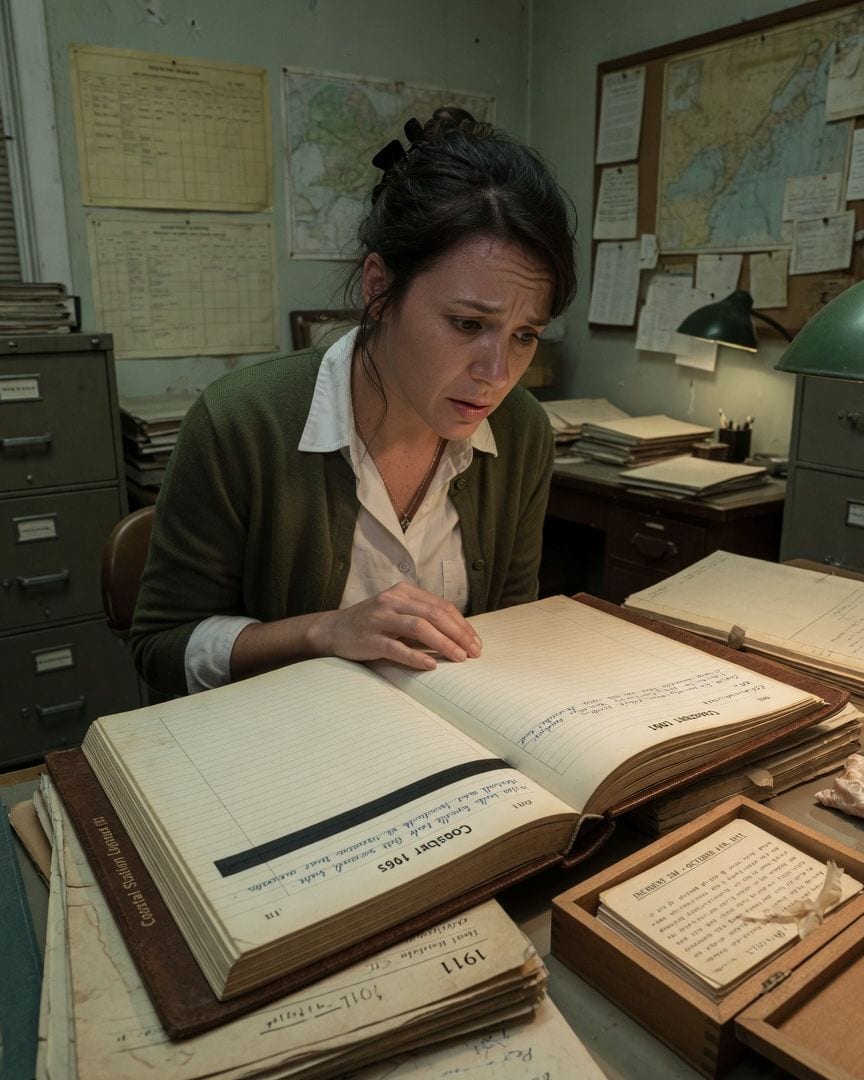
My weather station's old logbooks show a single line redacted every October 4th since 1911. The observer's note just says: 'the reading that should not occur.'
As the new archivist, I was reconciling old rainfall data when my finger stopped on October 4th, 1963. In the logbook, a thick black bar covered all weather observations, with a cryptic note: 'the reading that should not occur.' This wasn't a mistake; it was a century-long pattern, meticulously maintained.
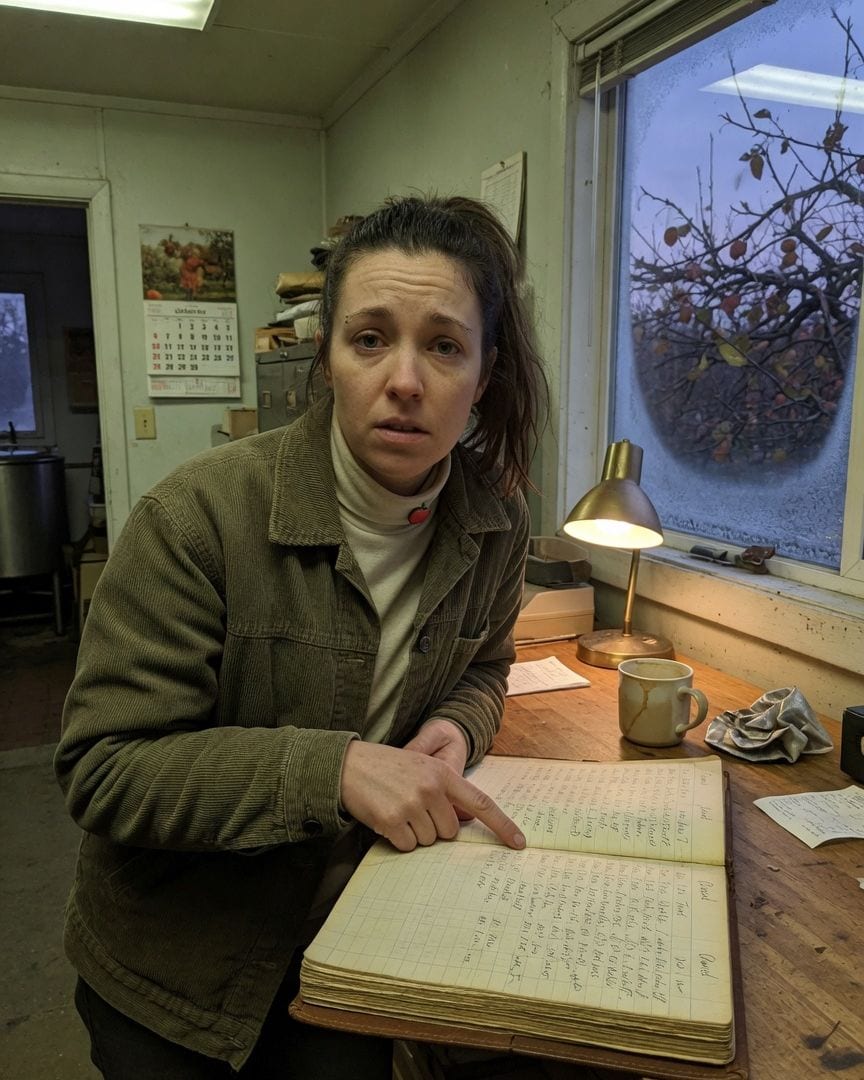
My orchard's picking ledger listed my apples two weeks early, showing the exact weight I took and, beside it, 'owed'.
Seeking quiet, I settled into a cottage by Felix Carver's apple orchard, dismissing his traditions about leaving 'the birds' share' apples. After I picked them, I found his old ledger. There, my exact apple weight was marked "Owed" in stark, new ink, dated a fortnight before I'd even touched the trees.
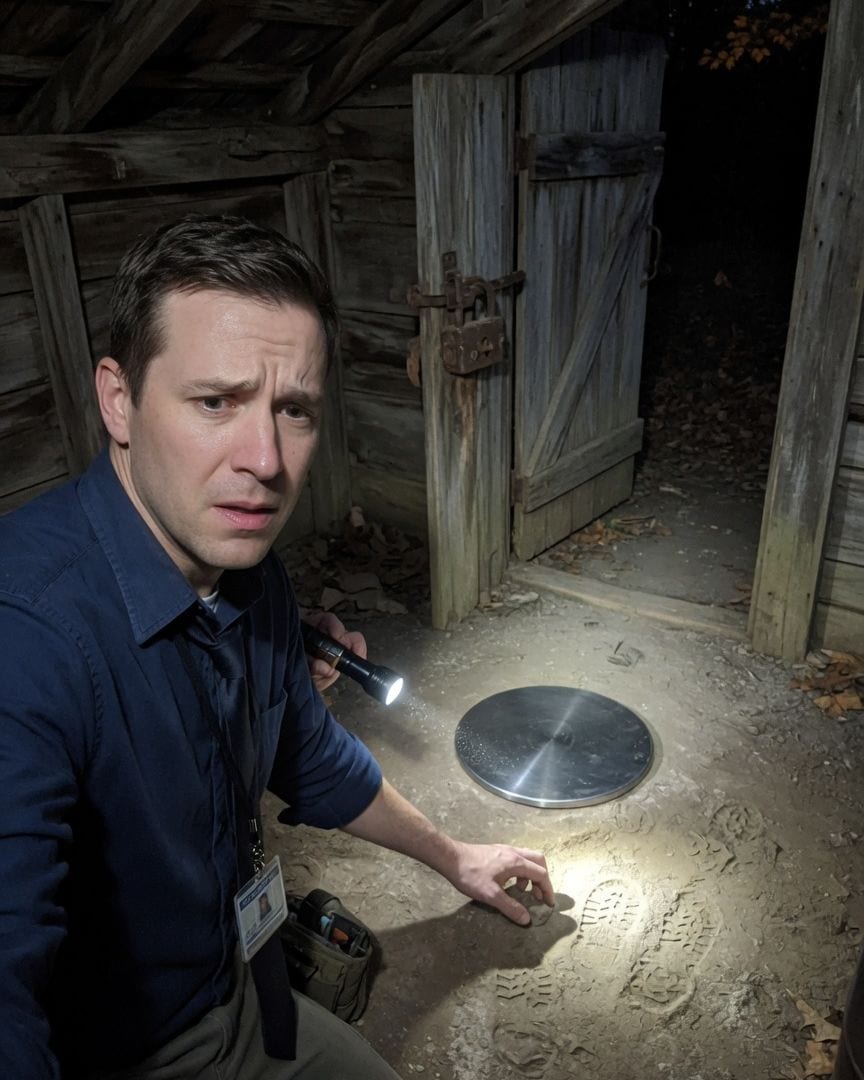
A meticulous archivist found a Cold War file showing a weathered shed with boot prints walking in, but none ever walking out, and a custody log signed for eighty-one years.
Devin Mauch, a methodical archivist at Fort Loran, was meticulously preparing the last of the WWII bundles for transfer, relishing the quiet order of declassification in the hushed, climate-controlled vault. His calm was shattered when he discovered the Ashfield Barn file, a slim folder containing a single grainy photograph of a small, weather-beaten wooden shed. In the dust before its slightly ajar door, a clear set of boot prints led directly inside, but none led out. The chilling caption read: 'SUBJECT REMAINS INSIDE, IN CUSTODY, INDEFINITE,' with the entry re-signed quarterly for eighty-one years, the last signature just six days ago. The shed, he knew, stood less than four miles from his home, its ancient, medieval lock hinting at a secret far deeper than any rural incident. What, or who, had been kept in that shed for over eight decades, and why did its custody continue to this day?
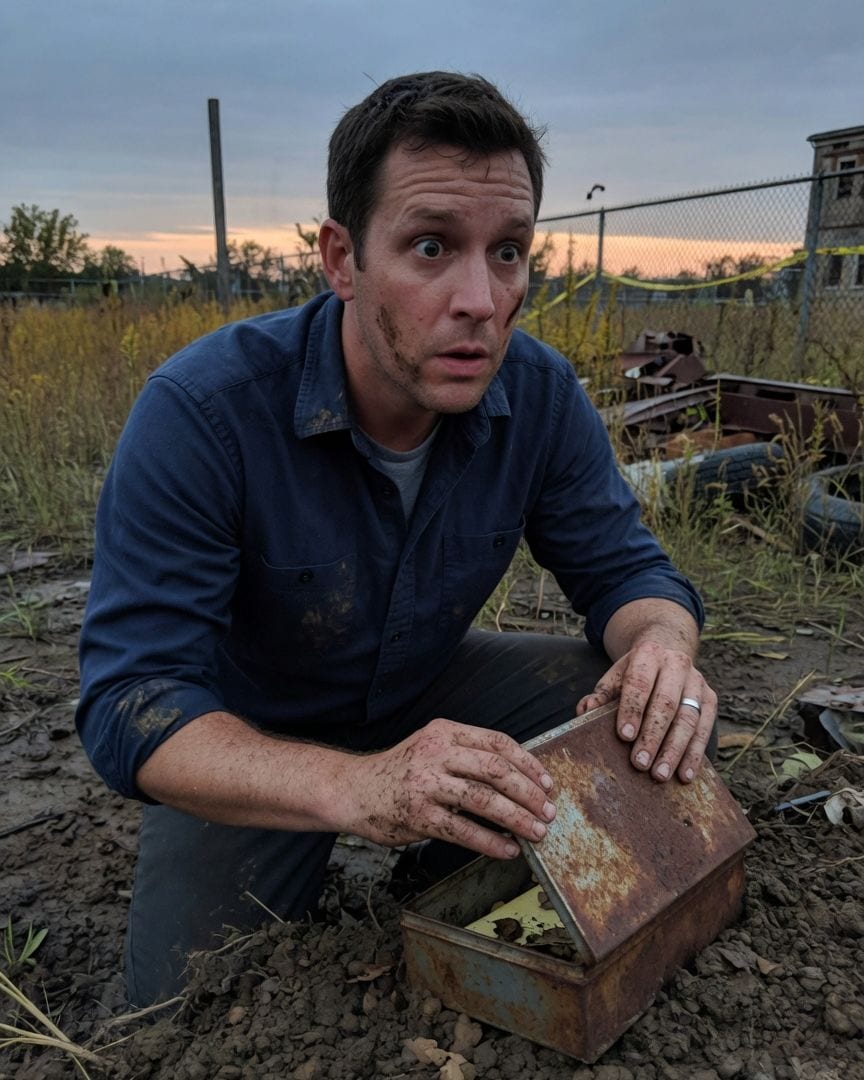
My ancestors' photo shows a letter addressed to me, dated 1972.
My birthday card arrived a day late, from a small town an hour north, nowhere we knew. Inside, an elegant, unfamiliar script read: 'Happy Birthday, Robert. The Field remembers.' It was postmarked from the site of my ancestral homestead, demolished decades before I was born.